


Setting boundaries, opening courtyards
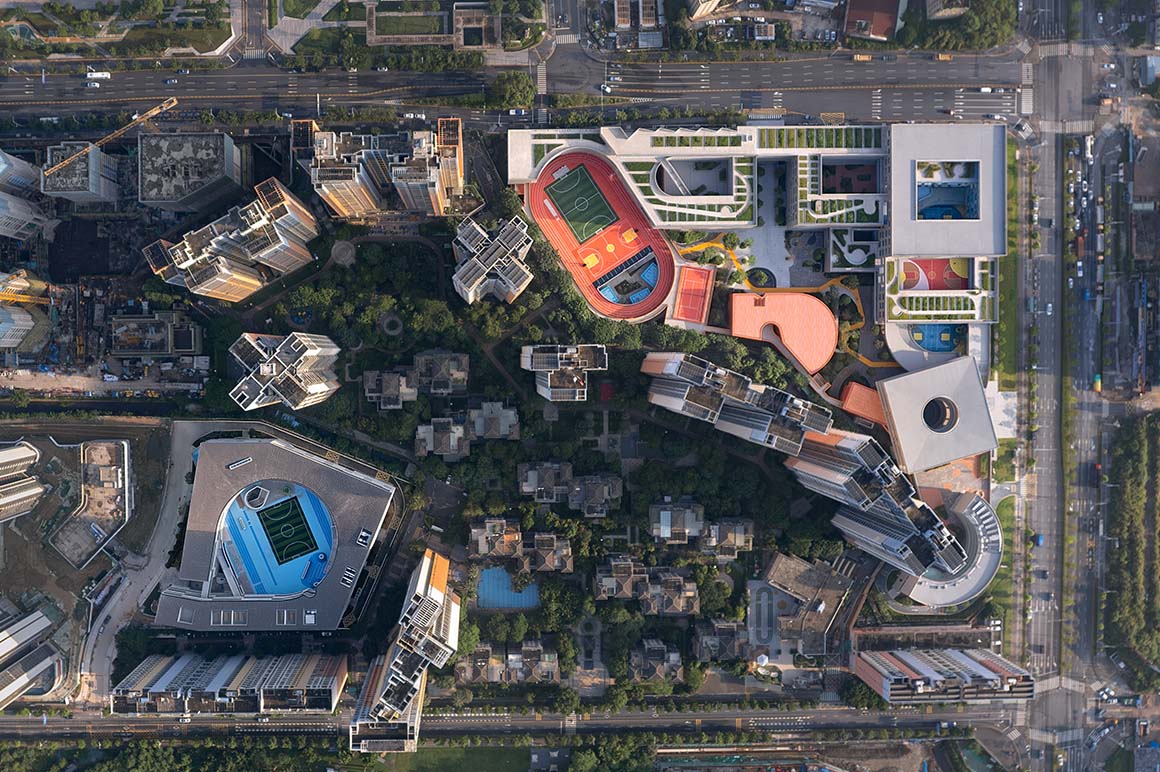
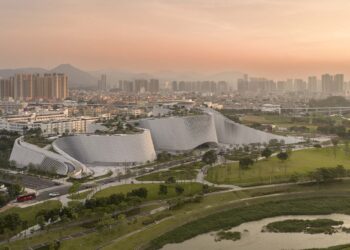
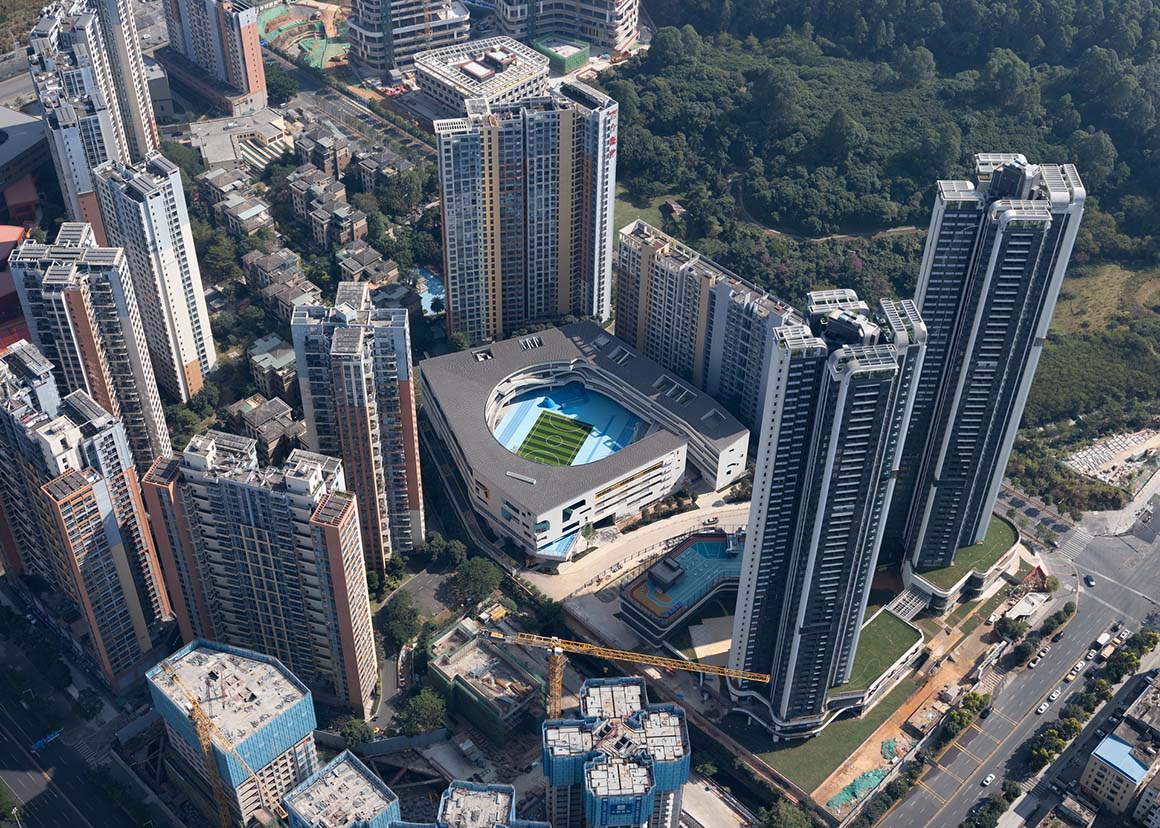
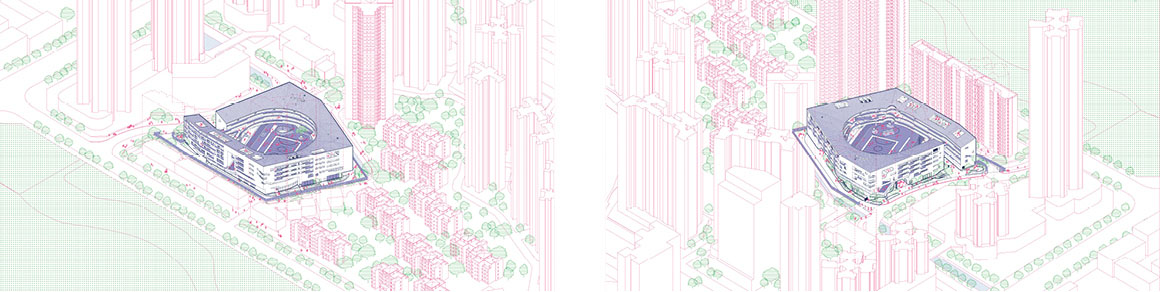
In Longgang District, Shenzhen, two schools have been inserted into a dense urban fabric where high-rise apartments, large-scale industrial facilities, and aging residential neighborhoods coexist. Positioned at opposite ends of a massive housing complex, “Weilong School” and “Weiwu School” act as connective links within a fragmented urban condition, serving as anchors for community renewal amid a layered and heterogeneous landscape.
Scattered around the site are traces of the past that have endured rapid urbanization—centuries-old trees, small ancestral shrines, and traditional dwellings. These remnants, which still hold the identity of the land, became key references for the design. By aligning them along an axis formed by the north–south topography and the ancient trees, the project draws these fragments into the architectural framework, reorganizing a dispersed urban context into a coherent spatial order.
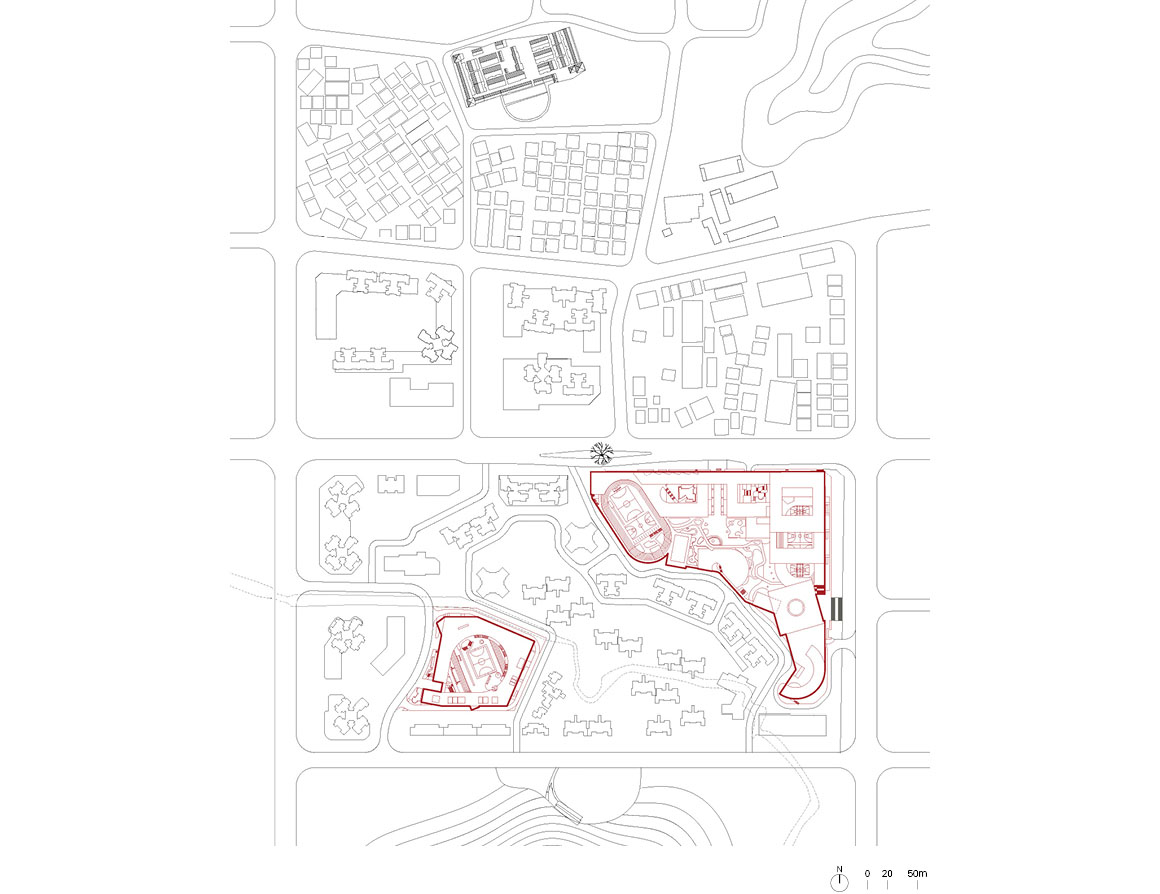
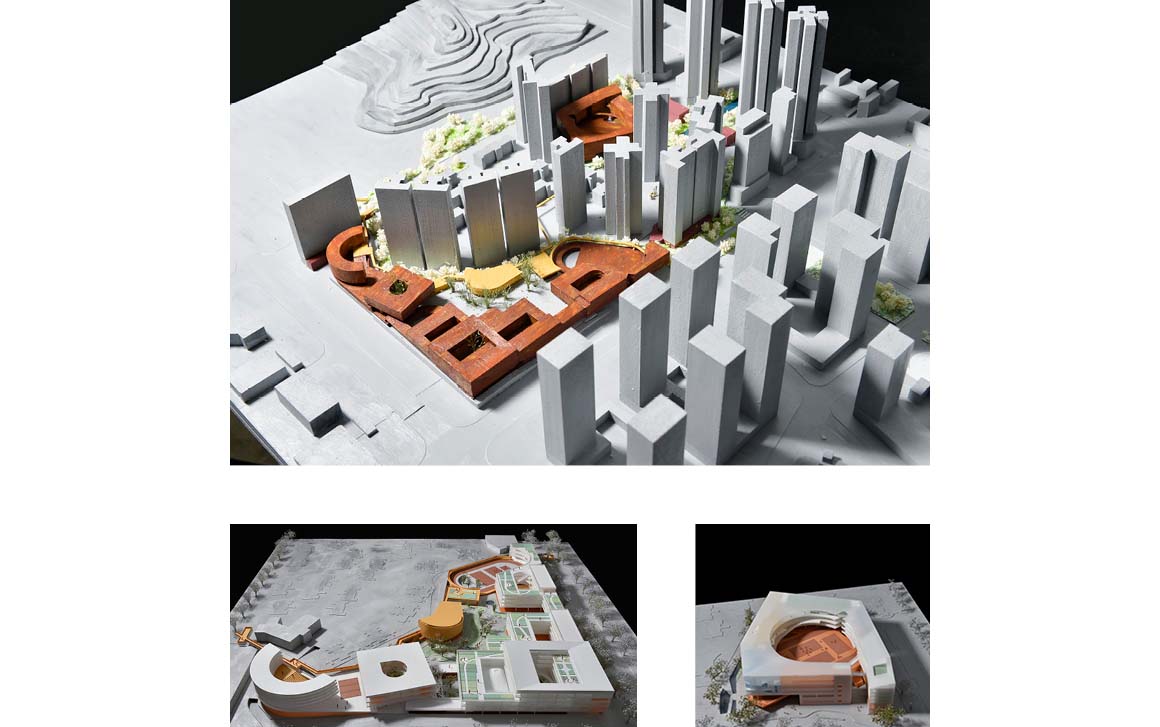
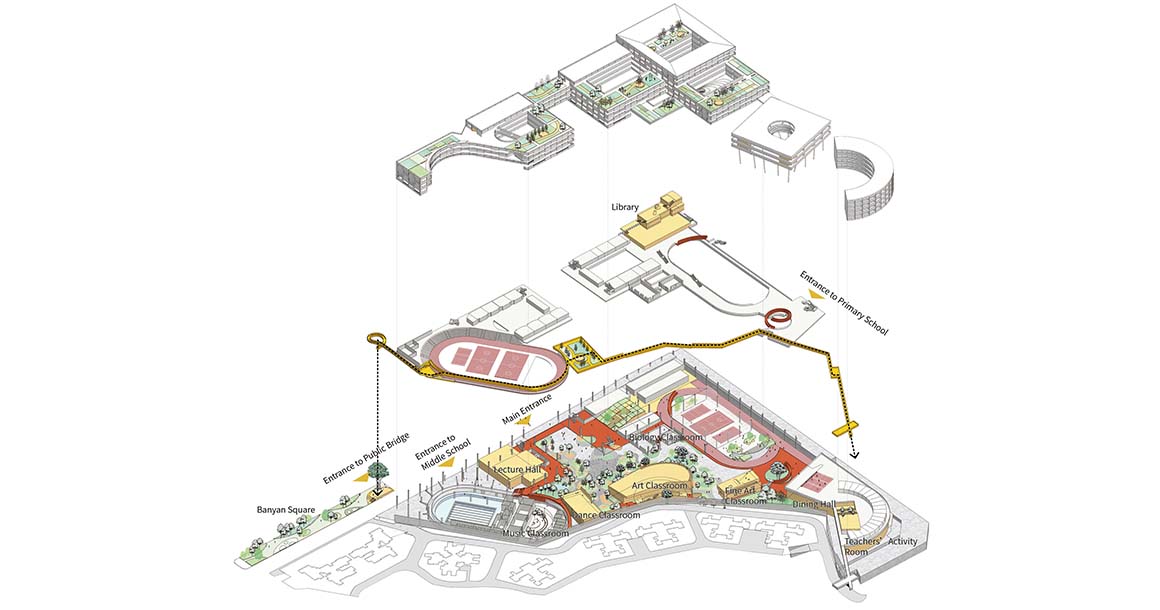
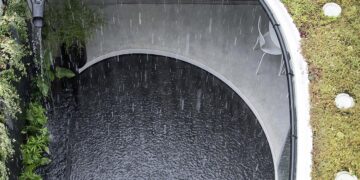
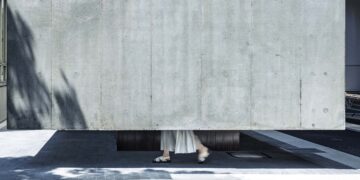
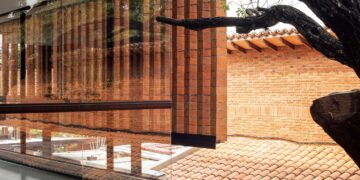
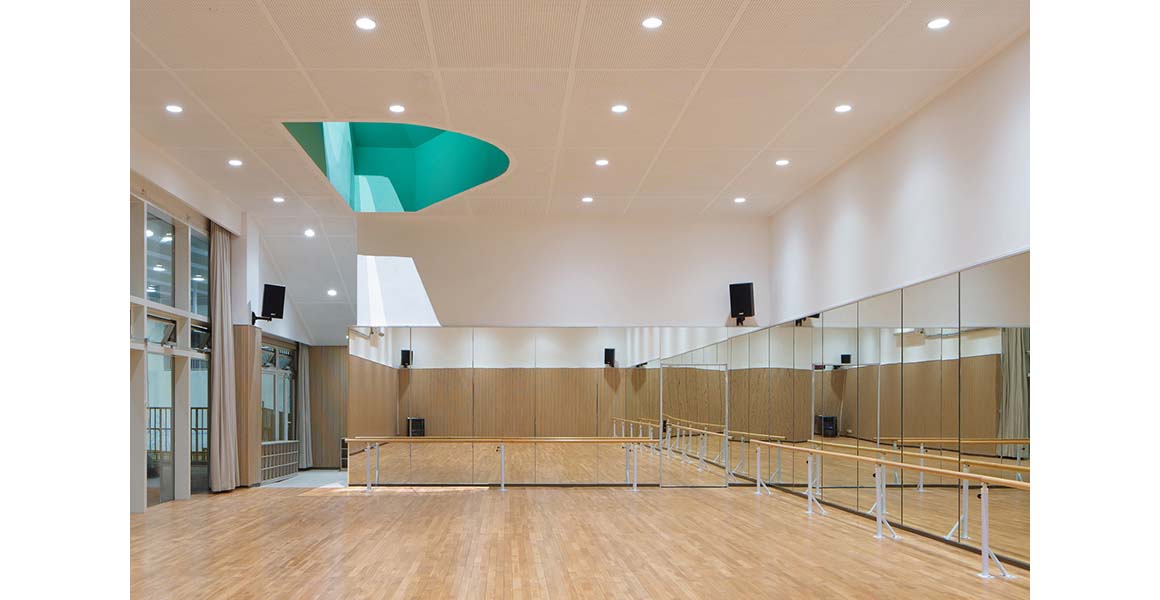
At the core of the project is a contemporary reinterpretation of the region’s traditional walled-house typology. Fortress-like perimeter walls create a protected environment that shields children from the surrounding urban noise, while the interior is structured around multiple courtyards that allow light, air, and social interaction to flow freely. Rather than functioning as closed boundaries, these walls extend into corridors and playgrounds, transforming the schools into shared public landscapes—part park, part civic plaza—for the surrounding community.
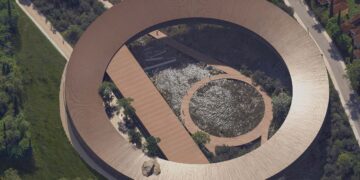
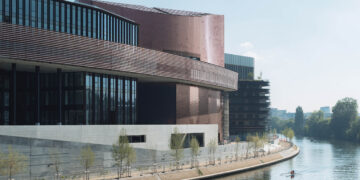
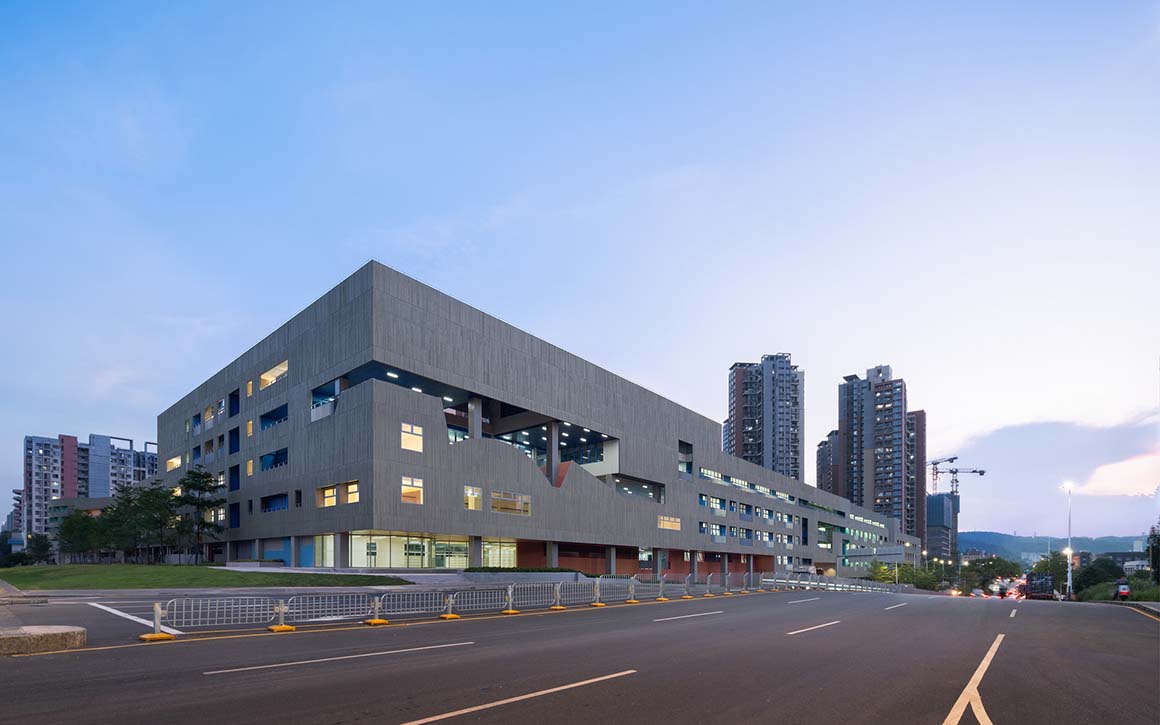
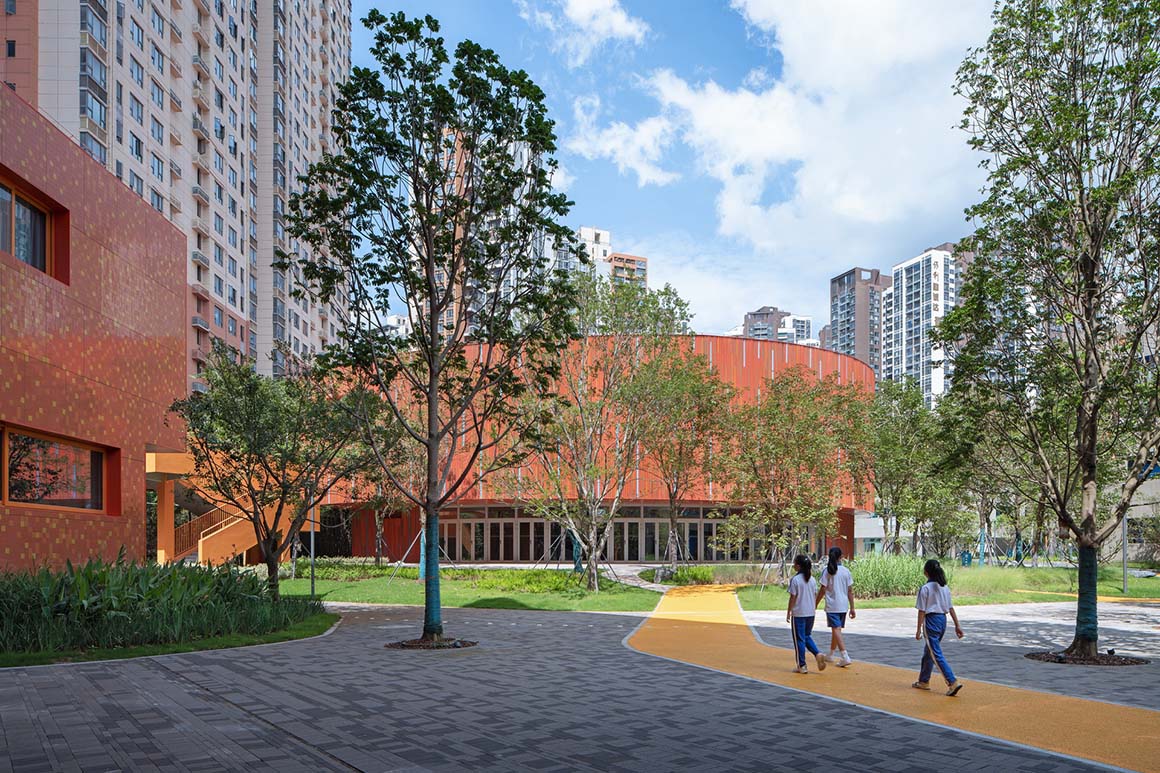
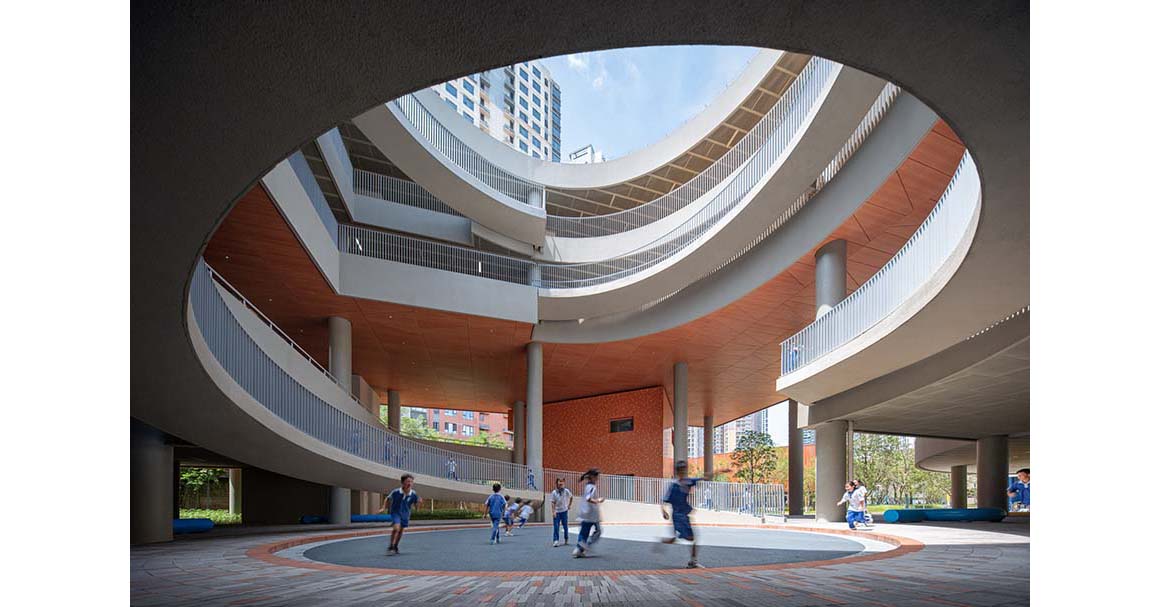
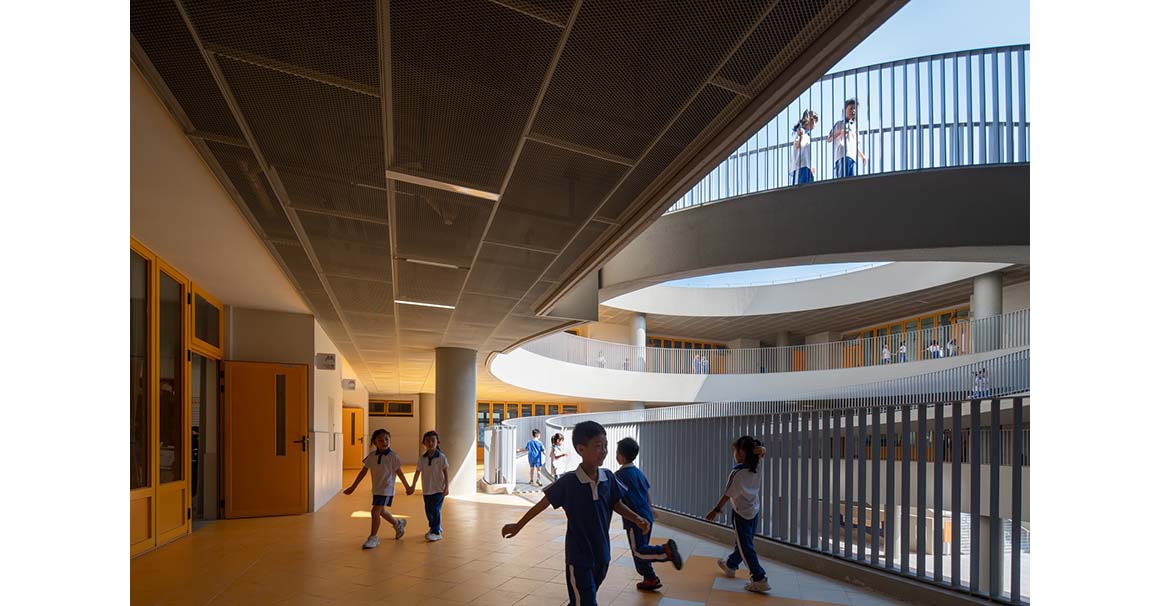
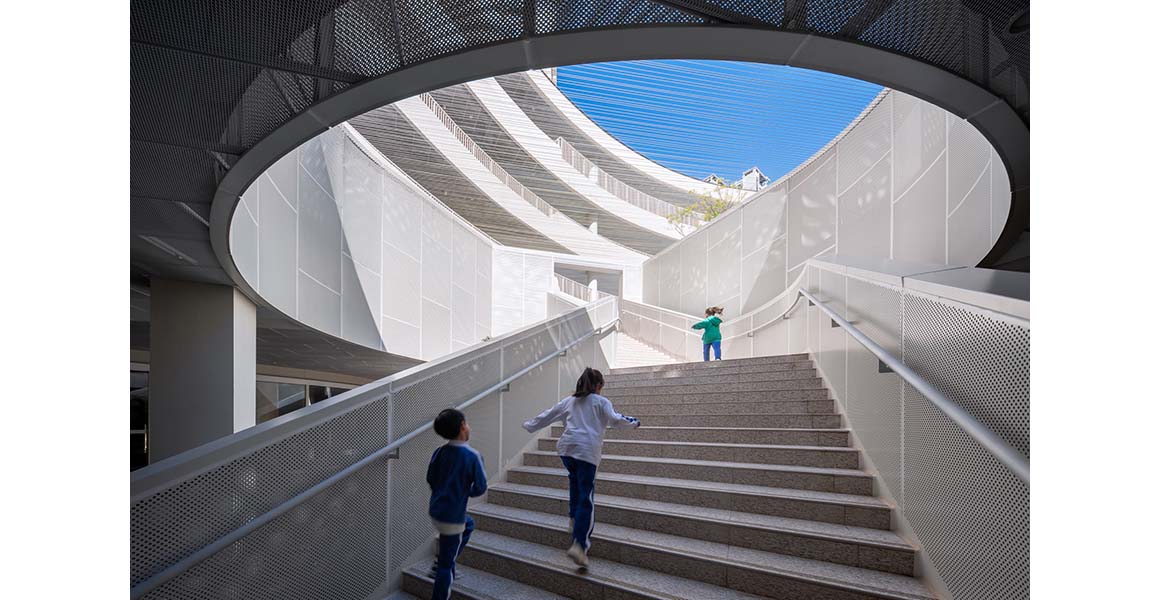
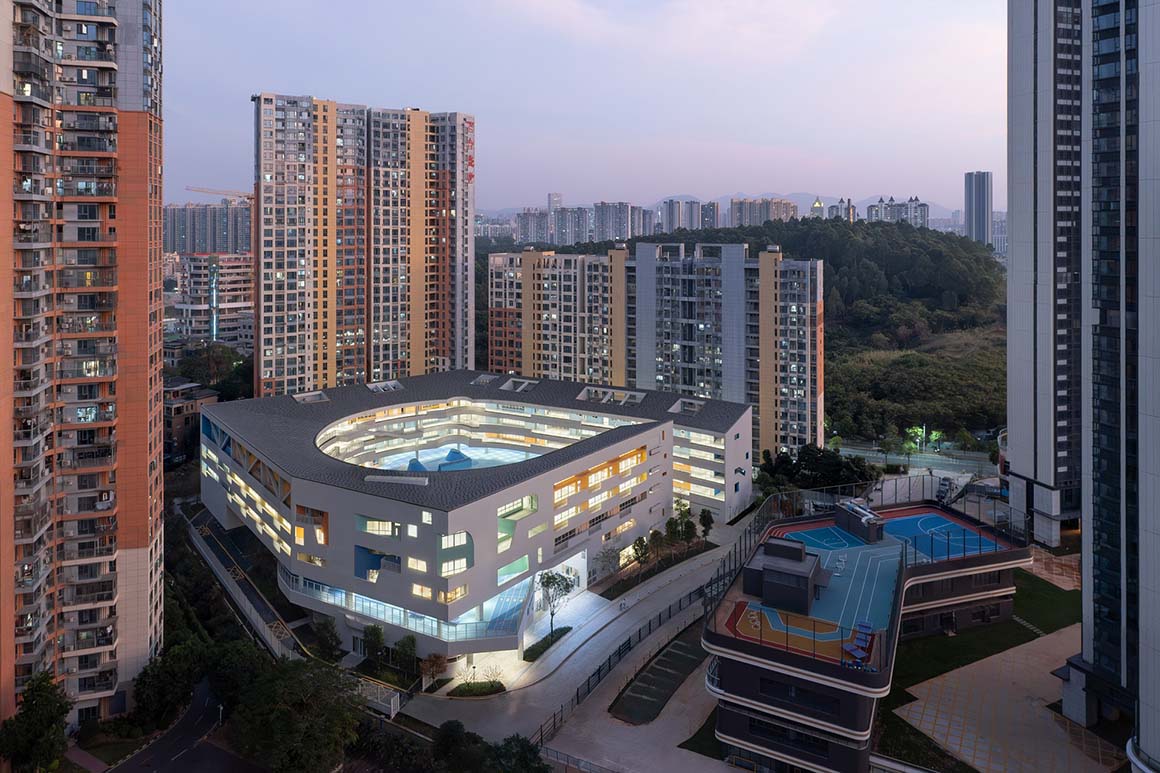
The two schools adopt distinct spatial strategies in response to their respective sites. Weilong School, located along a major road at the northeastern edge of the housing complex, takes advantage of its expansive plot by adopting a low, horizontally elongated form. Buildings are arranged along the site perimeter to frame a forest-like garden at the center, while a long, colonnaded ground-floor gallery draws pedestrian movement naturally toward the interior landscape. Spaces are carefully calibrated to different stages of growth: dynamic ramps encourage exploration for younger students, while quieter gardens offer older students places for reflection, allowing learning and play to unfold in balance.
1. Weilong School
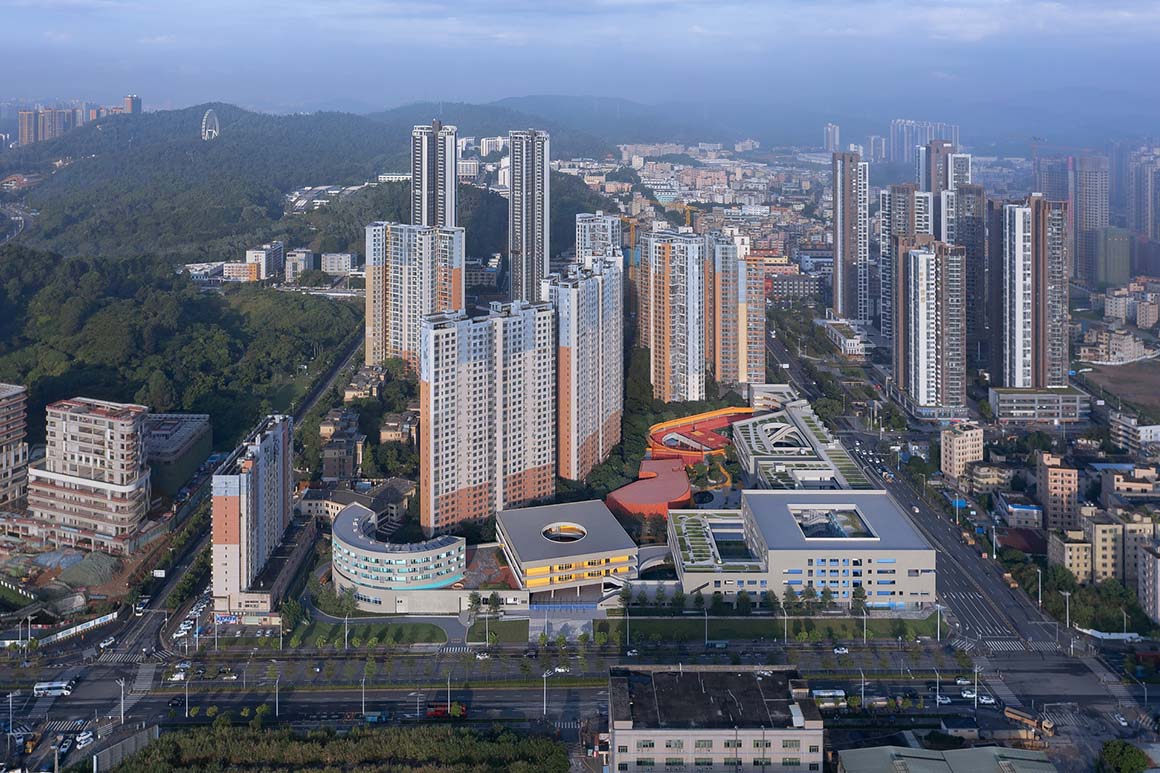
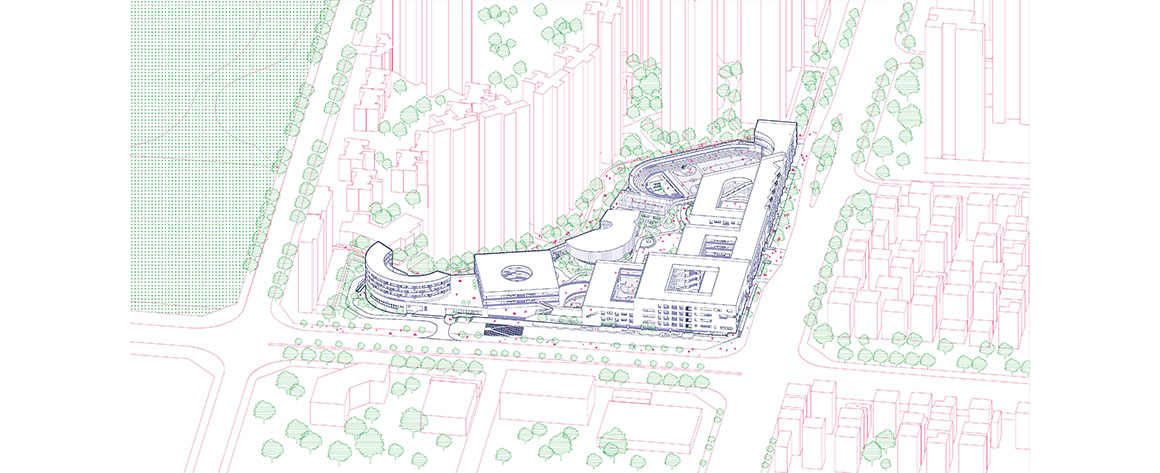
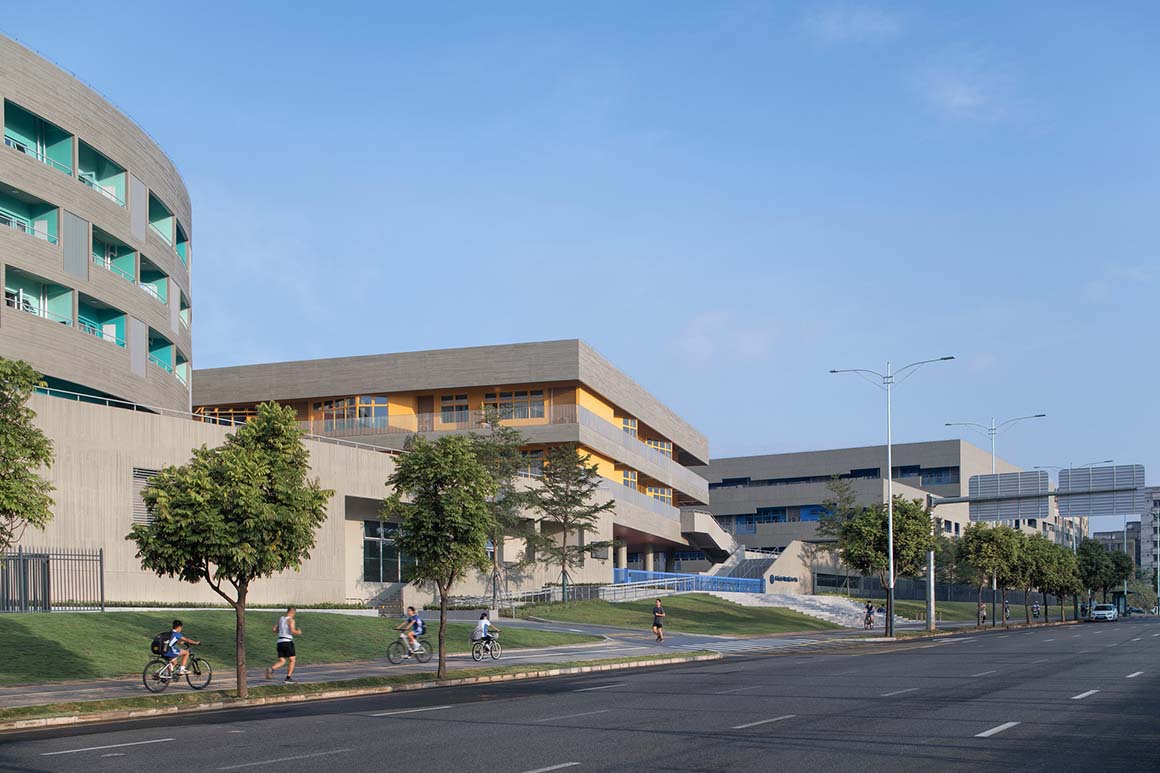
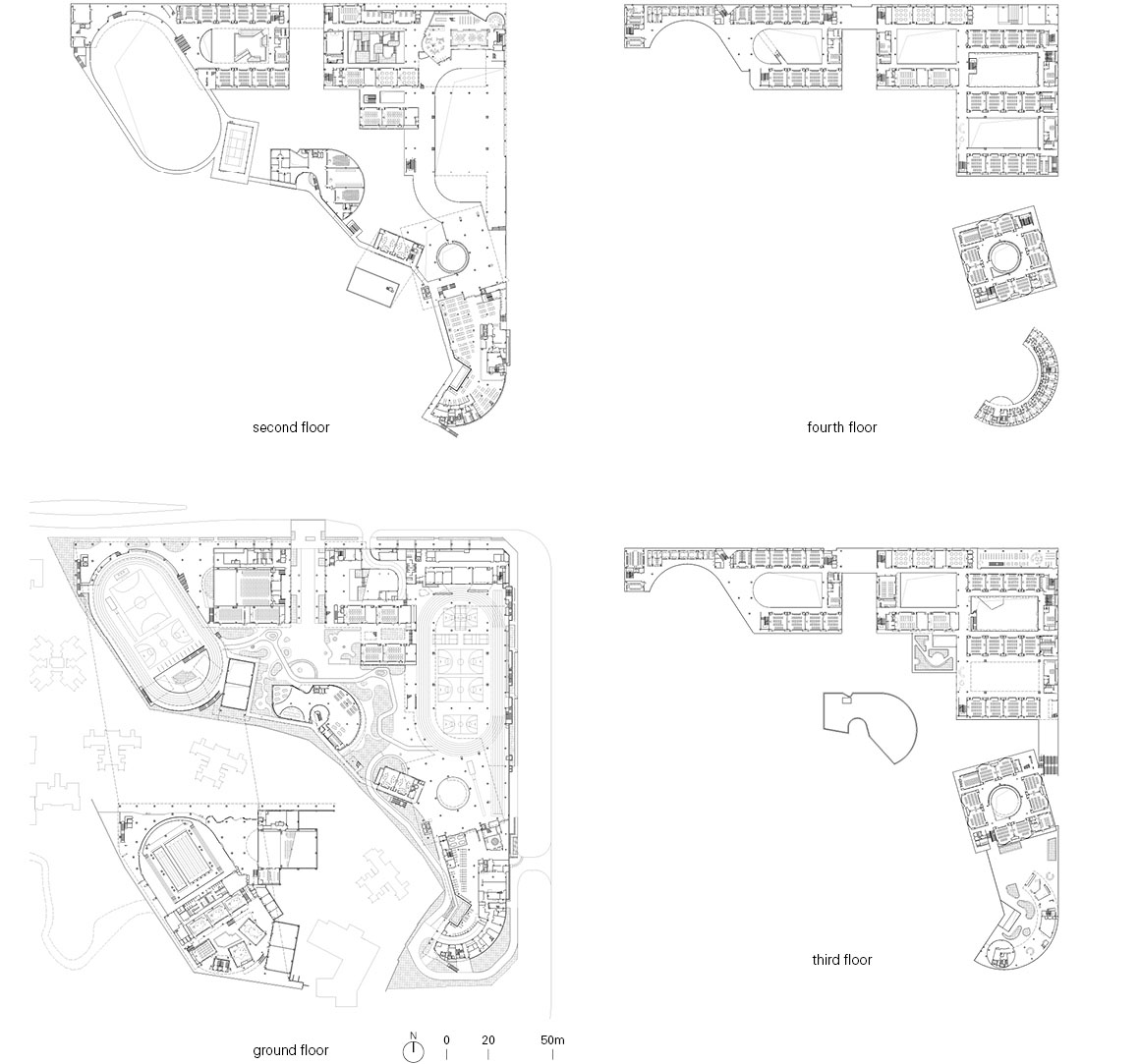
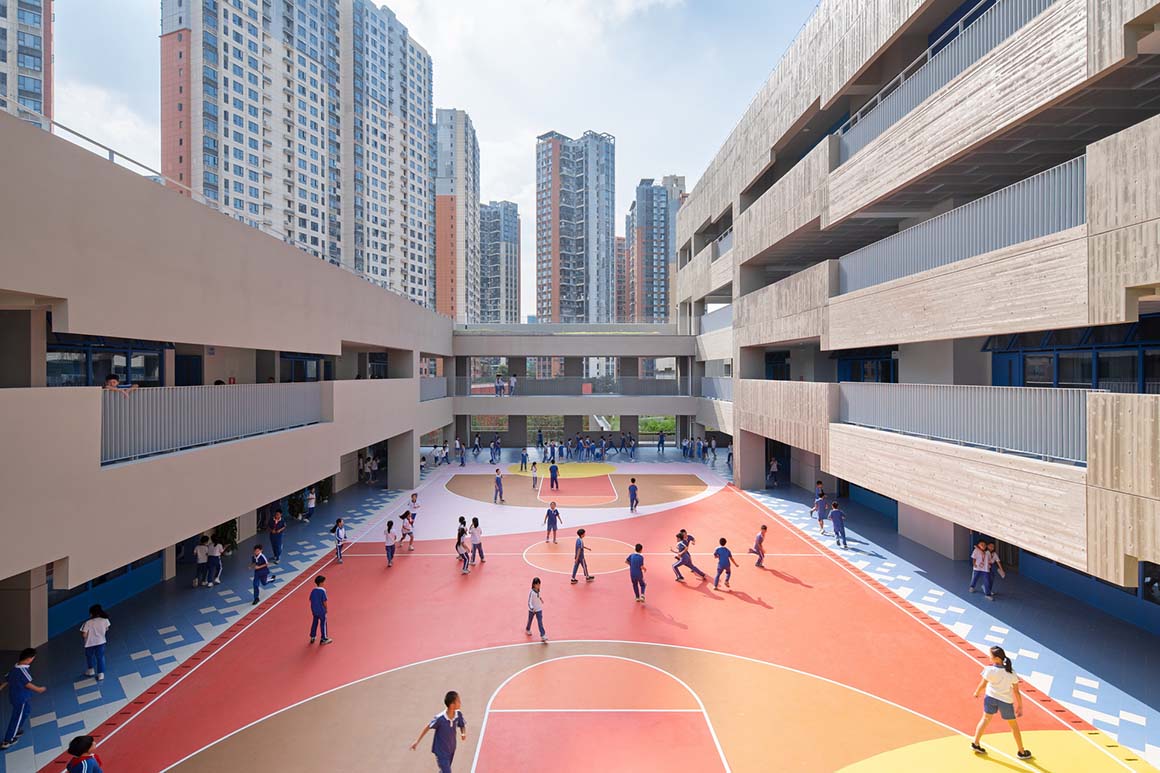
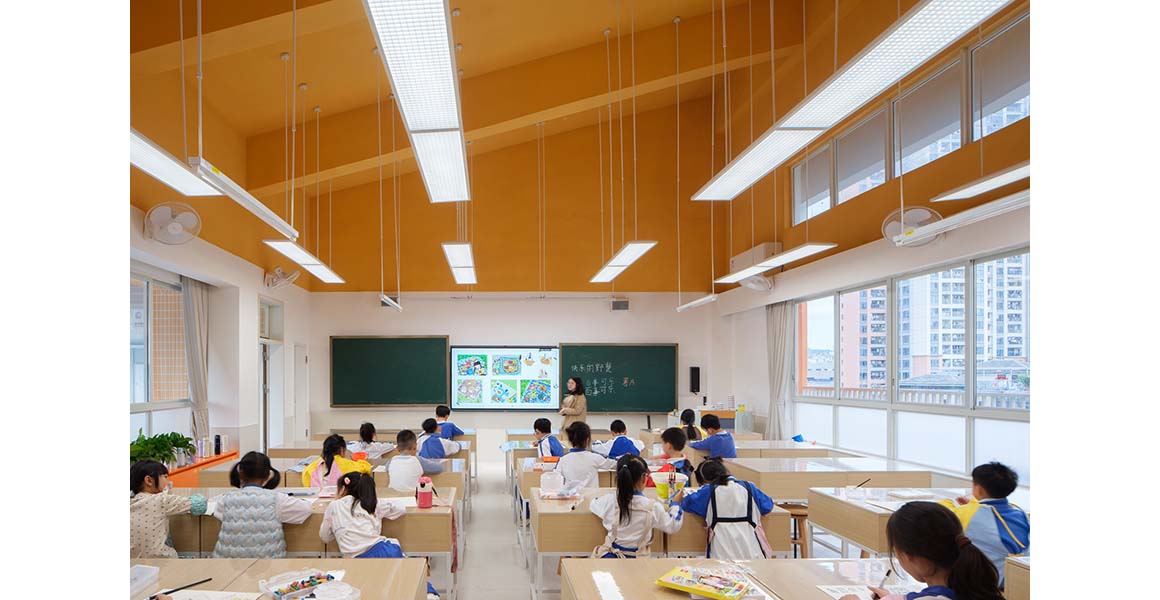
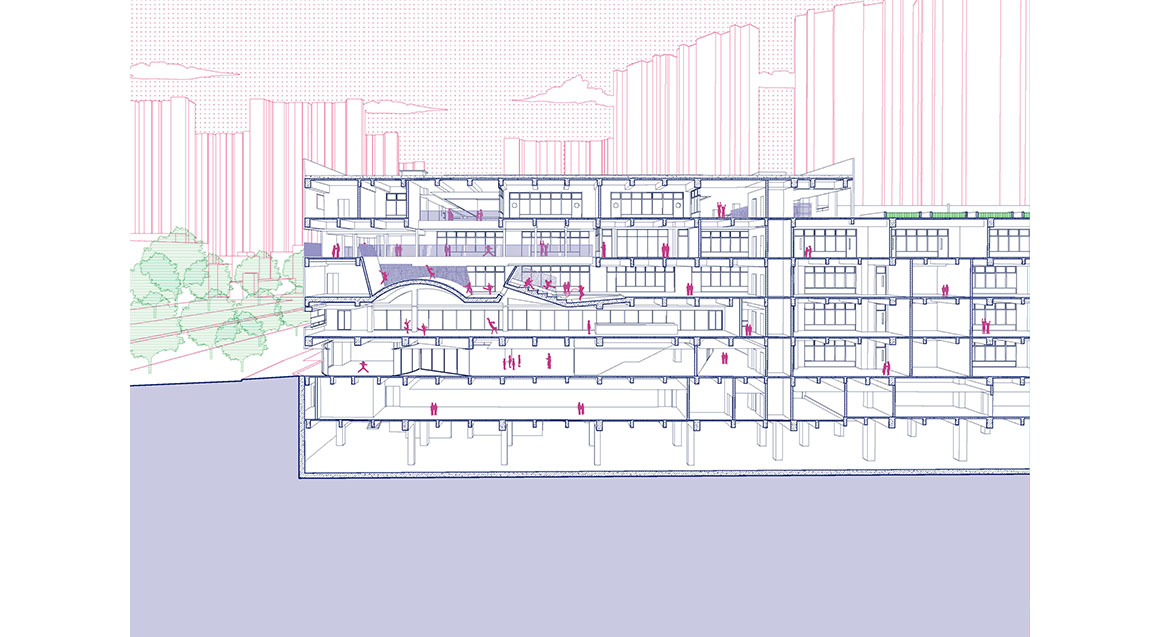
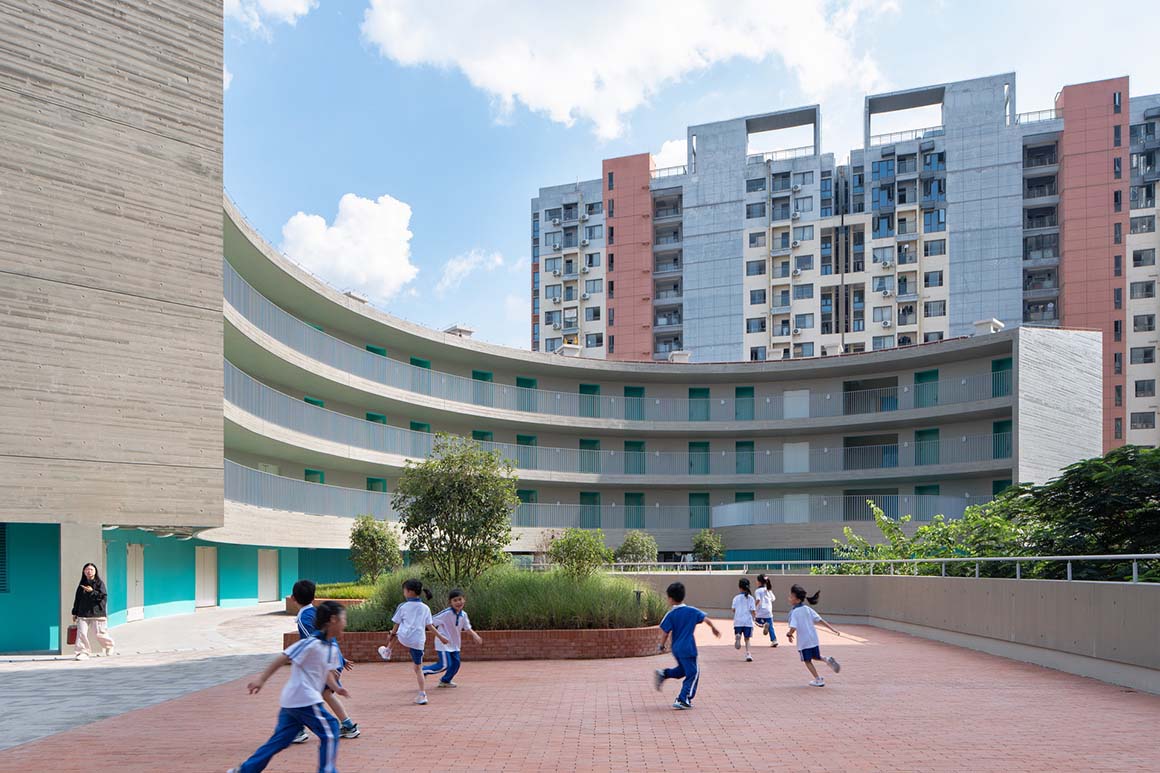
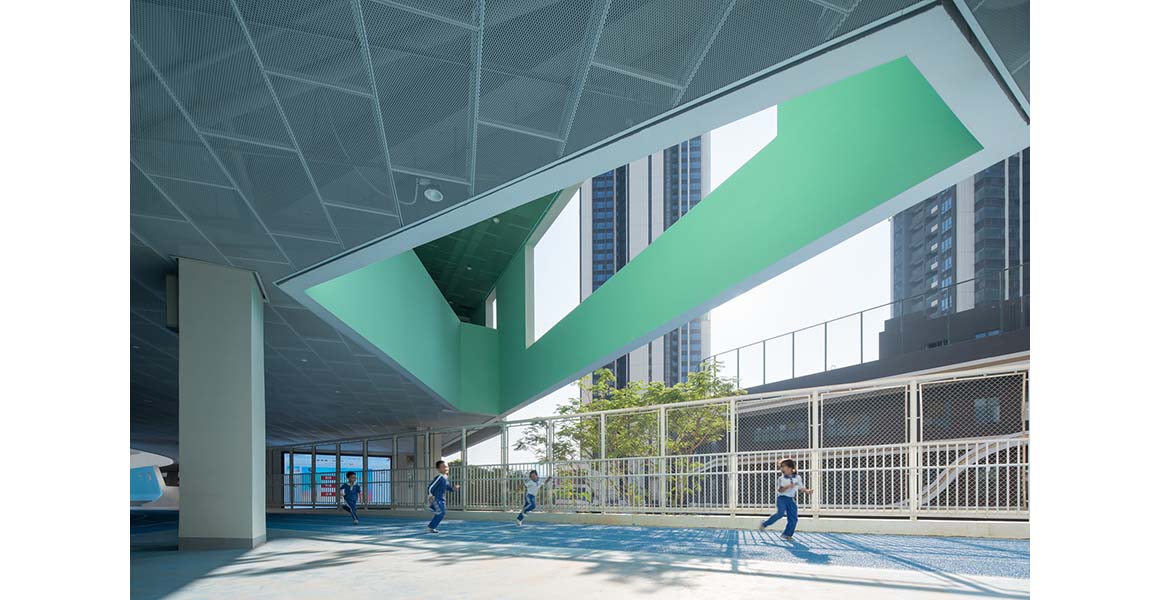
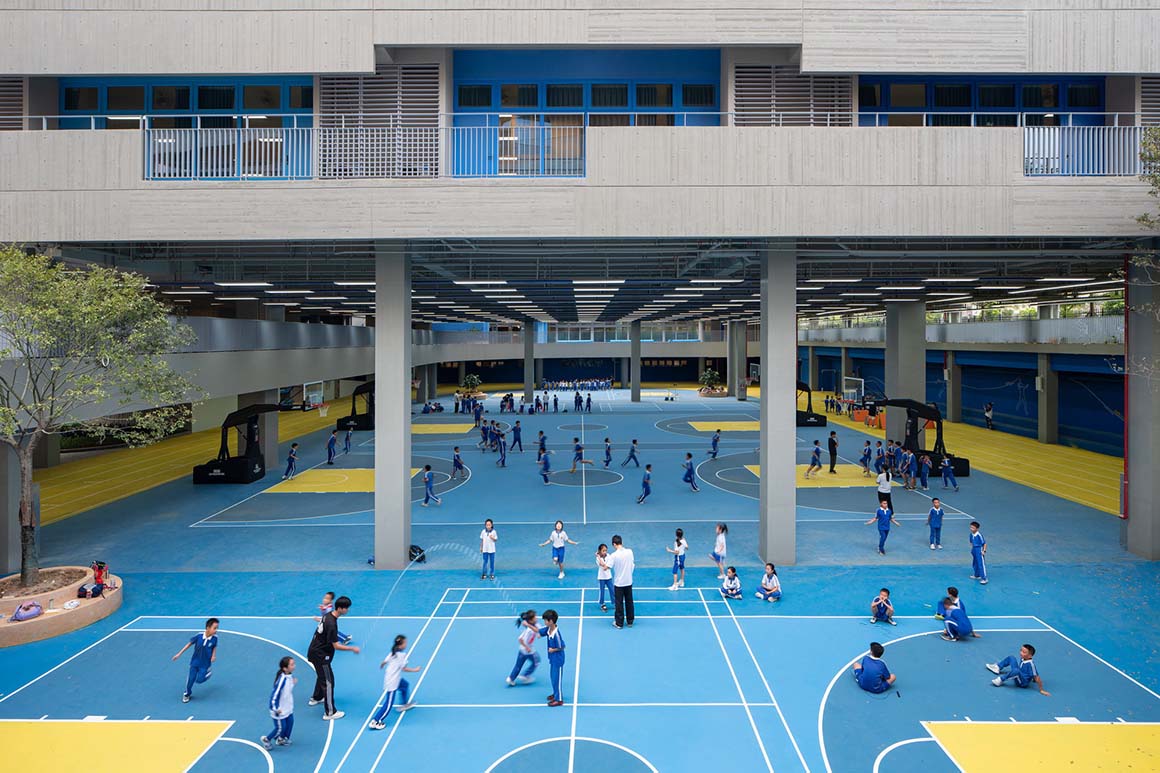
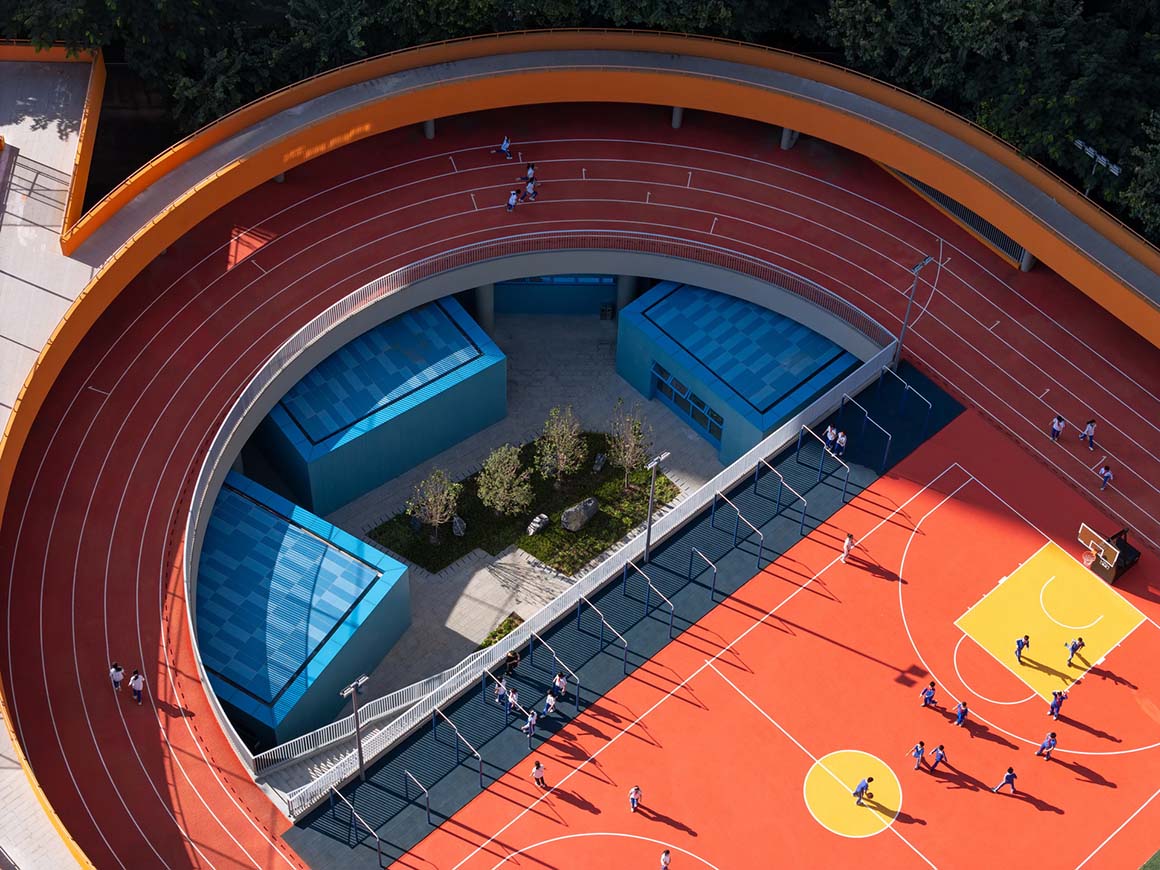
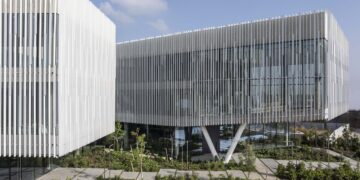
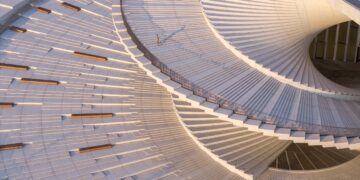
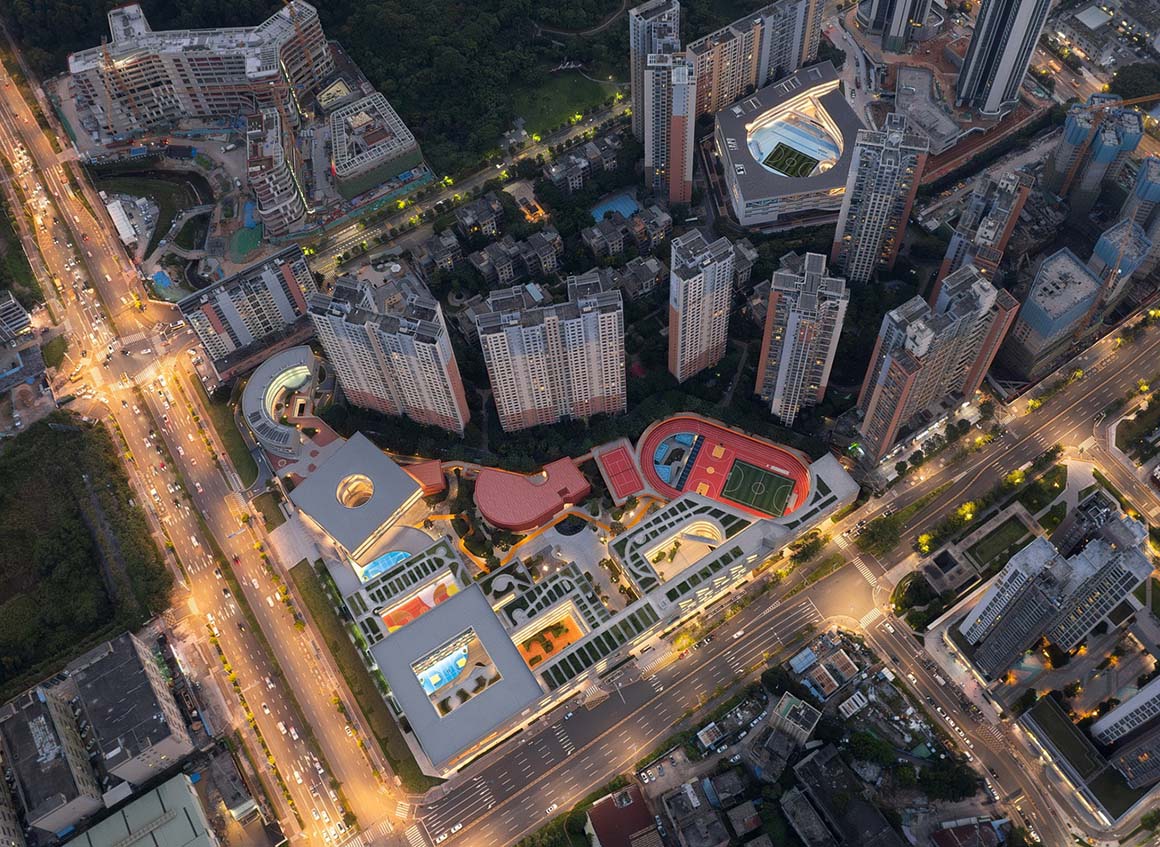
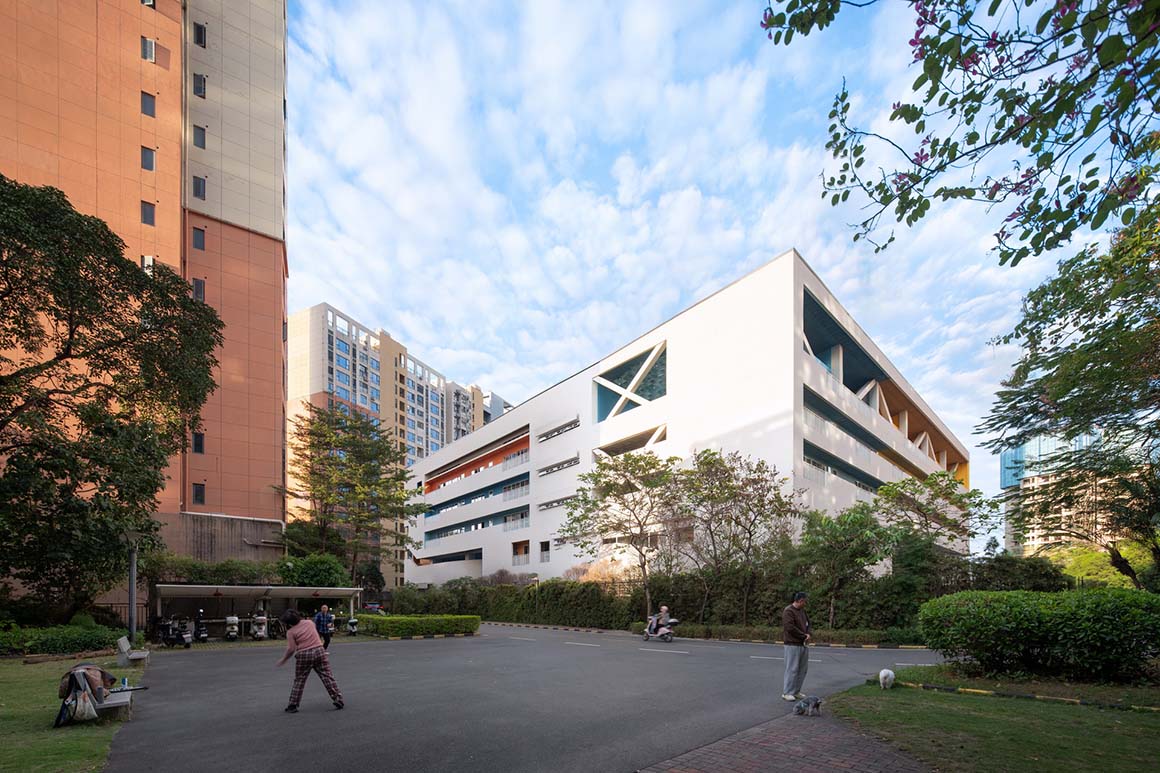
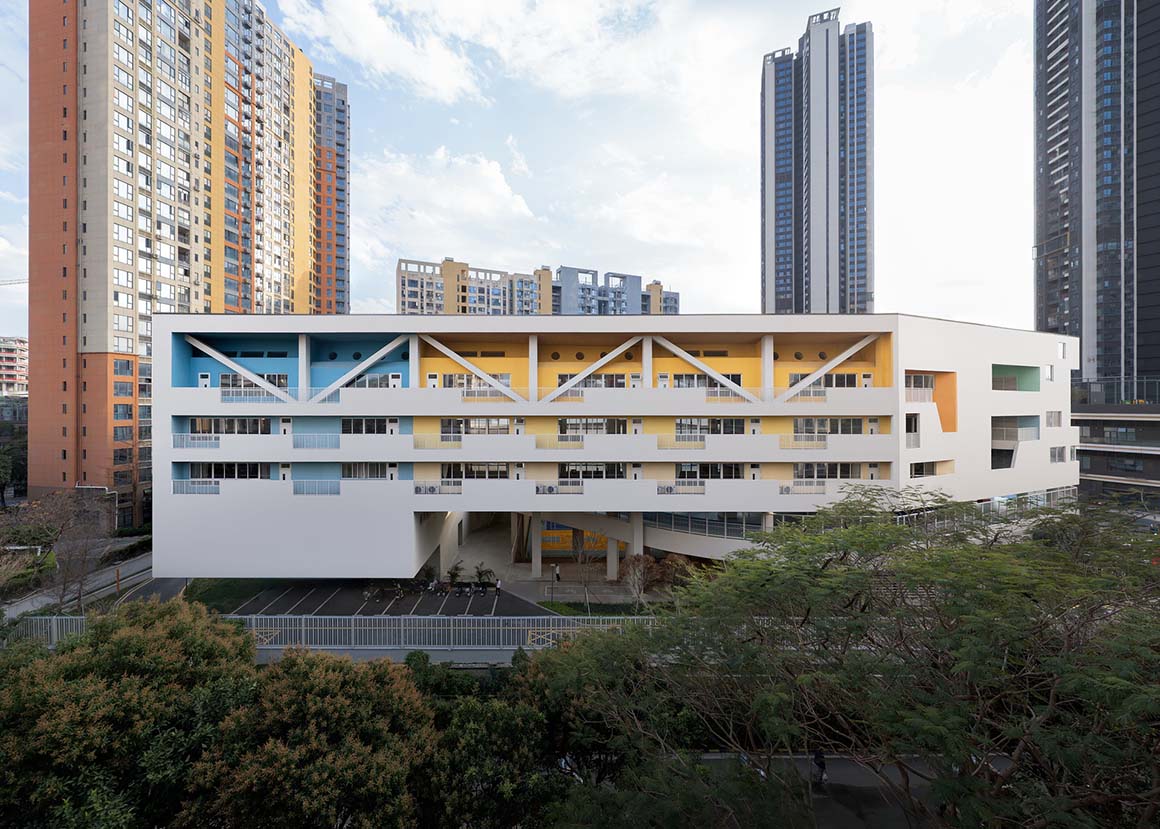
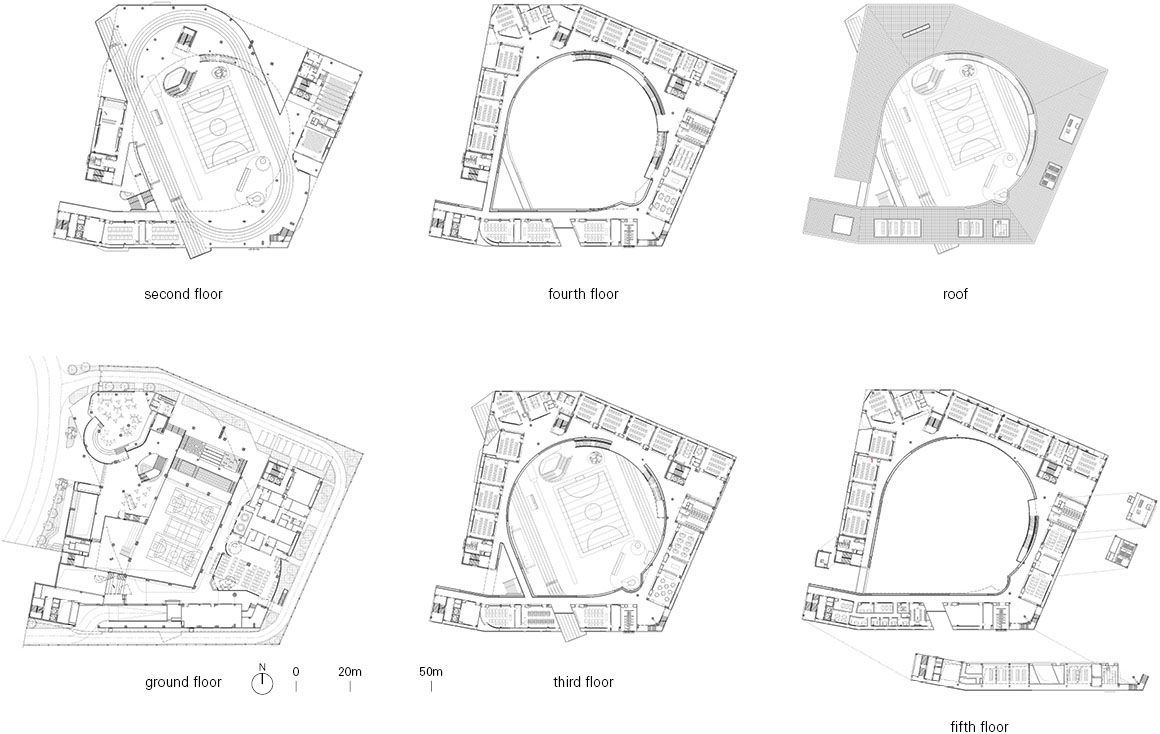
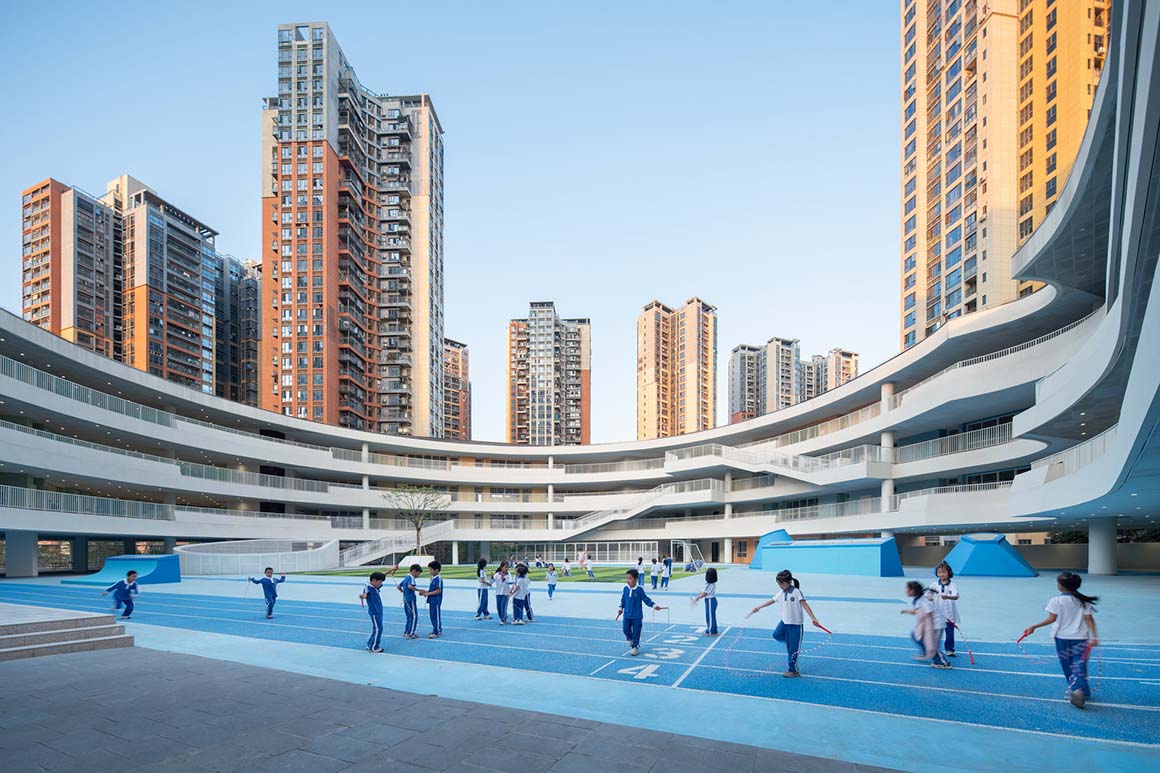
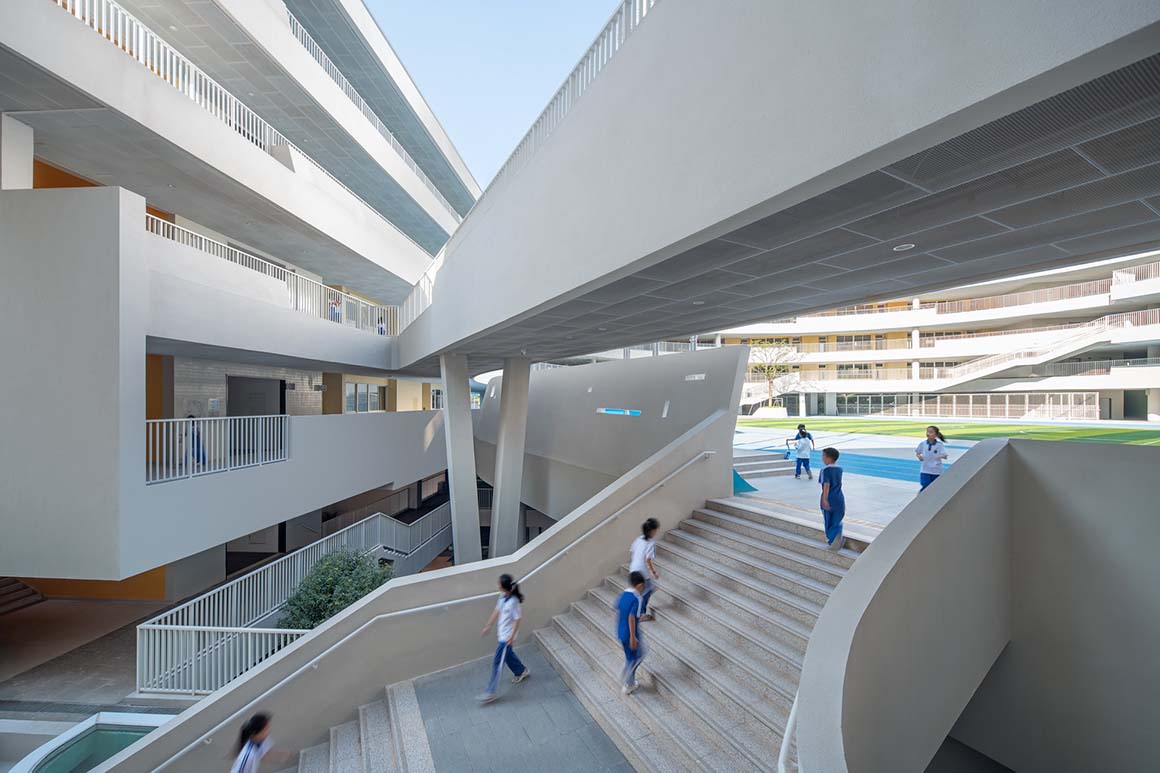
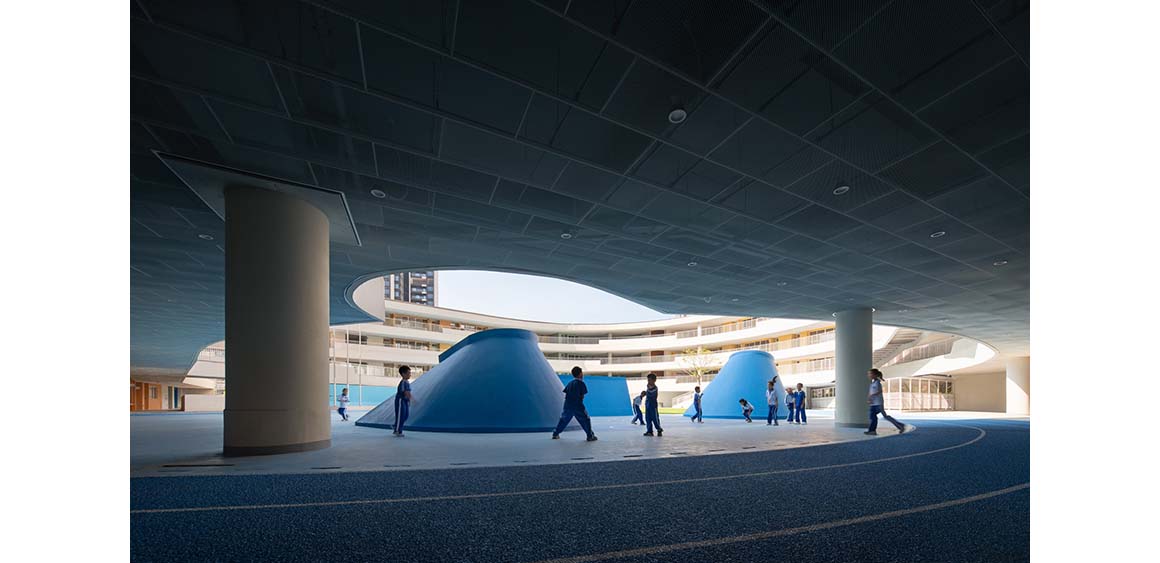
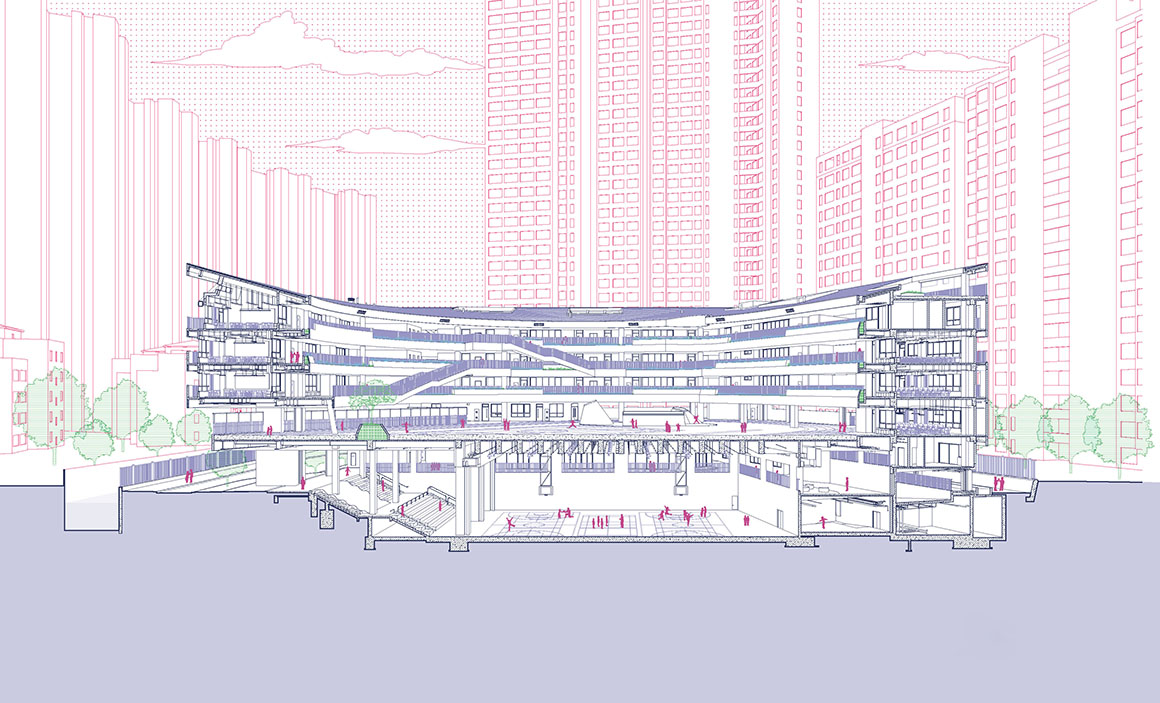
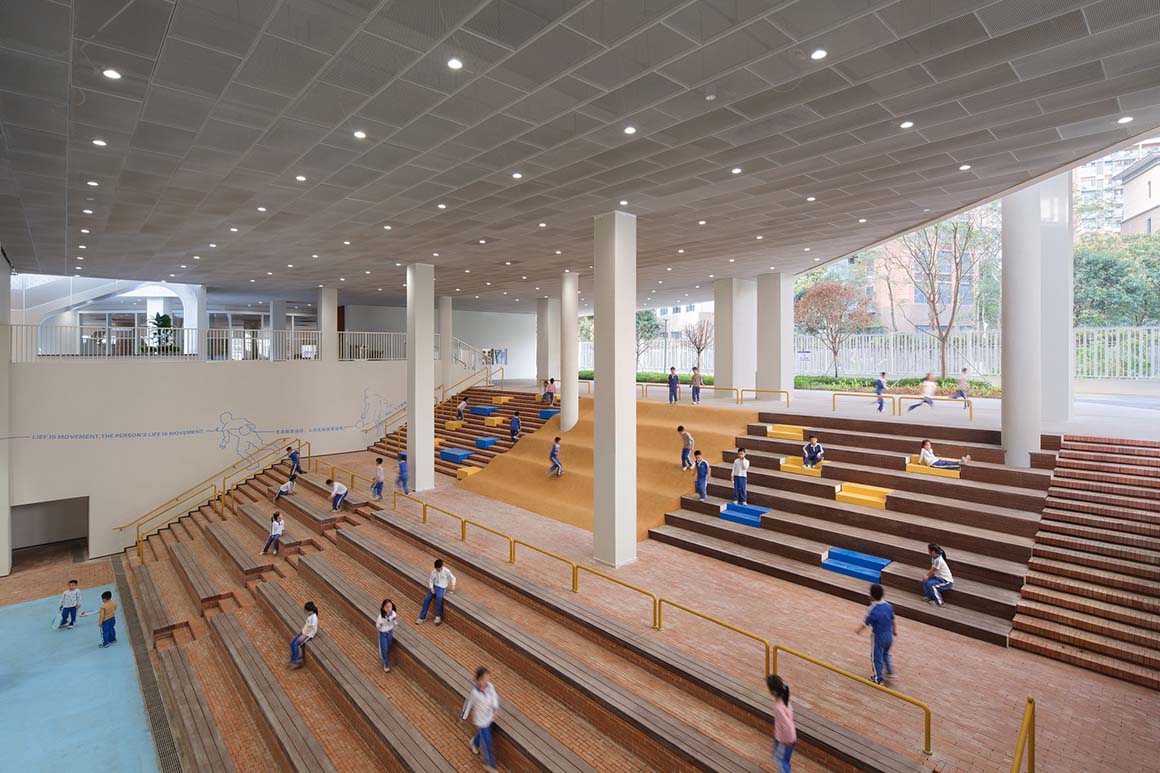
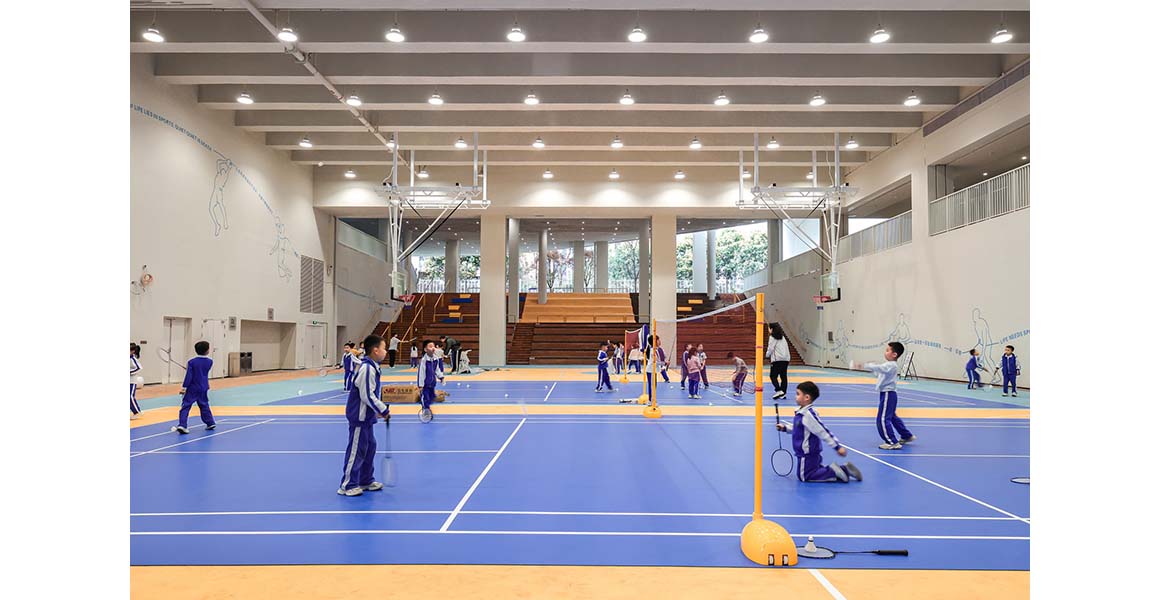
By contrast, Weiwu School, situated to the southwest, responds to an irregular site tightly enclosed by high-rise residential towers. To counter the pressure of this dense environment, the upper levels housing classrooms are shaped into gentle, curving forms that appear to embrace the children below, while the ground level is largely opened up. The resulting pilotis plaza functions as an open civic ground—a shared courtyard for the neighborhood—where a central sports field doubles as a venue for community events, reconnecting residents who had long been separated within the dense urban fabric.
2. Weiwu School
Project: Longgang Twin Stars / Location: Wulian Community, Longgang District, Shenzhen, China / Architect: URBANUS Shenzhen / Principal Architects: Meng Yan, Wen Ting / Client: Public Works Bureau of Longgang District, Shenzhen / Use: school / Design: 2021-2022 / Construction: 2022-2024 / Completion: 2025 / Photograph: ©TAL (courtesy of the architect)
Project: Weilong School / Project general manager: Zhang Haijun / Project manager: Zeng Yi / Project team: Zhu Hongrui, Gao Yunrui, Chen Jing, Dong Wenhan, Yao Xiaowei, Zhang Xuejuan, Gao Yufeng, Li Guanda, Ma Xiying, Pu Jinyan, Wang Tingxin, Deng Tingfang, He Yutong, He Jiamin, Liao Fuhua, Xu Zhihao, Tan Yongxian, Gong Yidan, Coming Home Enterprises & Xiangtian Chuangwen / Site Area: 31,567m² / Floor Area: 73,511m² / Bldg. scale: one story below ground, five stories above ground / Height: 24.0m / Structure: frame Structure / Materials: fair-faced concrete, coating, ceramic bricks, ceramic rods, ceramic panels, fiber cement board, aluminum expanded metal ceiling
Project: Weiwu School / Project manager and architect: Weng Hua / Project team: Zhang Chaoxian, Zhang yingyuan, Huang Jiahong, Liao Guotong (Architecture) | Zhang Xuejuan, Li Guanda, Wang Tingxin, Gao Yufeng (Landscape) | He Jiamin, Deng Tingfang (Interior) | Zhang Hui, Li Peiying, Guo Anran, Hu Xiaomai, Huang Xianwen, Zhang Yipei, Tan Yongxian, Gong Yidan, Coming Home Enterprises & Xiangtian Chuangwen / Technical director: Yao Xiaowei / Site area: 10,115.3m² / Floor area: 25,836m² / Bldg. scale: one story below ground, five stories above ground / Height: 25.5m / Structure: large-span cantilever steel structure + concrete frame structure / Materials: concrete, coating, cement tile, mosaic tile, aluminum expanded metal ceiling