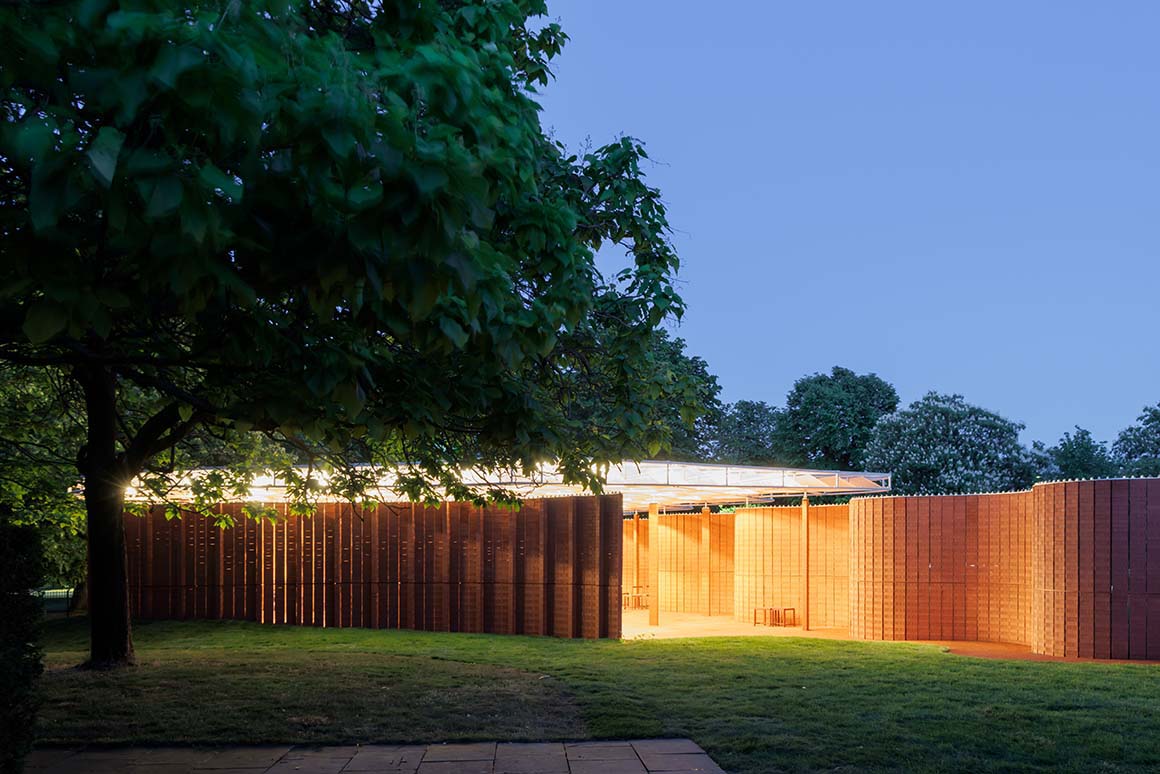







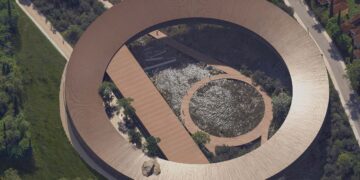


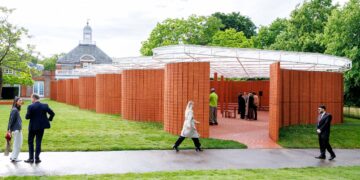



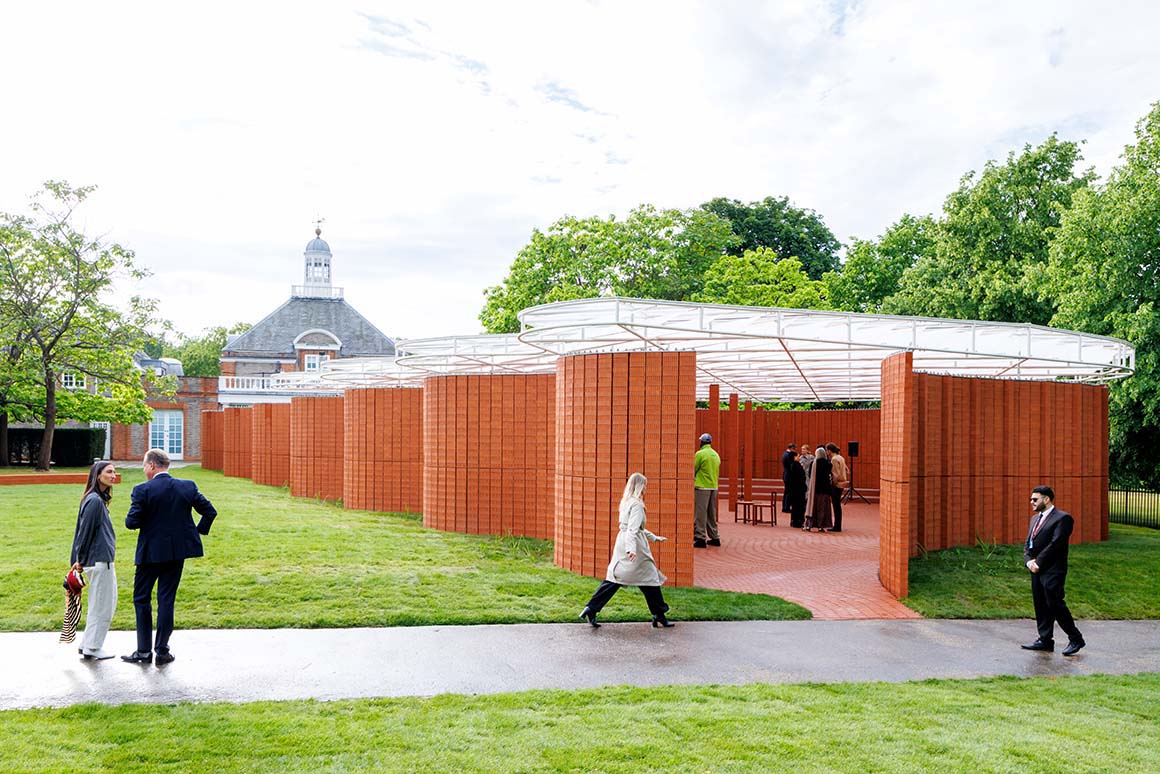
Every summer, the Serpentine Pavilion transforms the lawn of Kensington Gardens in London into a stage for architectural experimentation. Now in its 25th edition, the 2026 Pavilion — “a serpentine”, designed by Mexico City-based architecture studio LANZA atelier — opened on 6 June and runs through 25 October.
A Modern Reinterpretation of Traditional Masonry
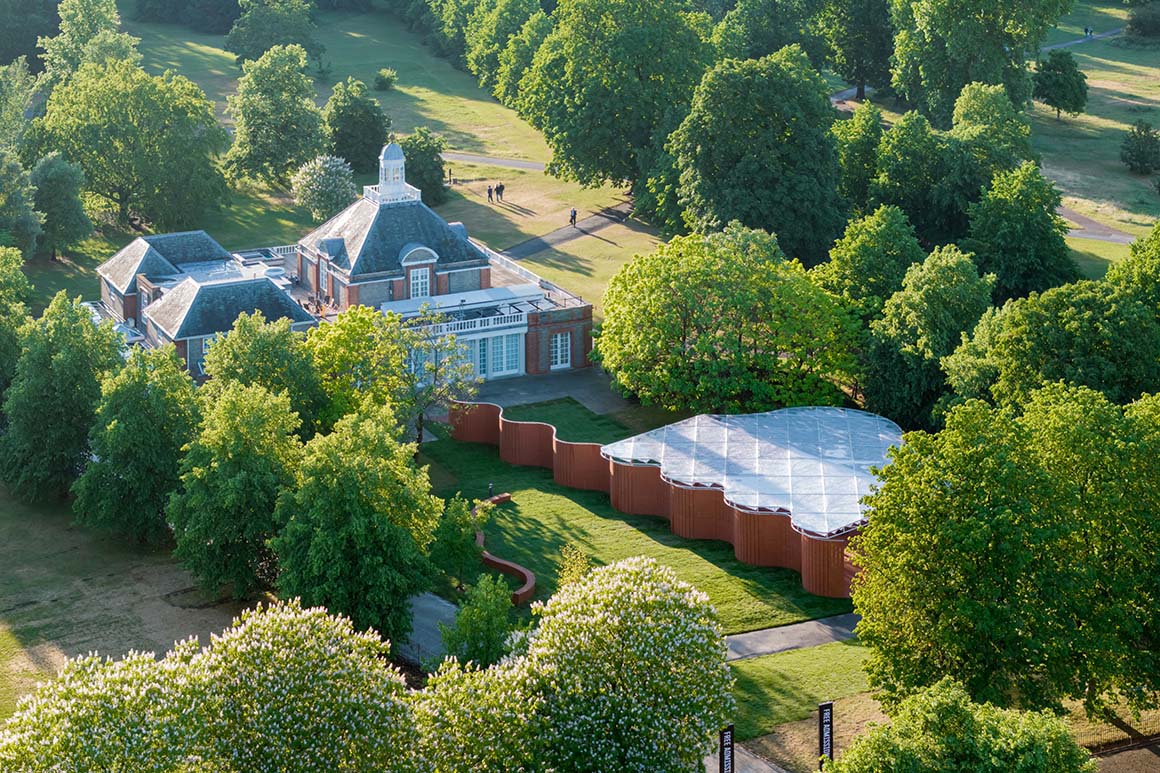
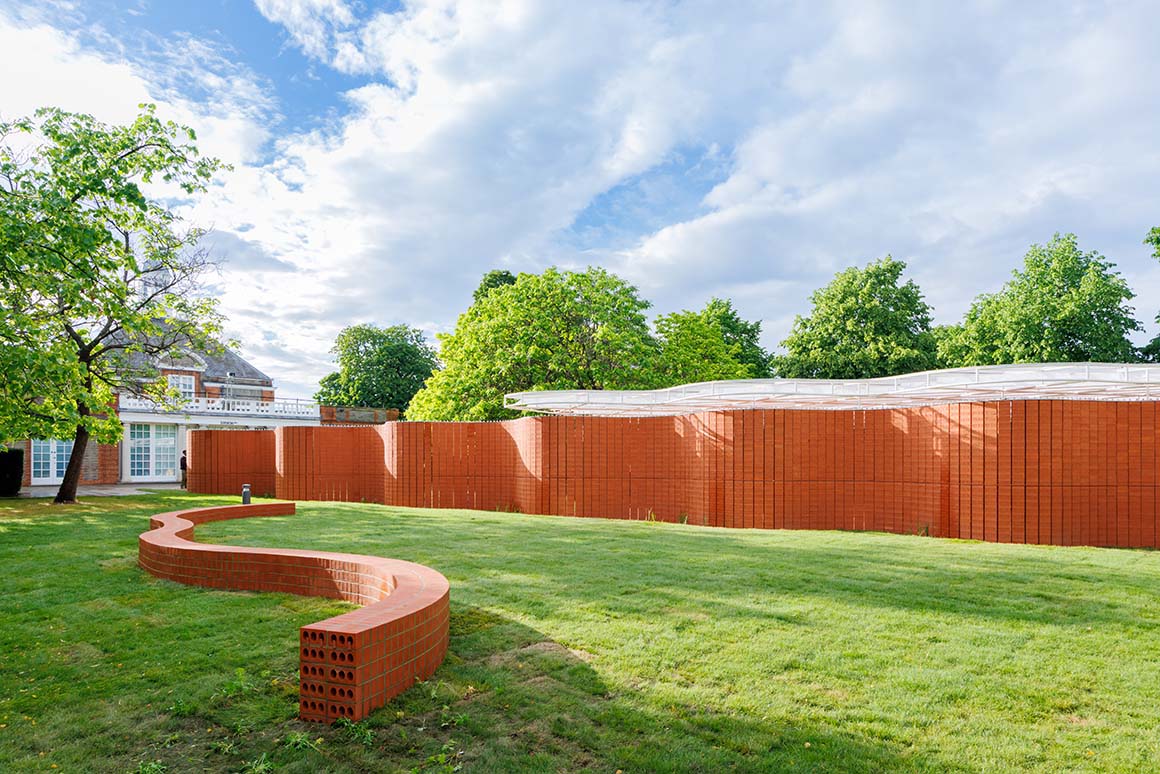
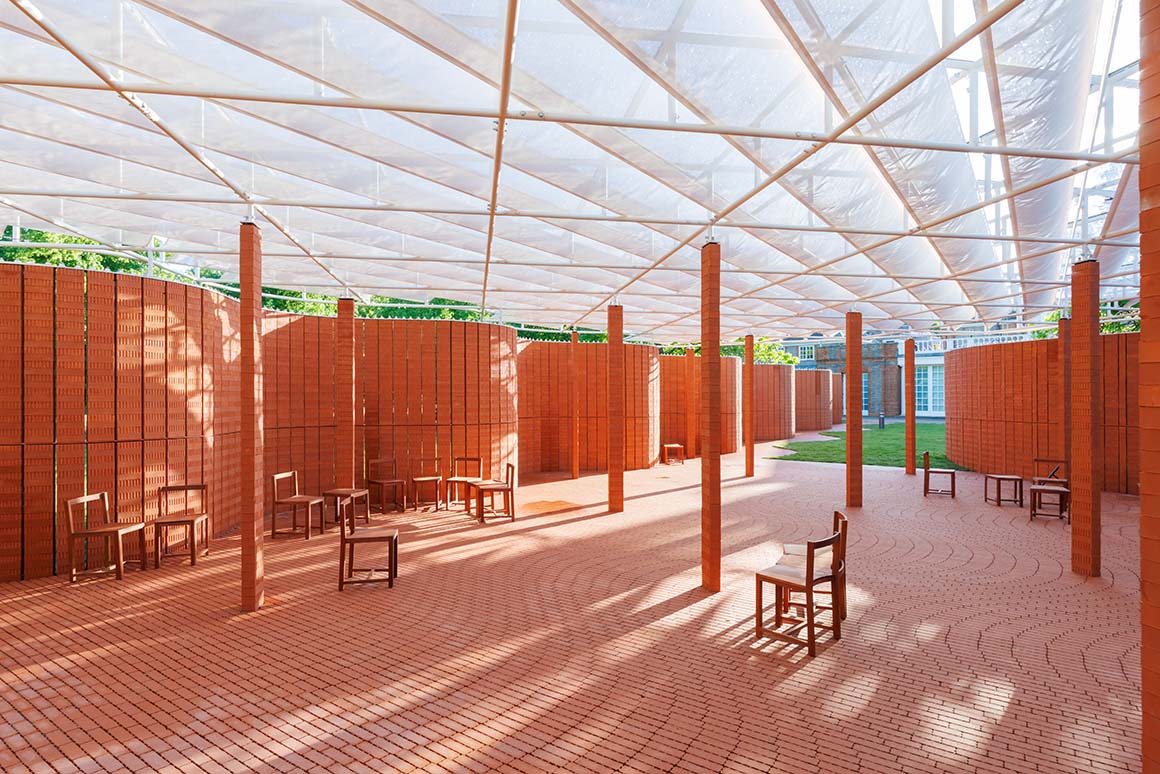
LANZA atelier’s “a serpentine” reinterprets the traditional crinkle-crankle wall, a curved masonry system historically used in English gardens to achieve structural stability with less material. The architects employ this logic as a geometric device to organize space and establish hierarchy. The pavilion consists of two primary walls: one guides visitors naturally, while the other follows the existing tree arrangement to maintain visual continuity. Rather than acting as fixed boundaries, these walls operate as spatial filters that choreograph movement, sightlines, and moments of pause.
Above, a thin and lightweight translucent roof softens and diffuses natural light, loosening the boundary between inside and outside. Combined with a rhythm of repeated structural elements, the walls create an interplay between solidity and permeability. As a result, the pavilion becomes an open environment where air, light, and views intersect.
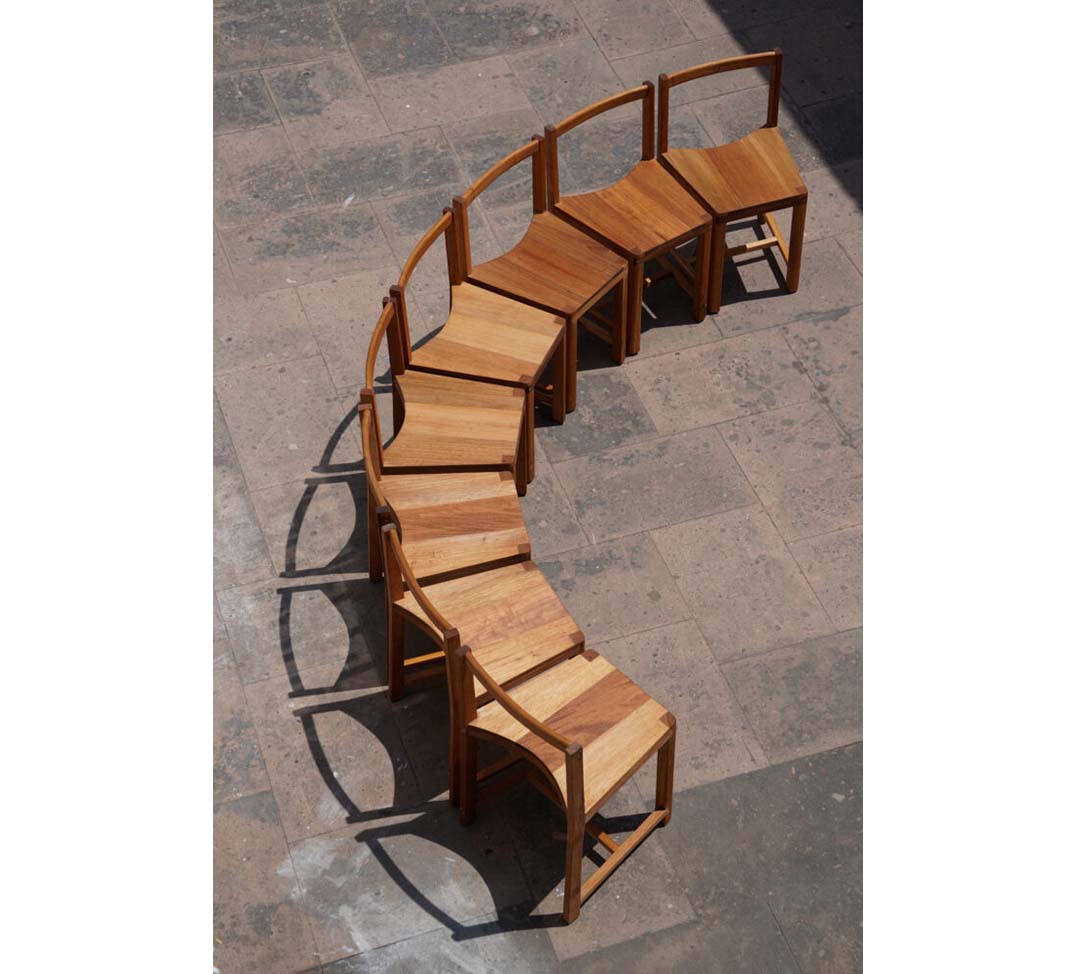
Brick was selected in reference to the historic architecture of the adjacent Serpentine South Gallery; while maintaining the materiality of traditional masonry, the curved geometry allows the structure to be read as a continuous surface. Locally produced sapele hardwood furniture further extends the project into an experiential environment. Rather than a fixed object, “a serpentine” is continually reconfigured through movement and interaction, inviting visitors to become active participants in shaping the space.

25 Years of History: A New Platform for Experimentation
Since its inception in 2000, the Serpentine Pavilion has served as a laboratory for contemporary architects to test bold forms and concepts. From Zaha Hadid to Frank Gehry, Rem Koolhaas, Herzog & de Meuron, Bjarke Ingels, SANAA, and Junya Ishigami, the program has featured an illustrious roster of architects. In 2024, Minsuk Cho became the first Korean architect selected for the commission with his “Archipelagic Void.”
For its 25th edition, the Serpentine Pavilion expands beyond a static structure into a multidisciplinary platform where architecture and culture intersect. Park Nights, which launched alongside the Pavilion’s opening, brings together music, poetry and performance to transform Kensington Gardens into a dynamic forum where architecture and art converge. The season also includes curator-led Saturday Talks and Family Days featuring outdoor workshops and hands-on art activities. To deepen the visitor experience, free on-site Wi-Fi allows guests to listen to an introduction by the architects, while a digital guide available through Bloomberg Connects offers further architectural context throughout the space. The Pavilion runs through 25 October; full programme details and tour bookings are available at the Serpentine website.
LANZA atelier was founded in 2015 in Mexico City by Isabel Abascal and Alessandro Arienzo with the aim of making meaningful contributions to the beauty of the world. Since then, the studio has been nominated for the Ibero-American Biennial of Architecture and Urbanism Award (2016), the Mies Crown Hall Americas Prize for Emerging Practice (2016, 2022), and Brick Award 21 (2021). The studio received the Architectural League Prize for Young Architects + Designers (2017) and the Emerging Voices Award (2023) from The Architectural League of New York. Following LANZA atelier’s first solo exhibition, New Work, at the San Francisco Museum of Modern Art (SFMOMA) in 2018, the studio’s work has been exhibited at the 12th São Paulo Architecture Biennale (2019), the Lisbon Architecture Triennale (2019), the Concéntrico Festival (Spain, 2021), and the Latin American Architecture Biennial (BAL 2023). In 2026, LANZA atelier will present a solo exhibition of its furniture designs at AGO Projects in Mexico City and is currently designing the Pavilion of the Republic of Kosovo for the 61st International Art Exhibition – La Biennale di Venezia.