
An Expansive Column-Free Space Defined by The Structural Order
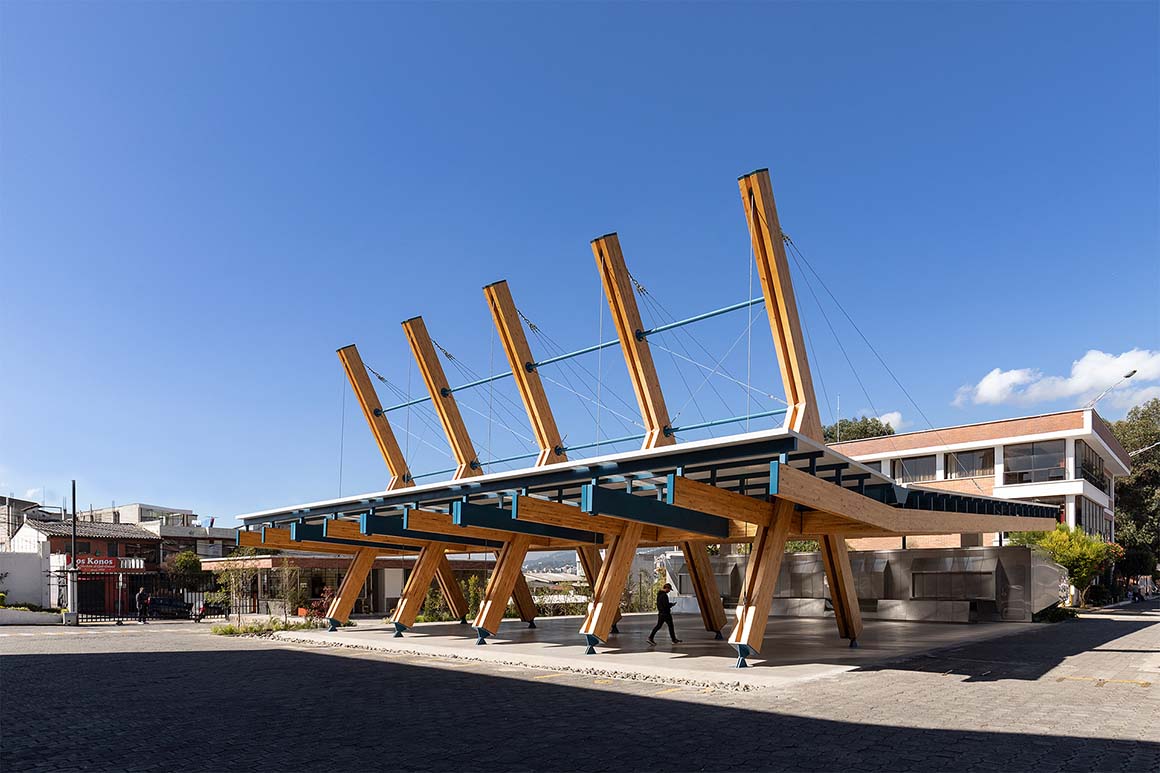
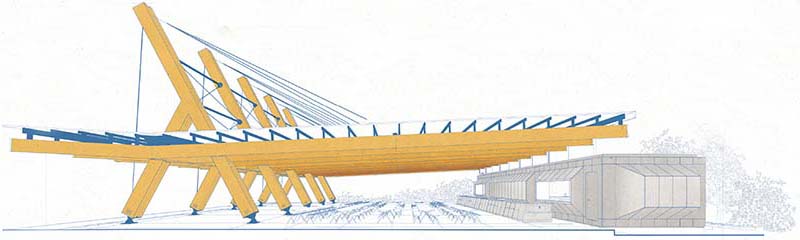
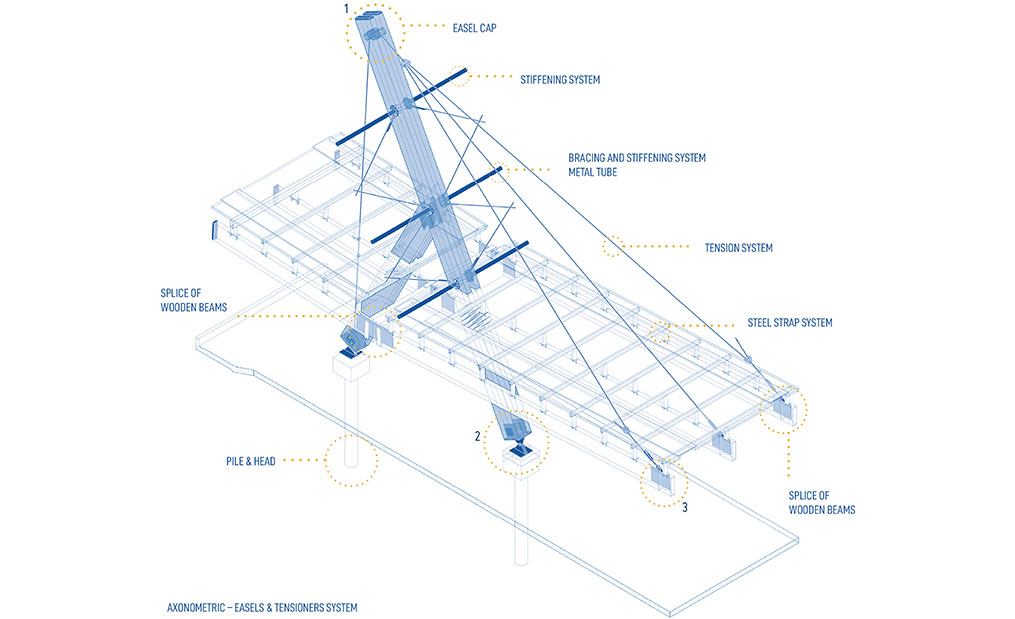
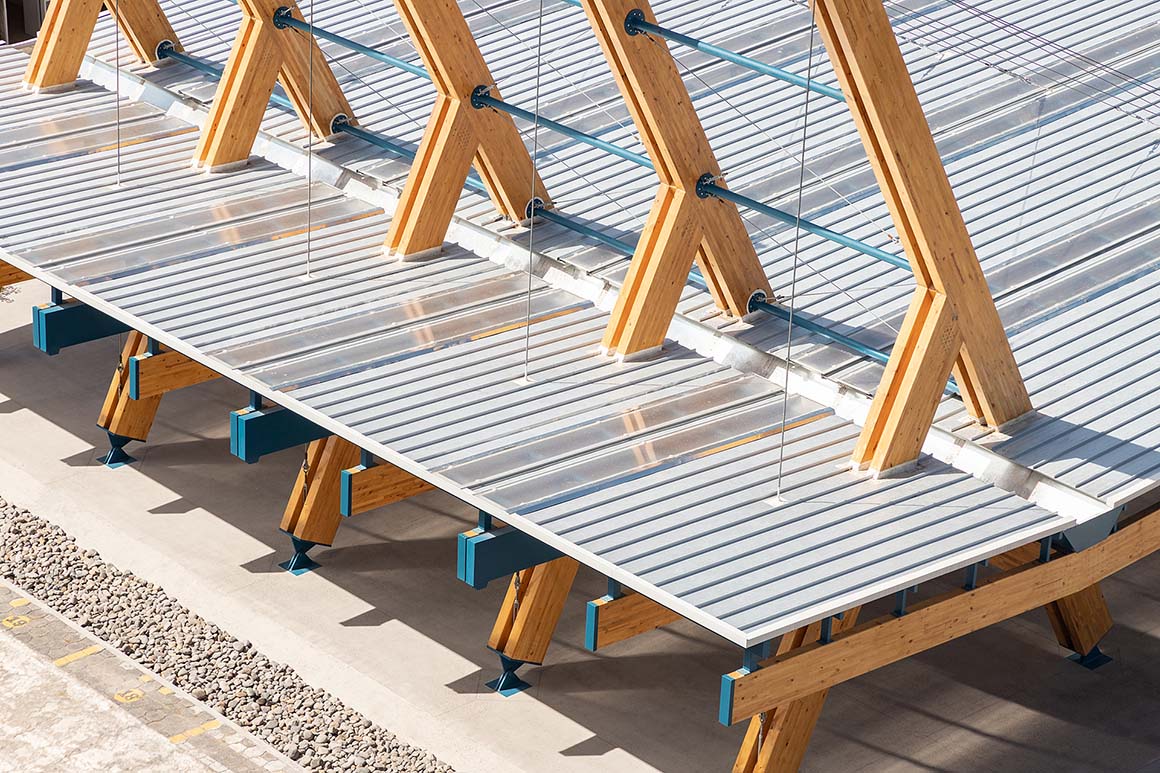
A new dining hall has taken shape on the campus of Don Bosco de la Kennedy in Ecuador, embracing the everyday life of its students. Accommodating up to 1,500 people within a limited area of 500m², the project minimizes internal structural elements to secure a spacious and open dining environment. The solution is a large timber system known as a trestle. Each trestle consists of two laminated timber columns forming an inverted Y-shape. Five of these units are arranged in sequence at four-meter intervals and linked by X-shaped steel cables. Together, they define the building’s structural order and architectural expression.
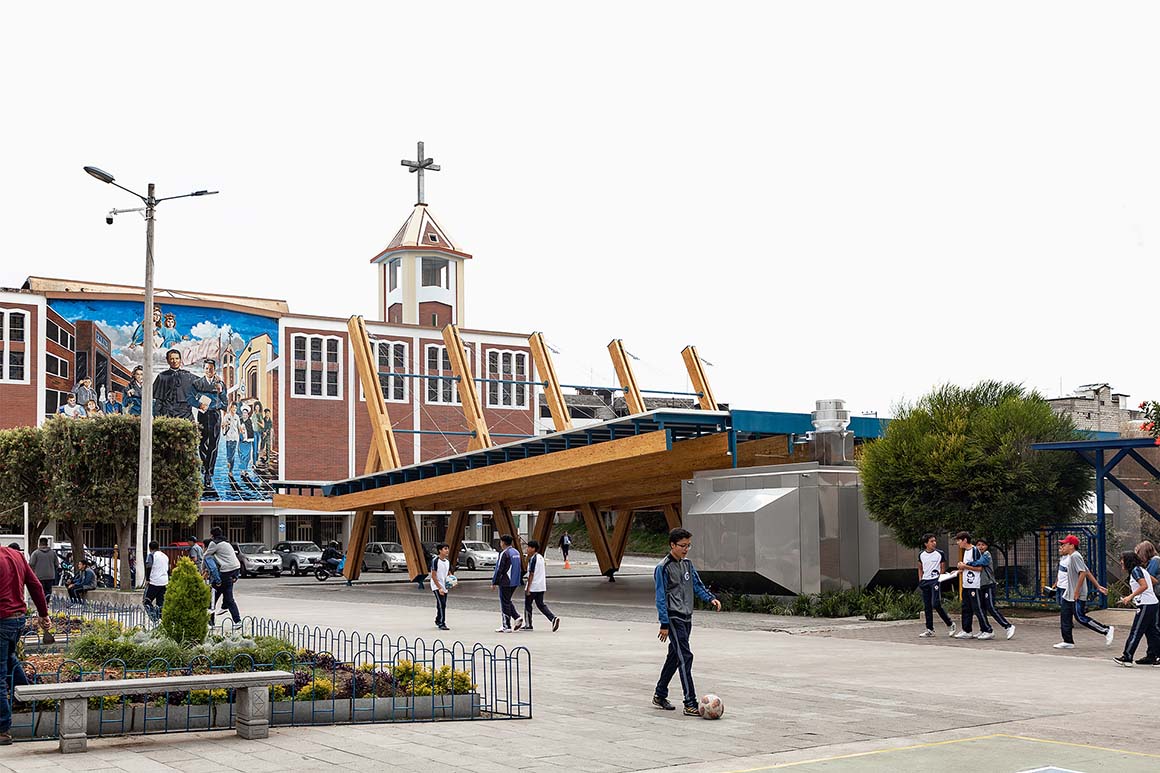
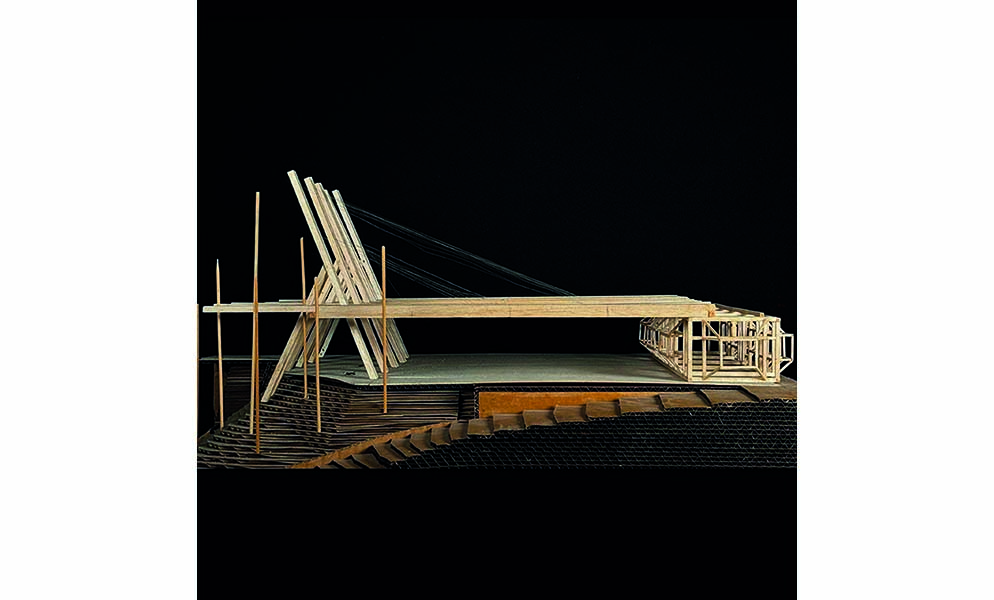
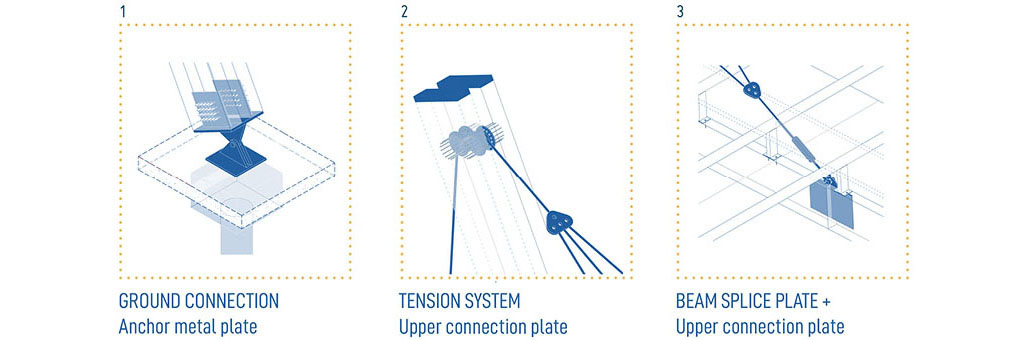
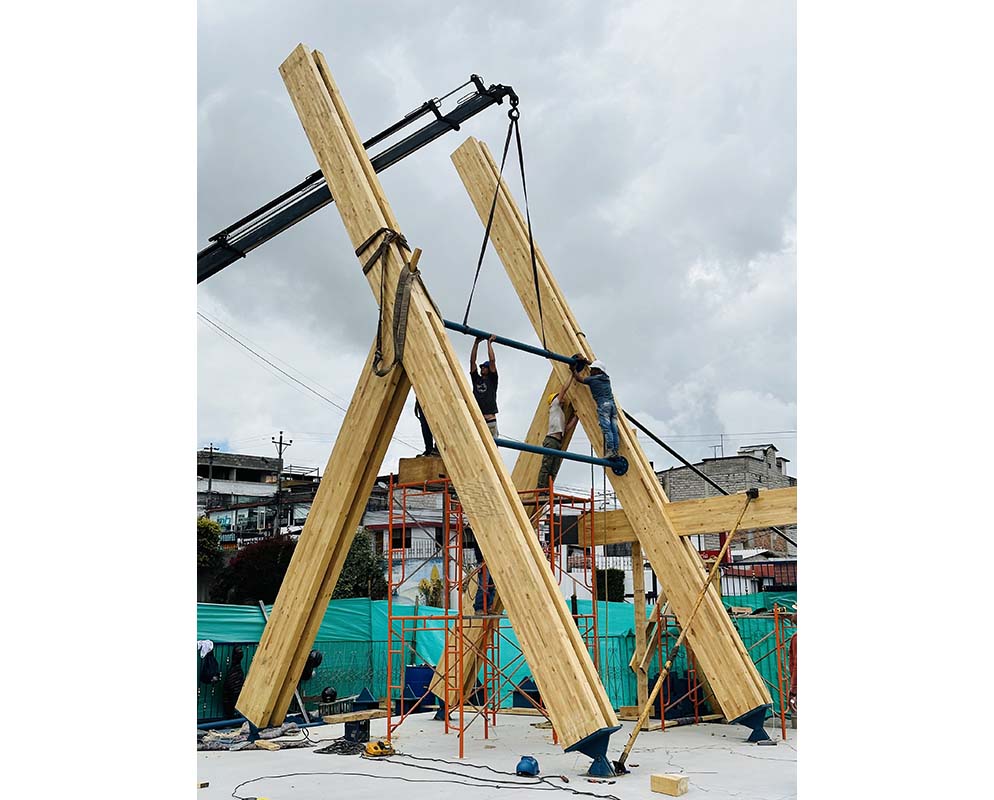
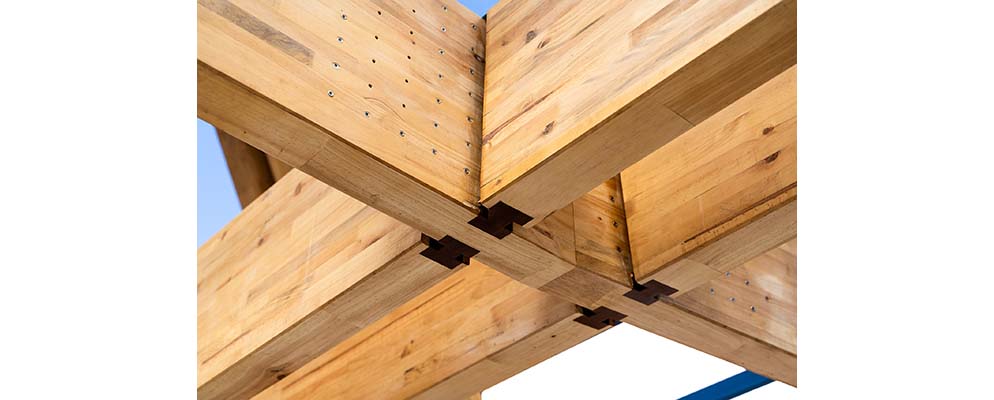
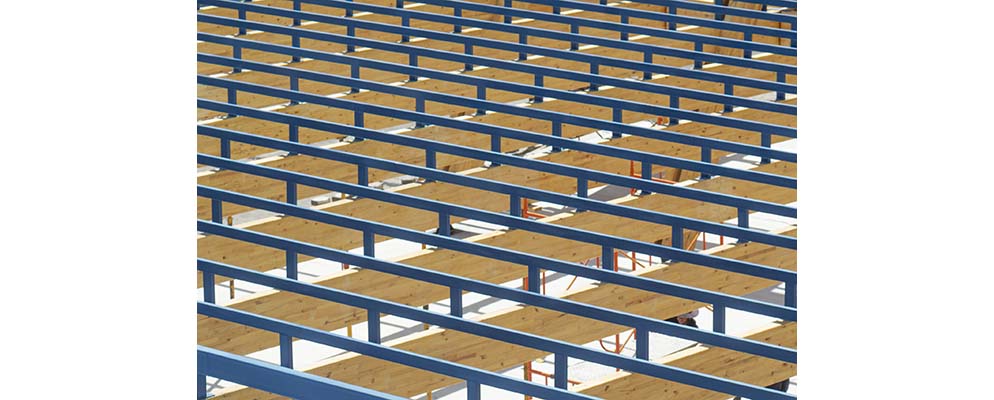
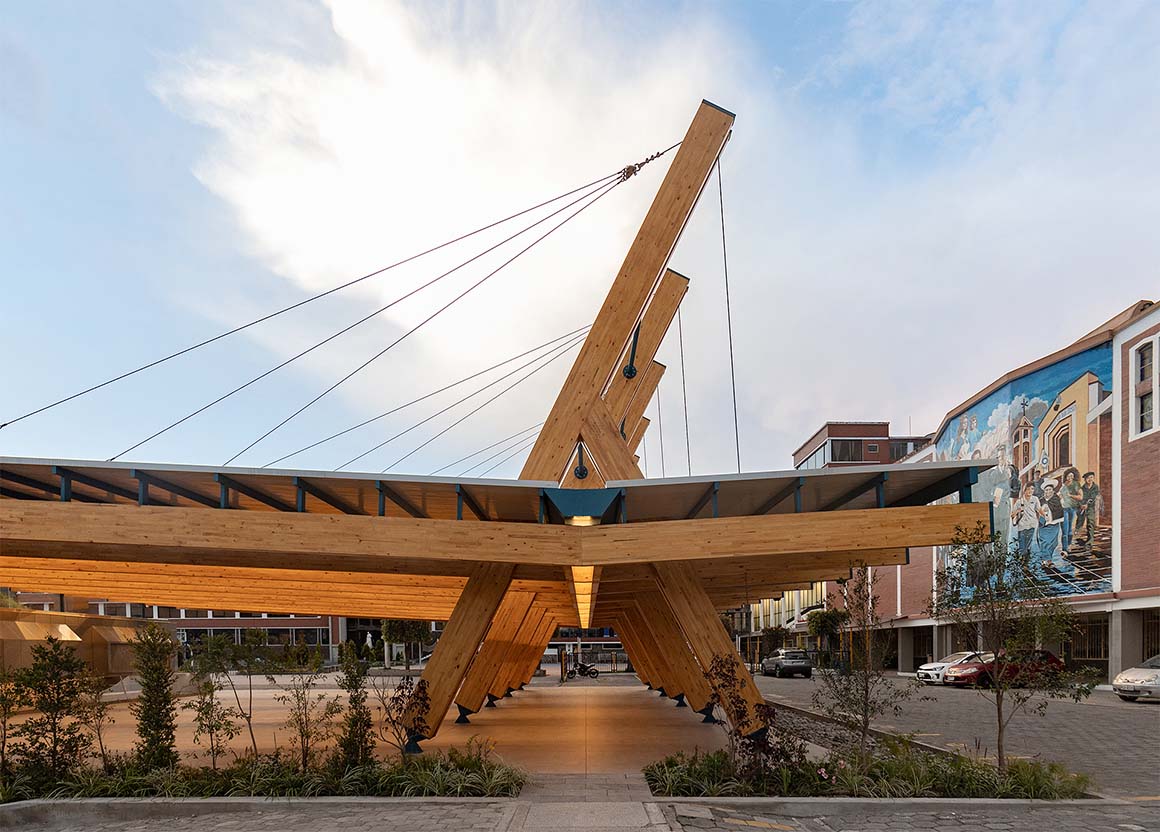
The interior is conceived as a large column-free space. Cables running through the trestles and a tension-based structural system transfer roof loads to a single steel plate at floor level. This allows the dining hall to remain unobstructed, creating a continuous interior space. Here, the structure functions not only as a load-bearing system but also as the primary element shaping the architecture. The roof further reinforces the spatial character of the hall. Thirteen timber beams, each 24 meters long, are arranged in sequence to form a broad ceiling plane, while transverse metal members support the layered metal roof above. Linear skylights bring daylight deep into the interior, emphasizing the rhythm of the repeated timber structure. The extended horizontal ceiling and column-free layout emphasize the hall’s expansive character while accommodating large numbers of users.
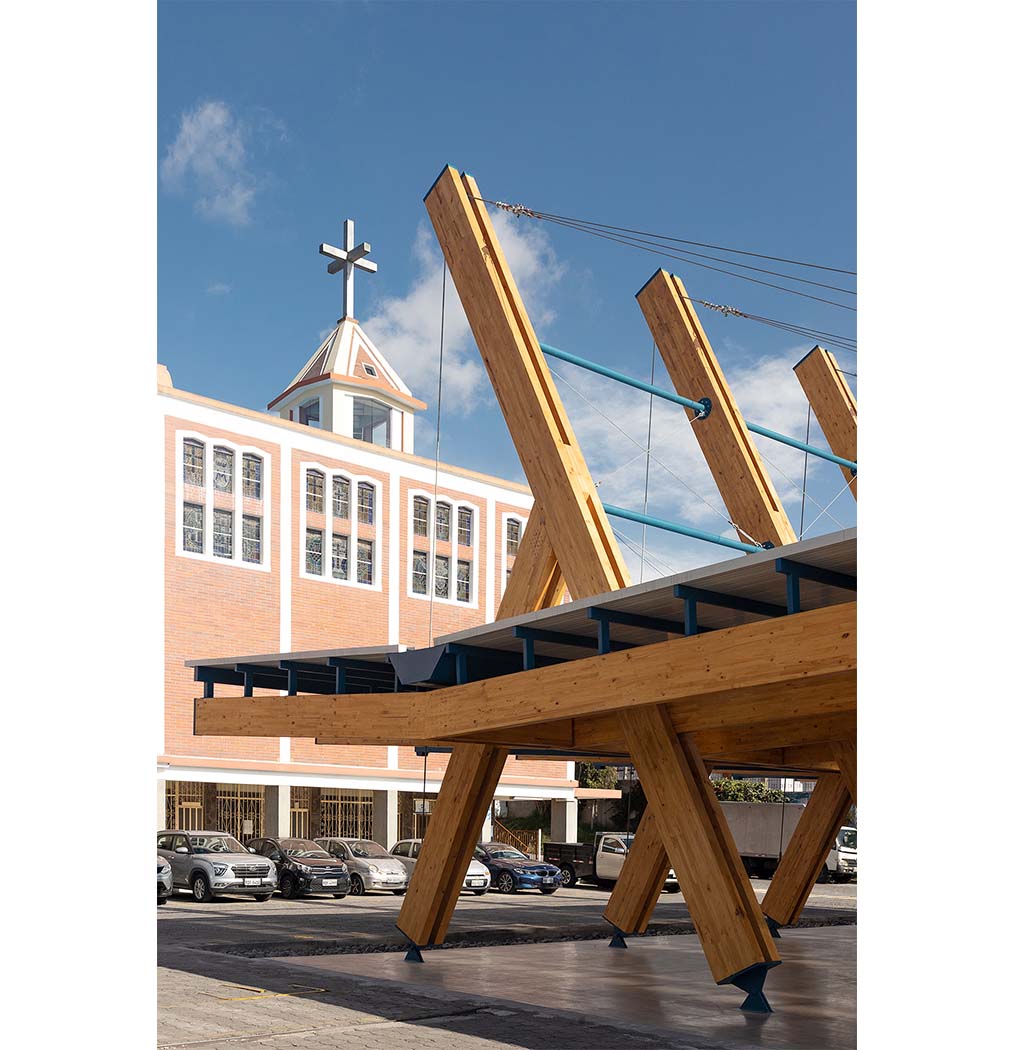
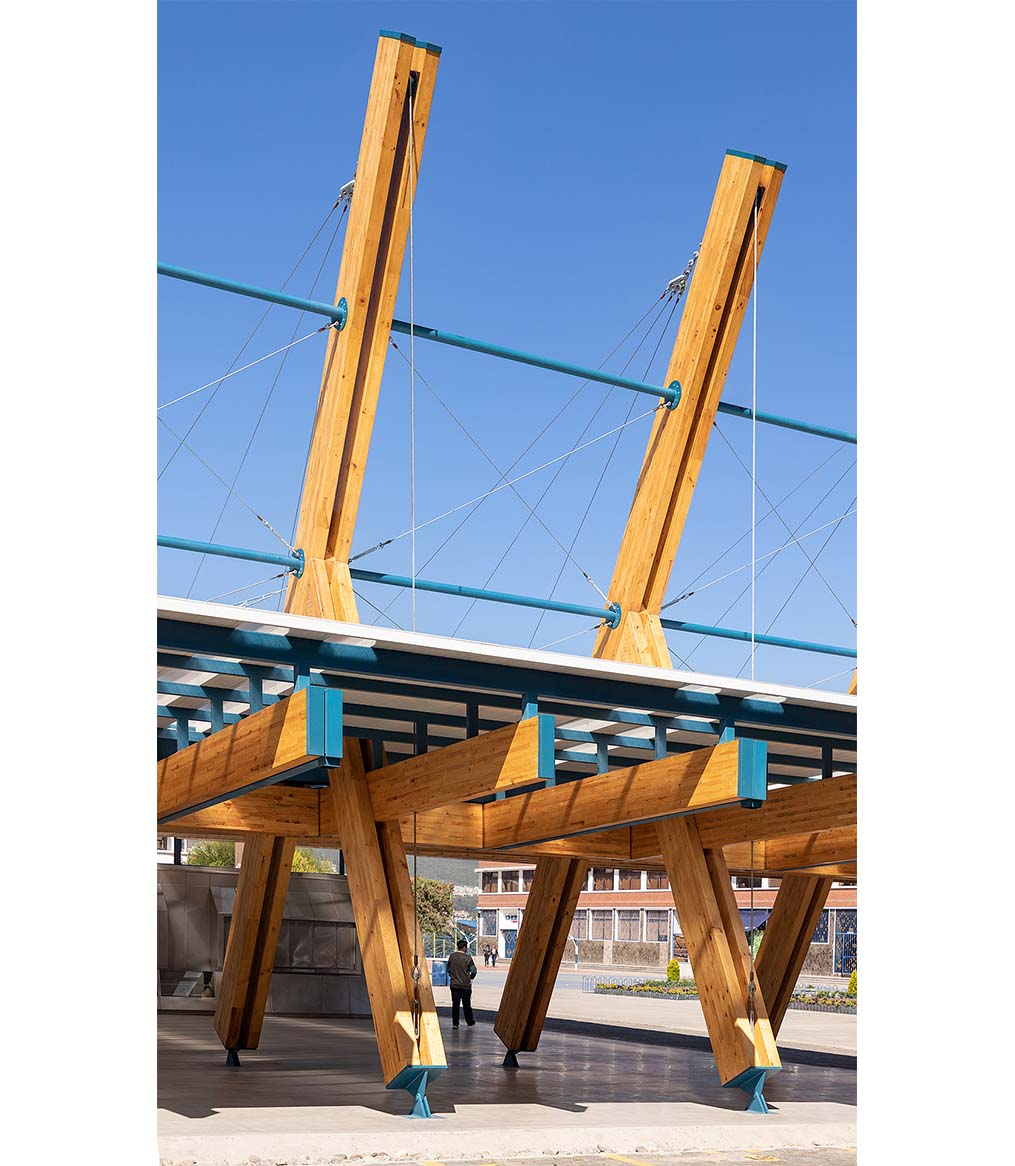
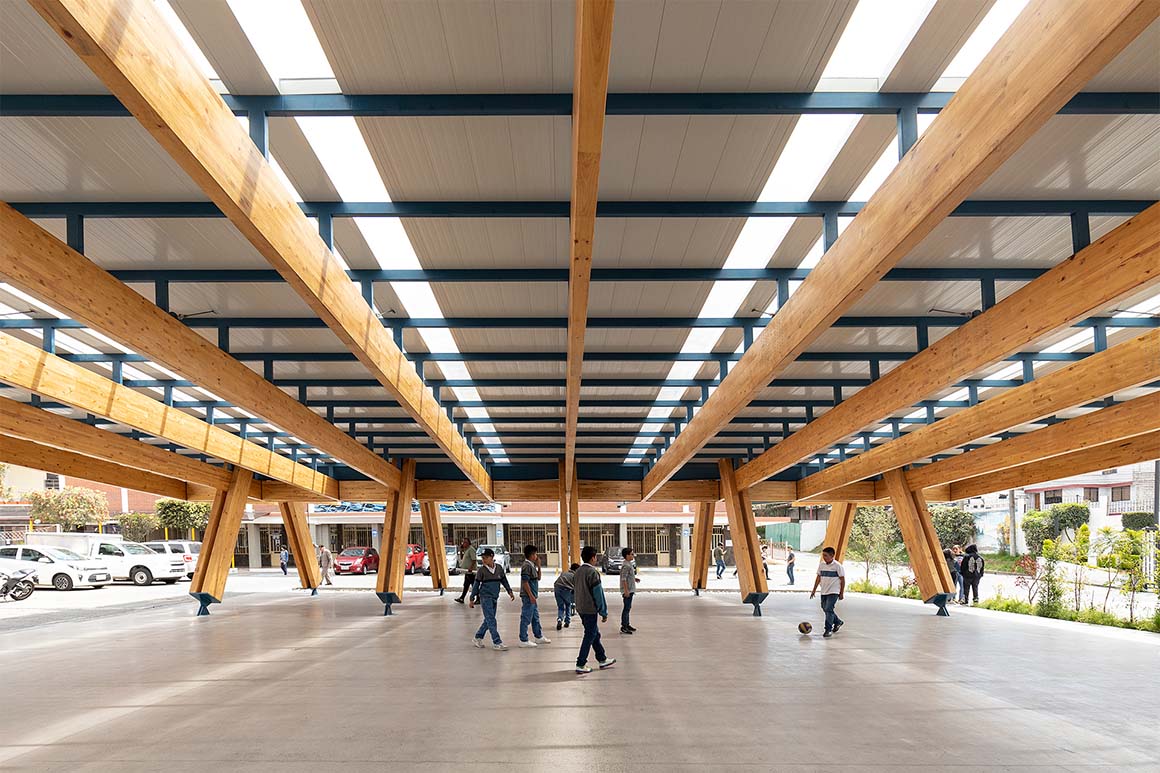
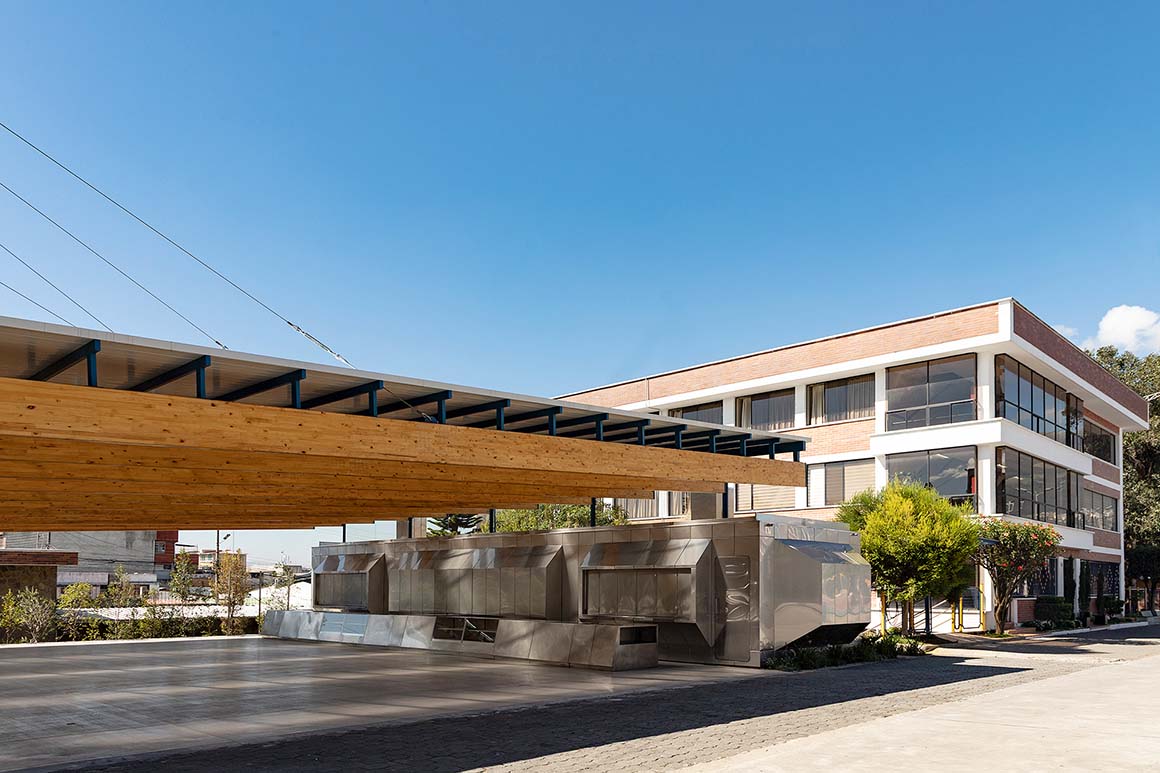
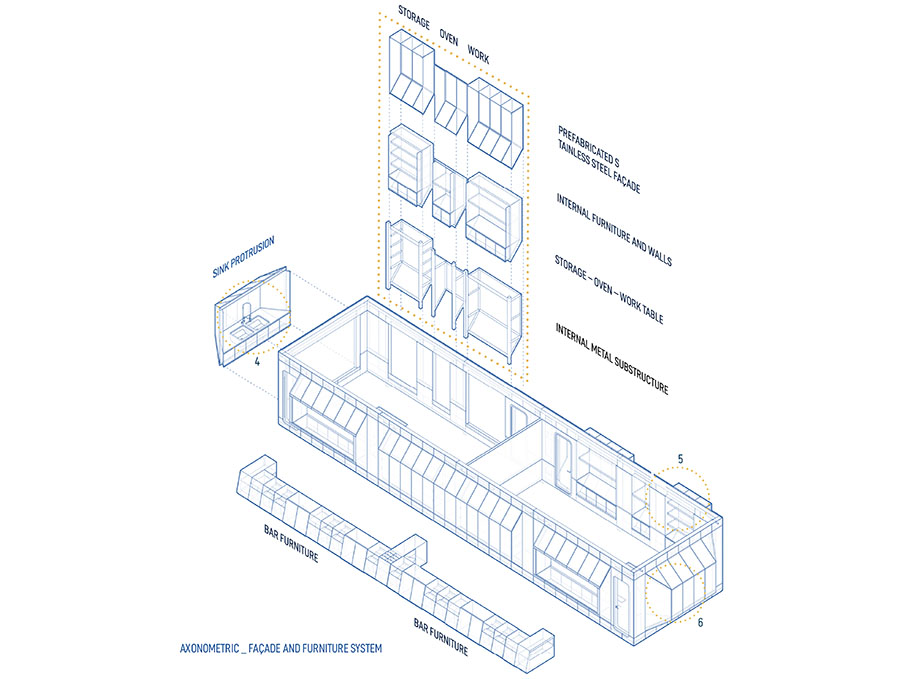
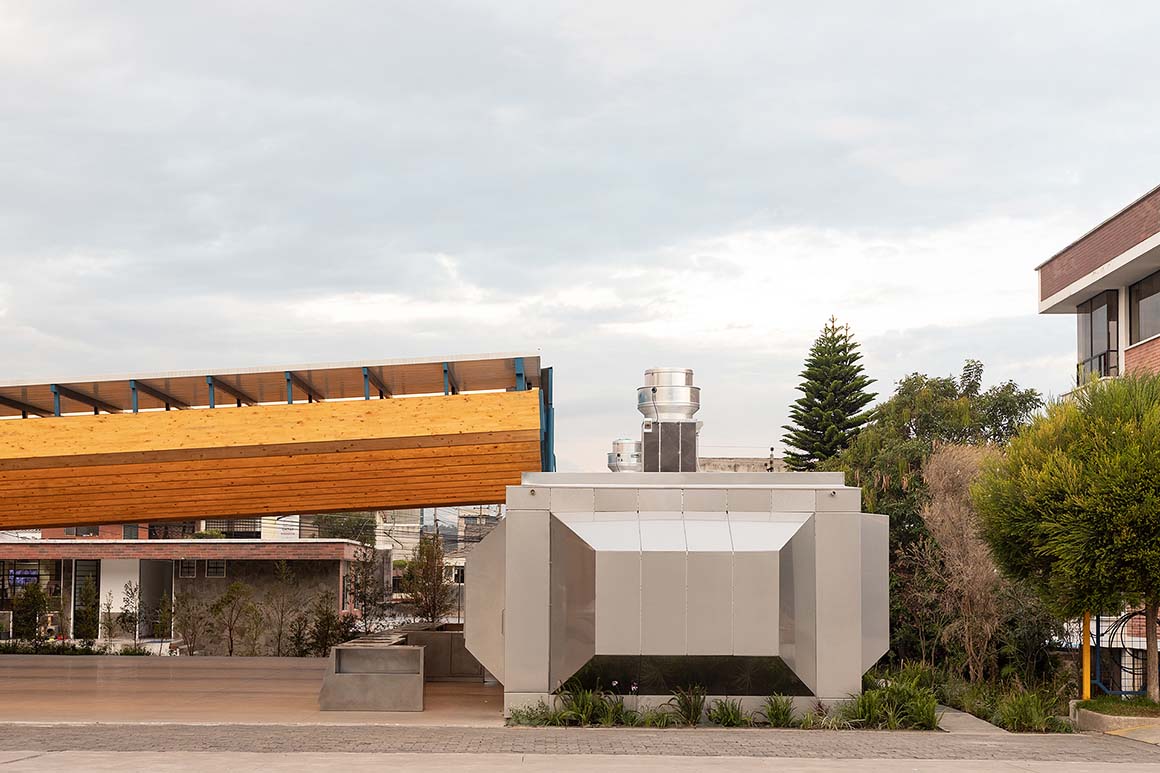
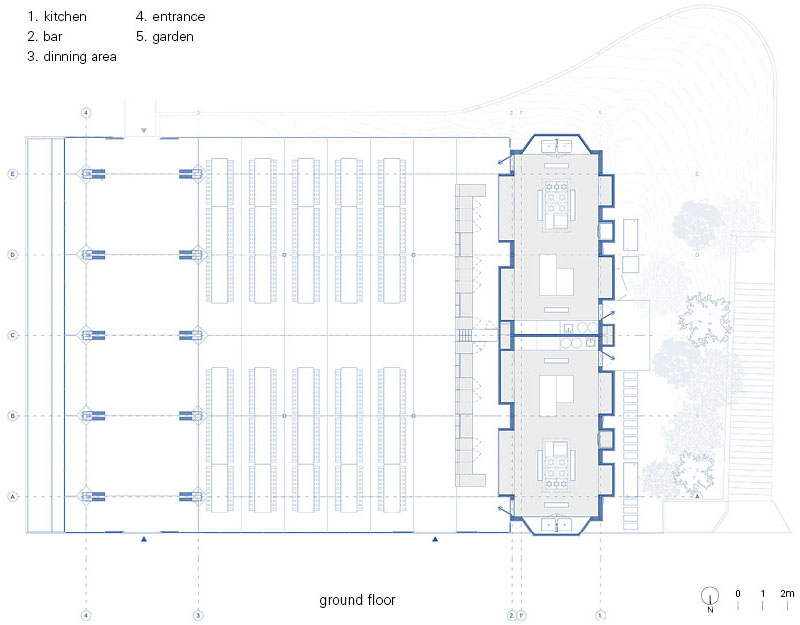
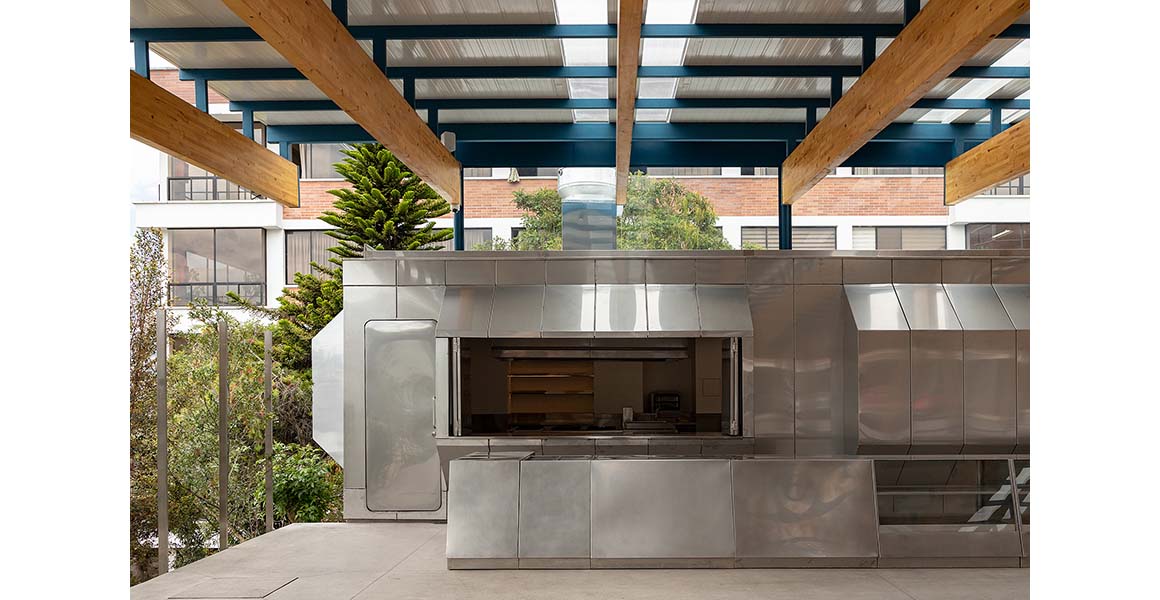
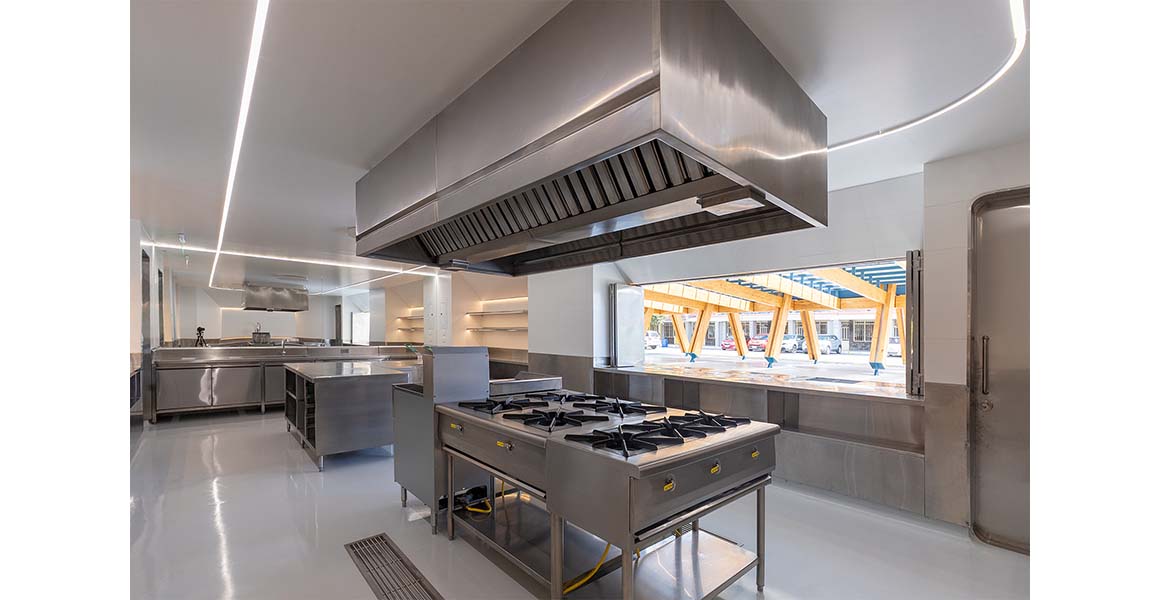
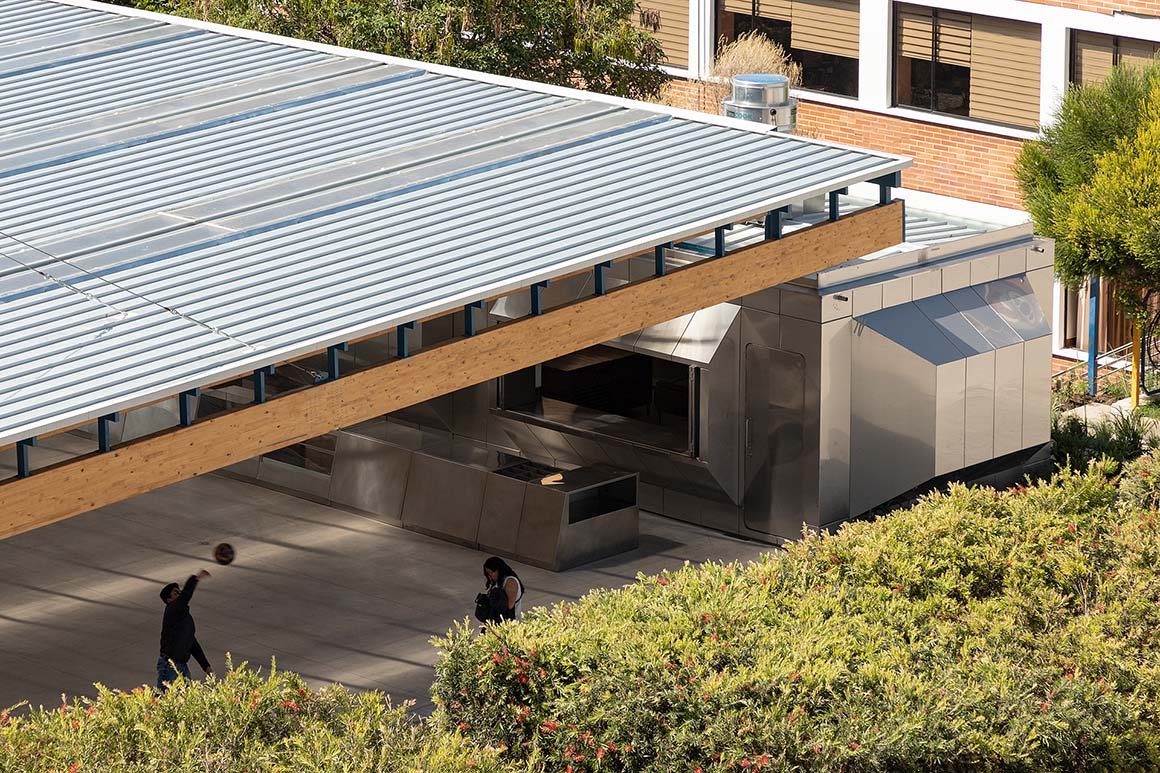
Material contrast also plays an important role. While the timber structure expresses warmth and natural texture, the kitchen and serving areas are clad in reflective stainless-steel panels that provide a durable and hygienic finish appropriate for food preparation spaces. The juxtaposition of timber and metal, warmth and coolness, clearly distinguishes the building’s different functions. From the exterior, the five trestles form a striking structural framework. Their repeated presence gives the building a strong identity while demonstrating the load-bearing capabilities of timber. Inside, continuous timber surfaces establish a clear spatial order and extend the material’s warmth throughout the hall.
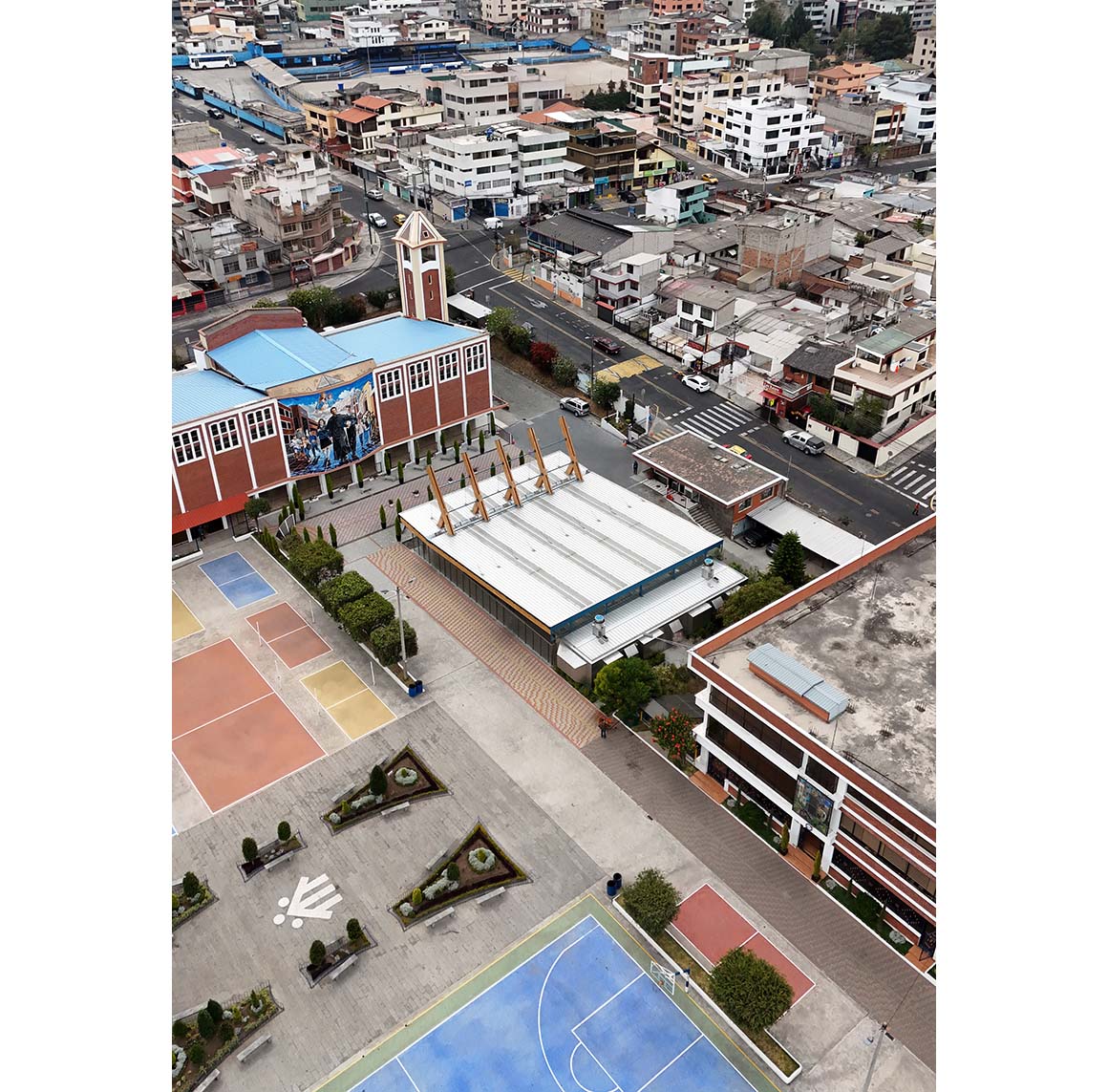
Beyond its role as a cafeteria, the building serves as a central gathering place for the school community. It accommodates breaks between classes, religious ceremonies, commemorative events, and a variety of school functions. The expansive column-free space supports these diverse activities, allowing the dining hall to operate not only as a food service facility but also as a shared communal space at the heart of school life.
Project: Don Bosco de la Kennedy Dining Hall / Location: José Rafael Bustamante, Quito, Ecuador / Architect: Studio BLUR / Project team: Aurelio Peñaherrera, Juan Sebastián Cardona, Darwin Sánchez, Nicolás Páez / Structural engineer: Pedro Ospina / Mechanical and plumbing engineer: HYDROGROUP / Electrical engineer: AELEC / Contractor: STUDIO BLUR / Client: Salesianos Ecuador / Use: education / Site area: 50,000m² / Bldg. area: 560m² / Gross floor area: 560m² / Bldg. scale: one story above ground / Structure: timber and steel structure / Exterior finishing: wood, stainless steel / Interior finishing: wood, ceramic tile / Design: 2022-2023 / Construction: 2023 / Completion: 2024 / Photograph: ©JAG Studio (courtesy of the architect); ©Isabel Delgado (courtesy of the architect); courtesy of the architect