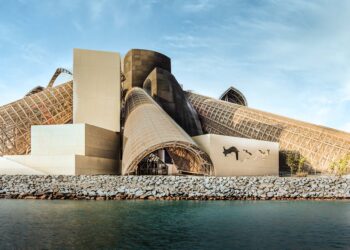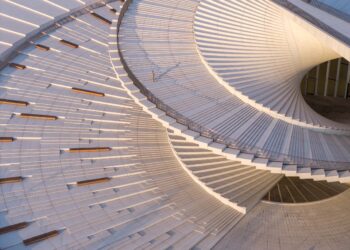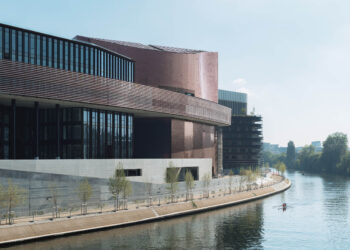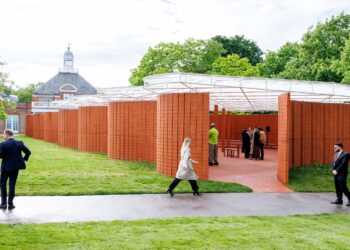

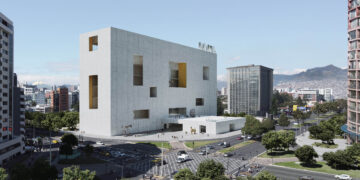
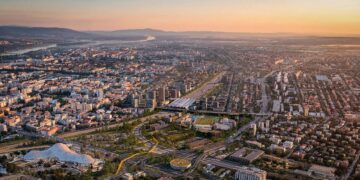
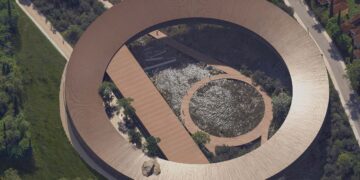
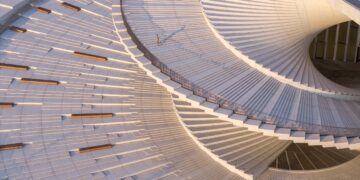
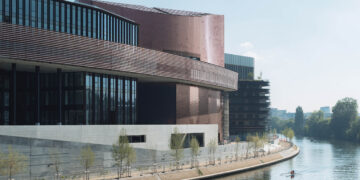
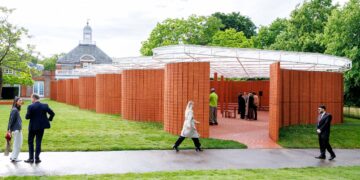

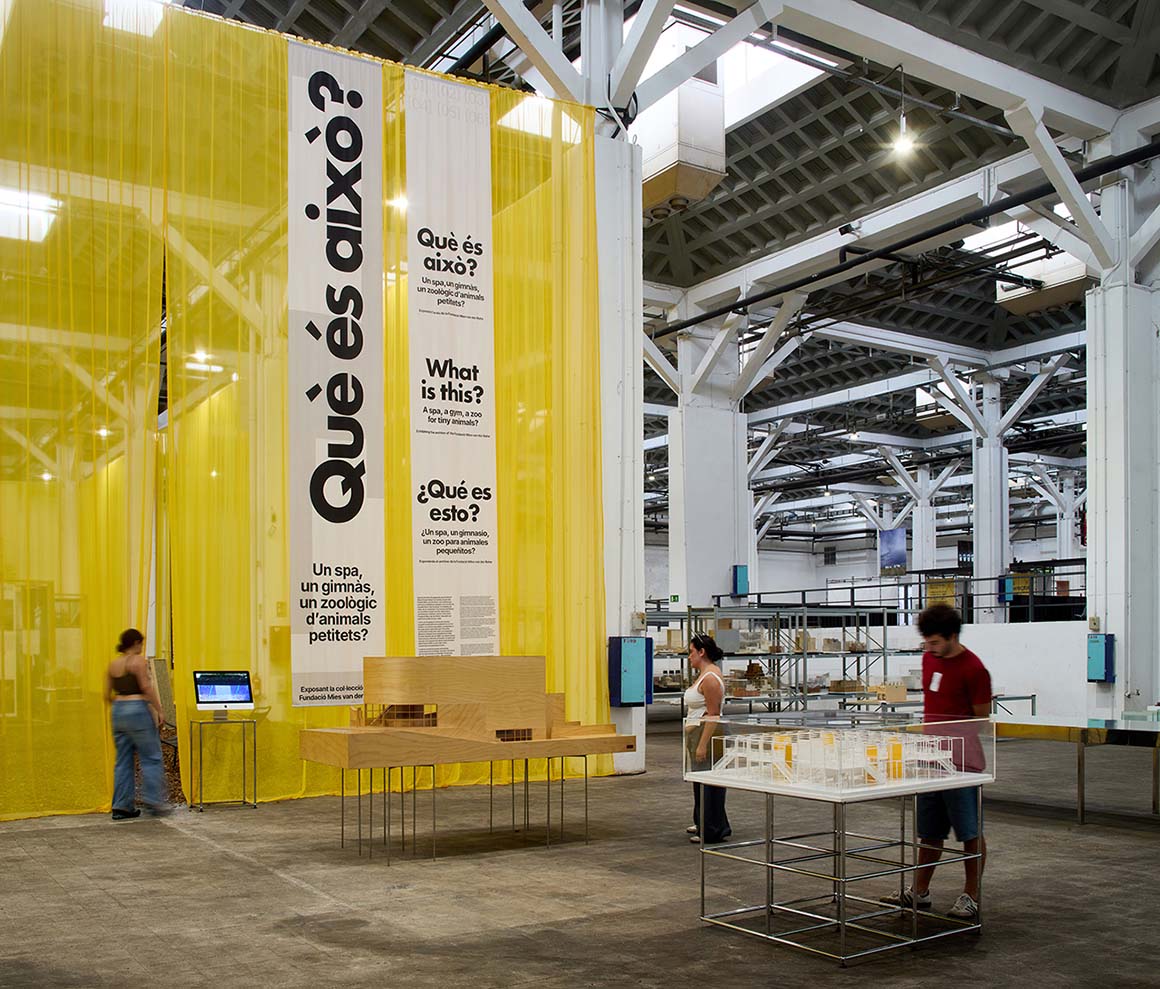
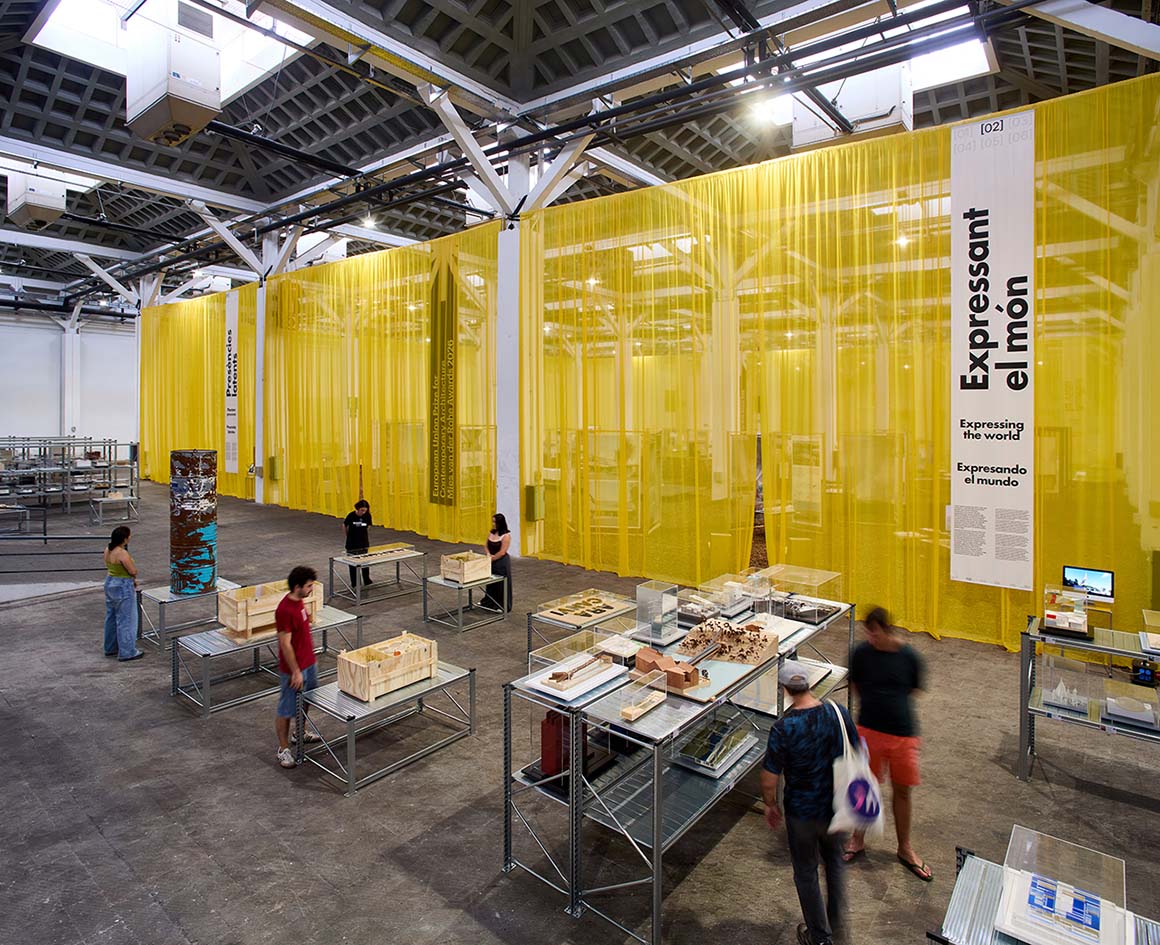
The Fundació Mies van der Rohe is presenting a landmark exhibition to mark Barcelona’s designation as the 2026 World Capital of Architecture. Hosted at the Palau Victòria Eugènia — built for the 1929 International Exposition — the exhibition brings together the Foundation’s entire collection for the first time: models, drawings, and videos spanning the full history of the EUmies Awards since its inaugural edition in 1988, alongside documentation of ephemeral interventions carried out at the Barcelona Pavilion over the decades. With over 500 works on view, the exhibition traces forty years of contemporary architecture. Ivan Blasi, Director of Awards and Program at the Foundation, described it as an opportunity “to witness and discuss how European architecture and cities have been shaped since the Barcelona Pavilion reopened in 1986.”
Six Themes, Six Perspectives
The exhibition takes its title from a question posed by Catalan philosopher Xavier Rubert de Ventós upon encountering the Mies Pavilion: “What is this? A spa, a gym, a zoo for tiny animals?” True to that provocation, the show treats the Foundation’s collection not as a preserved legacy but as a critical lens through which to examine architecture today. The argument unfolds across six thematic sections.
‘Latent Presences’ uncovers the hidden memories and social dynamics embedded in the Pavilion. An installation reconstructing the furniture and interiors co-designed by Lilly Reich, whose contribution has long gone unacknowledged, is presented alongside Andrés Jaque’s work exposing the infrastructures and social networks that sustain the Pavilion experience, and the model of David Chipperfield’s Neues Museum in Berlin.
‘Expressing the World’ takes its cue from Mies’s own words — “I don’t want to change the world. I only want to express it” — gathering works that treat industry and technology as the core of architectural expression. An installation recreating the Pavilion’s columns from recycled industrial drums, a model by Zaha Hadid, and an original drawing by Norman Foster together demonstrate how technical thinking translates into contemporary architectural vision.
‘The Domestic’ focuses on the scale of housing and everyday life. Lacaton & Vassal’s installation Never Demolish anchors the section, making the case that reuse and repair offer a more viable future for urban housing than demolition.
‘Material Imaginaries’ experiments with the relationship between matter and space through light, color, and transparency. SANAA’s acrylic curtain installation, which transformed the Pavilion through reflection and layering, and Peter Zumthor’s large-scale model of the Kunsthaus Bregenz are presented together as the results of this material exploration.
‘Embracing Life’ activates the Pavilion as a living ecosystem, bringing together works that incorporate vegetation, water, and natural processes into architectural space. Spencer Finch’s installation inspired by a Japanese garden and Snøhetta’s Norwegian Wild Reindeer Pavilion model explore how architecture can sustain rather than suppress life.
‘On the Sidelines’ closes the exhibition by bringing marginalized histories and social contexts into the Pavilion. Rudy Ricciotti’s Rivesaltes Memorial Museum and BIG’s Superkilen — a public park conceived through radical community participation — argue for architecture as a tool of inclusion.
EUmies Awards 2026: On Repair and Pre-existence
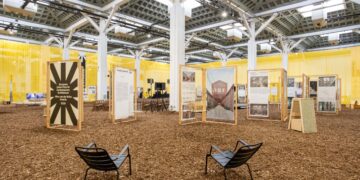
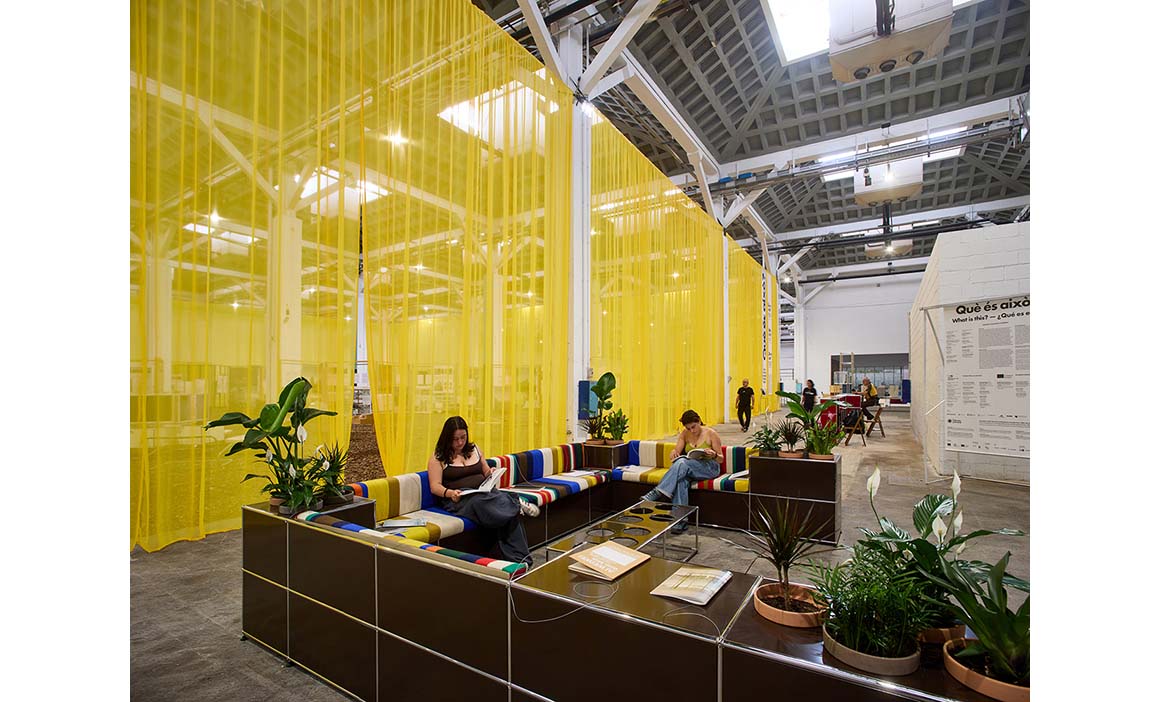
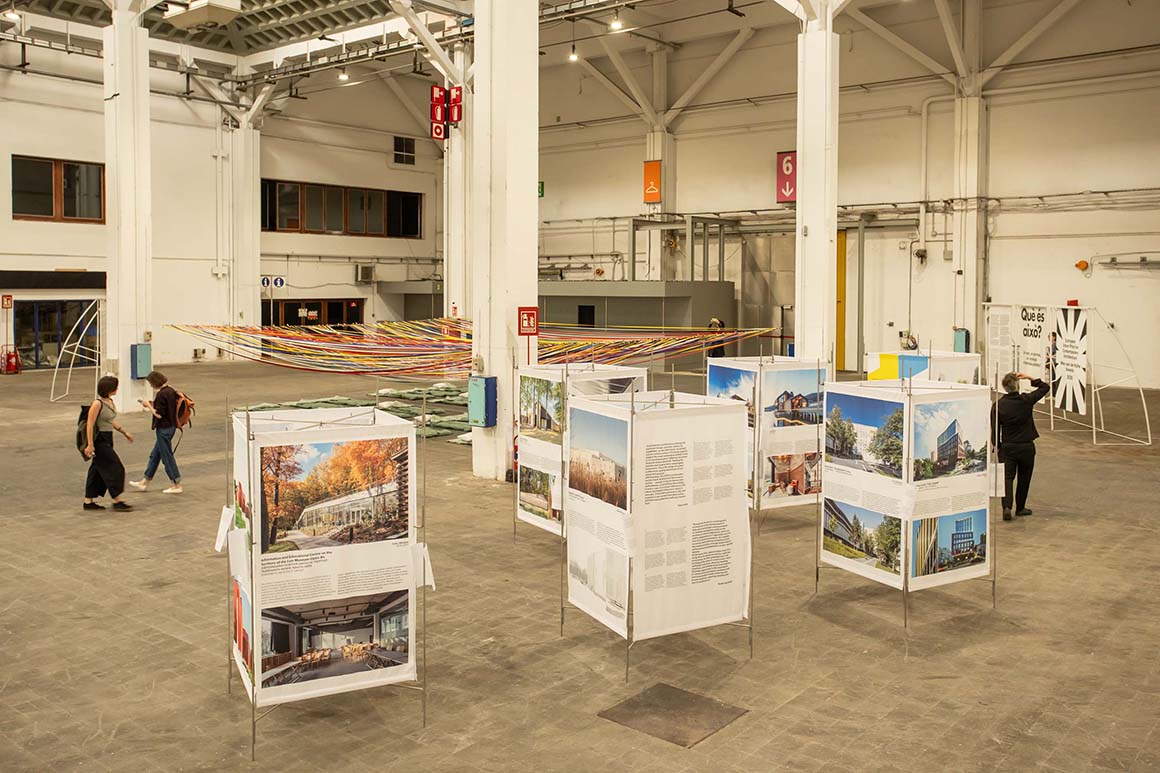
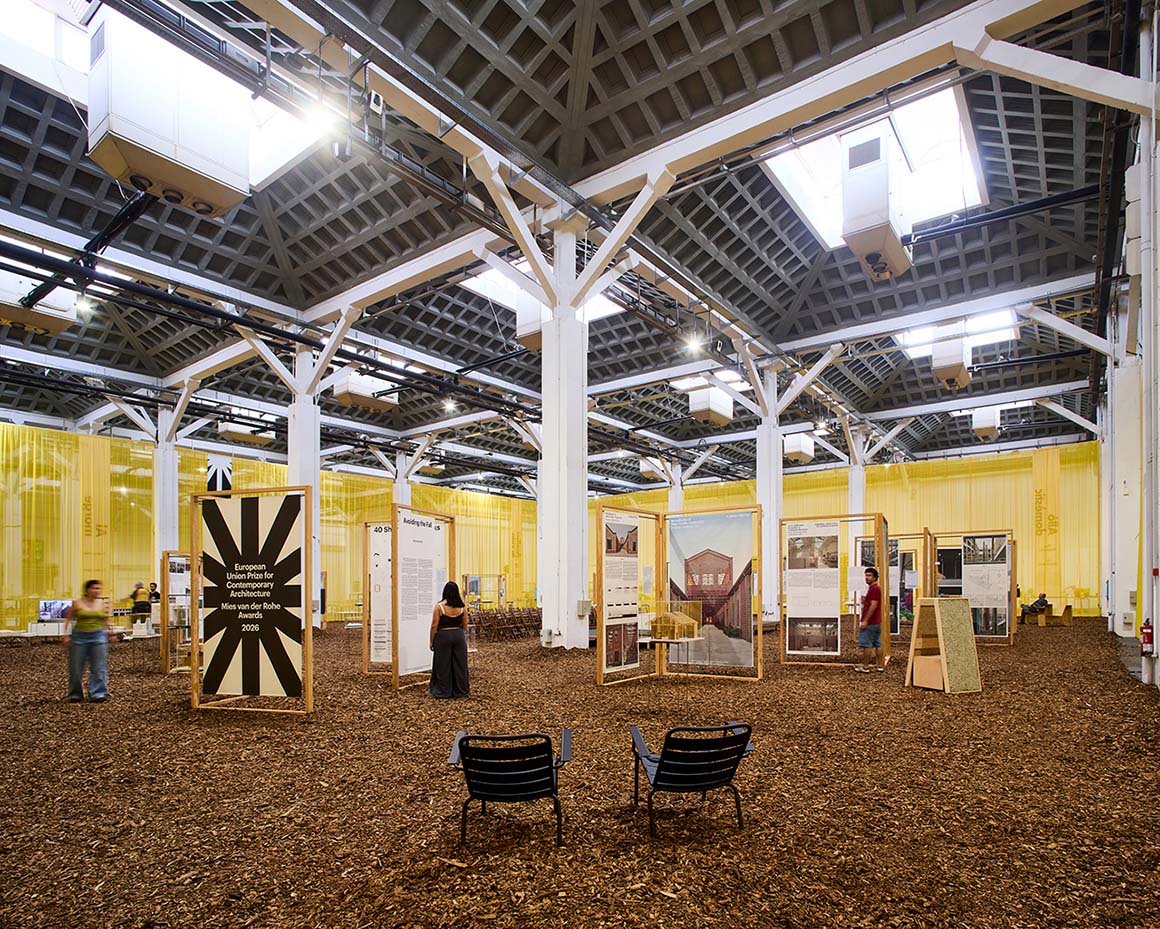
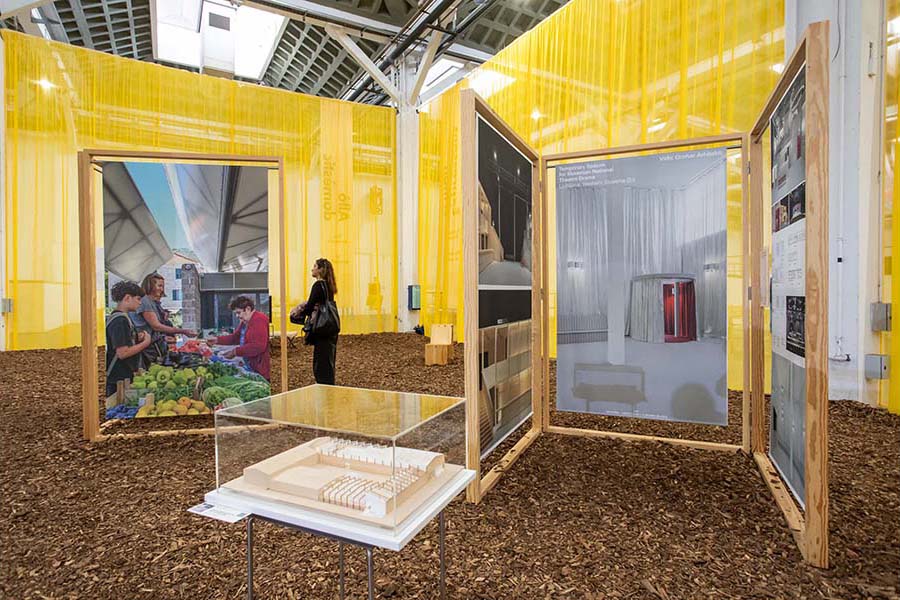
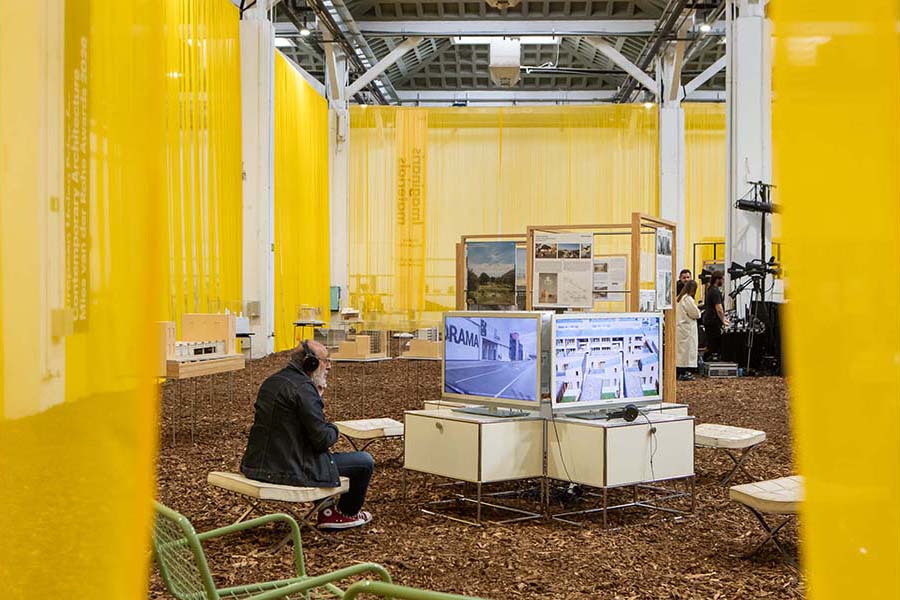
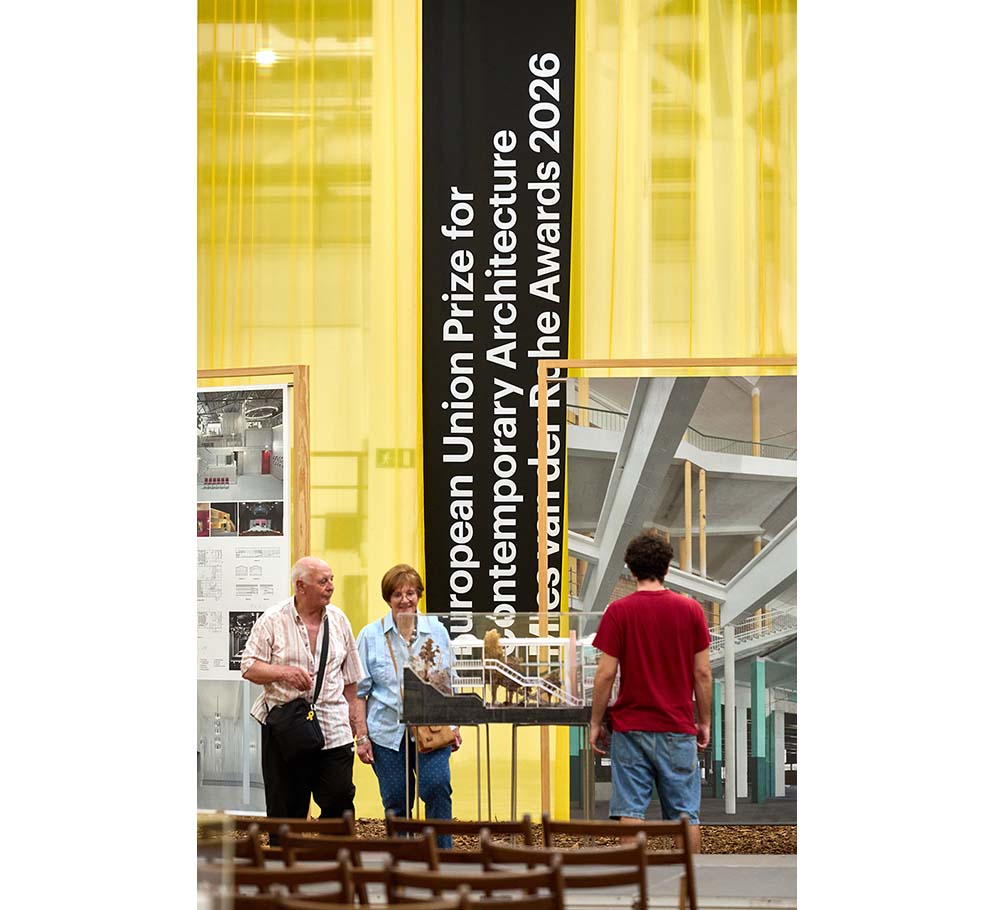
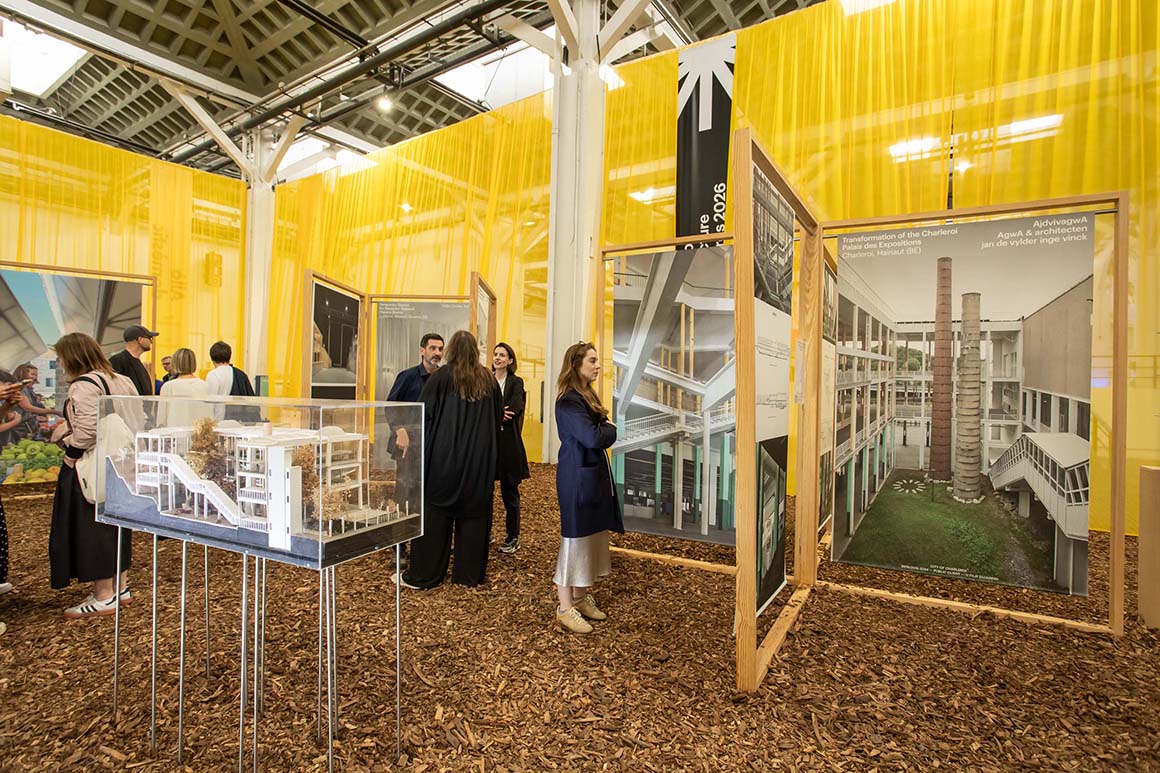
At the heart of the archive, a space demarcated by a light yellow curtain and lined with bark flooring presents the 40 projects selected for the EUmies Awards 2026. Chosen from 410 submissions across 40 countries and 143 European regions, the works address the many ways of intervening in what already exists — posing urgent questions about how architecture should approach repair on a planet of finite resources. The jury, led by Smiljan Radić alongside Carl Bäckstrand, Chris Briffa, Zaiga Gaile, Tina Gregorič, Nikolaus Hirsch, and Rosa Rull, framed the act of repair as “leaving an active imprint that allows architecture to exist in the present, rather than merely preserving the memory of the past.” Following its Barcelona run, the exhibition will travel to venues across Europe and internationally.
The exhibition runs through July 5, 2026, with free admission.