




A Threshold Between Nature and Humanity, Past and Present
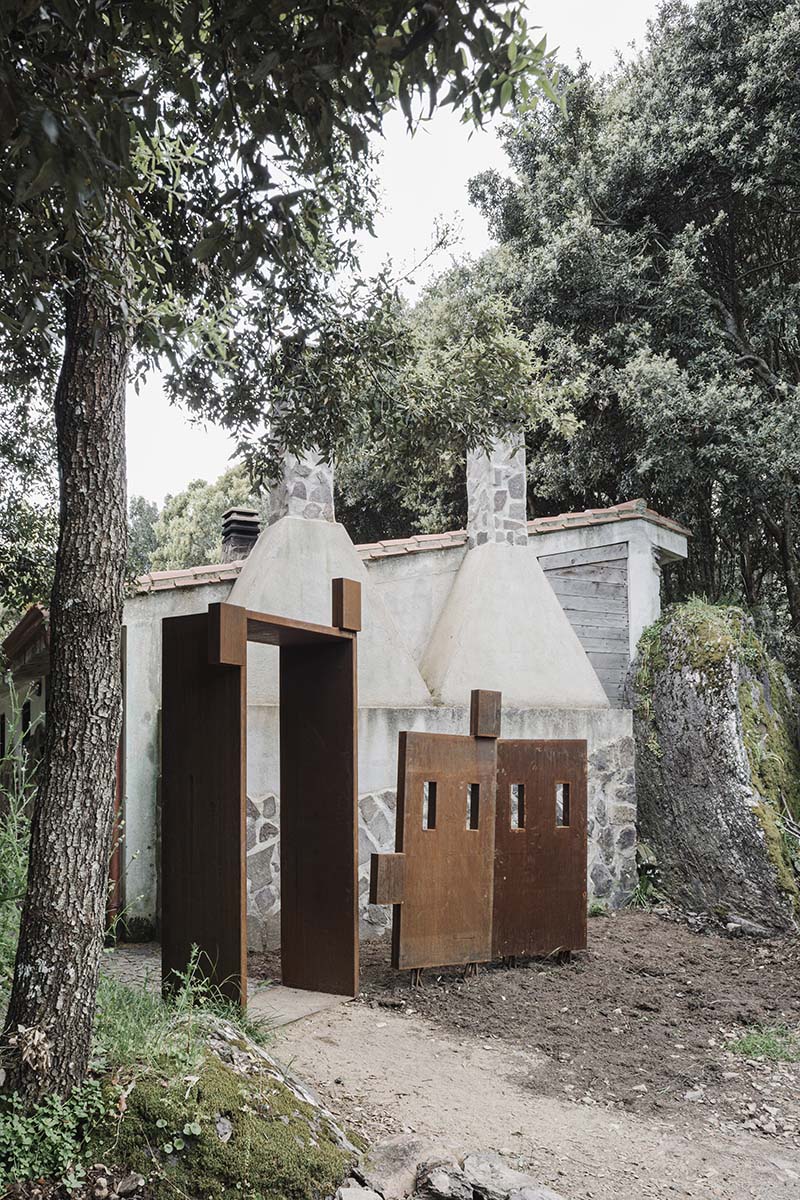
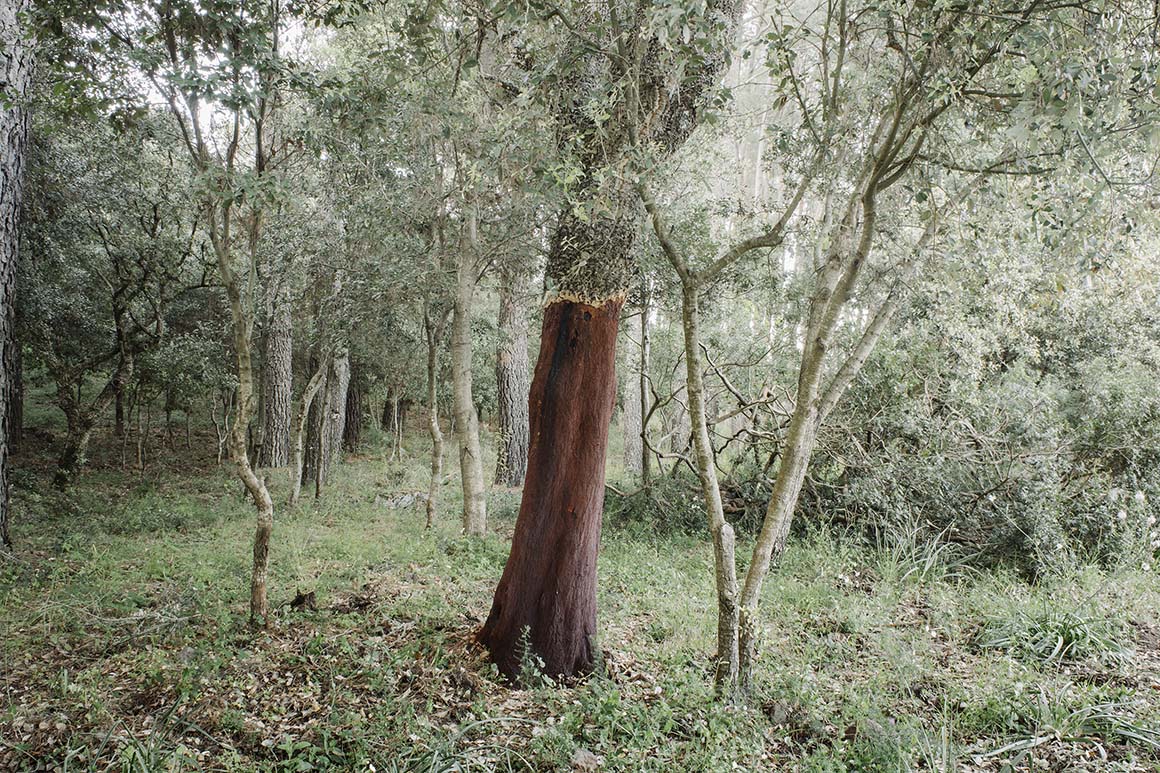
On the slopes of Monte Arci in Sardinia, Italy, lies an ancient holm oak forest that has kept its silence for centuries. Where dense woodland parts to reveal scattered obsidian outcrops, this seemingly tranquil landscape is in fact an archaeological site where prehistoric peoples once quarried and worked obsidian to make their tools. A recent project sought to preserve the forest ecosystem in its full integrity while translating its archaeological significance into lived experience.
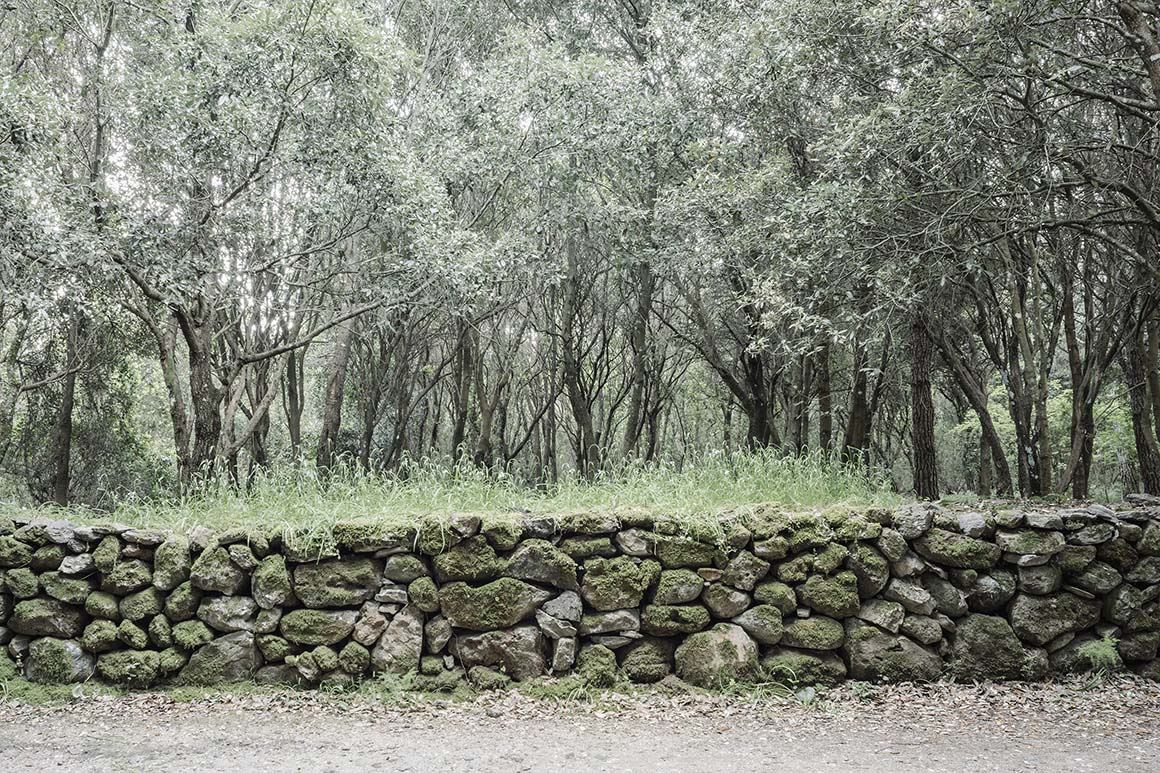
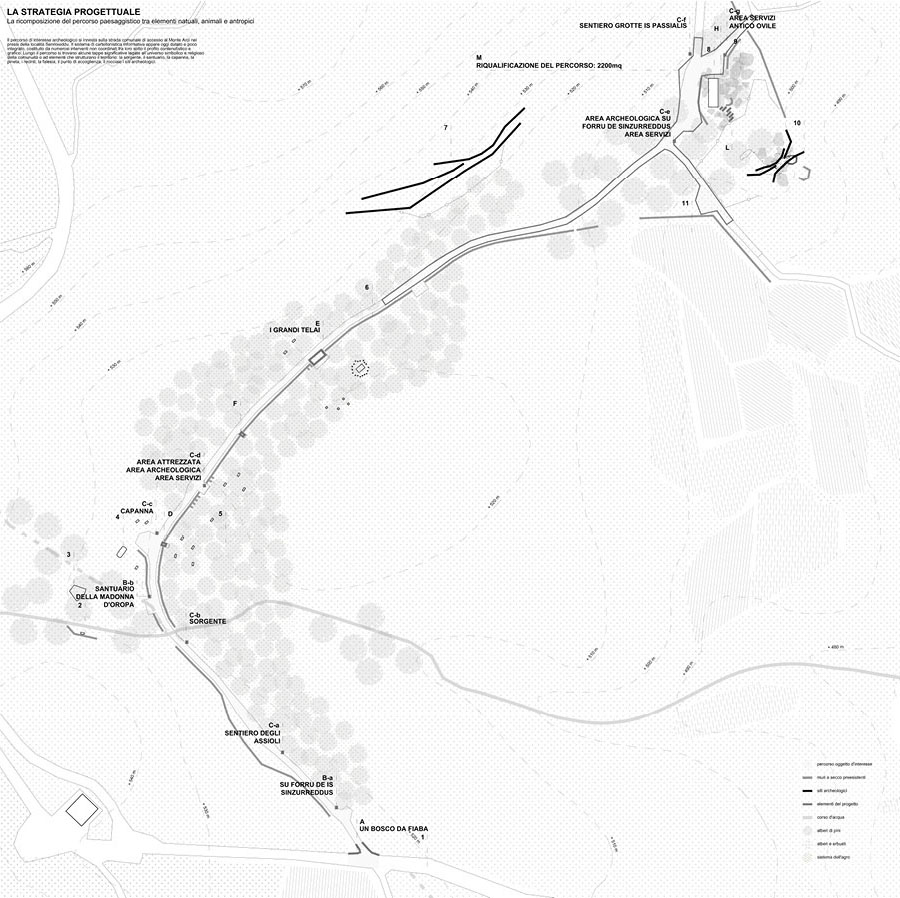
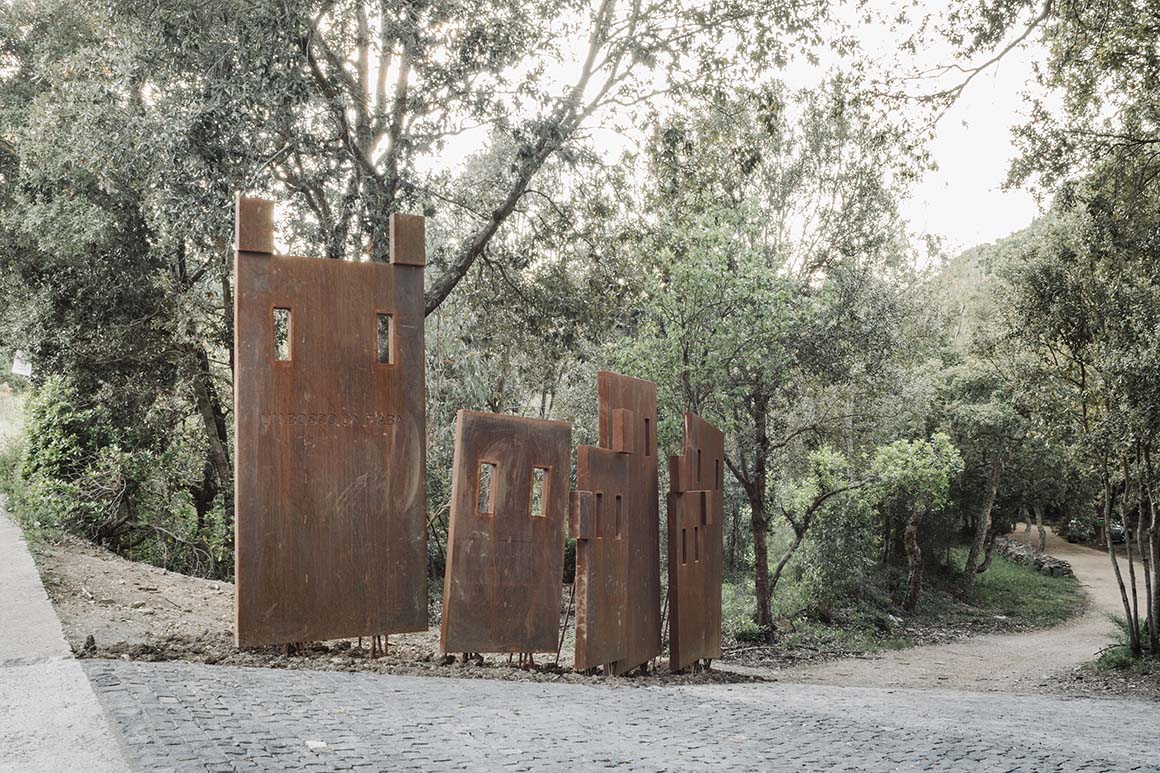
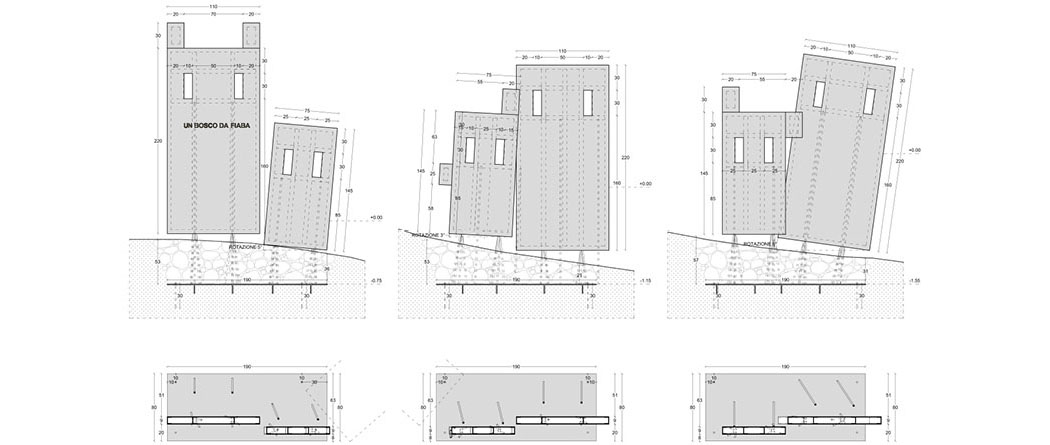
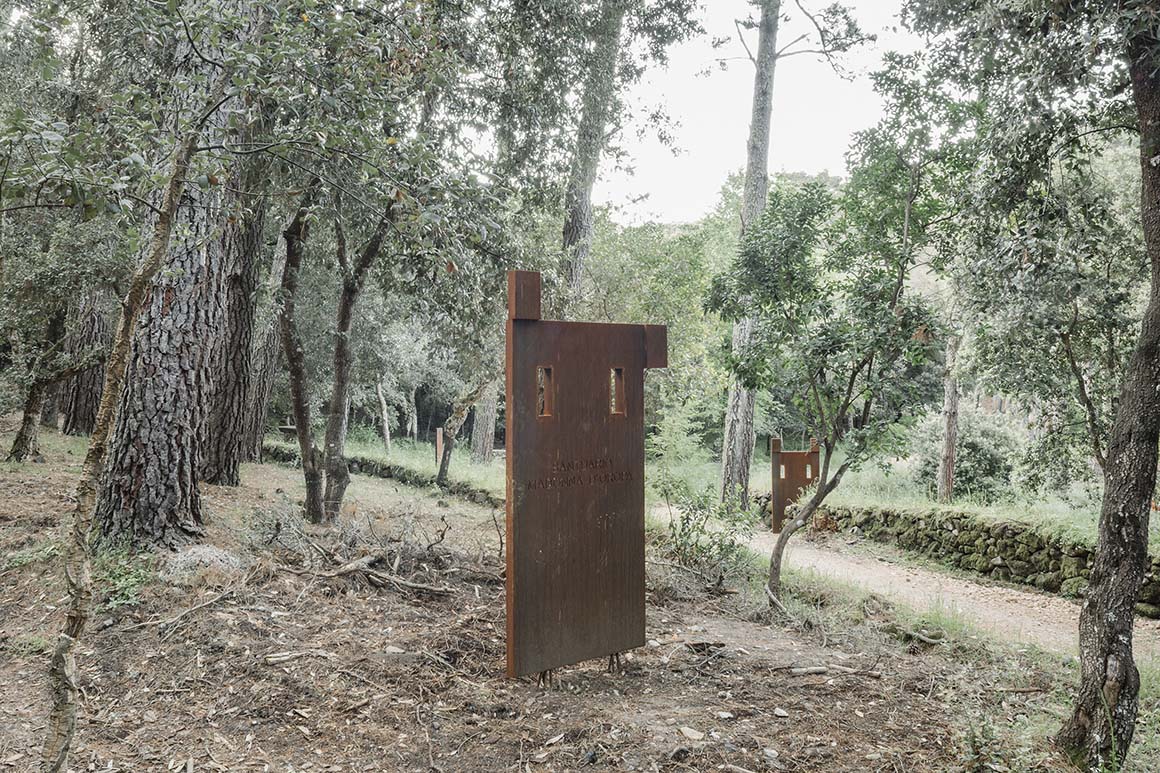
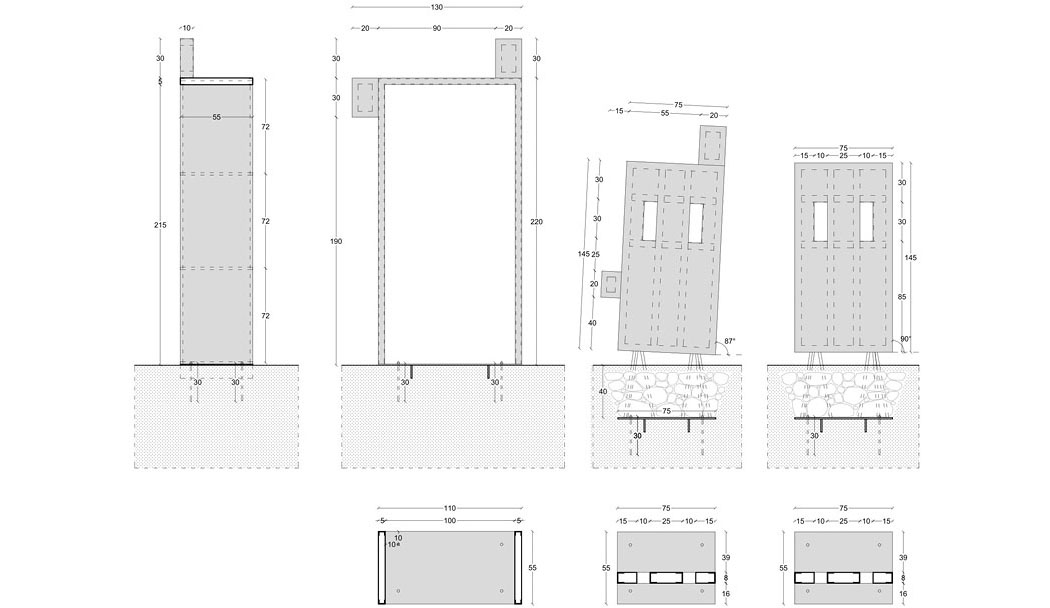
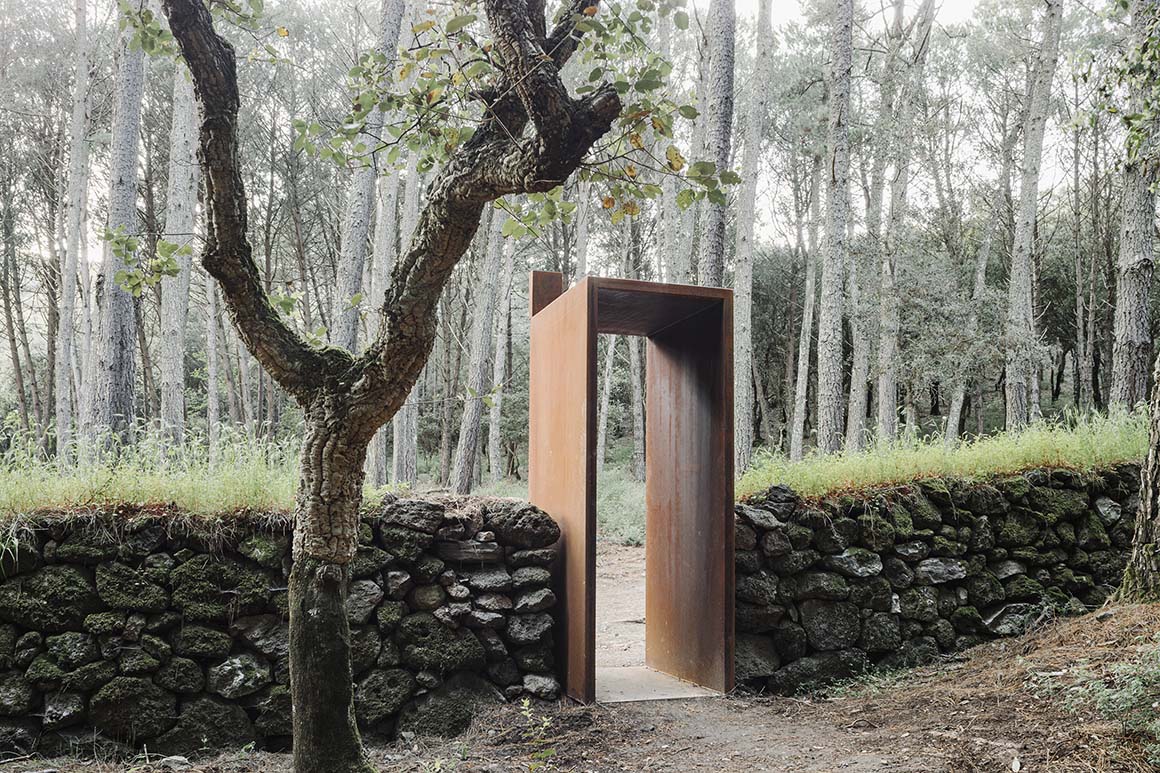
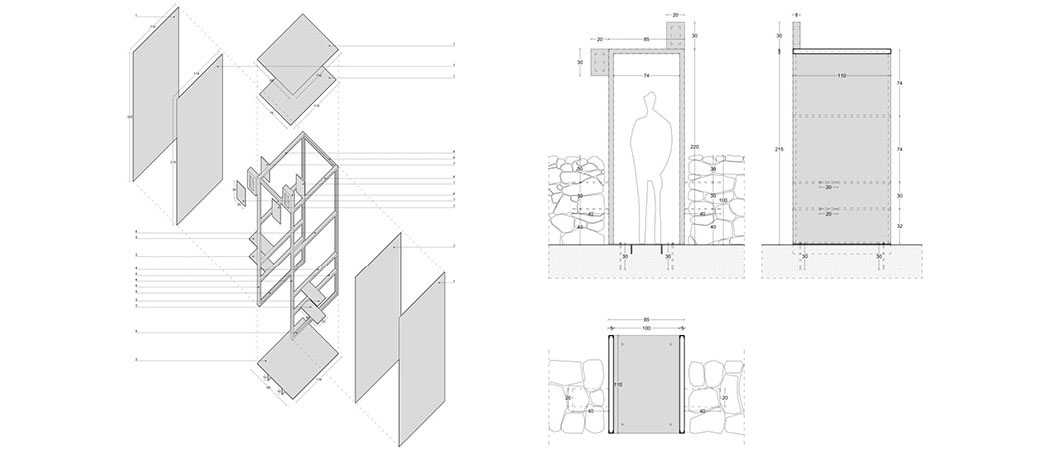
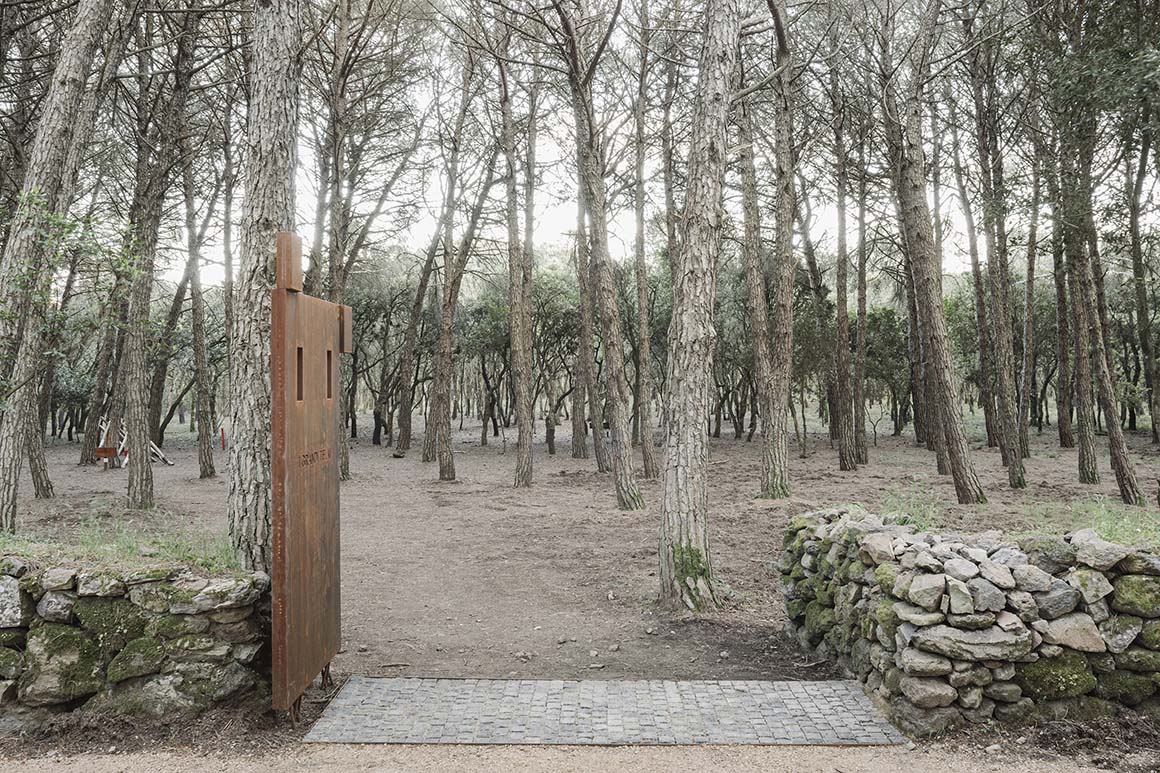
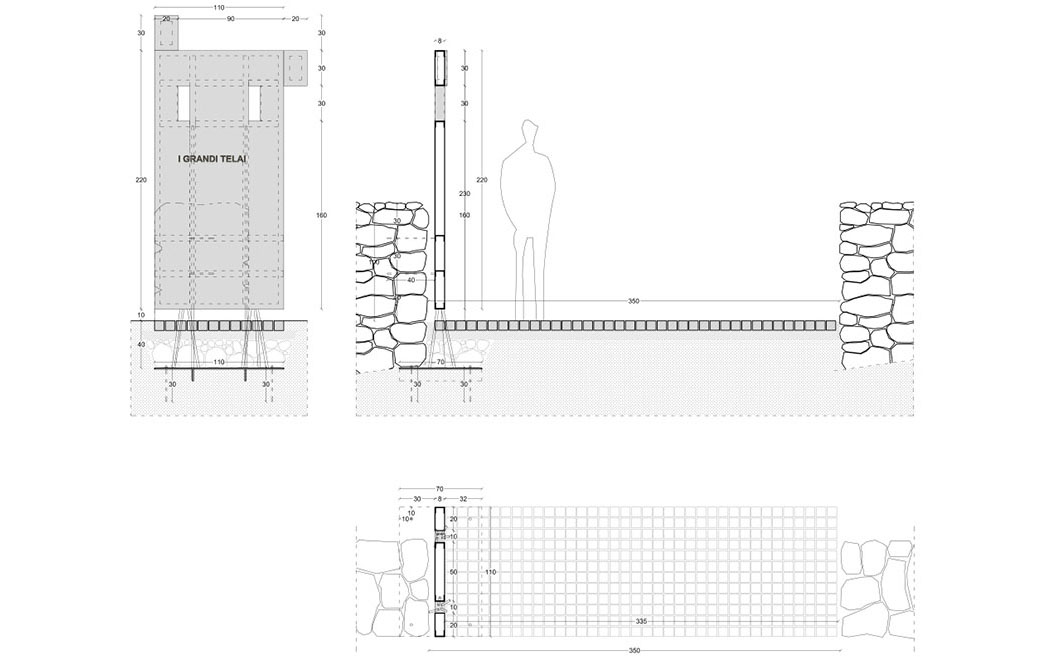
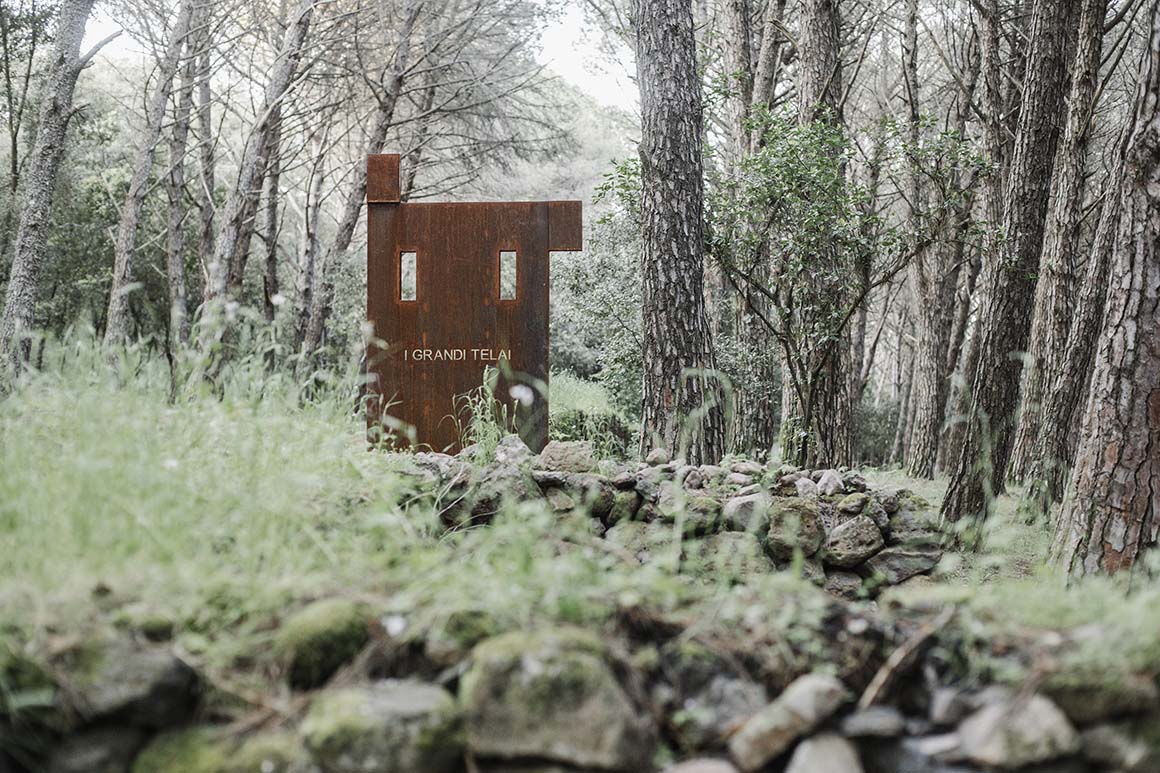
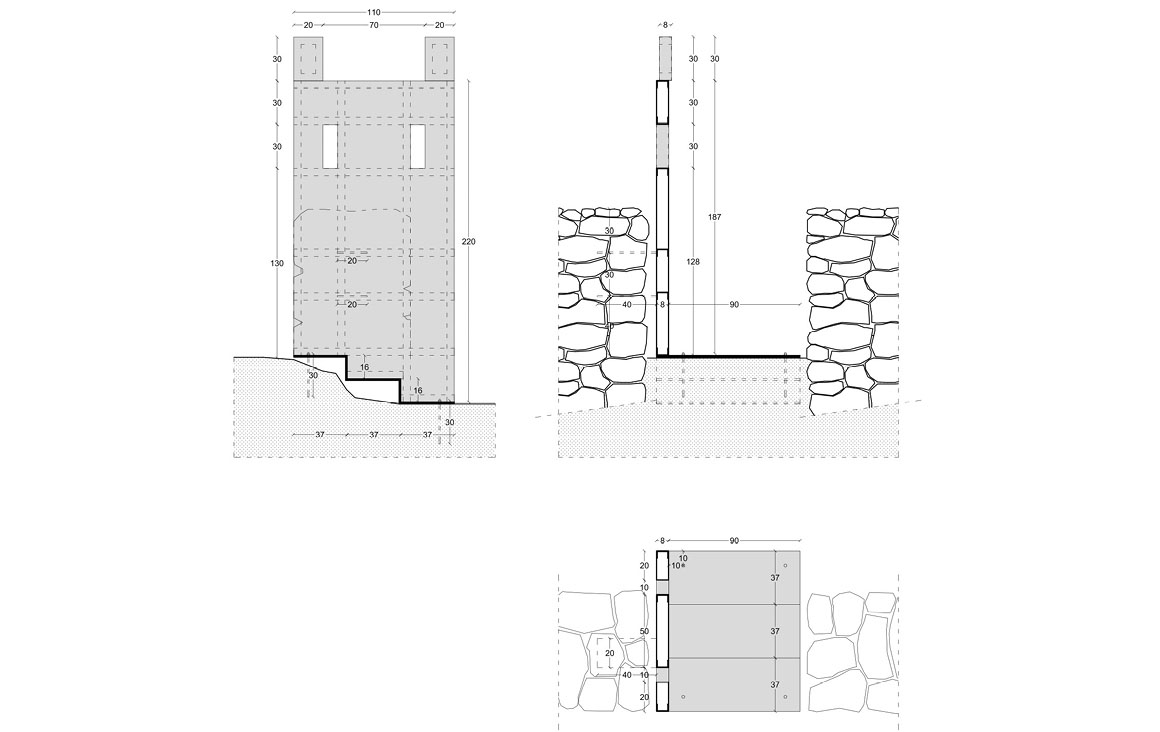
Six architectural devices are distributed along the path, marking distinct real and symbolic waypoints — the spring, the sanctuary, the cliff, the rockfall, and the thresholds in the dry-stone walls. They take two forms: totems and thresholds. The threshold devices fill gaps in dry-stone walls or define the edge of the cliff, functioning as frames for the landscape and contemplative rest areas for visitors.
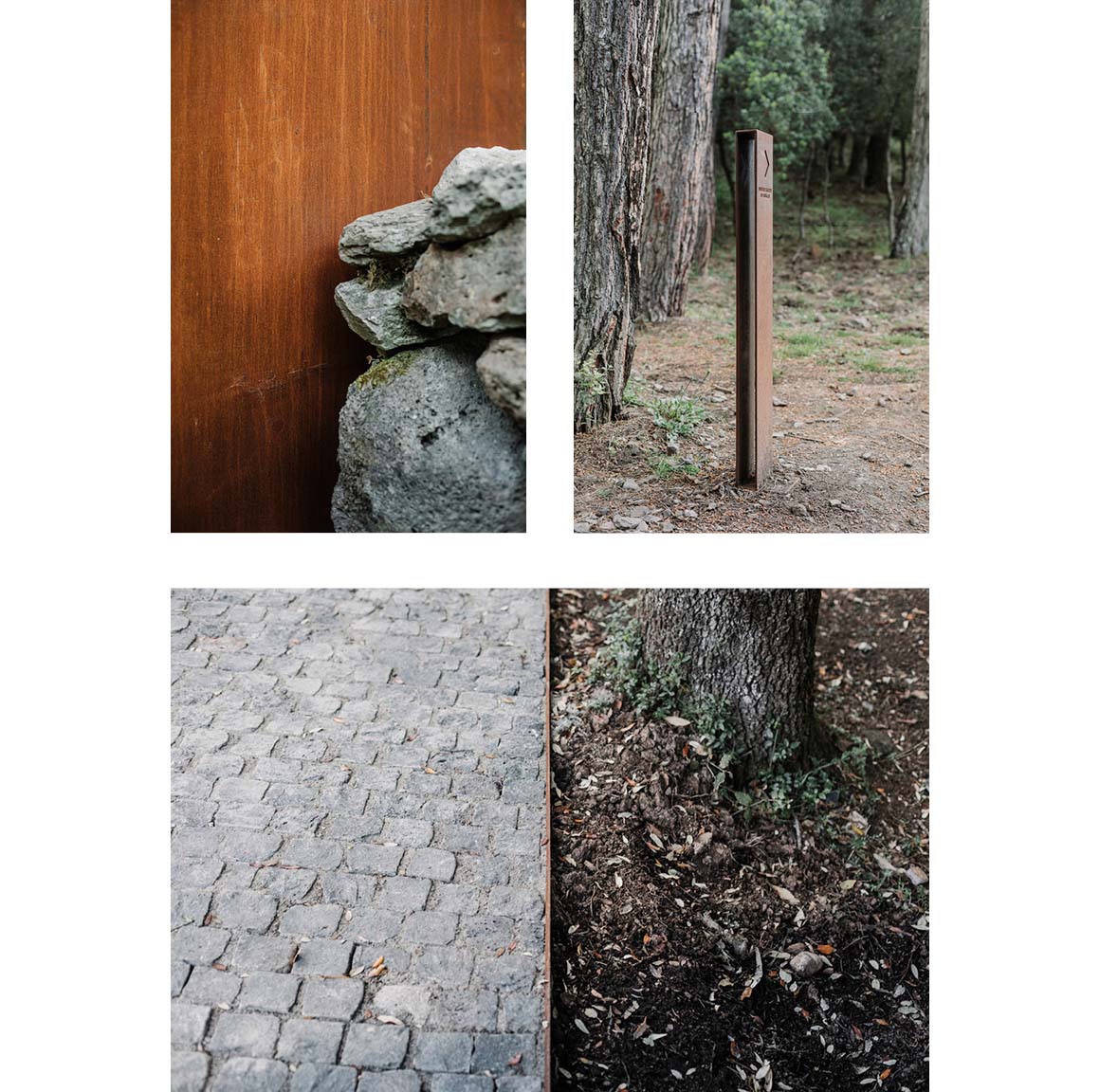
The forms evoke the imagery of nocturnal raptors inhabiting the forest — geometric and minimal, they read as silent, vigilant sentinels standing watch in the stillness. Materials are limited to two: local basalt and Corten steel. The raw, split texture of the basalt and the deep reddish-brown patina of the oxidized Corten steel blend with the obsidian outcrops as though they have always belonged here — quiet mediators between nature and human presence, past and present.
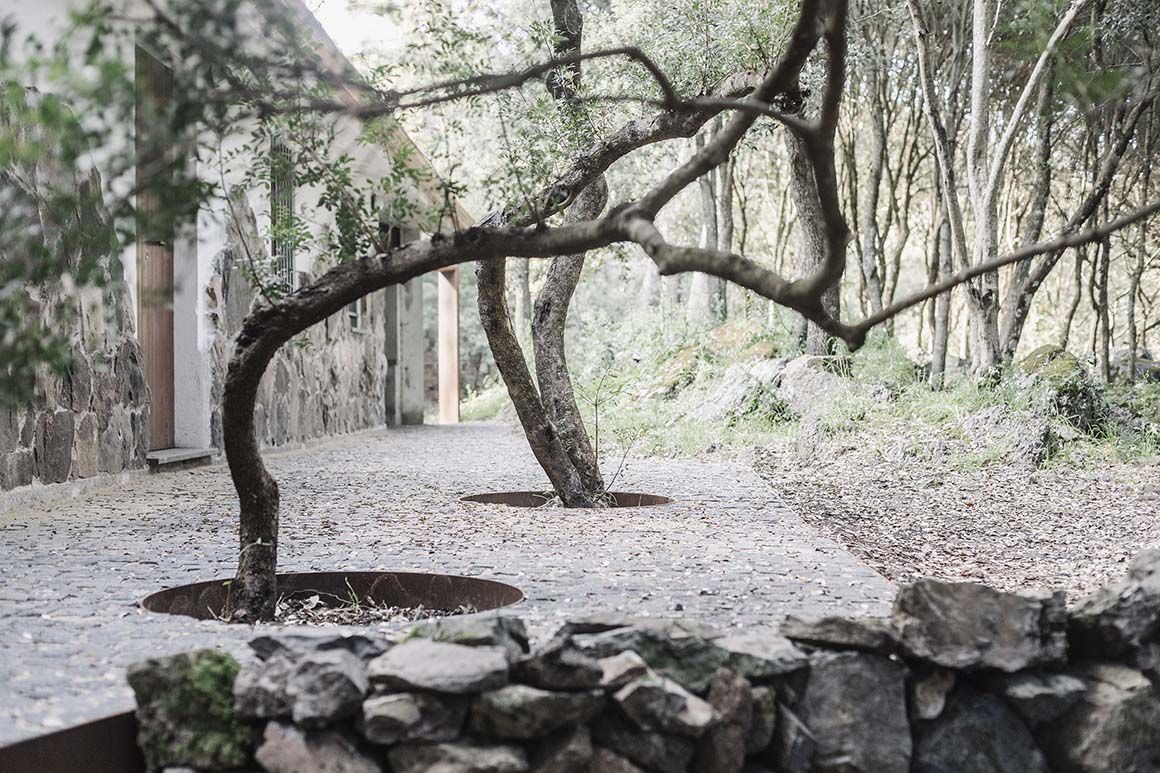
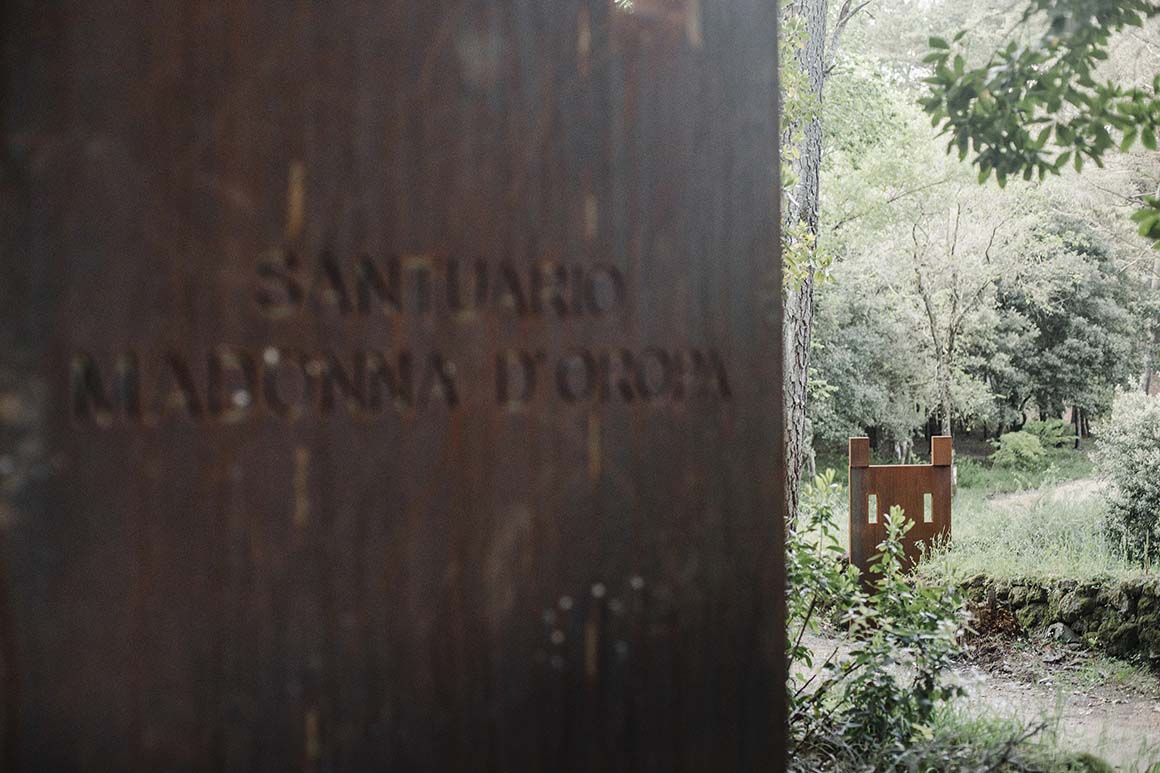
Emptiness and respect are the project’s guiding values. The intervention follows the principle of total reversibilità: every totem and threshold is fixed to the ground via screw anchors and stone ballast, making each element fully removable at end-of-life without permanent traces. Rather than occupying or imposing upon the forest, the structures are guests — present for a time, respectful of the site’s own temporality.
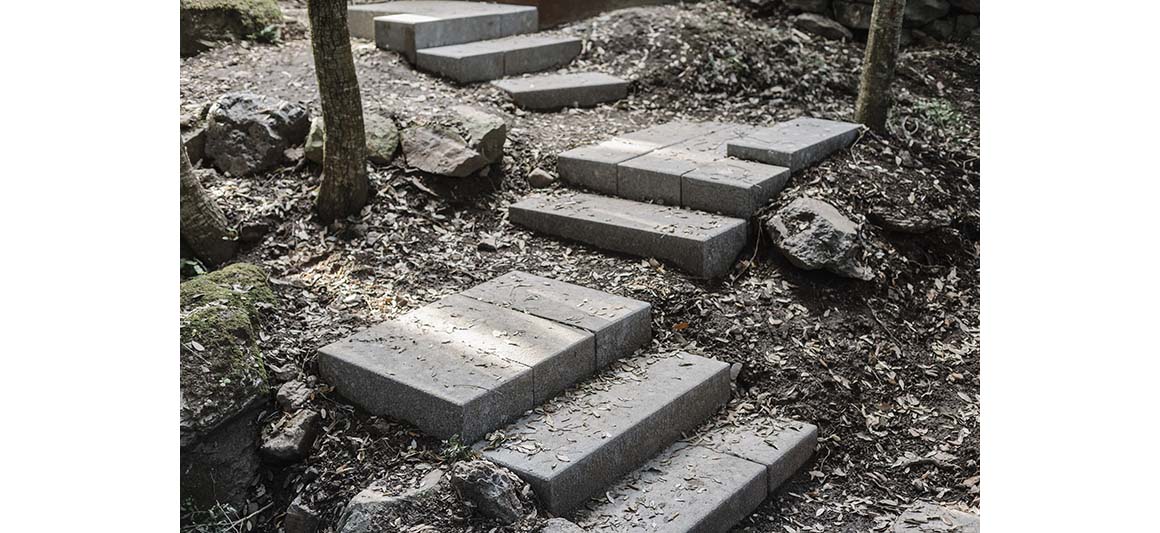
The trail itself has been refurbished using granite aggregate sourced from regional decommissioned quarries, ensuring natural drainage and seamless chromatic integration with the forest soil. Walking this path, visitors move through an architectural landscape that gently interrogates the site — connecting the deep time of history and archaeology with the present.
Project: The Path in the Woods / Location: Pau, Oristano Province, Sardinia, Italy / Architect: mcm architettura (Silvia Mocci, Nicholas Canargiu, Sara Montis, Nicola Mainas) / Collaborator: Silvia Folcando / Contractor: Giovanni Pinna Carpenteria Metallica / Client: Comune di Pau / Use: park, landscape / Completion: 2025 / Photograph: ©Cédric Dasesson (courtesy of the architect)