

Merely Defining the Spatial Boundaries of the 2~3 hundred Year Old Woods
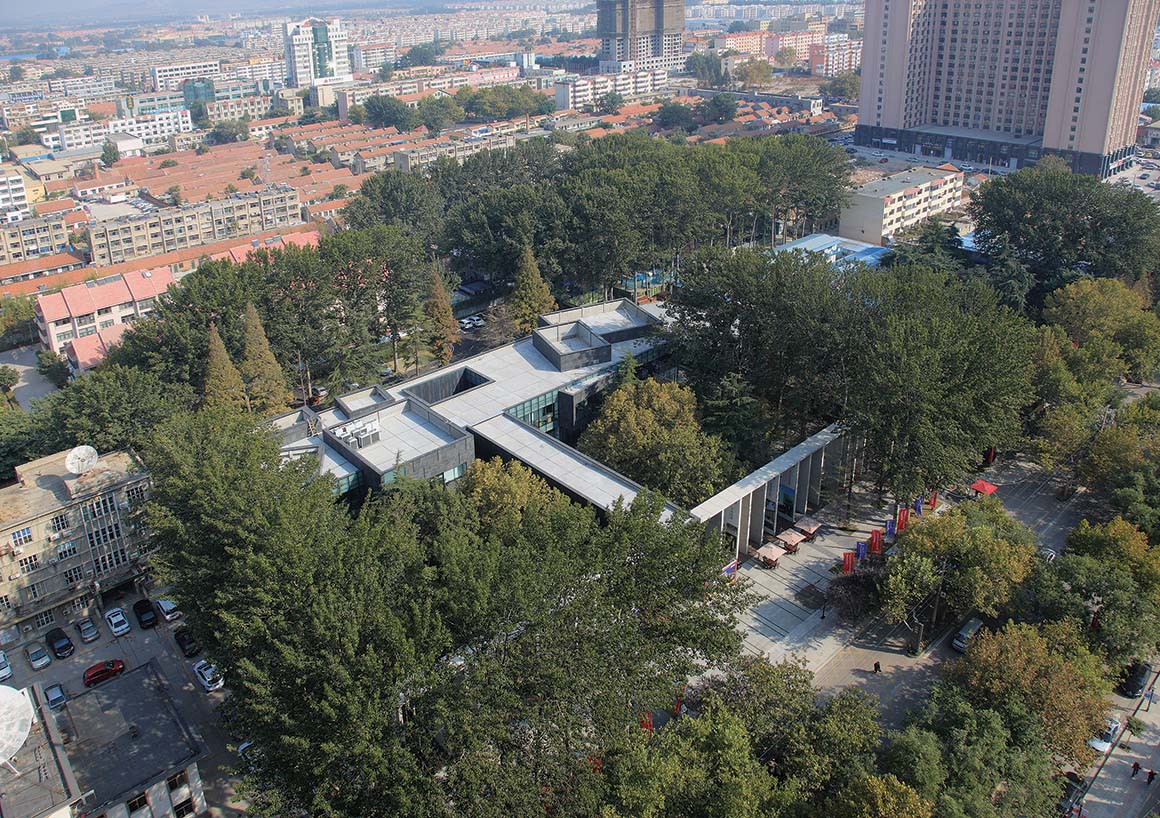
Pindu is a small city with 1.5 million populations and of 3000 years’ history. Located in the northern outskirts of Qingdao, this city has recently experienced rapid urbanization. The government offices moved from the downtown area to the new town area and their master plan to develop the old main streets was launched.
People expected that they would find relics of ancient times in this old city of several thousand years’ history and unfortunately, they realized that the apartment houses and government offices built there had already ruined all of the relics. However, a fortunate thing is that ancient maps shows that many of the old roads are still used. So based on this framework, a master plan for urban restoration was established focusing on “landscript” and named Pingdu Historical Area Regeneration Plan.
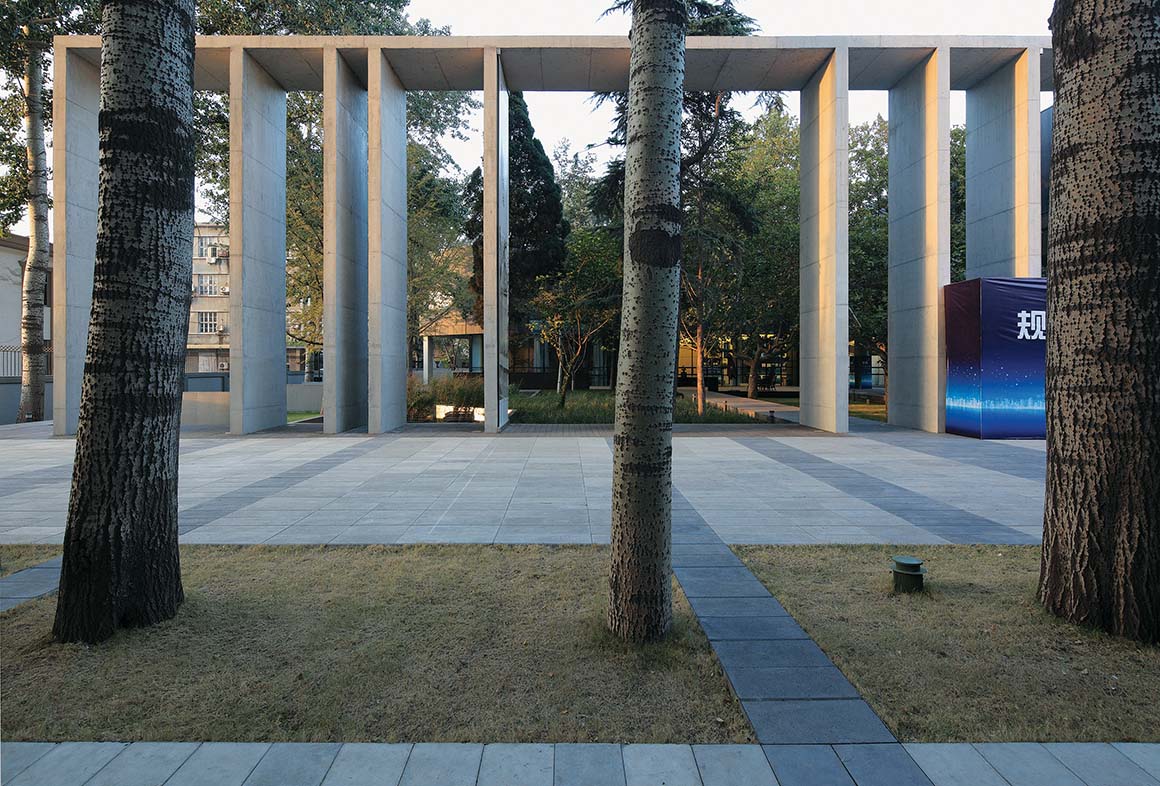
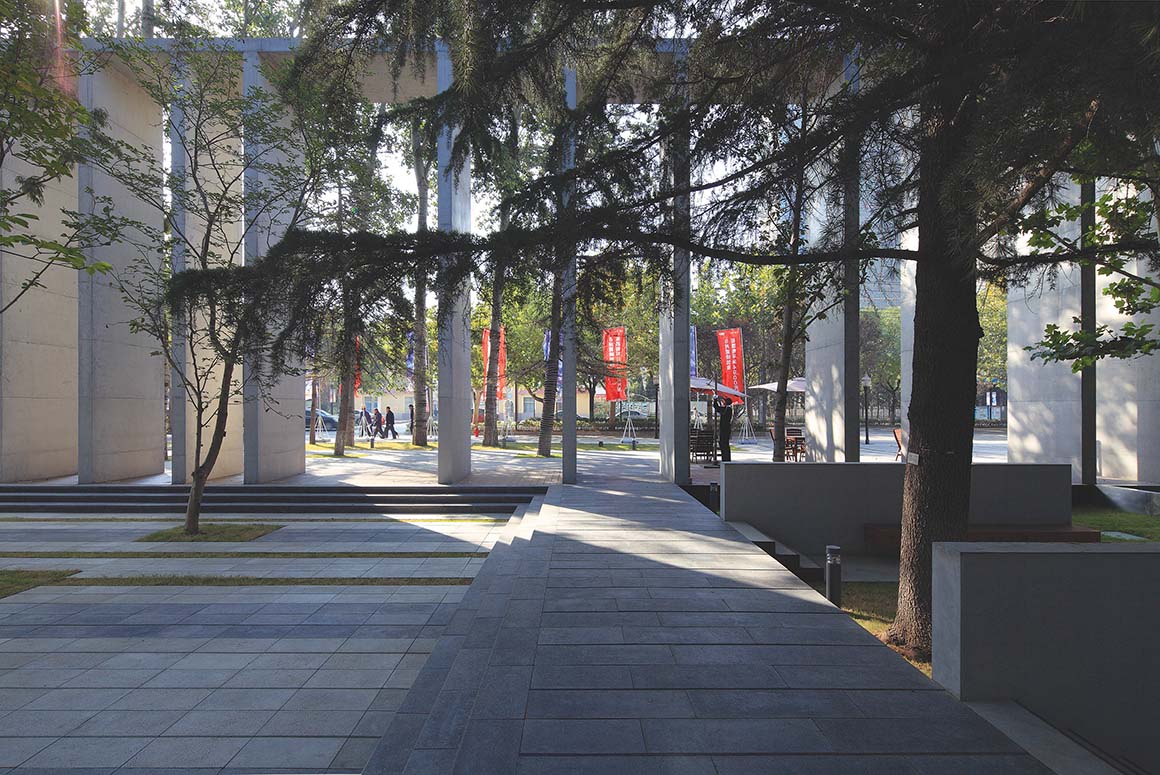
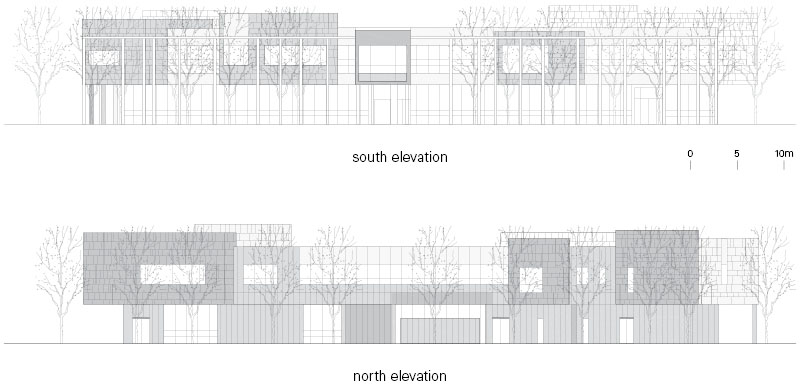
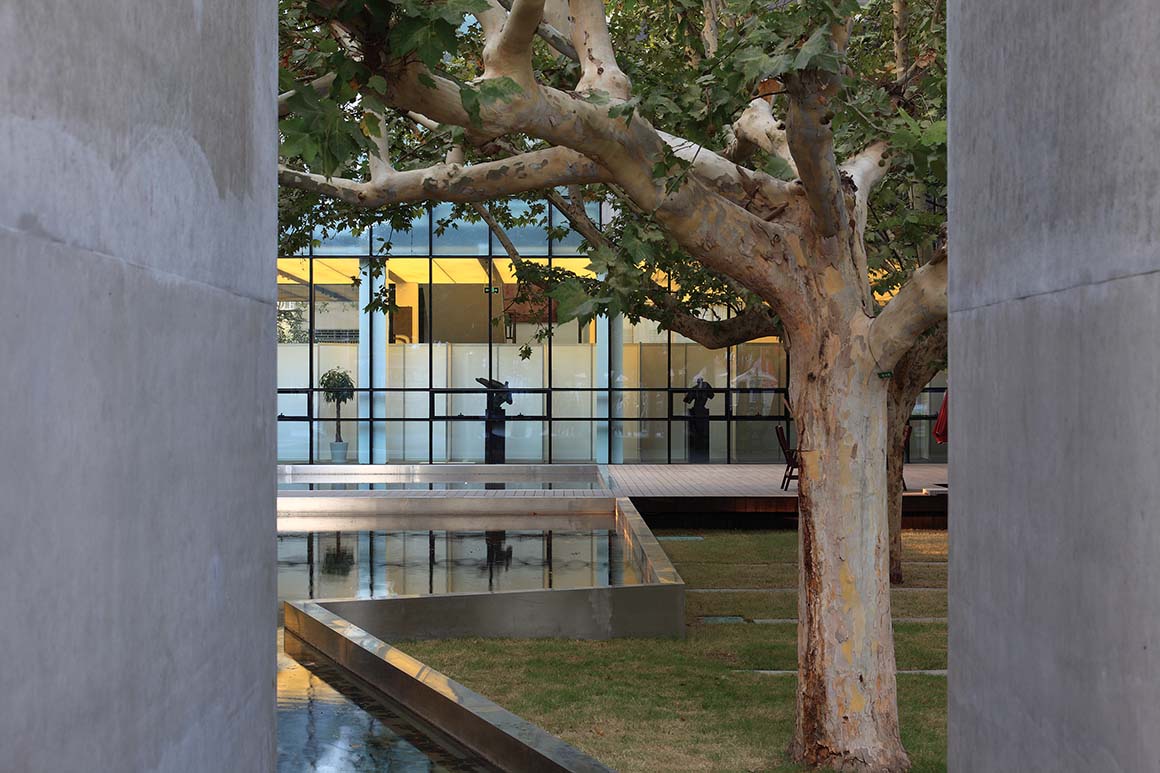
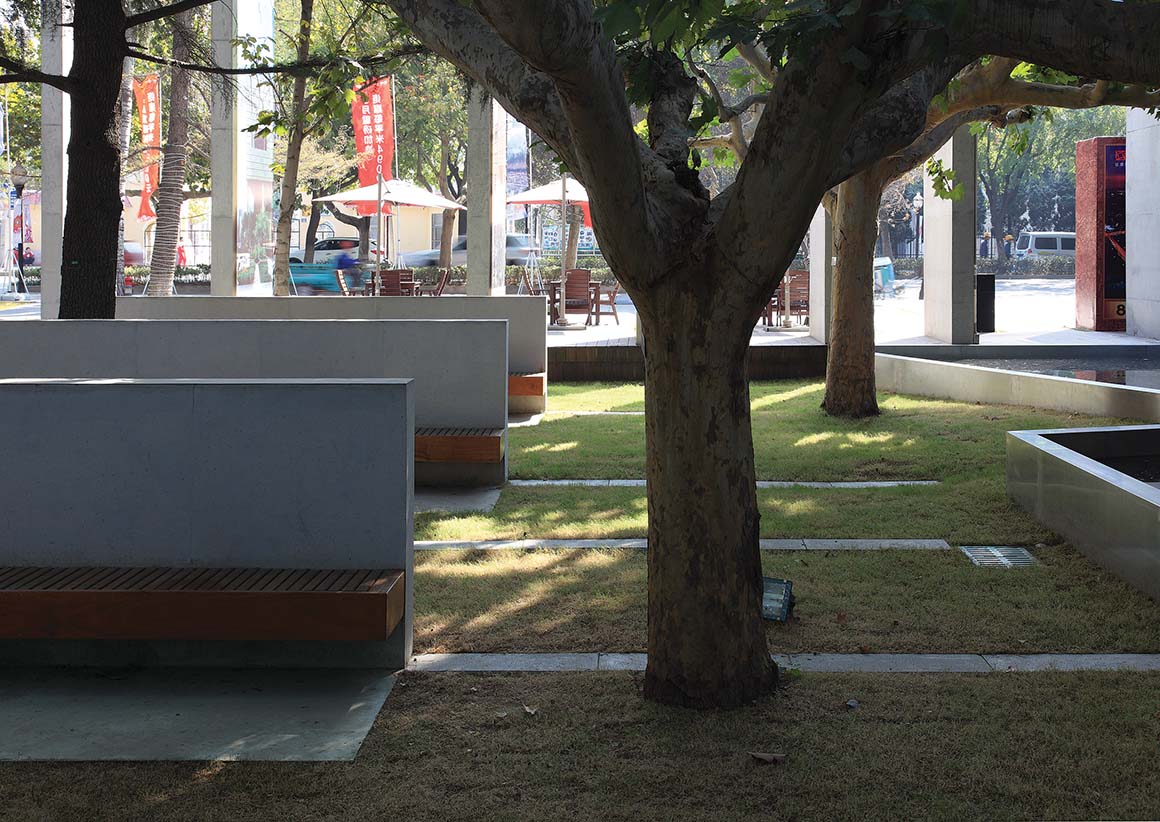
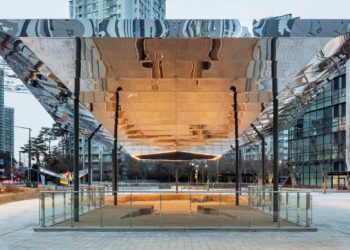
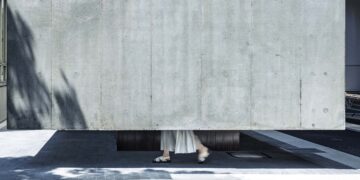
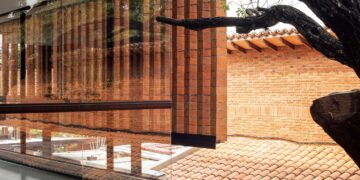
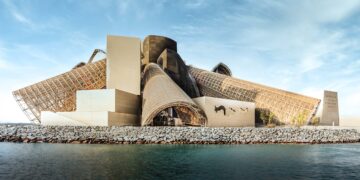
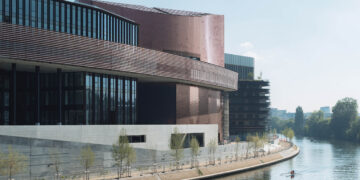
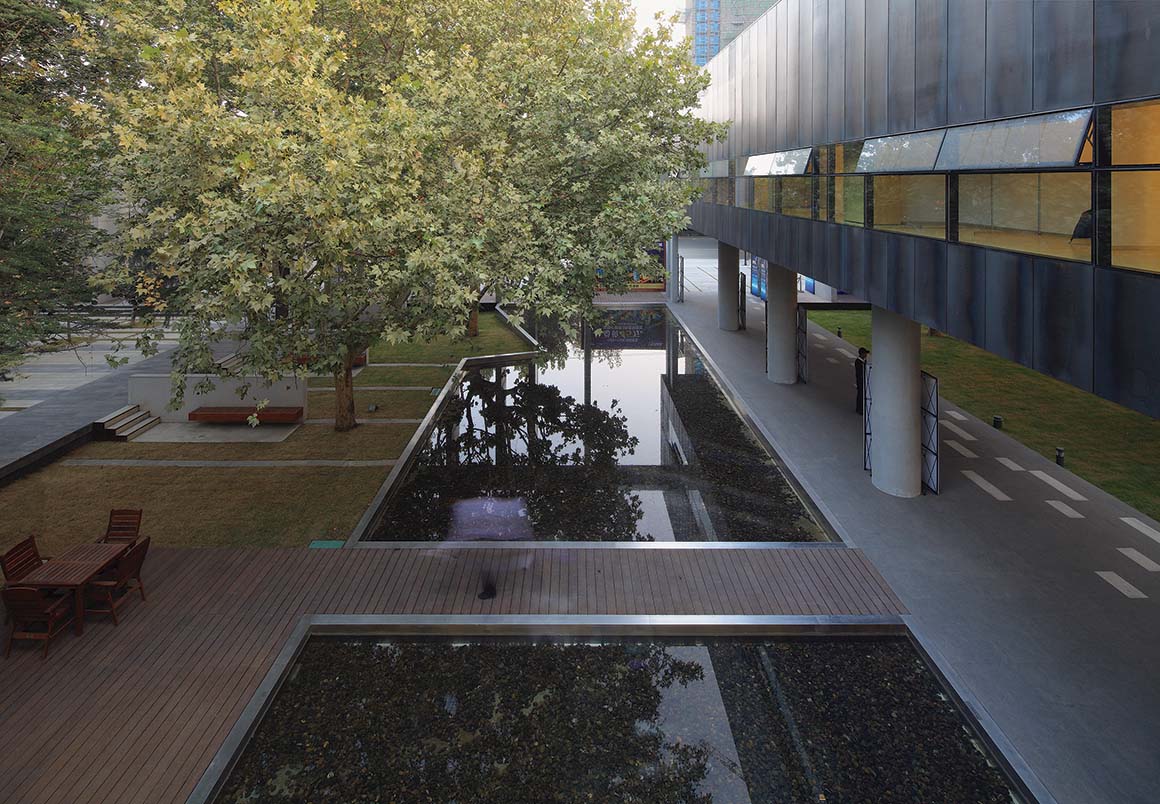
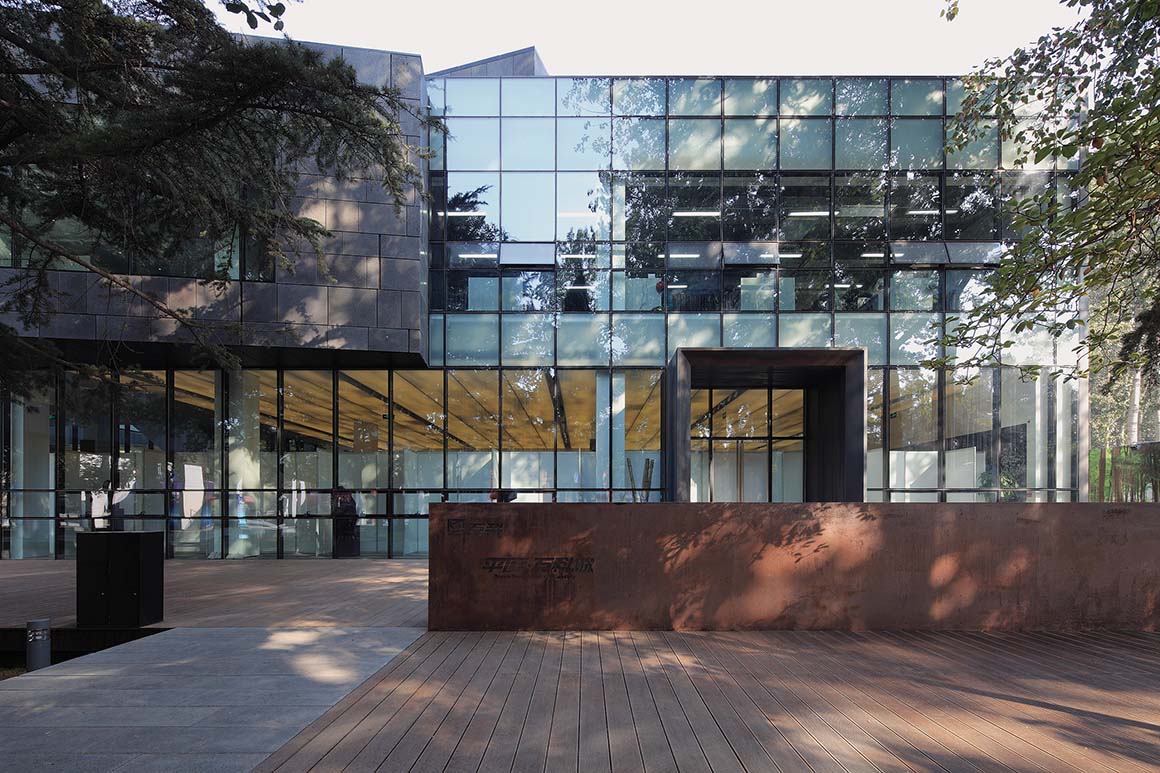
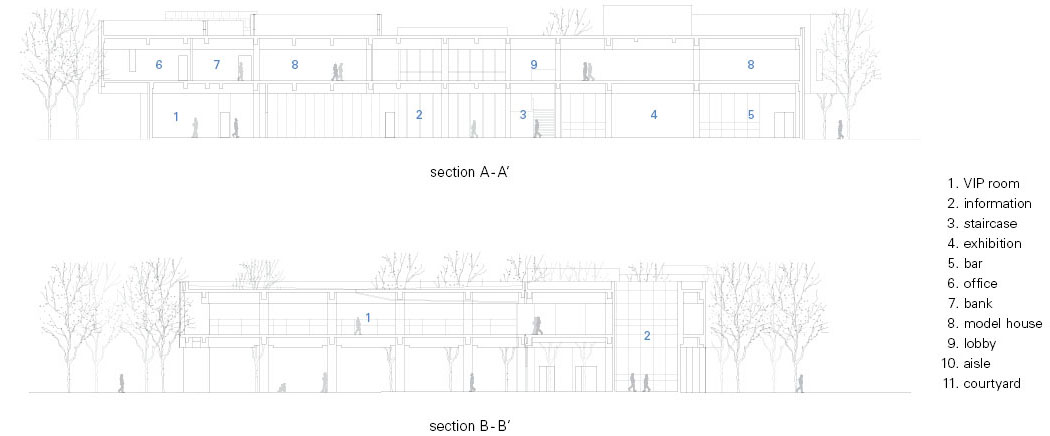
Vanke Group that took charge of the regeneration plan requested to redesign the first building to use it as a housing culture center for public relations of the project. The construction site was a part of the site for a small building attached to the city hall with dense woods that were all over 2~3 hundred years old and required to be preserved. So there was no option but to build the new building on an empty land. The problem was that it was required to connect this new building to the road so that citizens can recognize it. For this, concrete frames were installed on the boundary line of the road. These concrete frames were given a function as a street gallery and connected with the building through the gallery built over the access road. However, all these structures are merely a tool that defines the spatial boundaries of the beautiful woods around the building, not existing in terms of architectural concept.
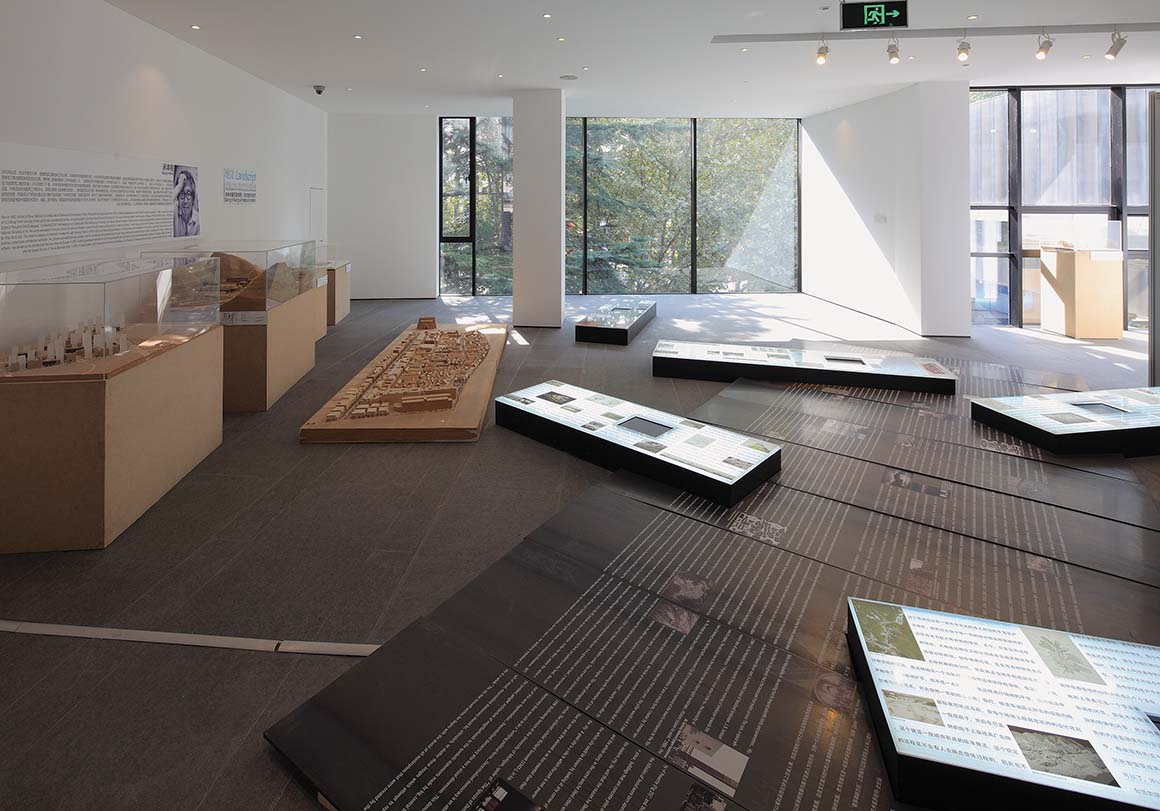
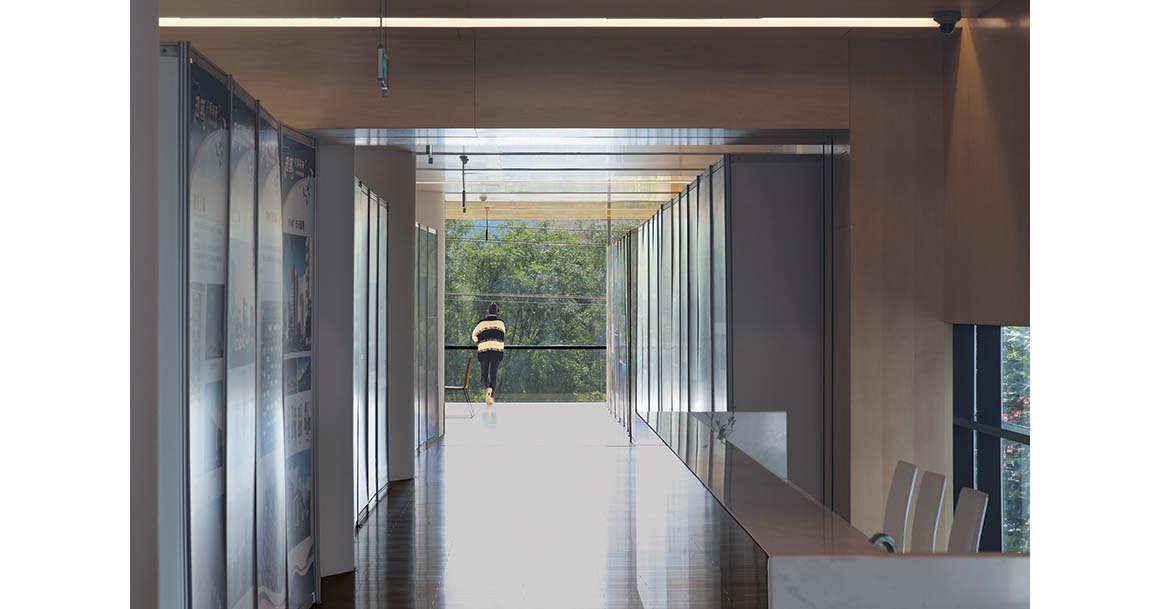
In the building, visitors can see a virtual model house where the spatial axis is misaligned intentionally to separate it from the real space which arouse a little bit more interest in the inside area. Nevertheless, the most overwhelming factor is the woods around the building that tells us about the past. Therefore, this must be regarded as the most important principle of all architectural works in the future.
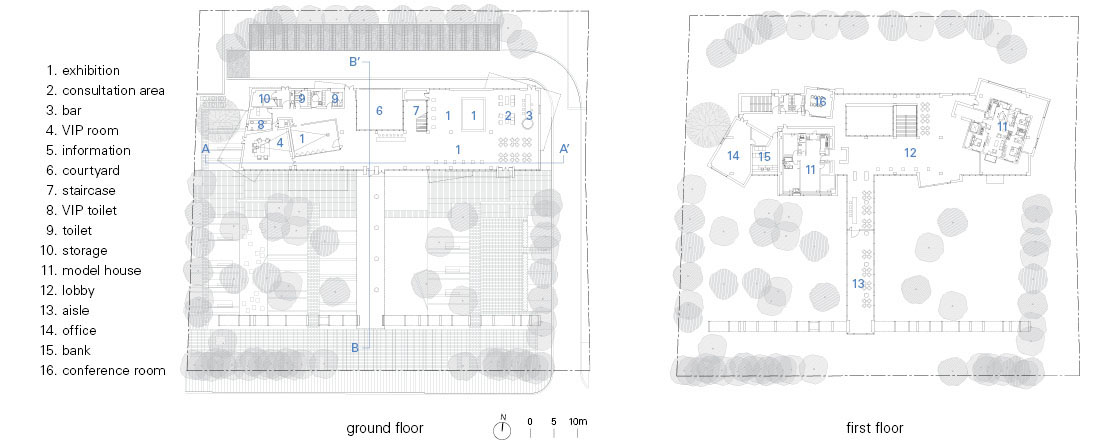
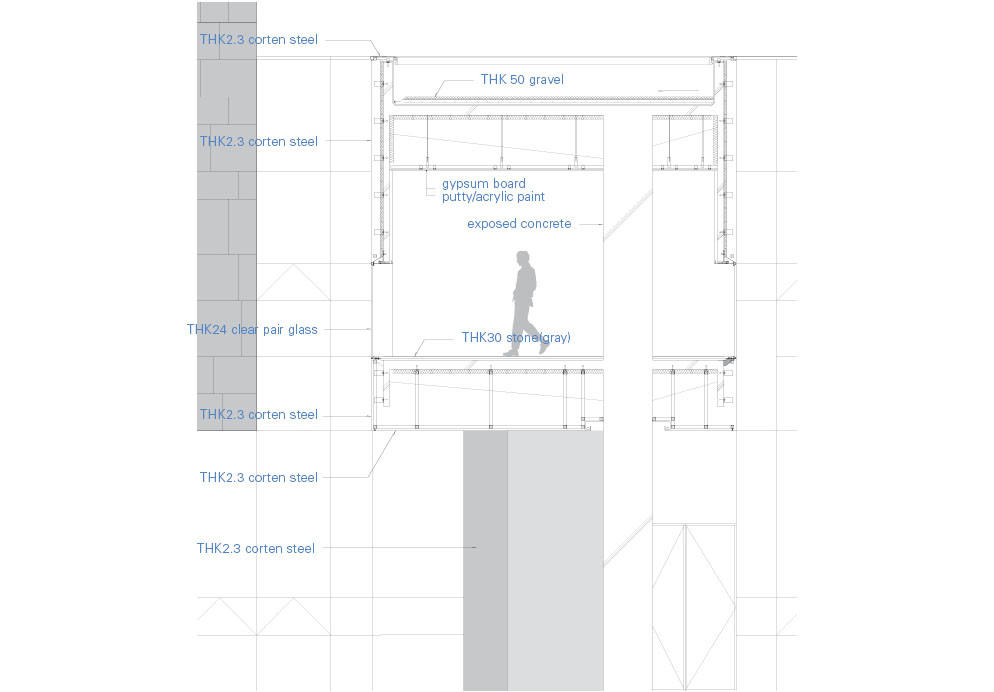
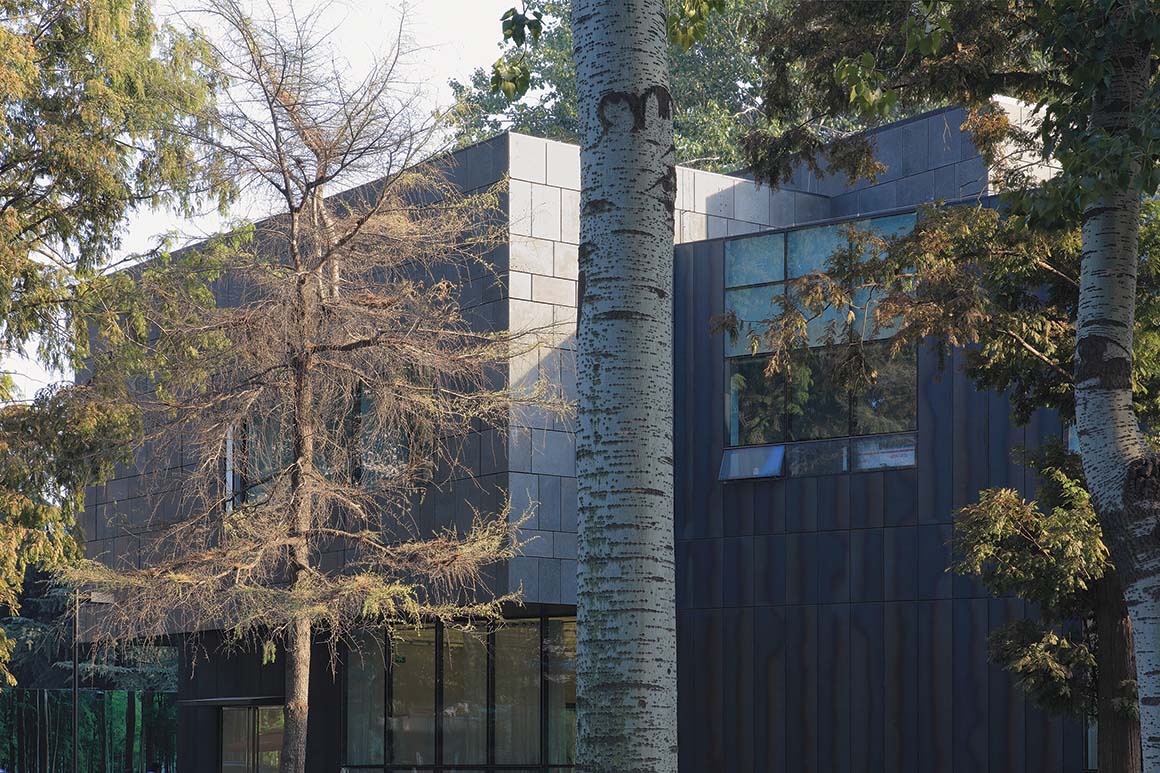
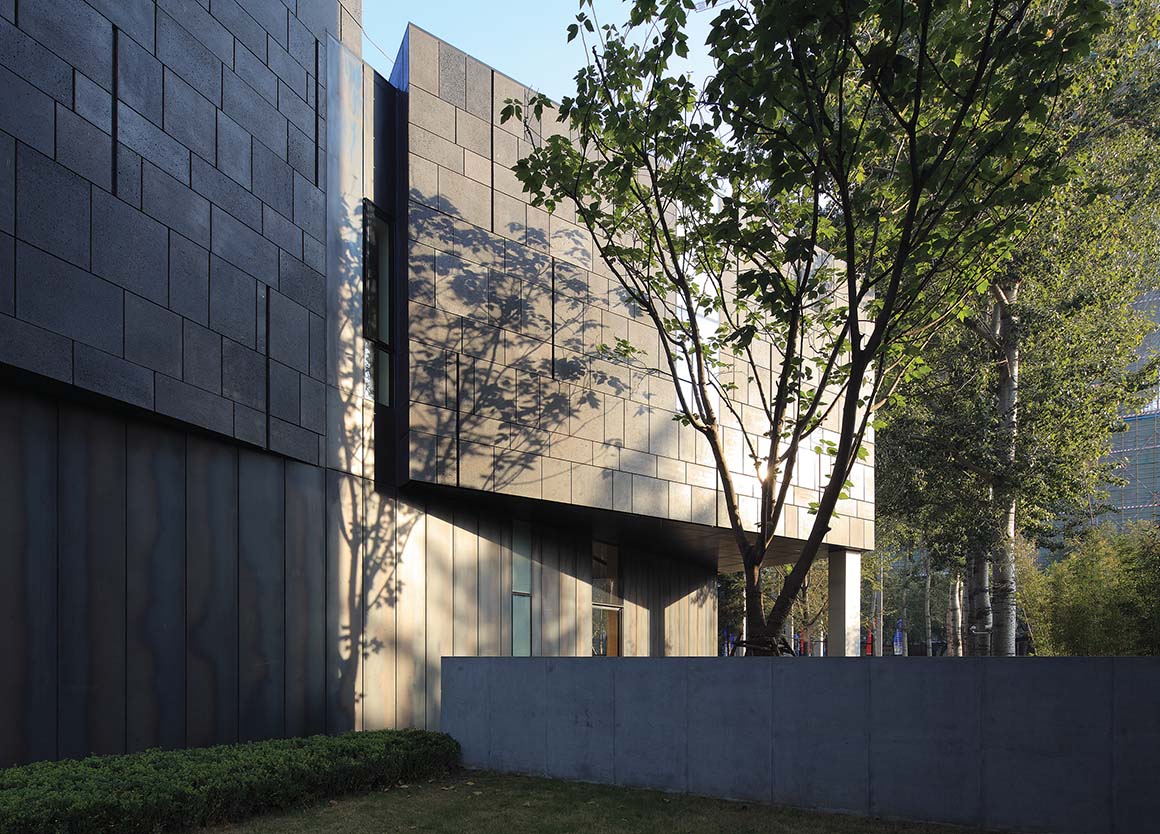
Project: Pindu Housing Culture Center / Location: Pingdu, Qingdao, China / Architect: Seung, H – Sang / Project team: SungHee Kim, KiTae Lee, MoonHo Lee, TaeYong Kim / Program: cultural facilities / Gross floor area: 2,340.8m² / Bldg. scale: 2 stories above ground / Structure: reinforced concrete / Height: 9.6m / Exterior materials: THK 24 pair glasses, THK 2.3 corten panel, basalt / Interior materials: acrylic paints, stone, wood / Design: 2011.4~2012.1 / Completion: 2012.10~2013.7 / Photograph: ©JongOh Kim