

A Multi-Layered Platform Accommodating Diverse Relationships on a Small Plot
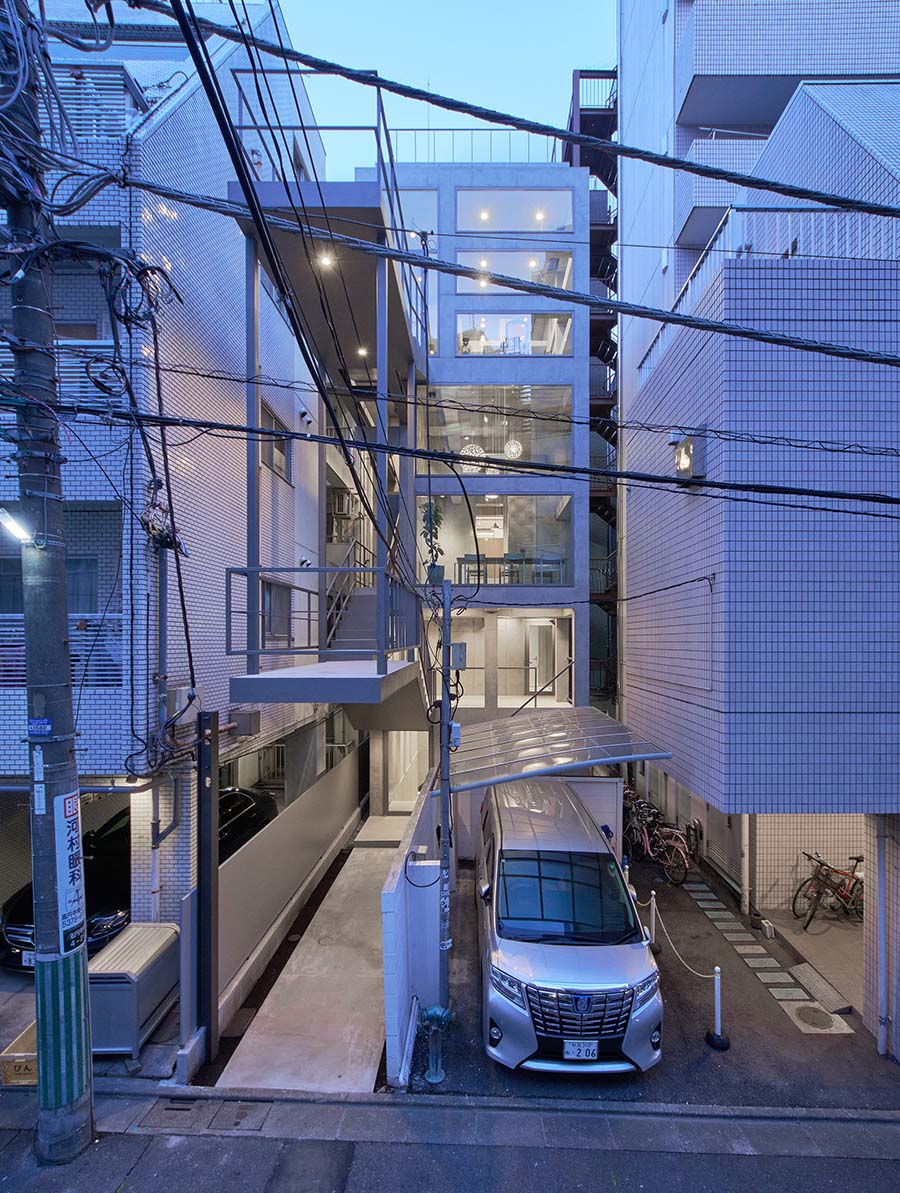
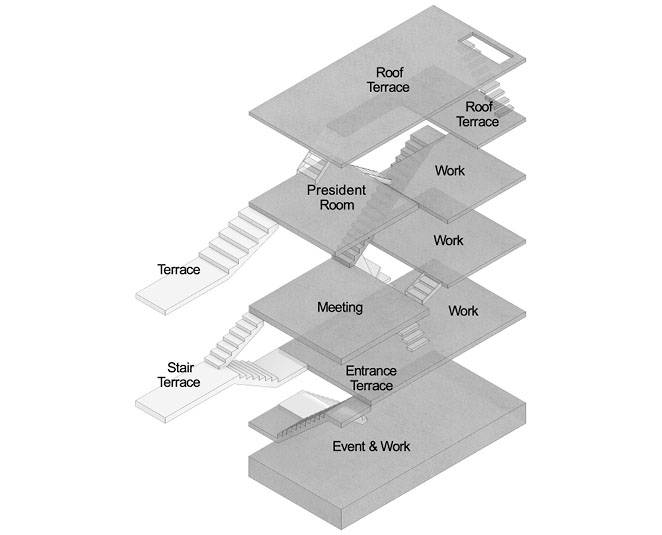
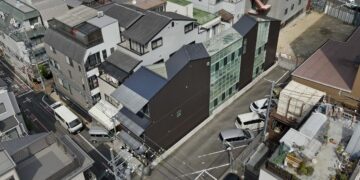
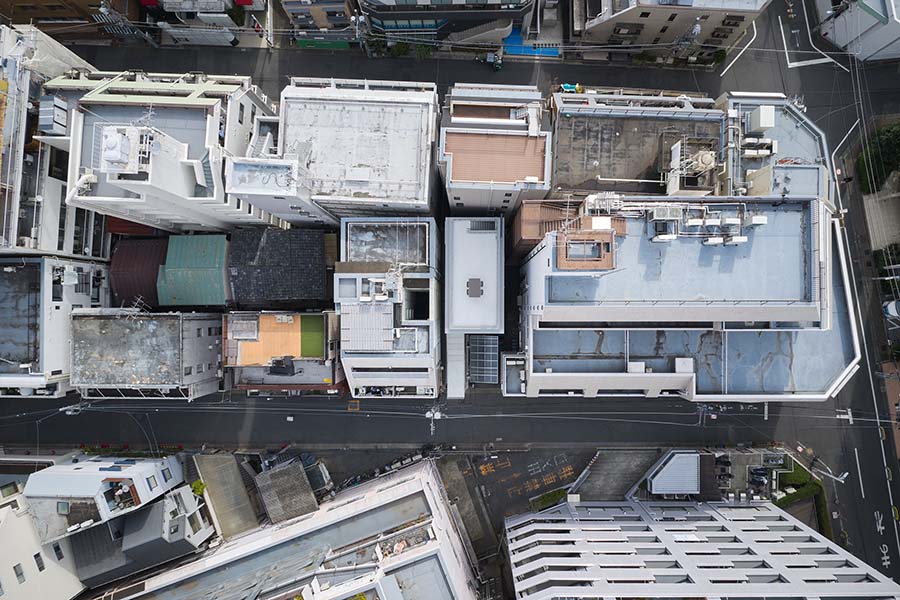
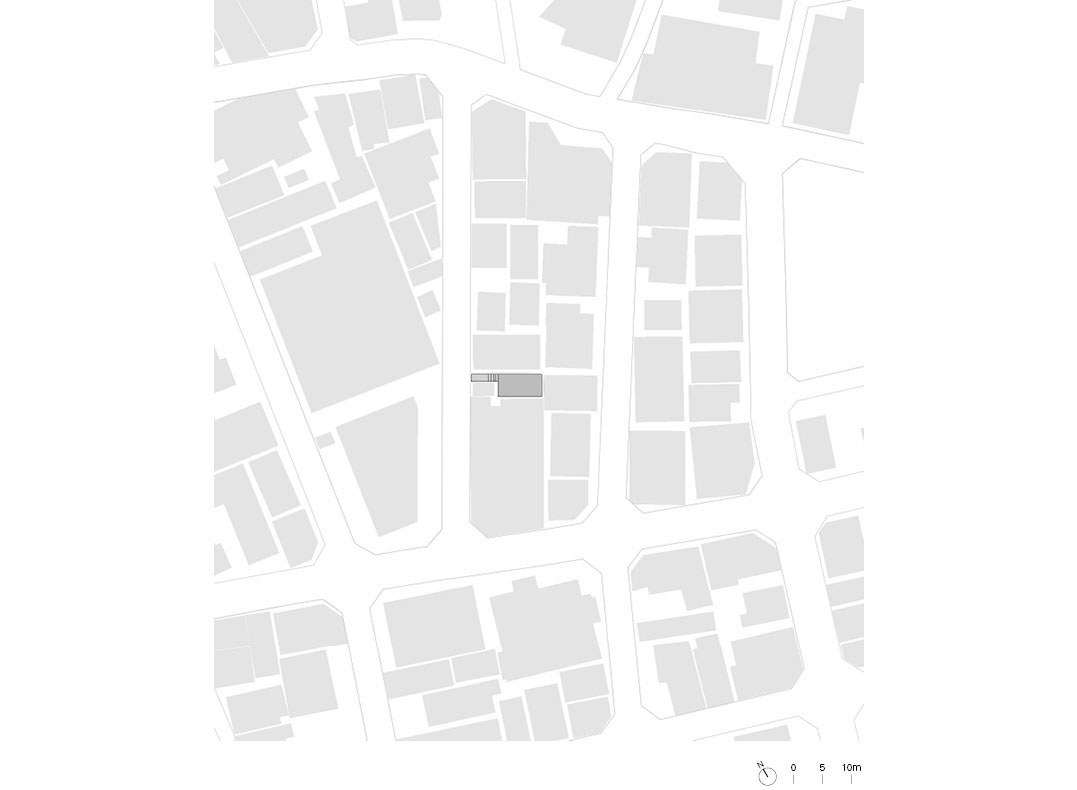
Urban densification increasingly pushes architecture to engage with smaller and smaller gaps. Within constrained sites, the discipline seeks new relationships between structure, space, and the city. This office building near Koenji Station in Tokyo is planned on a long, narrow site with a frontage of approximately 2 meters, comprising three above-ground floors and one basement level. While it reads as a typical concrete mass, it is conceived as an open structural framework that accommodates changing programs beyond its office function.
The client is a company that has long maintained its headquarters and retail stores in Koenji. The office space is defined not as a fixed working environment but as a place that maintains a relationship with the city and responds flexibly to change. Based on this premise, the building is designed so that even if gypsum board, window frames, and stairs are removed in the future, the concrete structure itself can continue to be reused in different ways.
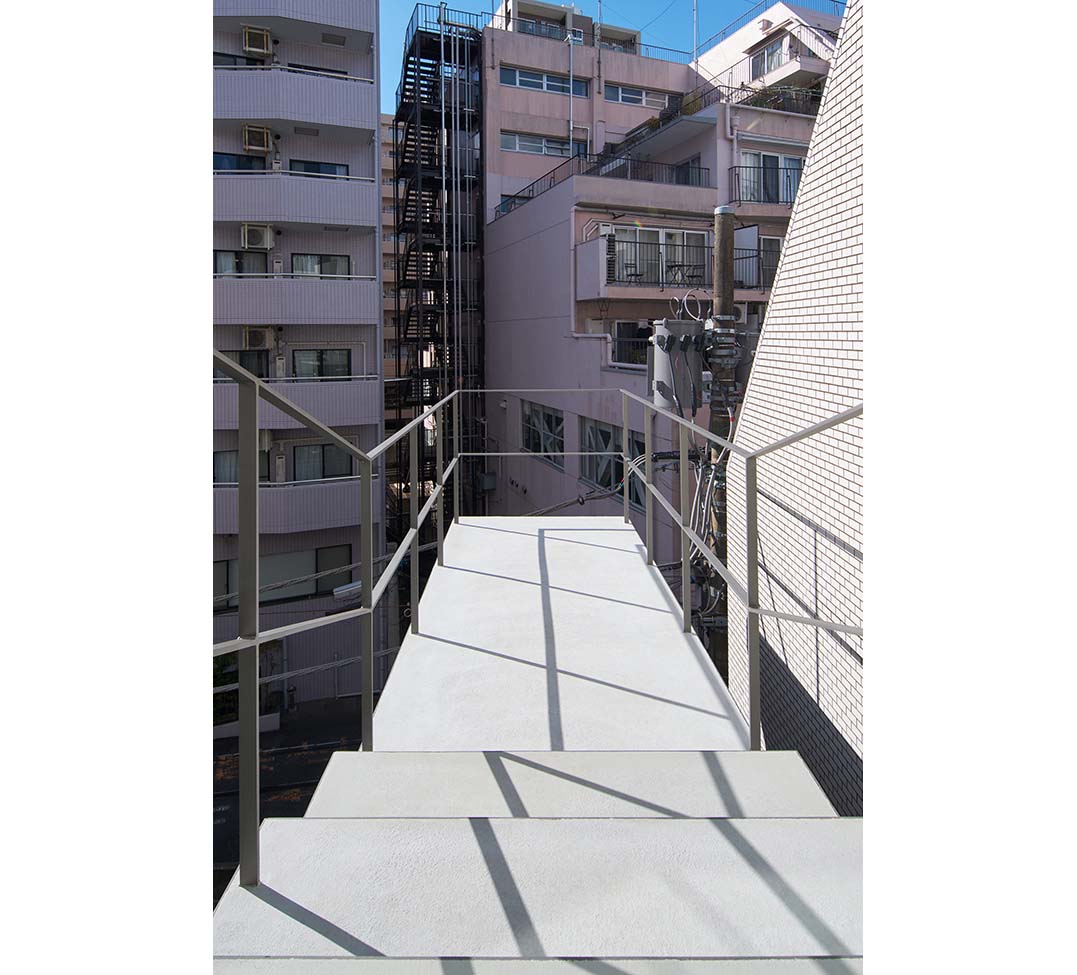
The site is narrow and extends inward, and the building follows this condition by developing space in depth. The street-facing frontage begins with a narrow entrance of approximately 2 meters, through which one enters to reach the concrete structure.
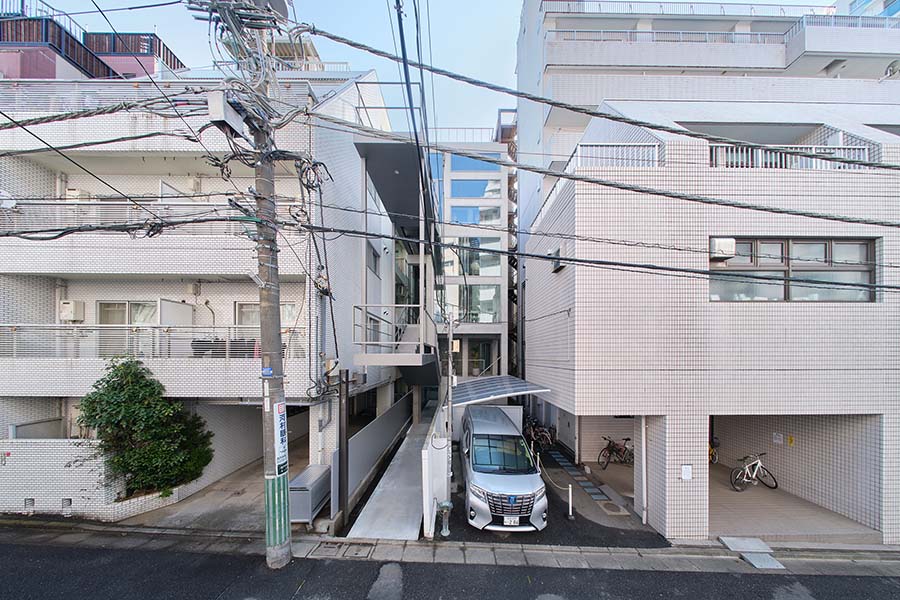
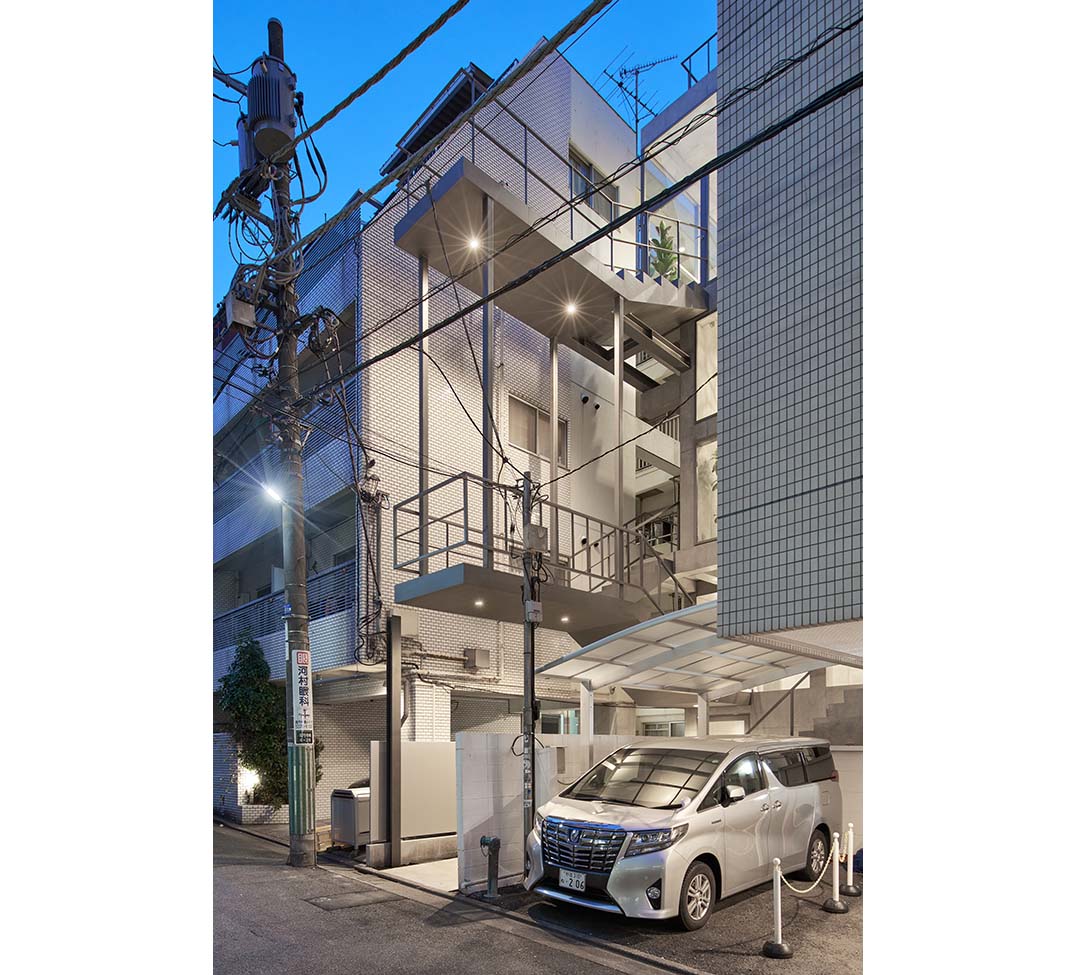
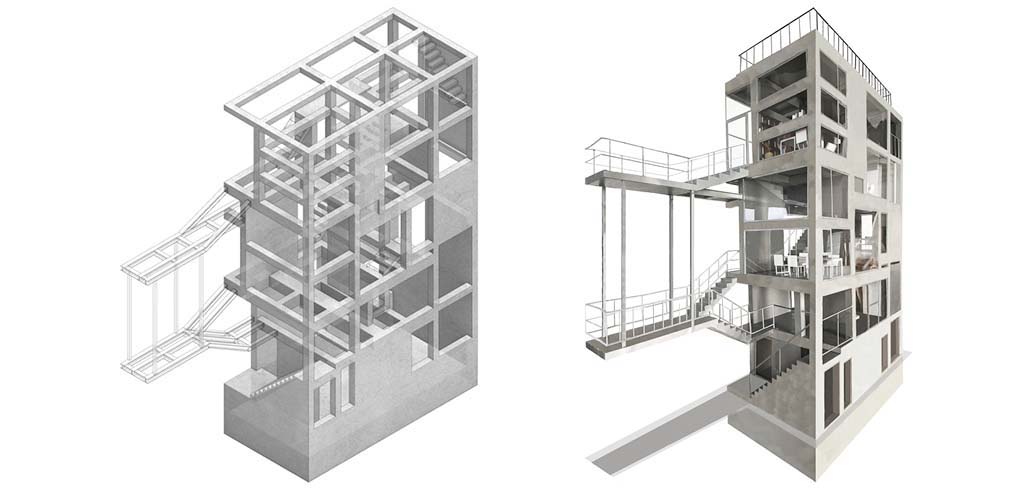
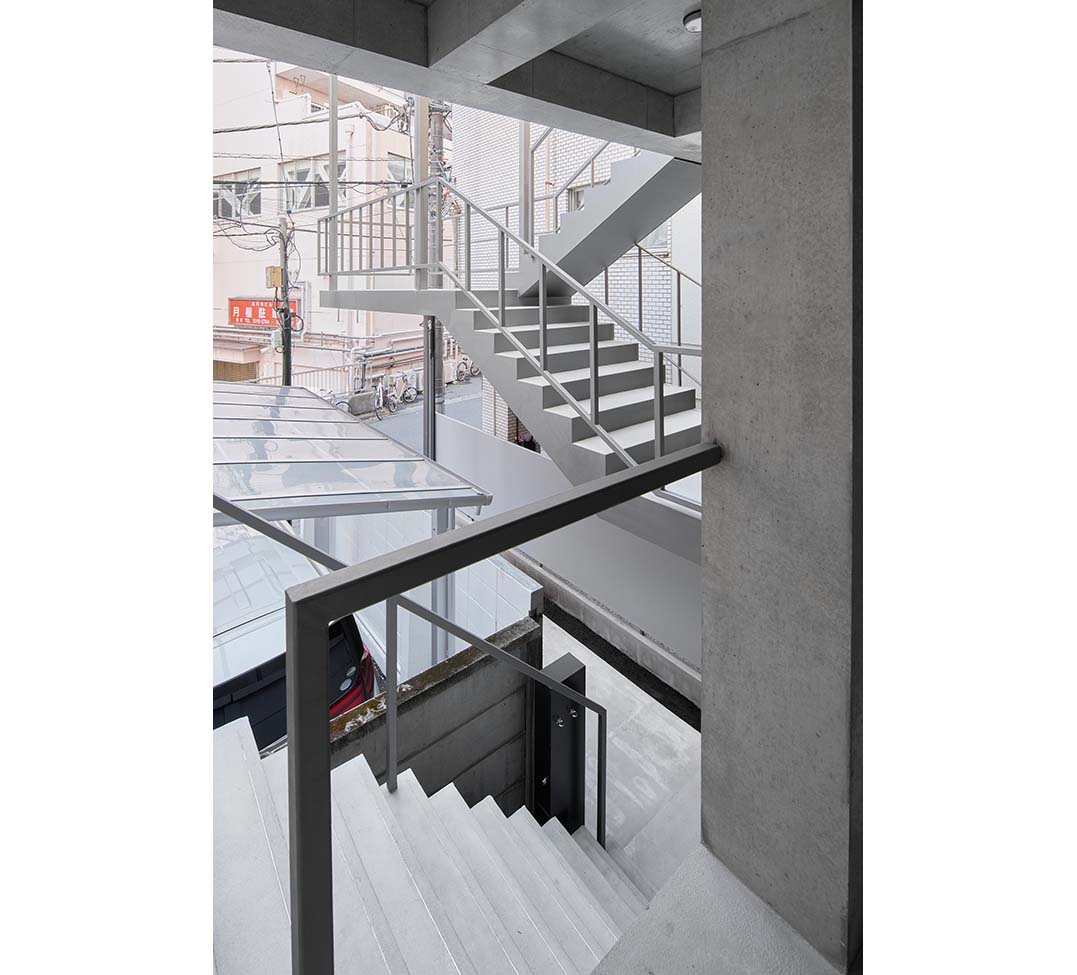
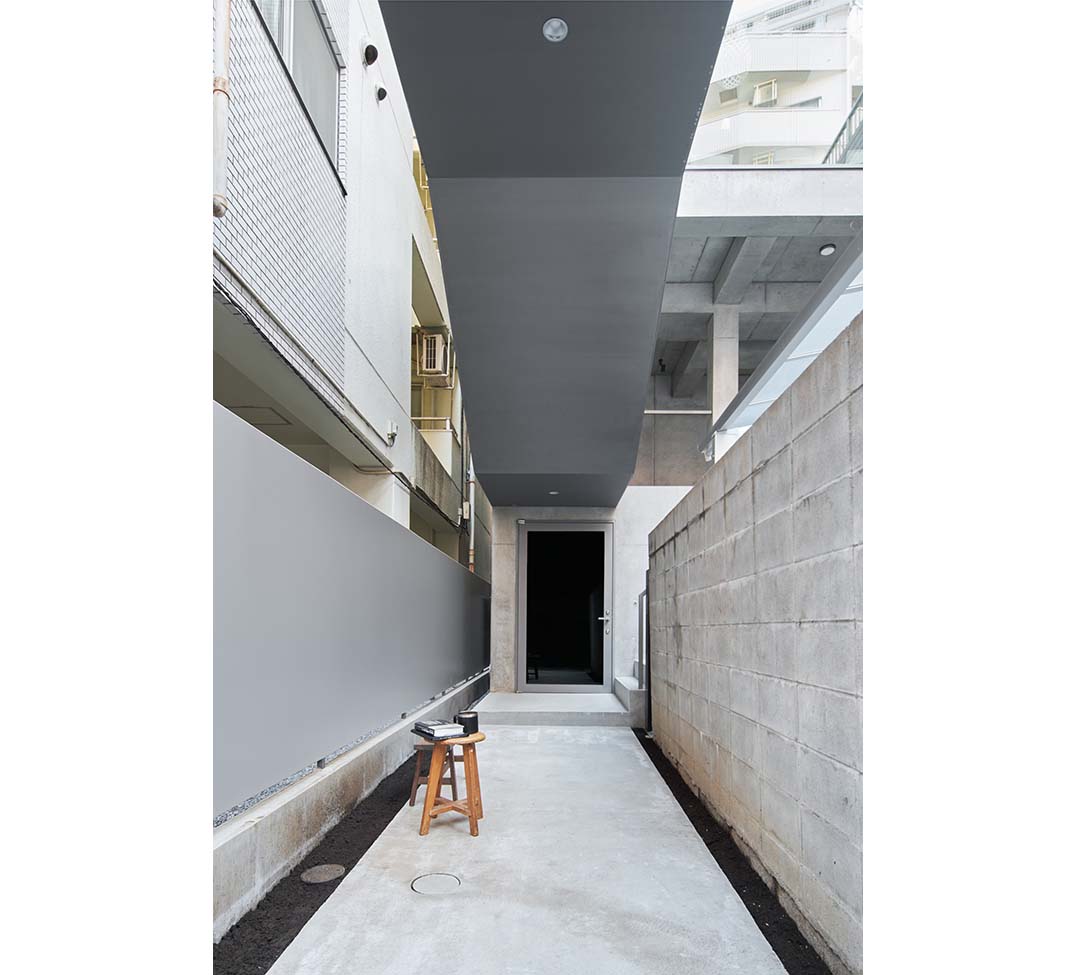
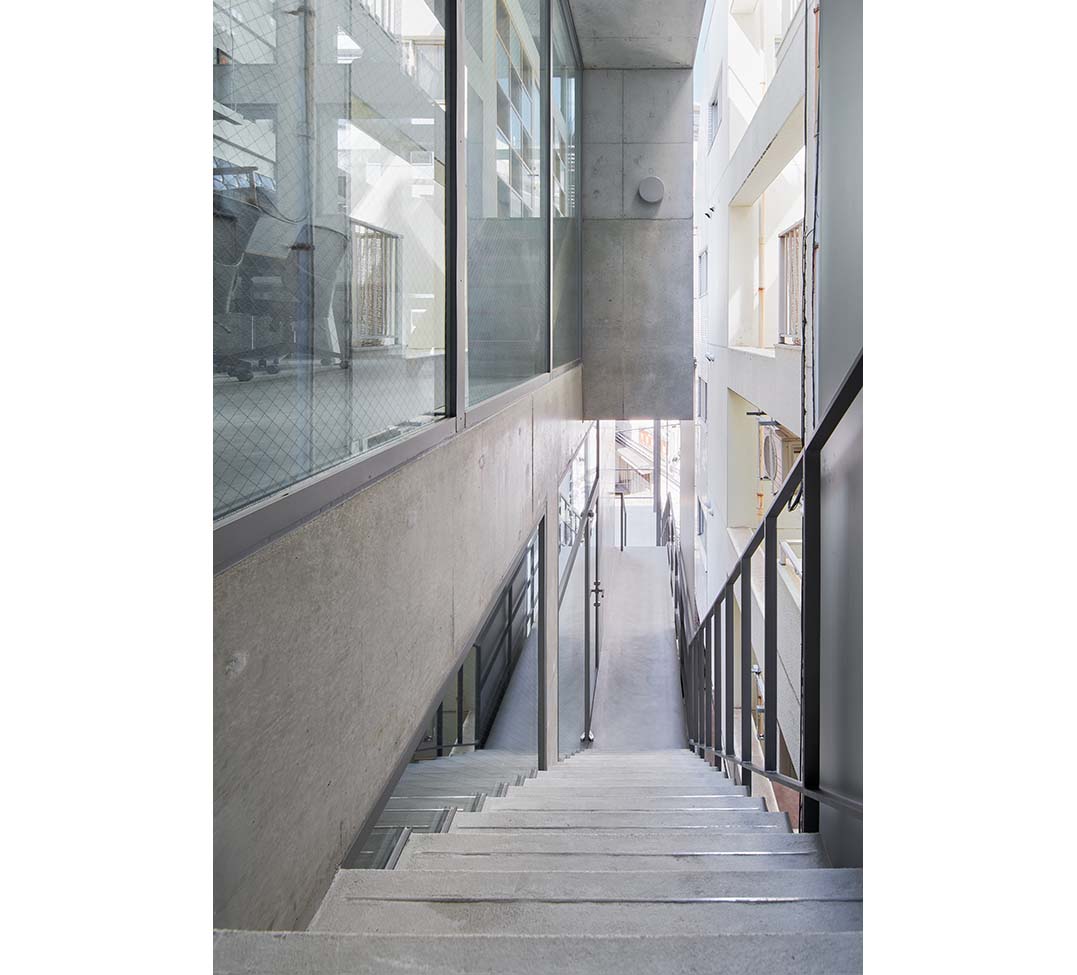
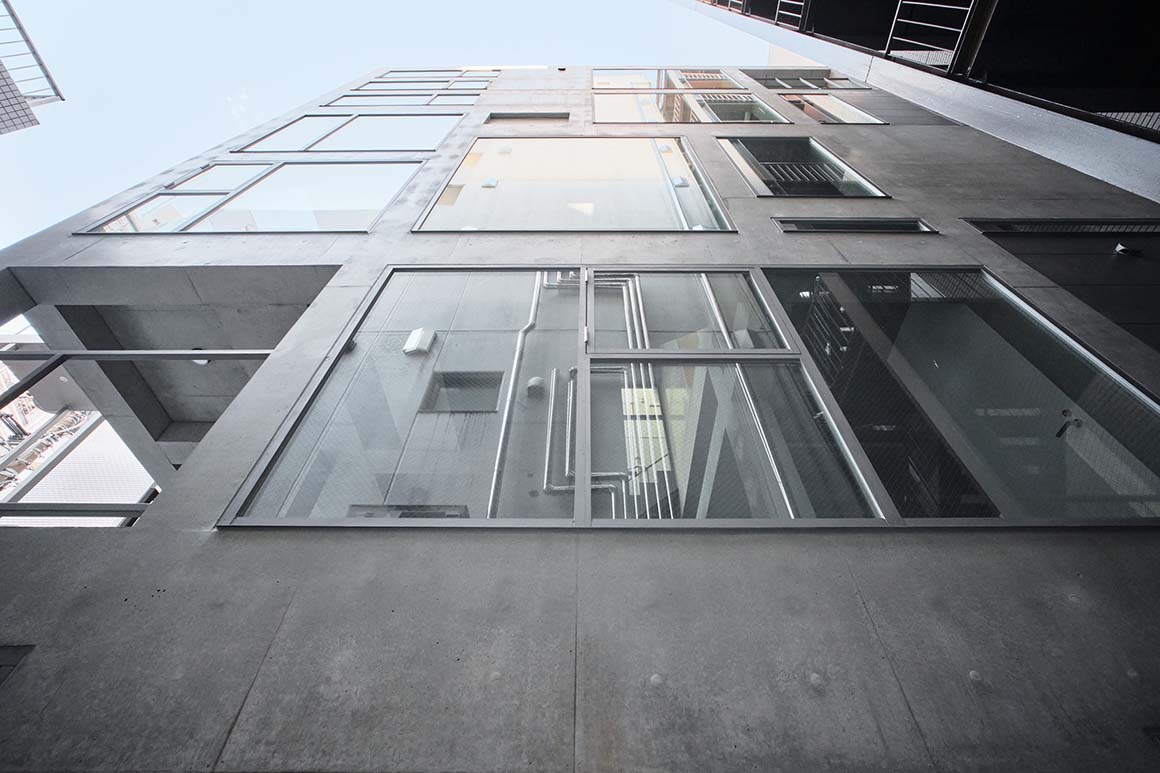
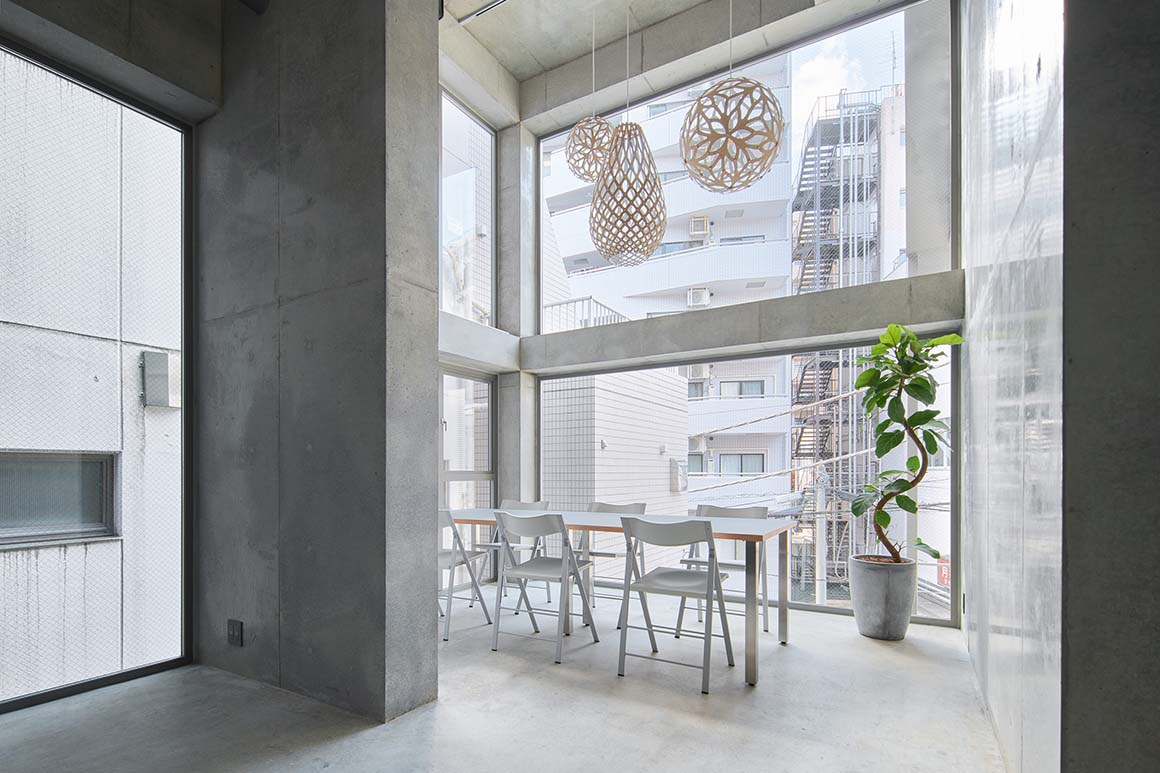
Beyond the entrance, an open stairwell with large windows appears. The stairwell functions both as a vertical circulation space connecting multiple floors and as a device that draws light into the building. It is a key element that extends spatial depth and visual openness within the constraints of a narrow site. Large windows distributed across the façade frame views of the surrounding alleys and adjacent buildings, securing sufficient daylight and openness despite the limited site conditions. The interior is left as exposed concrete. The minimal material palette forms a neutral framework that can accommodate future programs and serves as a base for use. The stair operates as a continuous spatial element, connecting floors fluidly and extending the building’s three-dimensional spatial experience.
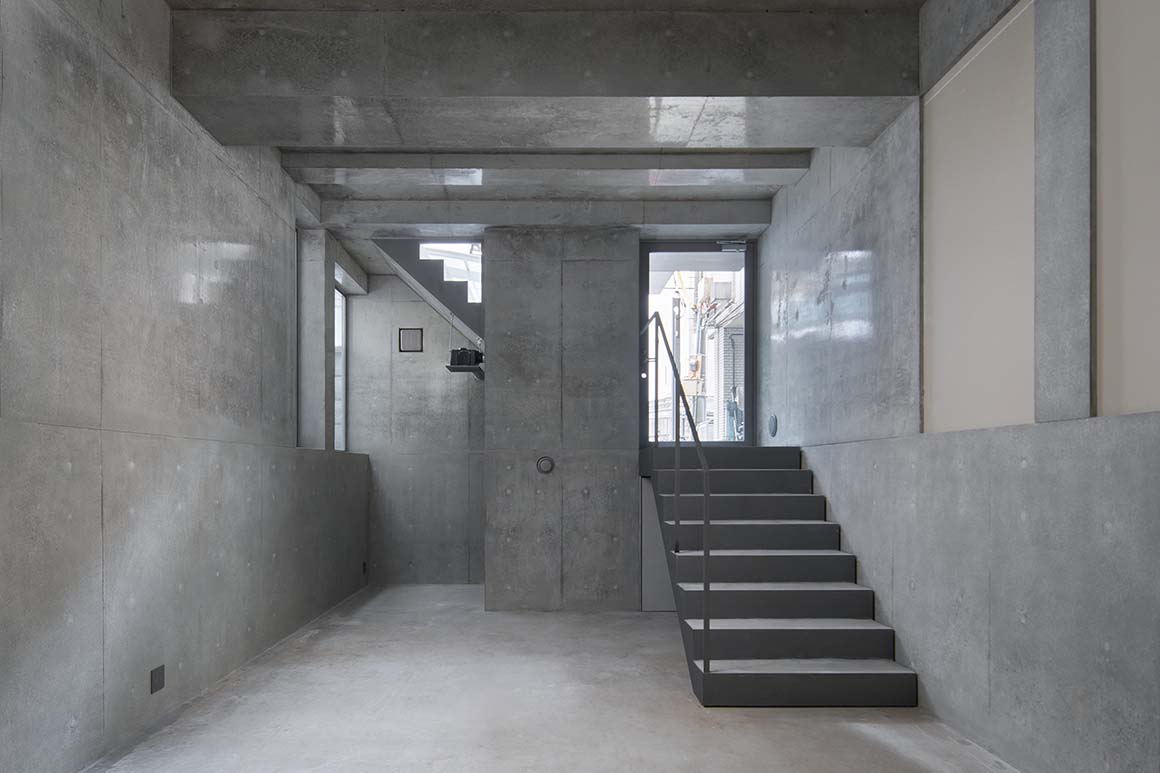
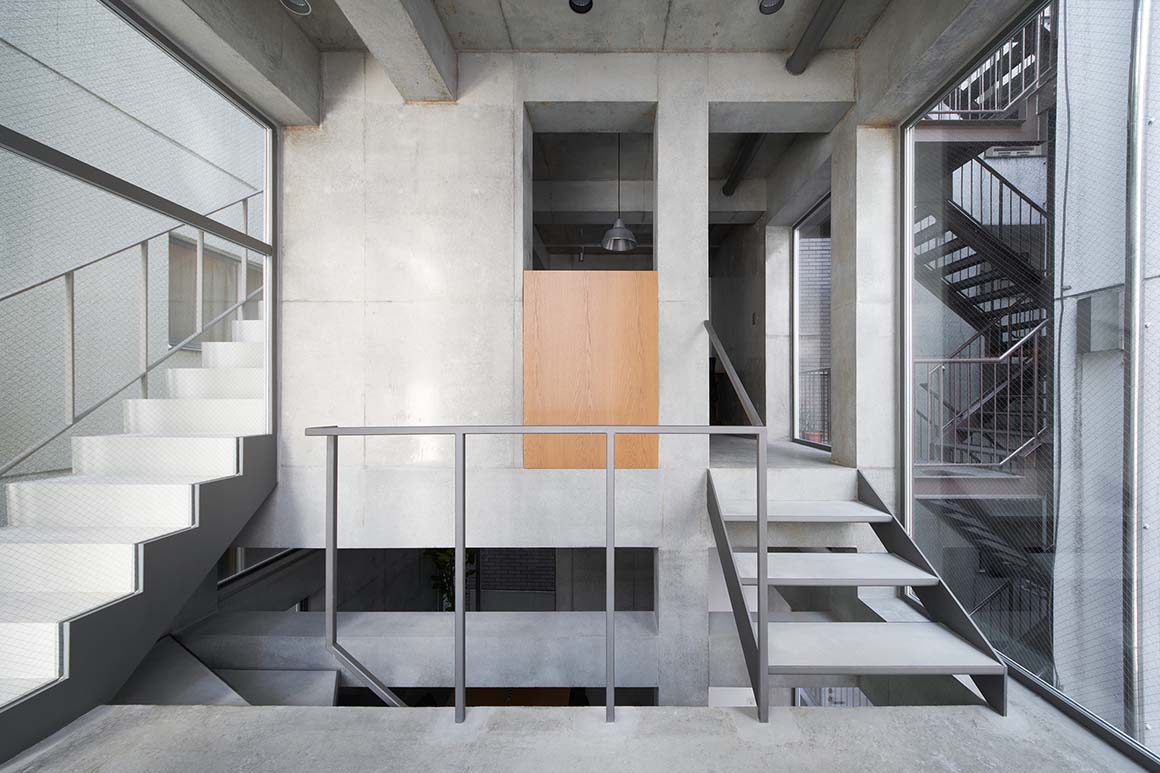
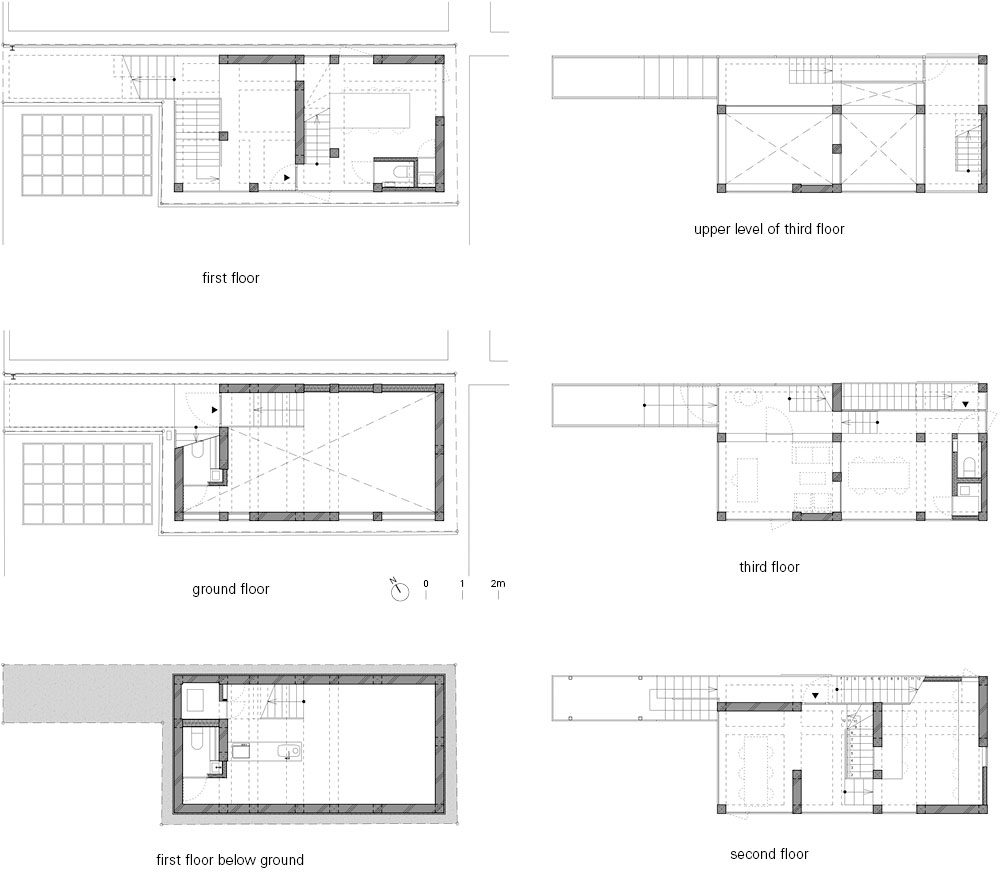
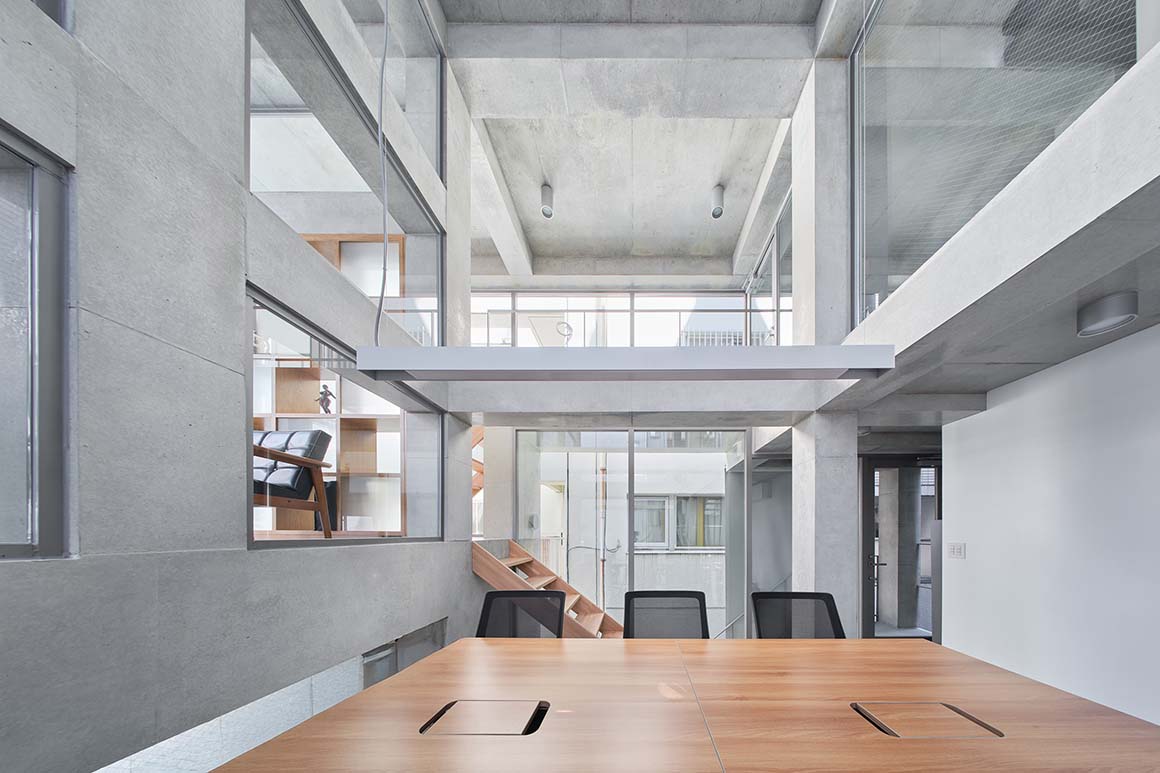
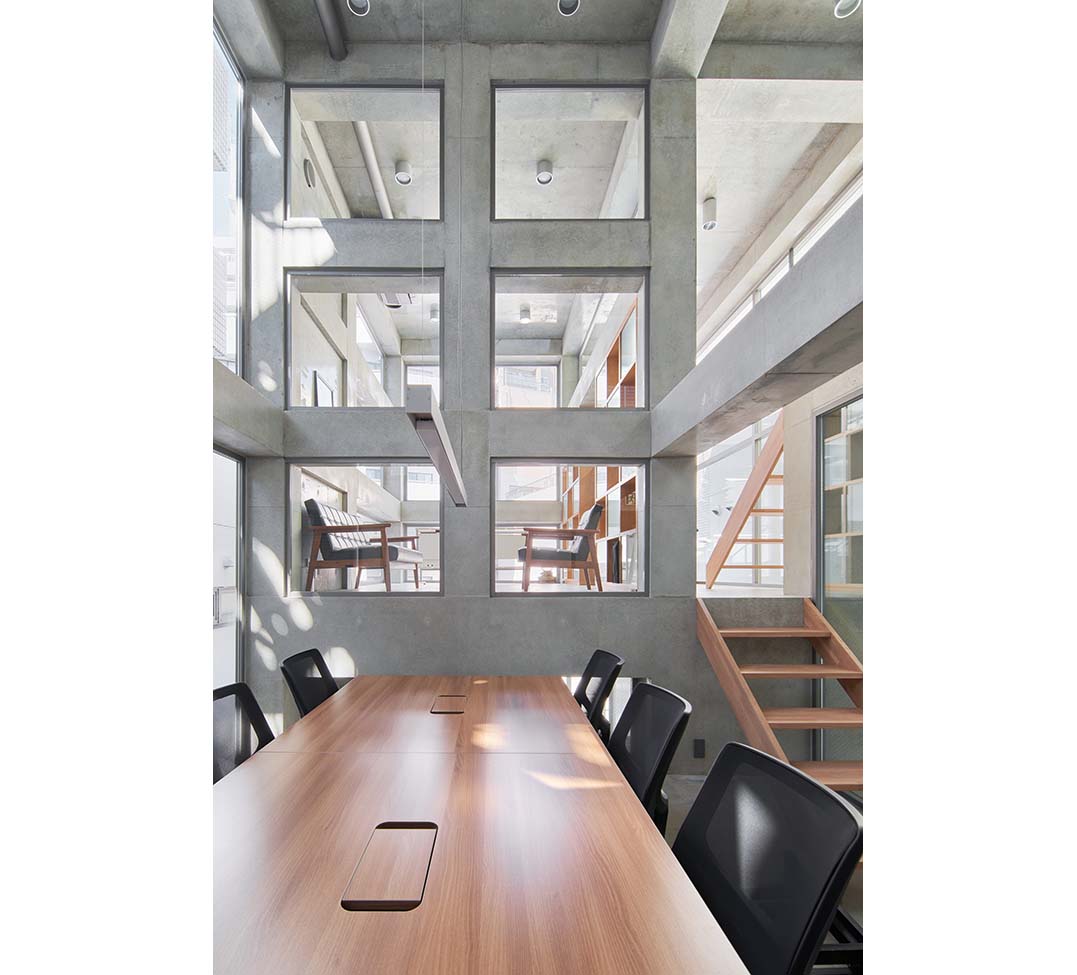
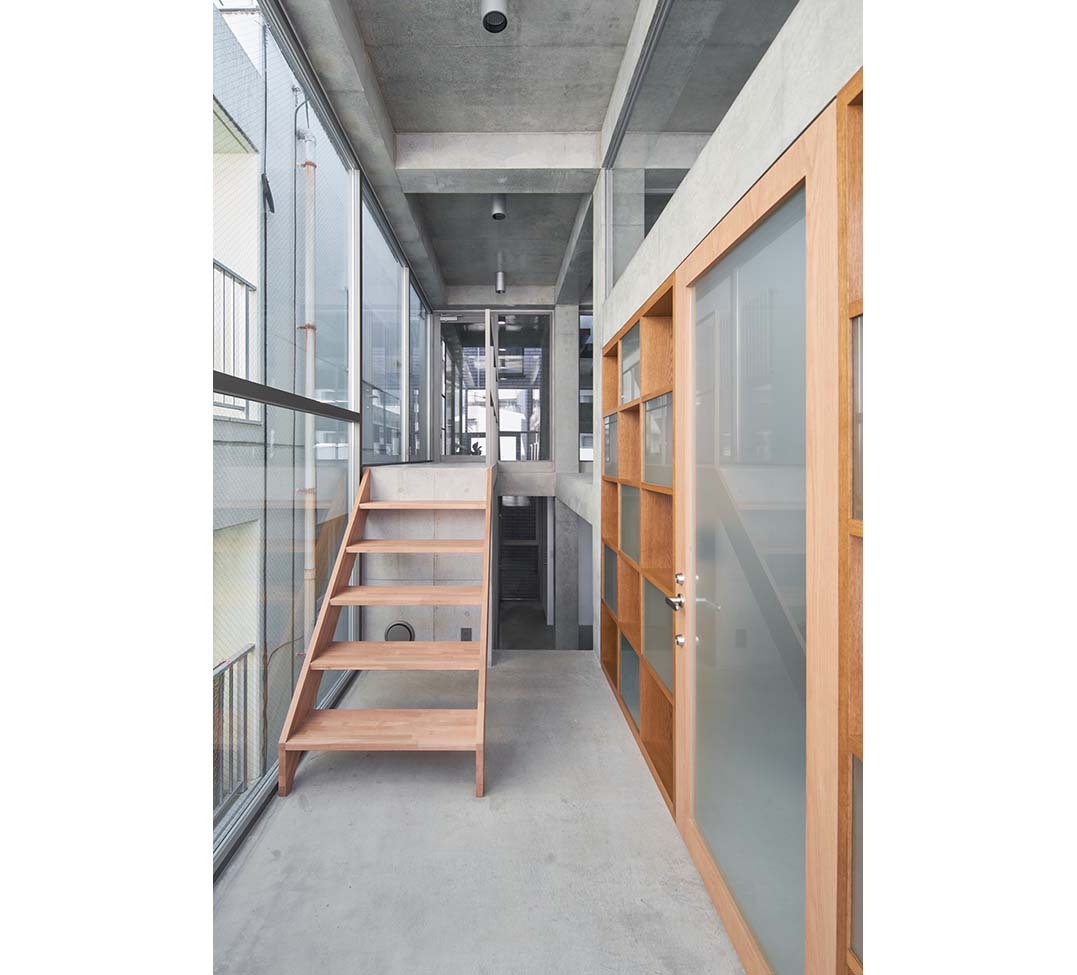
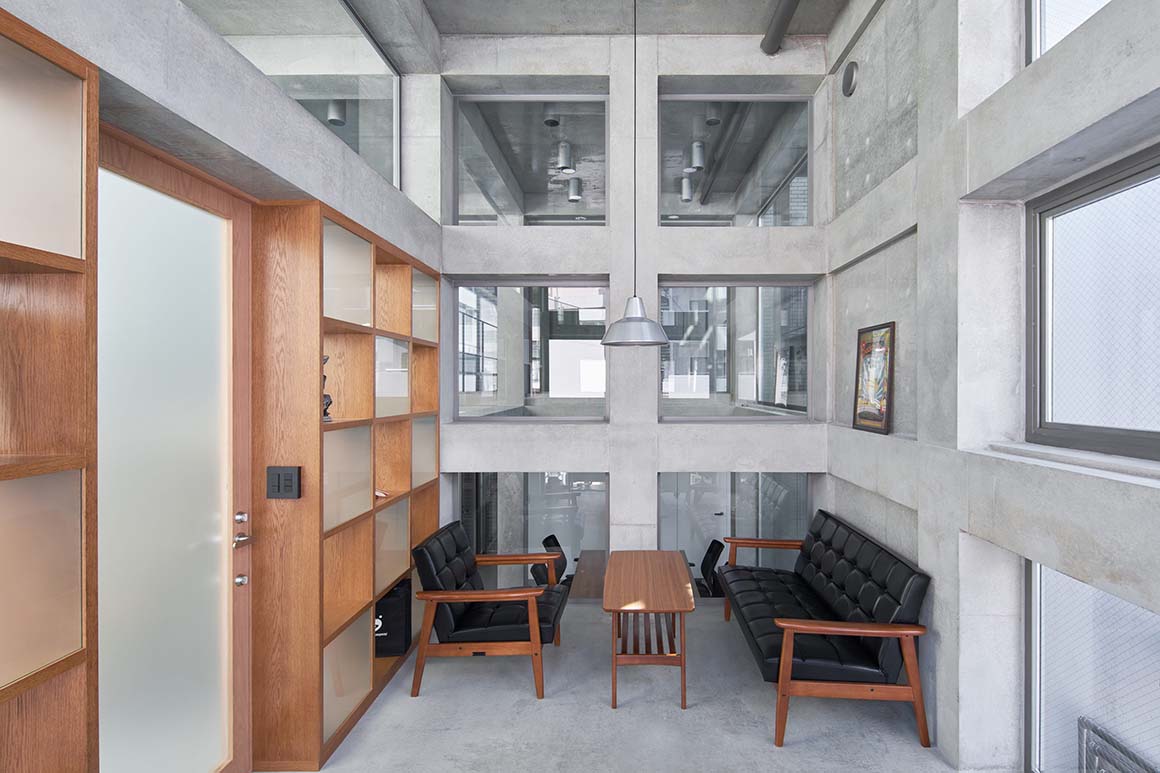
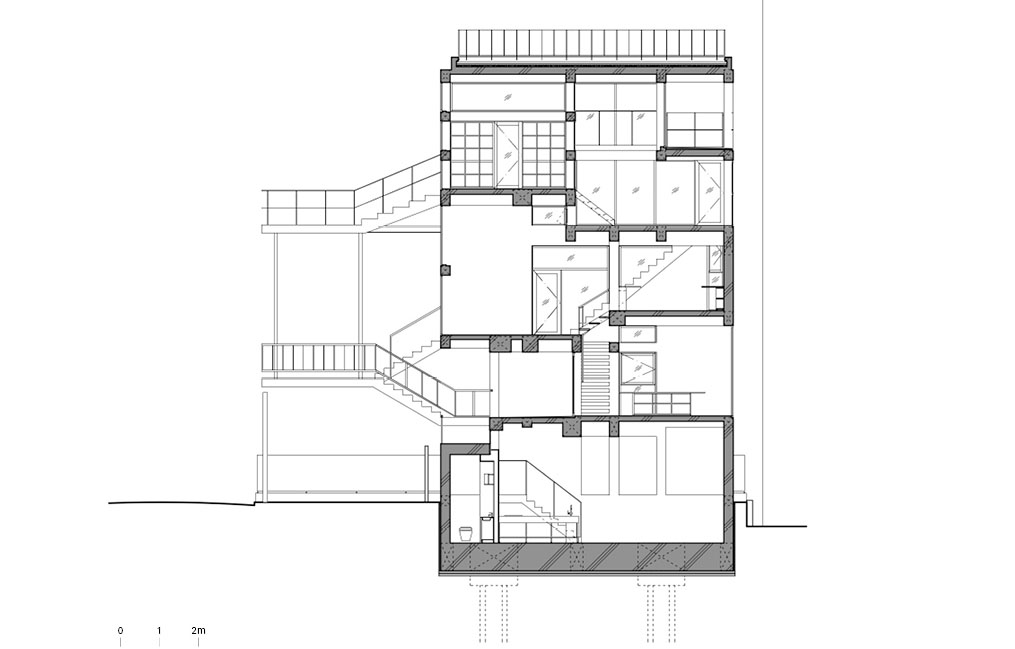
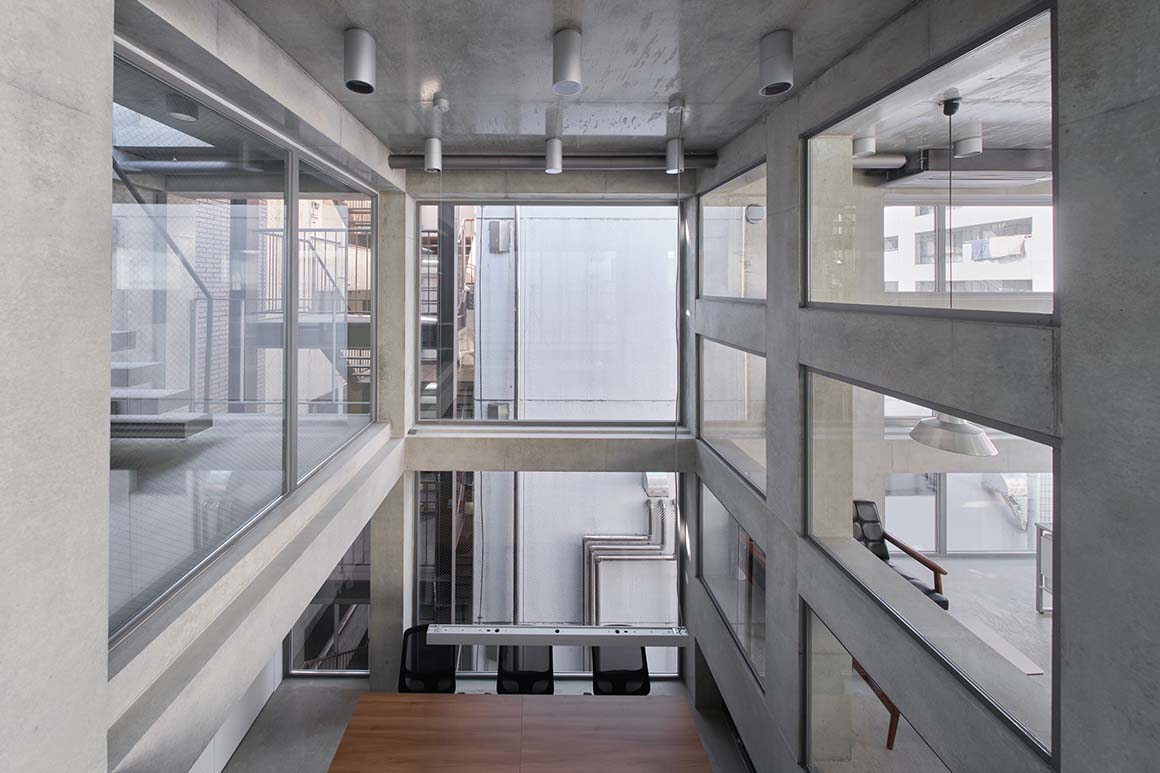
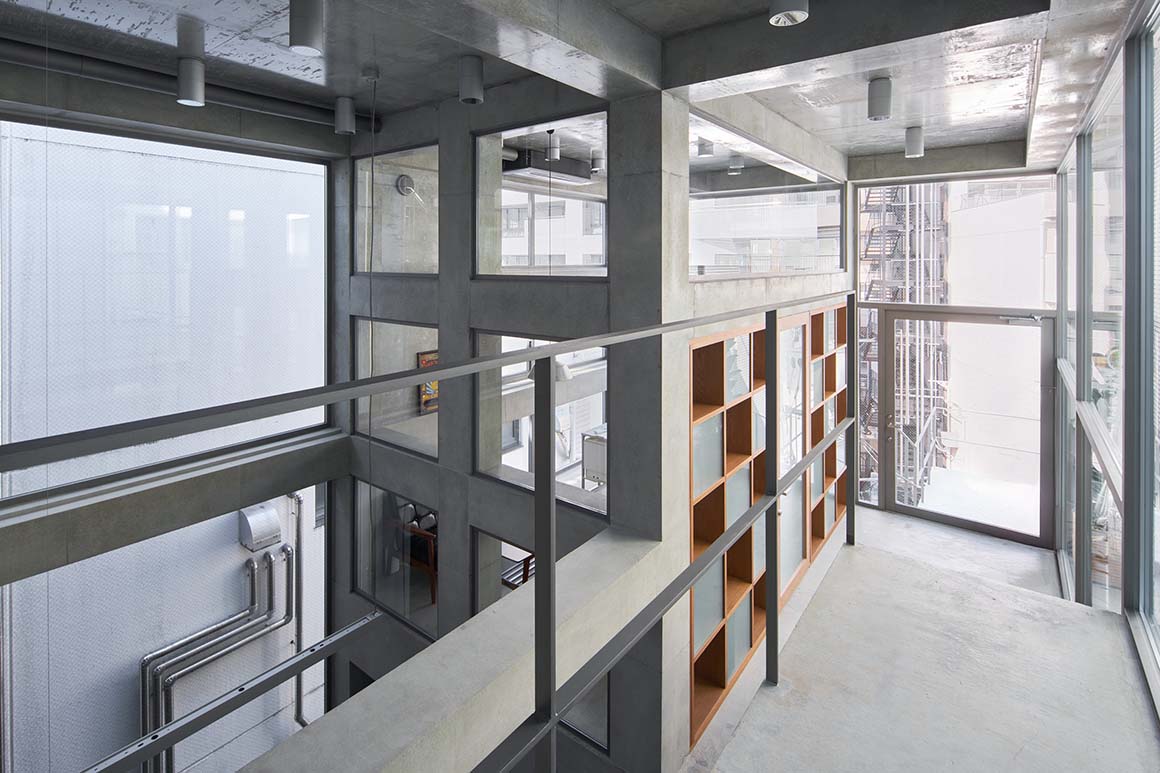
Beams are designed in varying sizes and forms according to their positions and functions. Some support the stair, some prevent column deflection or reduce loads, and others structurally connect upper and lower spatial configurations. Rather than being arranged according to a predetermined system, these beams are configured in response to varying conditions. As a result, structural elements are interconnected into a complex system shaped by conditions rather than a single unified structural scheme. These elements connect finely segmented spatial layers within a limited area, generating varied circulation.
Project: Koenji Office Building / Location: Tokyo, Japan / Architect: SO&CO. (So Teruuchi) / Structural engineer: LOW FAT structure / Engineer: Y.M.O, Sakuragumi / Contractor: Maekawa Construction / Use: office building / Gross floor area: 179.87m2 / Bldg. scale: one story below ground, four stories above ground / Structure: RC / Completion: 2025 / Photograph: ©Hayato Wakabayashi (courtesy of the architect)