


A Three-Dimensional Village Open towards the City
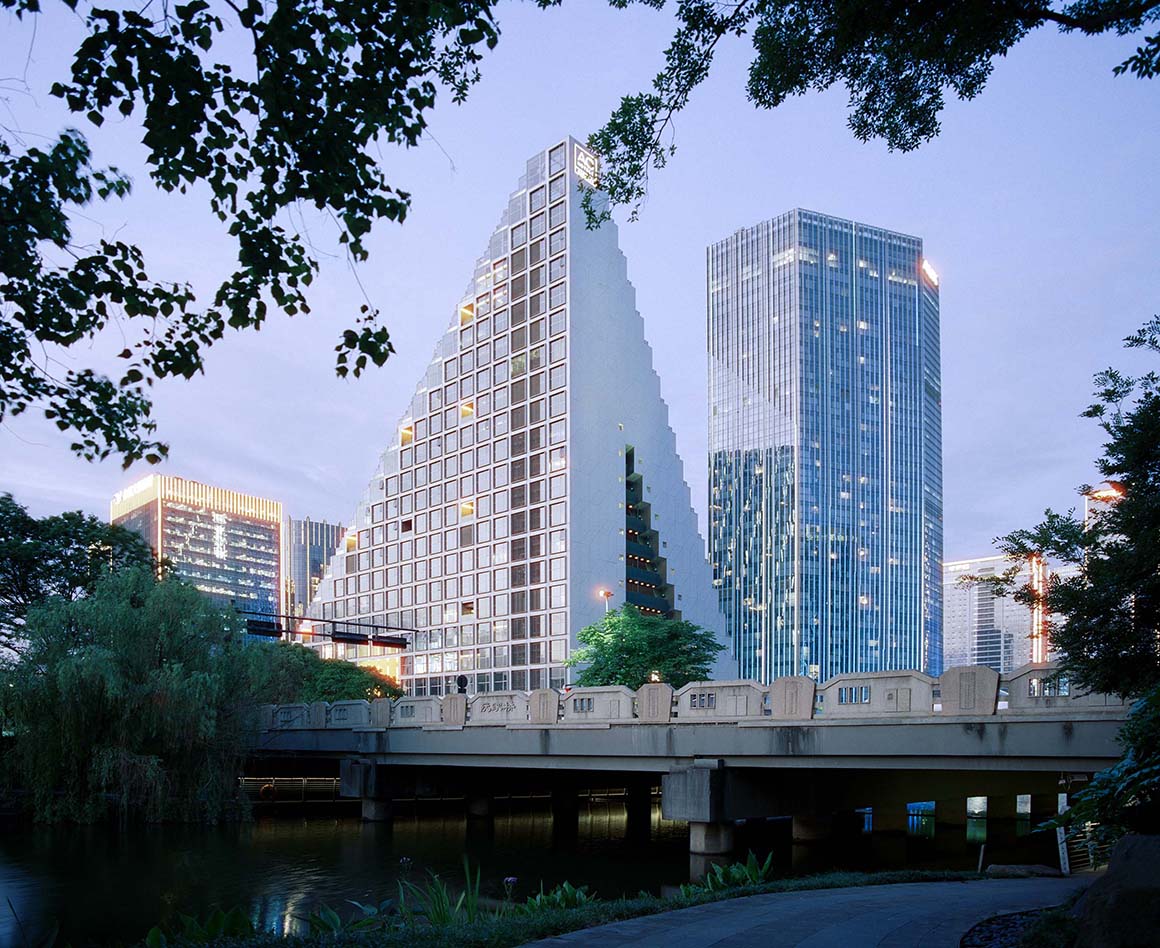
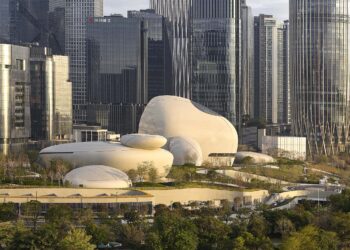
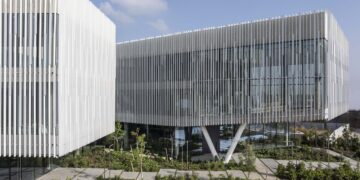
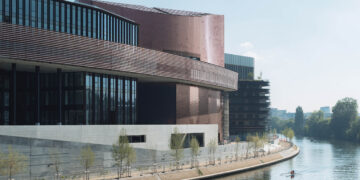
OMA has completed the Hangzhou Prism in Future Tech City, Hangzhou. Commissioned by Xinhu Real Estate Group, the project is OMA’s first built work in the city and was led by OMA Partner Chris van Duijn with Project Architect Michael Hadjistyllis. With a total area of 43,000m², the building brings together a hotel, residential units, offices with urban amenities, commercial spaces, and a public square within a single, highly legible form.
Future Tech City is part of Hangzhou’s ongoing transformation from a manufacturing-based economy toward one driven by technology, innovation, and new forms of work. Yet such districts often face a familiar contradiction: while their names suggest experimentation and future-oriented urban life, their physical environments can easily fall back on conventional planning models, isolated towers, and generic business-park typologies. Hangzhou Prism begins from this gap. Rather than accepting the prescribed logic of separate towers, OMA reworks the project into a porous mixed-use structure where different users, programs, and rhythms of daily life can overlap.
Chris van Duijn describes the project as the transformation of a typical cluster of residential towers into “a three-dimensional village” for young professionals and visitors. This idea is central to the building’s urban role. In an innovation district, the project suggests, architectural value does not lie only in office efficiency or iconic visibility. It also lies in the spaces where informal encounters can occur: between residents returning from work, hotel guests, people arriving for meetings, start-ups, visitors, and the surrounding public. Hangzhou Prism therefore seeks to provide the missing in-between condition often absent from fenced corporate campuses or repetitive residential compounds.
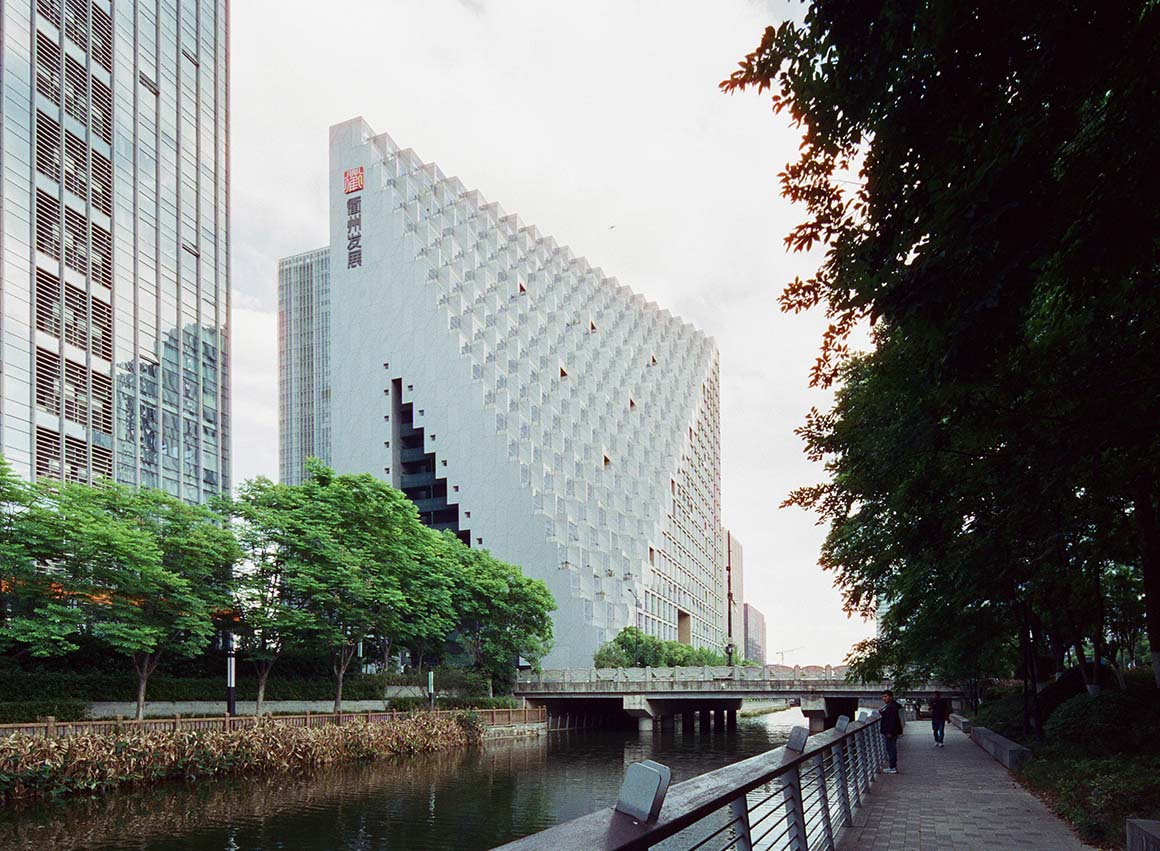
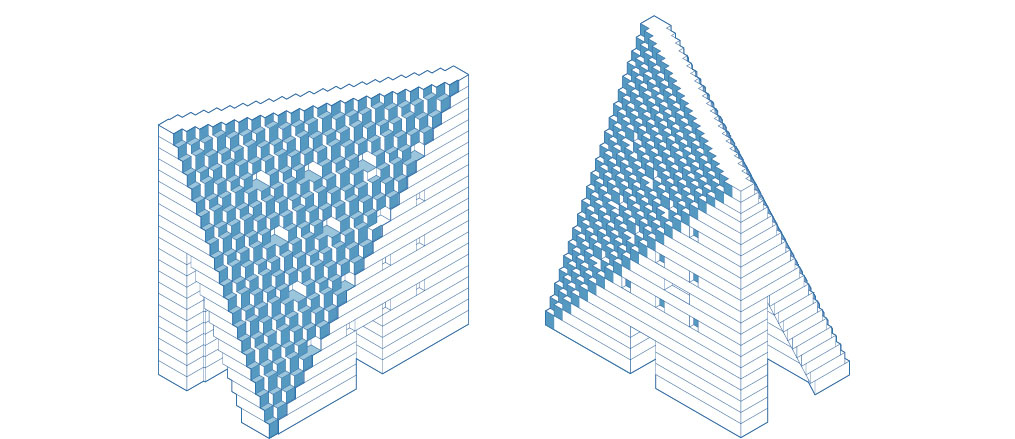
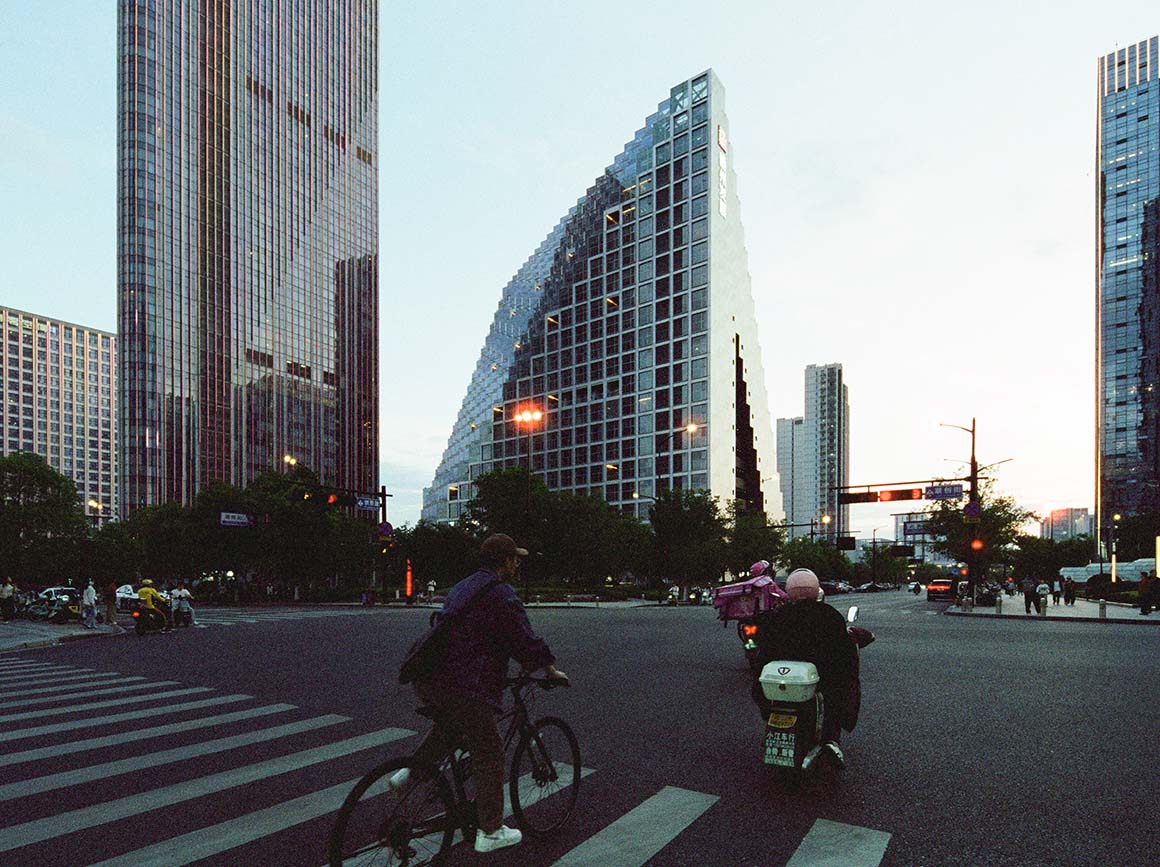
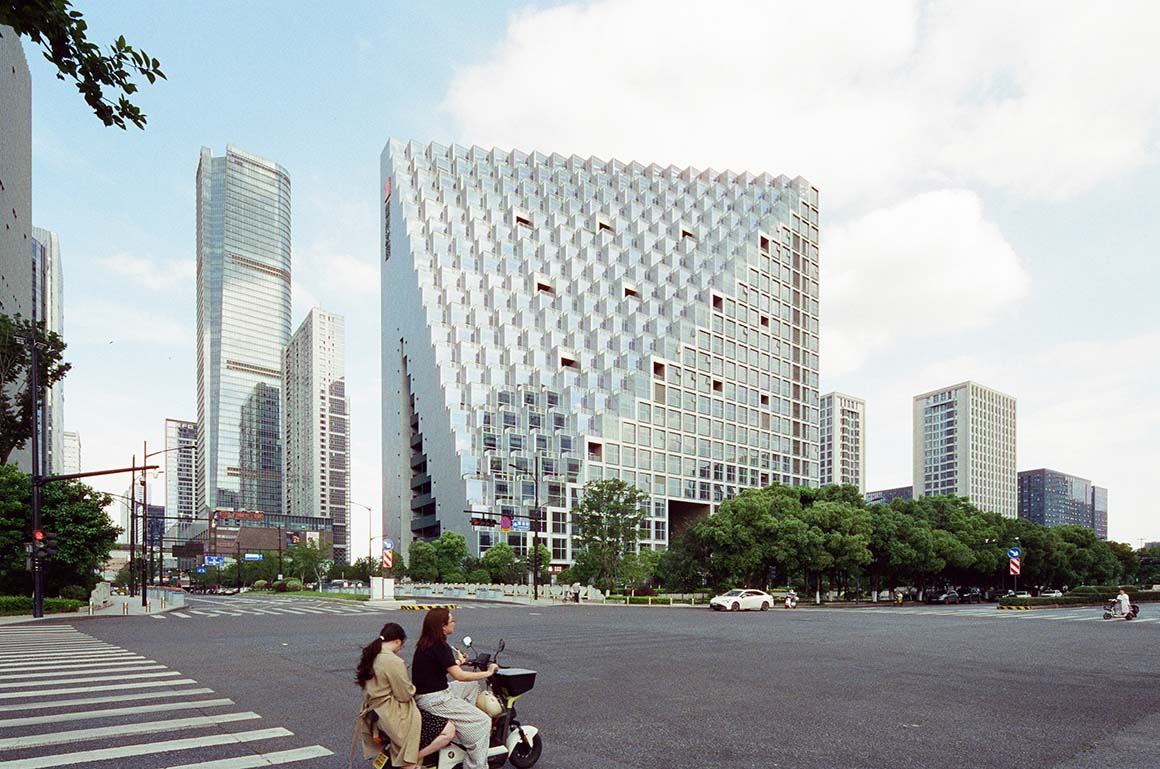
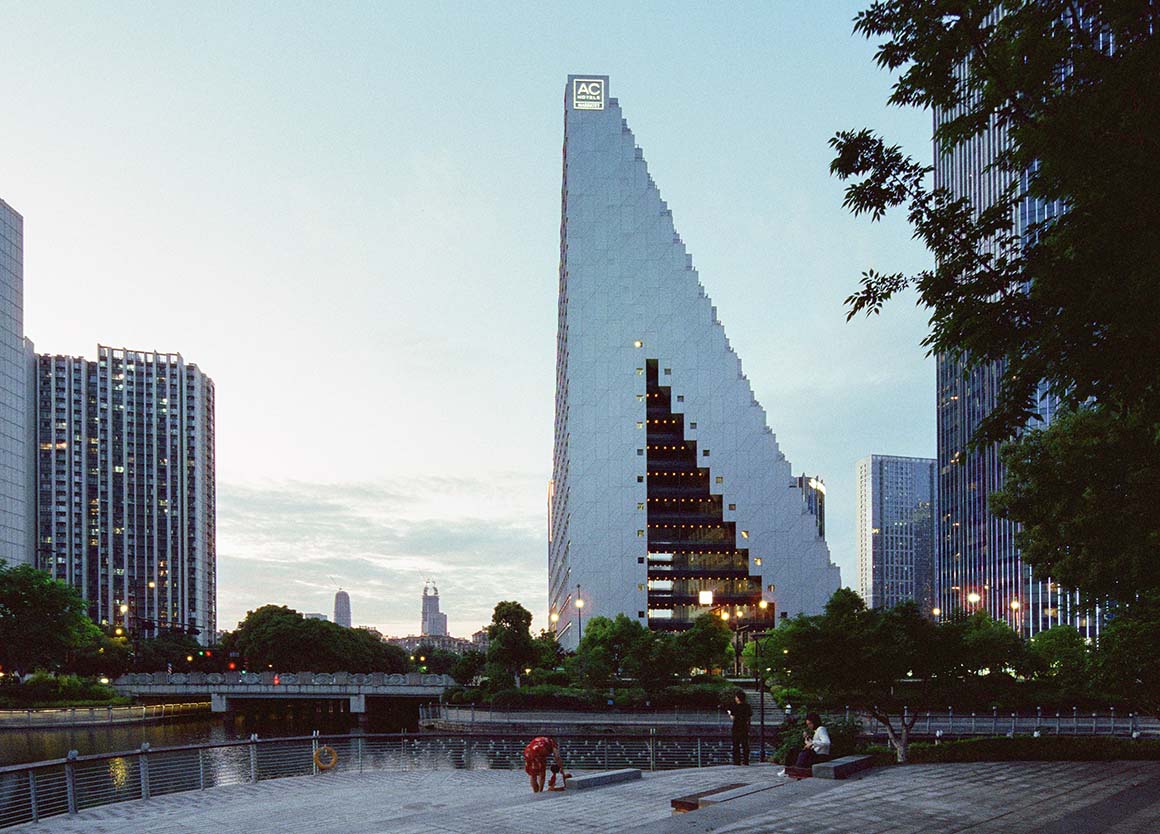
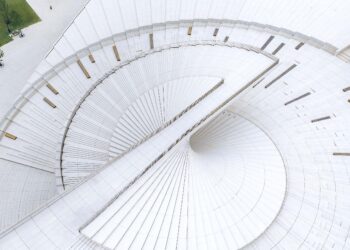
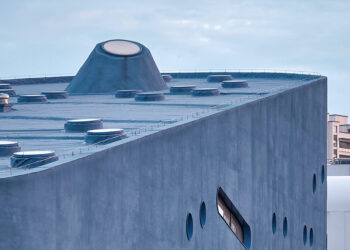
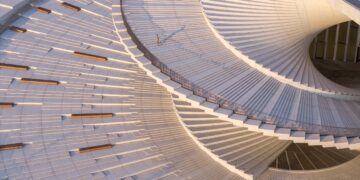
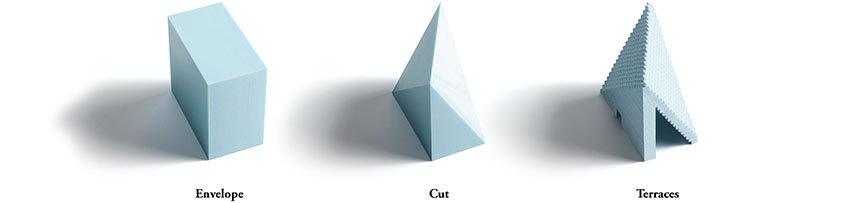
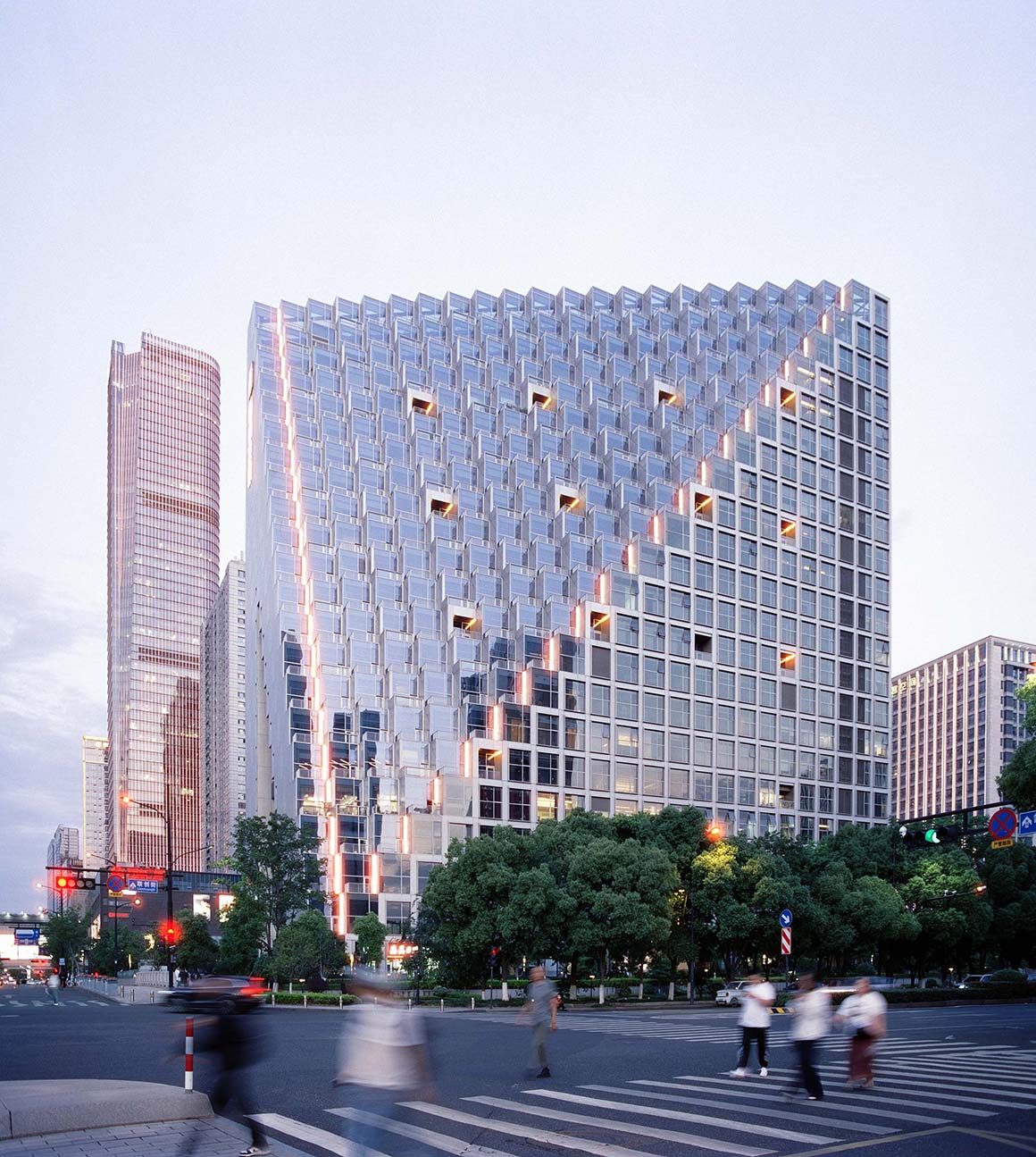
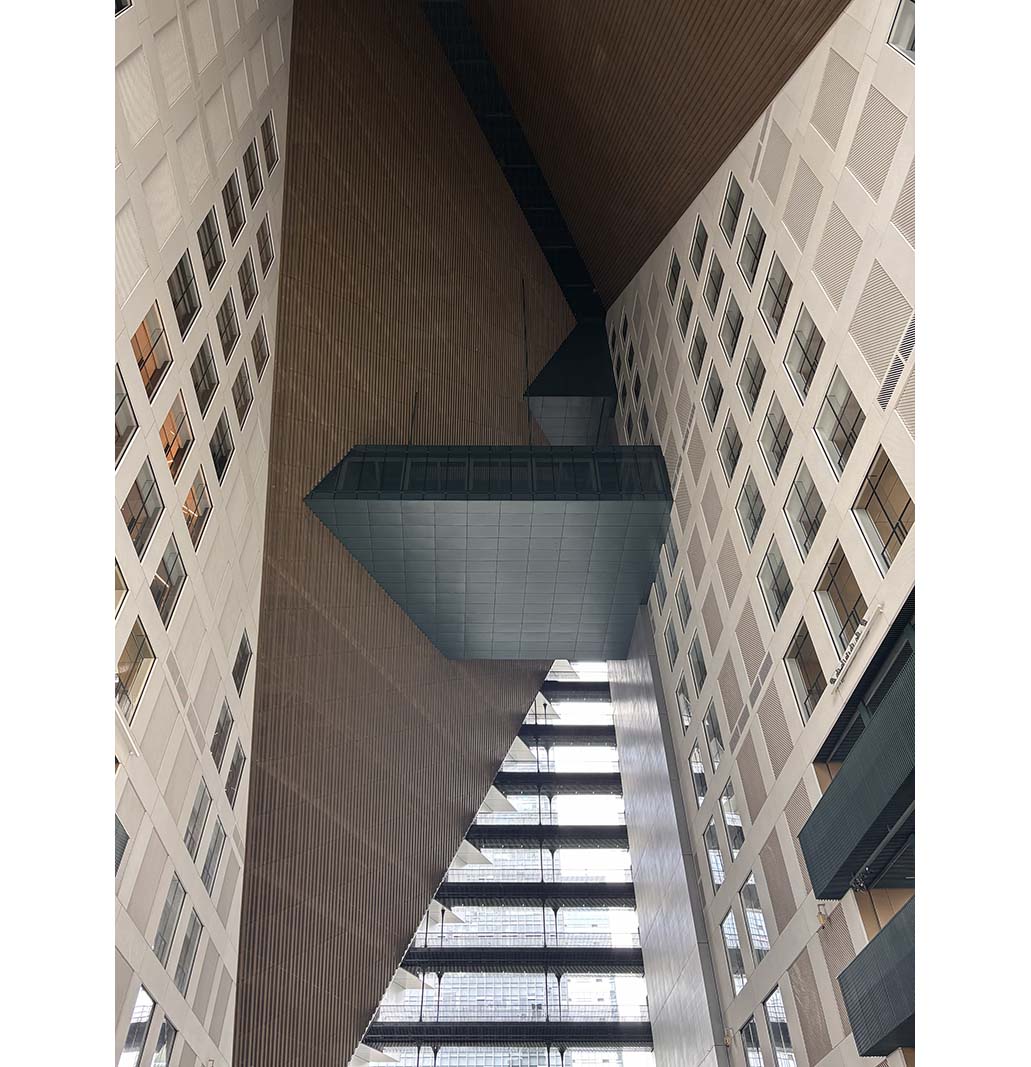
The building’s form is defined by two oblique cuts through its volume. These incisions give the Prism its pyramid-like silhouette, making it immediately recognizable within the skyline of Hangzhou’s emerging central business district. At the same time, they are not merely formal gestures. They orient the building toward two key urban references: the new high-speed rail station to the northwest and the park to the southeast. Through these cuts, the Prism establishes visual and spatial connections between transport infrastructure, landscape, and the wider urban fabric.
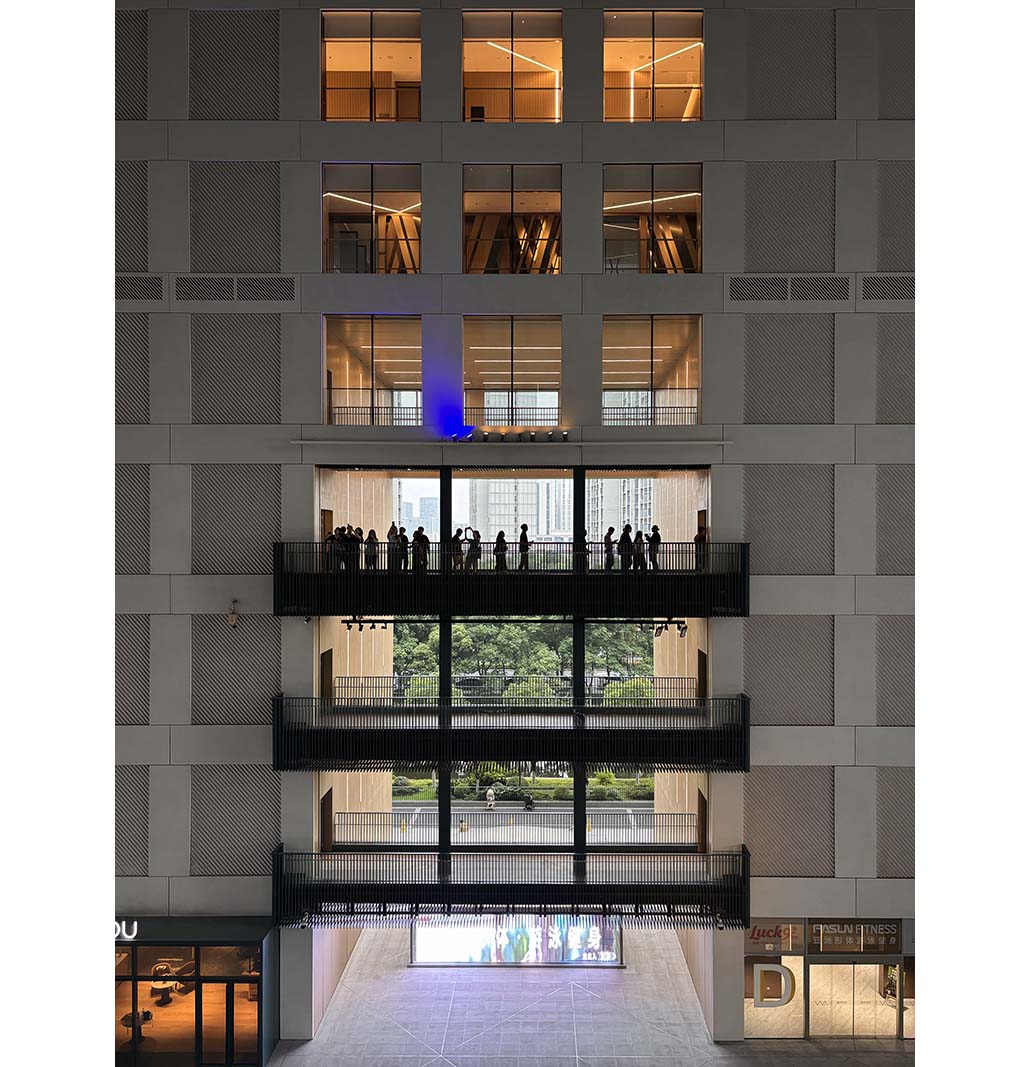
At the upper levels, elevated lofts are provided with individual terraces, offering private outdoor spaces with expansive views across Hangzhou and the surrounding landscape. These terraces extend the relationship between domestic life and the city, balancing retreat with exposure. The building’s exterior is therefore not a closed envelope but a layered surface of openings, terraces, loggias, and visual connections. Its silhouette may be singular, but its occupation is multiple.
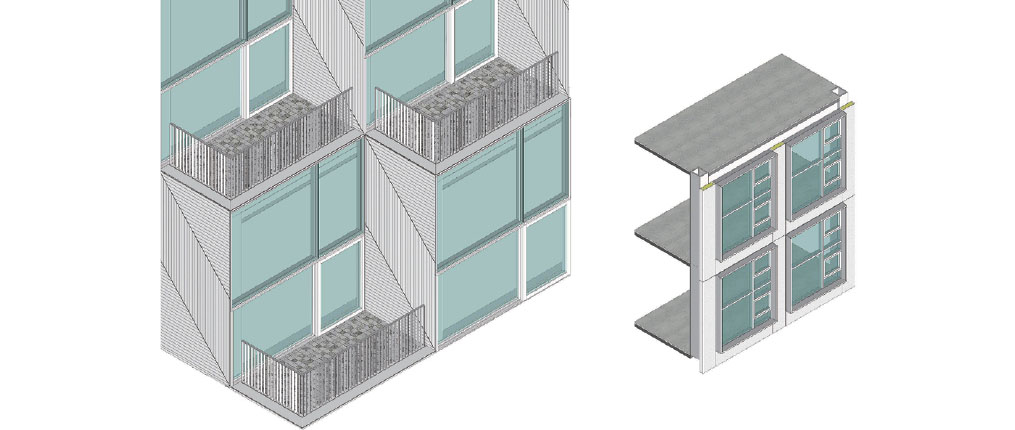
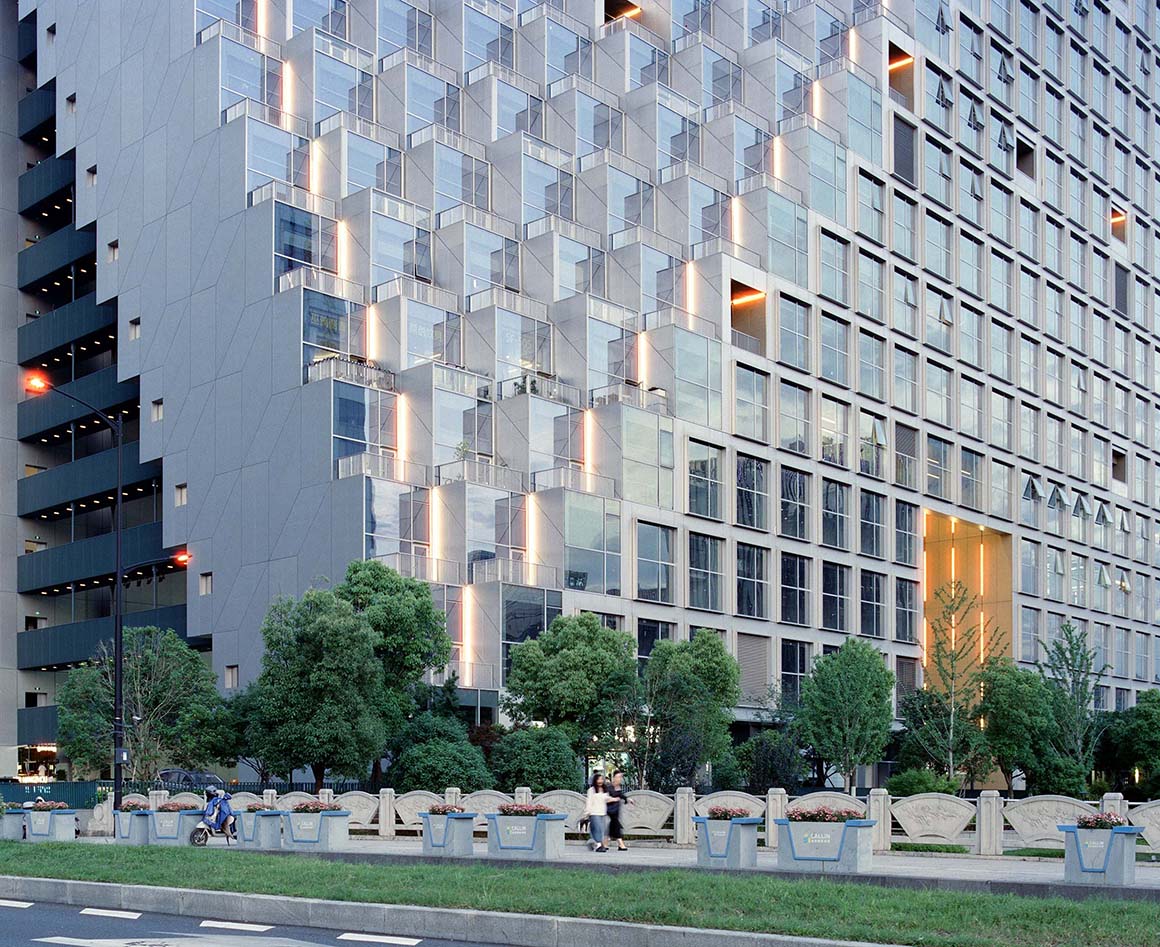
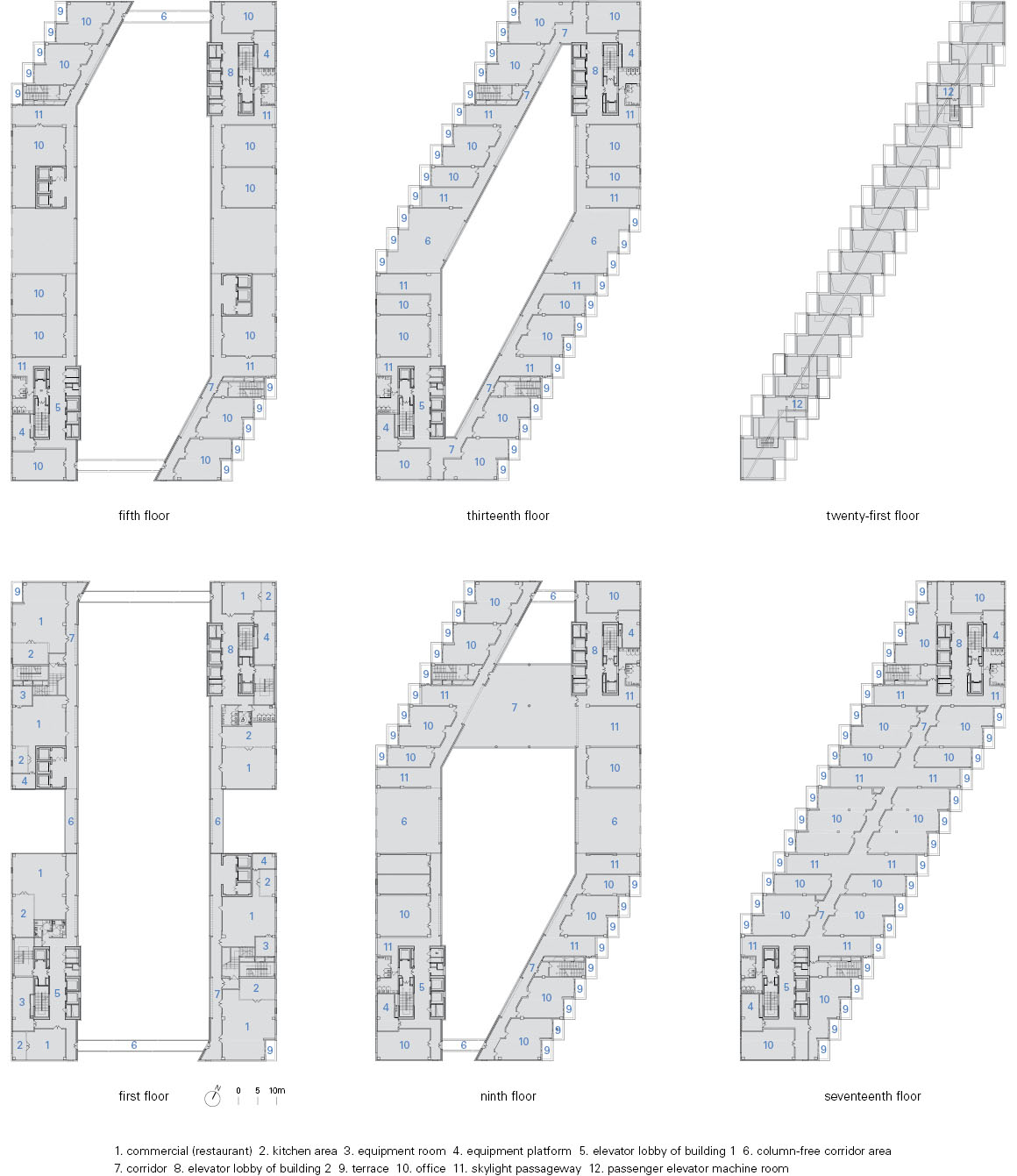
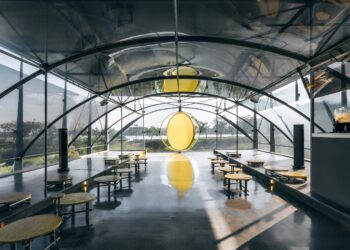
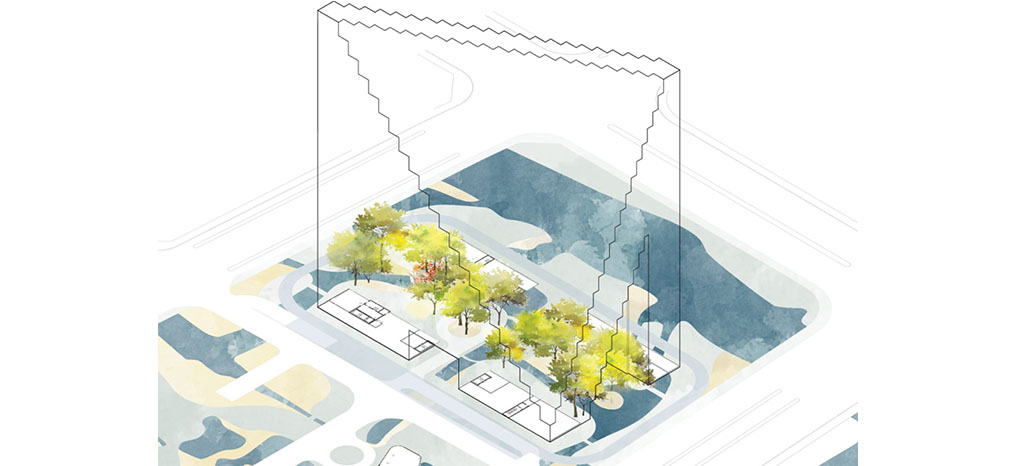
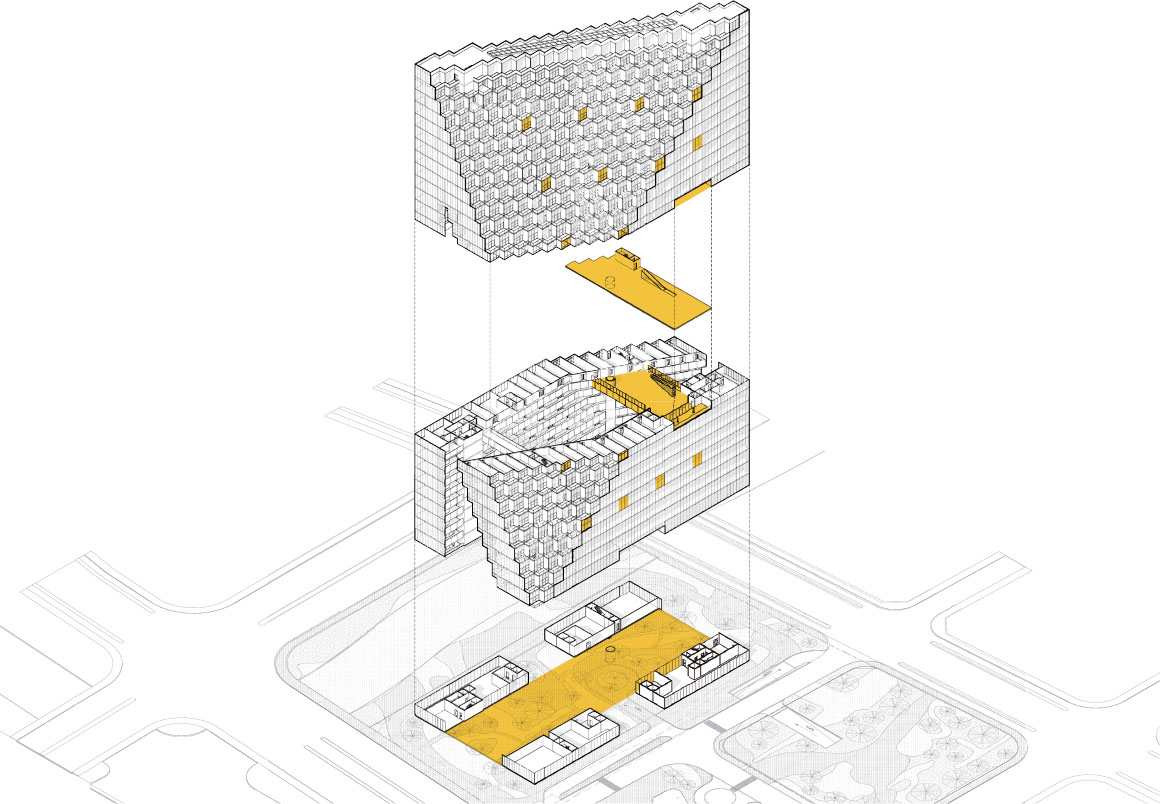
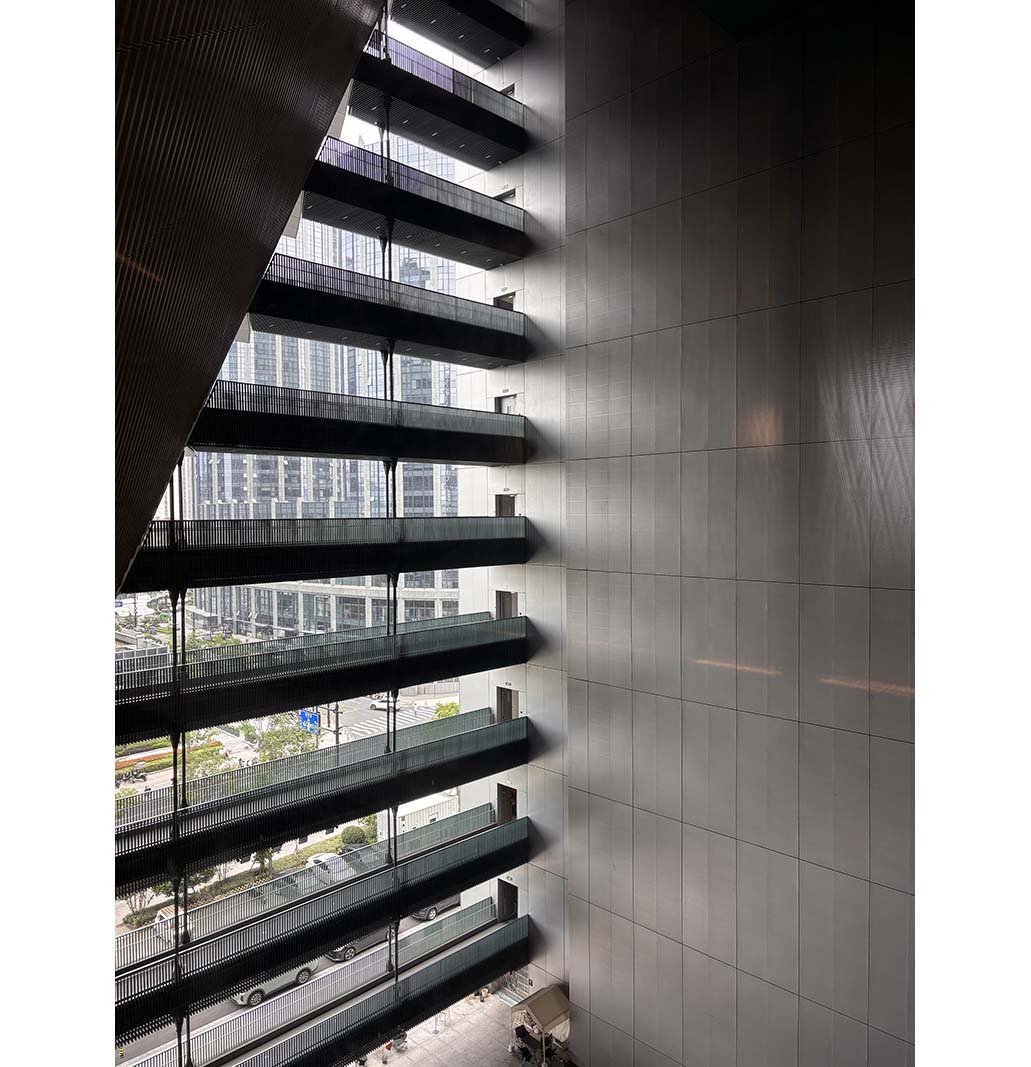
The civic core of the project is the large exterior atrium at the base of the building. Connected to the surrounding streets, canal, commercial routes, and park, this space acts as a publicly accessible square and an extension of the city’s open spaces. It invites people into the site rather than separating the private programme from the urban realm. Within the atrium, the building becomes both interior and exterior: protected yet open, monumental in scale yet informal in use.
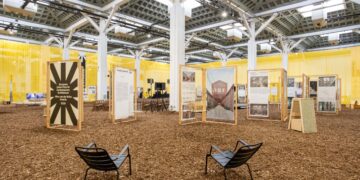
Early images imagined the atrium as a more extensively landscaped space, as if Hangzhou’s natural character could pass through the building and connect the park, canal, and city. In the completed project, the space has become a more open paved plaza. This shift changes the atmosphere of the atrium, but it also allows a different kind of public life to emerge. The plaza can accommodate planned events as well as spontaneous uses: markets, performances, sports, gatherings, or simply everyday movement through the site. Its openness and flexibility allow multiple activities to coexist without requiring them to be fully programmed.
This is where the Prism’s public ambition becomes most visible. Rather than treating the atrium as a representational void, OMA frames it as a shared urban room. Its scale is large enough to host events, yet its porosity and accessibility allow it to support ordinary use. Hotel guests, residents, office workers, visitors, and local passersby can enter from different directions and occupy the same ground. In this sense, the atrium is not an accessory to the building, but the spatial device through which the Prism negotiates its relationship with the city.
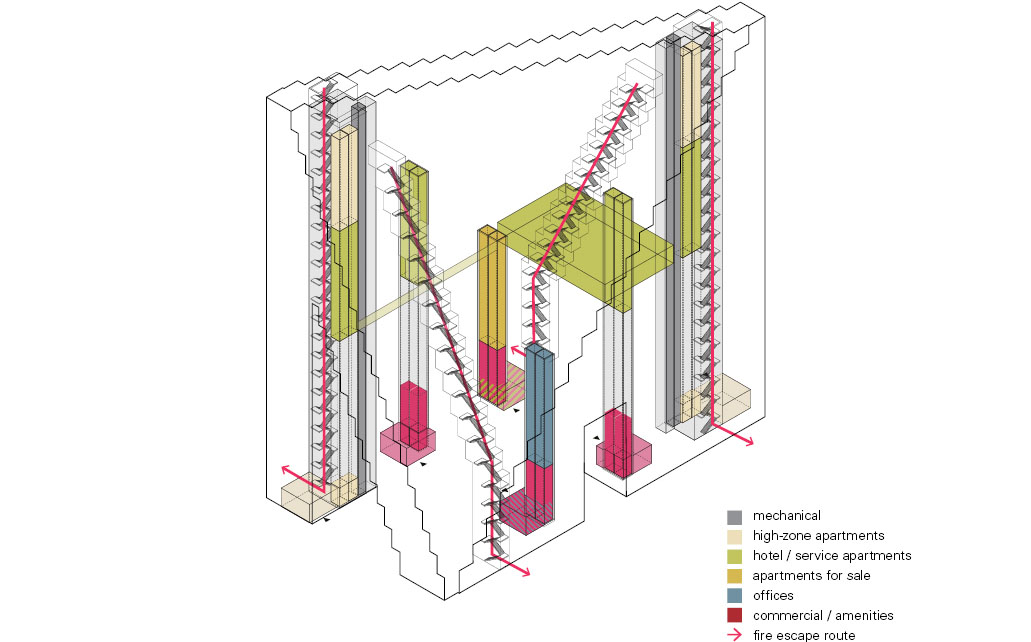
Program is organized with the same intention. The project includes 10,000m2 of residential space, 20,000m2 of hotel space, 5,000m2 of offices, and 8,000m2 of commercial facilities. Rather than stacking these uses as isolated components, the building interweaves private and collective spaces. The elevated lofts provide retreat and exclusivity, while the atrium, terraces, commercial streets, and communal spaces foster interaction. The result is a vertical and spatial mixture that allows the project to operate beyond a single use or user group.
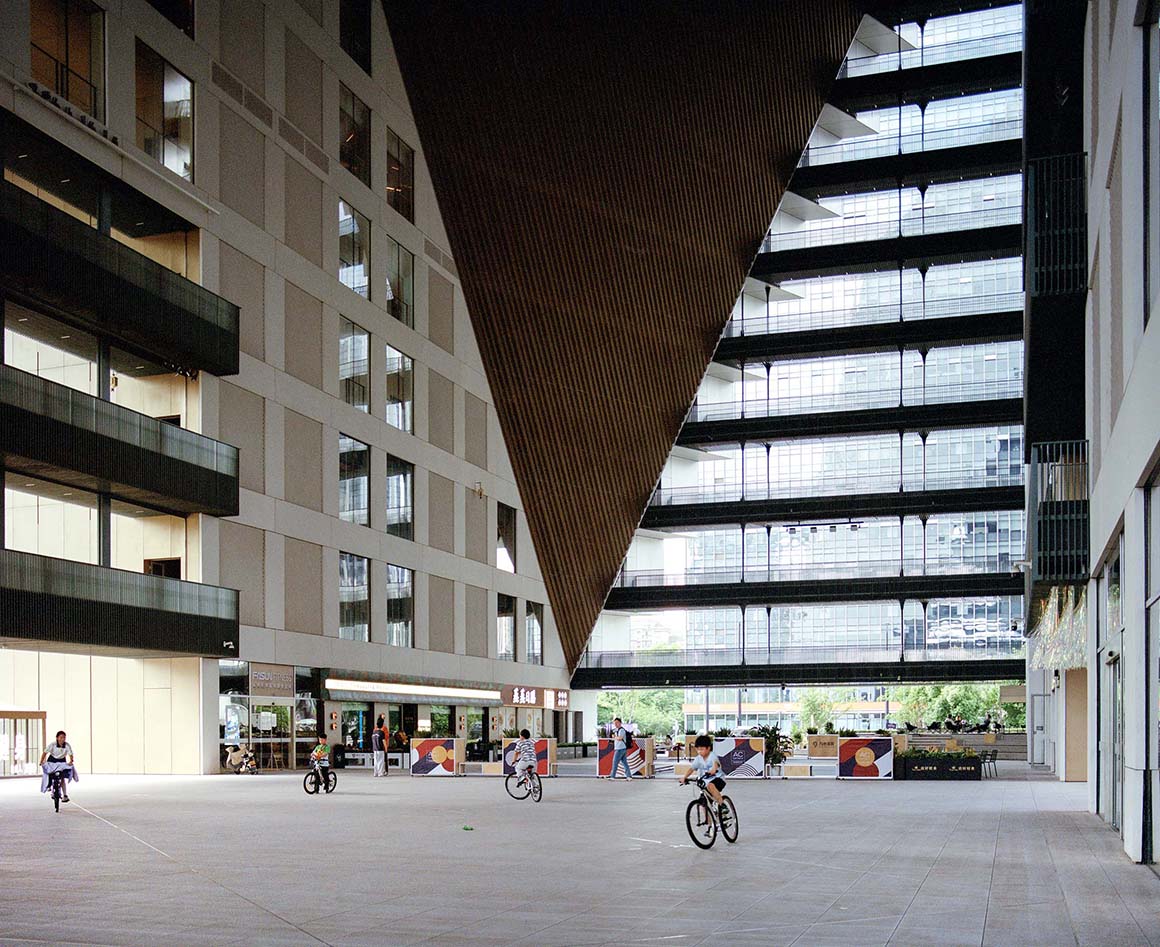
Hangzhou Prism also asks what a landmark can be in a newly developing urban district. Its strong apex and geometric clarity give it a clear presence, but its architectural significance is not limited to the image it produces on the skyline. Its more important contribution lies in the way it opens itself to the city. The project turns a private mixed-use development into a porous structure of passage, encounter, and shared activity. It is at once a building, a public square, a sheltered urban room, and a small vertical village.
Hangzhou has long been associated with water, gardens, and poetic landscapes. Future Tech City represents a different speed and ambition: one tied to technology, enterprise, and urban expansion. Hangzhou Prism stands between these two images of the city. Its form is precise and contemporary, yet its central space is intended to host the unpredictability of public life. In doing so, the project moves beyond the idea of the landmark as a visual icon and proposes instead a building that contributes to the everyday life of an innovation district.
The conversation with Chris van Duijn continues in the next article, where he discusses OMA’s broader approach to context, landmarks, and the Hongik University Seoul Campus project.
Project: Hangzhou Prism / Architect: OMA / Partner: Chris van Duijn / Project Architect: Michael Hadjistyllis / Client: Xinhu Real Estate Group / Location: Hangzhou, China / Year: 2016–2026 / Status: Completed / Programme: Residential 10,000m²; Hotel 20,000m²; Office 5,000m²; Commercial 8,000m² / Total Area: 43,000m² / Local Design Institute: LPA Architecture Studio / Structure Consultant: Open Structural Design Co., Ltd. / MEP Consultant: MJP M&E Consultant / Façade Consultant: VS-A. HK Ltd. / Lighting Consultant: BPI / Landscape: iPD / Photography: Tu Ximeng, Zhu Wenqiao