

A Blue Whale and Ocean Liner to Sail the Seas of Knowledge
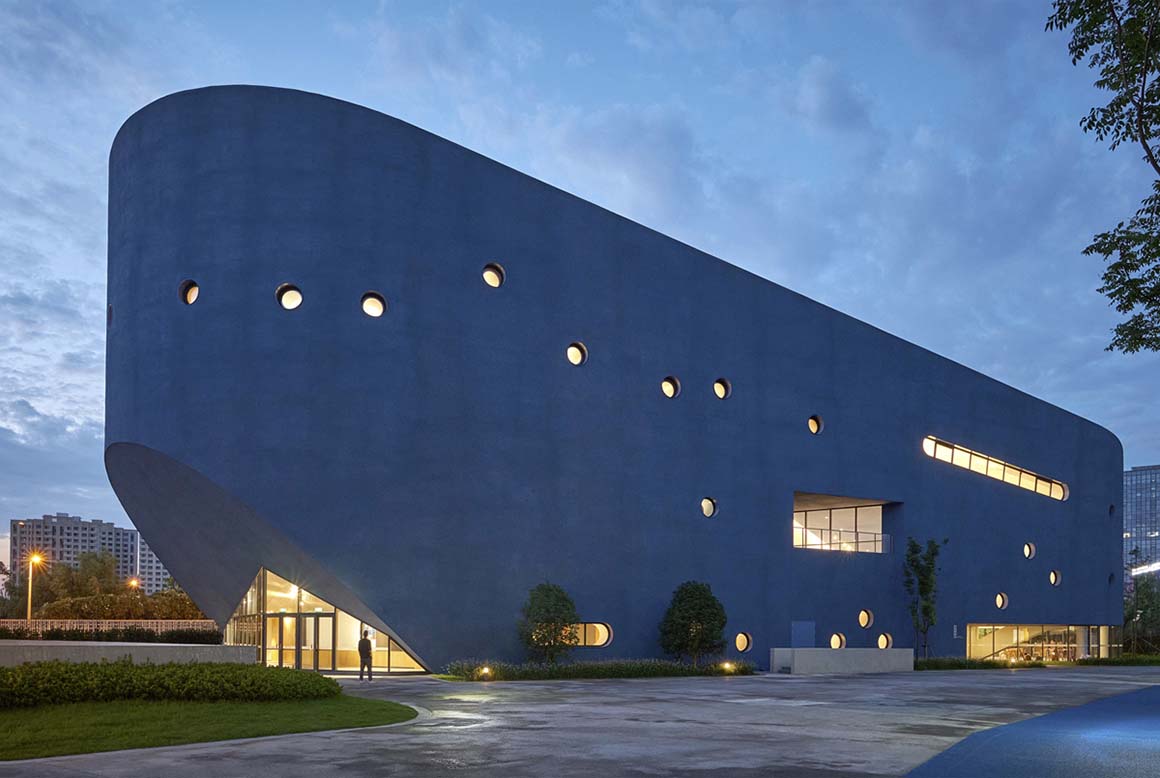
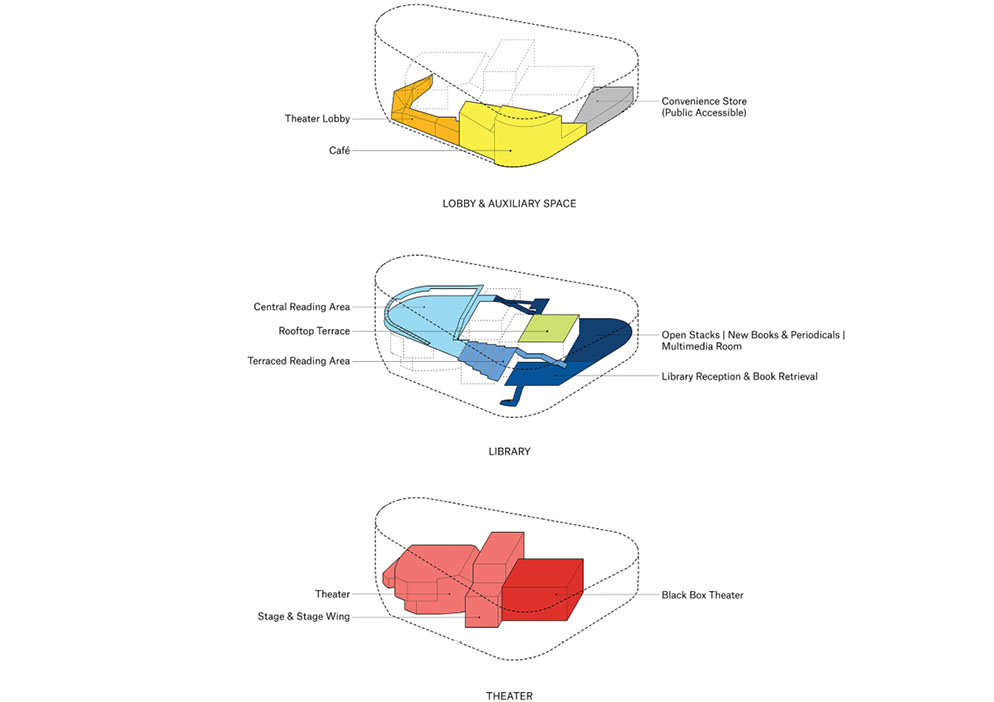
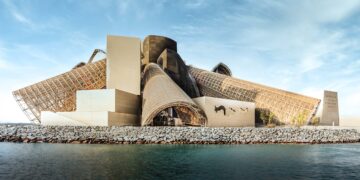
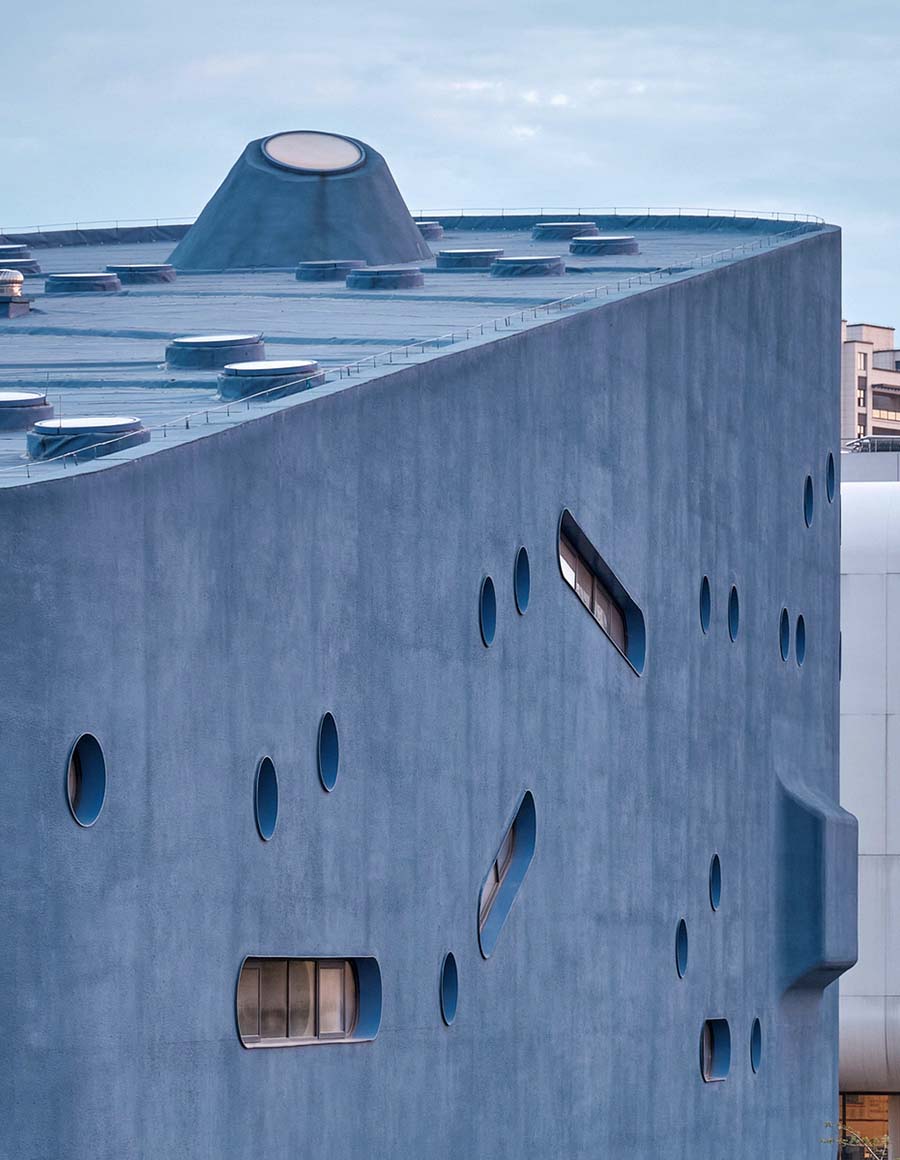
Pinghe Bibliotheater forms part of the ‘school-as-village’ concept of Shanghai Qingpu Pinghe International School. A library, theater and black box interlock like a Chinese puzzle to form this characterful building, variously dubbed ‘the blue whale’ and ‘an ocean liner’. The unique form of the building, and its free-flowing spaces, not only cultivate the students’ interests in reading and performing, but also encourage their imaginations to sail the seas of knowledge.
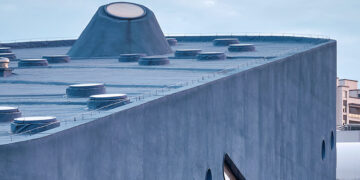
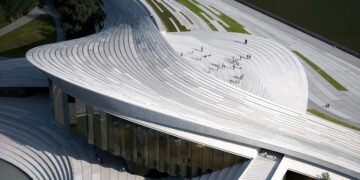
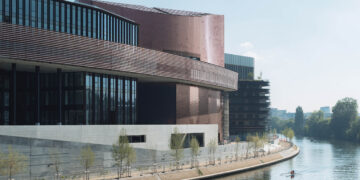
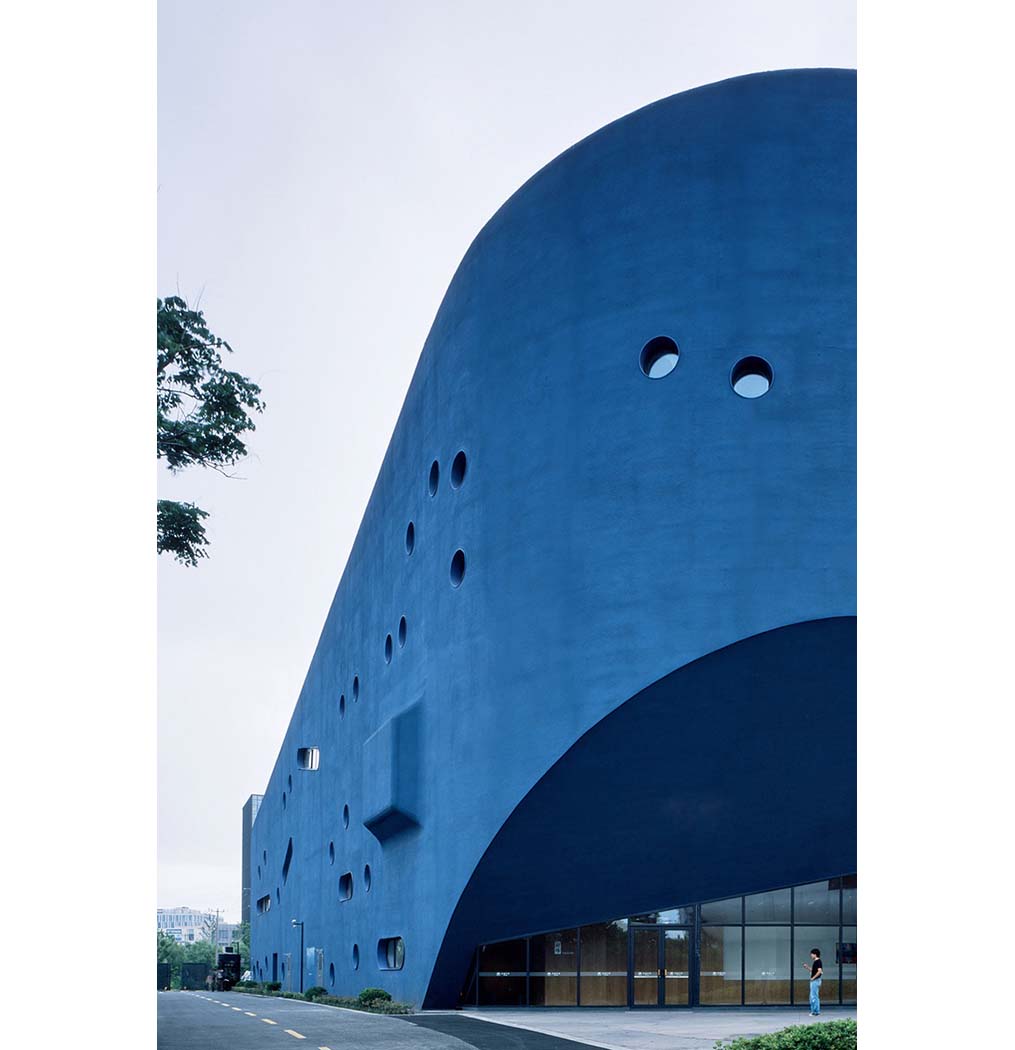
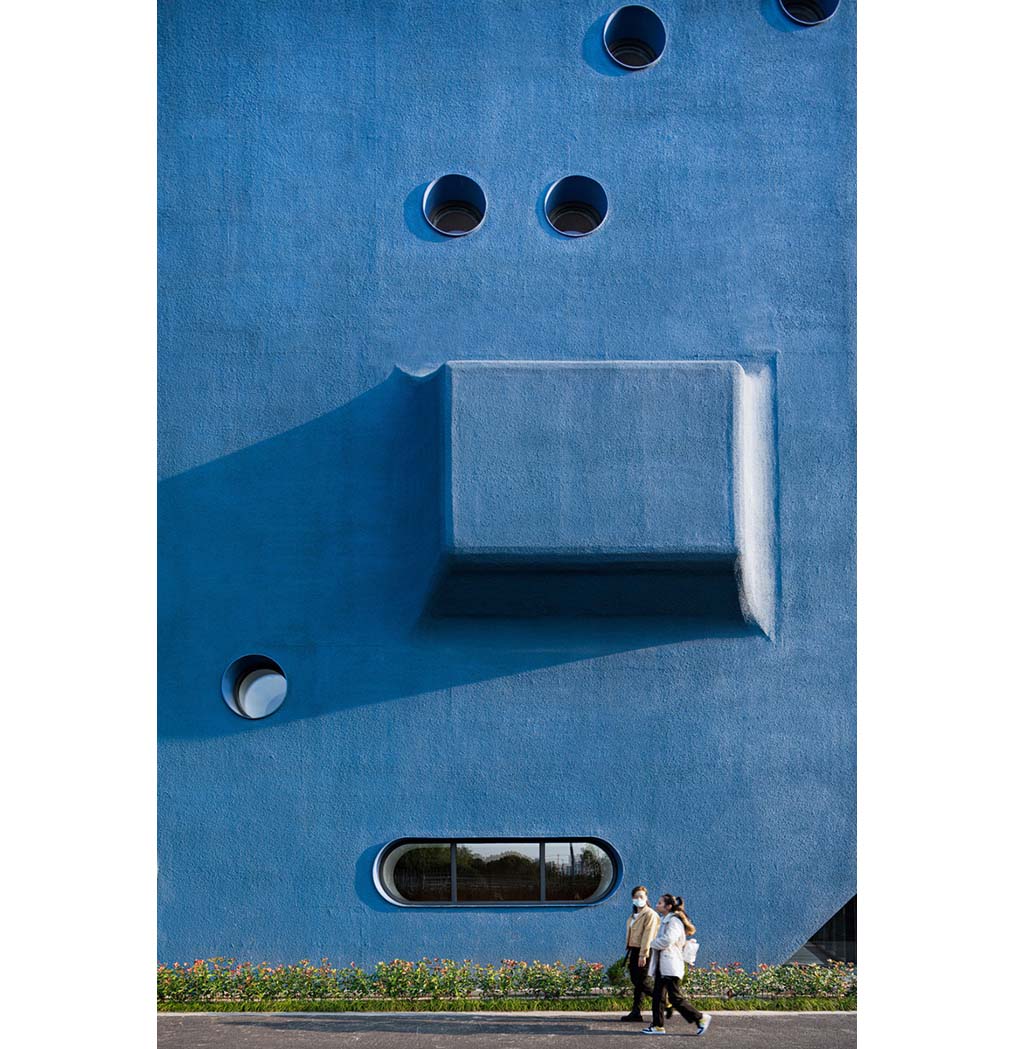
The Bibliotheater abuts an important corner of this school-village, near the junction between a major highway and an ancient canal. The slanted roof with spiky skylights, the porthole-like windows, and the eye-catching blue color leave a strong impression on passersby.
When the architects were given the somewhat jumbled program of a new school for 2000 students, aged from 3 to 18 years, they imagined how uninspiring it would be for a child to spend so many years fixed in a single building. Breaking away from ‘school-as-megastructure’, the original program was deconstructed to form a campus of smaller, grouped buildings. The marriage of library and theater came from the belief that the acts of reading and of expressive performance are both critical components of education overlooked in test-driven systems. The distinctive qualities of these two programs, and their respective physical needs, inspired the design of the building.
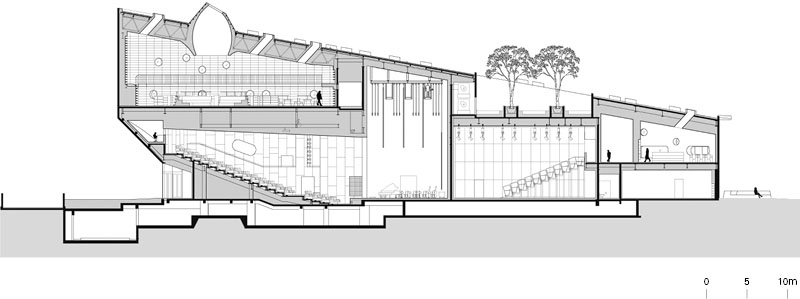
Above and below
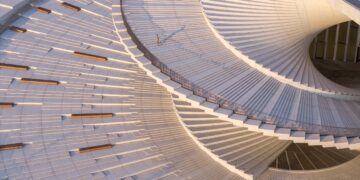
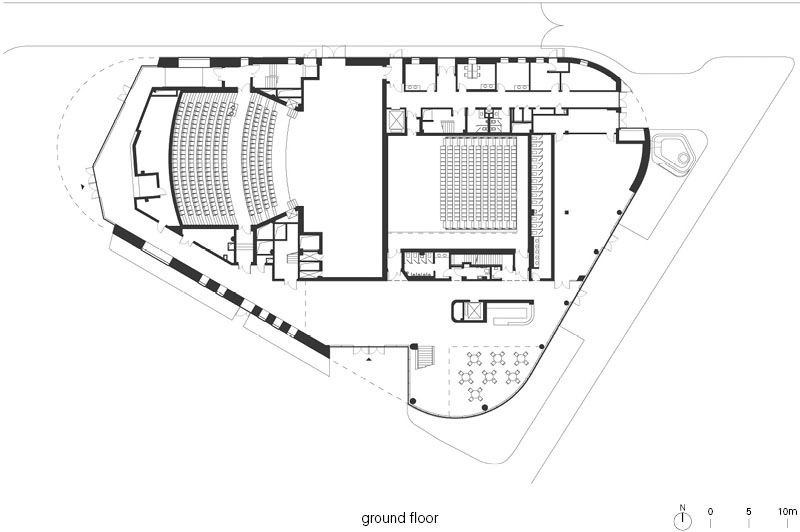
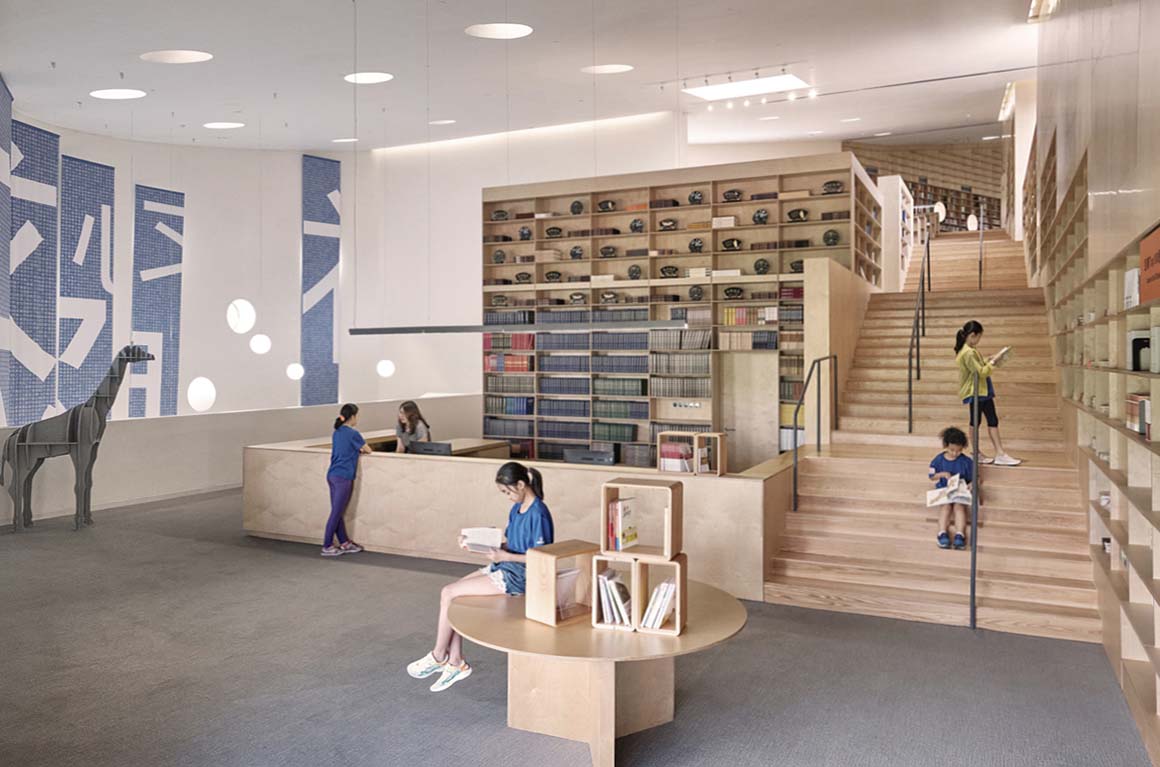
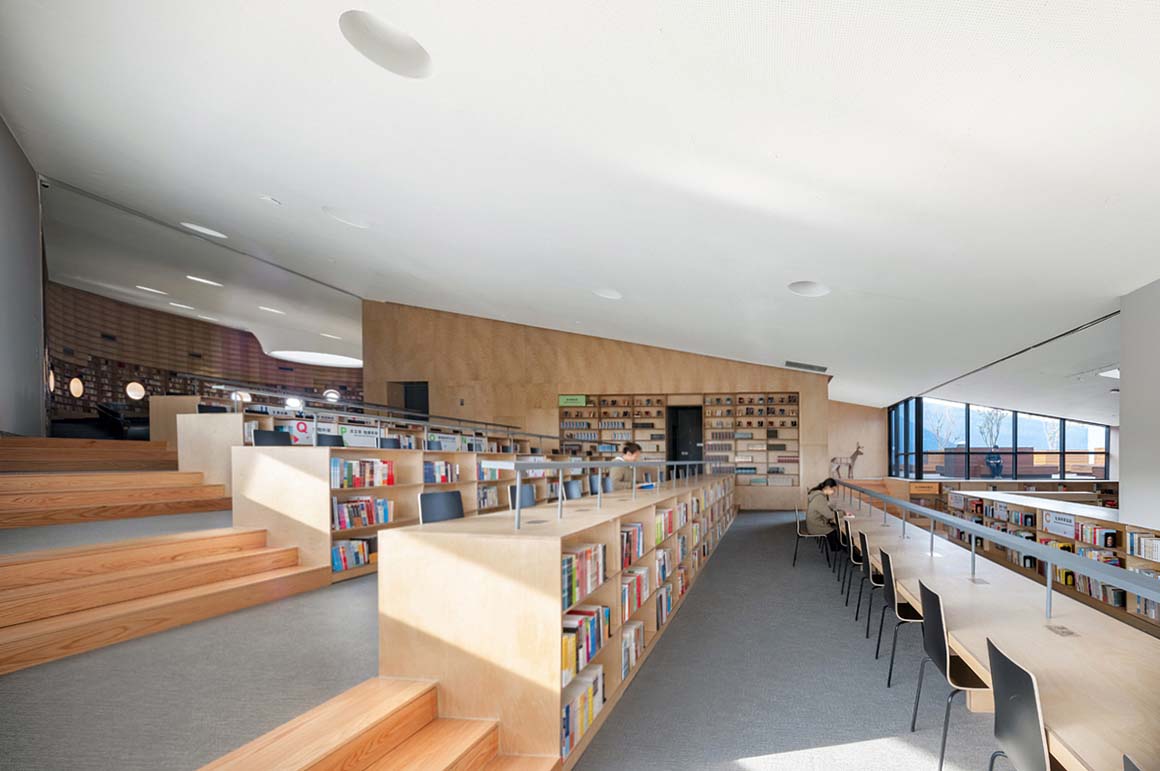
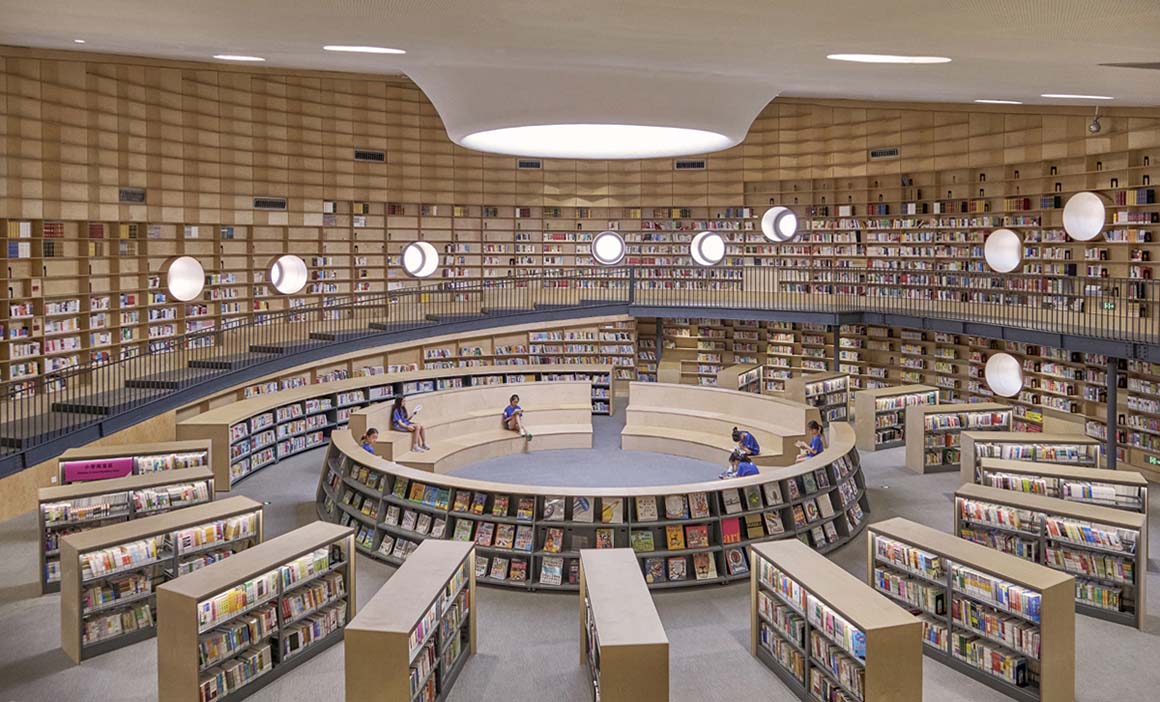
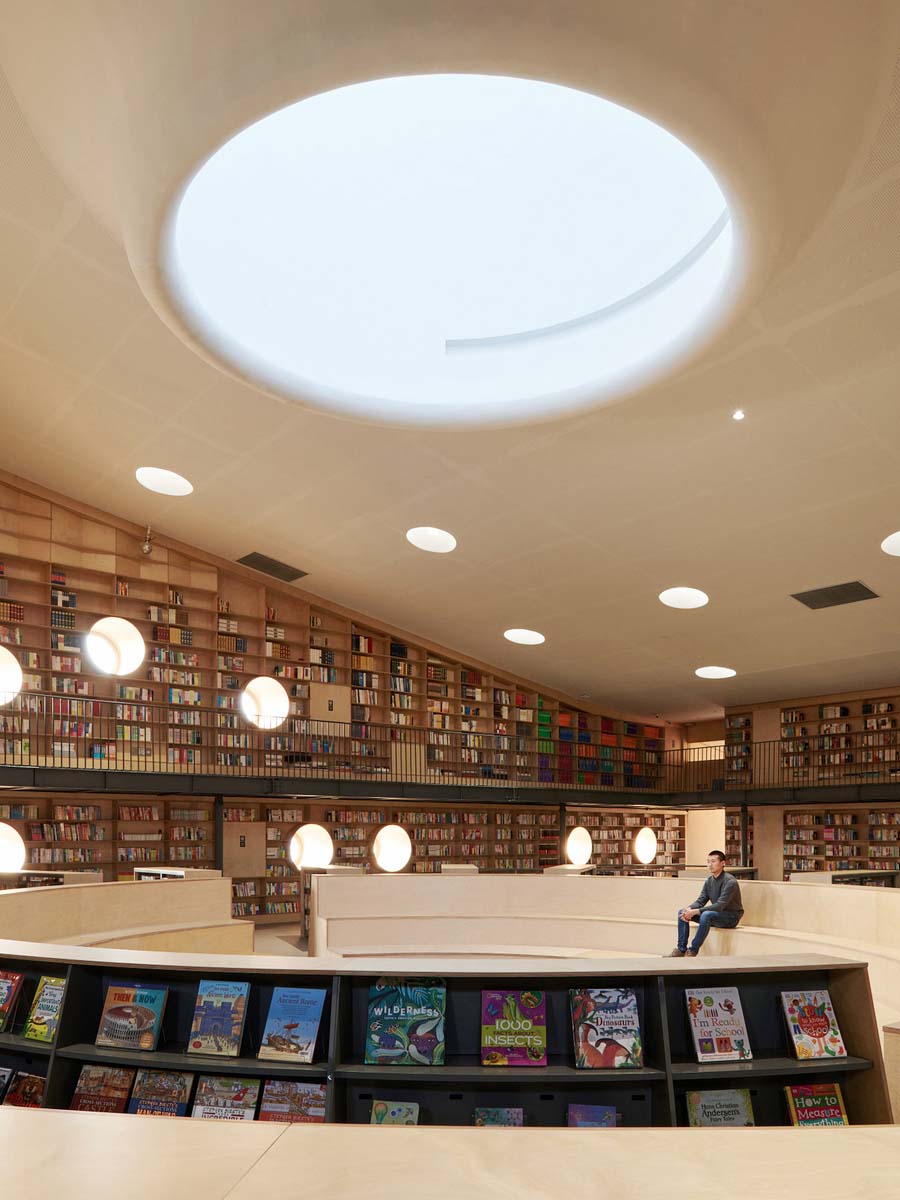
The proscenium theater and the black box, which require the least natural light and the most acoustic isolation, occupy the lower and deep central areas of the building, with the library above. A loop of different reading spaces rises and drops according to the varying heights of the theater volumes below, creating a terraced spatial sequence that climaxes at a central reading area, surrounded by books and light.
Introvert and extrovert
The experience of reading is inevitably introverted and highly personal, hence the provision of numerous comfortable reading zones of different qualities. A sunken roof garden provides fresh air and a weather-dependent outdoor reading area.
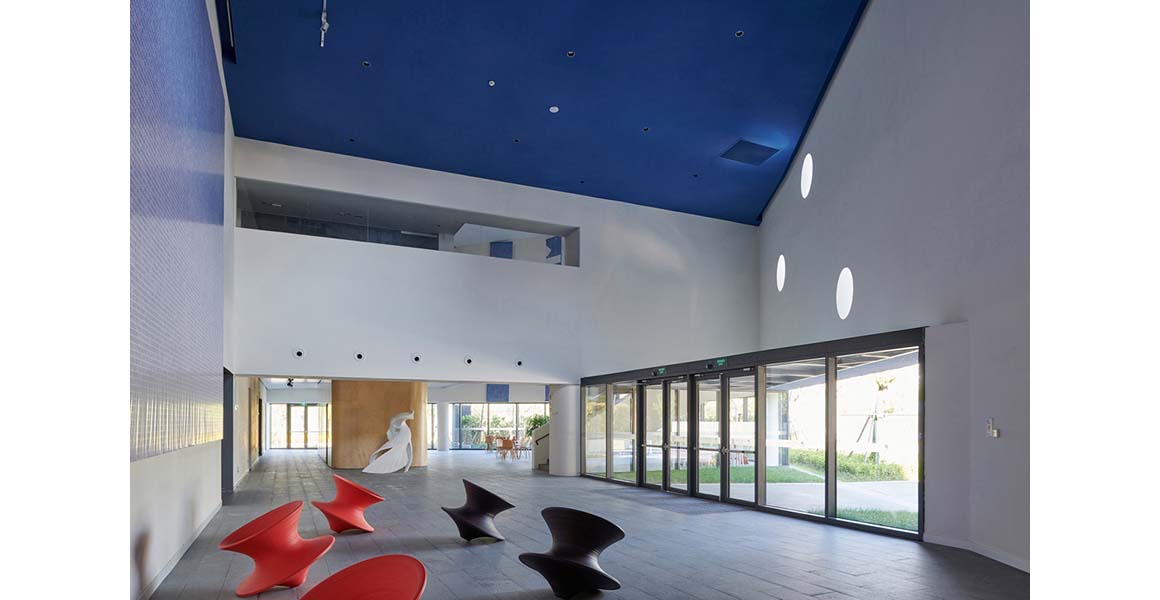
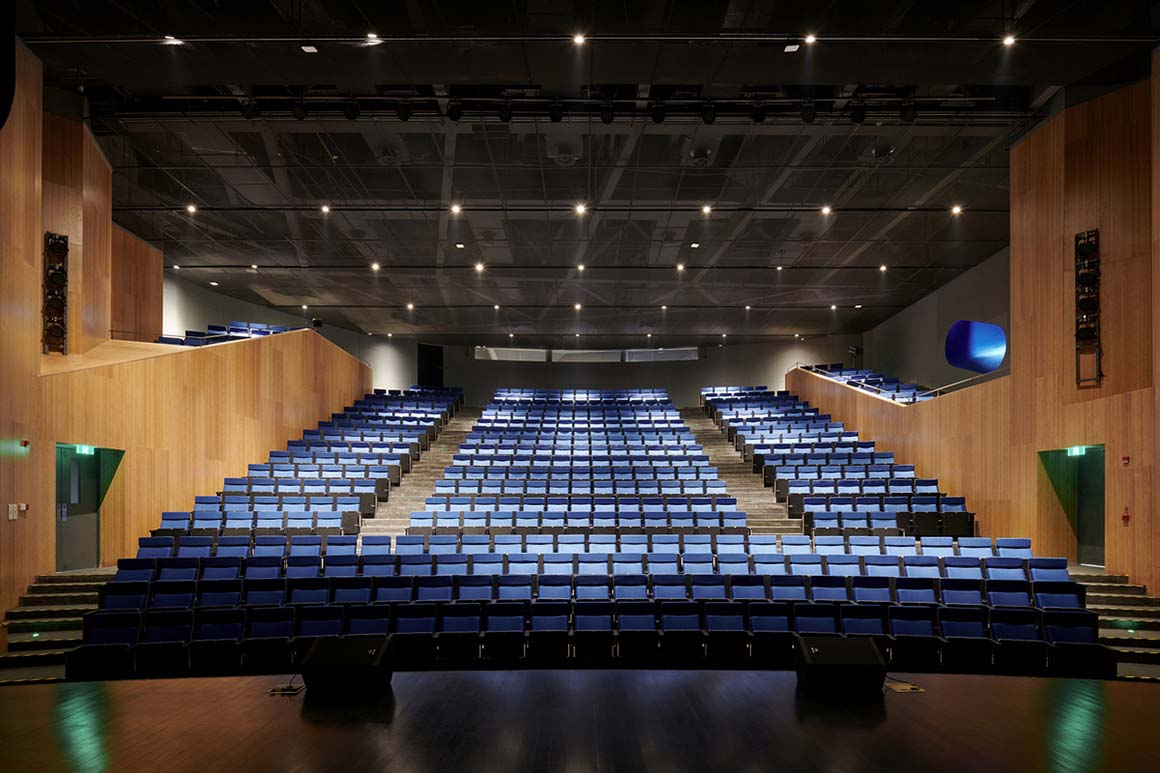
Conversely, theatrical performance is extroverted and exciting. The main entrance is via a dramatic diagonal ‘cut’ in the building. The juxtaposition of warm wood panels and deep blue walls create a visually stimulating auditorium while the café allows parents to read and socialize too.
Lightness and darkness
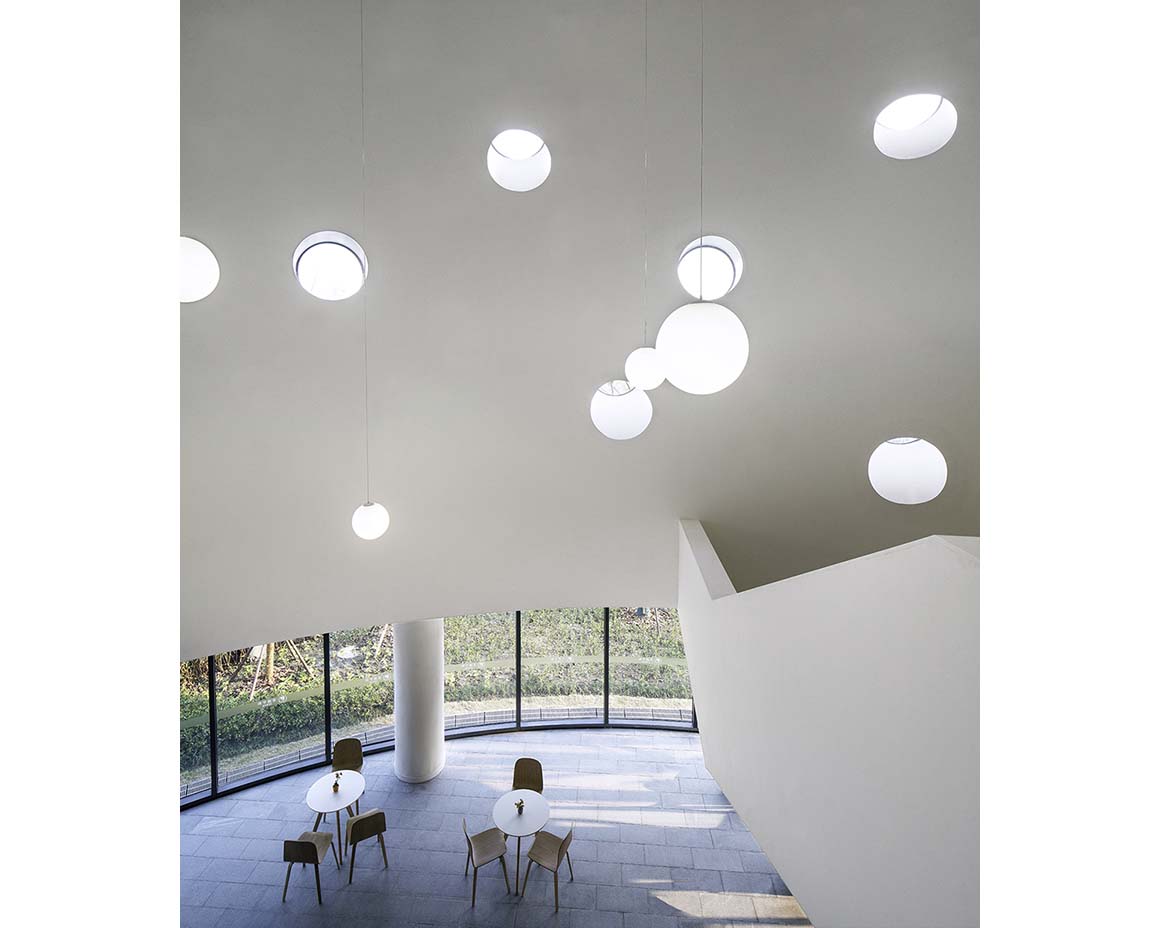
Light gives form to the spaces, animating them with musical rhythm. Abundant skylights brighten the central reading area and a giant oculus illuminates the center in an emotionally-charged, almost spiritual way. In the theater, natural light is avoided in favor of functional artificial lighting.
The Bibilotheater was conceived of more broadly as a cultural center. Carefully placed near an entrance, the building may be used independently without disturbing the campus management. It was the architect’s hope that the Bibliotheater will become the social energizer that brings together parents and community members.
Project: Pinghe Bibliotheater / Location: Shanghai, China / Architect: OPEN Architecture / Principals in Charge: LI Hu, HUANG Wenjing / Design Team: YE Qing, SHI Bingjie, YANG Ling, LU Di, Daijiro Nakayama, LIN Bihong, ZHOU Tingting, ZOU Xiaowei, LIU Xunfeng, LI Lingna / Local Design Institute: Shanghai Yuangou Architects and Consultants / Structural and MEP Consultant: CABR Technology Co., Ltd. / Curtain Wall Consultant: CABR Technology Co., Ltd. / Theater, Acoustic Consultant: Shanghai Net Culture Development Co., Ltd. / Lighting Consultant: Shanghai Modern Architecture Decoration Environmental Design Research Institute Co., Ltd. / Client: Shanghai Tixue Education and Technology Co., Ltd. / Program: 500 seated theater, 150 seated black-box theater, Library, Café / Site area: 2,312m2 / Gross floor area: 5,372m2 / Design: 2016 / Completion: 2020 / Photograph: Jonathan Leijonhufvud, WU Qingshan, CHEN Hao