


Skinned with Red Brick Louver to Cope with The Climate Condition
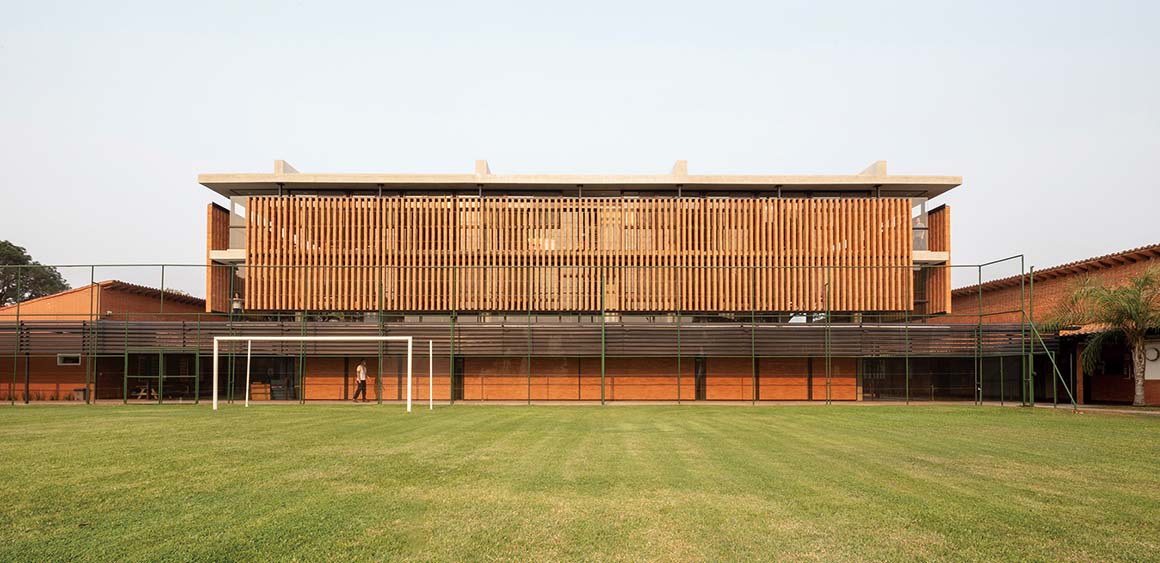
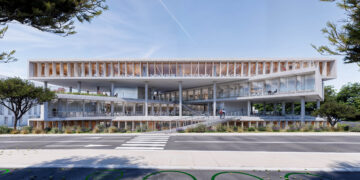
In the Paraguayan capital Ascuncíon, local practice Equipo de Arquitectura have designed a 3,090m2 educational center characterized by its openness and permeability. The ASA STEAM building takes its name from its core subjects, Science, Technology, Engineering, Art, and Math. It serves the Elementary, Middle and High Schools that surround it in the American School of Asuncíon campus. The design was chosen by parents, board members, school staff, and community experts from about 20 proposals.
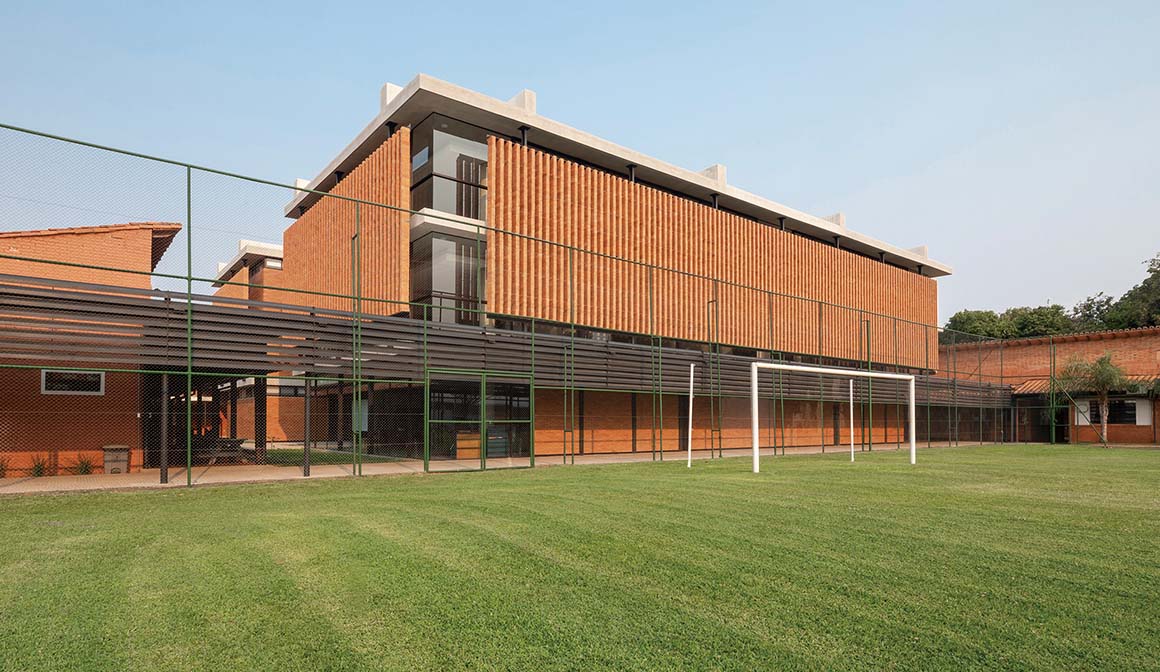
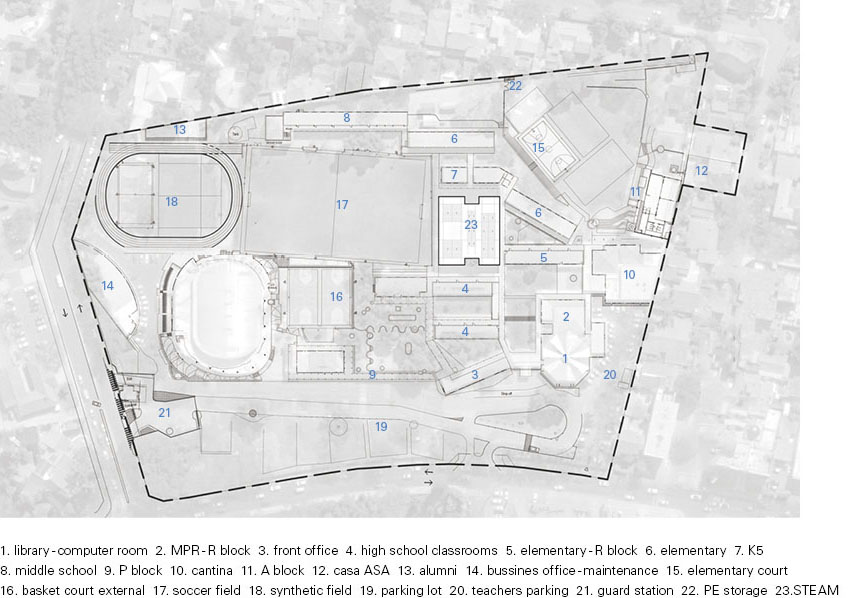

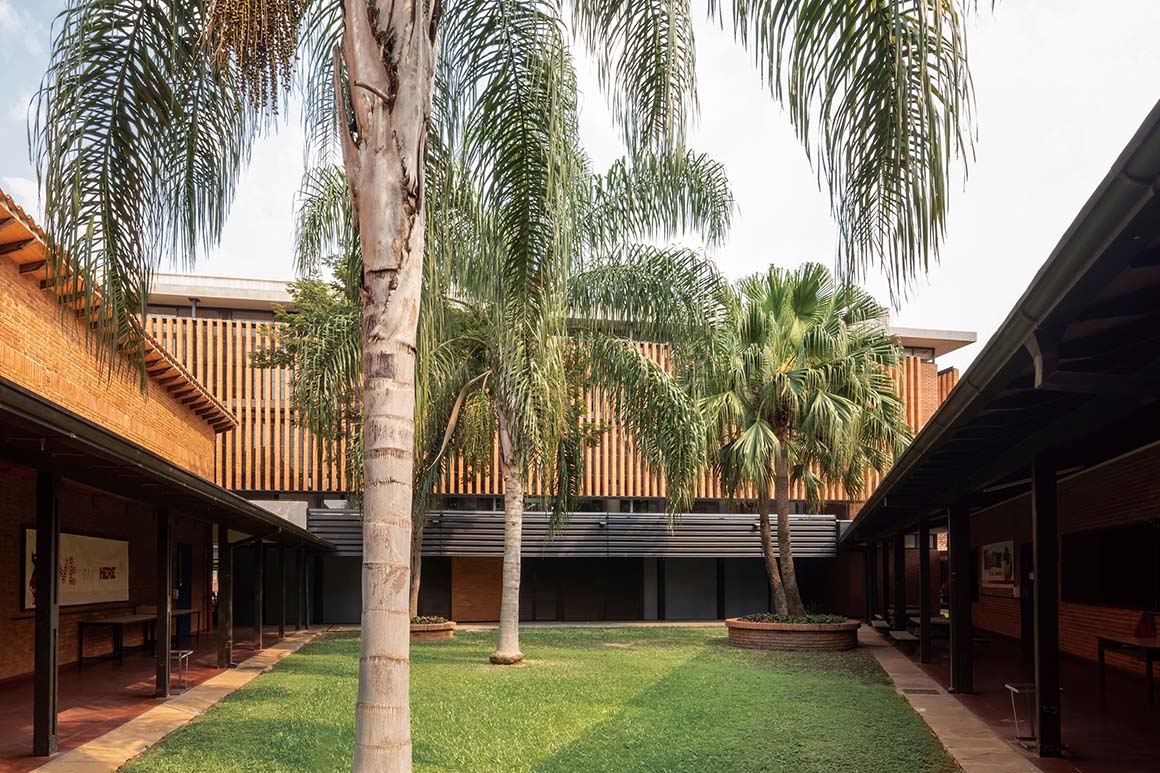

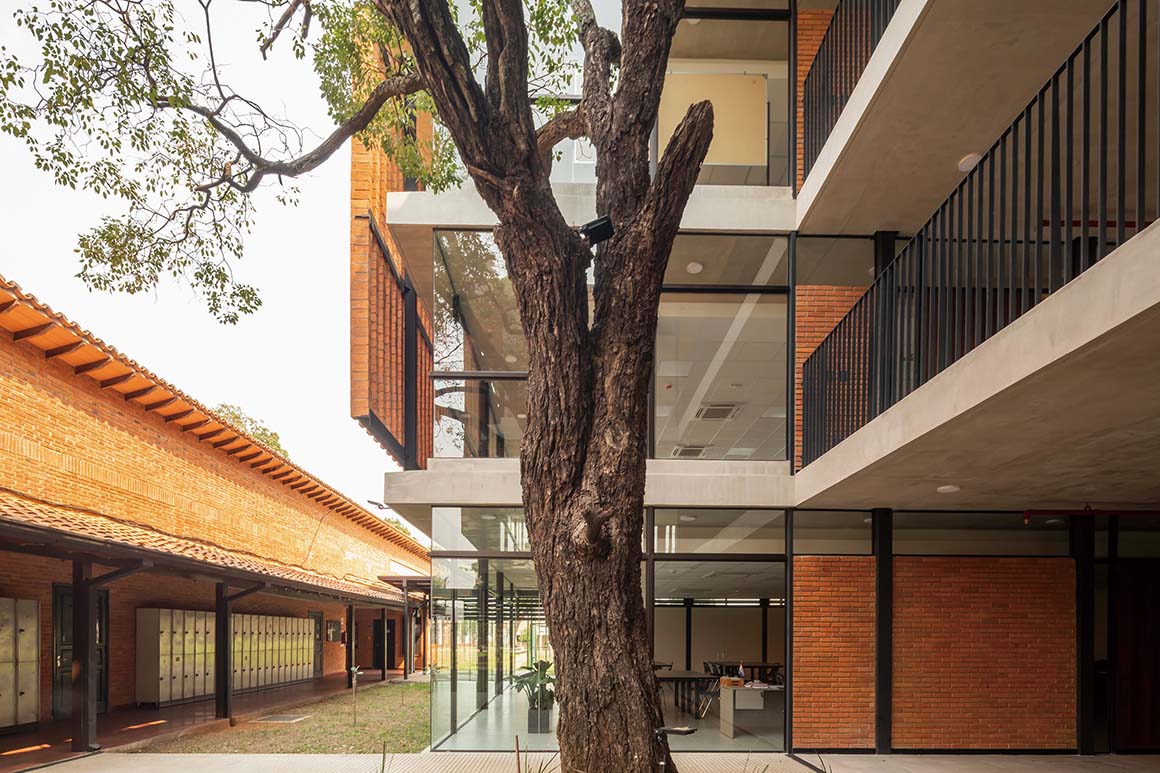
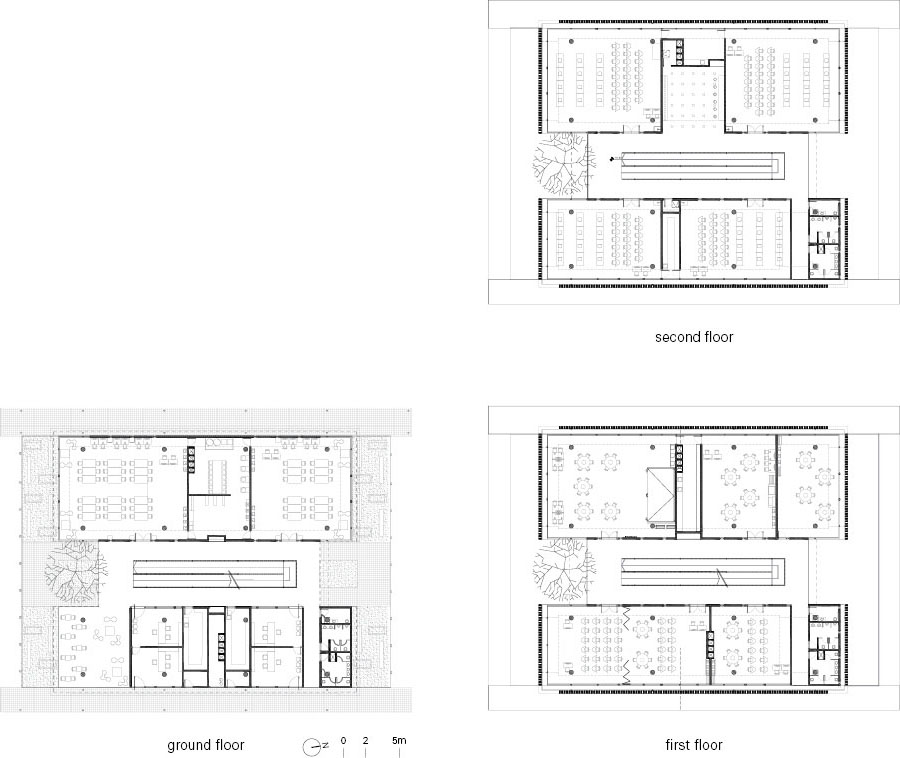
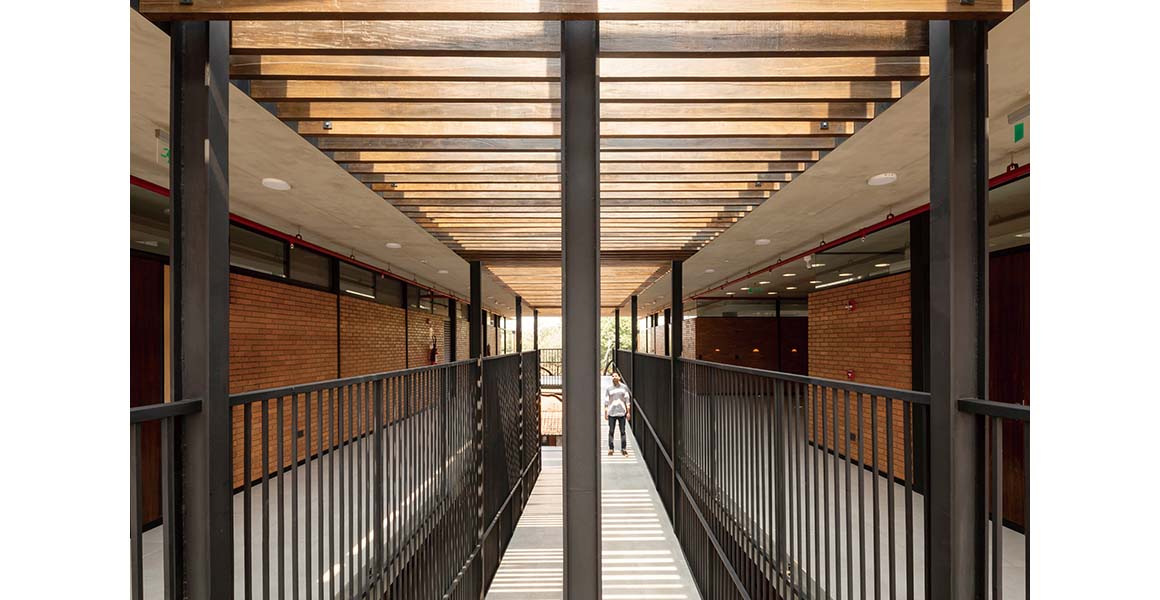
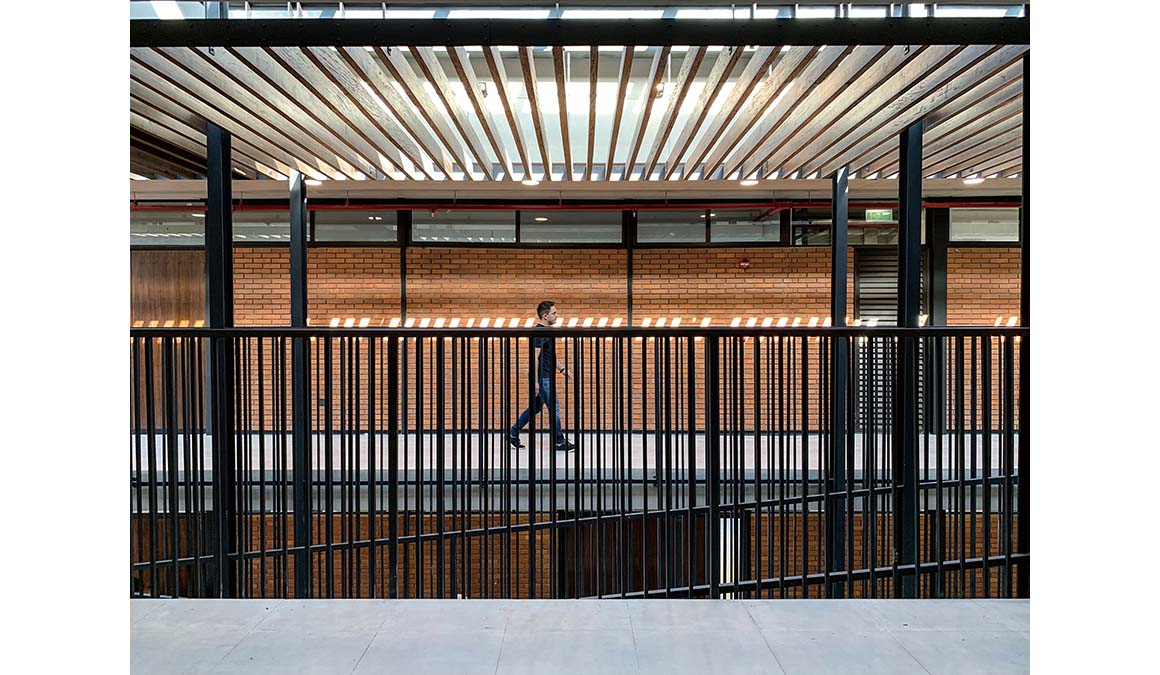
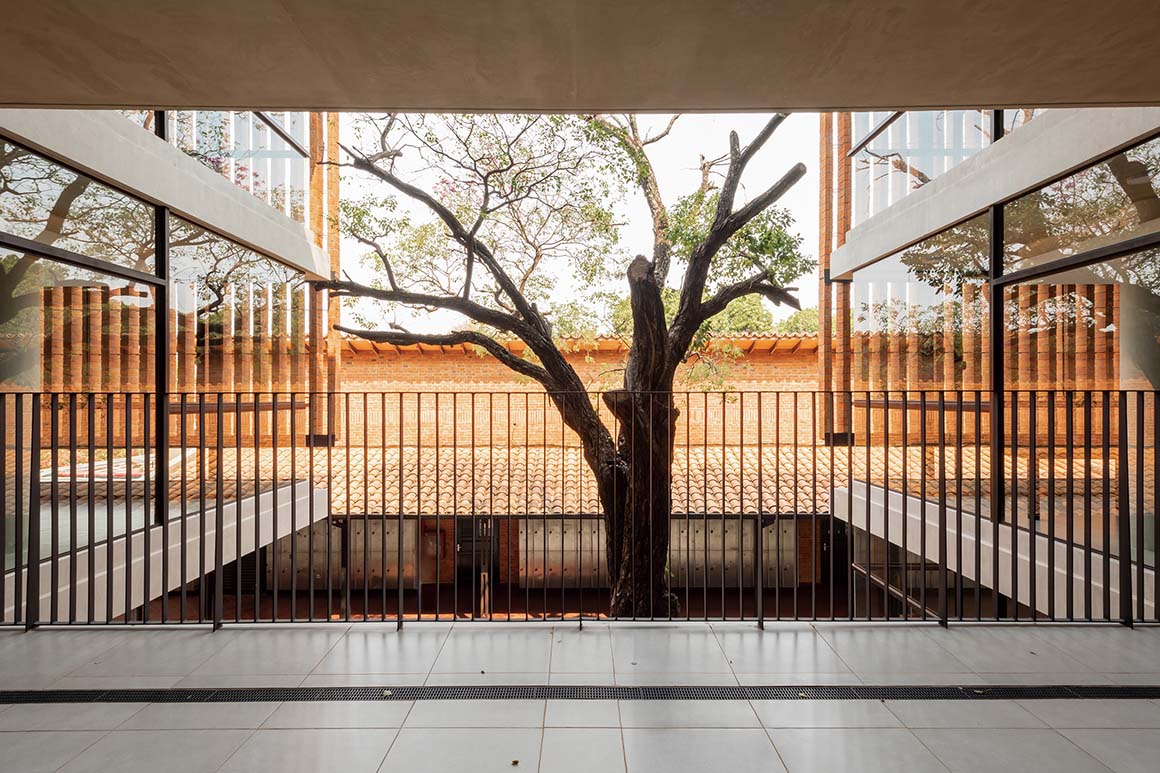
The site is rectangular, but rather than creating a heavy, closed “monoblock”, Equipo de Arquitectura placed all rooms in two longitudinal transparent pavilions under a shared roof and separated by a central space carrying corridors and ramps which connect the three floors. This gap also hosts small patios at either end of the circulation space, and in one, a tree grows and becomes visually integrated into the building. The division between the pavilions also creates a wind tunnel effect for the natural ventilation of the intermediate spaces. The middle strip of roof, which is 11m above ground, is crossed by timber beams between the pavilions, creating a skylight.
The patios allow natural light and shadows to penetrate all of the classrooms, which include science laboratories, art rooms and ‘makerspaces’ which facilitate the transition from conception to creation of works. On their corridor sides, interspersed brick walls protect the classrooms from sounds and provide privacy.
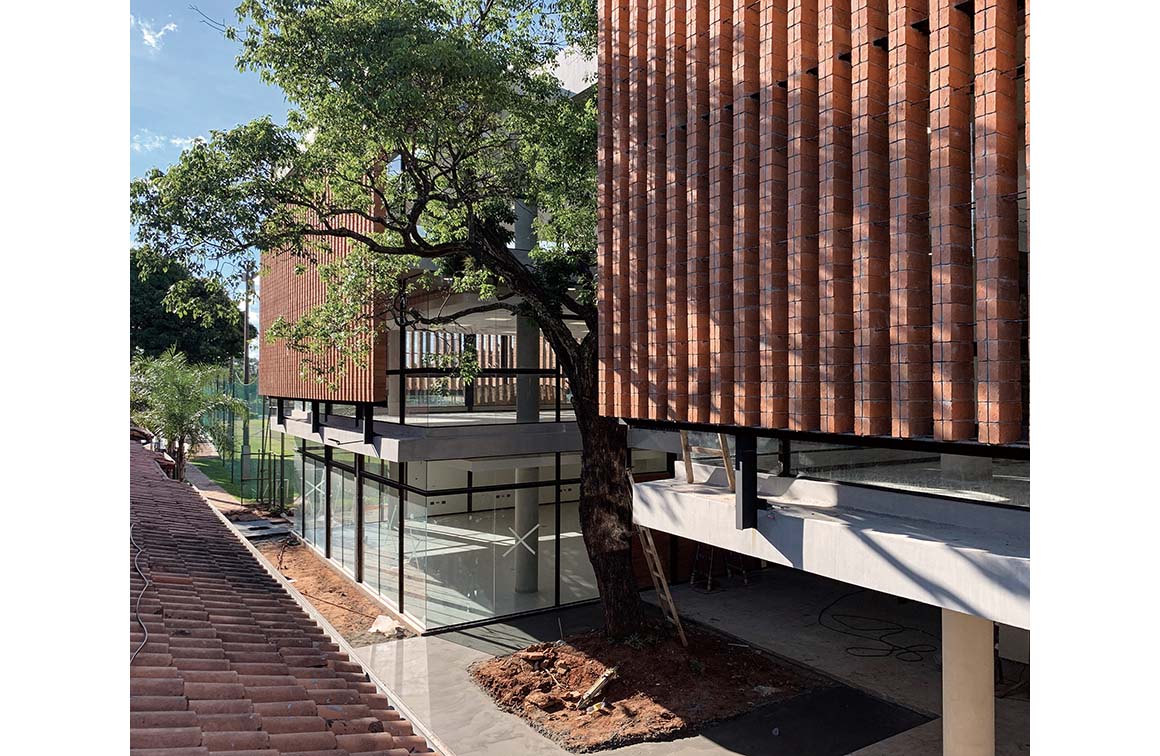
The structure is an orthogonal grid of reinforced concrete beams and columns. Each block contains 4 rows of two pillars, which correspond to the axes of the attached block. On the highest level, the beams are inverted and braced between both pavilions, thus structuring the ramp that hangs from these transverse beams.
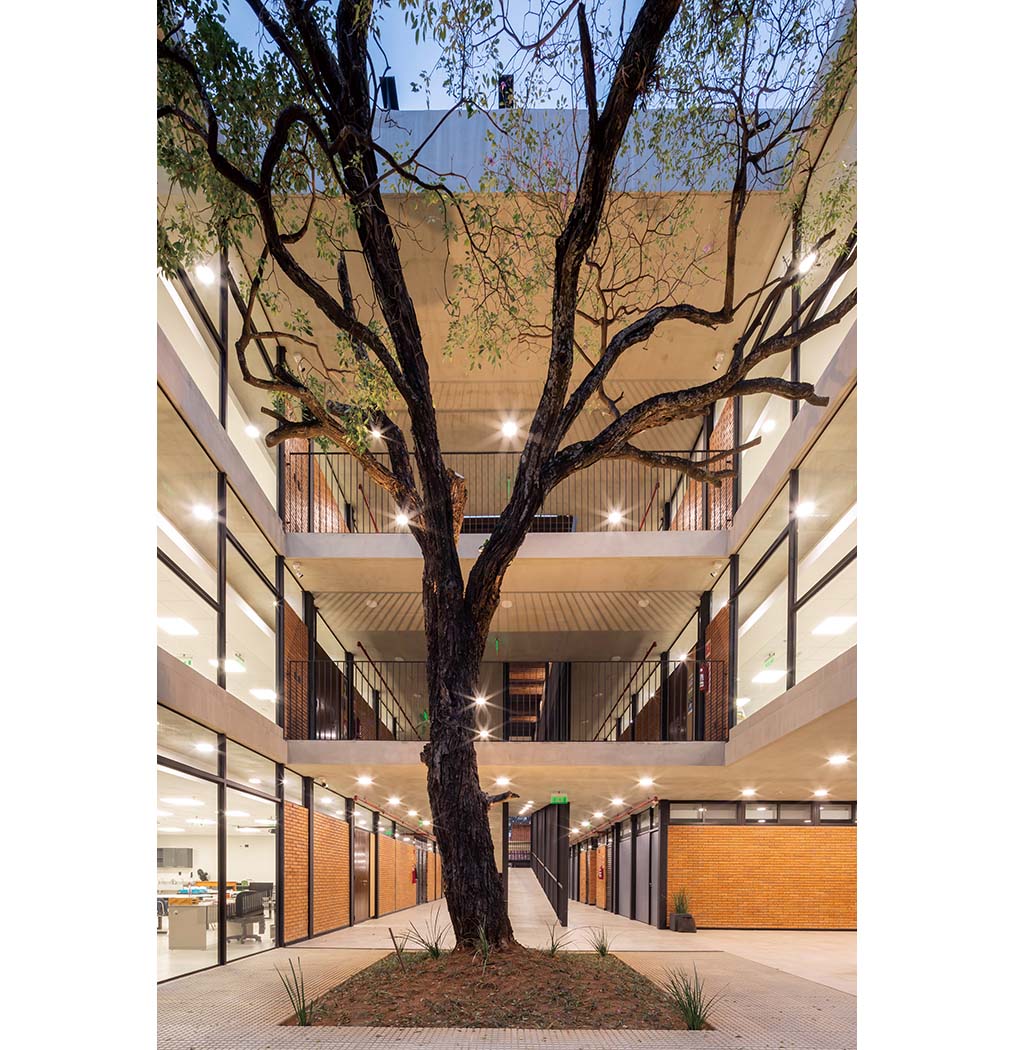

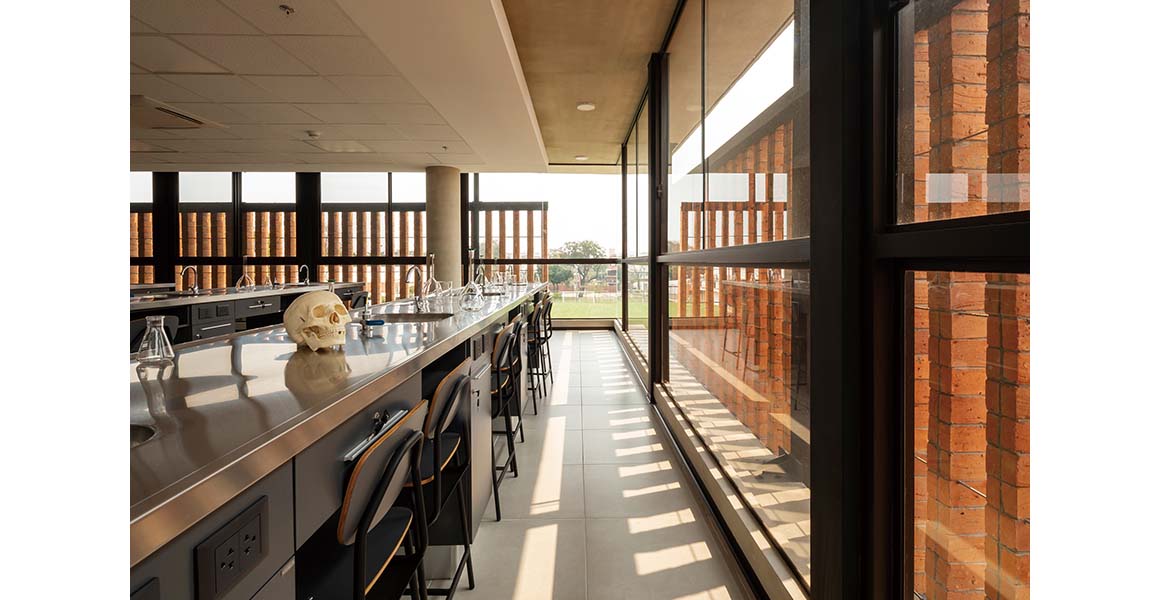
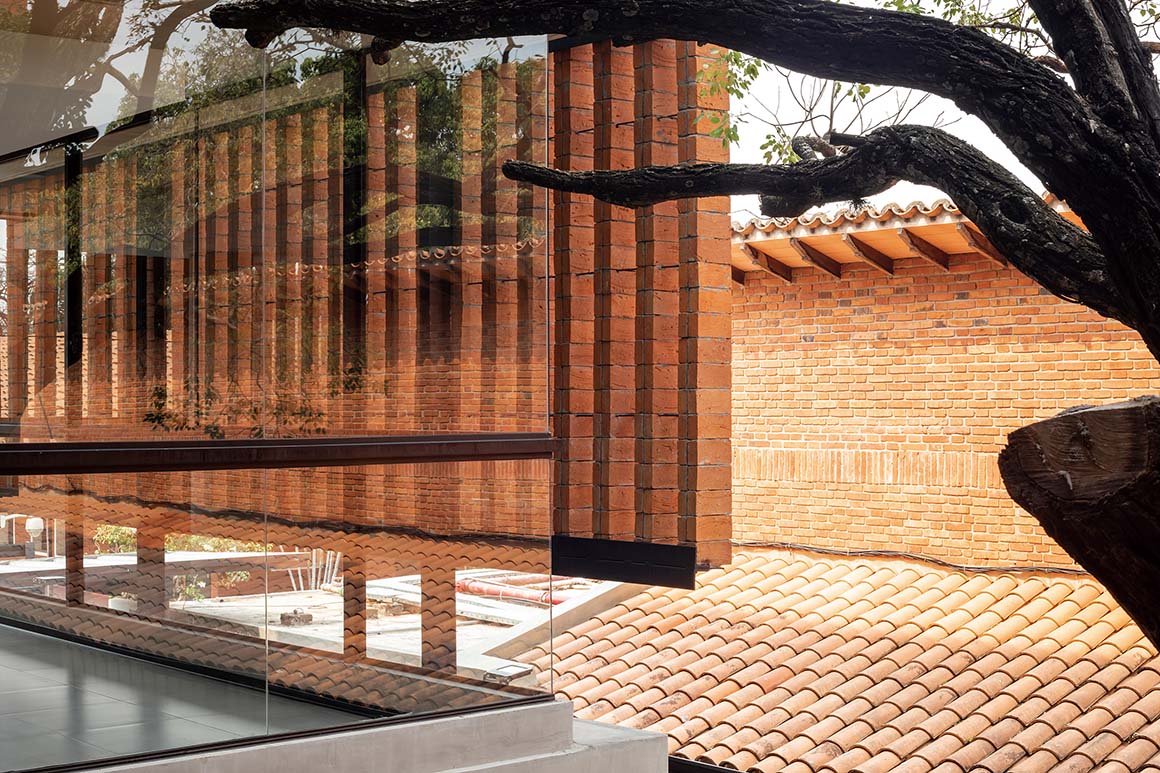
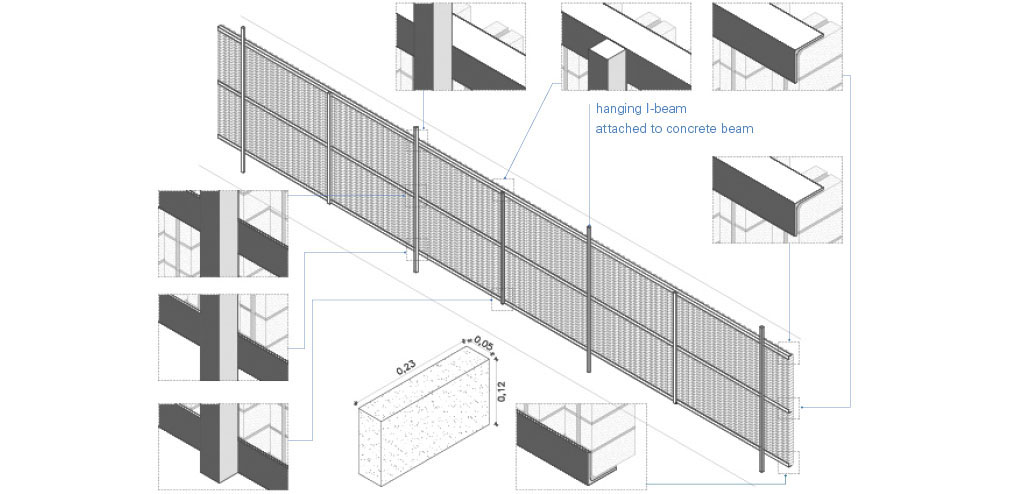
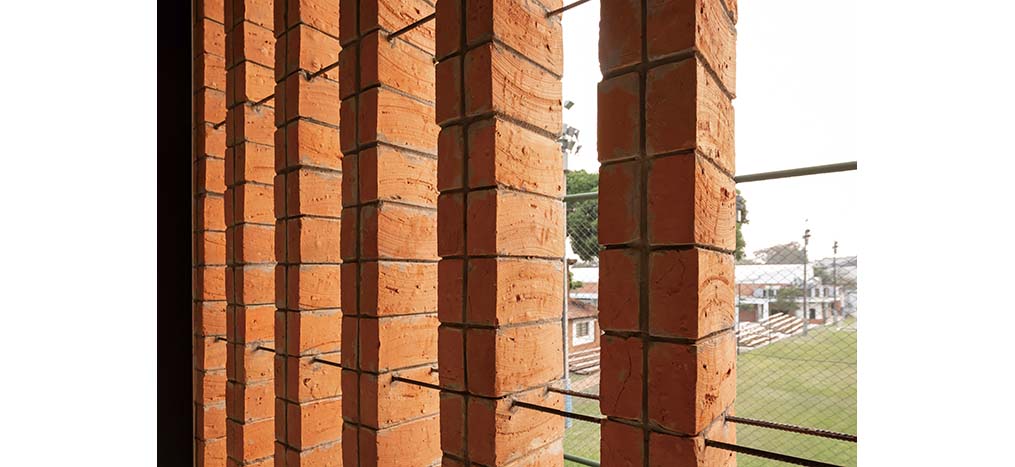
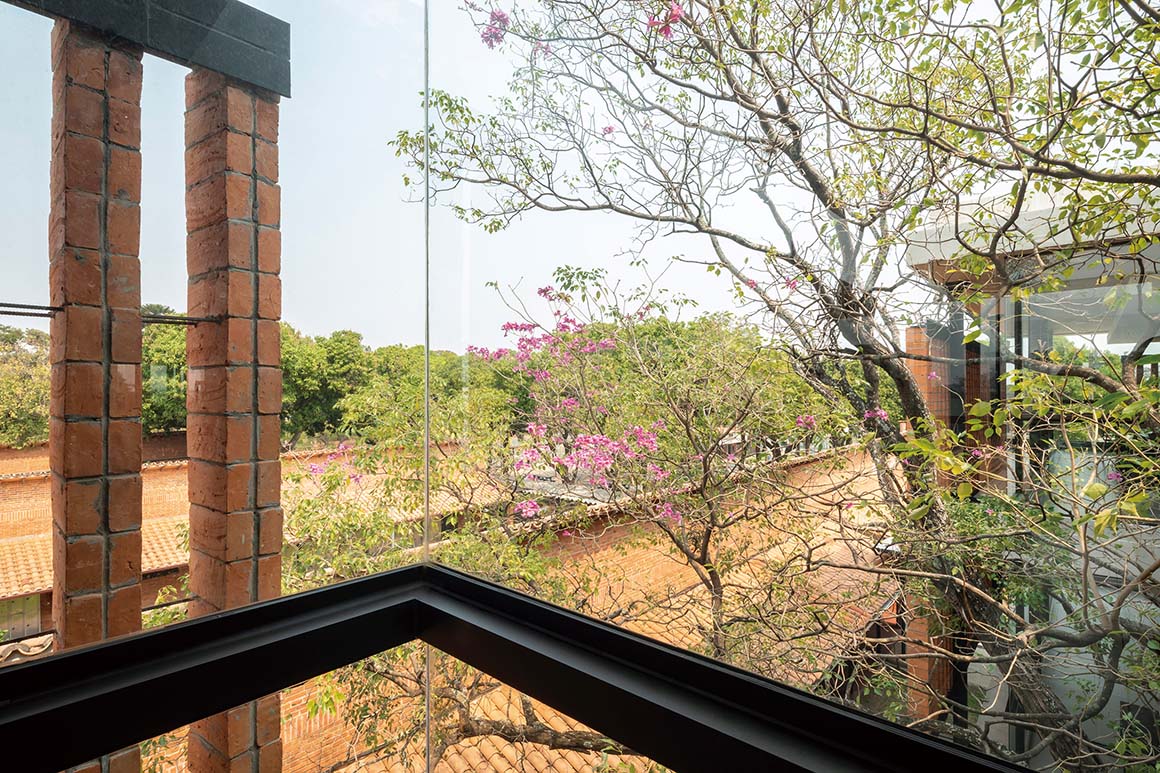
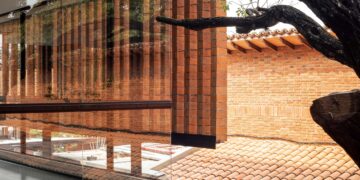
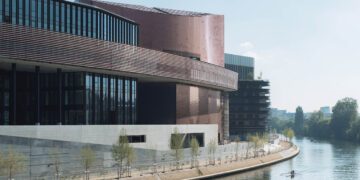
Brise-soleils of red ceramic bricks mounted vertically form an outer skin over the second and third floor glazed facades. They respond not only to the climatic condition, but also create a dialogue with old brick surfaces in the immediate surrounding buildings. The brise-soleils’ slender columns create a veil that protects the interior to the east, west and north from the sun, and to the south from the rain. At night, light shining through them makes the building appear like a light box above the first (ground) floor’s solid brick wall on the west side. The structure of the parasols, angles and metal pipes are anchored to the external perimeter beams. The bricks, structured by internal rods, which serve as guides, rest on structural elements which in turn transmit the loads to the reinforced concrete structure.
All the materials used are consistent with the visual identity of the school, and characteristic of contemporary Paraguayan architecture. Bricks, concrete, wood and metal are noble, durable and accessible materials. The building embodies structural and functional logic, has material honesty and offers an attractive spatial quality to its users.
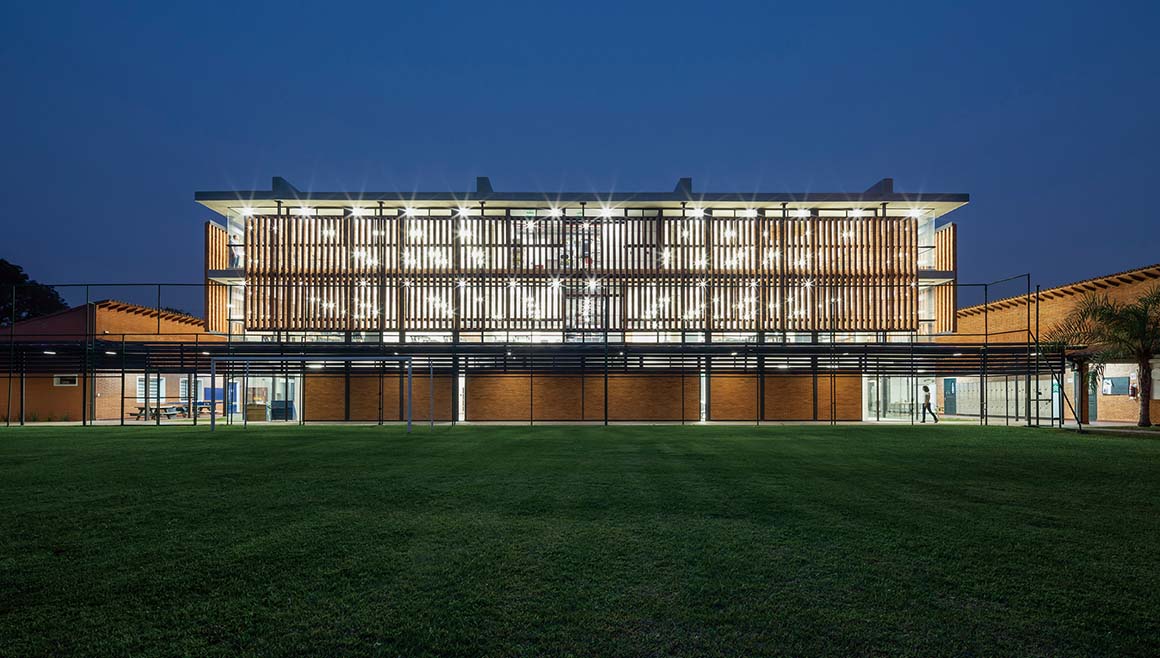
Project: ASA Steam School / Location: Asunción, Paraguay / Architect: Equipo de Arquitectura / Project team: competition_Horacio Cherniavsky, Viviana Pozzoli, Roque Fanego, Amin Mareco; development_Viviana Pozzoli, Horacio Cherniavsky, Roque Fanego, Diego Soto, Melissa Figueredo / Structural engineering: Federico Taboada / Hydraulic engineering: Luis Samaniego / Electrical engineering: Francisco Arrom / Construction: Gómez Abente / Client: American School of Asunción / Gross floor area: 3,090m2 / Competition: 2017 / Construction: 2019~2020 / Photograph: Leonardo Méndez