

A Way of Embodying Nothingness Through Tangible Entities
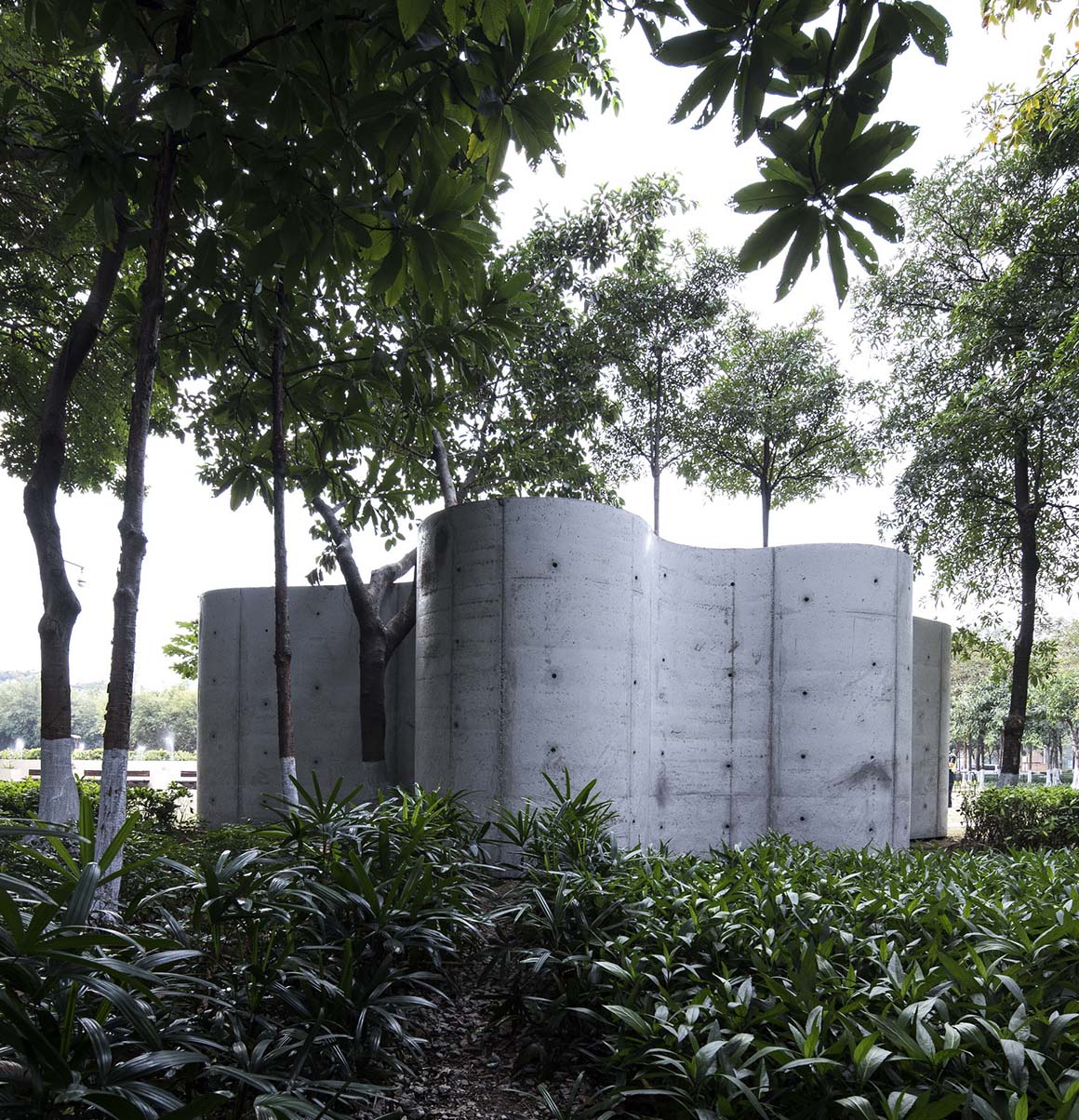
Void Garden is a spatial outdoor public art installation, exhibited at the “Expanded Theater / 2020”, exhibition in Nanhai, China. As the only architect participating in this exhibition, TAOA collaborated with artist Wu Didi. The curator’s brief was for each creator to design a public artwork that the audience could participate in. Only eight days were available in which to complete the construction on site, and all costs and expenses were limited to 160,000 yuan, setting the financial boundaries.
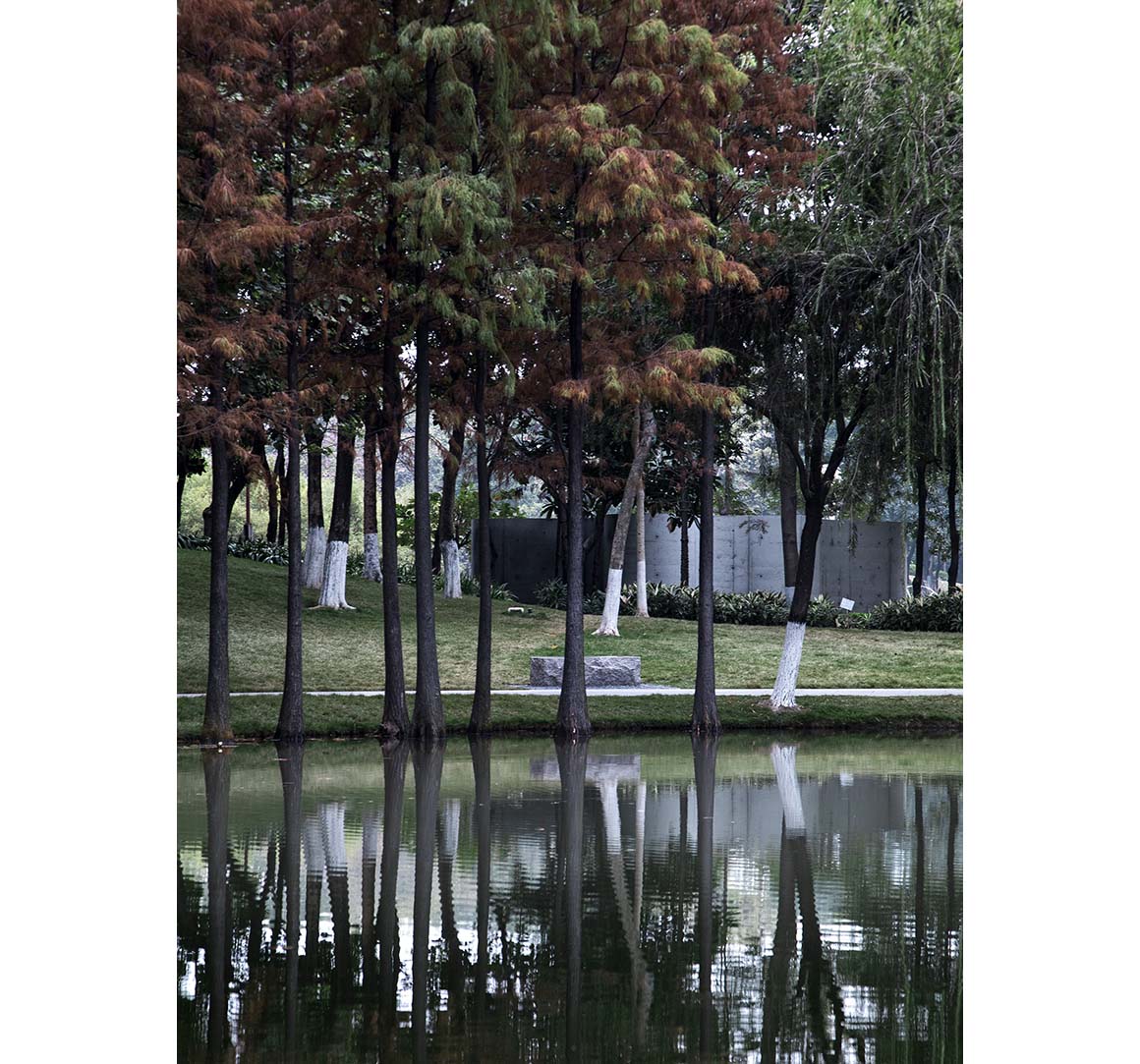
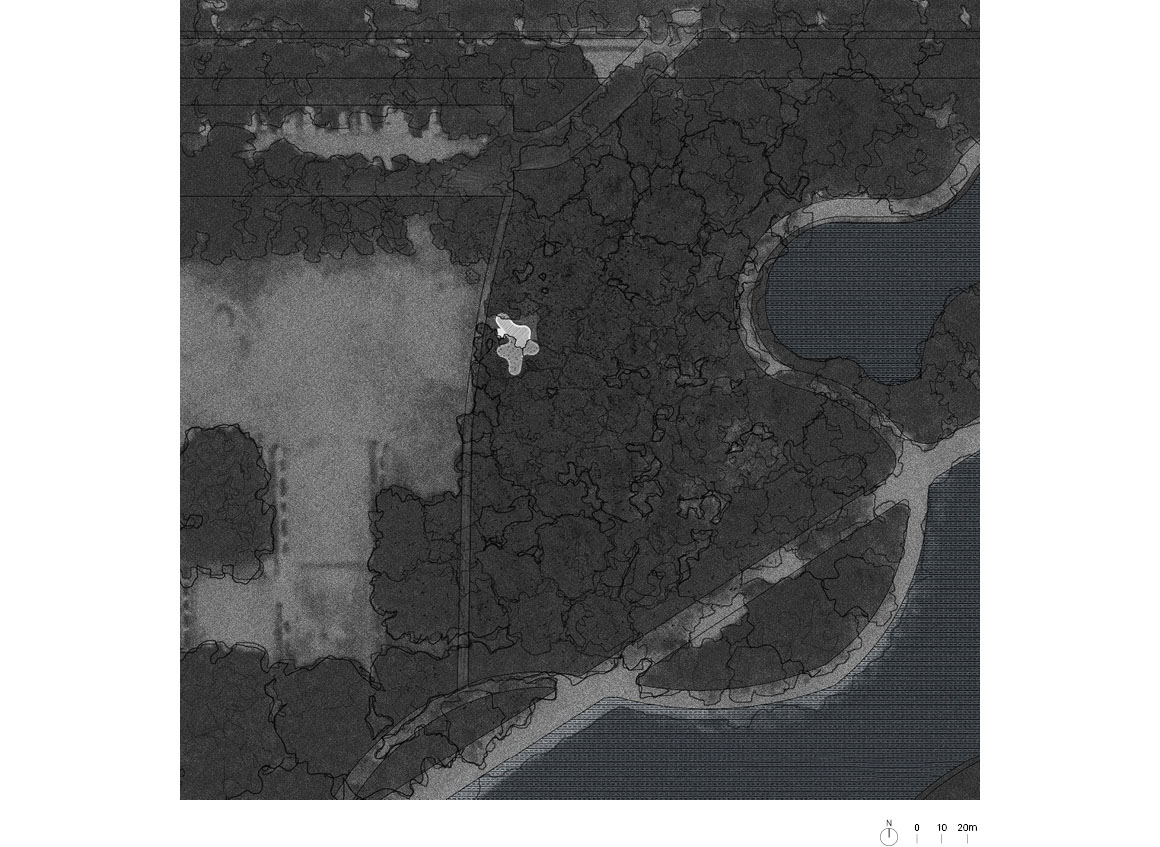
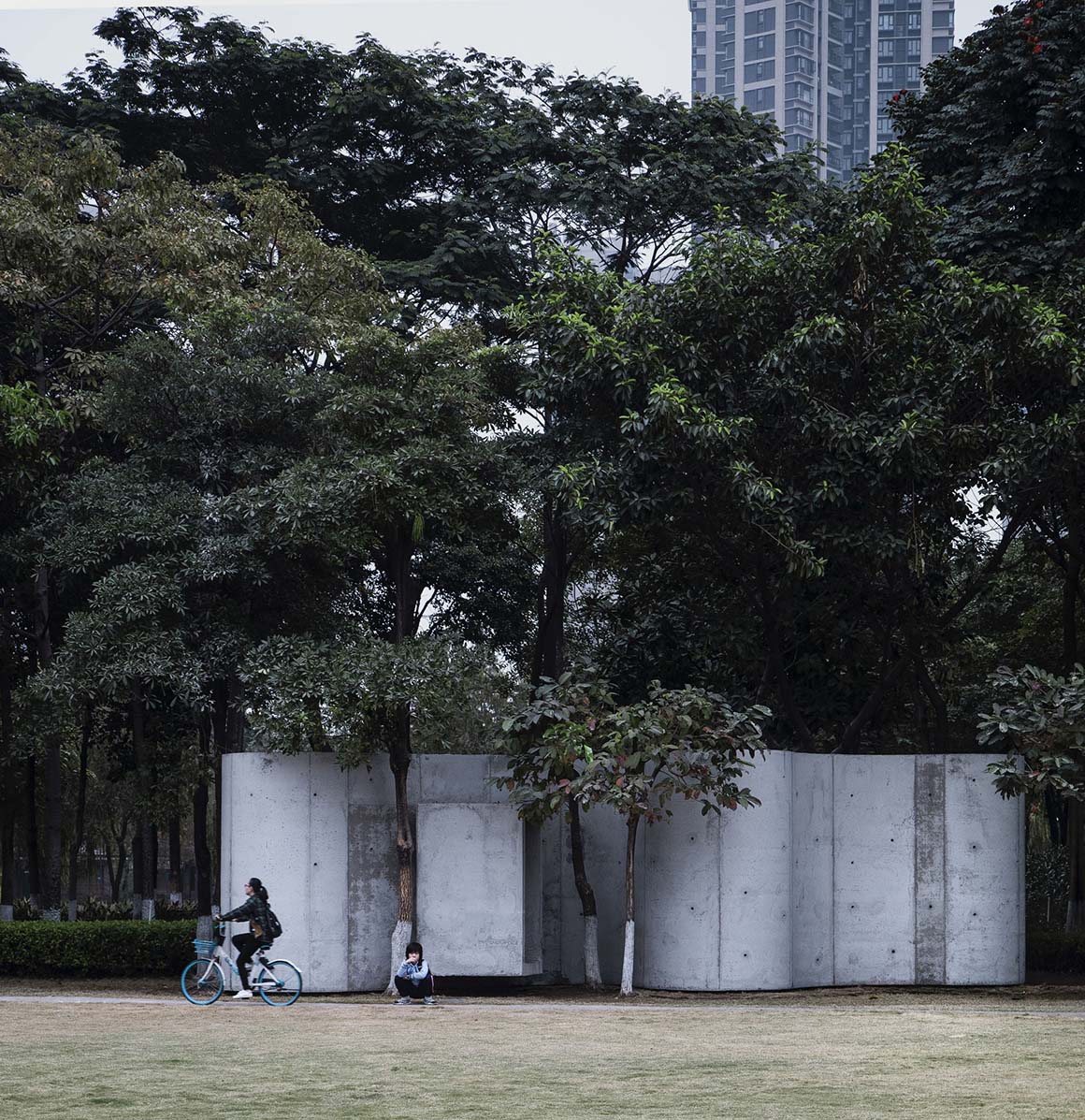
The design began by considering the specific environment, Qiandeng Lake Park, which is located in the city center and is an important leisure place for Foshan citizens. This particular project location was at the edge of a dense forest, so it became a goal that the spatial installation should “talk” with this forest, park and modern city, offering an instantly different, almost spiritual experience.
The structure was built in the hope that this simple space, a space void of any content, which makes the park or even the whole city, full of complex content, seem empty. Except for the natural element of water and air, this empty place offers people who enter a pure world for themselves alone. If visitors enter in a relaxed state, they will be able to envisage a different world, one which has a special rhythm, being broken down into the most basic elements and showing a basic state behind the complicated outside world.
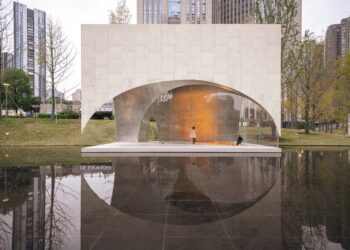
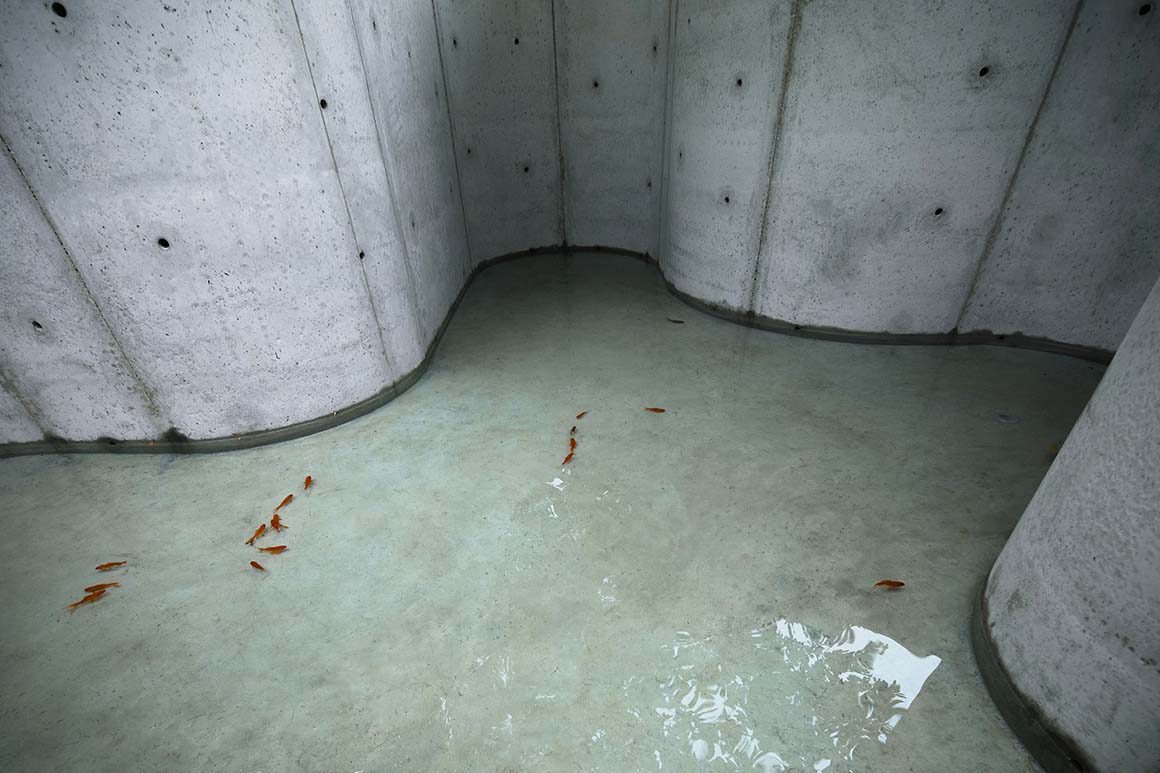
The architects chose fair-faced concrete to define an “indestructible boundary” and creating a perceptible “isolated” world. The free form then extends into the bush around the trees, making the concrete look softer, and the inner space is transformed and hidden, forming an abstract landscape.
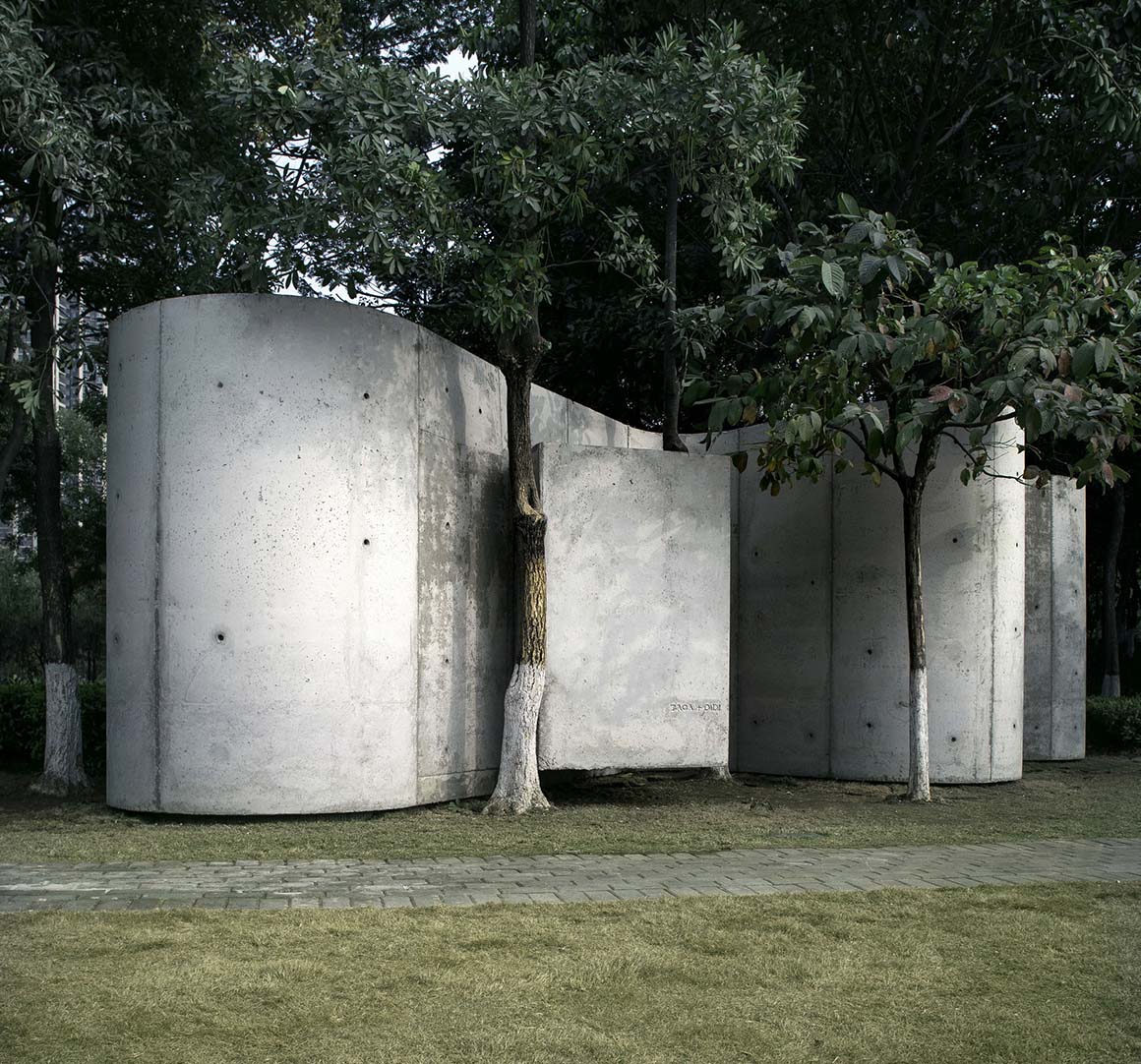
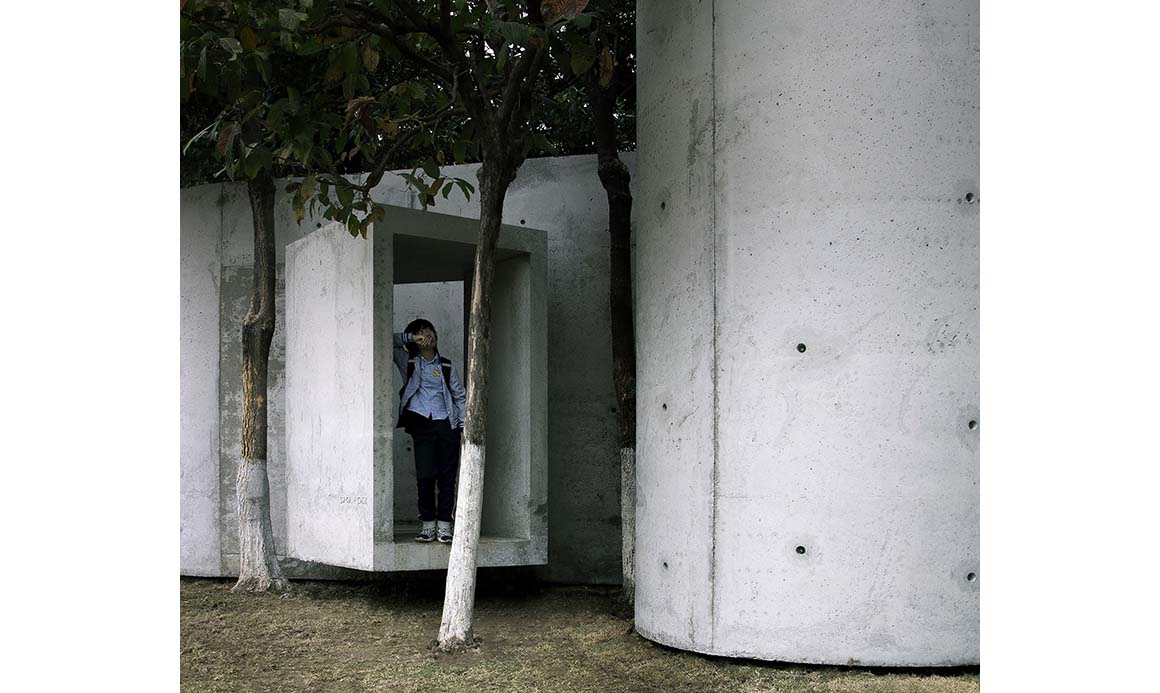
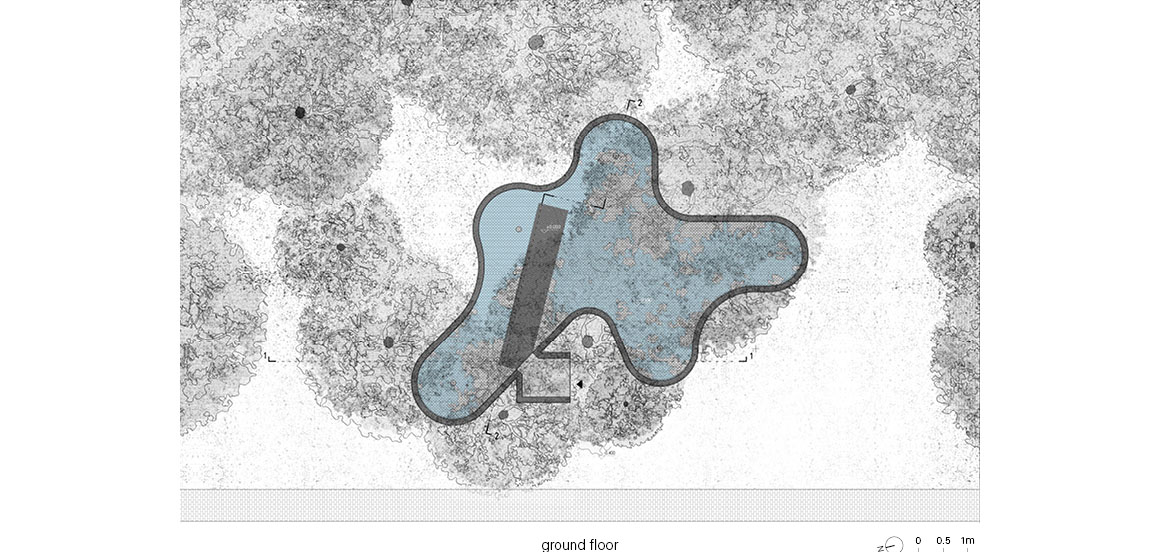
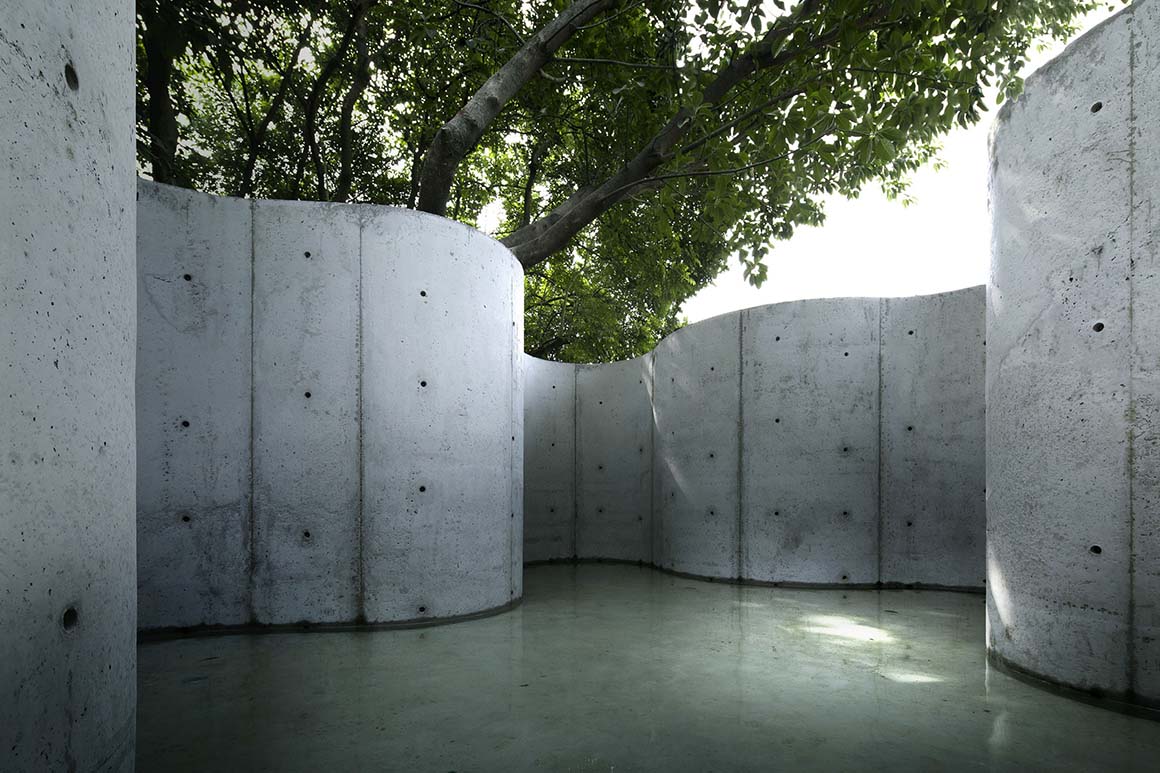
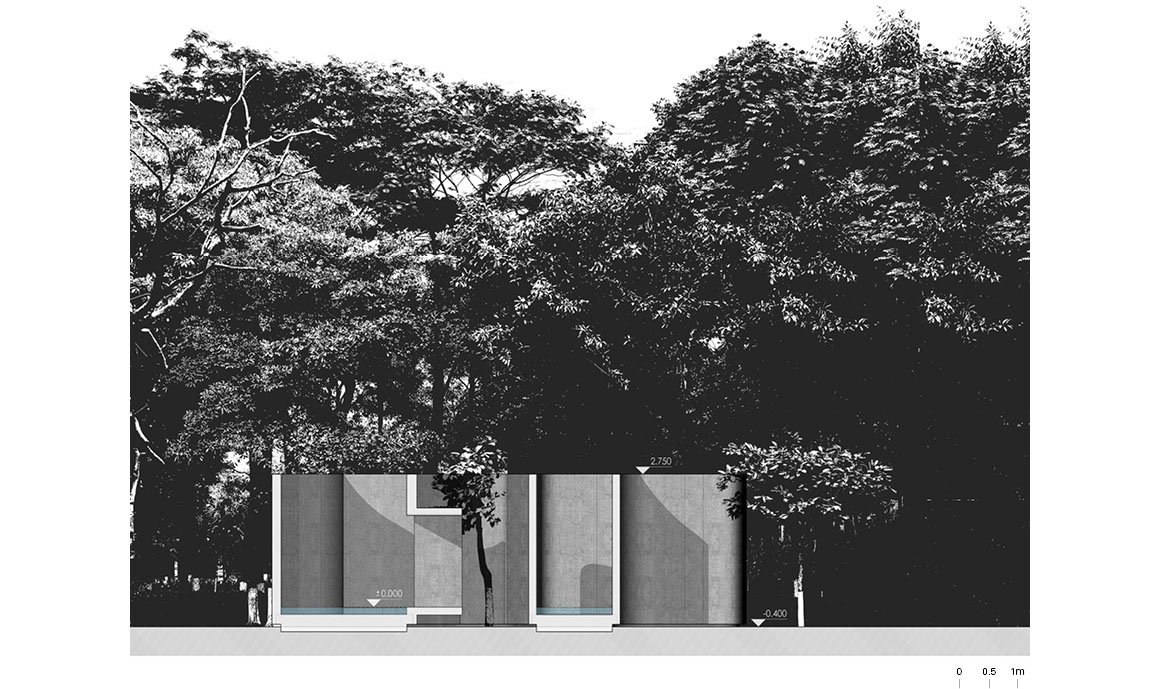
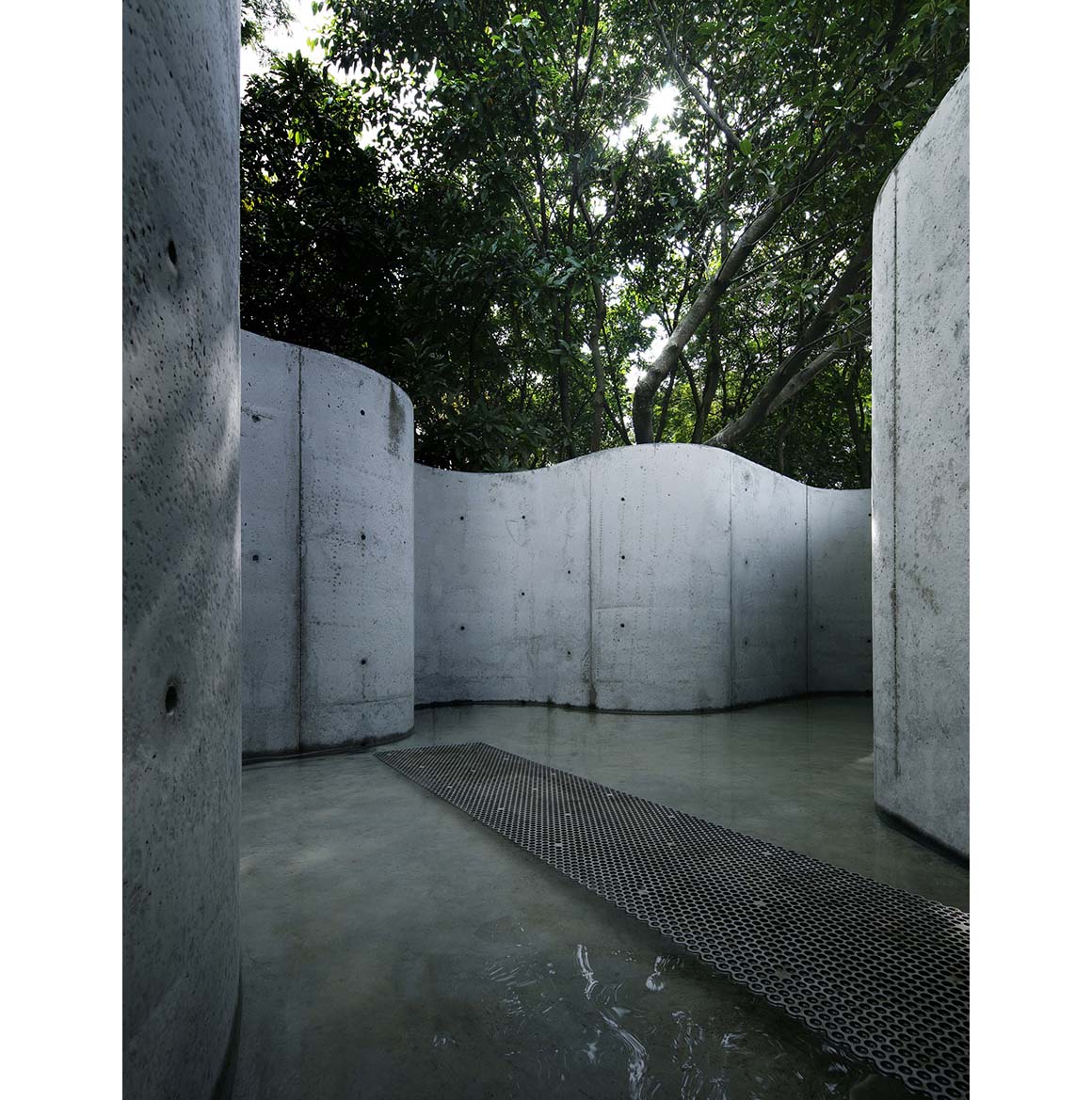
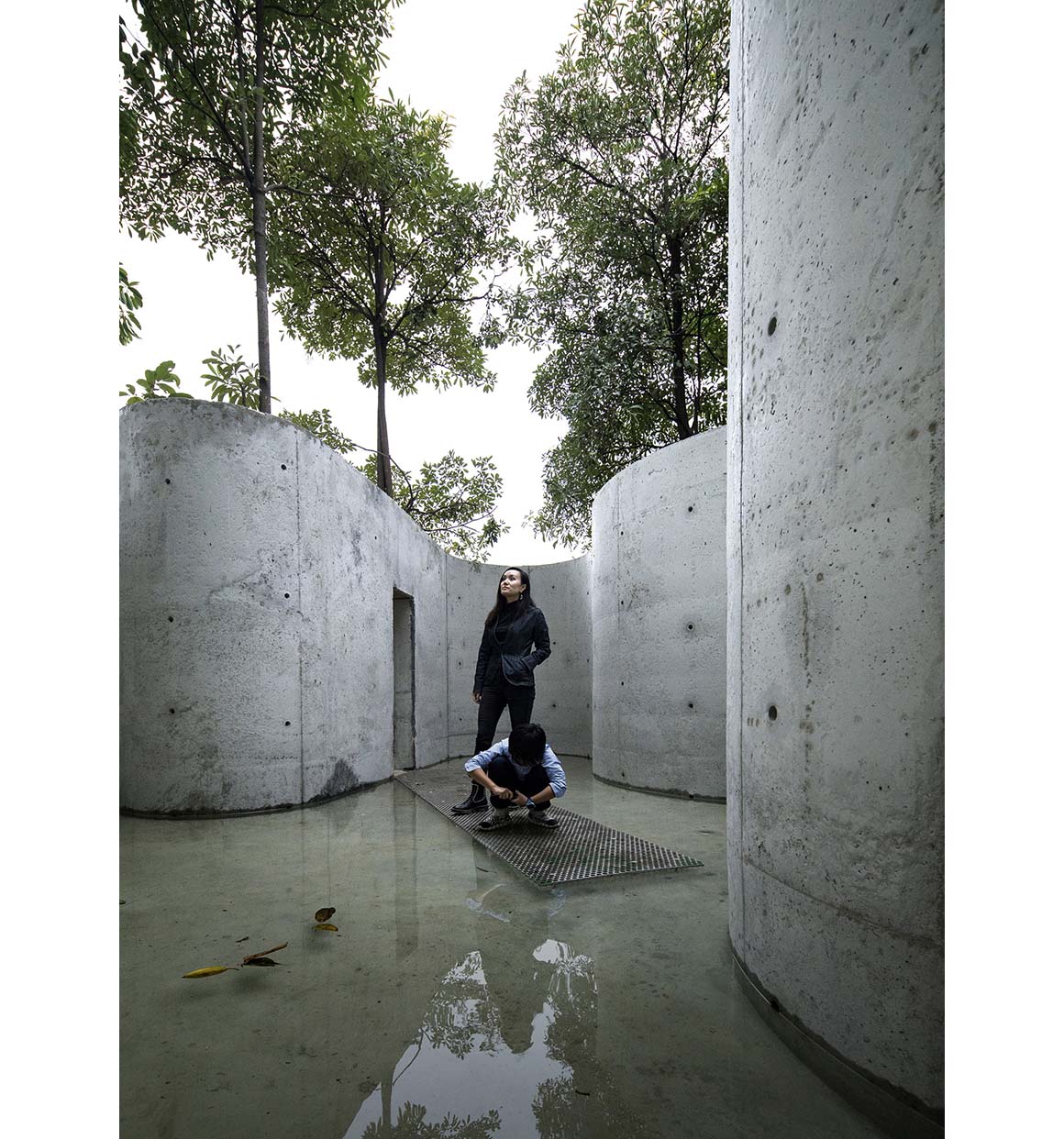
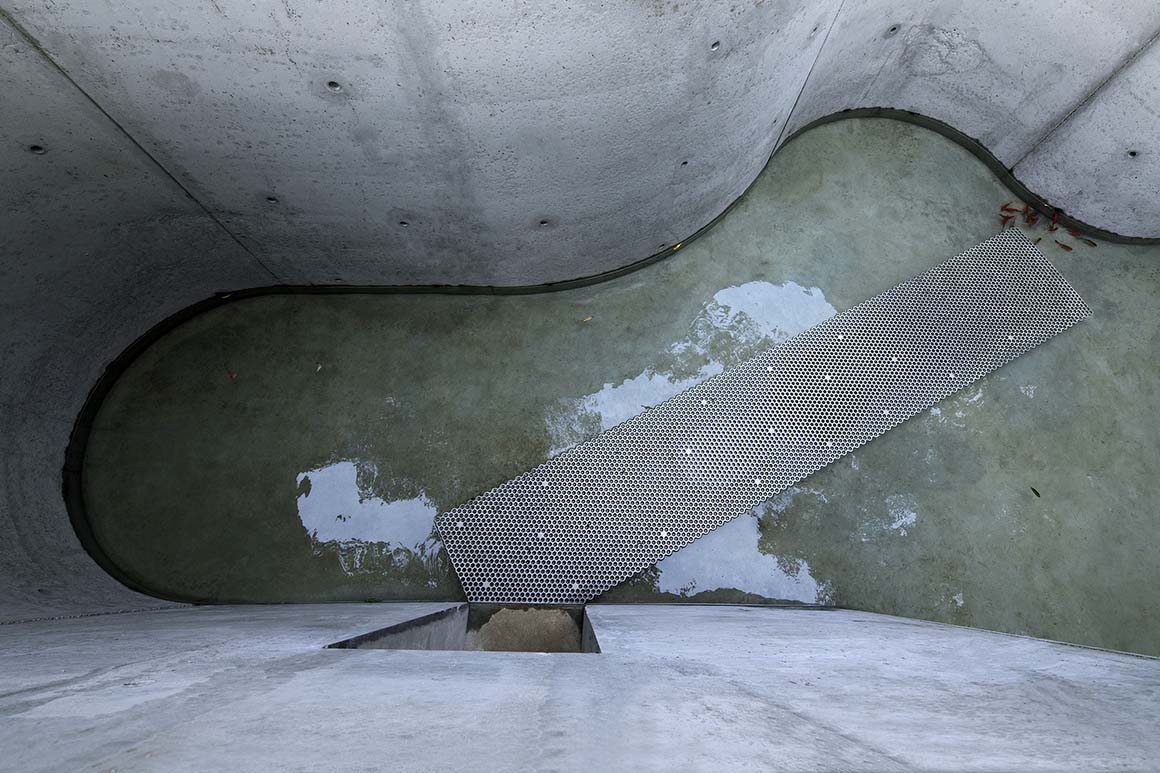
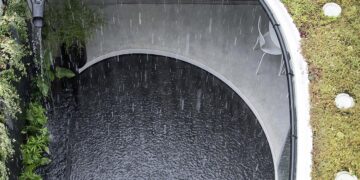
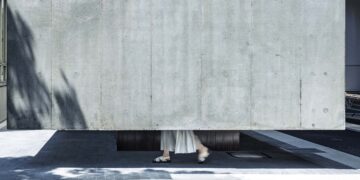
At the site, the designers mapped the specific location of the trees, in the hope the structure will complement these trees in a humble manner. The structure was placed in the crevices between the trees, making it seem to grow freely like running water. Near one side of the path, a 1m square entrance appears on the wall, opening with a width of 60cm to connect the two worlds of inside and out. This can only be passed by one person at a time. The bottom of the space is filled with clear water, and the hollow stainless-steel plate sits on the same elevation as the water’s surface, so walking on it is just like floating on water.
This project aims to make visitors rethink the boundary between architecture and art. If architecture is not required to serve a function, then what is it: structural imagination? A way of embodying nothingness through tangible entities, or a space about nothingness, elaborating on the unpredictable “being” of nature? Here, trees and sky are reflected above the visitors’ heads and below their feet, integrating the four seasons into the space. The void is in fact full of scenery. People view a filtered scene, through the gap, just as if they are discovering that there is a world outside the world.
Project: Void Garden / Location: Foshan, Guangdong China / Architect: TAOA / Lead architects: Lei Tao / Design team: Lei Tao, Wenzhi Wang, Xiangrui Meng / Engineering: TAOA / Landscape: TAOA / Consultants: TAOA / Collaborators: TAOA / Gross floor area: 39.6m² / Completion: 2020.1 / Photograph: Lei Tao (courtesy of the architect)