
A Cultural Arts Space Echoing Traditional Local Bridges
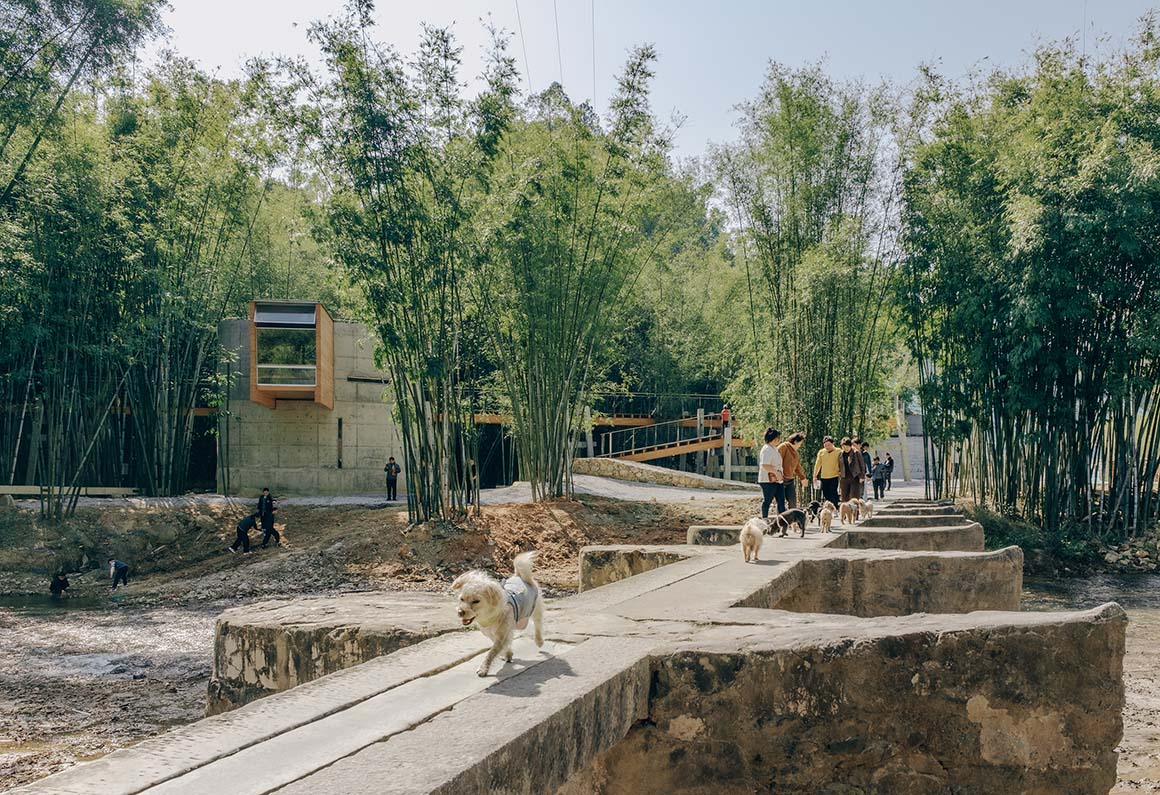
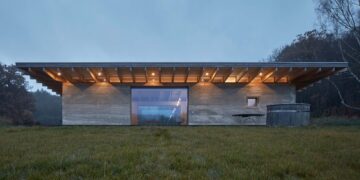
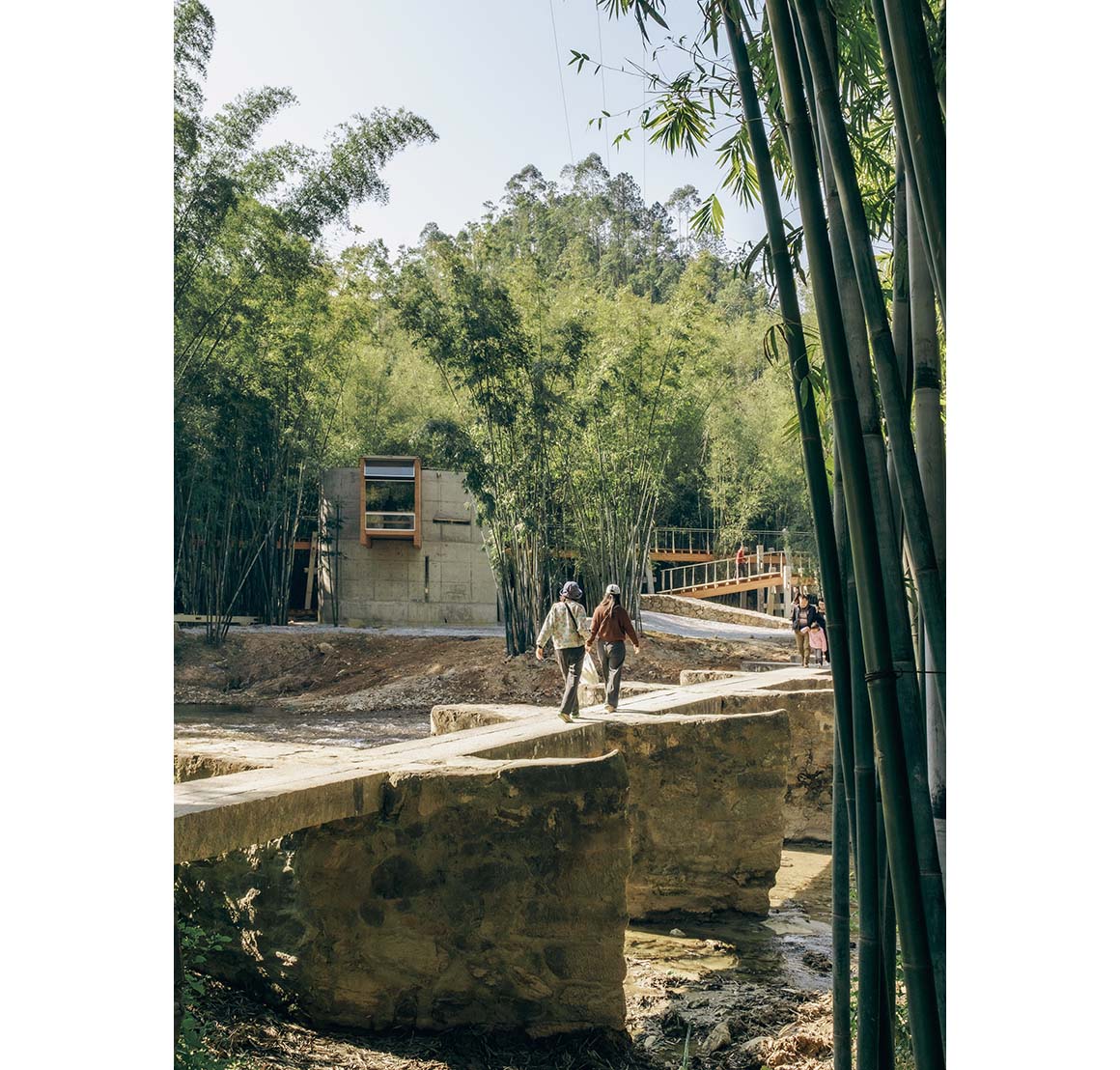
The Micro Museum is a small exhibition and rest space located in a bamboo grove beside Shisanba Bridge in Mazha Town, Huizhou. Its spindle-shaped concrete volume and elevated walkway weaving through the bamboo grove reinterpret the structural logic and craftsmanship of traditional stone bridges in a contemporary architectural language, connecting the history of the bridges with the surrounding landscape. The design focuses on rural communities and vernacular bridge culture that are gradually disappearing amid rapid urbanization. Seeking to document and reveal local craftsmanship embedded within the landscape, the project was conceived to evoke a sense of place and history through experiences of movement and pause. The project is part of the “Nankunshan-Luofushan Rim Pioneer Zone Architectural Art Project,” developed along Huizhou’s 218-kilometer scenic tourism route. The overall project takes Su Dongpo’s Sixteen Delights of Life as its curatorial concept.
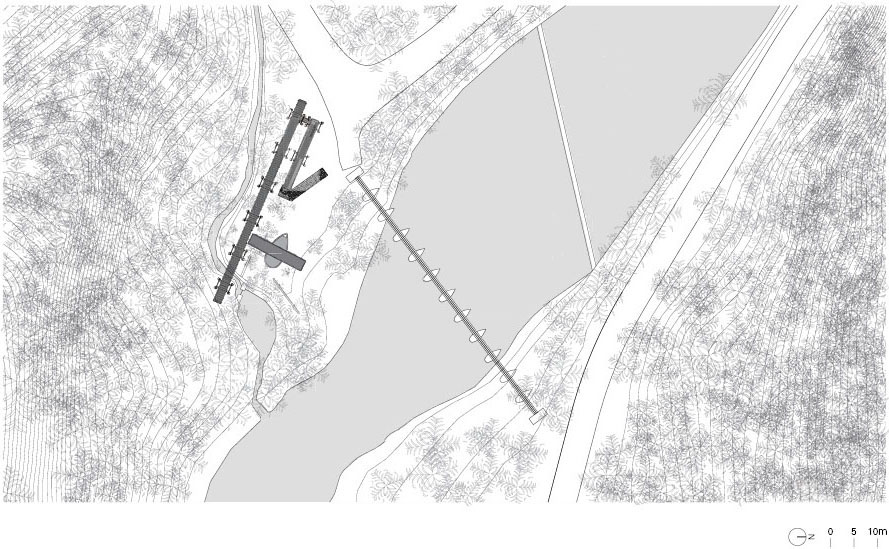
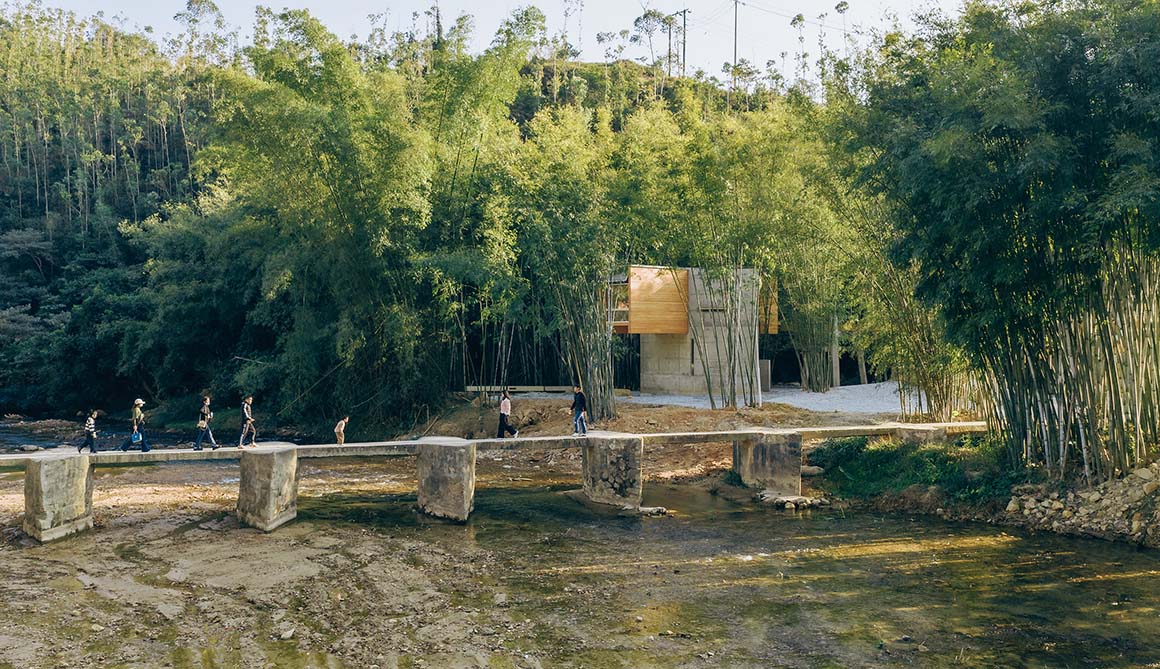
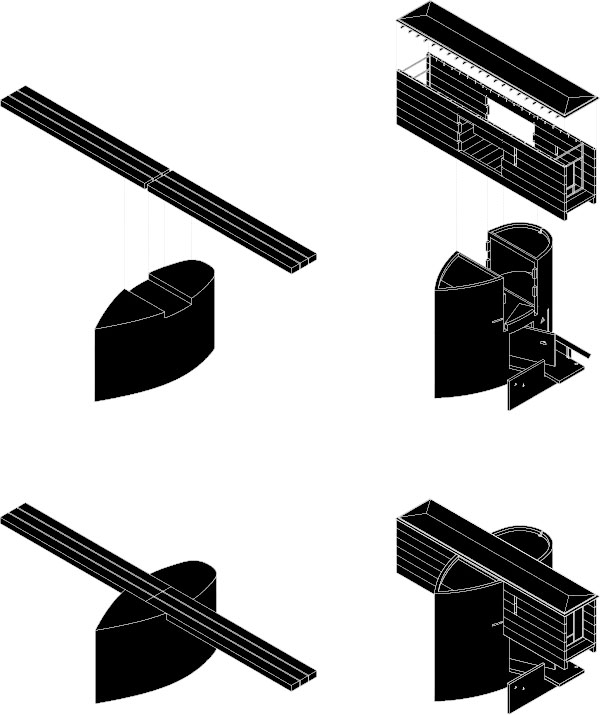
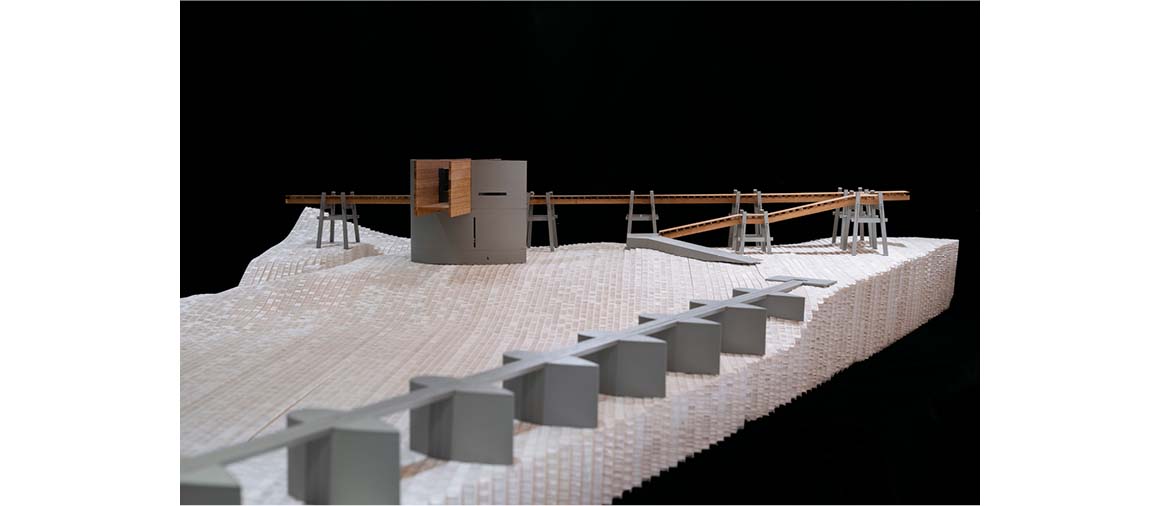
The design team focused on two traditional bridge types found in Huizhou: the baqiao and the gaoqiao. Baqiao refers to a low bridge built close to the water surface, characterized by spindle-shaped piers and stone slab construction, and is also known locally as the “goose-chest bridge.” Historical records note that during Su Dongpo’s governance of Huizhou, floating bridges made by linking boats with wooden planks served as important infrastructure for local travel. The design interprets this early prototype of the goose-chest bridge, translating its interlocking structure and linear spatial flow into contemporary architecture. Gaoqiao, locally called the “bench bridge,” features long, slender stone posts splayed outward to respond to steep embankments and narrow waterways. Once used for agricultural production and everyday passage, these bridges also embodied the region’s stone craftsmanship and construction methods. The design team studied stone details and traditional interlocking structures found in local dwellings, including windows, frames, and thresholds, recognizing them as the result of accumulated local culture and artisan knowledge.
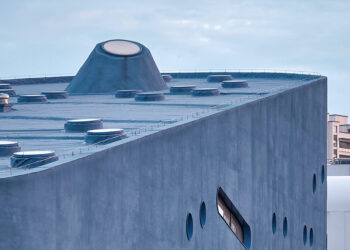
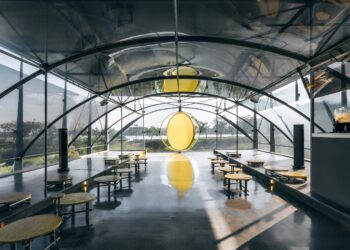
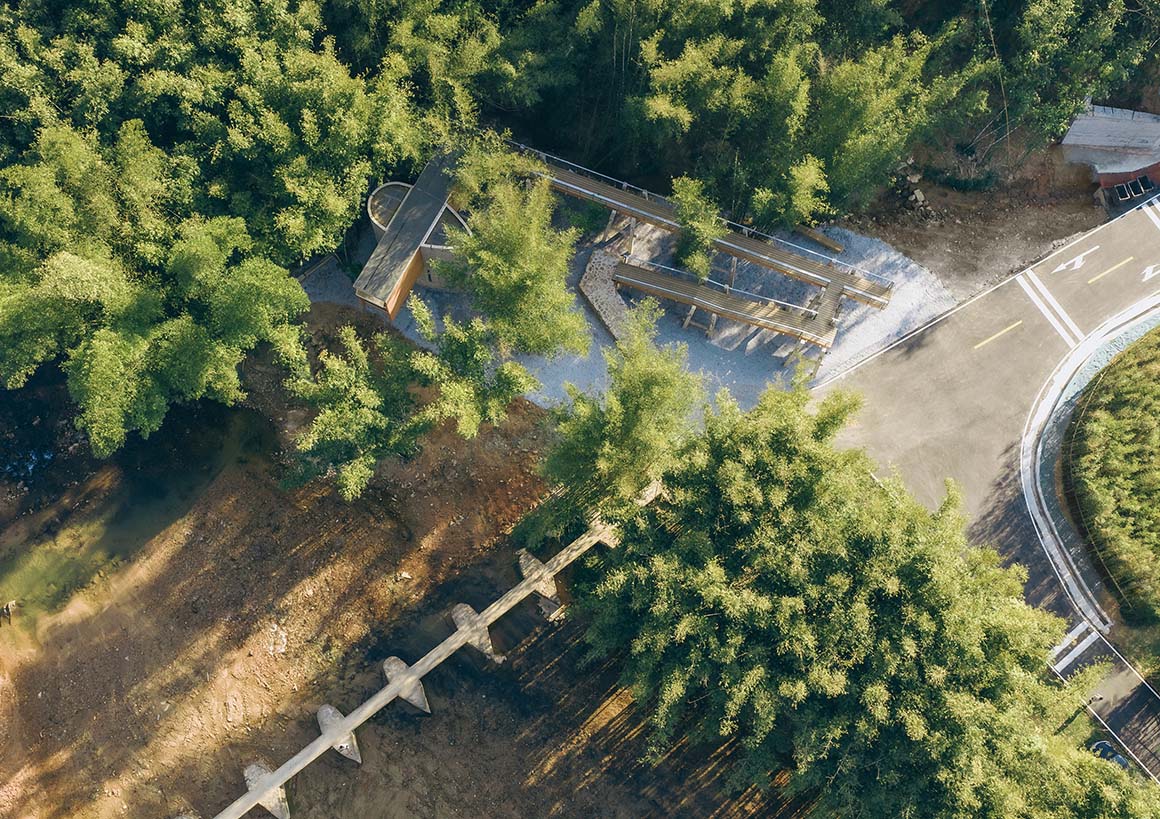
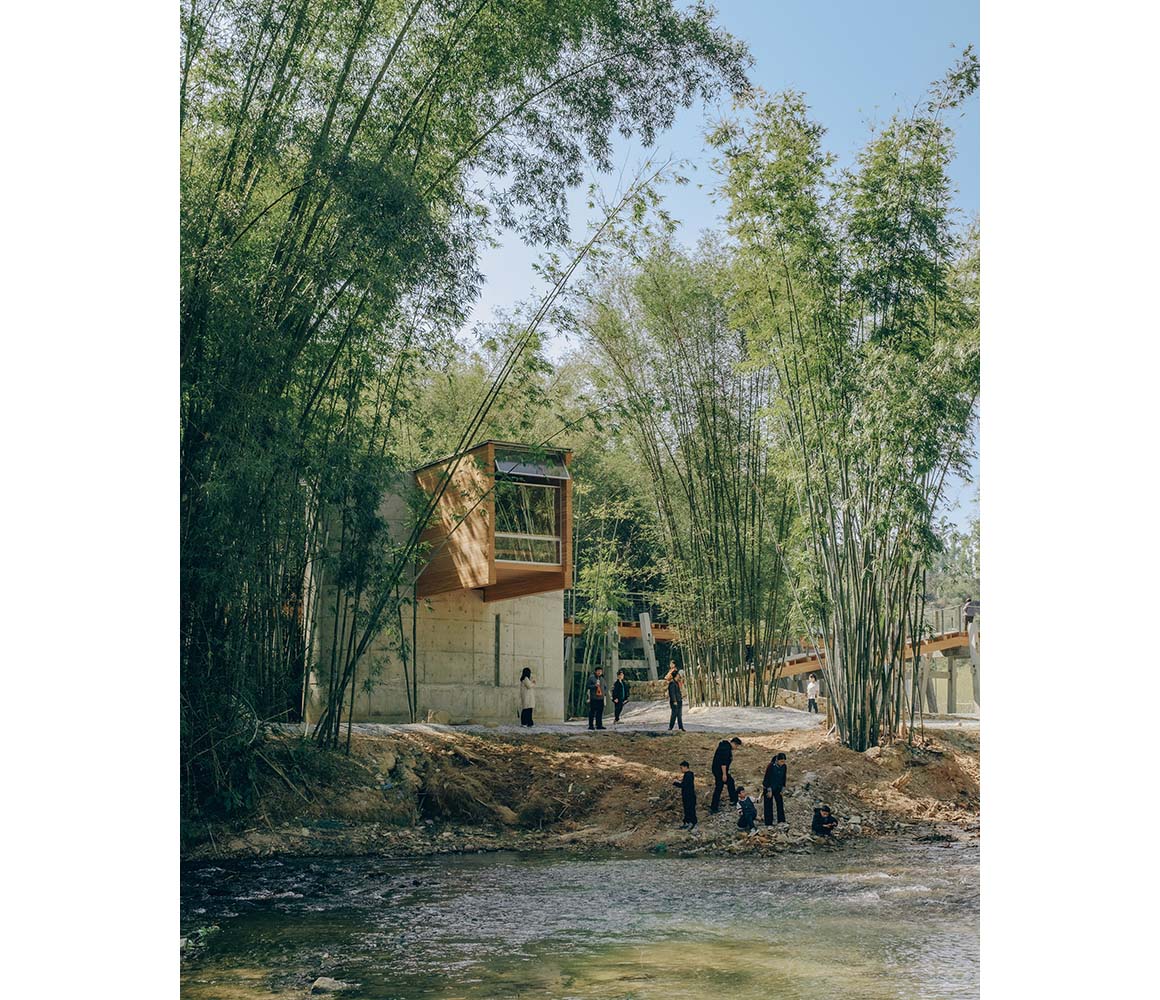
The Micro Museum includes exhibition spaces, a cafe, rest facilities, and restrooms. Inside, the print series Bridges of the Countryside by Guangdong-based printmaker Liu Qingyuan documents Huizhou’s stone bridges, allowing architecture and art to jointly convey the memory of vernacular bridges. The spindle-shaped concrete volume draws from the form of the baqiao’s stone piers, while the timber passage penetrating the building recalls the experience of crossing a traditional stone bridge. Exhibition spaces and a cafe occupy the upper level, while restrooms, wash areas, and additional exhibition spaces are located below. The elevated walkway passing through the bamboo grove reflects the structural logic of the gaoqiao as an open structural system. Cast-in-place reinforced concrete columns and beams reference traditional interlocking construction methods. Walking along the elevated path, visitors experience the scenery of Shisanba Bridge and the river, as well as the repetitive rhythm of the bridge structure.
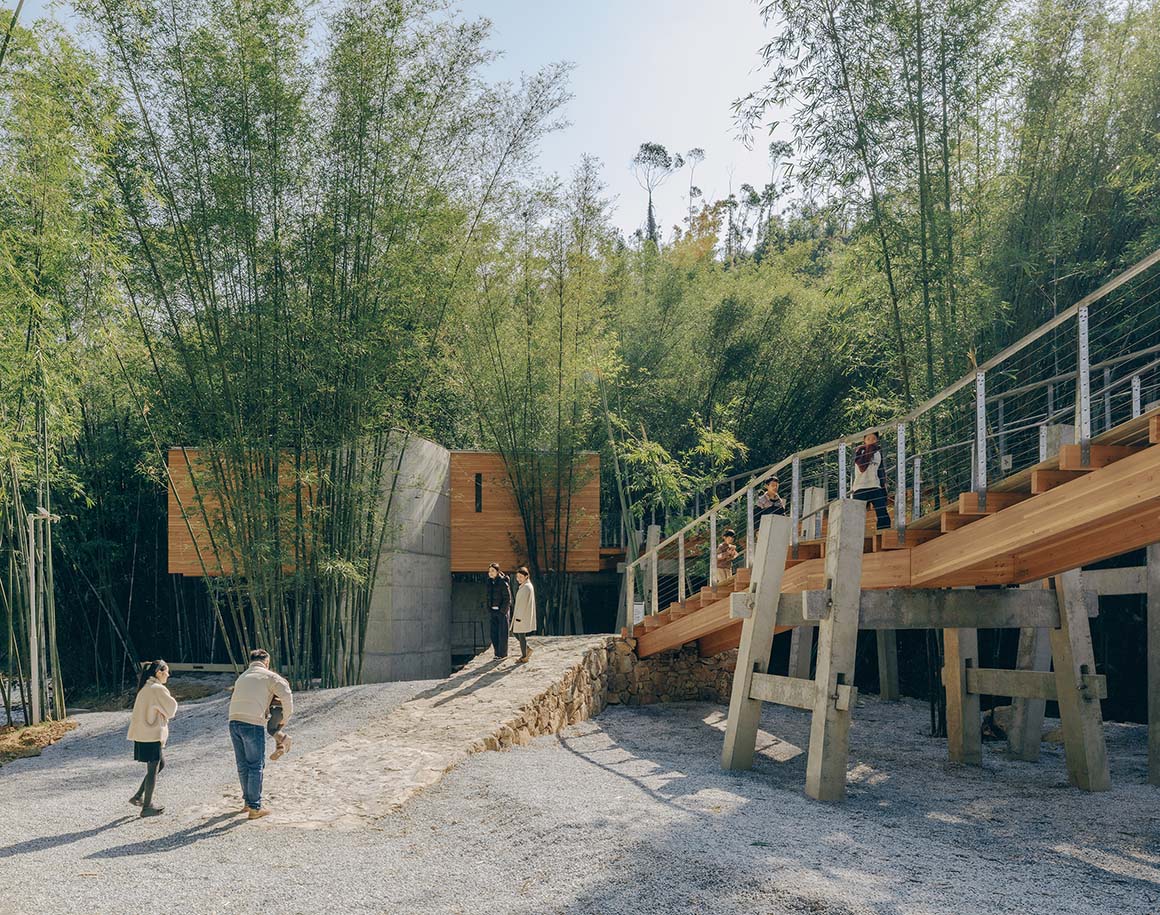
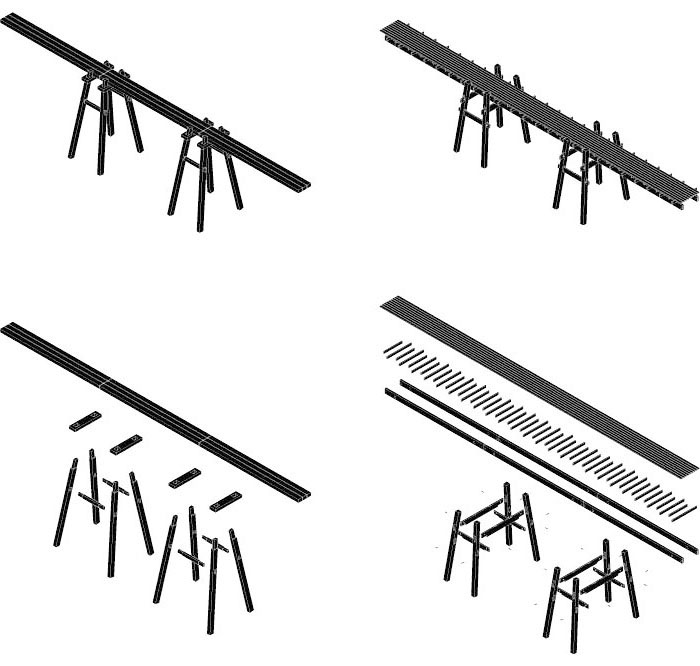
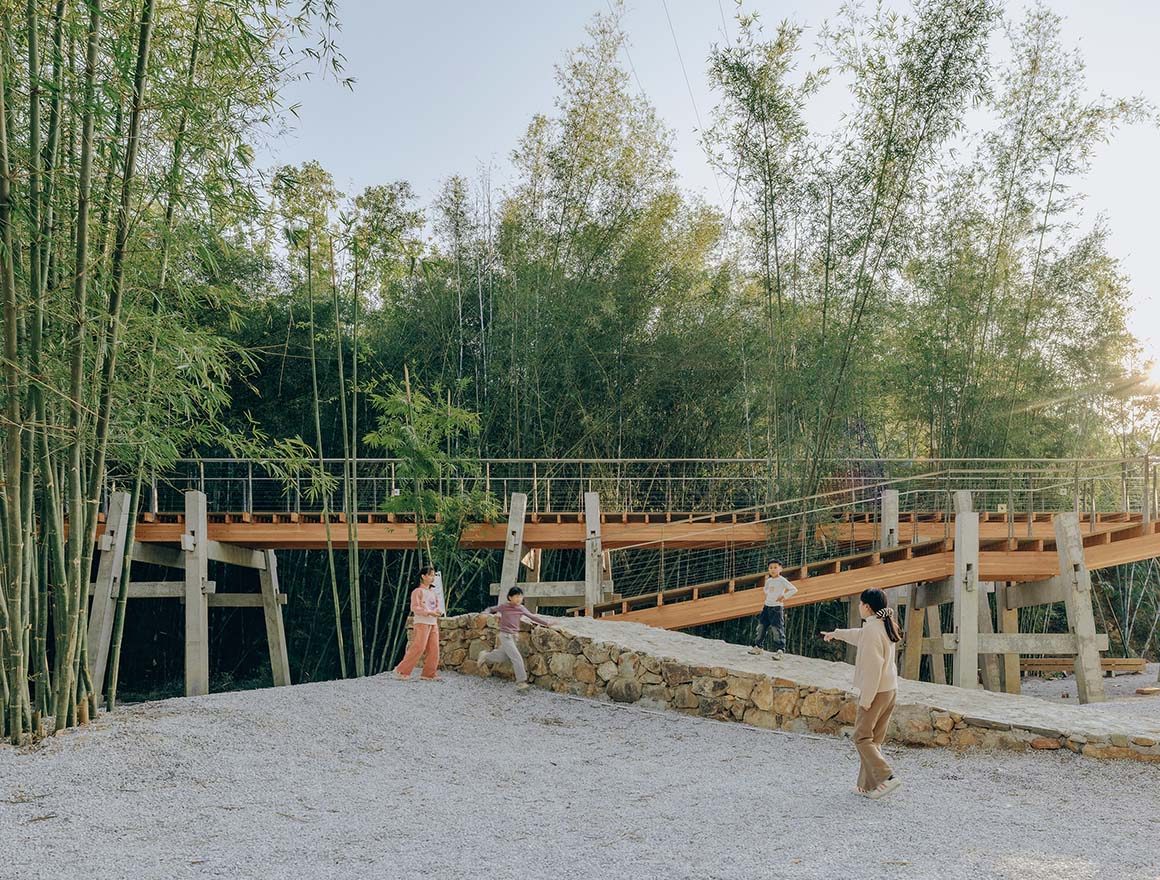
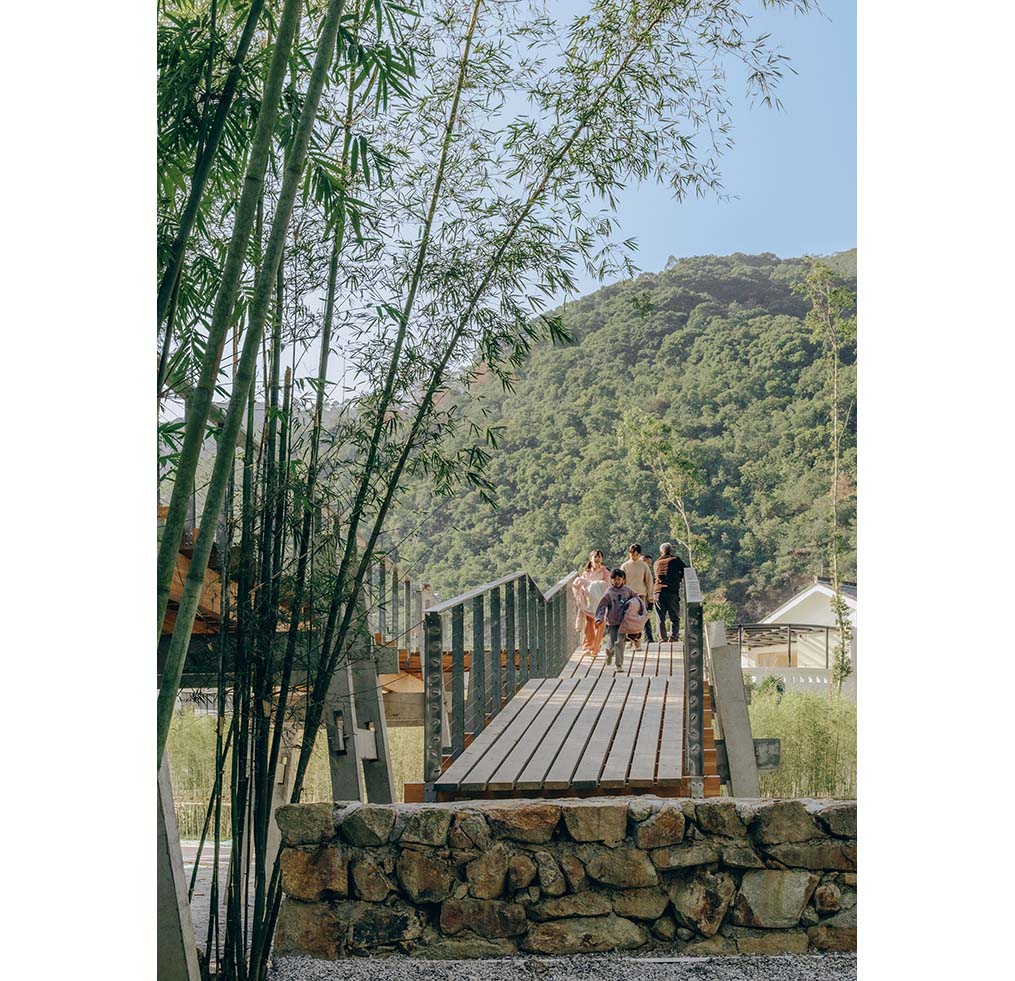
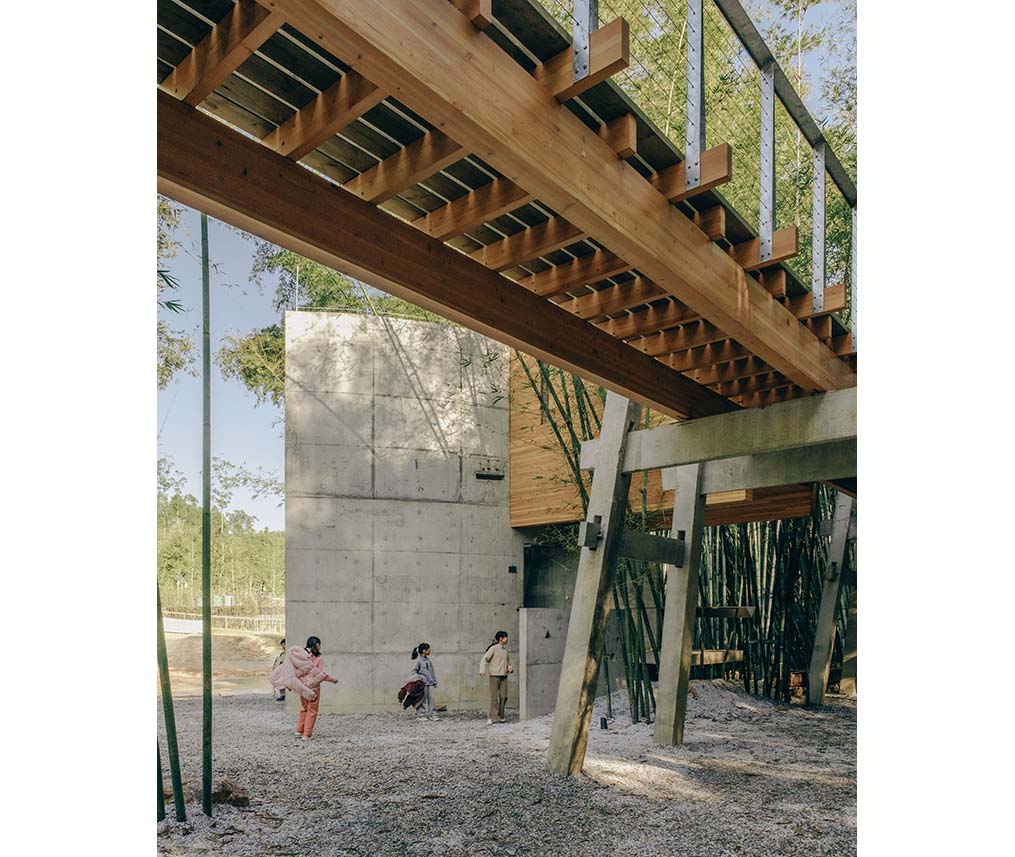
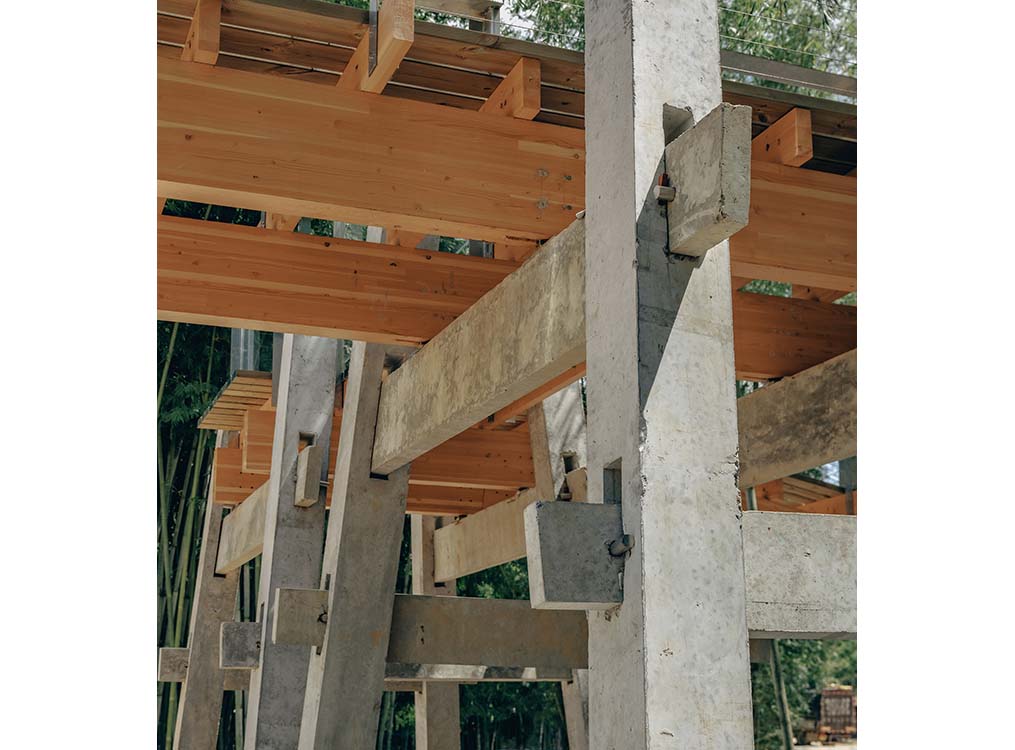
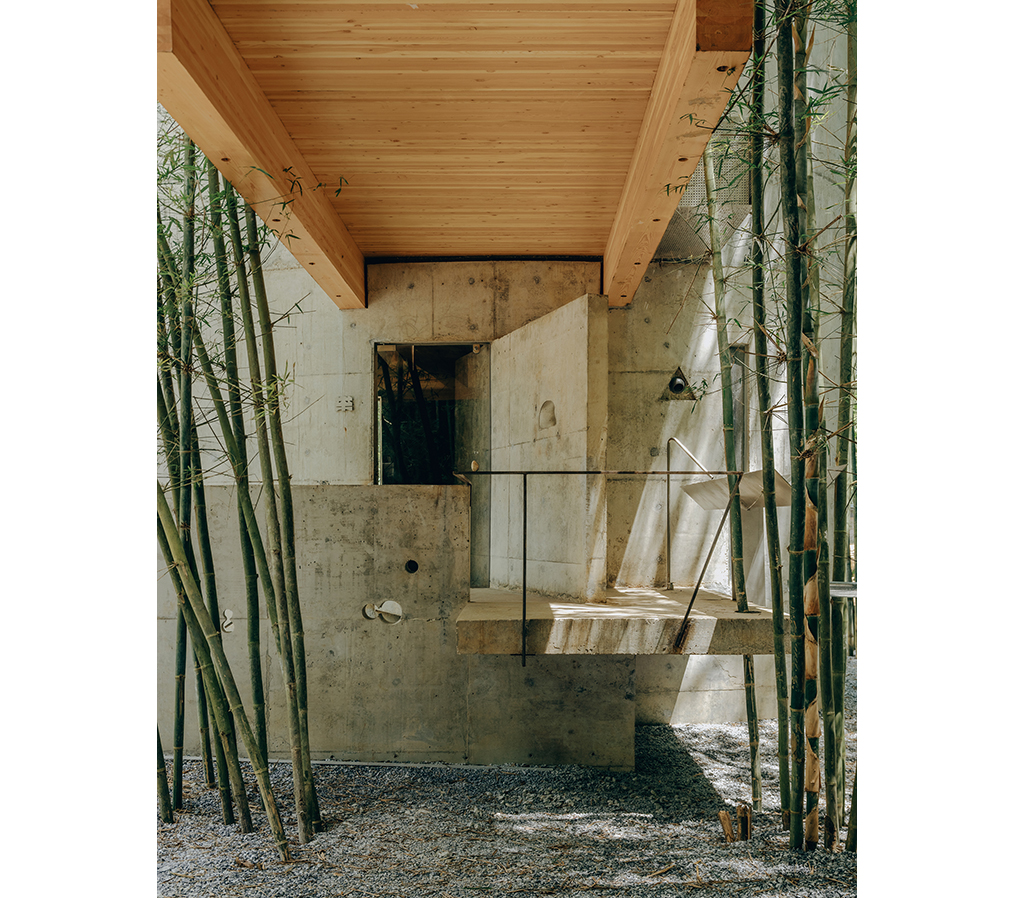
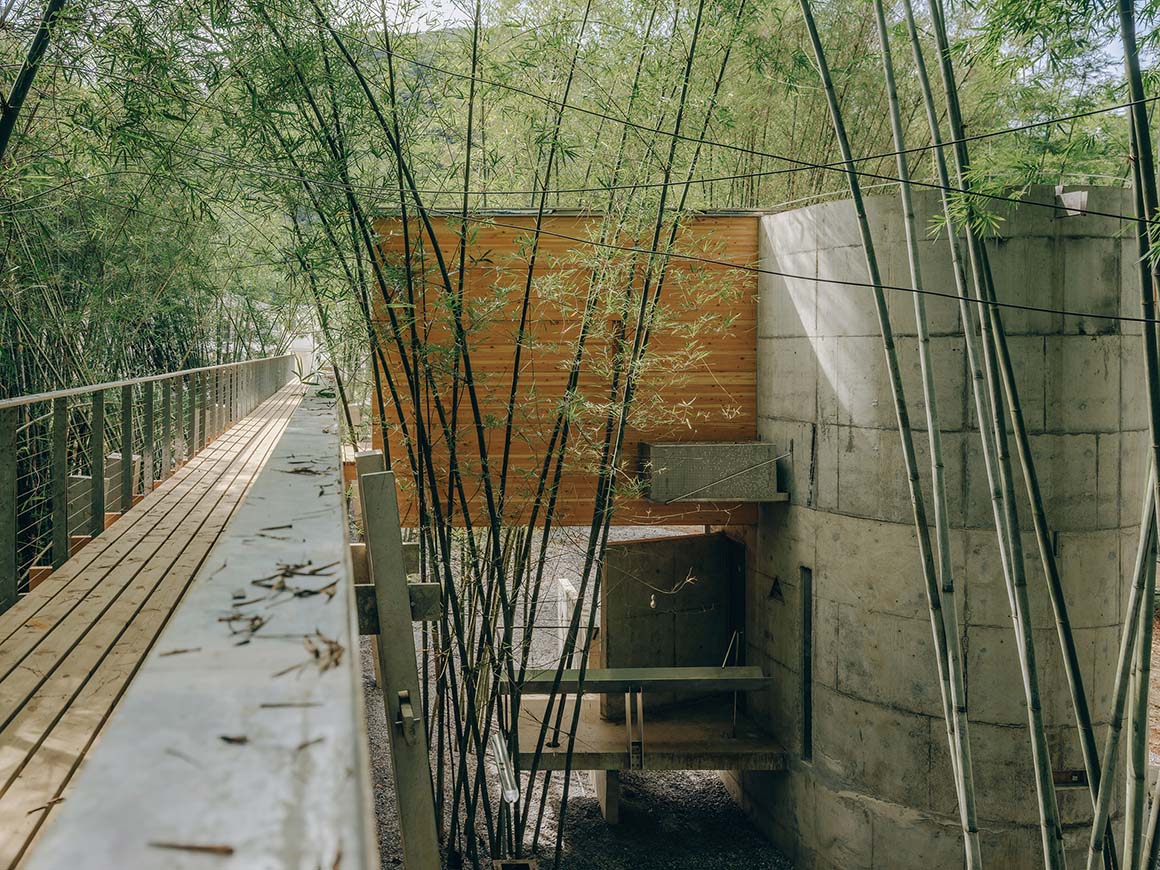
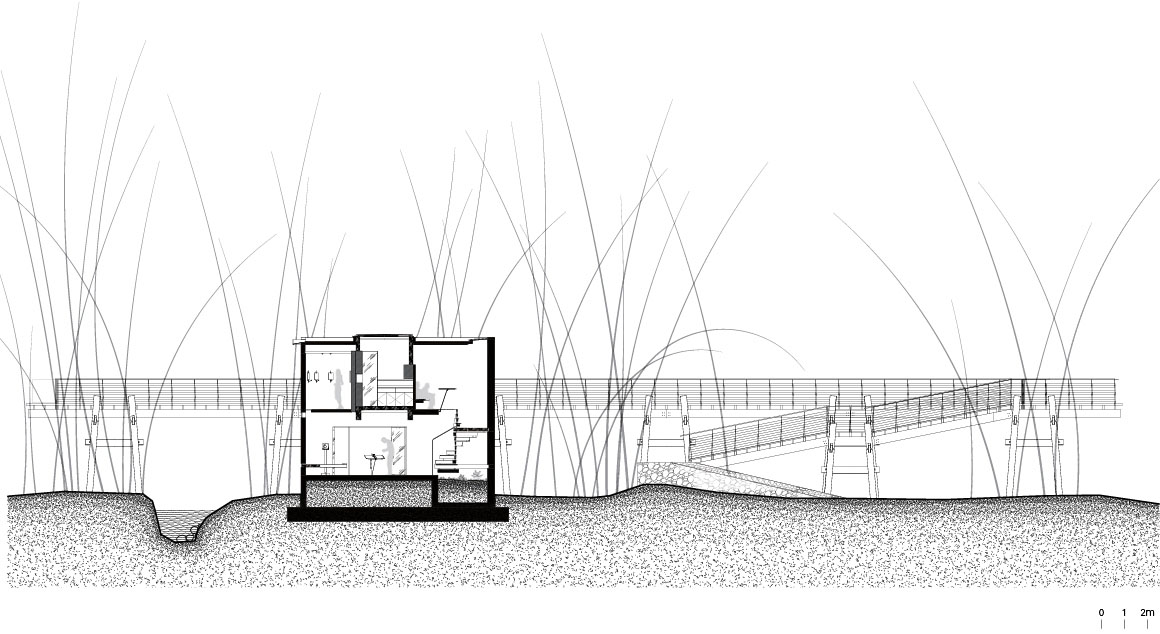
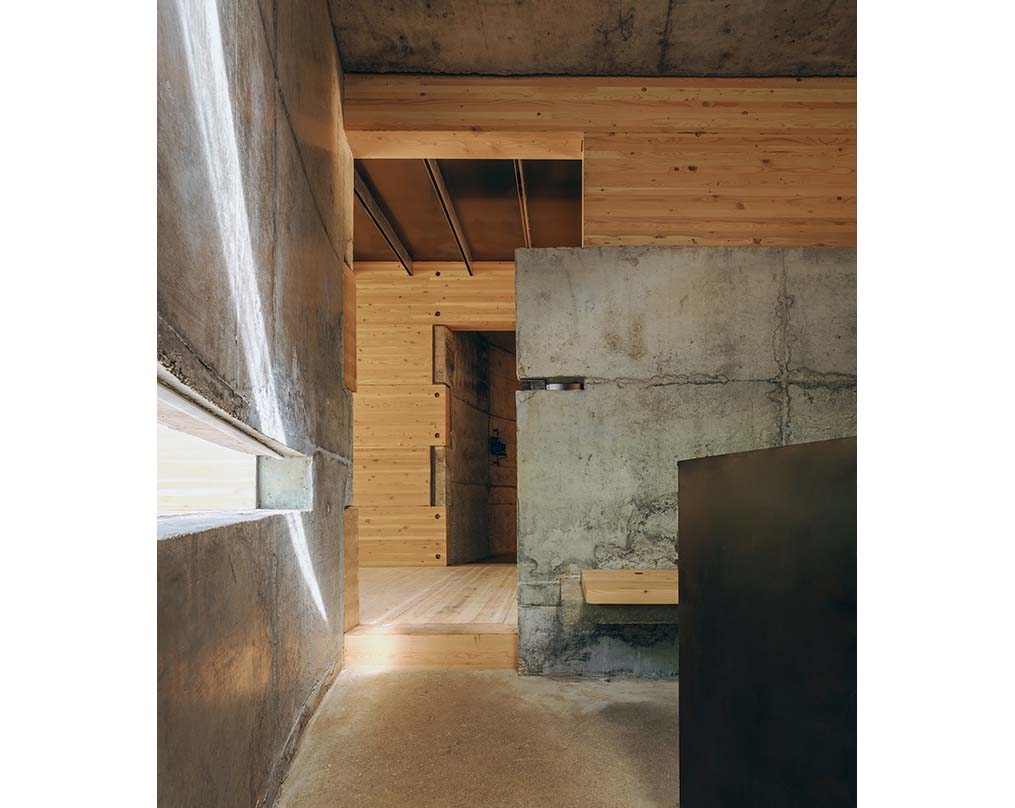
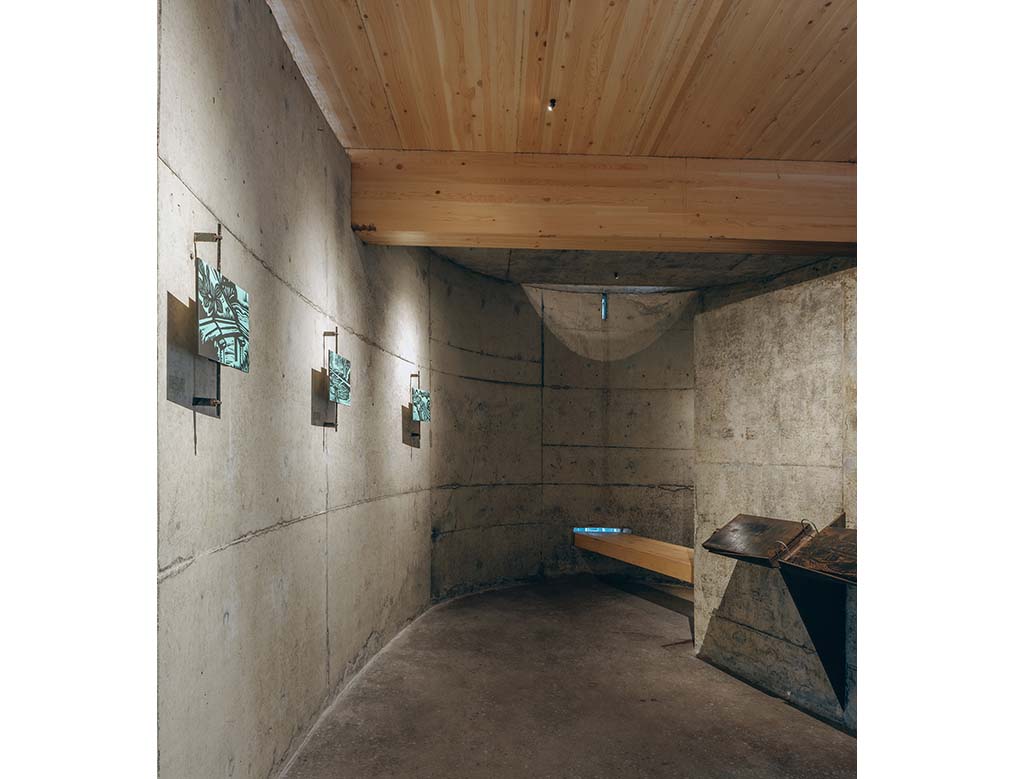
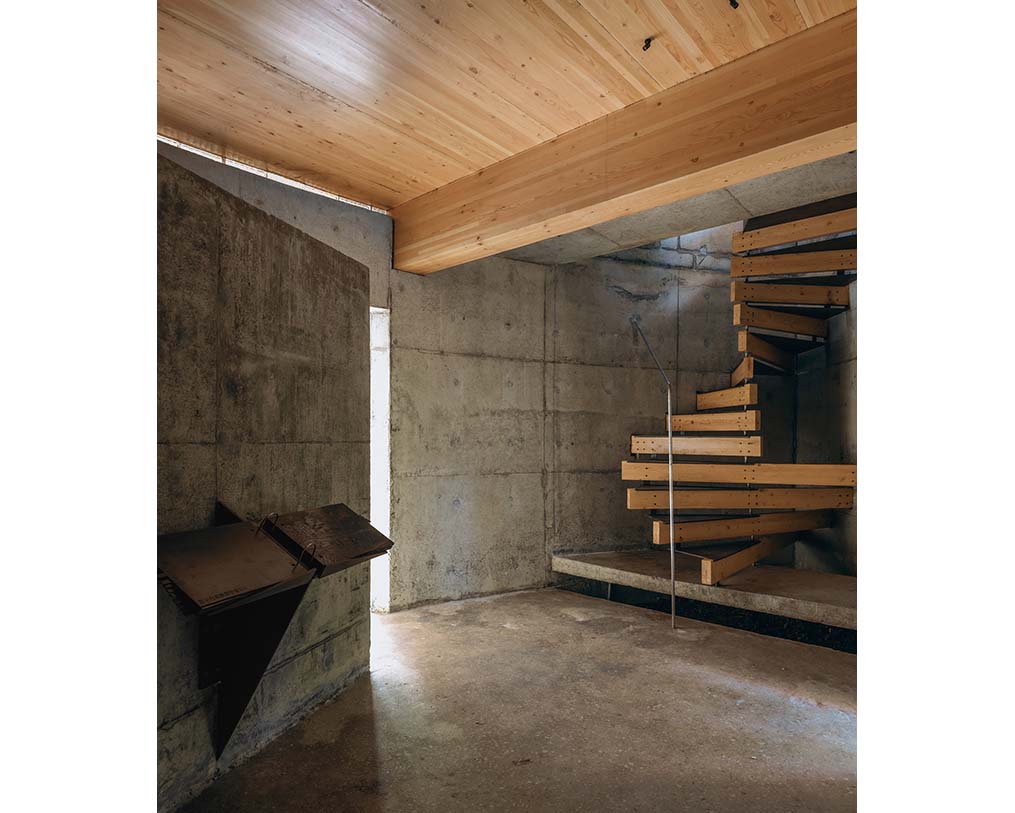
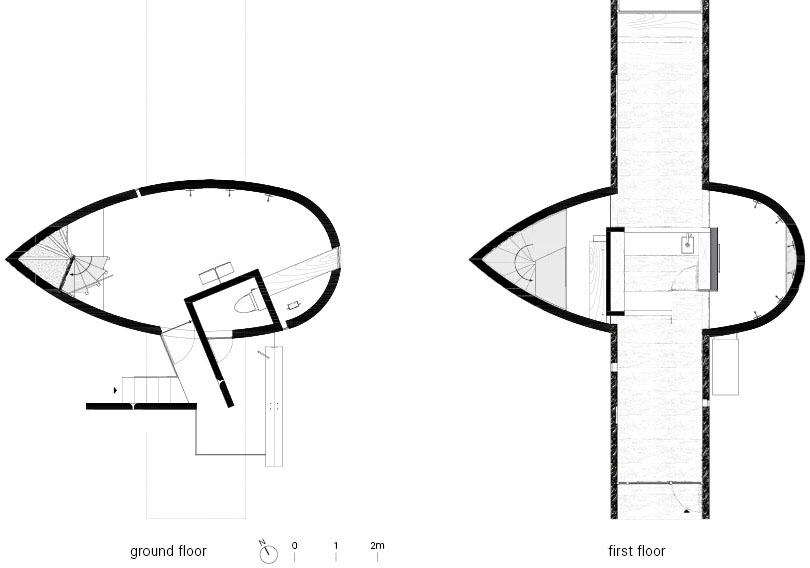
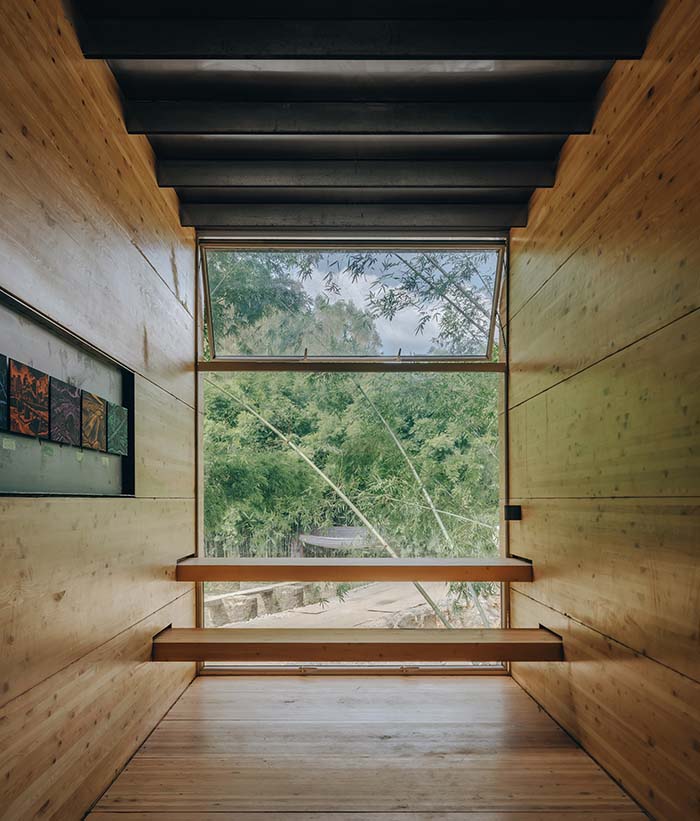
Interpretations of local architecture also appear in the project’s details. Timber planks on the deck are arranged at regular intervals to express the spacing and rhythm of traditional stone bridge slabs. The gourd-shaped, semicircular, and triangular openings in the concrete walls reference window forms found in local vernacular houses. Steel formwork used during construction was repurposed as outdoor drainage channels, while leftover concrete beams were transformed into benches along the waterfront, reintegrating construction materials into the landscape. Built through a minimal-intervention approach that preserves the bamboo grove as much as possible, the exhibition space avoids dominating the site or overwhelming the landscape, instead focusing on revealing the memory of place embedded in local bridge structures, craftsmanship, and the natural environment.
Project: Huizhou Vernacular Historic Bridges Micro-Museum / Location: Shisanba Bridge, Mazha Town, Longmen County, Huizhou, Guangdong, China / Architect: LUO studio / Collaborator: Liu Qingyuan / Design team: Luo Yujie, Wang Beilei, Hong Lun, Cao Yutao, Liang Jiahui / Construction drawings: Luo Yujie, Zhang Ergang, Jiang Junjie, Chen Wei, Hong Lun, Cao Yutao, Liang Jiahui / Art creation: Liu Qingyuan, Song Qi, Wu Di / Developer: Huizhou Huanliangshan Investment & Development Co., Ltd. / Project Organizer: Shanghai Fengyuzhu Culture Technology Co., Ltd. / Contractor: Shinewood Building Technology (Beijing) Co., Ltd. / Use: museum / Gross floor area: 73.55m² / Design: 2025.3 / Completion: 2025.12 / Photograph: ©Zhu Yumeng (courtesy of the architect); ©Han Dawang (courtesy of the architect)