


An Ecological Trail Organized as a Circular Ring
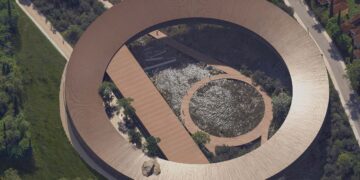
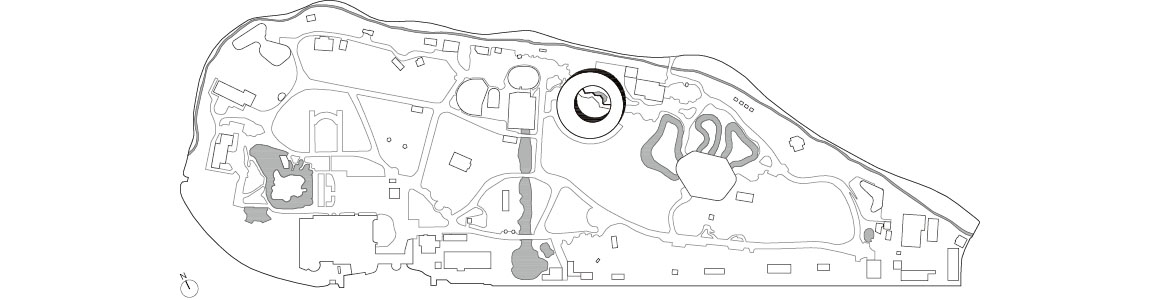
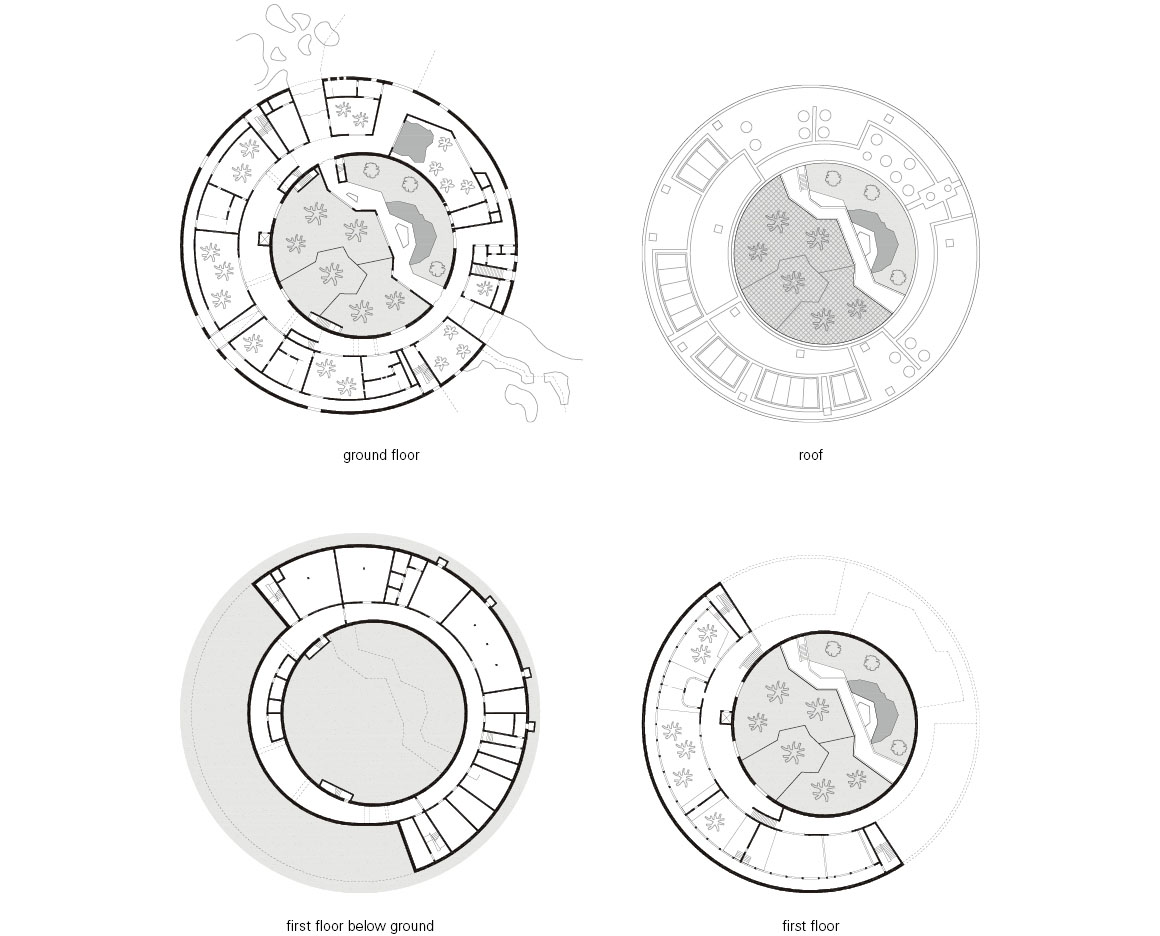
One of the four oldest zoos in Germany, Dresden Zoo is set within a historic landscape designed in the 19th century by the landscape architect Peter Joseph Lenné. Its park-like structure, organized around a circular promenade and intersecting paths, has been maintained to this day, while the zoo has undergone a gradual process of modernization upon this inherited framework. With a diameter of approximately 60 meters and a gross floor area of 4,164㎡, the orangutan house—opened in 2024—is the seventh facility completed as part of this transformation and the largest construction project realized within the evolving context of the park. It was designed through the collaboration of heinlewischer and Rehwaldt Landschaftsarchitekten, who have been involved in the zoo’s redevelopment since 2007.
Evolving from a conventional animal enclosure, the new orangutan house functions as a spatial framework that reconfigures both the animals’ habitat and the visitor experience. Reflecting the ecological behavior of wild animals and their patterns of social interaction, the building establishes a husbandry system that accommodates the separation and regrouping of females with offspring and solitary adult males. At the same time, it recreates the habitat of the Southeast Asian tropical rainforest, expanding into a multi-species ecological exhibition in which various species coexist.
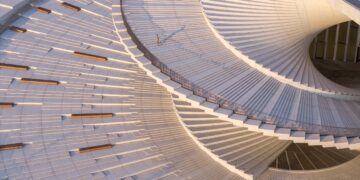
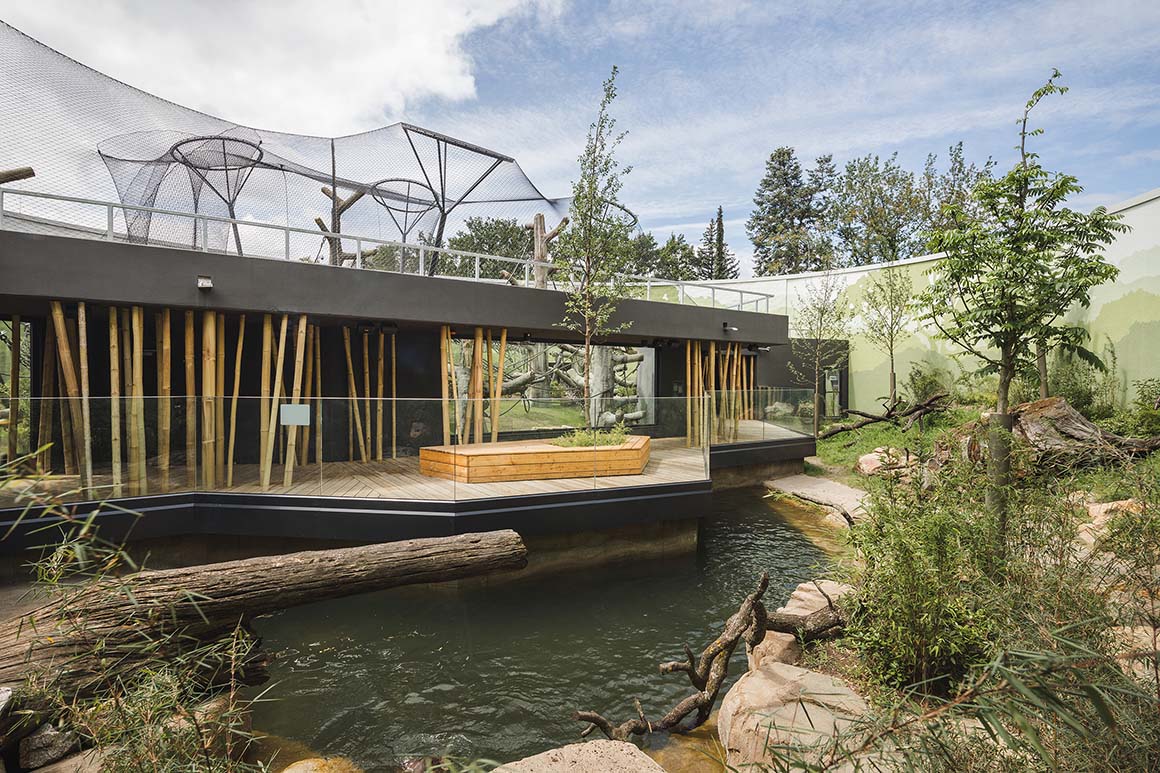
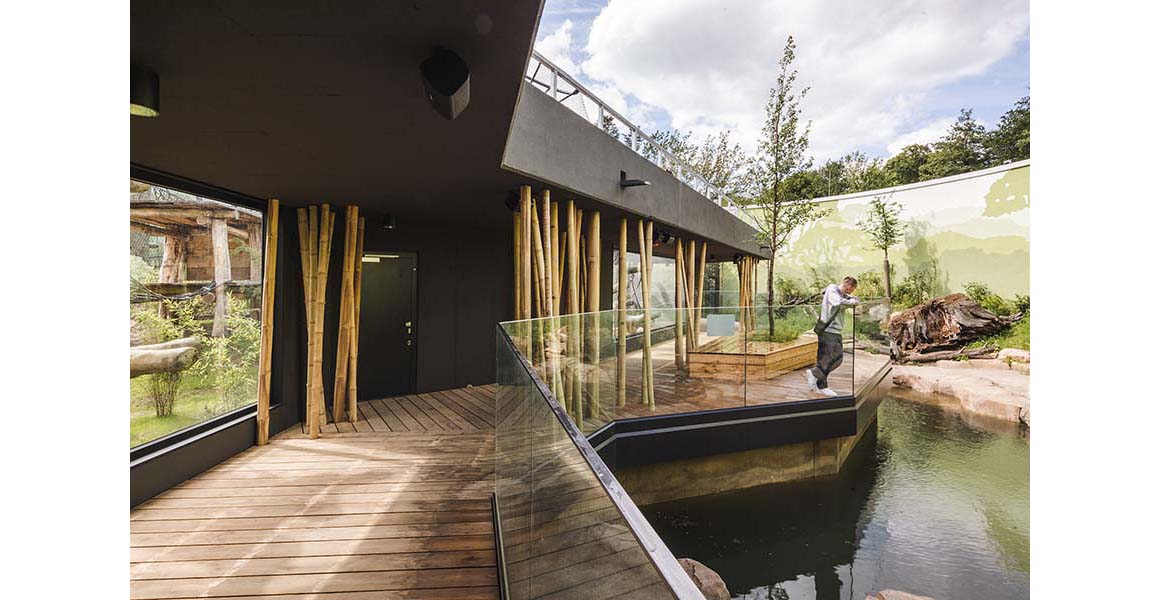
The site spans across the existing circular promenade, a condition that the design transforms from a constraint into a spatial opportunity. Rather than simply placing the building “on” the path, the architects draw its trajectory into the interior, reconstituting the visitor route as a continuous “exploratory path.” The outdoor enclosures are arranged within an open central space, while the surrounding ring-shaped structure simultaneously protects the animals’ habitat and operates as an apparatus for viewing.
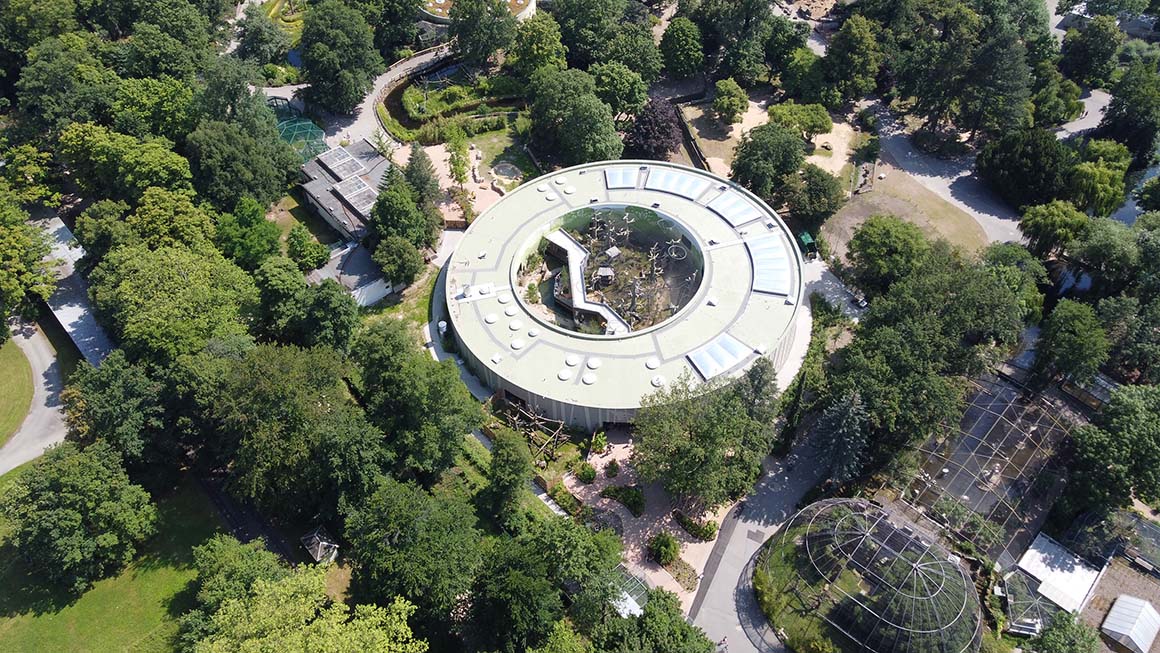
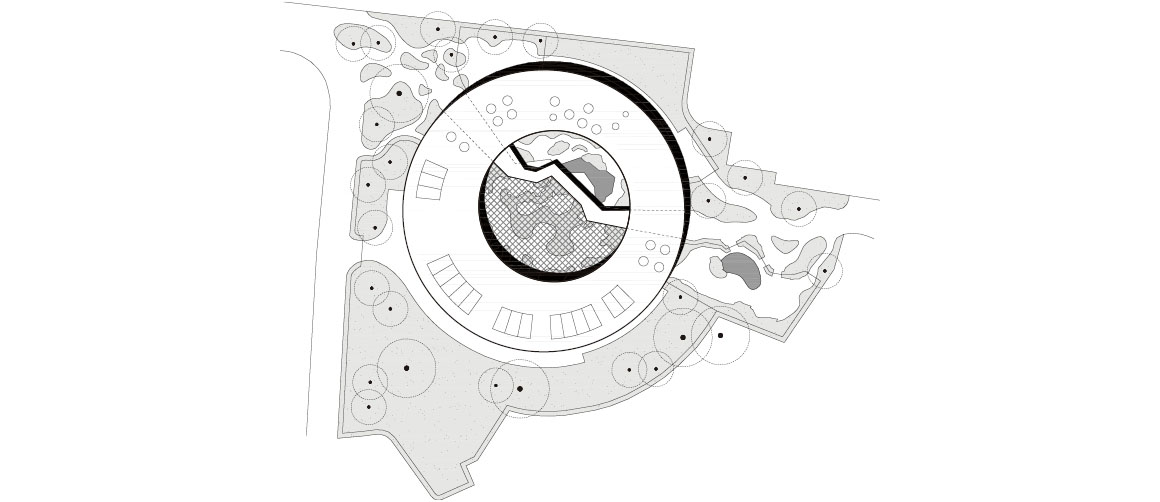

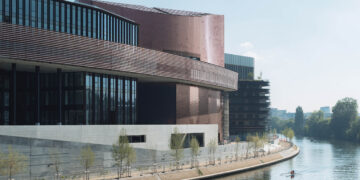
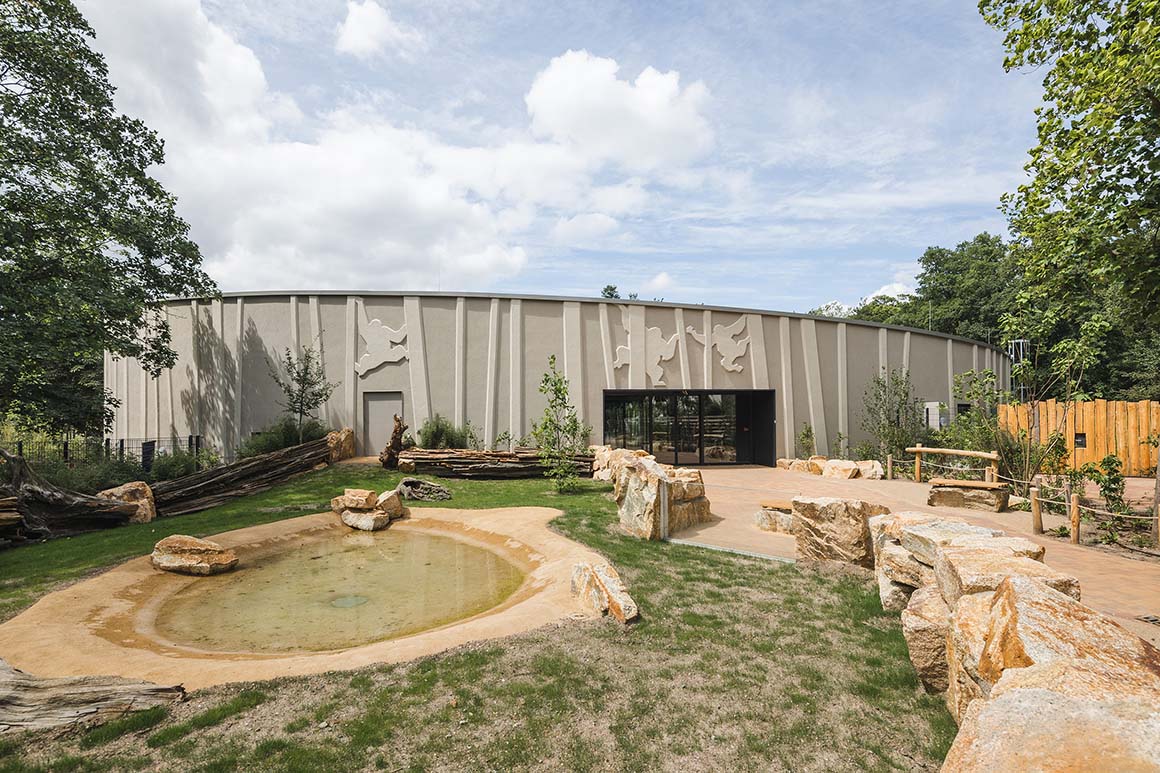
The most striking feature is the circular outer shell. Formed as a two-storey structure in parts, it is constructed as a solid mass combining reinforced concrete and masonry. The thickened walls act as a buffer against external environmental conditions. With a depth ranging from 11 to 16 meters, the circular ring accommodates indoor enclosures, visitor circulation, and service areas simultaneously, functioning as a boundary that both separates and connects interior and exterior, as well as humans and animals.
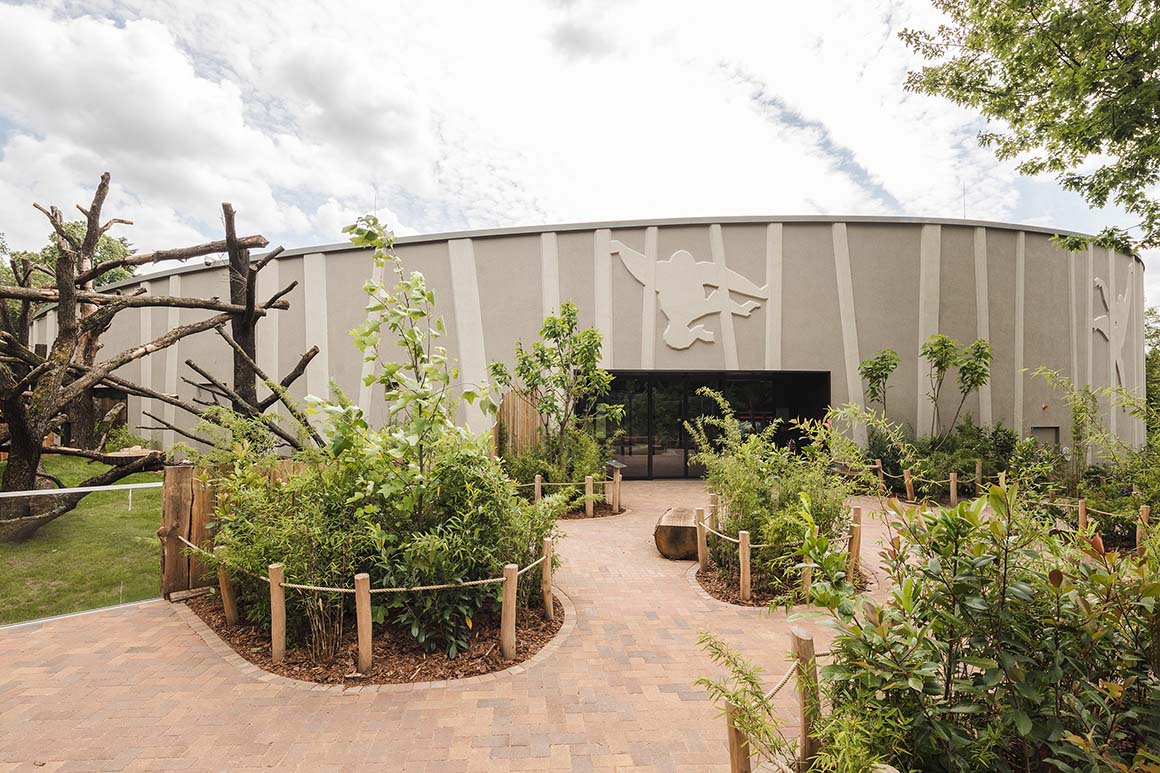
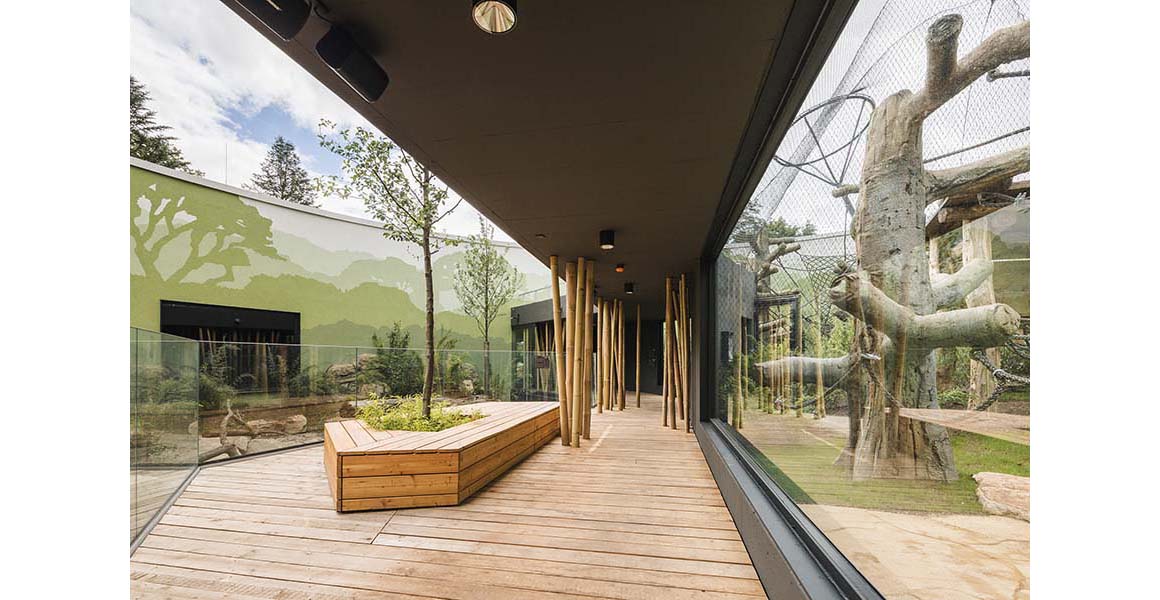
The facade consists of a beige and brown plastered surface articulated with relief elements up to 6cm in depth. Vertical elements abstracted from tree trunks are arranged at varying angles, revealing silhouettes of orangutans in between. This operates not merely as decoration but as a facade language that communicates the building’s program and sense of place. The gently sloping, cone-like mass lowers toward the ground, establishing continuity with the surrounding park landscape.
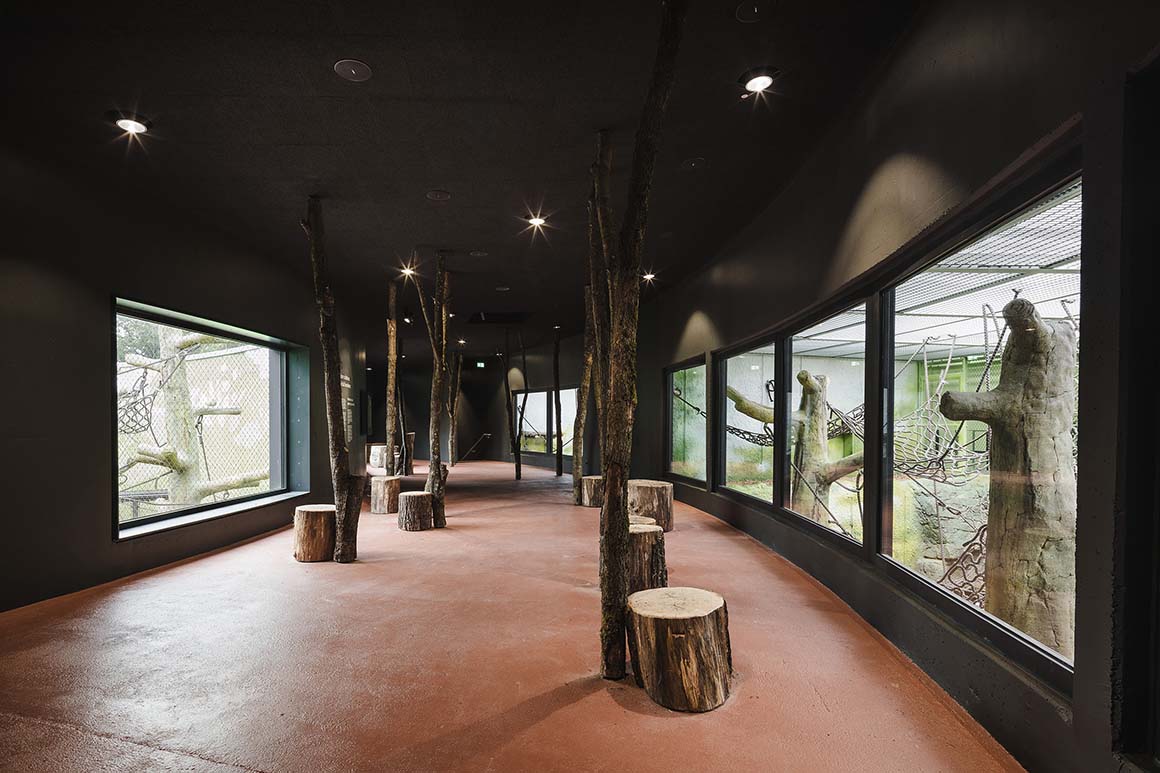
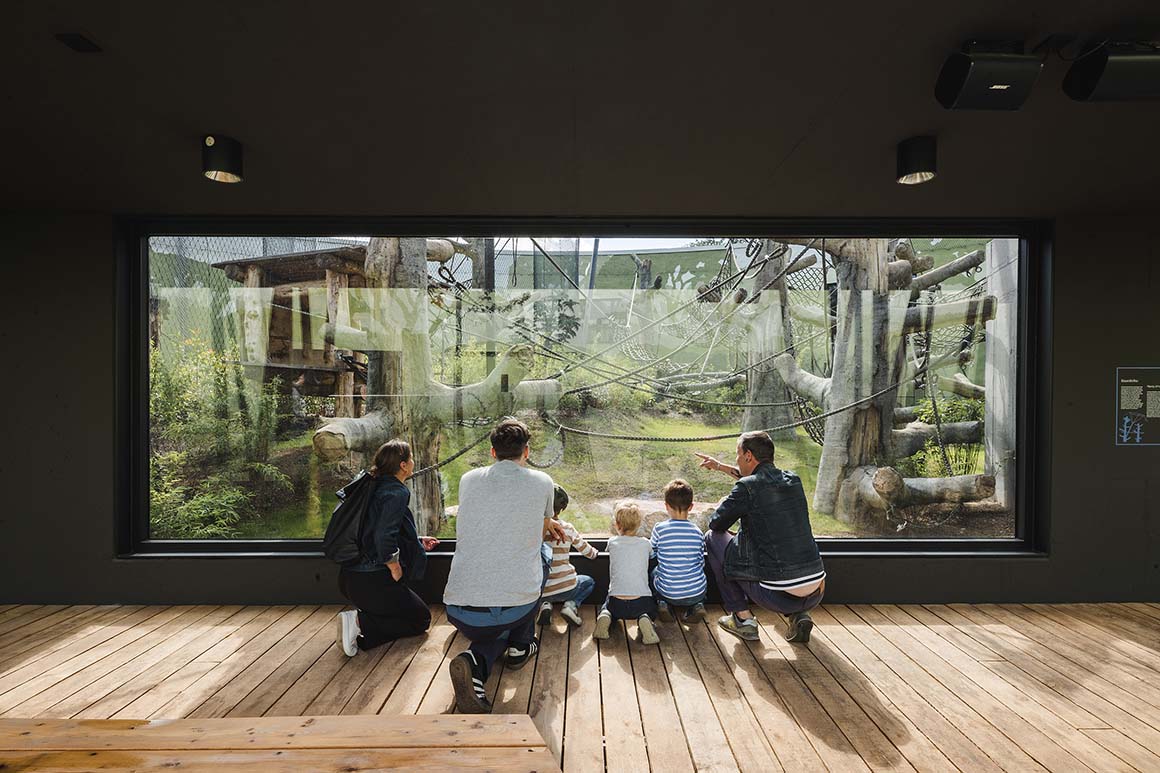
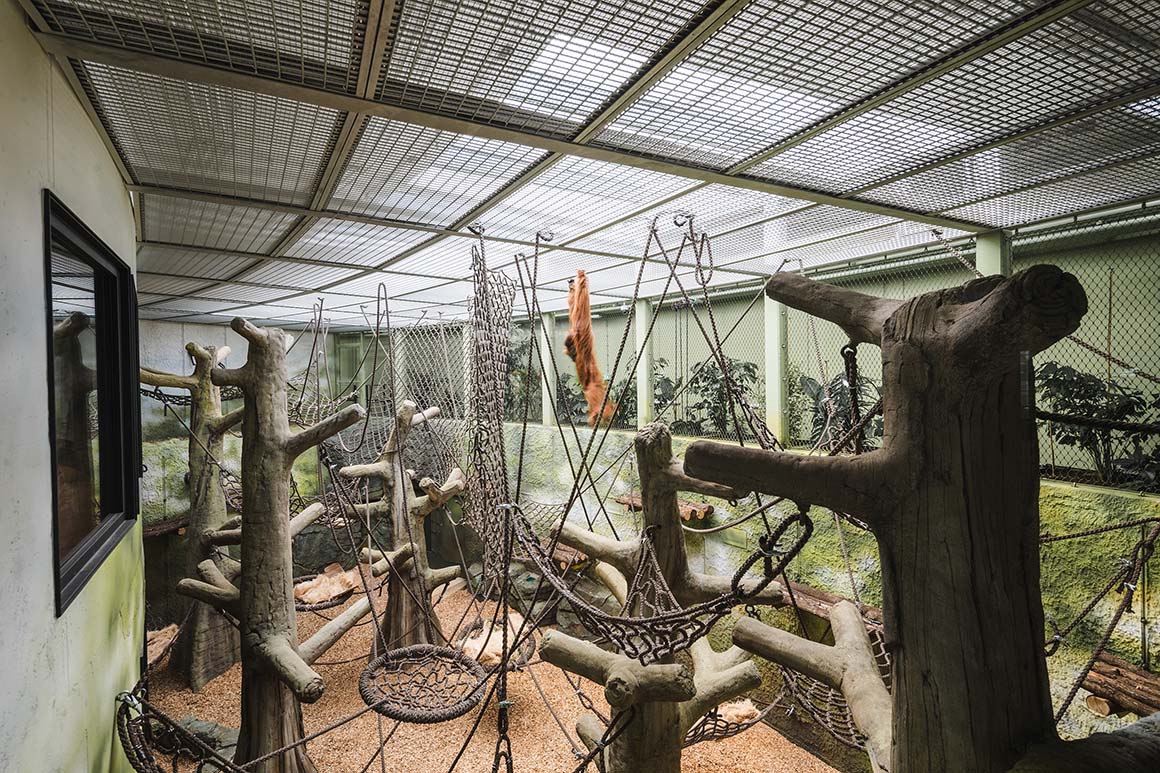

A vertically open spatial configuration is another defining feature. Net structures and artificial trees reaching up to 10 meters in height form a three-dimensional environment in which orangutans can move freely, while elevated points function as vantage positions overlooking the surrounding landscape. In this way, the enclosure expands into a “vertical landscape,” allowing visual connections to extend naturally from interior to exterior.
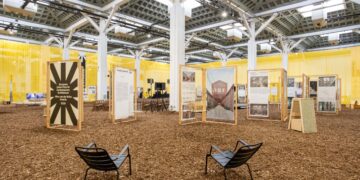
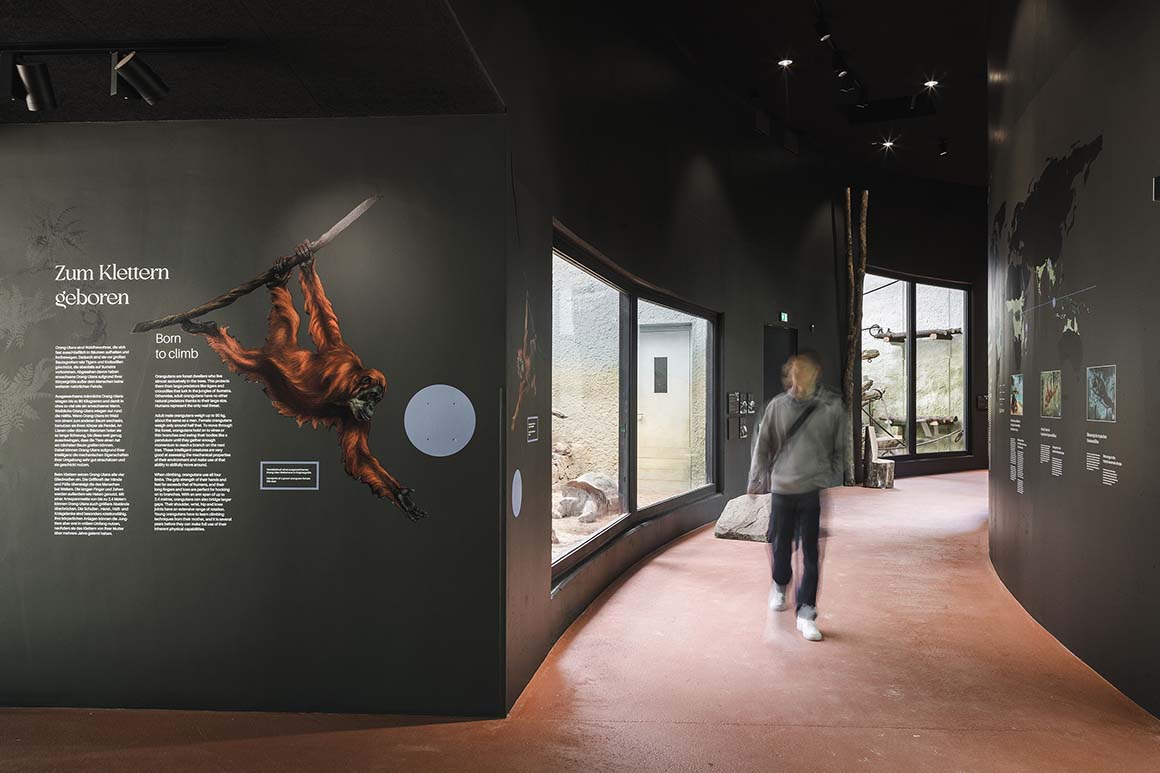
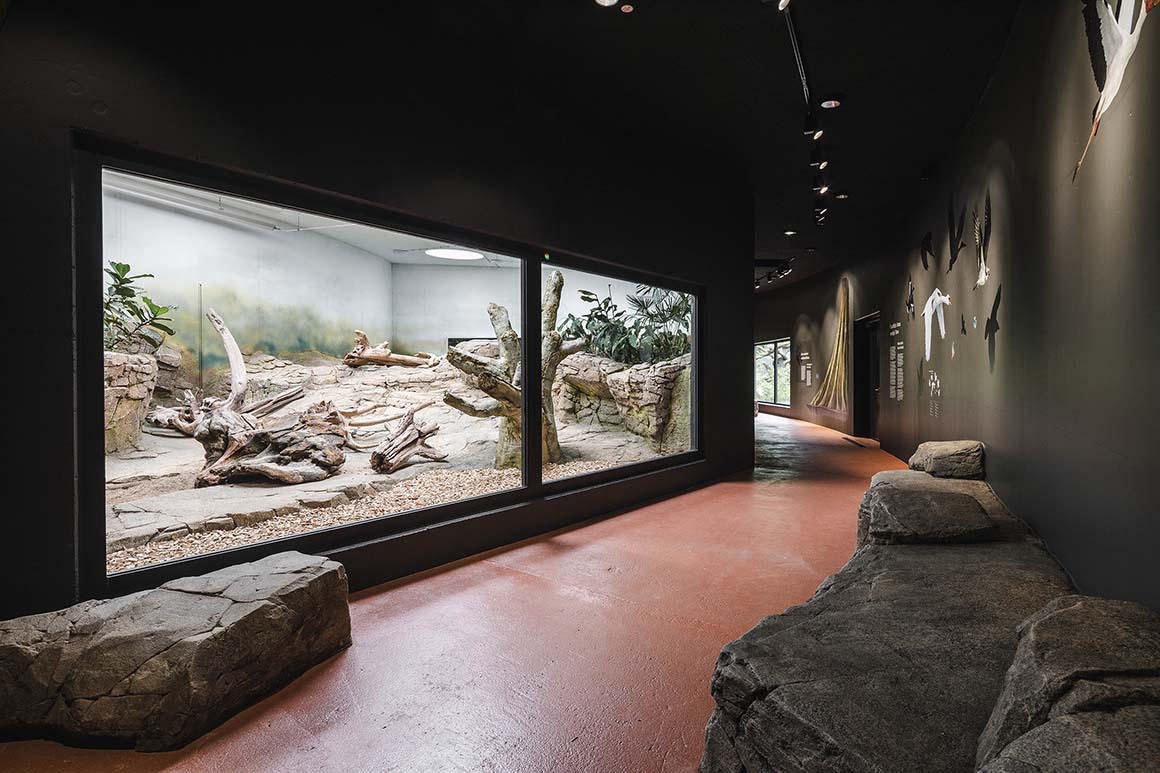
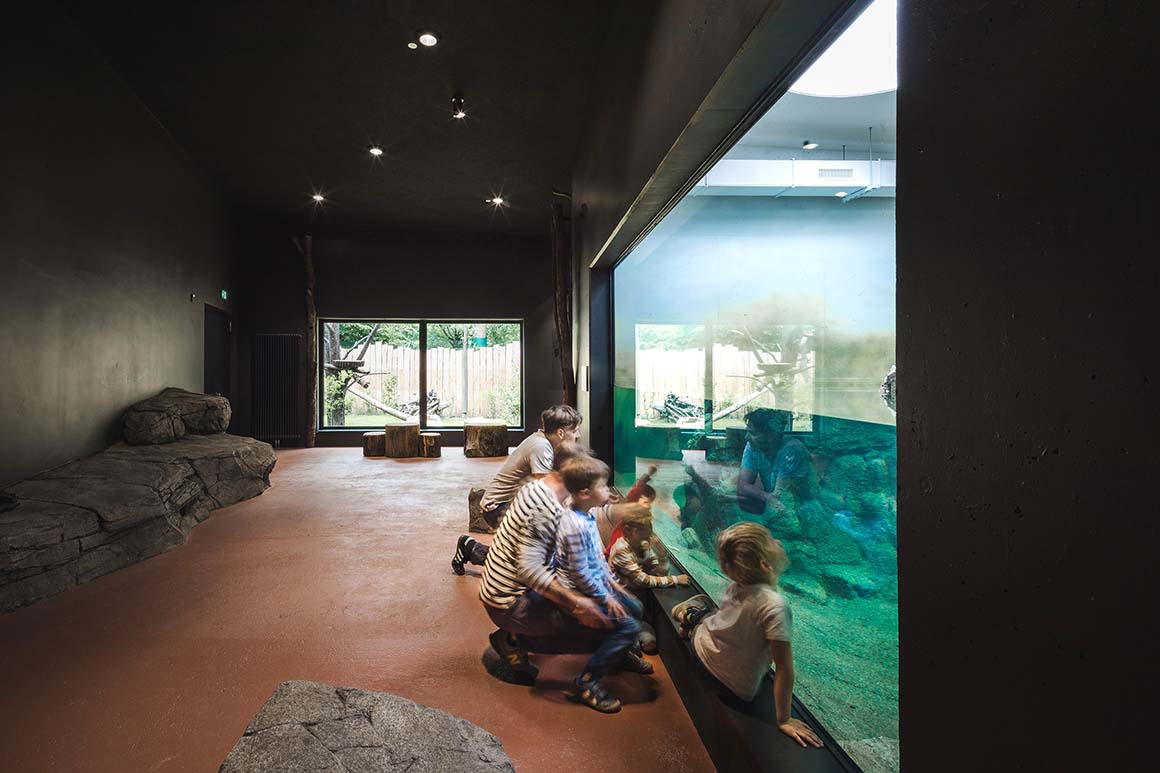
The interior is organized through the contrast and alternation of a dark “forest” and a bright “clearing.” Low-light visitor paths heighten visual focus, while the brightly opened enclosures appear as framed scenes. This spatial staging carefully mediates the distance and relationship between visitors and animals. Real timber columns and natural materials reinforce the materiality of the space and, in conjunction with exhibition elements, construct an immersive representation of the tropical rainforest ecosystem.
In this way, the orangutan house integrates animal welfare and visitor experience through its ring structure, thickened envelope, vertically articulated habitat, and sequence-based circulation, presenting a contemporary model for zoo architecture set within a historic garden landscape.
Project: Dresden Zoo New Orangutan House / Location: Tiergartenstraße 1, 01219 Dresden, Germany / Architects: heinlewischer / Project team: Jens Krauße (partner in charge), Steffen Thombansen (project manager), Sophia Hering, Norbert Mayer, Christoph Meinhardt, Rico Moschke, Joana Ragazinskaite, Claudia Tümmler / Structural engineer: HJW + Partner / Landscape architect: Rehwaldt Landschaftsarchitekten / Building services engineering: ILK – Institute for Air Handling and Refrigeration Technology / Exhibition design: molitor / Illustration: Falk Nordmann / Client: Zoo Dresden GmbH / Use: zoo / Bldg. area: 2,045m² / Gross floor area: 4,164m² / Gross volume: 21,173m³ / Cost: EUR 22 million / Design: 2019.8 / Construction: 2021.7-2023.12 / Completion: 2024.6 / Photograph: ©Konstantin Boerner (courtesy of the architect); courtesy of the Dresden Zoo