








A Non-existent House for Someone
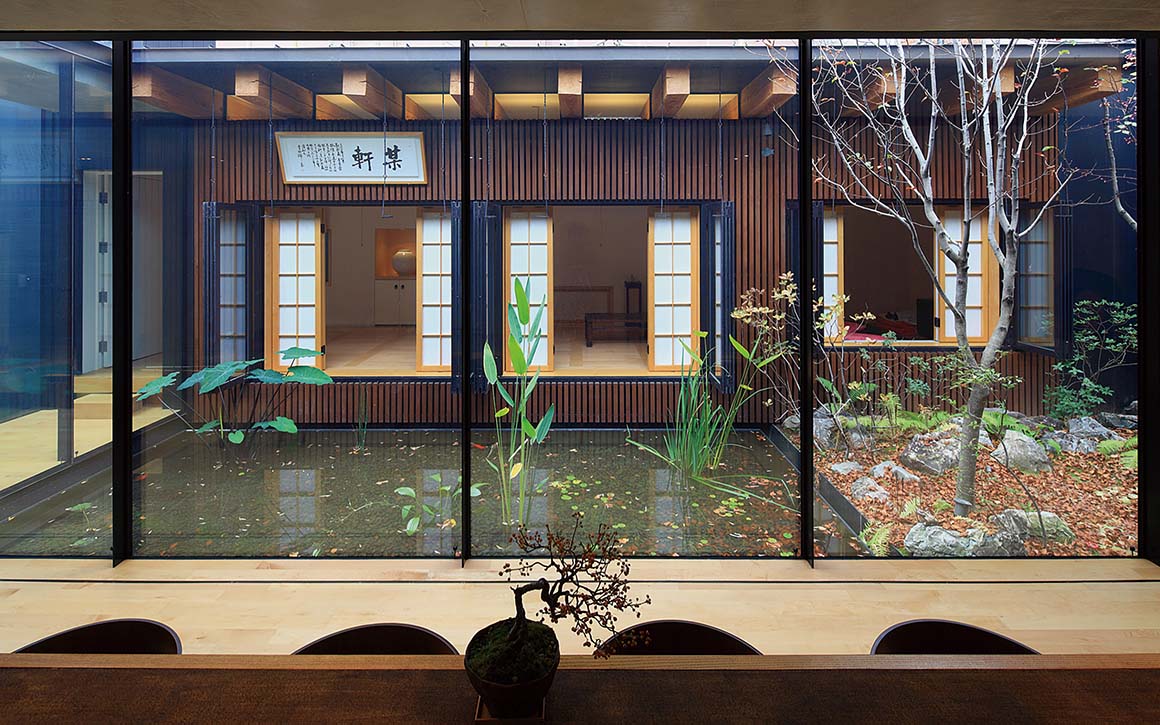
When construction was approaching completion, the client, Yoo Jaesung, who became the chairman of a steel manufacturing company by himself, asked me to name this tiny house. At this moment, a word popped into my head and it was ‘MoHeon’, meaning someone’s house. ‘MoHeon’ means a non-existent house with no name. Right after Mr. Yoo willingly consented to this naming, the letters of ‘MoHeon’ were placed in this house written by a Chinese calligrapher. This house must be named thus.
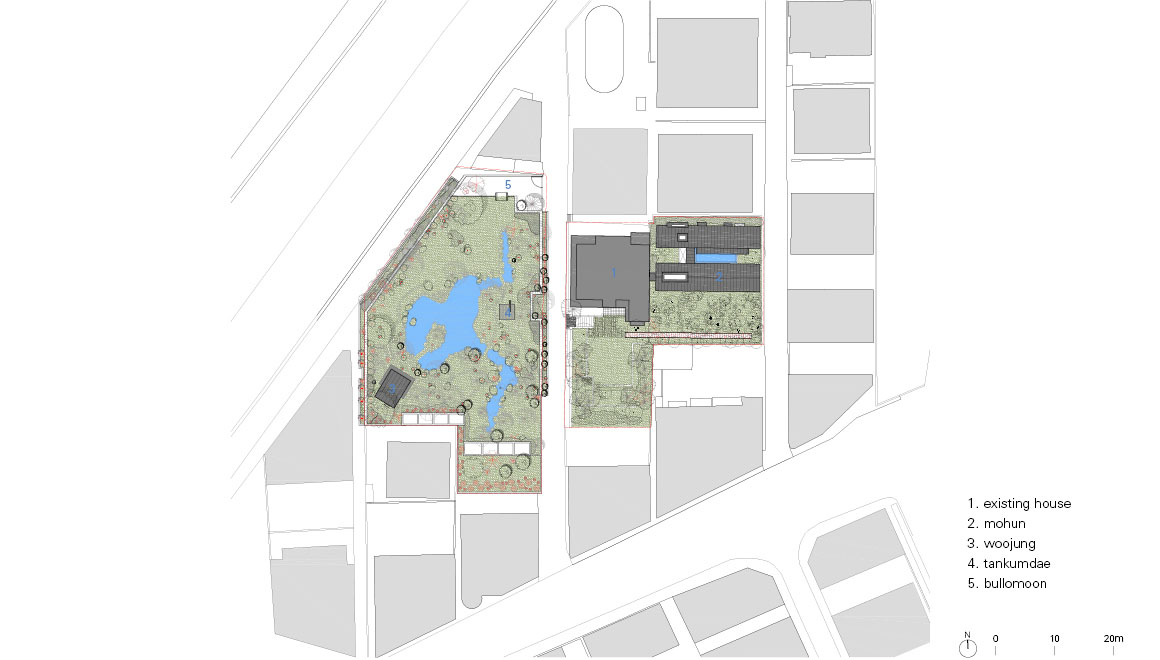
‘MoHeon’ is attached to Mr. Yoo’s house, which was built 35 years ago. It is not easy at all to live in a house in a city for 35 years. It is not believable that for this period of time he has lived in the same place, especially in Korea where circumstances, lifestyle, and psychology have been changing inexorably for three and a half decades. Originally, the front entrance of KyungBook University was in this area. As the sub-entrance replaced the front, the surrounding landscape of this house was destroyed. However, Mr. Yoo intended to recover this destroyed area through architecture and landscaping. His first task was to buy the opposite side of the estate and starts to make it special by creating a traditional Japanese garden. While working on the project with a traditional Japanese landscape architect, Mr. Yoo also bought an estate right next to the existing house in order to create a Korean garden and I was commissioned to design this project.
It had been 10 years since I met Mr. Yoo, but we still needed to get to know each other. Since he knew and accepted my sharp personality, he left everything to me save some basic required functions. When I recommended that Ms. Jeong YoungSun design the landscaping for the Korean garden, Mr. Yoo seemed to consent reluctantly, because he had his own ideas about the landscaping. However, he tried his best to respect my decisions.
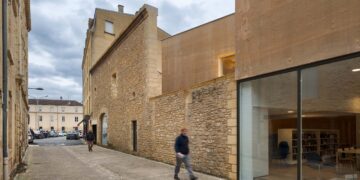
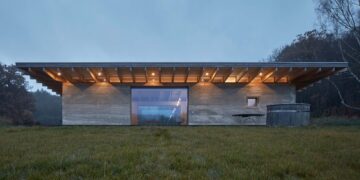
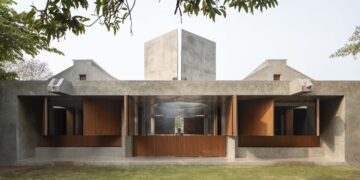
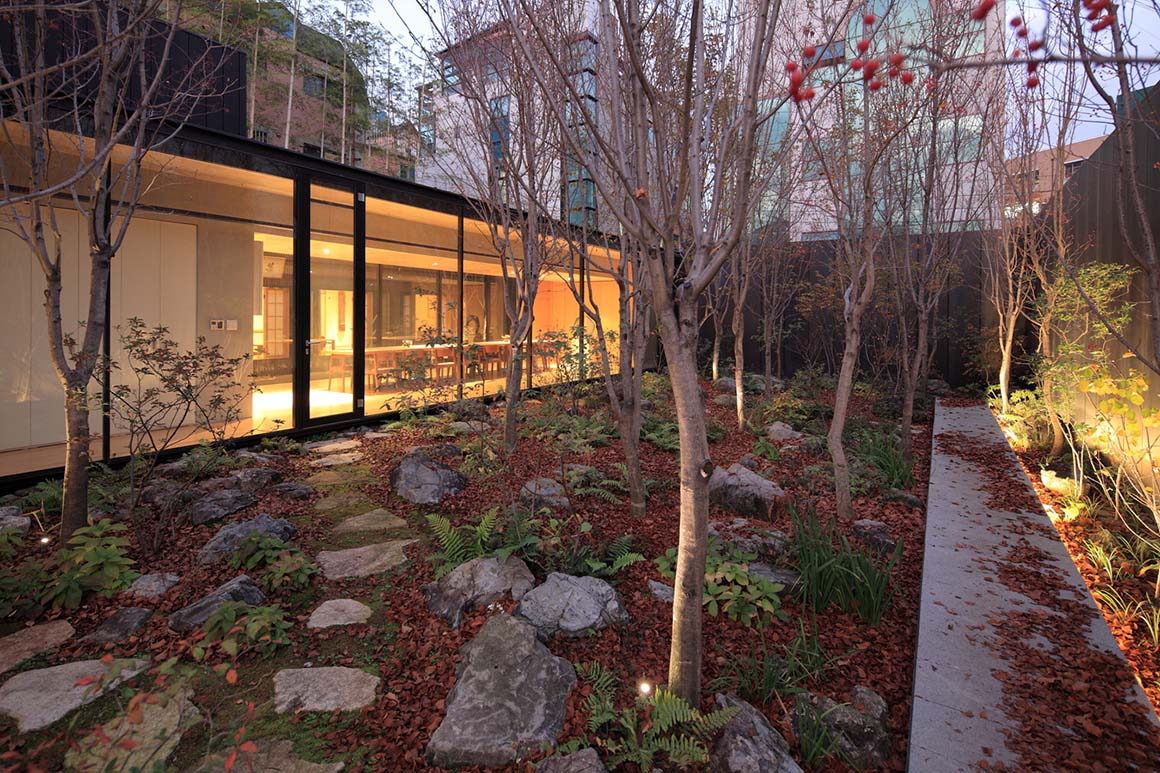
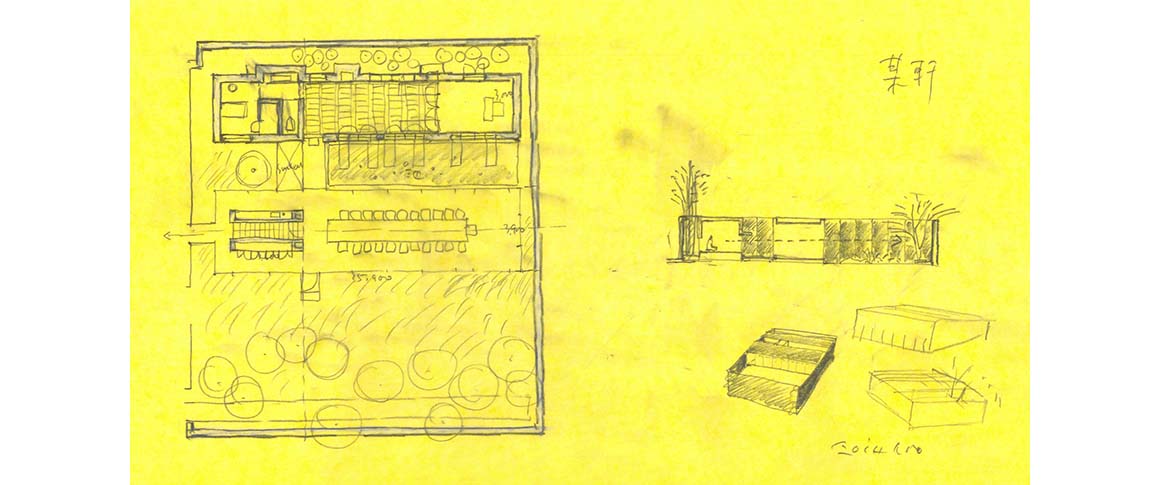
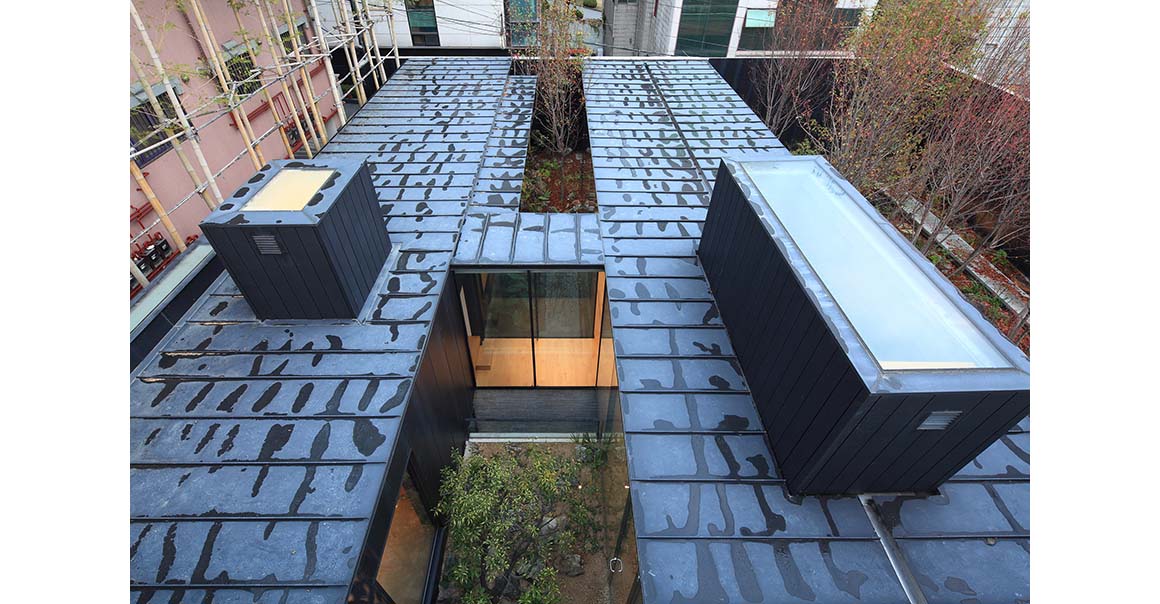
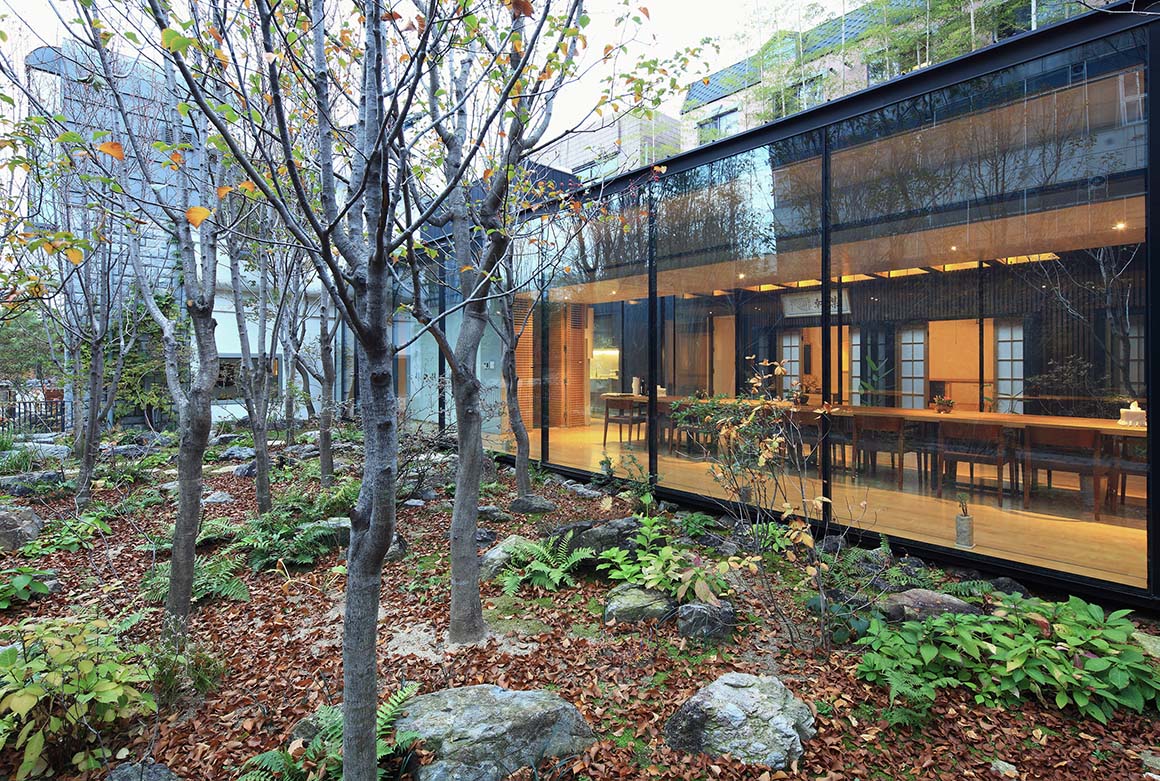
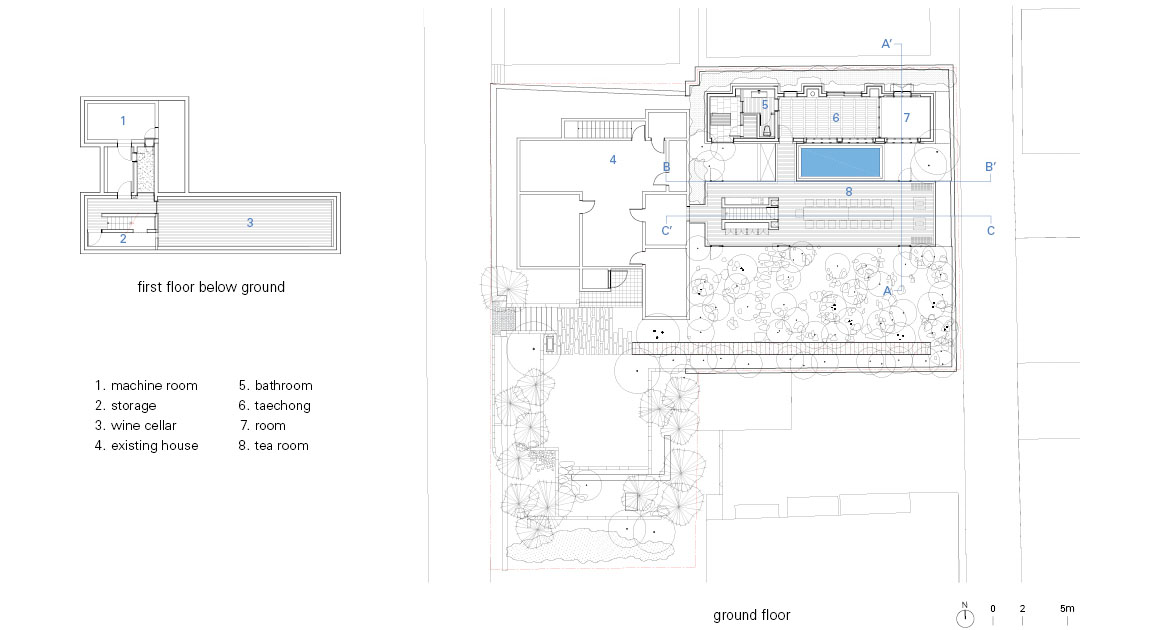
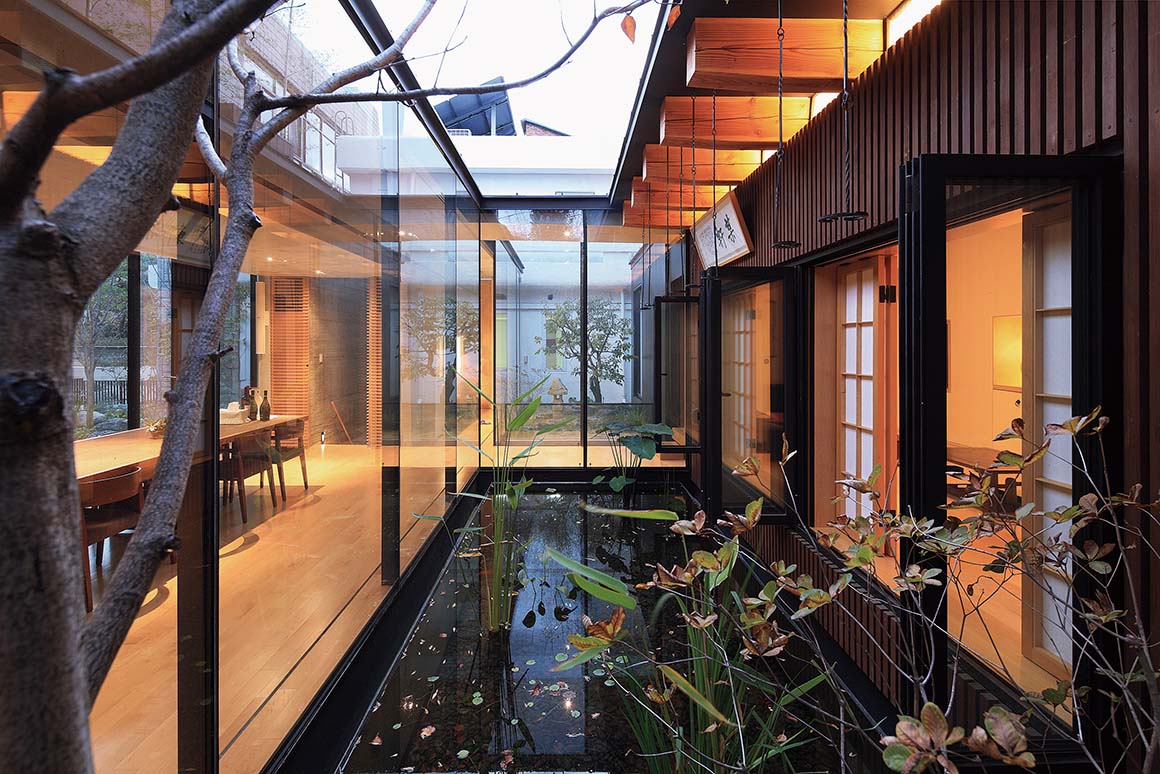
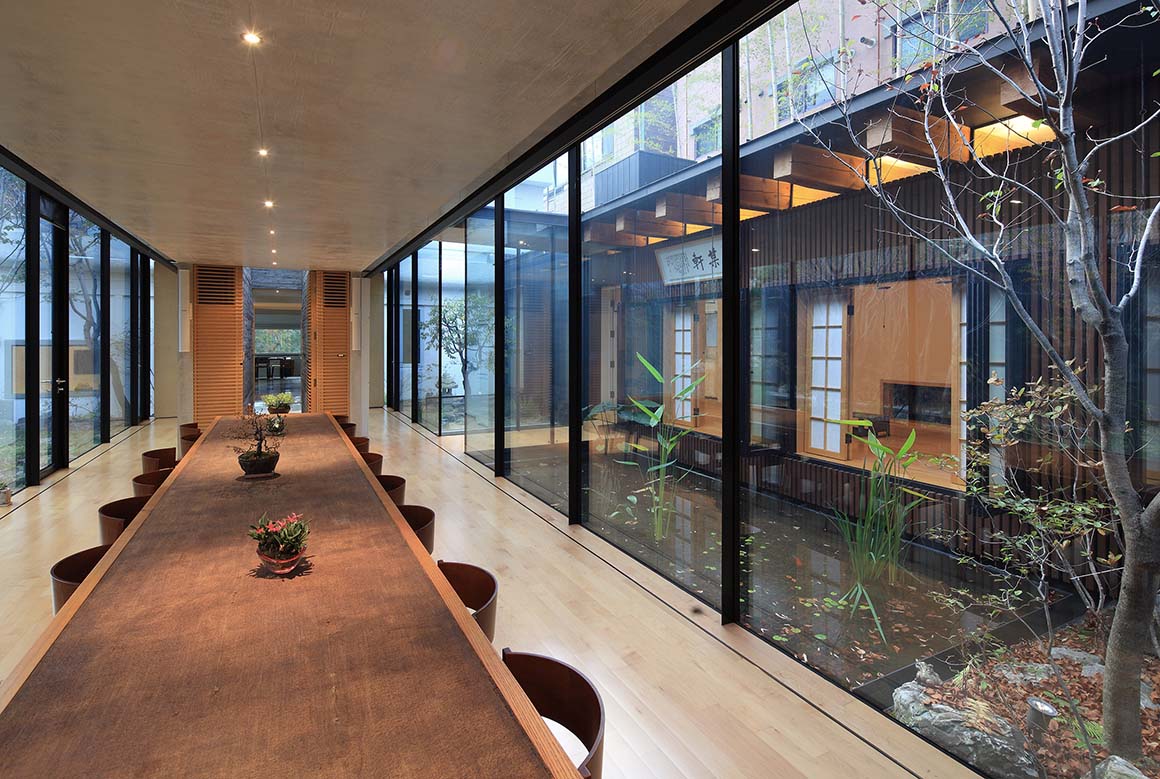
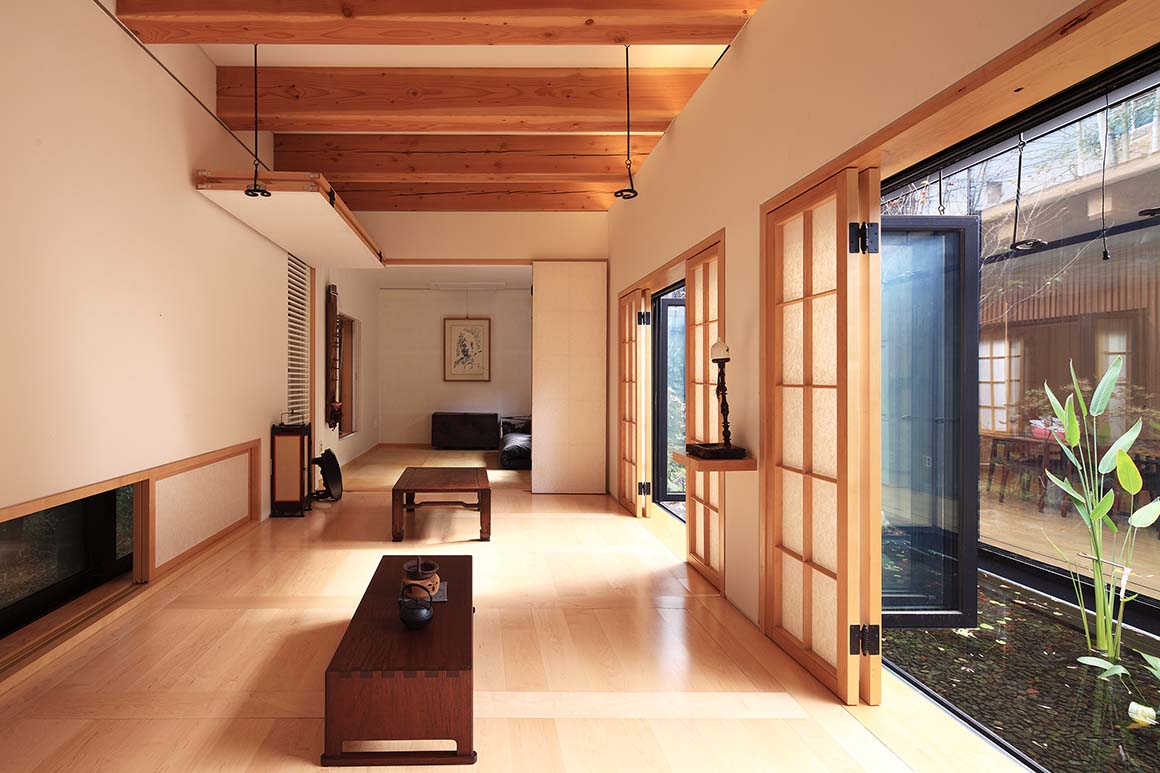
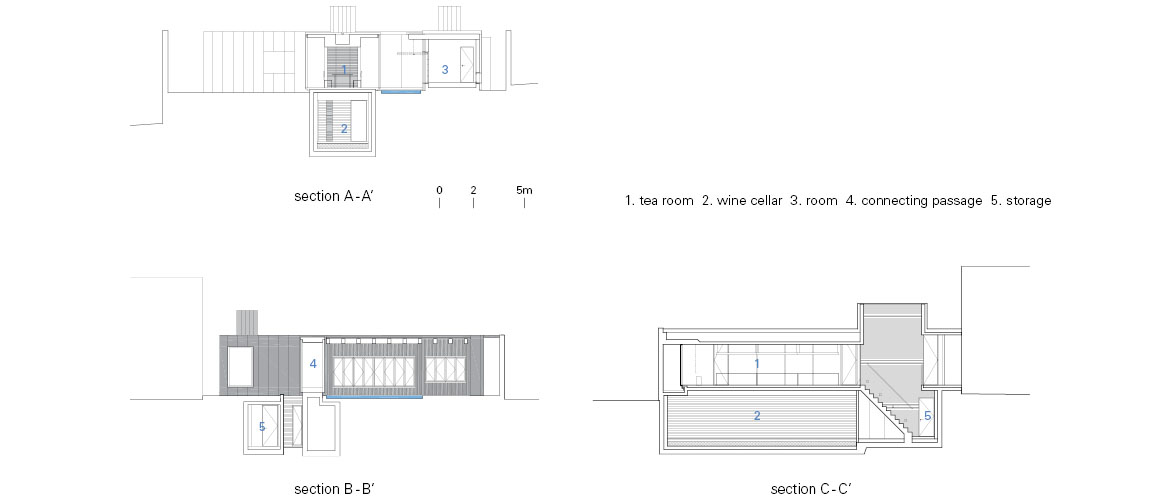
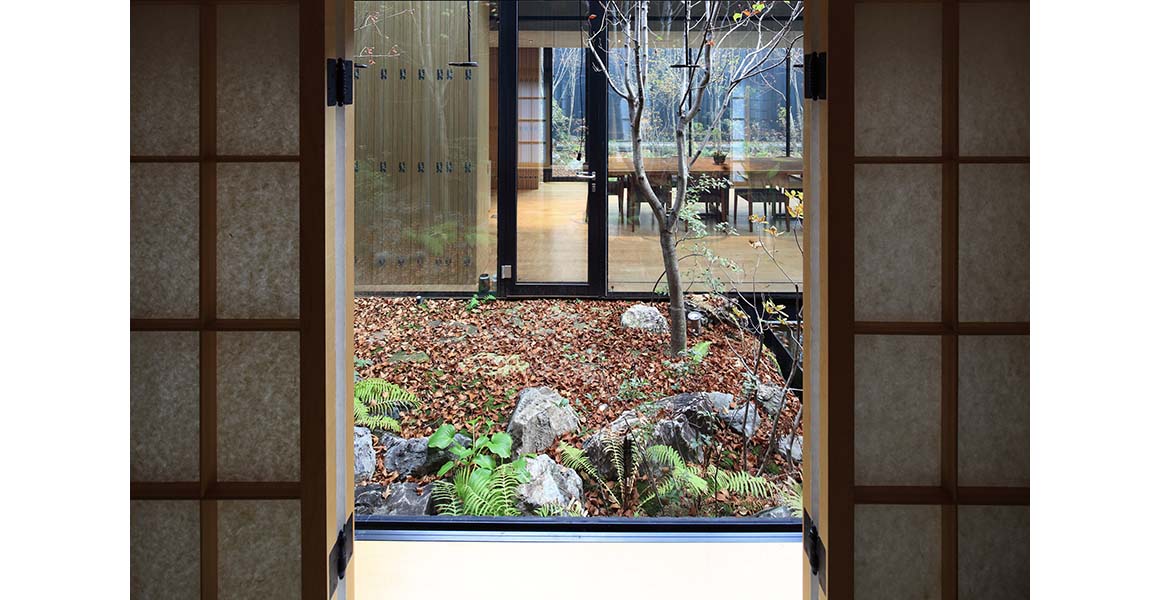
My initial proposal for this project was to design the guest room as an attached space off of the main house. Therefore, the main programs of the house are a guest room and a space where people can have a party or dinner in a joyful garden. If the aim of the attached space was to be a guest room, I thought its existence should be veiled and concealed. The priority was to make the spaces of this house as various and rich as possible, and the house itself should be a tool for defining spaces. Eventually, four courtyards are created. To maximize the space for the front courtyard, the building had to be set back and organized as two spatial layers. I made the first layer translucent; a dining room, thereby allowing a view of the front courtyard through it from the bedroom (the second layer). Between these two layers, two kinds of courtyards are created. One is a garden of water and the other is sunken to allow light underground. From the bedroom, a small bamboo garden can be seen over the window. This kind of visual connectivity makes the space much deeper and richer. The dining room has movable walls that are attached to windows and allow one to create various spaces. The important issue with the dining room was to have visual extensions through its transparency. The entire site is surrounded by corten-steel walls at the same height as the house’s and the encloser emphasizes the tension of the space. After designing the house, I waited for Jeong Youngsun’s landscaping.
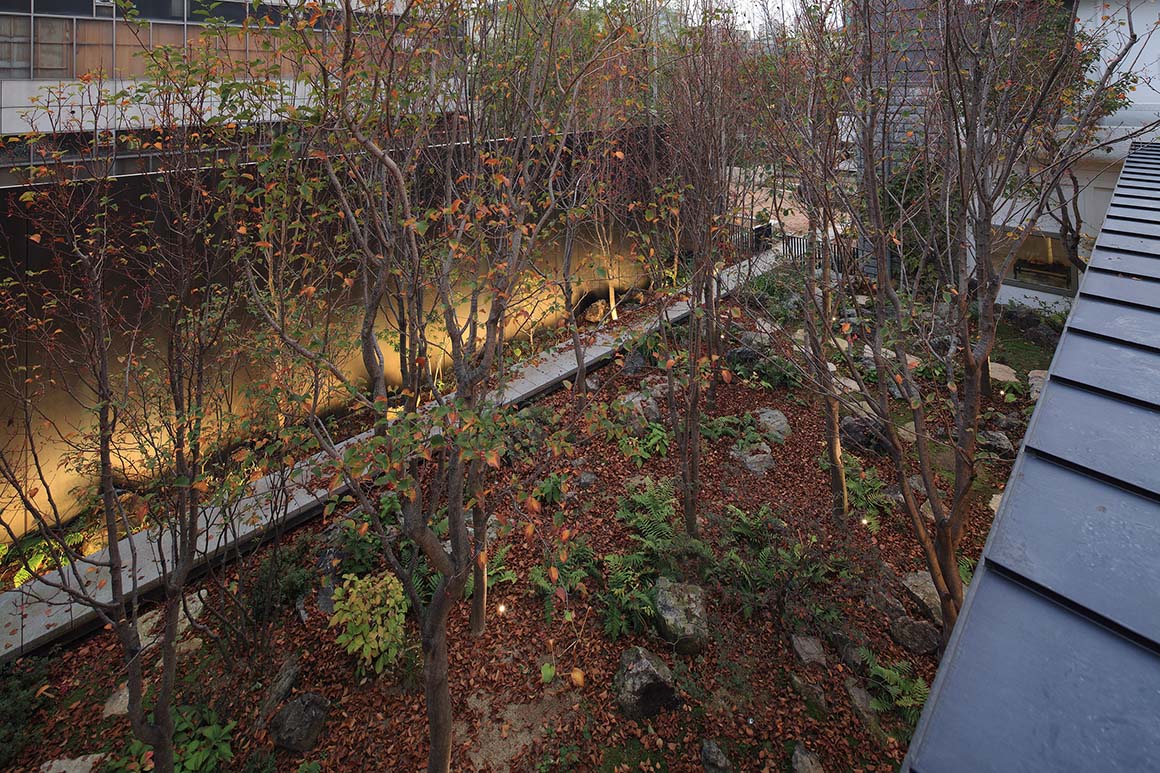
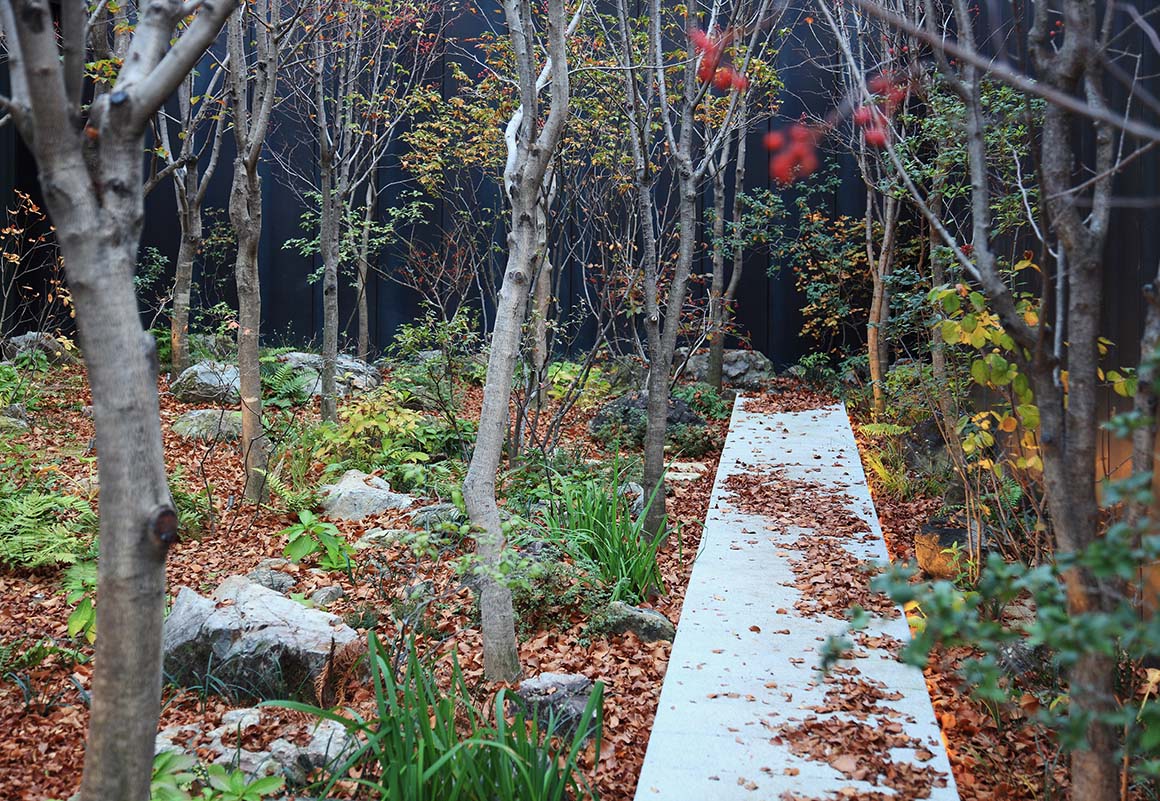
Ms. Jeong’s landscaping was much more than Mr. Yoo and I had expected. I was planning to maximize the garden area, but it was only 165.3m2. Therefore, what I was hoping to see were a few white and thick tree trunks soaring, the stream of corten-steel walls behind. Ms. Jeong informed us that she planted loads of trees densely in such a tiny space and filled the ground with small rubble. I still remember the moment and its strong impression when I visited the site to see the landscaping. There is a straight path made of stone pavers connecting the main house to this courtyard. As soon as I stepped on the stone paver, I felt as if I had been sucked into the massive woods. It was magical. My expectation that the architecture should be concealed and only the landscape should be noticeable was realized. That such a sense of beauty and the sublime could be manifest in such a small space was so surprising, and it was so different from the Japanese garden.
Being in the guest room, filled with its profound peace and quiet, awning windows, walking through the water garden and transparent dining space, the scenery of the stone garden enclosed by the stream of corten-steel walls and further, the sound of the rain and breeze, the sound of snow covering the ground…… I hoped Mr. Yoo too would love this space with all his senses.

The Japanese garden on the other hand, designed and constructed in the traditional Japanese method, was now under its last phase of construction; being covered with moss.
The initial idea was to build a Japanese tea house but Mr. Yoo changed the direction of the construction and design upon seeing ‘MoHeon’ manifest. He convinced the Japanese landscape architect that I should design the tea house instead. It had to be done this way, otherwise, the Japanese garden would have remained as a chauvinistic isolated landscape. Contemporary architecture relating to ‘MoHeon’ had to be in this site. In this way, our current era would be reflected by the entire site as a merged, unified, complete work.
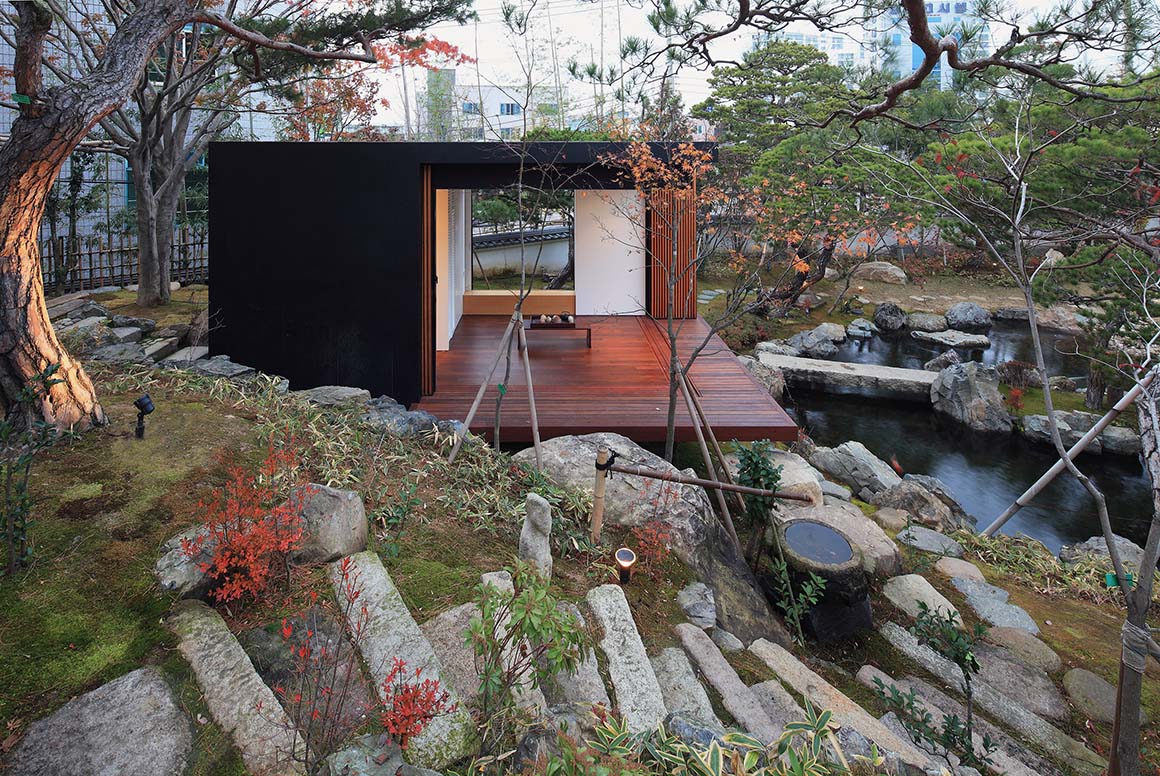
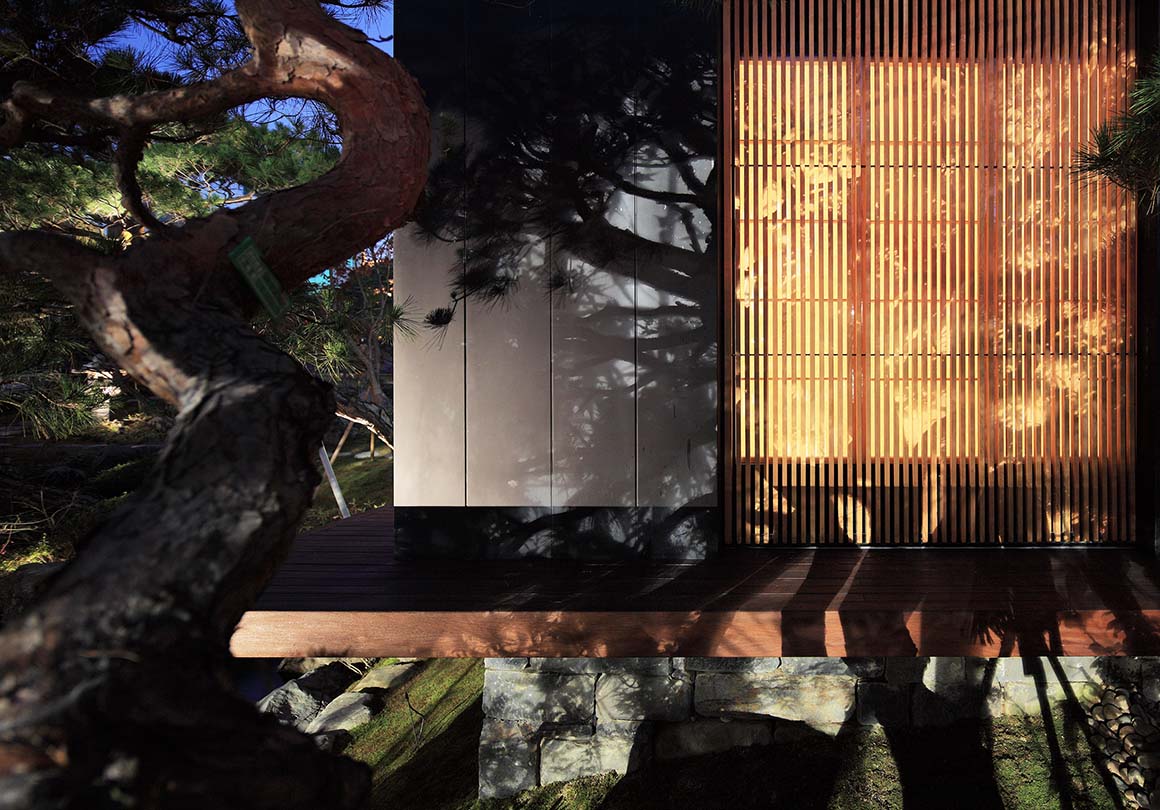
The architecture in the Japanese garden is also an additional part. The tea house is intended to be changed from time to time, and even to be veiled sometimes. That is why windows and doors are comprised of three layers – windows of Hanji(traditional Korean handmade paper), glass and wooden louvers. By the composition of these three layers, the tea house has different appearances every single time and sometimes is concealed and vanishes. Mr. Yoo also asked me to name this tea house and I called it ‘WooJeong’, or non-existence.
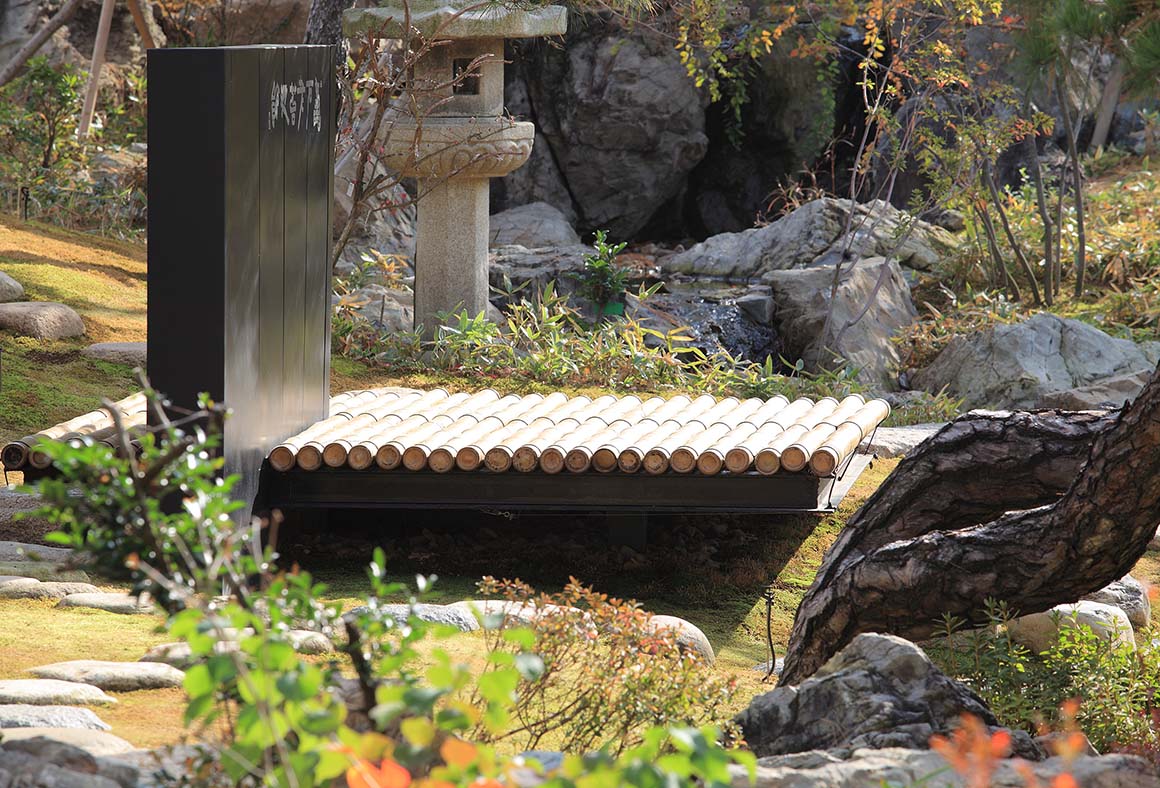
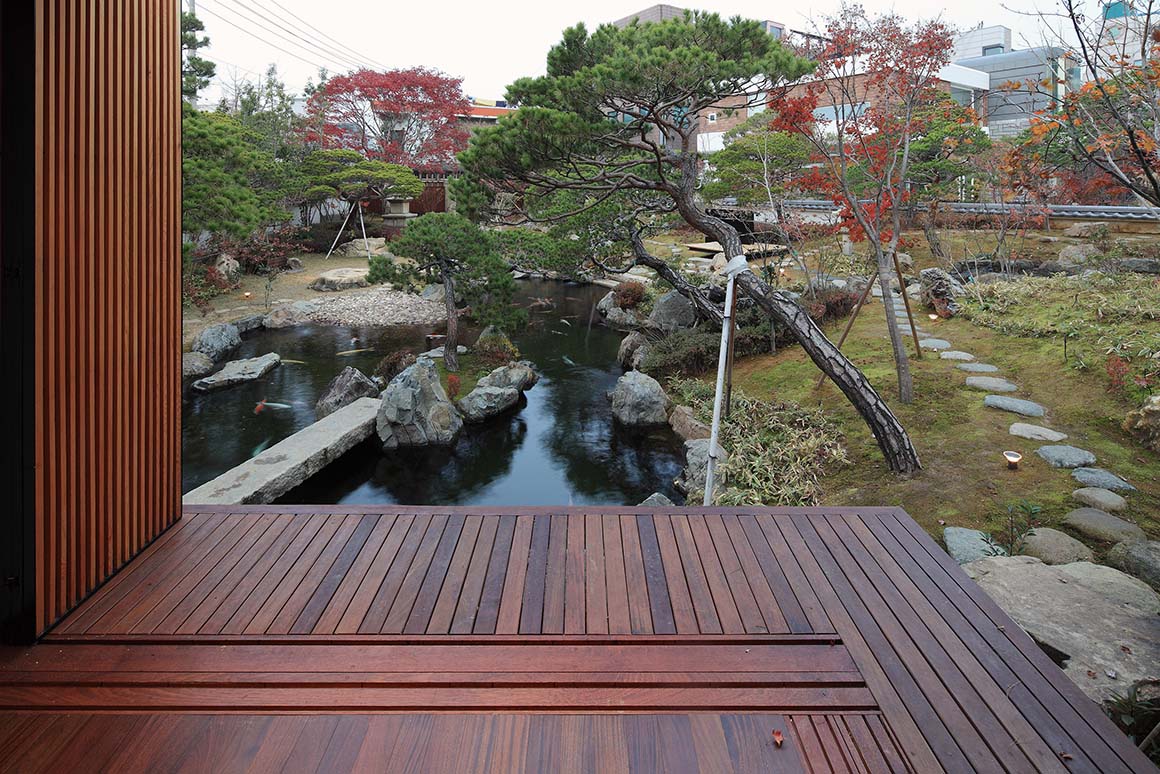
The bamboo podium is designed to have visual connections to the pond on the other side and this podium is called ‘Tankumdae’. When there are no events on ‘TanKumDae’, ‘WooJeong’ and ‘TanKumDae’ still communicate with each other somehow. This garden is well-designed in terms of the visual connectivity.
It is not important that objects themselves are placed in appropriate locations, but the important issue is that the relationship between objects in different places allows each of their specific stories to read legibly. Thus, everywhere in this place, diverse stories can be understood by looking at the landscape. The pine tree with the massive trunk and the pagoda built by a stonemason in the old days are well-harmonized with the atmosphere of the Japanese garden.
It was necessary to have a small gate out of respect for such an extraordinary garden as this. Yoon, TaeJoong, who was the main stonemason for the memorial for the former president Roh, Moohyun, was in charge of the gate, and this gate is made out of stone, which Mr. Yoo has been collecting for a long time. It is named ‘Bulromoon’.
When everything reached completion, Mr. Yoo commissioned Min, KyungSik to do repair work on the existing house. He adjusted the old walls freely and made the existing house into a space for enjoying and viewing both the Japanese garden and ‘MoHeon’.
Eventually, those three areas – the Japanese garden, the main house, and ‘MoHeon’ – were harmonized and merged together and three parts were combined into one.
Mr. Yoo named the entire project ‘SaYaWon’. SaYa… I did not ask him about the meaning of it, but I guess, it might mean ‘voluntarily-exiled scholar.’
“a person who is voluntarily renouncing society, a person who is not responding with conventional logic but responding with boldness and adventurous courage, a person who is representing and responding to changes.” Edward Wadie Said said that such people were intellectuals. If so, Mr. Yoo is definitely an intellectual.
Mr. Yoo has supported young talented artists for a long time. While he travelled around the world, he was culturally enriched, but at the same time he has a deep affection for the barren culture and art of modern Korea. And he is always standing behind the scenes and out of the spotlight. Therefore, his house should be named ‘MoHeon’.
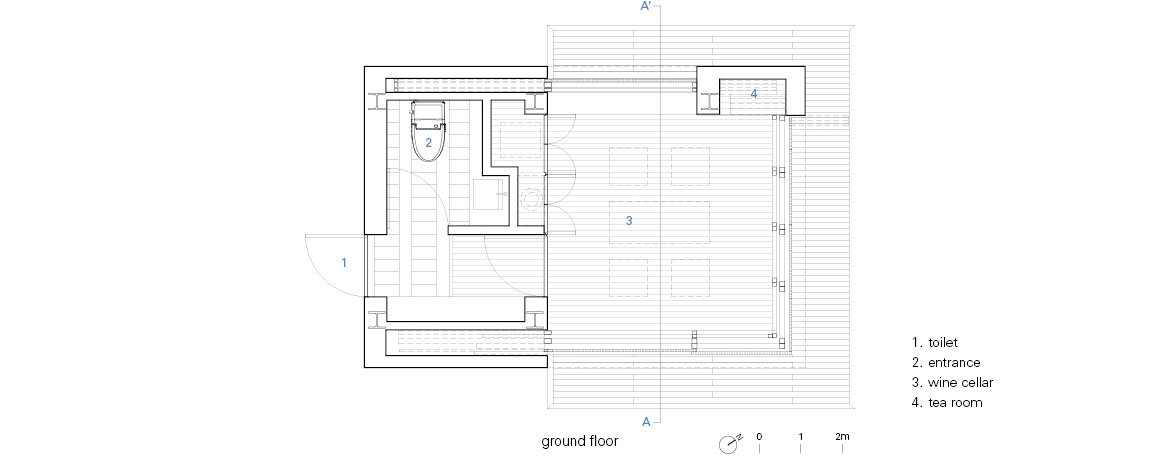
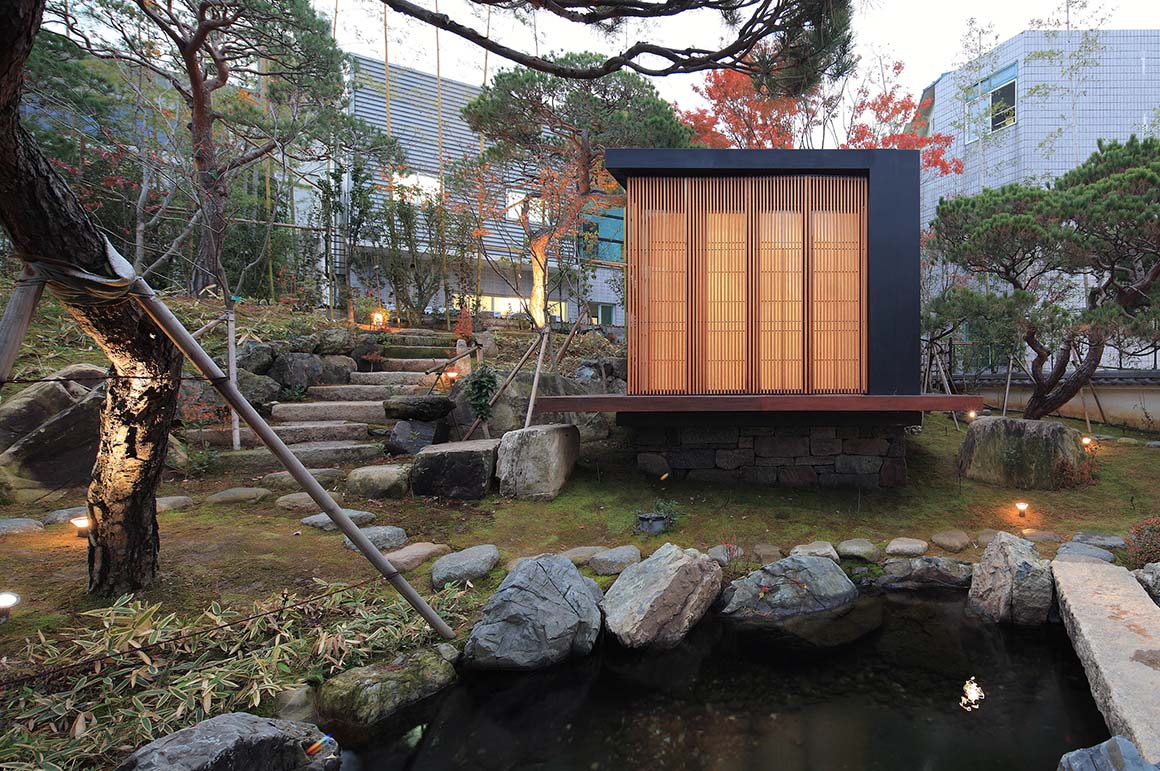
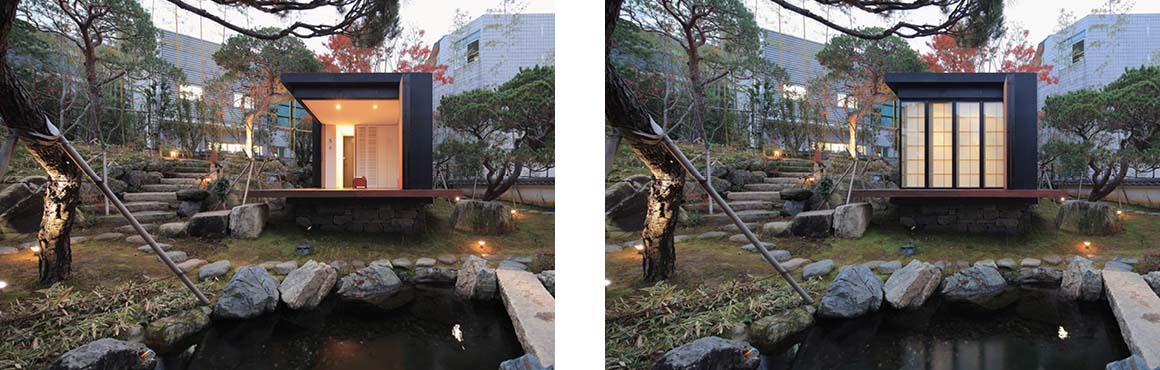
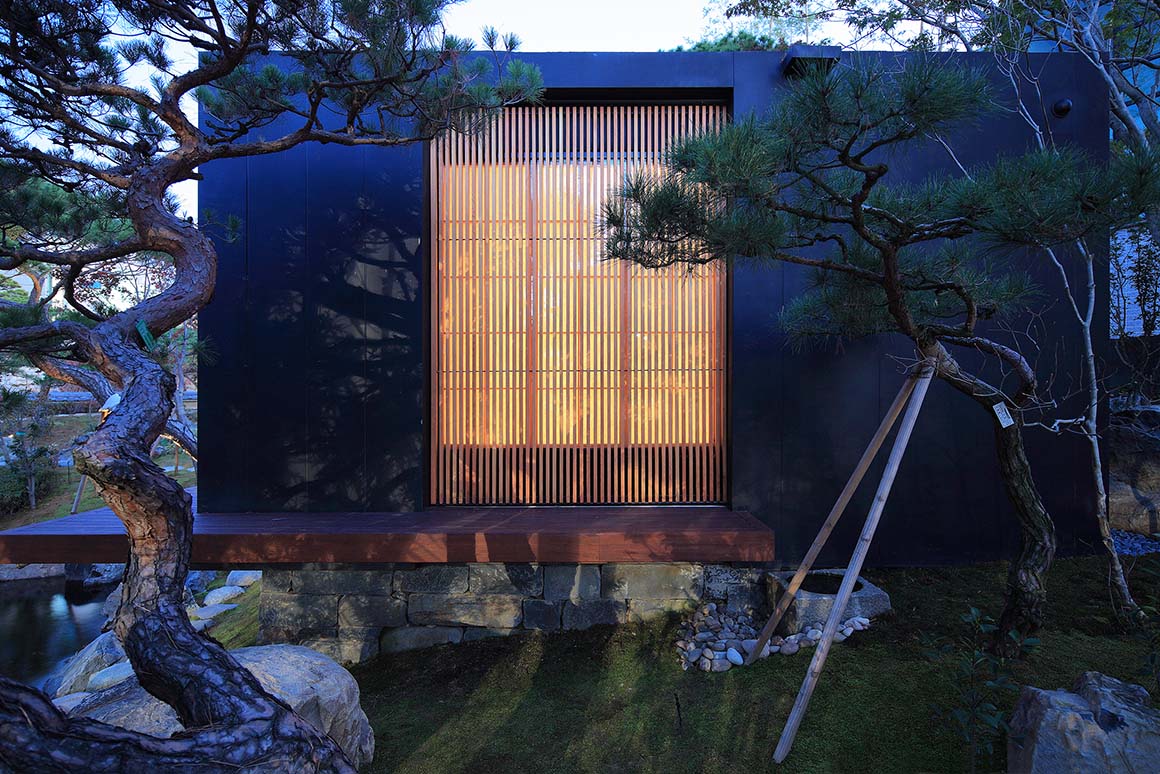
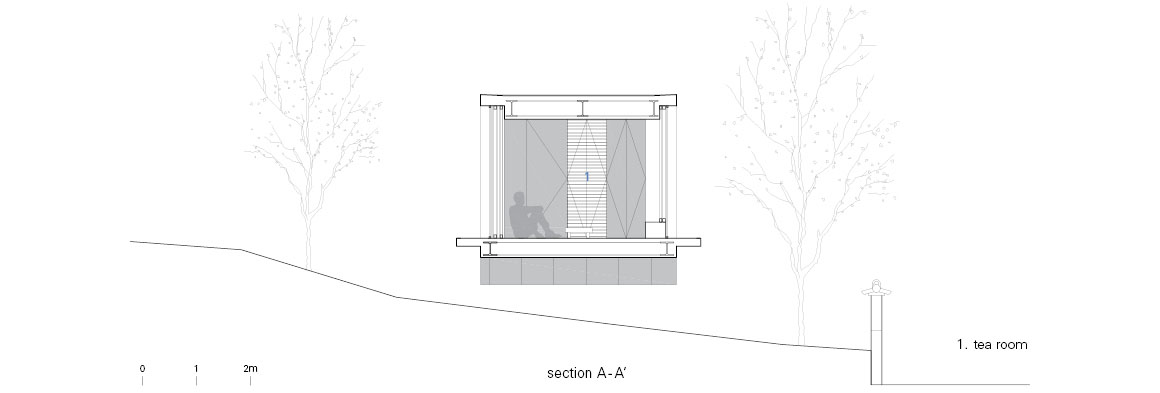
Project: MoHeon and WooJeong / Location: SanGyuk-dong, Buk-gu, DaeGu, Korea / Architect: Seung, H-Sang / Project team: DongHee Lee / Structural engineer: Seoul Structural Eng. / Mechanical engineer: Seah Eng. / Electrical engineer: URim Elec. / Lighting engineer: Bitzro / Landscape architect: Seoahn Total Landscape / Use: Tea House / Construction period: 2009.11~2011.11 / Photograph: ©JongOh Kim
MoHeon
Site area: 357.16m² / Bldg. area: 120.90m² / Gross floor area: 164.68m² / Height: 7.45m / Bldg. scale: one story below ground, one story above ground / Structure: reinforced concrete / Program: Housing / Material, exterior: THK24 pair glass, THK2.3 corten, wood / Material, interior: exposed mass concrete, wood floor
WooJeong
Site area: 1,050.02m² / Bldg. area: 15.94m² / Gross floor area: 15.94m² / Bldg. scale: one story / Structure: steel frame