


Landscape between Trees and Memory
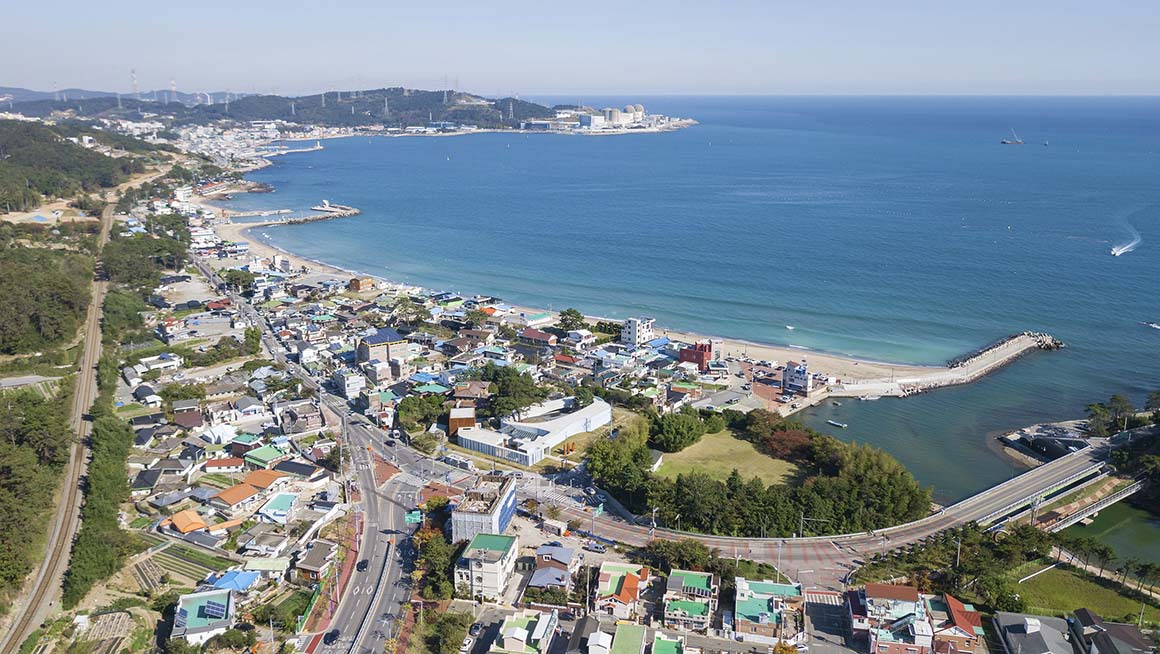
A memorial honoring Park Tae-joon, former honorary chairman of POSCO who passed away in 2011, has been established in Imnang Village, Gijang-gun, Busan—his hometown. Park was a pivotal figure in Korea’s industrialization, having built the nation’s steel industry from the ground up. After founding Pohang Iron and Steel Company in 1968 and growing it into one of the world’s leading steel producers, he was awarded the Bessemer Medal in 1987, often referred to as the Nobel Prize of the steel industry.
Part of the site where Park and his family once lived was donated to Gijang County, which subsequently acquired adjacent parcels to develop a 5,200 m² cultural park and memorial complex. Following a design competition in 2013, architect Cho Byeong-soo was selected, and the project was completed after approximately two years of construction.
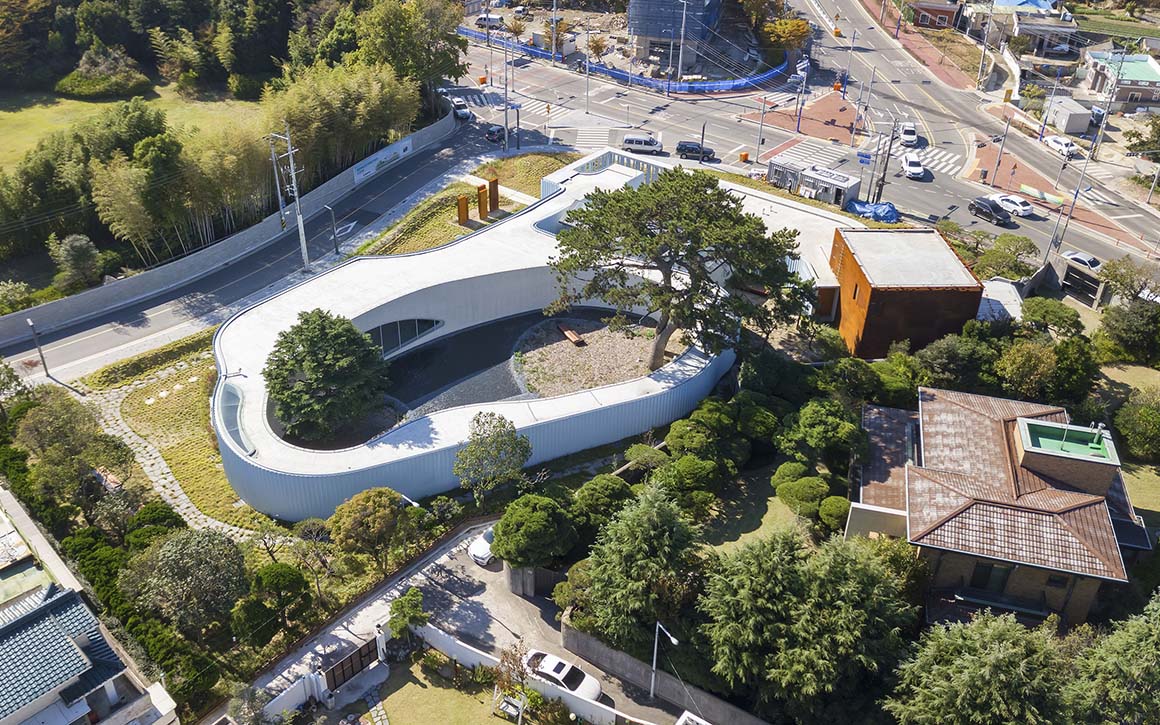
The county’s initial plan proposed demolishing all existing structures except for Park’s birthplace and constructing a new museum complex. The architect, however, proposed a different approach. Rather than erasing the site, he chose to preserve its existing elements—two large pine trees, two wooden houses, and a brick structure—and to create a modest and contemplative memorial that resonates with the memory of the village. Part of the site was also dedicated to a community resting area and a children’s library, reflecting Park’s values of tolerance, generosity, and social harmony.
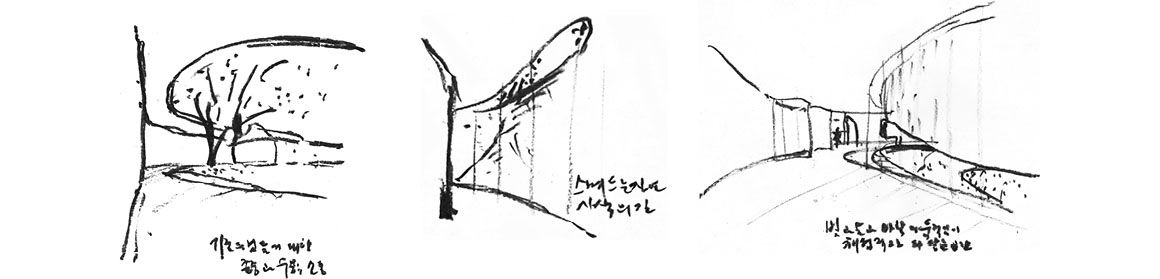
This approach required persuading both the bereaved family and the local authorities. Instead of a didactic exhibition space, the architect envisioned an “architecture of emptiness,” where visitors move, feel, and reflect. With the support of both parties, the project ultimately took shape as a quiet architectural presence embedded within the landscape of Imnang.
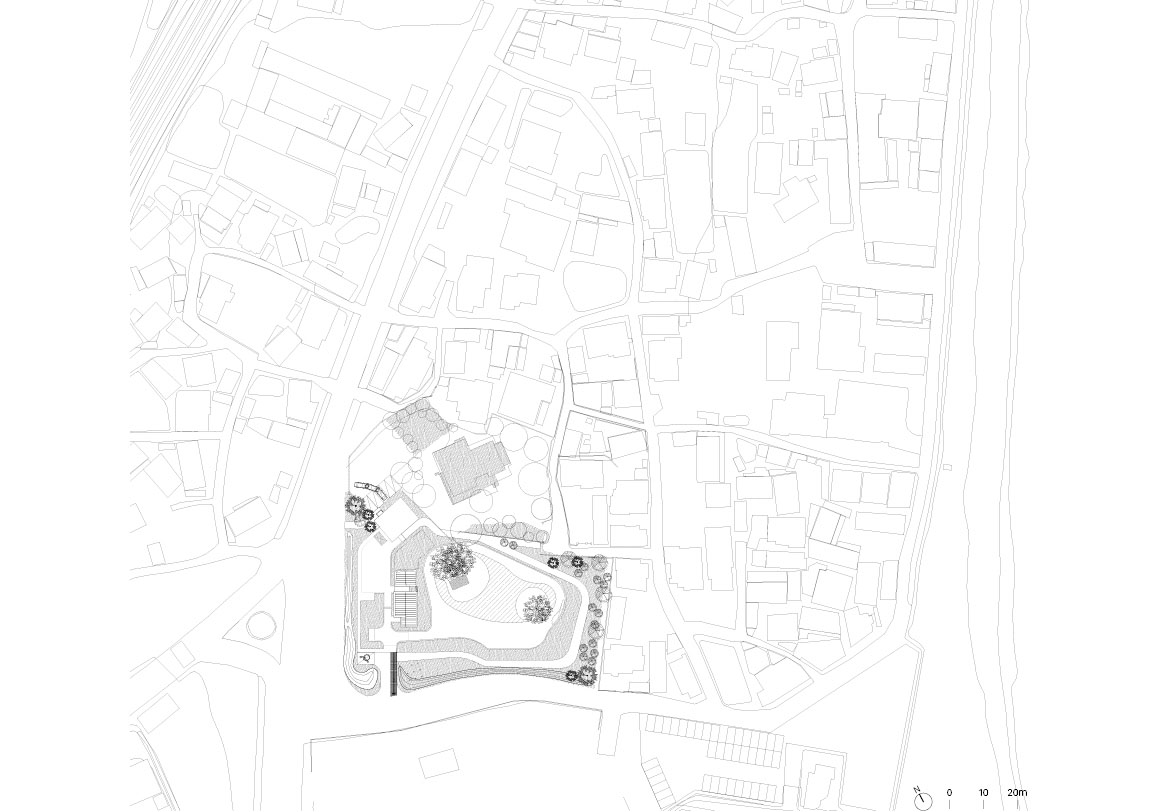
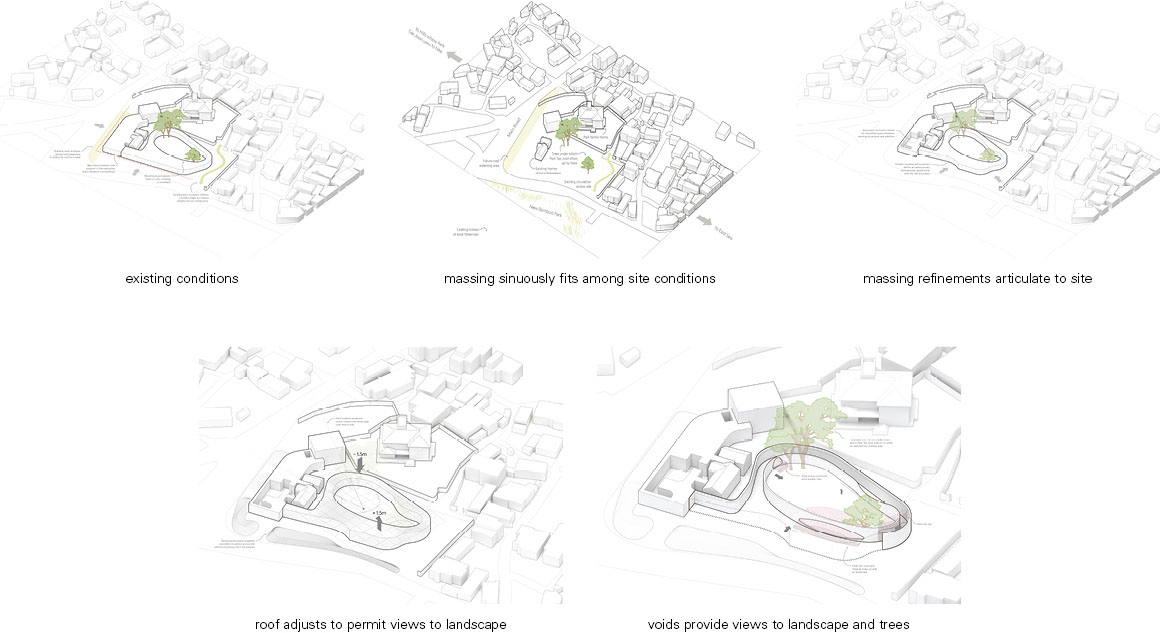
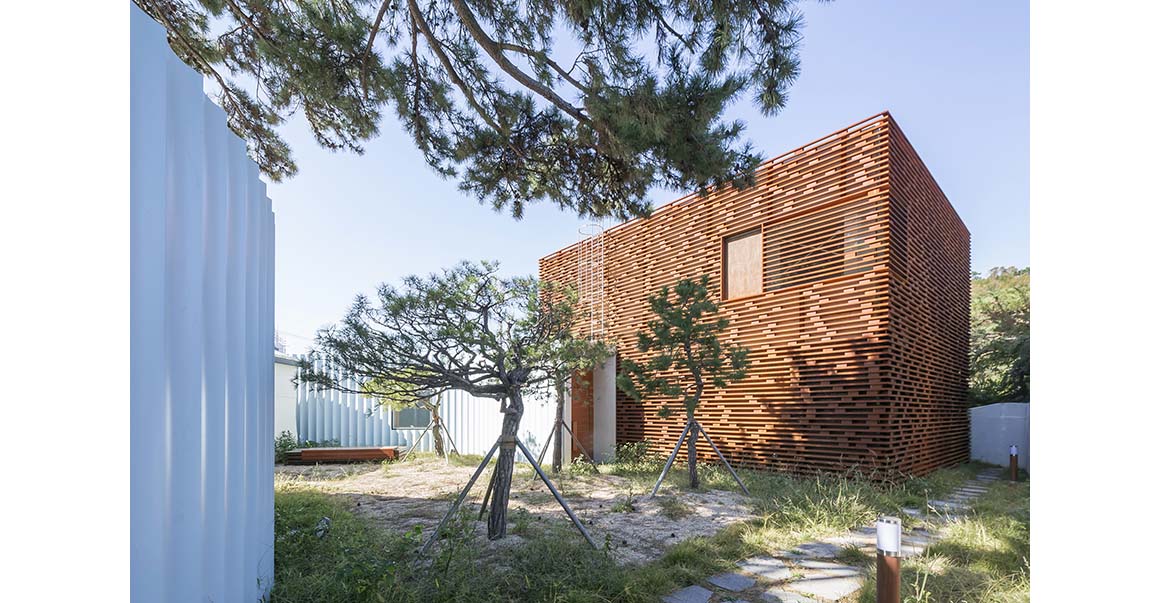
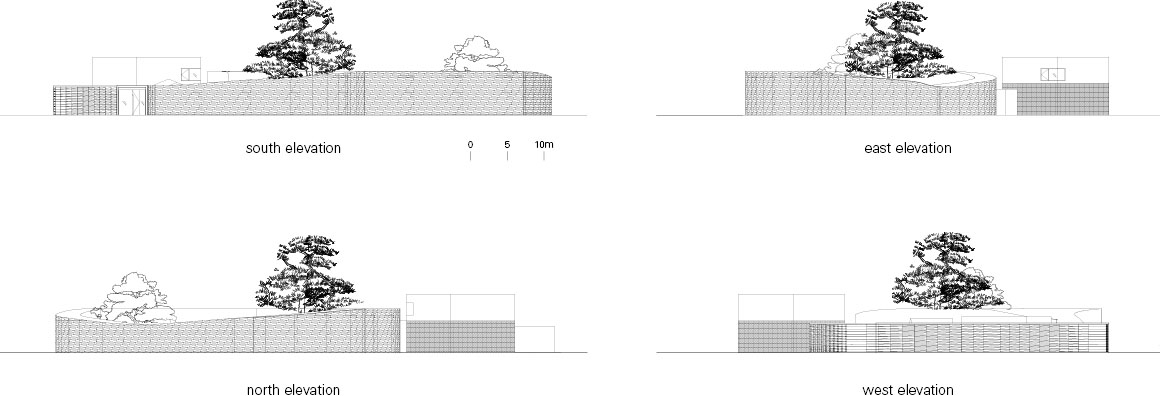
Cho’s architecture begins with a careful reading of the site. Two pine trees anchor the project, among which the older, locally revered “Grandfather Tree”—a sacred village tree—became the primary reference point. Park himself often spent time sitting beneath a smaller tree approximately 20 meters away.
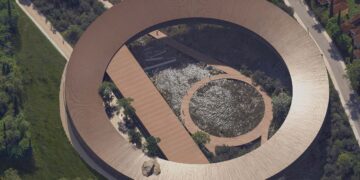
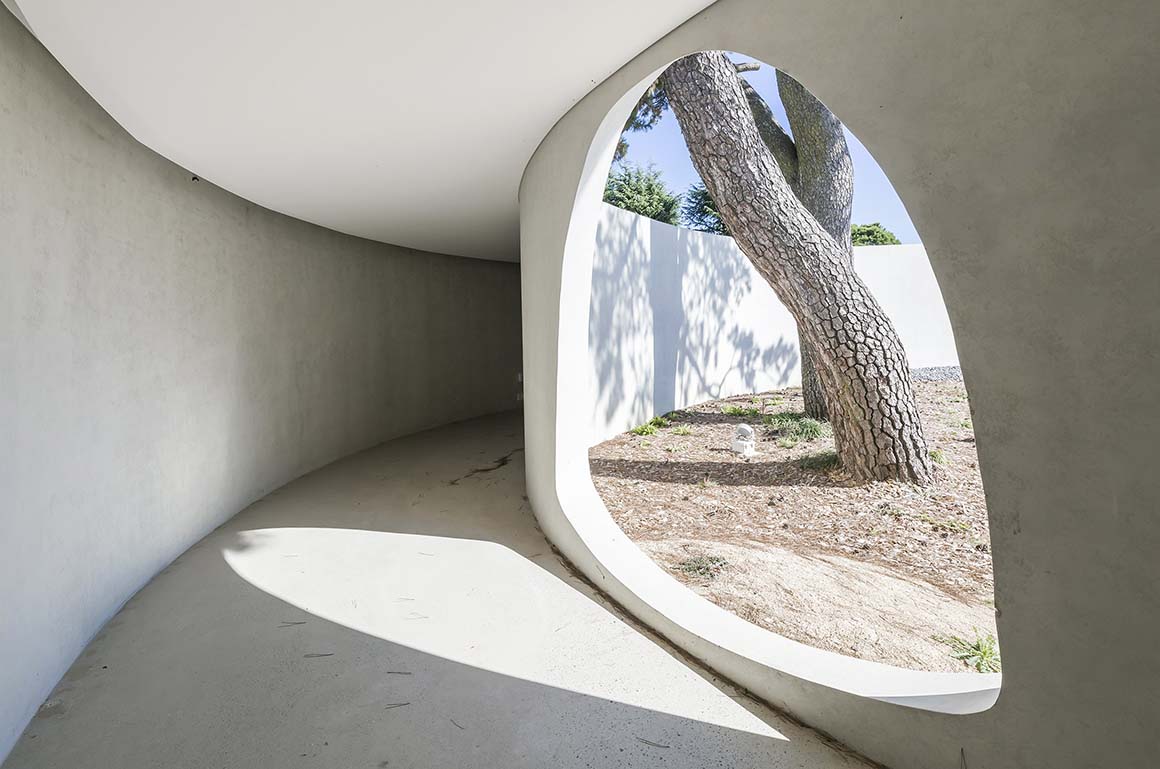
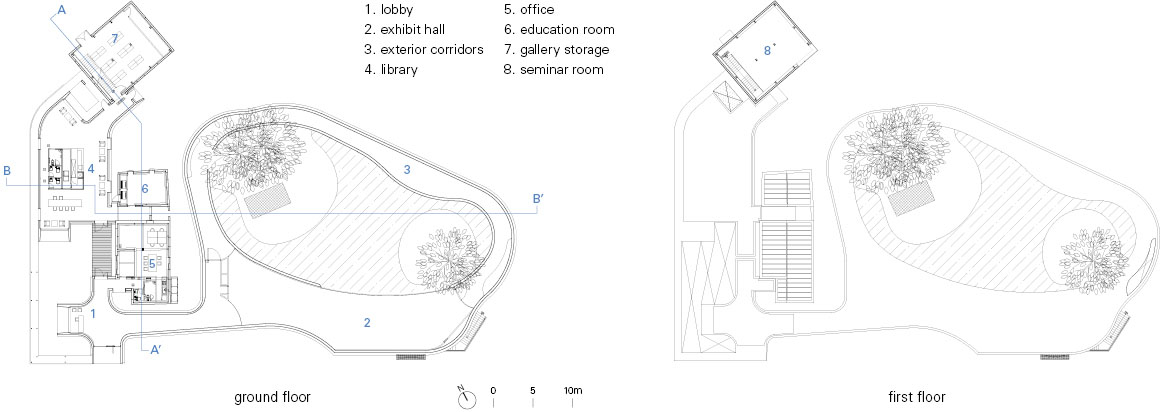
The site is bordered by a coastal road to the east and a village road to the north. The entrance is positioned at their intersection, allowing easy access for passersby. Upon entering, visitors encounter a renovated former house used as an office, while a narrow passage to the right signals the beginning of the exhibition sequence. This path unfolds into a continuous loop—a smooth, circular concrete corridor that weaves together the previously scattered elements of the site. Along the route, carefully placed openings reveal unexpected scenes: a low window frames the courtyard, a circular aperture captures the Grandfather Tree, and skylights admit changing light from above. The interplay of light and shadow evokes the contrasts that defined Park’s life.
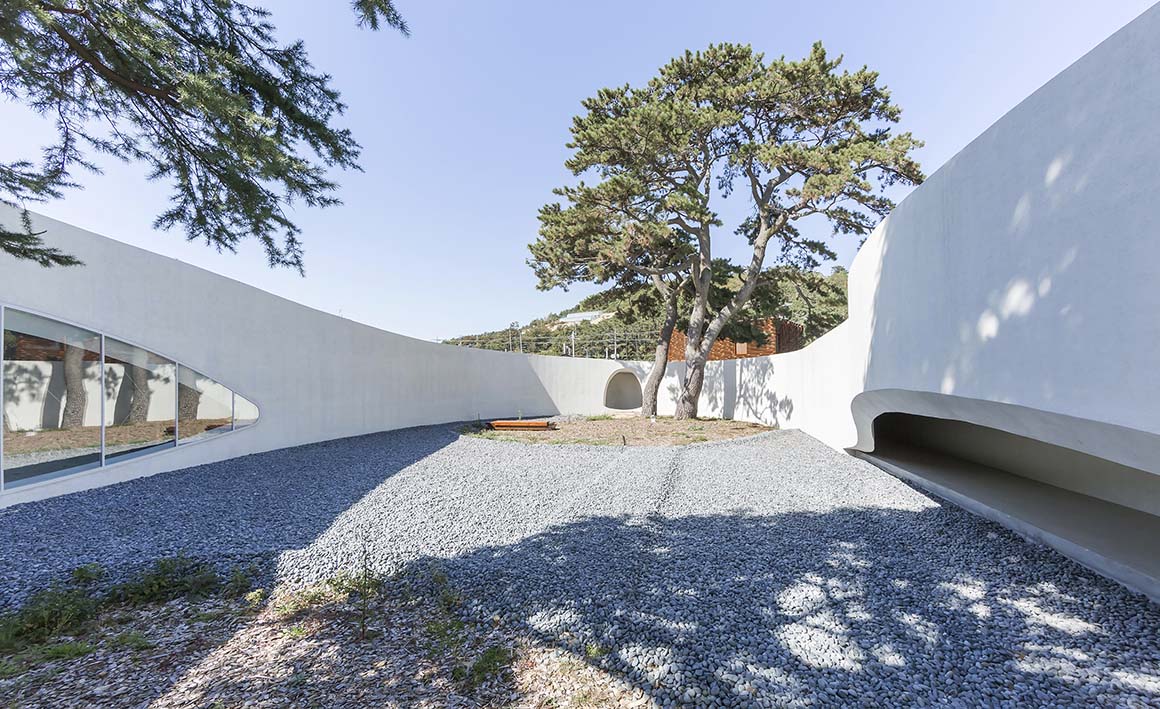
Moving along this subdued path, visitors eventually arrive at the courtyard, where nature and architecture converge. Here, only the sky, the ground, the two trees, and the individual remain. A slightly elevated path connects the trees, while shallow water fills the surrounding ground, reflecting the sky and casting shadows of clouds and branches. The courtyard is conceived not as a static viewing space but as a place for introspection and quiet contemplation.
Seated beneath the smaller tree, one can see the Grandfather Tree and, beyond it, the gentle hill where Park once walked. To preserve this visual continuity, the building height on the hillside was lowered by approximately 1.5 meters relative to the seaside.
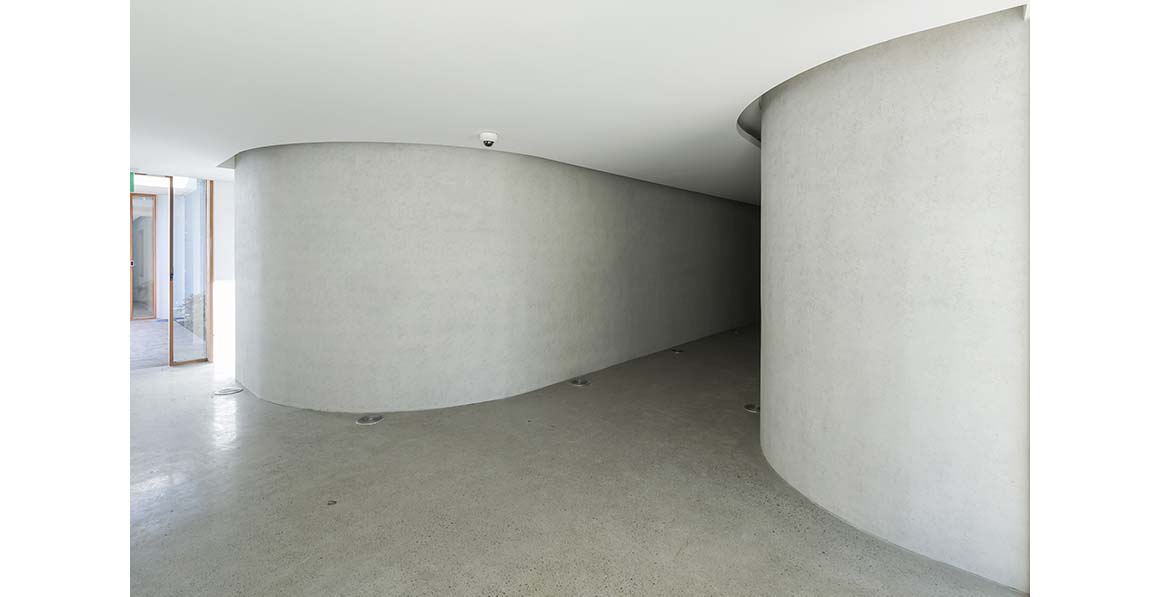
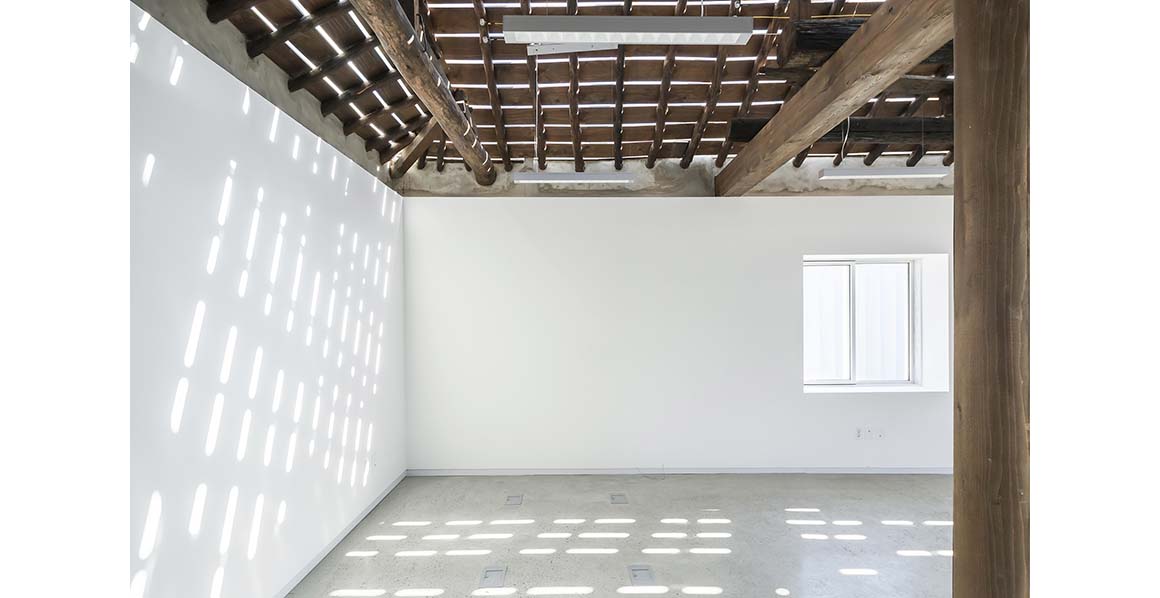
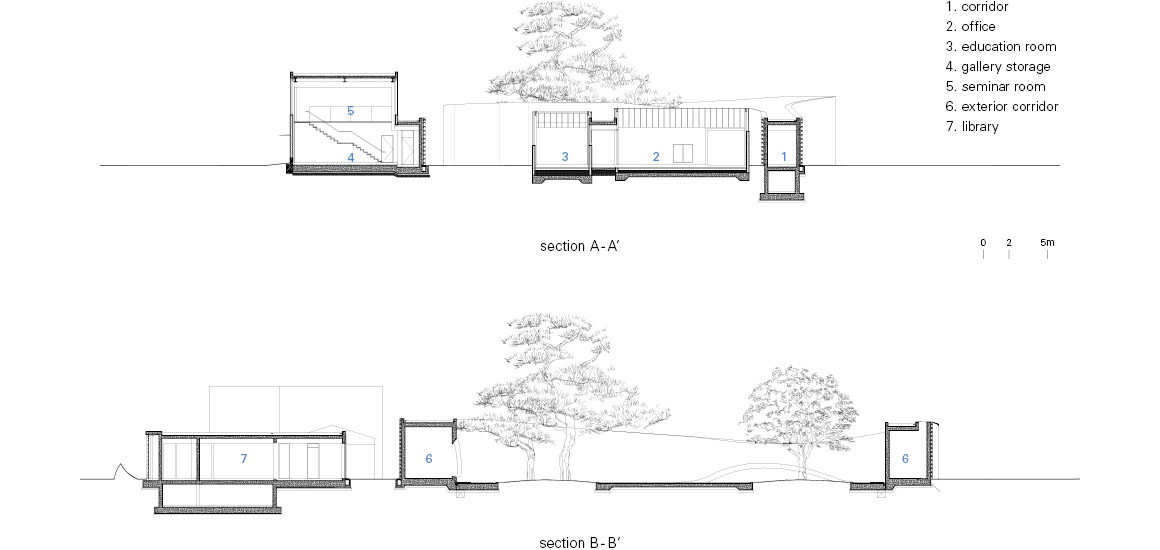
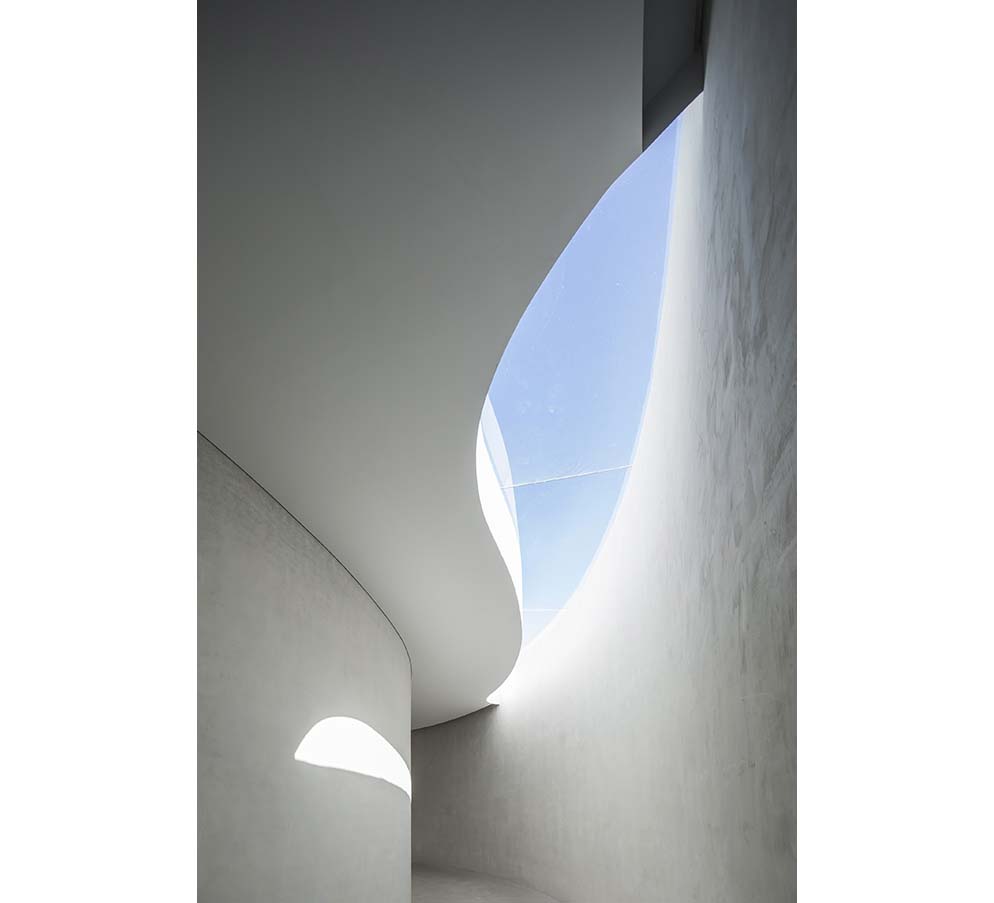
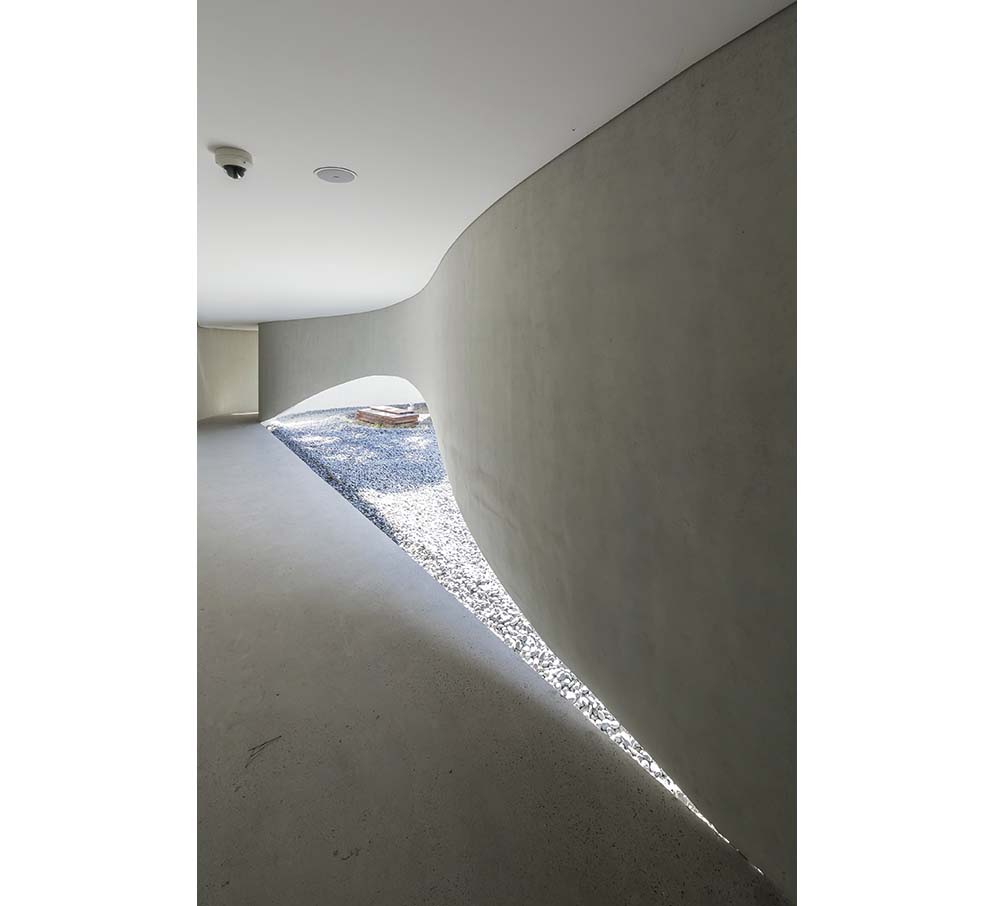
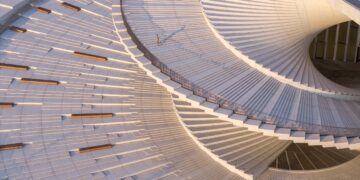
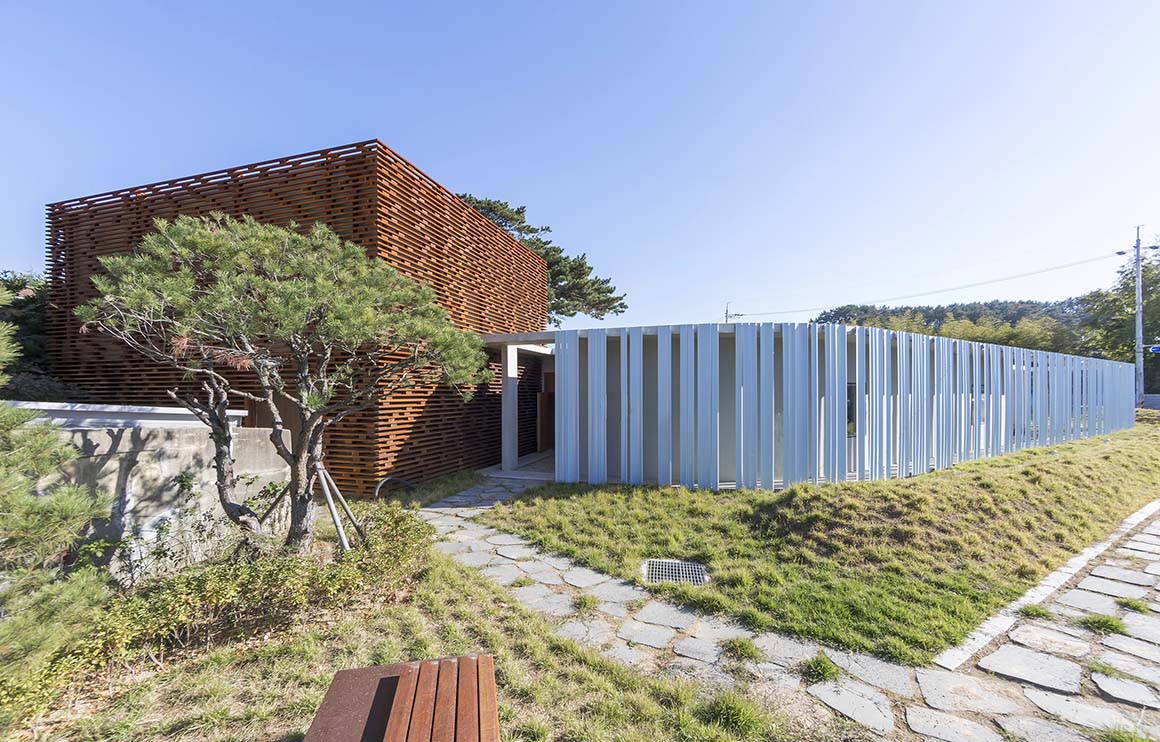
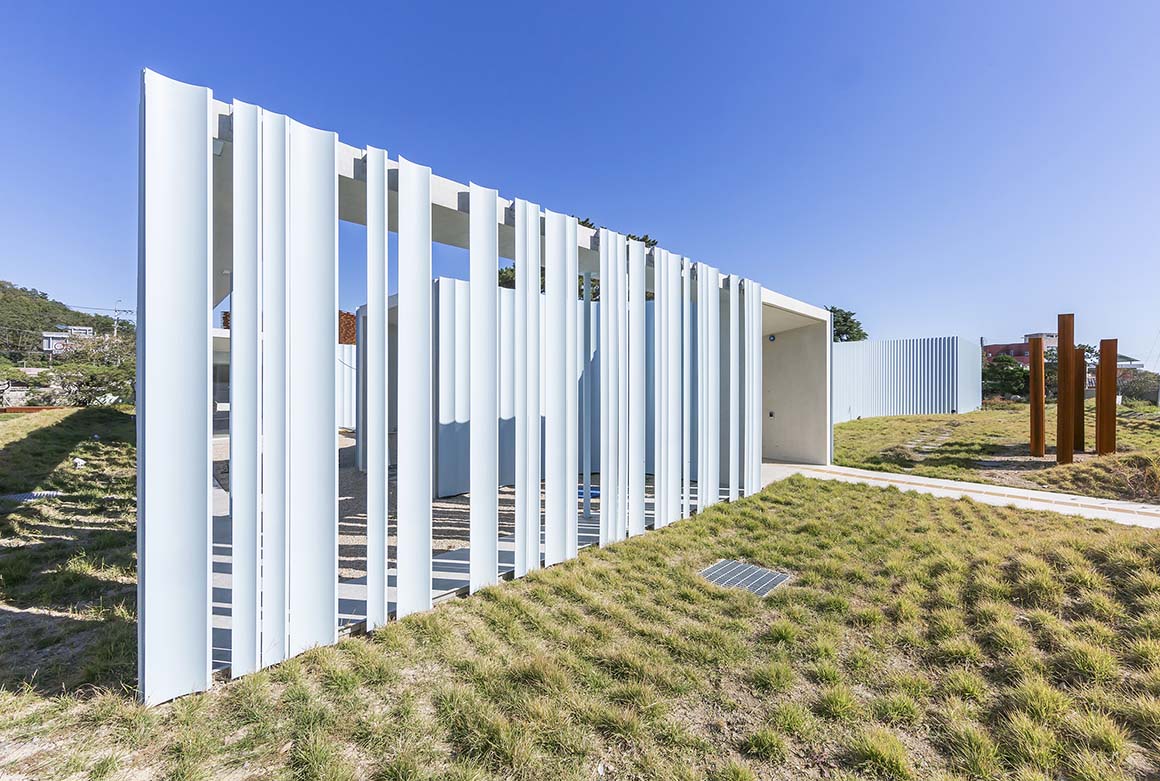
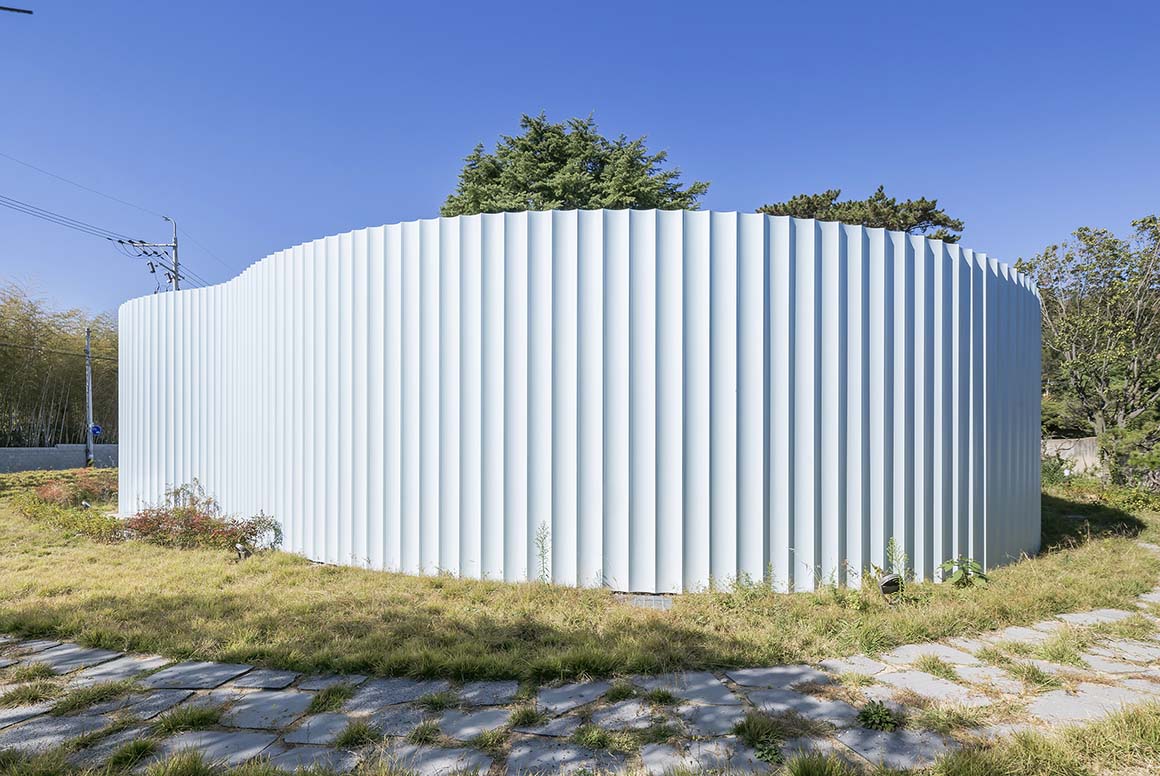
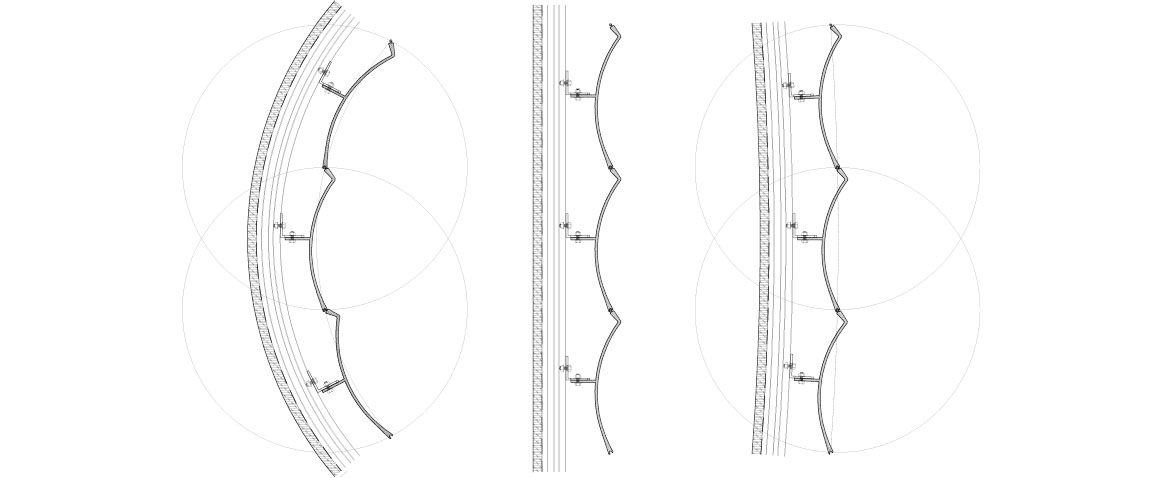
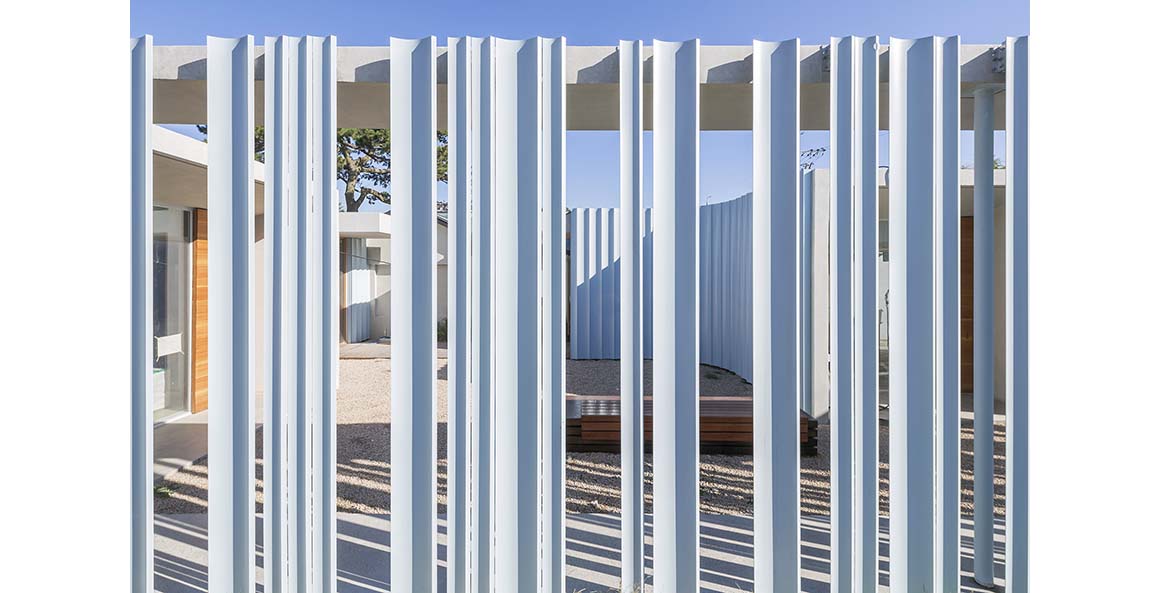
The building’s height is kept below five meters to maintain harmony with the village scale. While the county initially preferred steel to symbolize Park’s legacy, the architect chose exposed concrete for its warmth and tactile quality. Aluminum panels were applied to the exterior envelope, forming concave white strips of 30 cm width. These panels are hinged together, allowing them to rotate along the curved surface and wrap the building with precision. As light shifts and visitors move, the façade produces a subtle, ever-changing play of shadows.
Today, the Park Tae-joon Memorial stands at the threshold of the village, quietly enduring the seasons and welcoming both residents and visitors—much like another “Grandfather Tree.”
Project: Imnang Culture Park / Location: Imnang-ri, Jangan-eup, Gijang-gun, Busan / Architects: BCHO Partners / Project team: Sookjung Kim, Joohyoung Lee, Issac Yu, Jaegi Kim, Kyungjin Hong_construction supervision, Donguk Choi_construction supervision / Construction Company: Kyobo Construction / Use: Museum and Library / Site area: 4,067m² / Bldg. area: 797.35m² / Gross floor area: 952.31m² / Bldg. scale: One story below ground, Two stories above ground / Structure: Reinforced Concrete / Design: 2013.4~2014.12 / Construction: 2015.6~2017.5 / Completion: 2018(estimated) / Photograph: ©Sergio Pirrone(courtesy of the architect)