


Unfamiliar White
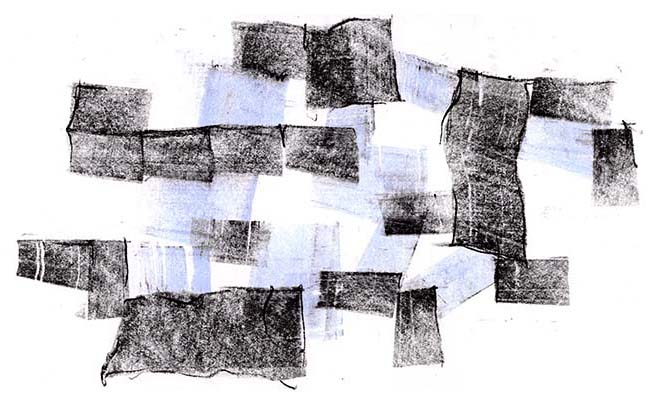
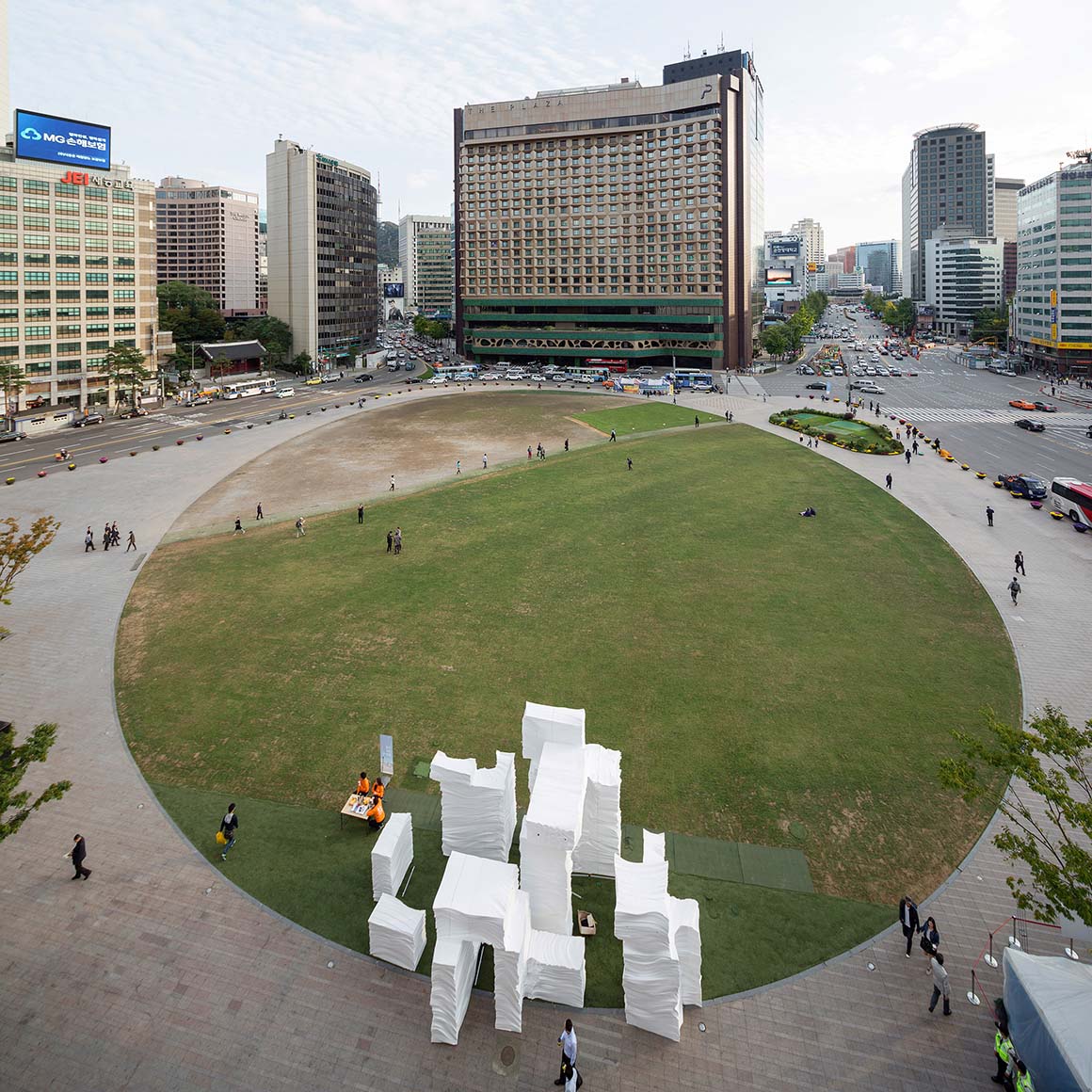
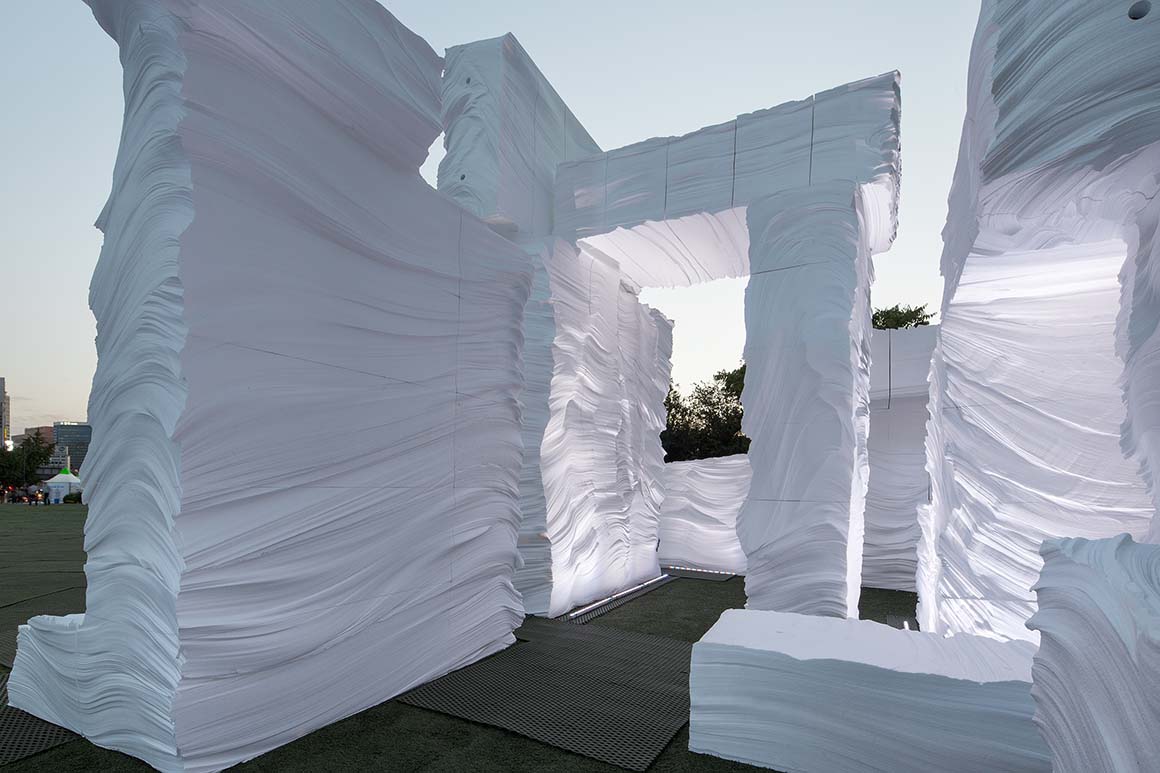
It is easy to imagine the wind moving through the city as if with a gentle hand, leaving behind only a faint whiteness—like residue on the air. The ground, briefly made legible, seems to disclose the time that gathered before the city became a city. On the circular lawn, among angular buildings dyed in sharp colours, this pavilion appears strangely out of register. Its form is unfamiliar, and its white is unfamiliar too. In the loose openness of the square, it holds a quiet tension—catching the eye, slowing the body, drawing passing footsteps toward it.
The work stands on the plaza before Seoul City Hall, a point that is, in every sense, central. High-rises, broad roads, and complicated intersections press in around it; speed and density are constant, layered conditions. Here the modern city is not an abstraction but a physical atmosphere. Against that charged backdrop, the pavilion introduces another kind of presence: a brightness that does not announce itself loudly, yet insists on being seen.
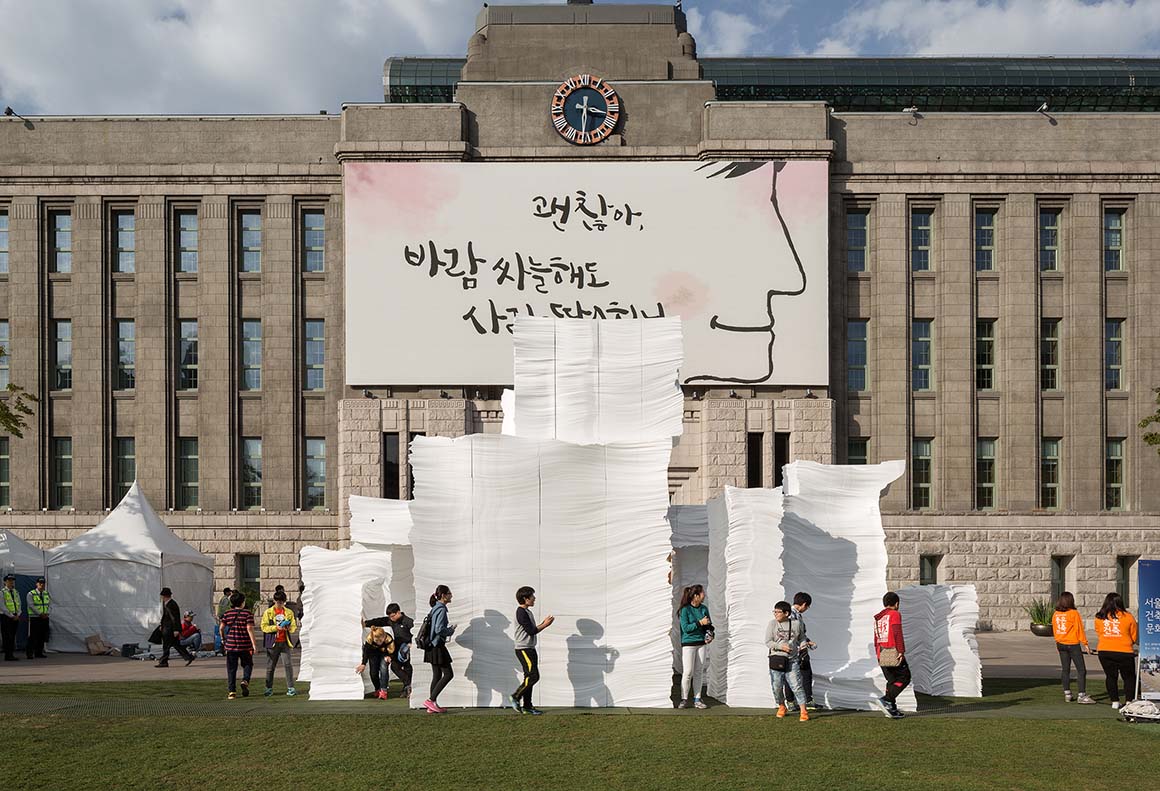
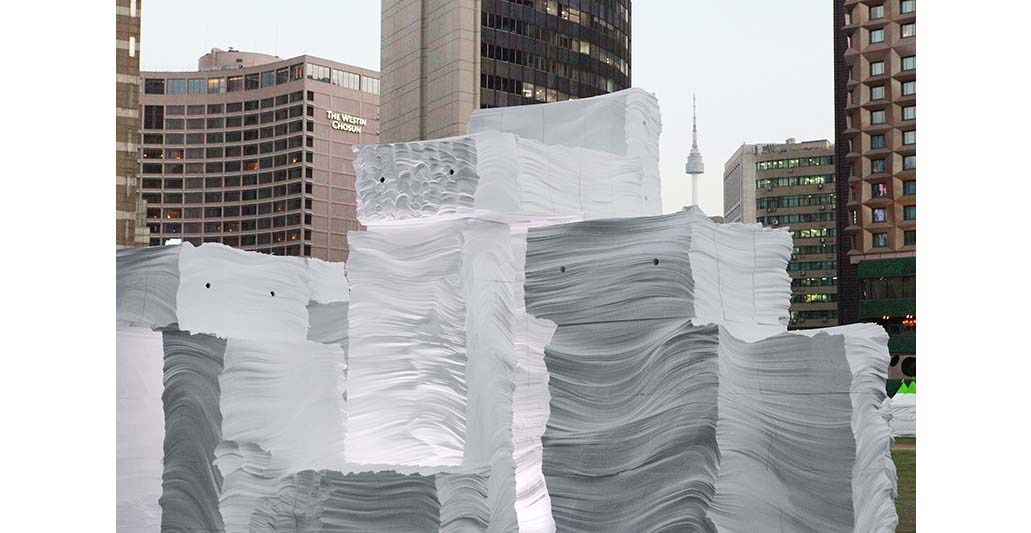
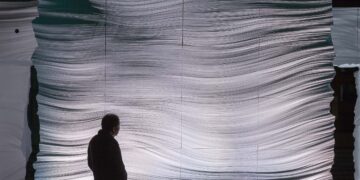
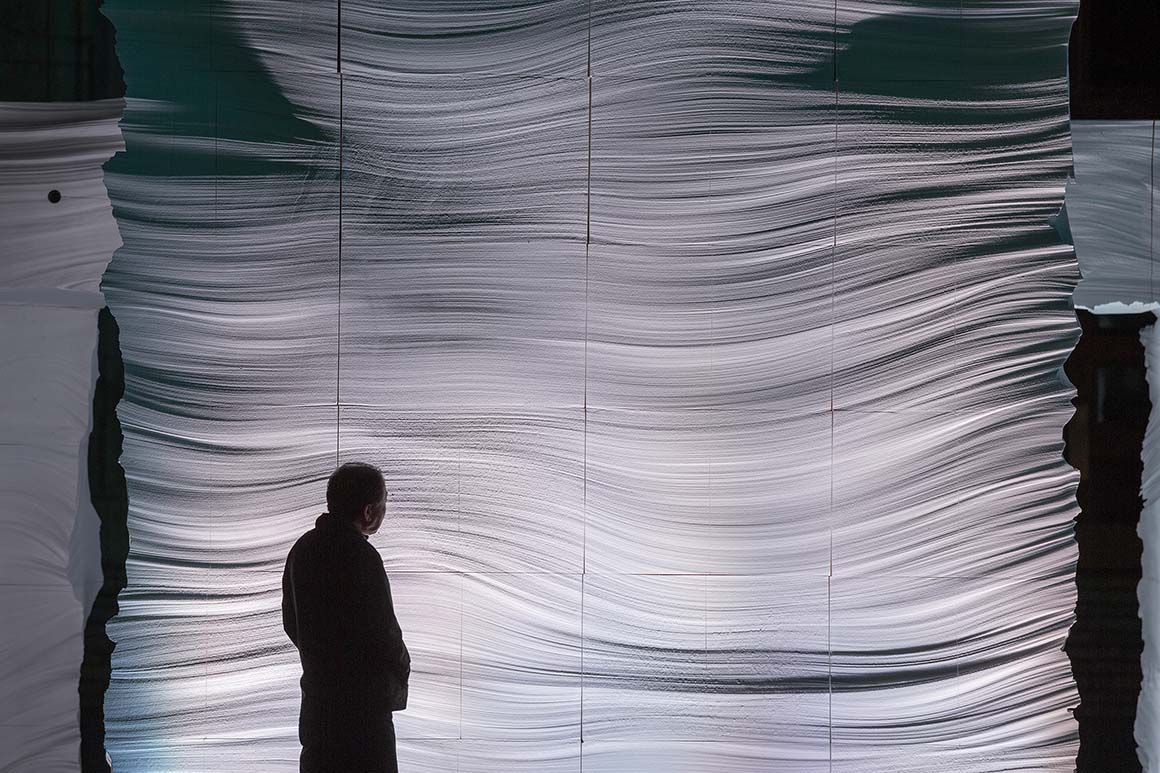
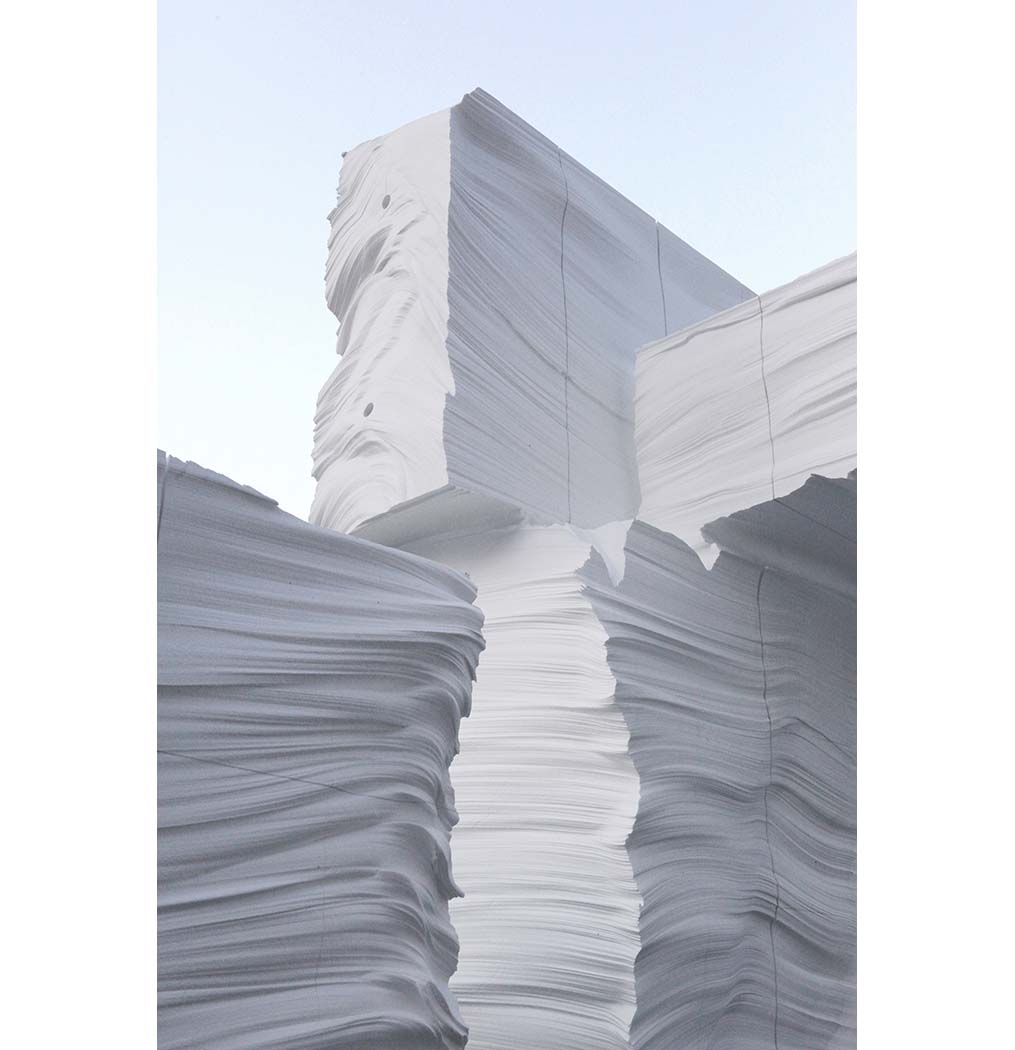
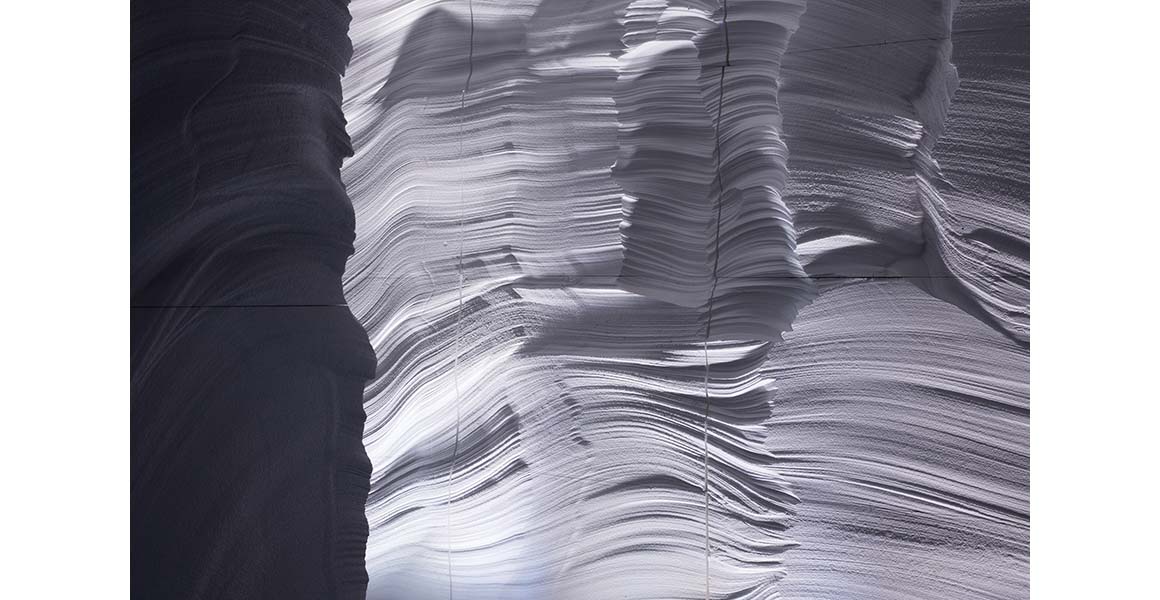
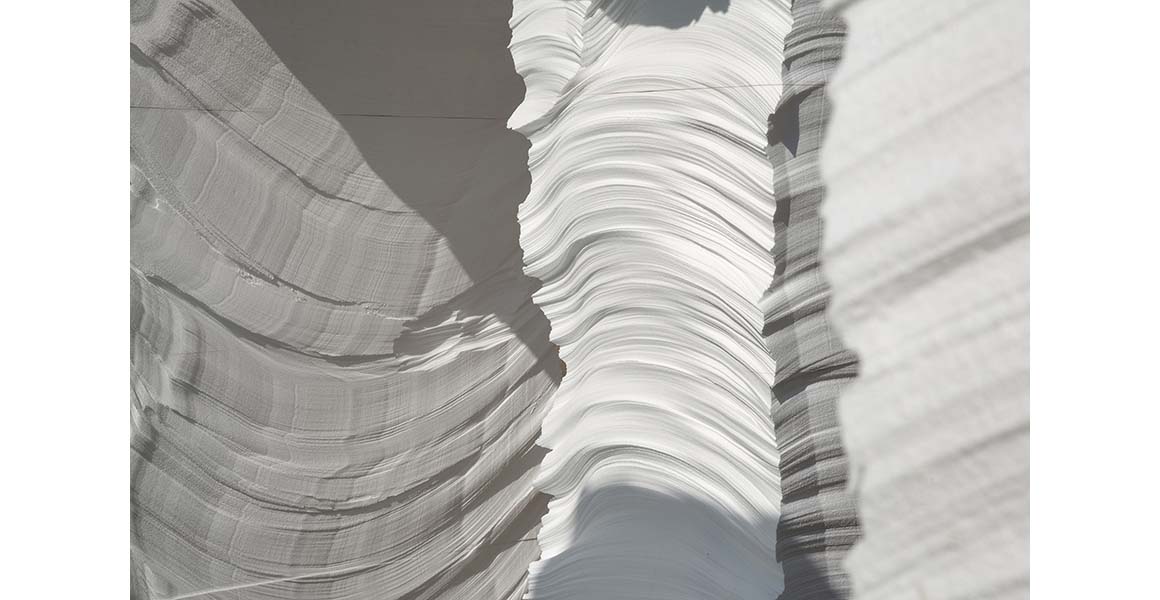
The “artificial cave” is assembled through a plain, almost primitive logic—one associated with megaliths and simple stacking. Its material, however, is unmistakably contemporary: EPS blocks, the archetype of an industrial product, familiar to construction sites and civil works. The surfaces are intentionally roughened, so that the material reads like weathered stone, or the exposed section of strata laid down over long durations. What is striking is that this transformation is achieved not through refinement but through the opposite—through touch and restraint. With hands and minimal tools, the standard becomes irregular; the uniform becomes singular. Piece by piece, the blocks gather into structure, and then—almost without spectacle—into space.
Sometimes the blocks appear as rocks scattered loose; sometimes they align into pillars and roofs, meeting at right angles. In either guise, the interior feels rugged, almost primordial, as if it belonged to a different tempo. Encountered at the heart of the city, it becomes a white threshold: an opening into another density of space, another thickness of time. That is why the whiteness, usually so familiar, turns strange. To walk the cave’s maze is to enter a small, peculiar game—an exploration that is both physical and perceptual. In daylight the surfaces glow; at night they receive light and return it, bright and calm. As one moves through this illuminated hollow, the city’s tempo seems to fall away for a moment, and space—along with time—feels quietly re-tuned.
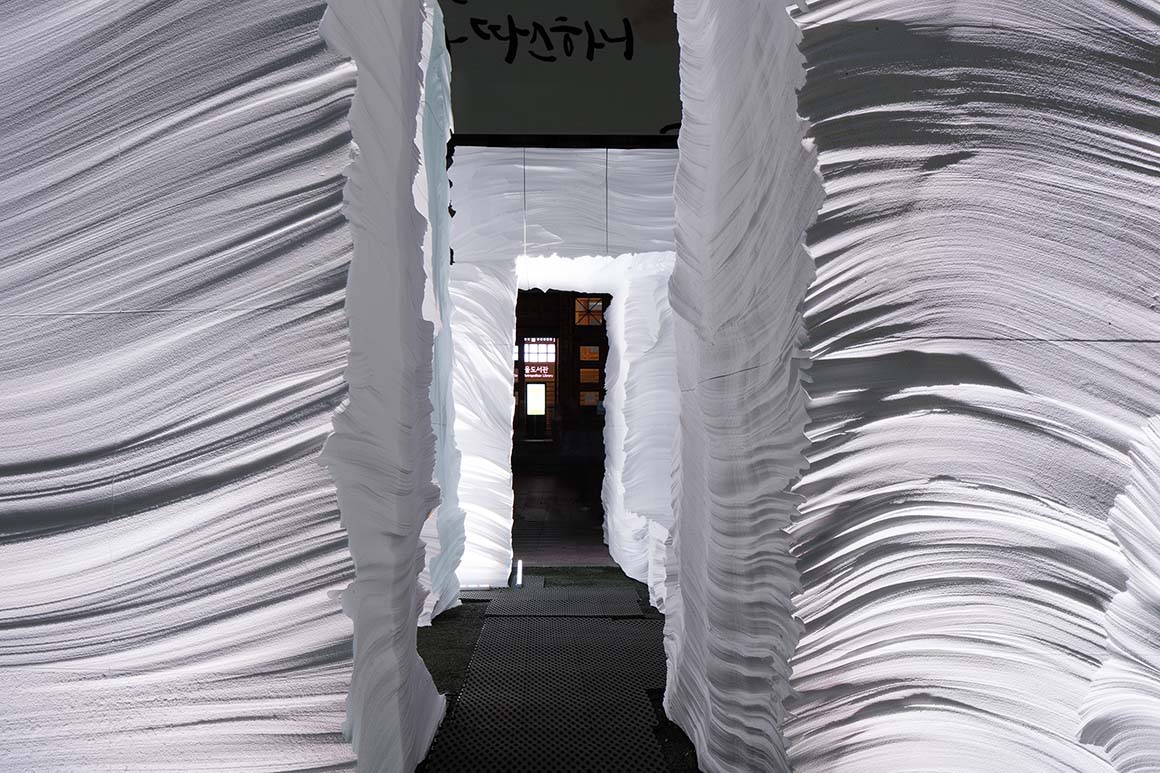
Project: EPS Grotto / Location: Seoul Plaza, Seoul, South Korea / Architect: NAMELESS Architecture (Unchung Na, Sorae Yoo) / Collaborate artist: Kwangho Lee / Lighting engineer: Bitzro & partners / Client: Seoul Metropolitan Government, Korean Institute of Architects / Use: pavilion / Bldg. area: 135m² / Scale: 9mx15mxH5m / Exterior finishing: Geofoam, expanded polystyrene (EPS) / Completion: 2013 / Photograph: ©Kyung Roh (courtesy of the architect)