

Mountain-like Slopes upon the Memory and Ecology of the Existing Low-Rise Urban Fabric
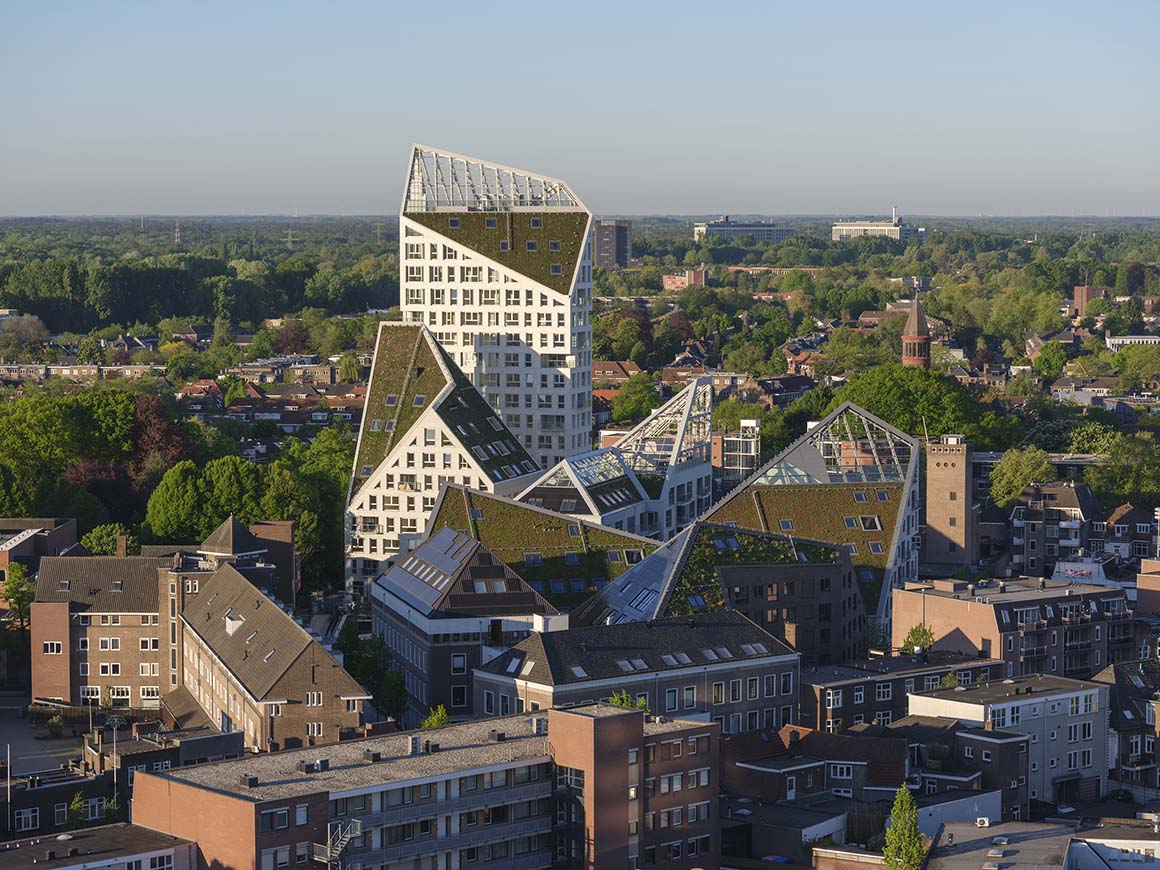
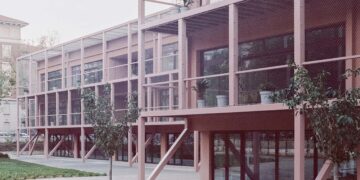
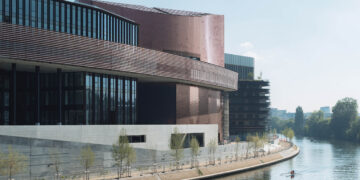
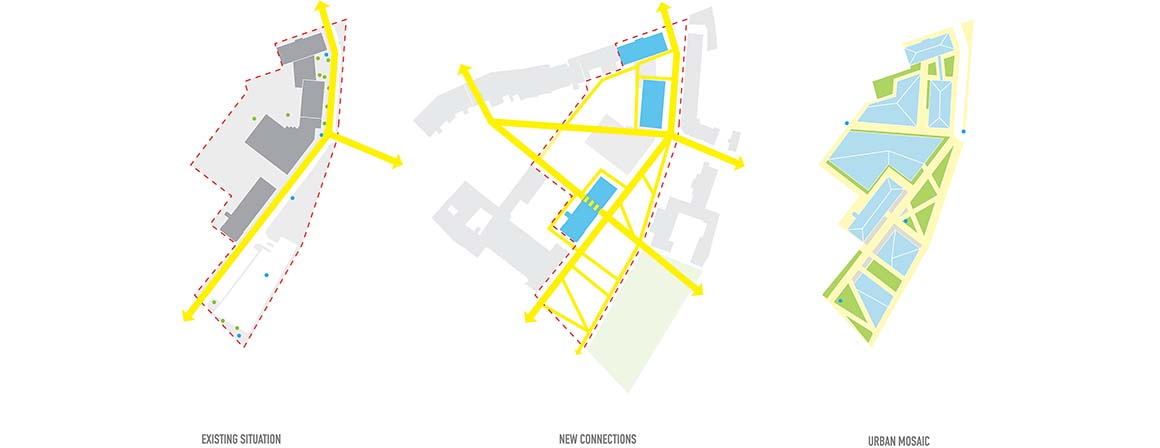
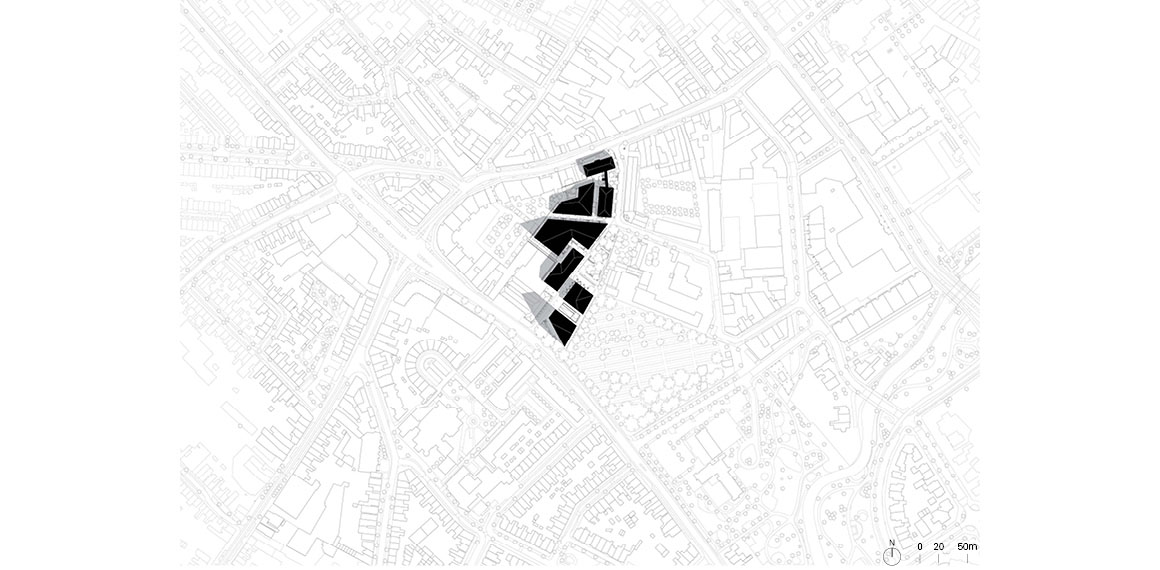
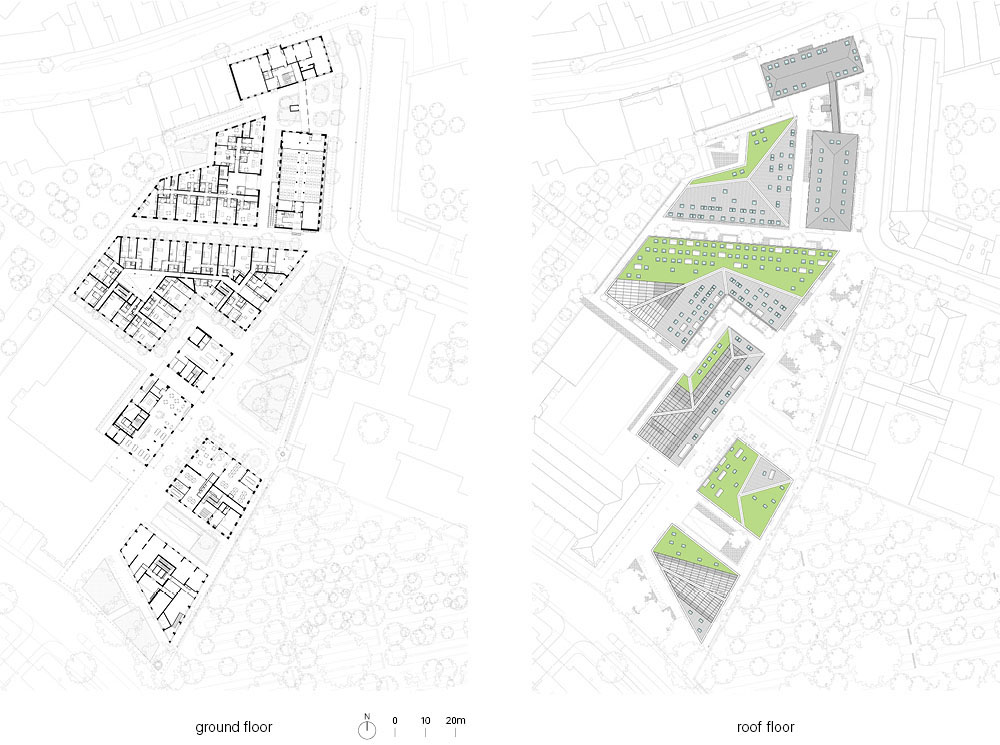
A new residential development, Nieuw Bergen, has been completed in De Bergen, a historic neighbourhood in the centre of Eindhoven, the Netherlands. Built on a former site of municipal buildings and parking lots, the project combines the renovation of two existing structures with five new buildings, forming a seven-building mixed-use residential complex. The development accommodates 237 homes, ranging from social housing and family residences to luxury penthouses.
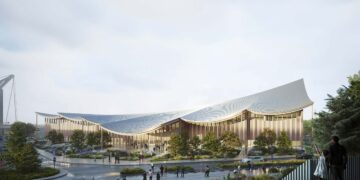
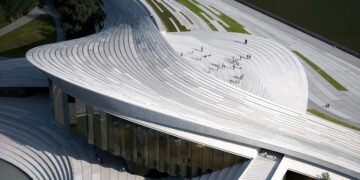
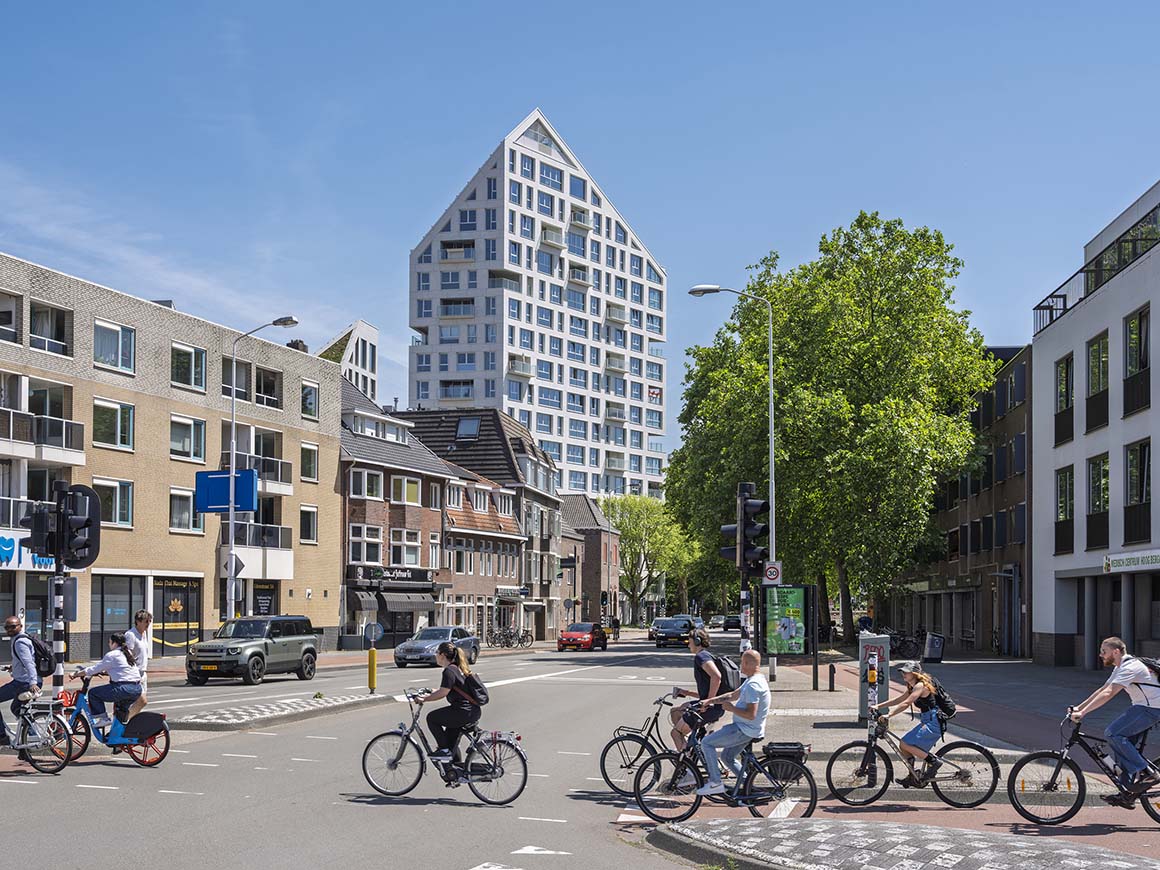
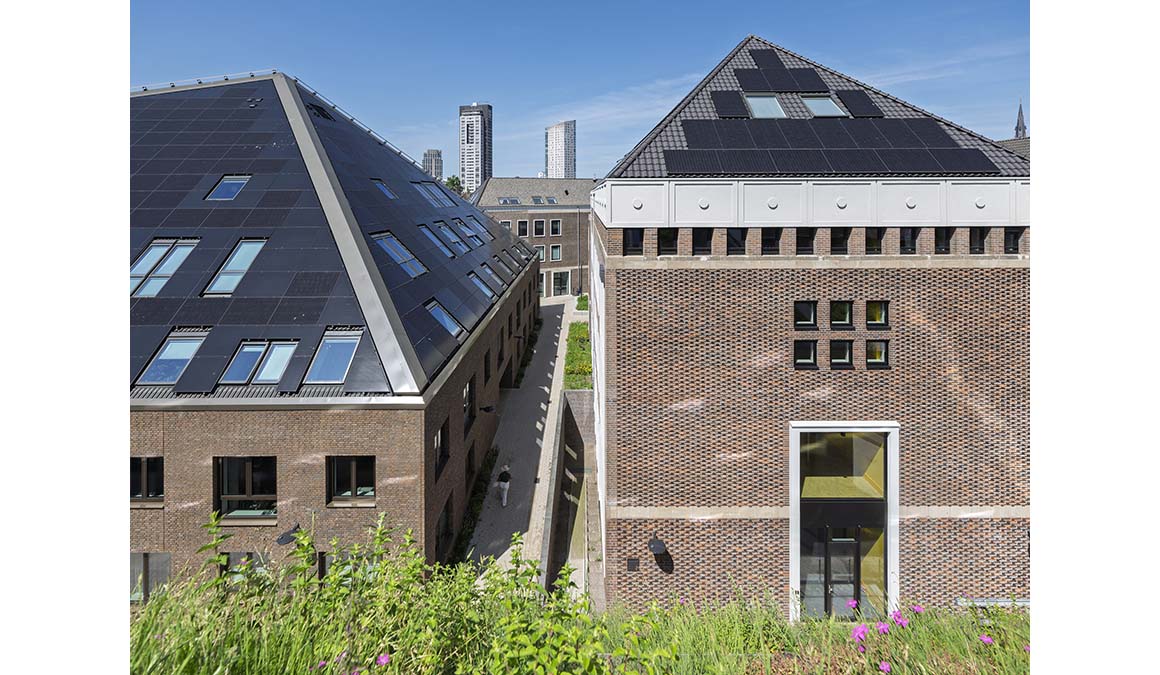
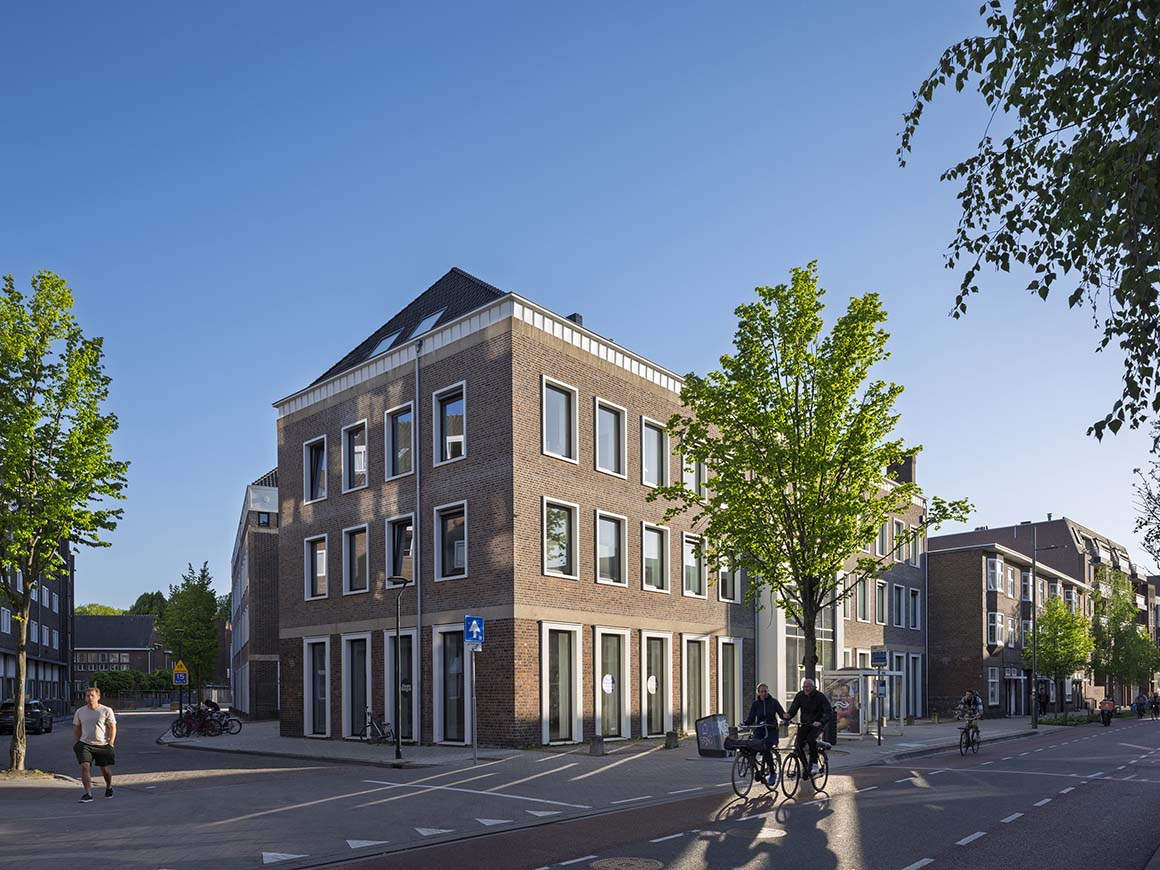
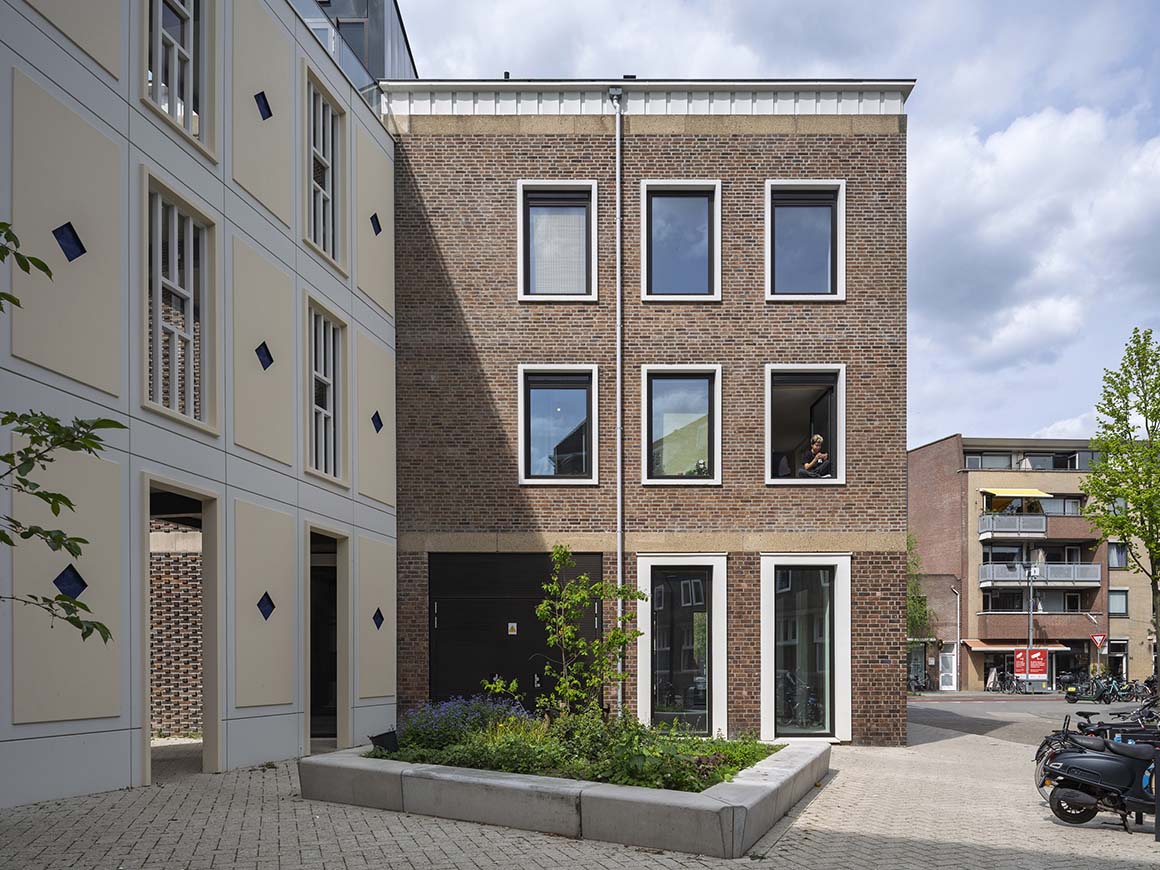
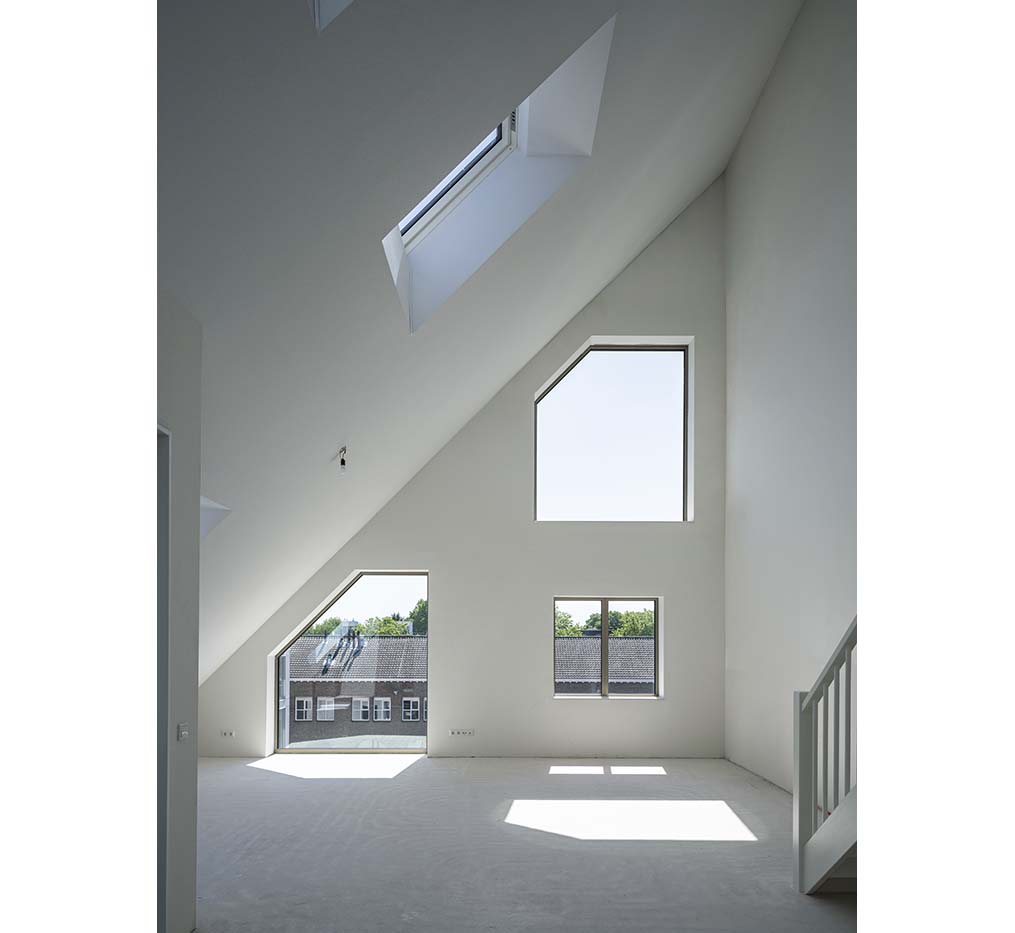
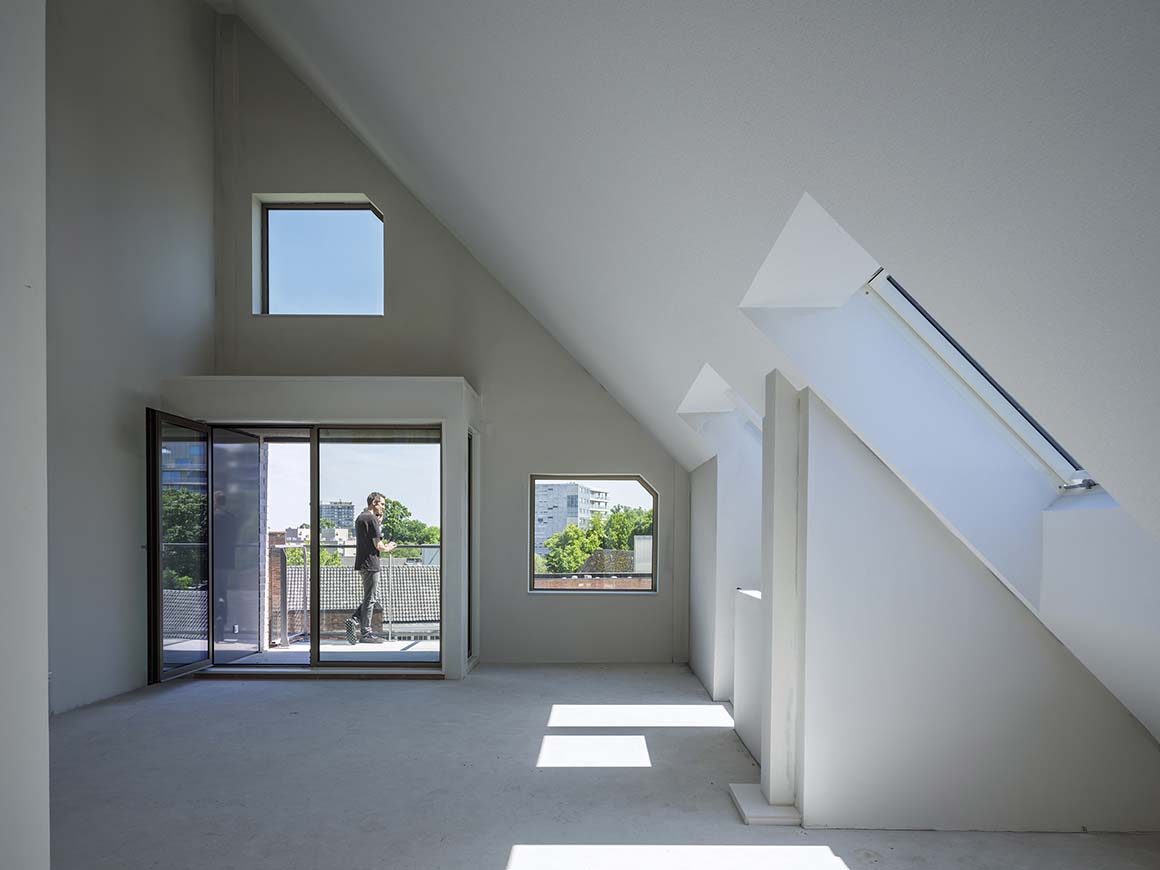
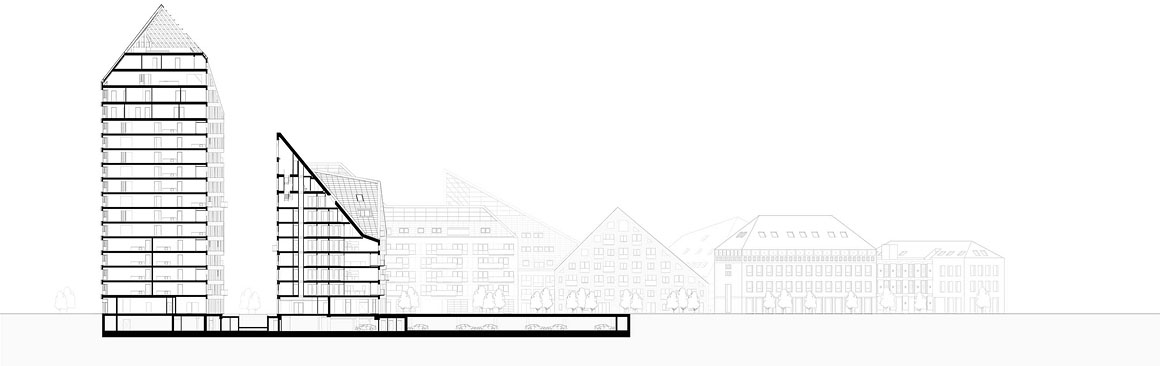
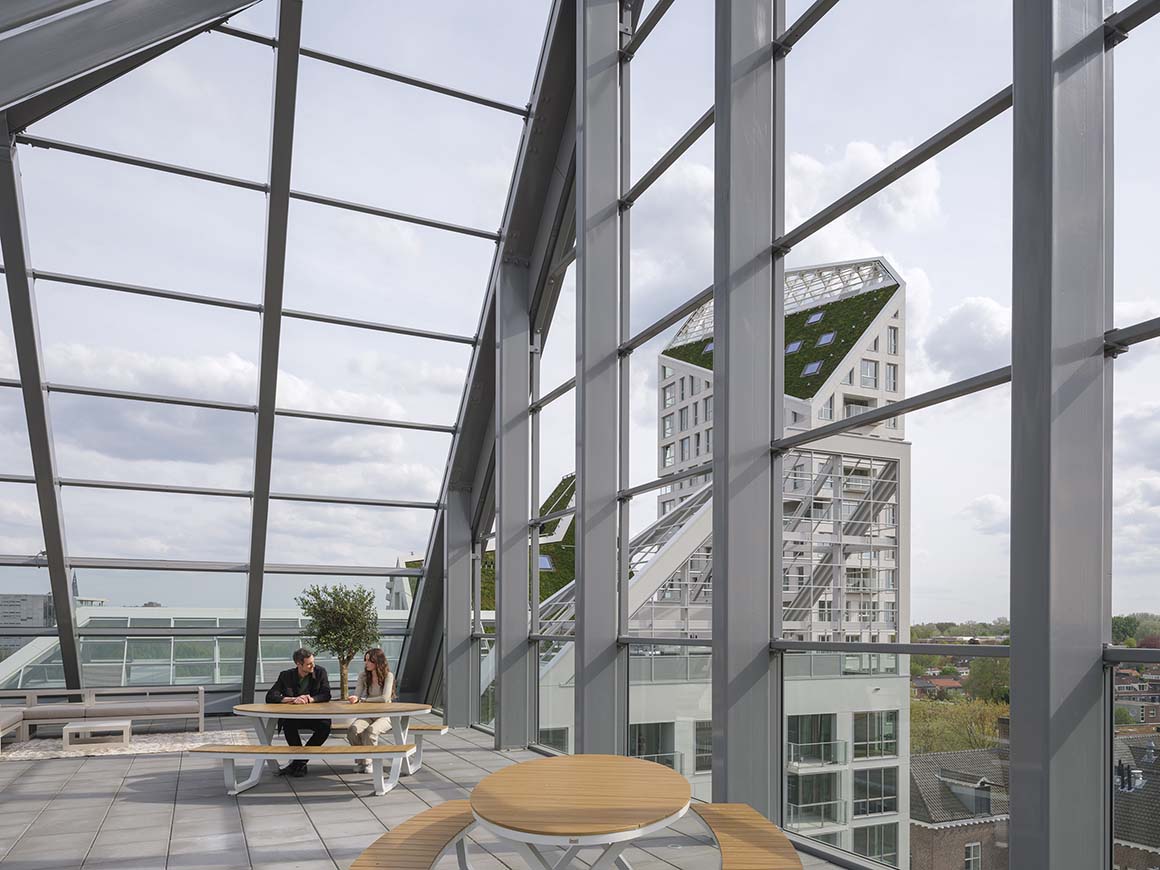
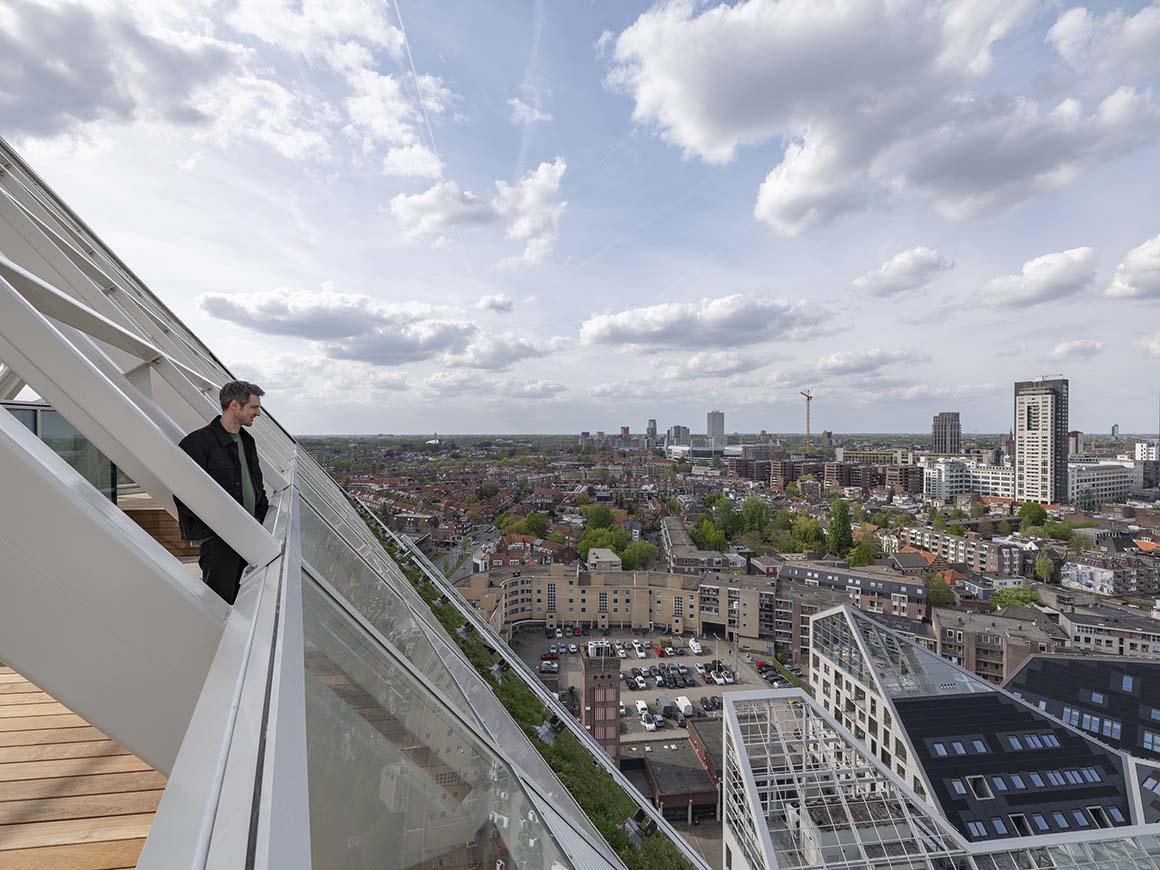
Its defining feature is a series of jagged, mountain-like sloping roofs. Arranged as fragmented volumes, the buildings rise gradually in height while blending into the surrounding low-rise cityscape. The sequence begins with Vert and Jaune, two former police station buildings from the twentieth century that have been transformed and reused, continues through the six-storey Orange, and culminates in the 17-storey tower Indigo at the opposite end of the site.
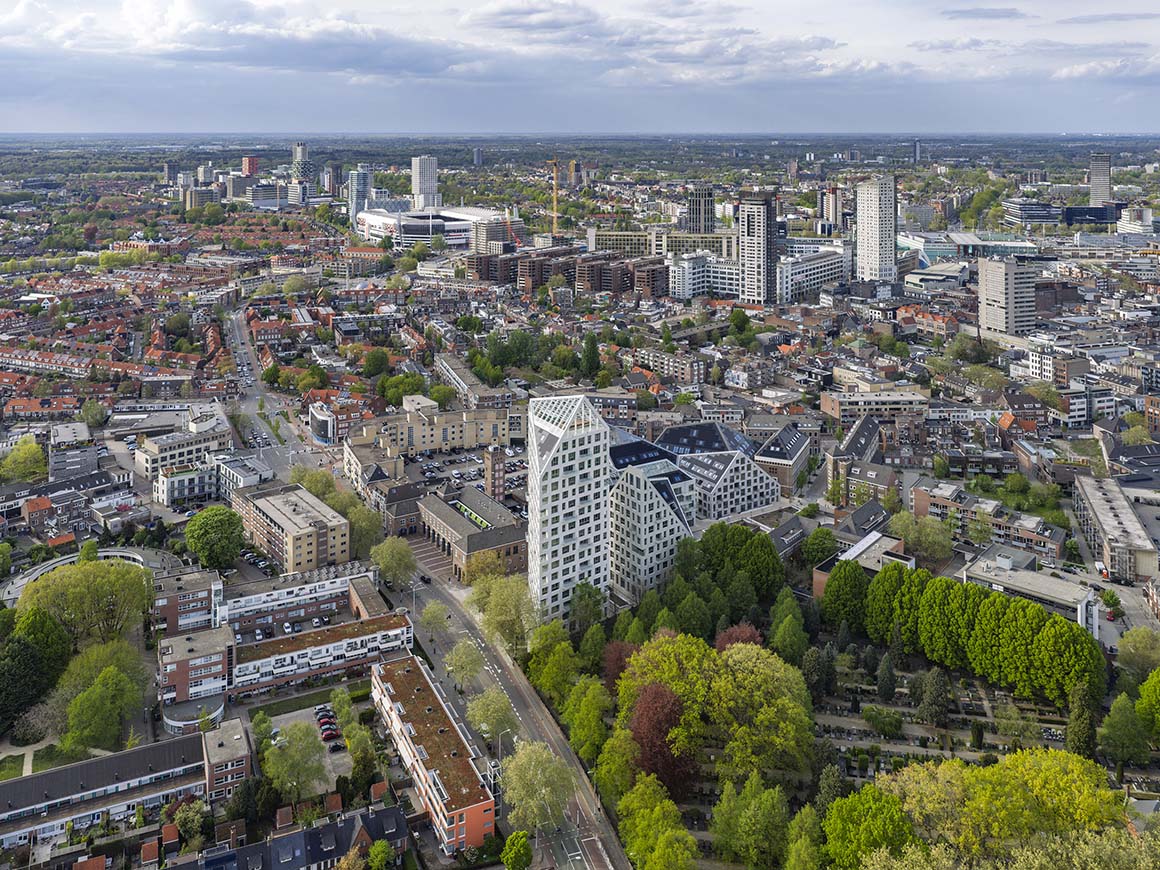
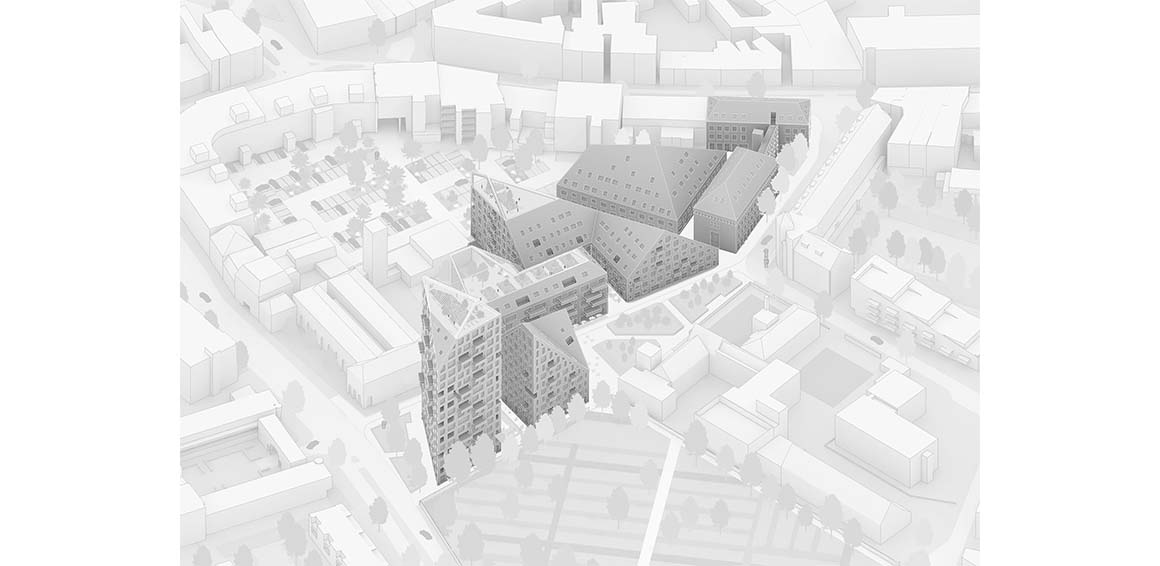
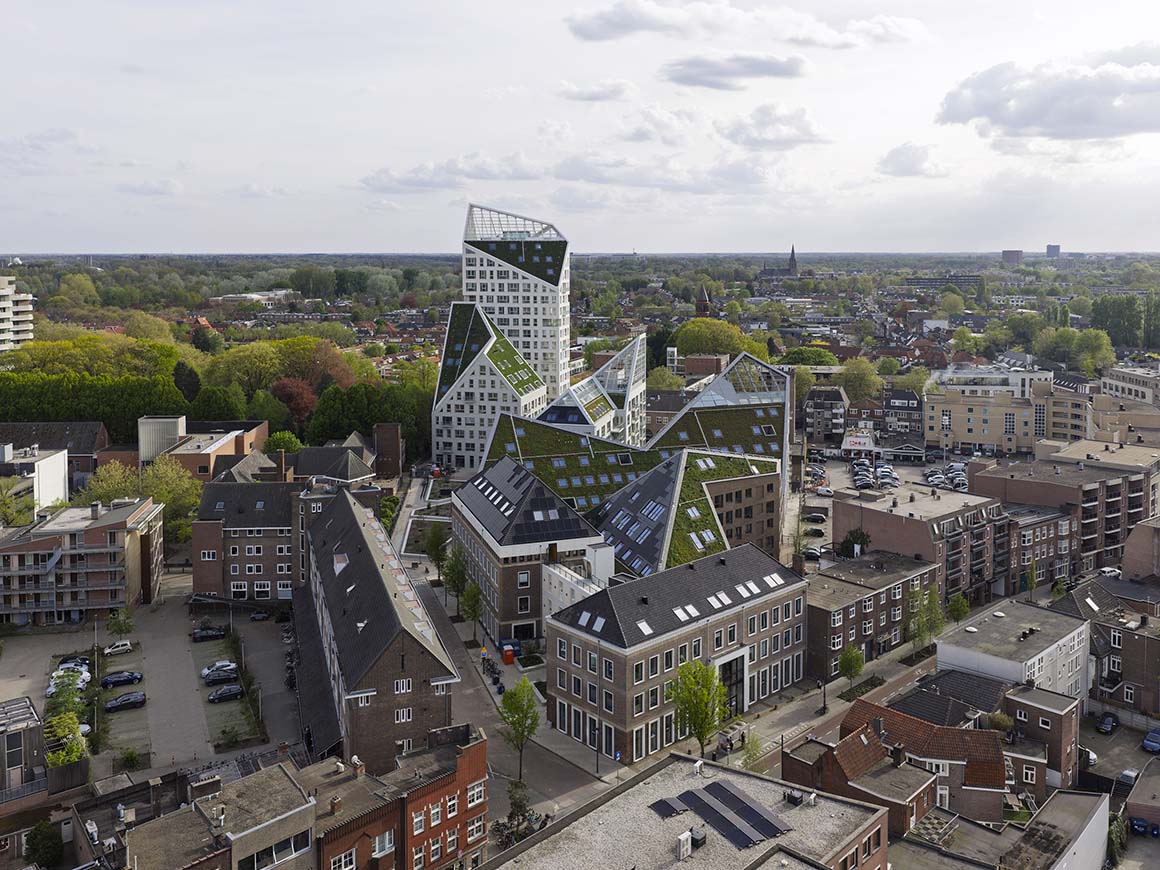

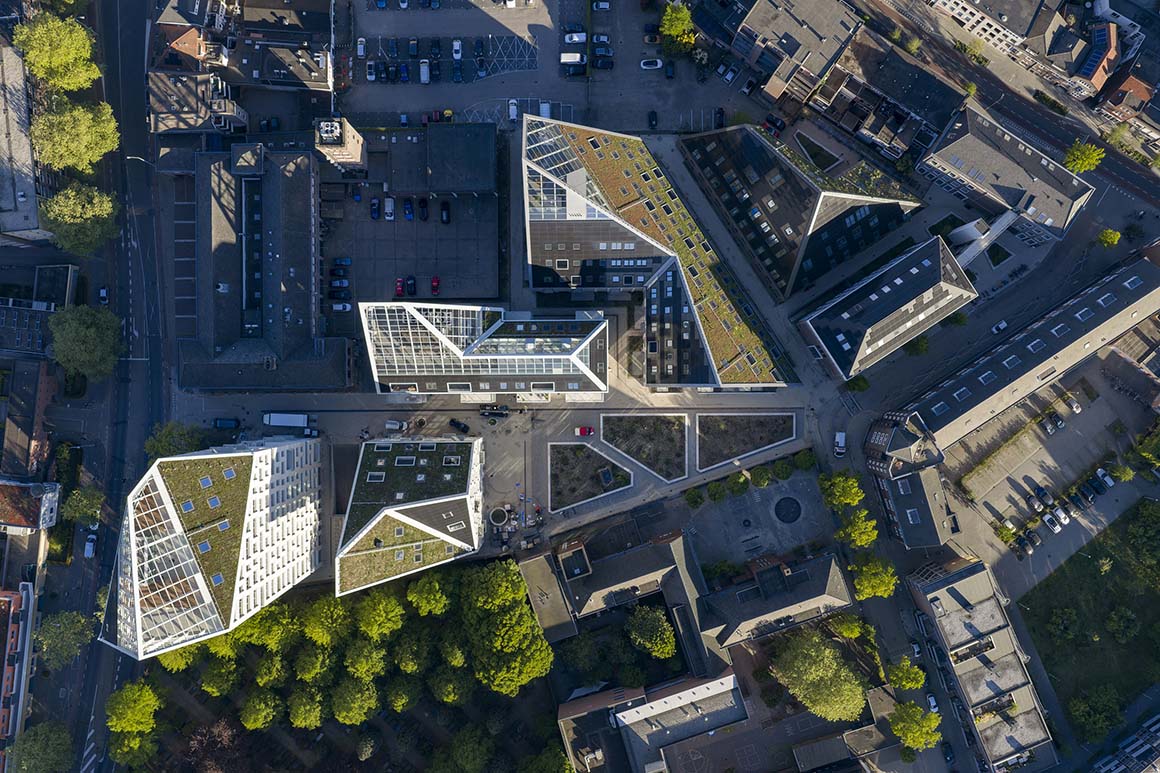
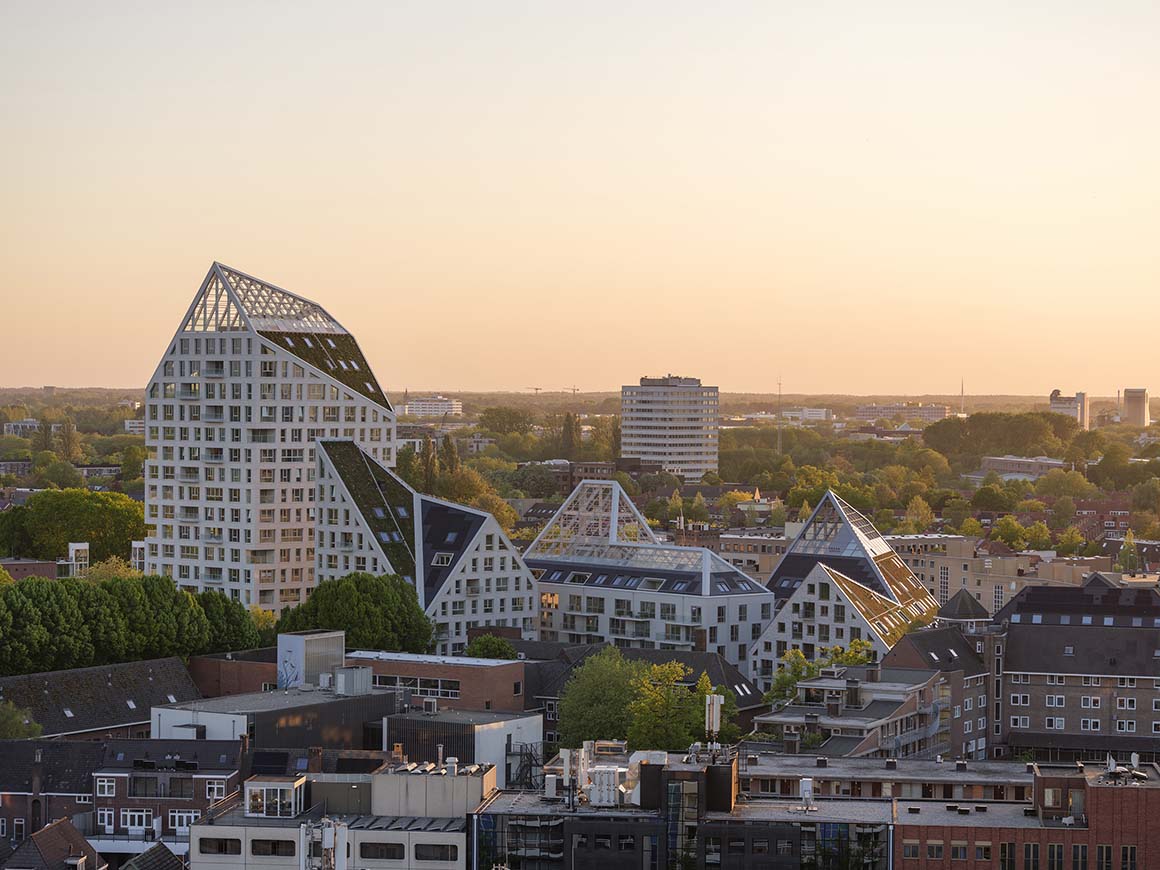
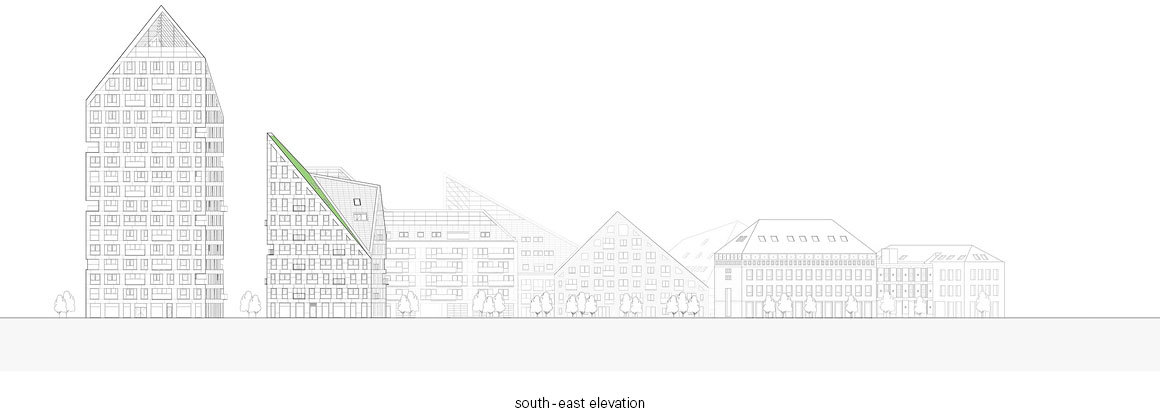
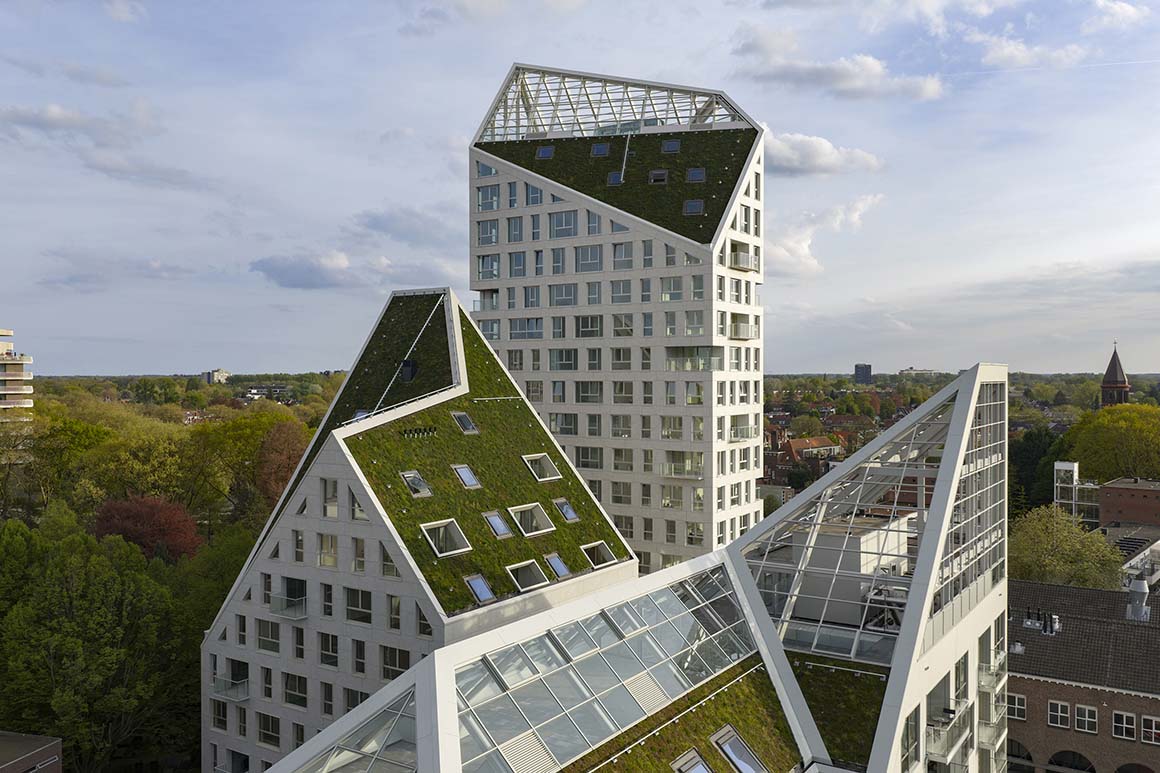
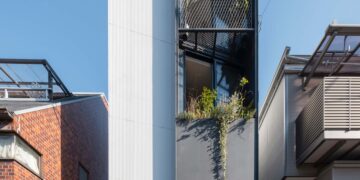
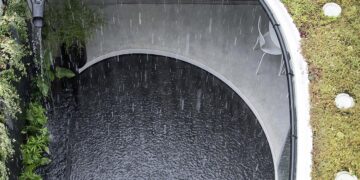
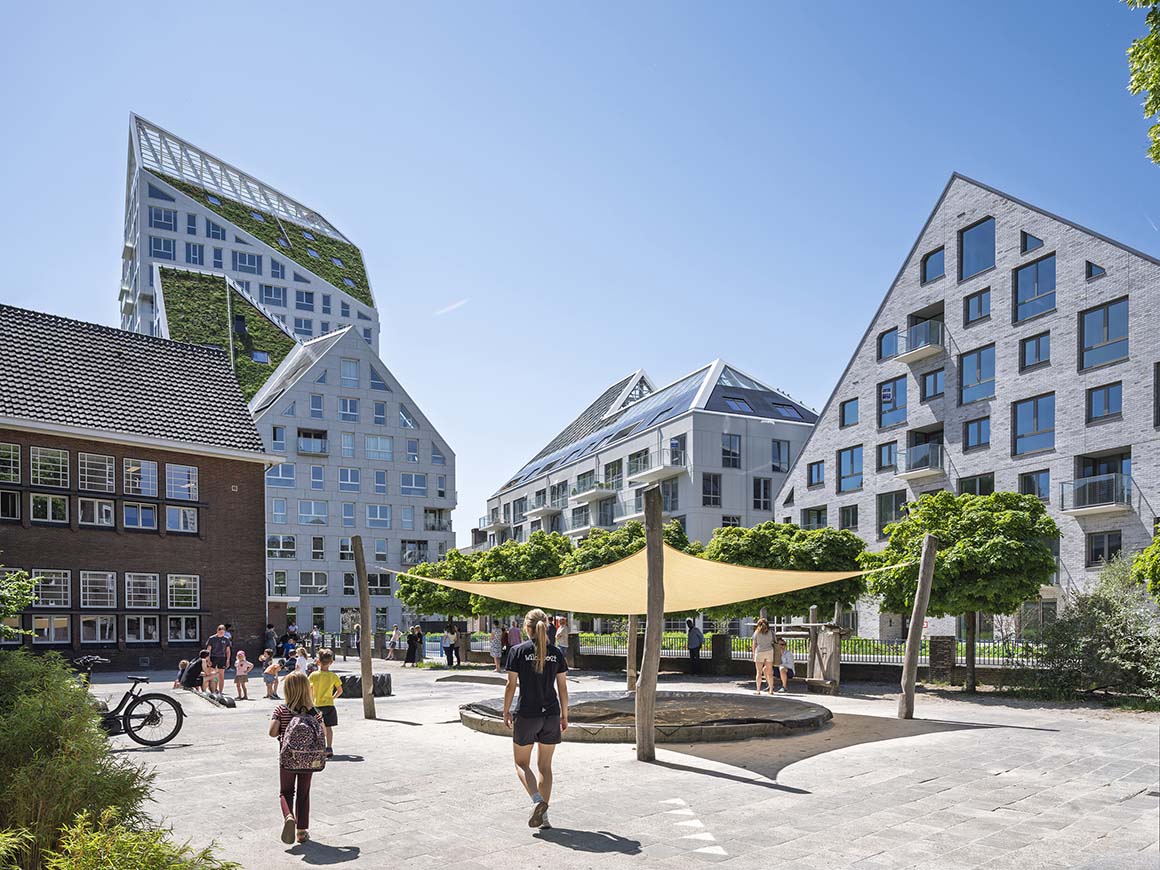
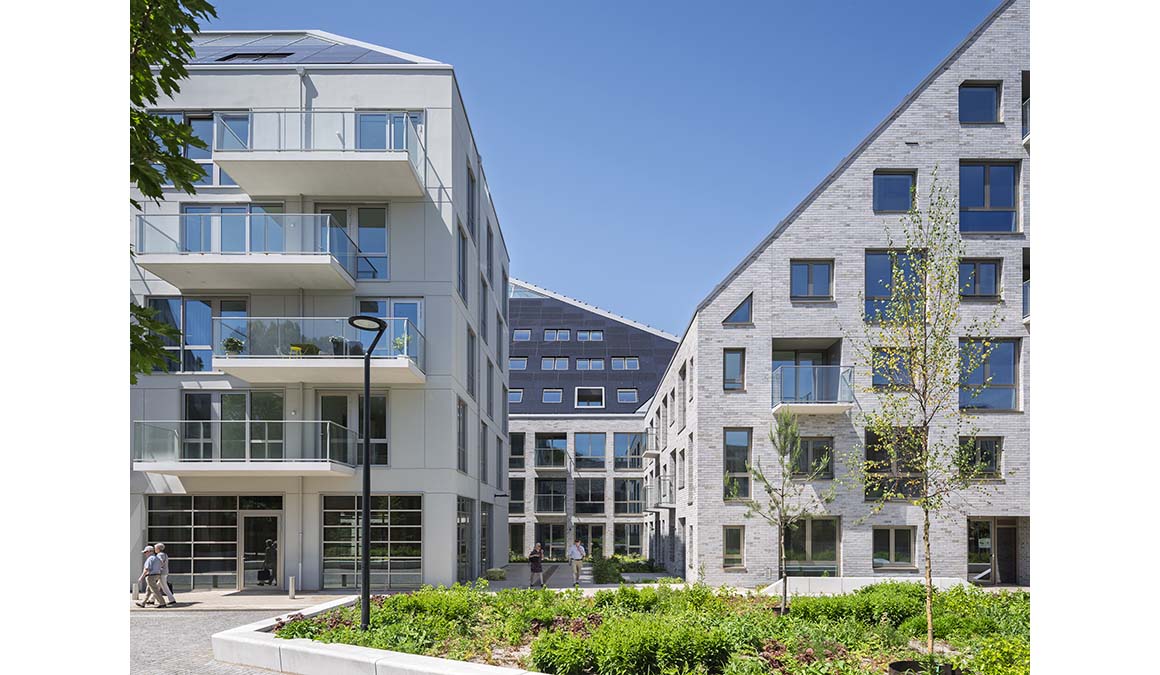
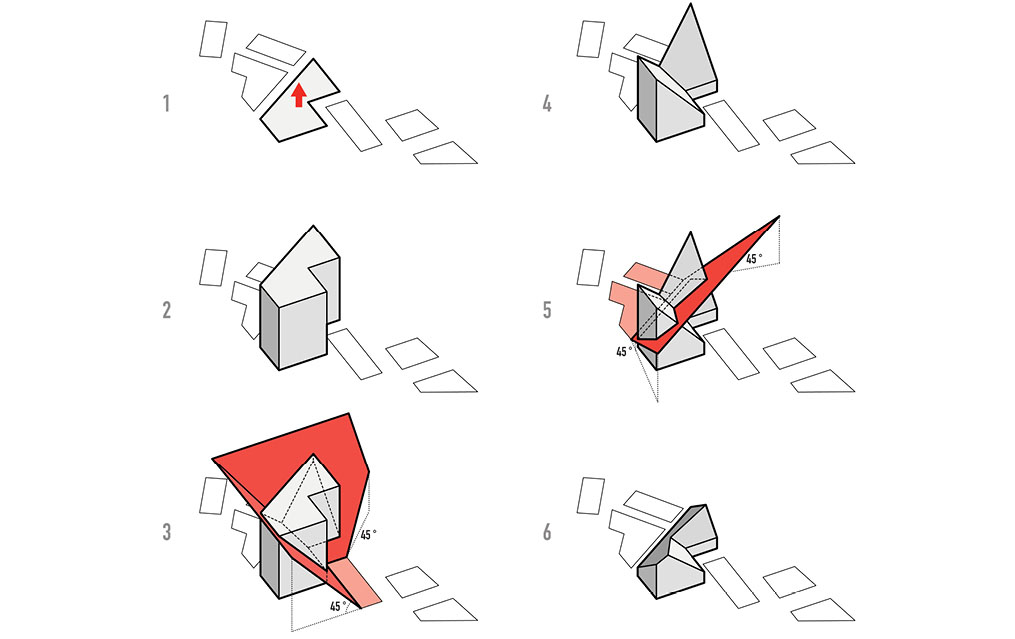
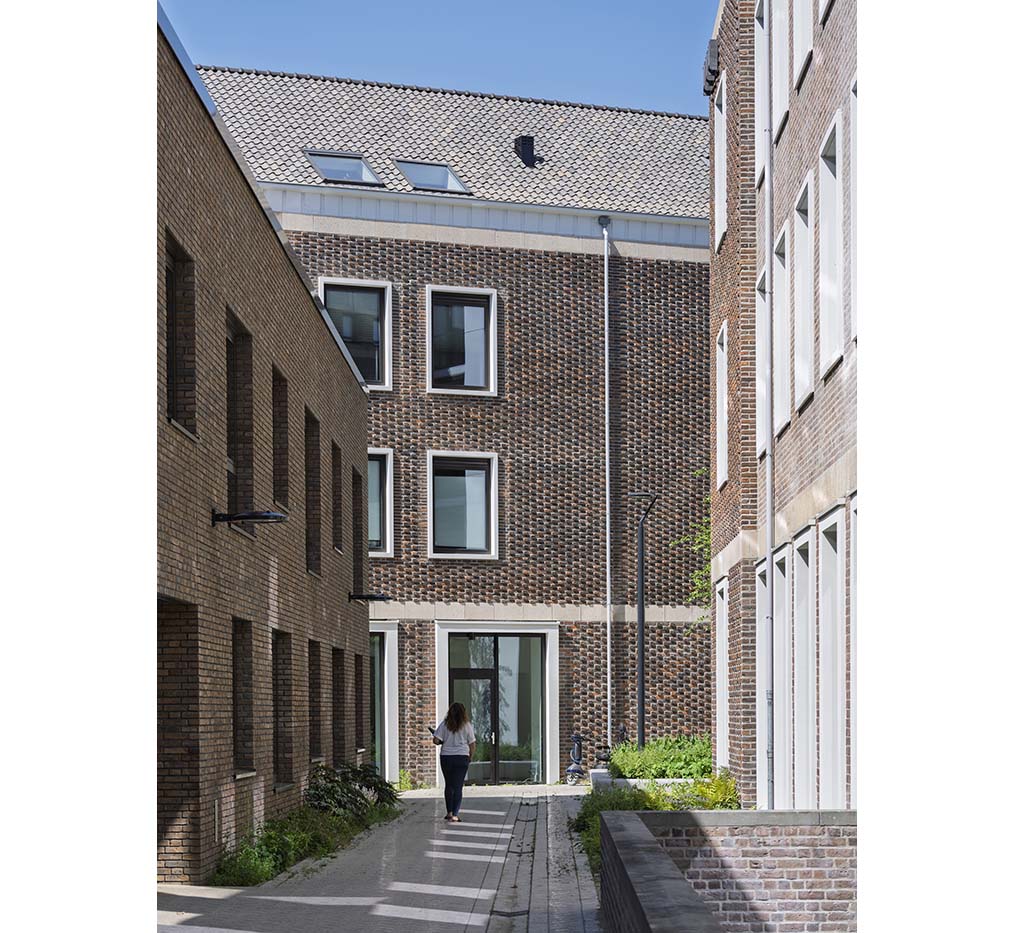
The facades reinforce this progression. A gradient of colours transitions from the dark red brick of the existing buildings through shades of brown, beige, and light grey before reaching the white stone cladding of Indigo, allowing the large-scale development to integrate naturally into the surrounding urban fabric. The sloping roofs are more than a formal gesture. Shaped according to a 45-degree daylight plane projected from neighbouring buildings, they maximise sunlight access to both residential and public spaces while bringing a sense of openness to the dense development and its narrow streets. The roofs also serve as environmental infrastructure, incorporating photovoltaic panels and green roofs that enhance biodiversity. Together with the landscape design, they help mitigate urban heat, retain rainwater, and improve living conditions.
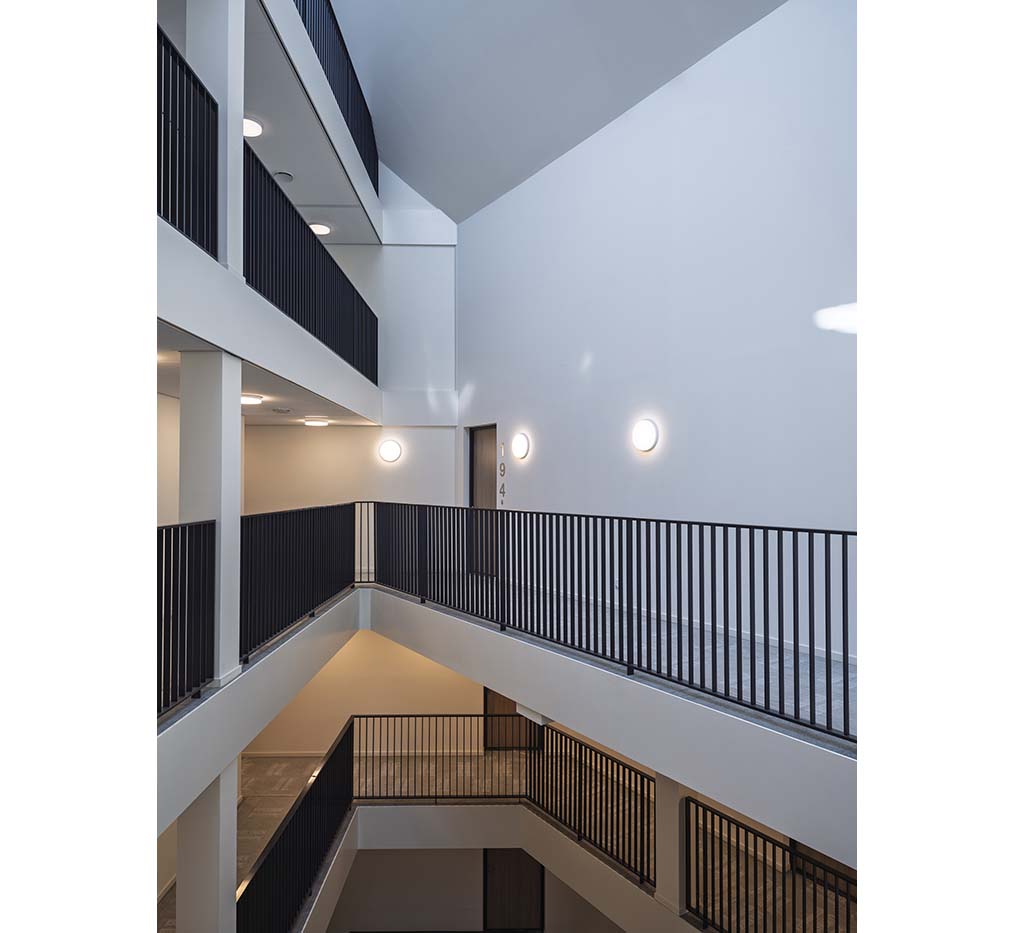
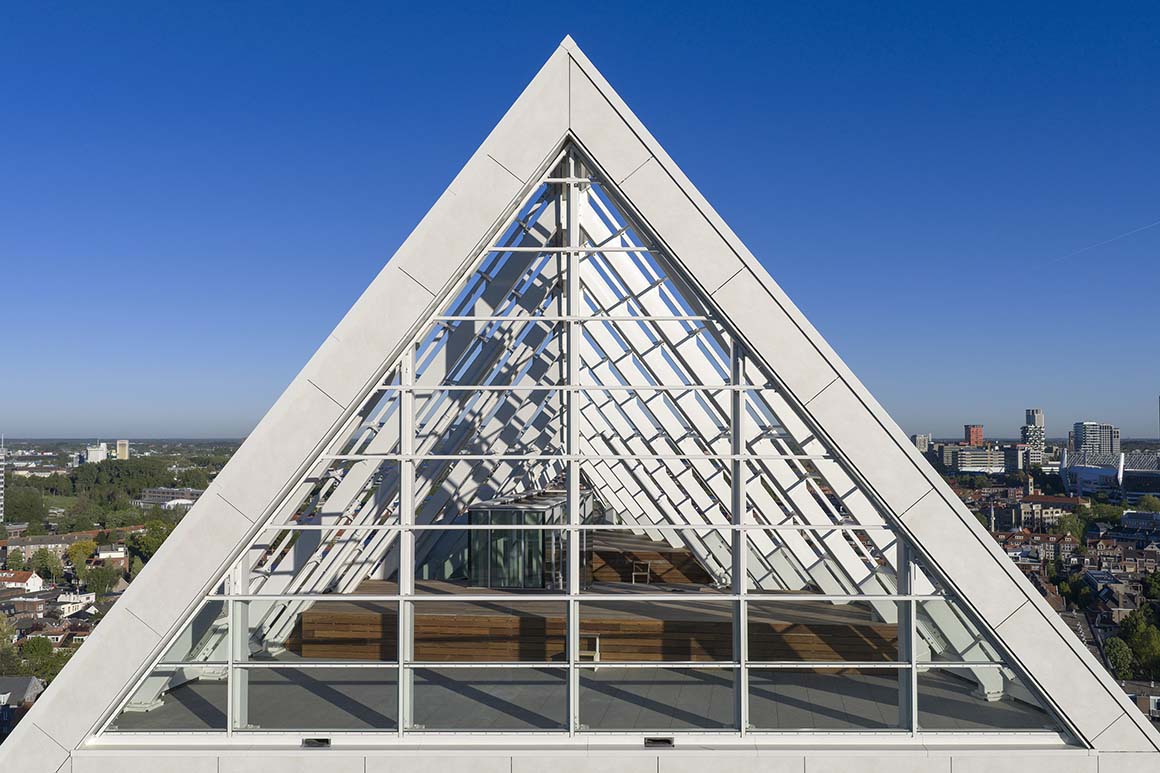
Several buildings feature open rooftop terraces for residents. These shared spaces include a greenhouse for communal gardening, encouraging interaction among neighbours. At ground level, commercial spaces connect directly to largely car-free public areas, supporting outdoor terraces and a pedestrian-friendly environment.
The project also reduces embodied carbon through the reuse of existing buildings while minimising operational emissions with energy-efficient systems and solar power generation. Yet its approach to sustainability extends beyond technical solutions. By respecting the scale and character of the historic neighbourhood while accommodating greater residential density, and by weaving together public space, greenery, housing, and commerce, Nieuw Bergen demonstrates how urban growth can build upon the memory and ecology of a place rather than replace them.
Project: Nieuw Bergen / Location: Eindhoven, Netherlands / Architect: MVRDV / Founding Partner in charge: Jacob van Rijs / Partner: Frans de Witte / Project team: Fedor Bron, Mick van Gemert, Gerard Heerink, Herman Gaarman, Teodora Cirjan, Marjolein Marijnissen, Daniele Zonta, Claudia Consonni, Lesia Topolnyk, Damla Demir, Kelvin Saunders, David van der Blonk, Anouk Wilmering, Saskia Kok, Ievgeniia Koval, Beril Maria Kubin, Annalot Brockhoff, Aneta Rymsza, Beatrice Bandiera / Interior (lobbies)_partner: Fokke Moerel / Interior (lobbies)_design team: Elien Deceuninck, Basak Günalp, Karolina Szostkiewicz, Tanne Marais, Amanda Galiana Ortega / Business development: Willeke Vester / Copyright: MVRDV Winy Maas, Jacob van Rijs, Nathalie de Vries / Structural engineer: Adviesbureau Tielemans / MEP engineer: Huisman & van Muijen / Building Physics: DPA Cauberg-Huygen / Technical design: INBO / Landscape architect: MTD Landschapsarchitecten / Contractor: Stam + De Koning Bouw / Client: SDK Vastgoed bv / Use: retail, residential / Gross floor area: 31,246m² / Design and construction: 2016-2026 / Completion: 2026 / Photograph: ©Ossip van Duivenbode (courtesy of the architect)