
By the Time of Nature and the Properties of Materials
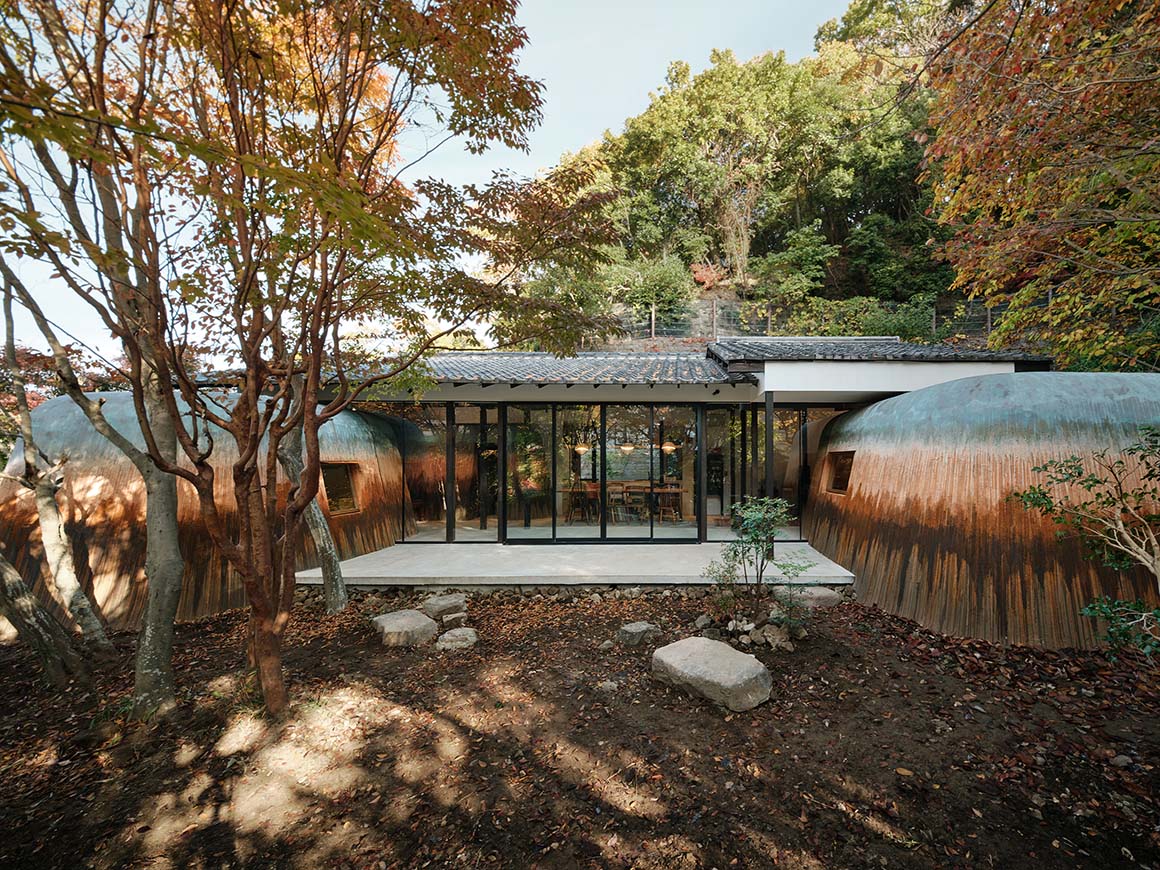
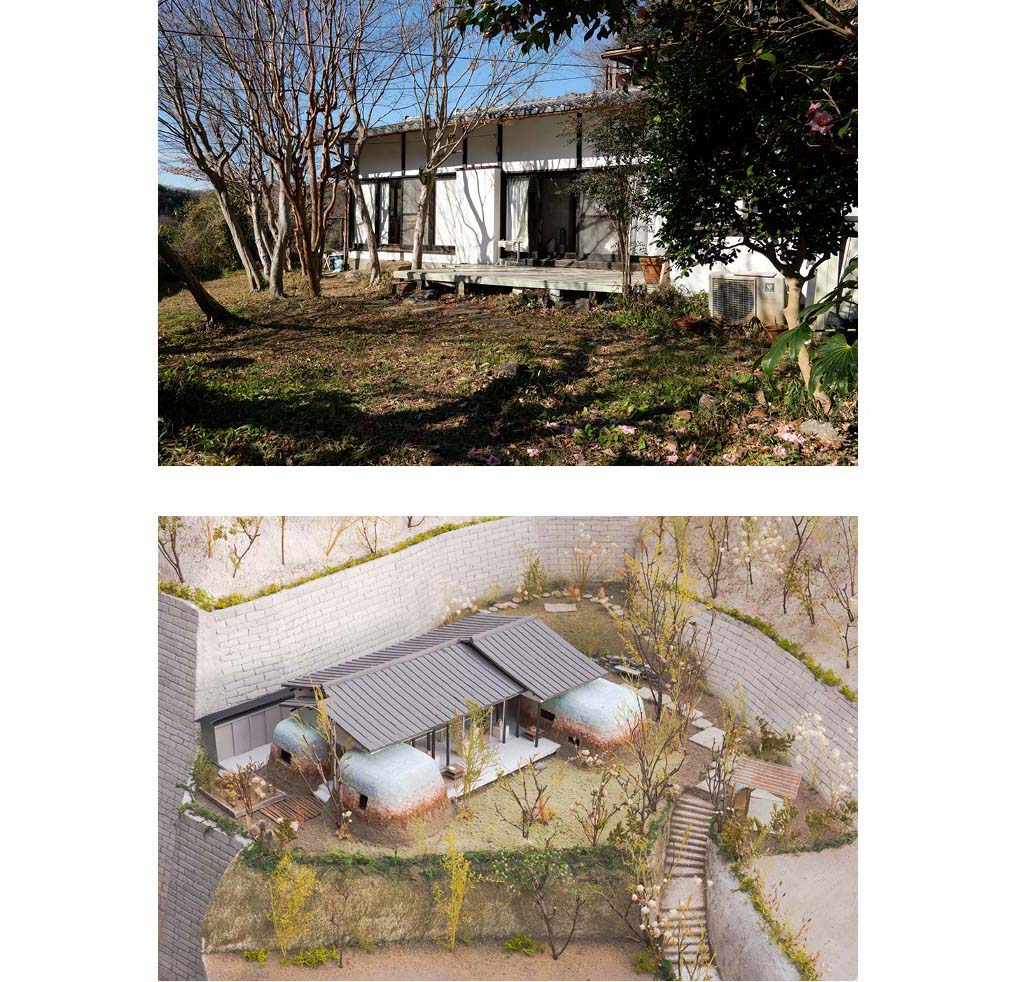
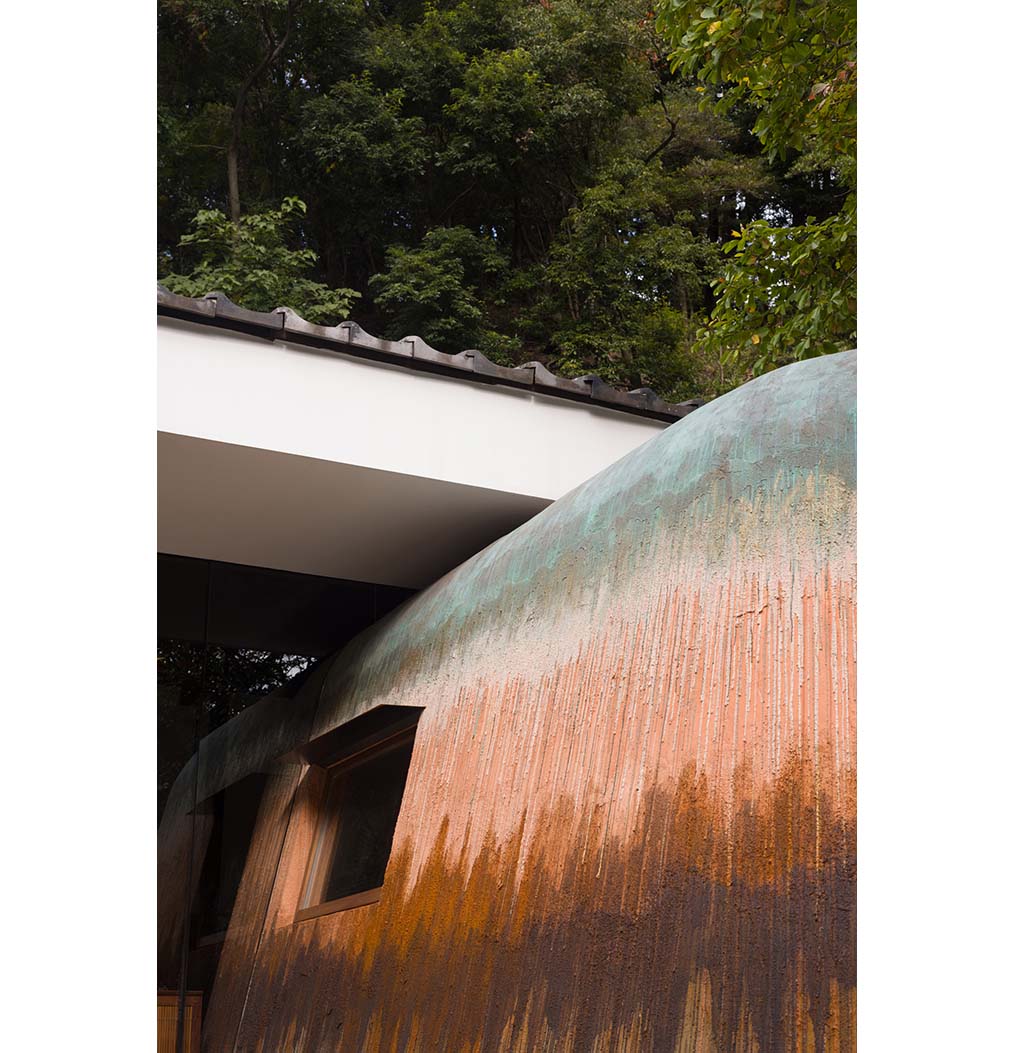
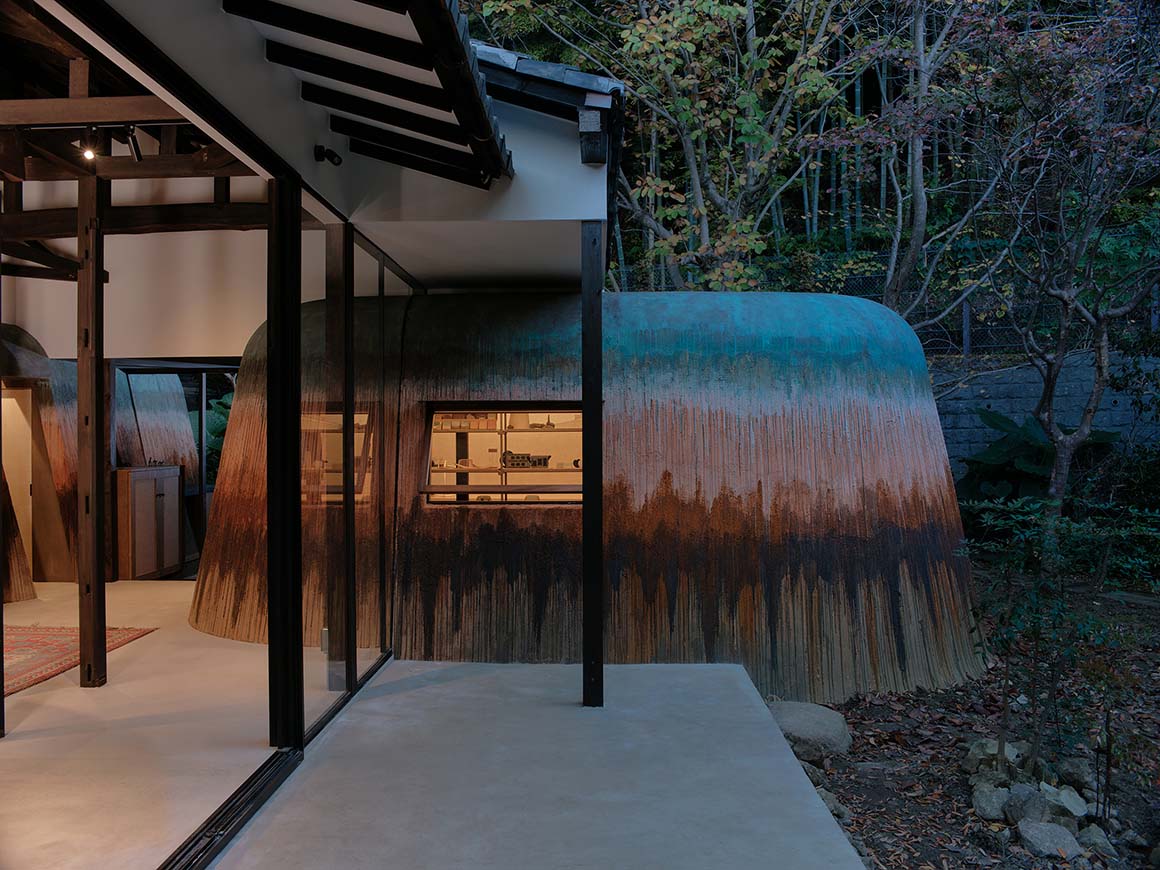
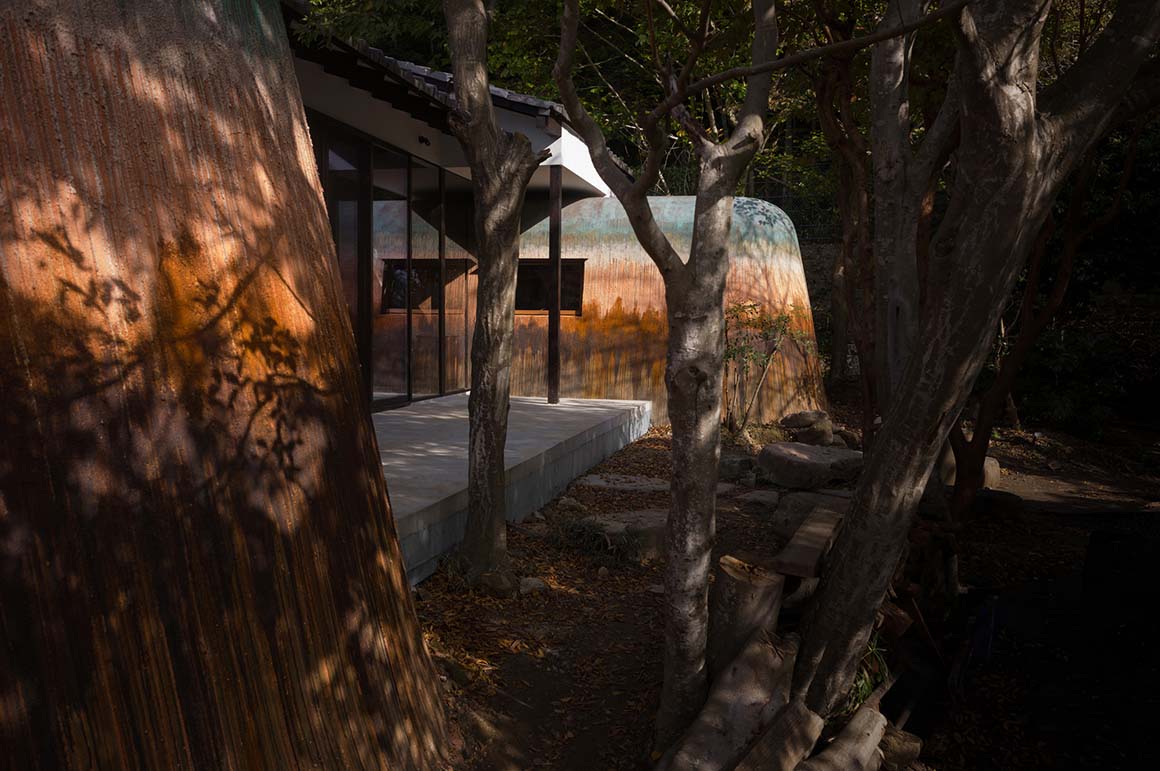
At the edge of a yato valley in Kamakura, where steep cliffs meet ancient cave tombs, stands a two-family house renovated from a single-storey dwelling built in 1967. Home to the owners and their ceramic-artist parents, the project responds to its strong geological context, rethinking architecture as an extension of the ground. The exterior, streaked with clay, soil, and metal powders, evokes ceramic glazes, while layers of material and their physical interactions shape the form.
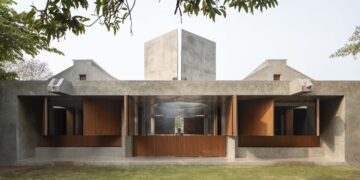
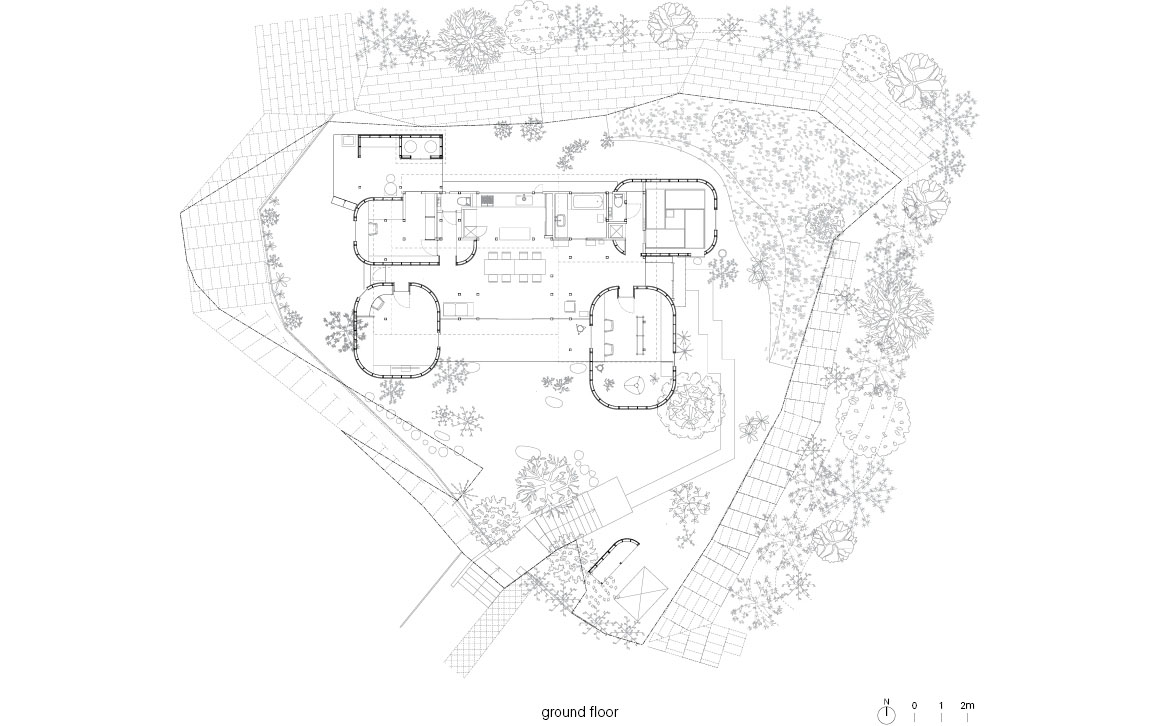
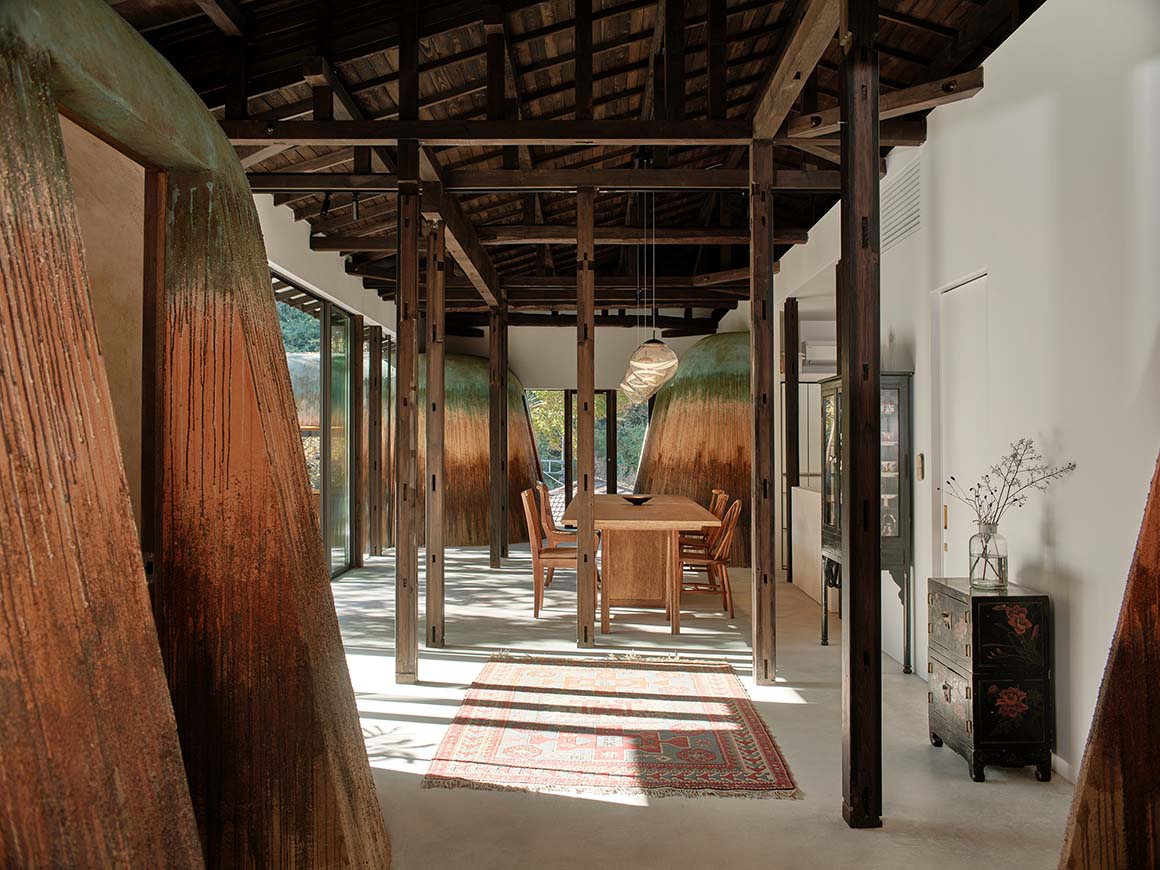
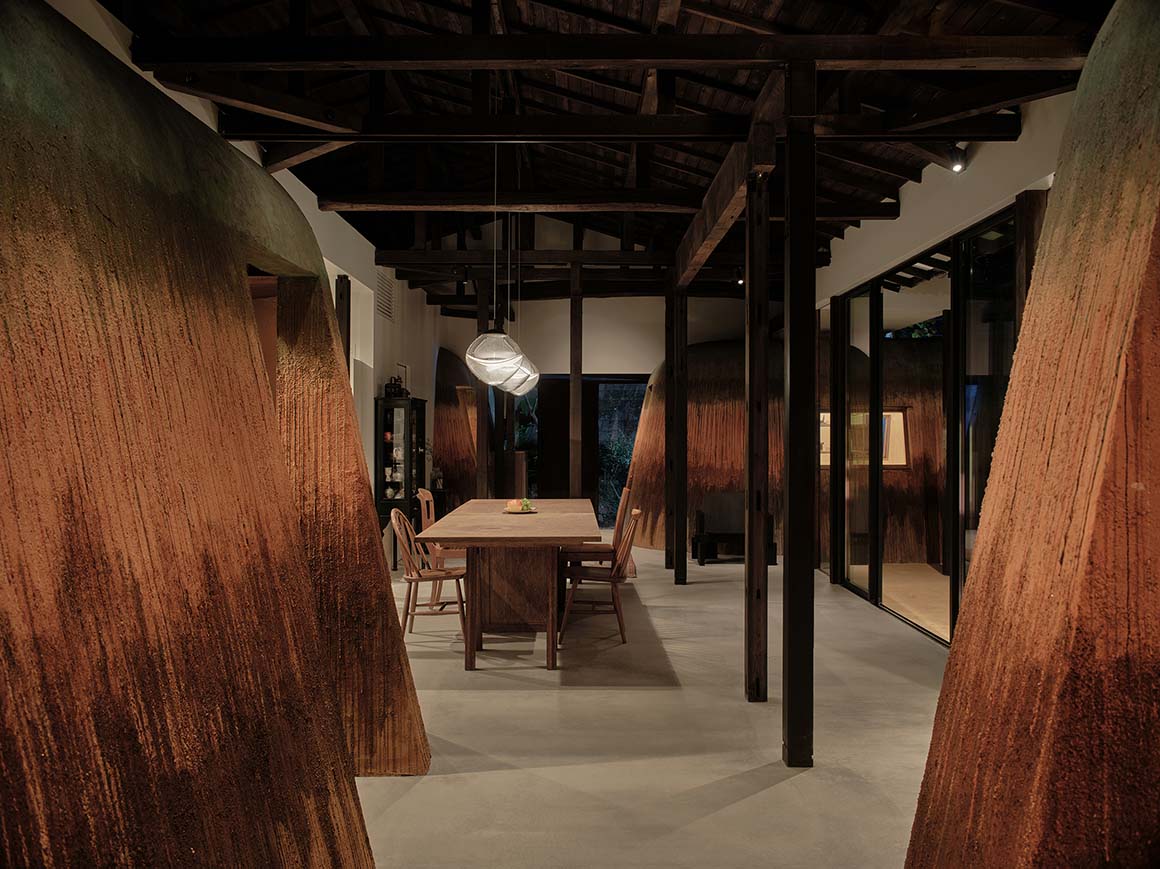
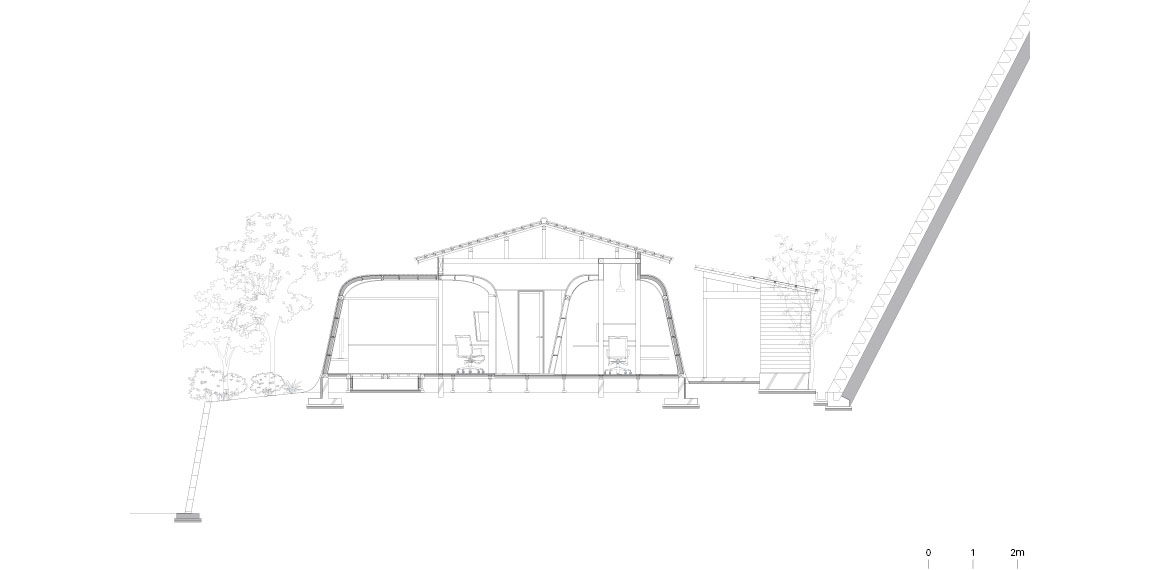
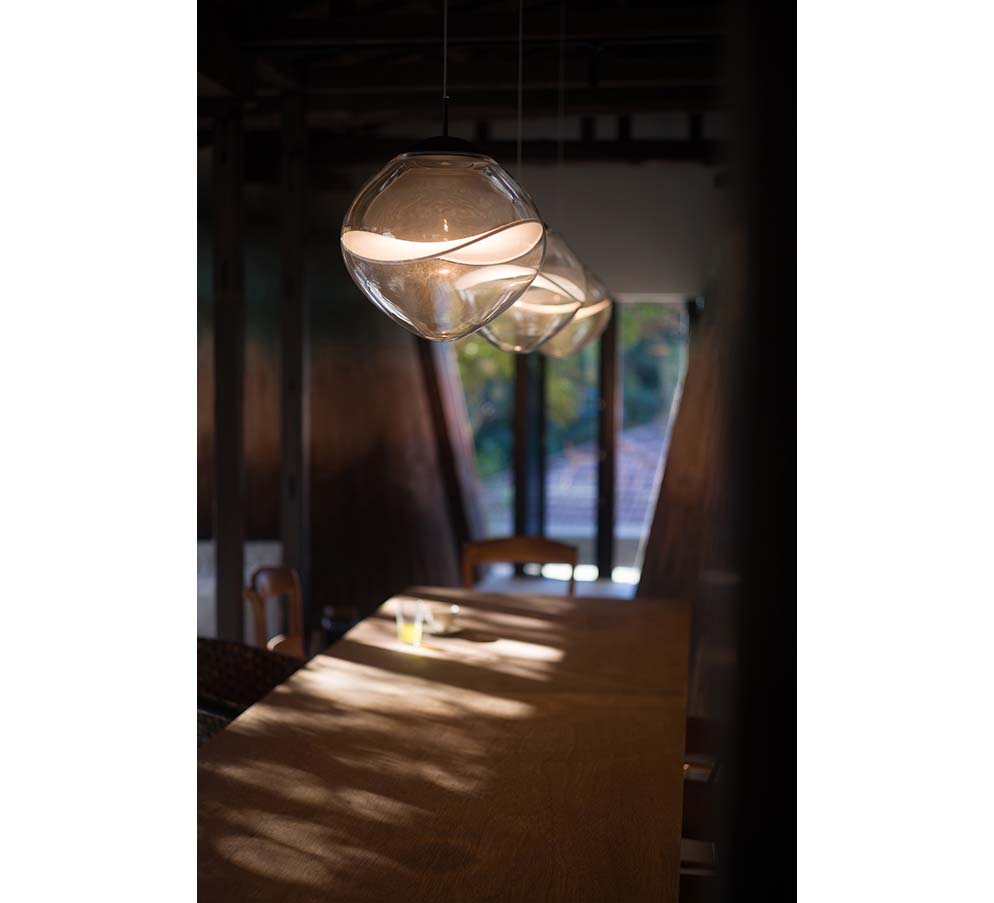
The renovation makes use of the existing structure. After being damaged by a typhoon, the original timber house was stripped back to its frame, and its interior was entirely removed to create a single, open volume. This central space, open to the surrounding environment, functions as a shared area combining atelier, living room, and kitchen, and extends toward a south-facing terrace.
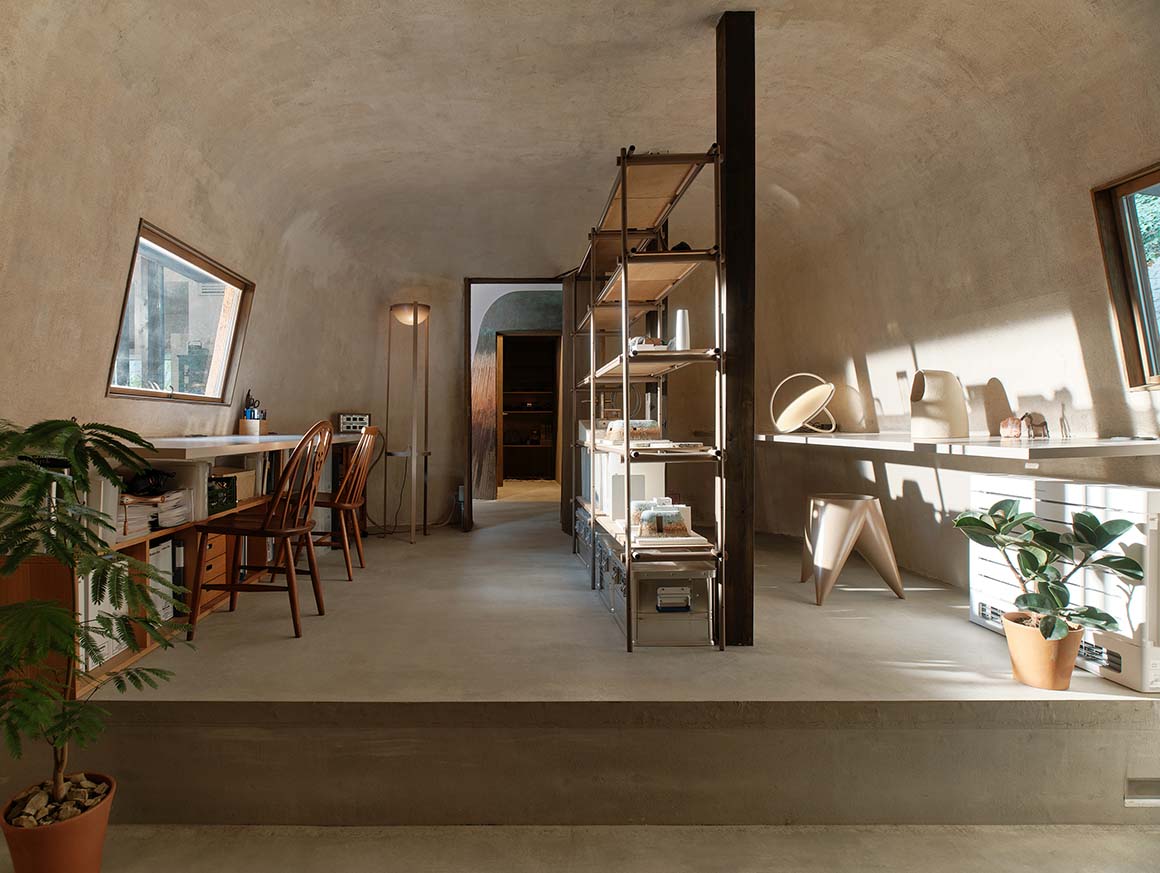
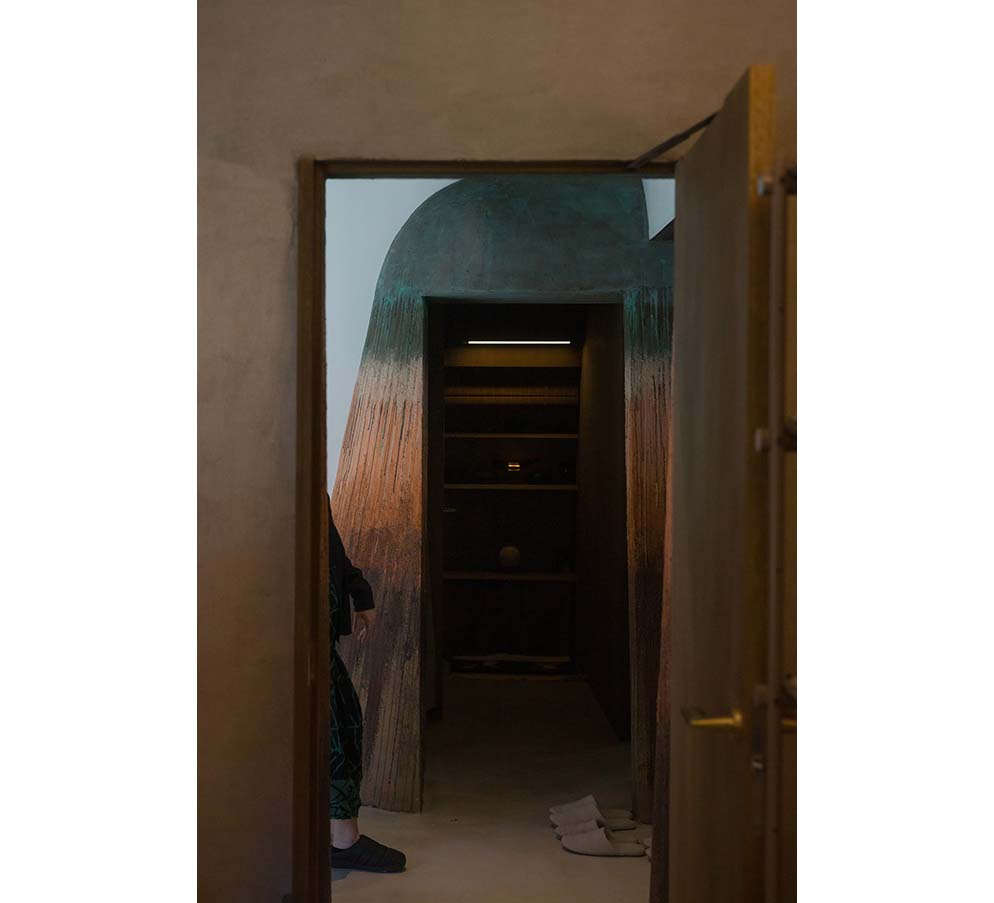
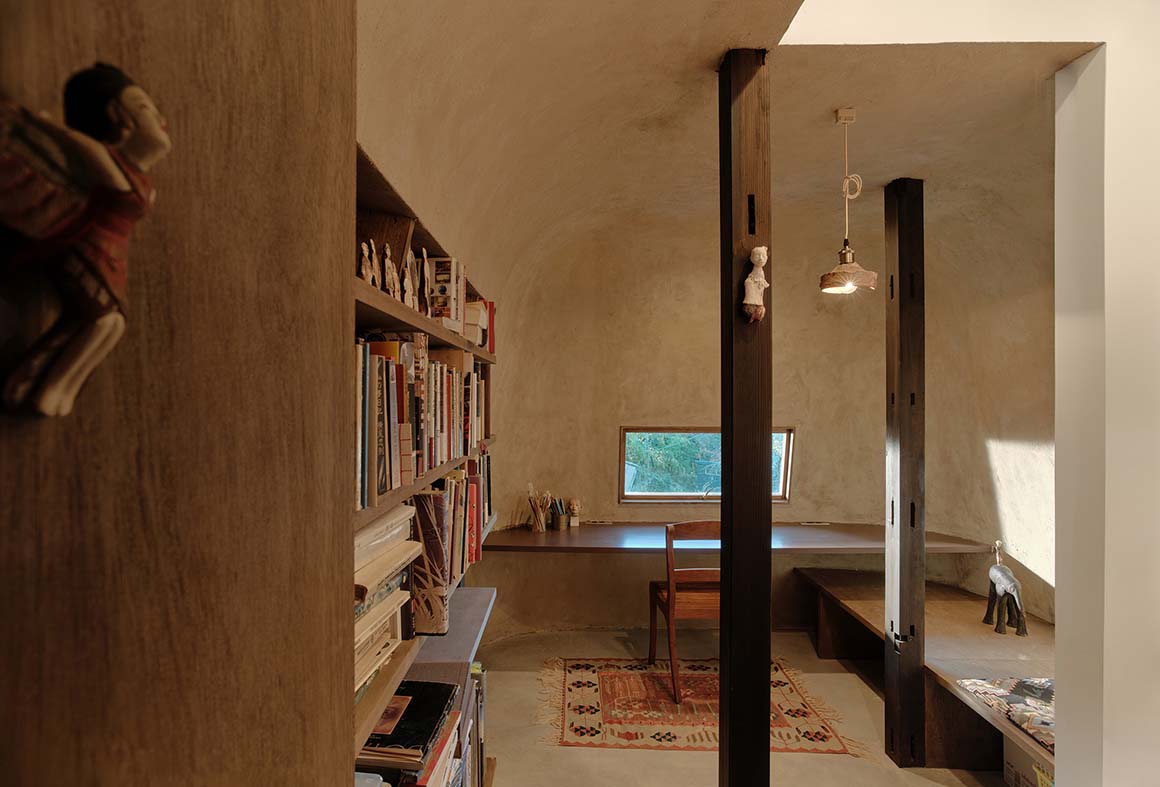
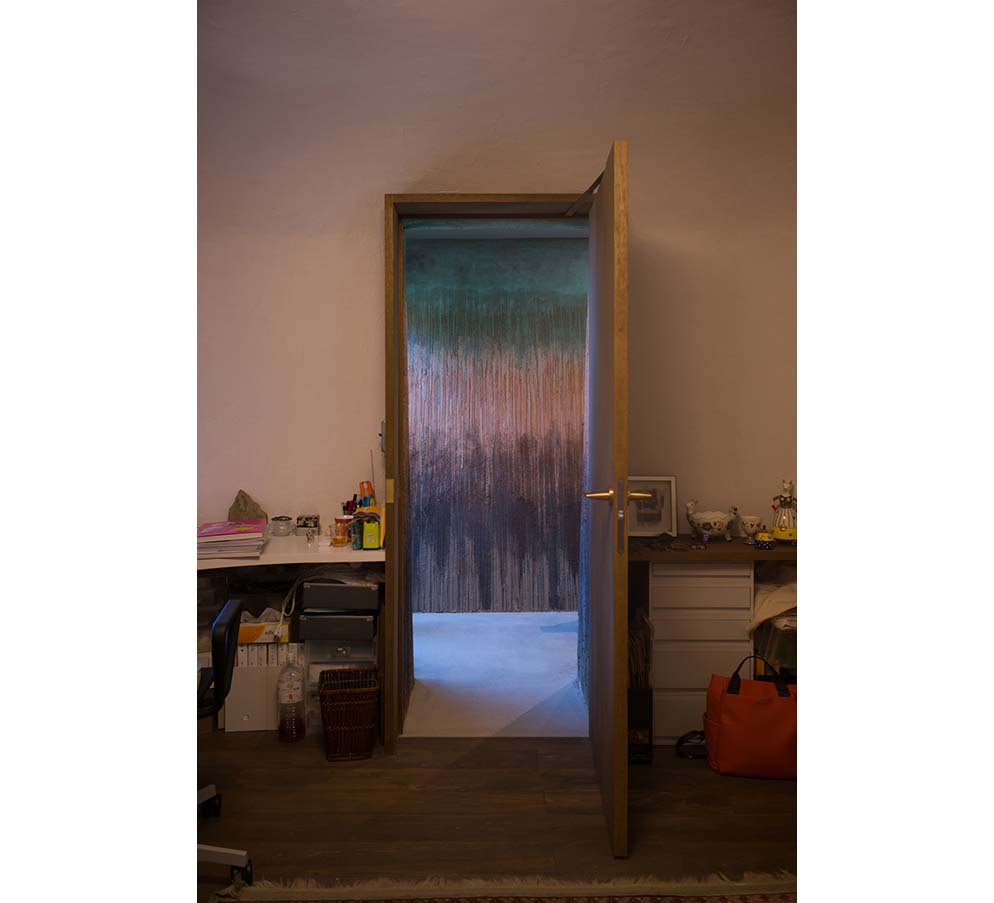
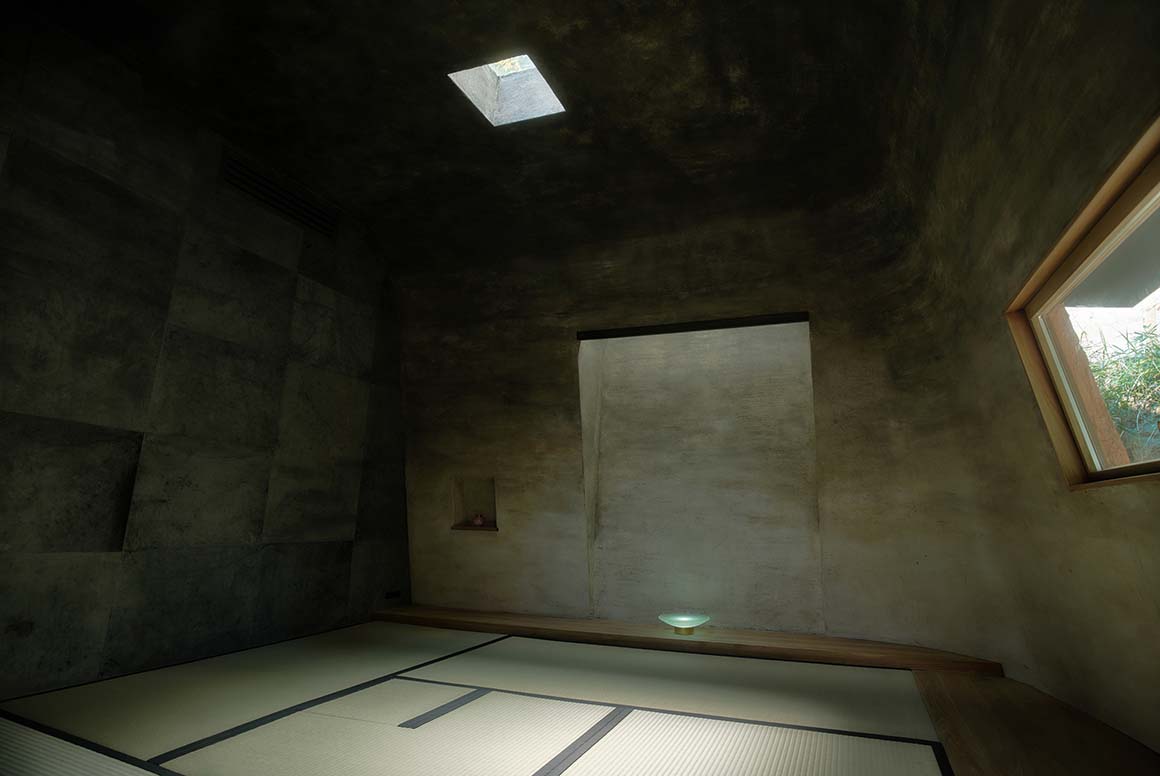
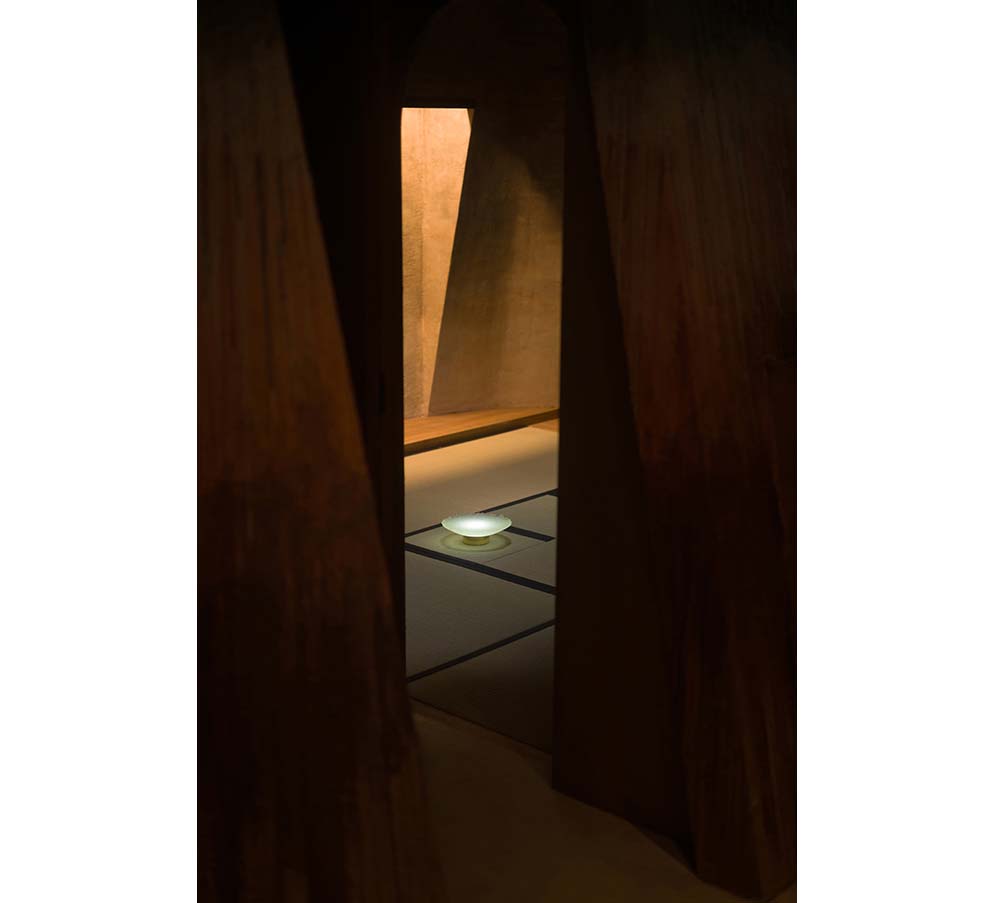
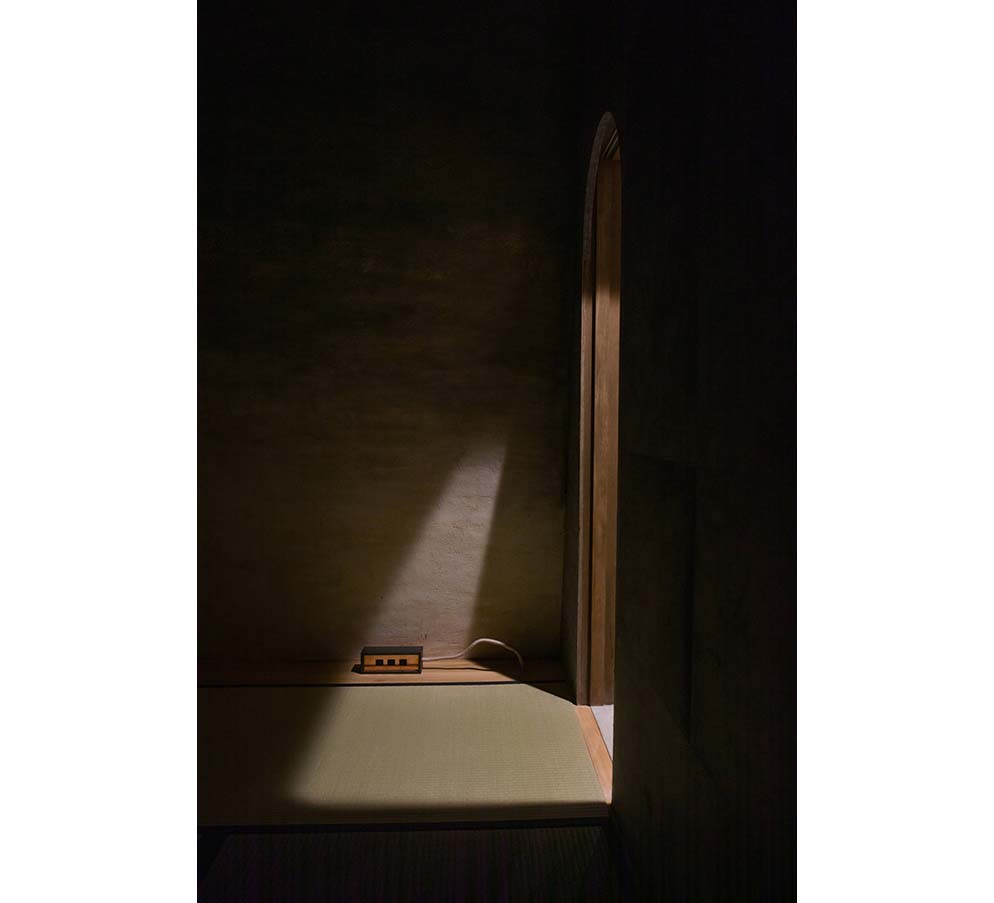
At the four corners of this space, new rooms were added, formed as earthen masses rising from the ground. This configuration recalls clusters of ancient settlements, with each family member occupying a cave-like, enclosed space. Three of the volumes serve as bedrooms and workspaces, while the northeastern volume contains a tatami-floored tea room with a skylight that also functions as a guest room.
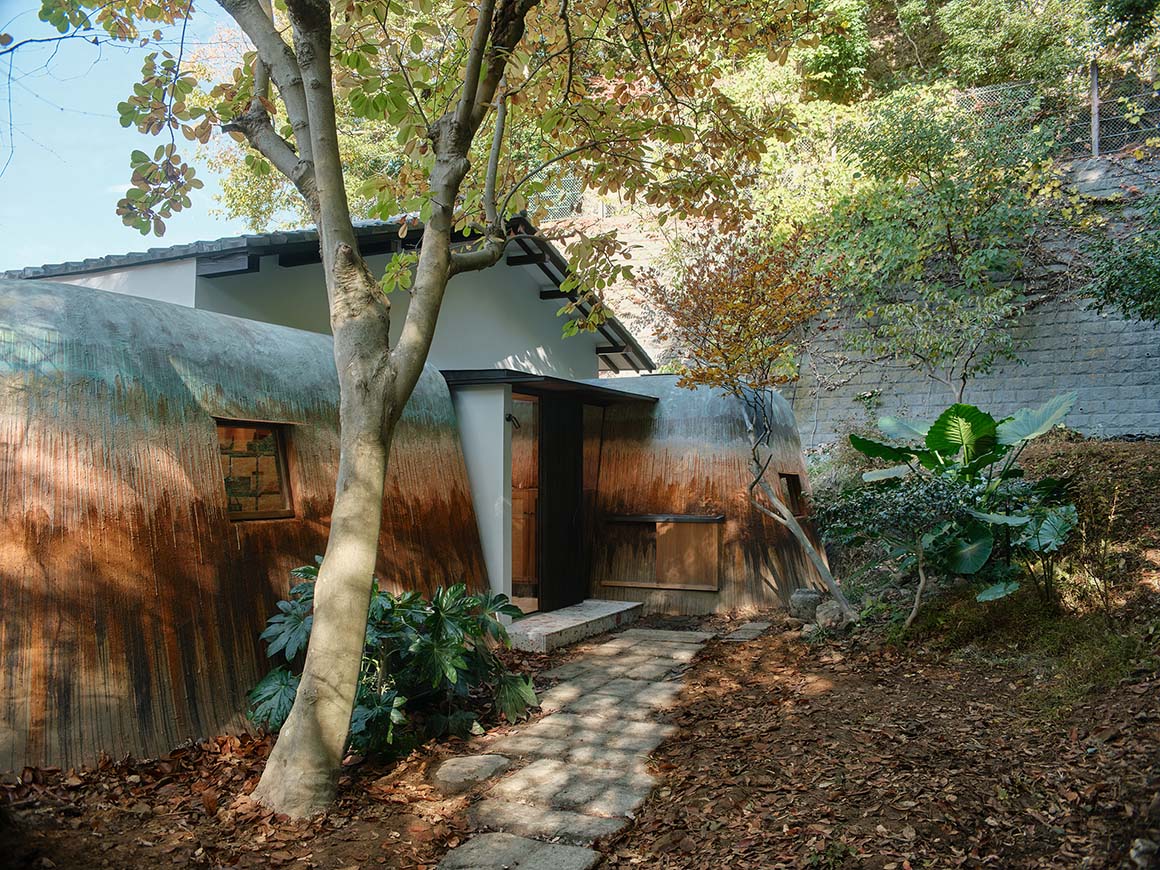
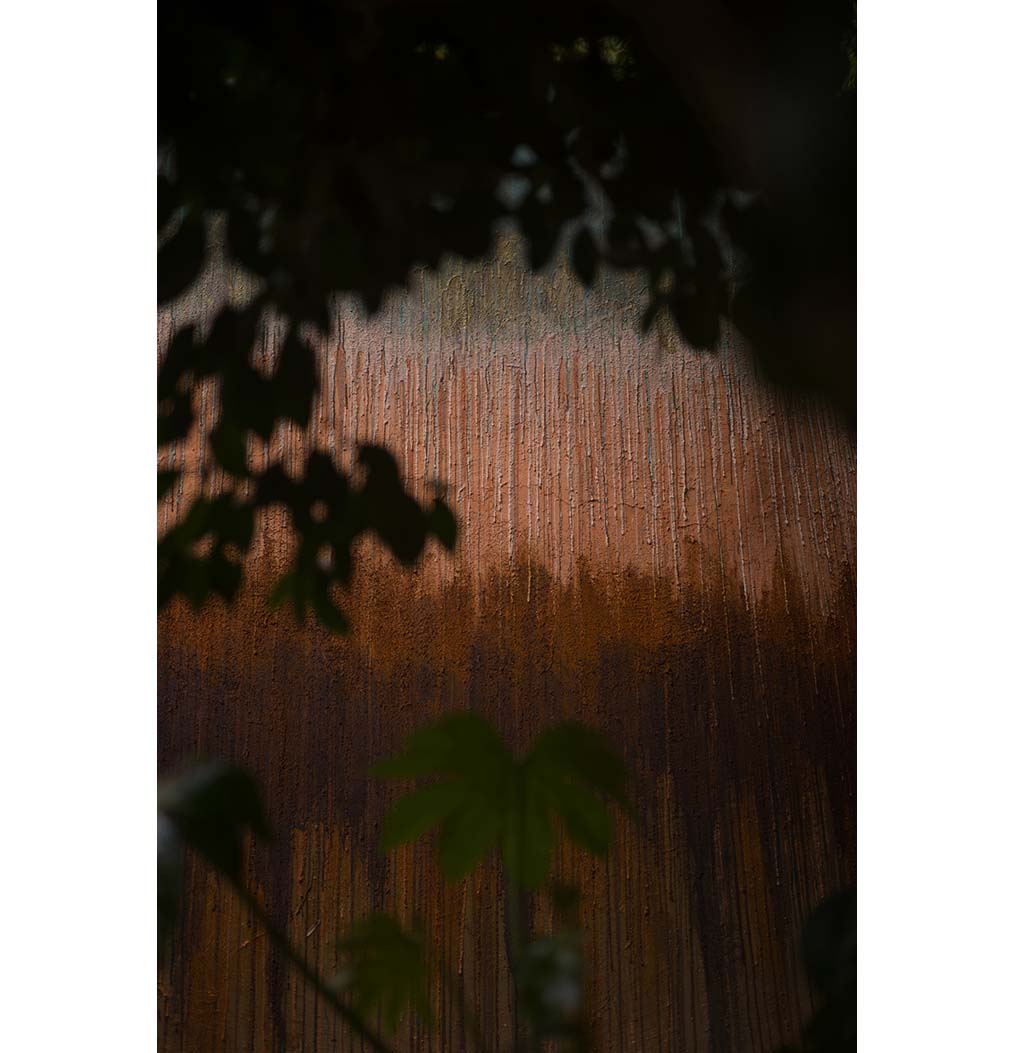
The name “Haniyasu” derives from a deity of earth and pottery in Japanese mythology, as well as an archaic word for clay. The house situates itself across the boundaries of land, architecture, and ceramics, aiming to traverse them through materials and acts of making. By supporting the existing structure with earthen masses that appear to emerge from the ground, it creates a temporal ambiguity in which it is unclear what came first.
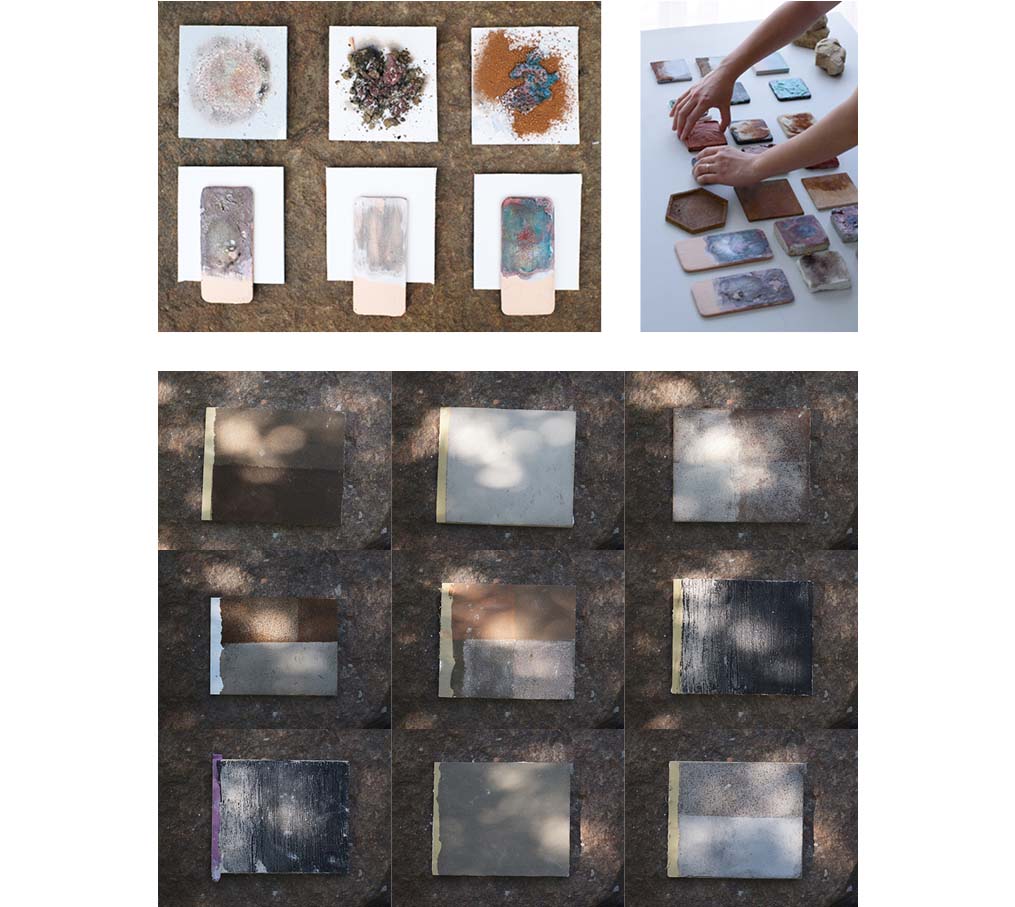
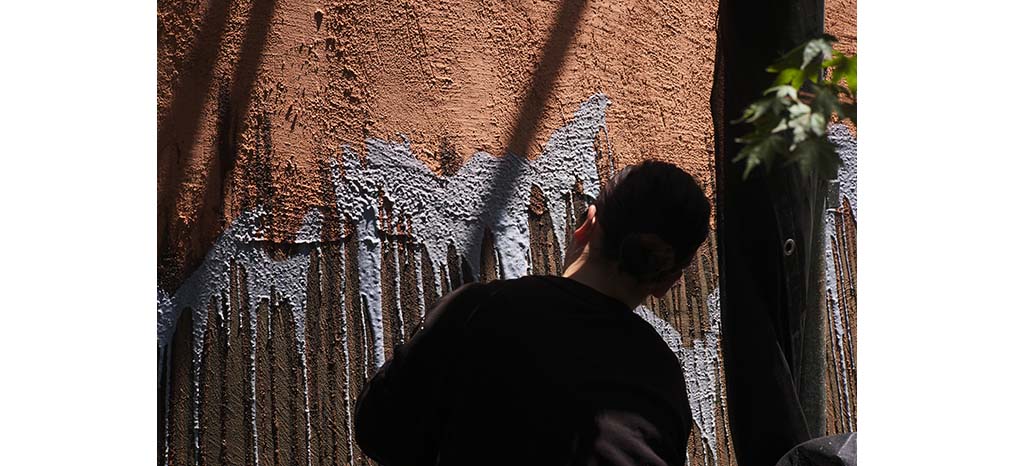
Material experimentation runs throughout the project. Clay-rich soil excavated on site was crushed and fired to be used as a finishing material, while discarded clay from ceramic production was bisque-fired and layered onto the walls. A plaster mixed with iron and copper powders was repeatedly poured over the exterior, and through oxidation, rust generates a shifting spectrum of colors from blue-green to brown and grey-green. The interior is also finished with rough plaster, forming a cave-like texture.
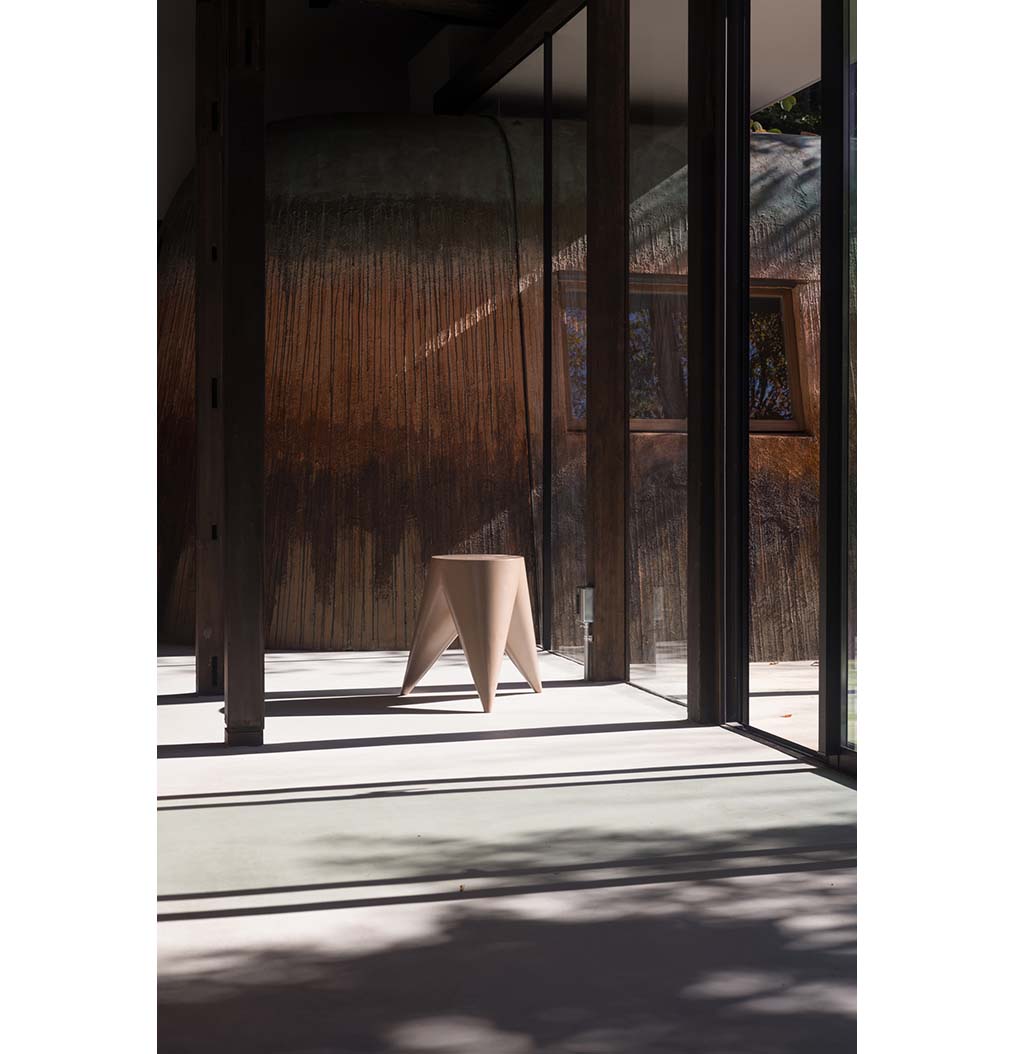
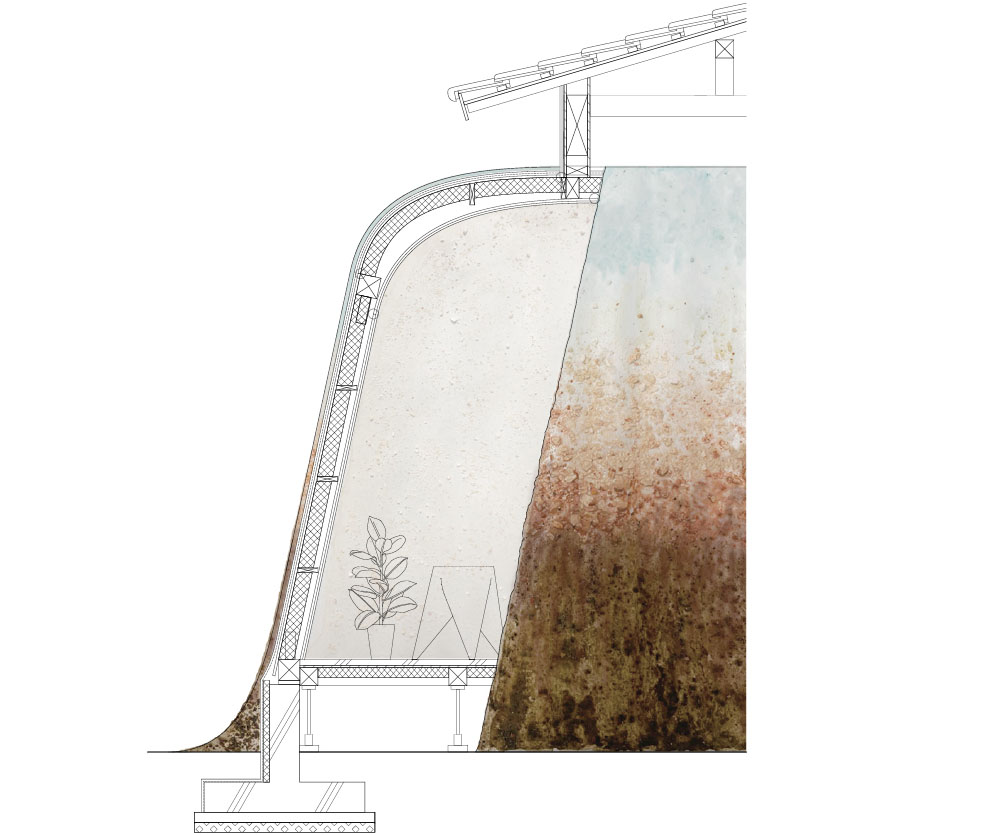
As in Japanese mythology, where Haniyasu is said to have been born from excrement, the house follows a cycle in which new material and space emerge from industrial and domestic waste. By actively incorporating techniques such as glaze pouring and the oxidation of metals, it embeds chance and the passage of time into the architecture. In this way, the overlap of craft, natural processes, and material transformation proposes a mode of living in which making and dwelling are not separated.
Project: Haniyasu House / Location: Kamakura, Kanagawa, Japan / Architect: AATISMO / Structural engineer: TECTONICA INC.,Mitsuhiro Kanada / Lighting adviser: DAISUKI LIGHT / Real Estate Consulting: Souzoukei Fudousan / Contractor: Yukari Construction / Plastering Supervisor: Imajo Sakan / Plastering Cooperation: Naoya Ago, Kanta Kajita, Kuya Yamamoto, Kirito Yaguchi, Koutaro Horibe, Taichi Kitamura, Yuzuki Kuribayashi, Yuzuka Kobayashi, Miyoshi Sugiyama, Katsura Tatsumoto, Hana Otani, Yasushi Degami / Furniture production: Sasaki Research Institute / Metalwork production: Studio Bead / Electrical materials provided: Panasonic BRIDGEHEAD / Use: residence / Site area: 544.80m² / Bldg. area: 132.07m² / Gross floor area: 132.07m² / Structure: wood / Completion: 2025 / Photograph: ©Shinya Sato (courtesy of the architect)