

A Cyclical Perspective Encompassing the Creation and Return of Materials to the Ground
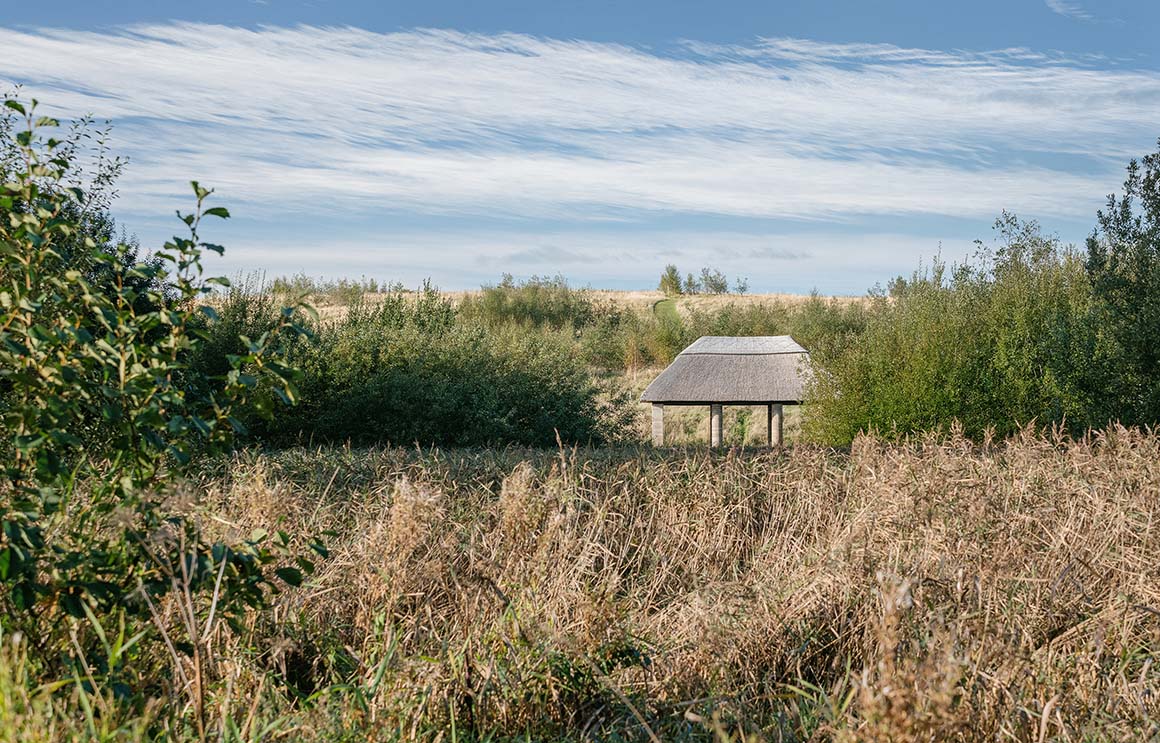

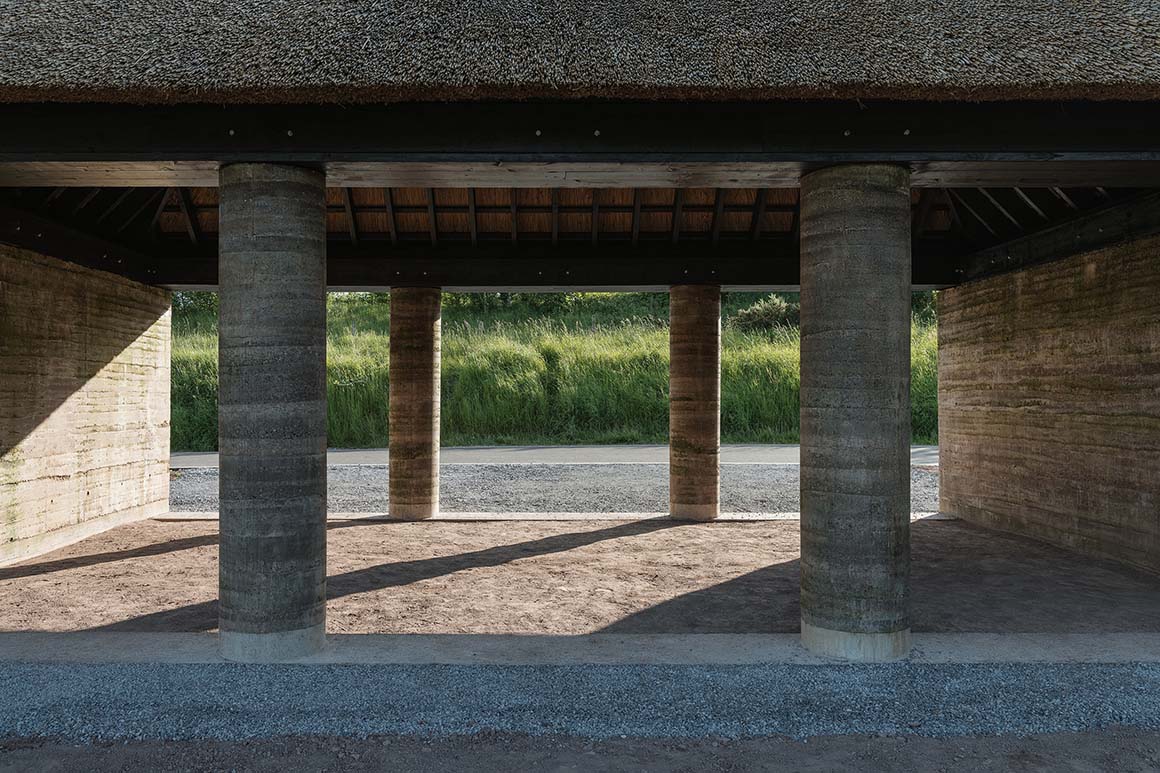
KinShip EcoLab, a platform for gatherings focused on the environment and biodiversity, has been completed in Tramore Valley Park in Cork, Ireland. Constructed using natural materials such as rammed earth, timber, and thatch, the structure is based on a cyclical perspective that encompasses the creation and return of materials to the ground—echoed in its name “den talamh”, meaning “of the earth.” The brief was to create a meeting place within the park for talks and discussions. Accordingly, the building frames views of the surrounding marshland, encouraging visitors to approach, observe, and engage with and experience the landscape. The site, once used as a landfill, has since been transformed into a biodiverse park, and its history and environmental context became key parameters in the design process. These conditions informed both material choices and construction methods, resulting in a structure that appears anchored between a manmade mound from the former landfill and the wetland, fixing its gaze toward a specific point in the landscape.
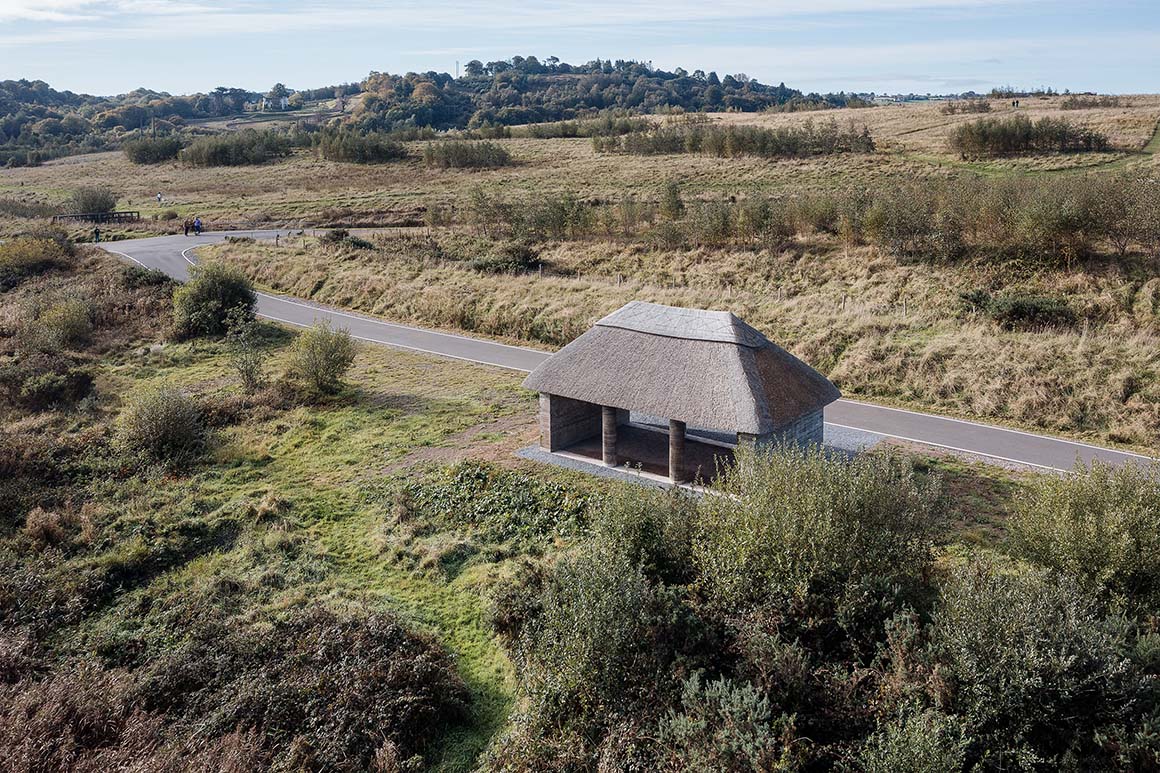
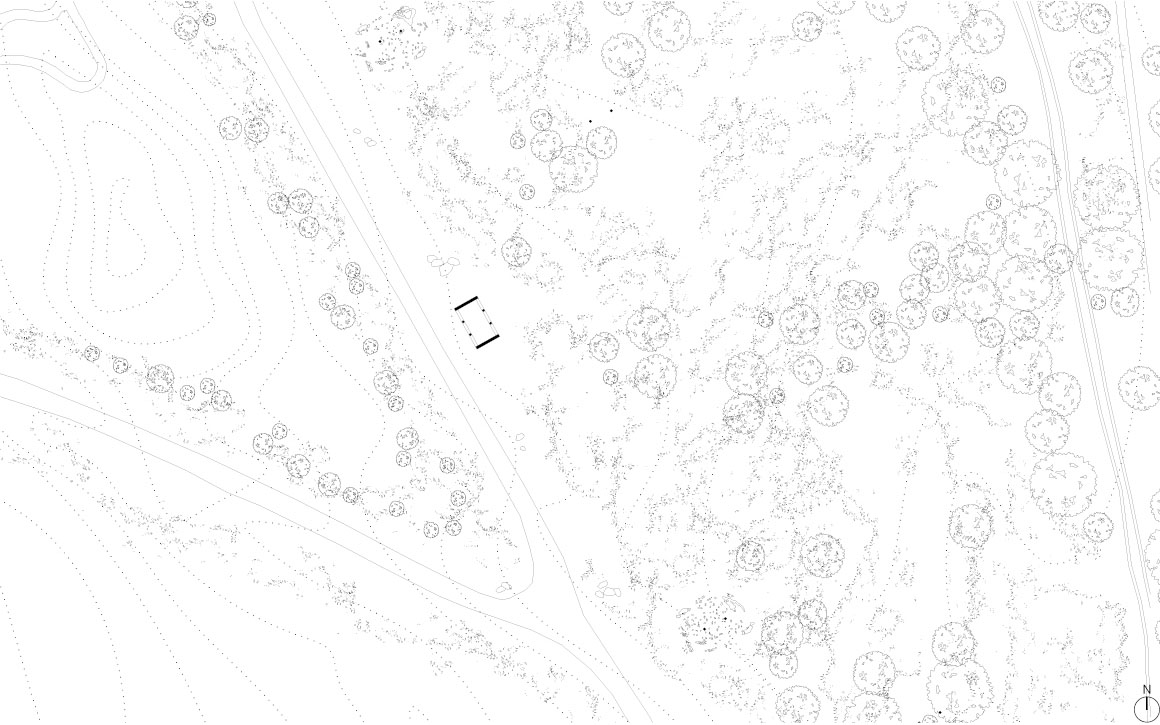
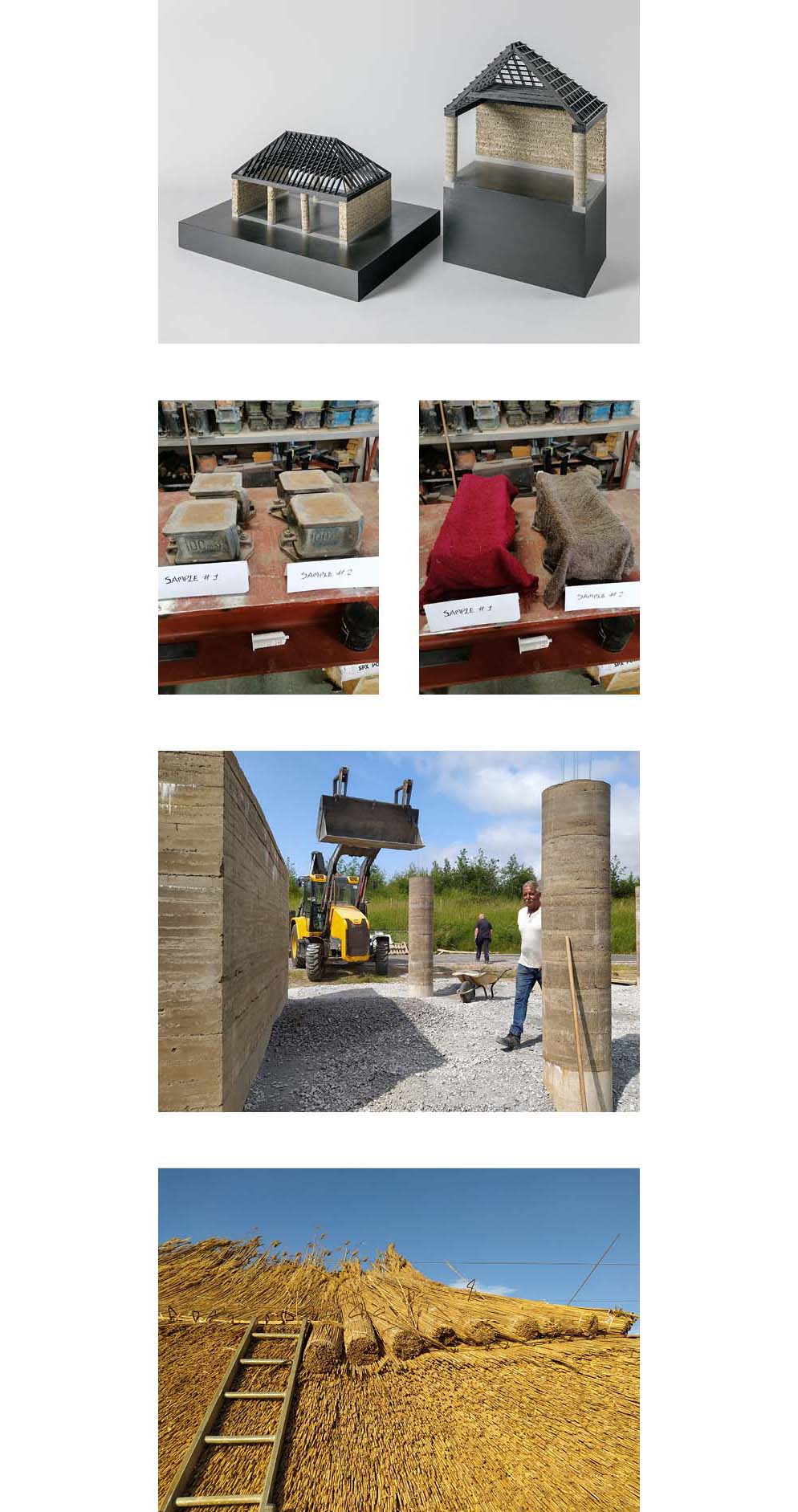
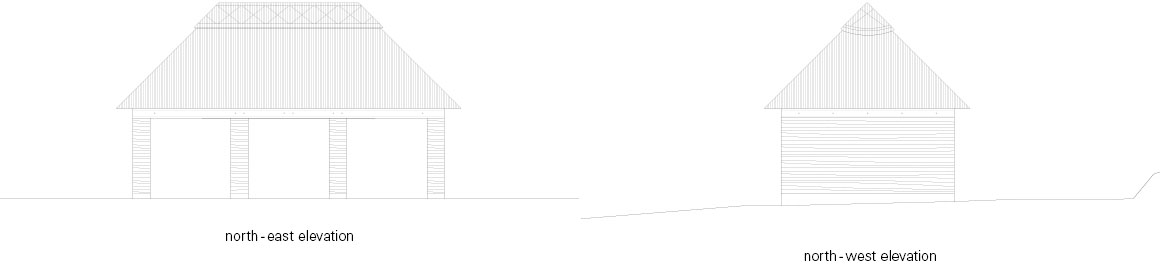
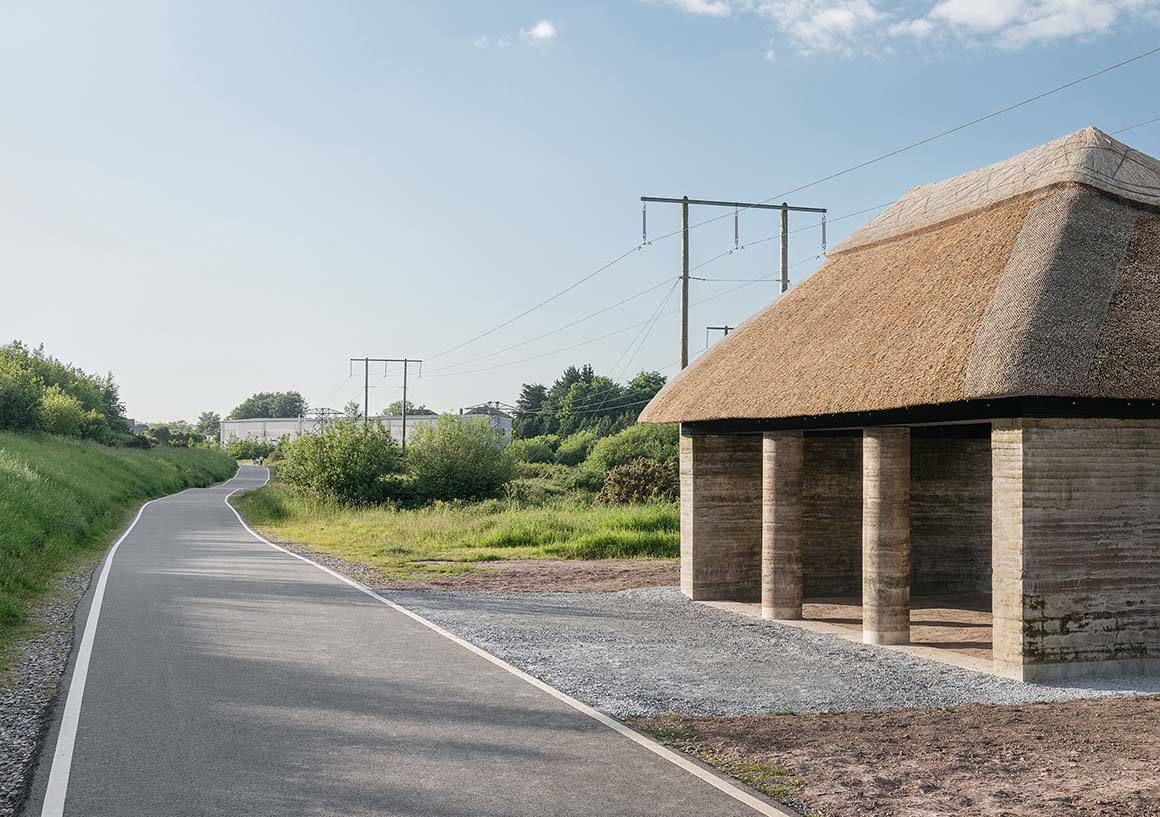
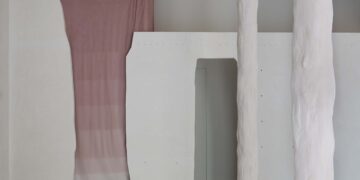
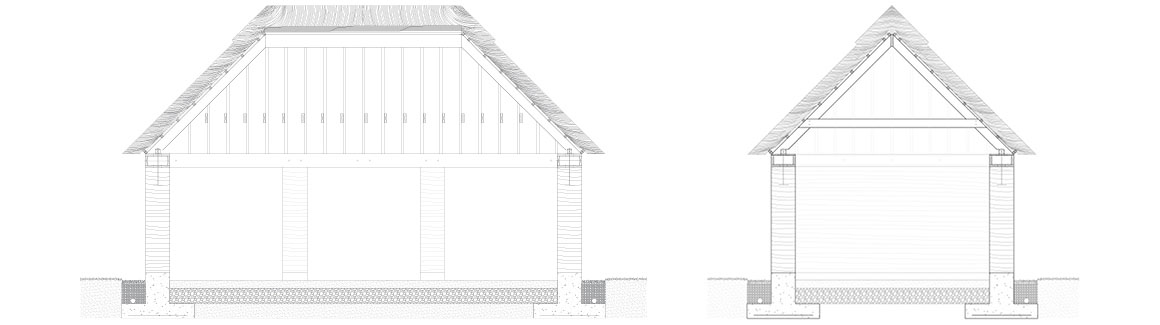
The structure is simple. The floor is formed by compacting a mixture of subsoil and sand, while walls and four rammed earth columns define the space. This method of compacting earth resonates with the site‘s past as a landfill, recalling the memory of compressed ground. It also marks the first use of rammed earth in a publicly funded building in Ireland. The soil was sourced near the site and hand processed and rammed over a period of nine months. Materials were selected based on their local availability and their ability to return to the ground at the end of their lifespan, a principle applied to most elements except the foundations. The rammed earth walls were constructed with sufficient thickness to allow for gradual weathering over time. Due to its material properties, the thatched roof requires periodic fire-retardant treatment and replacement. The approximately 8-by-5-metre plan references the scale of a typical Irish cottage, while the arrangement of columns evokes a miniature temple associated with gathering and debate. The open timber roof structure follows the form of a traditional Irish hipped roof, with reed thatch providing shelter from rain and sun. Extended eaves create additional covered space, responding to the region’s frequent rainfall.
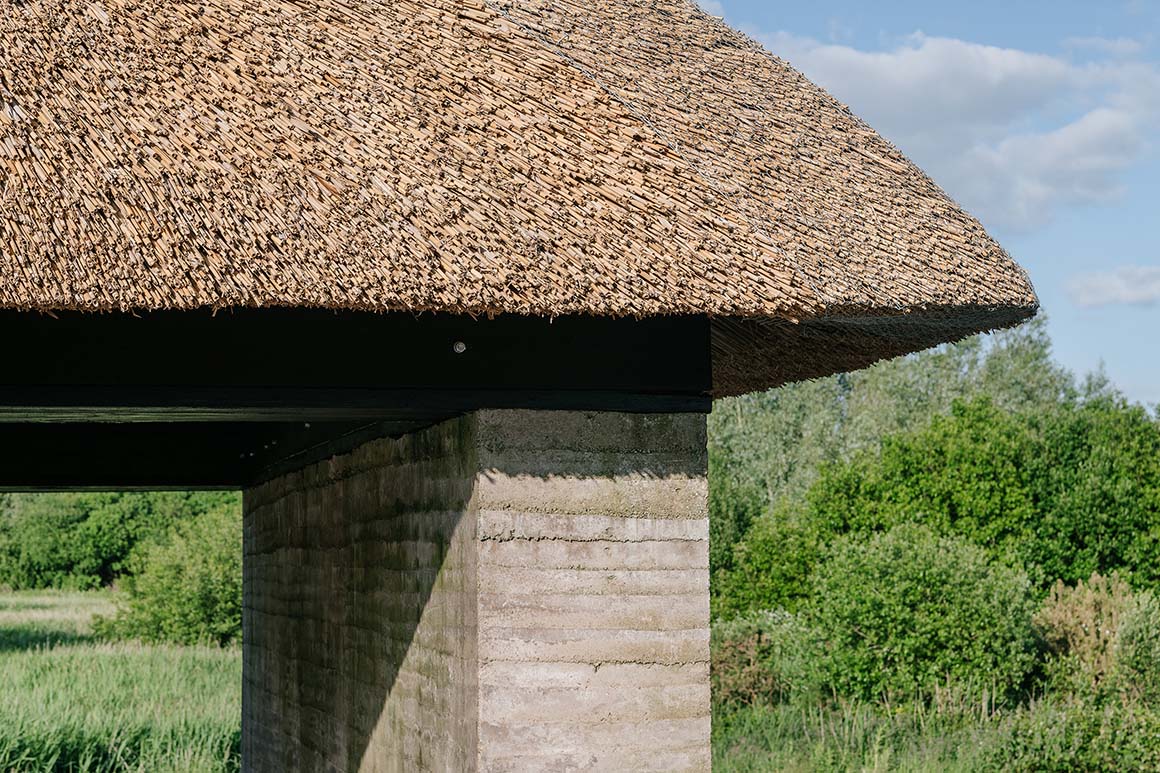
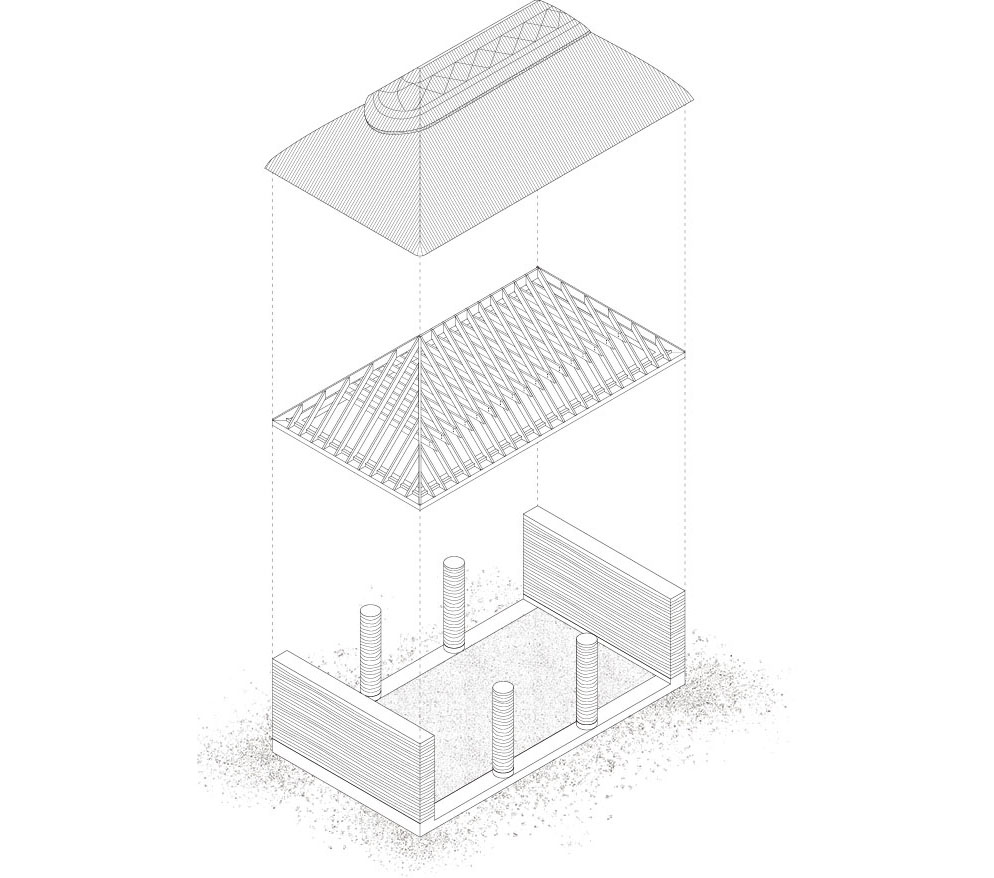
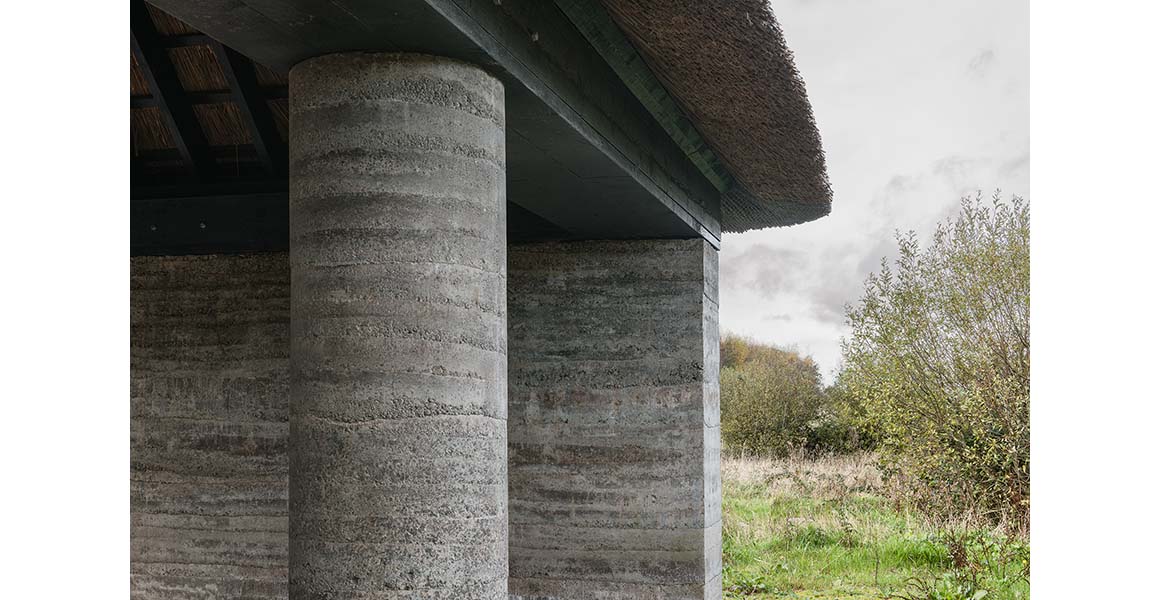

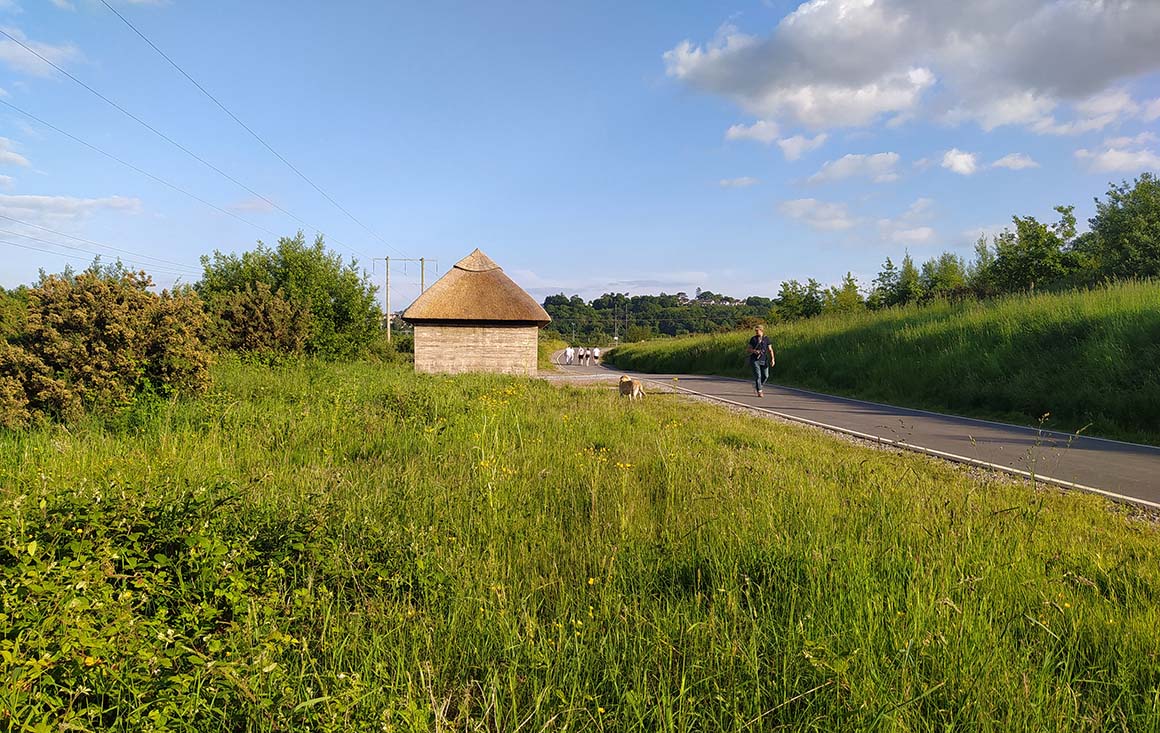
The project was selected through a two-stage competition and completed with the participation of local craftsmen, educational institutions, and volunteers. Through the close integration of natural materials, construction methods, and the memory of the site, this small shelter offers a place for contemplation and exchange within the park landscape, grounded in the cycles of the earth.
Project: den talamh / Location: Tramore Valley Park, Ballinlough, Cork, T12 AE86, Ireland / Architect: Fuinneamh Workshop Architects / Project team: Caimin Muldoon, Ciara O’ Connell and Seán Antóin Ó Muirí / Civil + Structural Engineers: Civil and Structural Engineering Advisors Ltd / Earth Analysis: Dept. of Civil Engineering, MTU. / Main Contractor: Wiseman Construction Services / Construction Collaborators: Sean Ahern, Darragh Bairead, James Costello, Jim Fahy, Liam Harte, Conor Healy, Poppy Kilgallon, Michael Long, Jordan Lupton, Kate Madden, Jackie Maurer, Daniel McAuliffe, Owen MacSwiney, Dain McMillan, Peter Murray, Paul O’ Donovan, Jerry O’ Shea, Jerry O’ Sullivan, Mick Pierce, Daniel Quane, Kieran Ruane & Konrad Walczak / Thathcher: John Barron / Client: LennonTaylor KinShip, Cork City Council & Creative Ireland / Use: Public / Site area: 8,800m² / Gross floor area: 40m² / Design: 2022 / Construction: 2022-2024 / Completion: 2024 / Photograph: ©Jed Niezgoda (courtesy of the architect), ©Seán Antóin Ó Muirí (courtesy of the architect)