

A showcase workshop defined by openness
It is a place to cultivate future talent, an incubator for university education. In particular, colleges of engineering are where research and experimentation capable of changing the world take place. One shift defining our time is that innovation today is no longer achieved through isolated study, but through collaboration. At the University of Twente’s Drienerlo campus in Enschede, the Faculty of Engineering reflects this change through spatial design, shaping an environment that nurtures students’ ambitions and potential.
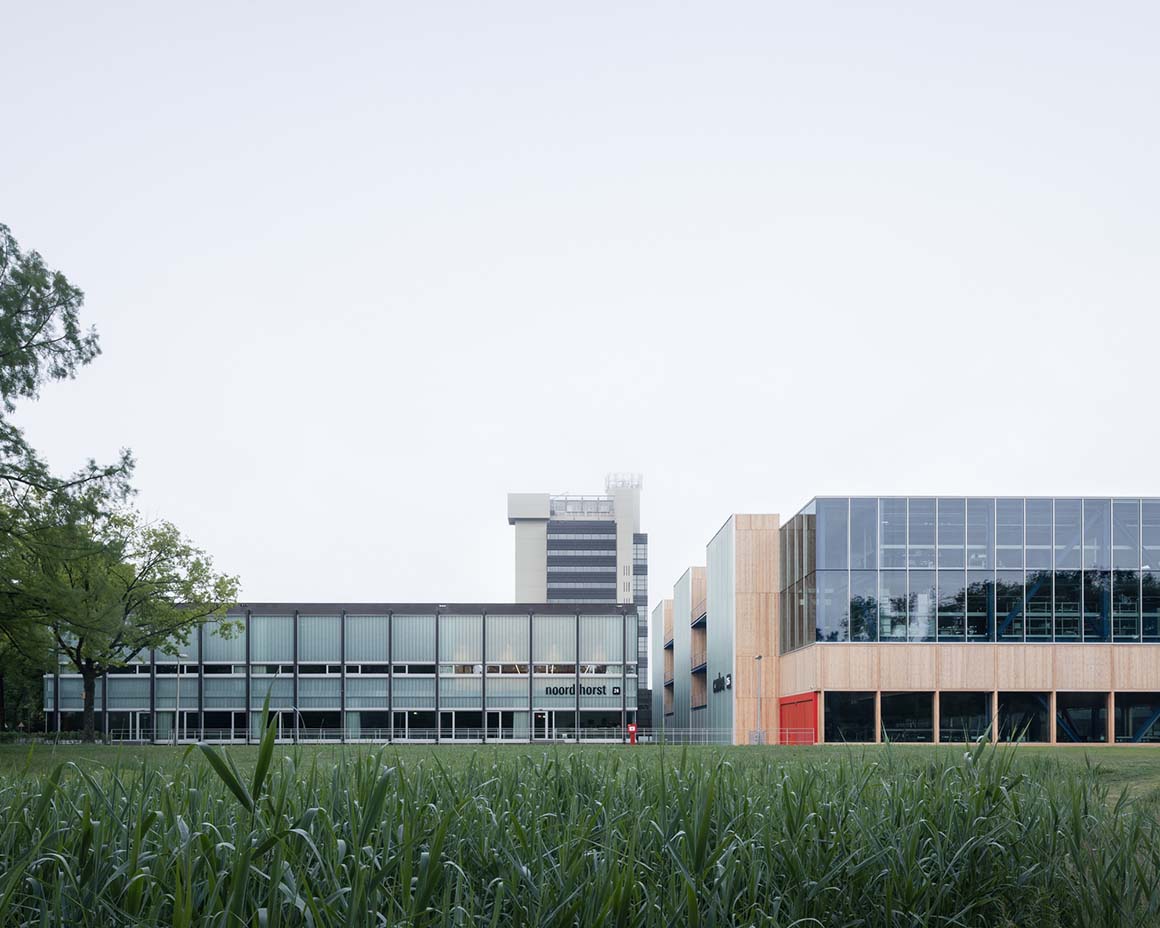
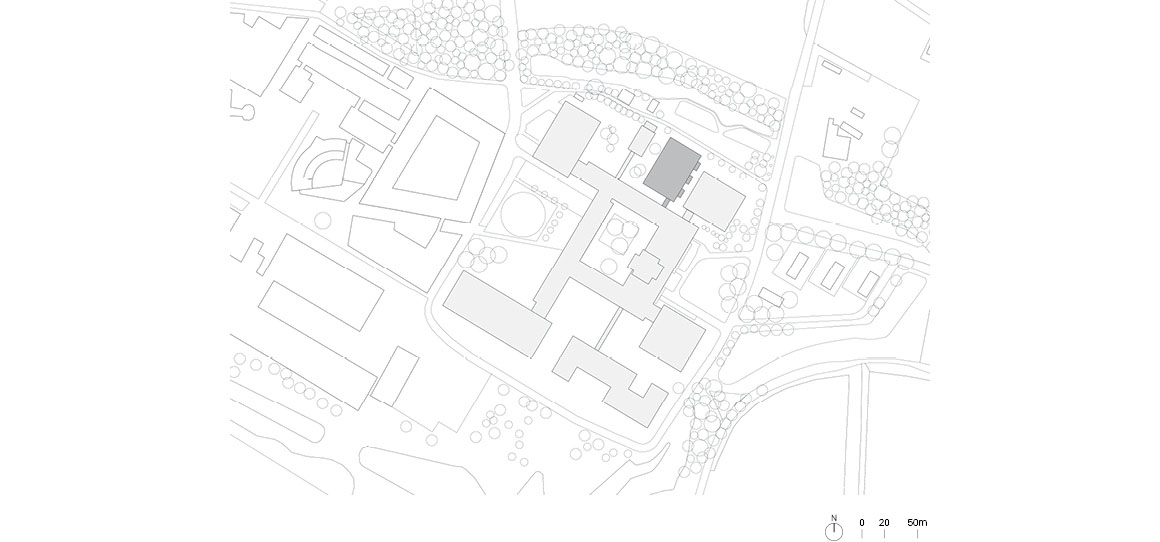
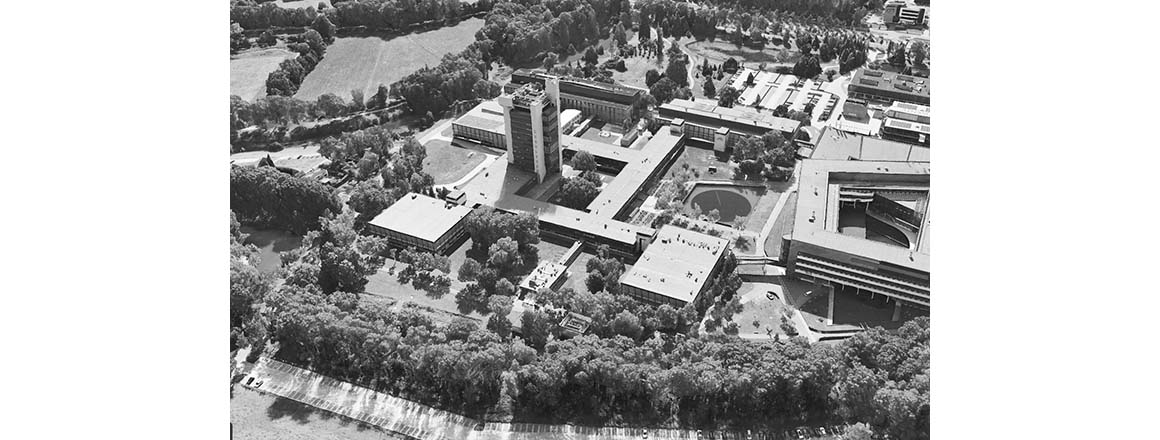
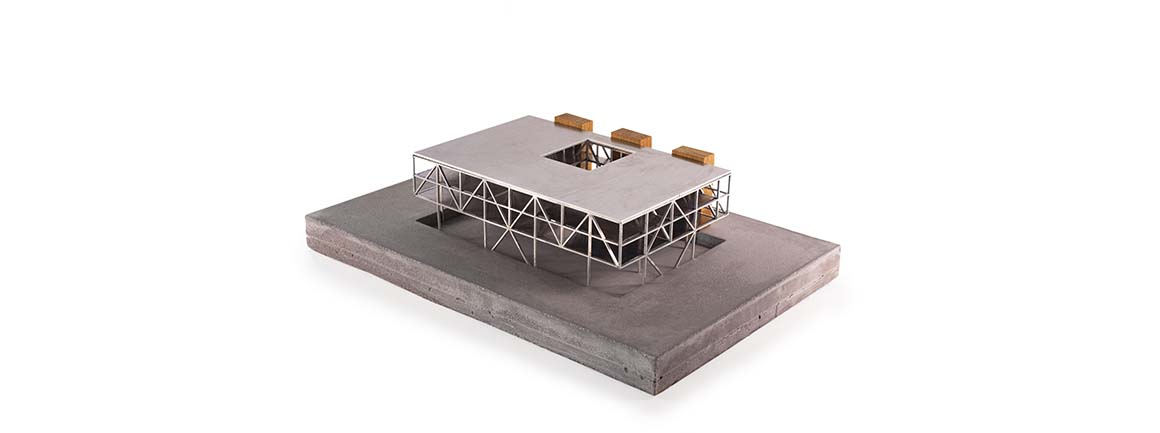
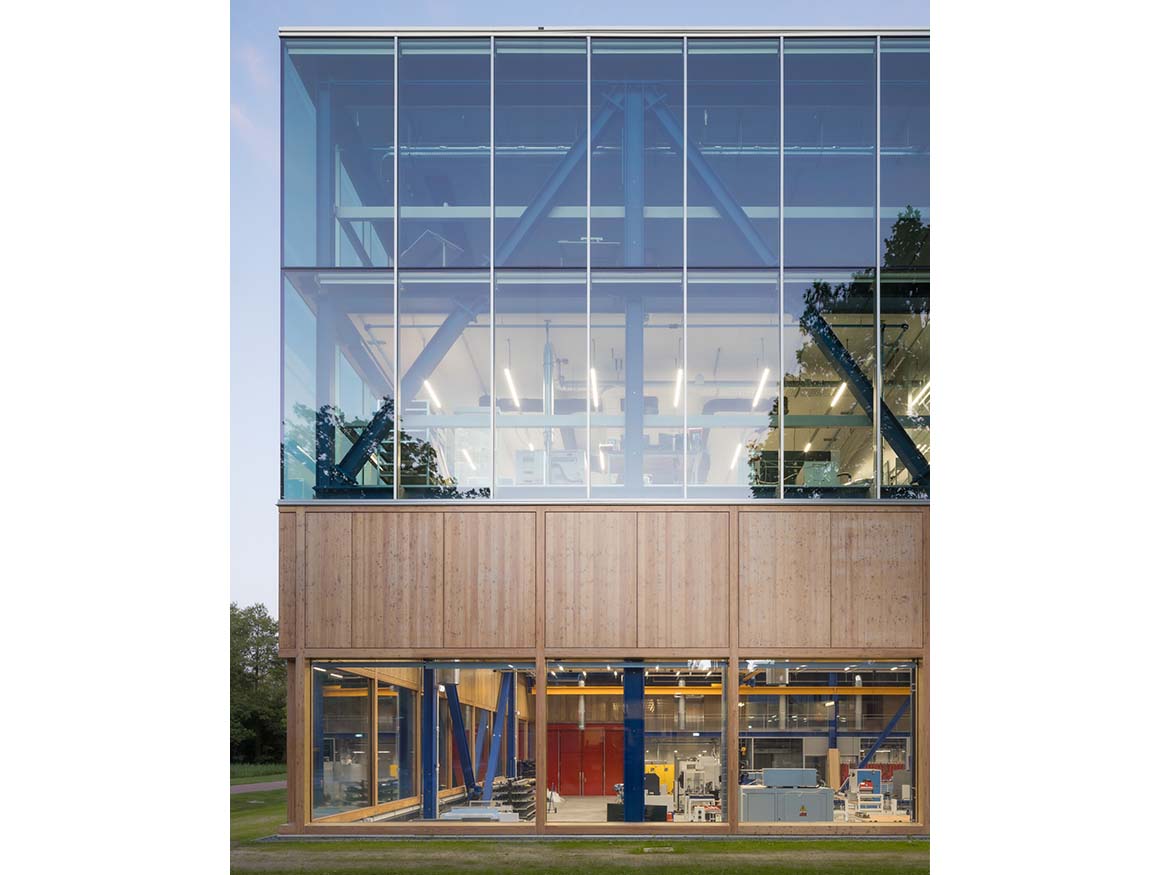

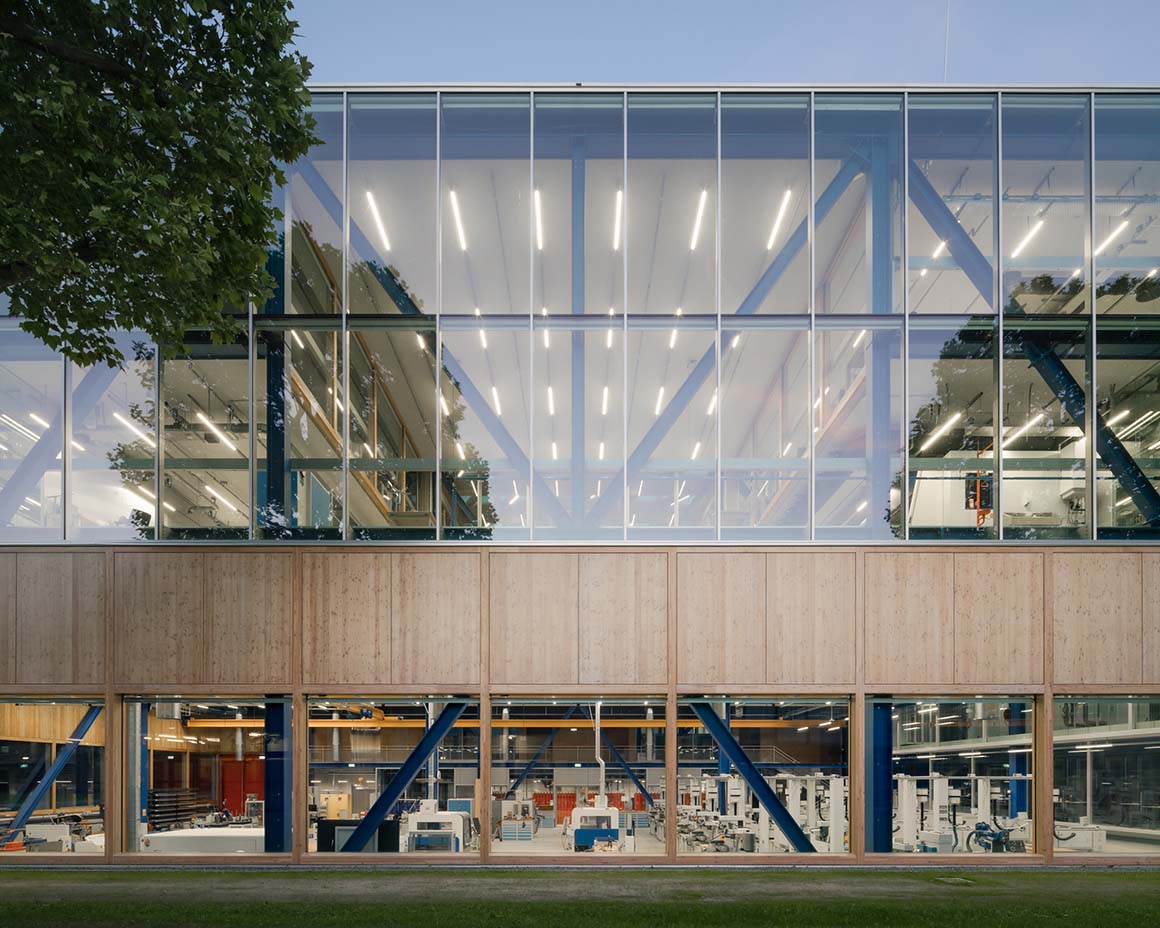
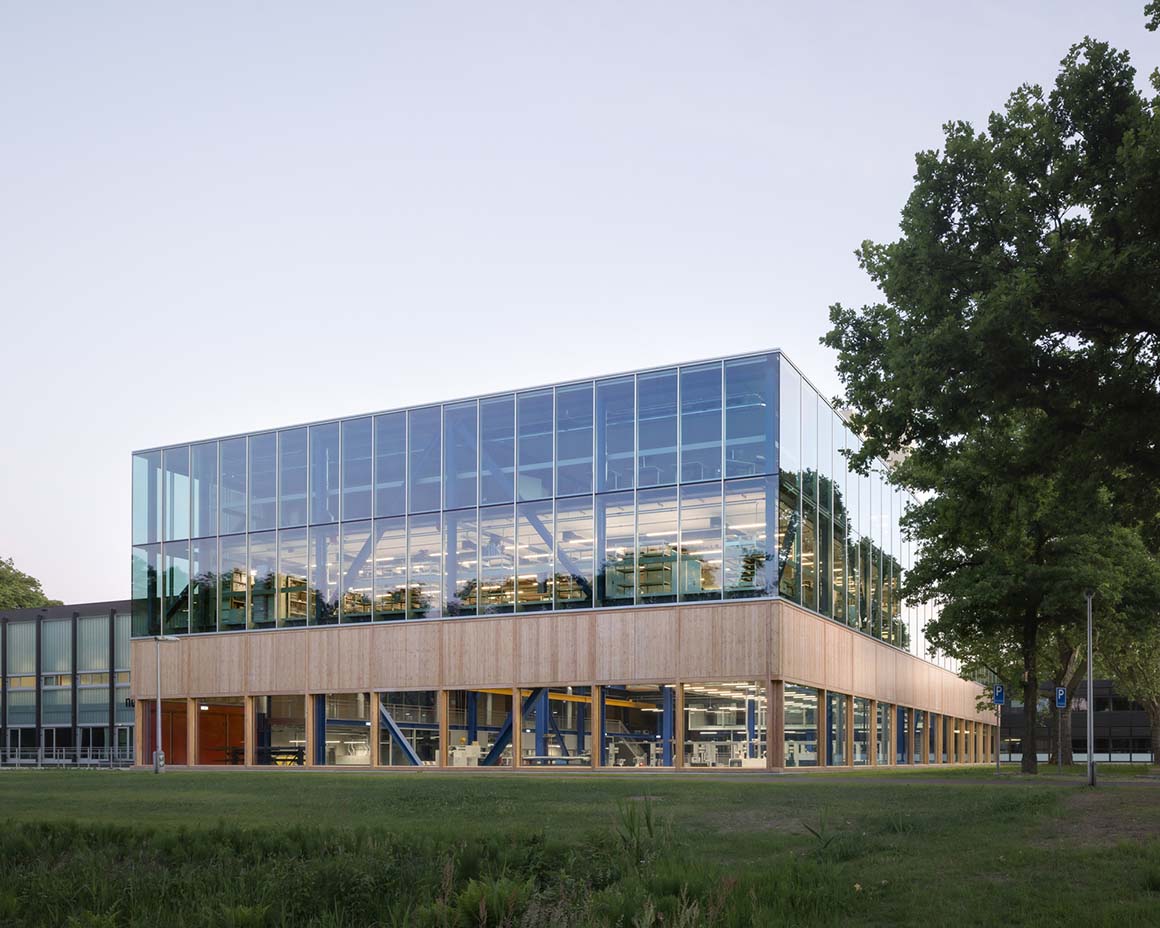
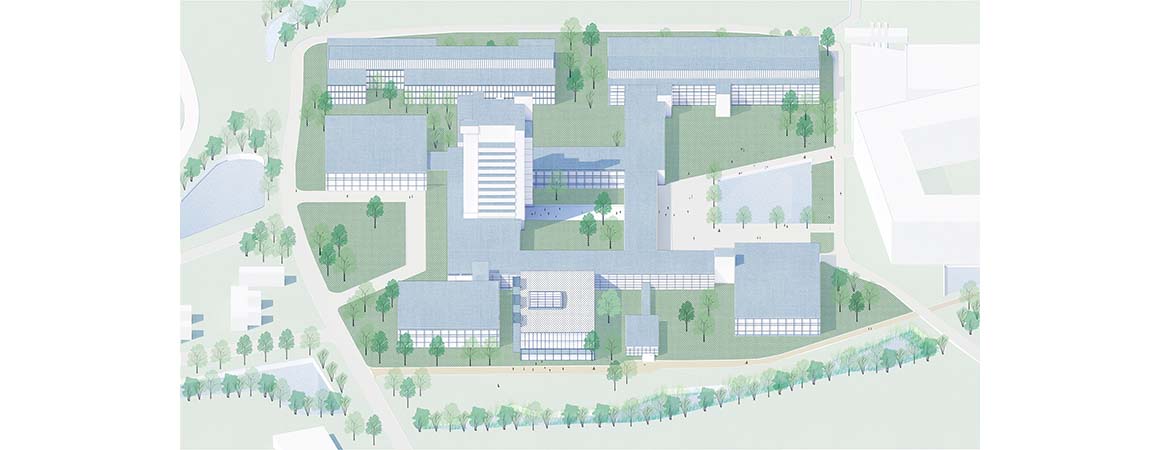
Within a 4,734m² building generously opened through full-height glazing, a vast interior recalls the scale of an industrial production facility. The new CUBE building joins a campus ensemble originally designed in the 1960s by architect Dick van Mourik, composed of a low-rise carré-type courtyard building, now-vanished towers, and a constellation of independent volumes. A large, flexible laboratory adaptable as work or office space is connected on all sides around a pyramidal atrium. Daylight penetrates deep into the interior, and open sightlines reinforce the idea of a showcase building that makes education and research visible.
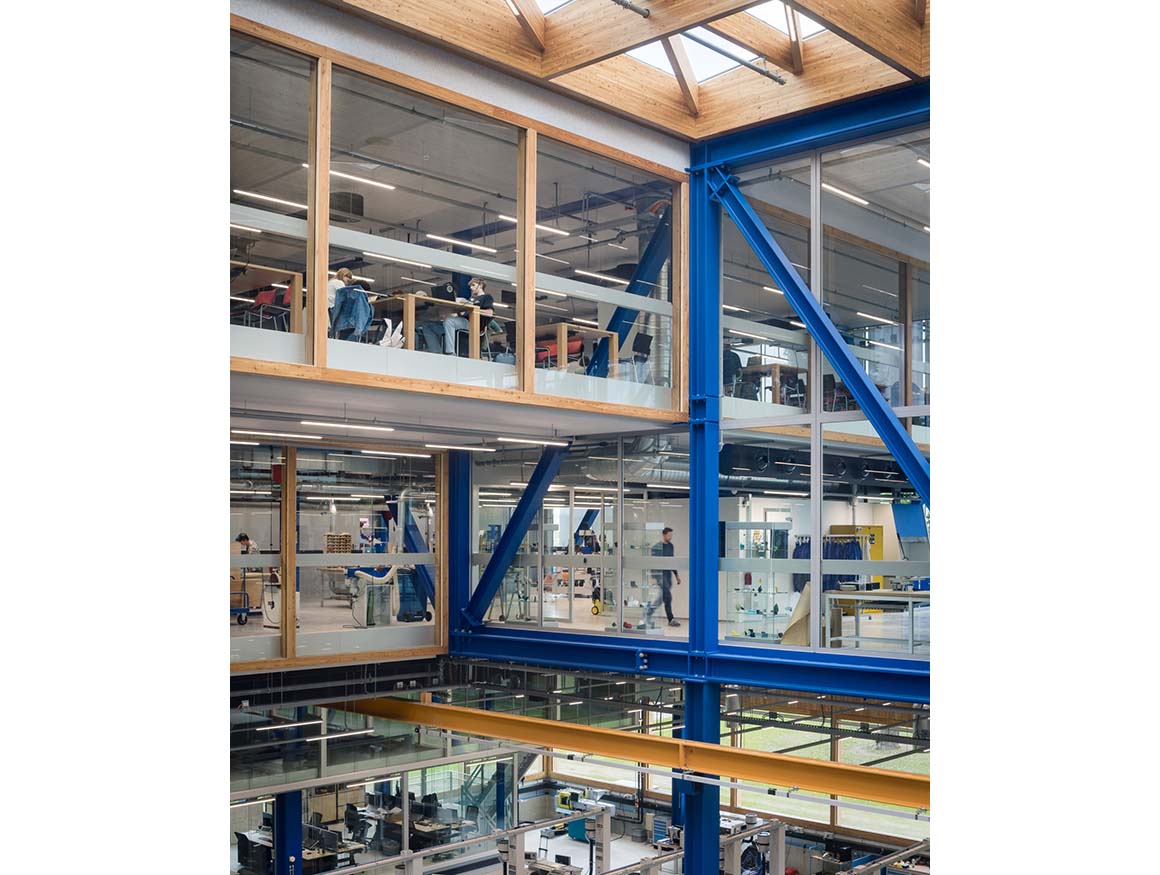
The seven-meter-high metal welding workshop adopts a sunken configuration, with the floor set 1.4 meters below ground level, allowing views across the machinery and throughout the space. Below, students and researchers operate equipment, while above, prototypes are developed and classes are held against the backdrop of the campus landscape. Within a compact floor plan, workshops for welding, metalworking, model making, and assembly, together with laboratories and measuring spaces, are stacked vertically to encourage interaction and visual exchange among users.
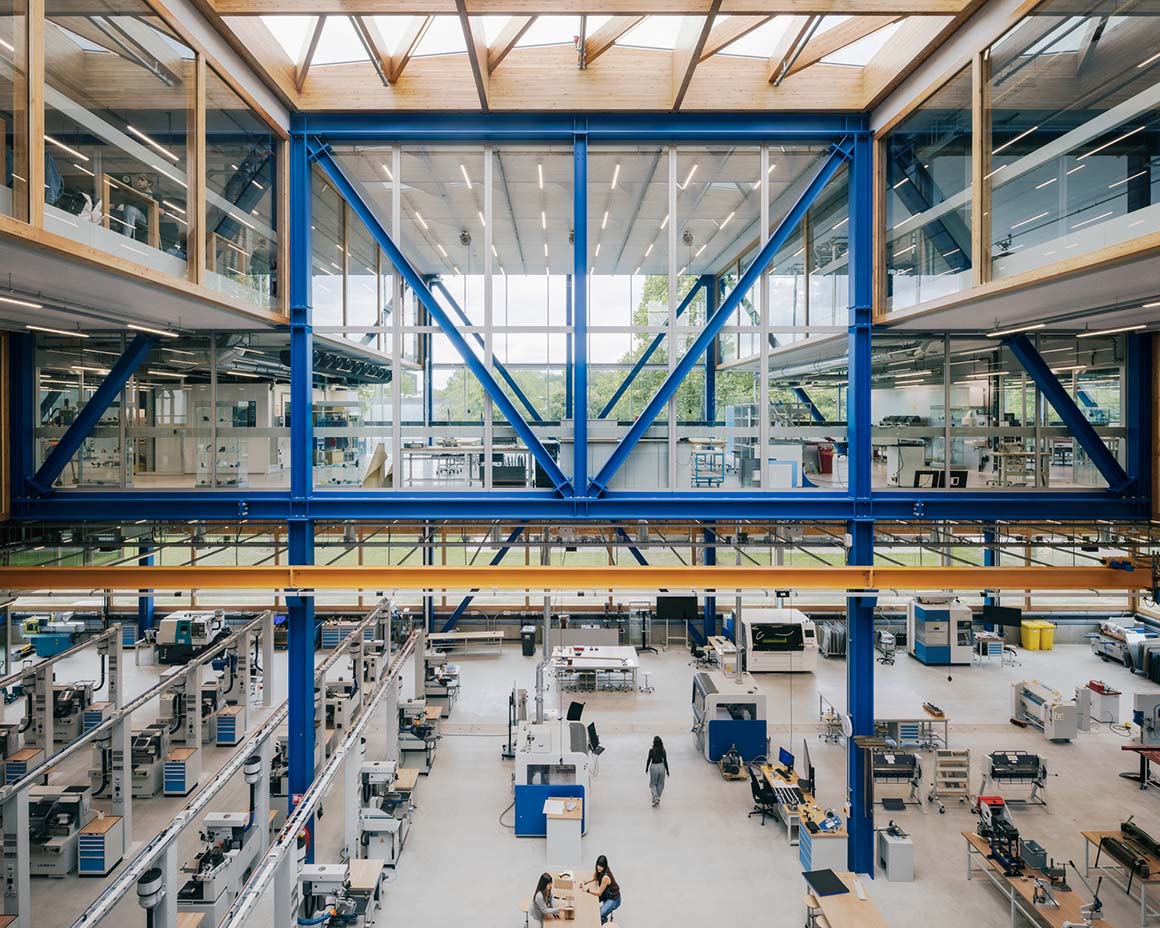
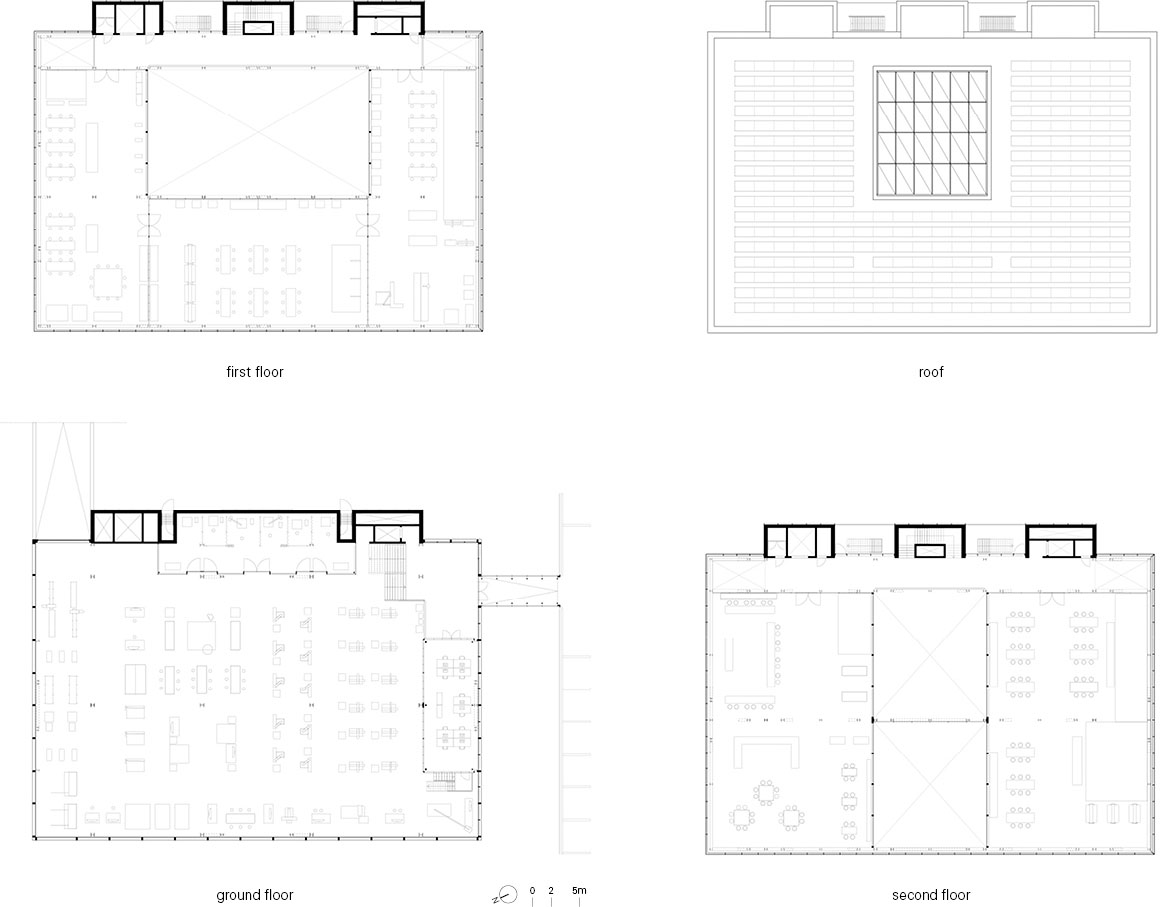
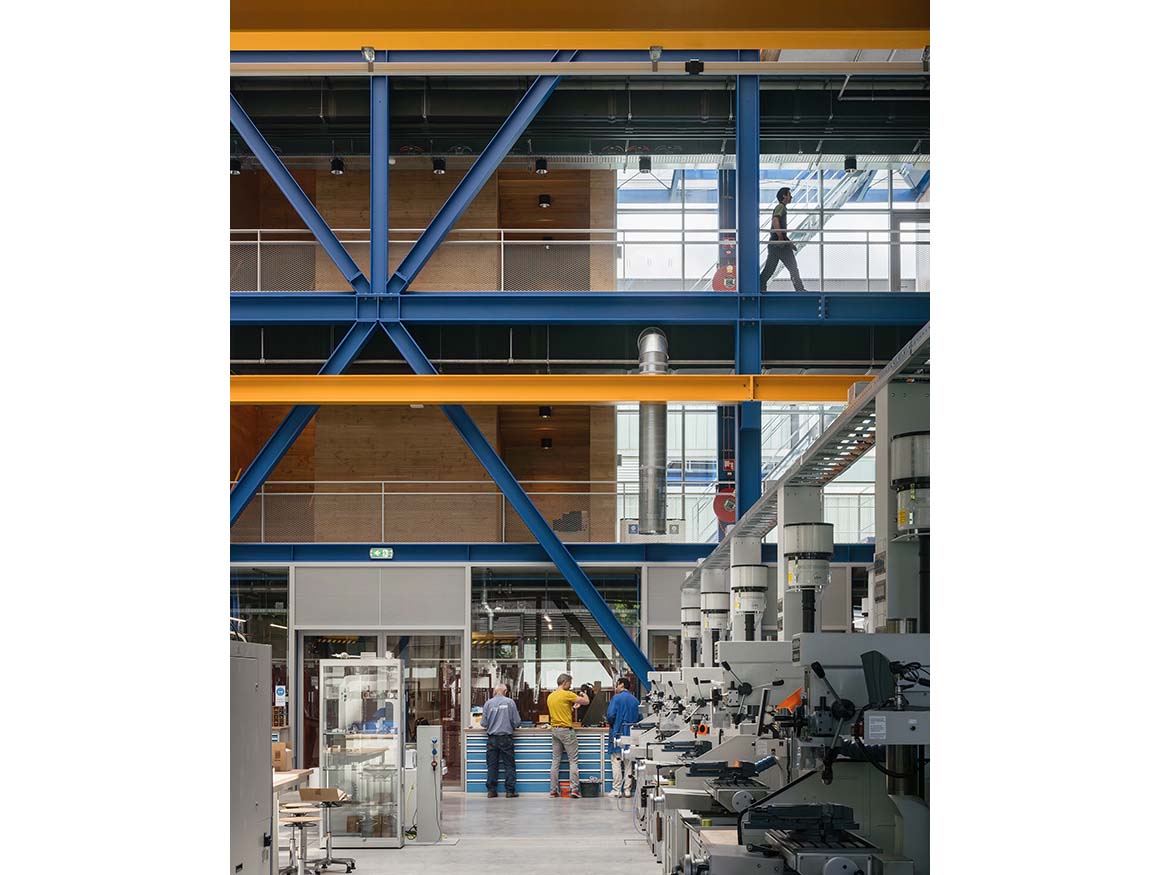
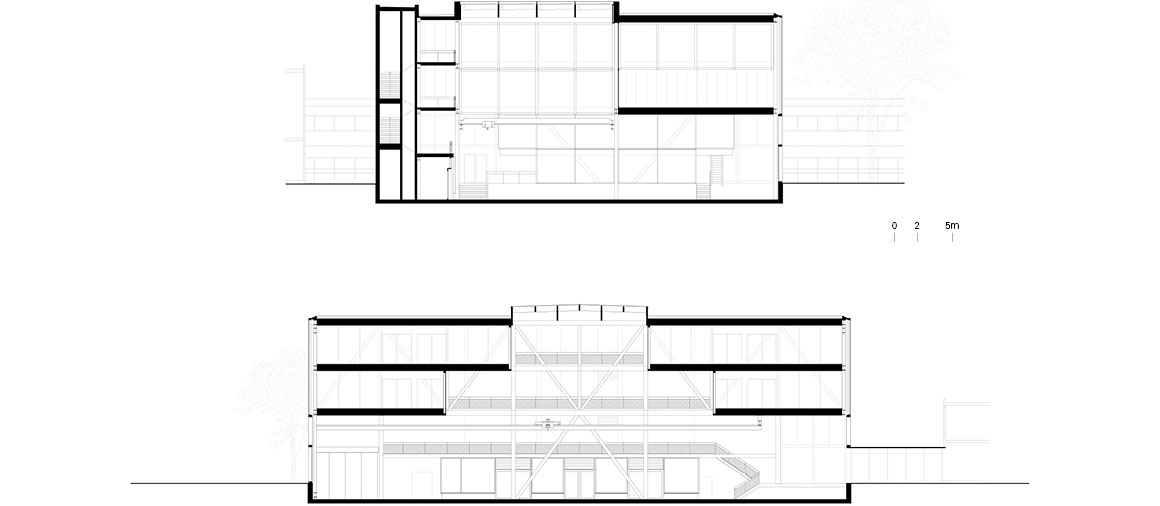
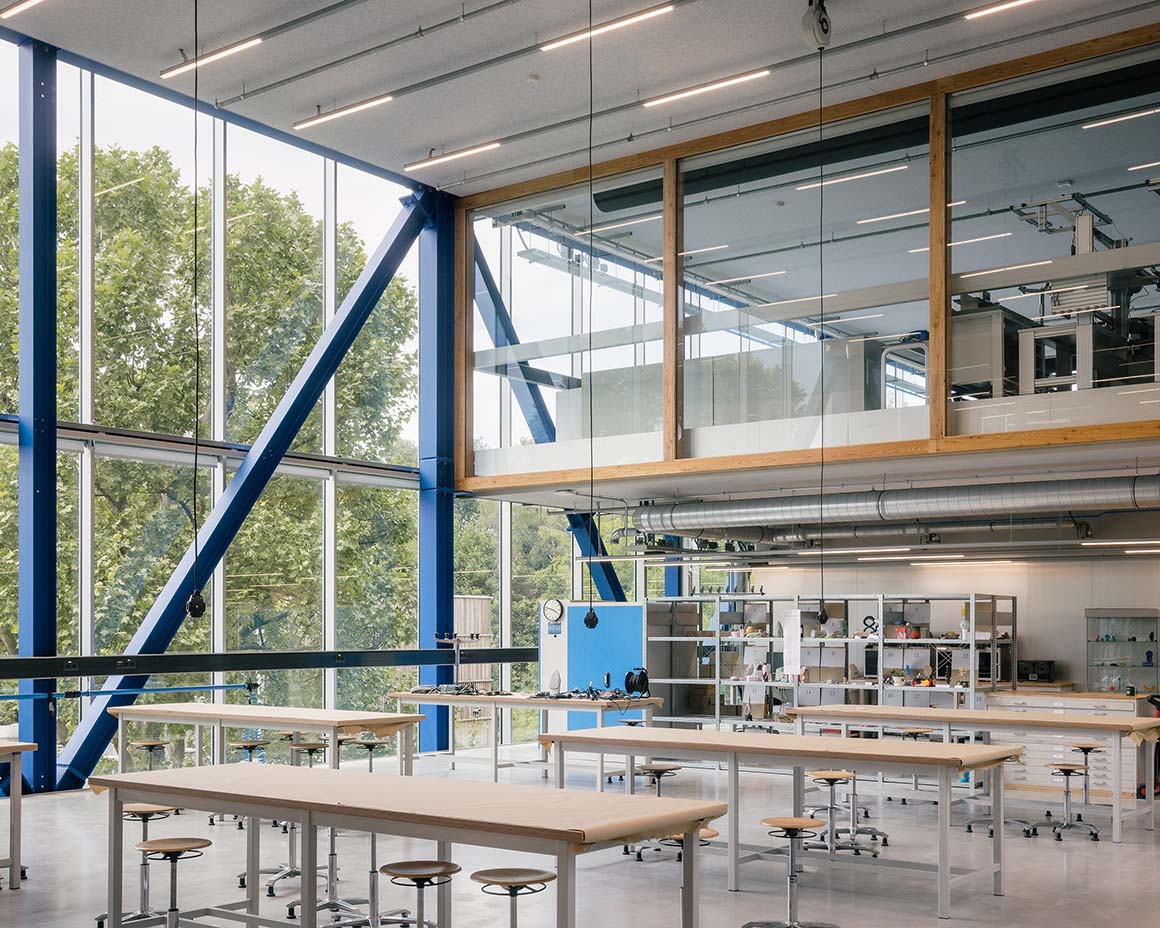
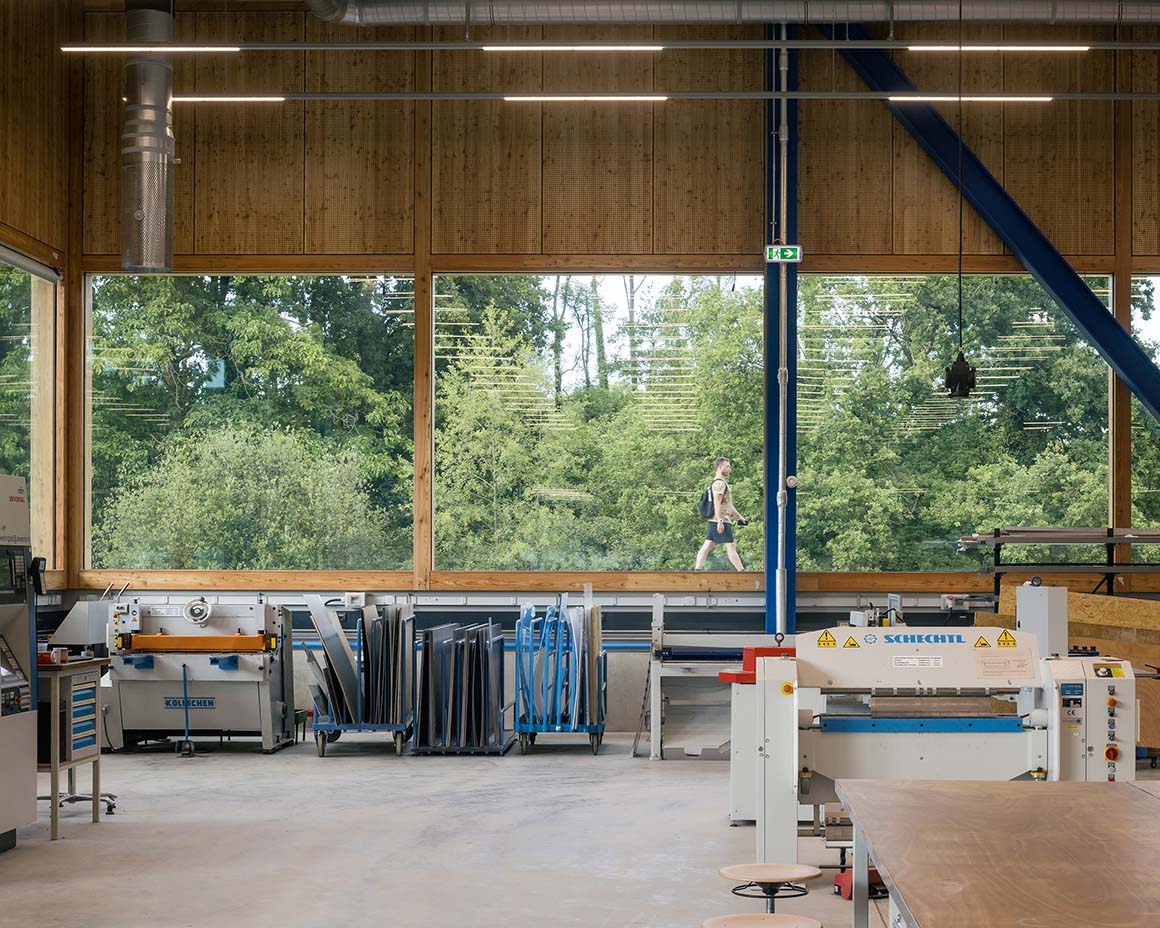
Flexibility of use was a key requirement of the project. This was achieved through long structural spans and high load-bearing performance. The plan is organized into two primary zones, each 14 meters wide, and a narrower zone that functions as a structural and service backbone. The entire layout is supported by three cores, while two-story-high steel trusses reduce the number of interior columns. The resulting combination of open, column-free spaces supported by cores and trusses forms a powerful architectural gesture derived from the need for adaptability.
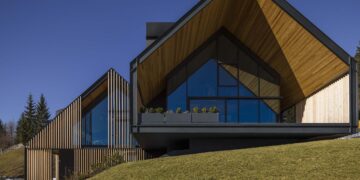
The three cores reinterpret the former tower buildings, acting as vertical elements that articulate and lighten the reading of the linear mass. At the lower levels, the facade overlooking the sunken interior is finished in wood between glazed surfaces, adding texture and material warmth. Above, a glass curtain wall reveals the steel trusses beyond, where their geometry intersects with the orthogonal facade, lending the exterior a sense of dynamism.
Project: CUBE / Location: Drienerlolaan 5, 7522 NB Enschede, Netherlands / Architects: Civic Architects + VDNDP / Collaborators: building physics and services_Nelissen, structure_Schreuders bouwadvies, sustainability advisor UT_Buro Loo / Interior architect: Studio Groen+Schild / Contractor: WAM&VanDuren Bouwgroep, WSi Techniek / Client: University of Twente, Enschede / User: ET, Faculty of Engineering Technology / Use: metal workshop, welding workshop, assembly workshop, model workshop, laboratory spaces, office / Assignment: ull commission, SO, VO, DO, TO, aesthetic supervision / Gross floor area: 4,734m² / Design and construction: 2020 – 2025 / Completion: 2025 / Photograph: ©Stijn Bollaert (courtesy of the architect)