

A Local Community Blooming from Ruins
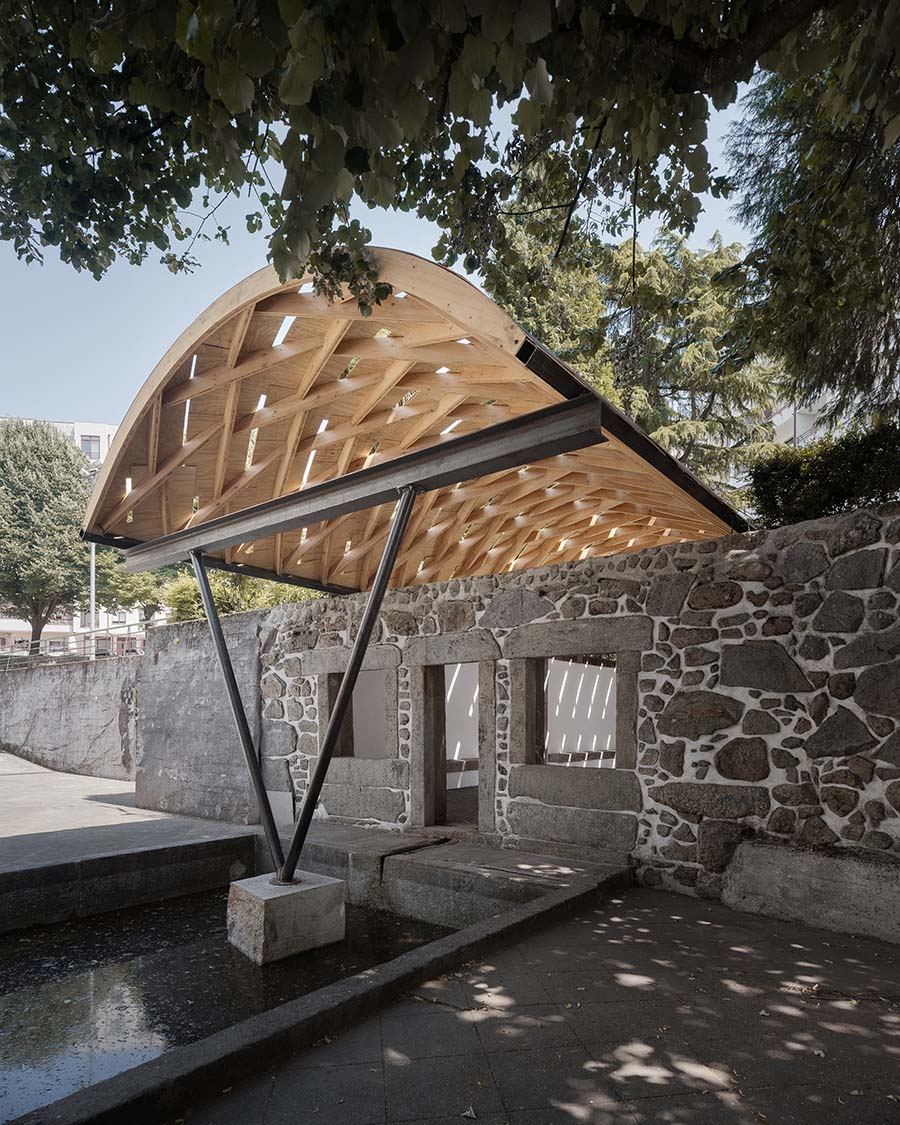
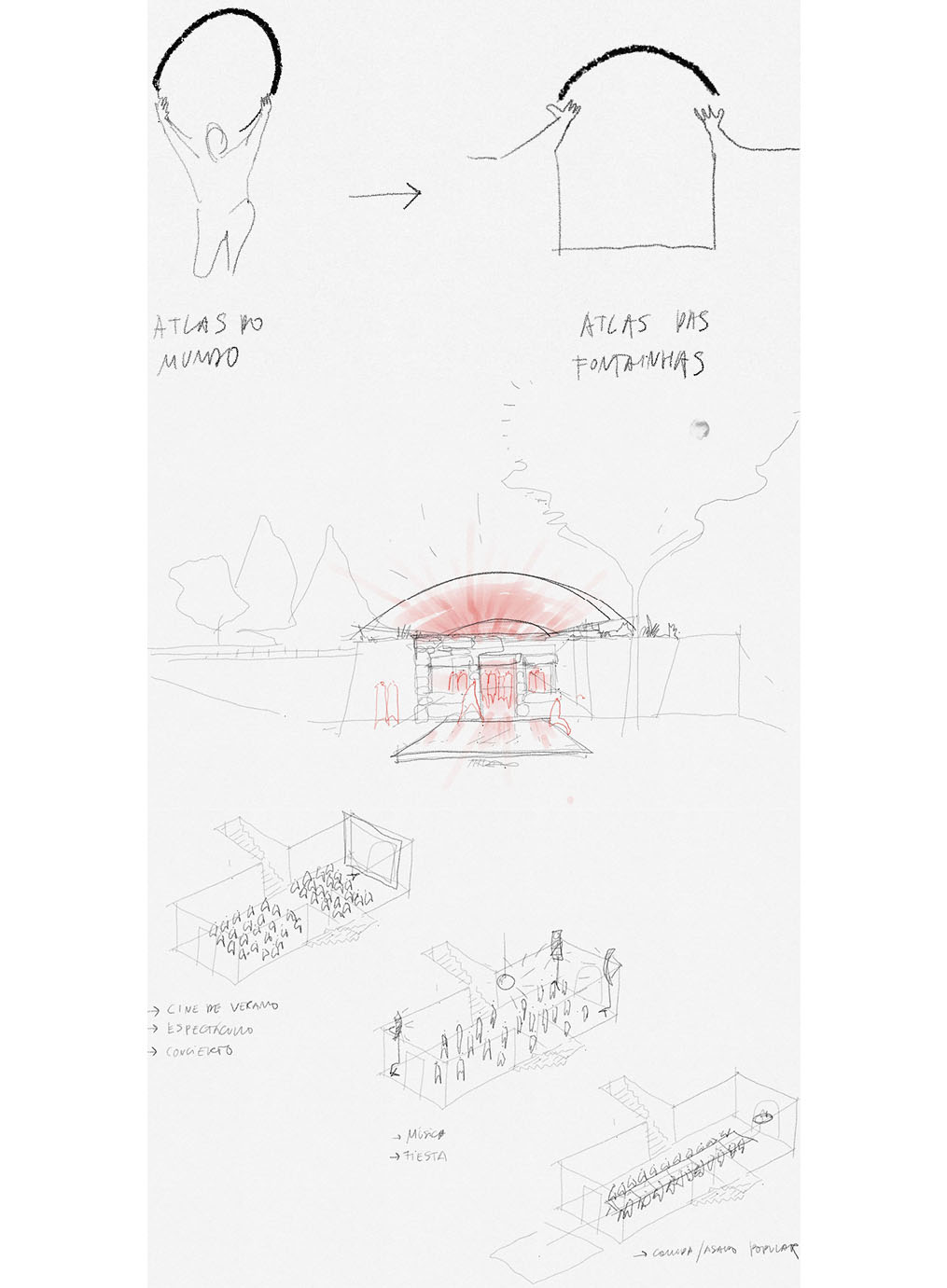
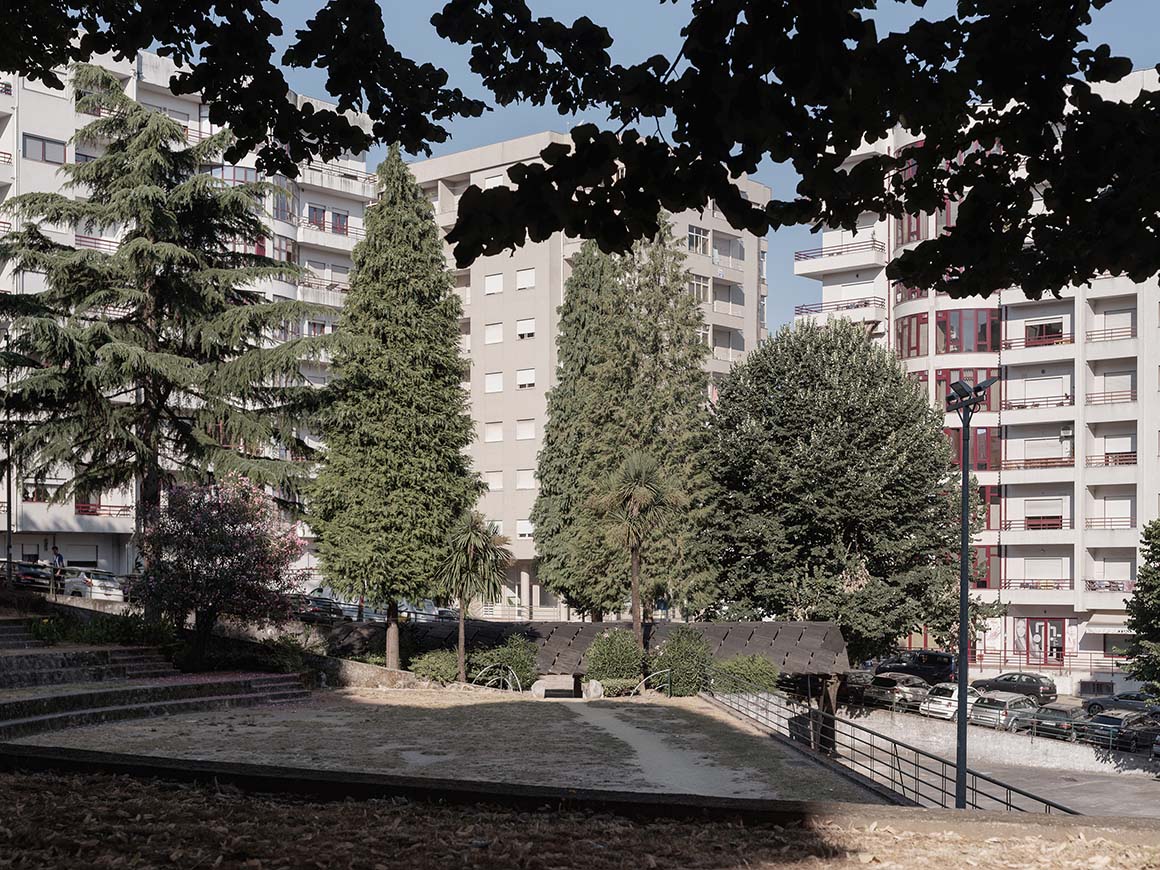
In the central square of a residential neighborhood on the outskirts of Portugal, the ruins of an old villa lay abandoned, hidden among stone walls and trees. A stone fountain and a sculpture of Atlas, the giant from Greek mythology placed above it, have, over time, become symbolic presences in the collective memory of the place. “Project Atlas” builds on this value of preservation and reactivates the site as a public space for local residents, serving to restore a sense of community in a neighborhood that lacked a place to gather.
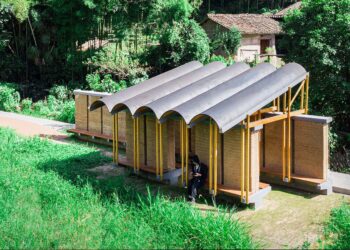
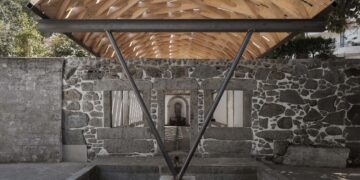
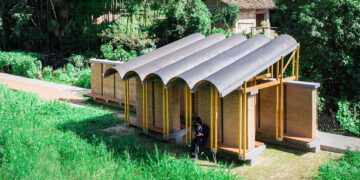
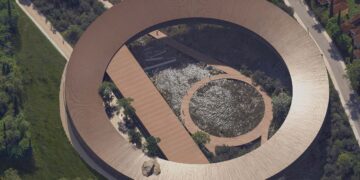
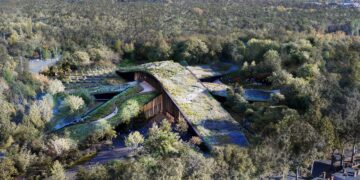
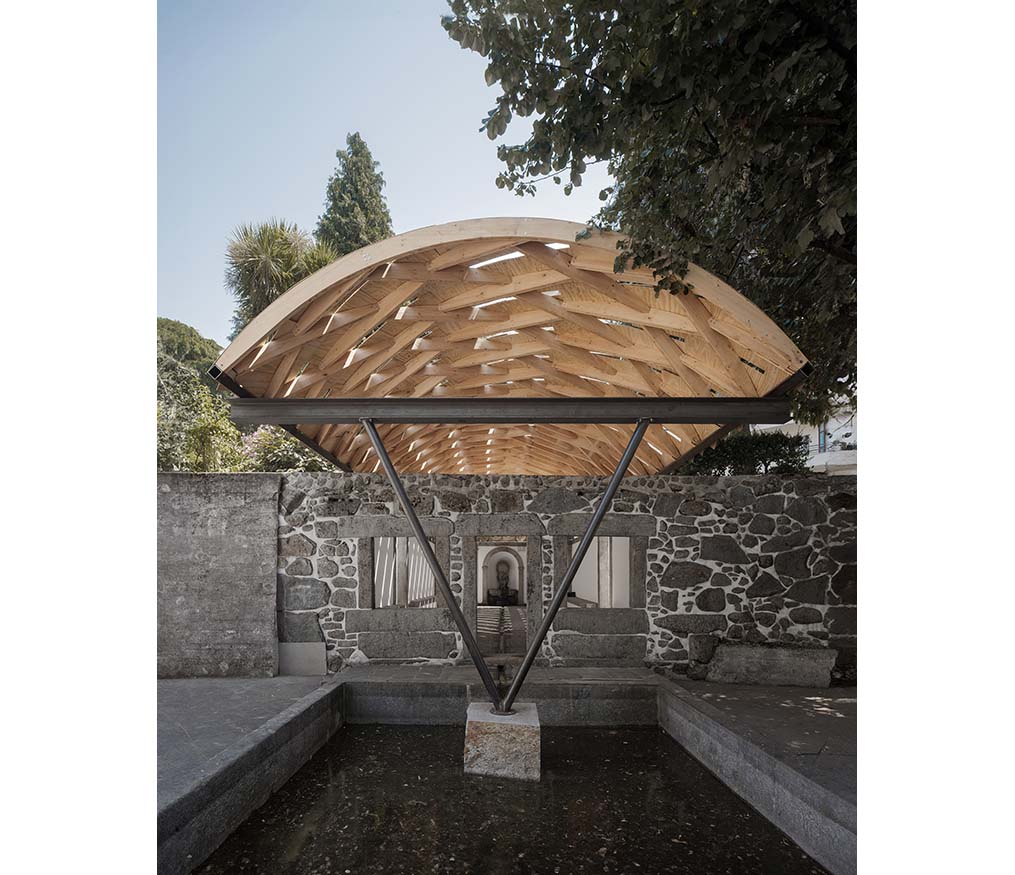
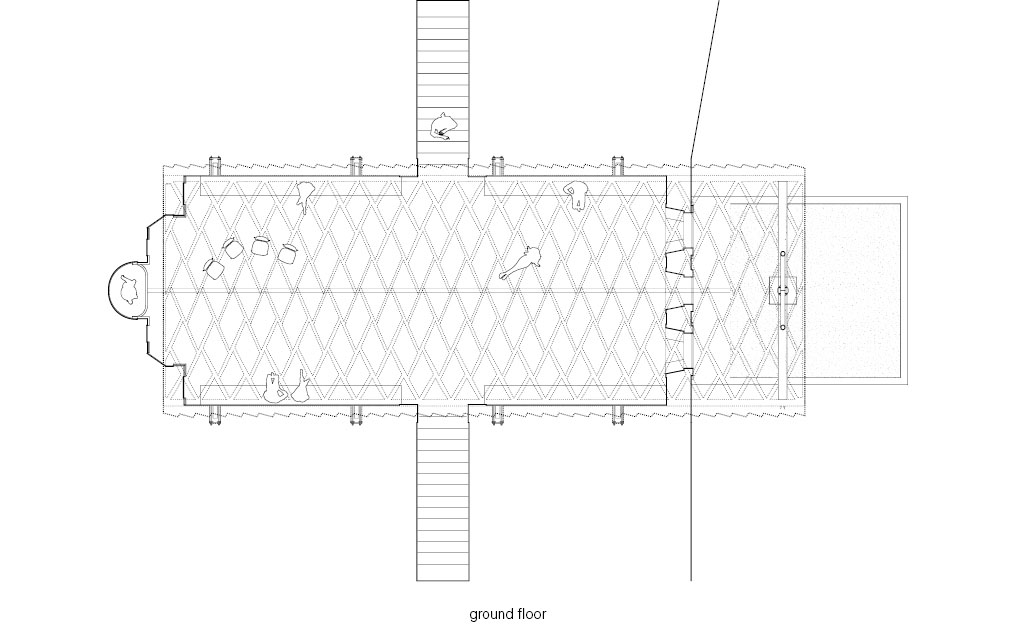
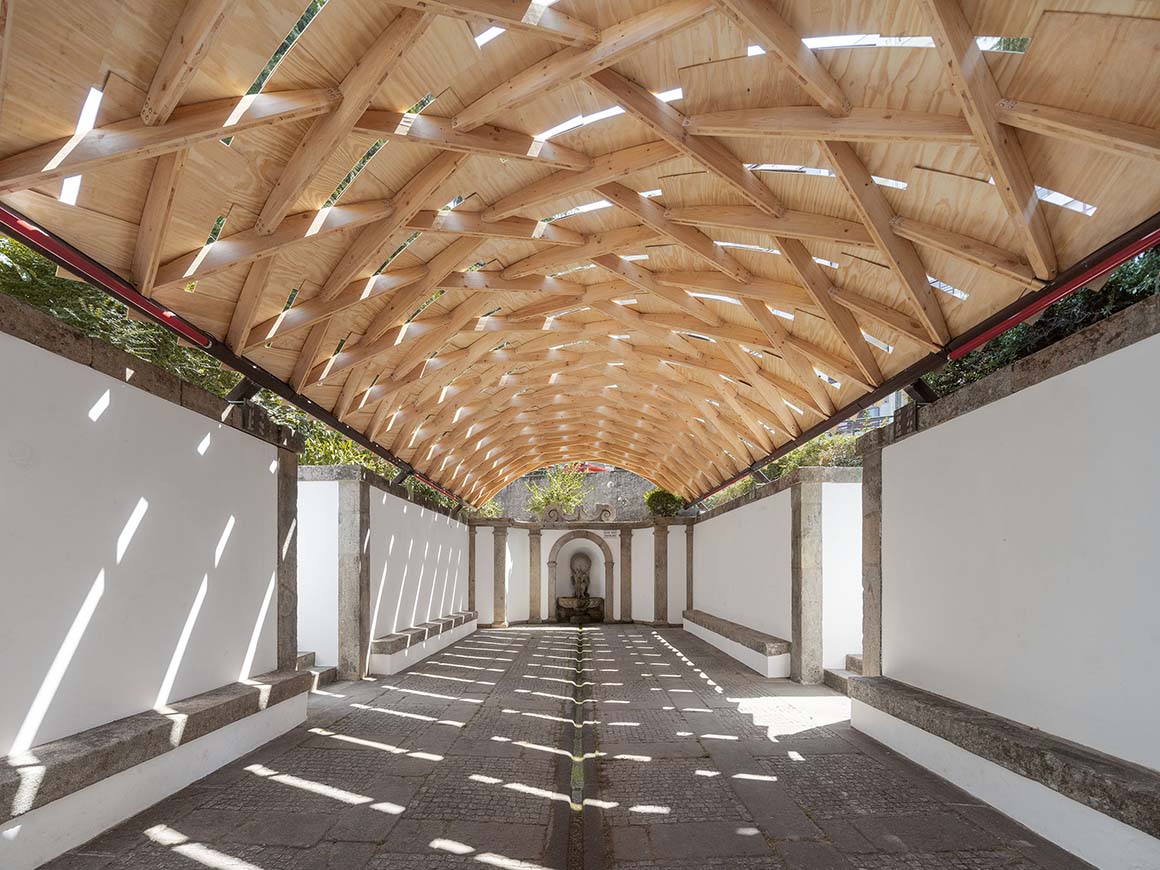
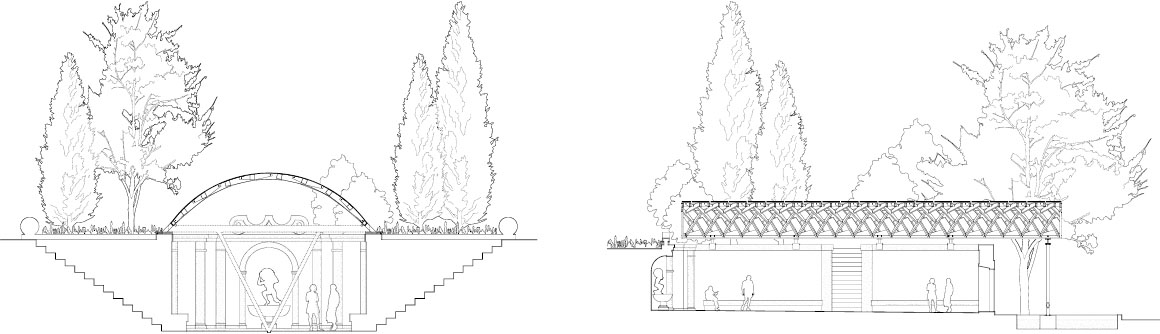
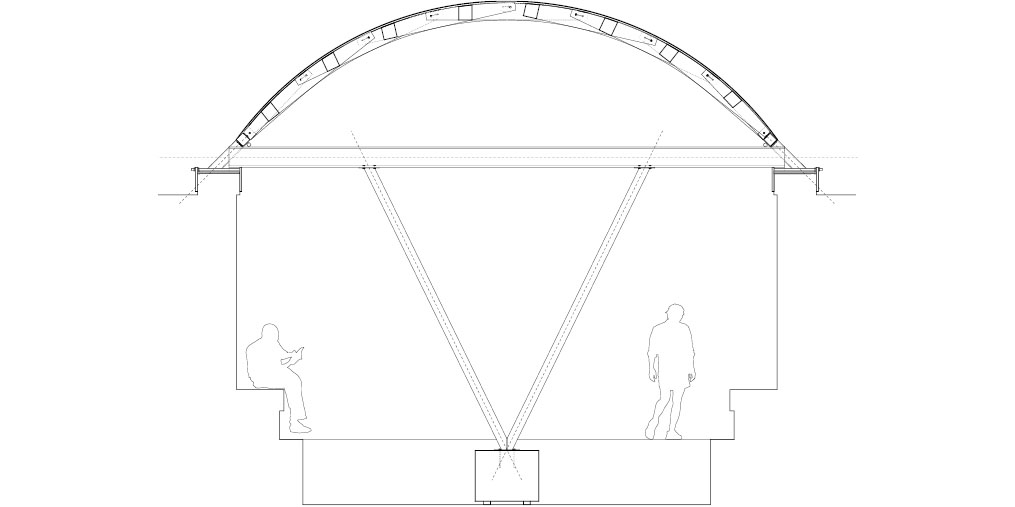
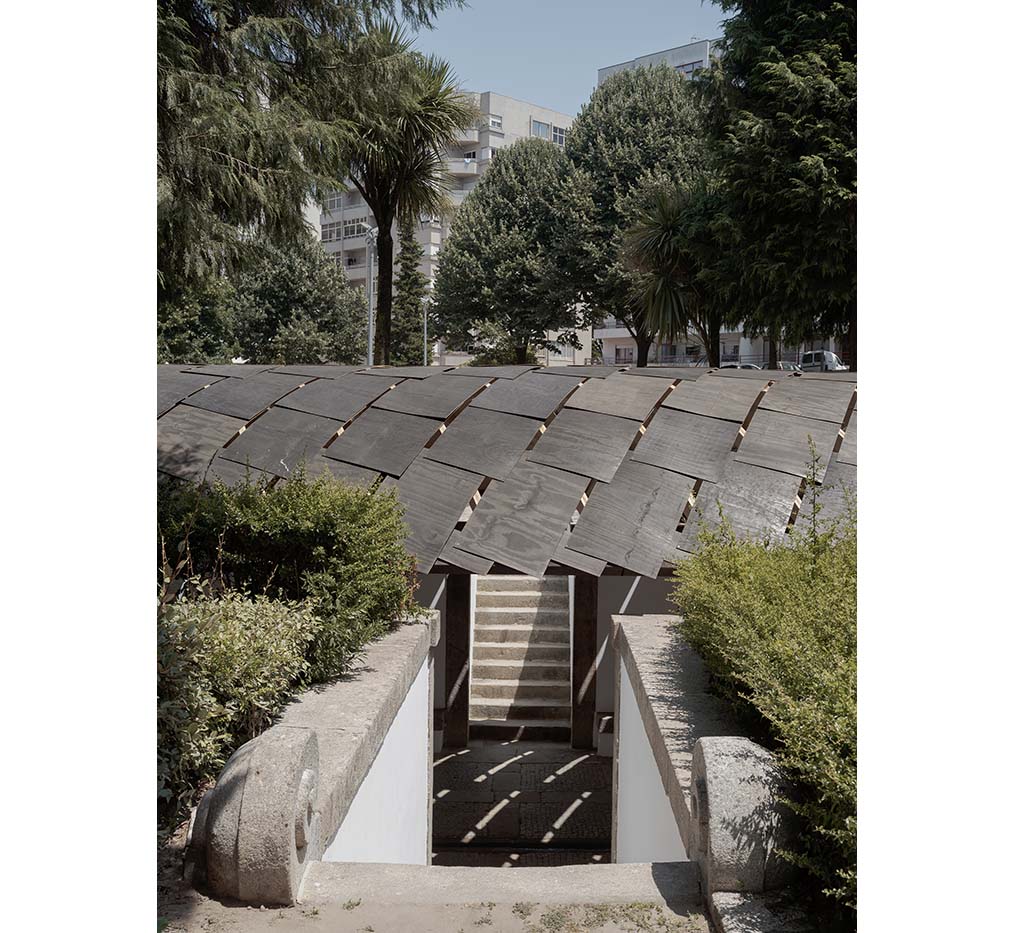
The remodeling approach is simple: the existing stone walls are repaired and restored, and a lightweight timber roof is introduced above. The remaining structures, instead of being demolished, are reinterpreted as retaining walls that stabilize the ground and form the basis of the space. A wooden arch, 6m-wide and 18m-long, extends above the main entrance, creating a shaded area that accommodates a range of activities. Like Atlas bearing the weight of the sky, the structure placed upon the ruins draws renewed attention to a once-overlooked site.
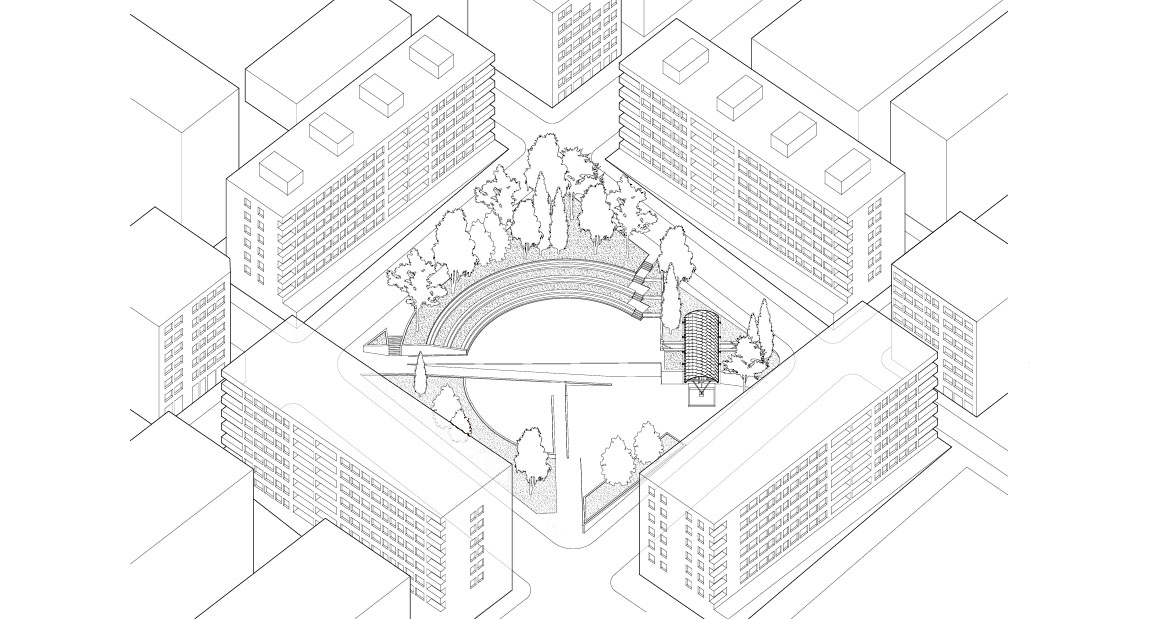
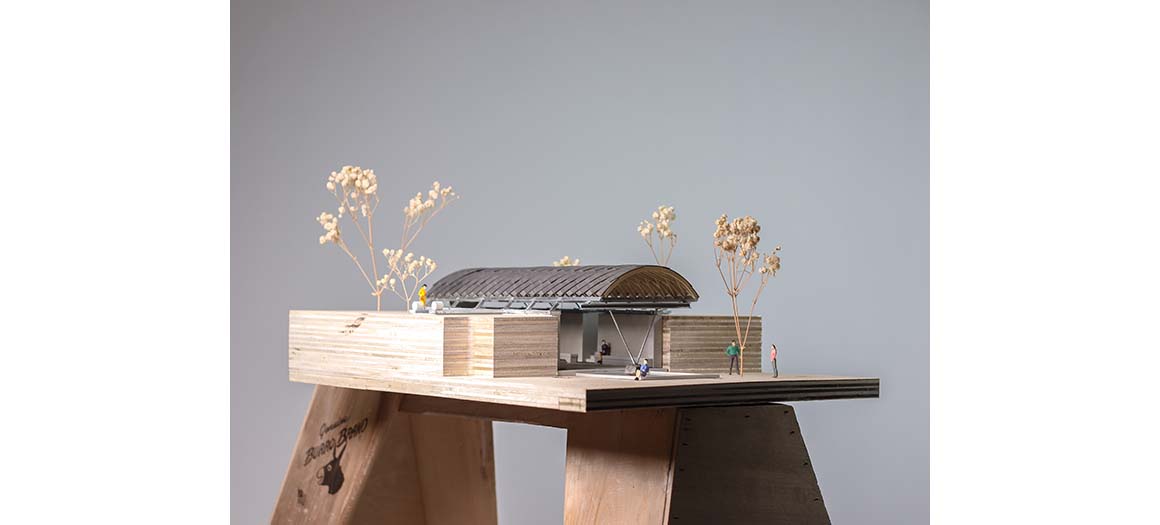
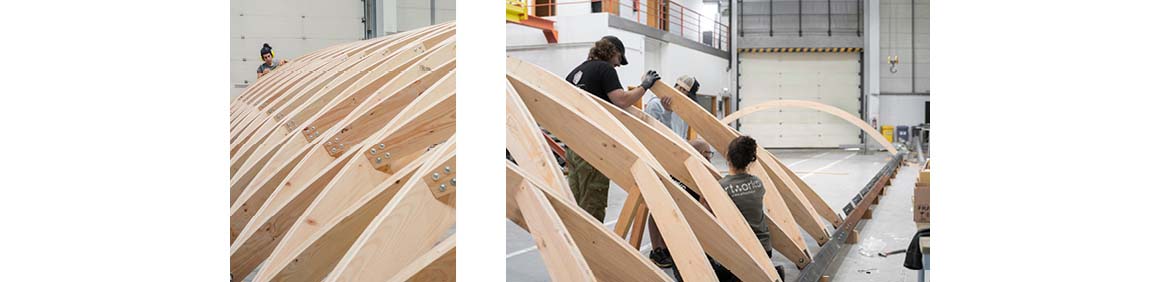
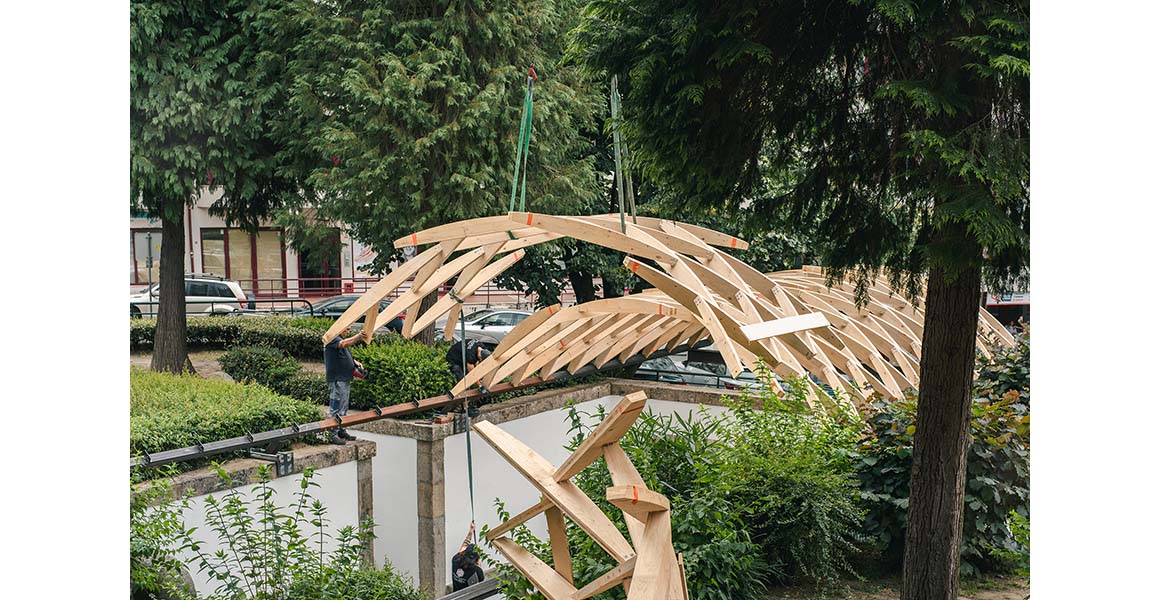
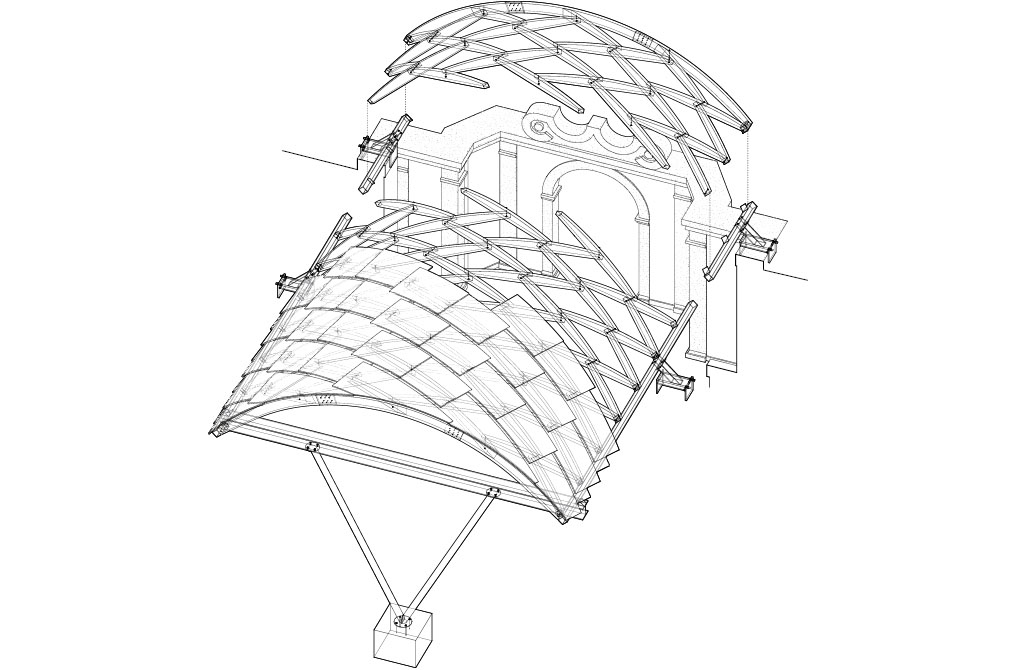
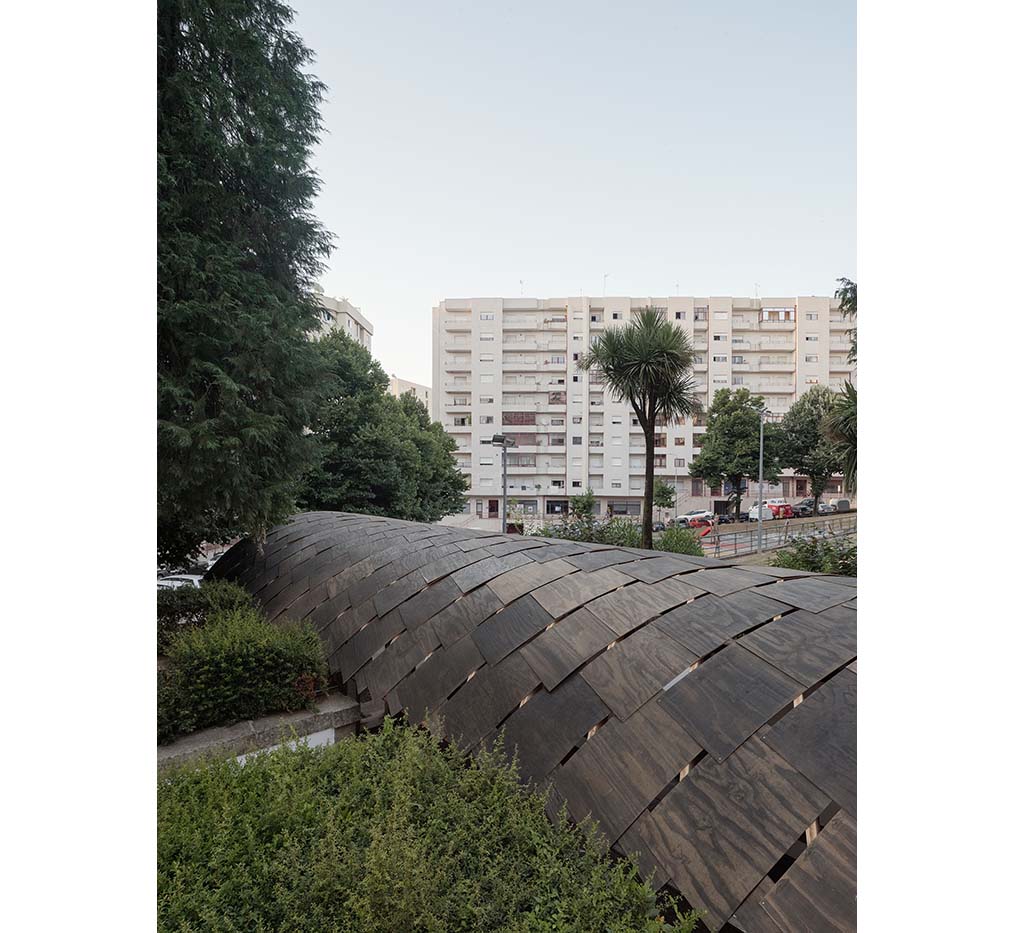
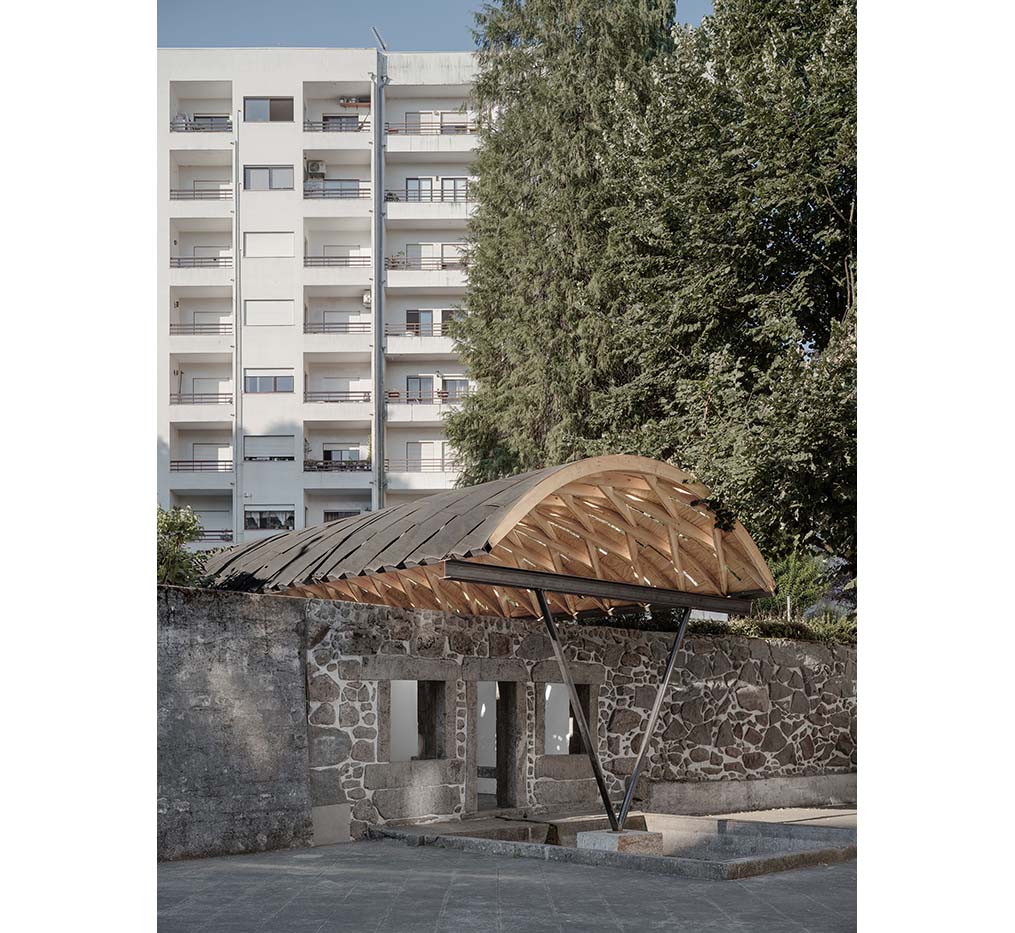
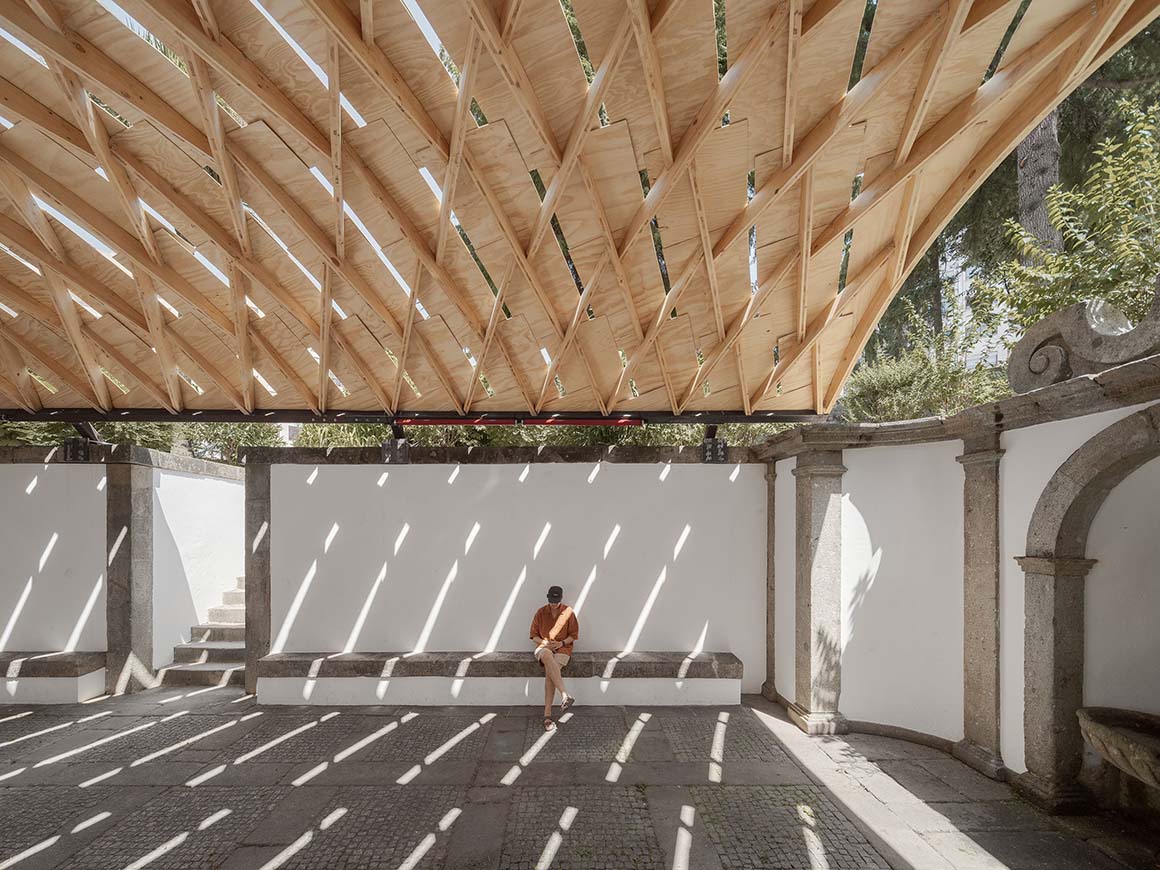
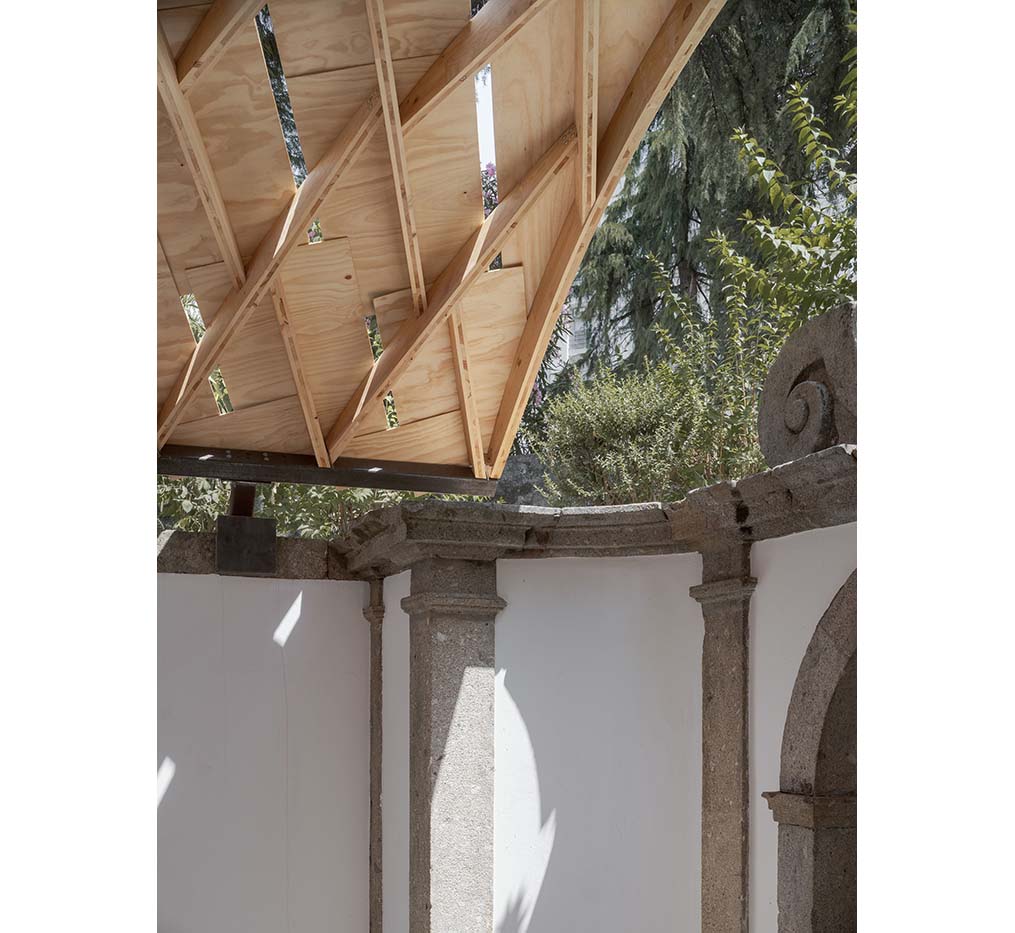
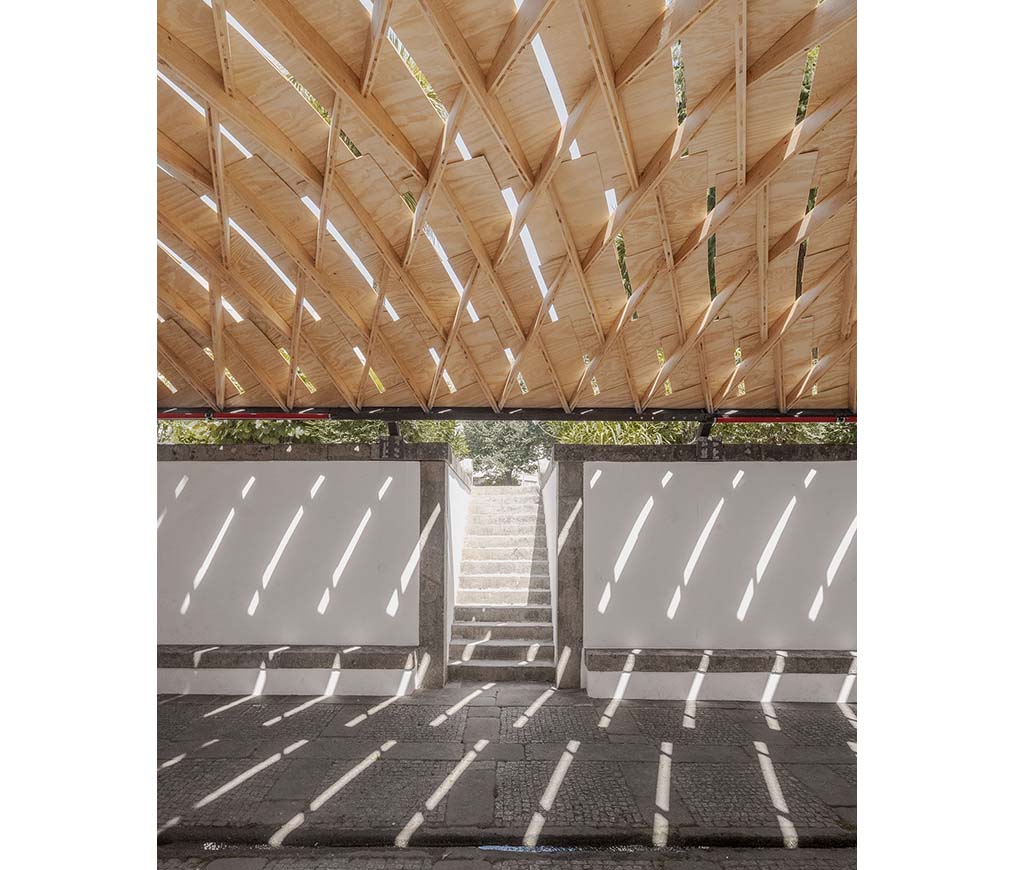
The roof, composed of repeatedly assembled rhombus-shaped timber elements, is characterized by its lightness and self-supporting structure. Plywood panels are added to form a curved surface, with gaps between them allowing light to pass through. Beneath the roof, a subframe of recycled steel sits, transferring loads to the existing stone walls. This configuration also echoes the flow of water from the fountain to the basin, structurally reinterpreting the context of the site.
Material selection and construction methods were also locally grounded. Pine from Galicia was processed into CLT panels, and efficiency was improved through CNC cutting and prefabrication prior to on-site assembly, while reducing transport distances and material use to lower environmental impact. The space now hosts performances, outdoor screenings, meals, and workshops, drawing local residents together. Although initially conceived as a temporary structure, its continued use has led to ongoing discussions about its permanence, in response to residents’ preferences and patterns of use.
Through minimal intervention that respects existing traces, the site‘s sense of place has been reawakened. As a result, vitality has returned to the neighborhood, and new stories continue to accumulate. The reclaimed community, made possible through the reuse of an idle space, demonstrates another possibility for how public spaces can be formed today.
Project: Atlas / Location: Praça das Fontainhas 4700-382 Braga, Portugal / Architect: Manuel Bouzas / Supporters: Cornell AAP, Xilonor / Project team: Structure_Juan F. De la Torre, Cornell AAP_Riley Wines, Varun Gandhi / Production: ArtWorks / Organizers: Forma da Vizinhança, Braga 25 / Curators: Space Transcribers / Use: installation / Gross floor area: 130m² / Completion: 2025 / Photograph: ©Luis Diaz (courtesy of the architect), ©ArtWorks (courtesy of the architect)