
Architecture Erased, Memory Revealed
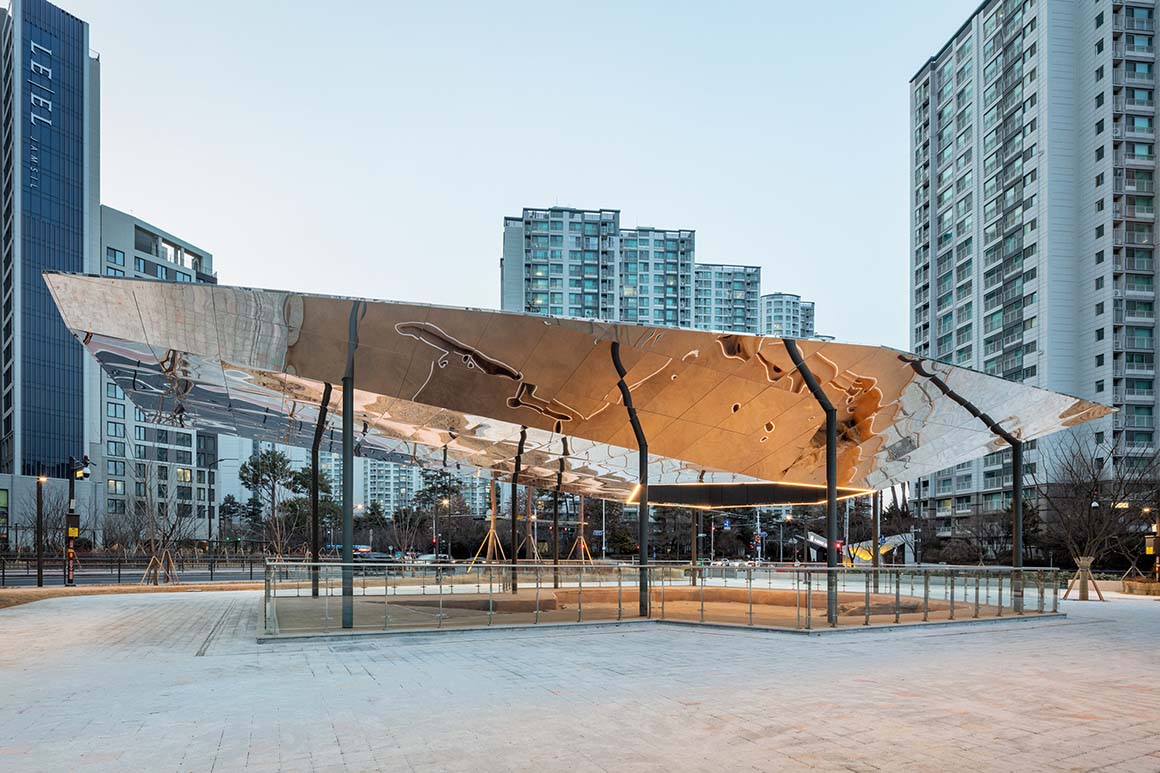
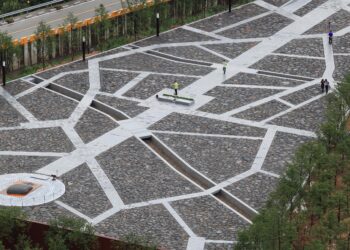
Jamsil Historical Park is a place where the remains of the Hansung Baekje period coexist with a contemporary residential landscape of high-rise apartment buildings. Floating Ground is an architectural intervention that brings the memories buried beneath the ground into today’s landscape.
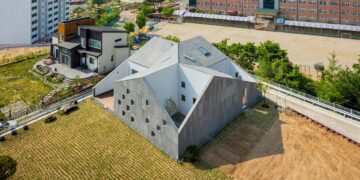
The park was created following archaeological excavations carried out in 2022 during the reconstruction of the Jamsil Jinju Apartment Complex. Originally planned as a neighborhood children’s park, the site was transformed into a historical park after significant remains from the Hansung Baekje period—including pit-house dwellings and other archaeological features—were uncovered. The excavated remains were relocated and restored throughout the park, while Dwelling No. 22, the largest pit-house discovered on the site, was protected beneath the newly constructed shelter, Floating Ground.
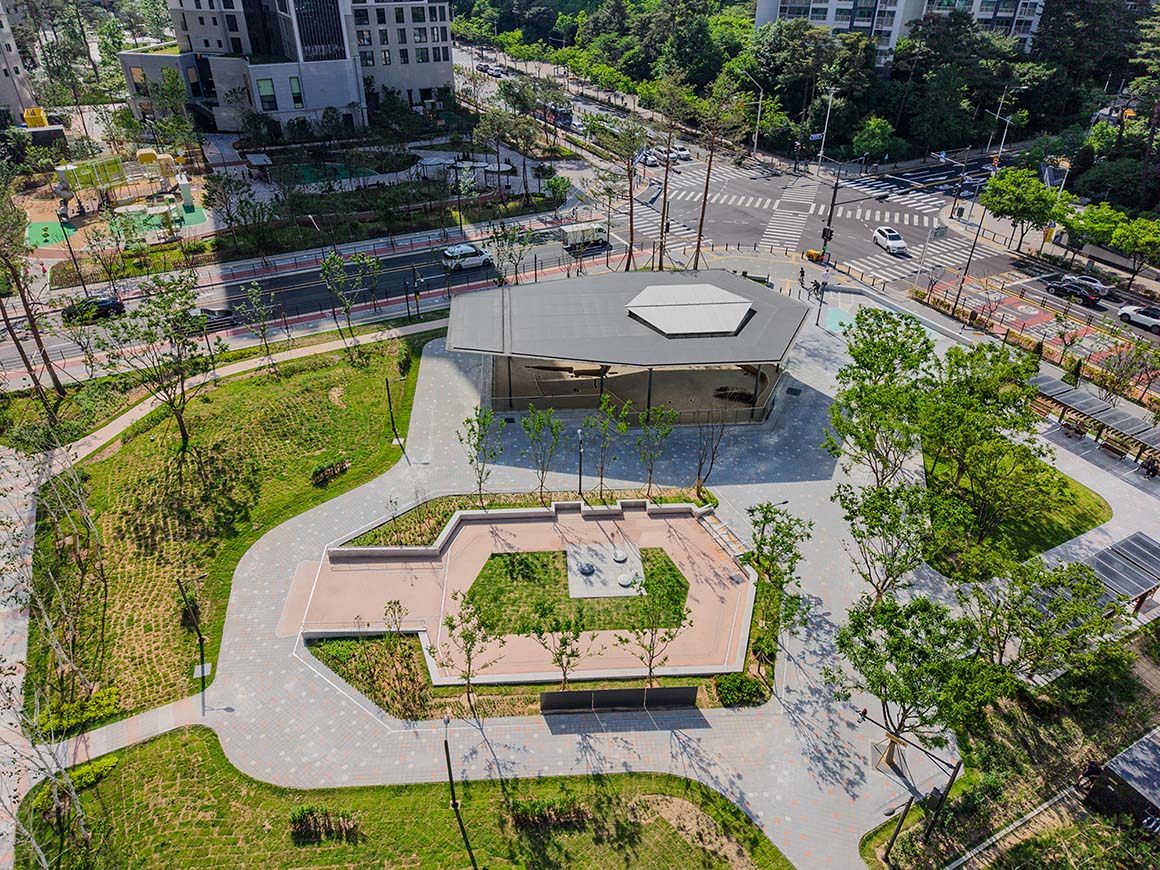
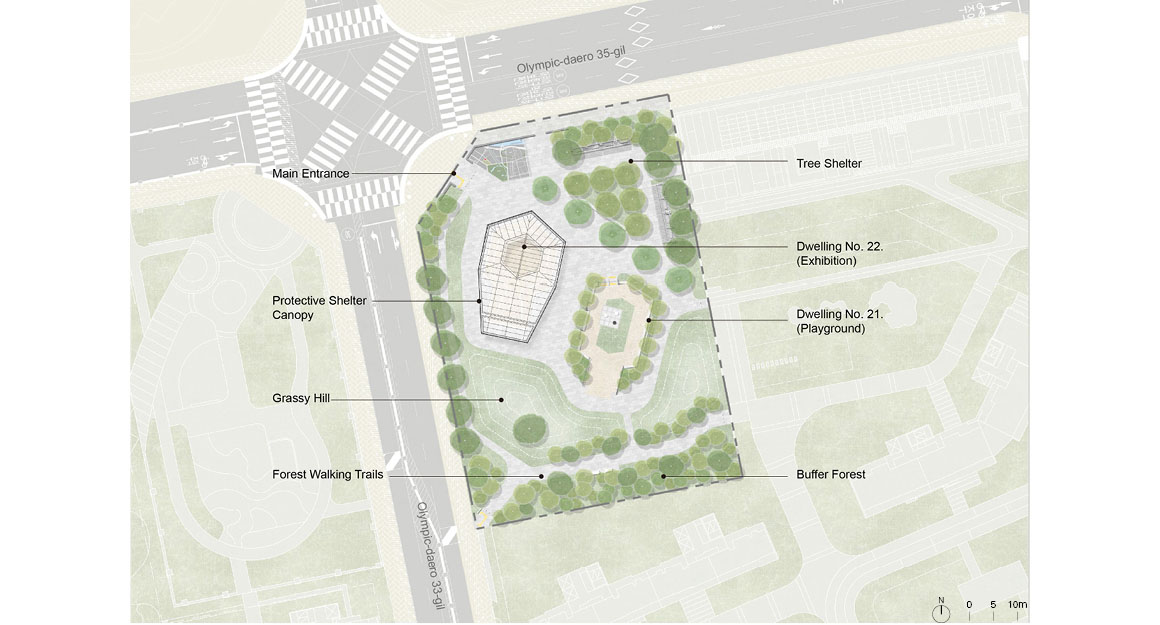
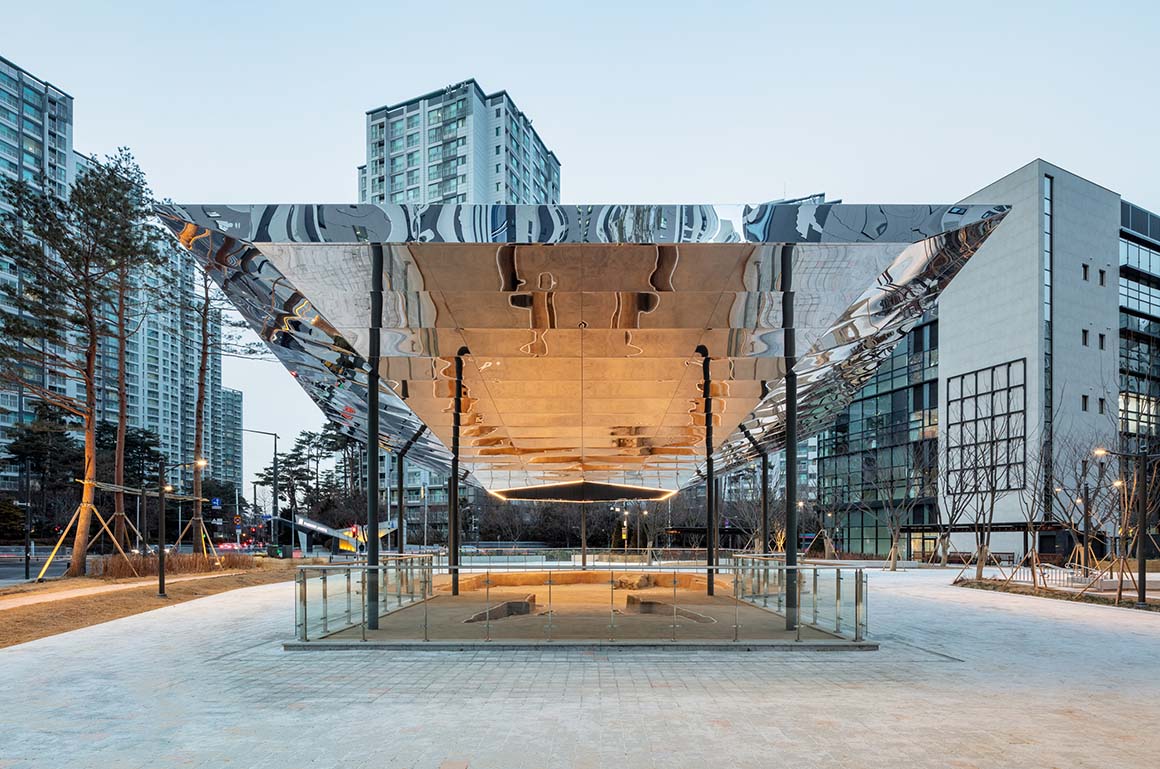
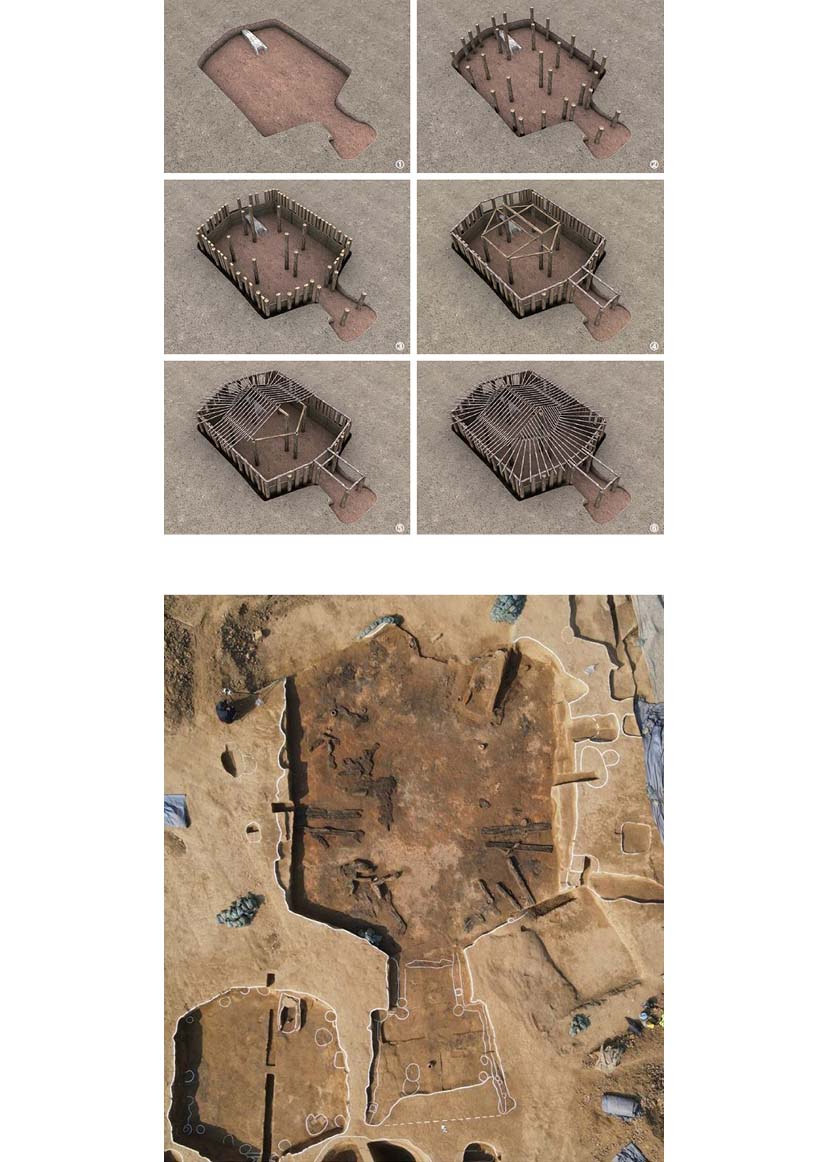
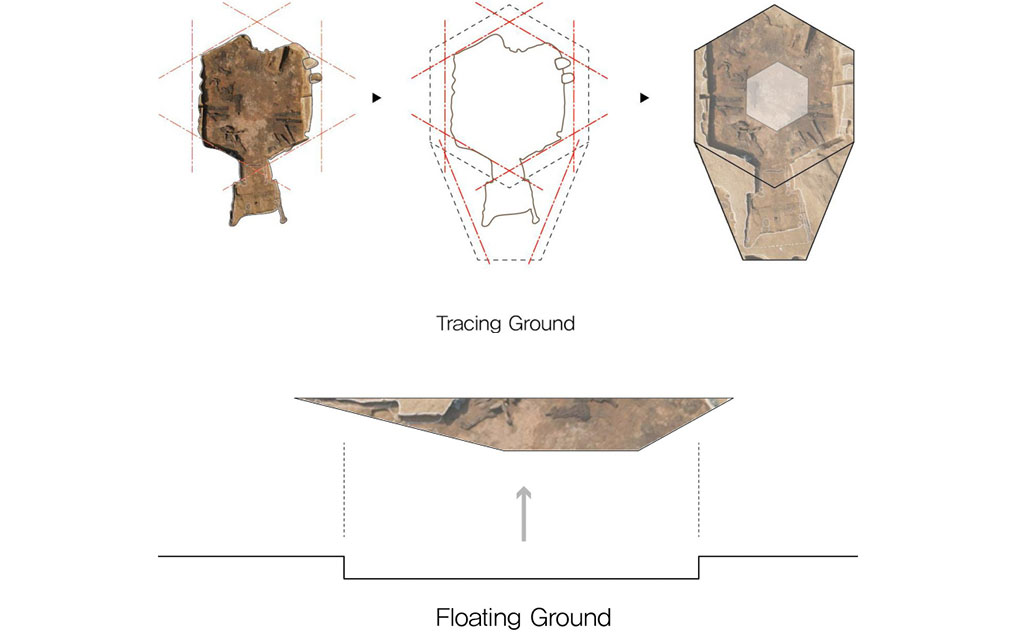
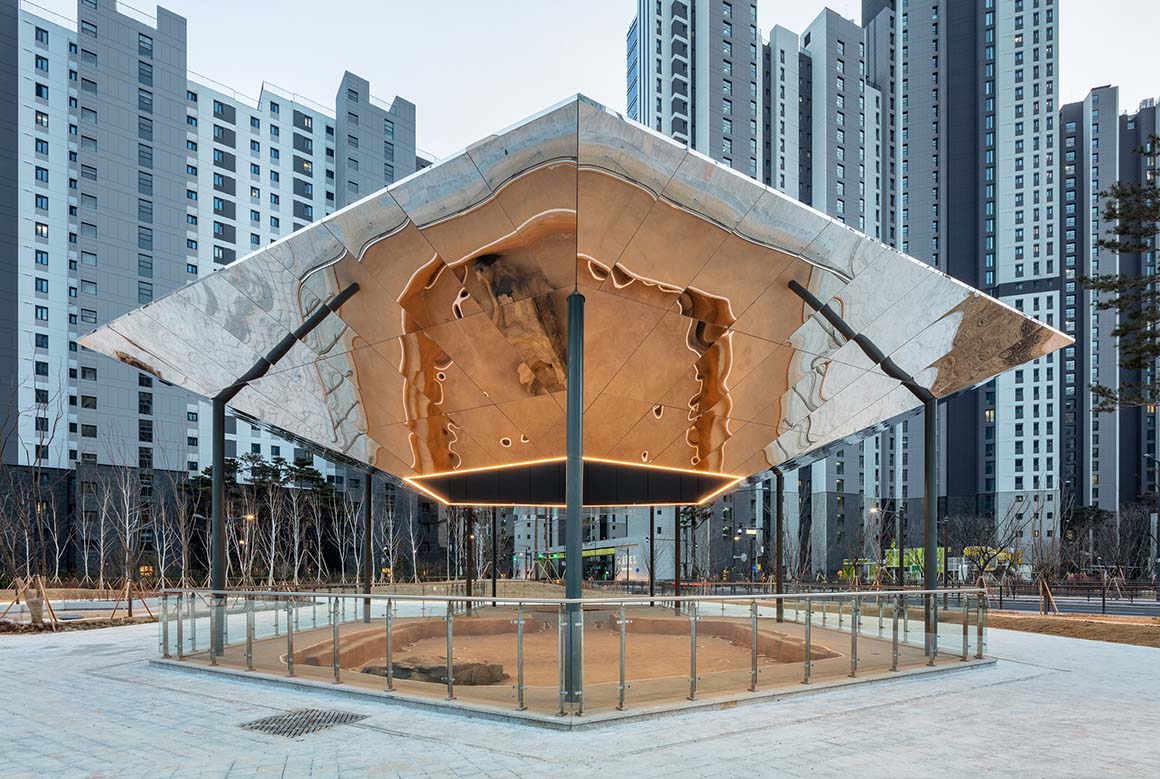
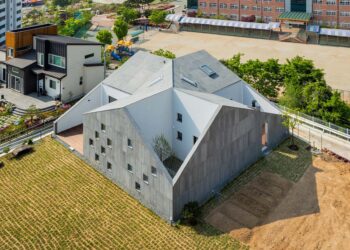
As the archaeological remains are the true protagonists of the park, the shelter is designed not to assert itself but to reveal the presence of the heritage beneath it. Its geometry is derived from the hexagonal footprint of Dwelling No. 22, reinterpreted through a contemporary architectural language. Clad in a super-mirror finish, the geometric roof reflects the sky and surrounding landscape, allowing the physical presence of the structure to recede. In its place, the memory embedded in the ground appears to rise into the air.
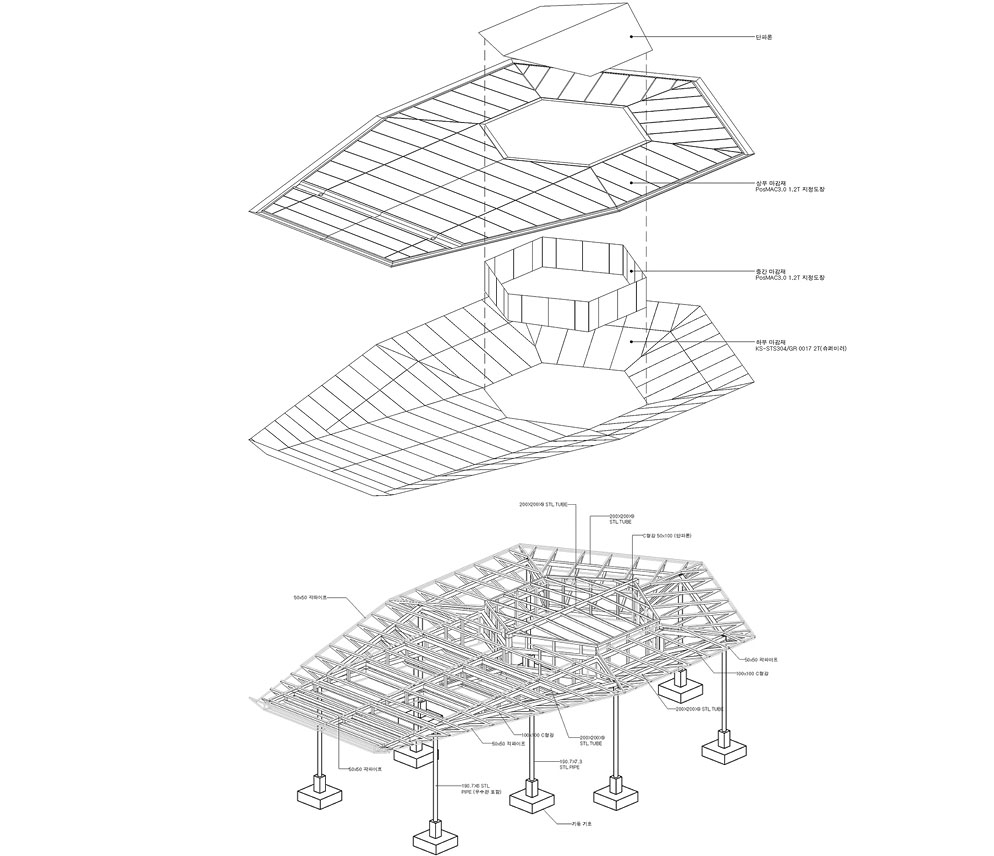
Form and structure are conceived as a single system. The inclined roof is designed to function as part of the structural framework itself, while an internal truss system enables a long-span enclosure of approximately 20 by 10 meters using only slender columns and lightweight steel members. The result is a shelter that appears to hover lightly above the archaeological remains while providing an unobstructed interior space.
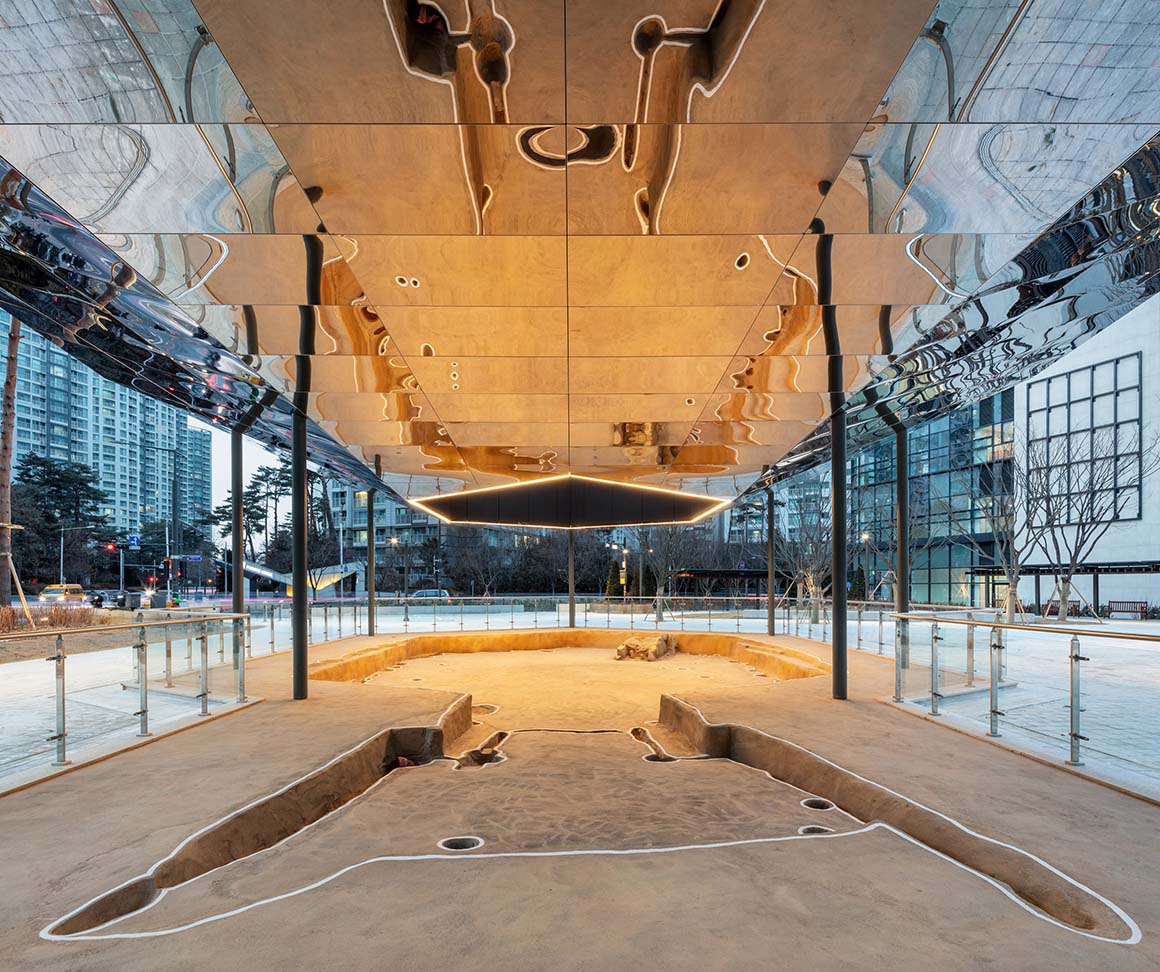
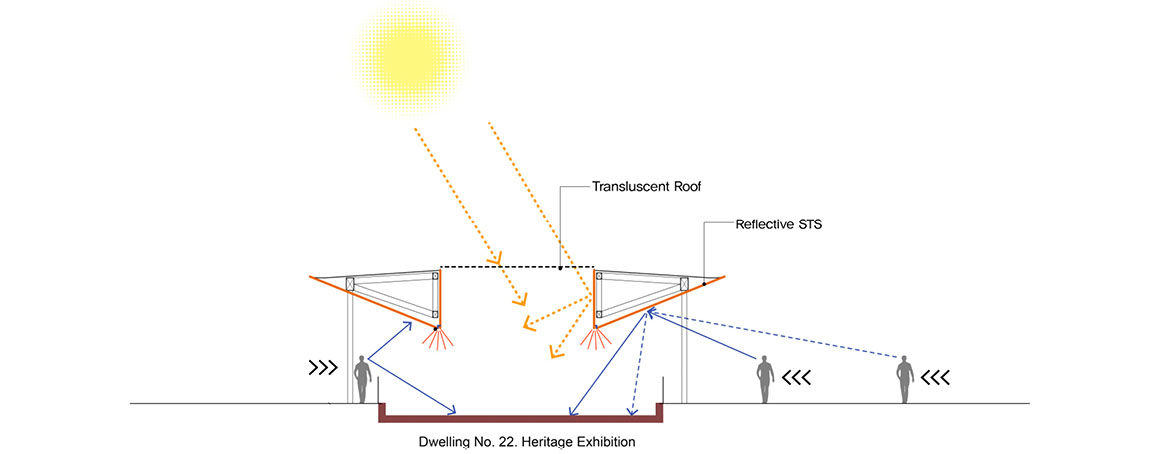
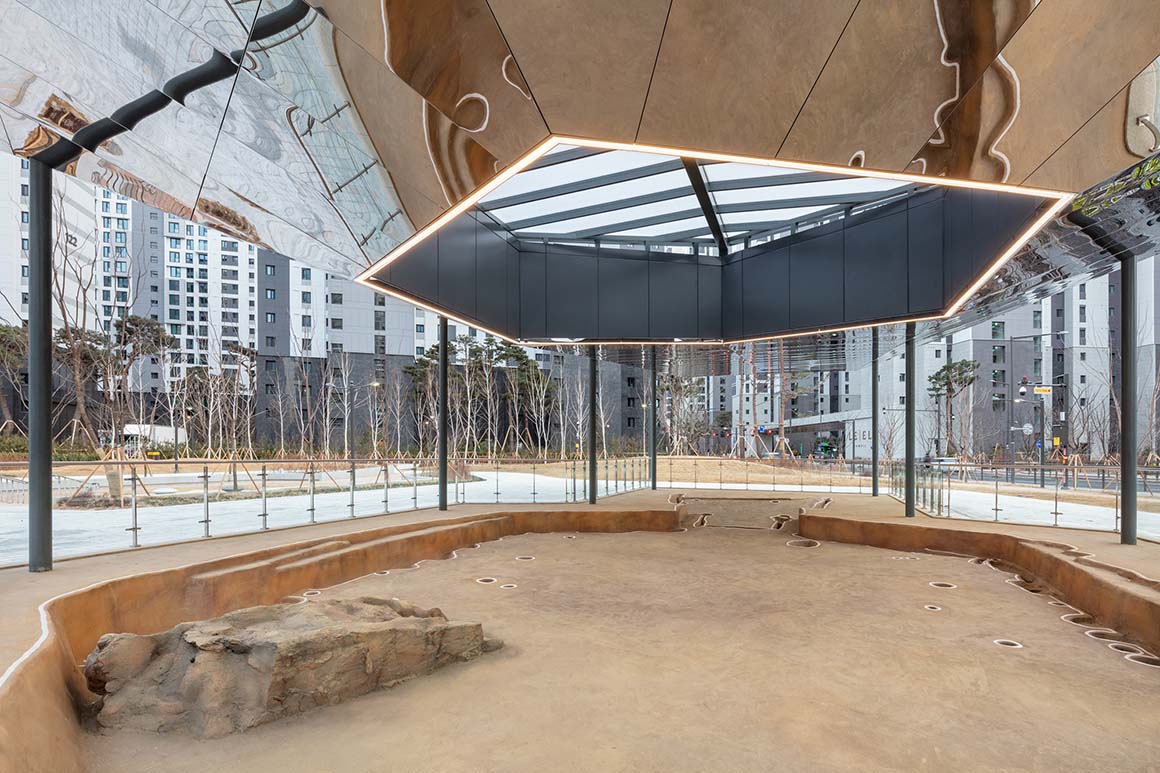
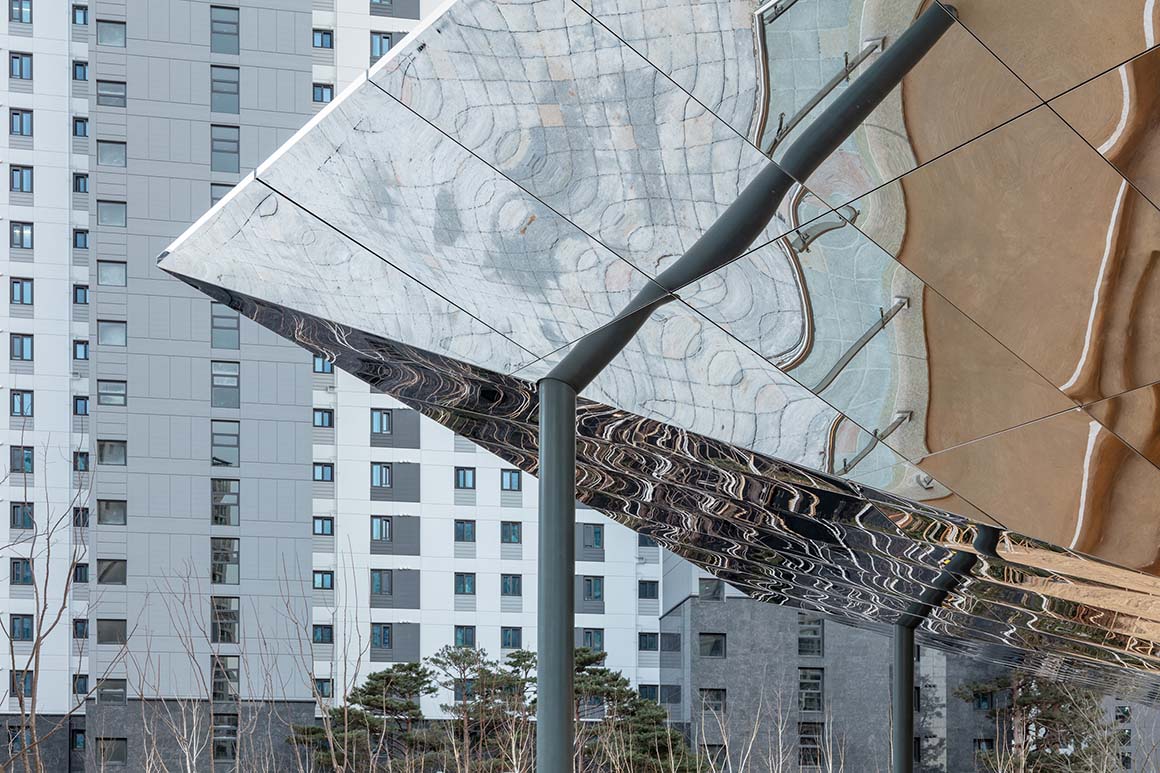
For visitors approaching from outside the park, the mirrored shelter is the first element to come into view. Its reflective surface captures the sky and surrounding landscape while, depending on the viewing angle, revealing fragments of the archaeological remains beneath. Past and present momentarily overlap within a single visual field. As visitors move closer, their attention is naturally drawn toward the reconstructed dwelling below. Rather than becoming the object of observation itself, the shelter guides visitors toward the archaeological remains.
Inside, the space is shaped by daylight entering through the hexagonal skylight. Diffused through translucent panels, natural light gently washes over the restored remains, while its changing intensity continuously transforms the appearance of the site throughout the day. Without decorative elements, the space is defined almost entirely by light, allowing the archaeological remains to remain at the center of the space. After sunset, subtle lighting softly illuminates the shelter, creating a different atmosphere within the historical park.
In doing so, Floating Ground becomes an invisible landmark—one that is remembered precisely because it chooses not to be seen.
Project: Floating Ground / Location: Jamsil Jinju Apartment History Park, 508 Baekjegobun-ro, Songpa-gu, Seoul, Kroea / Architect: YZA (Hyoung-gul Kook) / Project team: Jungeun Jo, Jaewan Park, Soobong Han / Landscape architect: ESOO Landscape Architects / Use: installation, canopy / Gross floor area: 200m² / Design: 2023.3-2024.1 / Construction: 2025.2-2025.12 / Completion: 2026 / Photograph: ©Kyungsub Shin (courtesy of the architect); ©Cheong O Yu (courtesy of the architect)