

The Lower Plane Asserts a Condensed Presence, While the Upper Plane Extends Outward
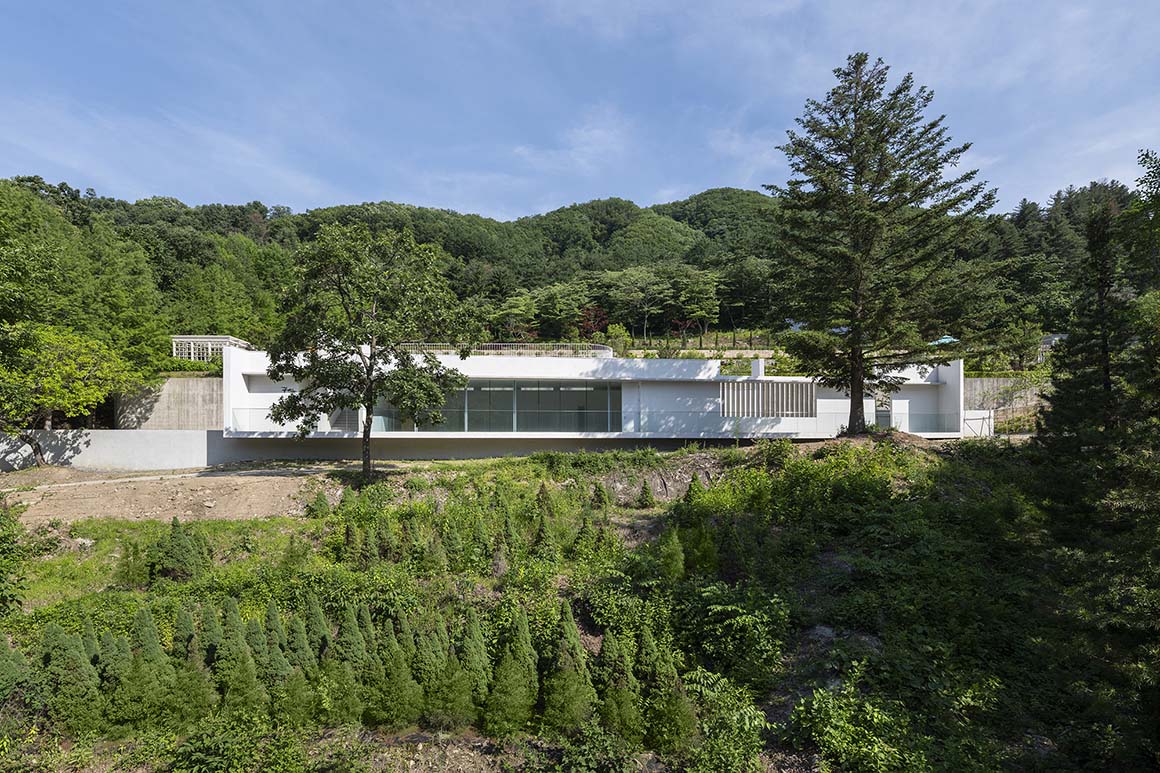
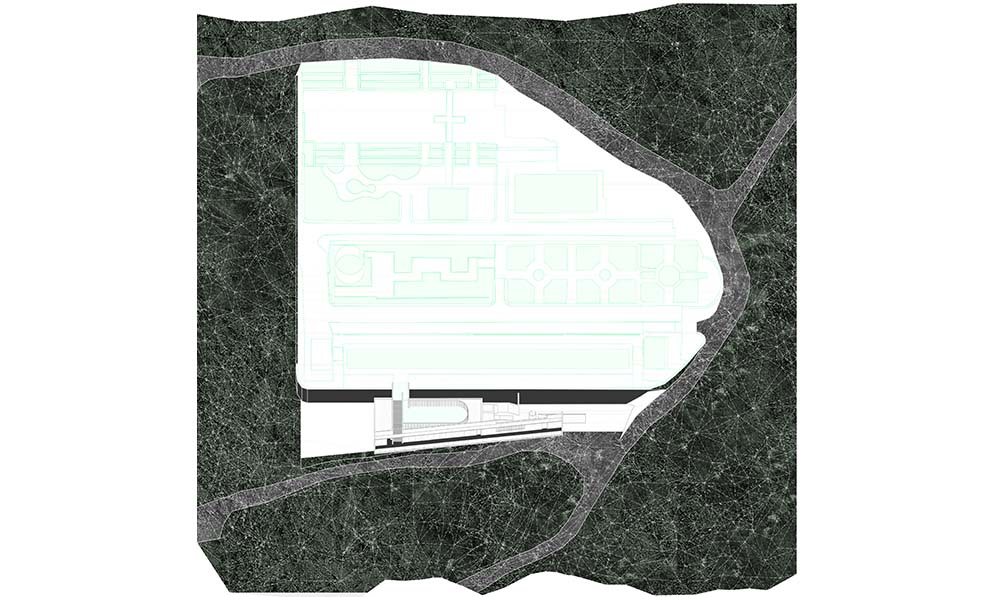
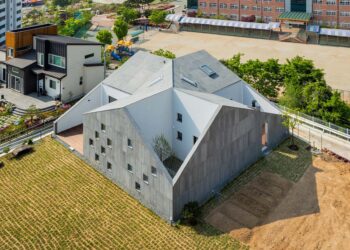
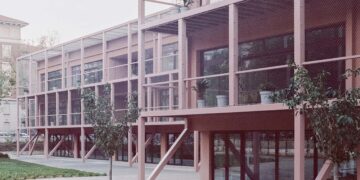
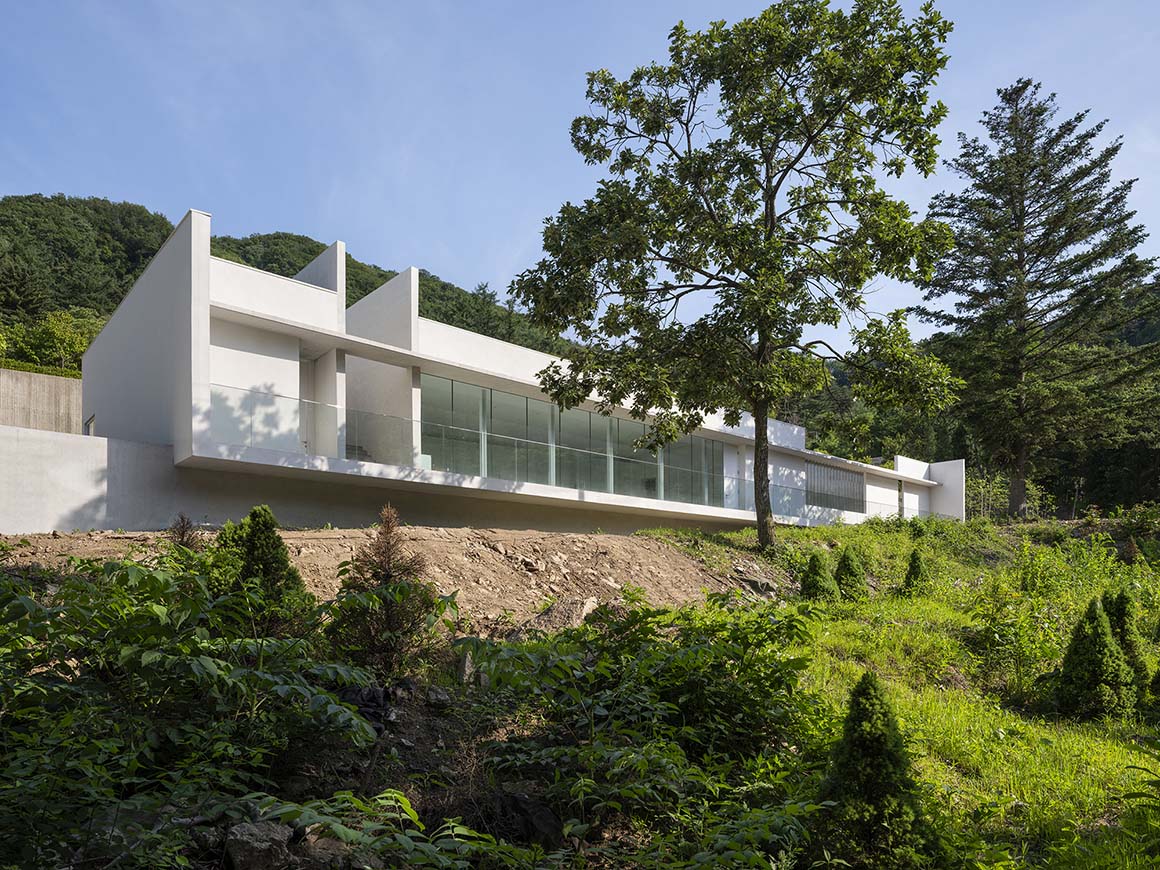
What is architecture built for when its ambition is to disappear into nature? The Heavenly Garden Visitor Center offers one answer to this paradox. Set on the mountain foothills of Seojong, Yangpyeong, Gyeonggi-do, it serves as a brief place of pause for visitors to a 7,500m2 tourist farm. The project is composed of two parallel planes separated by a 4.5-meter level difference. One plane is lifted from the ground; the other remains continuous with the terrain. Each establishes a distinct relationship with the site, together acting as instruments that heighten the sensation of the ground beneath.
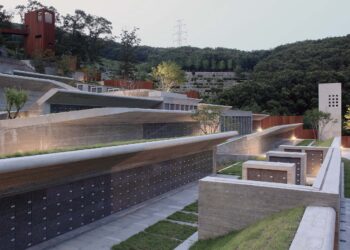
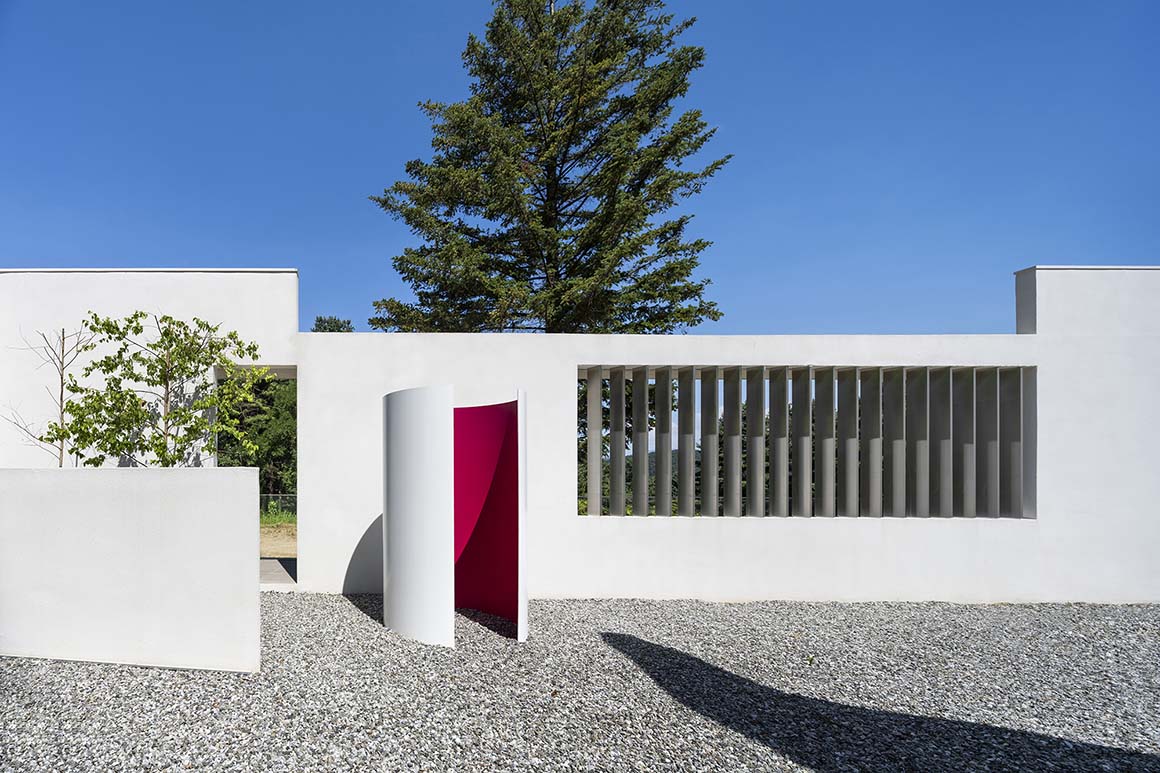
The project’s central idea lies in how it handles land at different levels. Visitors first encounter the building on the path leading from the parking area toward the farm. A low wall and an elongated boundary draw them inward; passing through the front opening, they arrive at a long veranda. From here, stairs carry movement onto the roof plane—precisely where the first terrace of the garden begins. Yet this sequence functions only as a suggestion. Rather than enforcing a single route, the architecture allows each visitor to trace an improvised, flexible trajectory.
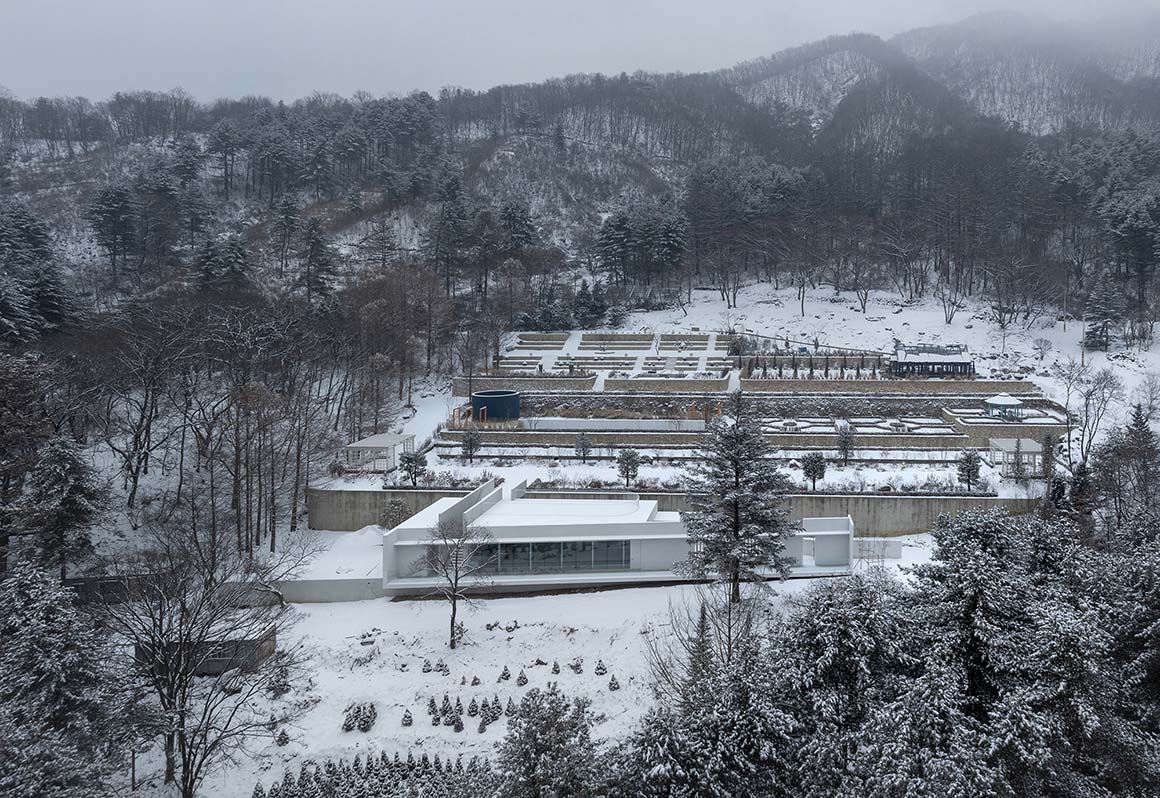
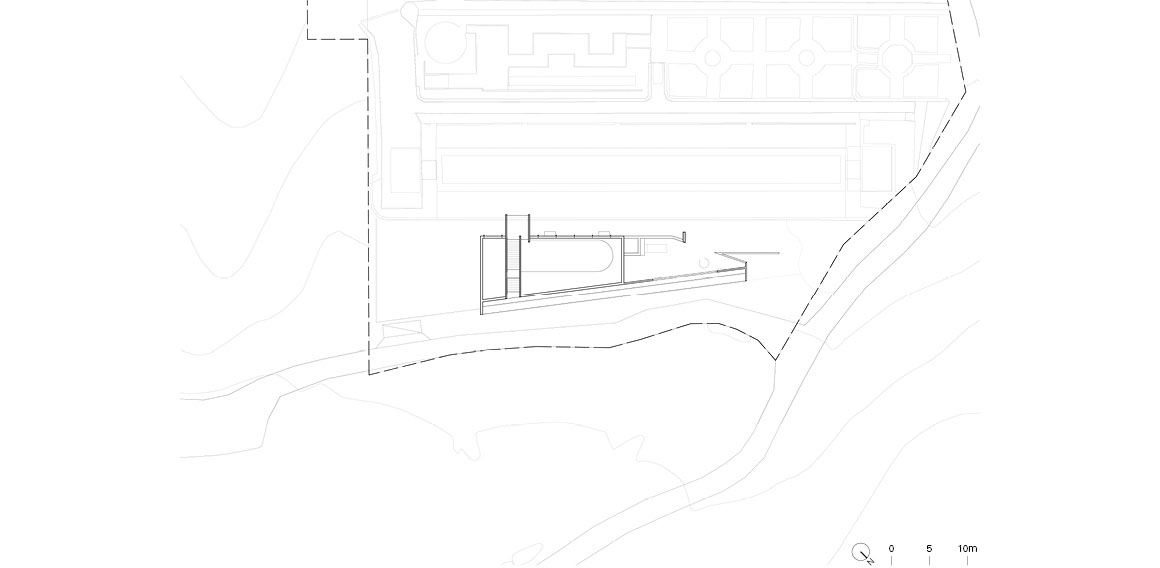

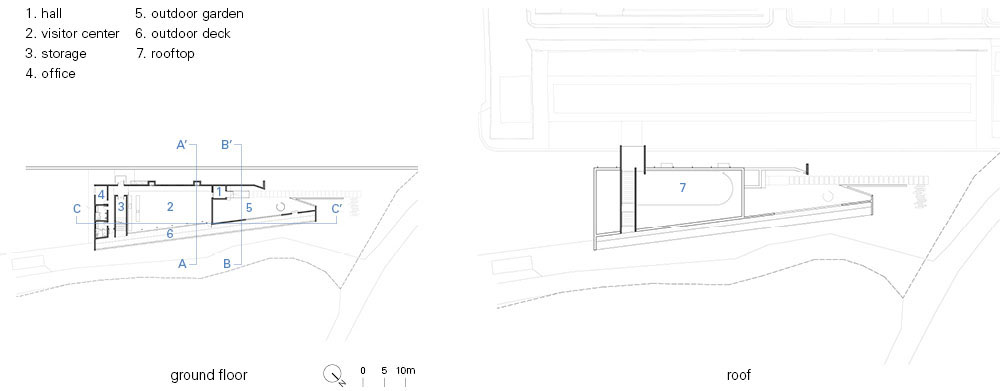
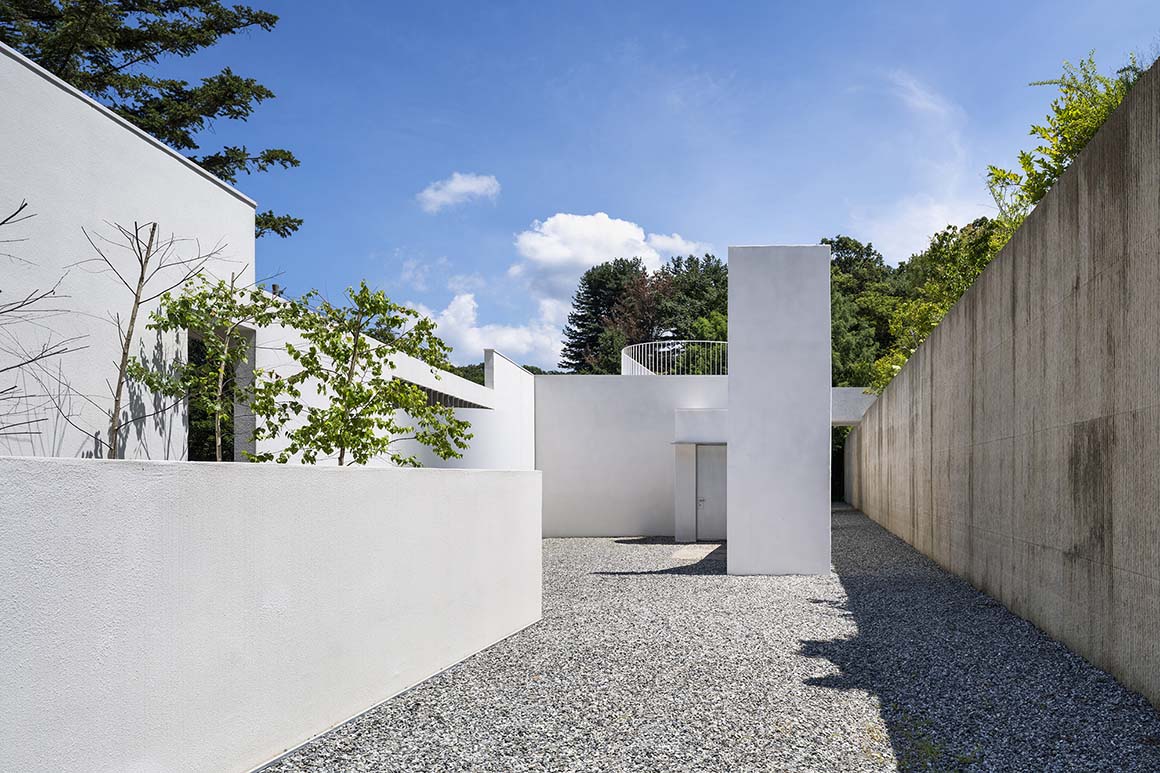
If circulation remains open-ended, the relationship between the two planes and the site is deliberately exact. The lower plane—the lifted plane—is set apart from the ground in response to a sloping maintenance road. Because the roughly three-metre-wide road runs about 2.5 metres below the plane, the flat surface reads as if it were hovering above the land. Near the western entrance it touches down, but toward the eastern stair it gradually rises, and the distance to the ground subtly shifts.
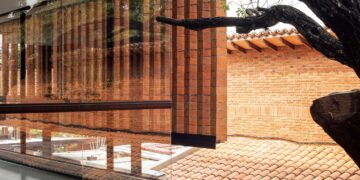
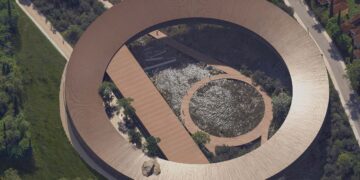
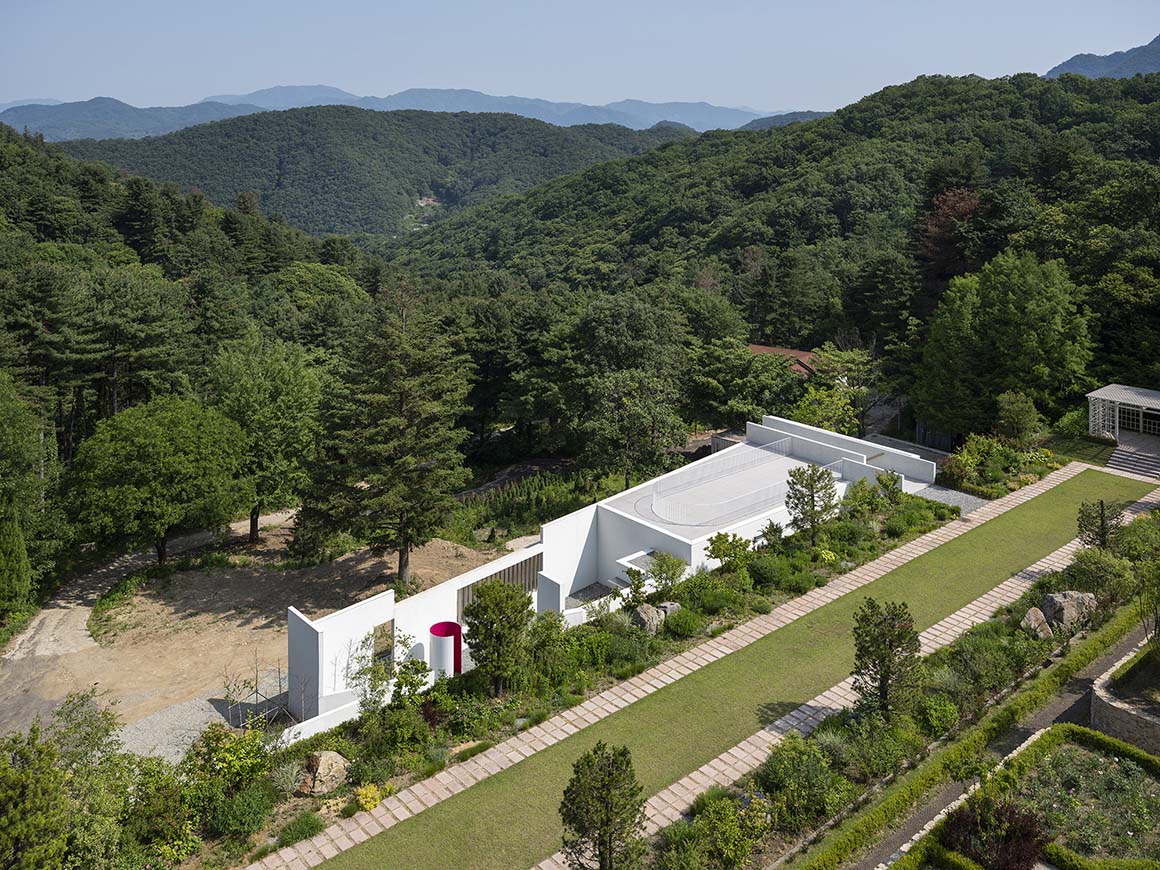
The veranda line and the rear wall are offset, producing an overall trapezoidal figure. An extended outer wall, a low parapet, a cylinder opened on one side, obliquely set apertures, and vertically emphatic walls create moments where architecture and landscape cross on the lifted plane. To the north, the mountain view—changing with the seasons—filters into the interior; to the south, direct sunlight reflects through full-height glazing, letting light wash across the ceiling while the southern slope’s vegetation continually transforms the scene.
The upper plane—the connected plane—merges into the terrain at the level of the farm’s first terrace. The garden is organised into four tiers with an overall height difference of approximately ten metres, and it begins here. As one moves upward to higher ground, the architecture becomes smaller and fainter. Rather than asserting itself, the building aims to diminish—approaching, as closely as possible, the site’s pre-existing natural state.
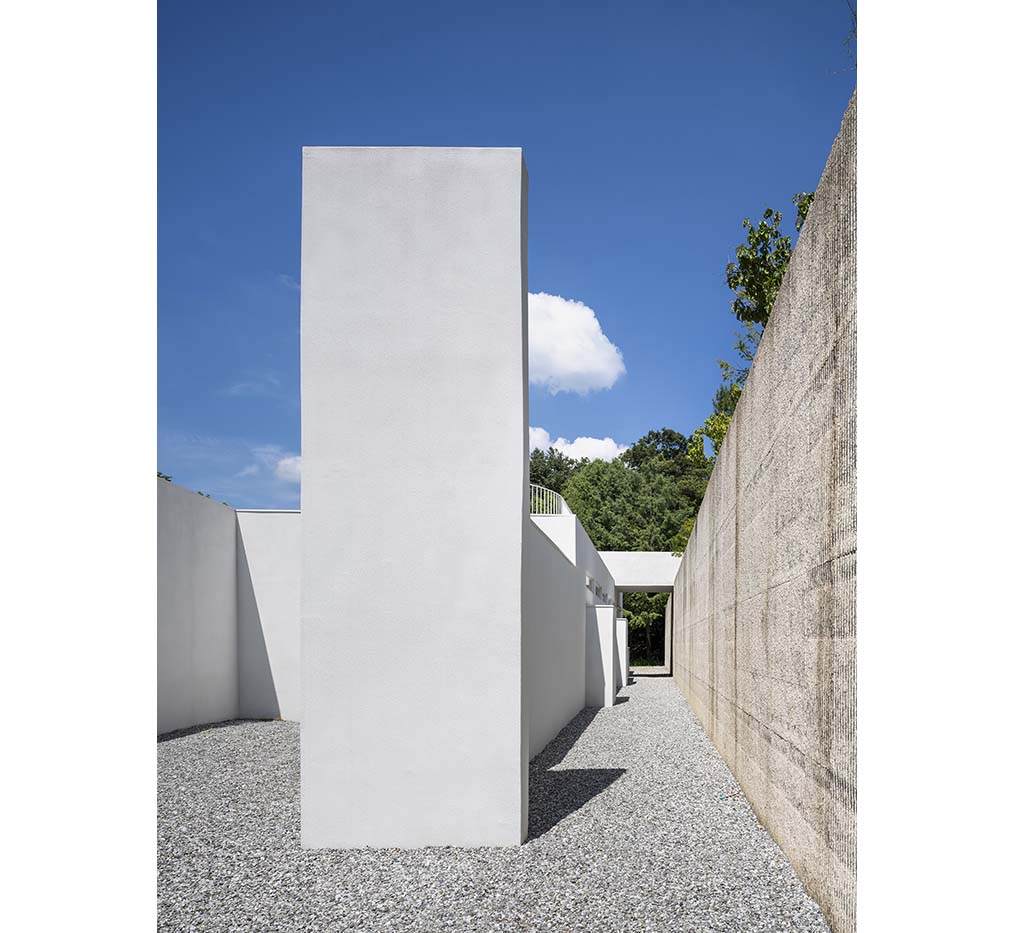
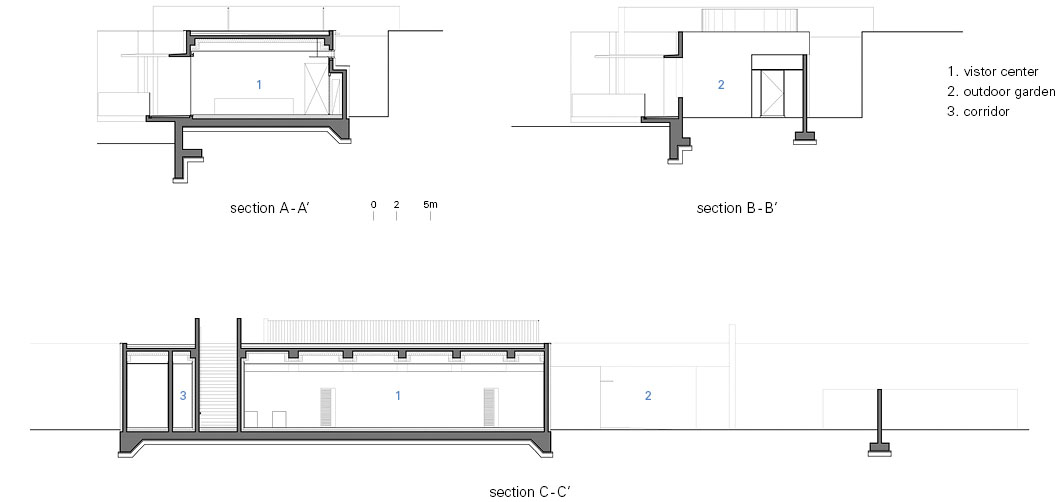
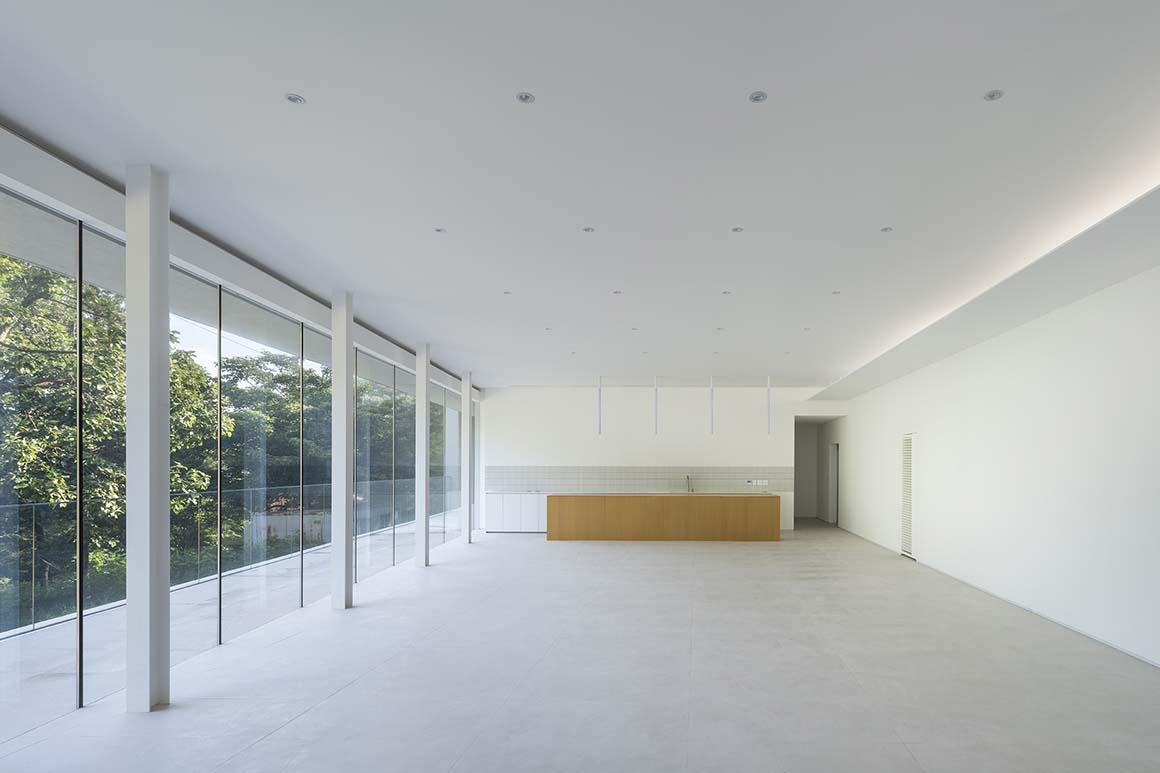
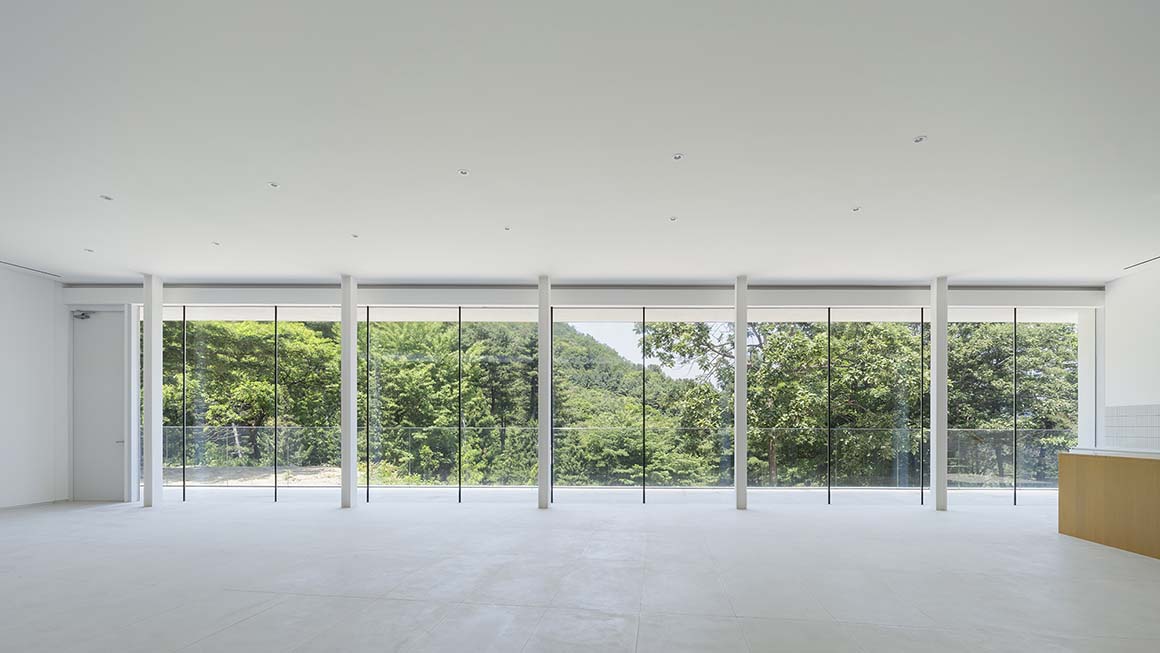
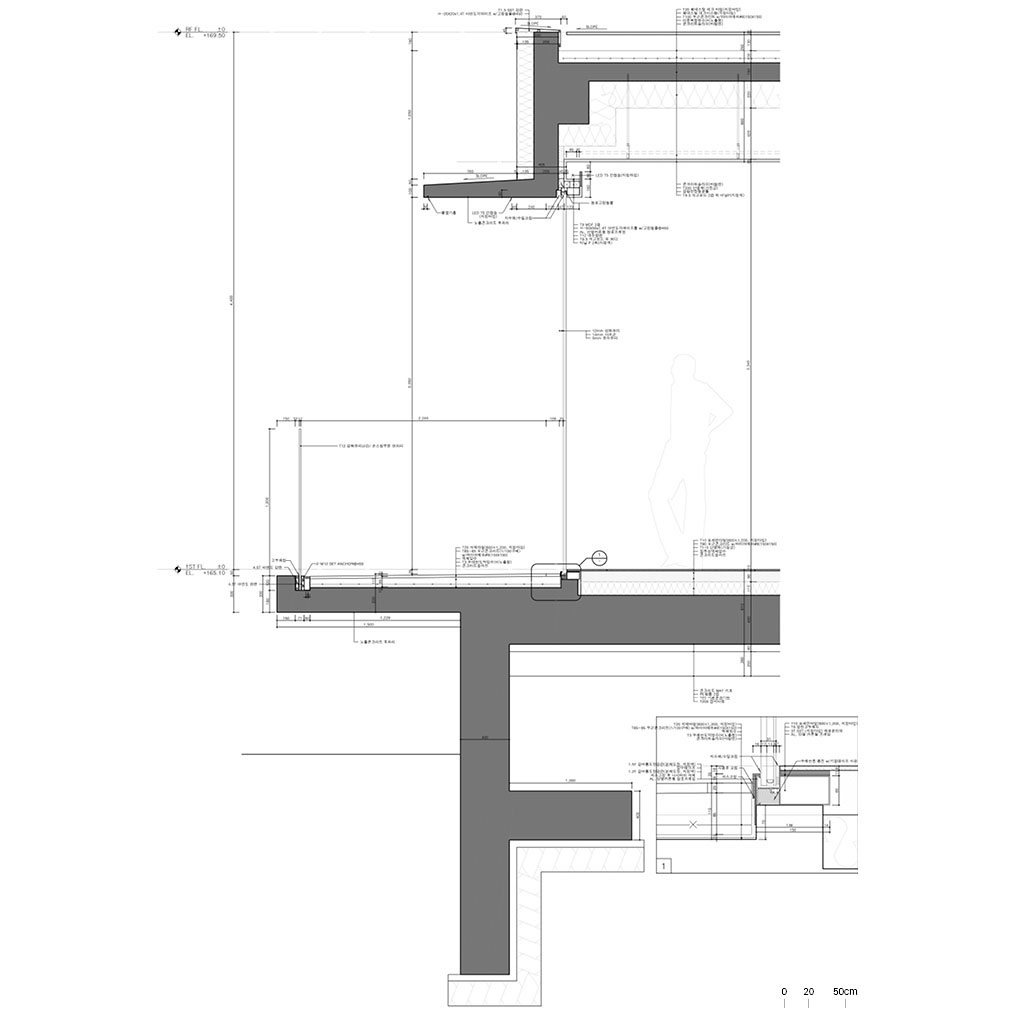
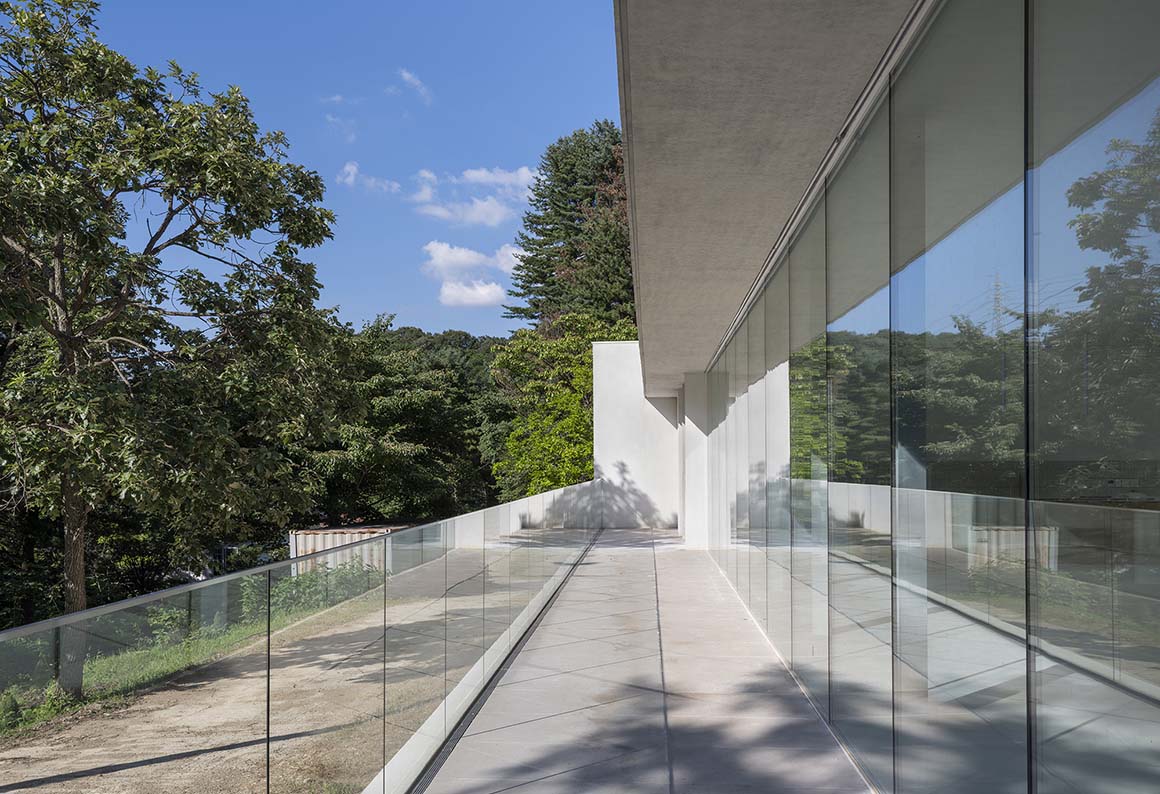
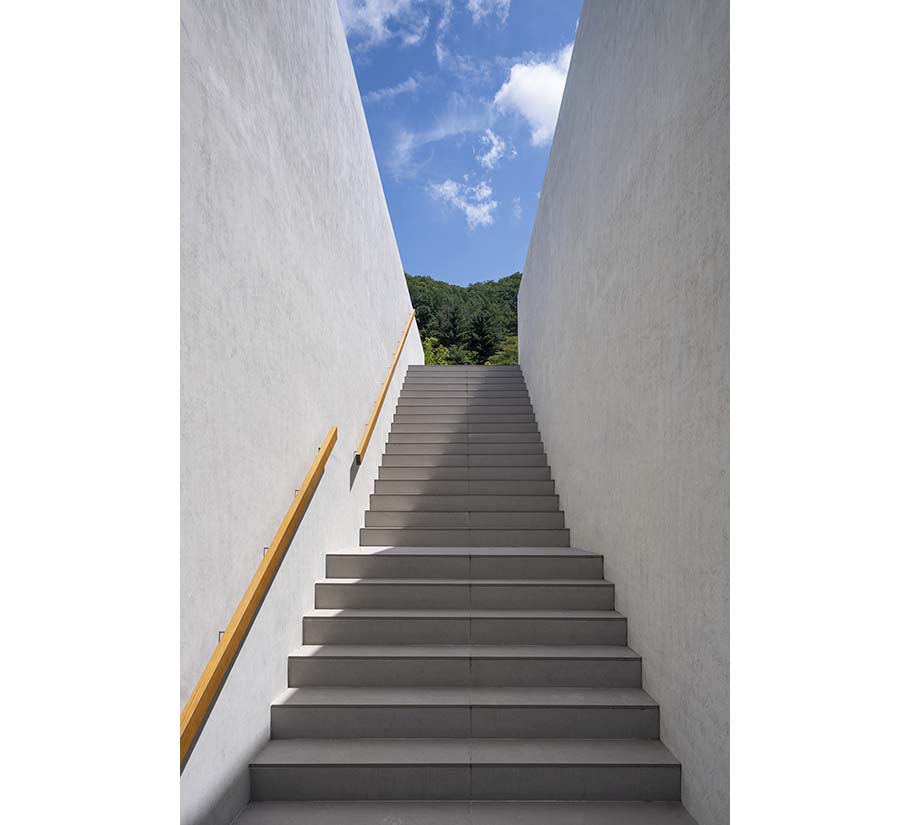
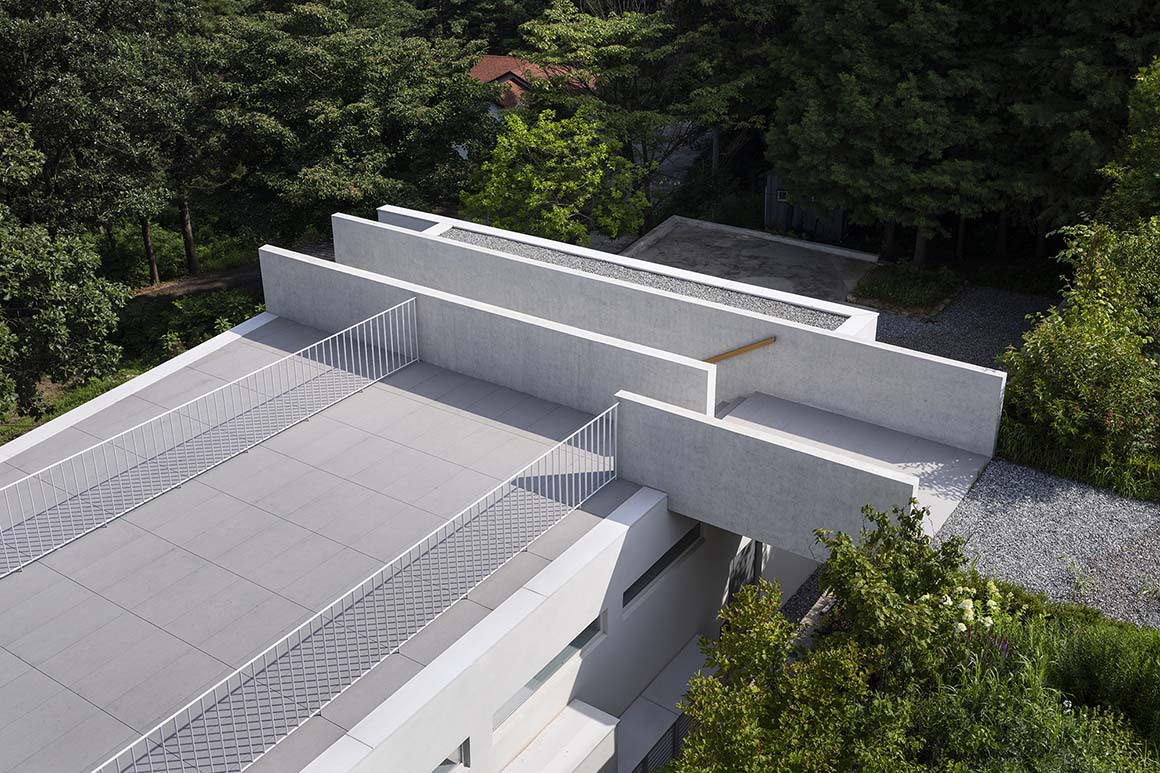
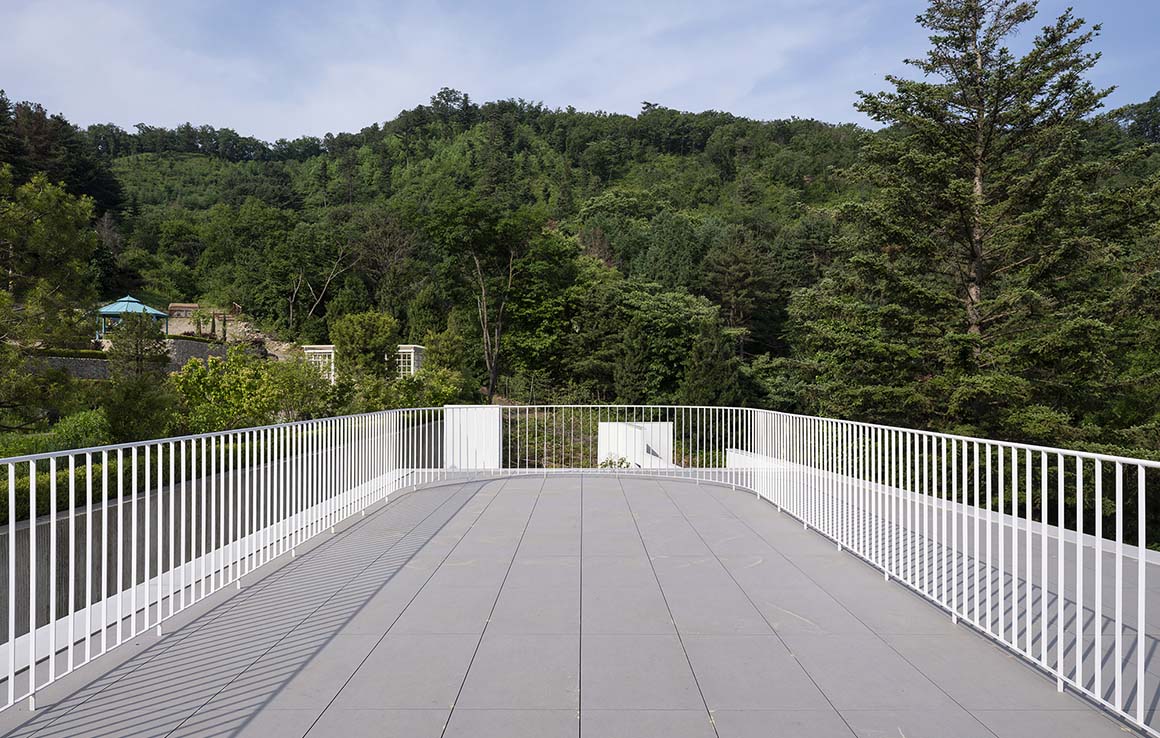
The two planes also address different scales of terrain. The lifted plane asserts a condensed presence in close negotiation with the narrow road, while the connected plane extends outward—across the terraced farm and into the surrounding topography—until it nearly disappears. If the former belongs to the sensibility of a perspective drawing, the latter carries the logic of a site plan. In attempting to erase itself and return to the earth, the architecture brings the land’s underlying character into sharper focus.
Project: Heavenly Garden Visitor Center / Location: San62-60, Su-ip-ri, Seojong-myeon, Yangpyeong-gun, Gyeonggi-do, Republic of Korea / Architect: JIYO Architects (SeJin Kim) / Project team: ChangHyeon Bae, SeungJae Lee / General contractor: DH Construction / Client: Chang-hyeon Son, Hye-jin Bang / Use: tourist rest facilities / Site area: 7,450.00m² / Bldg. area: 271.46m² / Gross floor area: 265.46m² / Bldg. coverage ratio: 3.64% / Gross floor ratio: 3.56% / Bldg. scale: one story above ground / Structure: RC / Completion: 2025 / Photograph: ©Namgoong Sun (courtesy of the architect)