



Reinterpreting a Well as a Vessel of Collective Memory
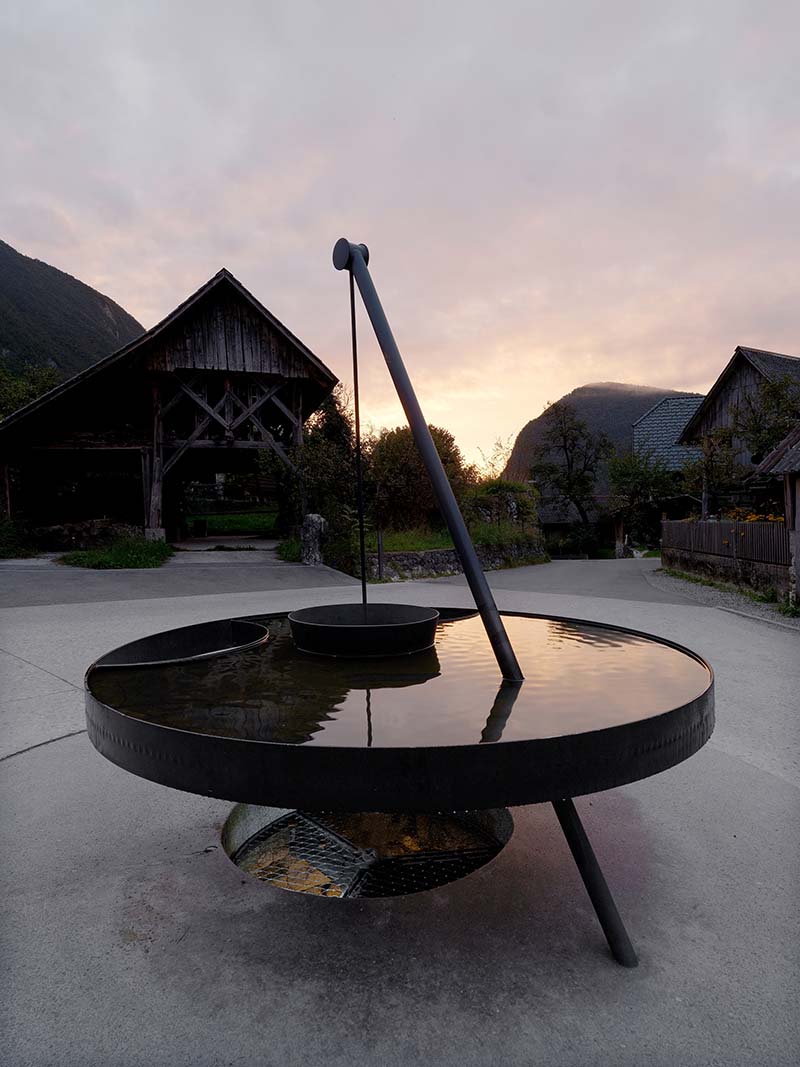
A 7-meter-deep stone well was uncovered in Stara Fužina, an Alpine village in Slovenia‘s Bohinj Valley. Buried underground for more than 500 years, the well had long been forgotten by local residents before resurfacing during road improvement works. Rather than approaching the discovery as a straightforward restoration, the project reinterprets the well as a contemporary public space. Located within Triglav National Park, Stara Fužina is a village shaped by traditional farmhouses and pastoral culture, and the well once served as an important piece of communal infrastructure. Beyond supplying water, village wells historically functioned as gathering places where residents exchanged news and shared daily life. Reconsidering this social role through the lens of contemporary public space, the project transforms a forgotten site into a place of collective memory and public gathering.
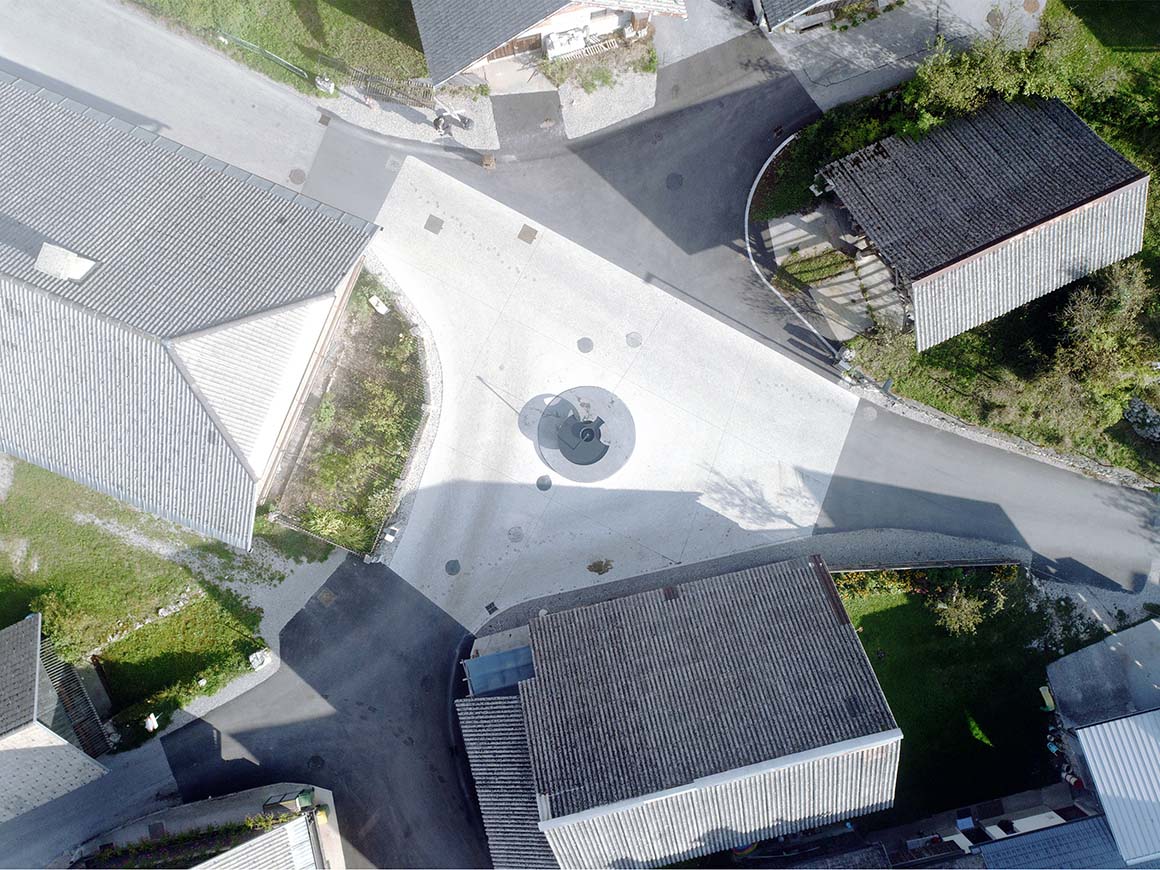
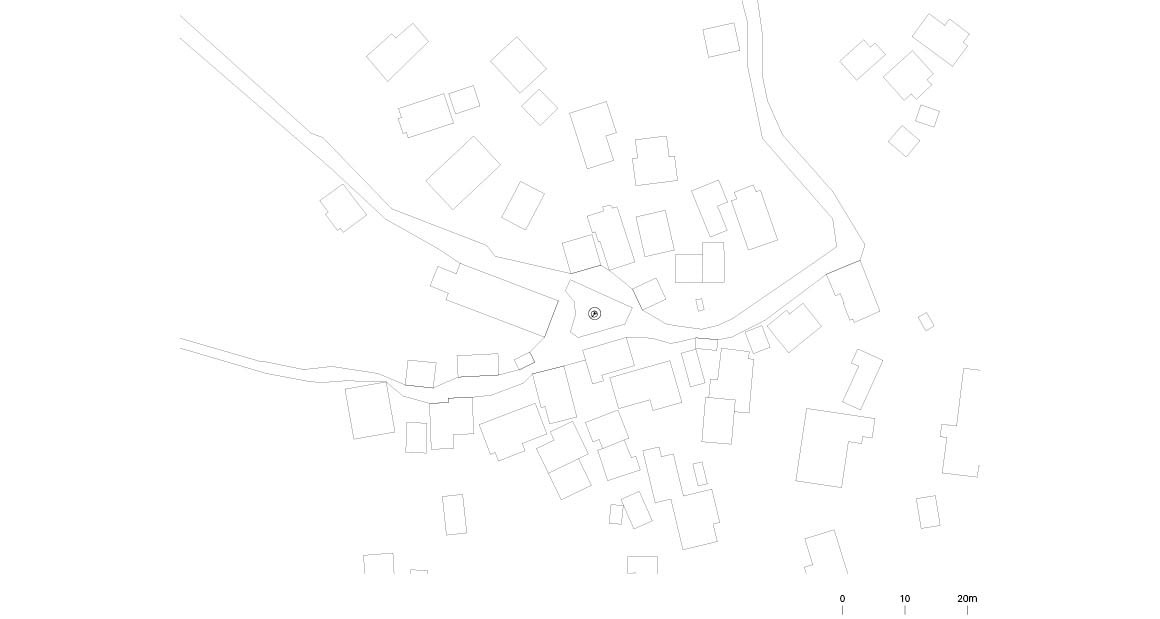
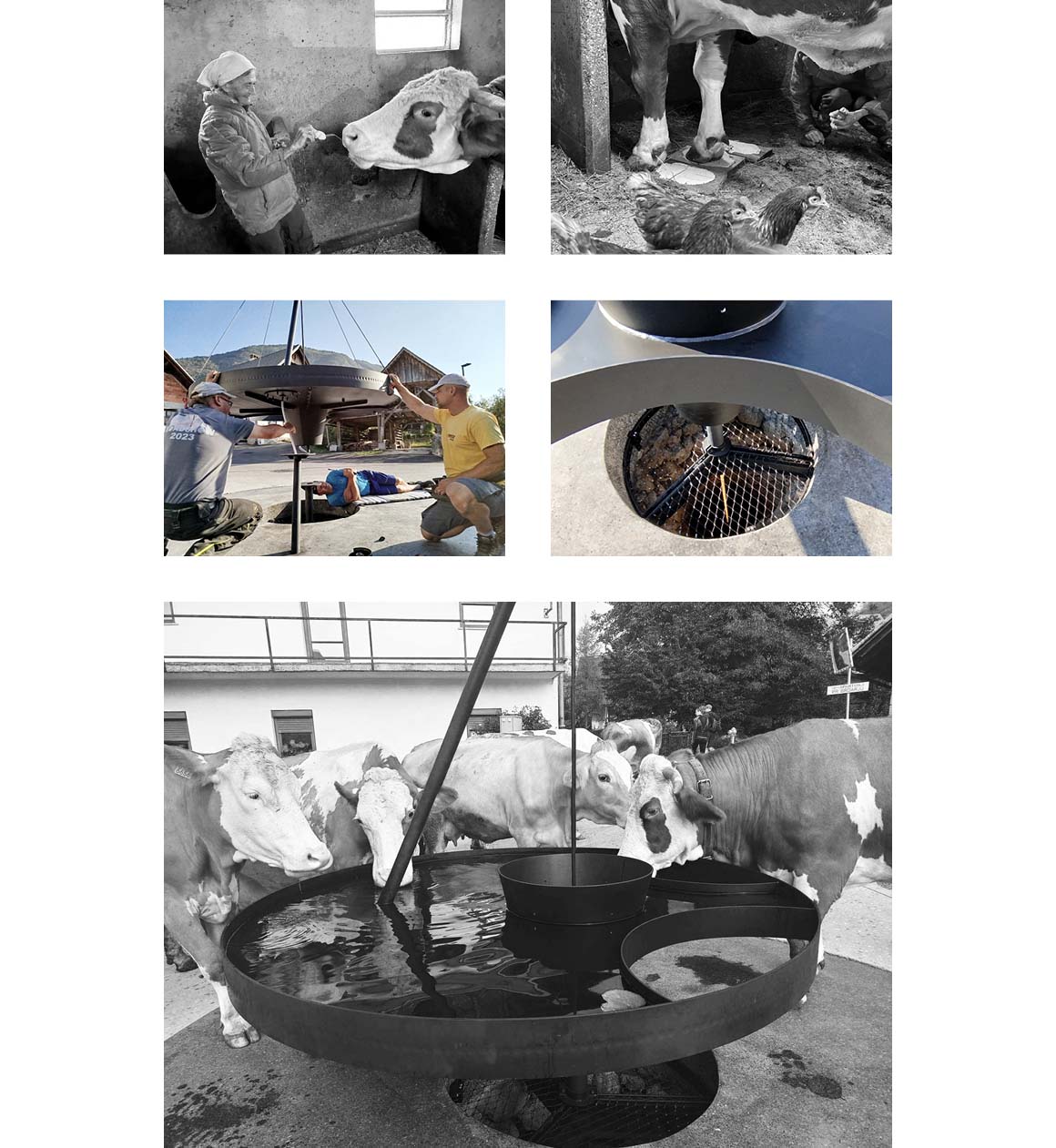
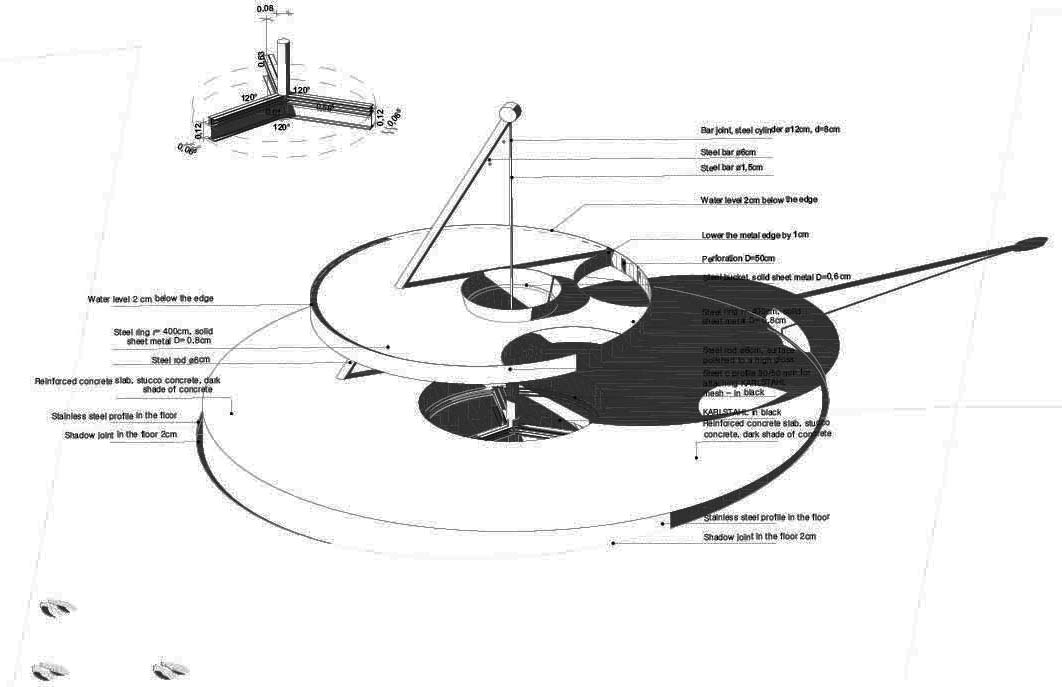
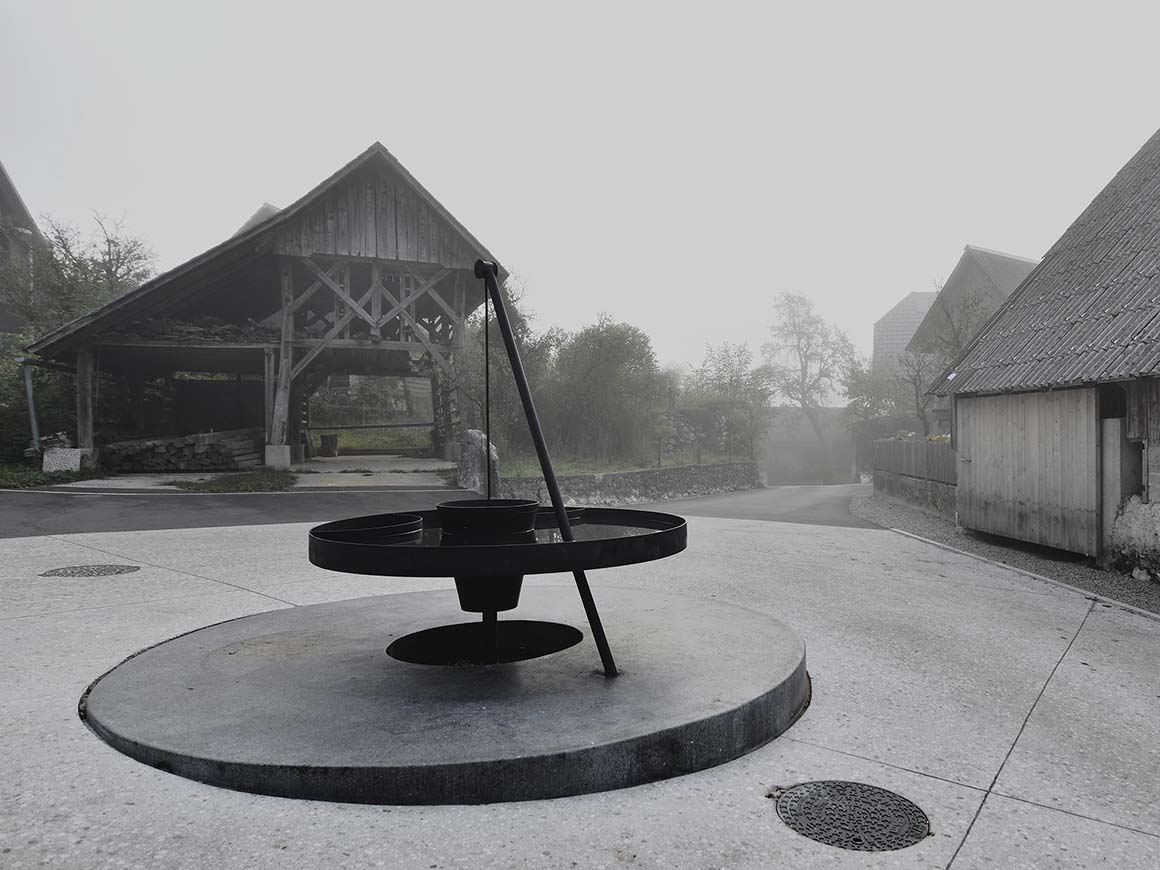
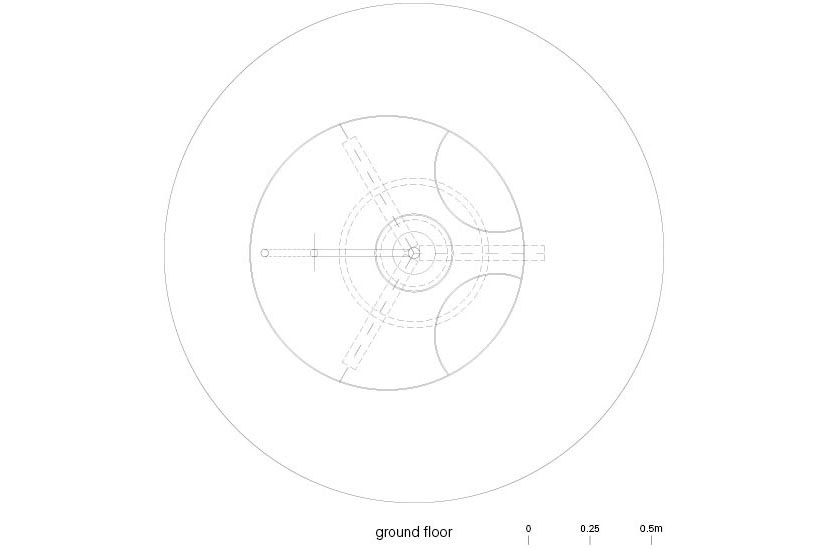
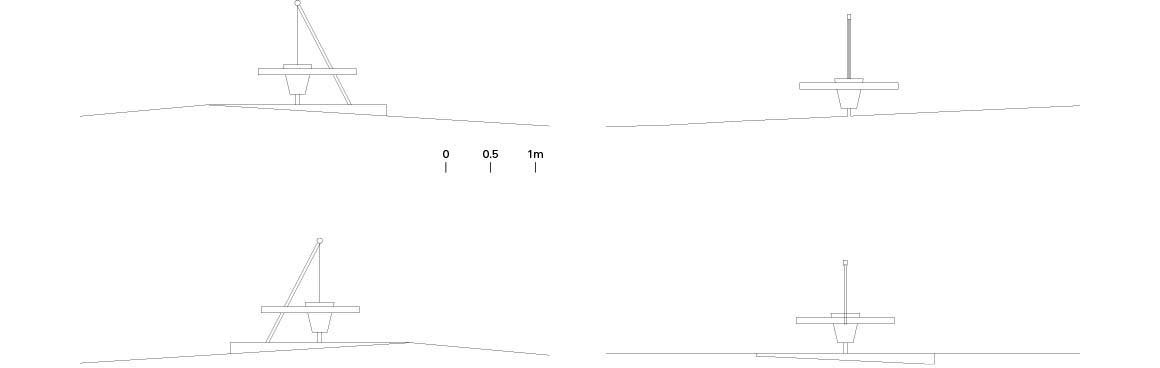
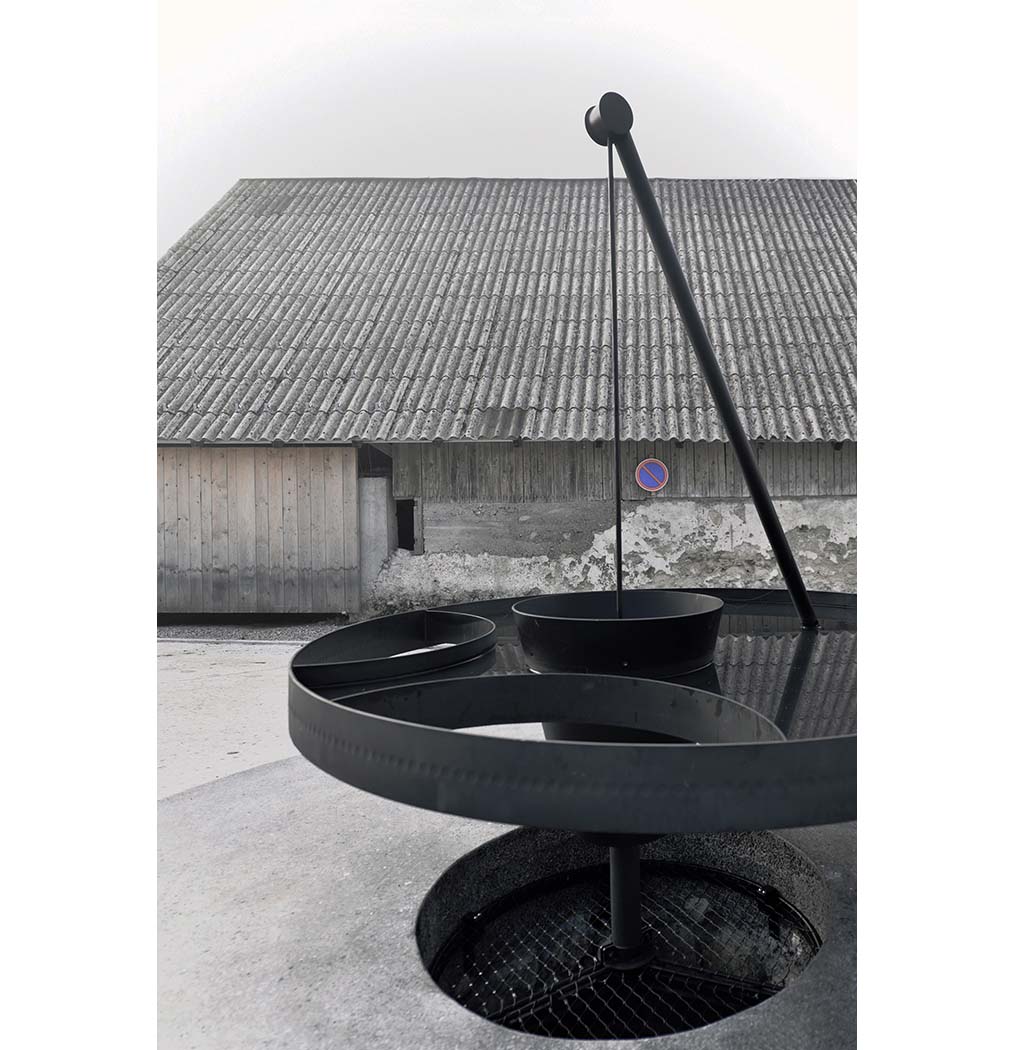
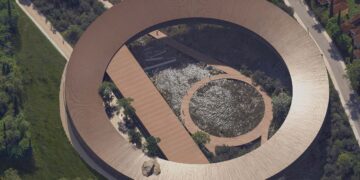
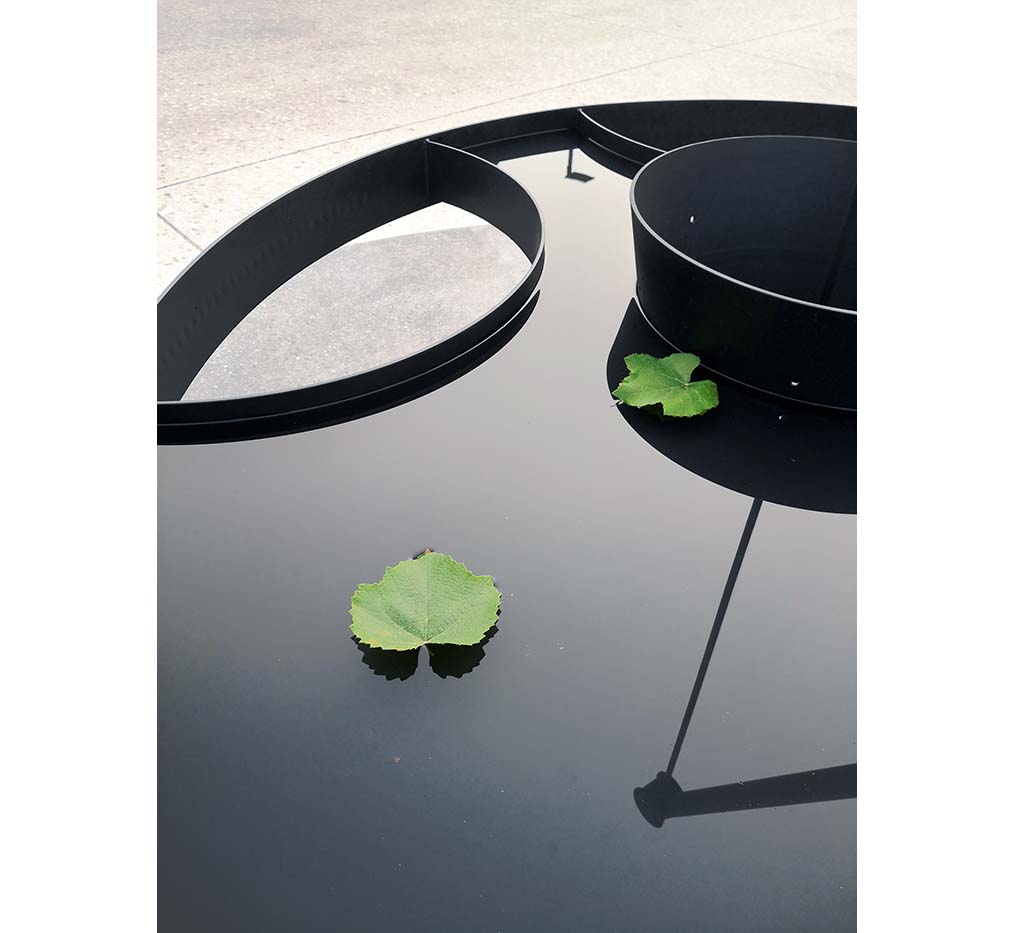
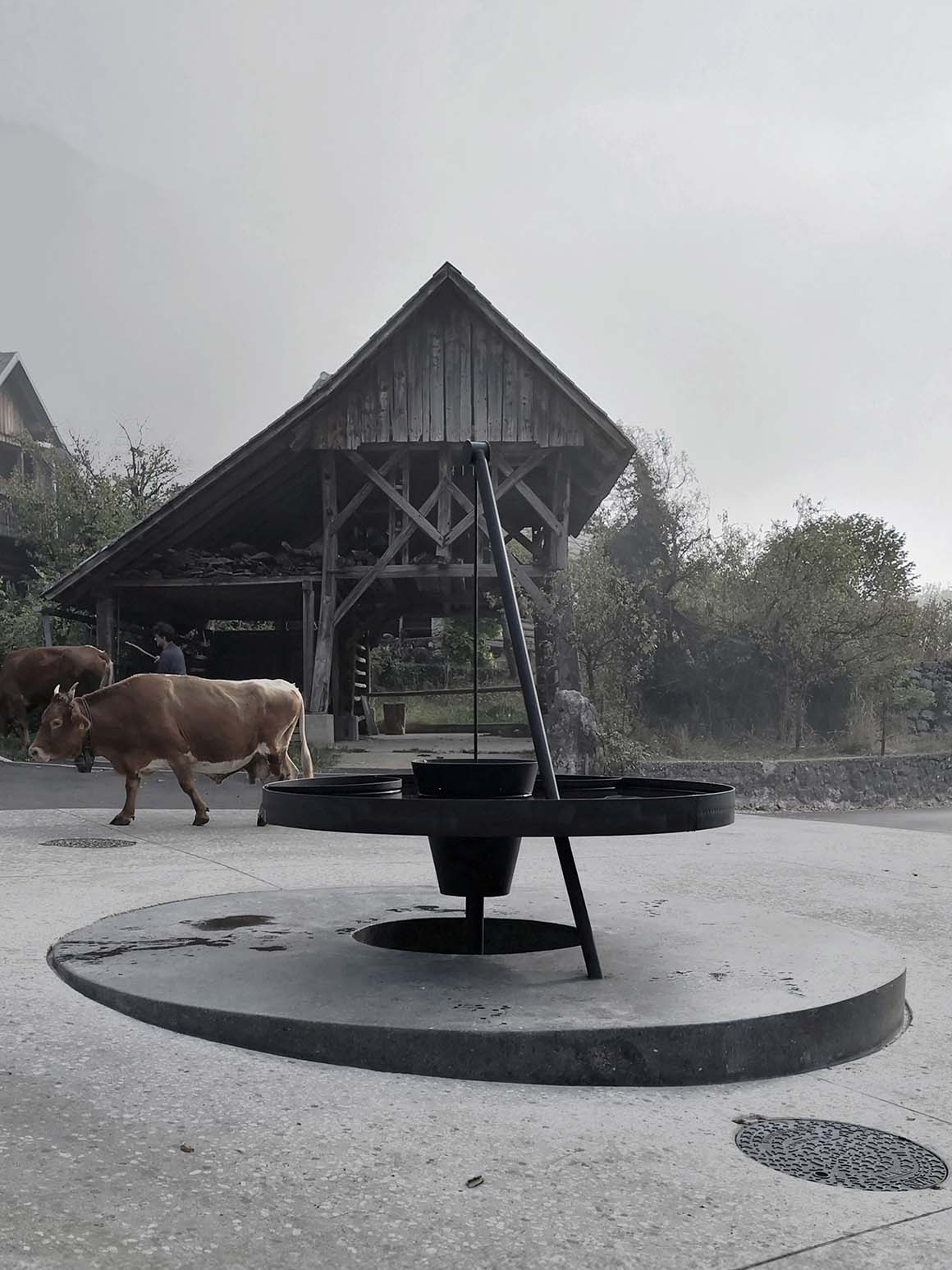
The site covers approximately 250m², while the actual architectural intervention occupies only 6m². The design preserves the existing structure while revealing the site‘s presence through a minimal architectural gesture. Above the well, a thin black circular structure abstractly references the traditional water bucket, or vedro, once used to draw water. Its reflective surface captures shifting skies, fog, and light, drawing the surrounding landscape into the intervention. At the center of the circular element, a slender illuminated column descends into the original stone shaft. Developed in collaboration with local artist Tilen Sepi, the lighting installation emphasizes the depth of the well while evoking falling droplets and the accumulation of time. Rather than asserting itself as an autonomous object, the intervention is organized around the void of the well itself, minimizing tension between the historic structure and contemporary additions. The original stone structure was preserved as much as possible, while new elements were positioned carefully so as not to obscure the well’s form or material character.
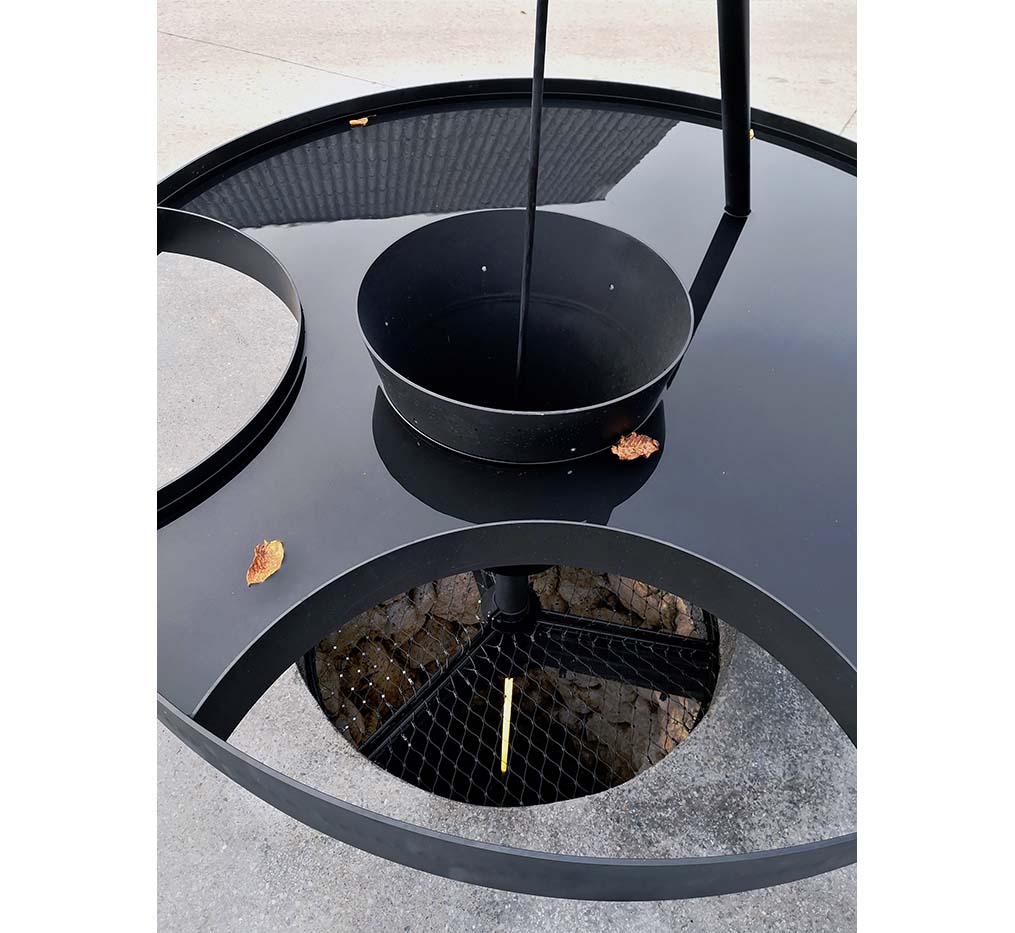
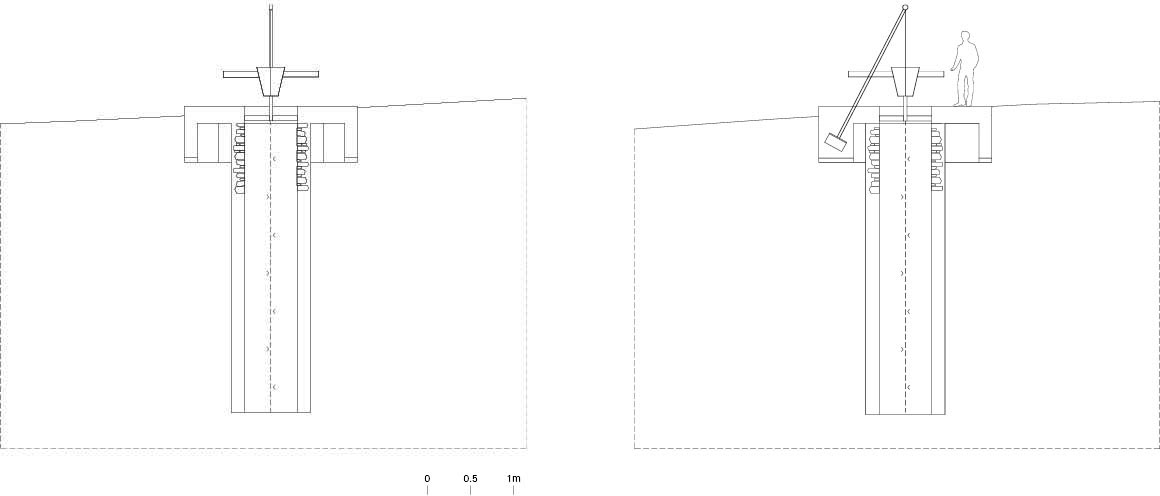
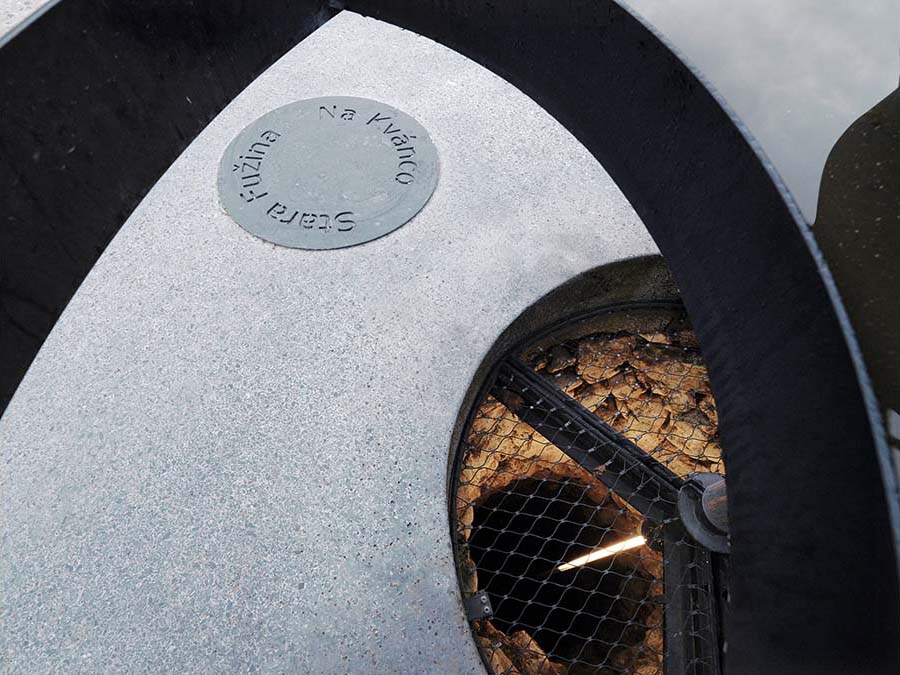
The surrounding outdoor space was also redesigned as part of the project. Cow-hoof motifs embedded in the paving, developed in collaboration with local artists, reflect the village‘s pastoral traditions and everyday landscape. The paving pattern guides movement and gathering around the well while reinforcing the site’s local context. The project originated from proposals by local residents and farmers, and both the creation and ongoing maintenance of the space continue to involve community participation. Through this sustained collective engagement, the long-forgotten memory of the site re-emerges within contemporary public space and everyday communal life, once again becoming part of the village landscape.
Project: Well of Memory / Location: Stara Fužina, Slovenia / Architect: OFIS Architects (Rok Oman, Špela Videnik) / Project team: Andrej Gregoric, Janez Martini, Rok Dolinšek, Amadej Mravlak, Marieke Van Dorpe / Light art installation: Tilen Sepi / Structural engineer: Project PA, Milan Sor / Contractor: Kovaštvo šarnek, GGD d.d, Gradbeništvo Franc Novak / Client: Community of Stara Fužina / Use: local village well / Site area: 250m² / Bldg. area: 6m² / Design: 2024 / Construction: 2024 / Completion: 2025 / Photograph: ©Tomaz-Gregoric (courtesy of the architect)