
An Art Space Expanding Toward the City
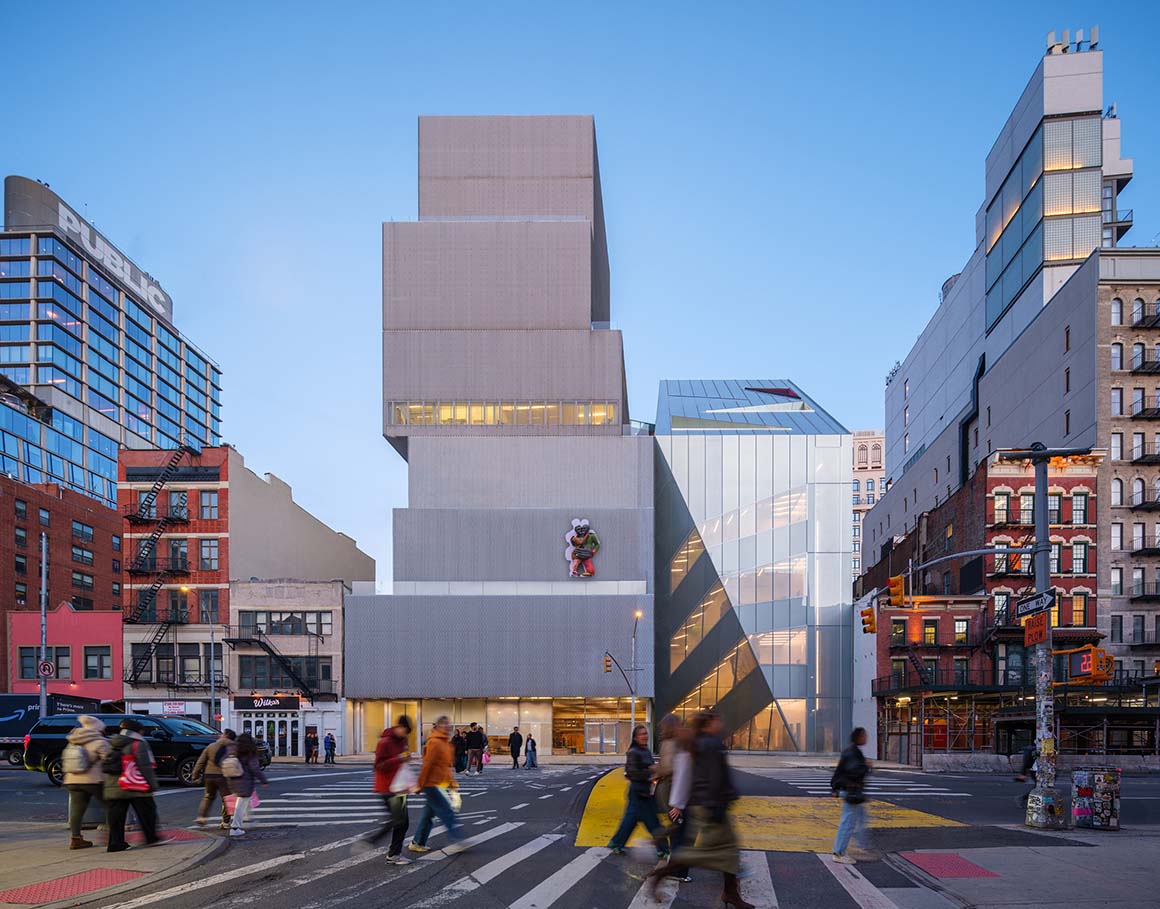
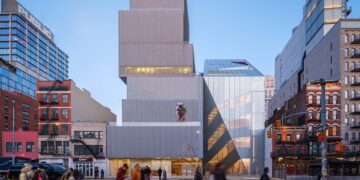
The New Museum, the only institution in Manhattan dedicated exclusively to contemporary art, has reopened. This project marks OMA’s first cultural building in New York and is constructed immediately adjacent to the existing building designed by SANAA, doubling both the program and overall floor area. Reflecting the evolving role of museums today, the 5,570m² addition is designed to go beyond exhibition-making and function as a platform for public engagement and urban interaction.
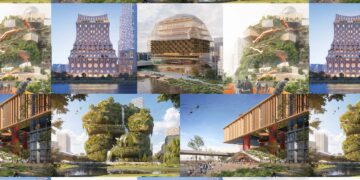
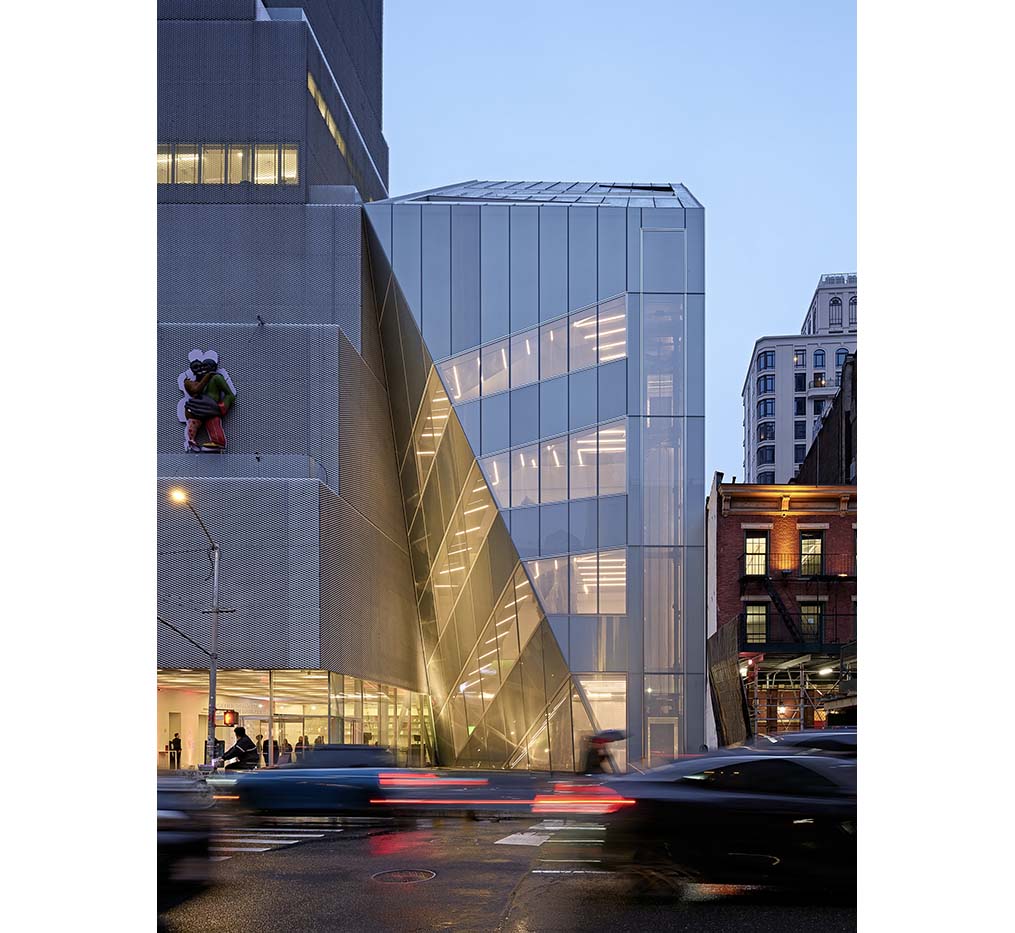
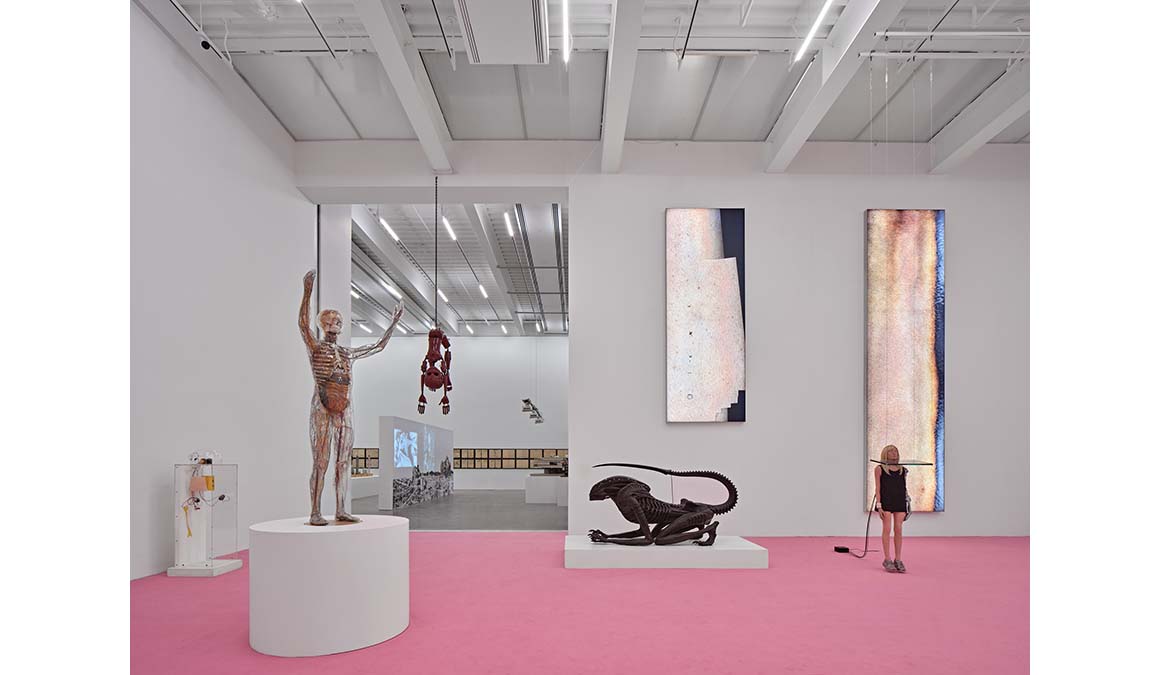
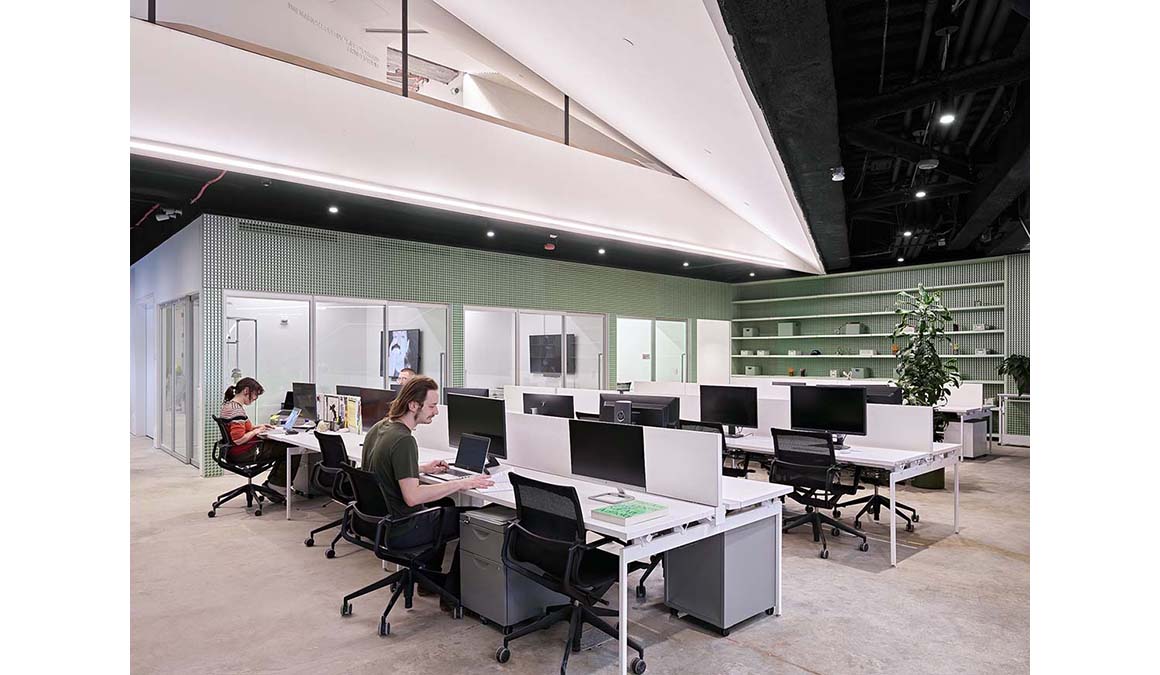
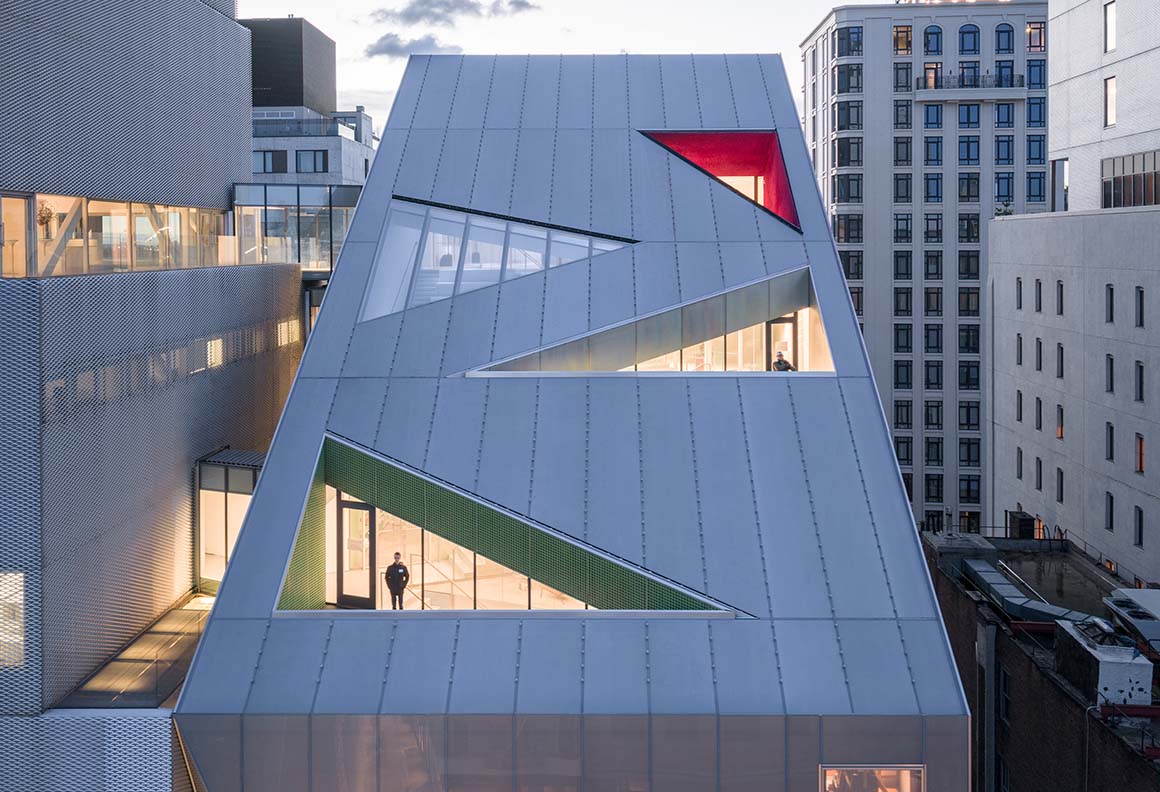
The facade reveals circulation routes and slices of activity within, visually connecting the interior to the street. An outdoor plaza at the intersection encourages entry and gathering, establishing the museum as an extroverted institution that actively engages with the city. The expanded building doubles the gallery space while introducing more fluid circulation through three elevators, an atrium stair, and an entrance plaza. It also includes spaces for public programs and events, such as the seventh-floor Sky Room and a 74-seat forum. Upper levels accommodate artist-in-residence studios and the museum’s cultural incubator NEW INC, while the ground floor features an expanded lobby, bookstore, and restaurant.
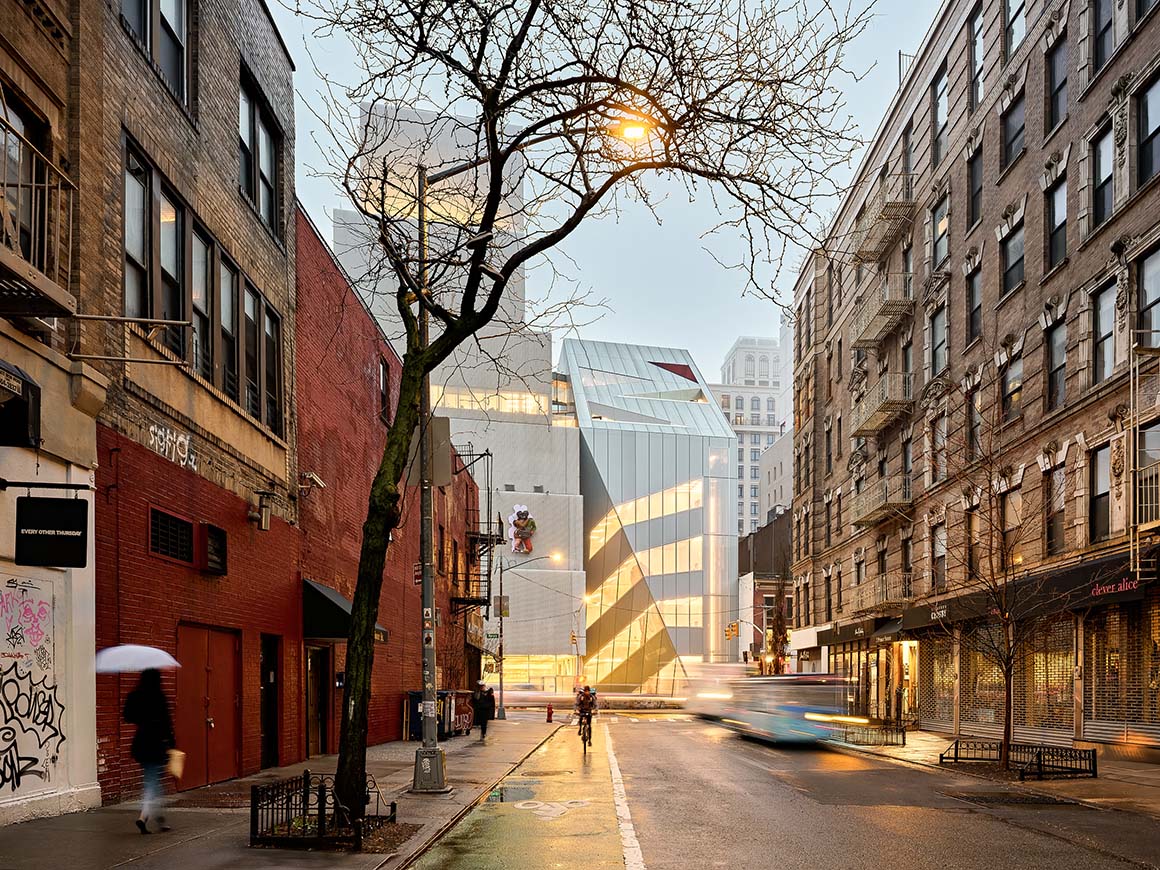
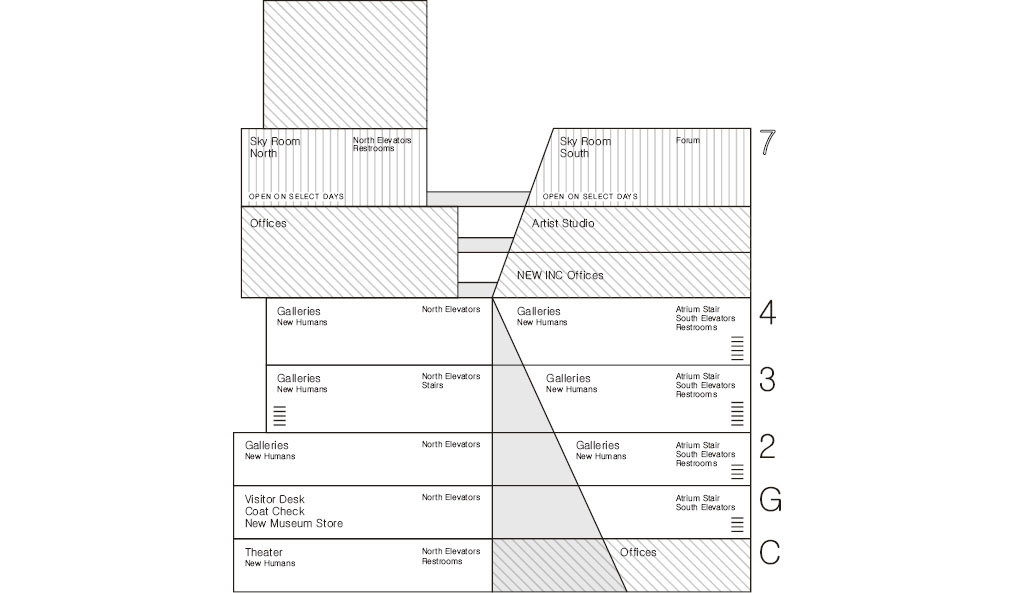
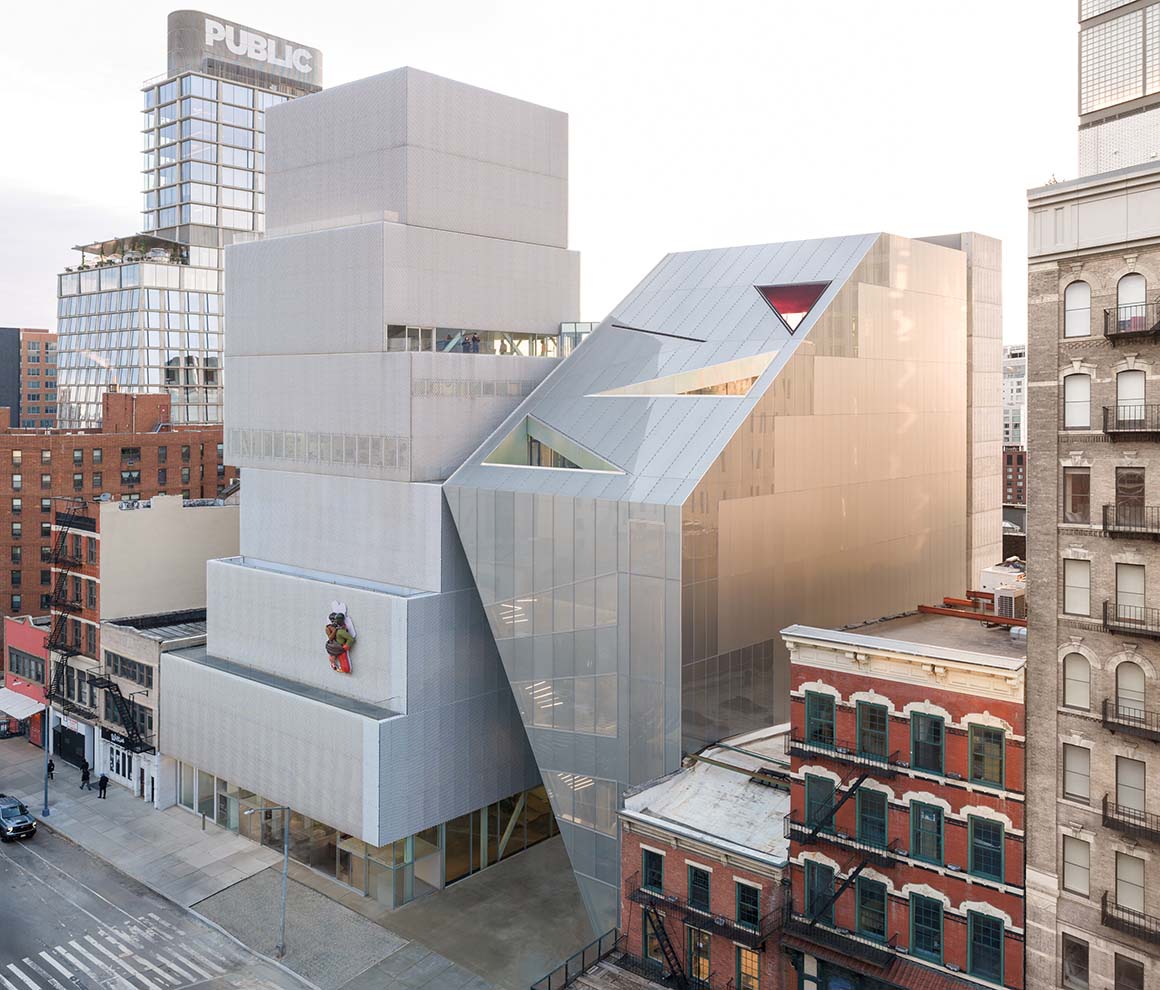
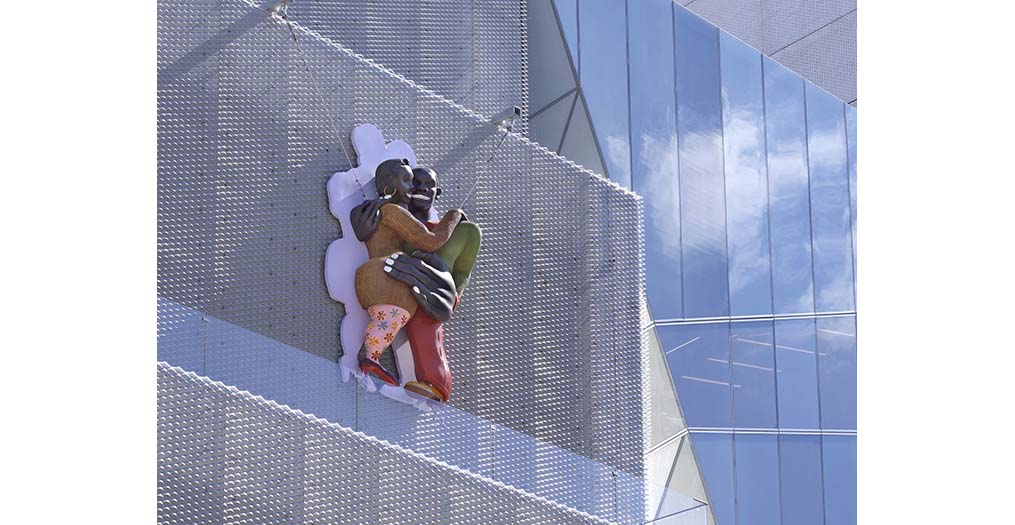
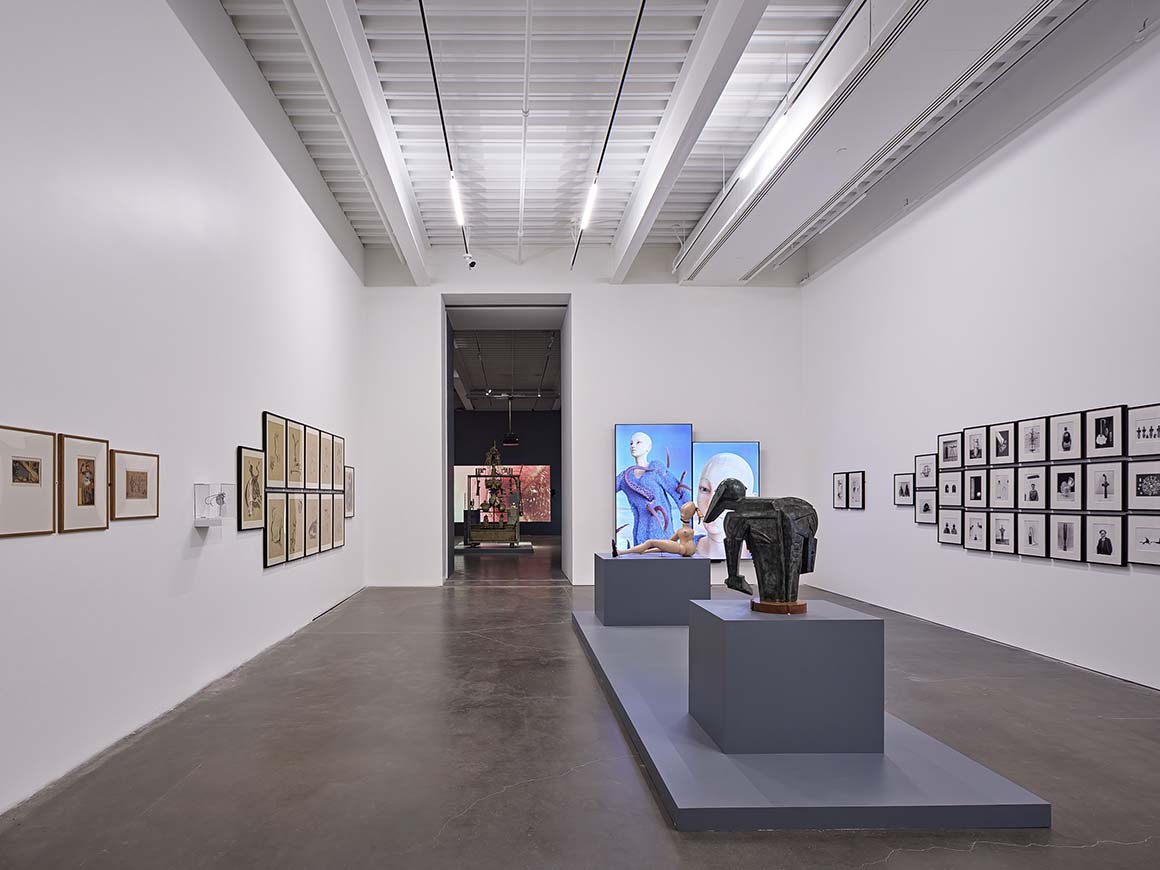
The expansion begins with the relationship between the new and existing buildings. Positioned side by side, the two structures form a complementary pair, operating as a unified complex with closely aligned spatial and programmatic systems. Programs are arranged on corresponding levels, allowing three floors of galleries, NEW INC, offices, and education and event spaces to connect horizontally. Matching ceiling heights create continuous exhibition spaces and enable flexible curatorial use, whether as a single large gallery or subdivided into multiple spaces.
As the new building rises, its gallery spaces increase in size, while those in the existing building decrease, maintaining a balance in total floor area at each level. Between the two, an intermediate zone containing an atrium stair and elevators improves vertical circulation while mediating between the museum and the city. This sequence of spaces—from the outdoor plaza through the atrium to the upper terraces—links public activity with the interior.
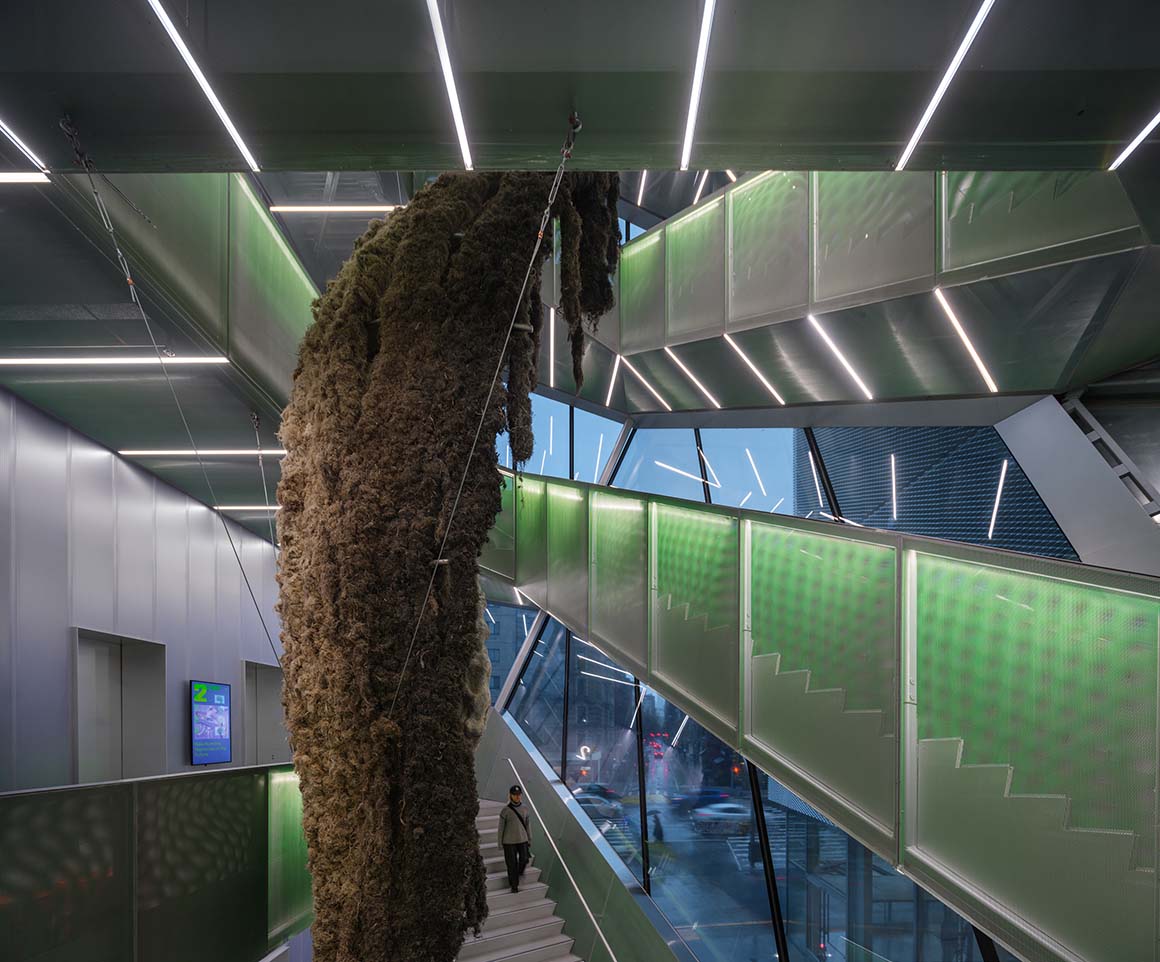
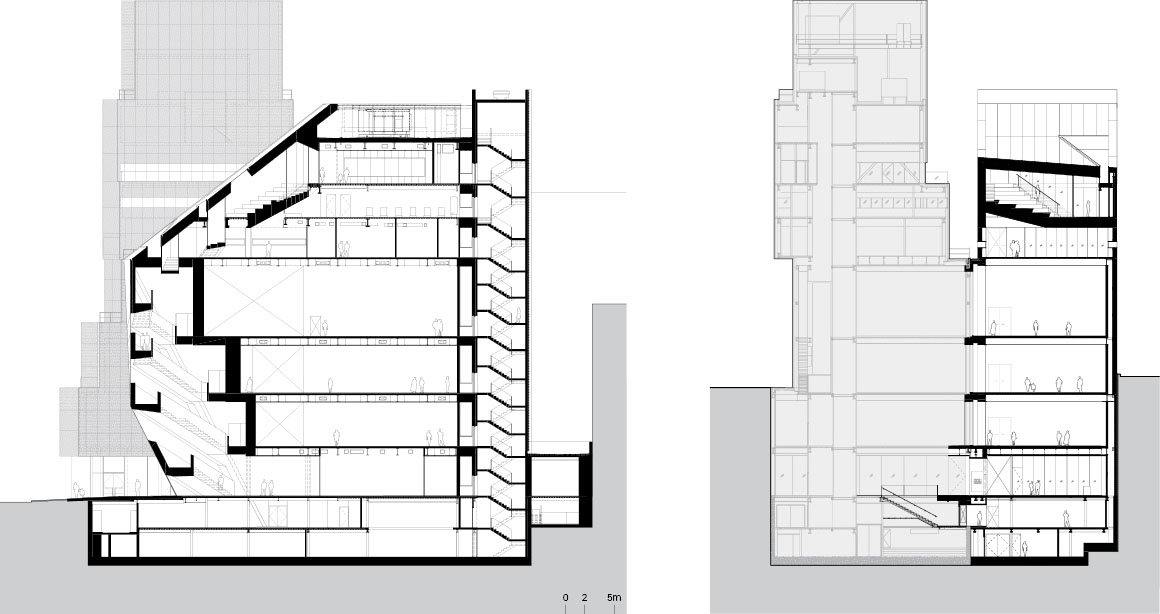
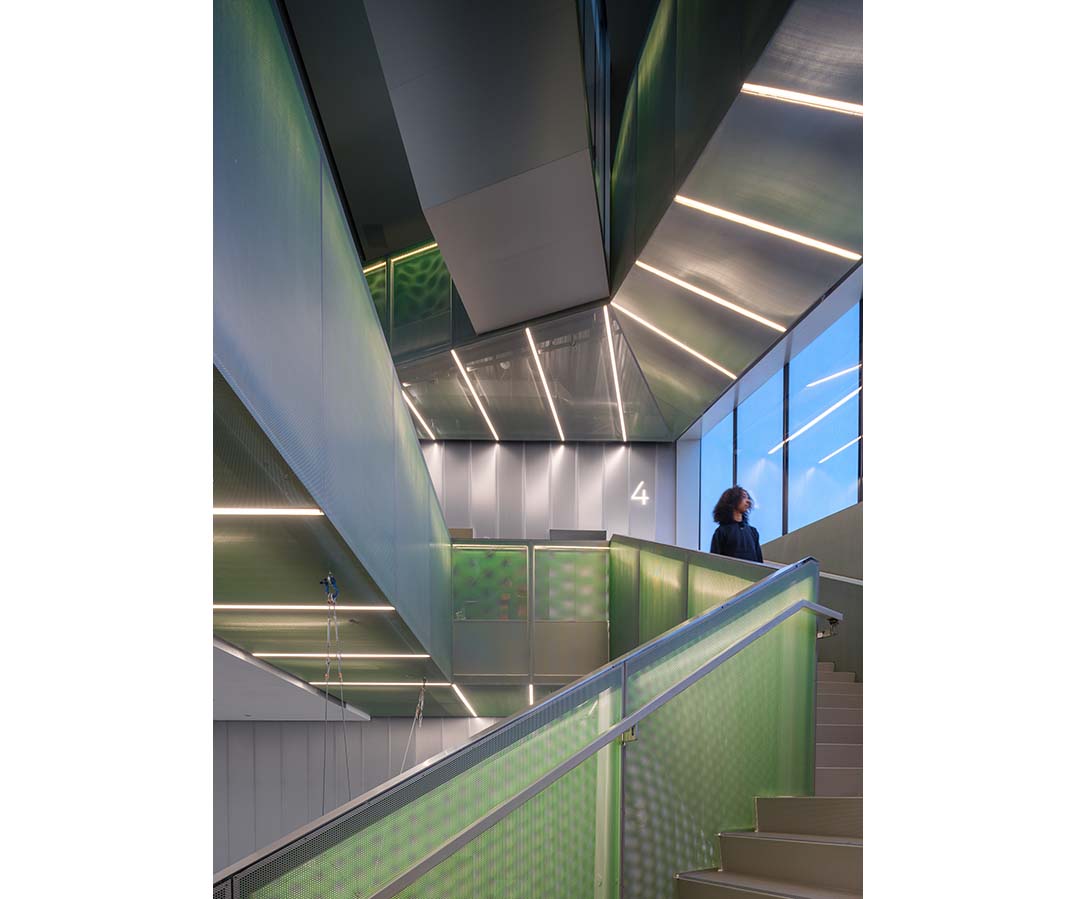
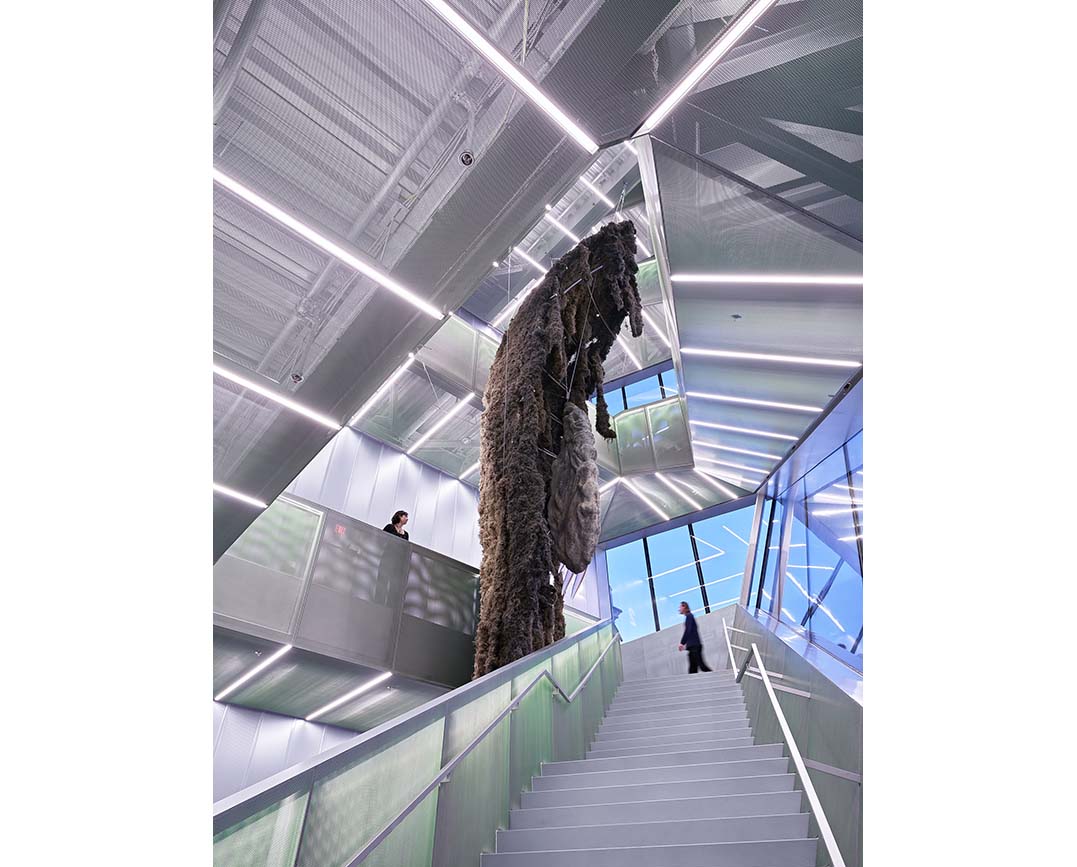
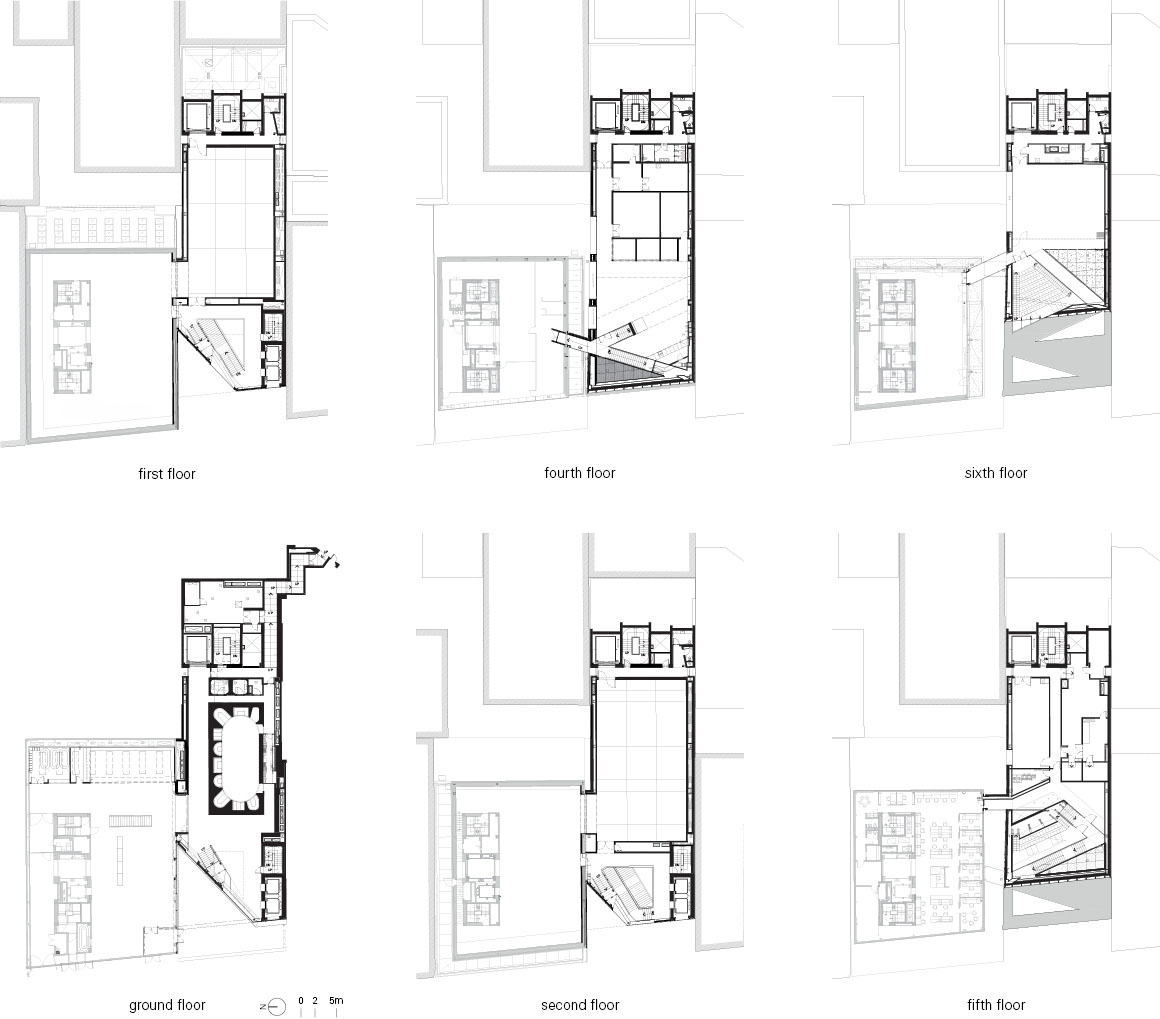
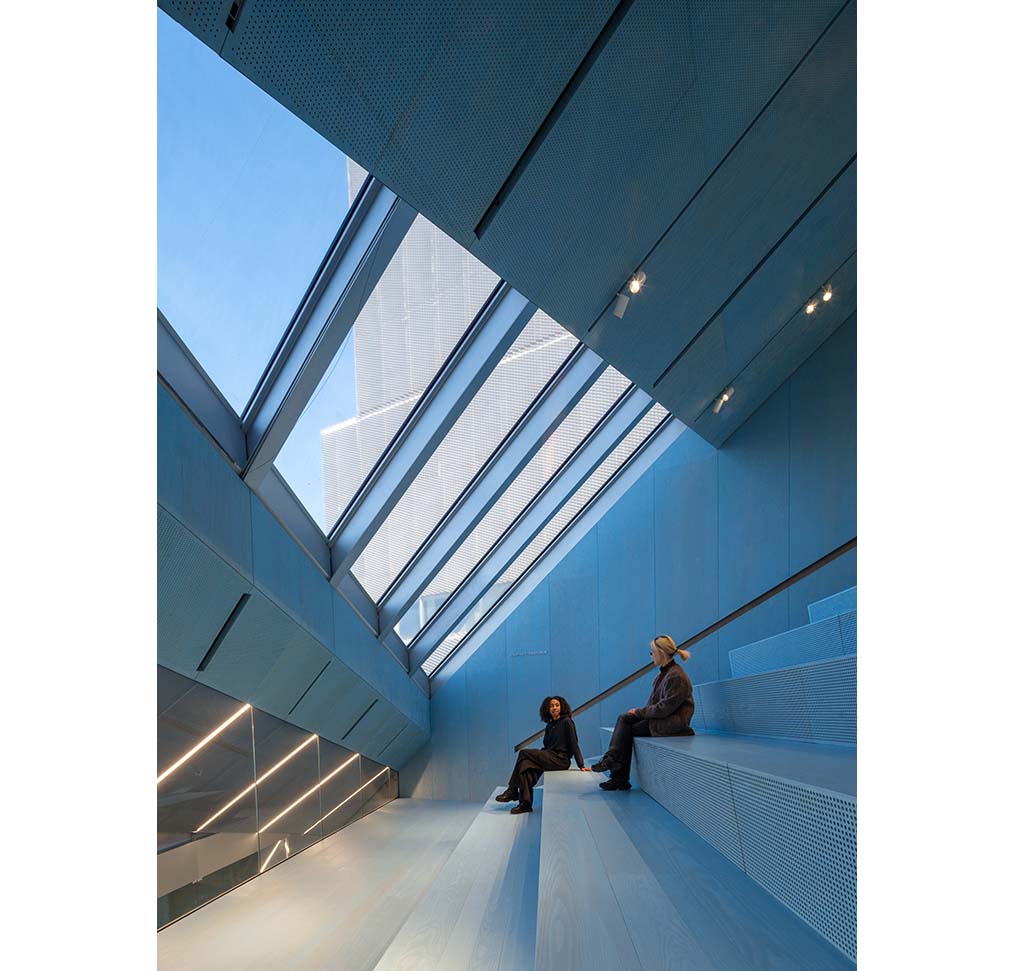
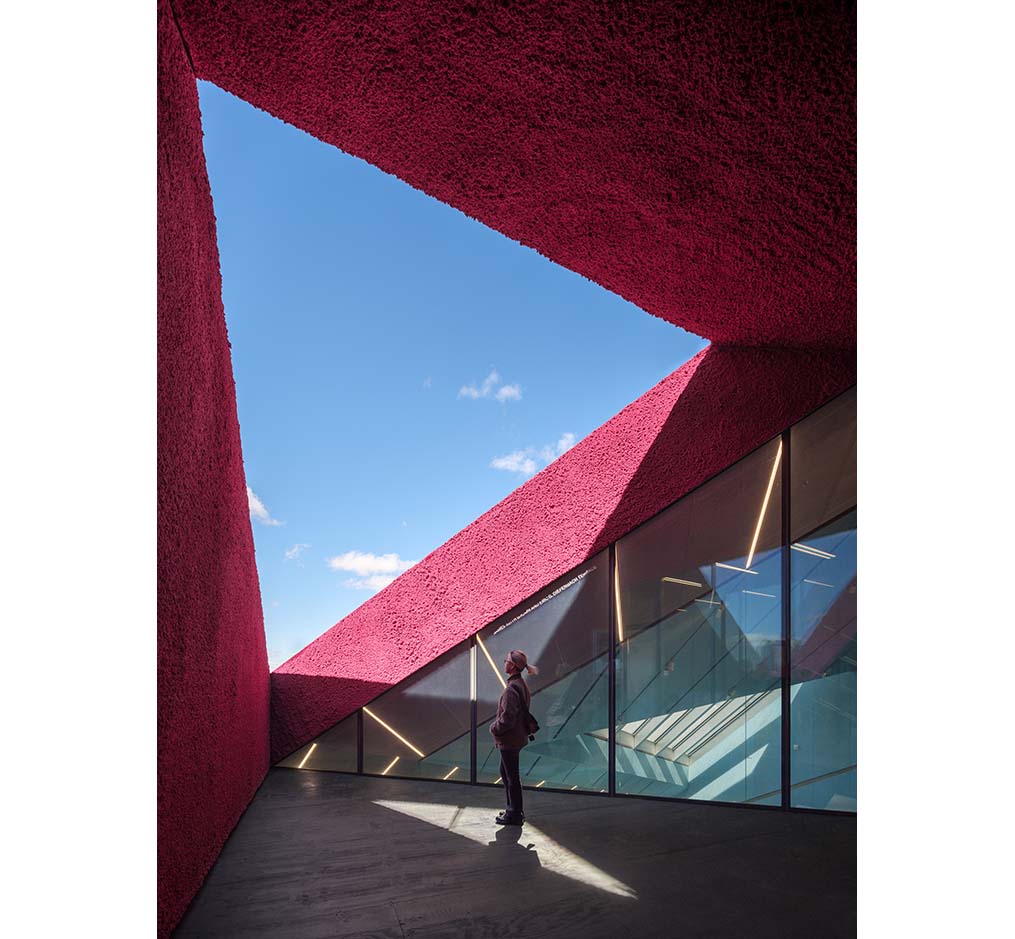
The building steps back diagonally from the top of the gallery stack toward the street, creating a plaza that serves as a buffer between the new and existing structures and provides an open threshold from the city. At the upper levels, additional setbacks pull the mass back to open terraces toward the sky. The facade, clad in laminated glass with a layer of metal mesh, appears as a unified volume during the day, while at night it becomes more transparent, allowing interior light to reveal the structure and activity within.
Lisa Phillips, Director of the New Museum, stated, “The new building strengthens the museum‘s role as a place for experimentation, collaboration, and new ideas.” Shohei Shigematsu of OMA explained, “Through horizontally expanded galleries and open circulation, the project proposes a different kind of connection with the existing building.” Rem Koolhaas also emphasized that it is “an effort to extend the architectural legacy through a dialogue with the original building.”
The expansion establishes two distinct yet interdependent buildings that operate in dialogue. Together, they create an expanded platform that enhances interaction between art, artists, and the public, while making these activities visible to the city and reinforcing the museum‘s civic role.
Project: New Museum Expansion / Location: 231 Bowery, New York, NY 10002, USA / Architect: OMA / Lead design architect: OMA New York / Partner in charge: Shohei Shigematsu / Partner in collaboration: Rem Koolhaas / Associate/Project architect: Jake Forster / Senior architects: Jackie Woon Bae (Design), Ninoslav Krgovic (Technical) / Project team: Francesco Rosati, Richard Nelson-Chow, Clement Mathieu, Kaegan Walsh, Jan Casimir, Carly Dean, Vincent Parlatore, Tamara Jamil / Executive architect: Cooper Robertson (now Corgan) / Project and cost management: Gardner and Theobald, PML / General contractor: F.J. Sciame Construction, Co., Inc / Structural engineer: ARUP / Mechanical systems: ARUP / Facade: Front / Geotechnical: Langan / Civil engineer: Philip Habib & Associates / Wayfinding and signage: 2×4, T-Squared Design Studio, Visual Graphic Systems / Lighting design: Dot Dash / Client: New Museum / Use: museum, gallery / Gross floor area: 5,750m² / Construction: 2022 / Completion: 2026 / Photograph: ©Jason O’Rear (courtesy of the architect); ©Jason Keen (courtesy of the architect); ©Dario Lasagni (courtesy of the architect)