
An Organic Platform Shaped by Cultural Patches

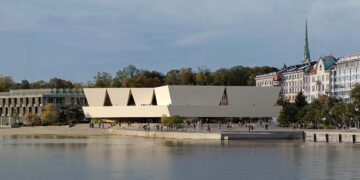
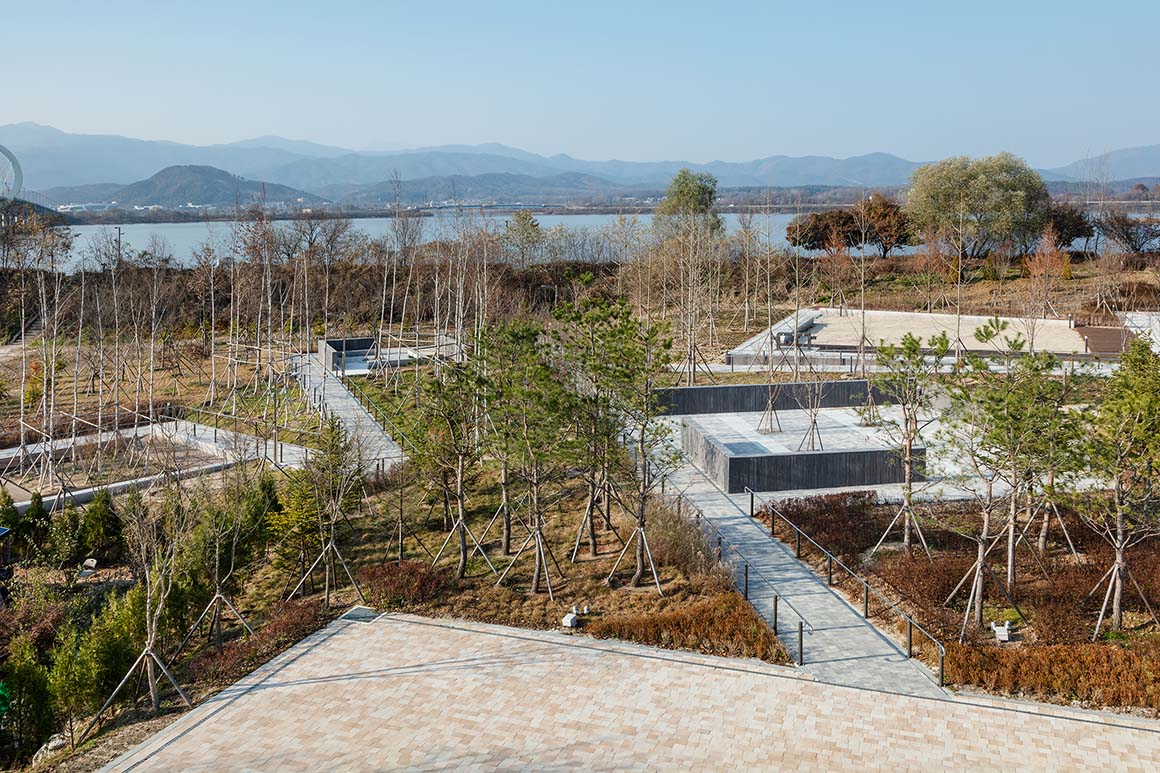
The Chuncheon Food Culture Complex occupies a point of overlap where contrasting urban conditions converge: the calm, expansive landscape of the Bukhangang riverside and the fast-moving flow of a 35-meter-wide arterial road in Geunhwa-dong, Chuncheon. Despite its privileged riverside setting, the site long remained an urban void. Flanked by the riverside cycling path on one side and heavy traffic on the other, it was physically and perceptually cut off from everyday urban life. This isolation was further intensified by fragmented neighboring plots, which disrupted spatial continuity and weakened the site’s relationship with its surroundings.
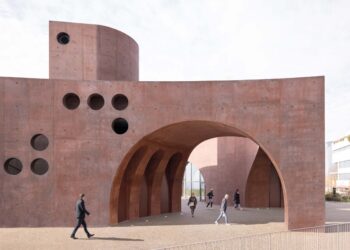
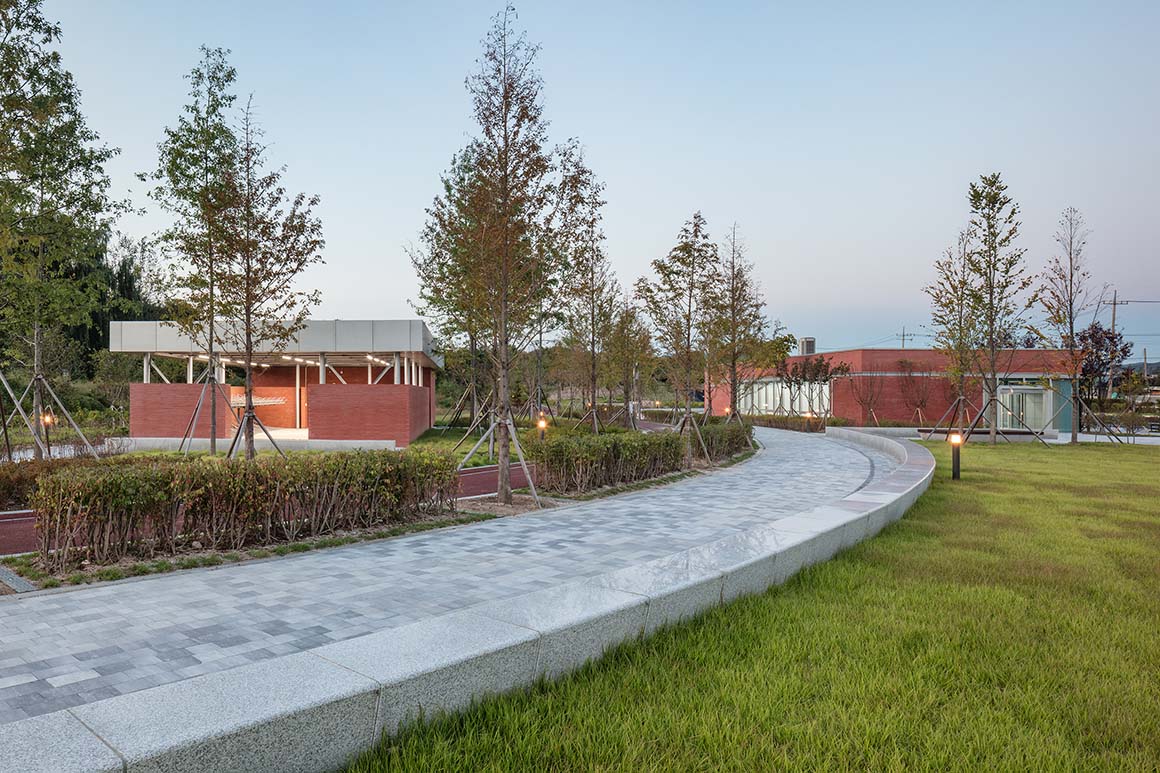
The project responds by introducing a system of gentle curves that reorganizes these fractured conditions into a coherent spatial framework. Formed at the intersection of buildings and outdoor spaces, this curvilinear system softens rigid boundaries and knits together pedestrian movement, sightlines, and diverse programs into a fluid, organic flow.
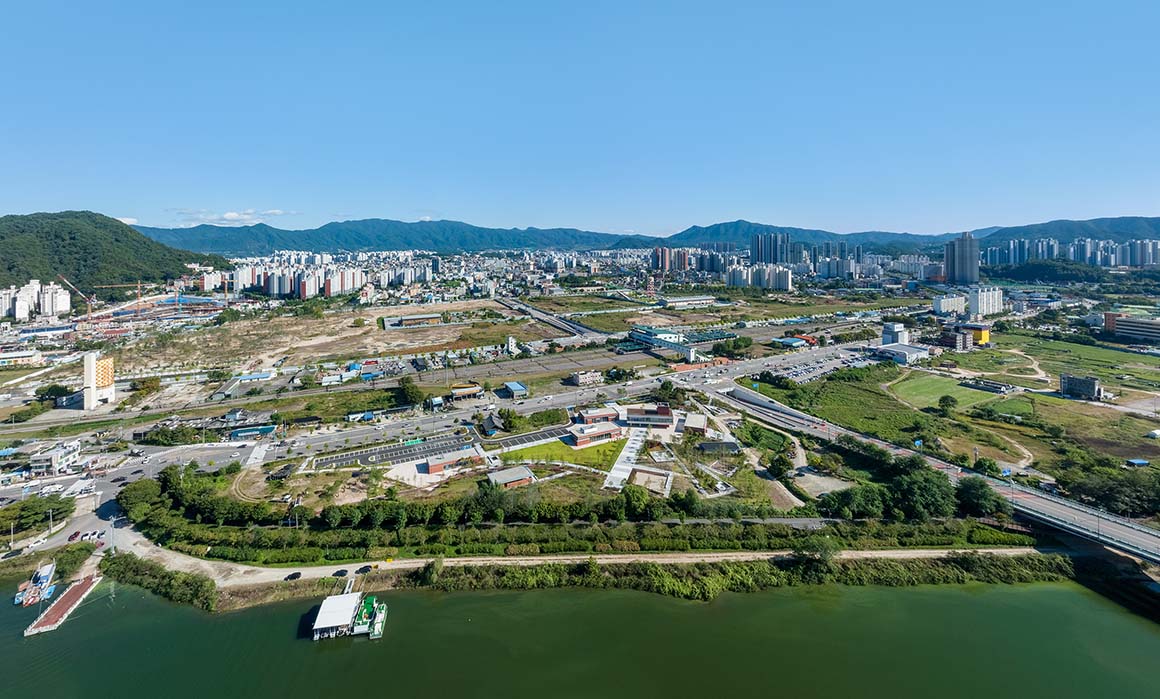
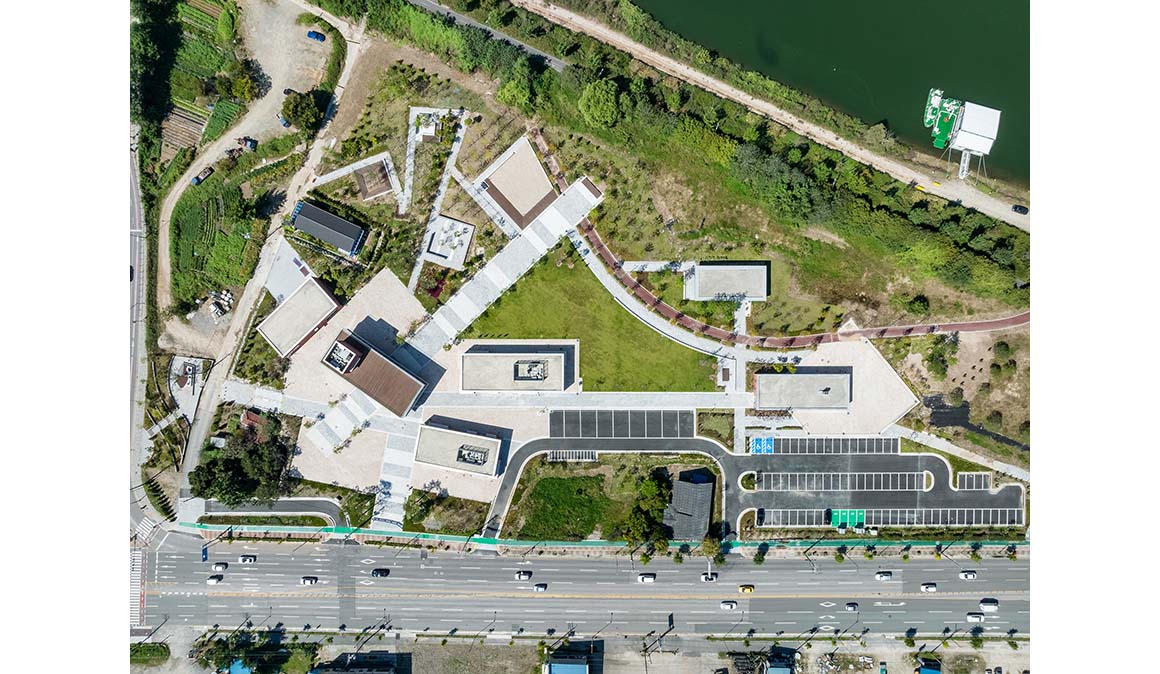

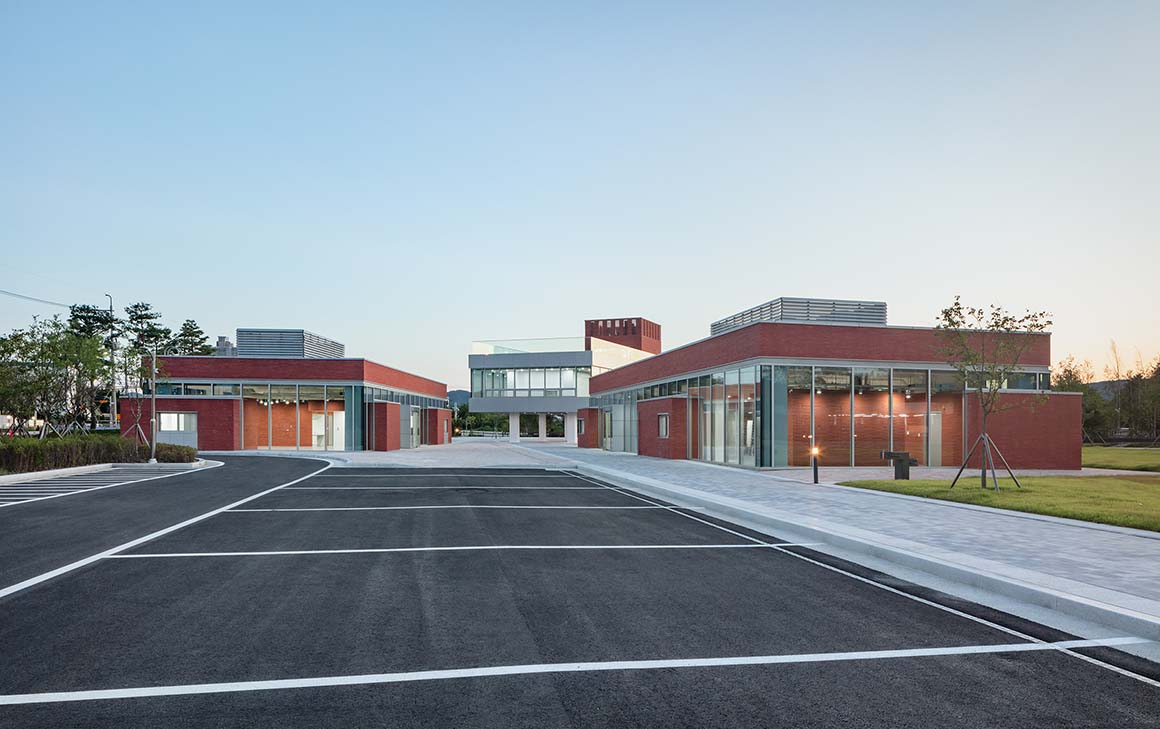
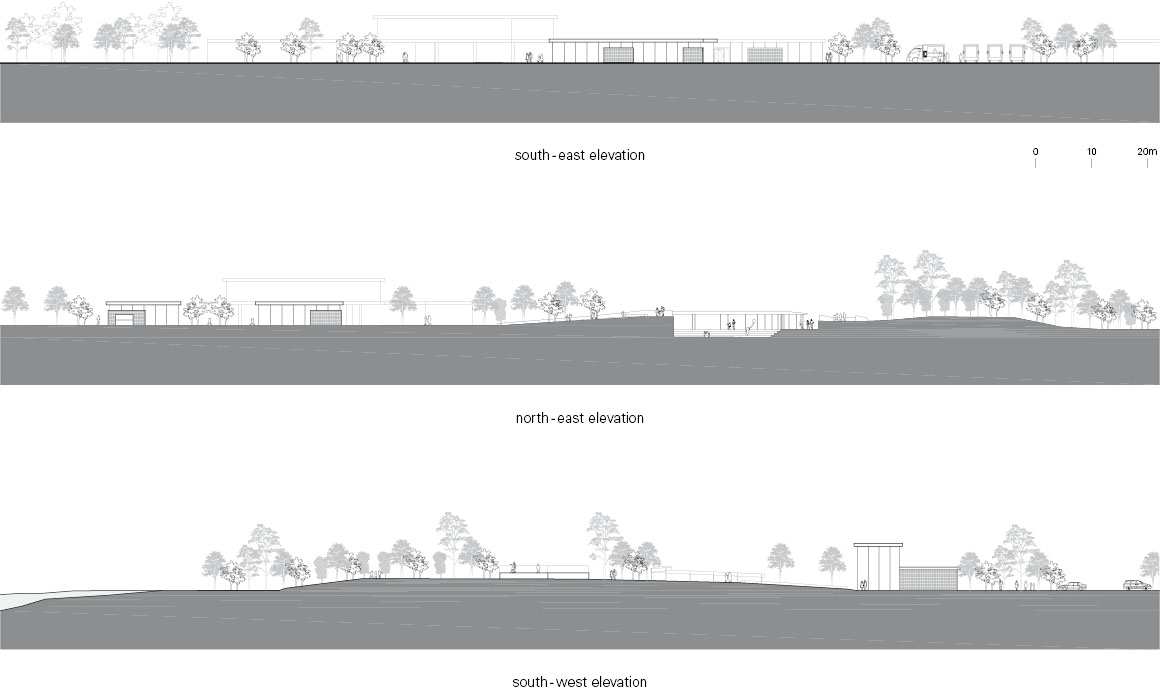
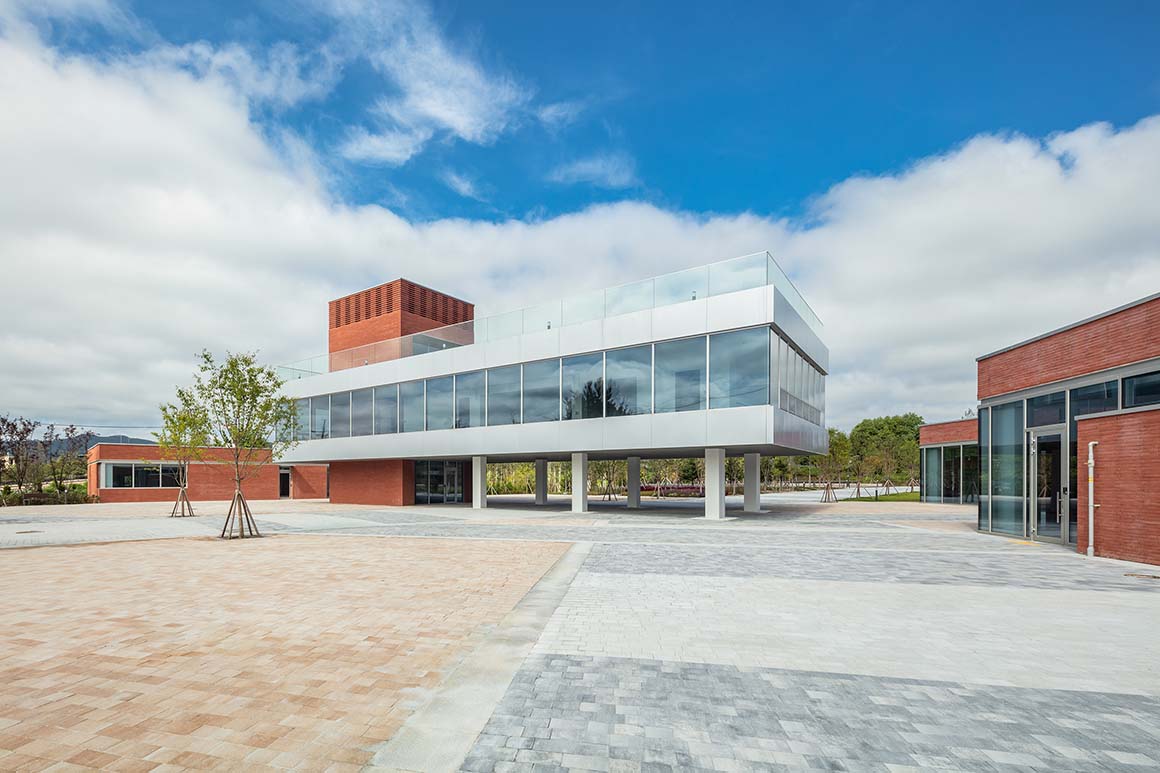
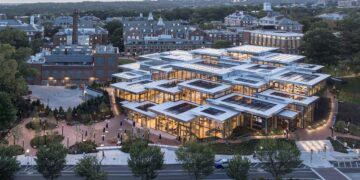
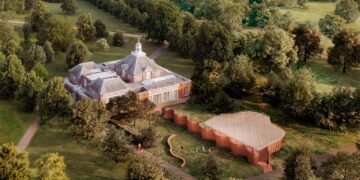
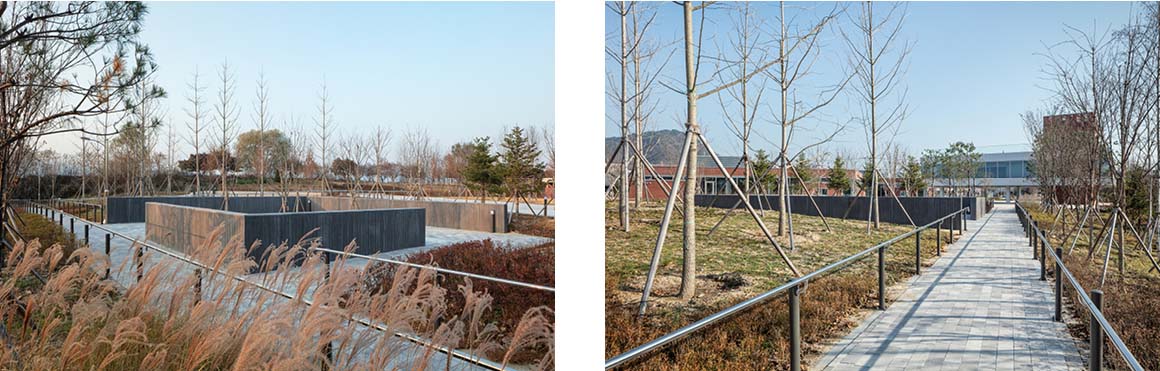
Rather than consolidating the site into a single architectural mass, the project adopts the concept of the Cultural Patch, composing the site as a constellation of smaller, theme-based fragments. These patches—The Kitchen, The Garden, The Party, and The Lake—are conceived as independent yet interconnected spatial units. Courtyards and open grounds are inserted between the buildings, allowing interior activities to extend naturally outdoors. Picnic areas, sunken gardens, and a sand beach are distributed across the site like pieces of a mosaic, integrated into an organic system that encompasses the entire site as a singular architectural landscape. Movement is not prescribed; instead, visitors are invited to drift freely, choosing their own paths according to their own rhythms.
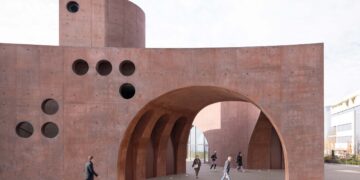
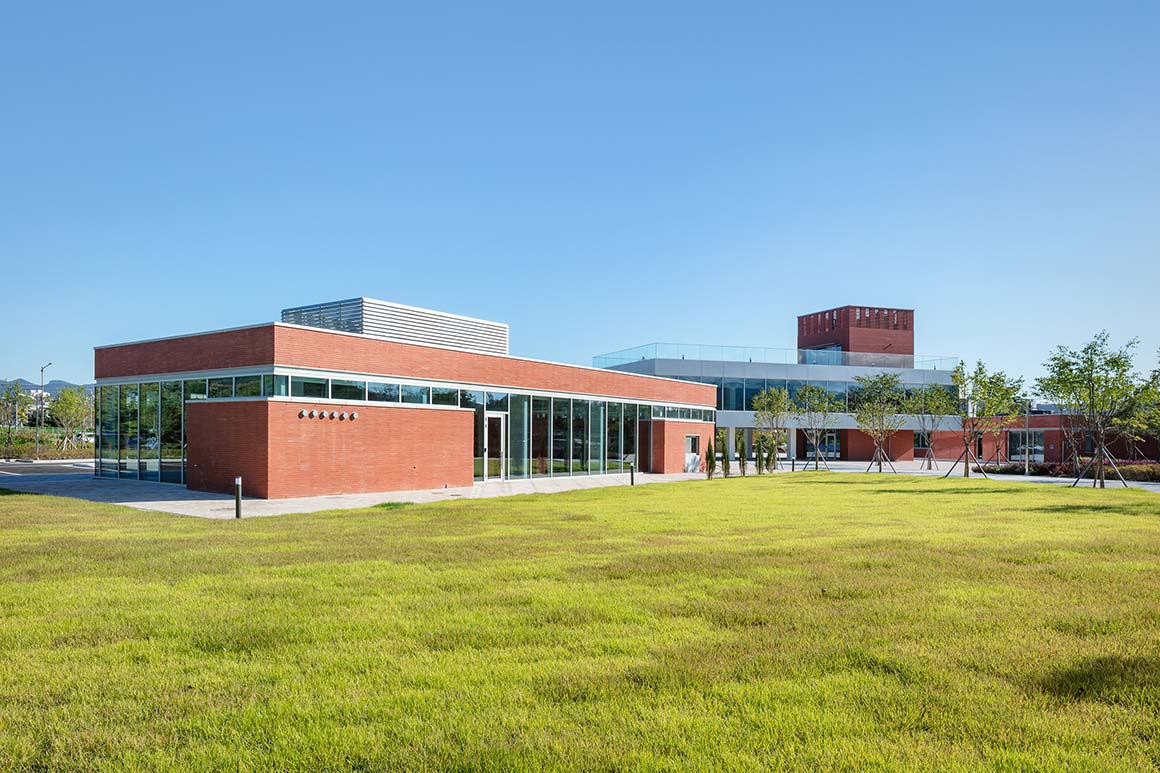
Most of the buildings remain low in scale, settling gently into the landscape, while select volumes hover above pedestrian paths, acting as visual frames that capture the surrounding scenery. The architectural palette is restrained yet deliberate. Transparent glass façades dissolve the boundary between interior and exterior, while brick surfaces introduce a rough but warm texture that mediates between architecture and nature. These materials do more than clad the buildings; they articulate the site’s spatial character by intertwining structure, materiality, landscape, and human activity.


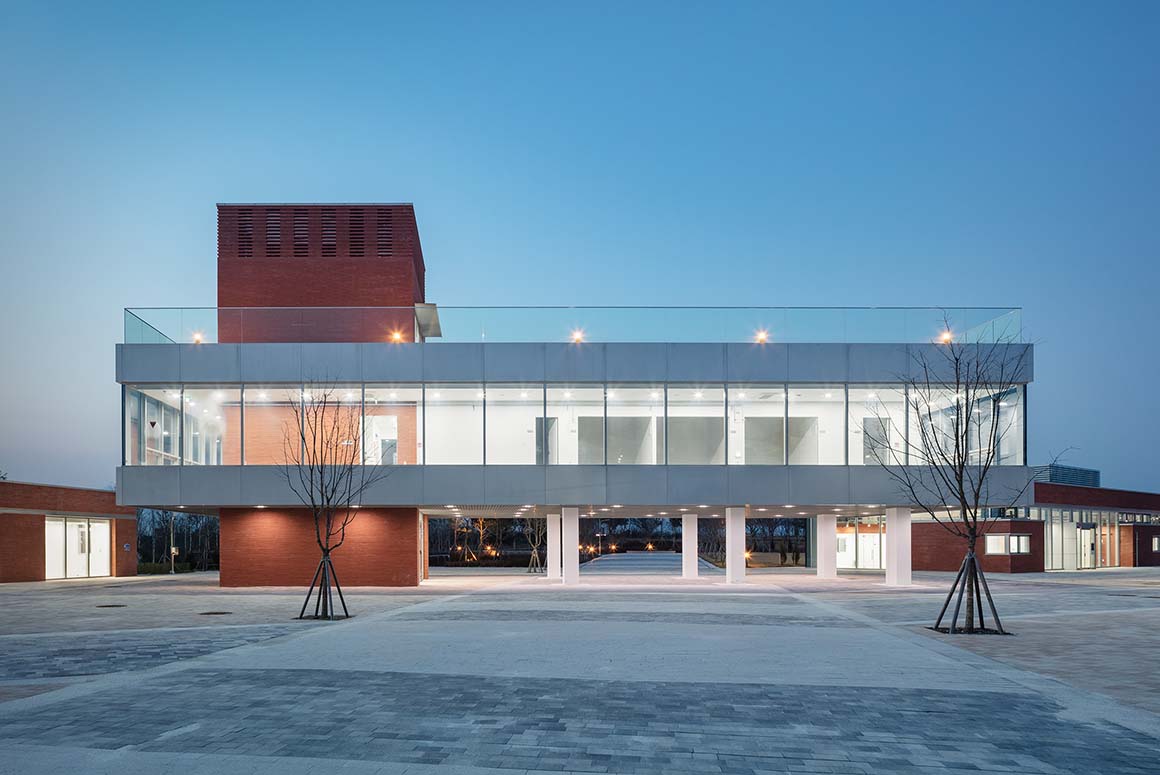
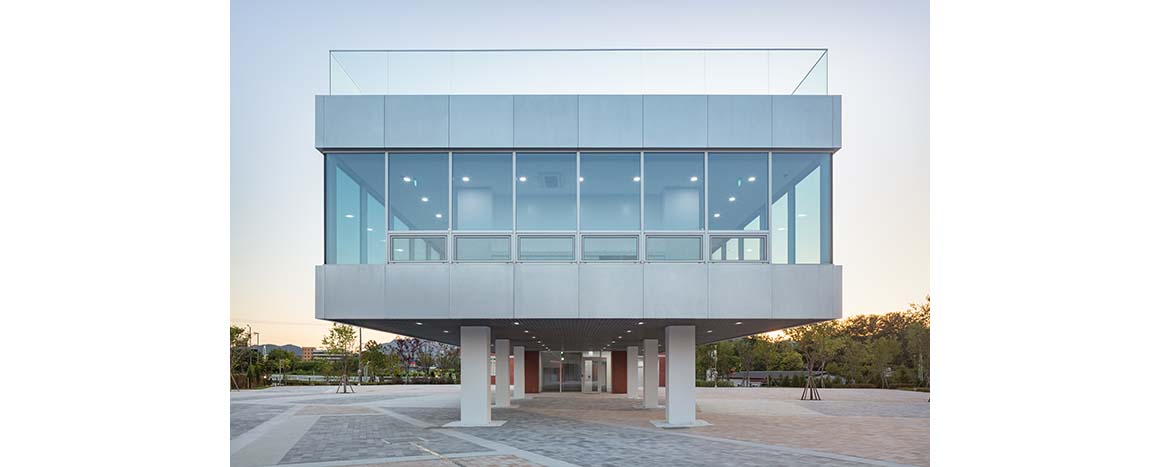
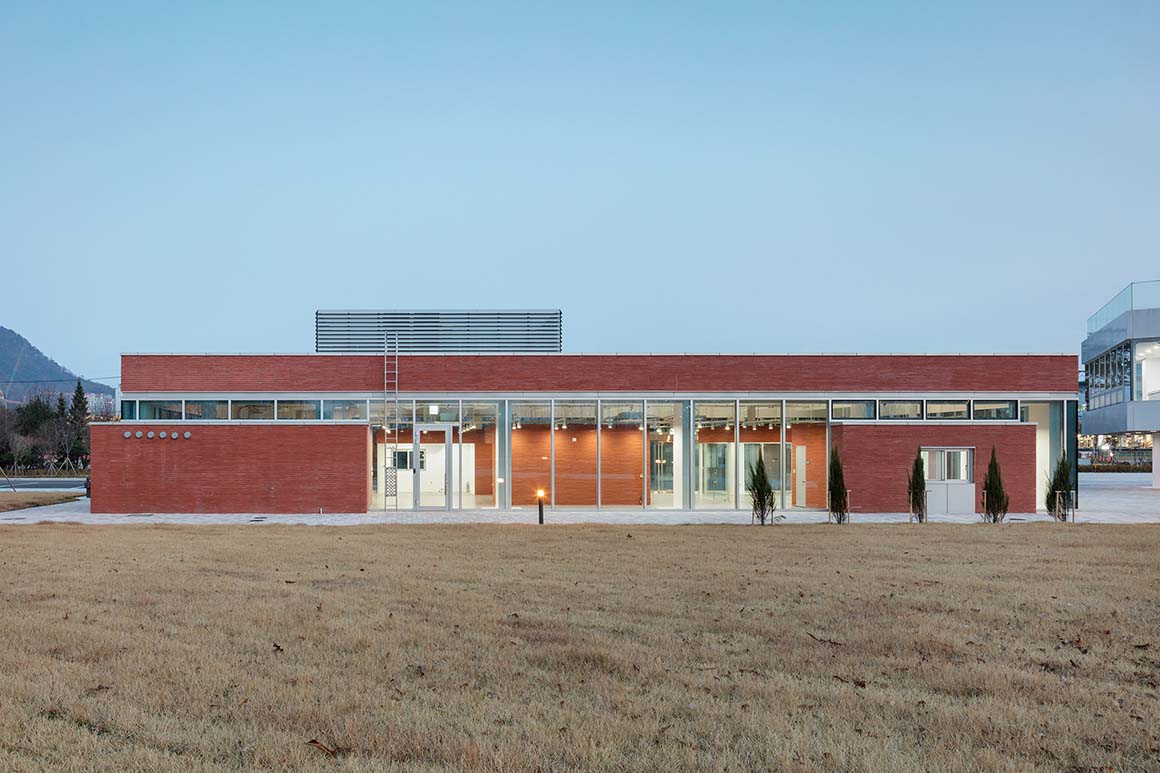

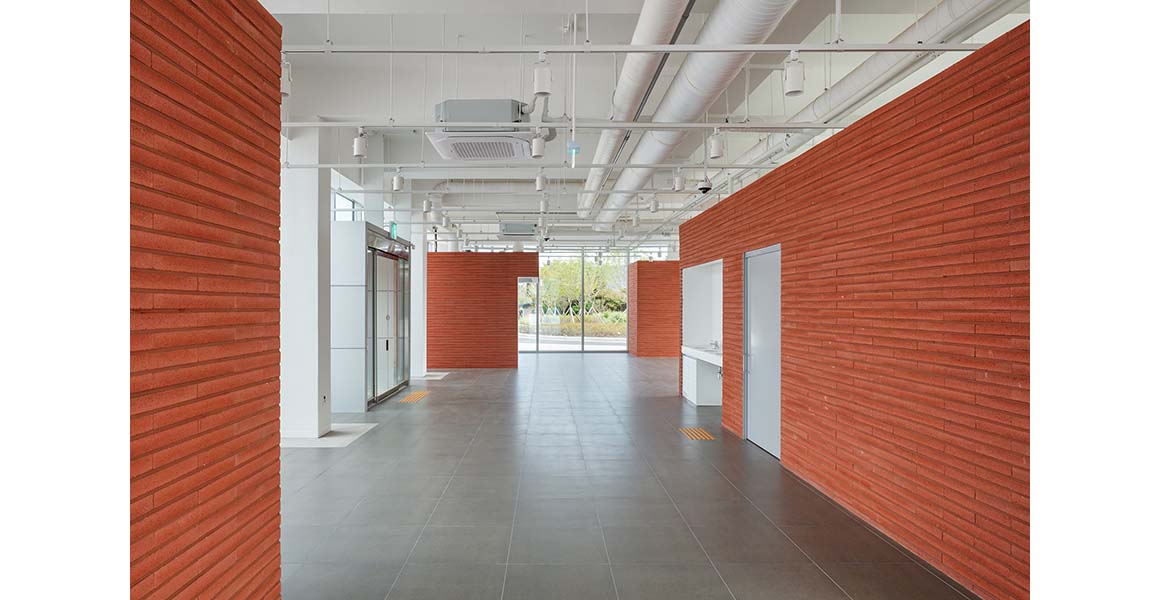
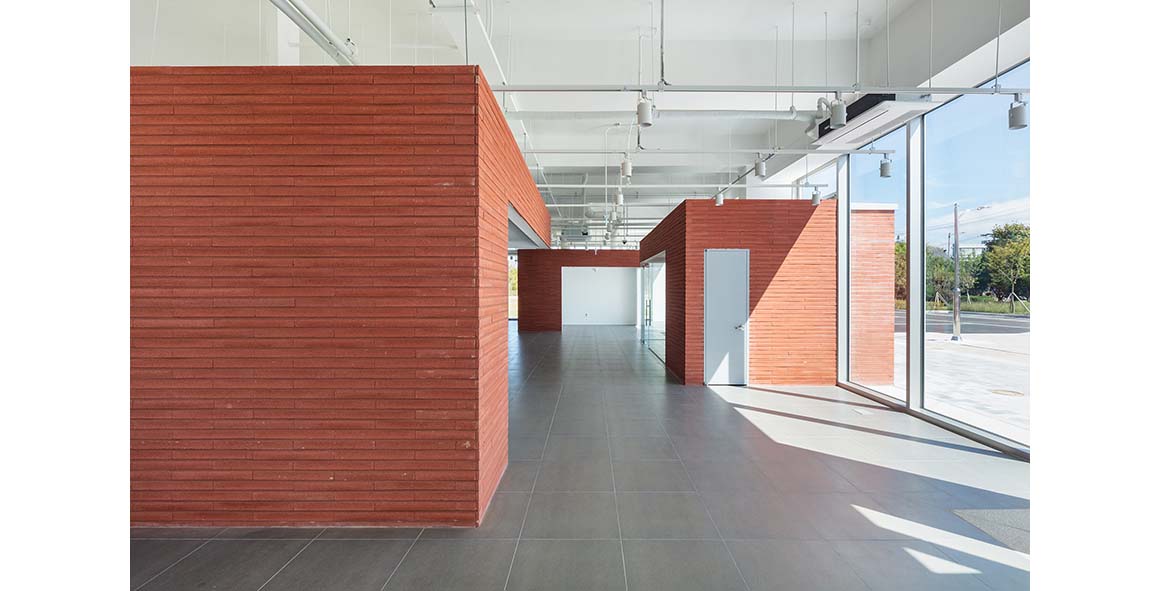
Each building houses a distinct program—ranging from a local food market and exhibition space to a regional brewery and startup incubation spaces. Through transparent façades, these activities remain visible from the outside, while the stages of activity extend outward into courtyards and lawns, blurring the boundary between interior and exterior. Within this process of fostering interaction through local food culture, the independent acts of production, distribution, and experience intersect across indoor and outdoor spaces. In doing so, the complex moves beyond consumption to become a Cultural Platform where everyday life and regional identity meet within a shared spatial framework.
Project: Chuncheon Food & Culture Complex / Location: Chuncheon-si, Gangwon-do, Korea / Architect: Simplex Architecture (ChungWhan Park, SangHun Song) / Project team: Yohan Shin, HyunWoo Lee, Iiseo Heo, Eunseon Jung, Seongwook Jeong / Structural engineer: LAIM Information Technology Co., Ltd / Mechanical and electrical engineer: HANA Consulting Engineers CO., LTD / Landscape architect: Urban Yards (Kunkook Bae) / Contractor: Hyochang Construction / Client: Chuncheon City (Agricultural Technology Center Safety Agricultural and Food Department) / Use: neighborhood living facilities / Site area: 22,462.13m² / Bldg. area: 1,721.85m² / Gross floor area: 1,721.30m² / Bldg. coverage ratio: 7.67% / Gross floor ratio: 7.66% / Bldg. scale: 4 bldg._one story above ground; 1 bldg._two stories above ground / Height: 9.1m / Parking: 73 cars / Structure: RC, SC / Exterior finishing: low-E double glass, aluminum sheet, concrete brick / Interior finishing: eco-friendly water-based paint, concrete brick tile / Design: 2020.8~2021.5 / Construction: 2021.8~2023.12 / Completion: 2023.12 / Photograph: ©Kyungsub Shin (courtesy of the architect)