





Materializing restraint and simplicity from traditional dwelling while emphasizing functional beauty
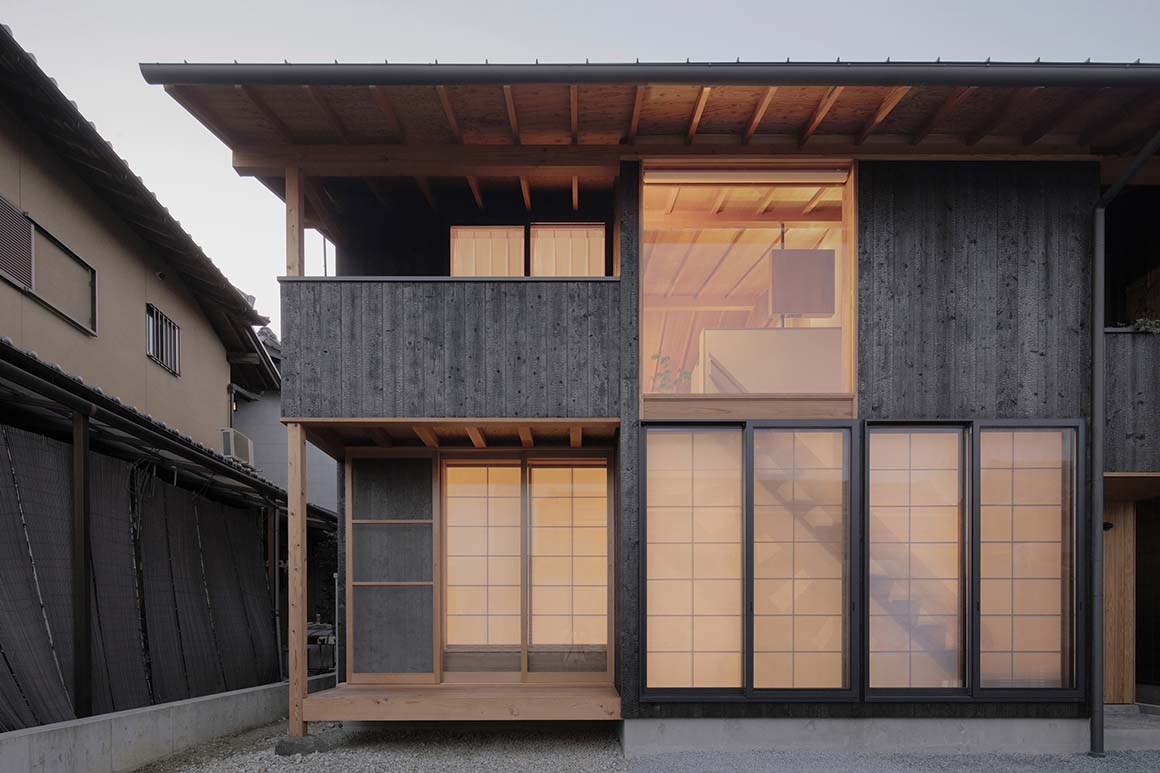
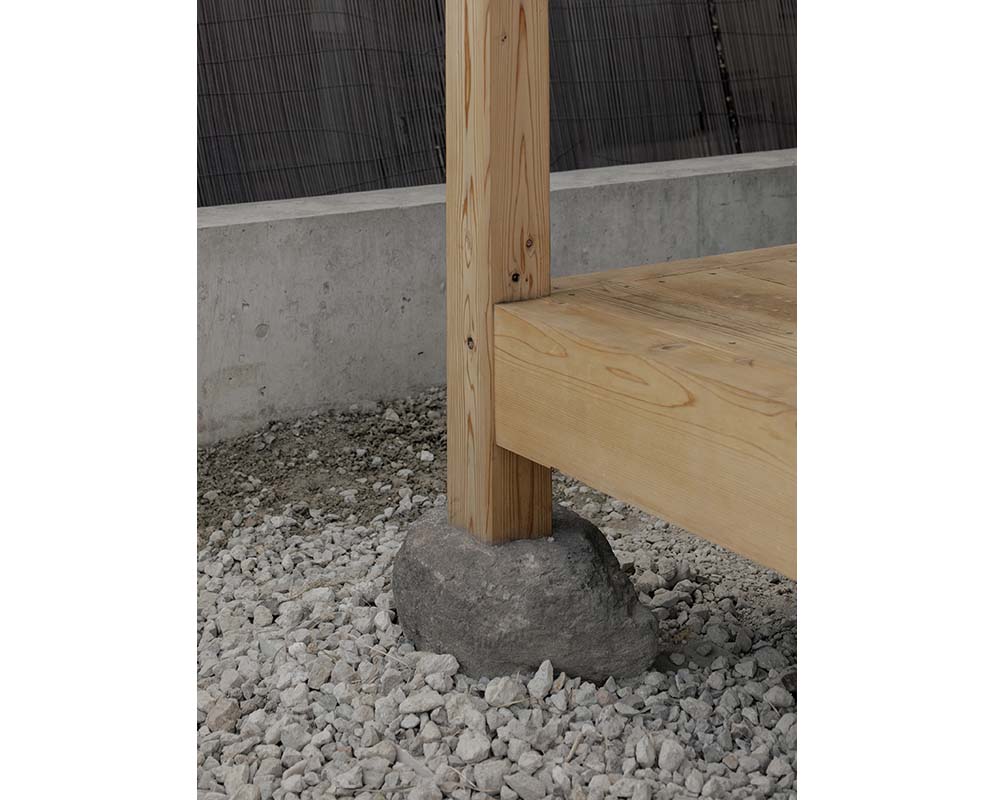
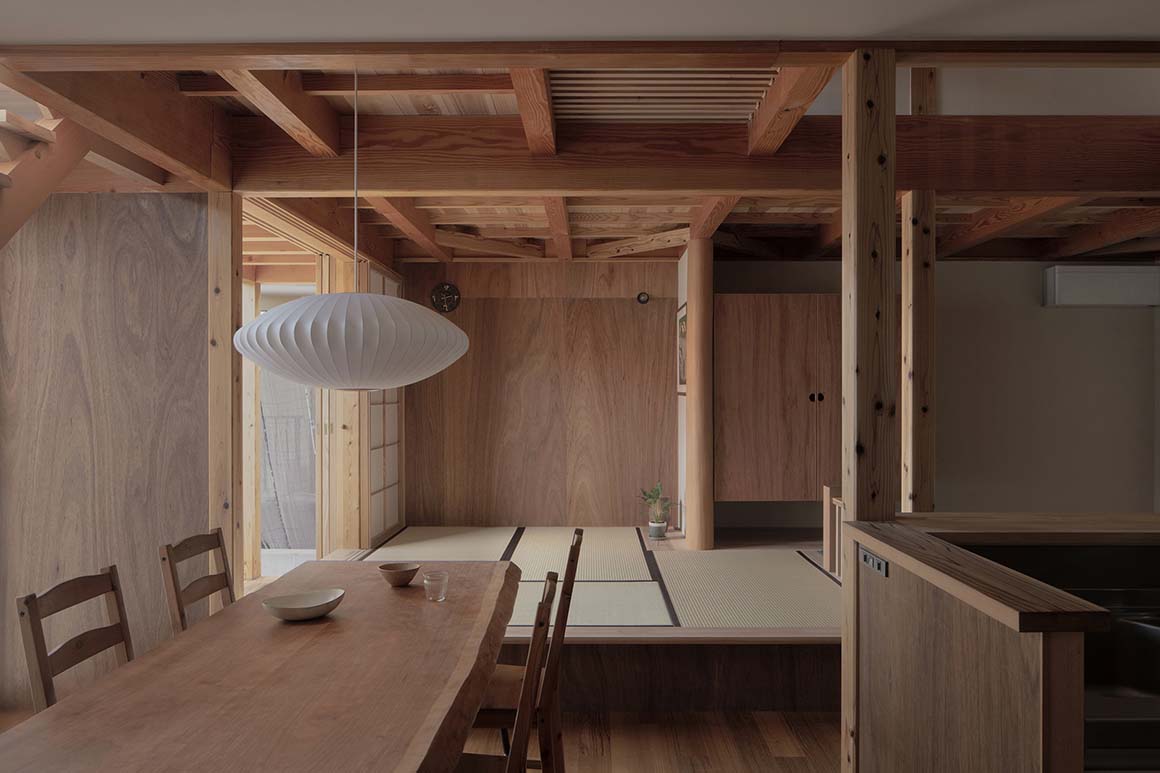
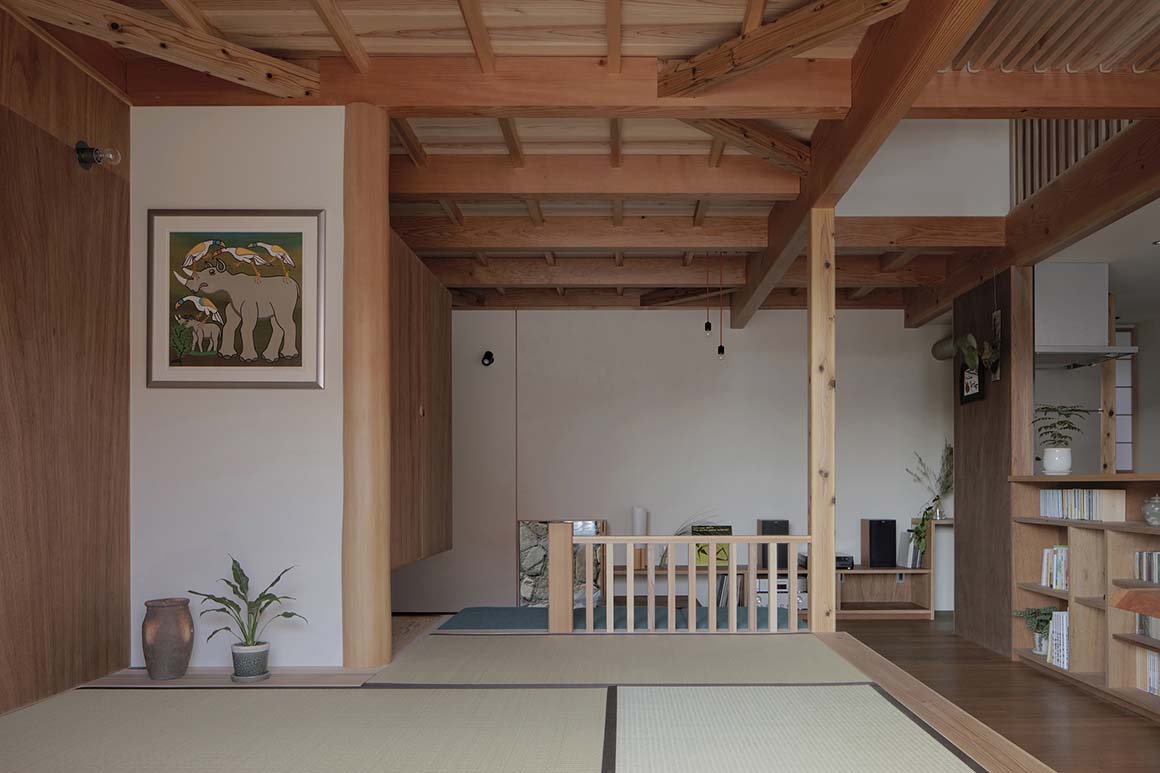
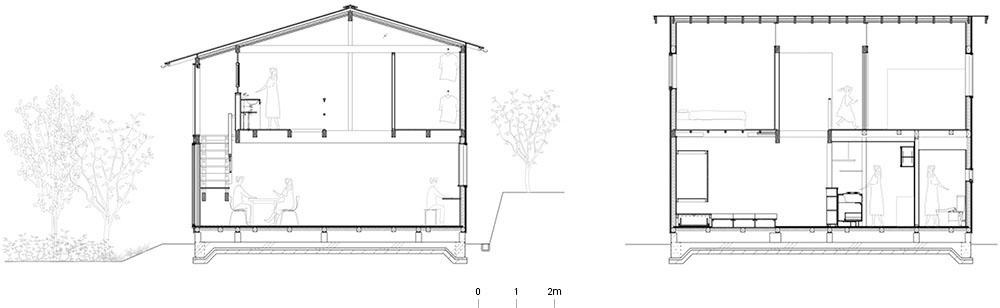
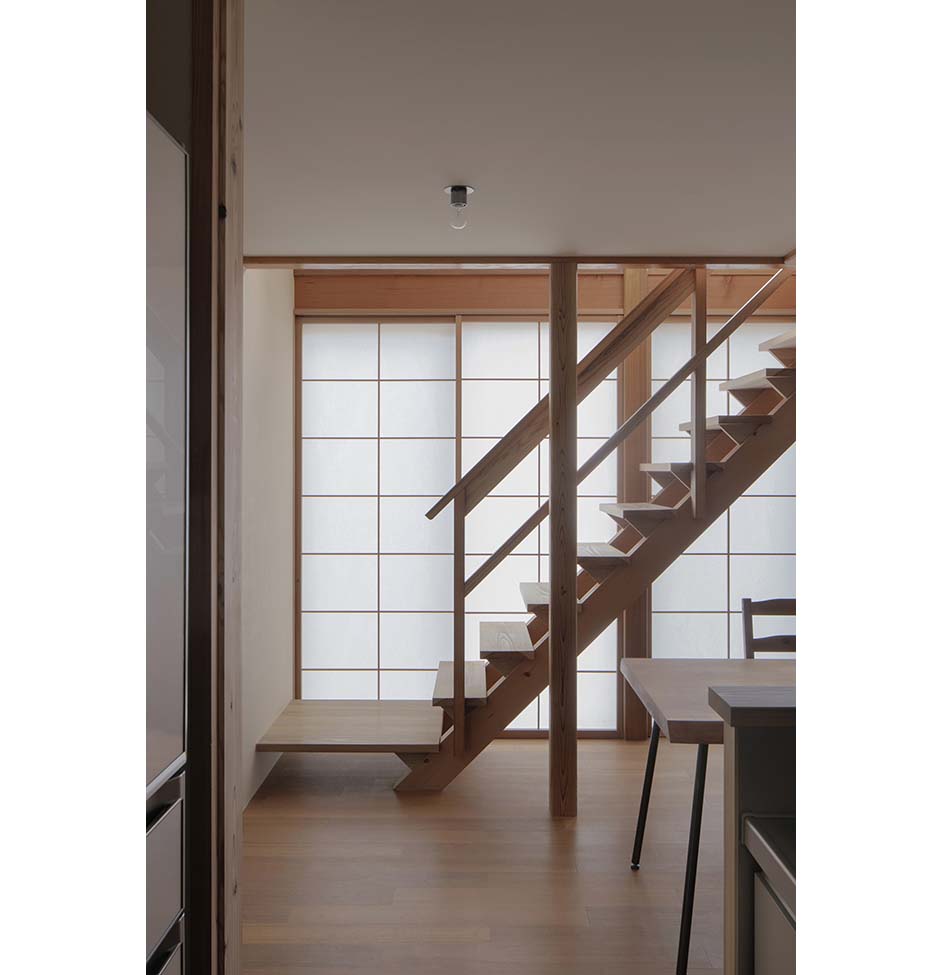
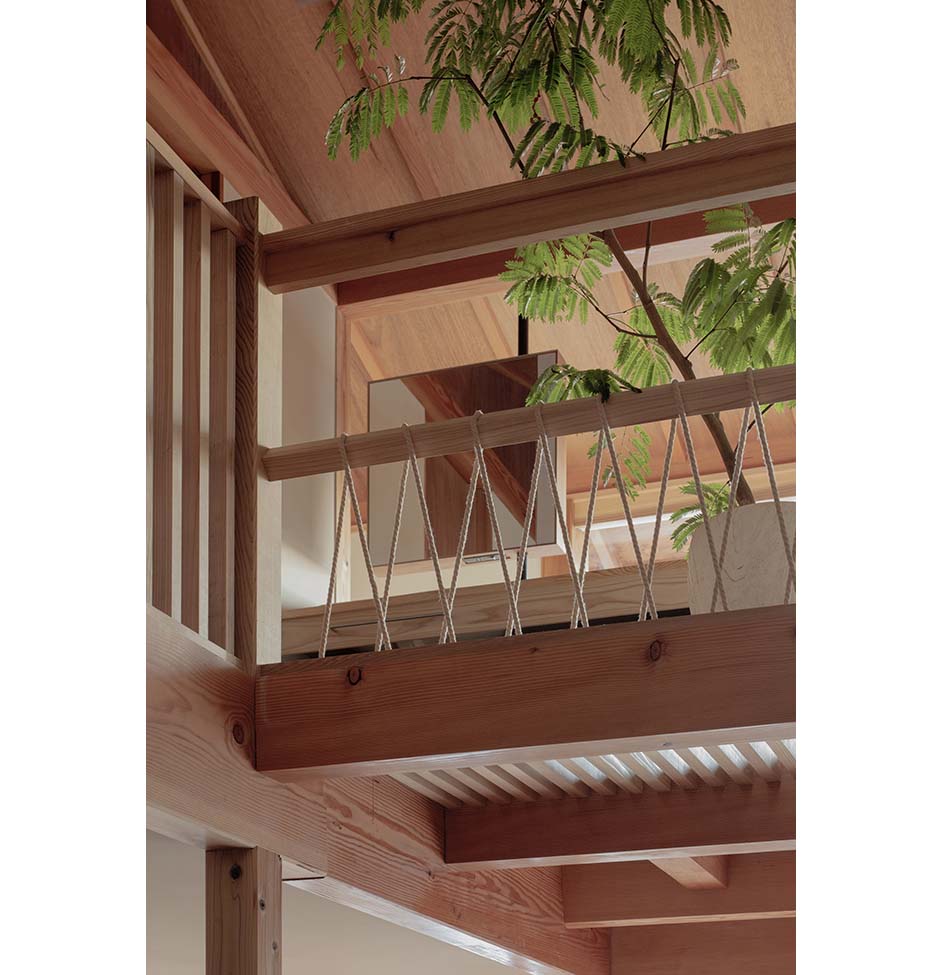
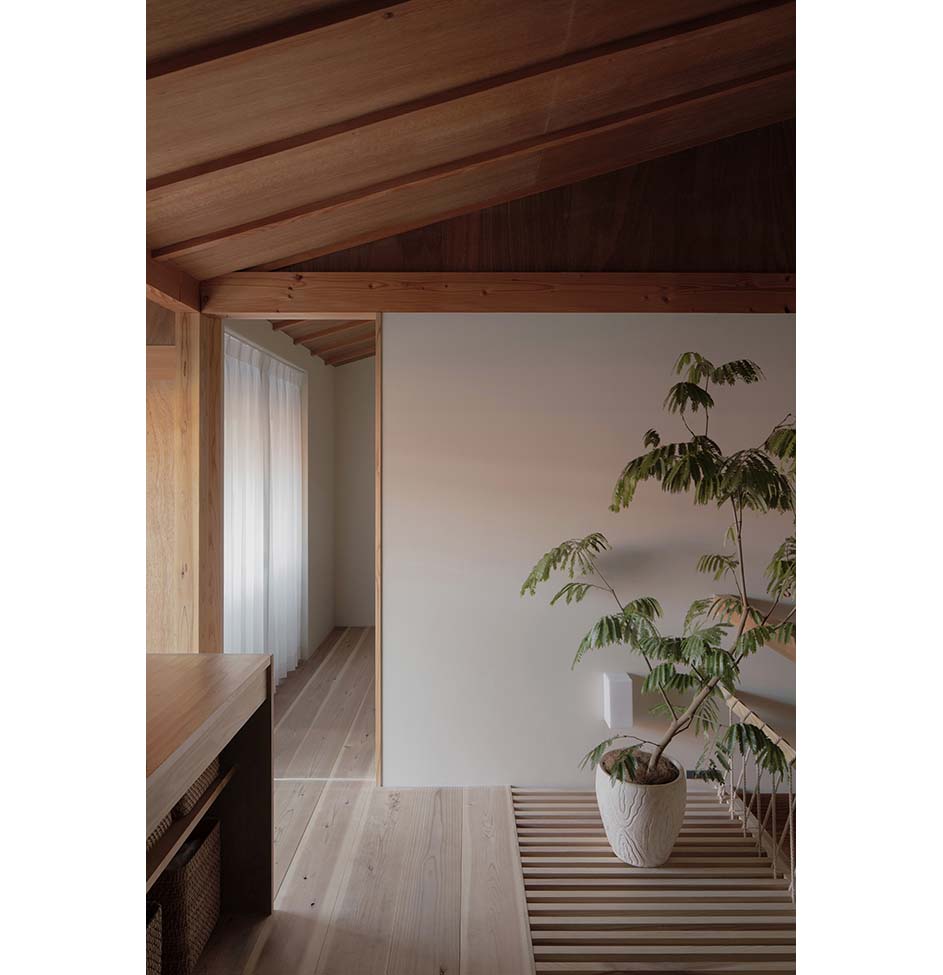
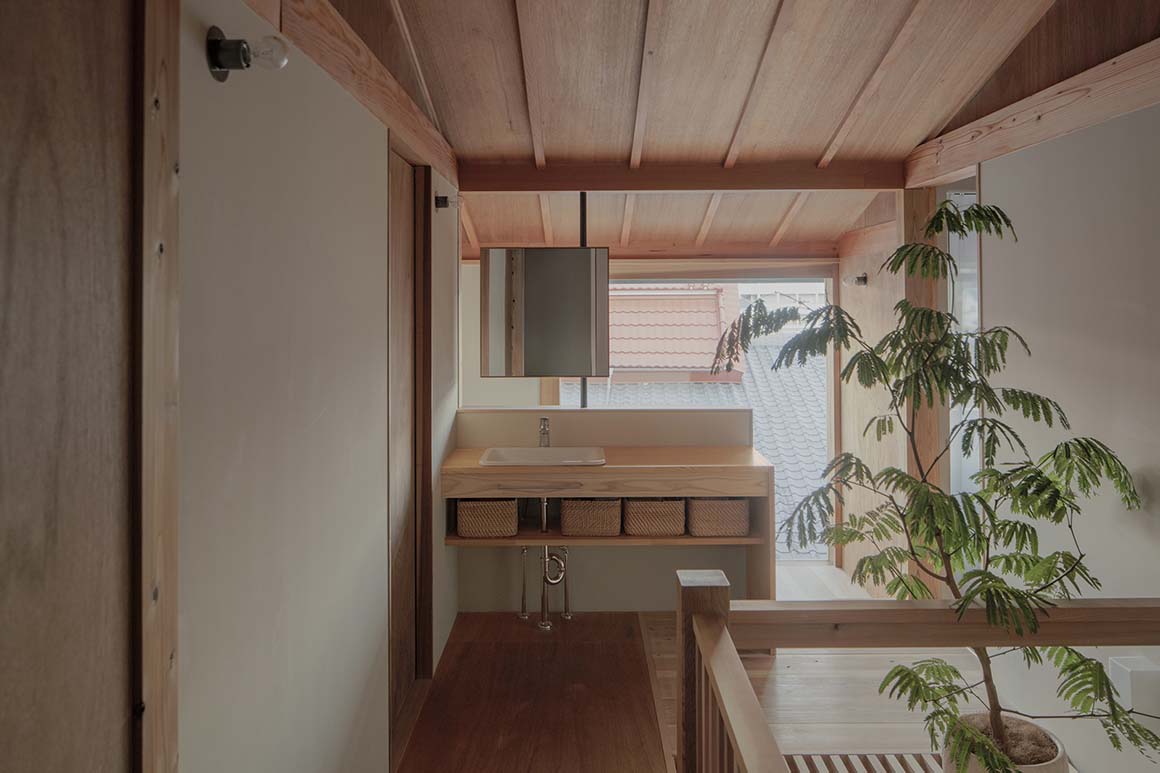
Built within a context where traditional houses coexist with modern residential developments, this timber-structured home was realized through a process of “subtraction.” By adopting the traditional Japanese shinkabe method—where columns and beams are exposed—the intersecting structural lines create a restrained and lucid interior. The absence of additional finishing materials enhances the sense of openness despite the relatively low ceiling height, while a single cedar board serves as both the second-floor flooring and the first-floor ceiling, reducing materials and construction processes.
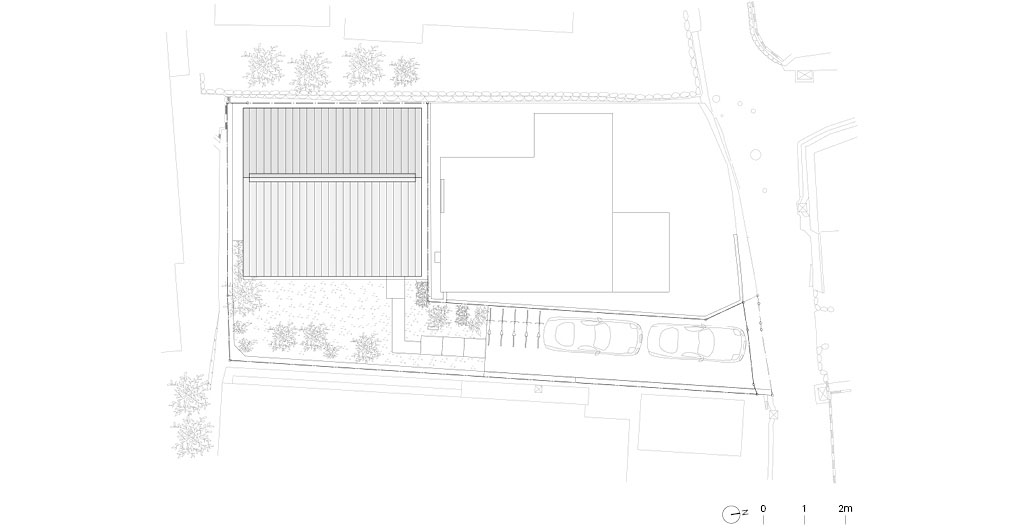
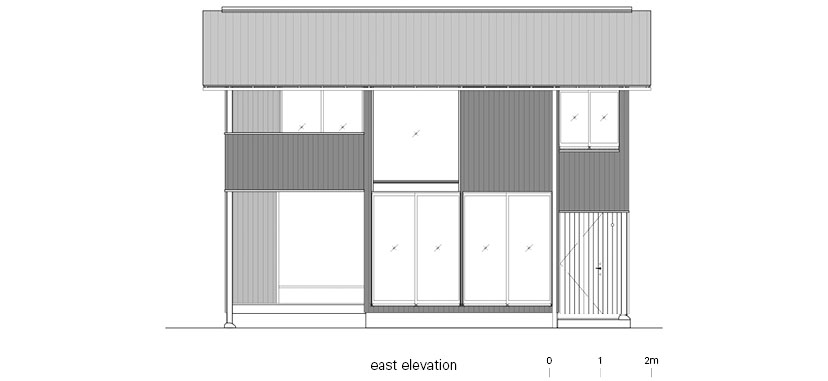
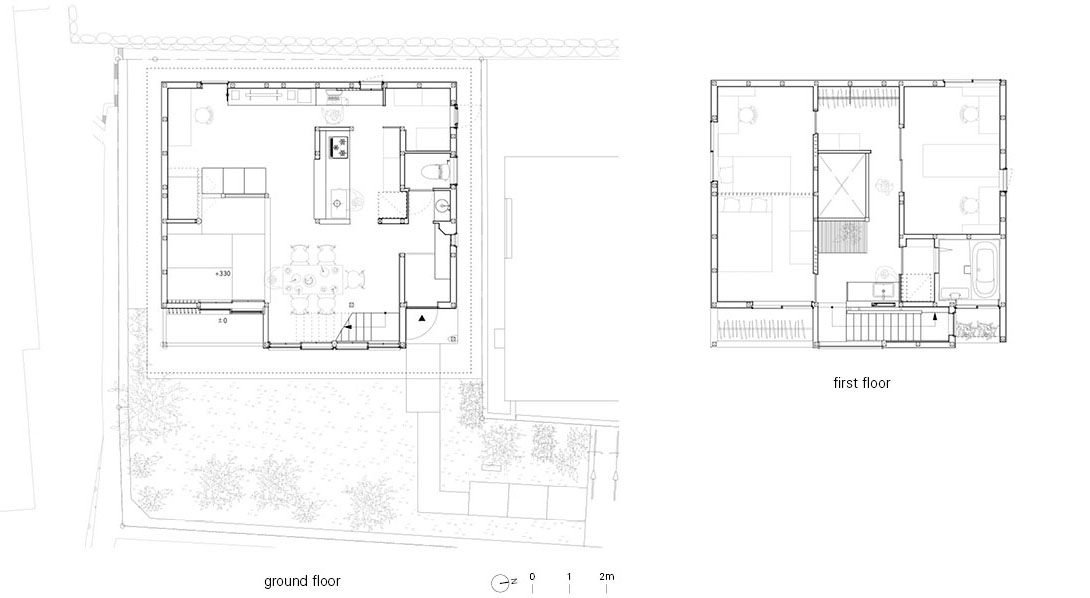
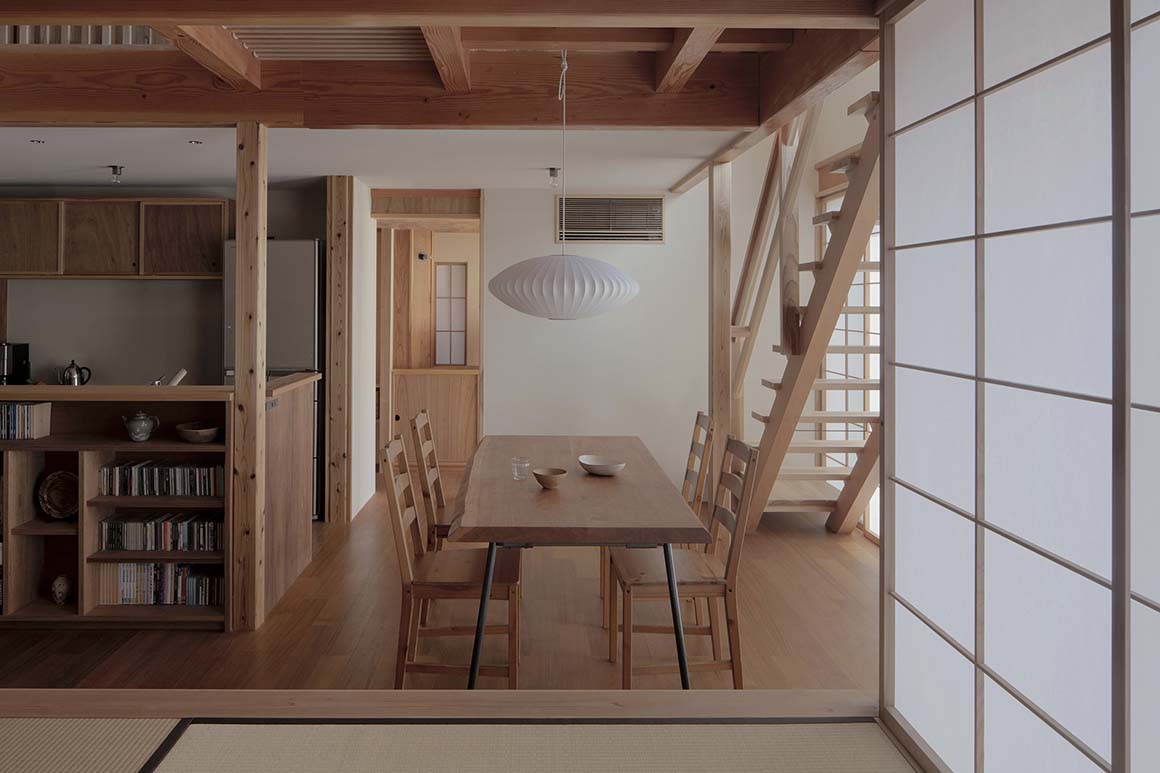
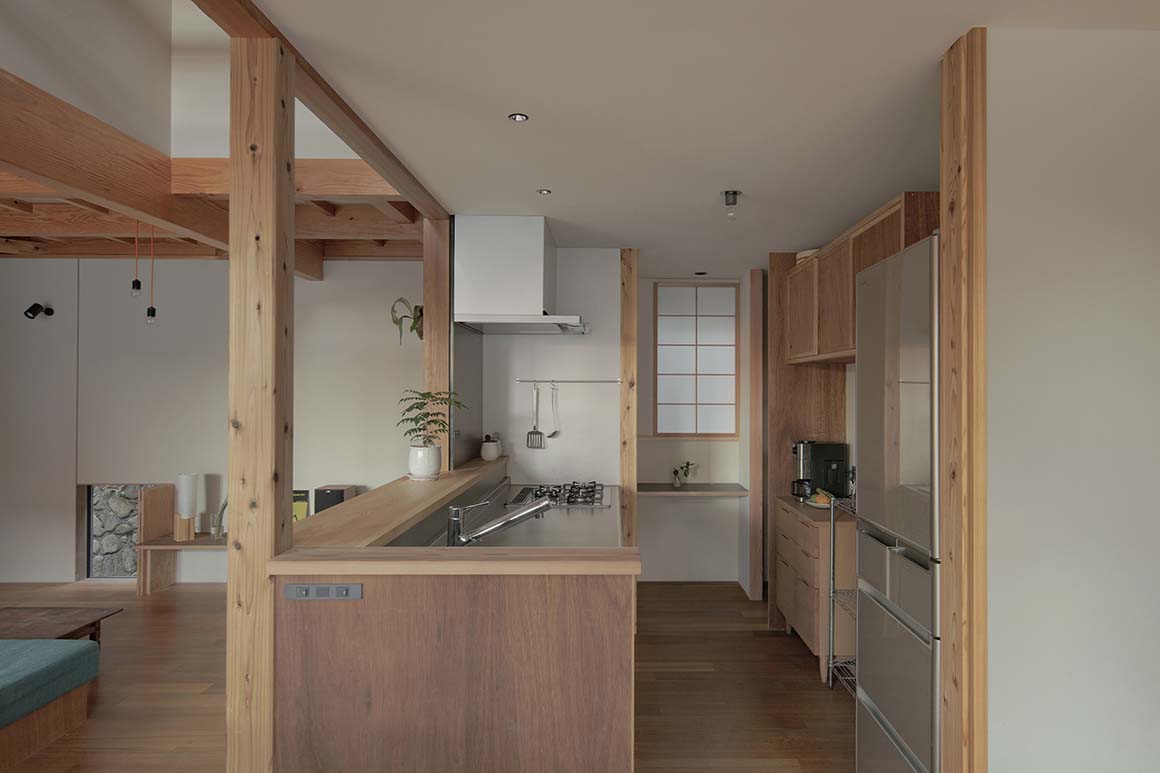
At the center of the house lies the kitchen and dining table. Designed for a couple who enjoy cooking, this space is organized so that other functions are arranged around it. Although the total area is 96 square meters, the layout accommodates a family of five without inconvenience. On the eastern side, which connects to the yard, large openings and an engawa extend the interior visually outward.
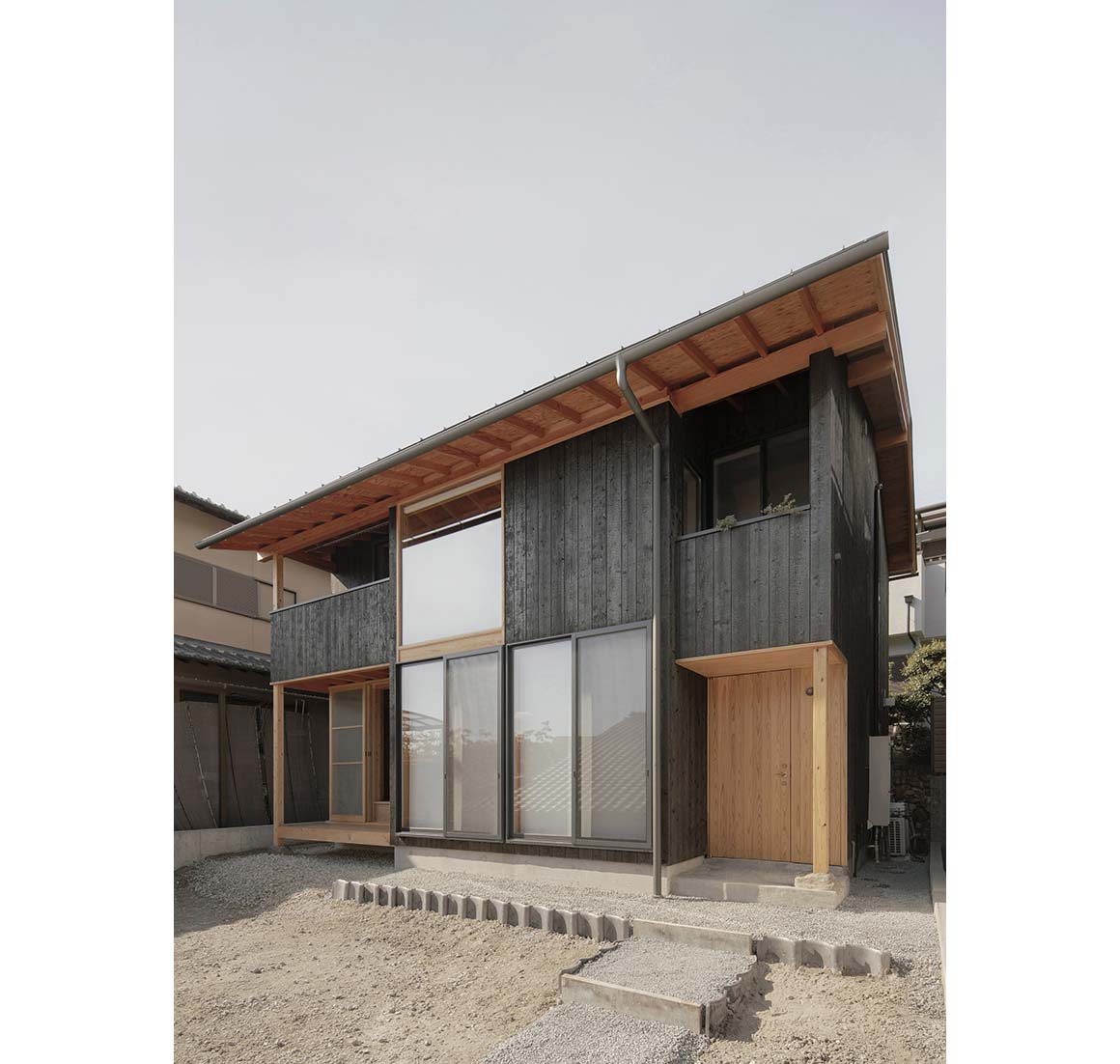
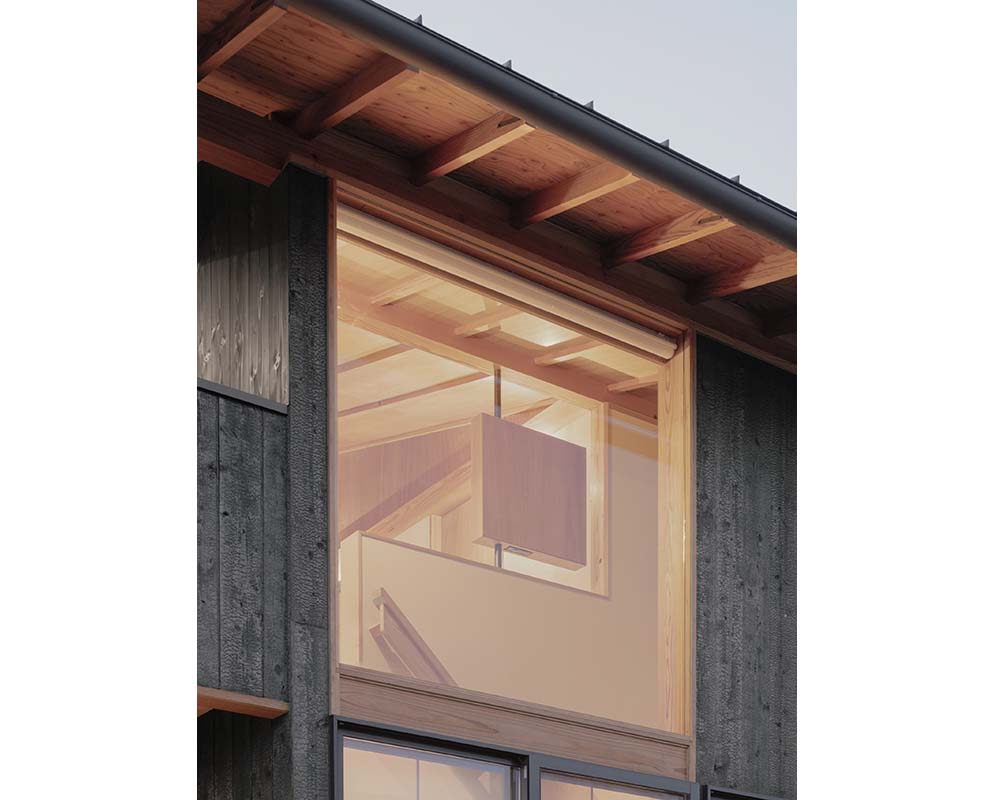
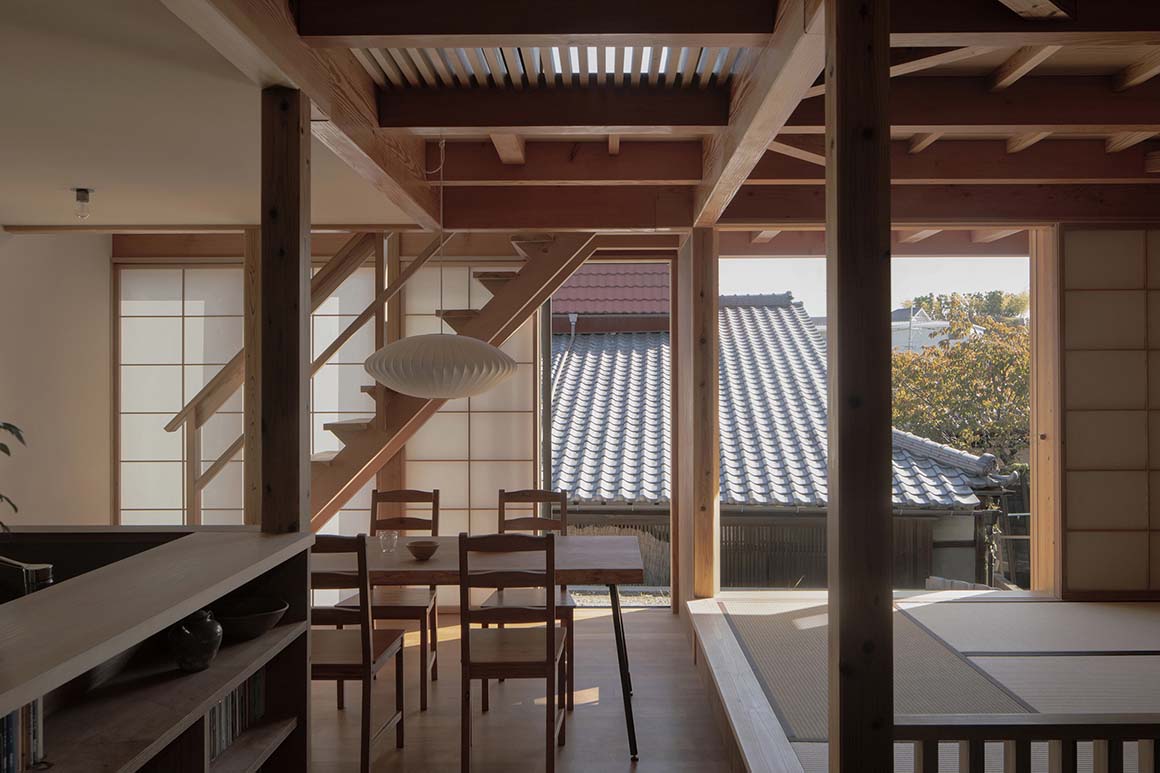
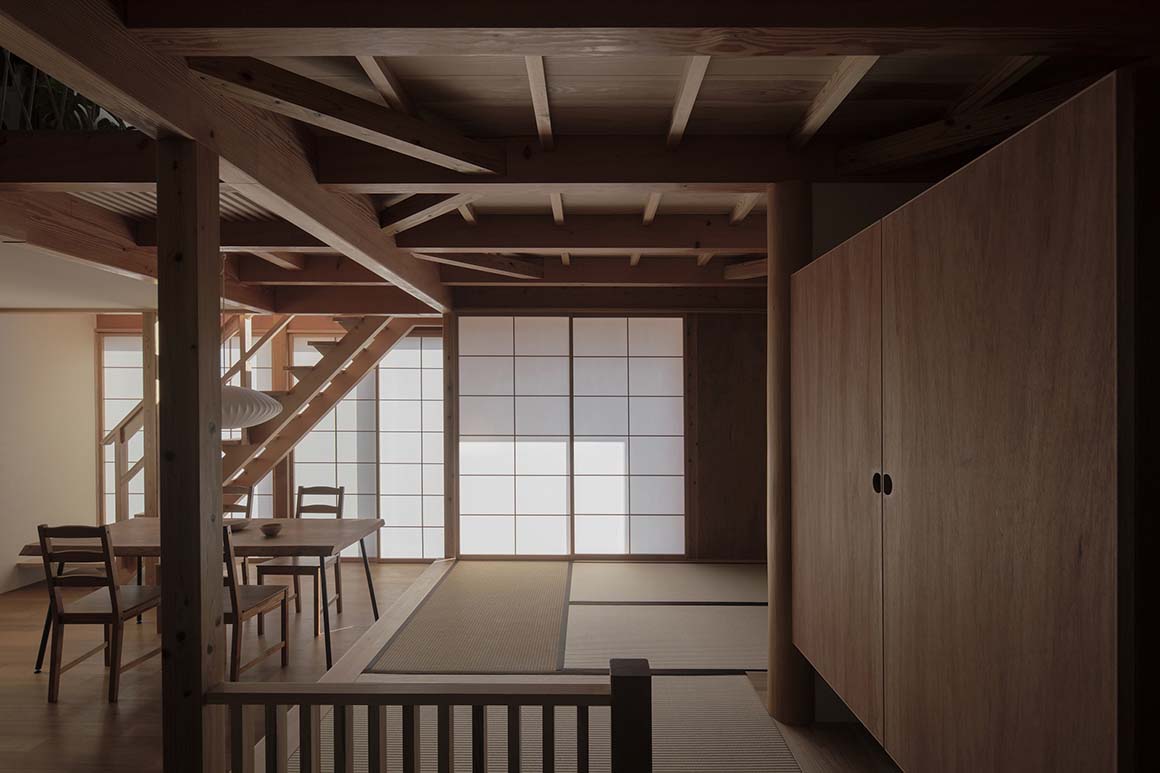
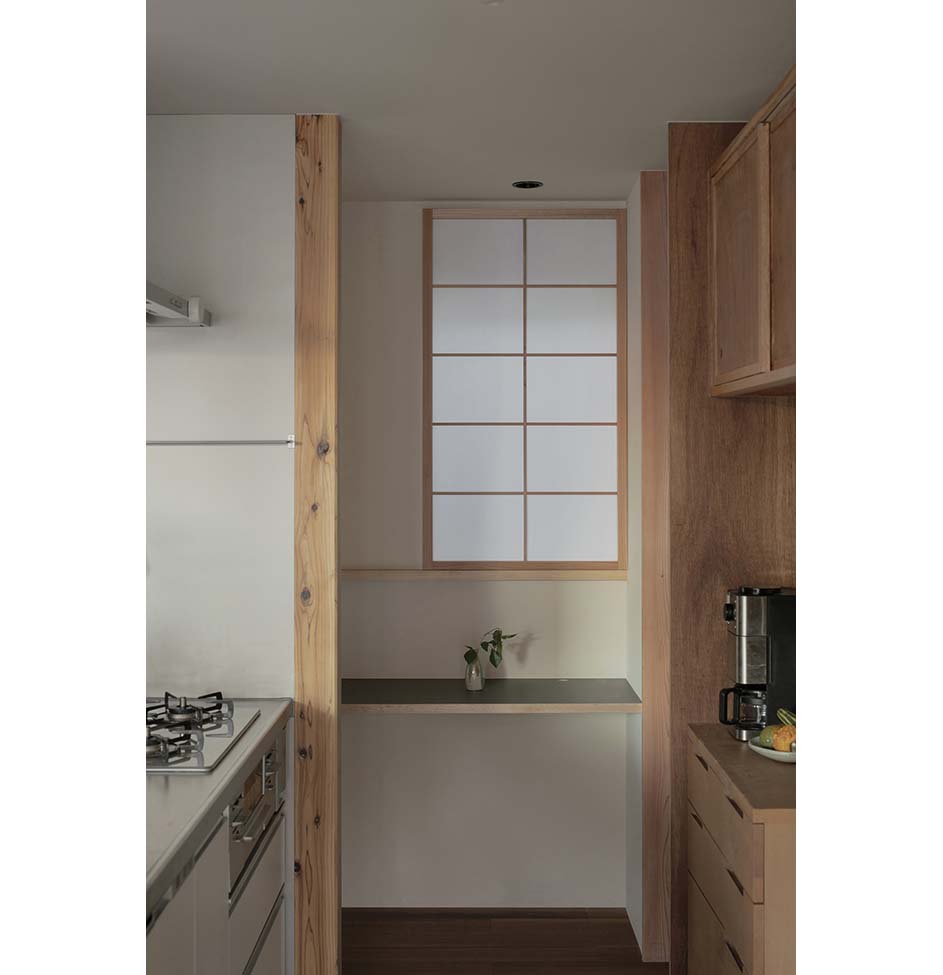
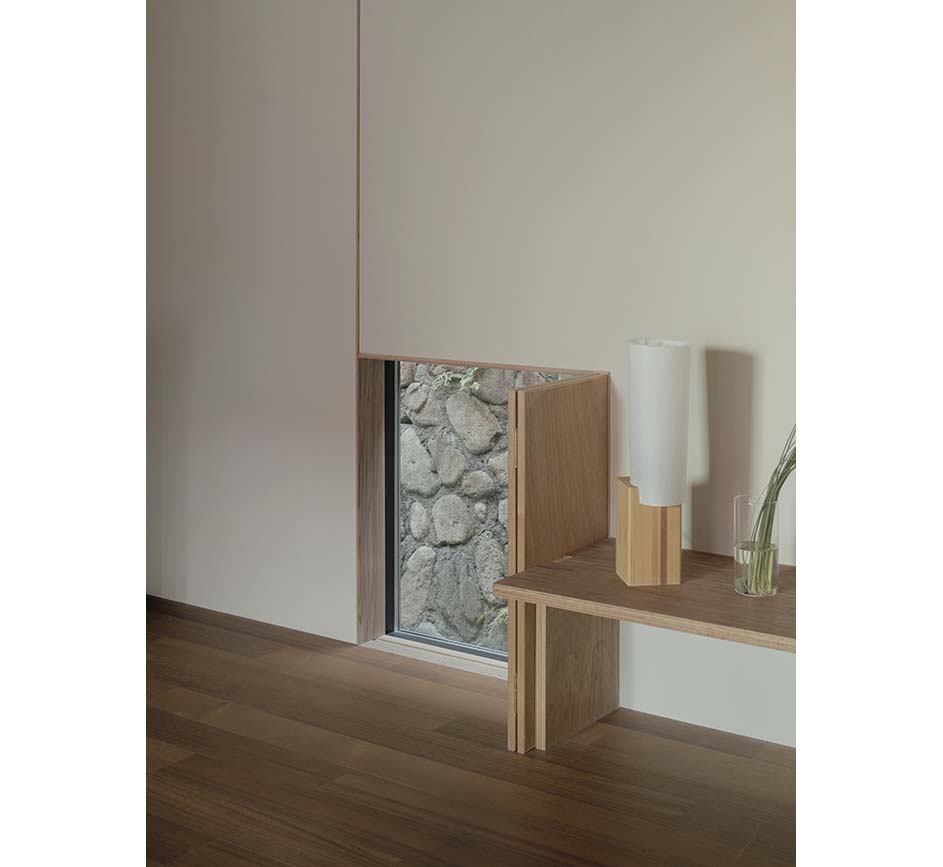
The client‘s requirements—ranging from functional needs to performance and budget—were resolved through a contemporary reinterpretation of Japanese residential typologies. Traditional elements such as tsuridana (suspended shelving) and tokonoma (alcove) are connected to a sofa, removing the boundary with the living room. The tsuridana, mounted slightly off the floor, makes the space appear larger, while the tokonoma, typically a recessed niche for displaying flowers or artworks, is incorporated into the space. Wooden shutter panels for the full-height windows can be removed and slotted into grooves within the living room cabinetry, allowing them to disappear when not in use, reflecting a traditional Japanese approach in which functions appear only when needed. Additionally, columns and beams are used as frames for sliding doors, omitting parts of conventional door casings and emphasizing both the autonomy of the structural system and the clarity of the shinkabe language.
The exterior employs cedar, alternating between charred timber and natural wood panels. While chosen for practical reasons, this creates a façade that contrasts traditional and contemporary elements.
Today, fewer people choose traditional Japanese housing. Tatami rooms and tokonoma are disappearing, and homes are becoming increasingly enclosed, reducing opportunities to experience seasonal change. Yet the quiet atmosphere of a tatami room, the delicate tension of finely framed wooden elements, the soft diffusion of light through washi paper, the shifting shadows of leaves, and the blurred boundary between interior and exterior embodied by the engawa—these qualities possess a universal beauty that transcends cultural boundaries.
Rather than preserving these elements as mere nostalgia, the Saidera House proposes a contemporary model of Japanese dwelling—one that maintains restraint and simplicity while emphasizing functional beauty.
Project: House in Saidera / Location: Osaka, Japan / Architect: Akio Isshiki Architects / Project team: Akio Isshiki, Yu Isshiki / Structural engineer: Kotani Architectural Design / Contractor: Sasahara Construction / Use: house / Site area: 180.96m² / Bldg. area: 53.89m² / Gross floor area: 96.13m² / Structure: Wood / Completion: 2025 / Photograph: ©Benjamin Hosking (courtesy of the architect)