



A Lightweight Order Settled upon Layers of Time
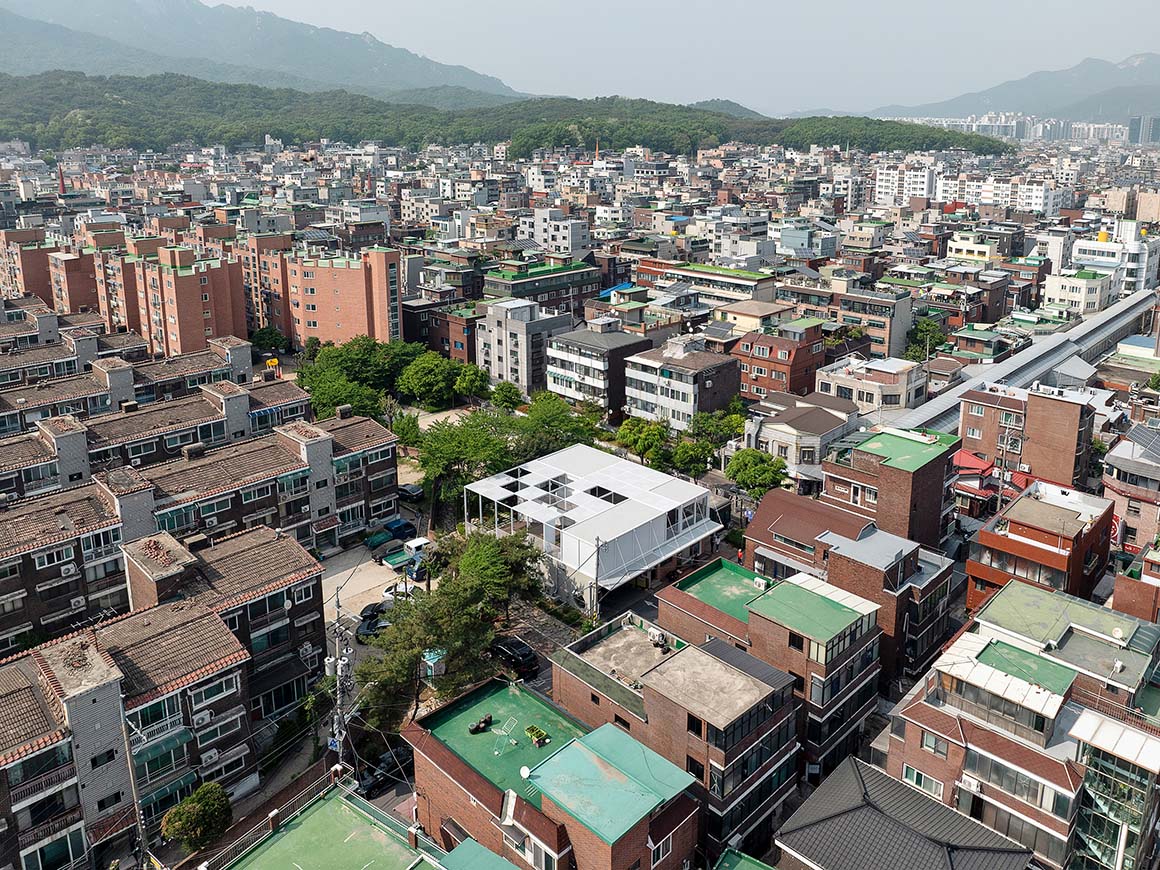
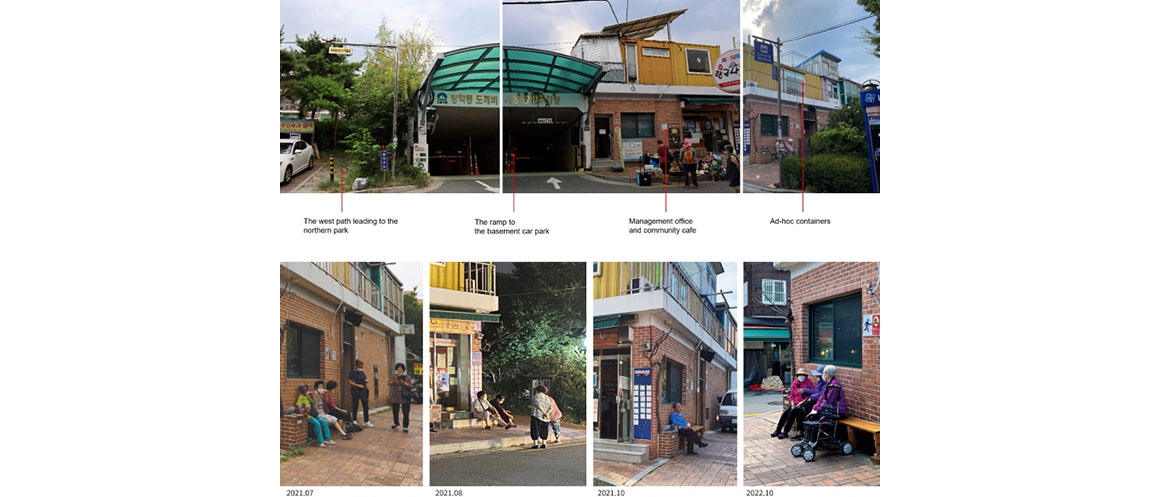
In Banghak-dong, Dobong-gu, Seoul, the curiously named Dokkaebi Market traces its origins to the 1980s, when street vendors opened only in the evenings to avoid crackdowns. Narrow alleys lined with stalls, the rough calls of merchants, and shoppers hurrying by with bags in hand still define its lively atmosphere. Yet behind this bustle was another recurring scene: elderly neighbours resting on worn benches or beneath makeshift canopies in the small parking area at the market entrance.
Dokebi Platform grew from this everyday pattern of use. Rather than erase what was already there, the project reorganises the site while preserving its established culture of rest, bringing a clearer civic order to the market’s informal edge. It is, in the architects’ words, an architecture of commas rather than full stops.
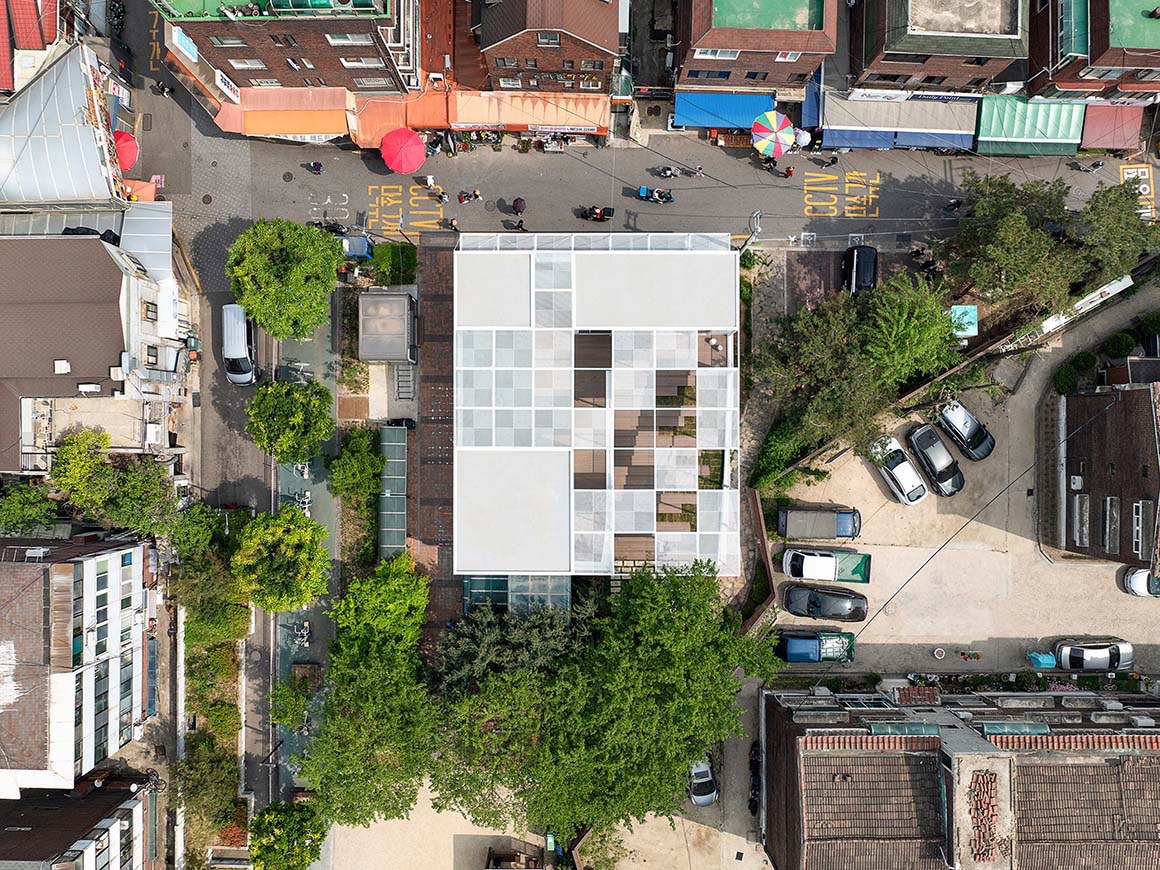
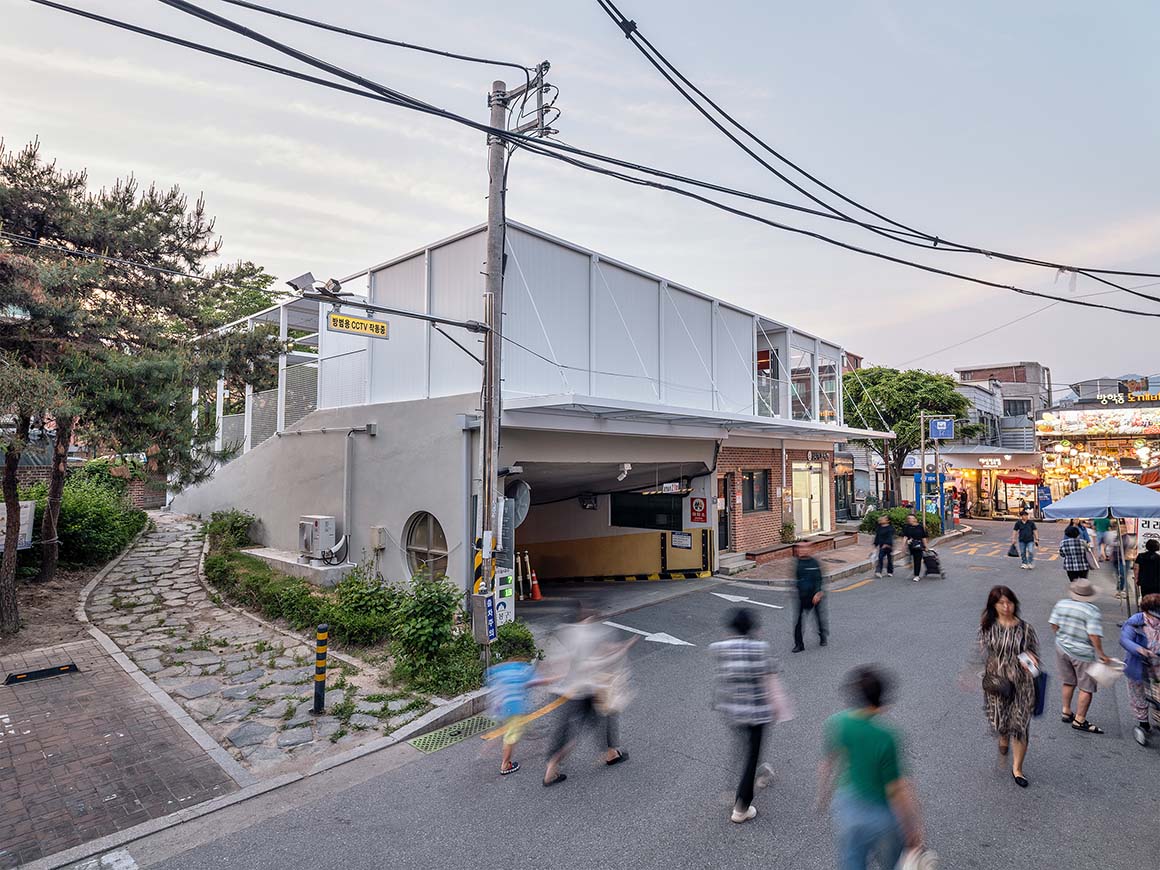
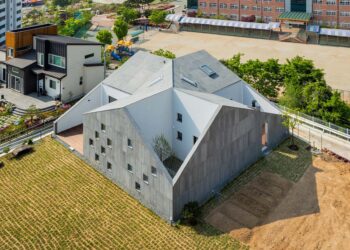
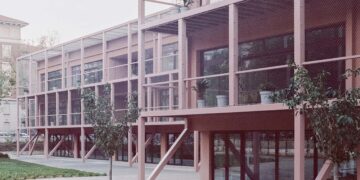
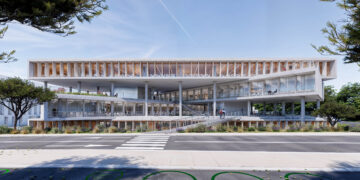
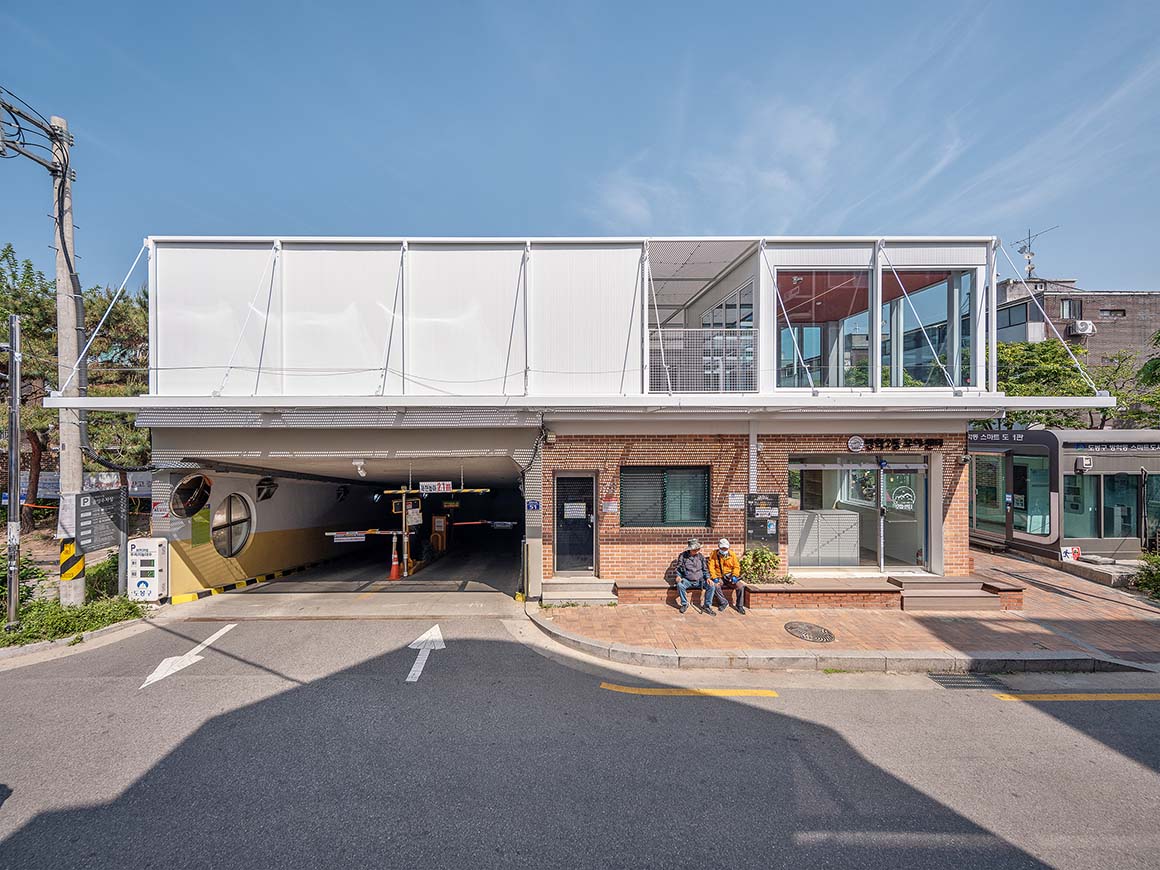
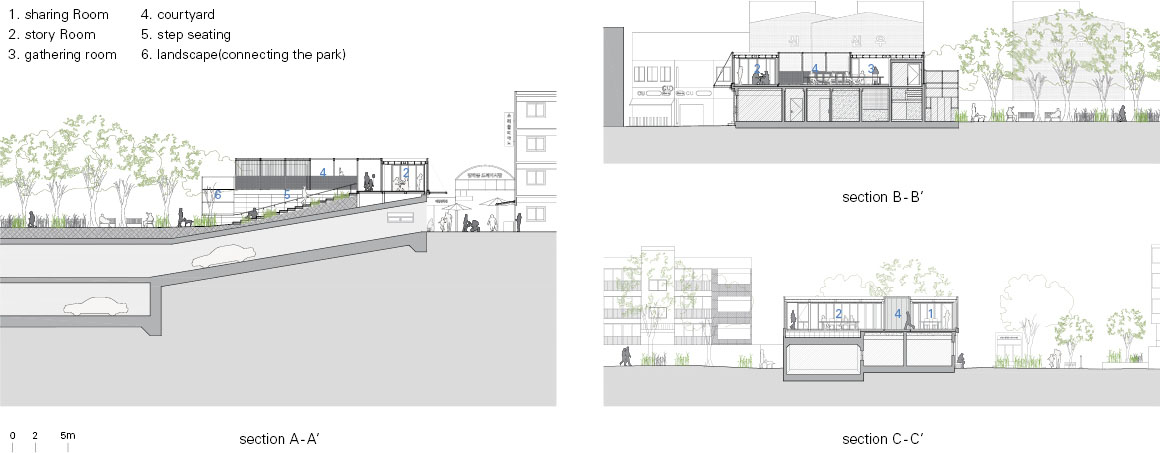
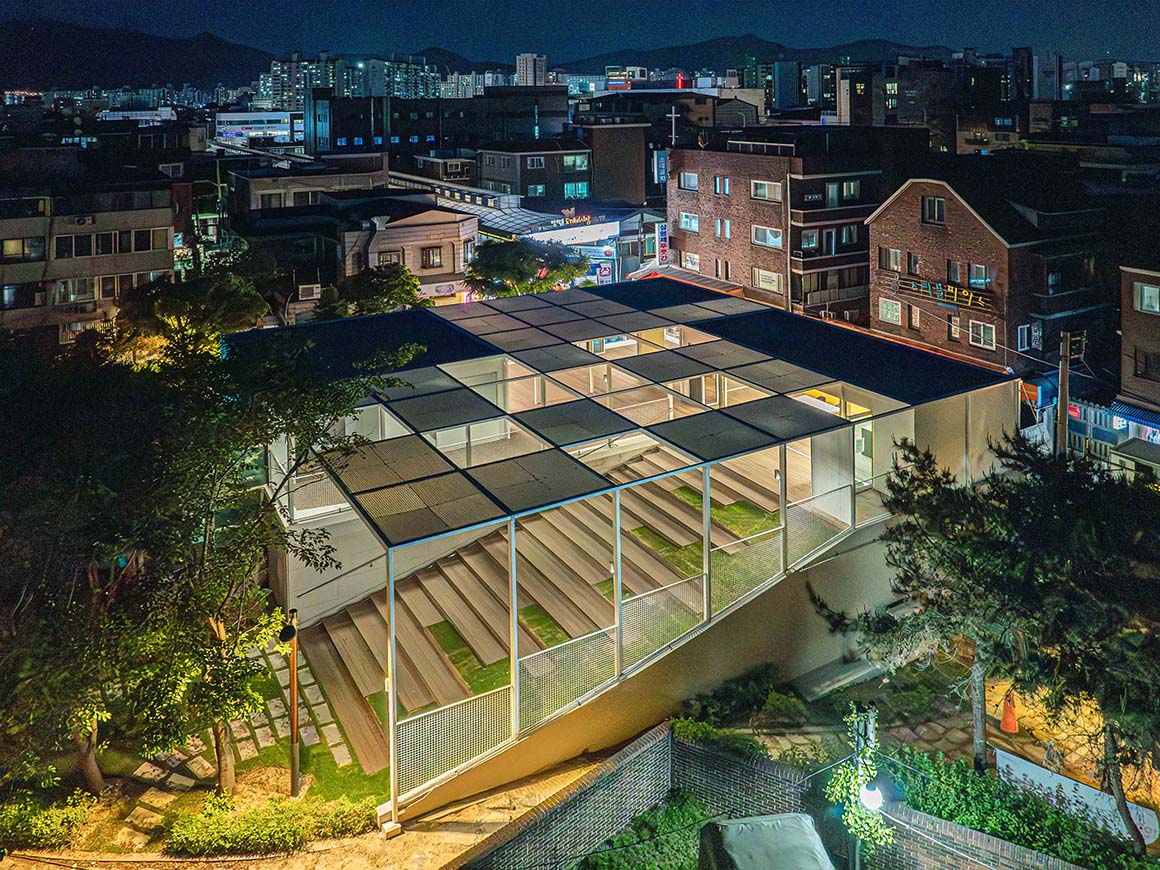
Instead of demolition, the design reuses the existing infrastructure and strips away accumulated additions to reveal the original masonry structure. Above it, a lightweight horizontal volume of white steel is gently placed. This new layer both extends the life of the existing building and settles naturally into the surrounding low-rise residential context.
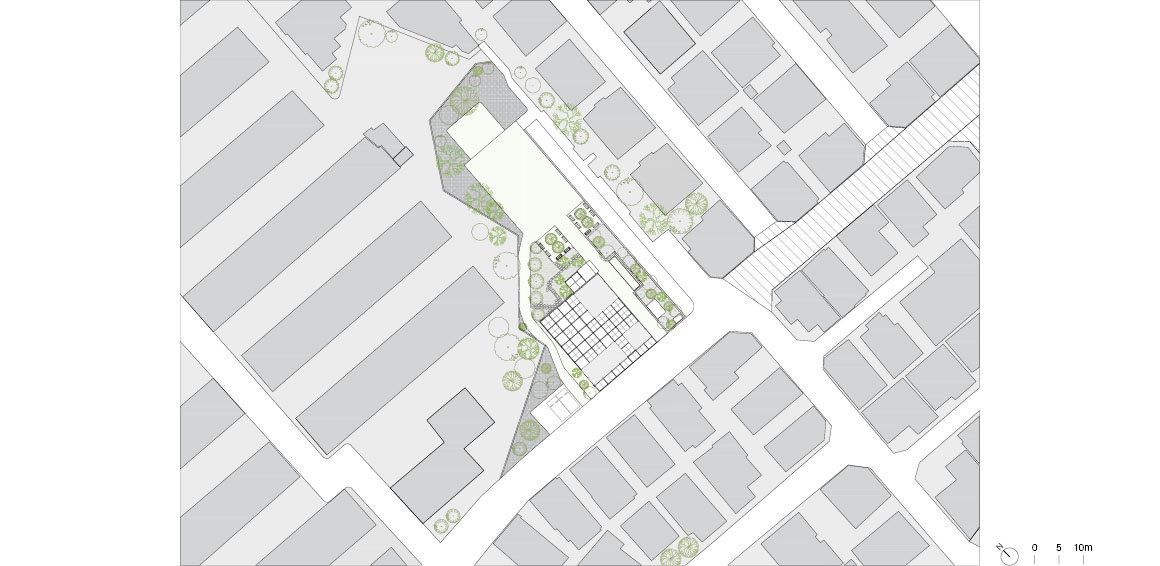
On the newly added upper level, three rooms—Sodam-bang, Nanum-bang, and Chaeum-bang—are arranged around an open courtyard. Each room can operate independently or be combined as needed, accommodating dementia care workshops for seniors, study rooms for students, neighbourhood meetings, exhibitions, and small events. Doors are typically left open toward the courtyard, allowing activities in each room to remain visible across the shared space and encouraging casual exchange between users.
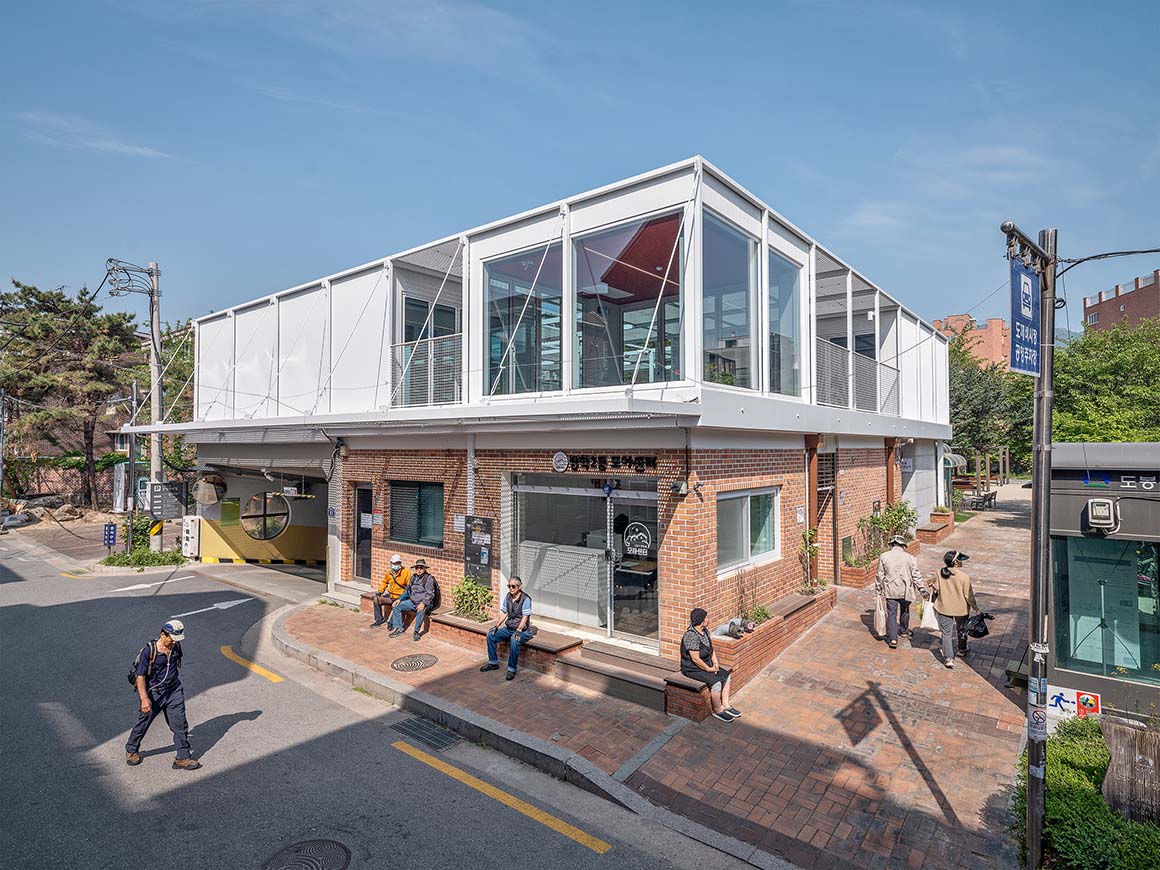
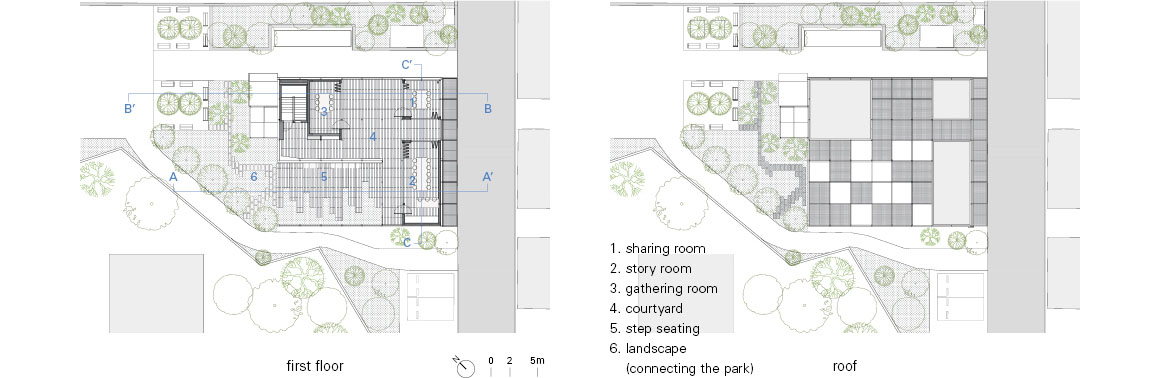
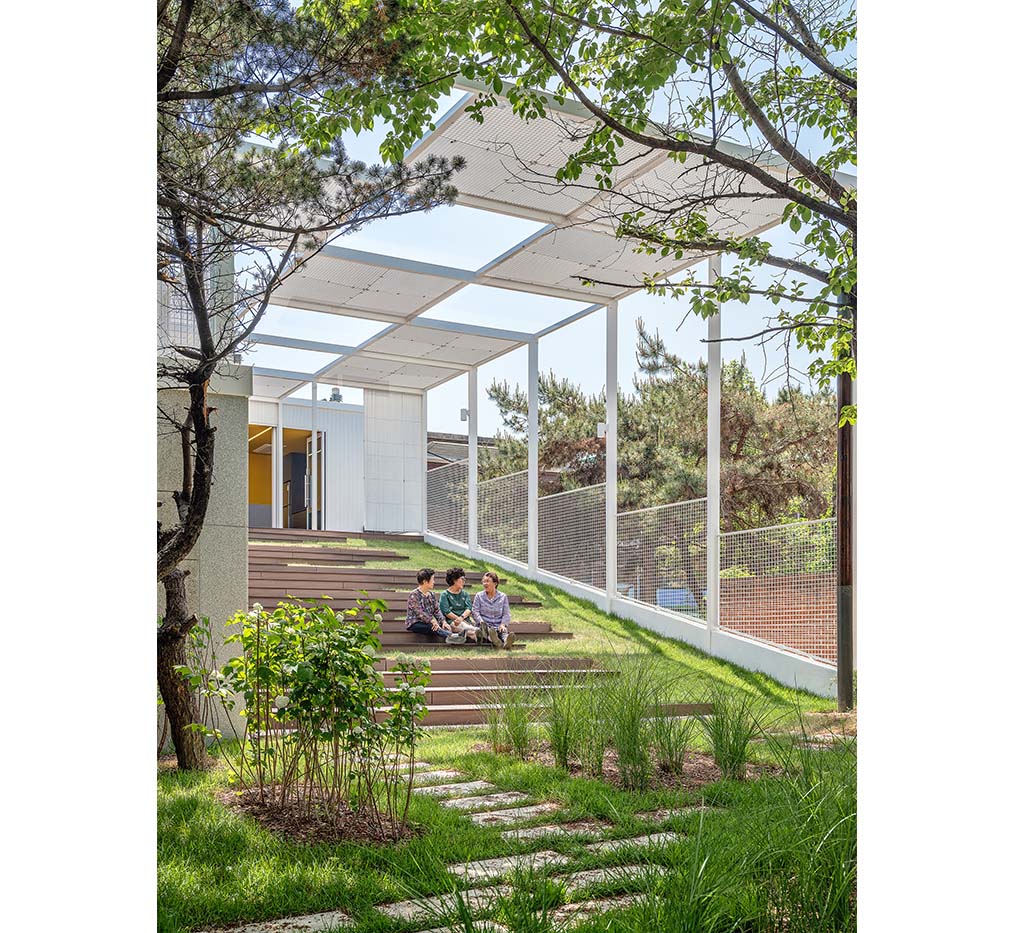
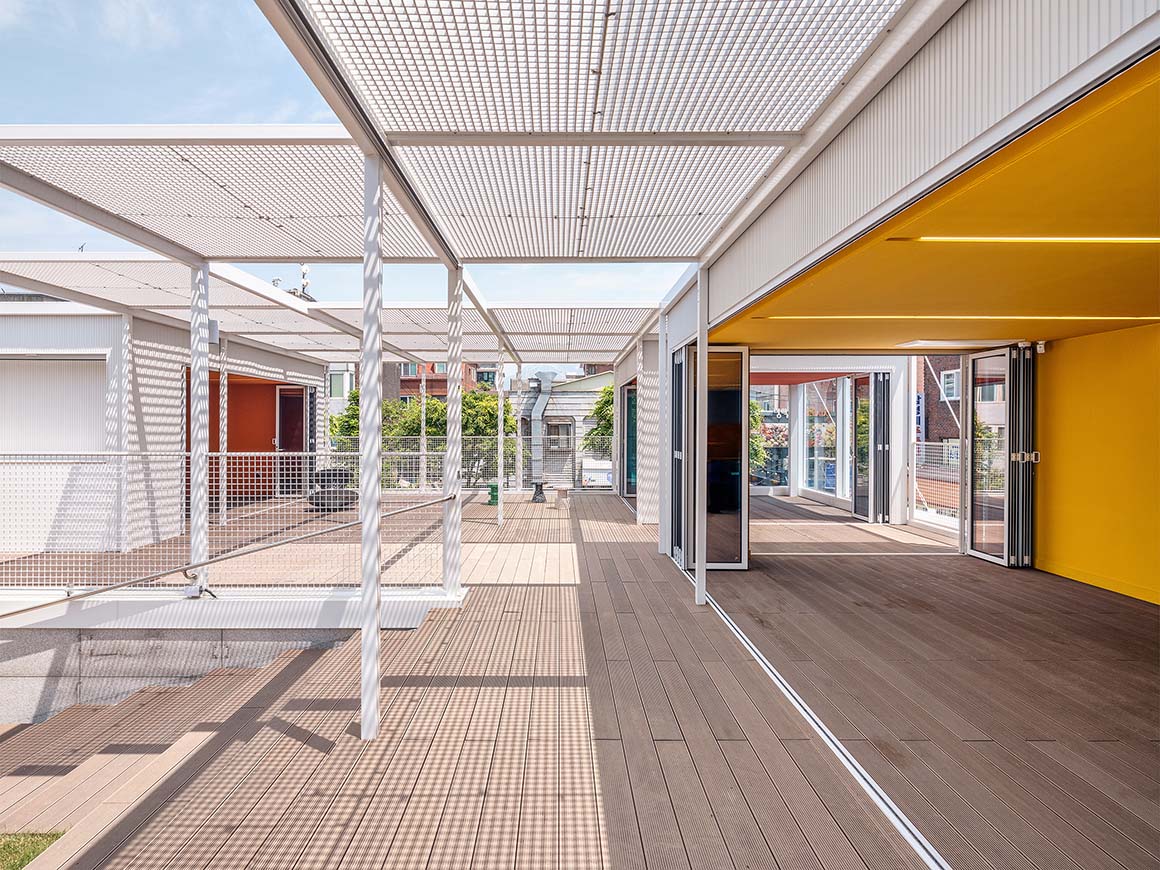
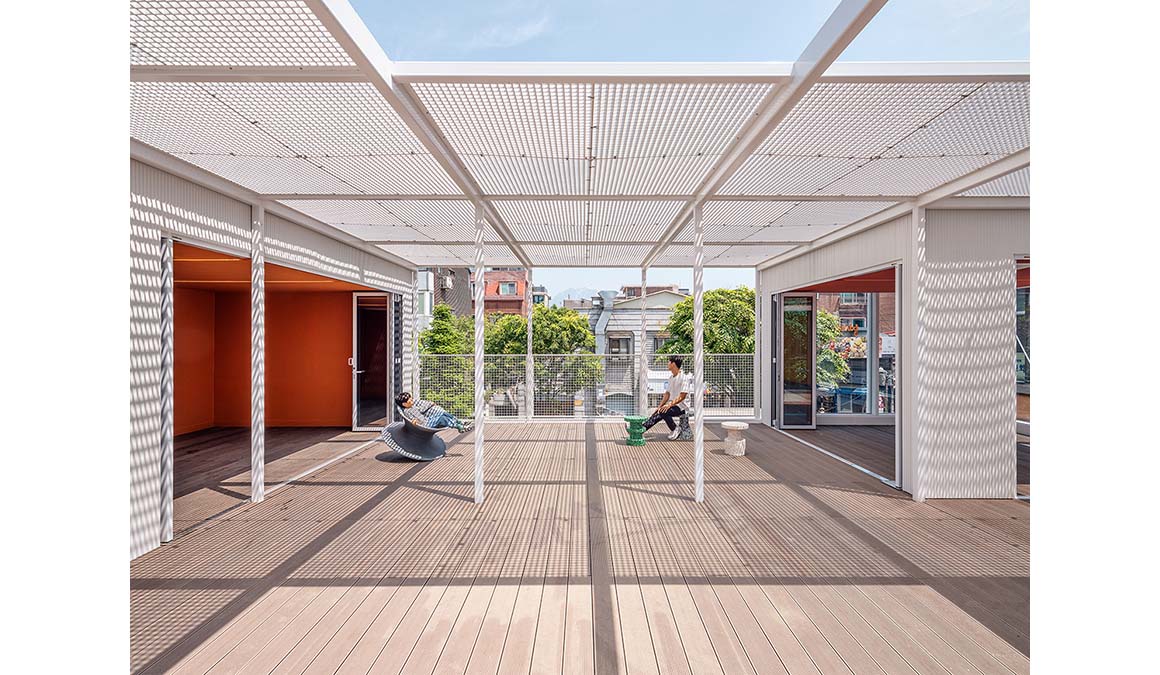
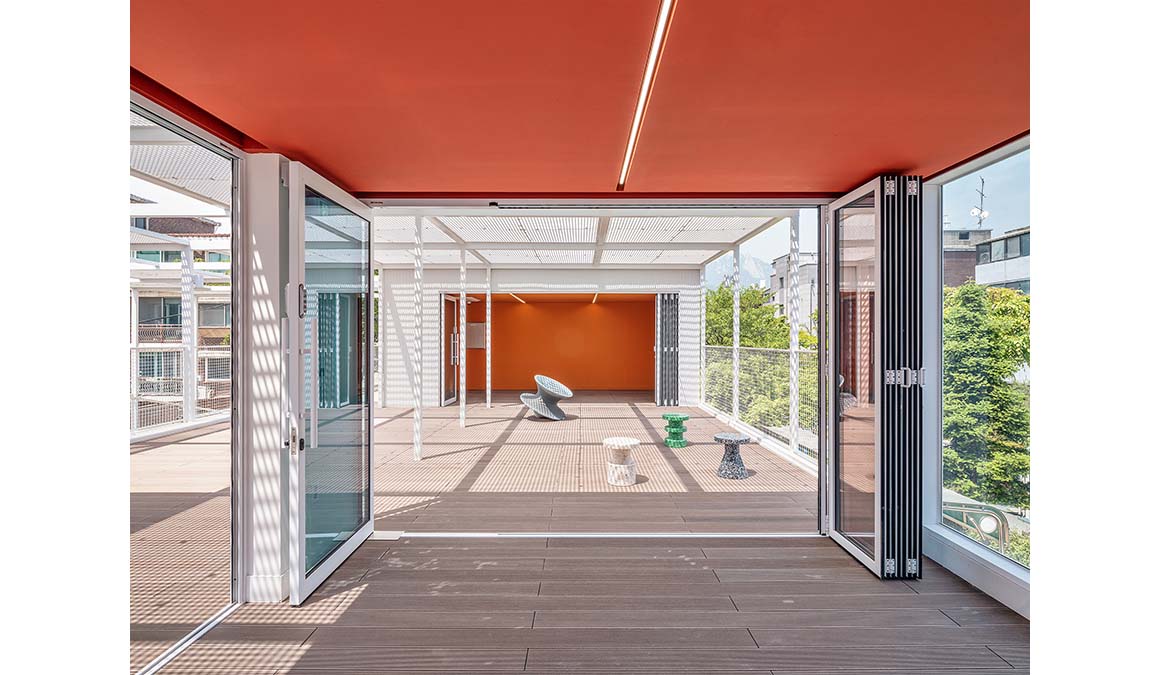
Above the courtyard and rooms, a grid-frame roof unifies the composition while varying according to the spaces below. Solid panels create sheltered ceilings over enclosed rooms, while perforated FRP panels cover the courtyard, filtering light and air. Other sections are left open entirely, framing the sky above. Through these shifts in density, the roof defines distinct spatial atmospheres while allowing the whole project to read as one continuous landscape. By day, it casts changing shadows across the floor; by night, it glows softly as a quiet beacon within the market streets.
To the north, the former parking ramp has been transformed into a timber stepped terrace linking the upper platform to the neighbouring park. It functions simultaneously as circulation, seating, and an informal amphitheatre for gatherings or performances. Here, the vitality of the market, the calm of the park, neighbourhood routines and the building’s programmes intersect naturally.
Dokebi Platform shows how modest intervention can generate meaningful public space—not through grand gestures, but through careful observation, adaptive reuse, and respect for local life.
Project: Dokebi Platform / Location: 51, Banghak-ro 10-gil, Dobong-gu, Seoul, Republic of Korea / Architect: Plot Architects (Myoungjae Kim, YeoJin Choi) / Environmental and M&E engineer: Kunchang Engineering Co.Ltd (Changjun Cho) / Contractor: DoDo Construction Co.Ltd (Jongjin Park) / Client: Seoul Metropolitan Government, Dobong District Office / Use: public, community / Gross floor area: 68.06m² / Design and construction: 2022.10~2023.5 / Completion: 2024.4.26 / Photograph: ©Bojune Kwon (courtesy of the architect)