
A Narrative of Martyrdom by Light and Shadow
In Mangyeong-eup, Gimje, where a typical Korean rural landscape unfolds, the land was once a sea. Over long periods, silt carried by the river accumulated to transform it into the peninsula’s largest granary. However, in the autumn of 1950, this fertile land, once a symbol of abundance, became the site of a horrific tragedy. Pastor Jong-han Kim and 15 congregants of Mangyeong Church were sacrificed amidst the turmoil of religious persecution and ideological conflict. Their bodies were later discovered in a nearby well and a collapsed air-raid shelter. It was seven decades later that a memorial to honor them was built on the low hill near the well, where the martyrdom took place.
In a place of erased traces with no personal belongings or records left behind, how can architecture confront history? The design opts to confront this history through an evocative sensory experience and a non-material language rather than the reproduction of concrete forms. This is an attempt to induce a narrative experience for visitors, embedding the memory of the site into the space through the architectural device of light and shadow.
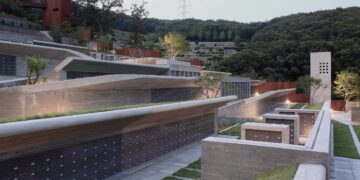
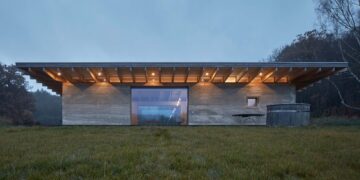
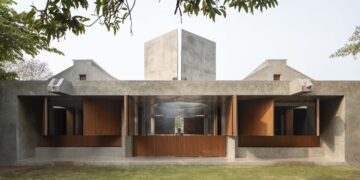
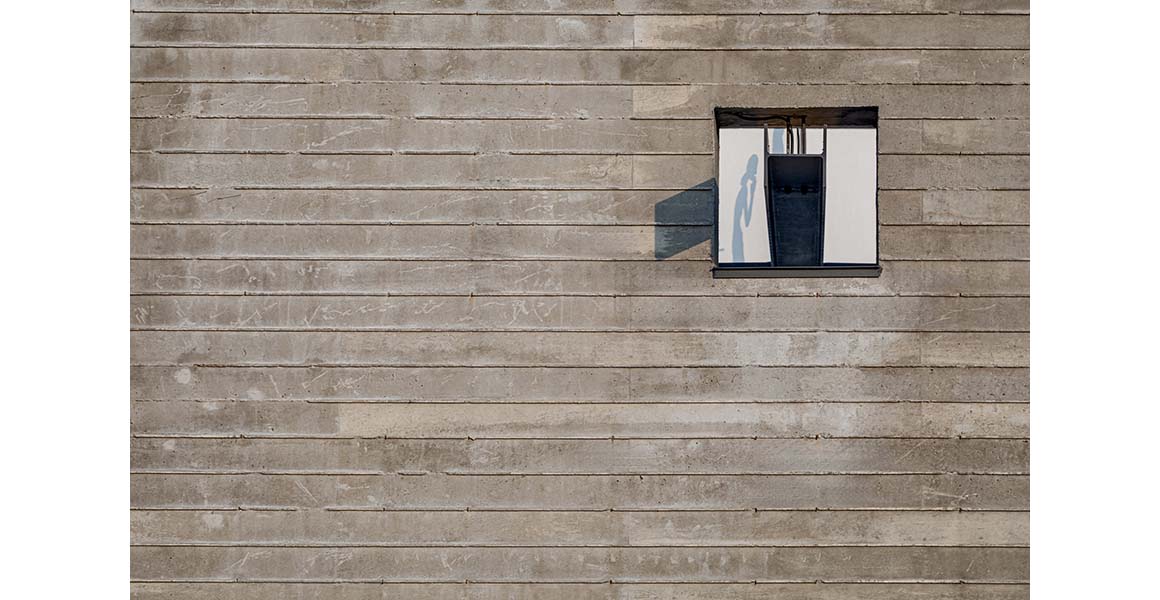
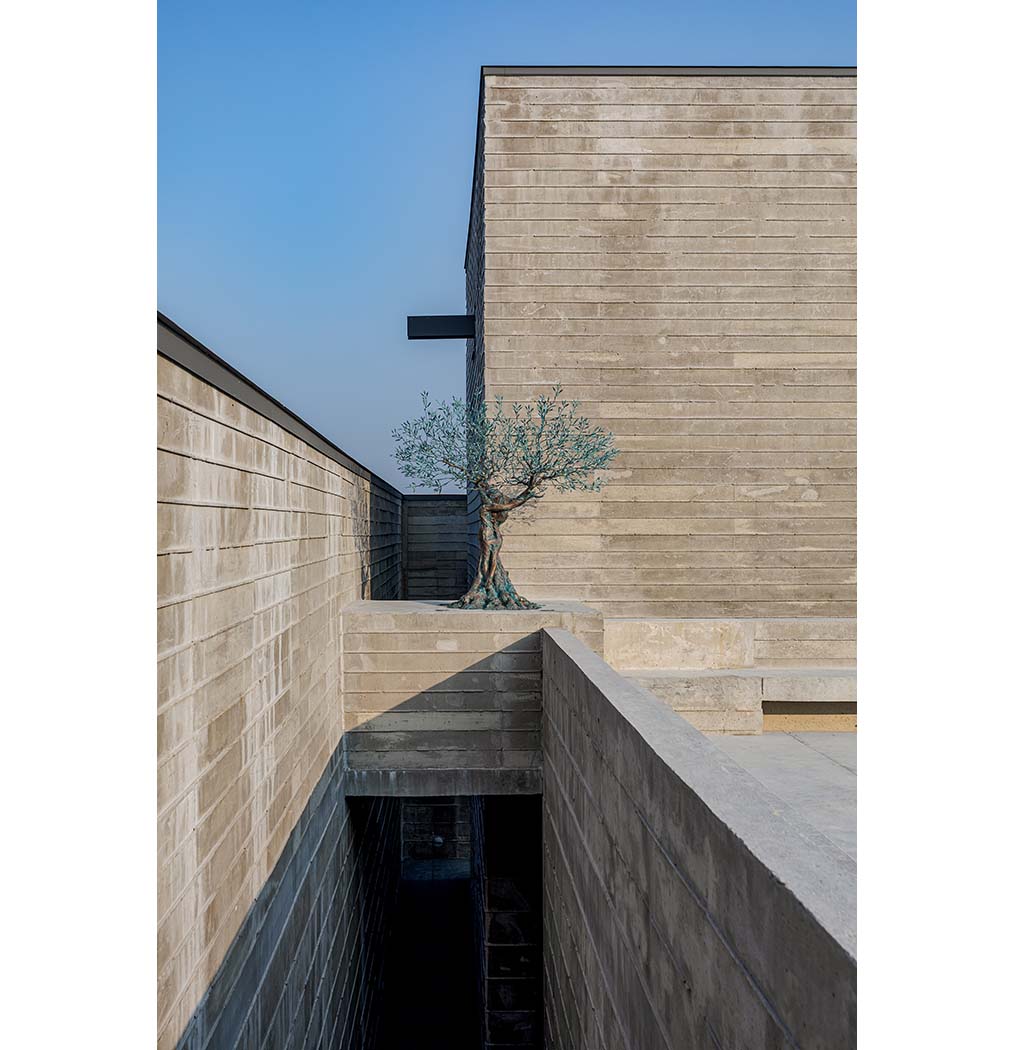
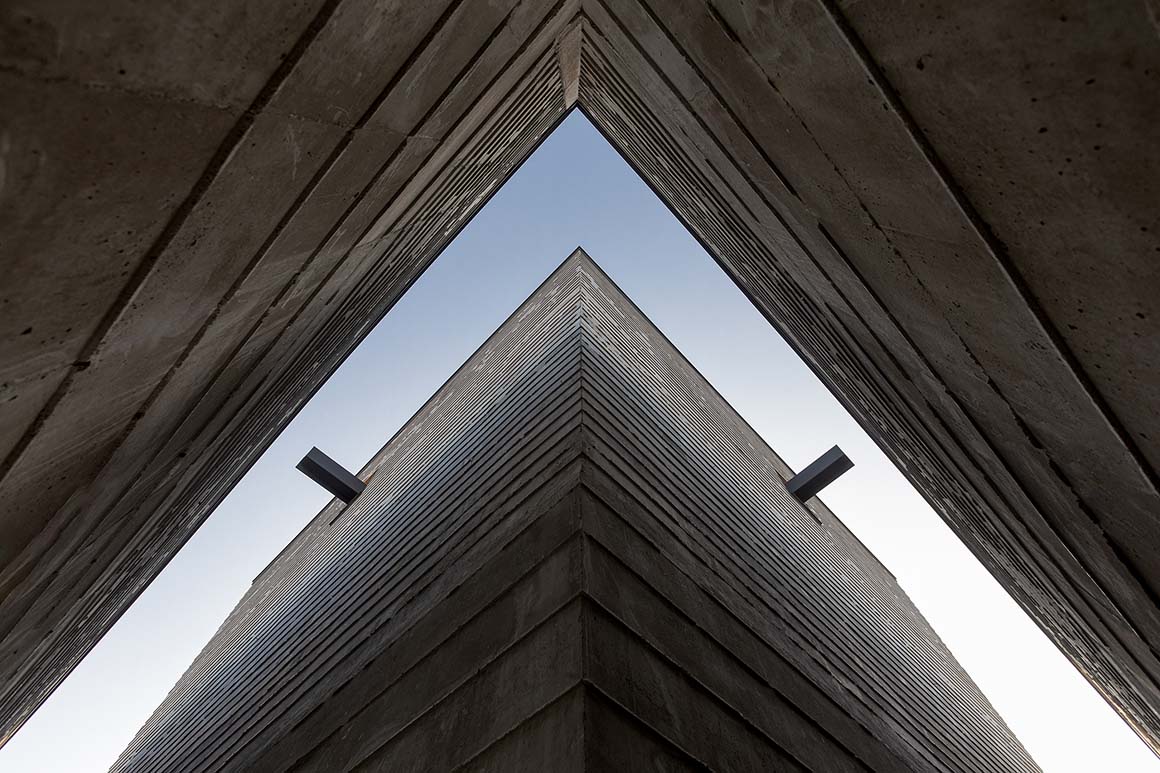
The exterior is extremely restrained. With no distinguished formal qualities or visual ornamentation, only the heavy mass of exposed concrete keeps a silent watch on the hill. The rough and crude surface, bearing the traces of wood-grain formwork, evokes an air-raid shelter excavated from underground. In this way, the building serves as a vessel that silently accepts the tragic history of this land rather than attempting to explain it.
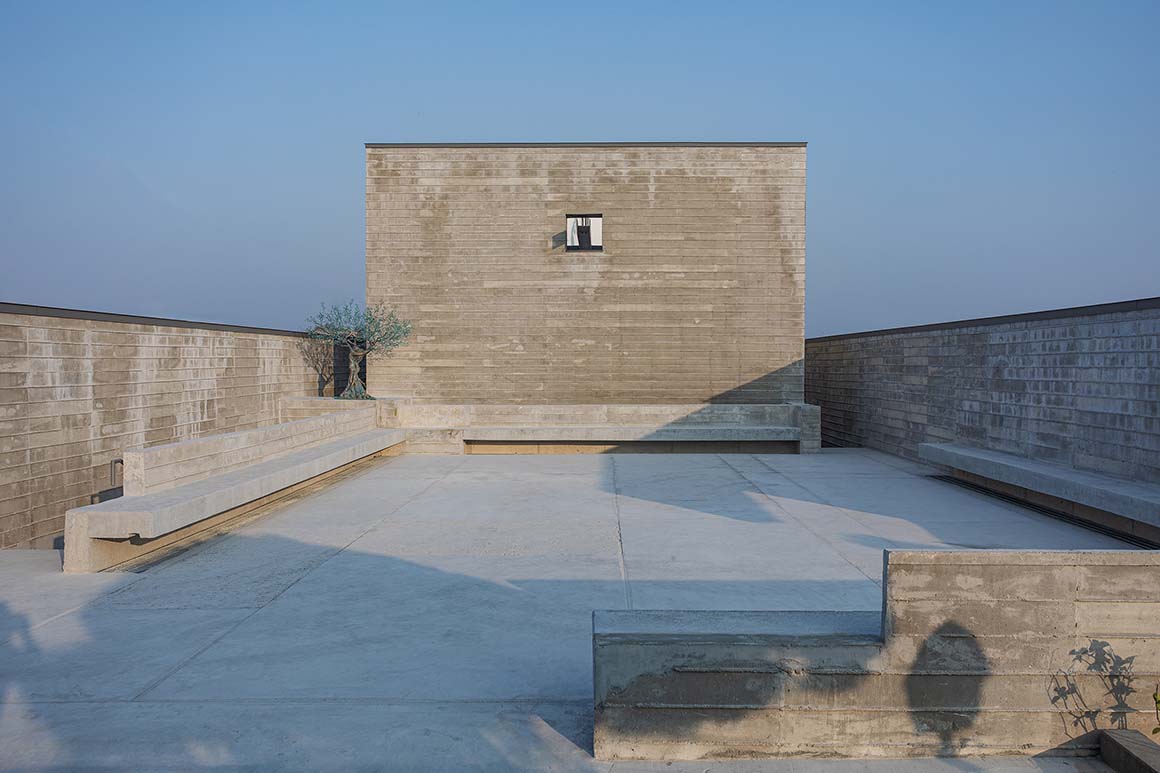
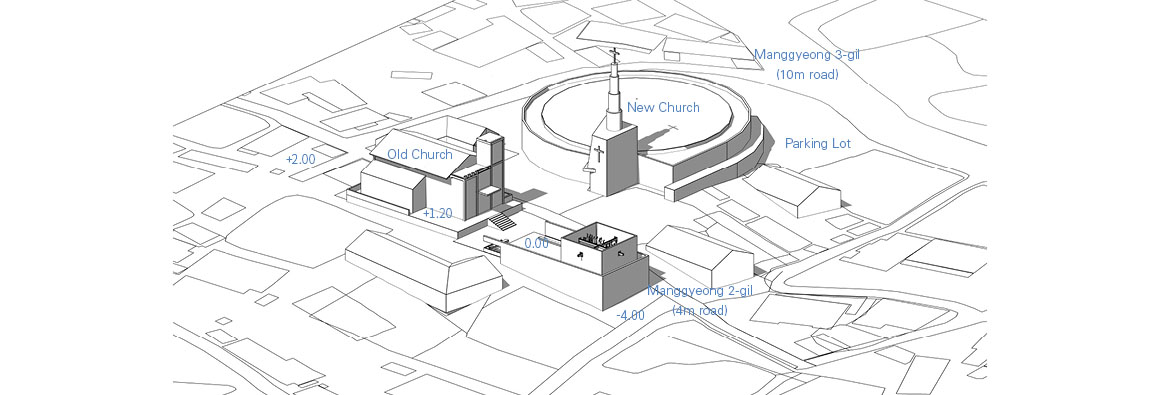
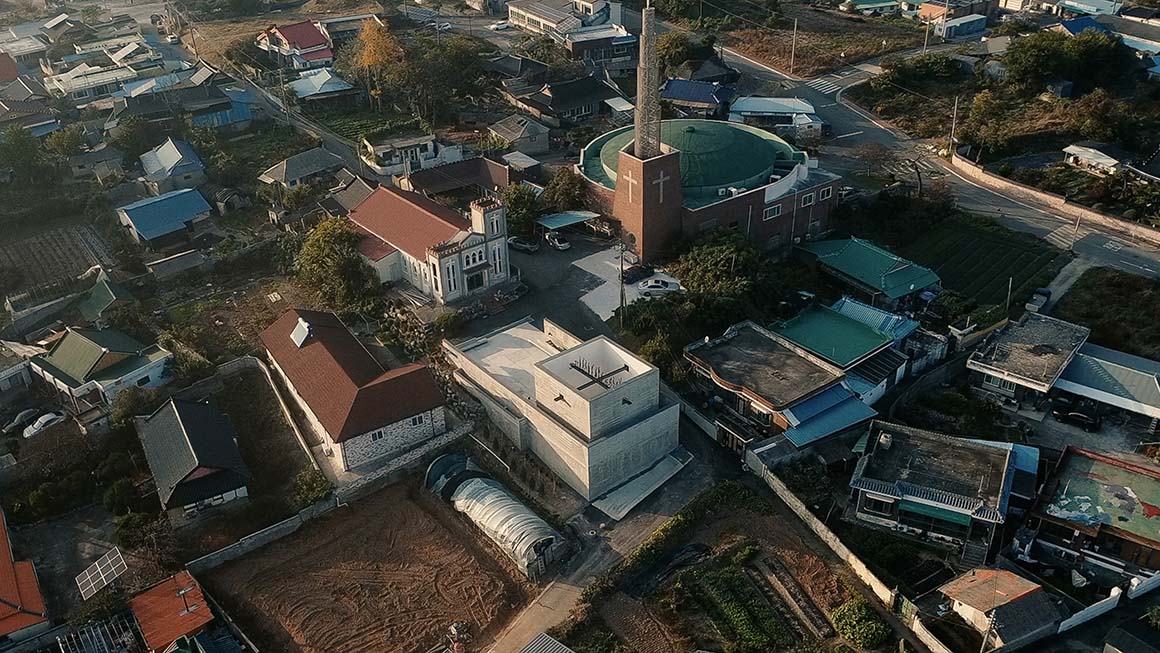
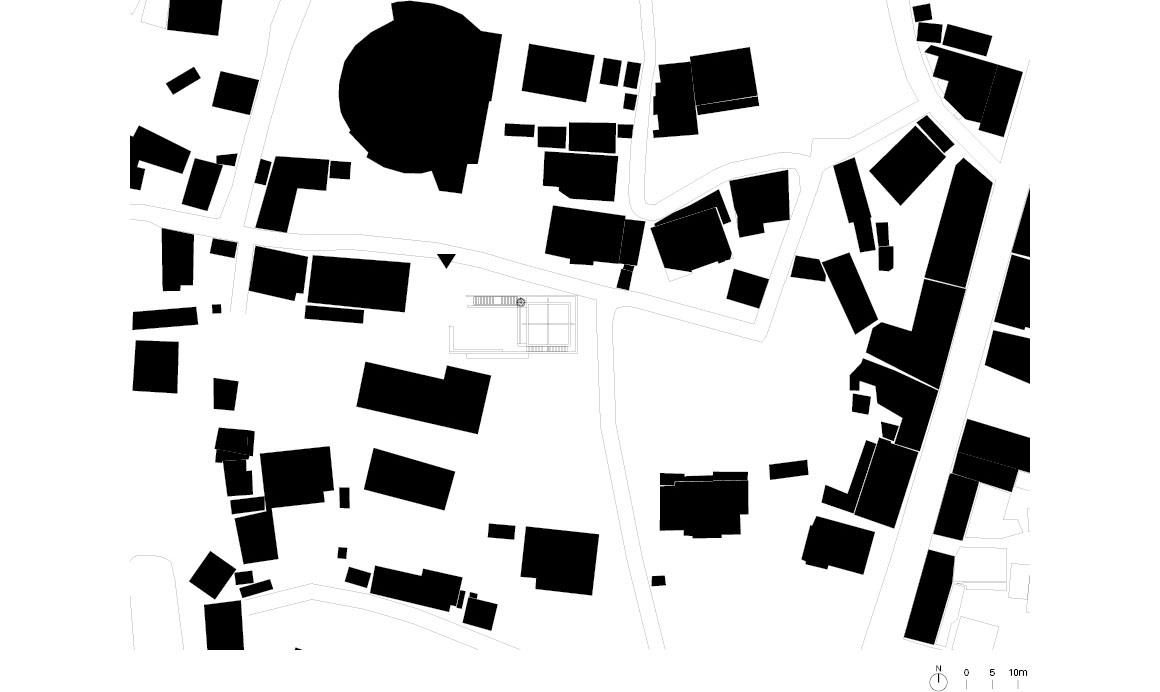
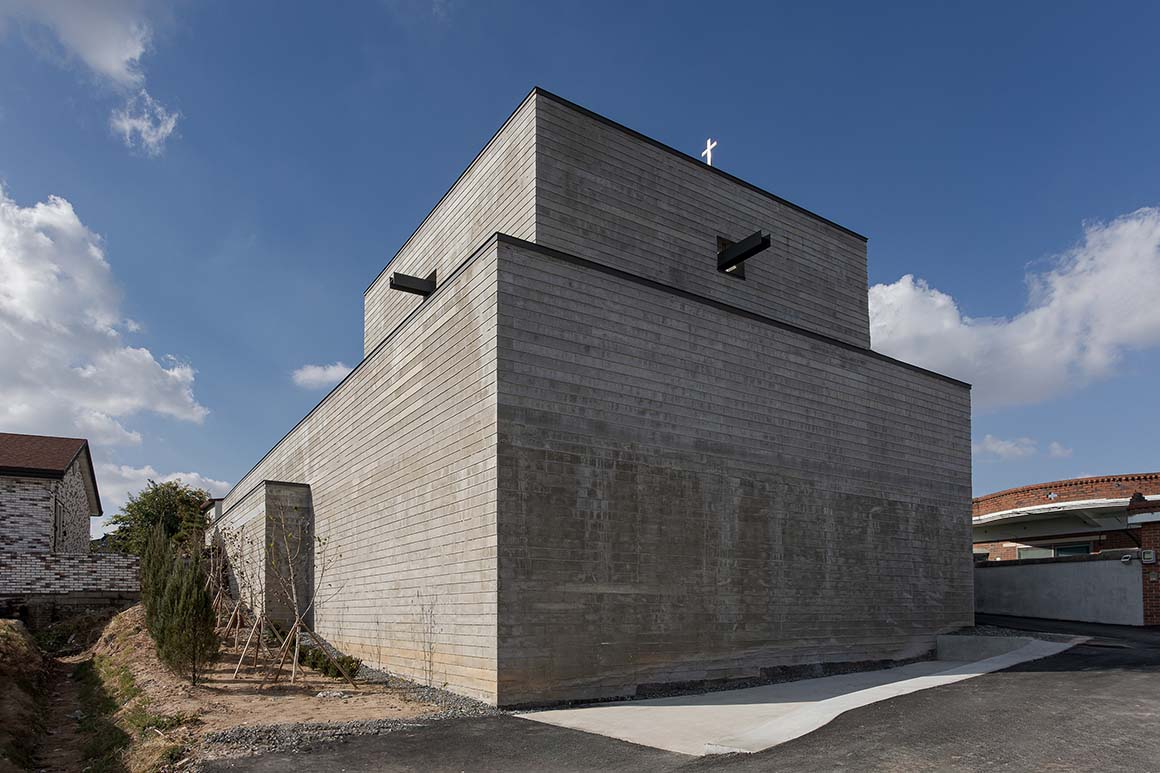
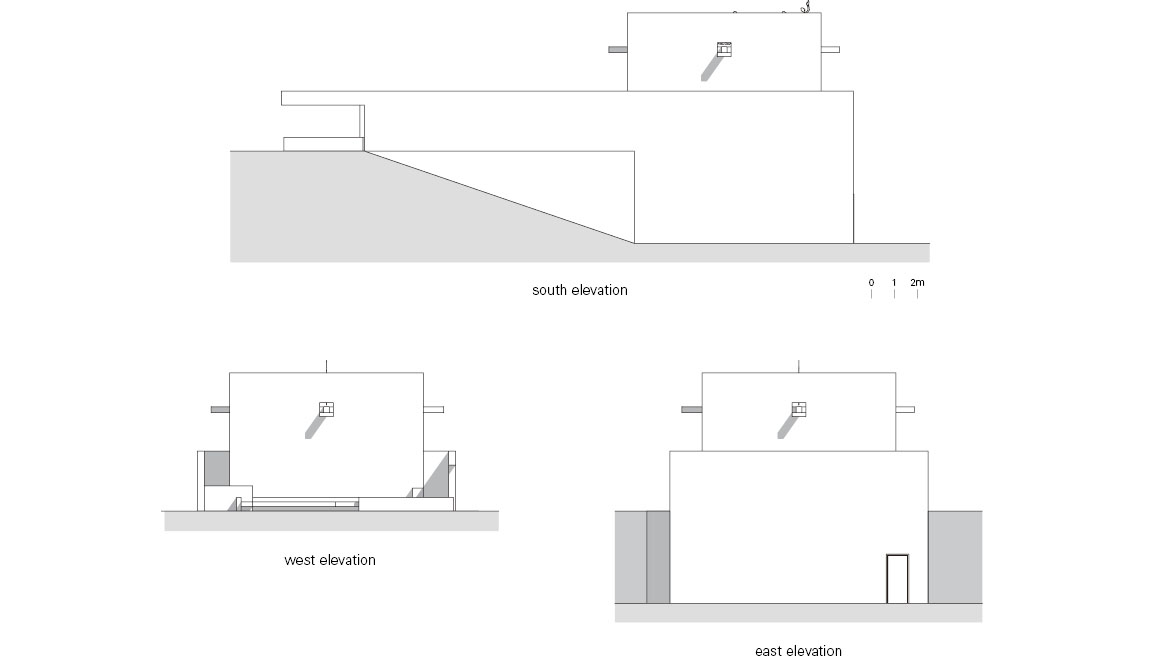
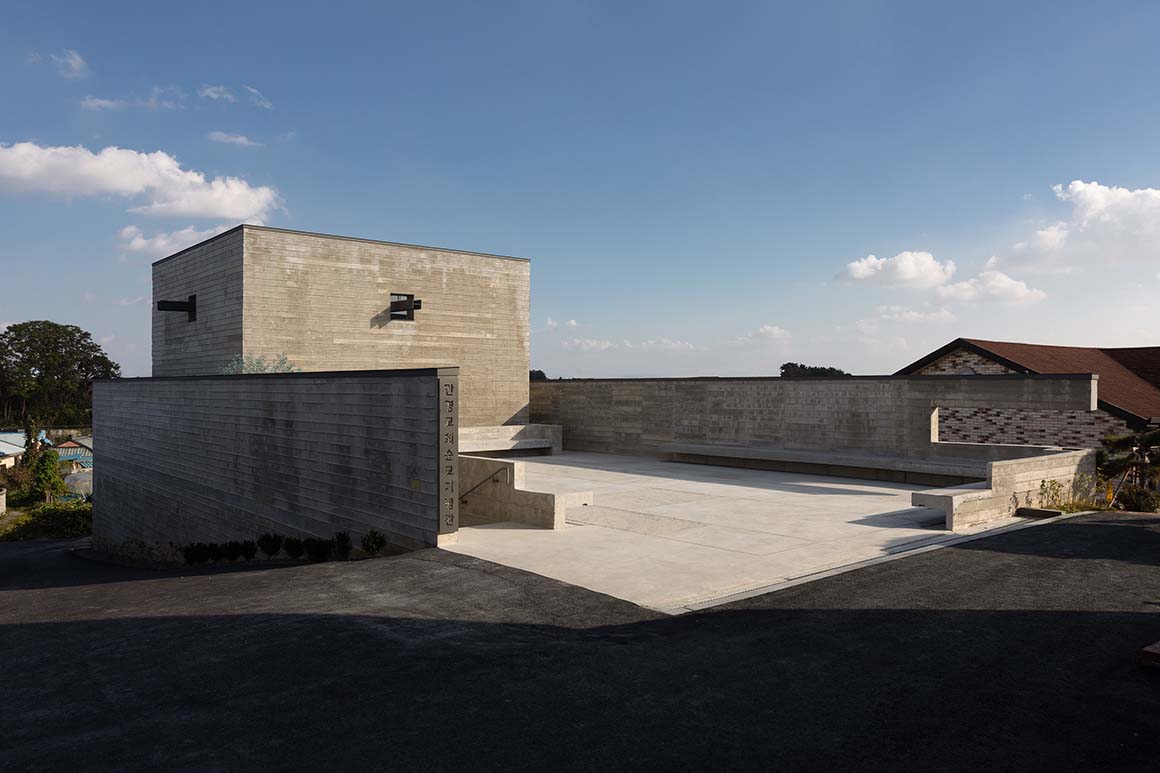
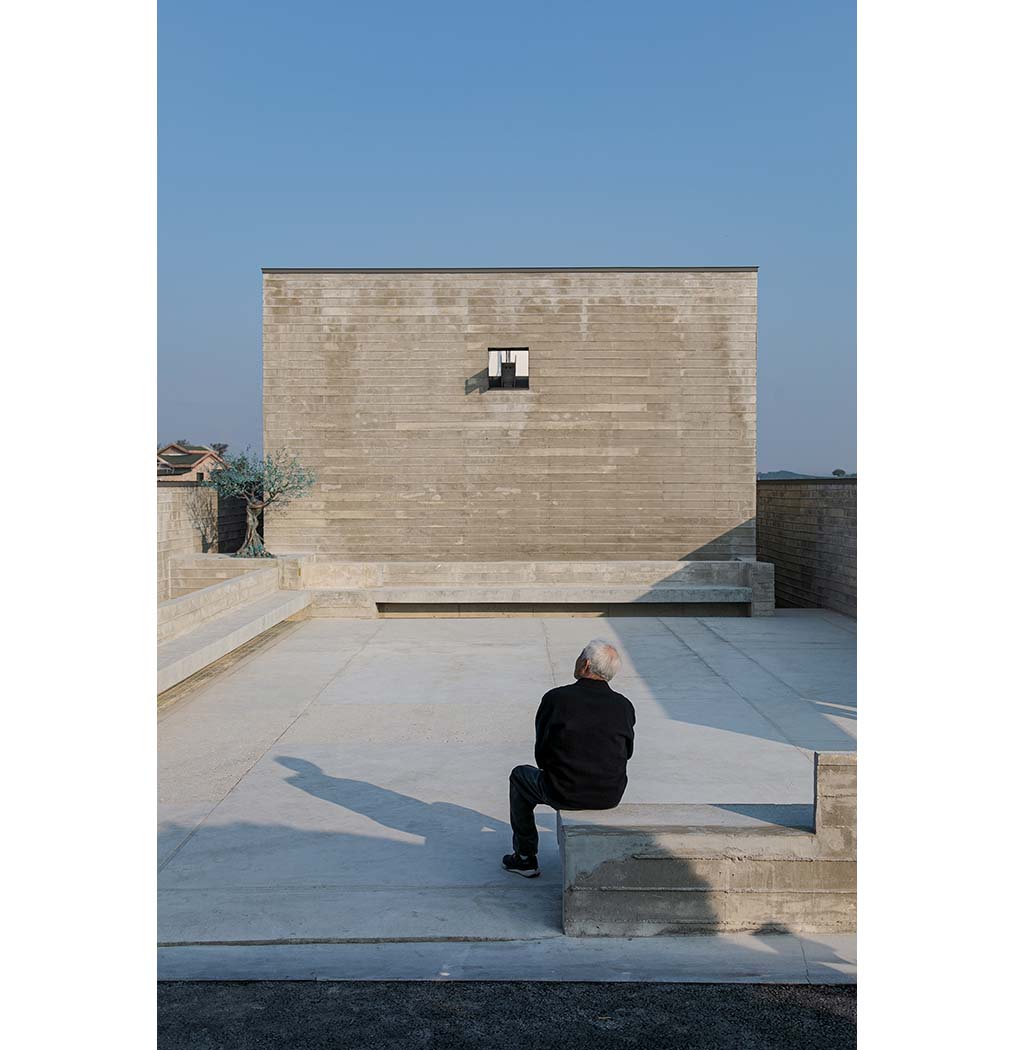
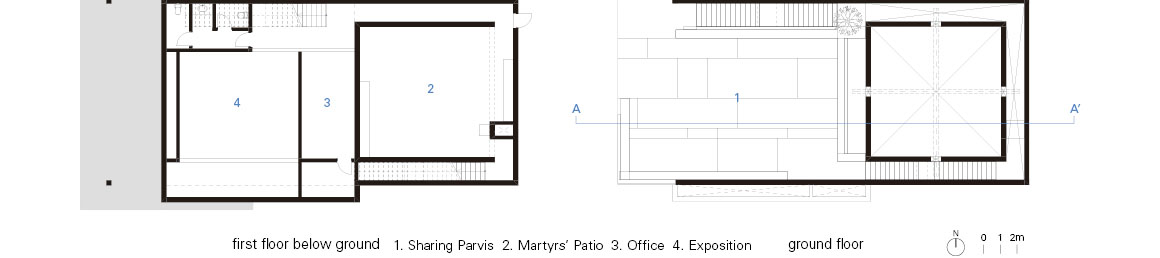
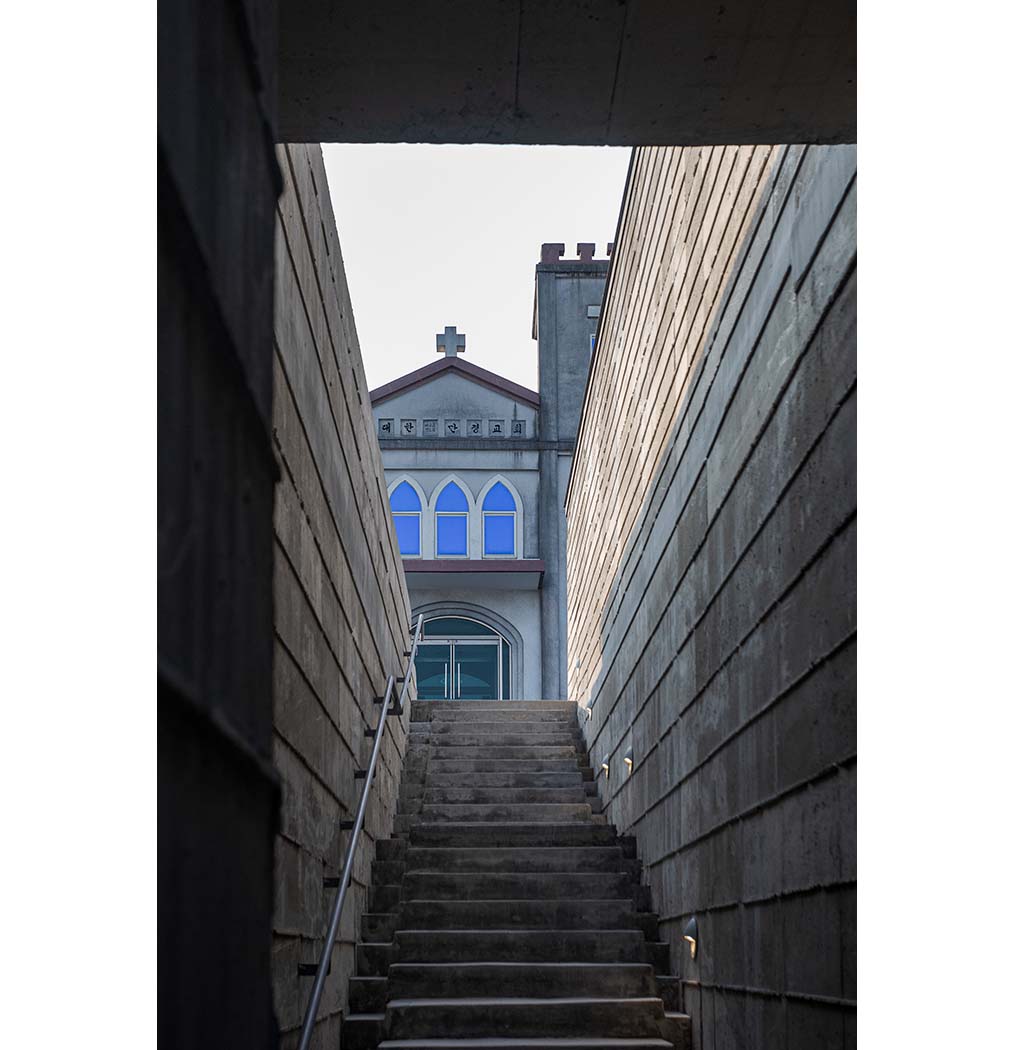
The memorial is simply composed of two external plazas, upper and lower. It separates the realms of daily life and memory through a vertical hierarchy of ground and underground, allowing the existence of the martyrs to be revealed within the space through light and shadow in the flow of time. This structure leads visitors on a sensory journey, beginning from the tranquility of the ground and gradually descending into the spiritual presence of the underground.
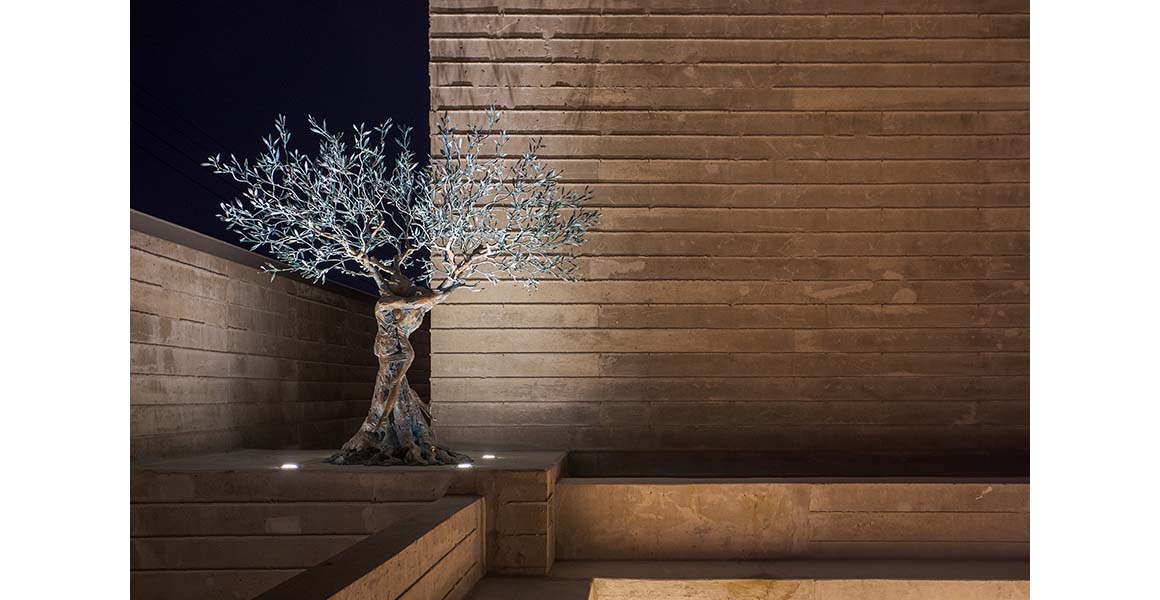
At the threshold of this journey lies the ‘Sharing Plaza’, situated between the old church and the memorial. Reminiscent of both the inner courtyard of a Hanok surrounded by toetmaru and a small urban piazza in Italy, this open space is a place of harmony for local residents and pilgrims. The ‘Tree of Life’ statue by sculptor Andrea Roggi stands on one side, symbolizing the flow of life continuing beyond past wounds and completing the landscape. Visitors pass through this plaza to finally descend into the Martyr’s Patio, the abyss of memory.
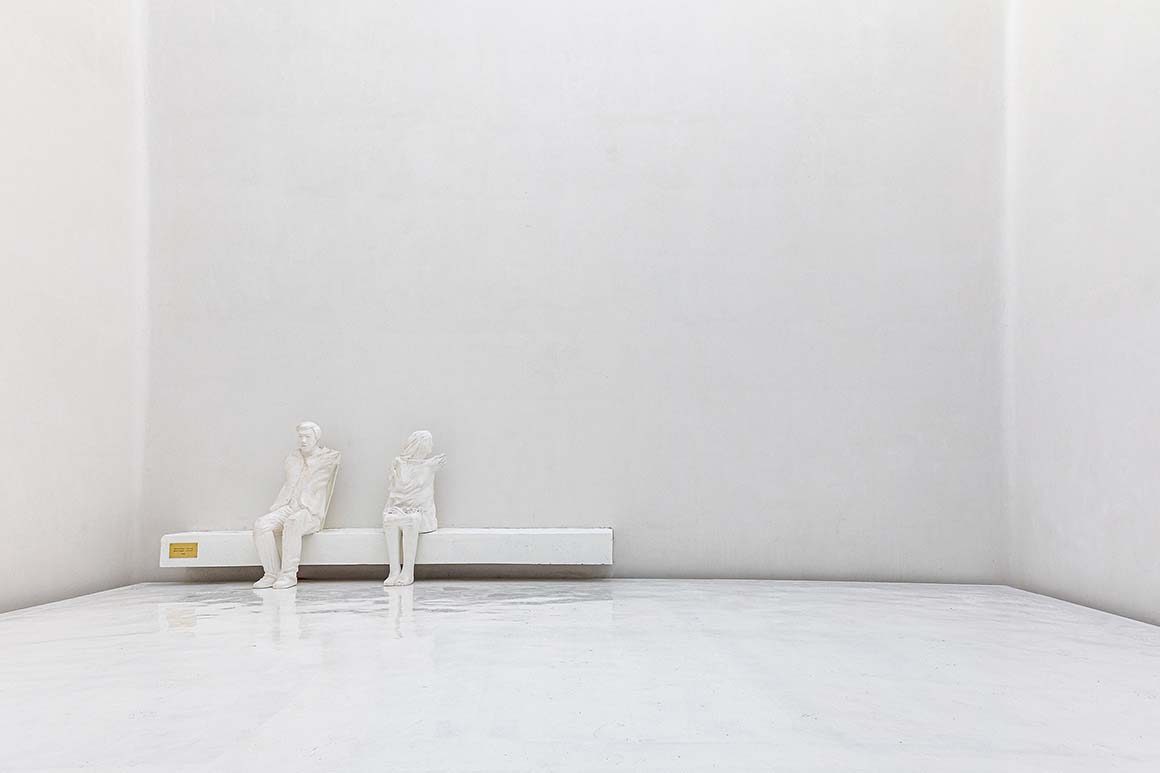
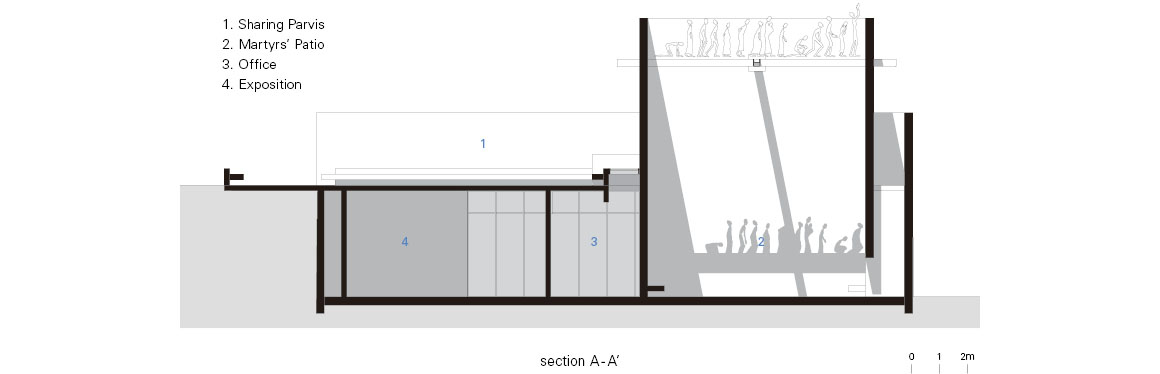
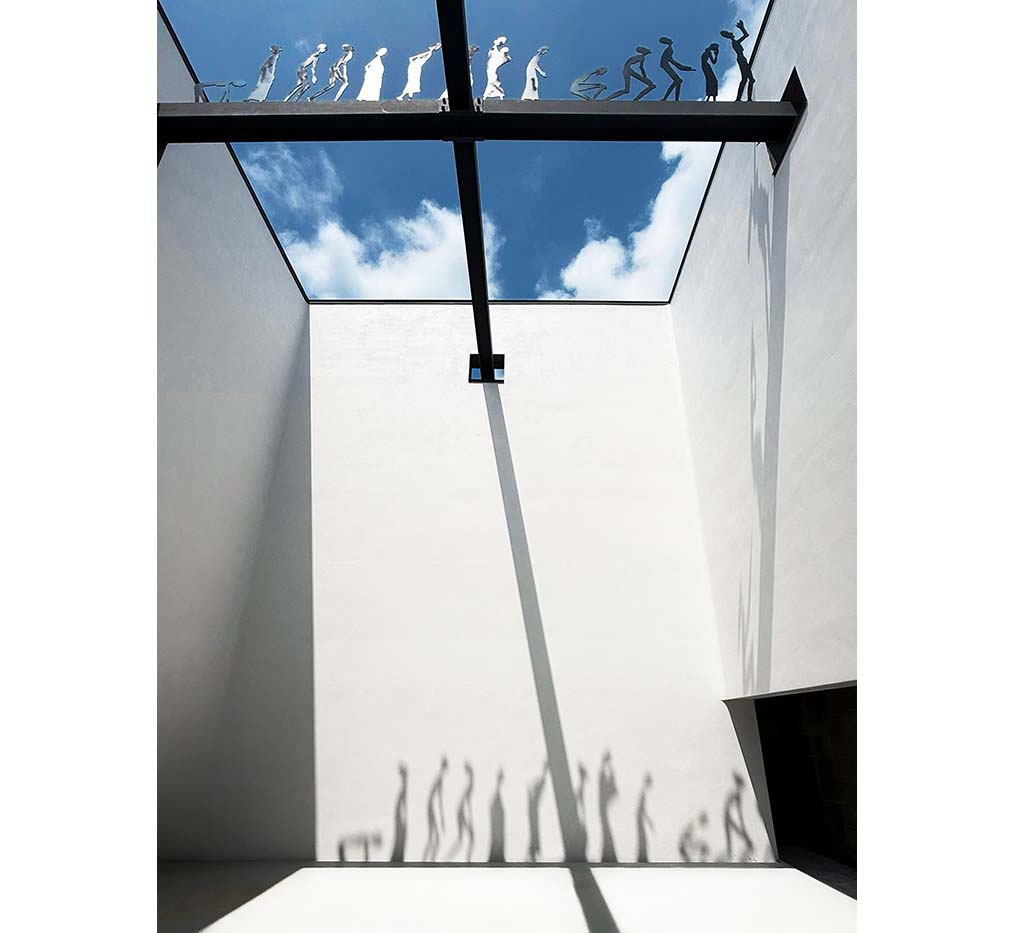
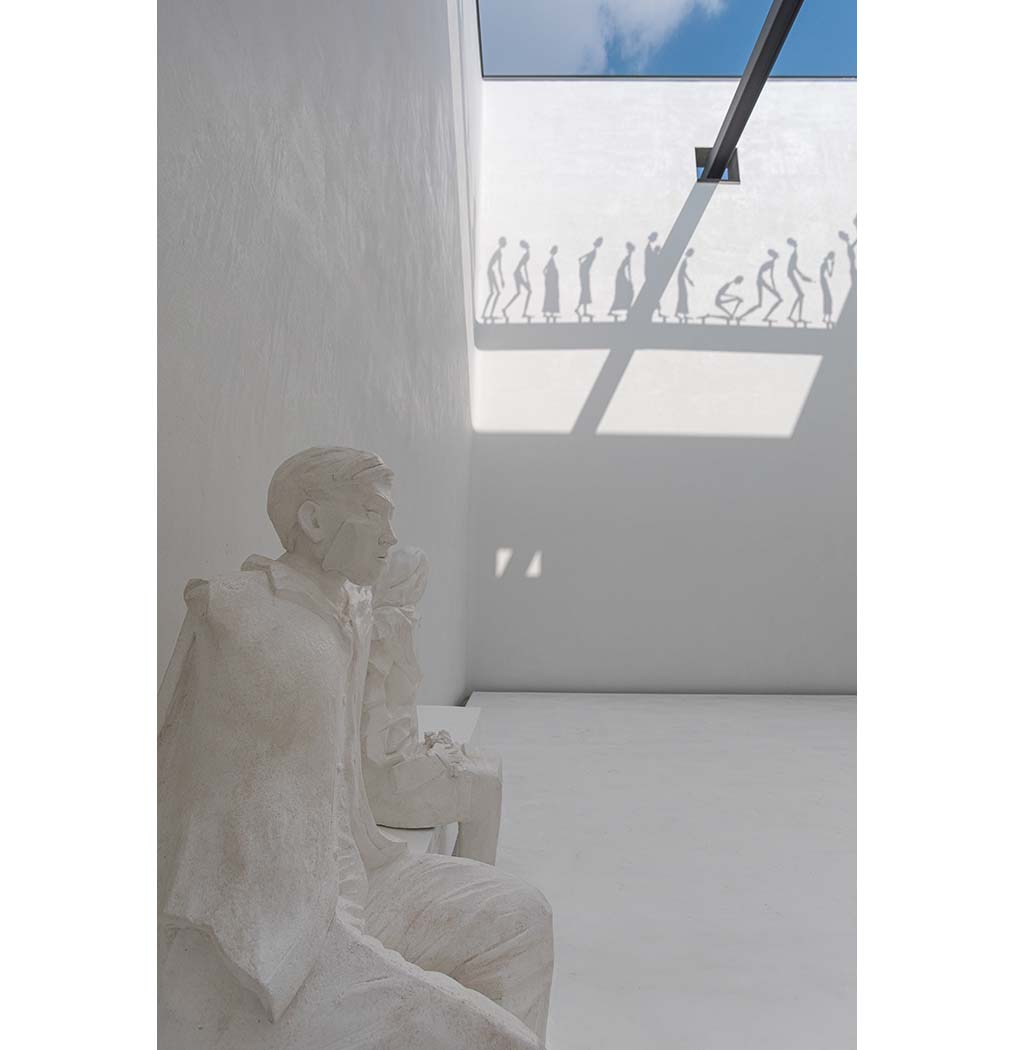
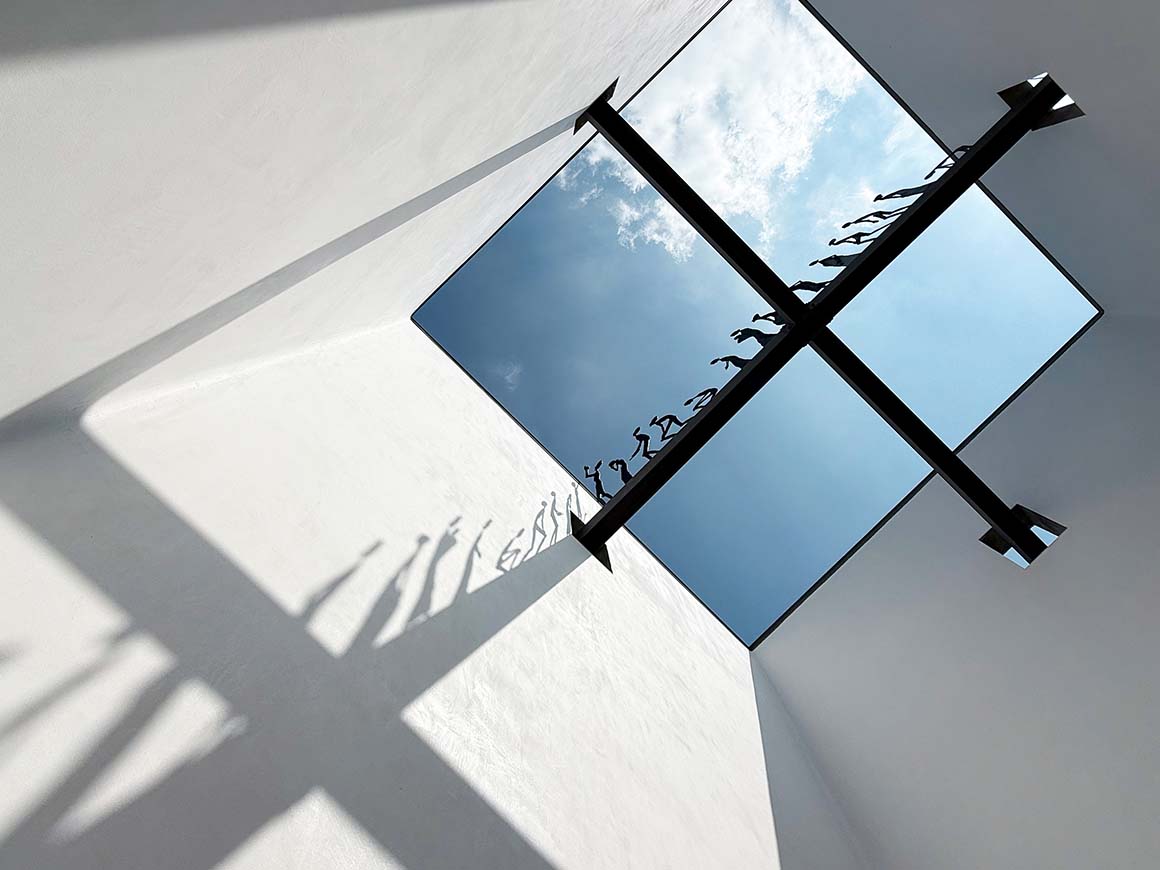
Upon entering, the contrast of materiality vividly reveals the tension of the space. The lower Martyr’s Patio, which uses the well—the actual site of martyrdom—as a spatial motif, is finished with pure white plaster and urethane coating, unlike the dark and rough exterior. The glare effect caused by the excessive reflection and diffusion of natural light shakes the visitor’s perception and creates a moment of purification. Here, the sense of mystery reaches its peak with the addition of a white concrete sculpture by Ignazio Campagna, crossing the boundary between life and death.
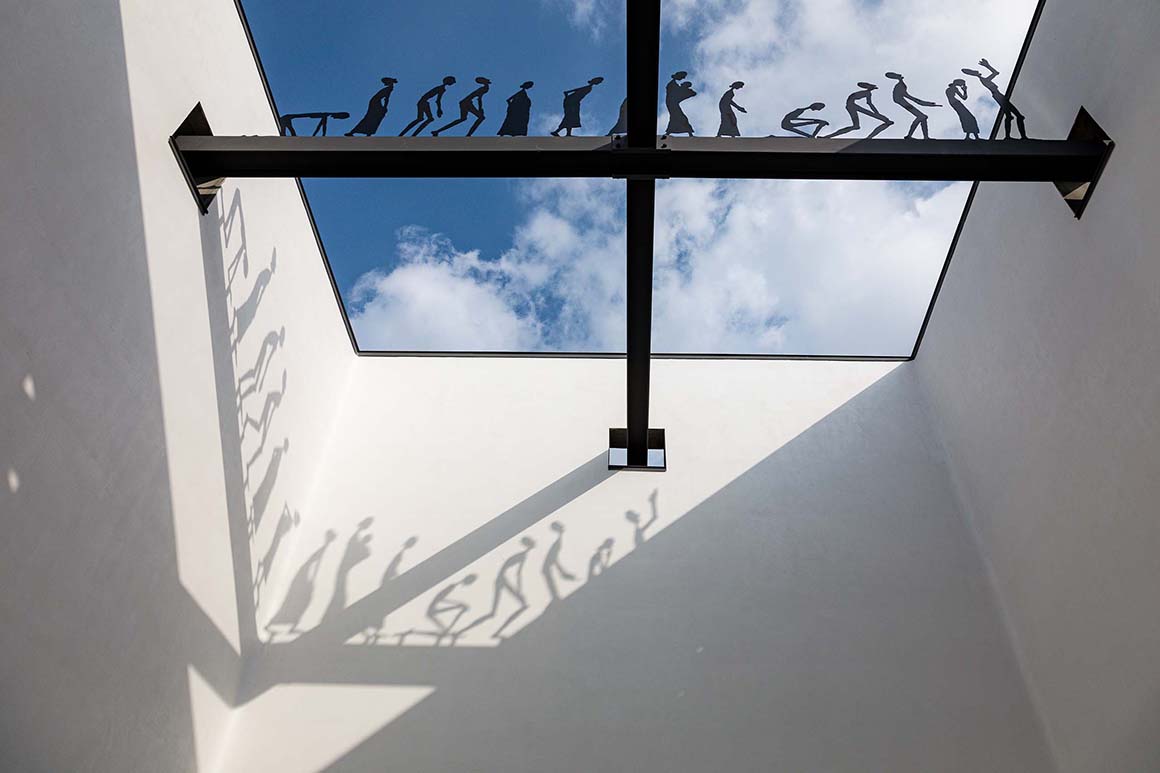
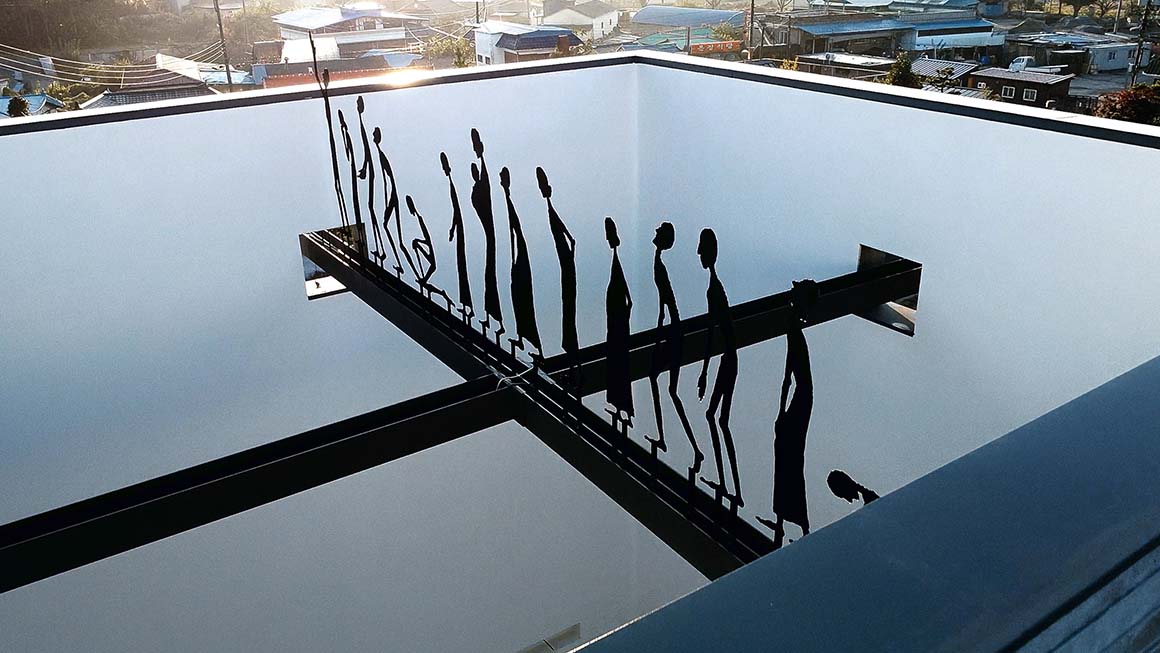
This plaza, open to the sky, functions as an astronomical device accurately aligned with the meridian and precisely determined according to the site’s coordinates of 36.5° North Latitude. A cross-shaped steel beam is installed over the void, topped with metal sculptures by Jeeyean Shim representing the 15 martyrs. Depending on the sun’s trajectory, their shadows repeat a cycle of generation and disappearance along the walls. Especially at noon on the Summer Solstice, when the meridian altitude is at its peak, the silhouettes of the martyrs are cast at life-size at the visitor’s eye level, creating a powerful spiritual presence. Unlike static statues, these shadows reveal themselves only “when heaven permits,” granting a non-material memorial that leaves a deep symbolic resonance.
Project: Mangyeong Church Martyrs Memorial / Location: 276-3 Mangyeong-ri, Mangyeong-eup, Gimje-si, Jeollabuk-do, South Korea / Architects: AEV Architectures (Woojin Lim, Yunseok Kwak) + Jungim Yoo + TONN Architect (Yunhee Lee) / Participating artists: Andrea Roggi, Ignazio Campagna, Jeeyean Shim, Soon-phil Maeng / Client: Gimje Mangyeong Church / Use: church / Site area: 389m² / Bldg. area: 131.44m² / Gross floor area: 95.43m² / Structure: RC / Finishing: exposed concrete with timber formwork, STO finish / Design: 2022.11.~2023.12. / Construction: 2024.9.~2025.10. / Completion: 2025.11. / Photograph: ©WooJung Park (courtesy of the architect)