
A house for inconvenient pleasures
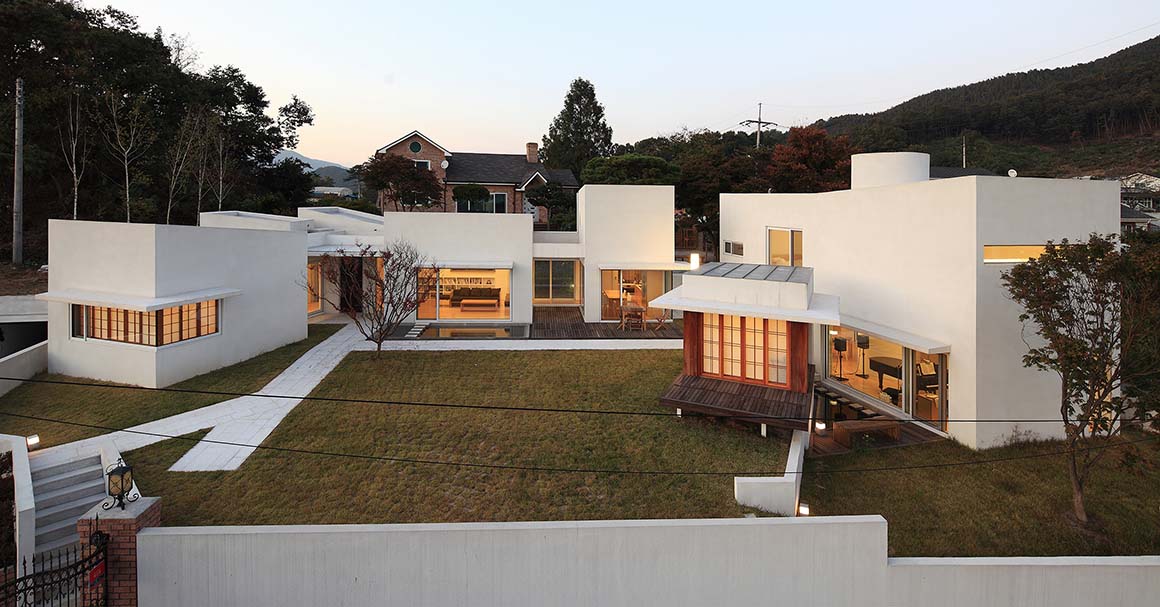
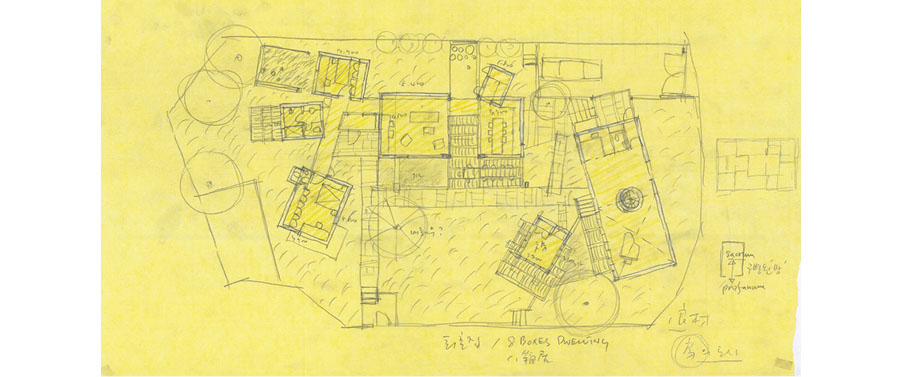
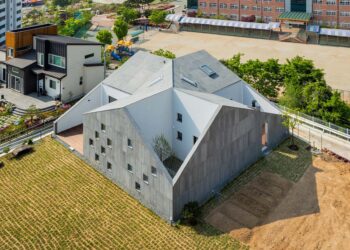
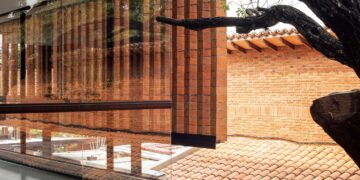
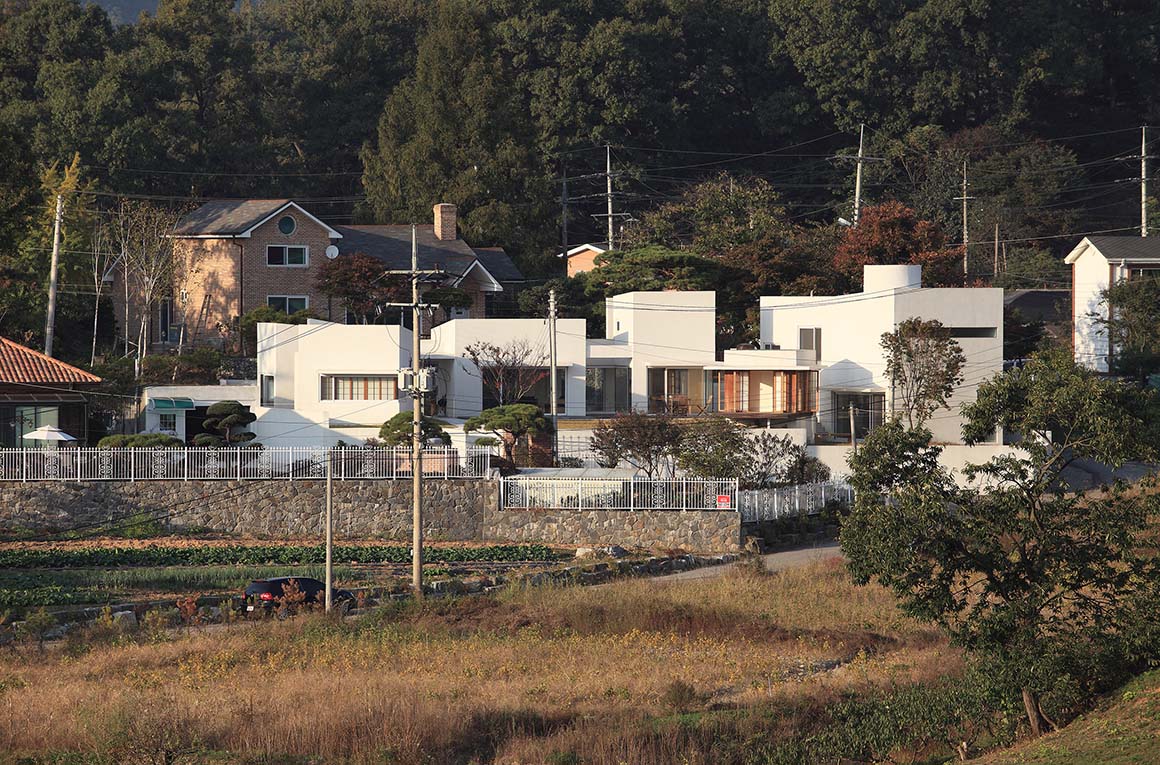
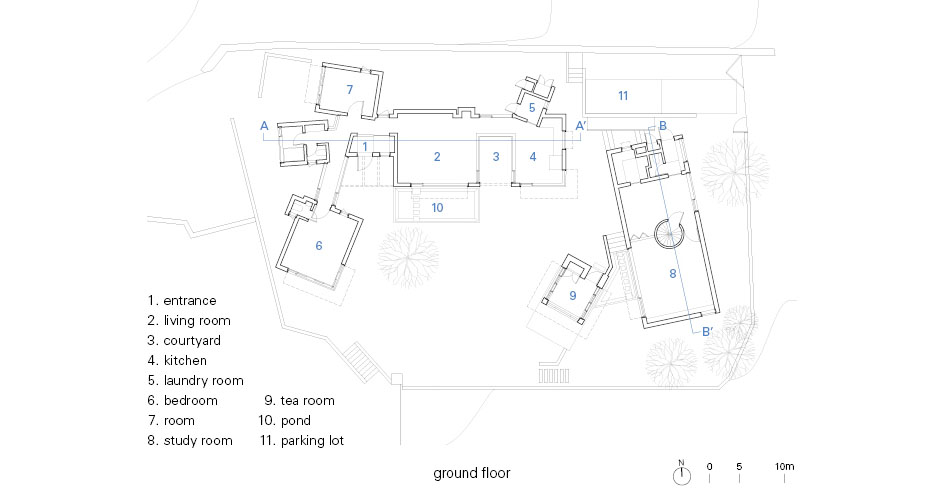
This house was for a professor couple with a progressive disposition, who wished to live with his son, a jazz pianist, in a place near the house of the professor’s mother who lived in Toechon. Each of the couple scholars would need an independent room, in addition to another independent room for their son. As such, the way each of the family members lived became a crucial precondition for the design of the house. In other words, separate structures, which are independent of each other, should form a house for the family. Also, because this house is a farm house in accordance with the relevant building law, the applicable provisions stipulate that the main building and the extension building shall not exceed 100m and 65m² respectively. One of the reasons for making a house of detached rooms was partly due to the legal requirements.
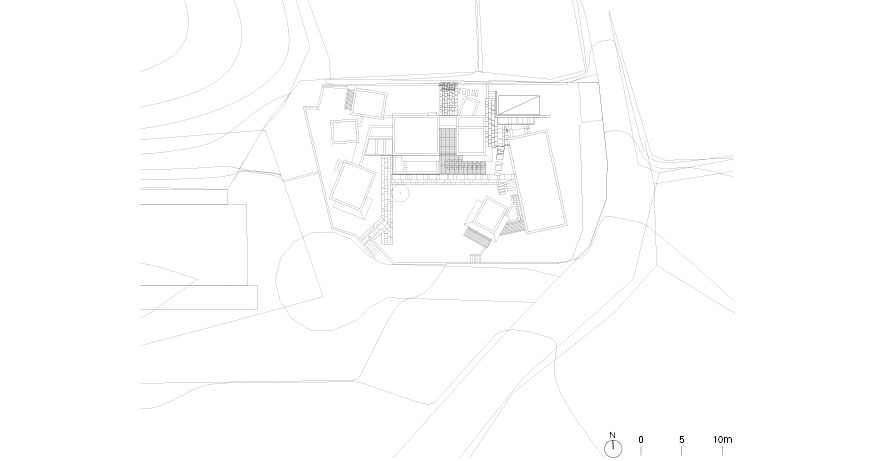
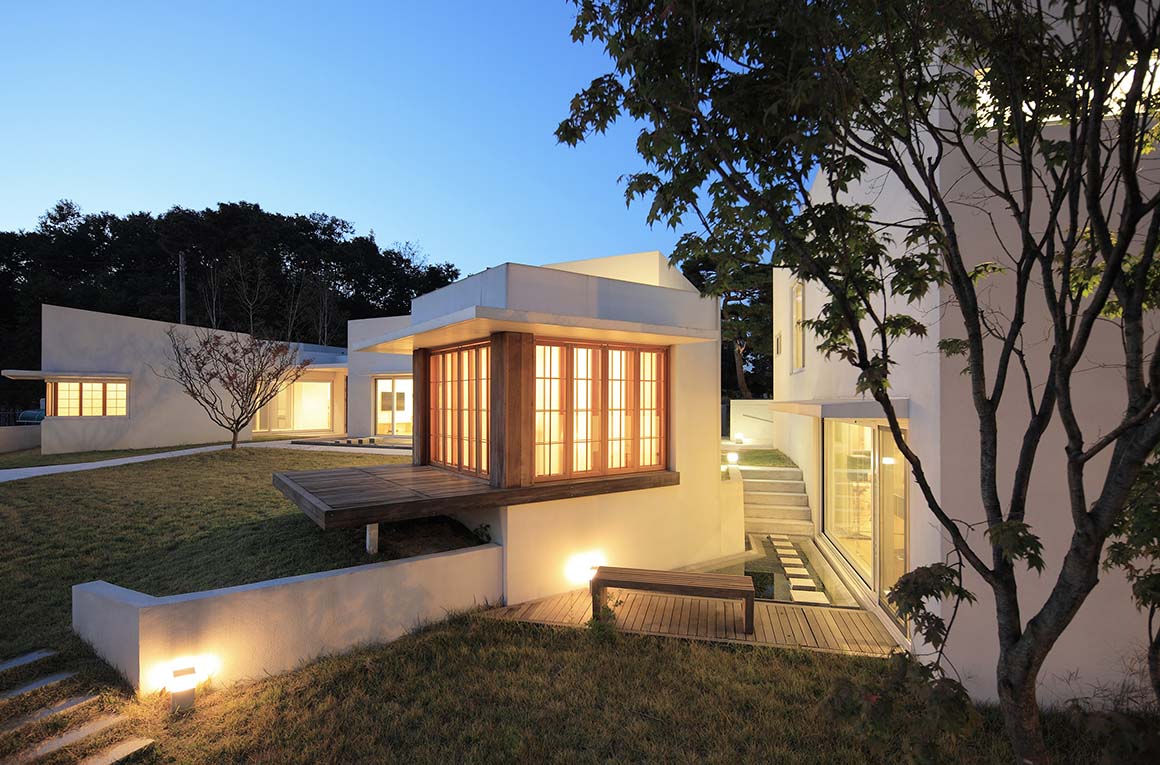
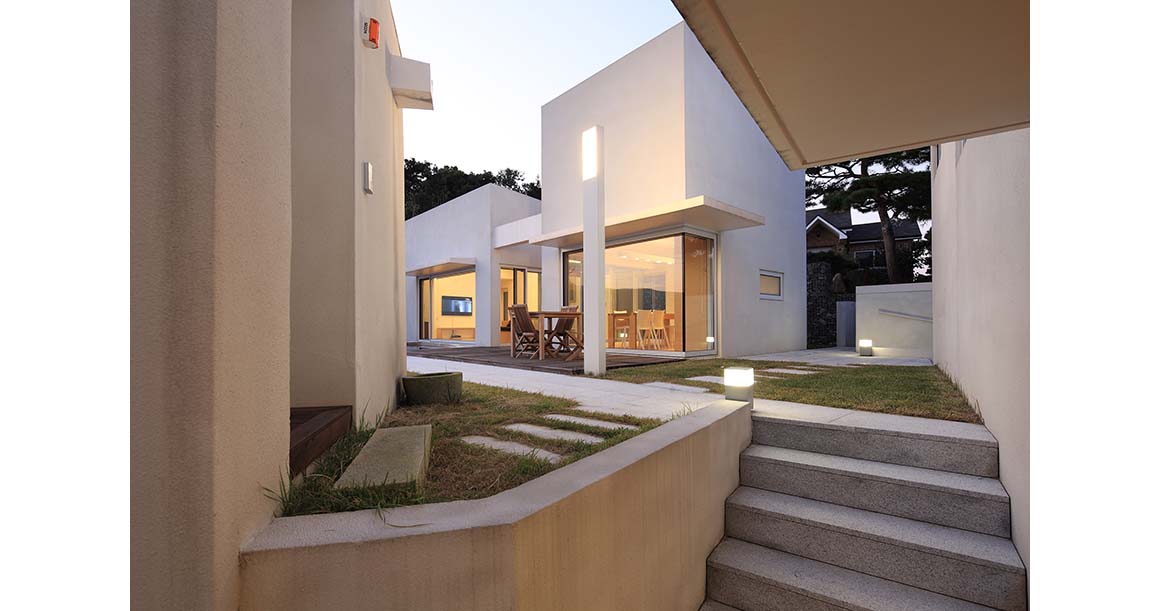
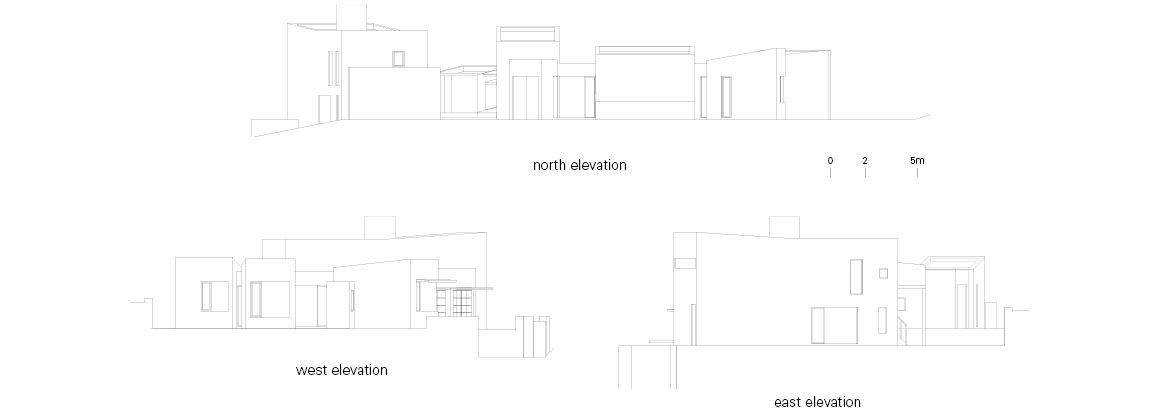
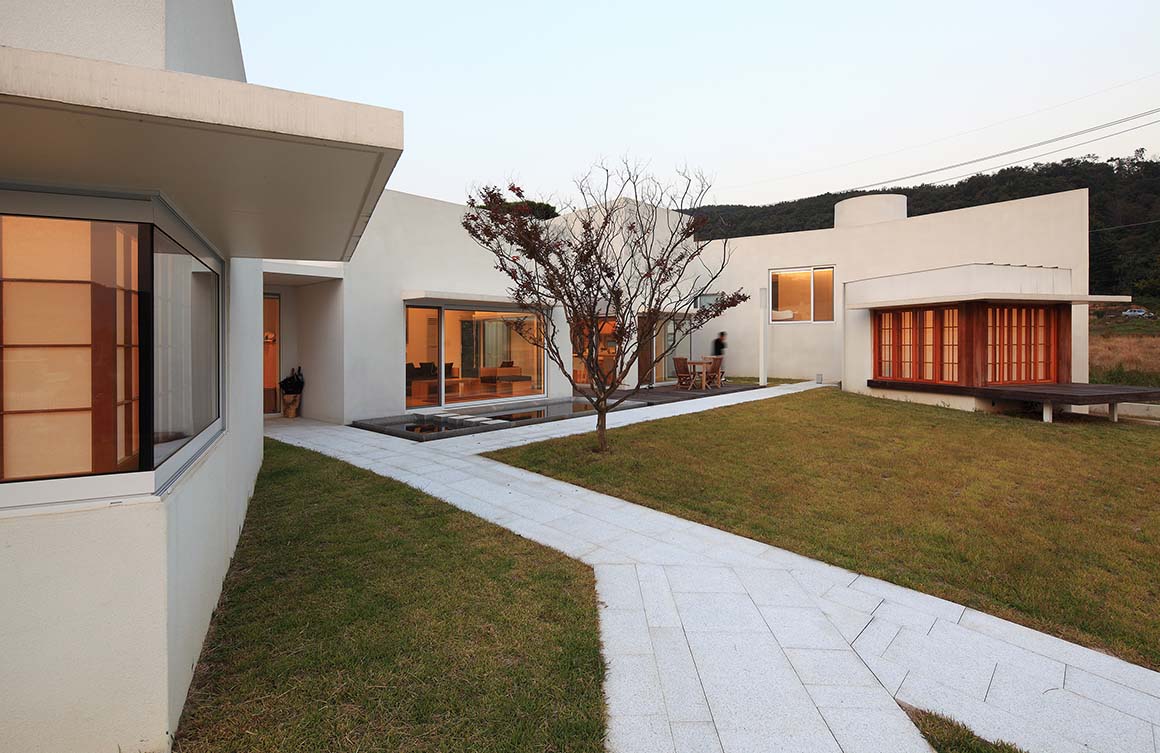
The fundamental concept for this house, however, was based on the traditional notion of the house for a home. Our traditional house had long been a collection of several rooms. When our ancestors said a house of one kan(a unit for 3.3m²) and a house of 100 kans, they referred to a total floor area of the rooms of a house. Each of the rooms were called not as a living room, a bedroom, a study, or a bathroom according to the functions used in the western world, but as an inner room, an opposite room, a gate-side room, a back room (for a lavatory, which was in the backyard of the house) according to the location of rooms. Our traditional house was, like this, a set of rooms without specific purposes. What was meant by this was that a room was independent of other room, and each room was versatile. When people spread out the bedding, the room becomes a bedroom; when a table, the room becomes a dining room; when a desk, it became a study; and when people spread out a mattress, it becomes a playroom. In other words, the room was an undefined room in emptiness. Like this, Koean ancestors had already translated one of the new keywords of the contemporary architecture into their practical life.
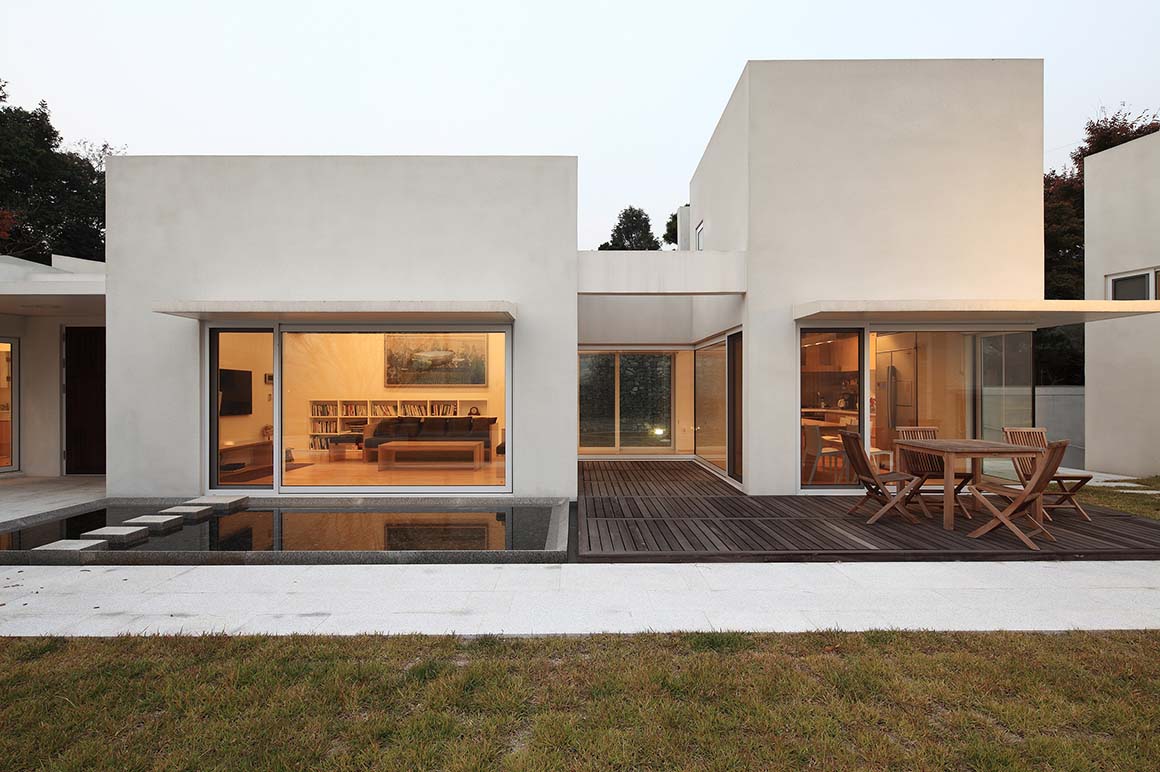
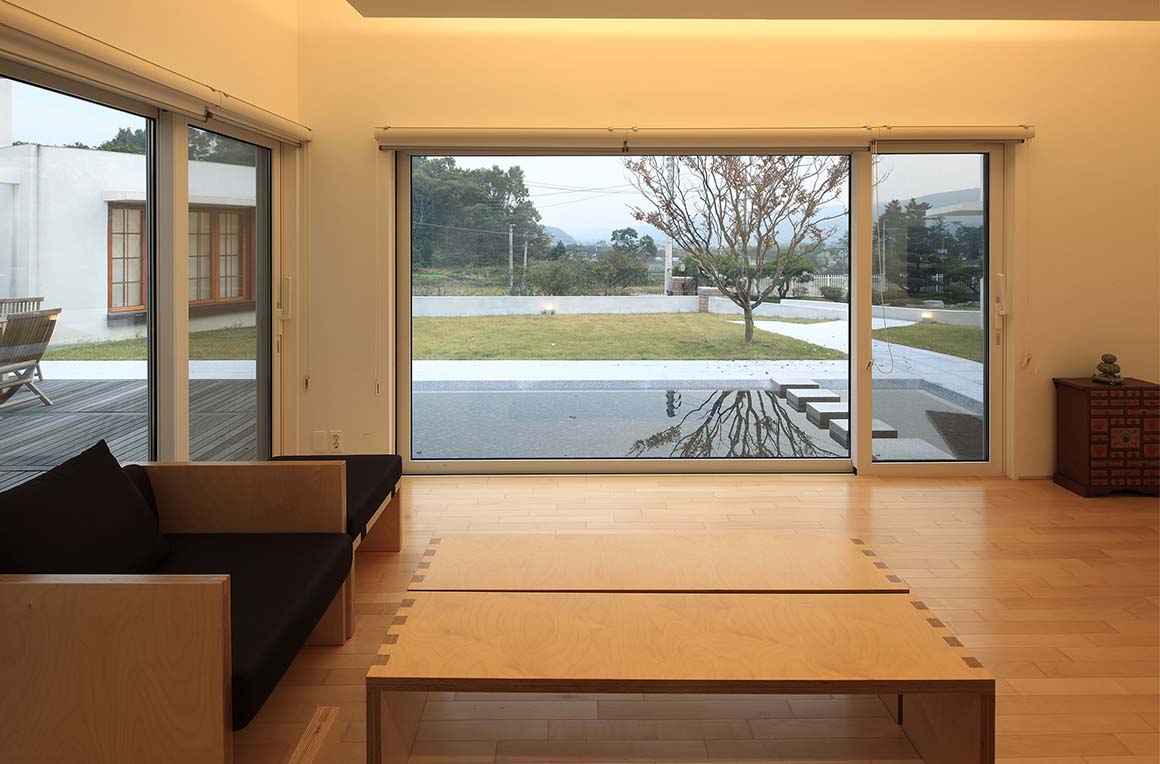
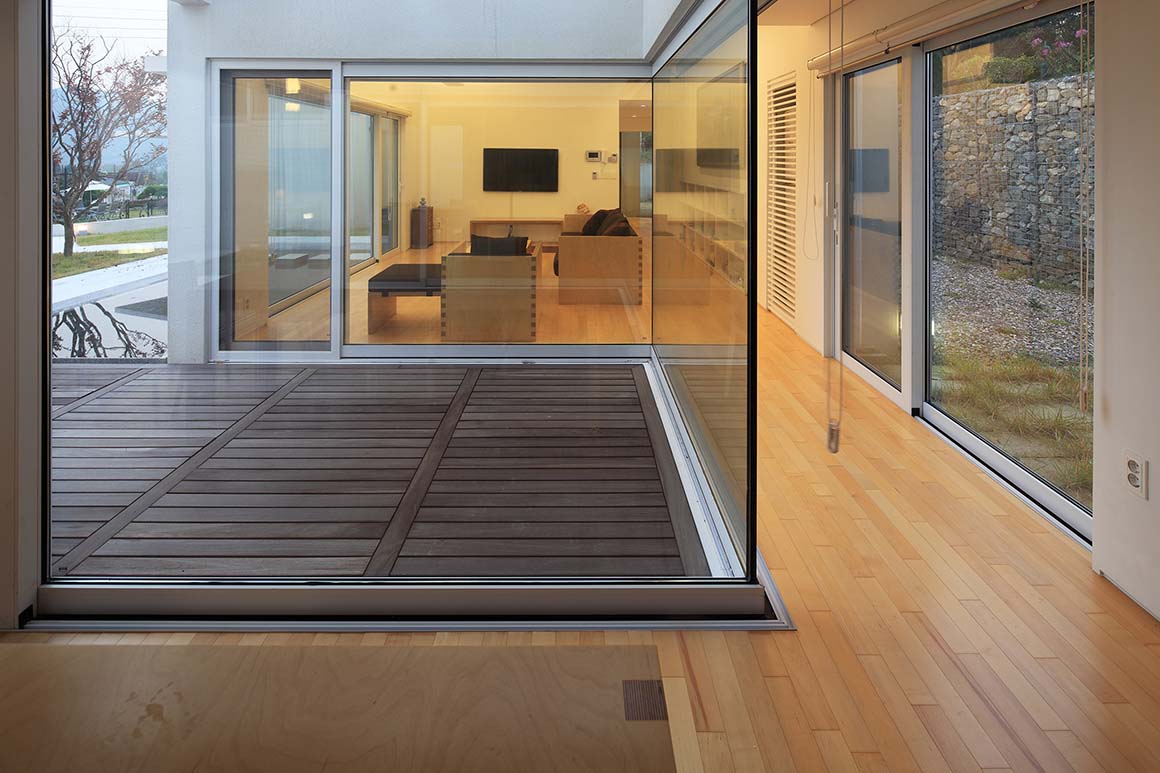
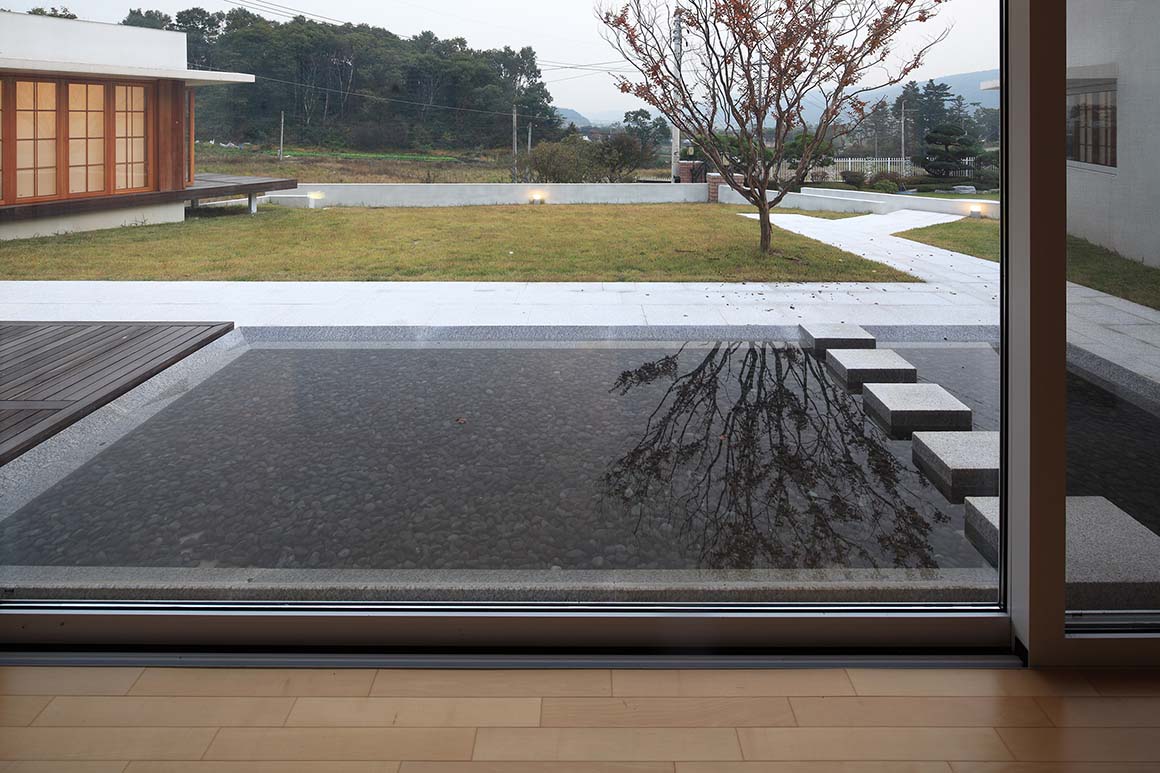
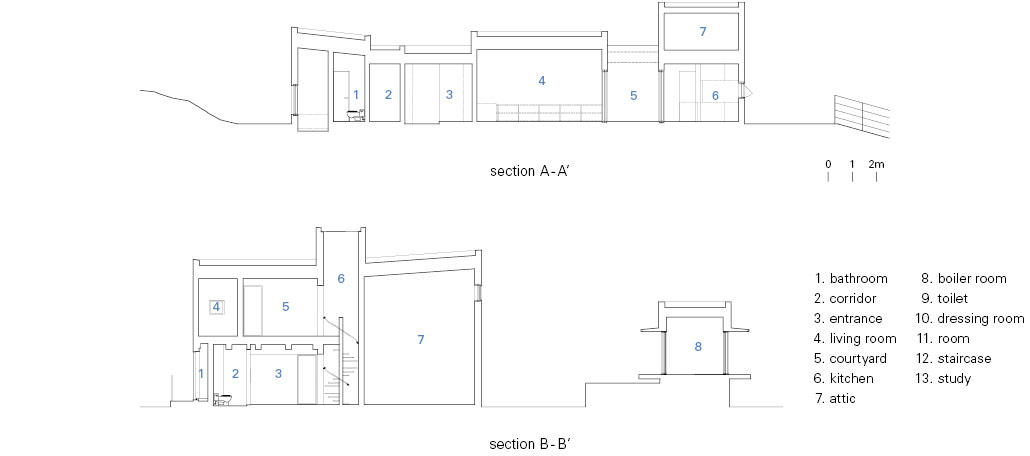
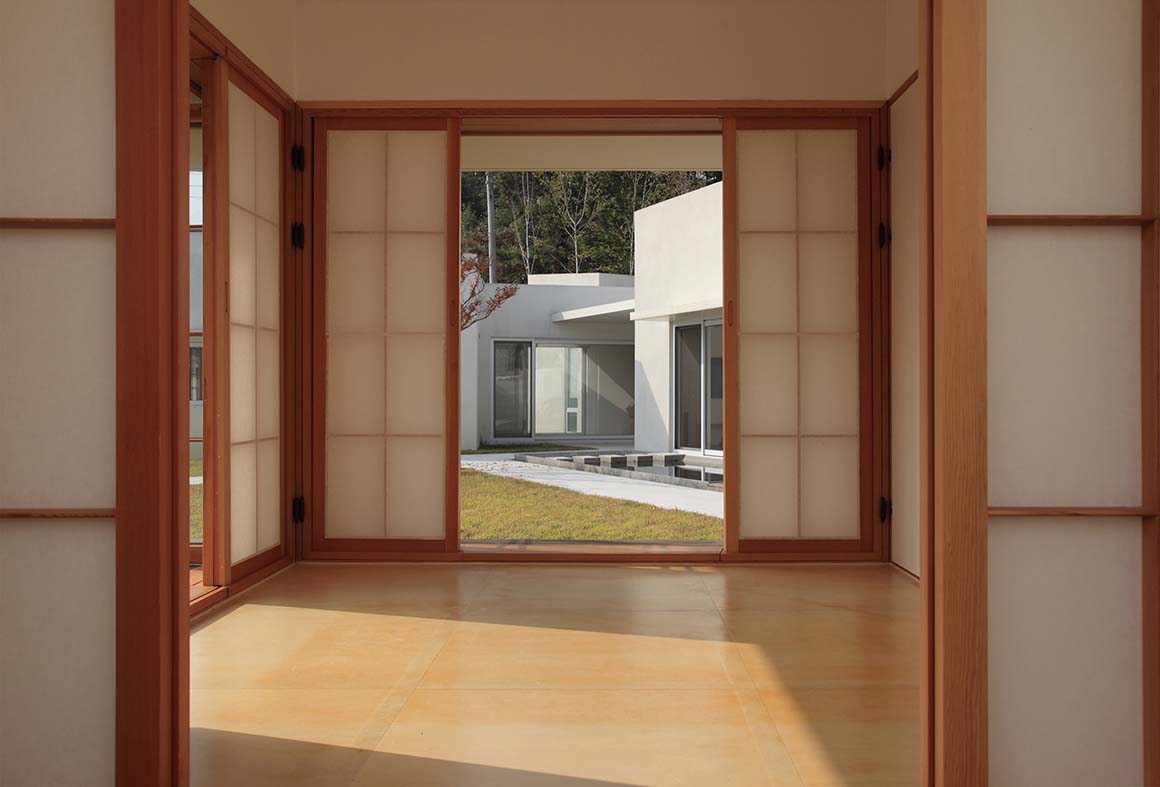
The traditional room with the afore-said characteristics is in direct contact with nature by making ventilation and lighting unrestricted, among others. It is, therefore, extremely healthful to human life. It must be very inconvenient for those who are accustomed to the enclosed living conditions of artificial environment surrounded by modern home appliances. Nonetheless, a house like the traditional one is well suited in Toechon, a beautiful rural area. Once people get accustomed to the inconveniences of living in this house, they will irrevocably become pleasures of life. “Inconvenient pleasures” ― no doubt it is lost memory in Korea. So, this house is one recalled from the memory though it has been newly built, and it seems to belong to our long-cherished future for the contemporary people living in the times of fragmentary memory.
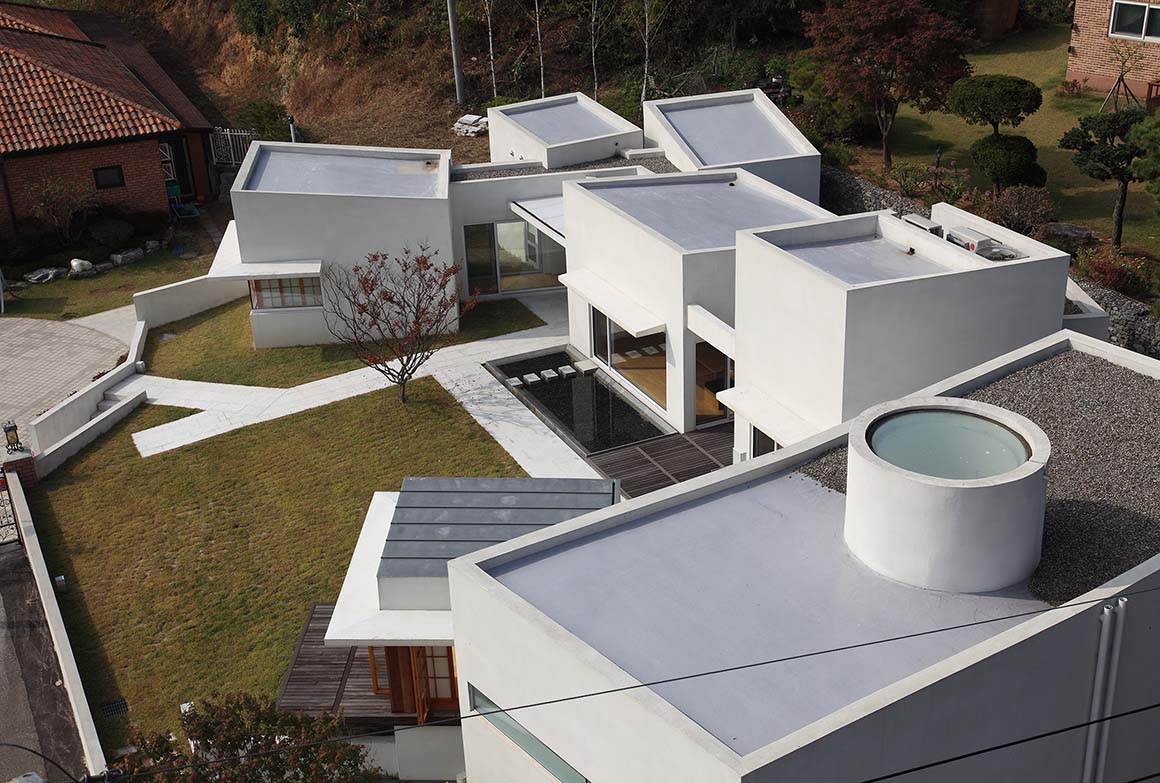
Project: Toechon House / Location: Gwangju-si, Gyeonggi-do, Republic of Korea / Architect: FUSTER + Architects / Architect: IROJE Architects & Planners (Seung H-Sang) / Contractor: Junghee Construction/ Mechanical engineer: Seah Eng. / Electrical engineer: WooLim E&C / Site area: 817m² / Bldg. Area: 164m² / Gross floor area: 164m² / Completion: 2010 / Photograph: ©JongOh Kim (courtesy of the architect)