




Mapping a New Terrain by Reinstating Sense of Place
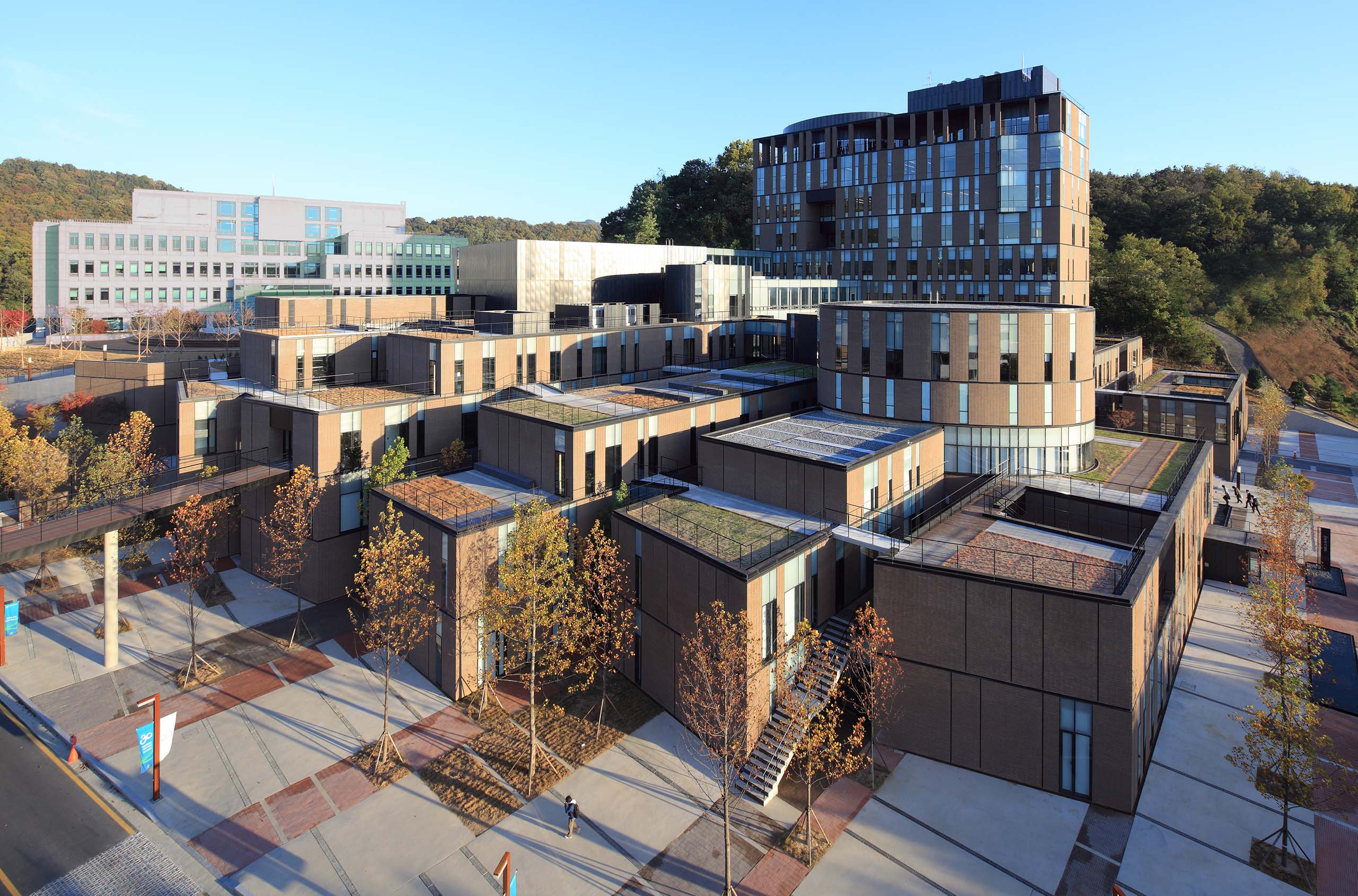
The campus as a whole has been shaped by a civil-engineering logic: buildings are placed on flattened platforms carved out of the mountainside. The site of the 30th Anniversary Hall is one such cut surface. In terms of its positional significance, this area—behind the library—forms a strong axis extending from the west gate. It is also capable of generating another campus axis: a line that passes through this point and connects to the pedestrian-only road that begins at the south gate. For that reason, the early master plan envisioned a landmark building here in the form of twin towers. As the largest project on campus and the culmination of a long-term improvement plan carried out through repeated phases of new construction and renovation, the university may well have wished to make the Hall’s dignity and symbolism unmistakably visible.

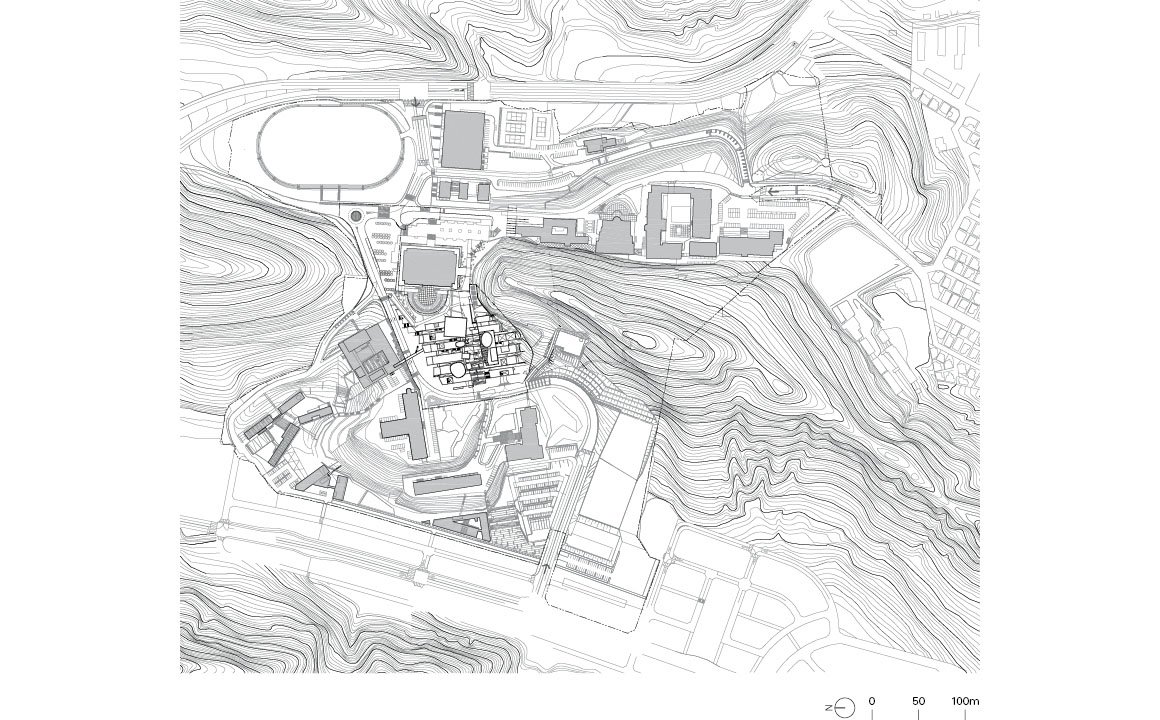
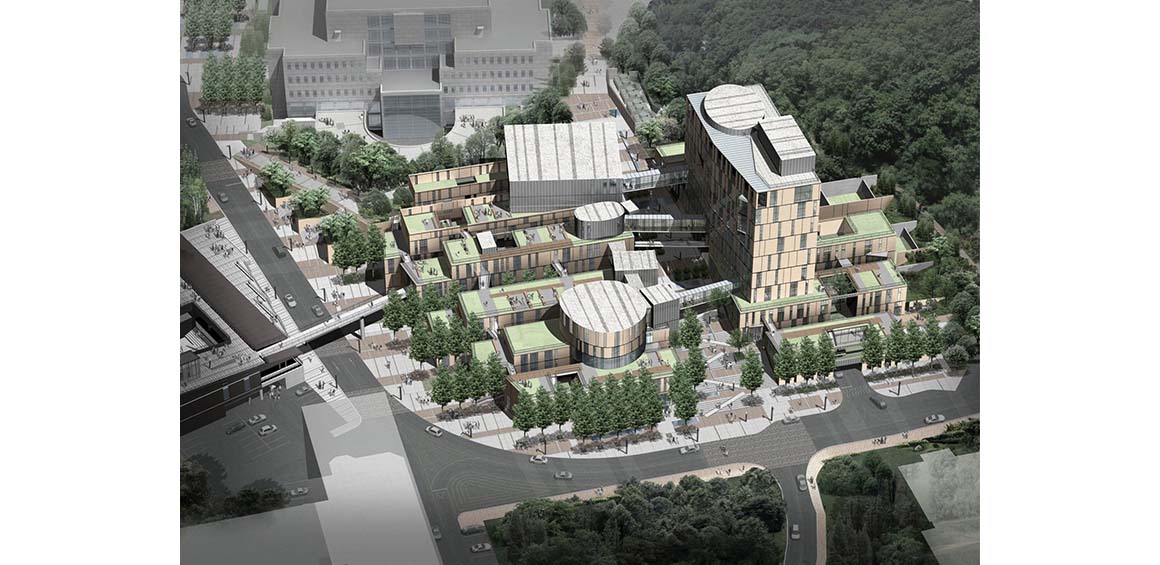
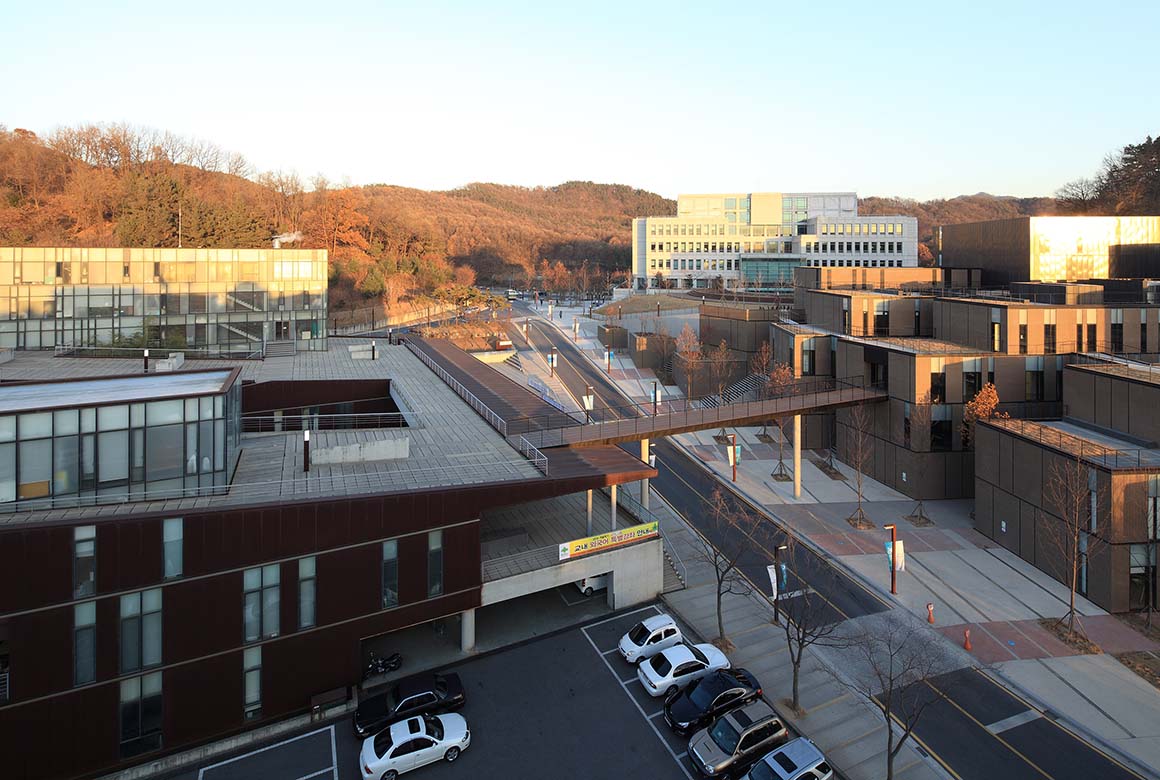
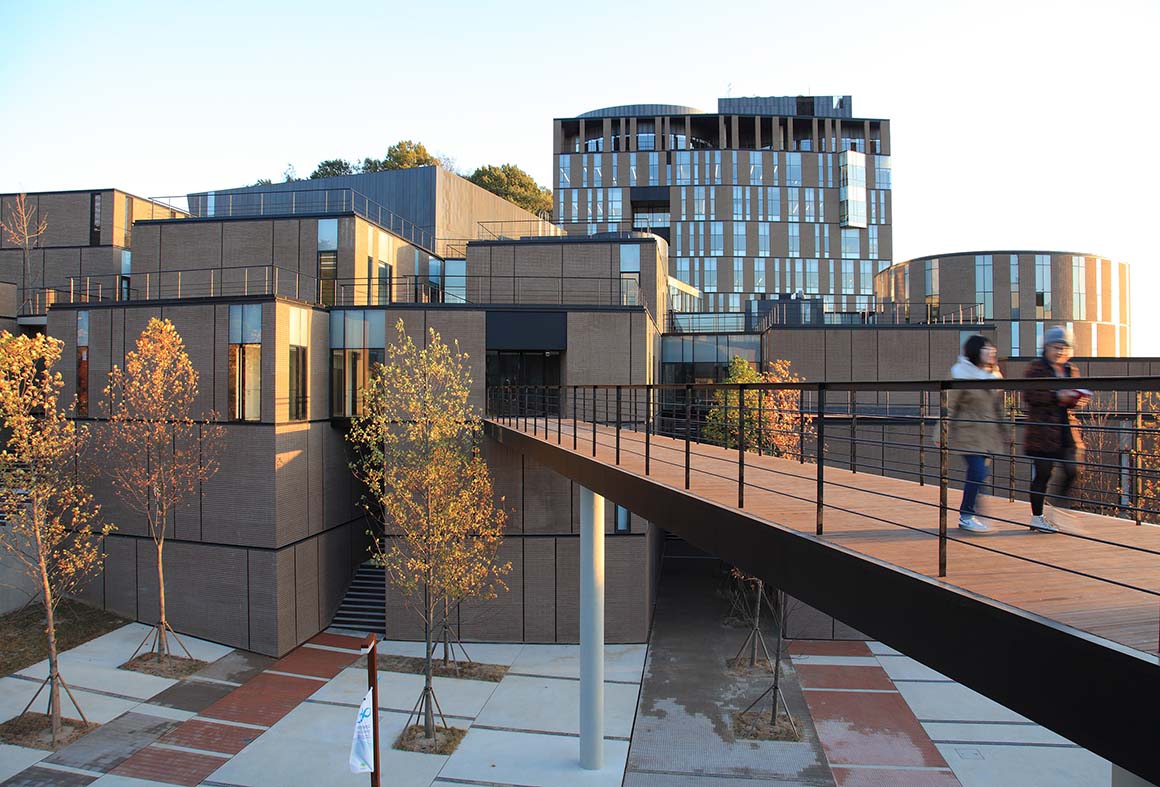
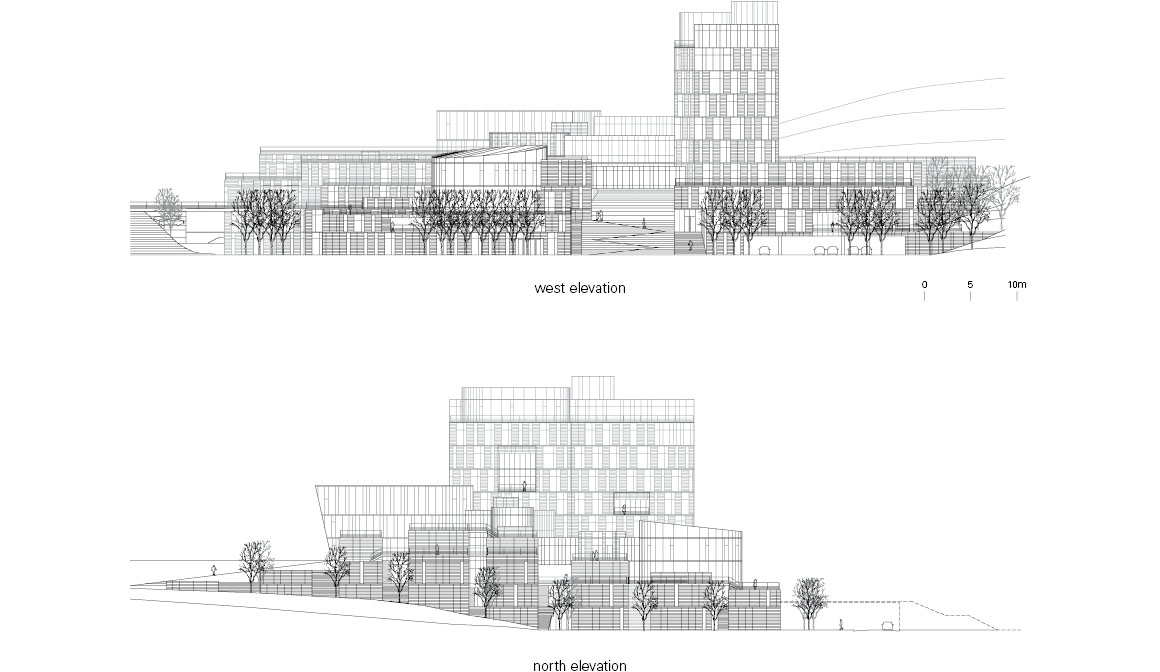


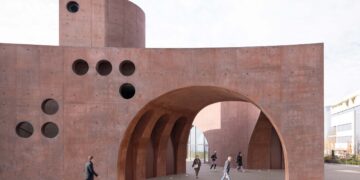
Yet the outcome is the opposite of an overpowering tower. No vertical landmark dominates its surroundings. Instead, a series of masses—composed of multiple programmatic units—are arranged along the site in a way that evokes the terrain as it might have been before the mountain was cut. The original ambition for towers has been decisively reversed. A university, in its essence, is a place oriented toward the formation of a democratic society; this can be read as an intentional refusal of an architectural form that might project an excessive authority. More importantly, the composition conveys a clear intention to mourn the damage that produced the flat ground and to recover—however artificially—the terrain’s original figure.
The cut land still appears wounded: the flattened plane created by excavation, the awkward slopes facing the west gate—these are difficult to redeem with euphemisms such as convenience, neatness, or order. The site seems to long for healing. In this sense, an architecture that restores the shape of the terrain should be understood as an act of healing and consolation for the ground that already exists.
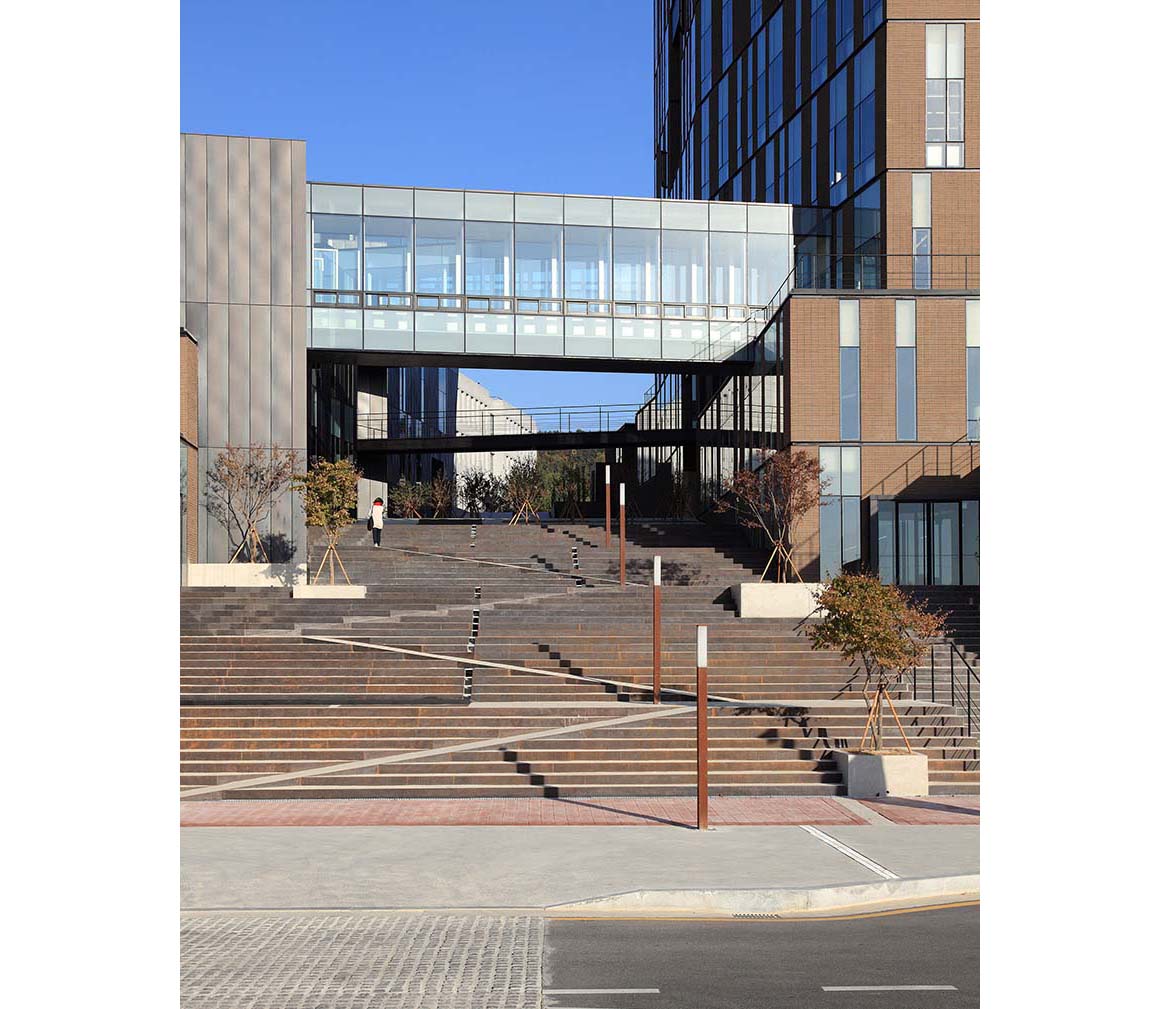
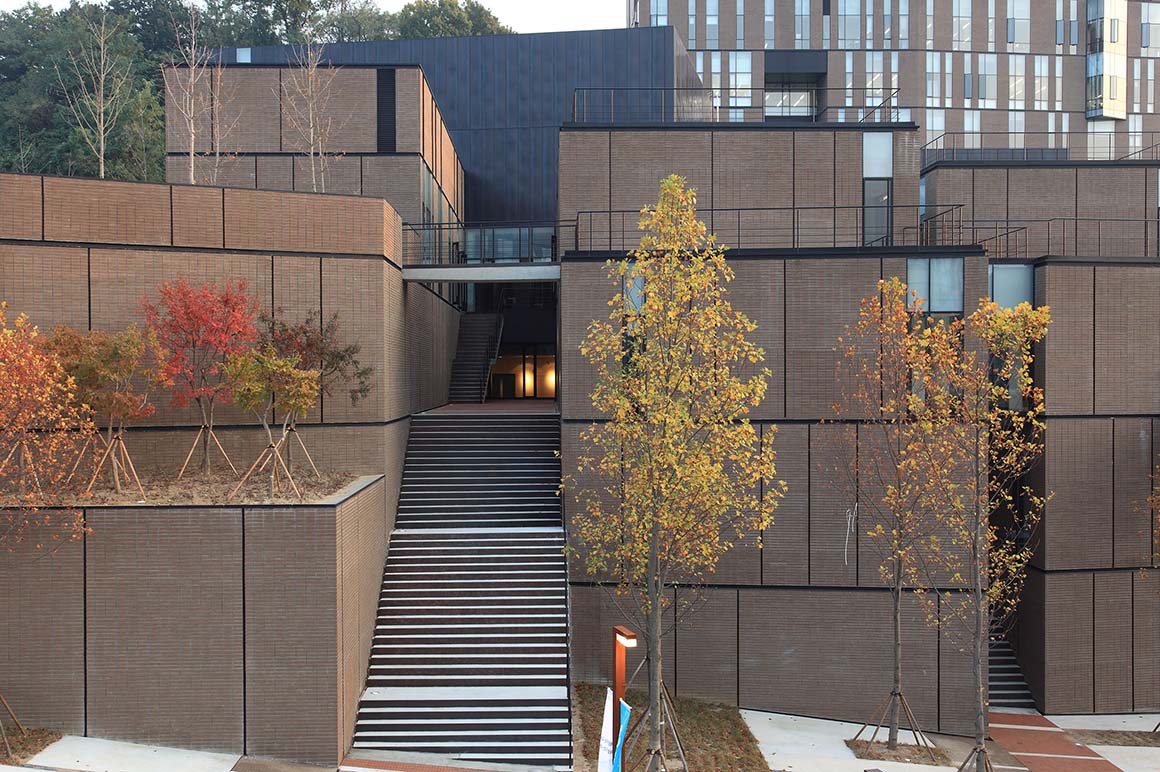
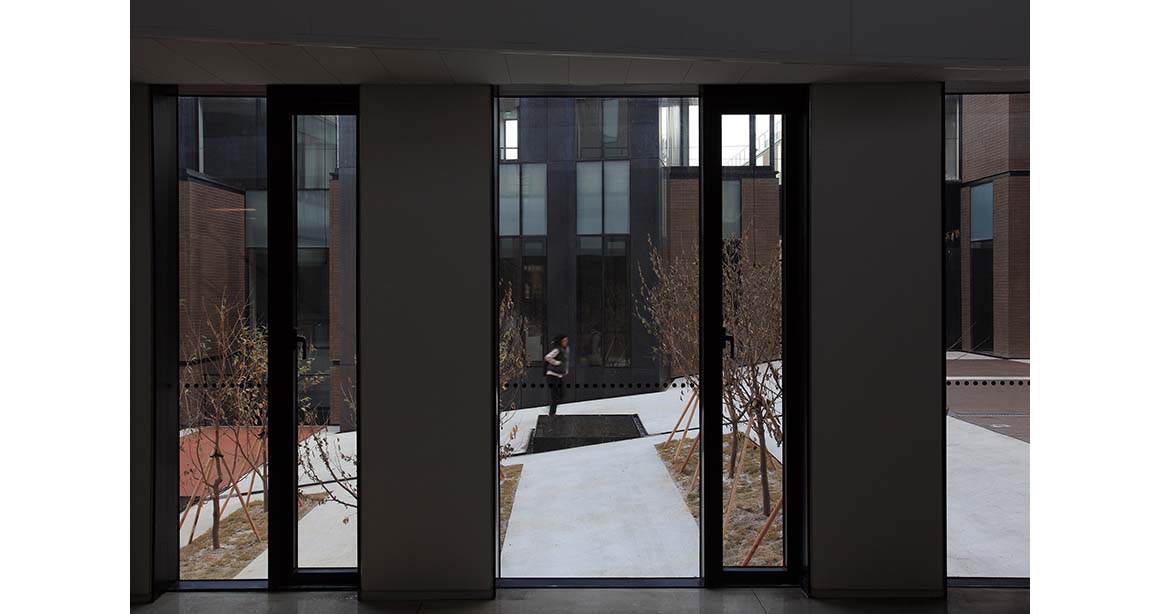
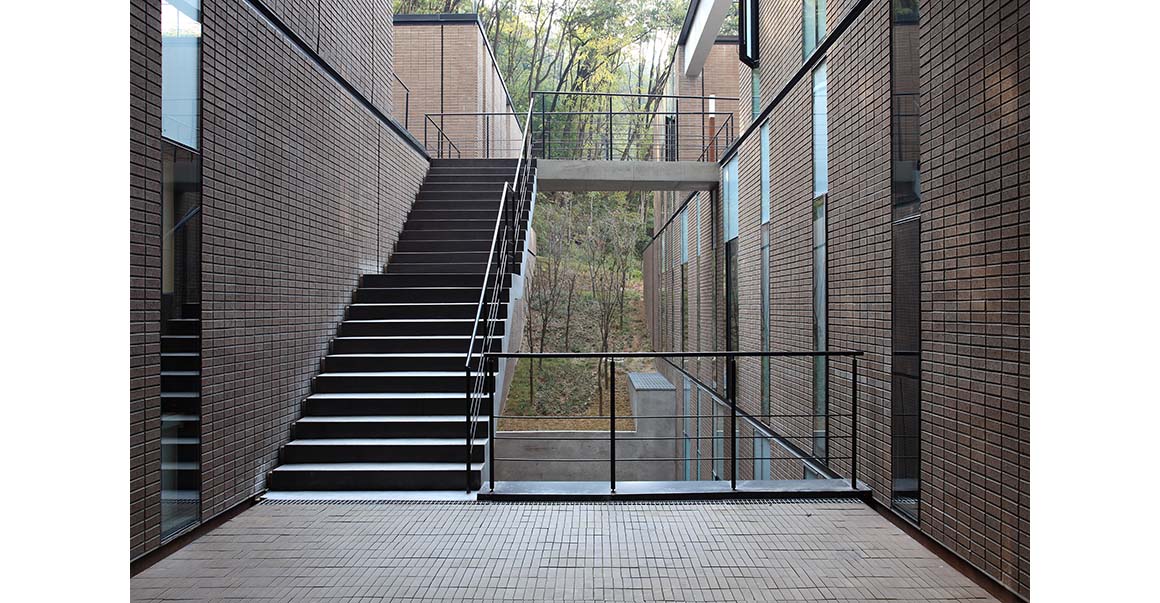
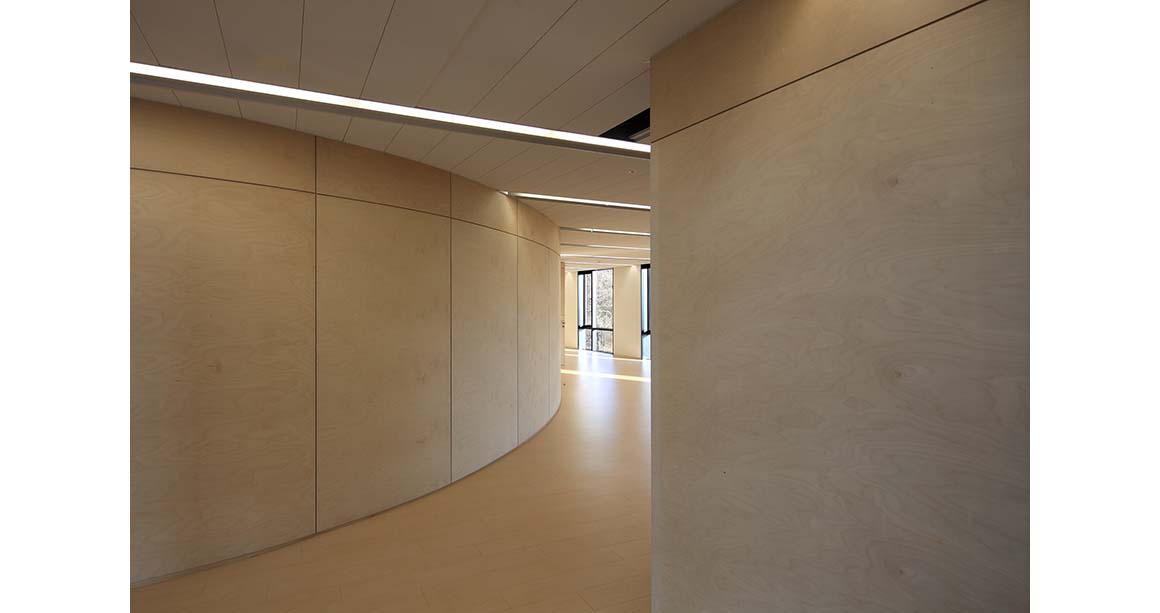
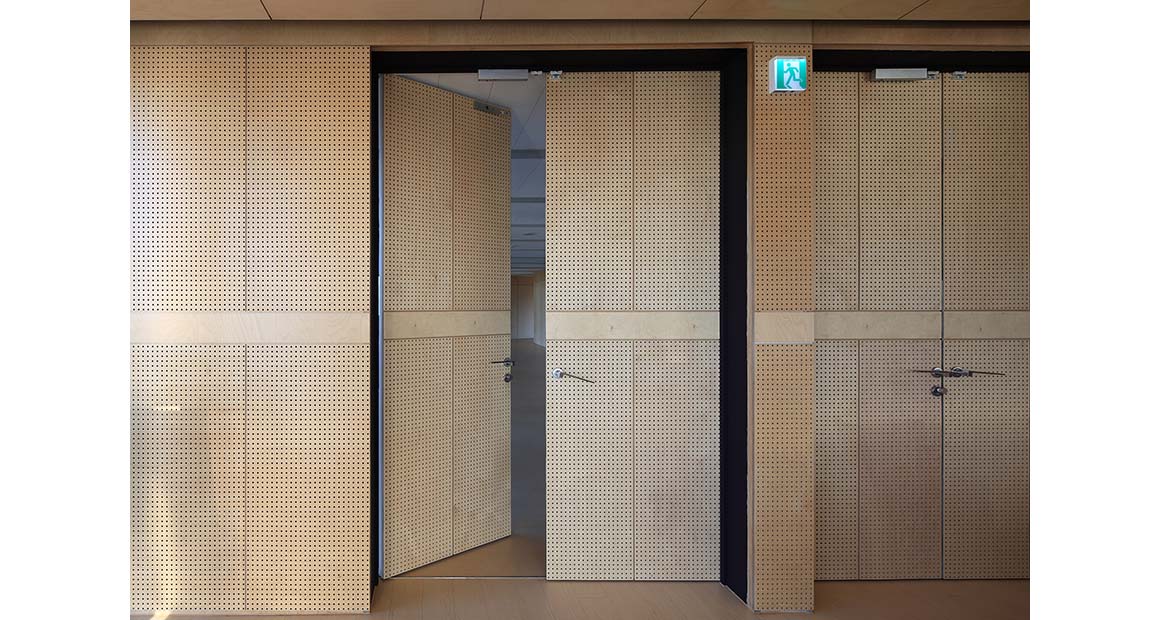
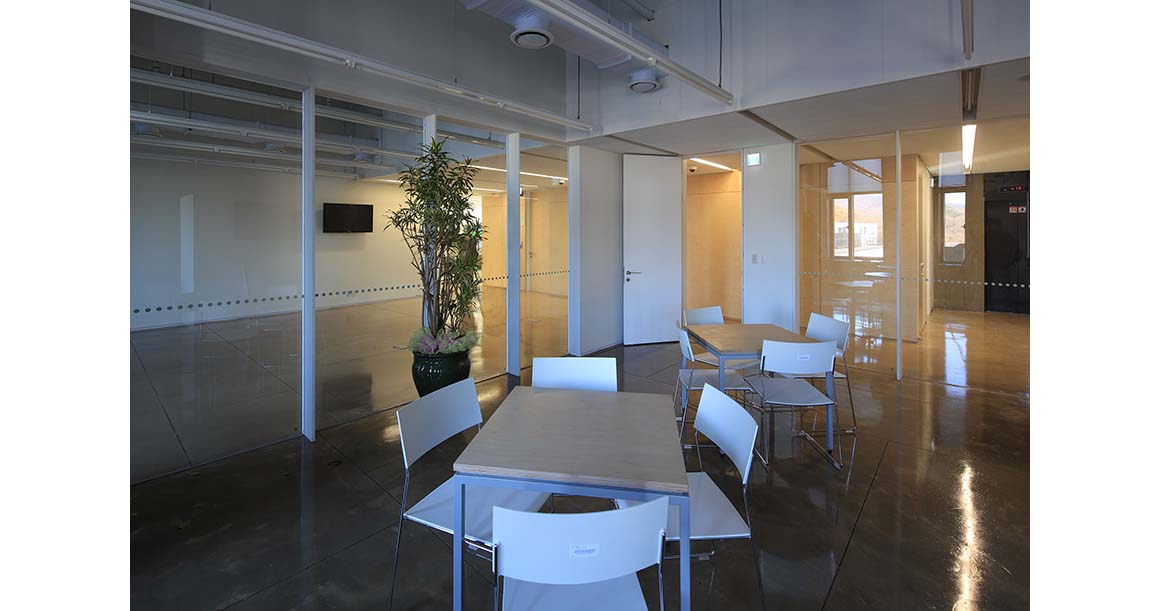
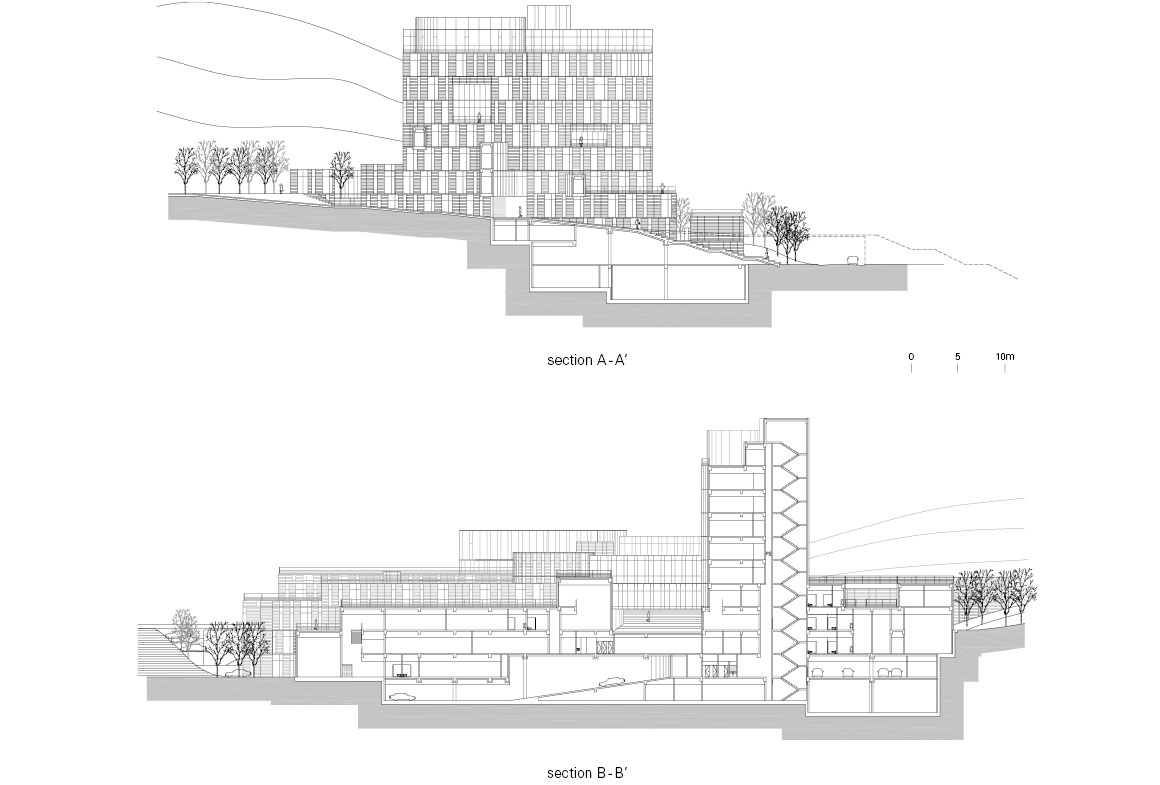
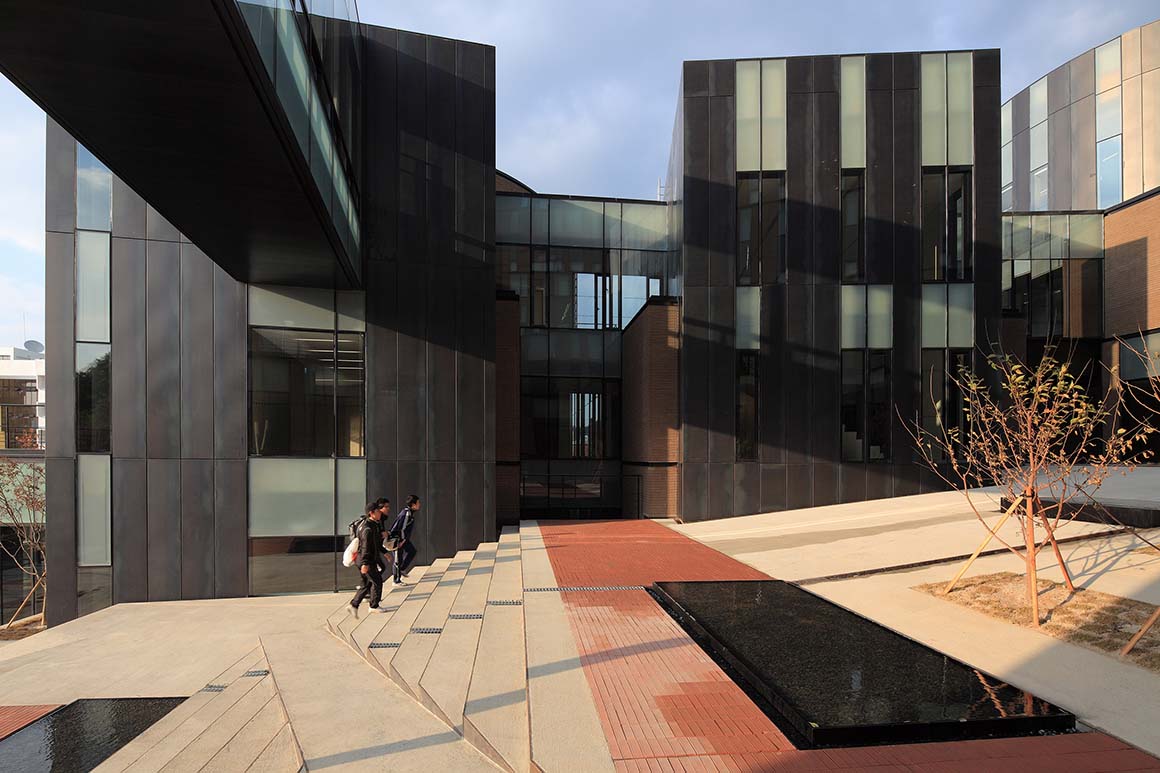
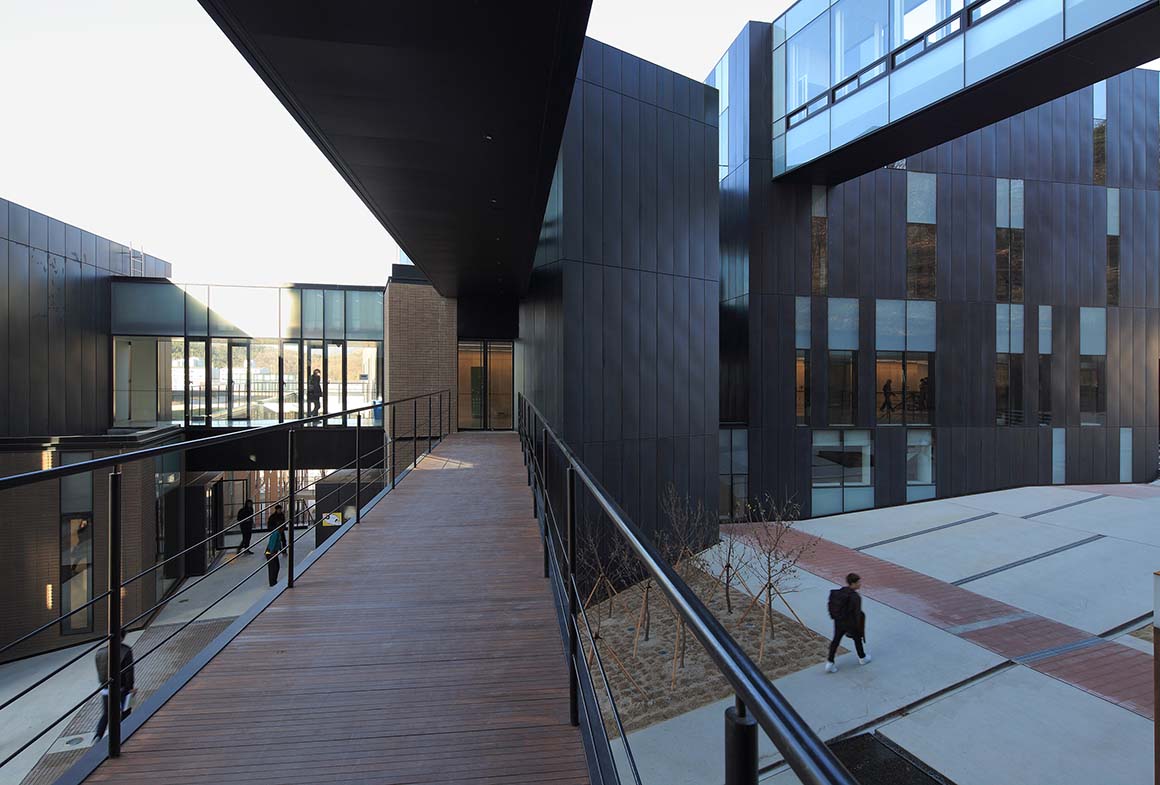
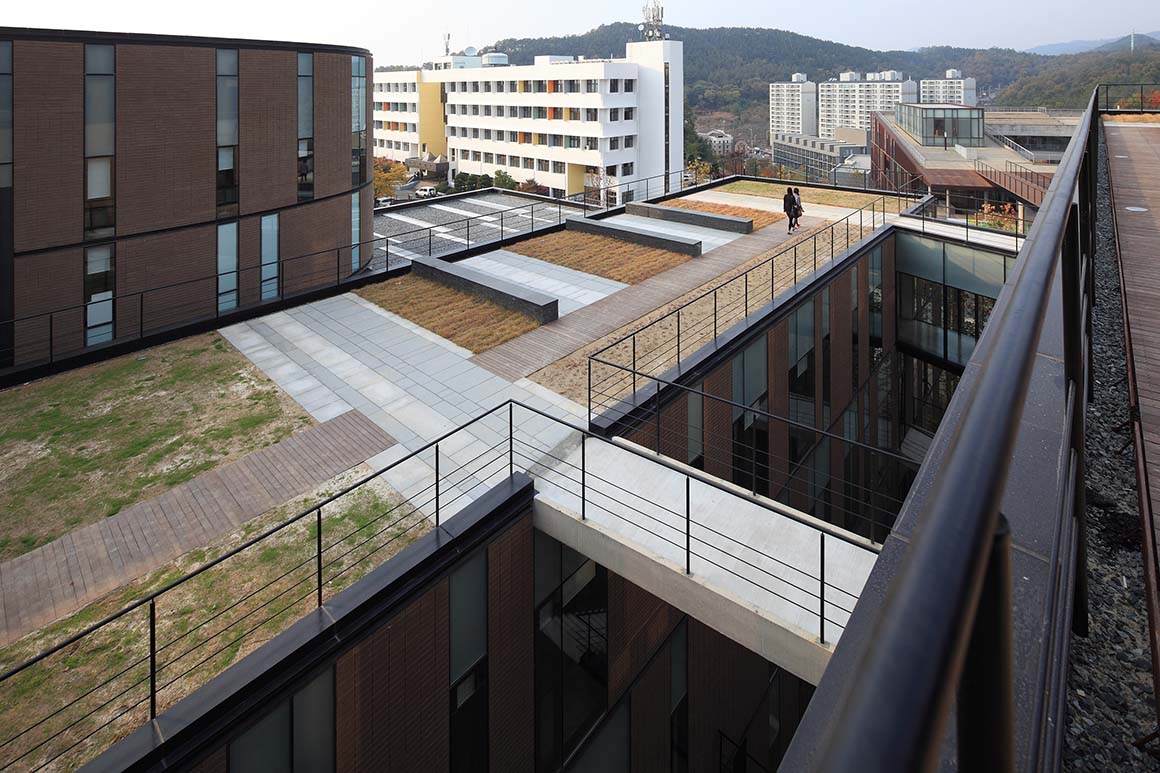
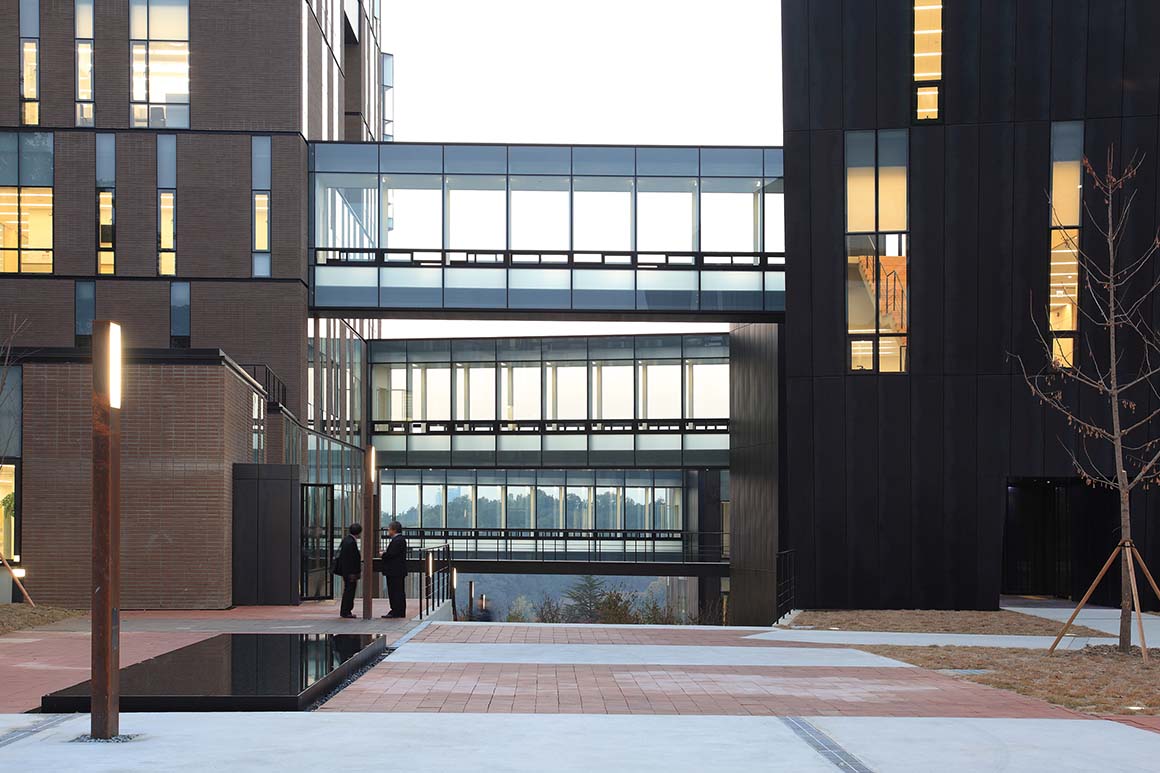
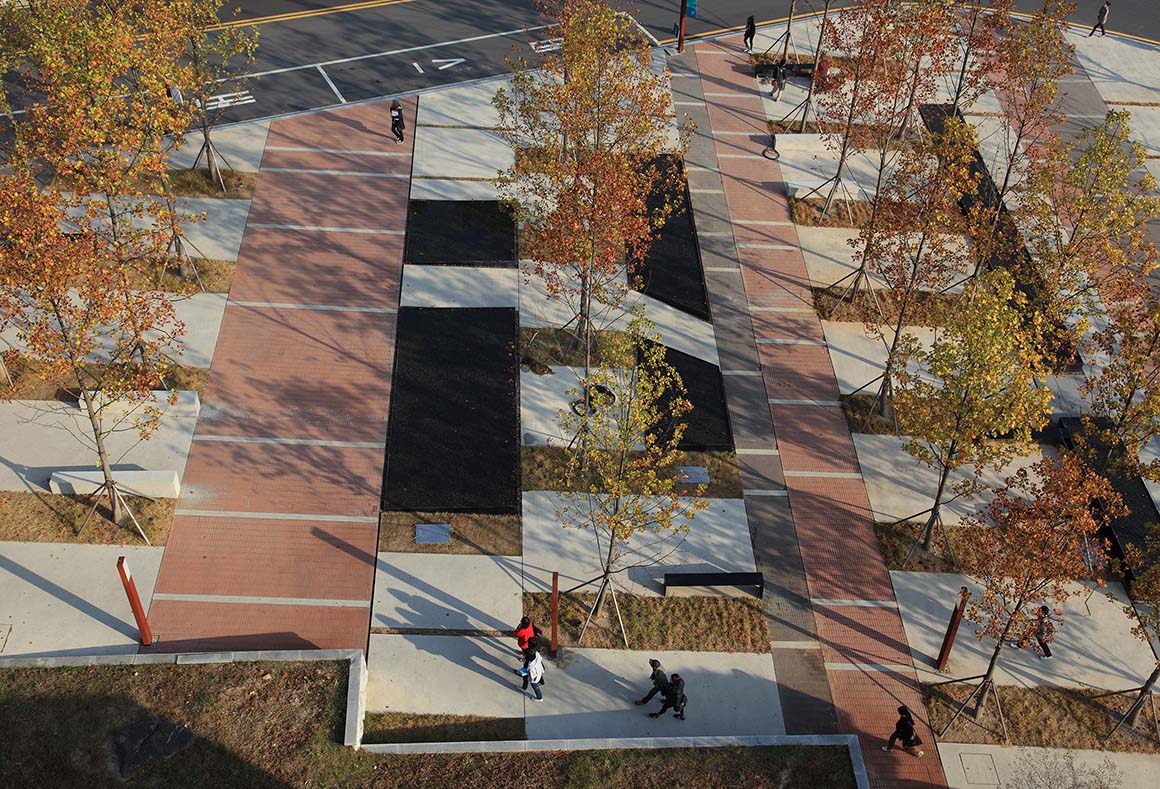
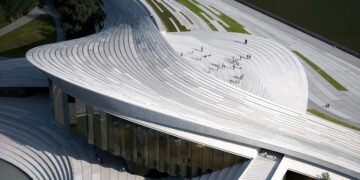
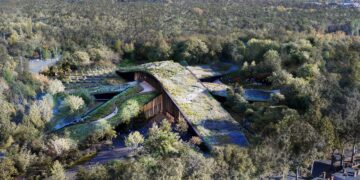
Conceived and assembled as another form of newly made ground, the building draws the sloping approach from the west gate plaza long and deep into its interior—like a valley. This “valley,” which becomes the busiest place in the building, links the two zones divided above and below, producing a dynamic scene of movement and encounter. Although the office wing rises to ten stories, its volume is not large enough to threaten the overall composition. Instead, it harmonizes with the library’s substantial mass next door, maintaining a measured balance and stabilizing its surroundings. The roof, too, becomes a new ground—terrain recovered—and remains continuously connected to the courtyards embedded deep between the segmented masses. In the end, this form can be read as the outcome brought forth by a site that yearned for recovery.
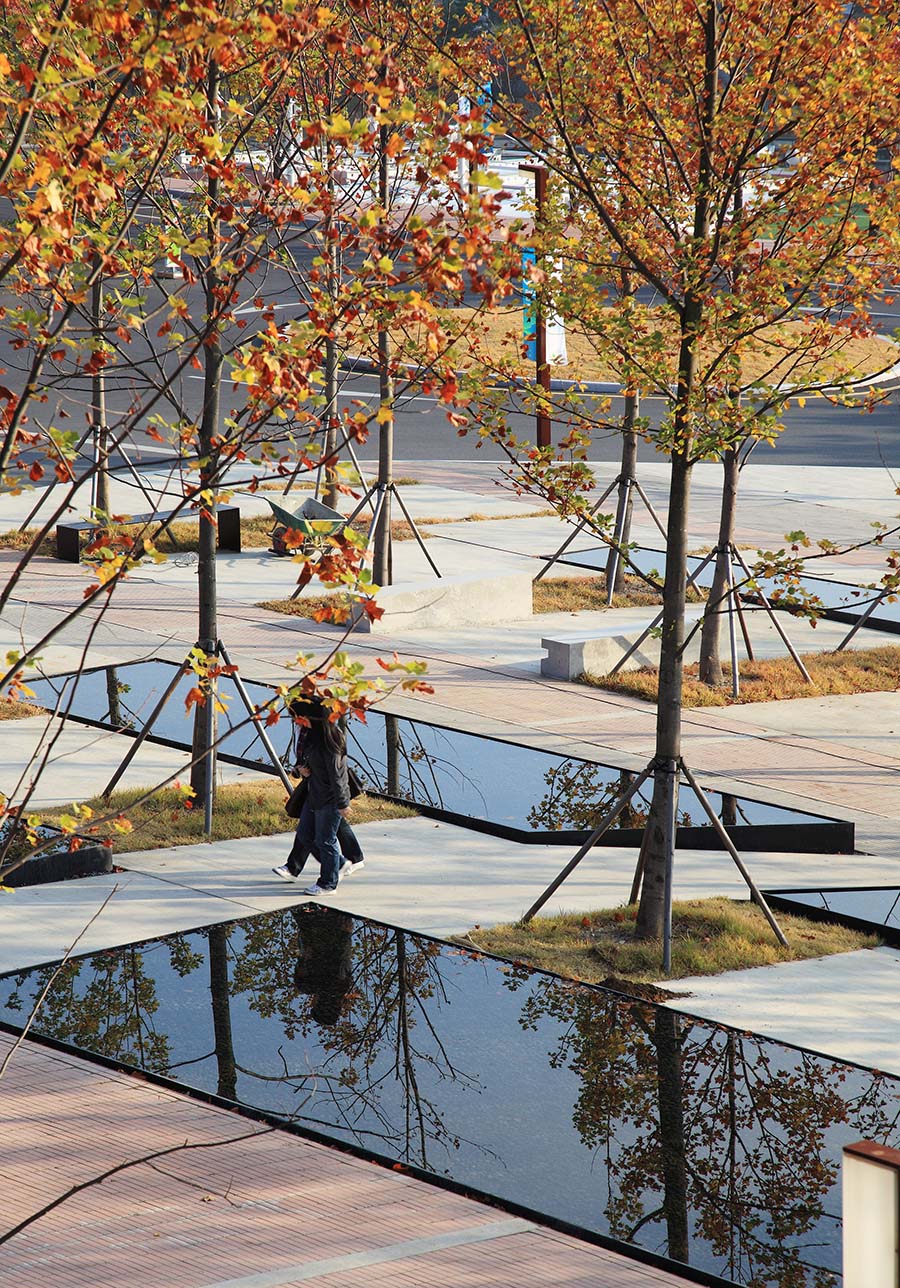
Project: 30th Anniversary Memorial Building of DaeJeon University / Location: DaeJeon University, 62, Daehak-ro, Dong-gu, Daejeon, Republic of Korea / Architect: IROJE Achitectsplanners (Seung, H-Sang) / Structural: Seoul Structural Eng. / Mechanical: Seah Eng. / Electrical: Daekyoung Elec. / Landscape design: Seoahn Total Landscape / Lighting design: New Lite / Program: class rooms, office, conference, press, broadcasting studio, seminar hall, exhibition hall etc. / Bldg. area: 6,493.03m² / Gross Floor area: 20,325.15m² / Structure: RC / Exterior finishing: brown brick / Design period: 2007.8~2008.9 / Construction period: 2008.10~2010.10 / Completion: 2010.10 / Photograph: ©JongOh Kim (courtesy of the architect)