
Five steel wings rise above the desert
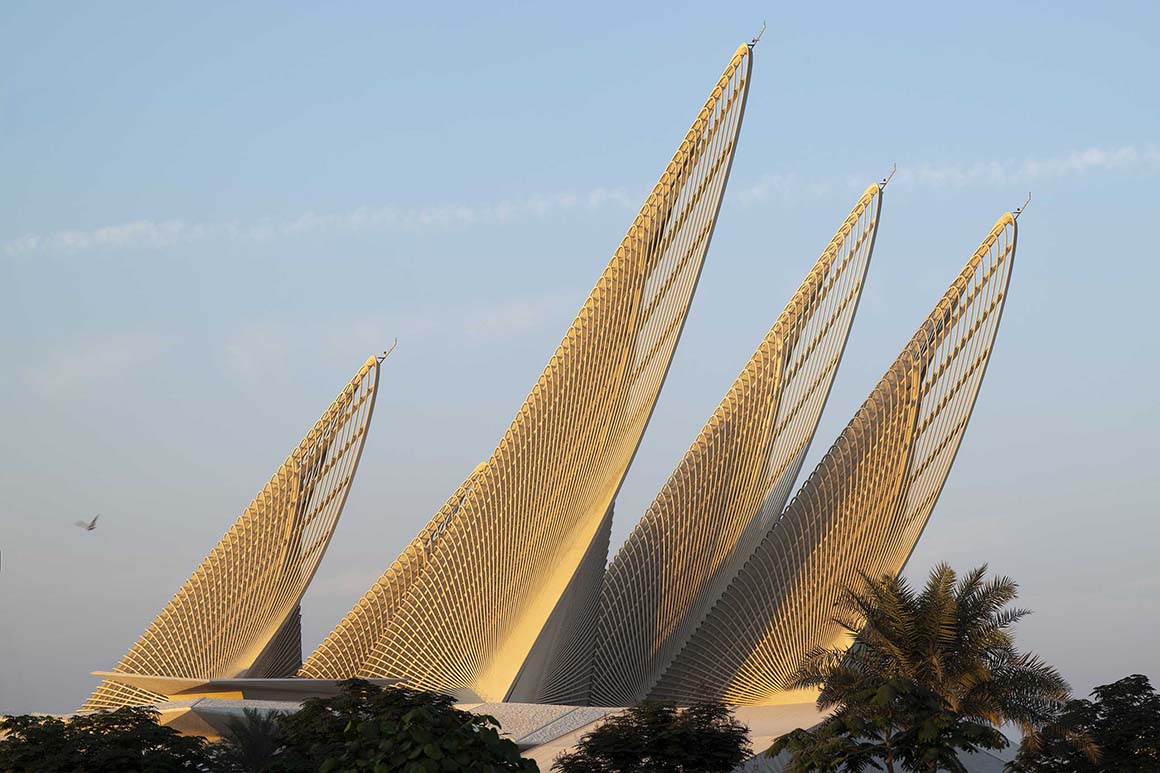
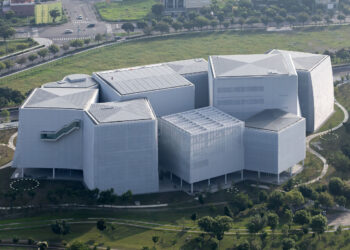
The Zayed National Museum has opened at the center of Abu Dhabi‘s Saadiyat Cultural District. The museum retraces the history of the United Arab Emirates (UAE), from traces of early human settlement to the civilizations that laid the foundations of today’s culture. It is a space that reflects the cultural identity informed by the values of Sheikh Zayed bin Sultan Al Nahyan, the founder of the UAE. Its architectural form addresses the challenges and solutions of sustaining life in a desert environment while following the UAE‘s cultural traditions.
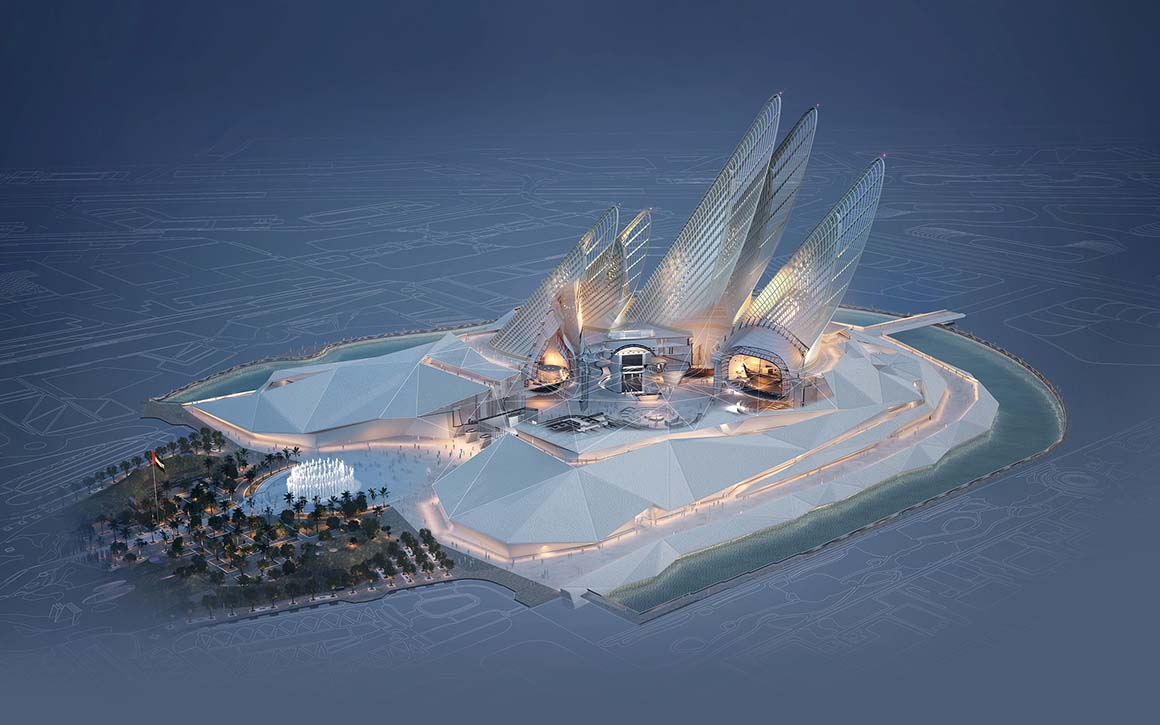
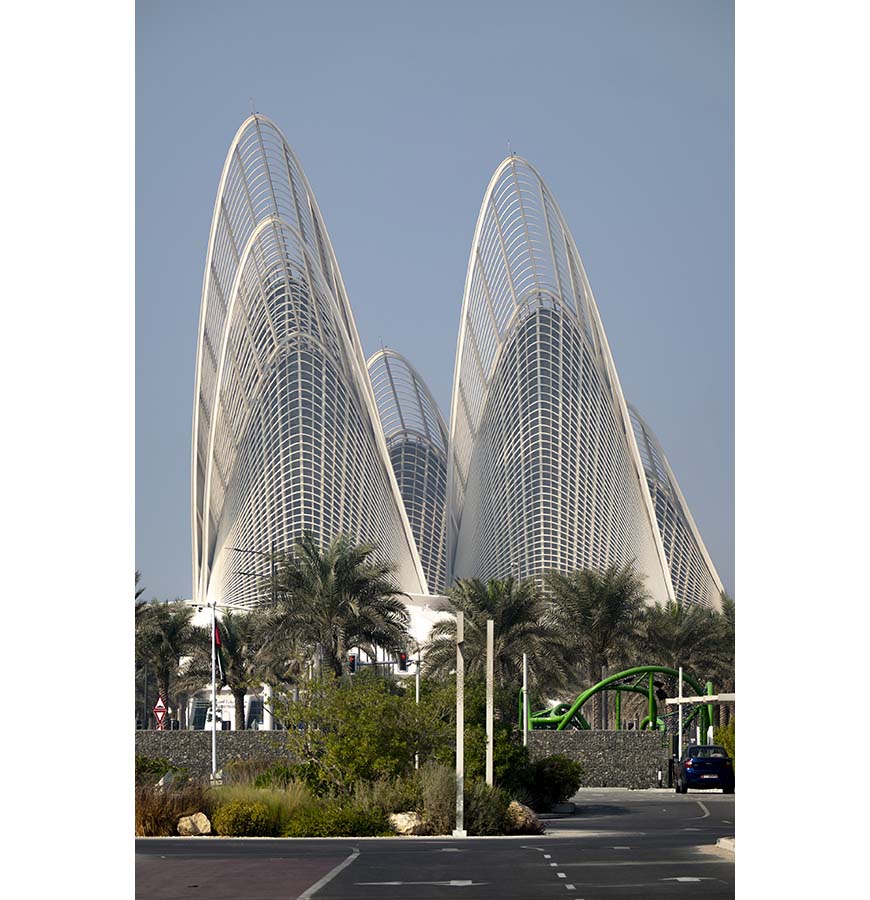
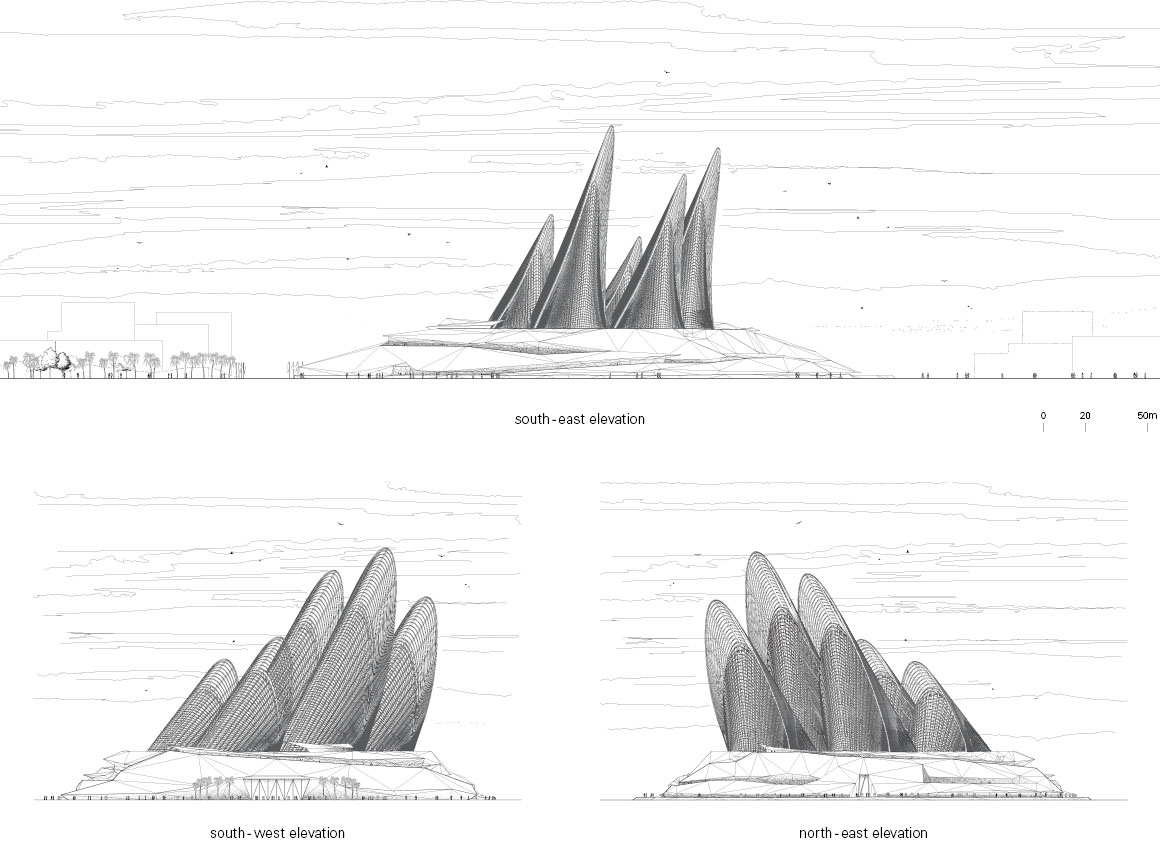
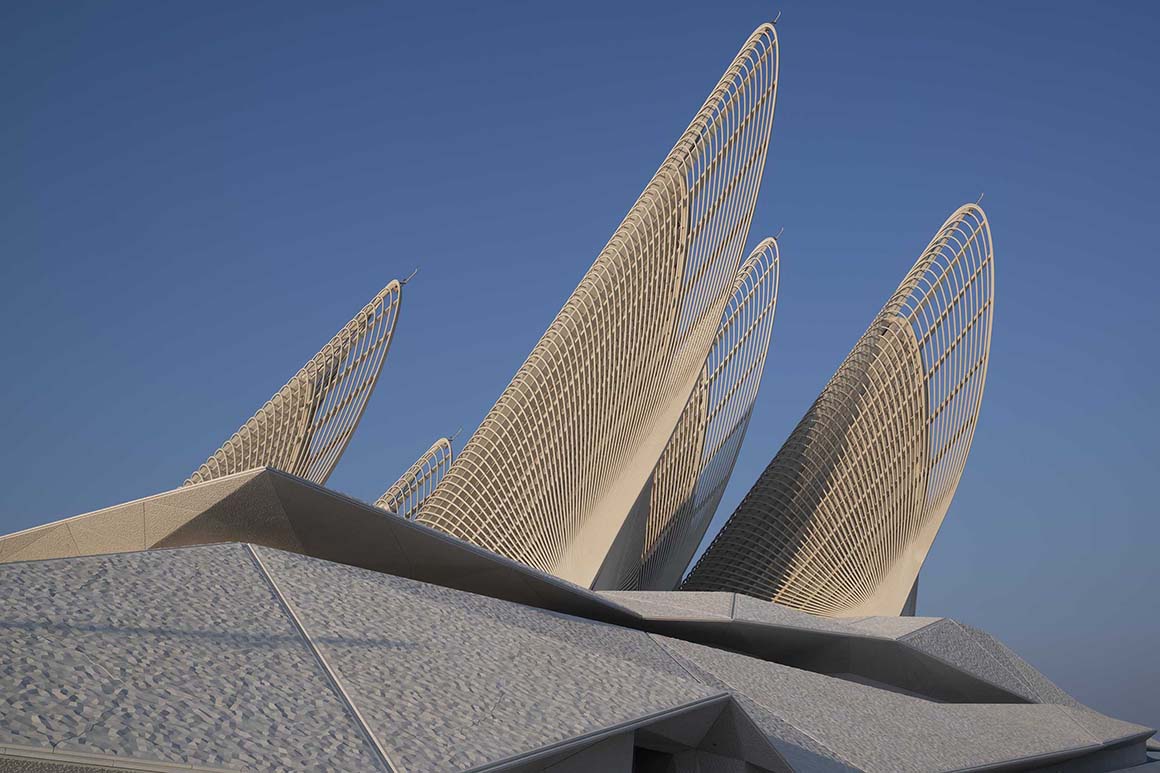
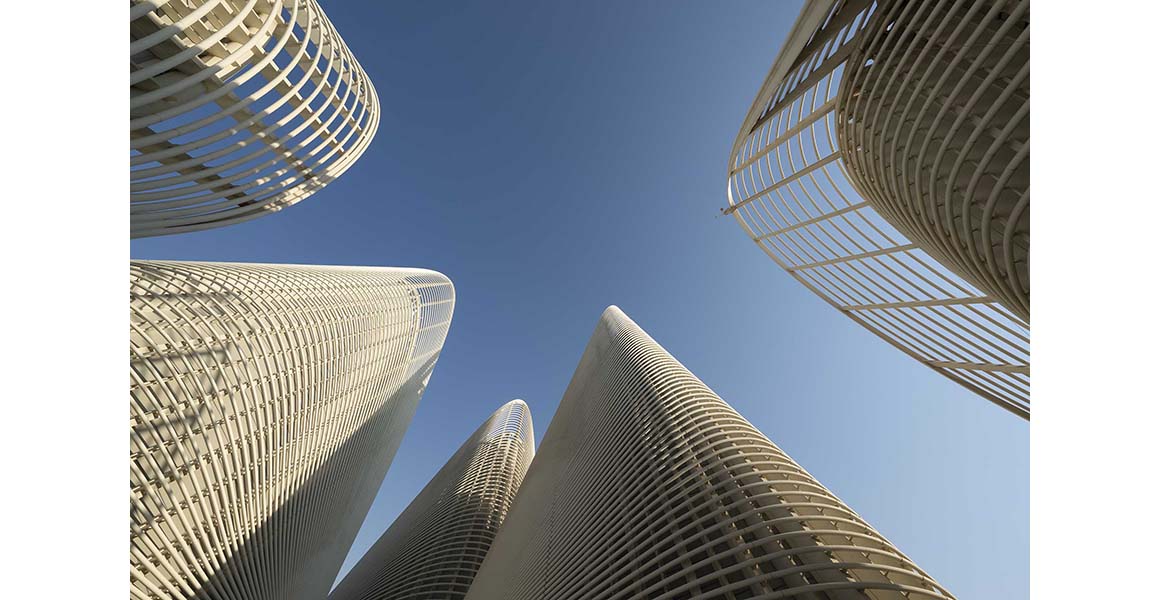
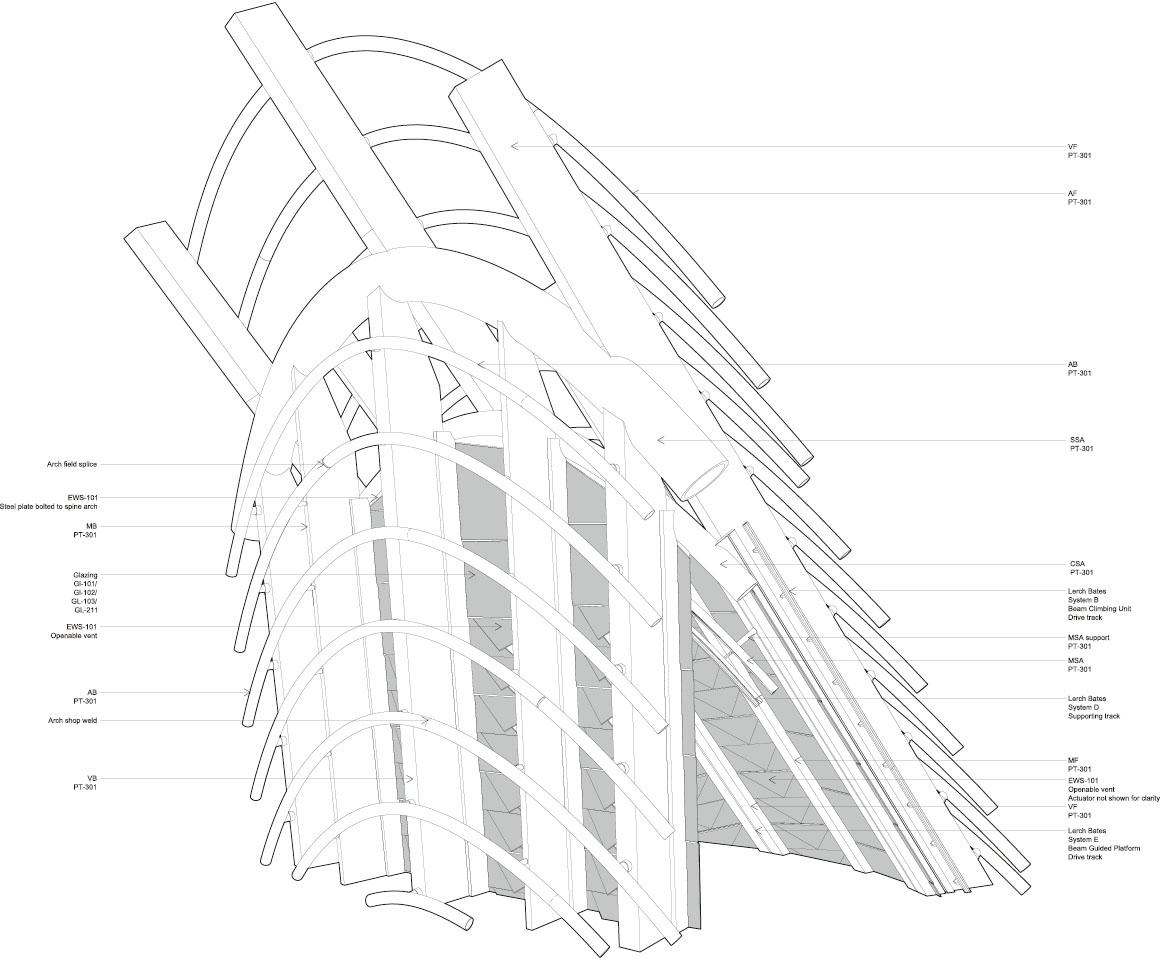
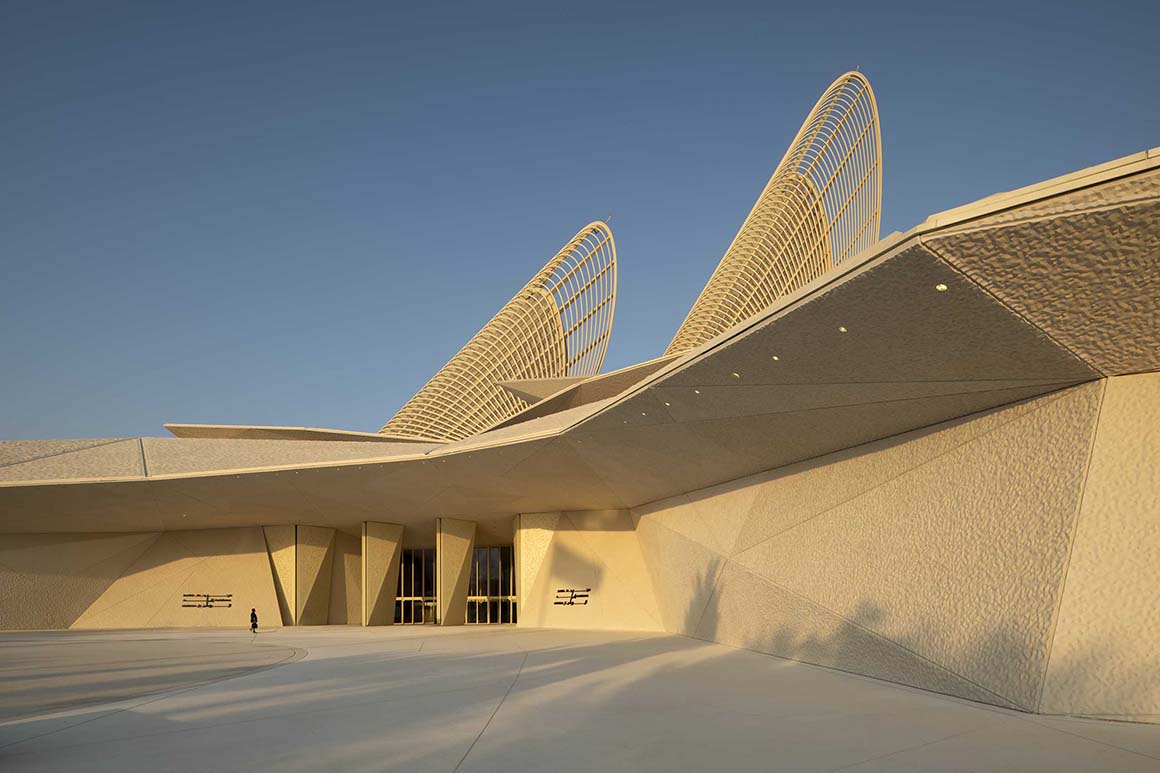
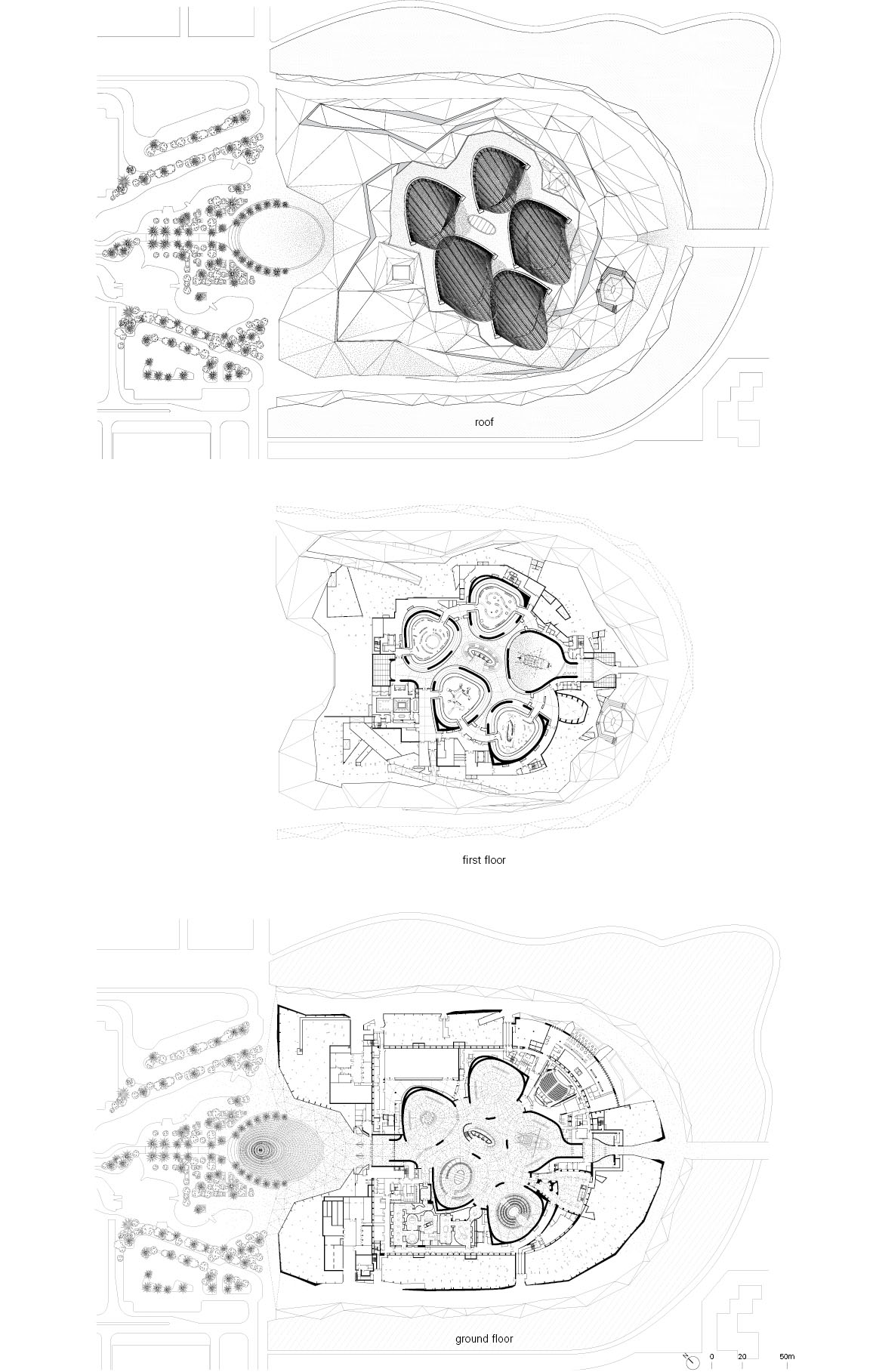
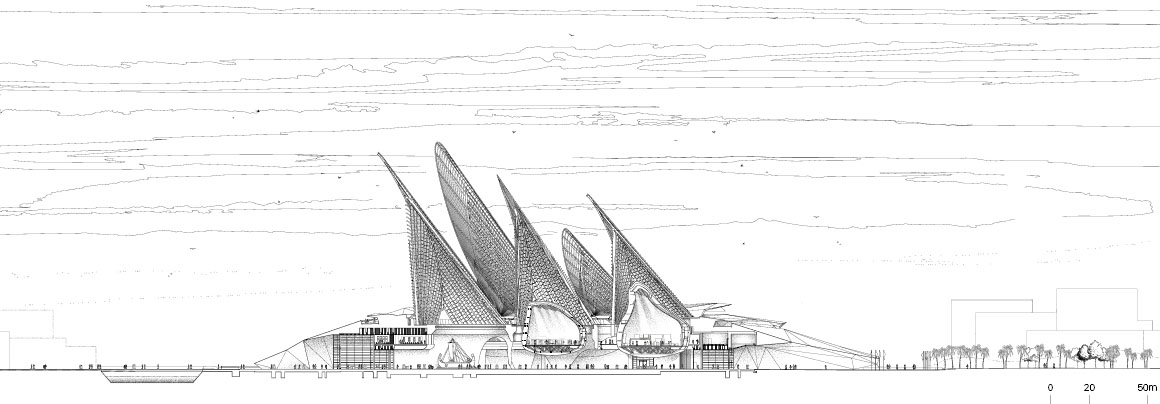
The five steel wings rising high to shape the new skyline act as chimneys that regulate the indoor climate. Cool air is drawn up through pipes buried deep underground, while hot air is expelled through vents at the tops of the wing-shaped towers using negative pressure. Air enters at the lower floors and naturally rises through the tall atrium as it circulates. The wings, finished with triple-laminated glass, minimize heat gain while bringing light into the gallery spaces below, and each one is adjusted individually according to the sun‘s path.
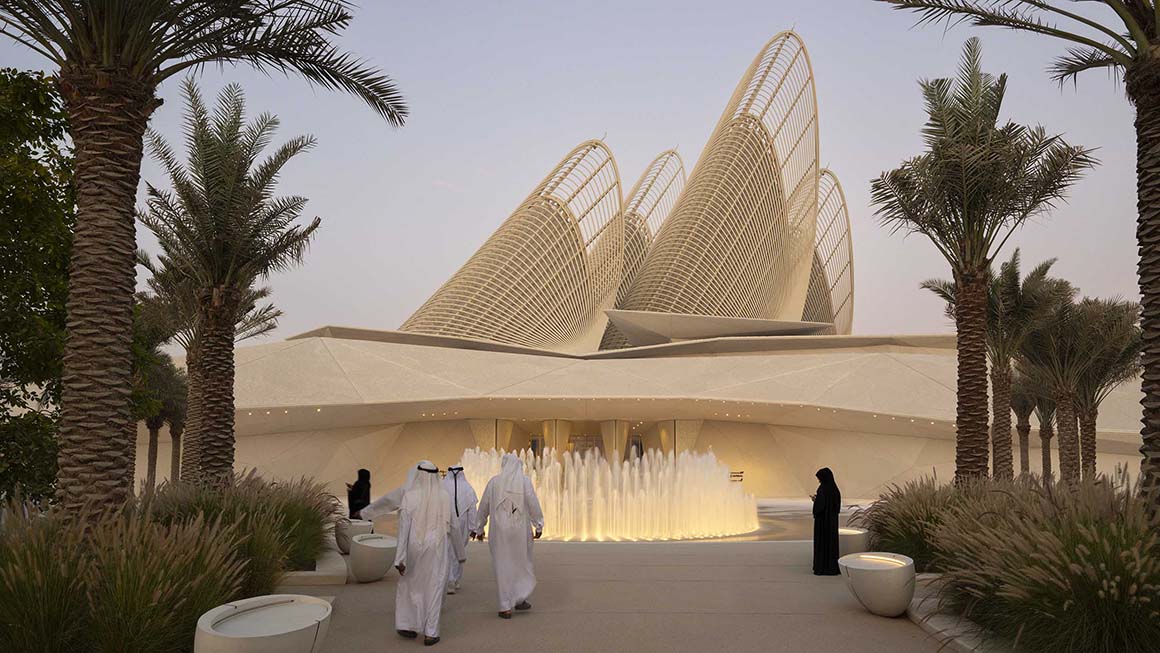
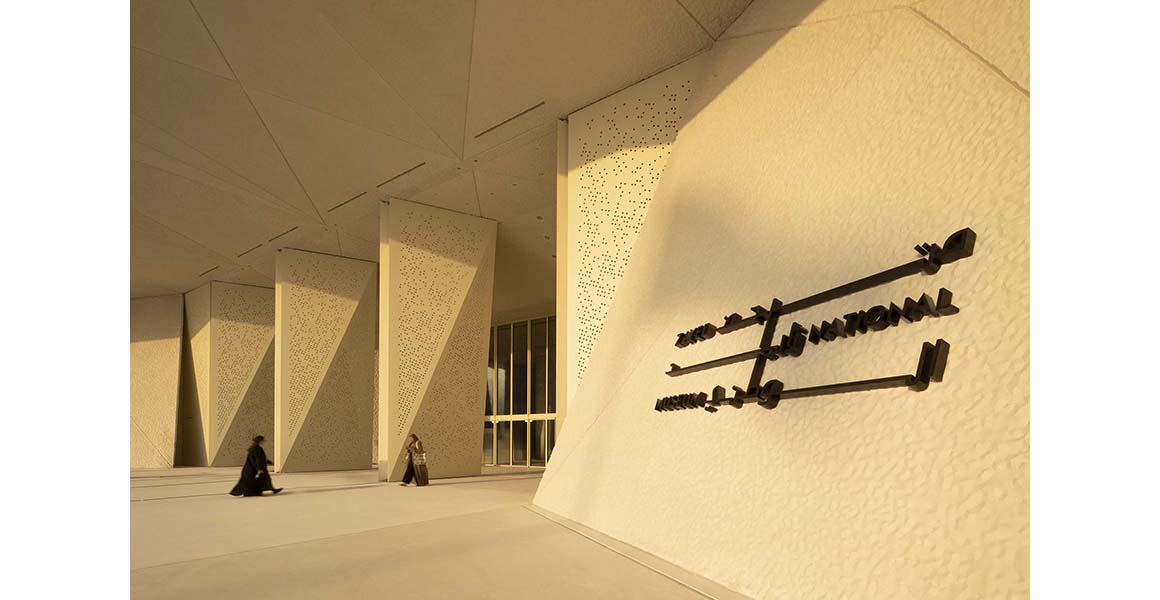
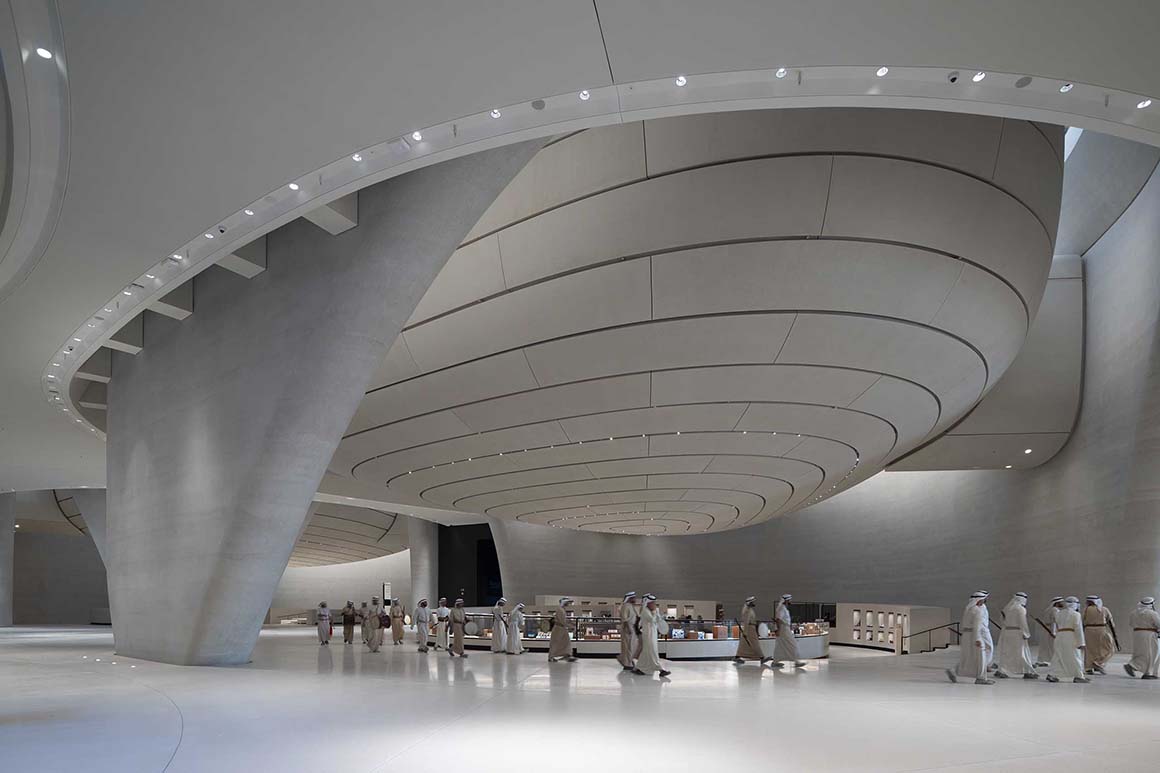
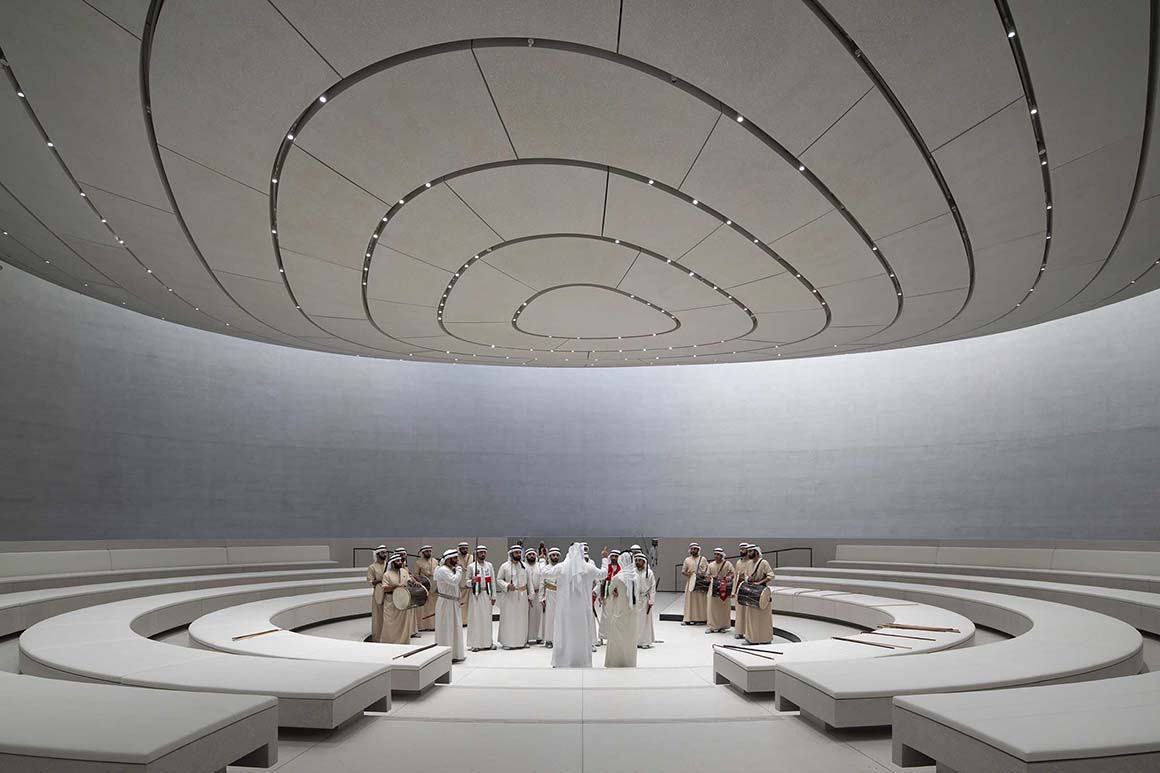
The museum‘s main exhibition spaces are placed inside a mound structure composed of multifaceted panels that abstract the UAE’s terrain. The mound serves as a thermal shield that blocks solar heat and protects the interior. Upon entering the museum, visitors arrive in Al Liwan, a bright central courtyard from which circulation spreads and spaces are arranged. Traditional dance performances and poetry readings are also held in Al Liwan.
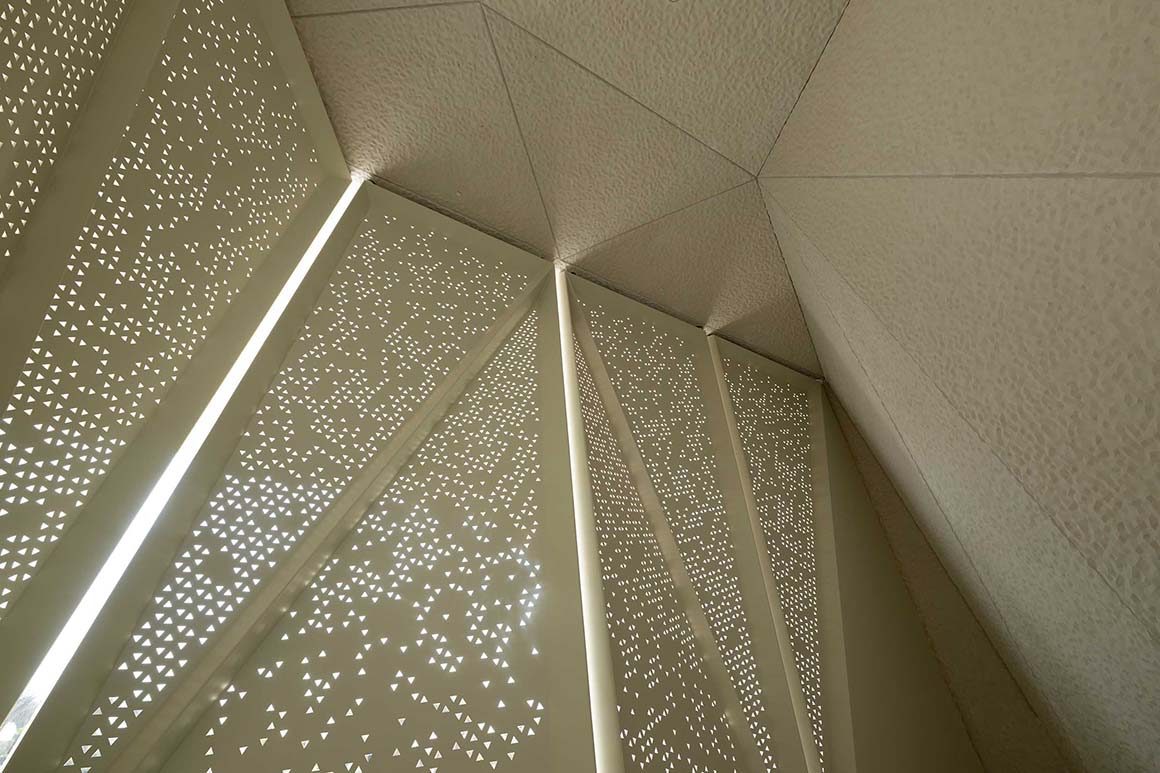
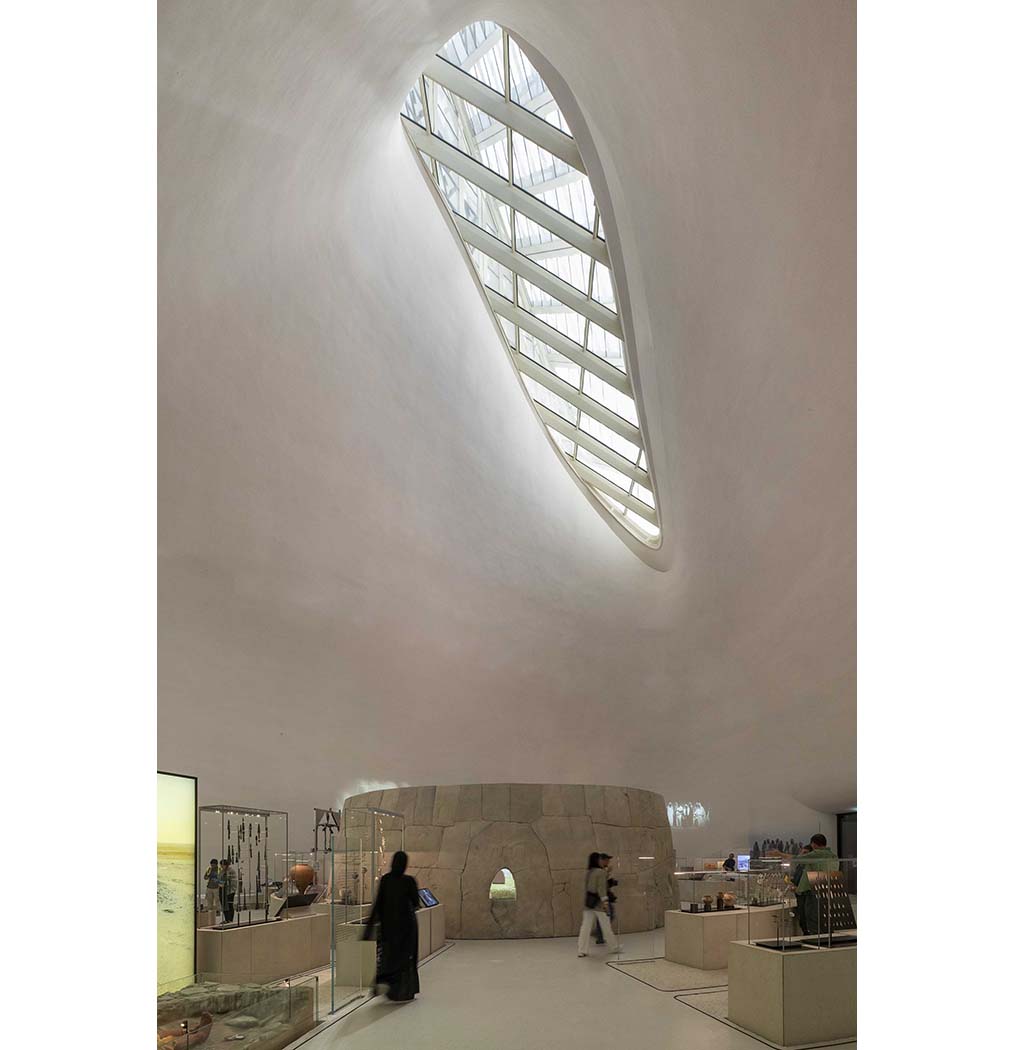
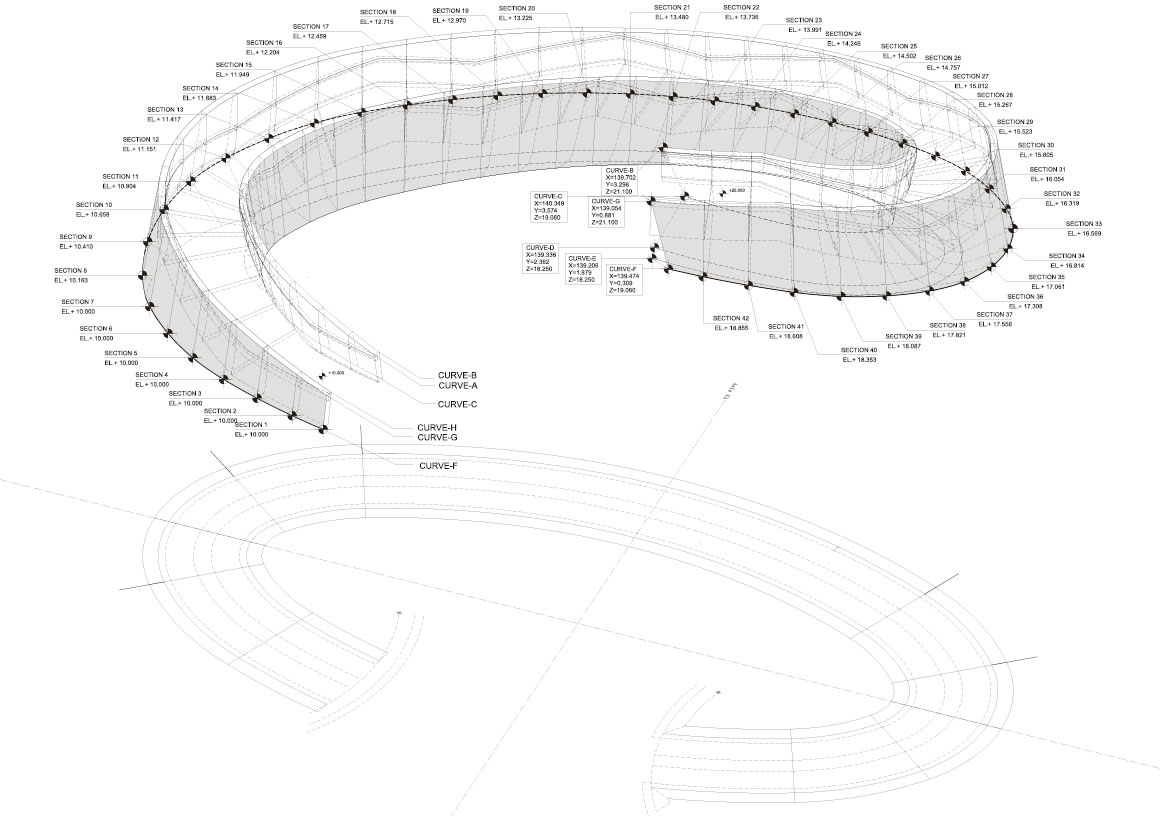
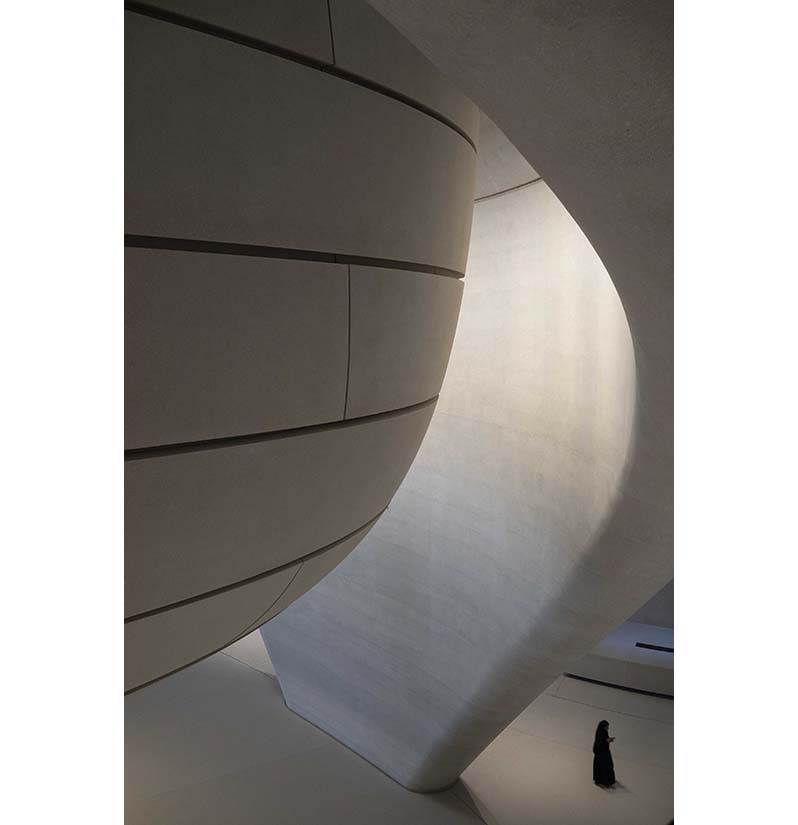
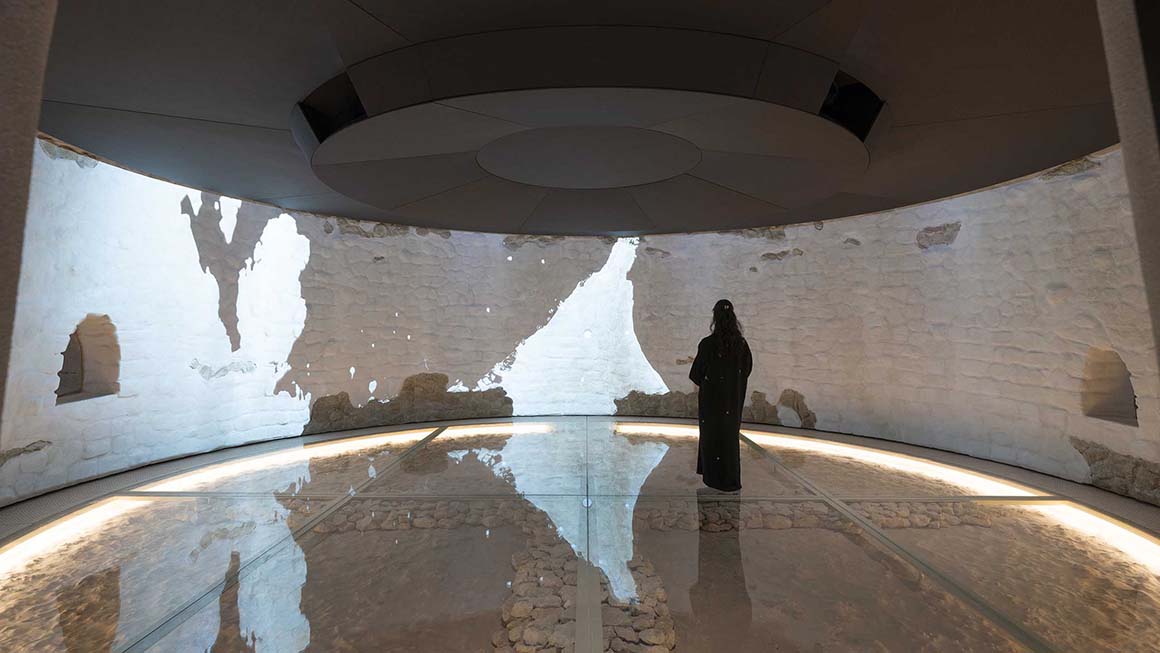
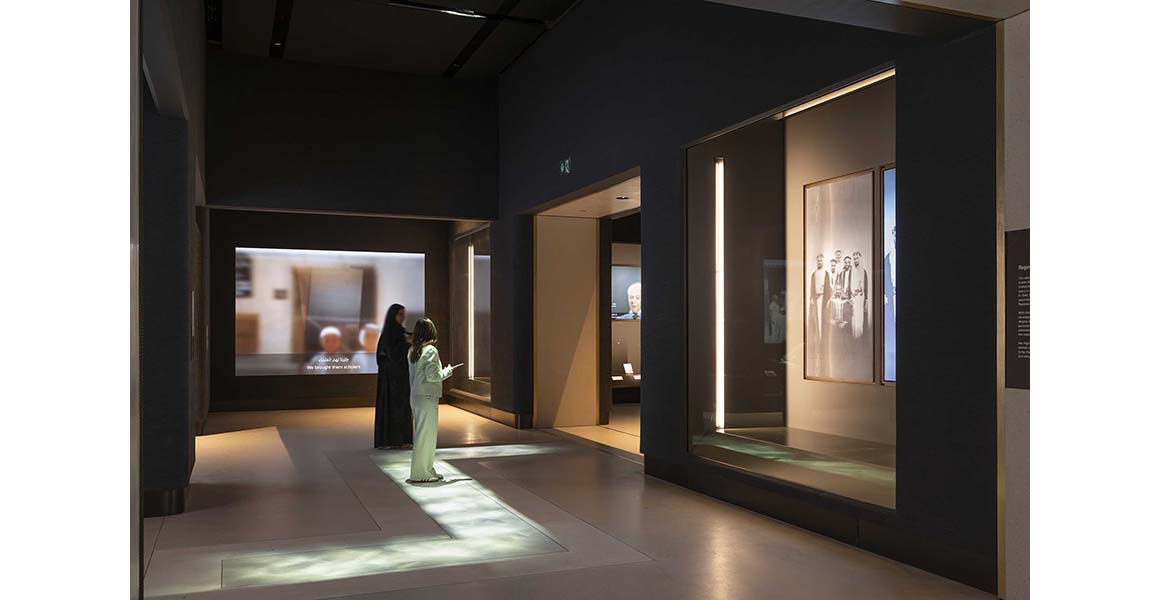
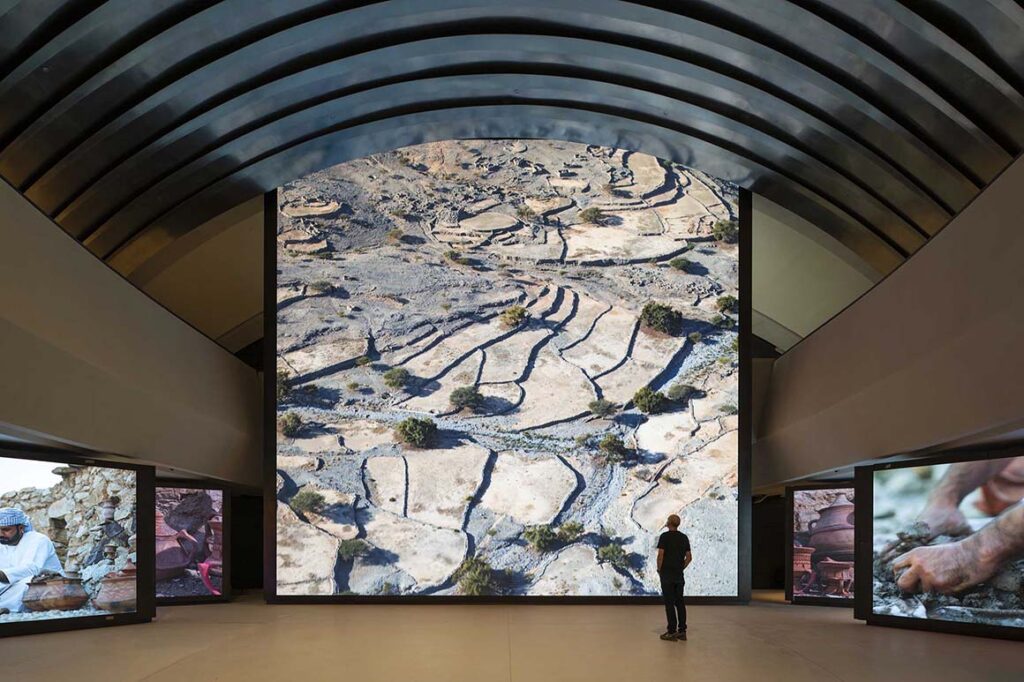
Four of the six permanent galleries are capsule-shaped structures suspended above Al Liwan. They create precisely controlled environments that protect sensitive artifacts. Among the museum‘s more than 3,000 objects, 1,500 are displayed across the six galleries. Our Beginning examines the life of Sheikh Zayed through archival footage, photographs, personal belongings, and voice recordings. Through Our Nature shows how the UAE’s oases, deserts, and coasts have shaped life and culture over thousands of years. To Our Ancestors addresses 300,000 years of history and archaeological discoveries, while Through Our Connections explores changes in technologies, materials, and beliefs from the Iron Age to the 12th century CE. By Our Coasts presents navigation, trade, and pearl diving over the past five centuries, and To Our Roots explains the Emirati identity as seen through inland customs and everyday life from past to present.
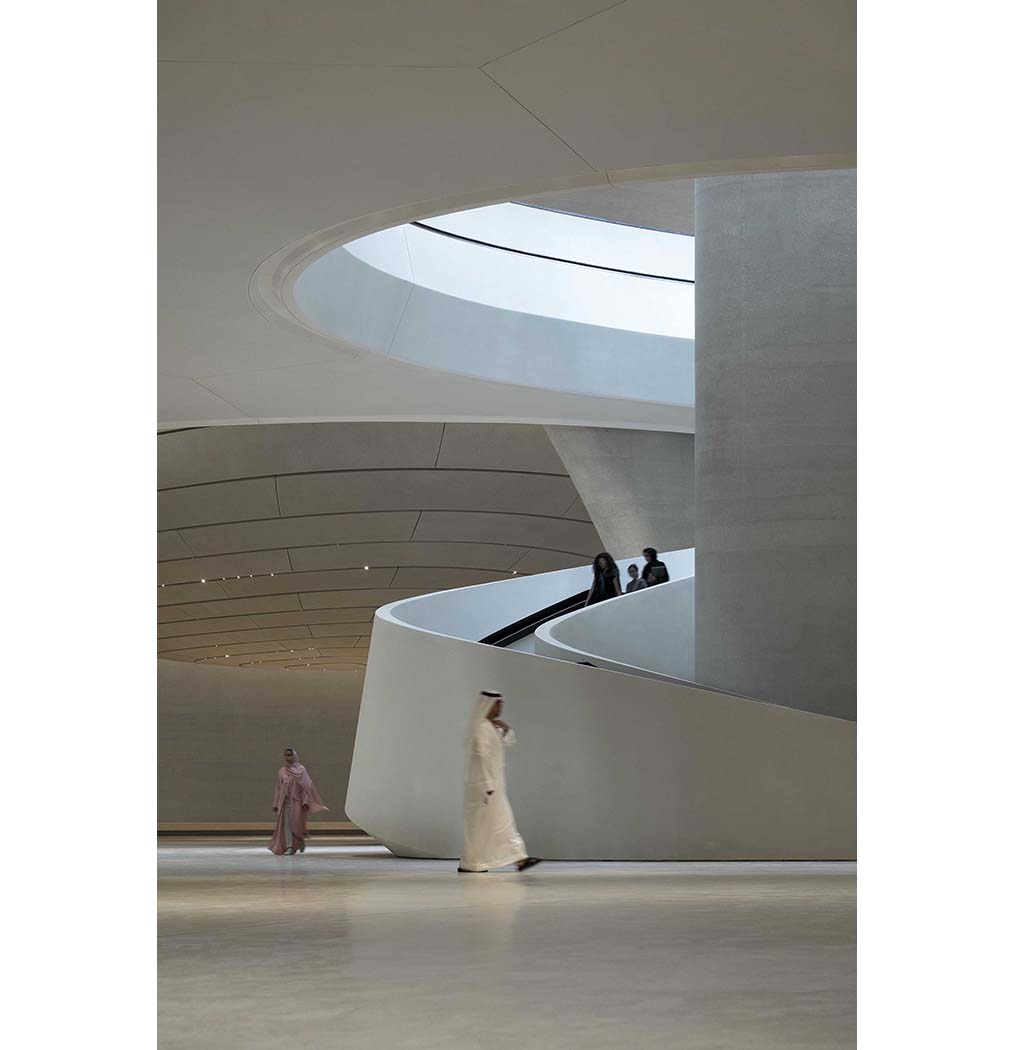
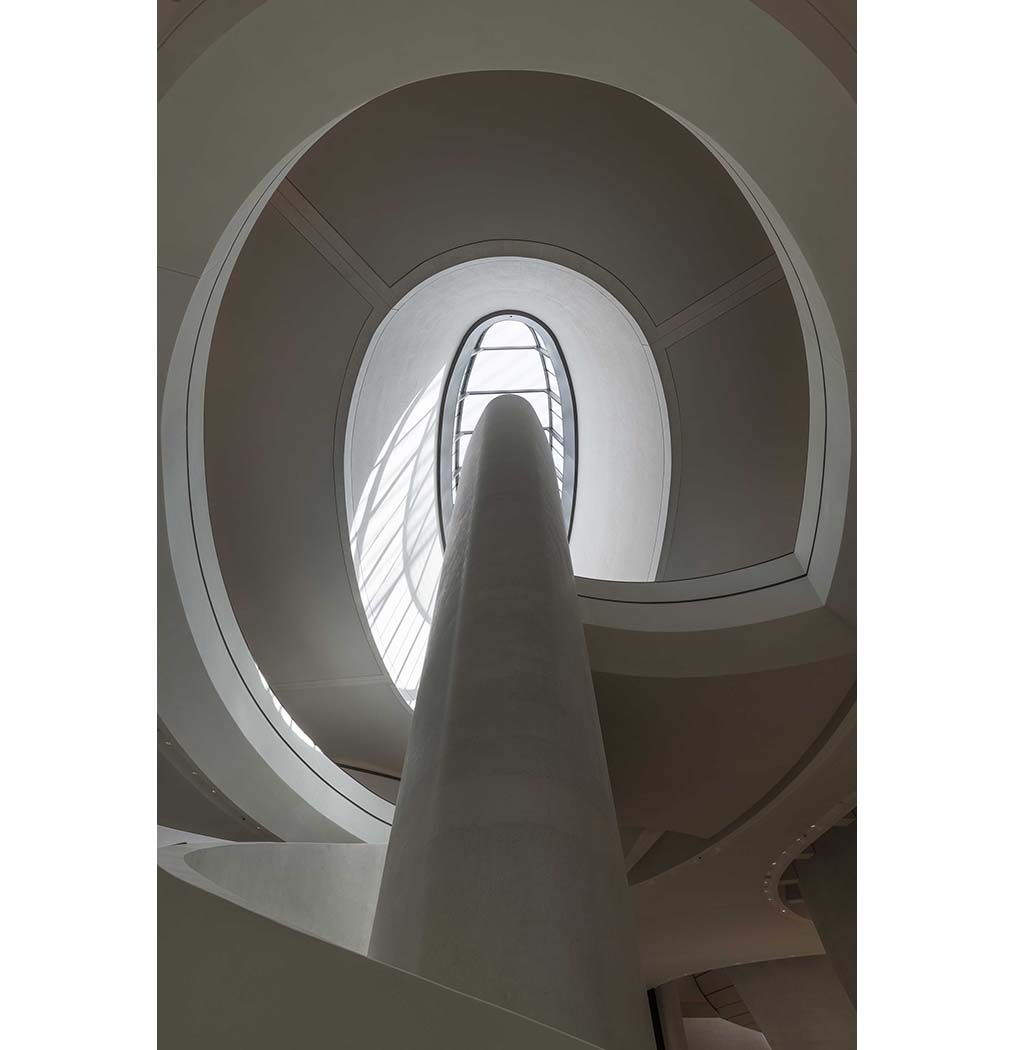
Each capsule is covered with a skylight made of electrochromic glass that adjusts its transparency according to external light levels. Visitors can freely move between the themed galleries or use the spiral staircase or elevators. On the ground floor, two additional permanent galleries are located near the entrance, and the floor also includes a temporary exhibition space, a fine-dining restaurant, and a café.
Outside the museum, the Al Masar Garden reflects Sheikh Zayed‘s love of nature. The garden forms a link between the museum and the coastline. Integrating landscape and heritage, this natural space is a public area open to the community for gathering, play, and contemplation. Visitors begin at the lower level and follow shaded paths up to the lookout on top of the mound to enjoy panoramic views.
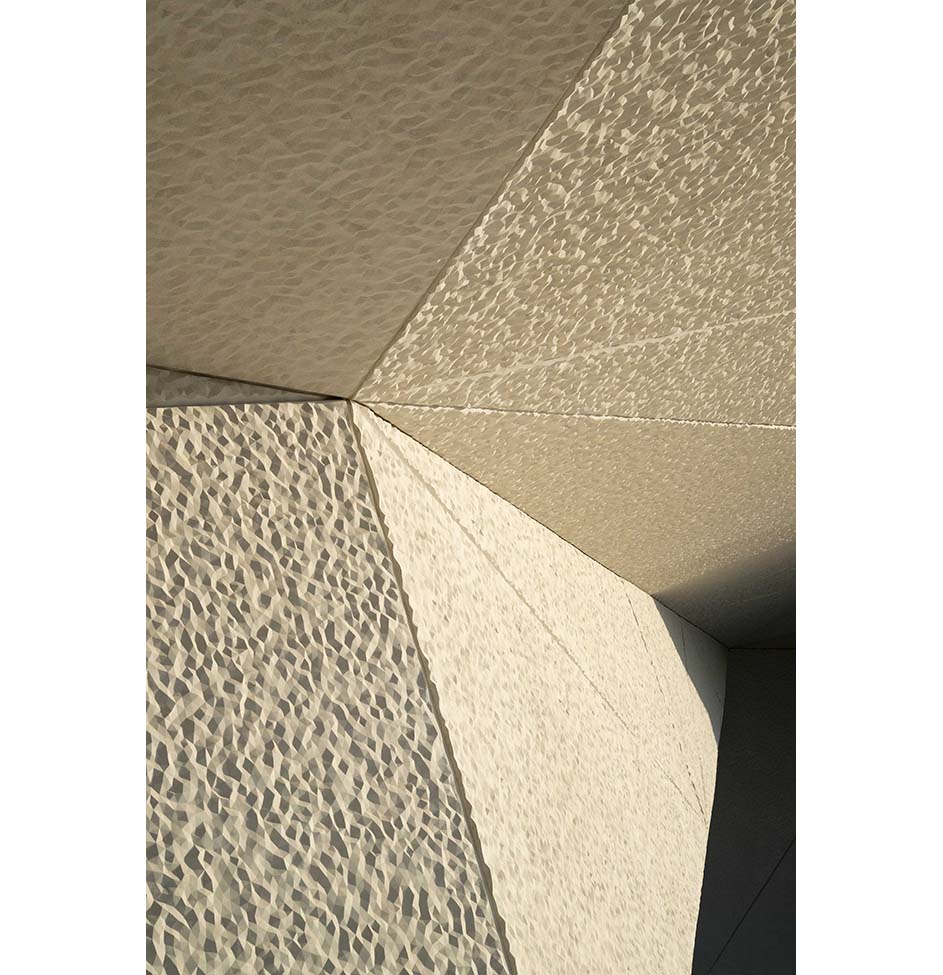
The materials were selected in consideration of harmony with the surrounding environment. Just as the desert sands of the UAE‘s seven emirates differ in color and these variations appear in historic architecture, the exterior and interior of the museum express the warm, pale sand tone characteristic of Saadiyat Island.
Project: Zayed National Museum / Location: Abu Dhabi, UAE / Architect: Foster + Partners / Project team: Norman Foster, Gerard Evenden, David Nelson, Emily Phang, Ross Palmer, Marilu Sicoli, Toby Blunt, Adam Newburn, Irene Gallou, Martin Castle, Martha Tsigkari, Andrew King, Ill Sam Park, Will Plowman, Ricardo Messano, Wolfgang Muller, Barrie Cheng, Dara Towhidi, Nicholas Arthurell, Cristine Castilhos Balarine, Jefferson Barnes, Giovanni Betti, Ho Ling Cheung, Harvey Cullis, Miriam Dall’Igna, Marta Diego, Alejandra Florez-Estrada Diaz, Hamza Farooq, Oscar Gil, Hisayo Kaneko, Alexandra Kogia, Angeliki Koliomichou, Joliette Lange, Won Suk Lee, Paul Leo, Richard Maddock, Elizabeth Miller, Alessandro Milazzo, Isshin Moroto, Josef Musil, Hossein Naser Vafai, Irina Nazarova, Eleonora Neri, Mouzo Ntagkala, Chan Ik Park, Jose Pedro Santiago Da Silva, Ezmira Peraj, Javier Perez Torrejon, Laura Podda, Luca Poian, Sladjana Putnik, Merino Ranallo, Alfie Recarte Olaran, Emanuele Renzi, Florian Rieger, Ramit Saksena, Laura Suico, Chris Storie, Takashi Tsurumaki, Karsten Vollmer, Dominic Williams, Simon Wing, Xiaoming Yang, Munehiko Yokomatsu, Bo Yoon / Structural engineer: AKT II, WSP / Civil Engineers: Philip Habib + Associates / MEP Engineer: BDSP, WSP / Cost Consultant: RLB / Lighting engineer: Lerch Bates / Landscape architect: Atelier Dreiseitl, WATG / Lighting Consultant: Lerch Bates / Landscape Consultant: Atelier Dreiseitl, WATG / Specification Writers: Schumann Smith, Foster + Partners / Air Flow Consultant: RWDI / Environmental Engineer: Transsolar / Auditorium Consultant: Shen Milsom & Wilke / People Movement Consultant: Intelligent Space / Main Contractor: Arabtec, Six Construct-Trojan JV / Enabling Works Contractor: Swissboring / Piling Contractor: NSCC / Sub-structure Contractor: Al Habtoor Murray Roberts / Client: Department of Culture and Tourism / Use: museum / Site area: 86,876m² / Bldg. area: 88,870m² / Gross floor area: 56,687m² / Length of Al Masar Garden: 600m / Height: 123m above National Abu Dhabi Datum (NADD) / Competition win: 2007 / Appointment: 2008 / Initial construction phase: 2008-2012 / Construction: 2018-2025 / Completion: 2025 / Photograph: ©Nigel Young (courtesy of the architect)