
A sense of balance between solid and void, closure and openness
ZAO/Zhang Ke Architecture Office
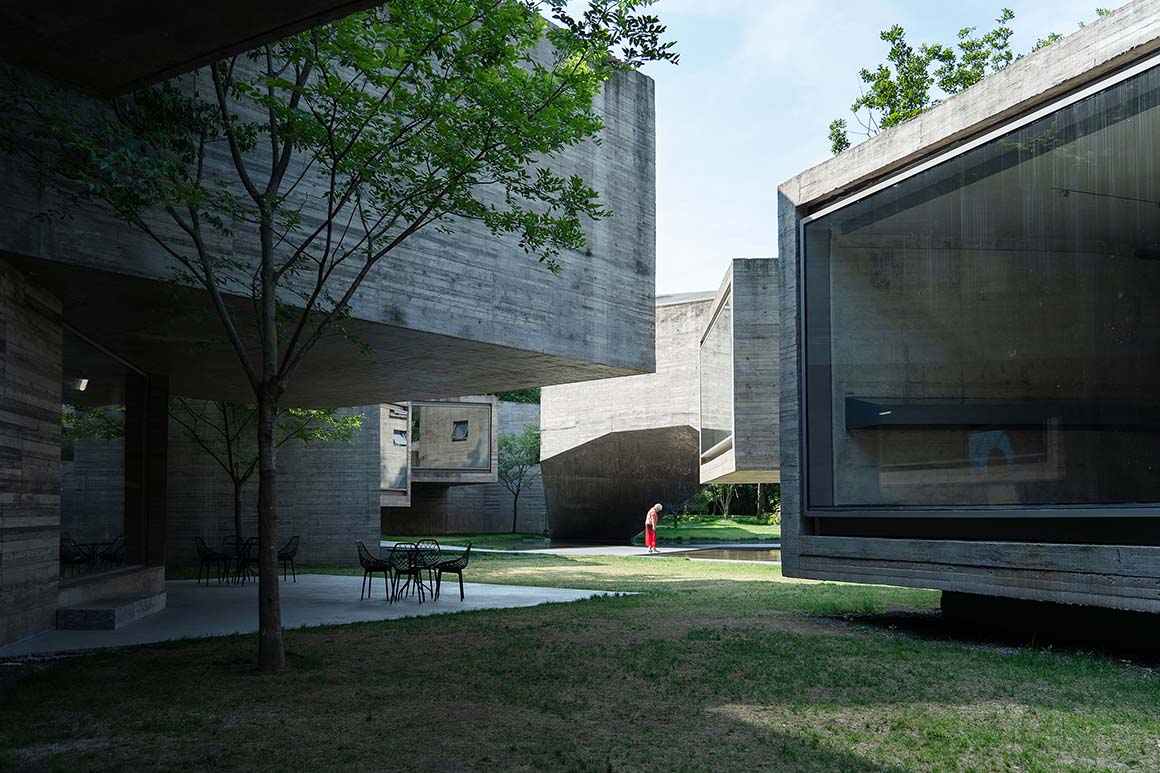
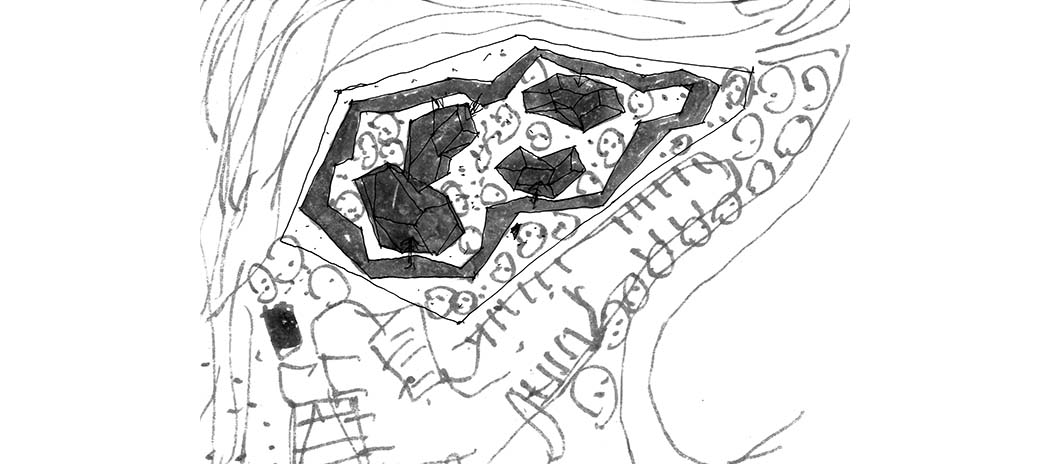
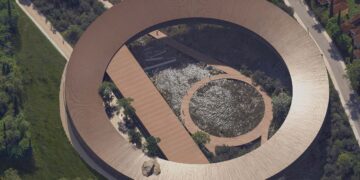
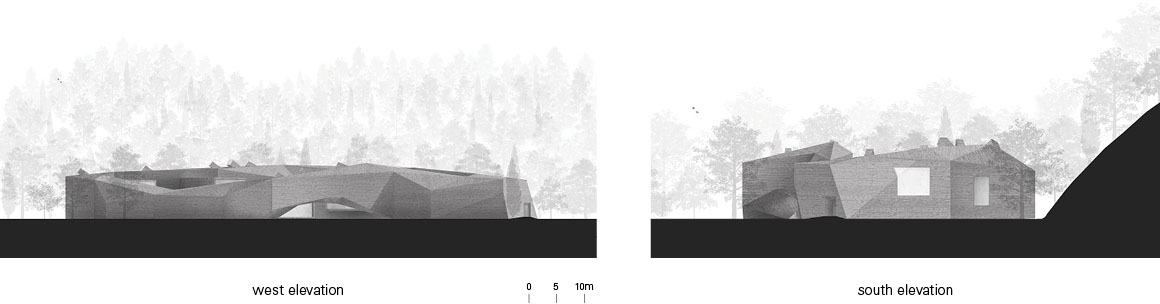
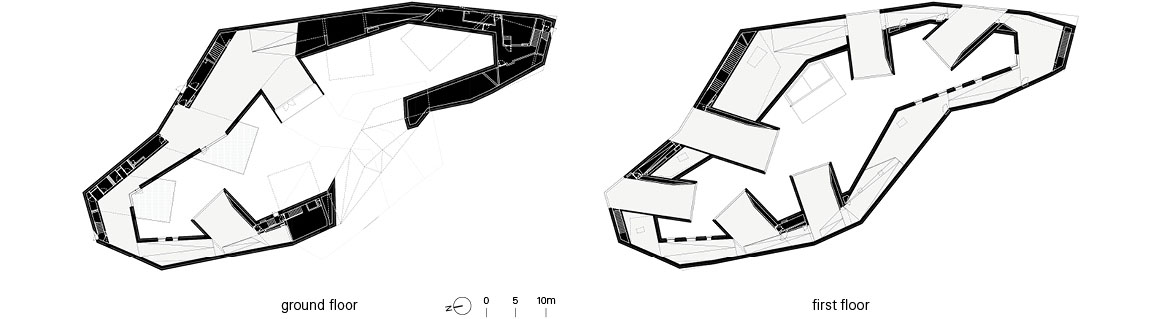
The Xiao Feng Art Museum in Hangzhou was created with the intention of commemorating the artist couple Xiao Feng and Song Ren, who passed away in 2023. Angular concrete volumes circulate around a central courtyard, accommodating box-shaped exhibition spaces along naturally connected circulation paths. The irregular configuration of the courtyard was inspired by Chinese literati gardens that flourished during the Ming dynasty. Literati gardens were spaces that revealed the artistic cultivation and scholarly knowledge of their owners. They were not spaces intended for display or viewing, but autobiographical environments that expressed personal taste and worldview. As one walked through them, scenery shifted, spatial changes were staged like successive scenes, rhythms of tension and relaxation unfolded repeatedly, and layouts were organized to naturally draw in the surrounding landscape—these were defining characteristics of the literati garden.
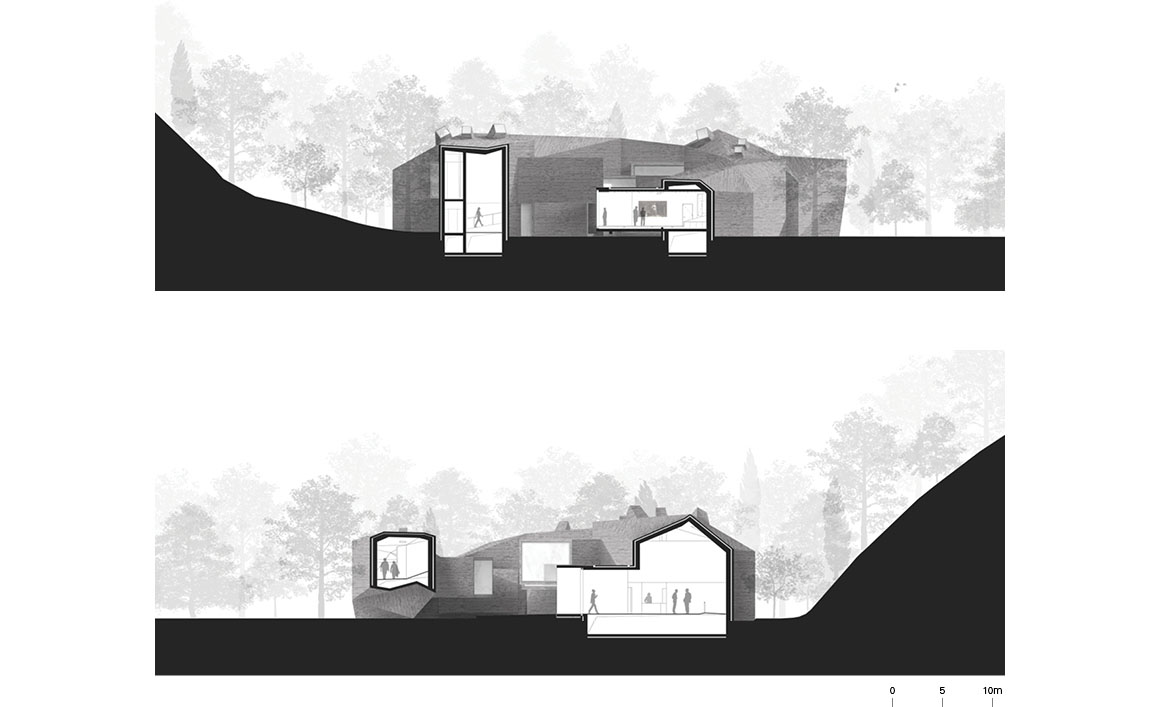
At the Xiao Feng Art Museum, a sequence of spaces organized around the courtyard is likewise realized. Spatial widths repeatedly narrow and widen, while ceiling heights lower and rise again, creating a multilayered spatial experience in the process.
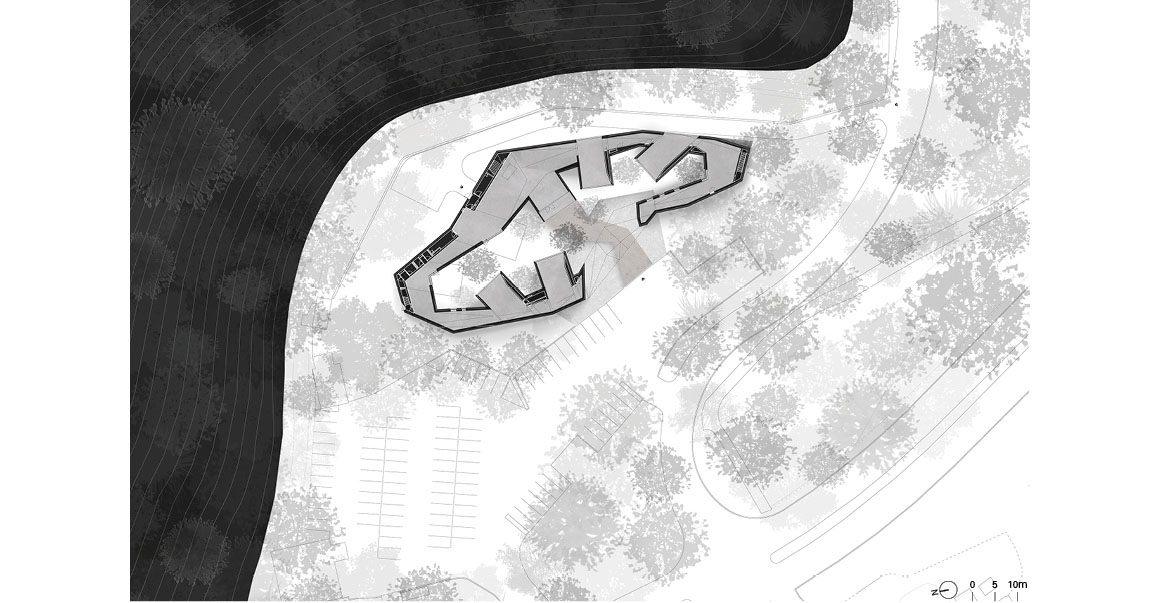
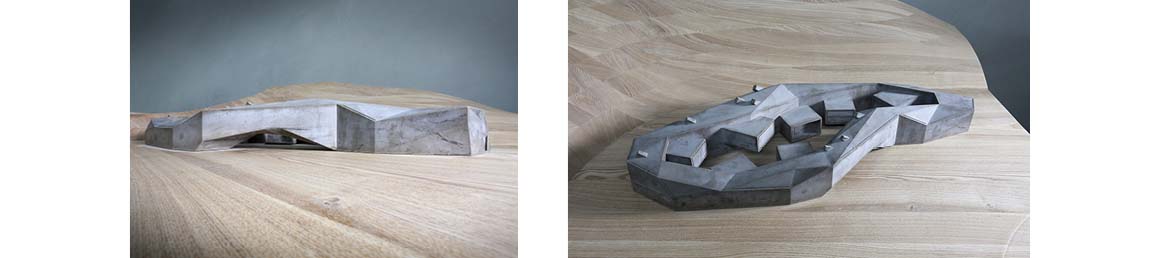
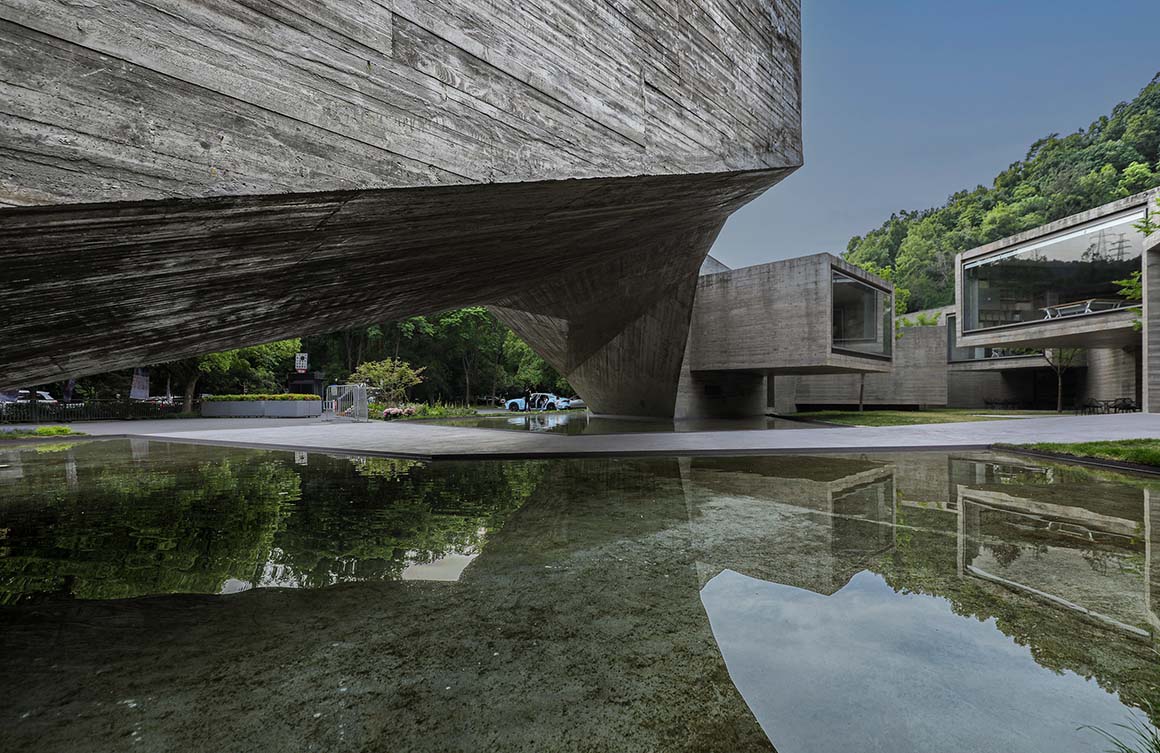
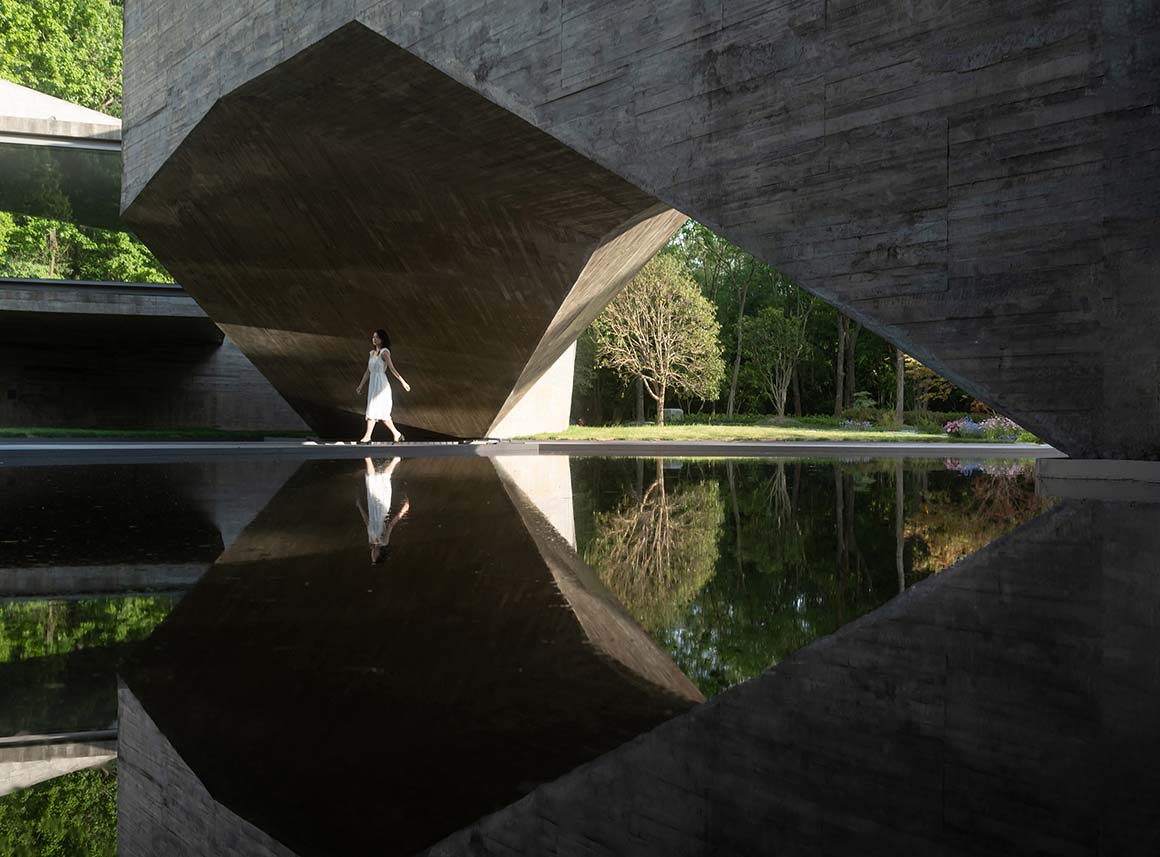
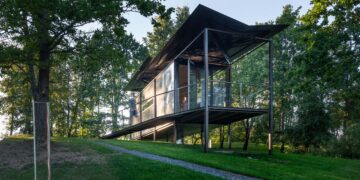
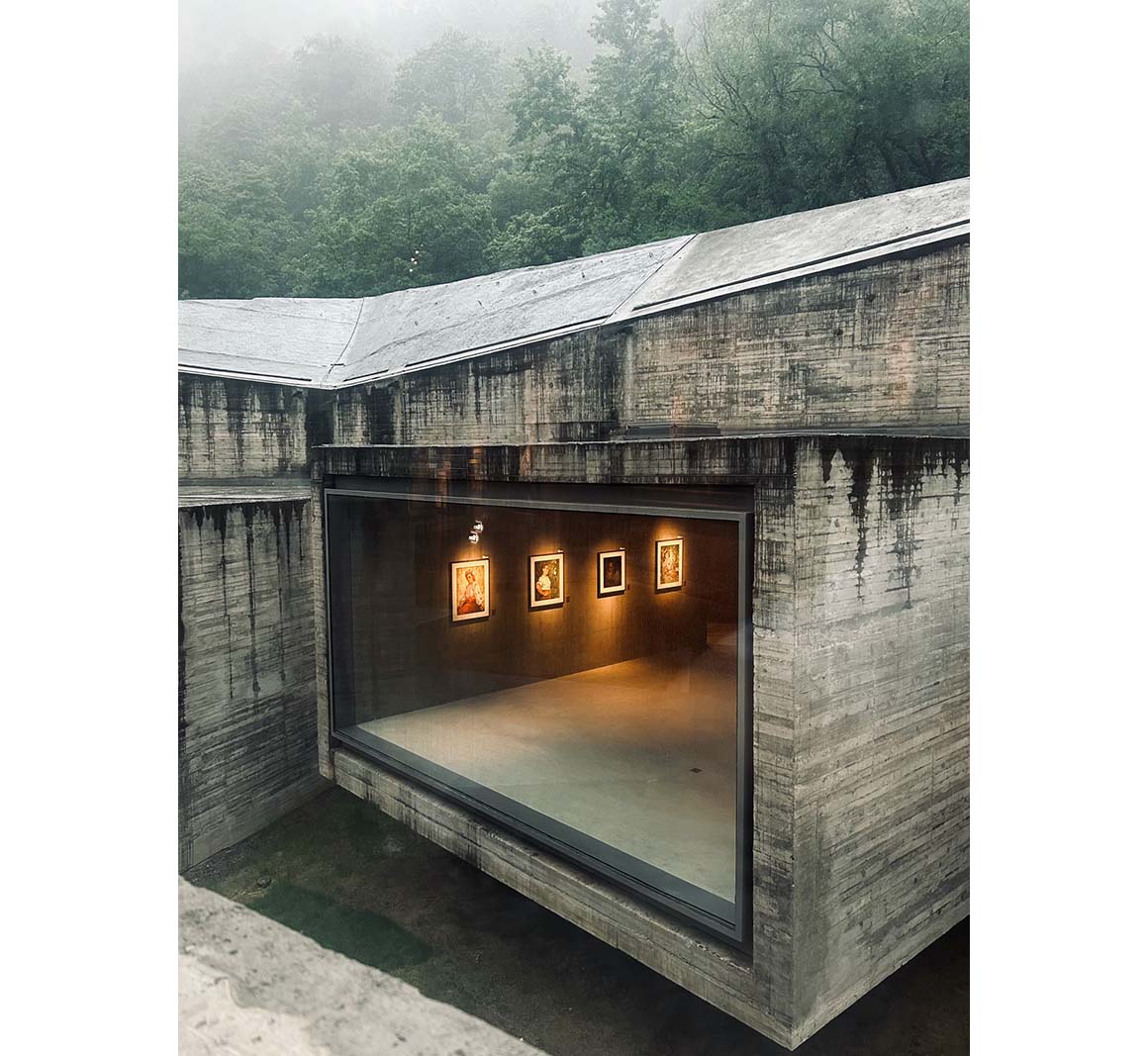
Within a rhythm of gradual expansion and contraction, compression and release, narrow passages lead into broad exhibition halls, and sloped ramps connect different floor levels. Along this route, the scale and texture of light that emerges, together with sightlines that capture the external landscape, continuously intersect. Polygonal box-shaped exhibition spaces project toward the courtyard. Through the full-height glazing at the front of these box volumes, sightlines pass through, generating visual interaction between interior and exterior. From within, the forest unfolds like a backdrop to the artworks; from the courtyard, the fragmented exhibition spaces appear gathered while hovering in the air, opening views beyond the building toward the surrounding natural landscape. Visitors pass beneath a bridge-like structure of the building and reach an entrance located within the courtyard. Along both sides of the approach to the museum are shallow reflecting pools, beyond which a lawn planted with trees extends. Beneath the projecting volumes, terraces are arranged where visitors can sit and rest.
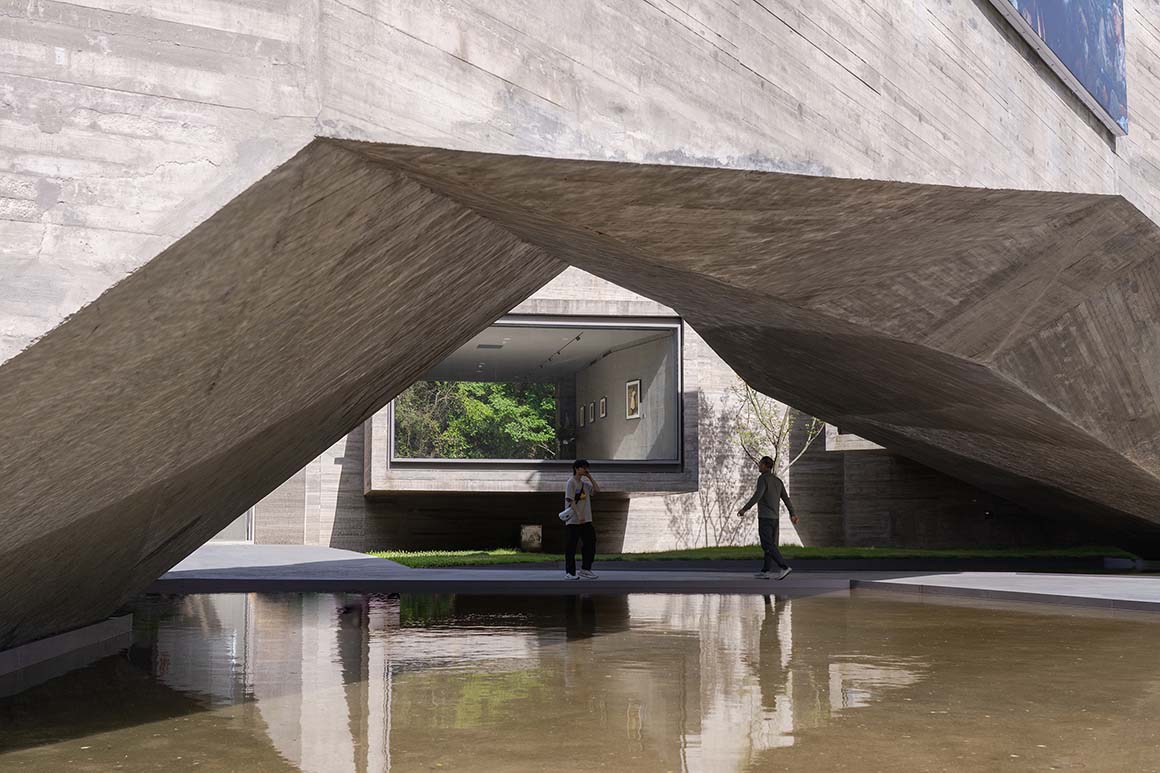
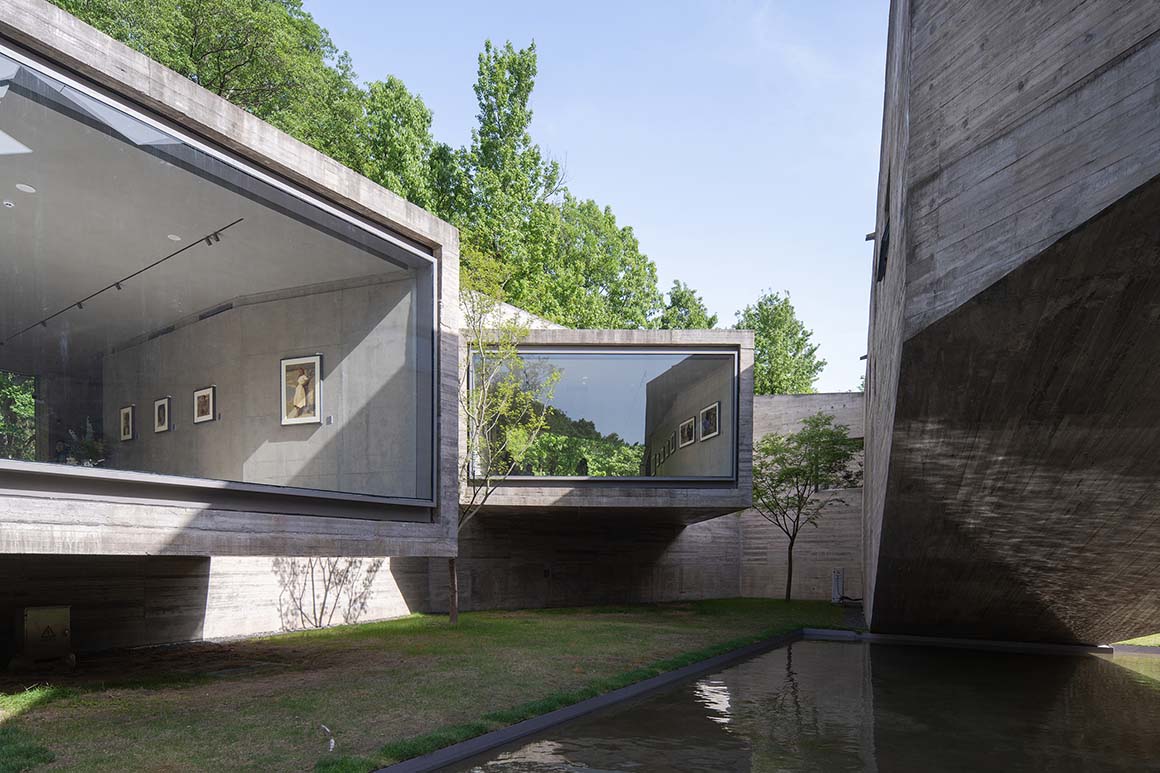
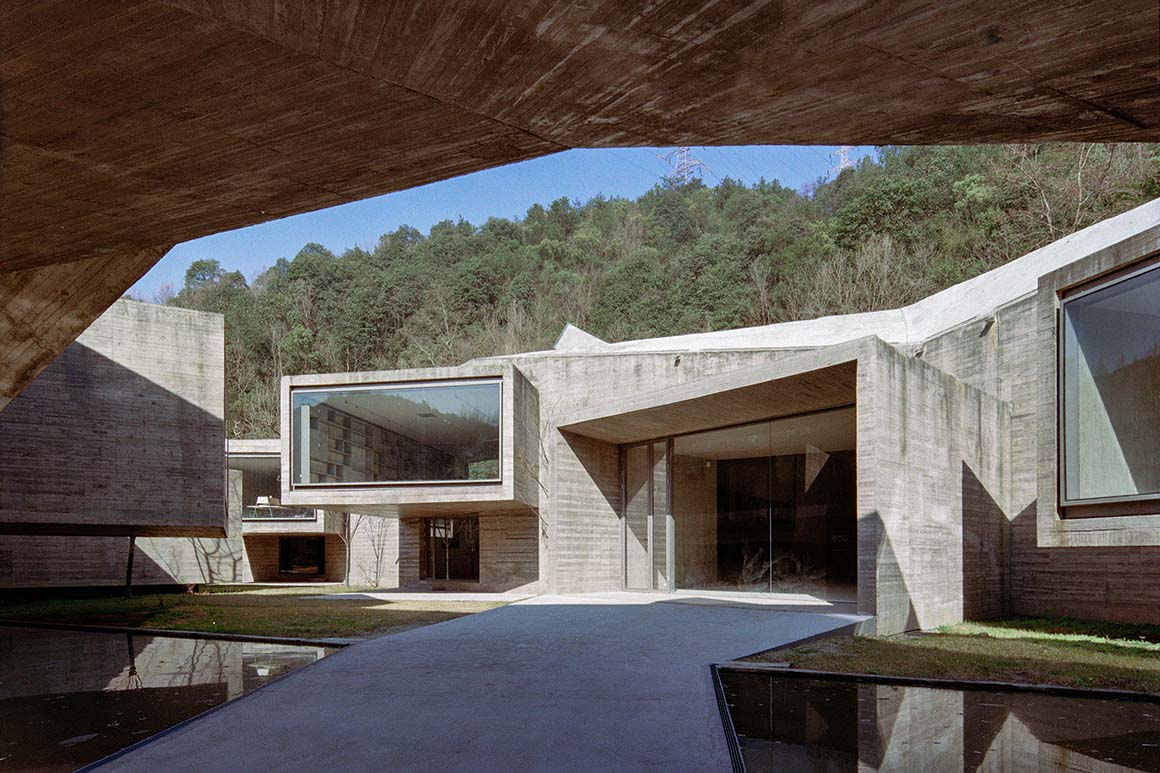
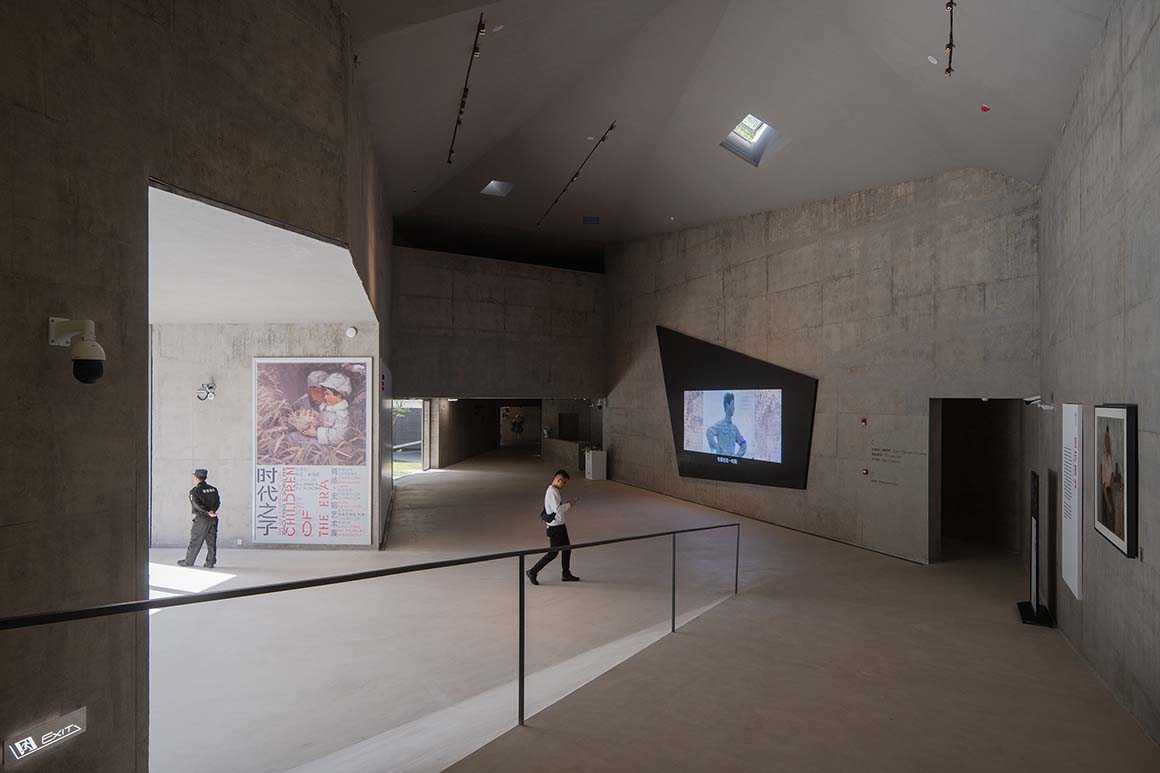
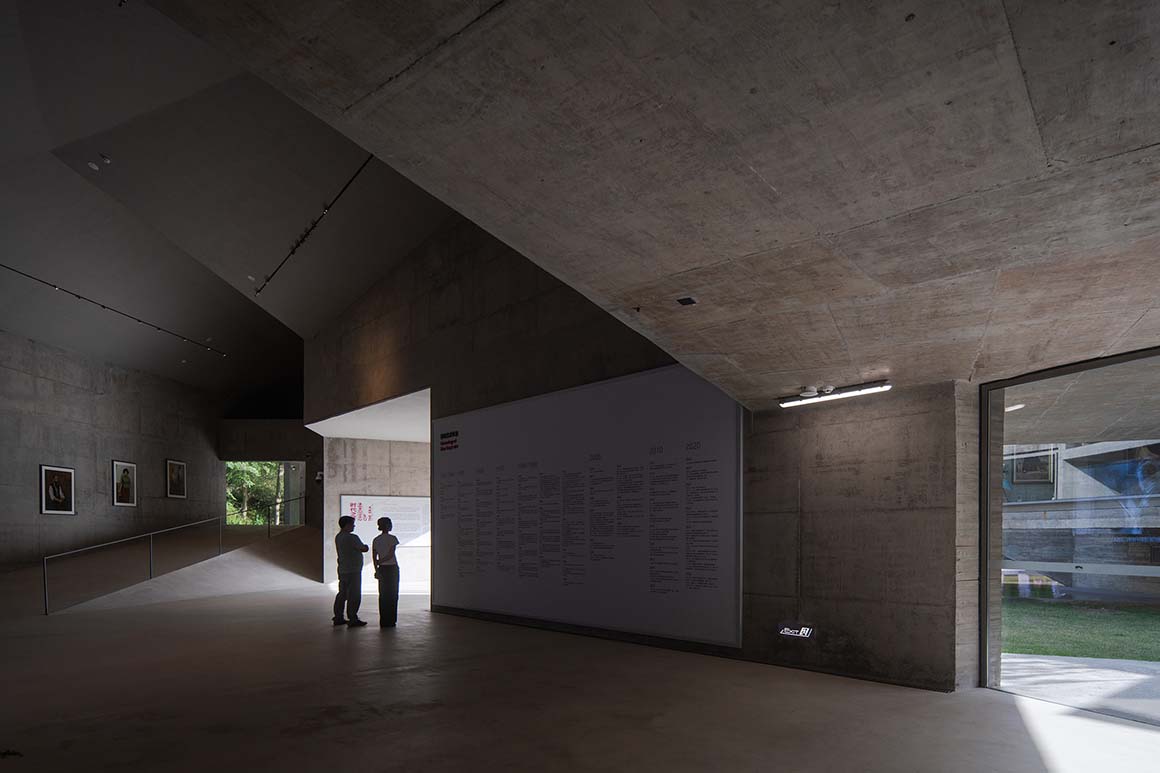
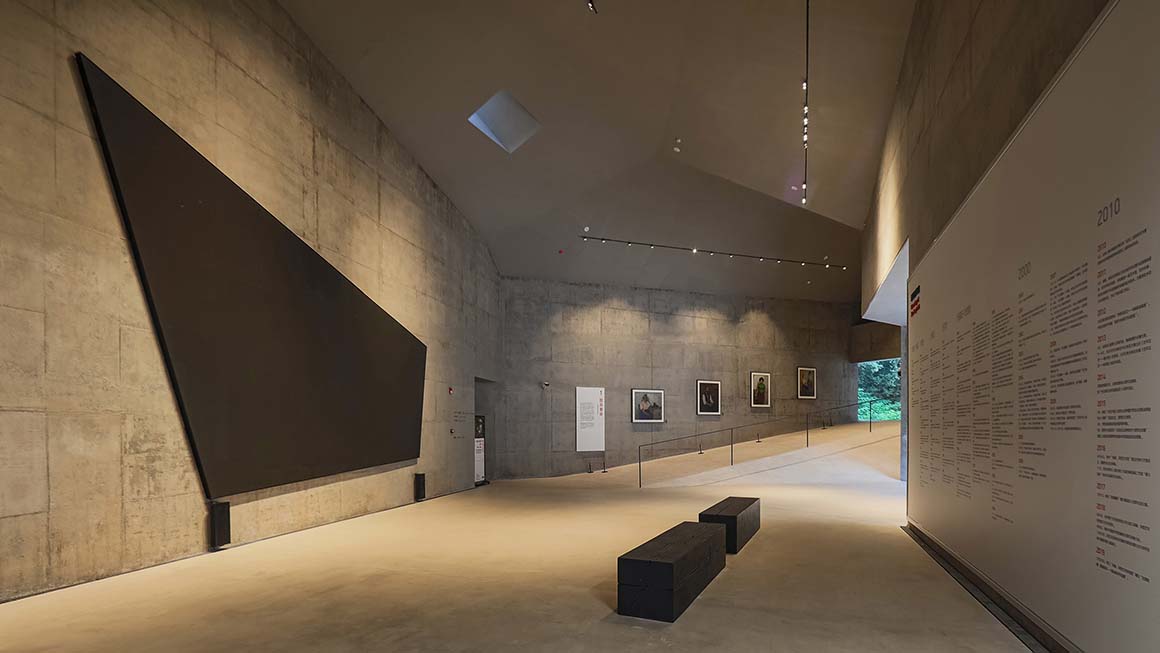
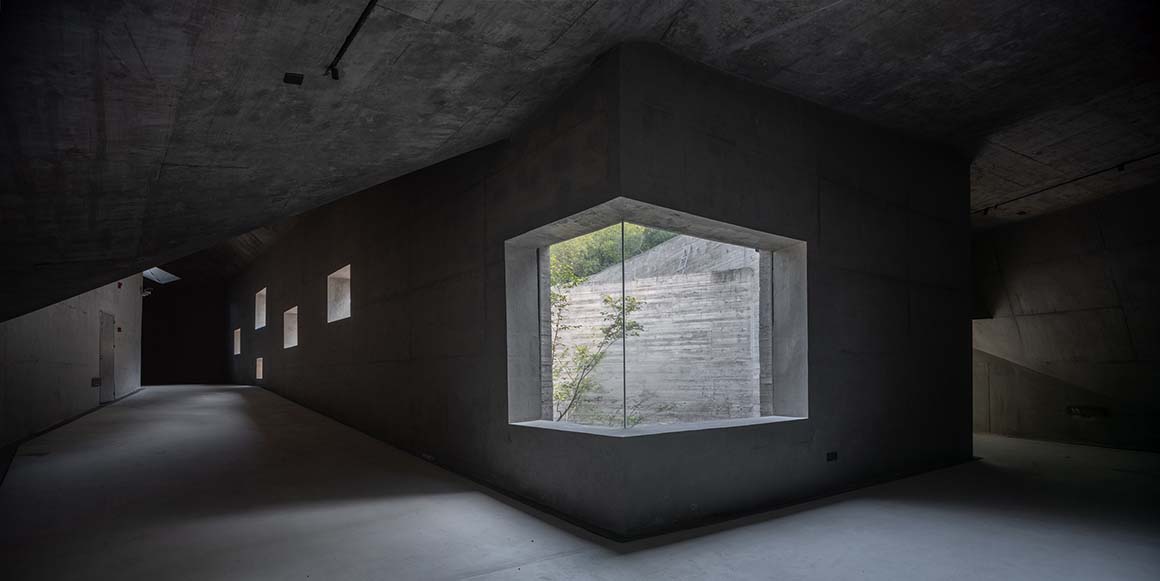
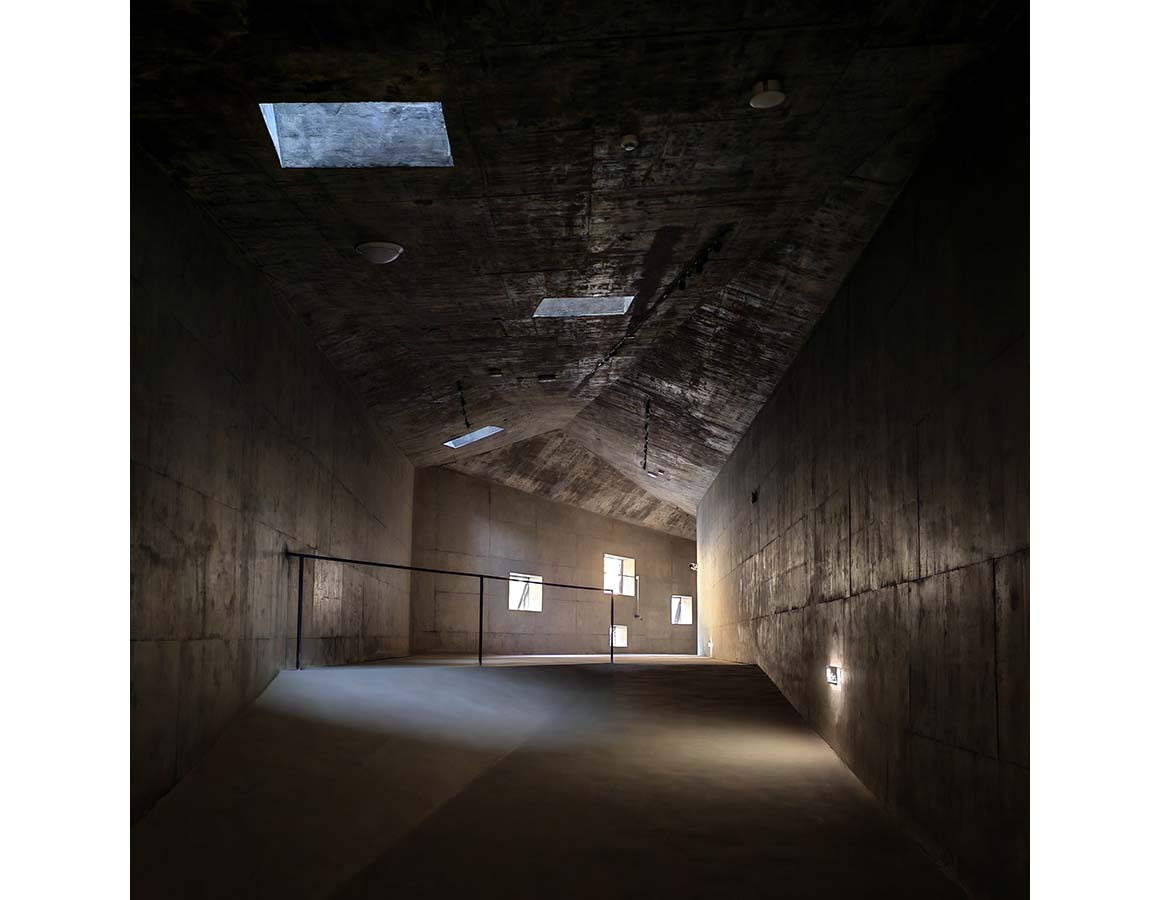
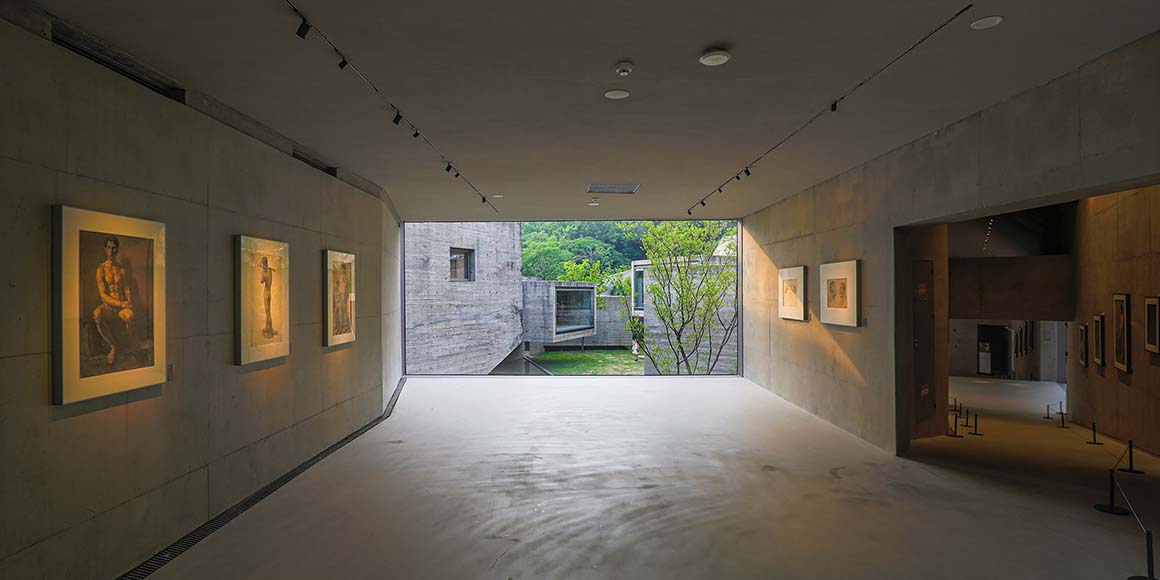
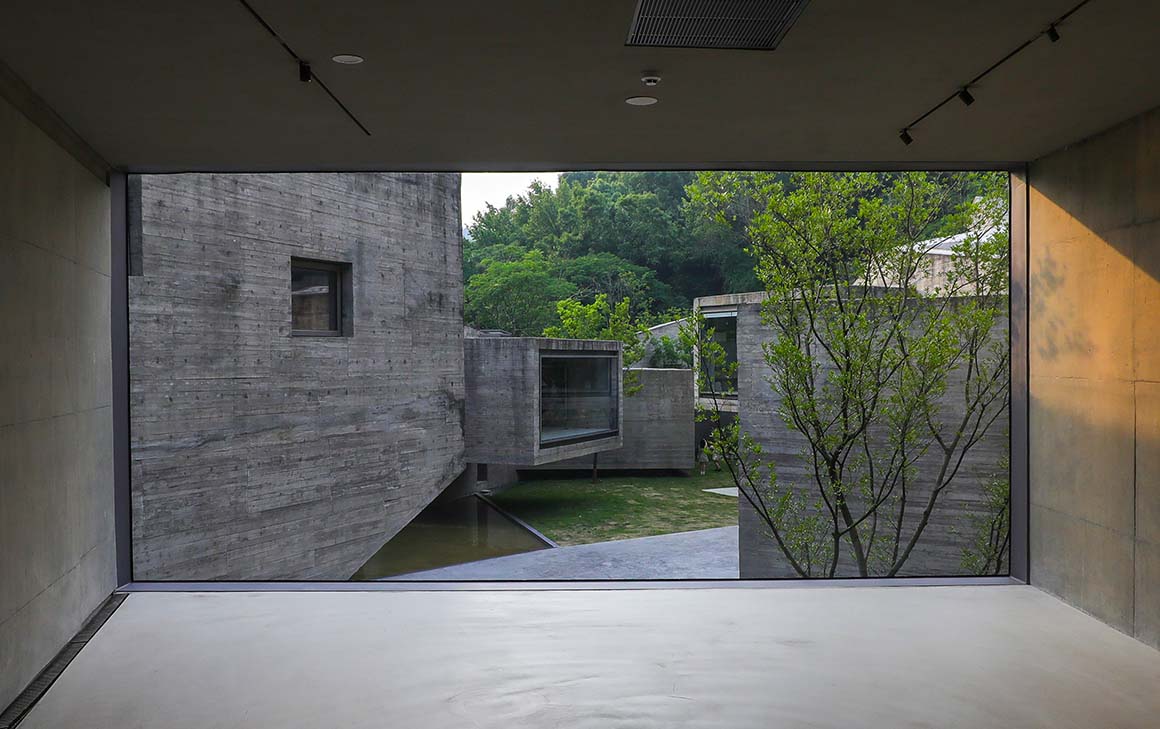
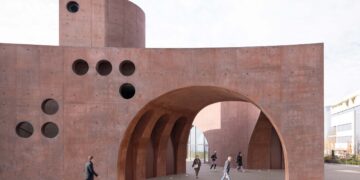
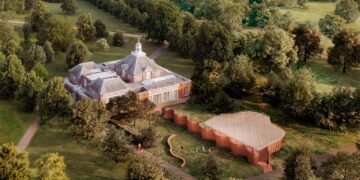
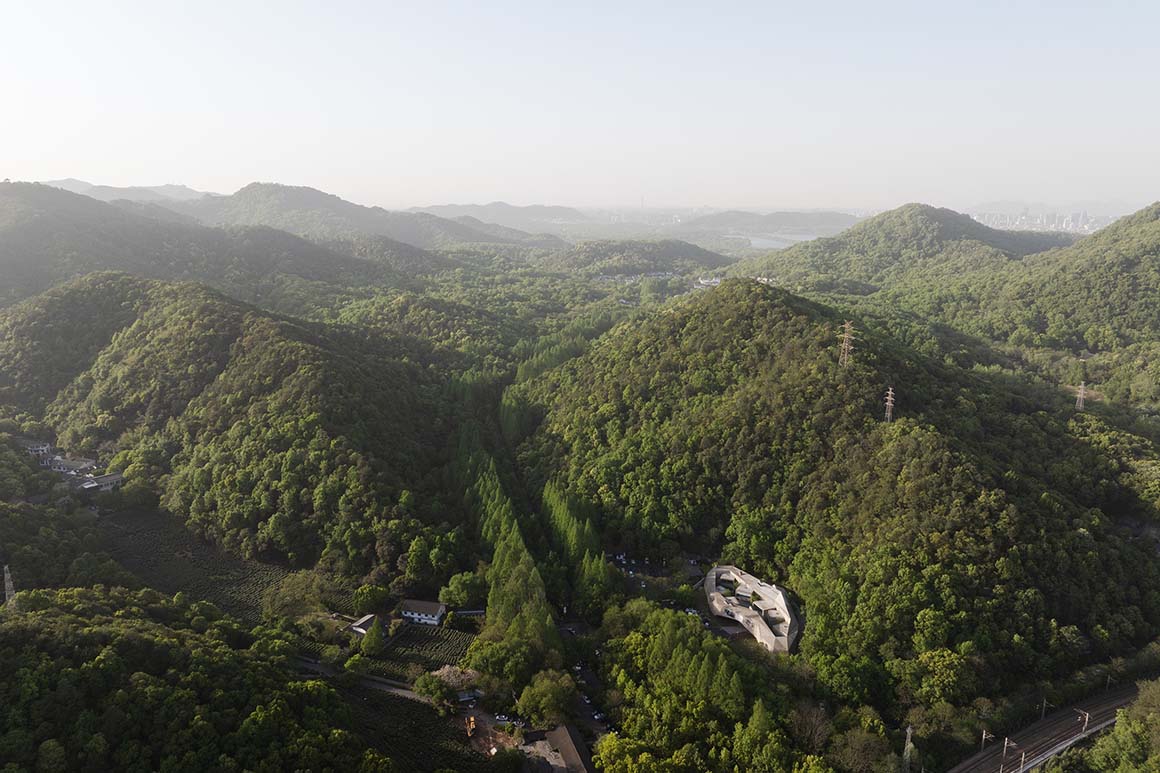
The entire building, cast in concrete mixed with black ink pigment, takes on a graphite-like tone in which the sense of space shifts according to changes in light. Traces of the wooden formwork remain on the exposed surfaces, adding a warm tactile quality to the building’s heavy mass. Natural light entering through angular openings spreads freely across the rough wall surfaces, forming a distinctive atmosphere, and at dusk the interior lighting emits a soft glow into the courtyard. This material uniformity brings the building’s relationship with its surroundings into sharper relief. Amid the dense greenery of the surrounding forest, the dark-toned concrete exists like a thick geological stratum. A restrained contrast between solid and void, closure and open views, produces a stable sense of balance. Within the courtyard, reflective water surfaces and exposed concrete planes evoke the character of a literati garden reinterpreted in a contemporary manner. The water layers reflections of the surrounding environment to create depth, while the sound of water gently softens the building’s angular form. In the interstitial spaces between buildings, small trees grow and extend their branches, infusing the architecture with a sense of life.
Project: Xiao Feng Art Museum / Location: No. 1 Huyu Road, Xihu District, Hangzhou, Zhejiang Province, China / Architect: ZAO / ZhangKe Architecture Office (Zhang Ke) / Project team: Roberto Caputo. Dai Haifei, Yu Ge, Simon Persson, Virginia Chiappa Nunez, Paolo Failla, Niccoló Calabrese De Feo, Stefano Di Daniel, Jesper Rieter, Qian Yiru, Sofia Chebotareva, Wang Liying, Huang Tanyu, Zhang Mingming, Ouyang Yanquan, Fang Shujun, He Kuang, Zhang Yifan, Lu Juncong, Wang Simiao, Yu Yihua / Collaborator: Tongji Architectural Design (Group) Co., Ltd. / Collaborator team: Wang Xiang, Chen Yixin, Li Xiang, Chen Xi, Xi Jiakai, You Bolin, Geng Junjun, Zhu Weichang, Zhang Hua, Wu Pan / Exhibition design: Hangzhou GMAID Architecture Design Co,.LTD / Exhibition design team: Qian Qi, Yu Xiaoying, Yan Jiafan, Shan Jiale, Dong Xiaoyu / Client: China Academy of Art, Qianjiang Management Committee of West Lake Scenic Area / Use: cultural architecture, museum / Site area: 3,942m² / Gross floor area: 1,298m² / Design and construction: 2012~2025 / Completion: 2025 / Photograph: ©arch nango (courtesy of the architect); ©DONGimage (courtesy of the architect); ©CAO Qi (courtesy of the architect); ©Sumin (courtesy of the architect); ©WU Qingshan (courtesy of the architect); ©YANG Sheng (courtesy of the architect)