






A Circular Threshold Embracing Buddhist Contemplation

Tianshui in Gansu Province, China, is regarded as one of the cradles of the Yellow River civilization and a historic crossroads along the ancient Silk Road. About 45 kilometers southeast of the city stands Maiji Mountain, where the Maijishan Grottoes are carved into and built against a sheer cliff face. More than 200 caves and over 7,000 sculptures—some carved directly into the rock, others modeled in clay—remain along the vertical terrain. Formed over nearly 1,600 years through the encounter of Eastern and Western cultures mediated by Buddhism, the site is today recognized as a UNESCO World Heritage site.
With the recent development of the Maiji Mountain Cultural and Creative Town as part of a national heritage initiative, a new Visitor Center has been established as the gateway to this vast historical landscape. Serving as a regional tourism hub, the center accommodates exhibitions and visitor services before guests board shuttle buses to the grottoes. Rather than attempting to preview the monumentality of the caves, the building functions as a transitional space—one that calibrates the pace and perception of the journey ahead. It organizes the time before arrival, preparing visitors to engage with the heritage directly.
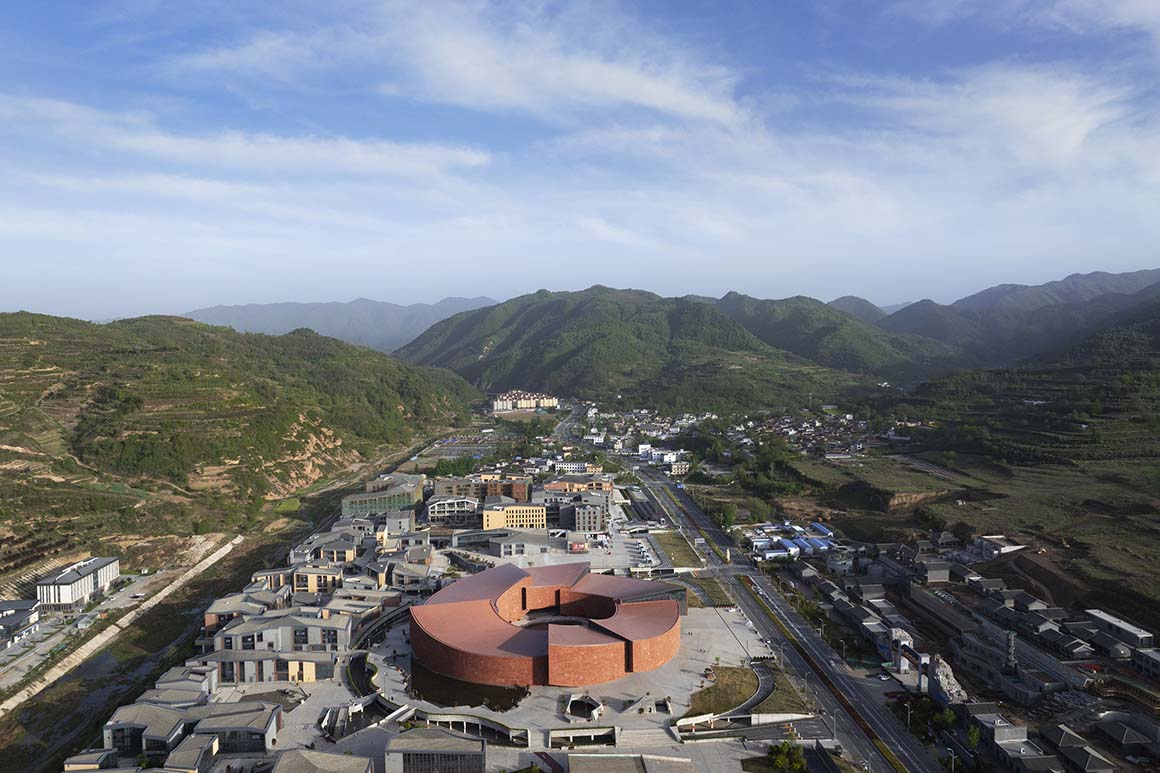
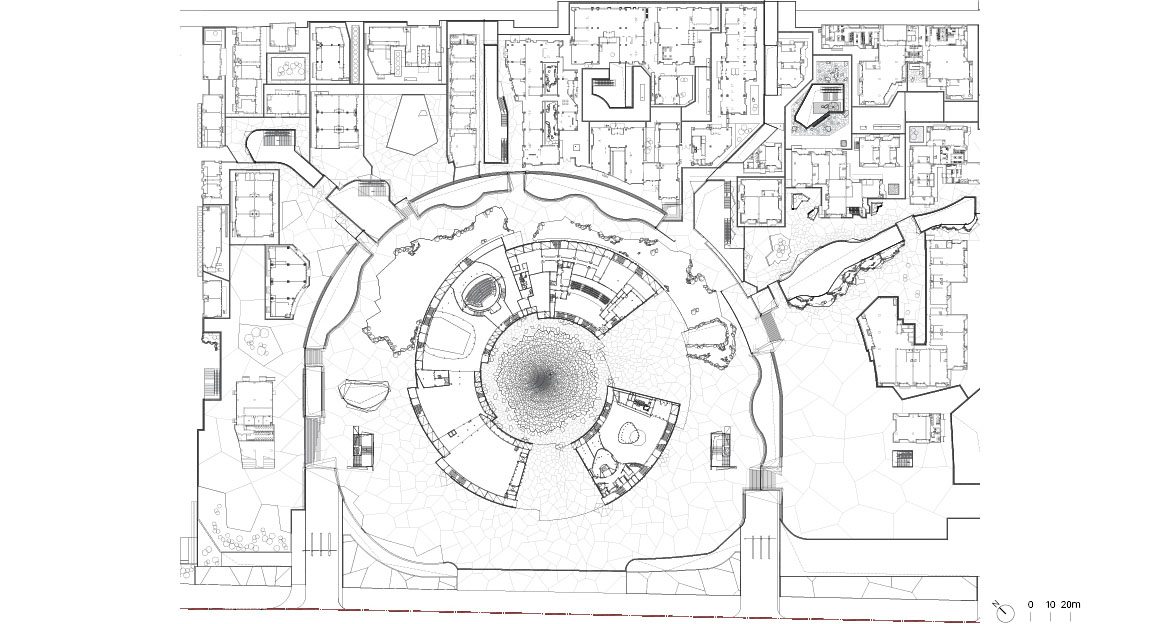
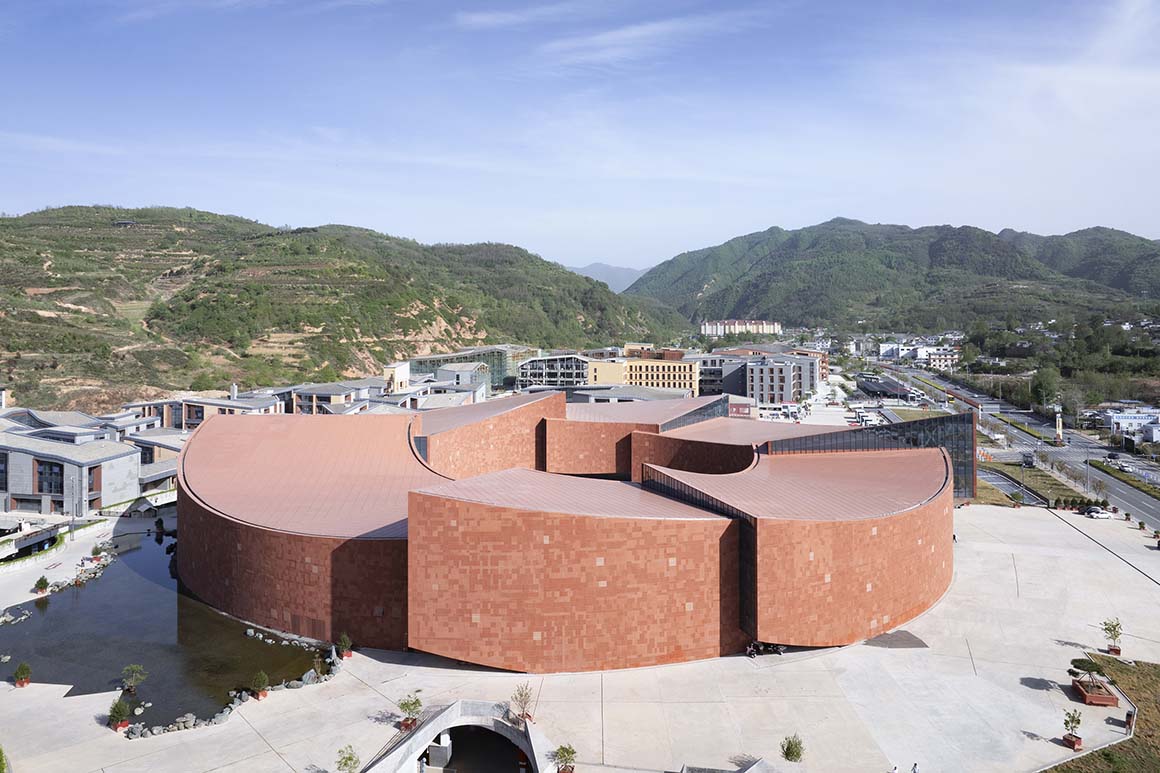
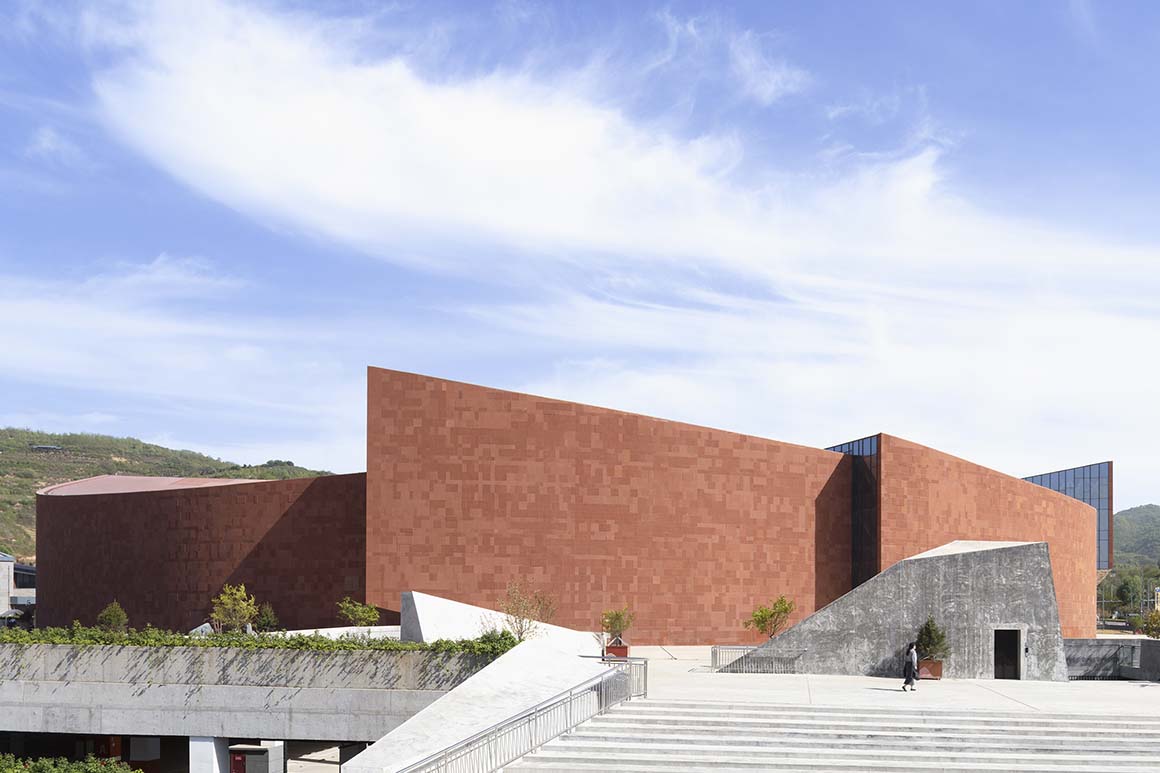
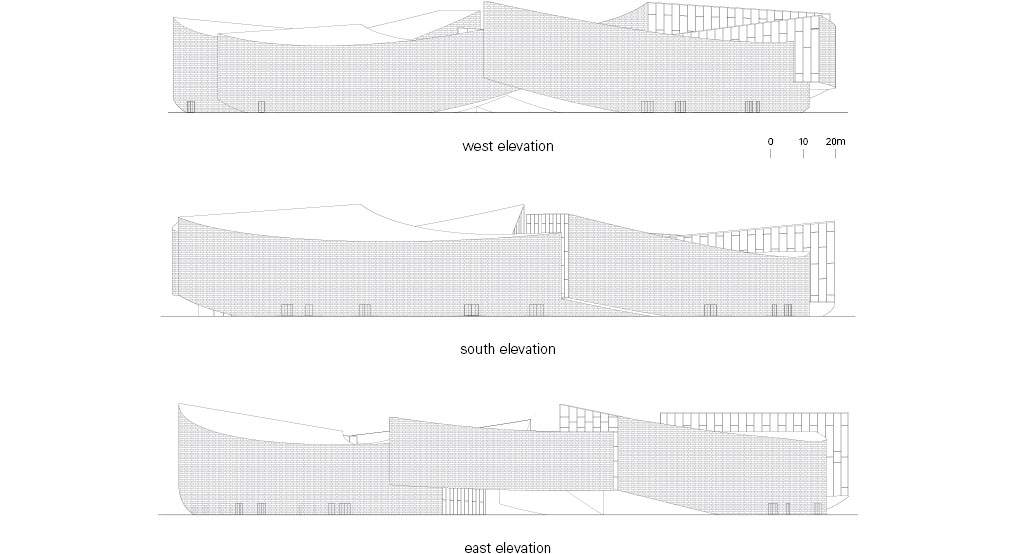
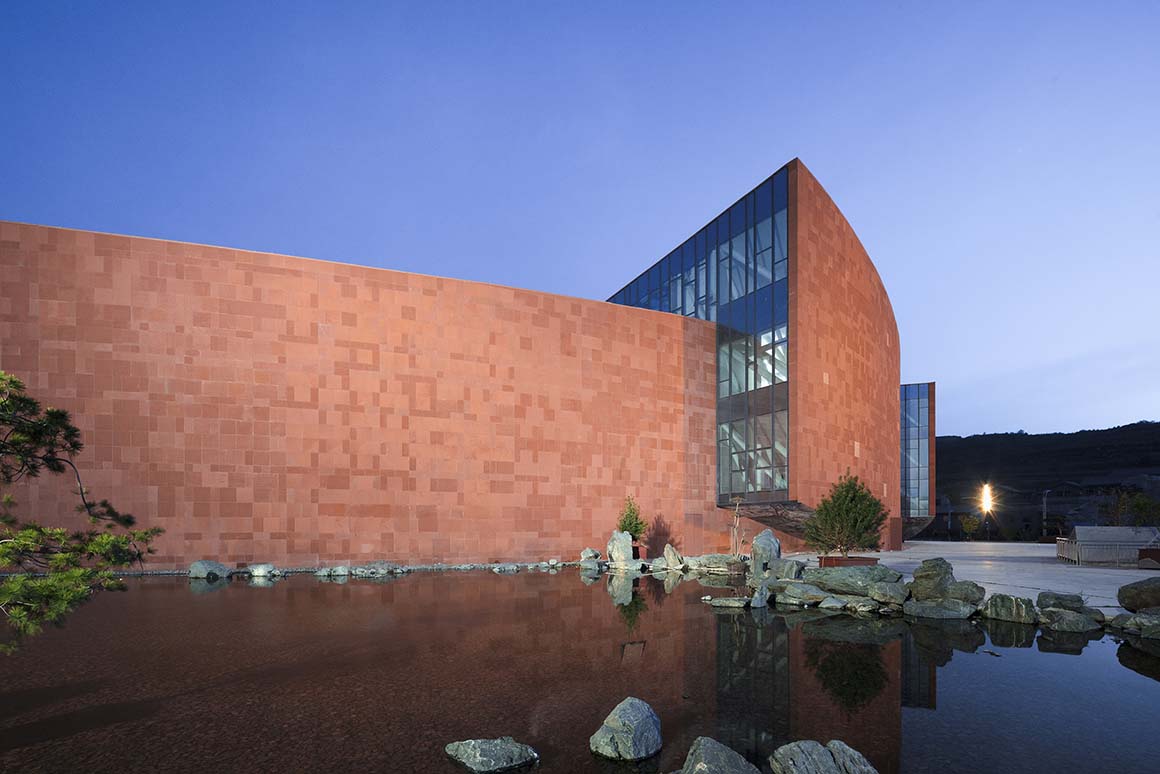
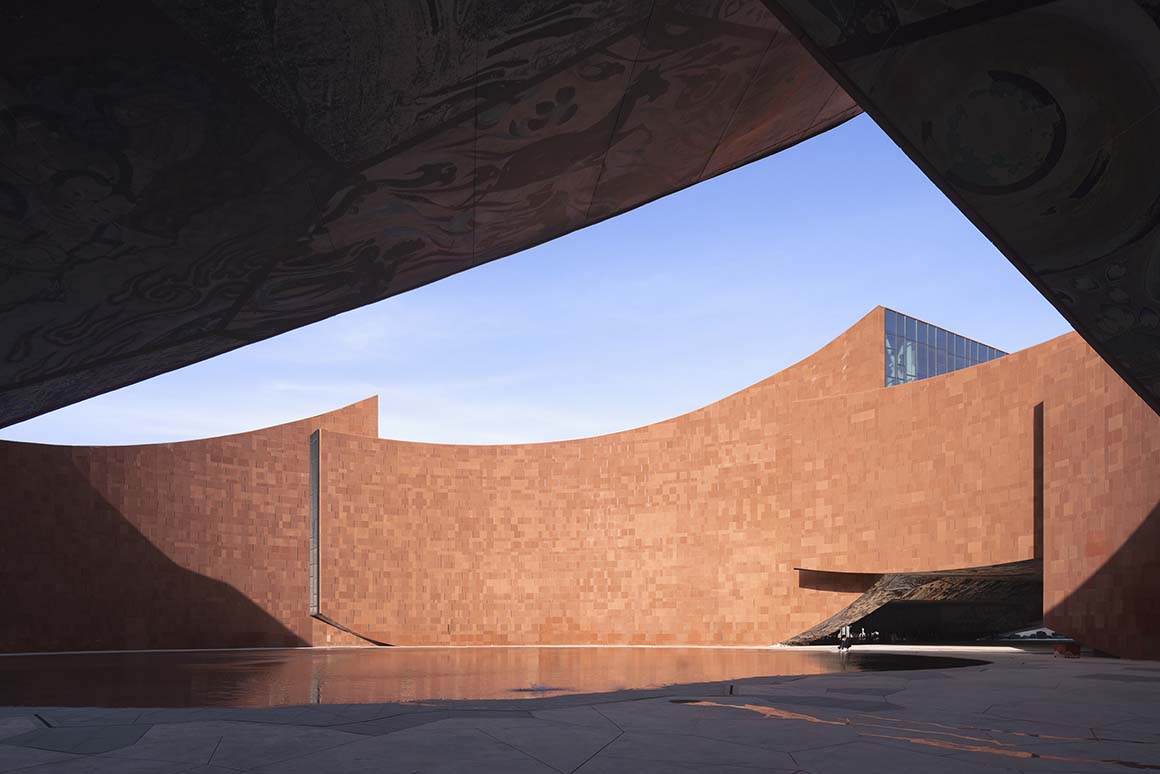
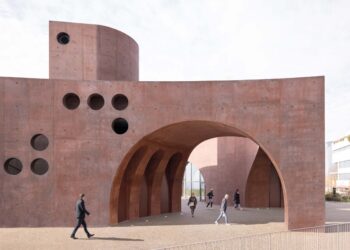
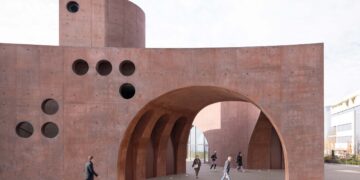
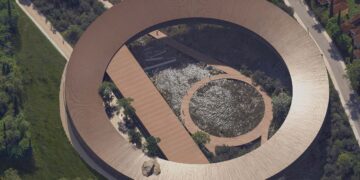
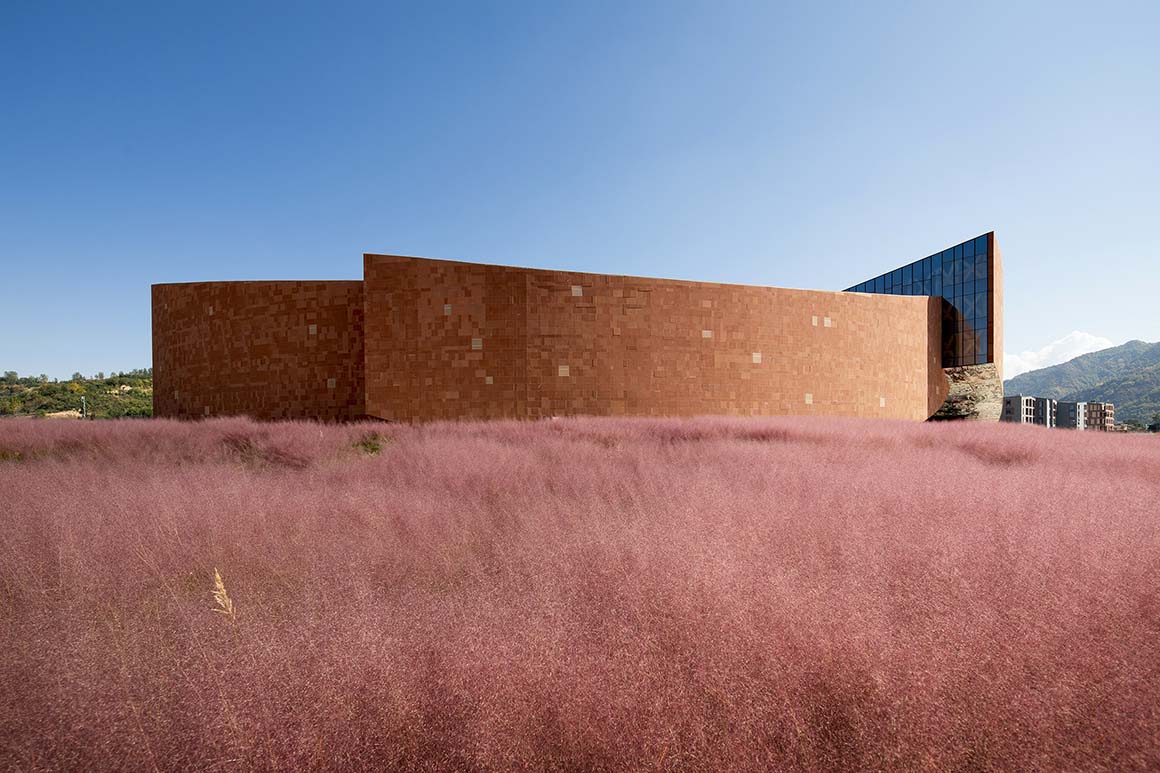
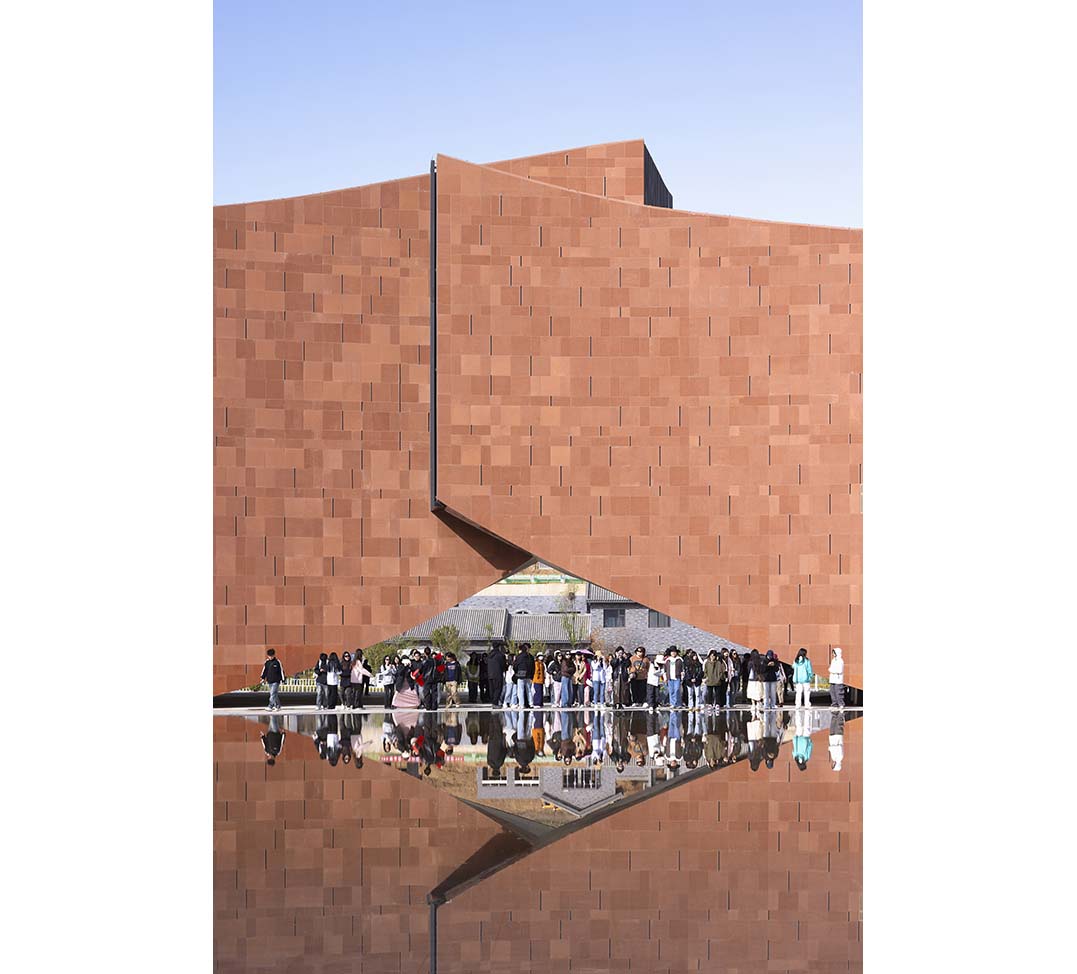
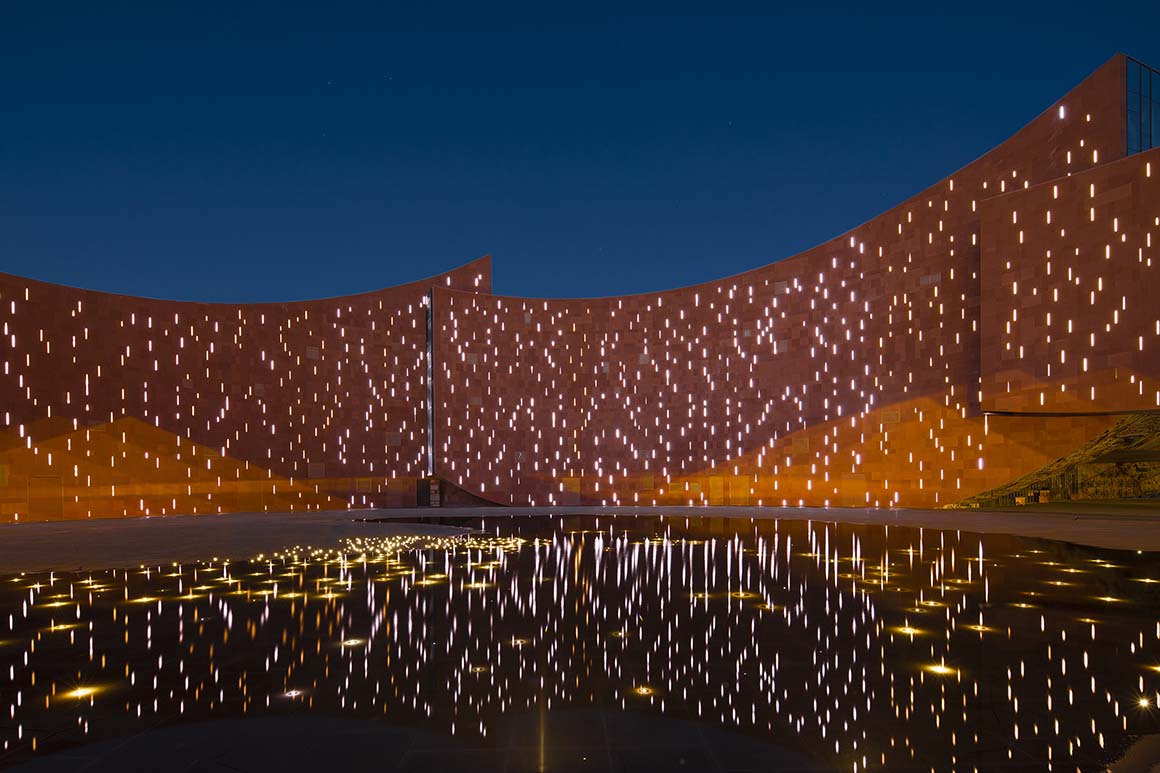
This role is articulated through a ring-shaped configuration. Six trapezoidal volumes clad in red sandstone—recalling the geological character of the grottoes—interlock to form a continuous annular plan enclosing a central water courtyard. The unbroken circulation path translates the Buddhist concept of reincarnation and the ritual act of circumambulation into spatial form.
The undulating topography of Maiji Mountain is reflected in the building’s profile. Variations in the height of the annular mass correspond to the gentle ridgelines of the surrounding landscape, allowing the rhythm of the terrain to shape the architectural silhouette. At the junctions between volumes, gaps emerge: from the exterior, they articulate the mass; from within, they admit natural light. This light penetrates deep into the exhibition spaces, generating shifting gradations of shadow and subtly guiding movement toward the next sequence of rooms.
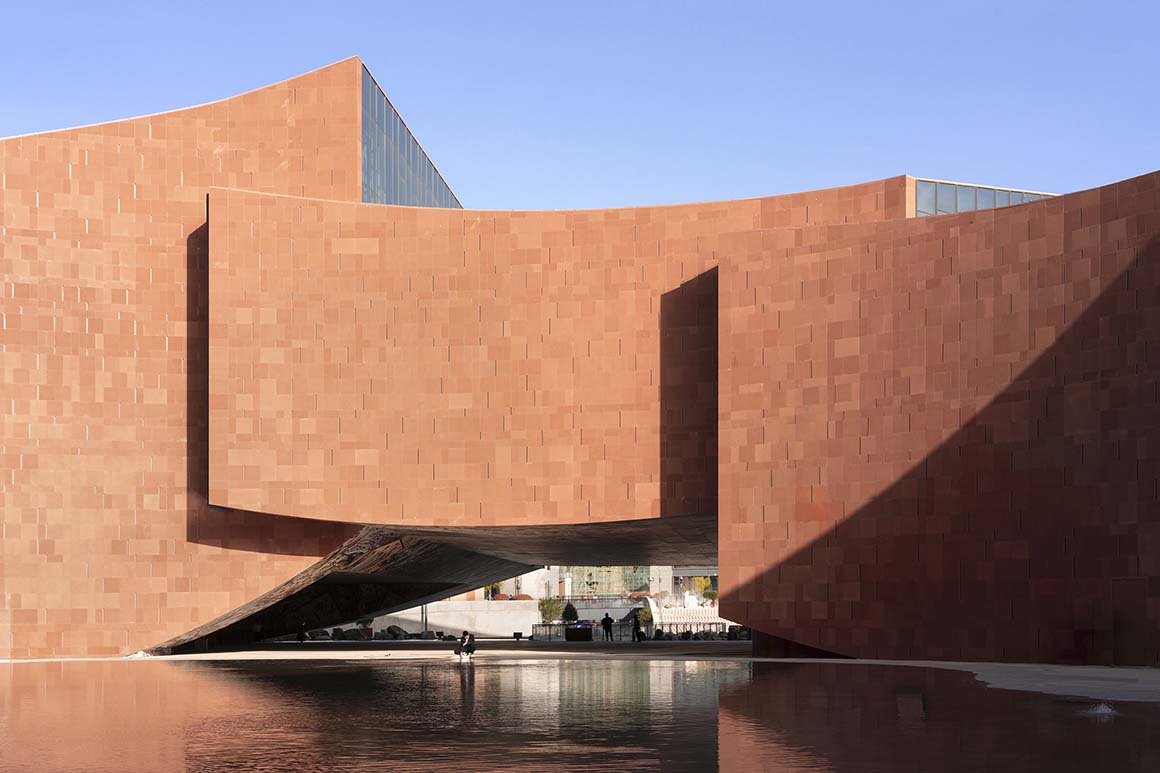
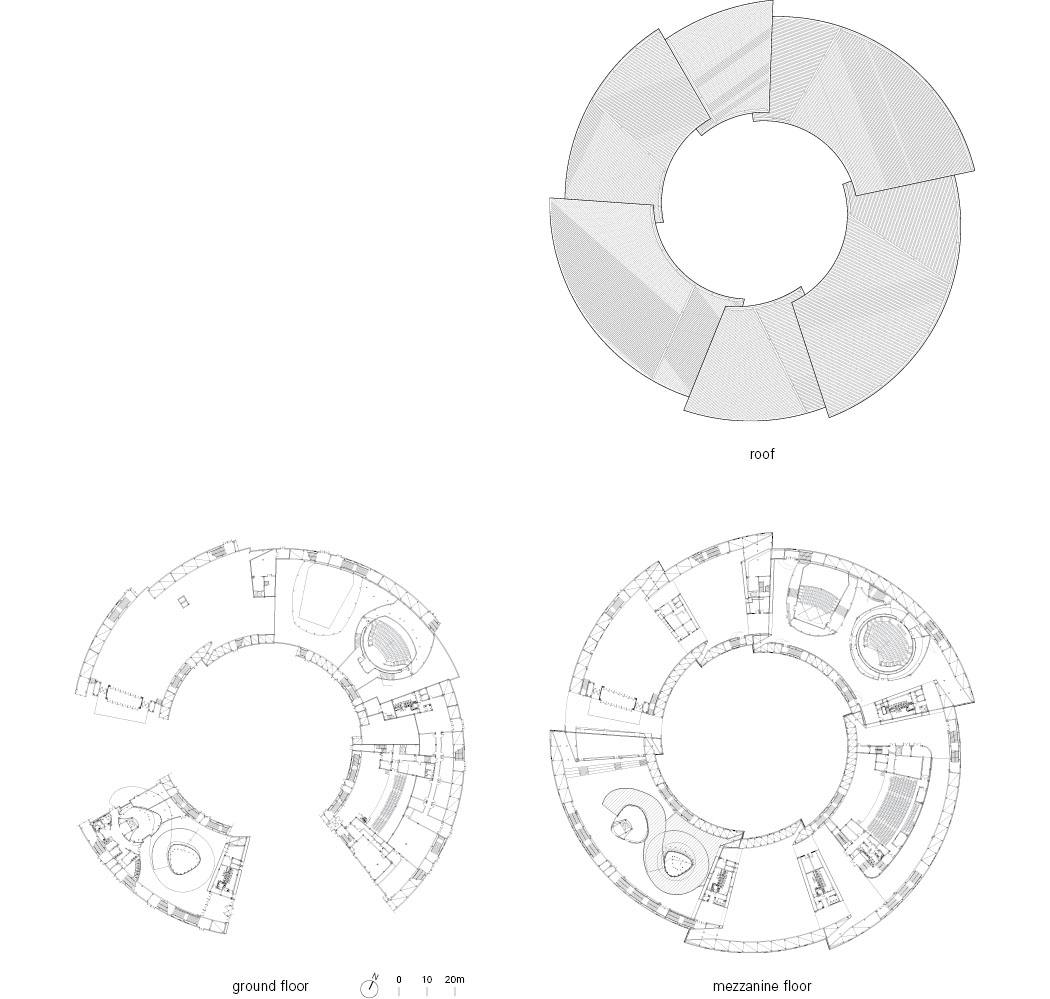
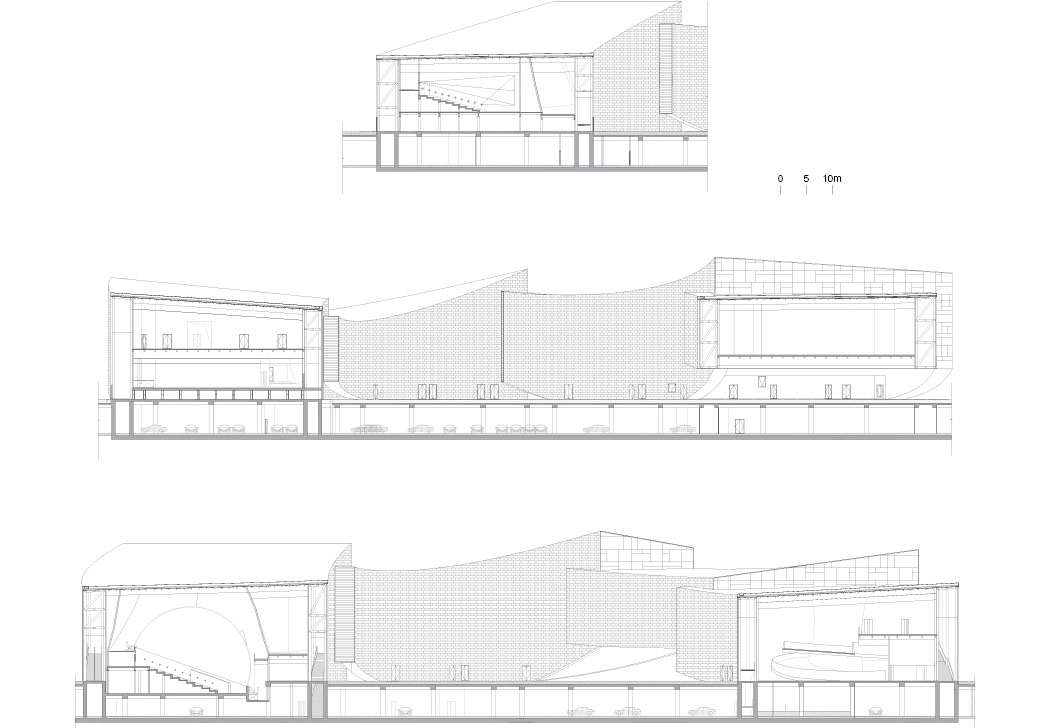
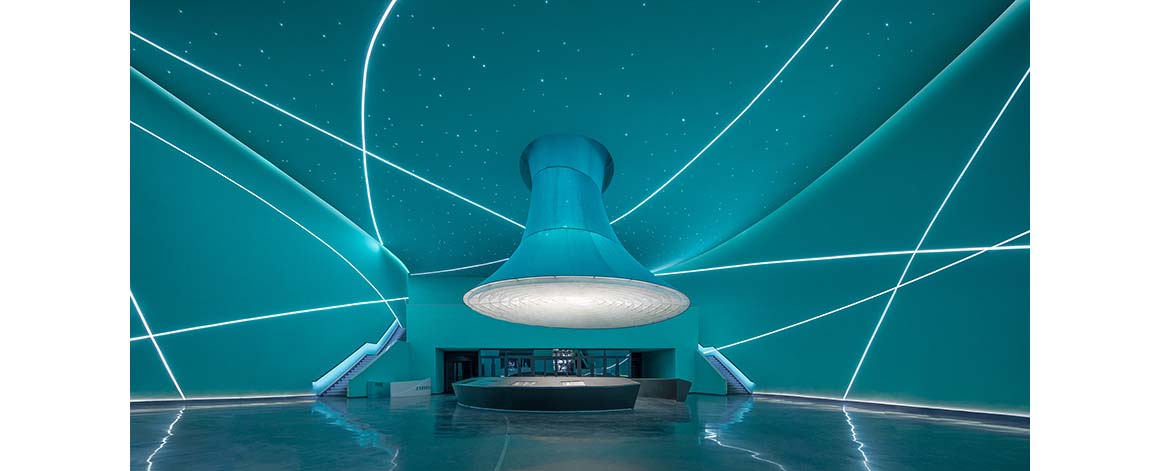
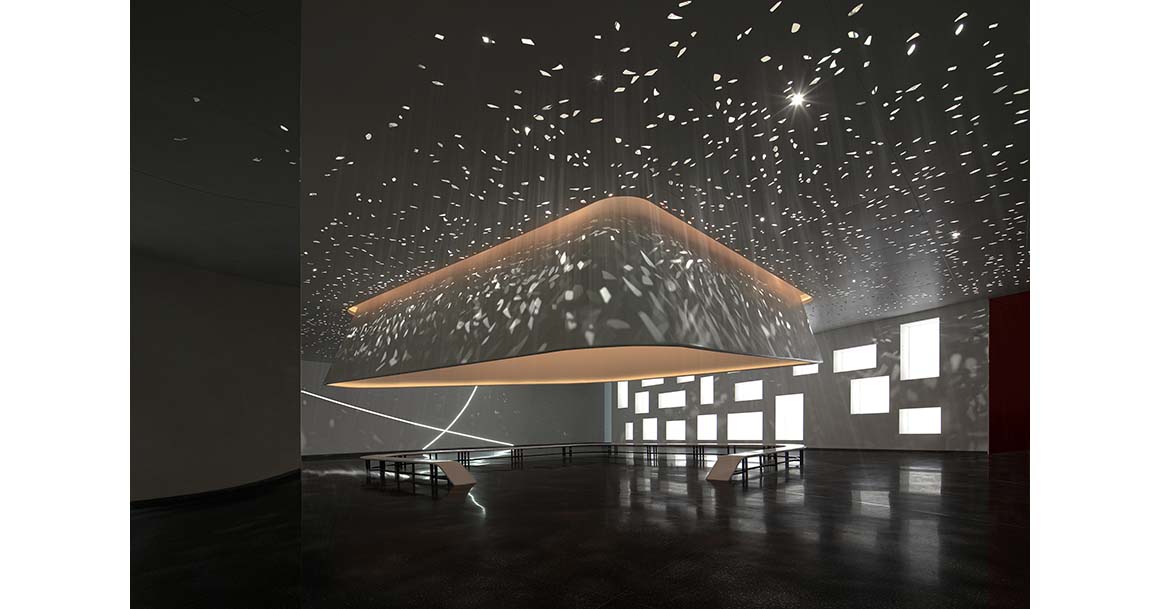
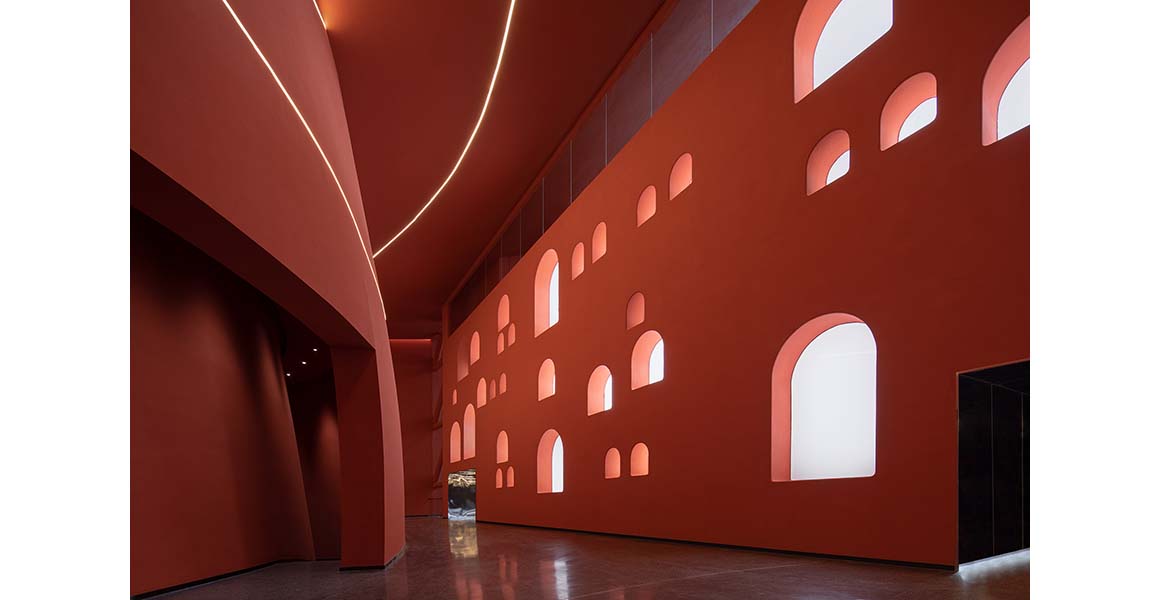
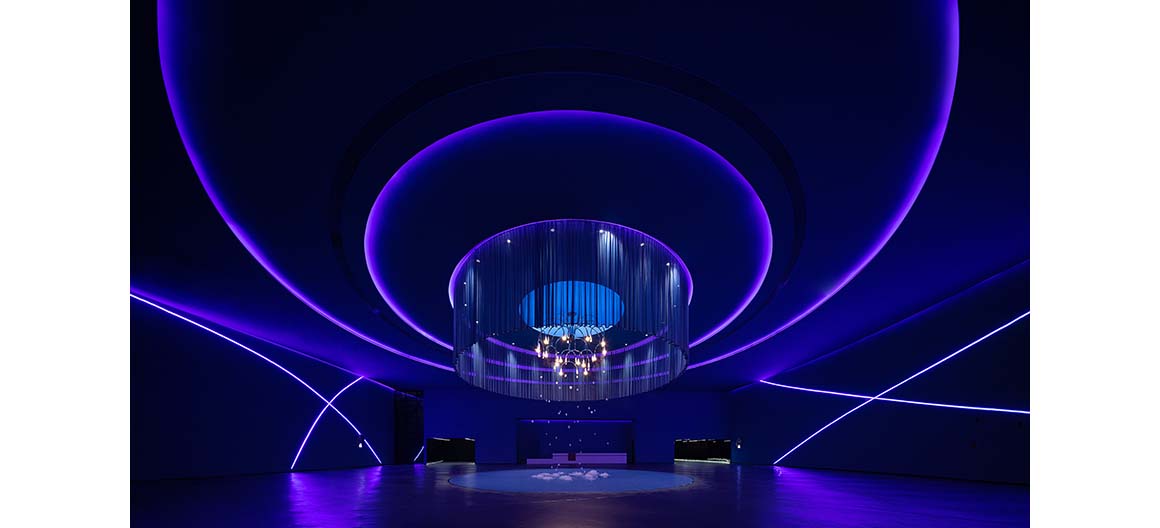
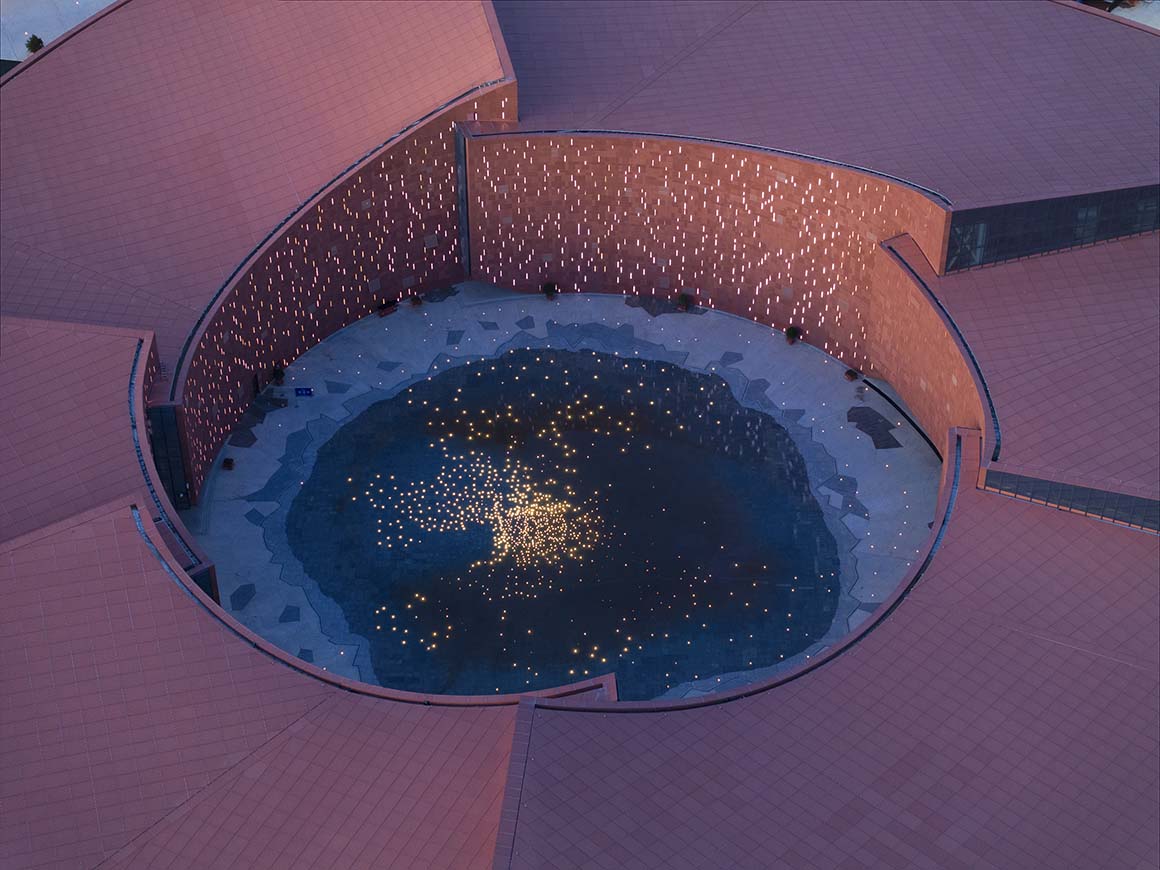
Internally, the building is organized around six cores that house structure and services. These cores replace conventional columns, enabling expansive column-free interiors. Visitors move along a gently rising path that flows continuously within the ring, where exhibition, screening, and rest areas are integrated into a coherent loop. This fluid spatial system echoes the layered history of the Maijishan Grottoes—where diverse cultures converged, overlapped, and accumulated across centuries.
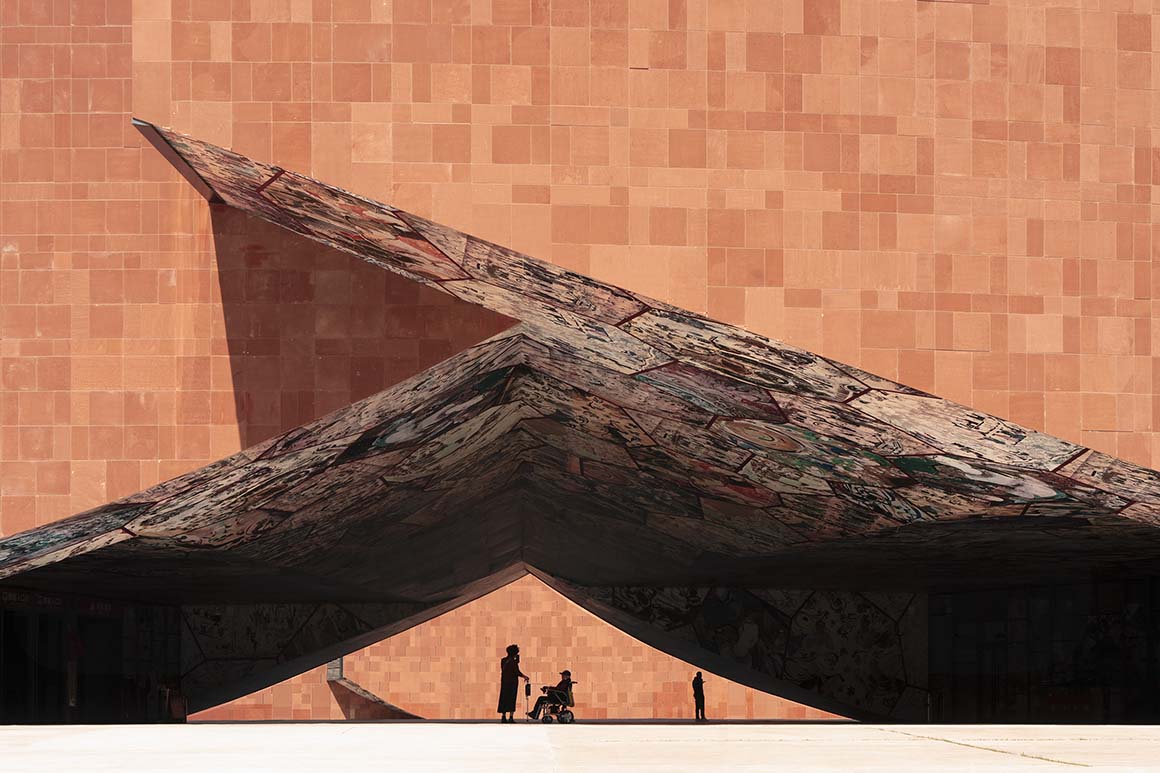
Project: Maiji Mountain Visitor Center / Location: Tianshui, Gansu, China / Architects: ZXD Architects + BIAD / Chief architect: Zhu Xiaodi / Architecture team: Dawei Wang, Hua Fan, Zaijian Zhang, Jian Wang, Xiang Li, Xiaoyong Cui, Zheng Zhang, Wei Jiang, Yiwei Li, Yuanyuan Song, Kun Liu, Haonan Wang, Wenjuan Fan, Wenjing Liu, Yanan Cheng / Structure engineer: Yi Yang, Keyu Gai, Shaoxue Tang, Qing Geng, Chunyang Song, Zhongyi Zhu (design director) / Equipment engineer: Liang Sun, Jie Li, Peng Liang, Guocheng Zhao, Jiecong Liu, Hanlin Shi, Pengfei Bai / Electrical engineer: Wei Liang, Xu Wang, Yang Gao, Shuochen Liu, Lingli Wang / Interior design: ZXD Architects + Wu Yanming Studio / Landscape architect: BIAD + Green Alliance (Beijing) International Engineering Design Co., Ltd / Lighting engineer: Tsinghua University Planning and Design Institute Co., Ltd. Zhe Wu, Li Tang / (General) contractor: / Client: Tianshui Maijishan Cultural Tourism Development Co., Ltd / Use: culture / Gross floor area: 16,154m² / Design and construction: 2016~2024 / Completion: 2024 / Photograph: ©Arch-Exist (courtesy of the architect), ©Xiangdong Wang (courtesy of the architect), ©Hanmo Vision (courtesy of the architect)