



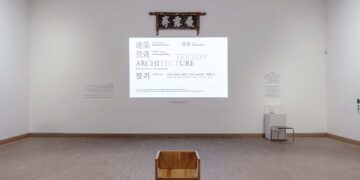

Modern Living in the texture of Tradition
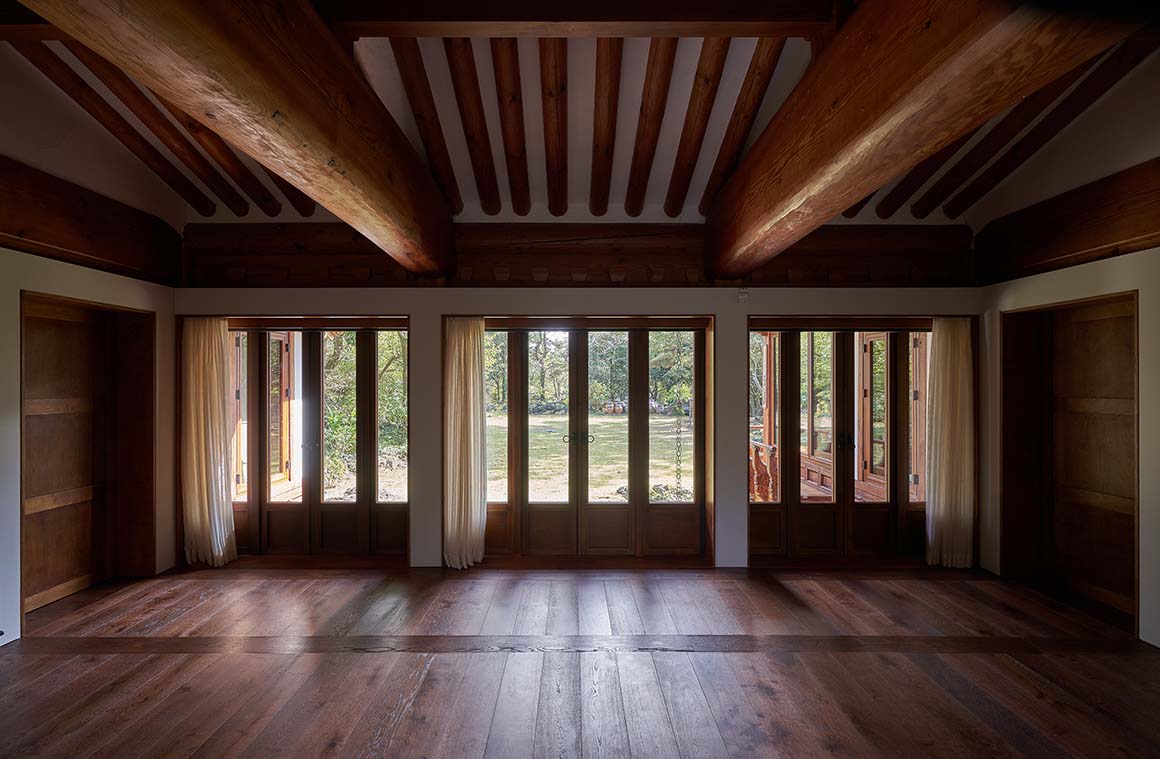
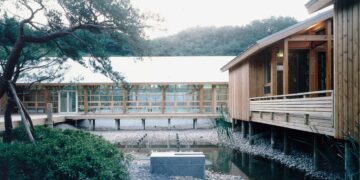
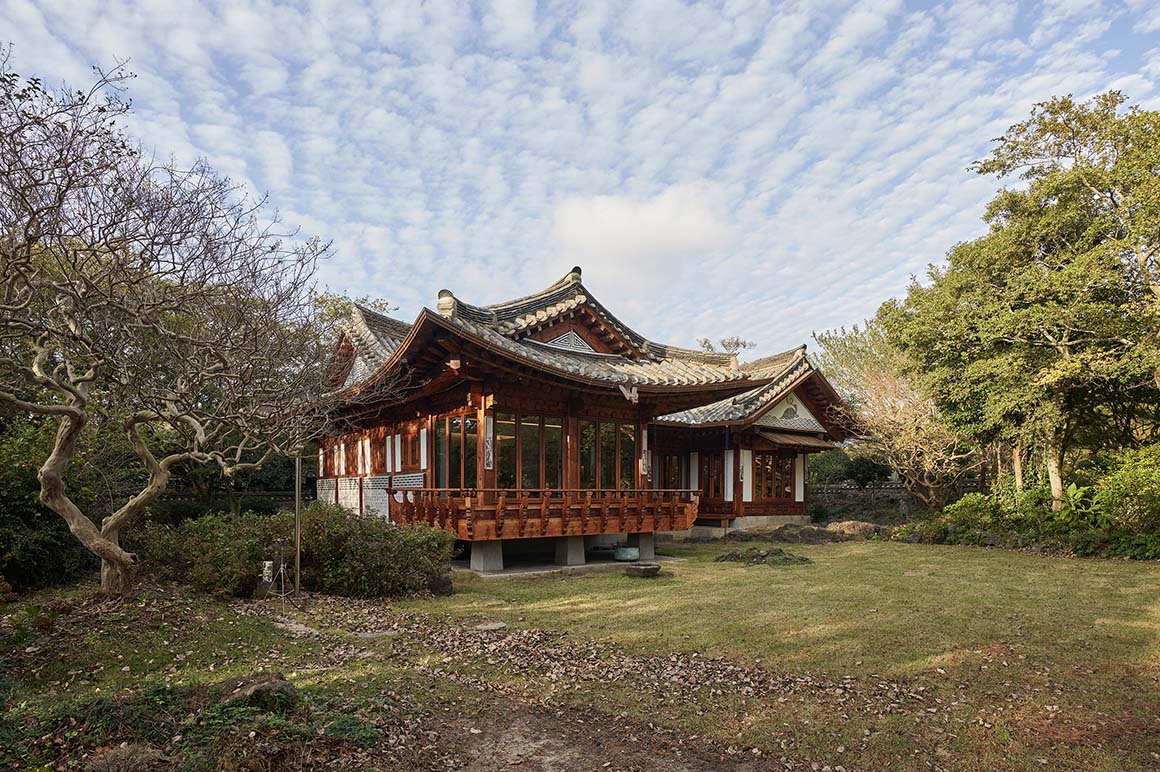
Set against the sweeping landscape of Jeju, the traditional hanok Leerakjeong (二樂亭) was a house newly acquired by its owner. Though built only a little over a decade ago, it carried the quiet dignity of a long-settled place. Living there, however, revealed a different reality. The atmosphere was serene, but daily life was far from comfortable. After nearly four years of inhabitation, the owner chose to renovate—having reached the point where the inconveniences could no longer be ignored. The request was disarmingly simple: warmth, and freedom from insects. From these modest demands, the project took shape.
Prior to renovation, Leerakjeong embodied the inherent limitations of an early modern hanok. Its traditionally raised floor weakened heating performance and left the interior vulnerable to insects. The ceiling exposed bare rafters, lacking both insulation and plaster finish, and leaks had begun to appear. Building services compounded the problem. Electrical wiring and mechanical systems, added over time for modern use, remained visibly exposed, disrupting the architectural order, while tangled cables clung to the exterior walls.
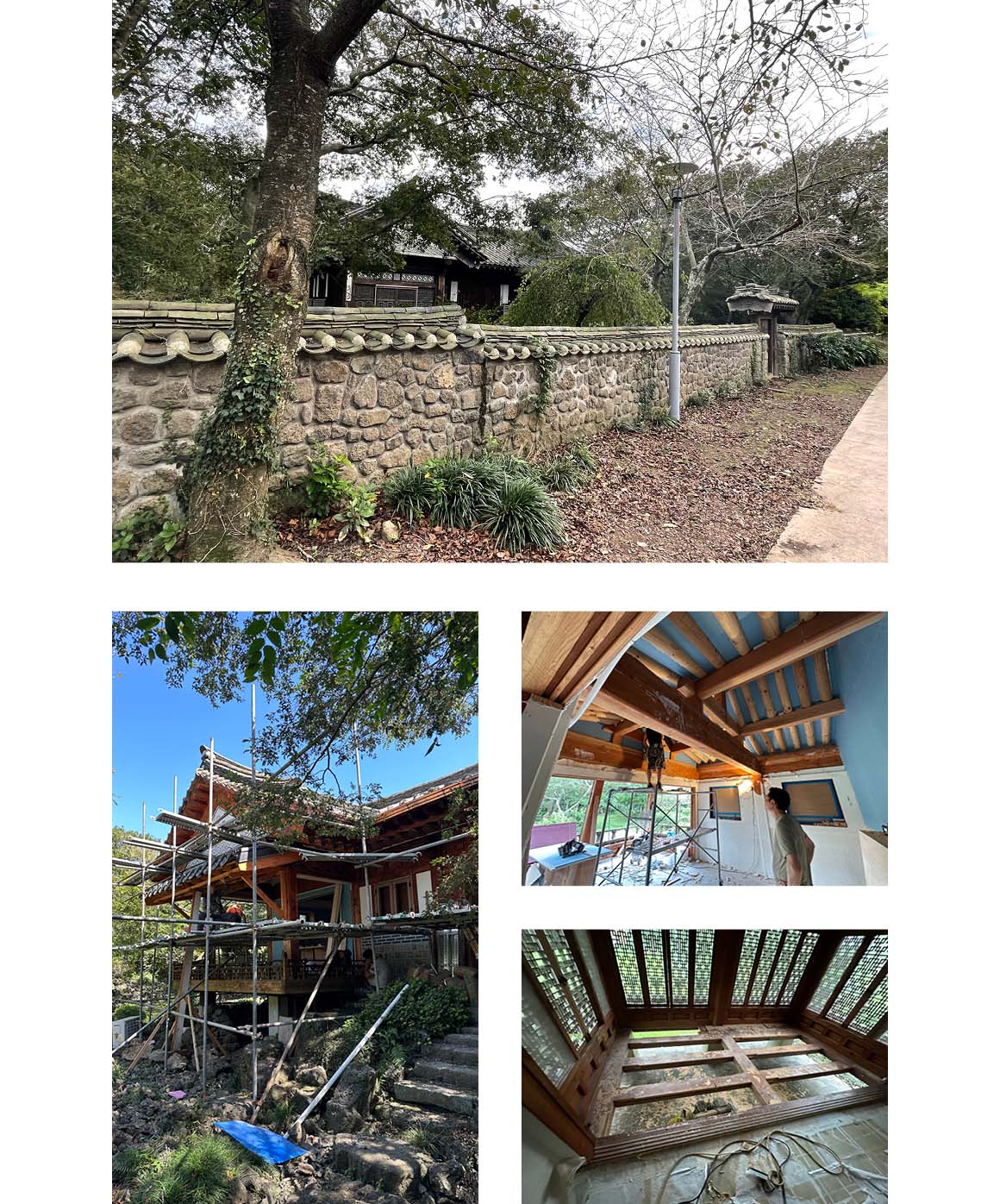
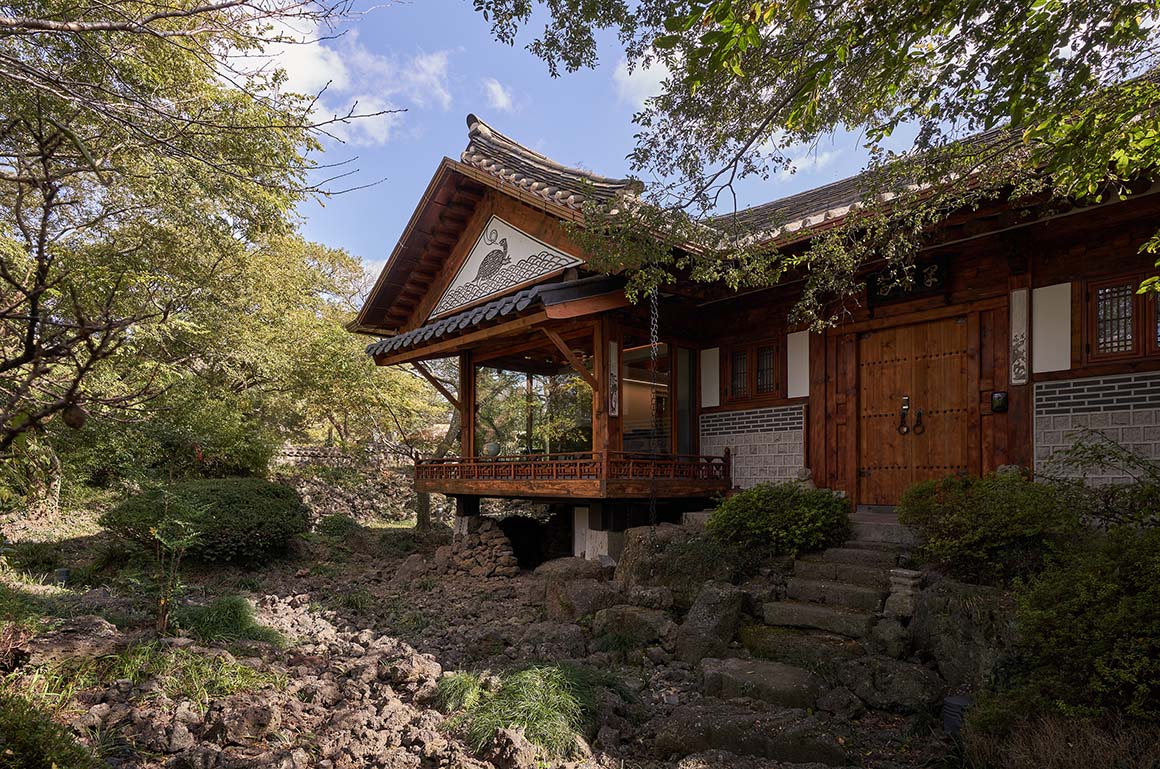
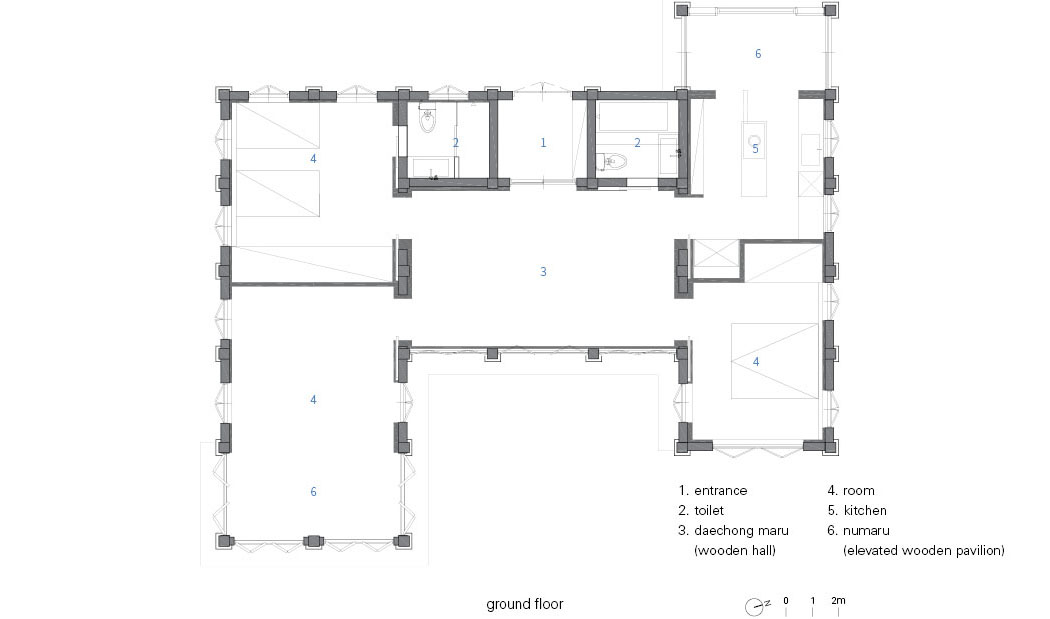
The central task was clear: to make space for contemporary living without eroding the sensibility of the hanok. Preserving the existing structure, the architect approached the work with functional clarity and extreme precision. Systems for services, insulation, and waterproofing were coordinated down to the millimeter, ensuring that technical performance and spatial expression remained inseparable.
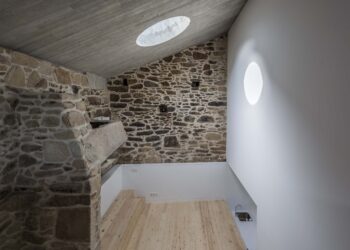
Work began with the partial dismantling of the roof, ceiling, floor, and selected walls. New infrastructure—plumbing, air conditioning, and heating—was then installed and partially enclosed by inserted white planes. These surfaces were not conceived as decoration, but as instruments: devices to contain and organize modern systems. In doing so, they formed a new spatial layer between the original timber structure and the contemporary intervention. The narrow gap between wood and white surface expanded the spatial depth while quietly concealing the building’s workings. Indirect lighting was embedded within this void, and what began as a pragmatic solution yielded an unexpected atmosphere—soft light seeping through the threshold where old and new converge. Modern function settles in gently, without obscuring the traditional frame.
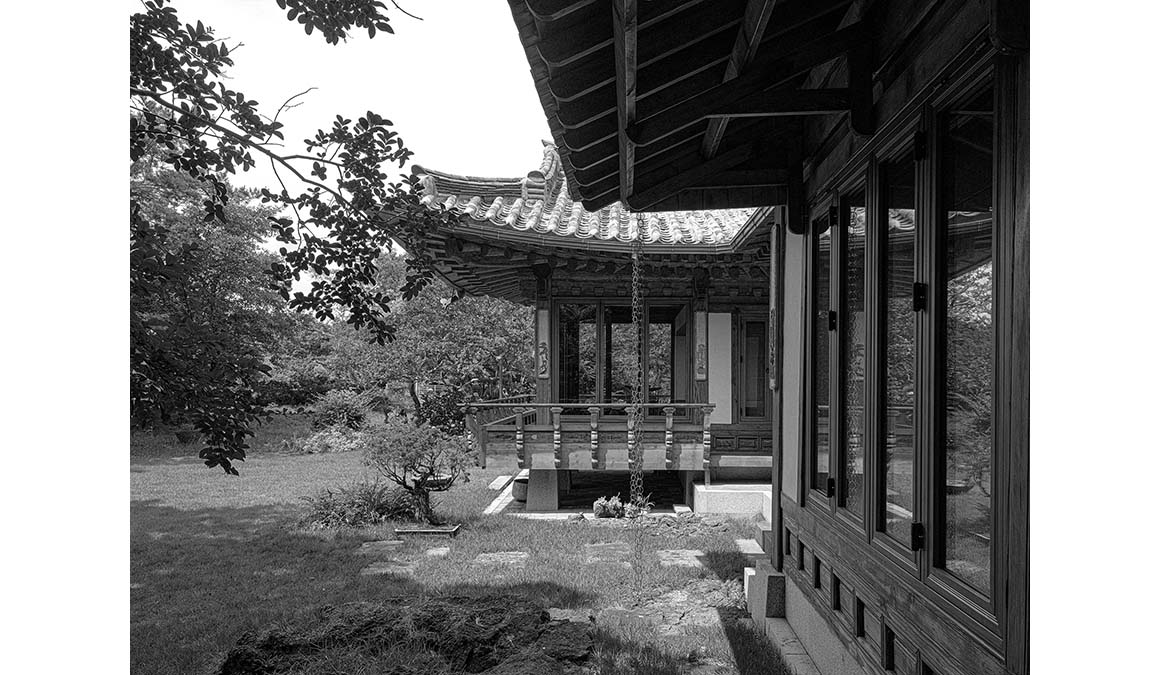
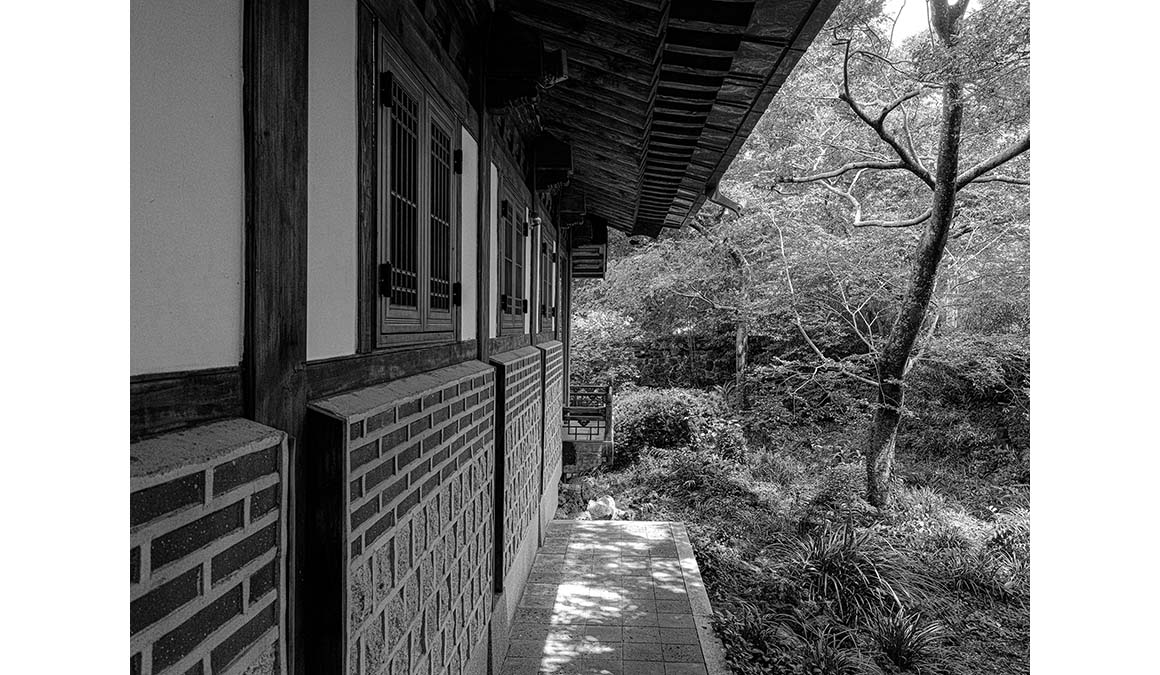
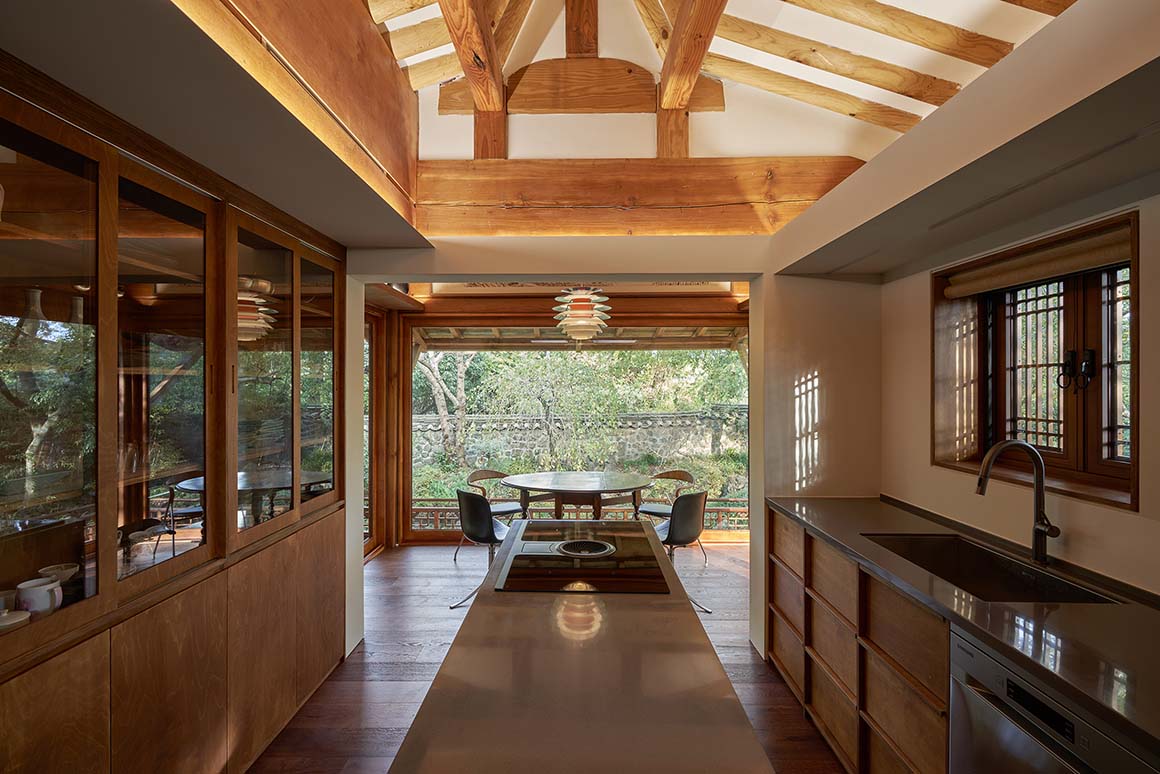
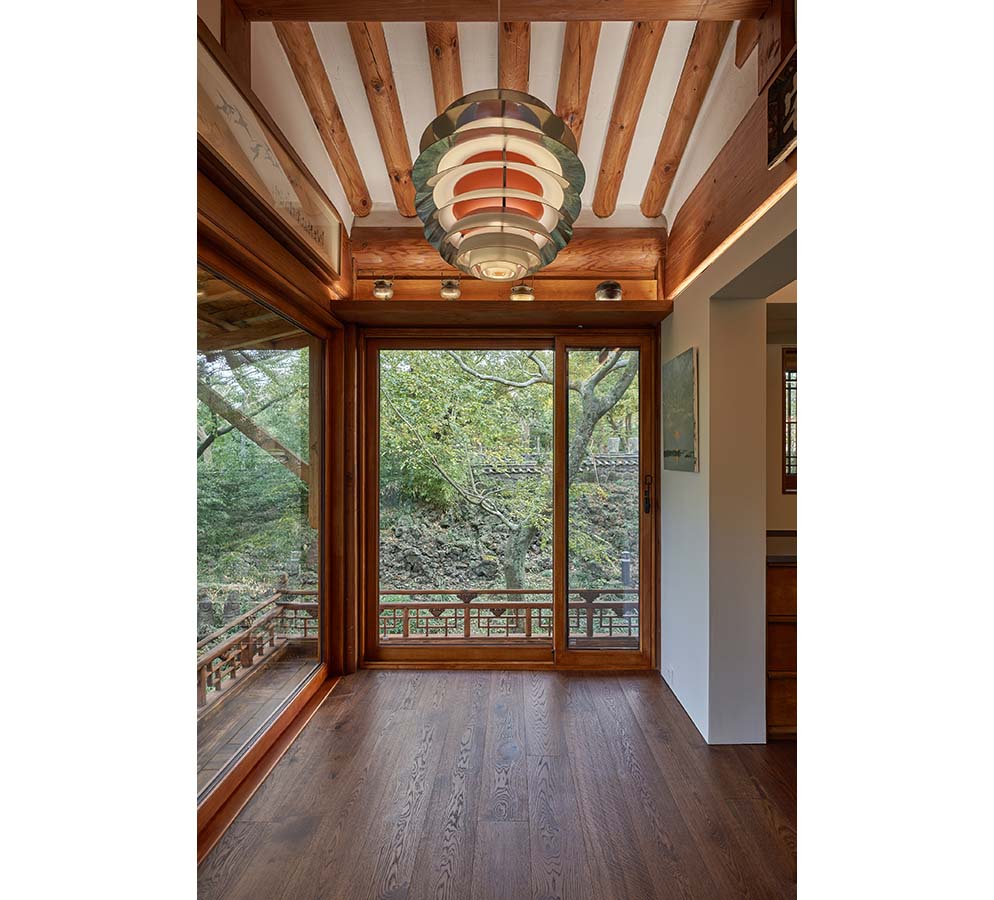
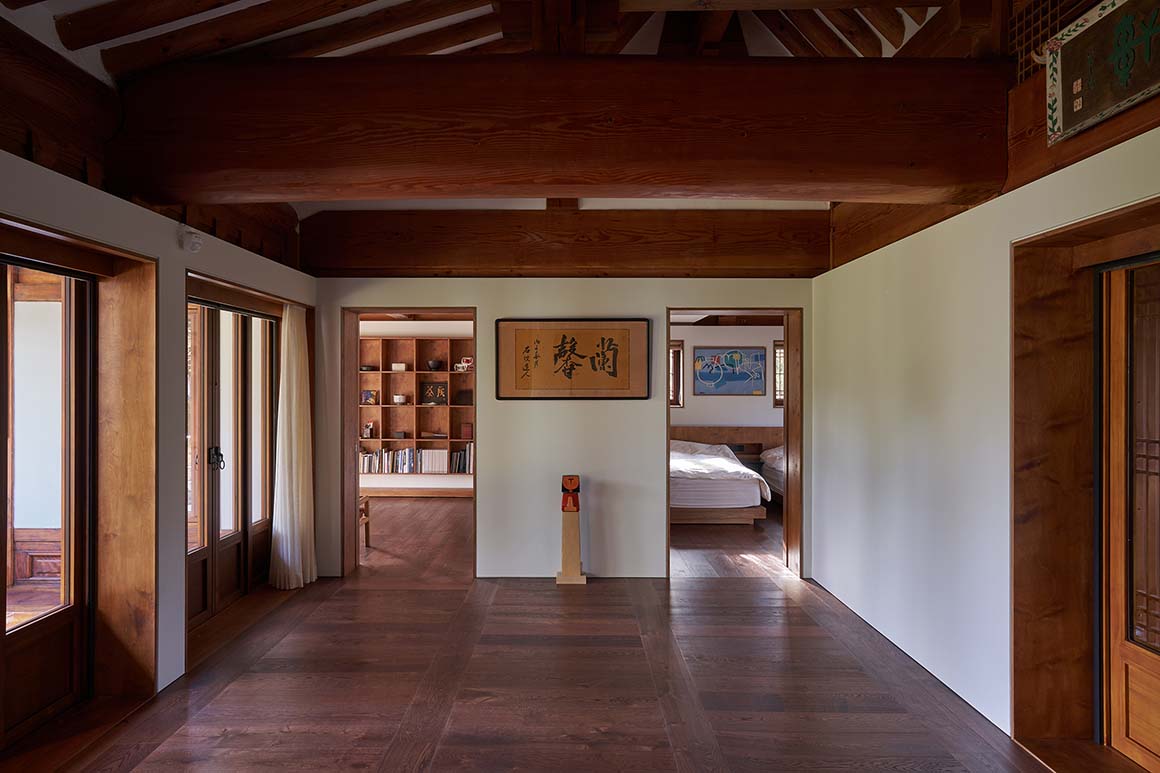
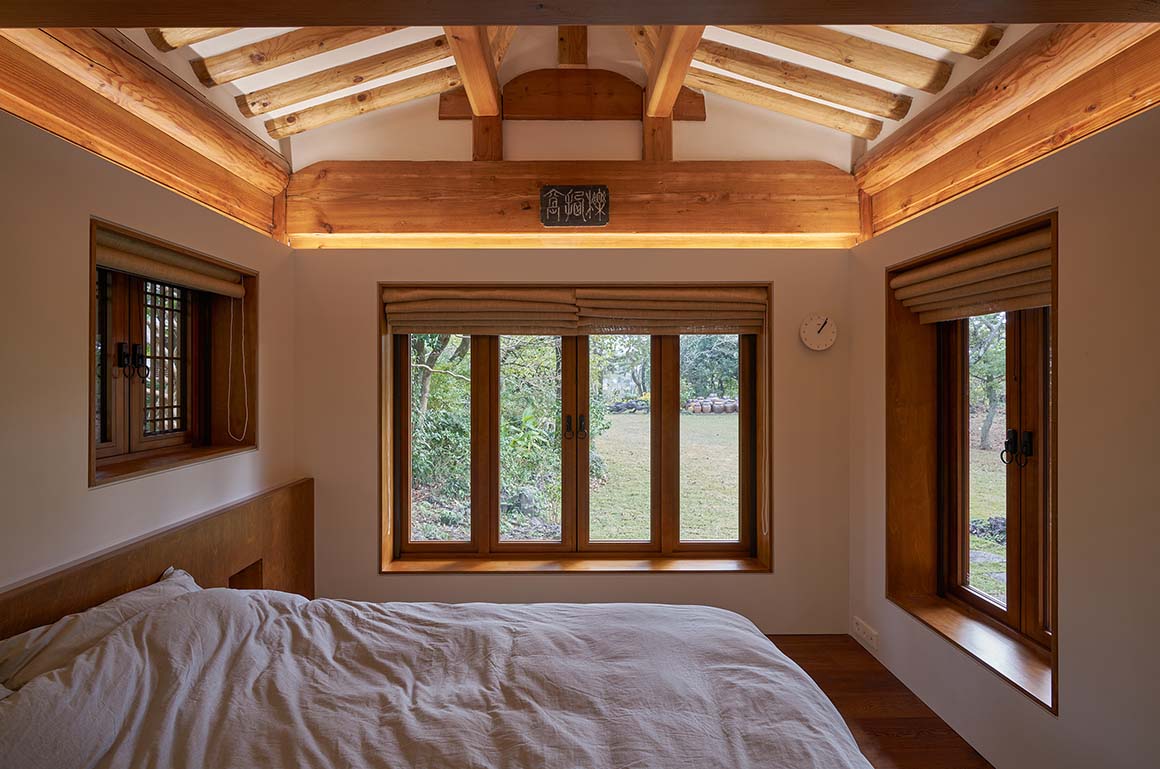
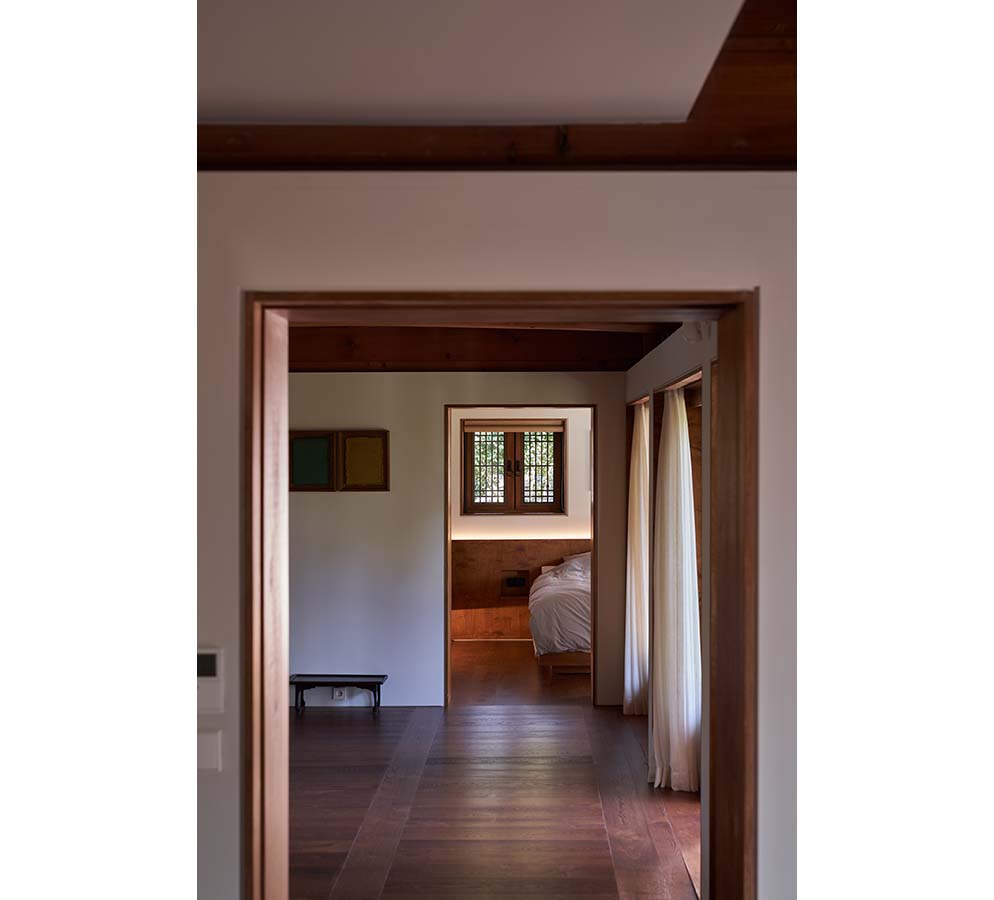
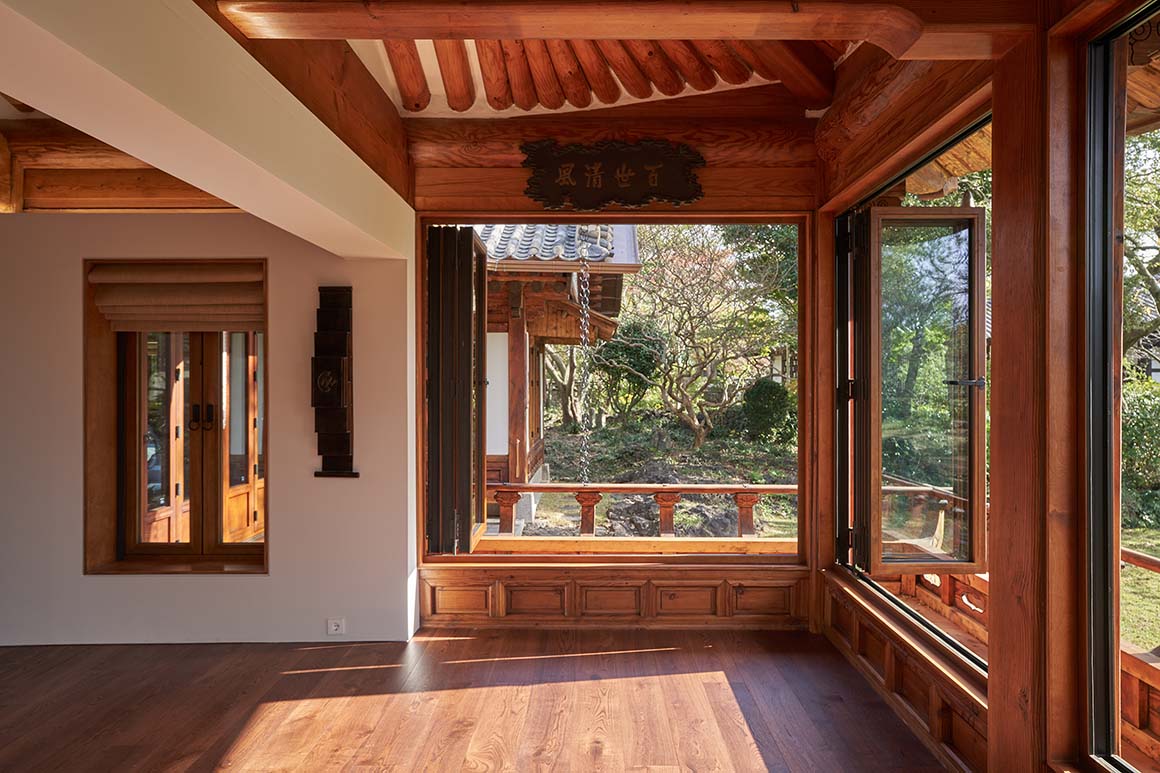
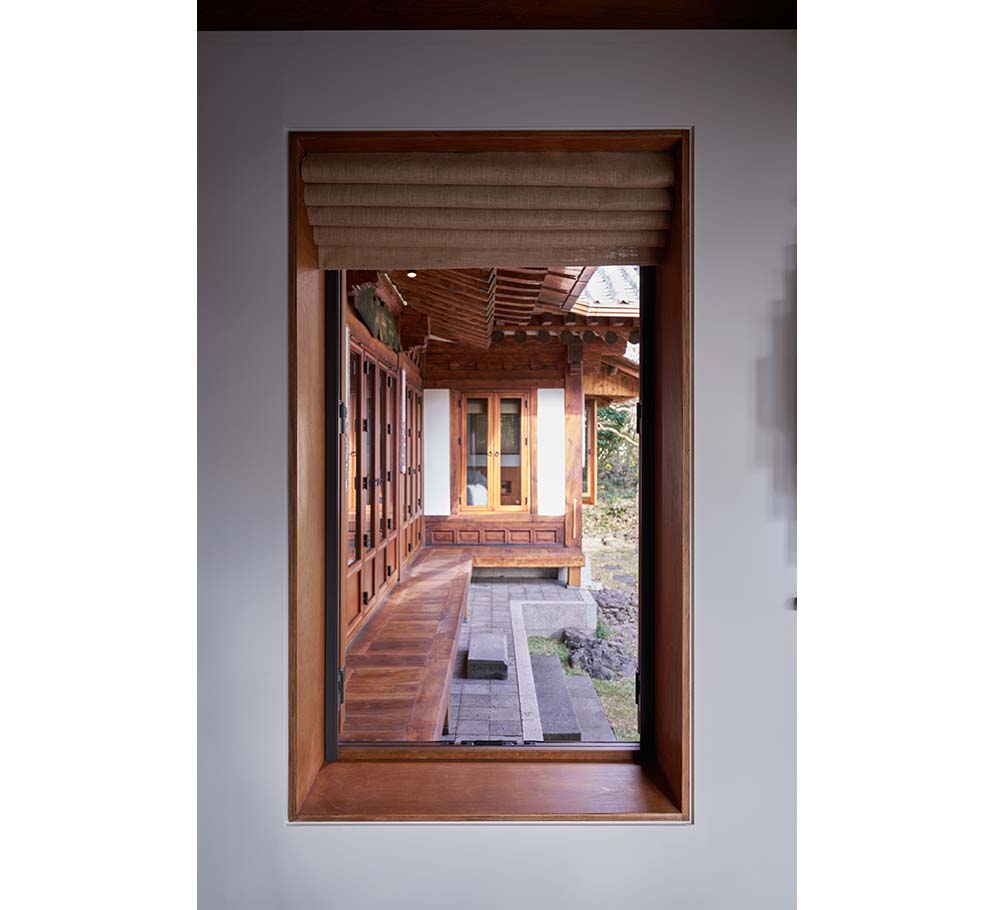
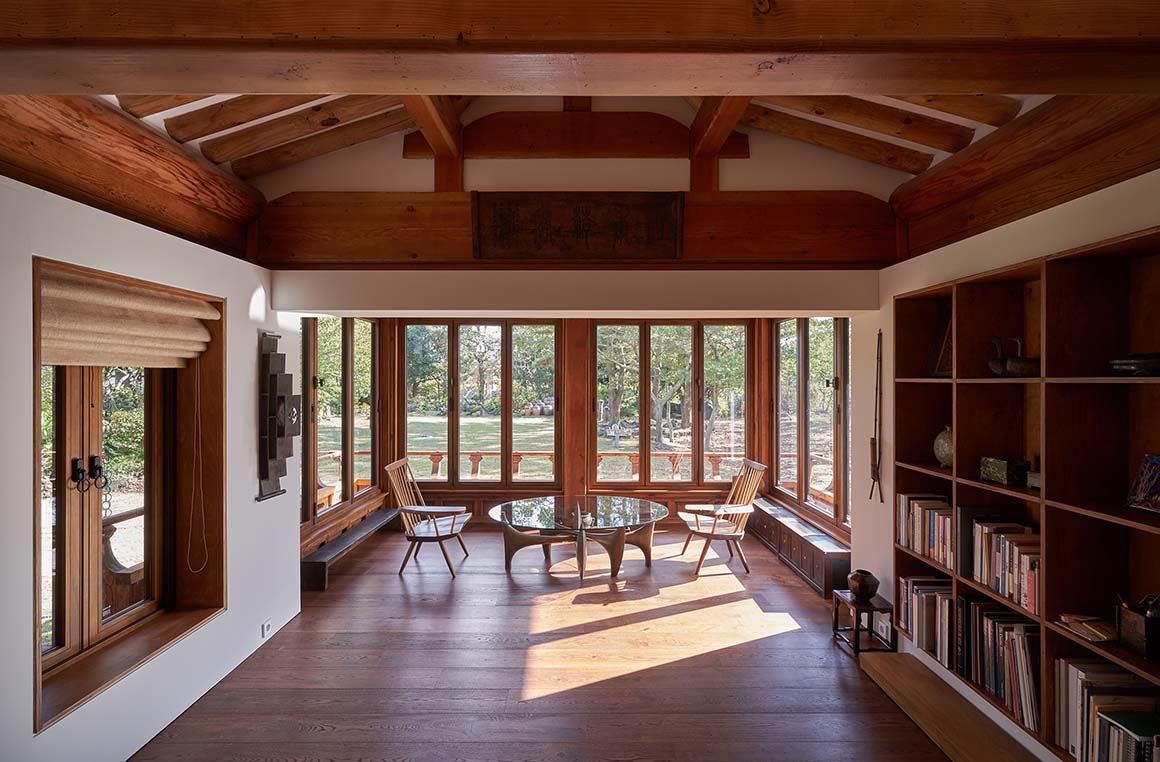
Considerable effort was also devoted to maintaining the tonal continuity of the hanok. In the windows and exterior spaces, repeated on-site color mock-ups ensured that the newly introduced surfaces would not clash with the existing timber. Through meticulous dimensional control and continual site adjustments, the new elements came to feel as though they had always belonged.
The equilibrium between intervention and inheritance was achieved through countless site visits and careful calibration. Within details largely invisible to the eye, services, insulation, and waterproofing were unified into a single system, registering perceptibly as a sense of “thickness” within the space. Decisions initially made to correct functional deficiencies ultimately shaped a renewed mode of inhabitation.
In the final two months alone, the architect traveled to Jeju more than thirty times to refine the work. The questions repeatedly asked on site were fundamental: how should the sensibility of a hanok speak to contemporary life, and in what ways can traditional architecture deepen the richness of everyday living? Going beyond repair to heal structural shortcomings and introduce a measured modernity, Leerakjeong offers a quiet answer—transformed from an uncomfortable old house into a place of ease and repose.
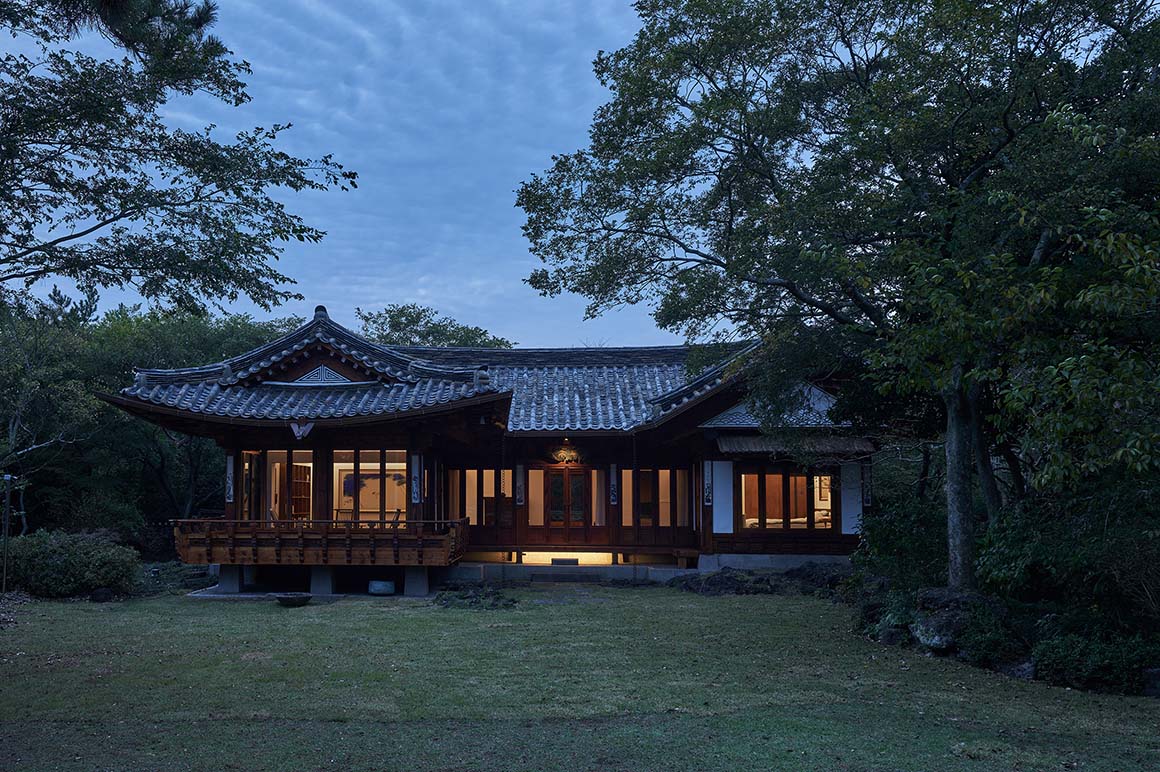
Project: Jeju Leerakjeong Remodeling / Location: 115-8, Wollim-ri, Hallim-eup, Jeju-si, Jeju, Republic of Korea / Architect: Studio limsangwoo.com architects / Project management: Studio limsangwoo.com architects / Use: cultural and assembly facilities, Type 2 neighborhood living facilities / Site area: 3,246m² / Bldg. area: 236.79m² / Gross floor area: 270.63m² / Bldg. coverage ratio: 7.25% / Gross floor ratio: 8.3% / Bldg. scale: one story above ground, two stories above ground / Height: 5.36m, 8.25m / Structure: wooden / Finishing: Korean roof tiles / Design: 2023.3~2023.6 / Construction: 2023.7~2023.10 / Completion: 2023.10 / Photograph: ©Joonyool Heo (courtesy of the architect)