





A neighborhood beneath a polygonal roof
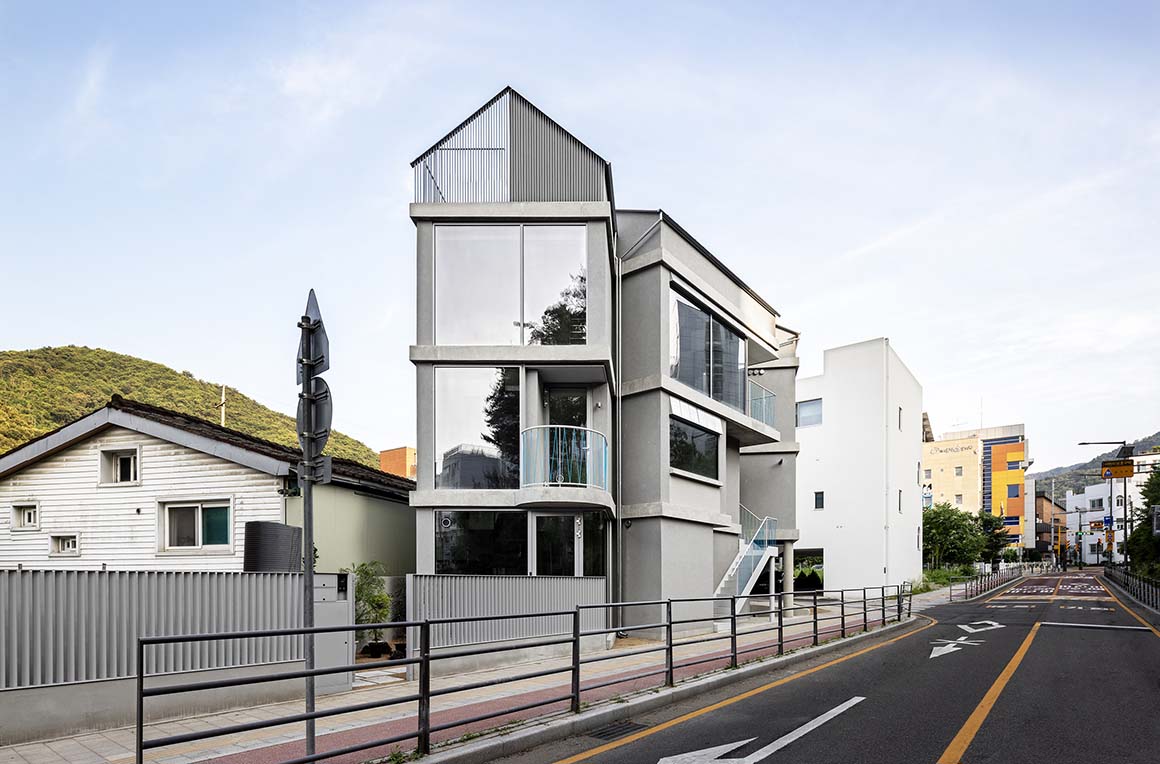
Between a natural landscape of mountains and streams, a scene where houses and vegetable gardens intermingle, and a setting where large apartment complexes and commercial buildings coexist, a small village has taken root. On a narrow, elongated triangular plot stands a small community of more than ten people: a large extended family spanning three generations, along with tenant households. Centered on the client, who is a daughter, a daughter-in-law, and a mother, the three-generation household consists of her spouse, her parents, her mother-in-law, and three children. Their way of life resembles a new form of community emerging in contemporary society. Joined by neighboring tenant households, the house was envisioned as both individual and social, both domestic and urban, forming a rich and layered landscape.
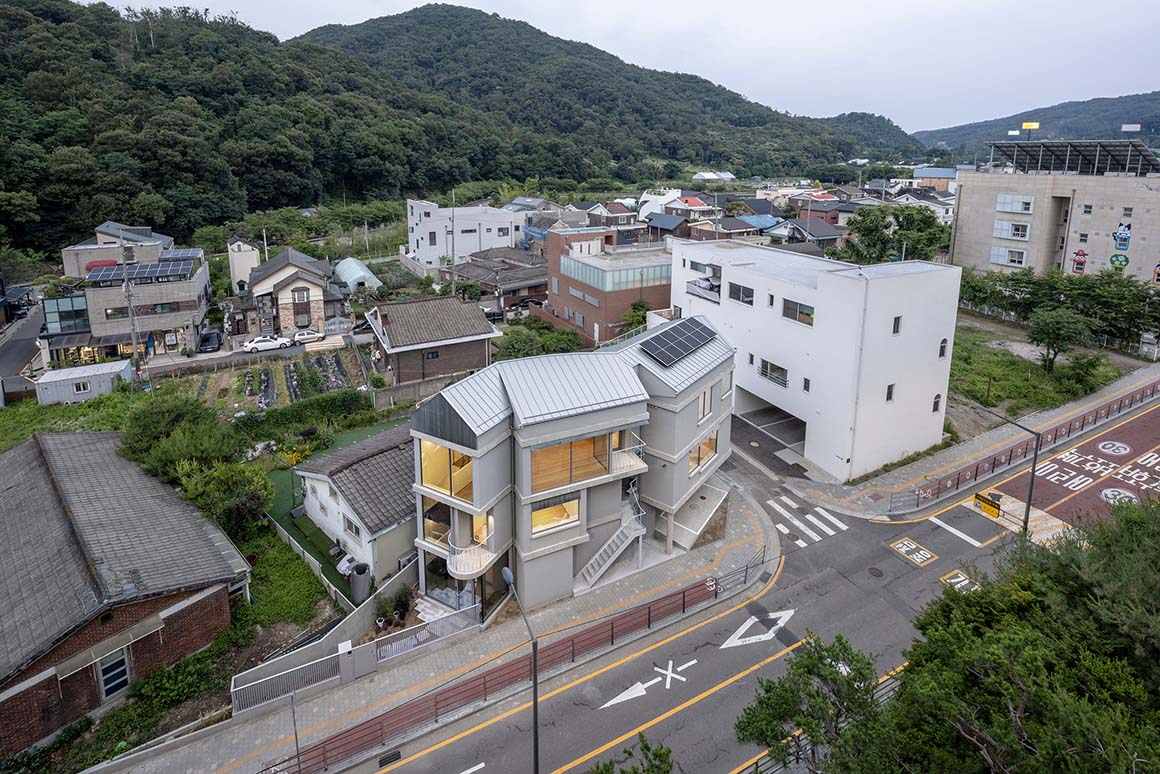
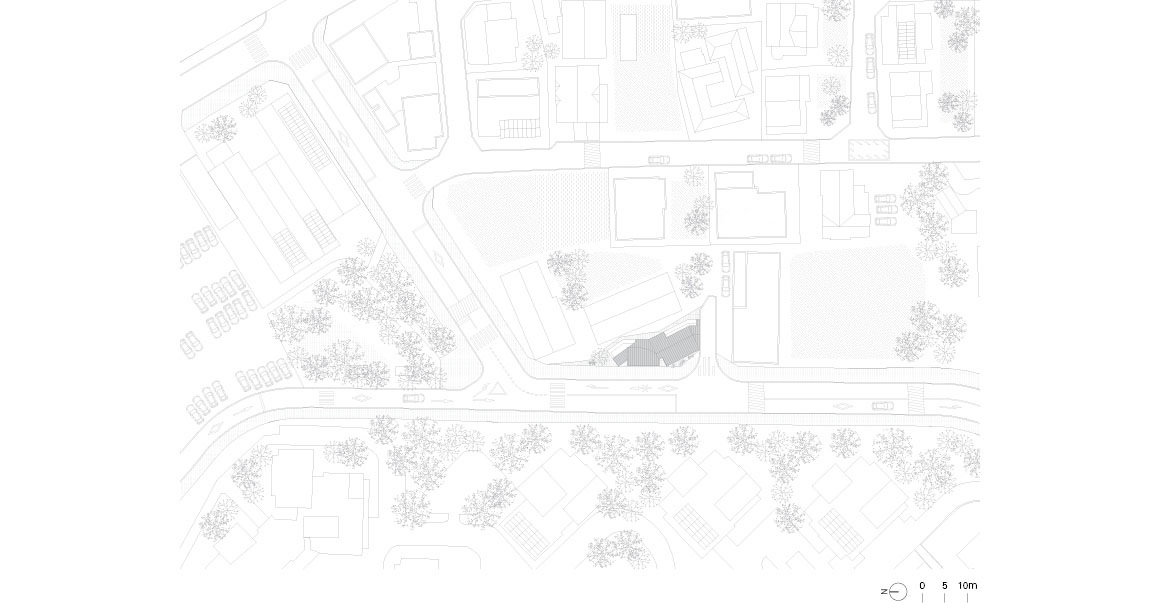
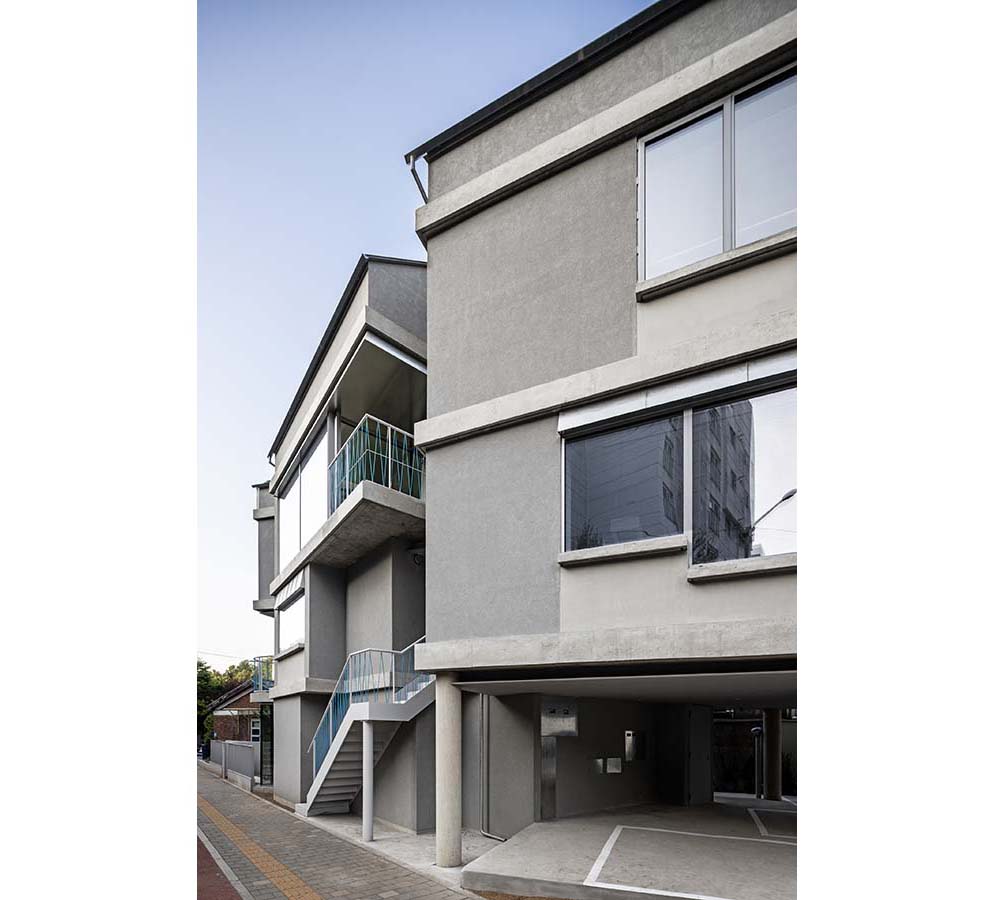
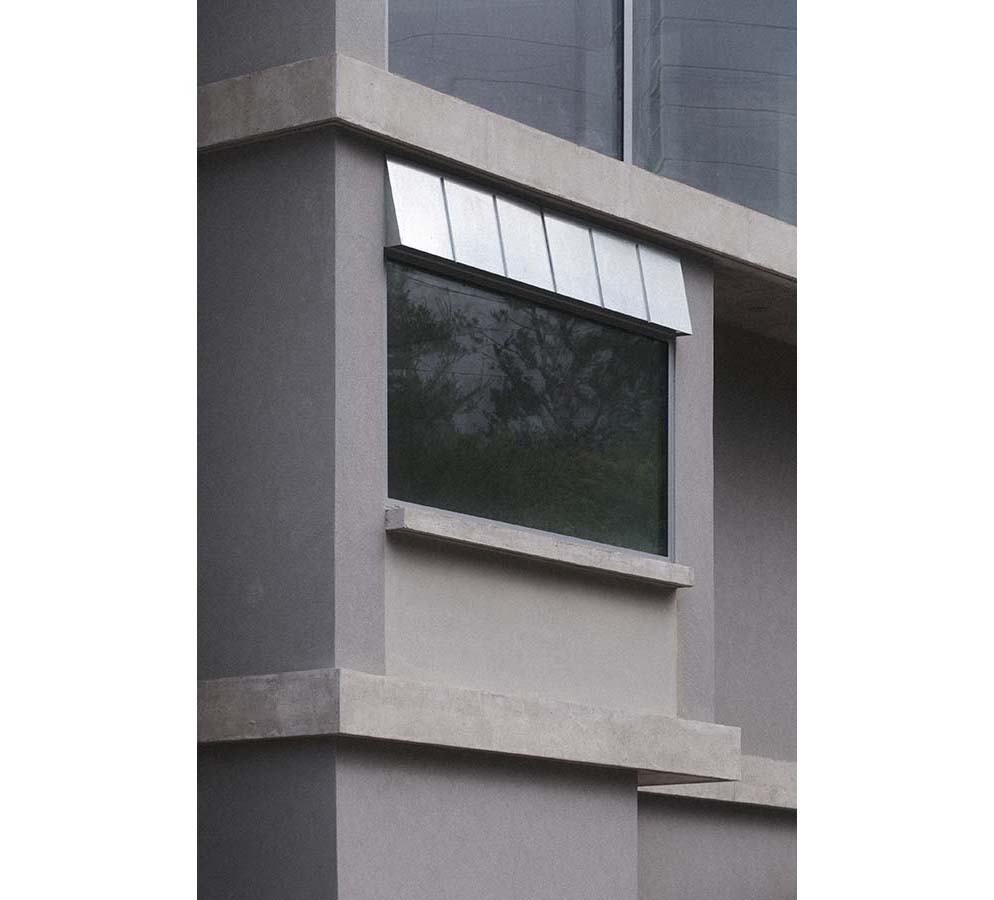
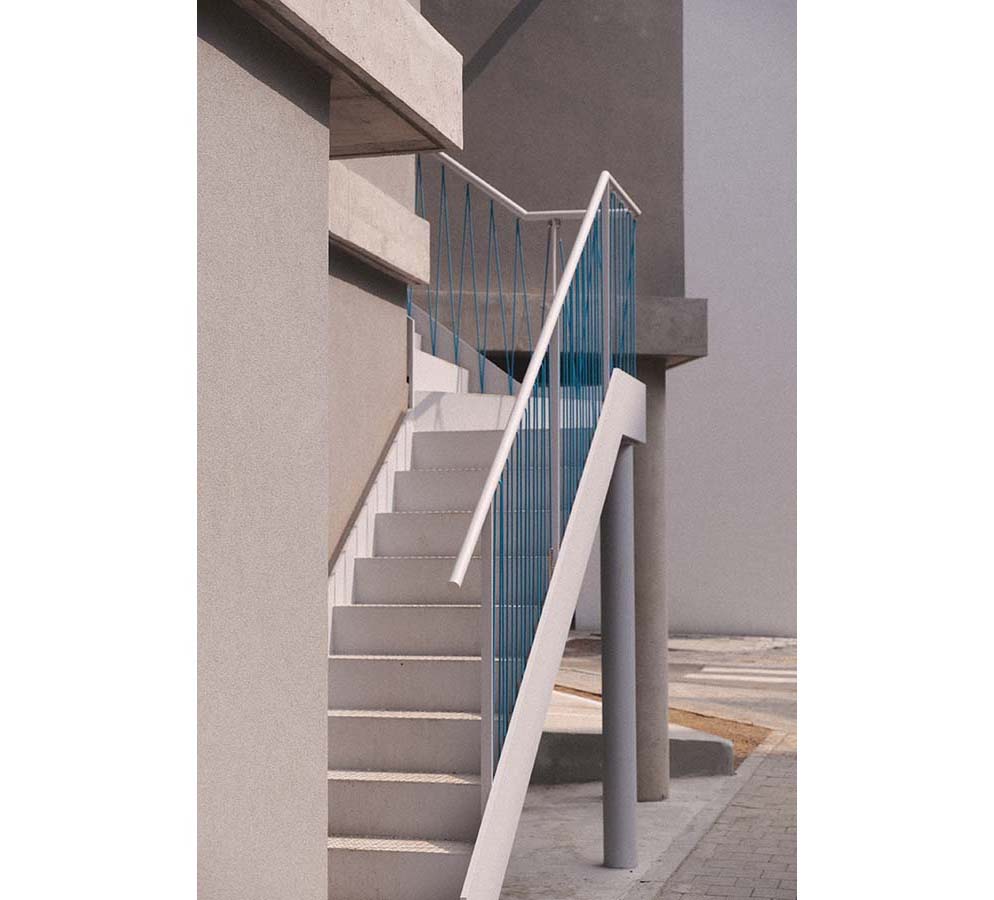
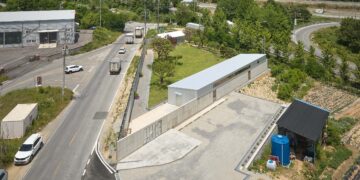
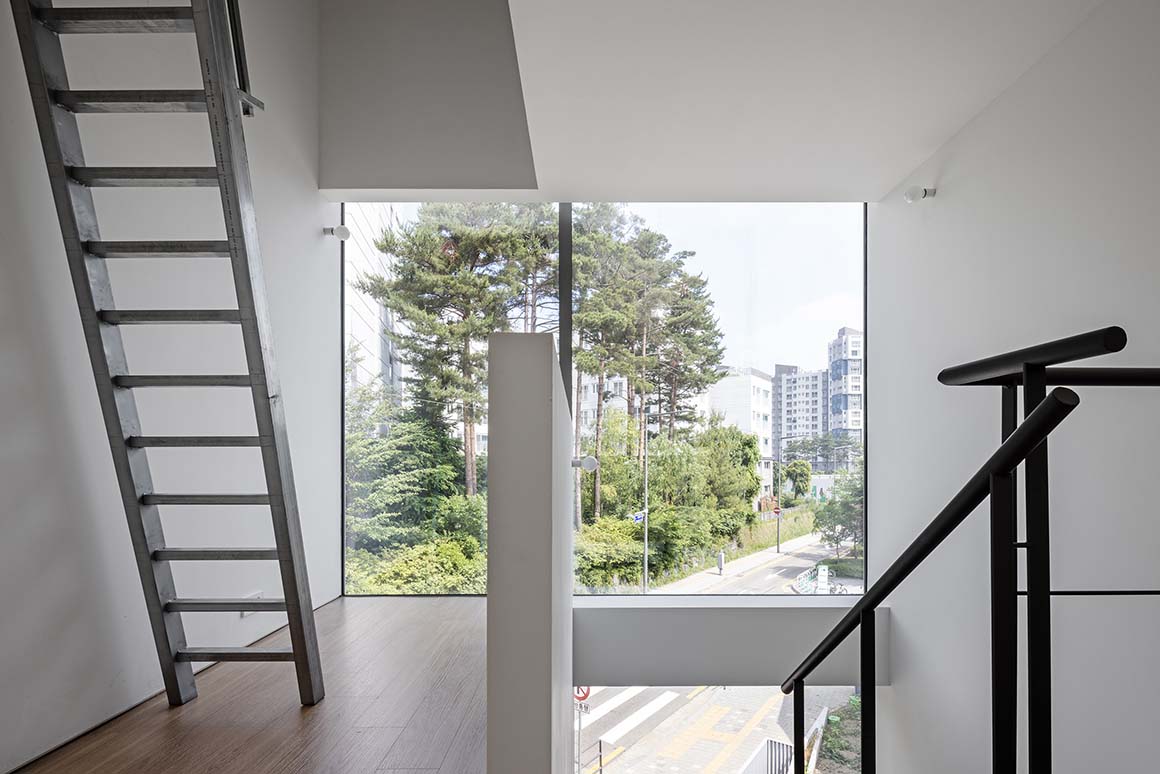
The surrounding houses cultivate vegetable gardens of various sizes. Under the roof eaves, farming tools and household items are stored, while laundry and everyday belongings line the exterior stairs. This lived-in character of urban private houses contrasts sharply with the new town beyond. The land on which Collective House S stands appears like a fragment cut from the urban fabric at its edge—a leftover plot that likely survived development on both sides long ago, and was probably affected again when the front road was newly laid.
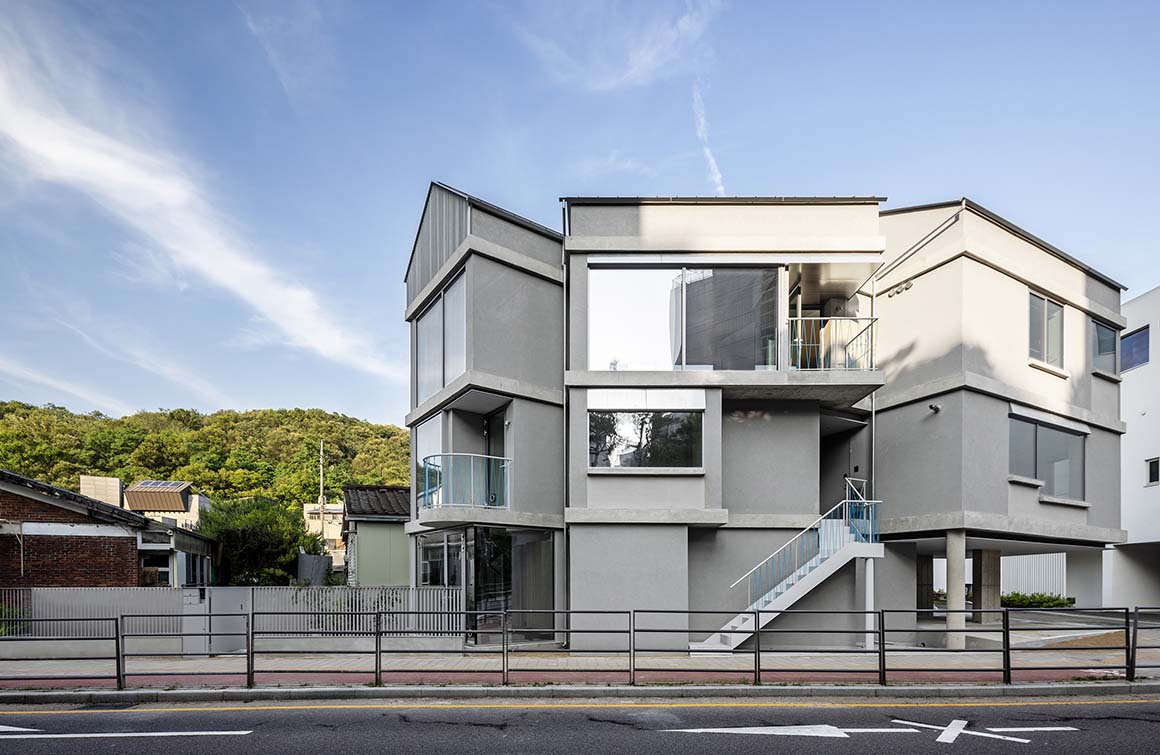
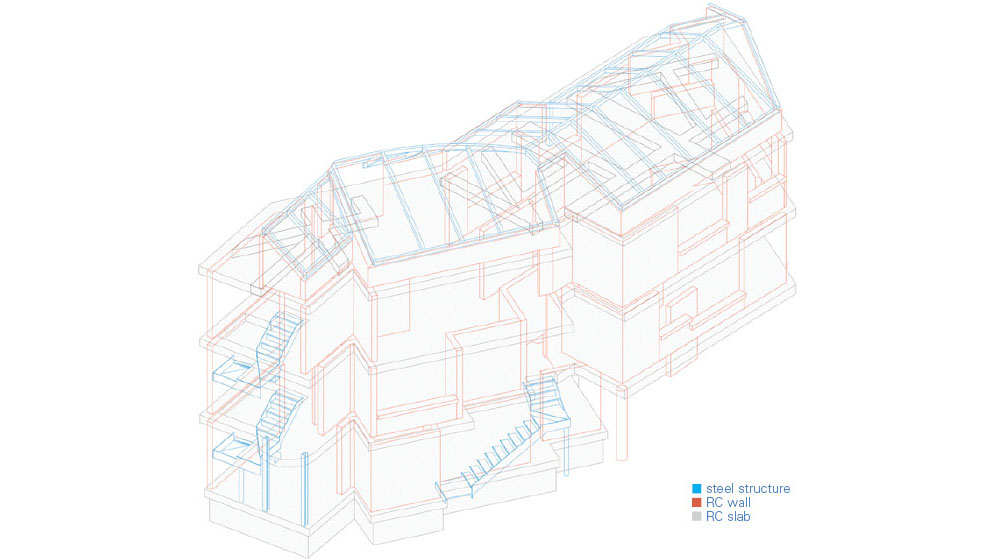
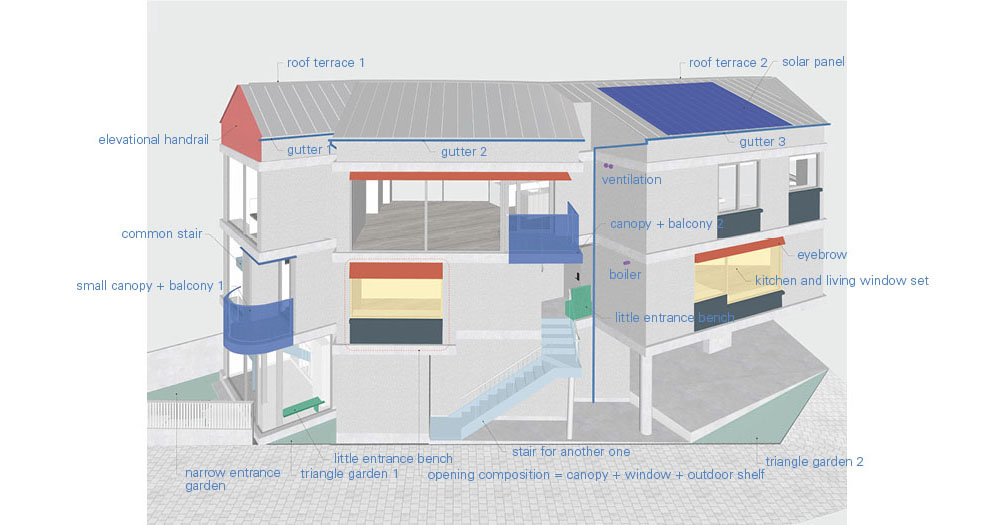
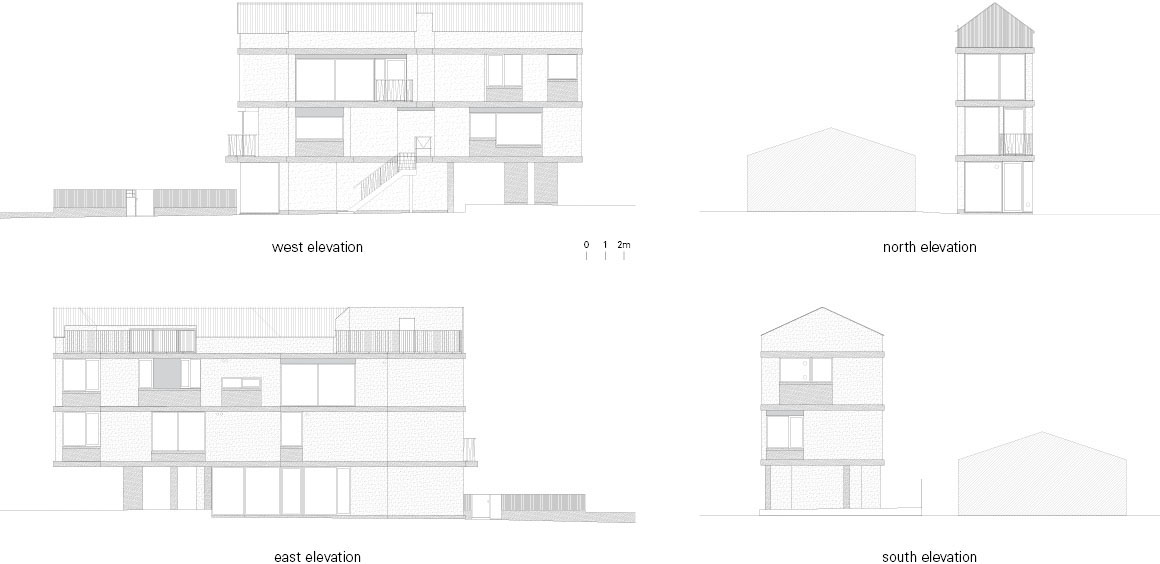
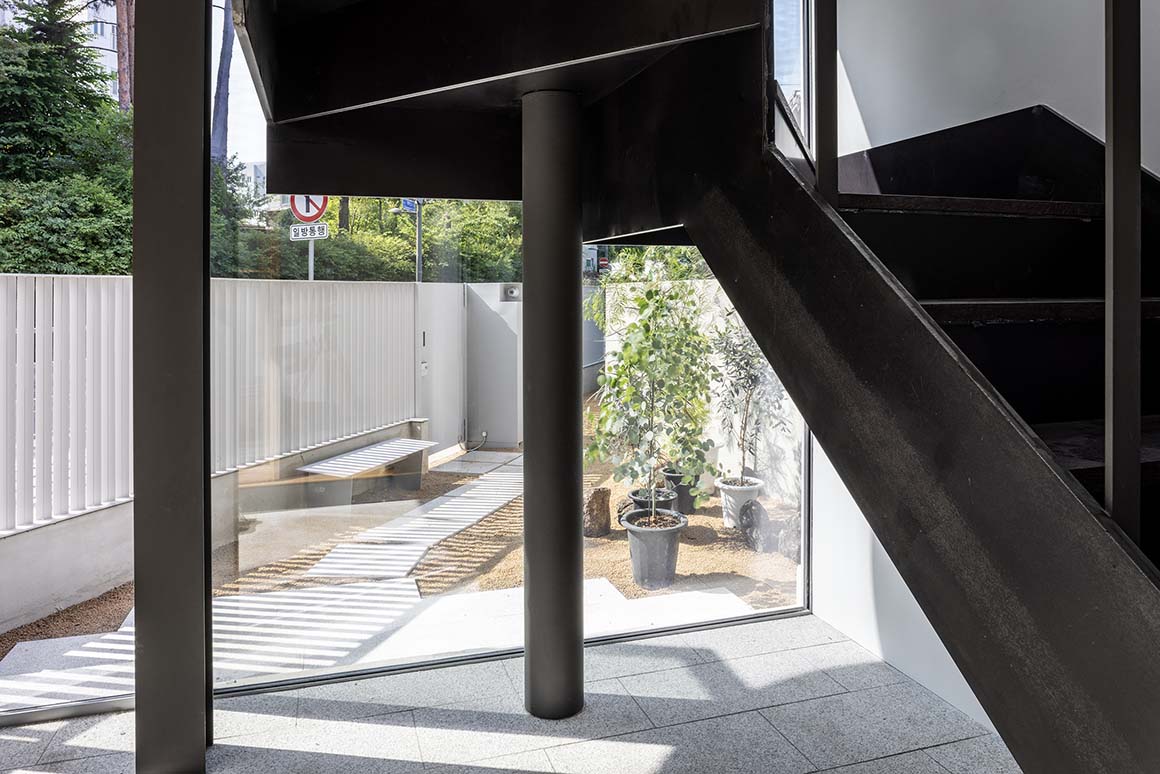
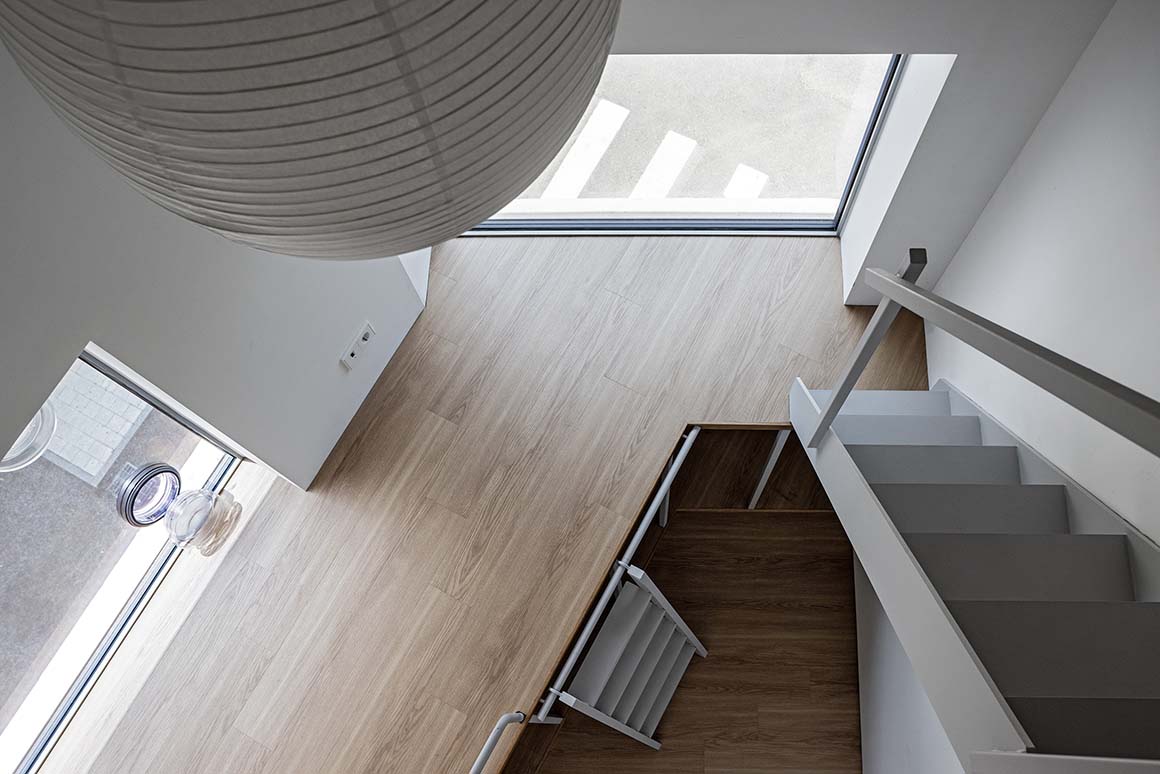
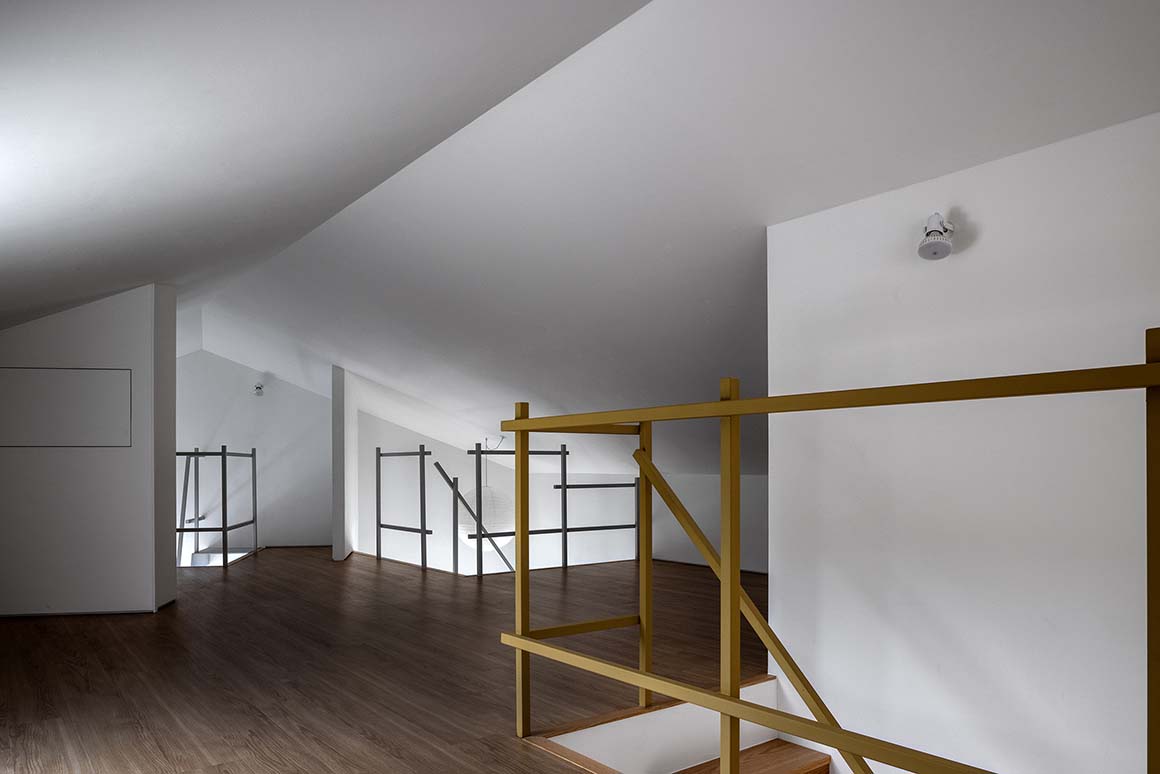
The building is composed as a gathering of several small houses. These small houses are assembled with slight offsets; the misalignments distinguish each unit while also allowing the house to open more fully toward a village-like condition. A small courtyard becomes the exterior entrance for the tenant household on the second floor, and a two-sided open terrace on the third floor. The houses, slightly shifted and spaced apart, can look toward one another. The first floor is used by the client’s parents, the second by the mother-in-law and eldest son, with a separate area on the same level for the tenant household, and the third floor by the client couple and the other children. The living and dining areas on the third floor are shared by all.
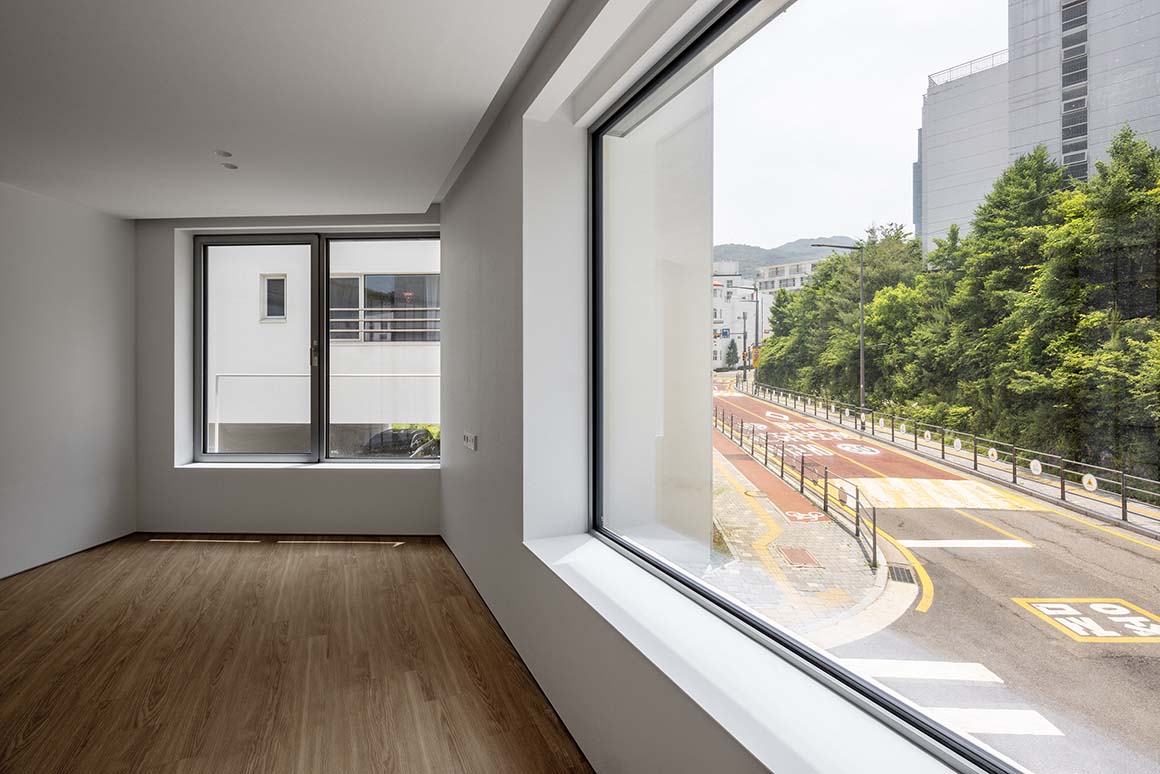
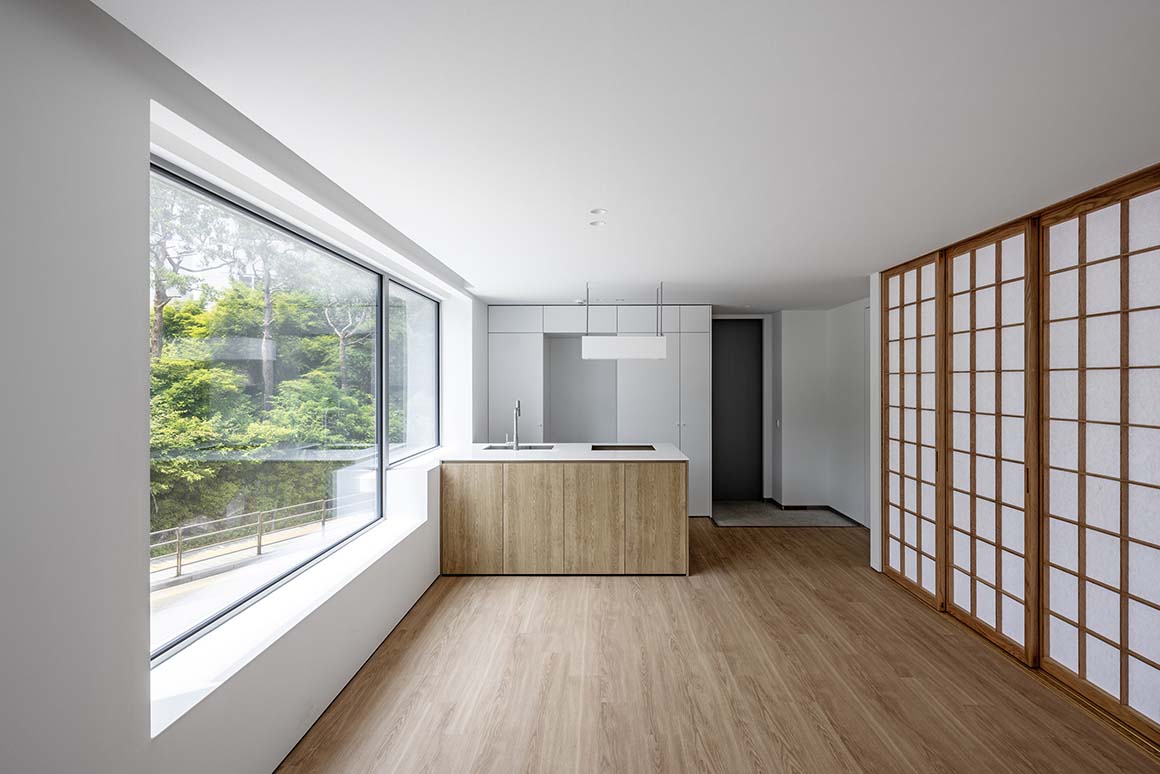
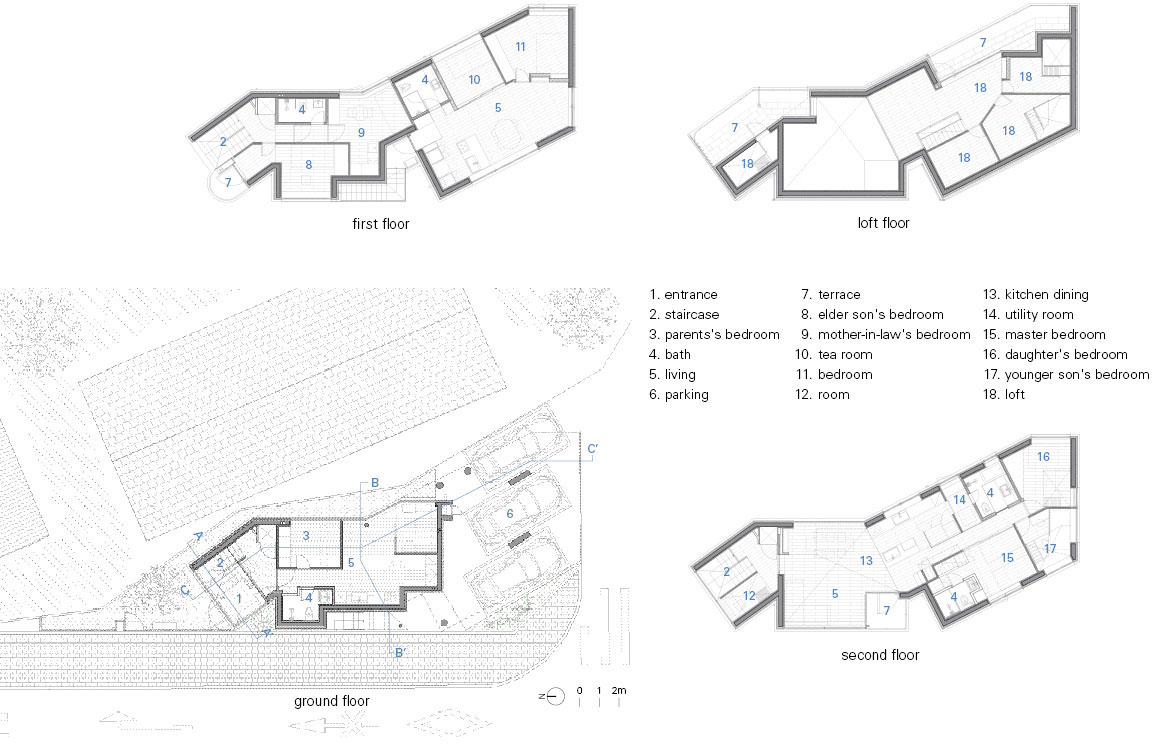
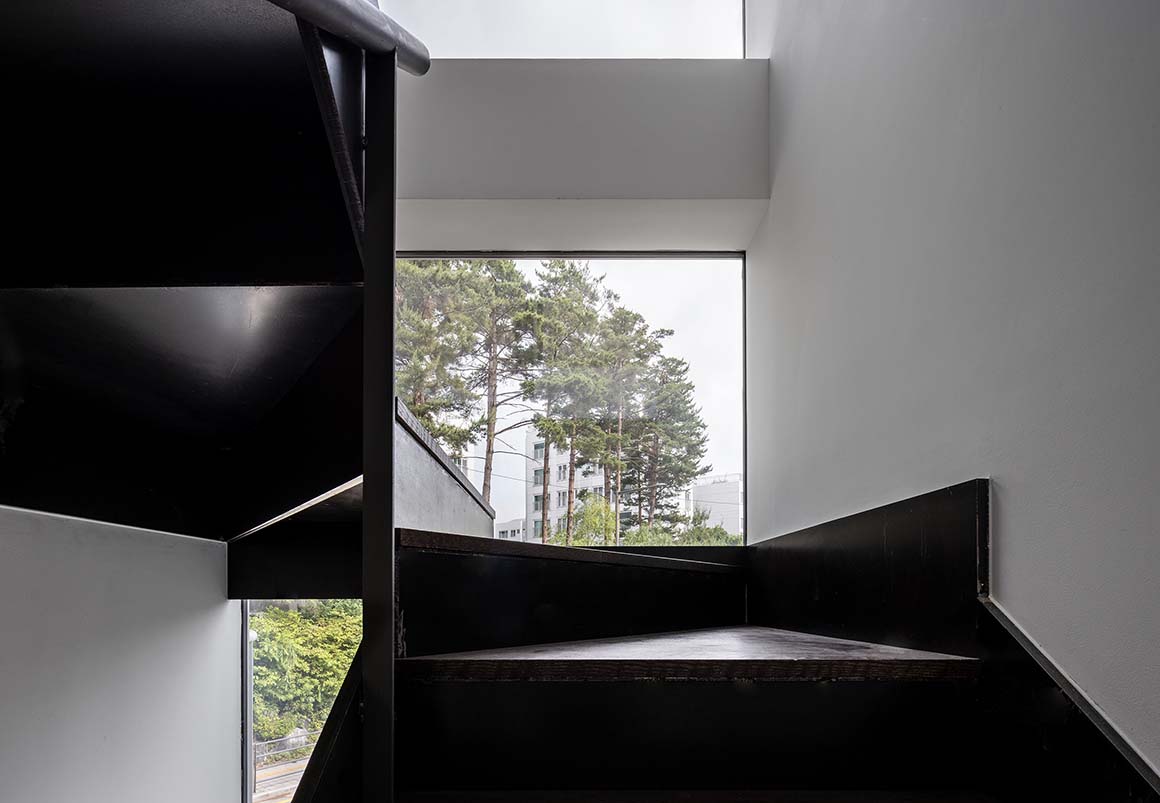
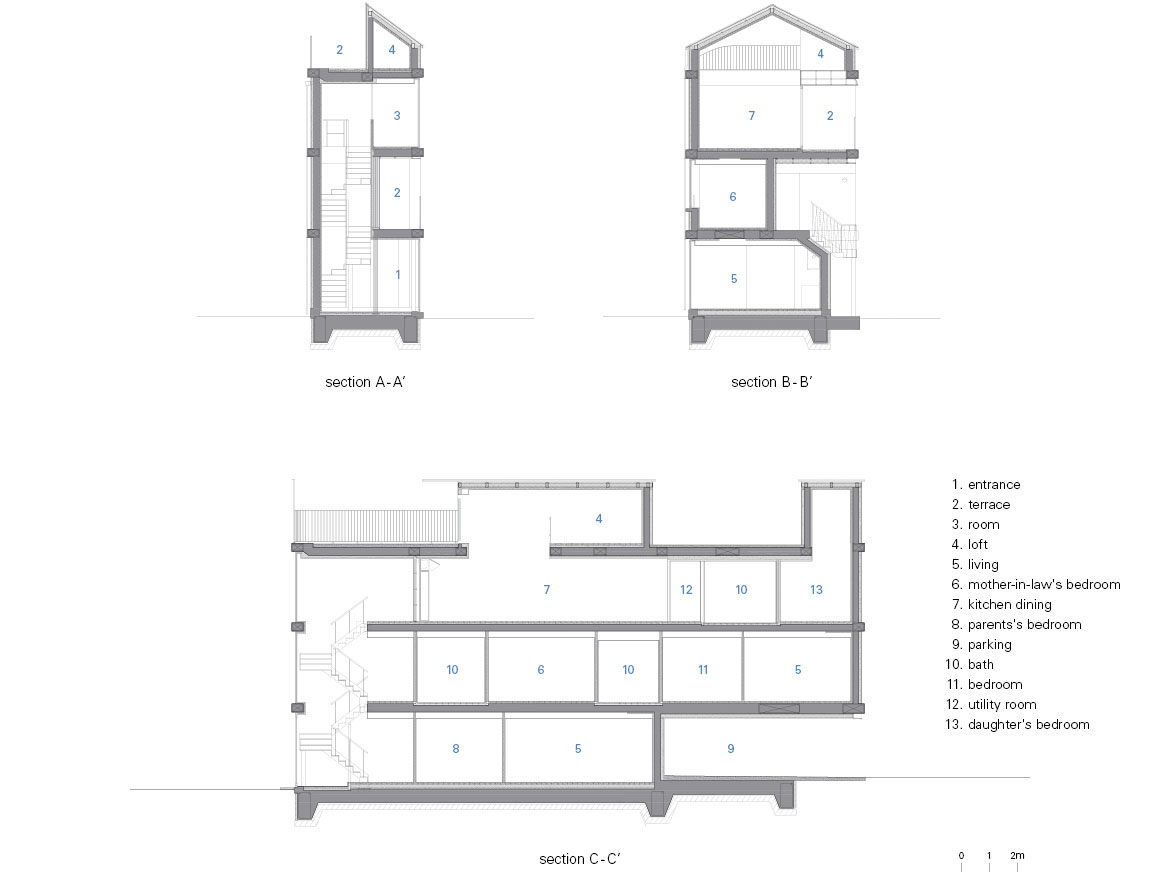
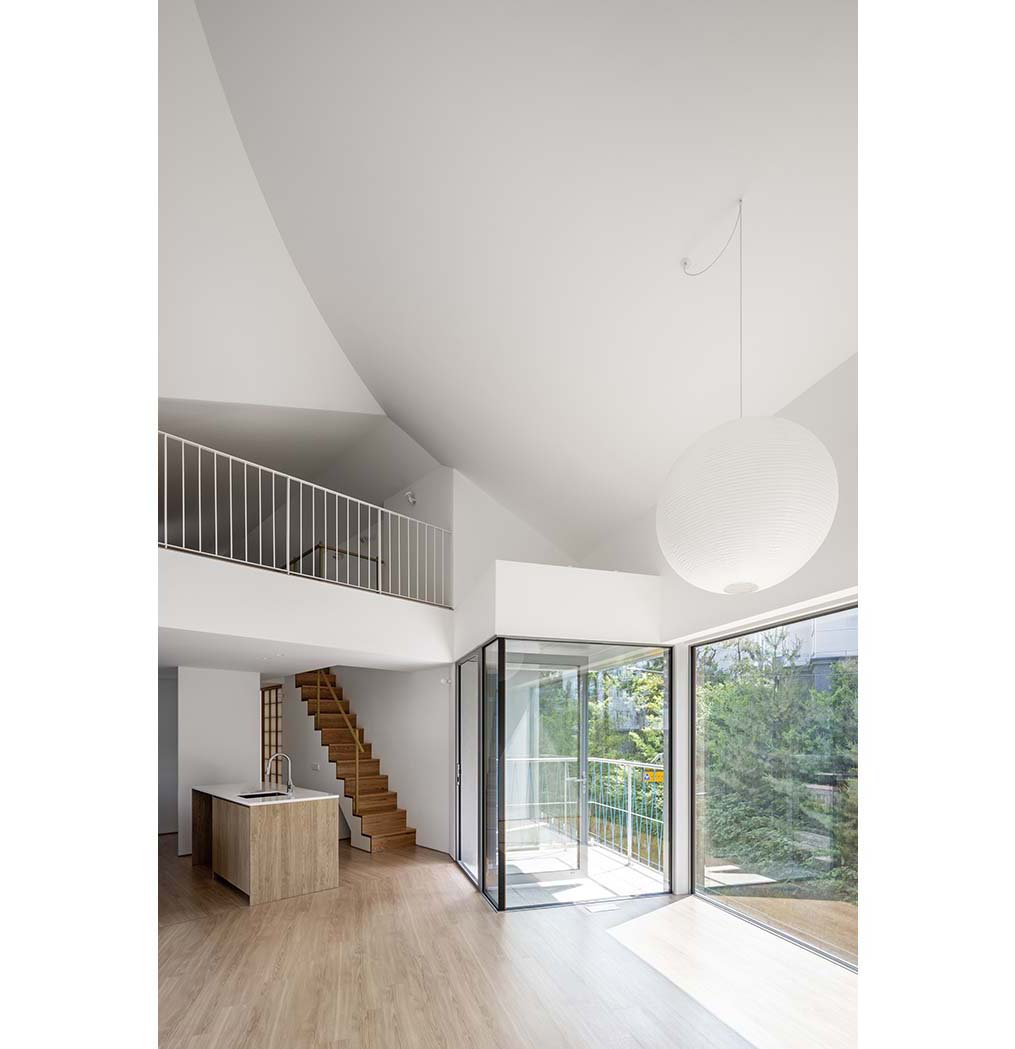
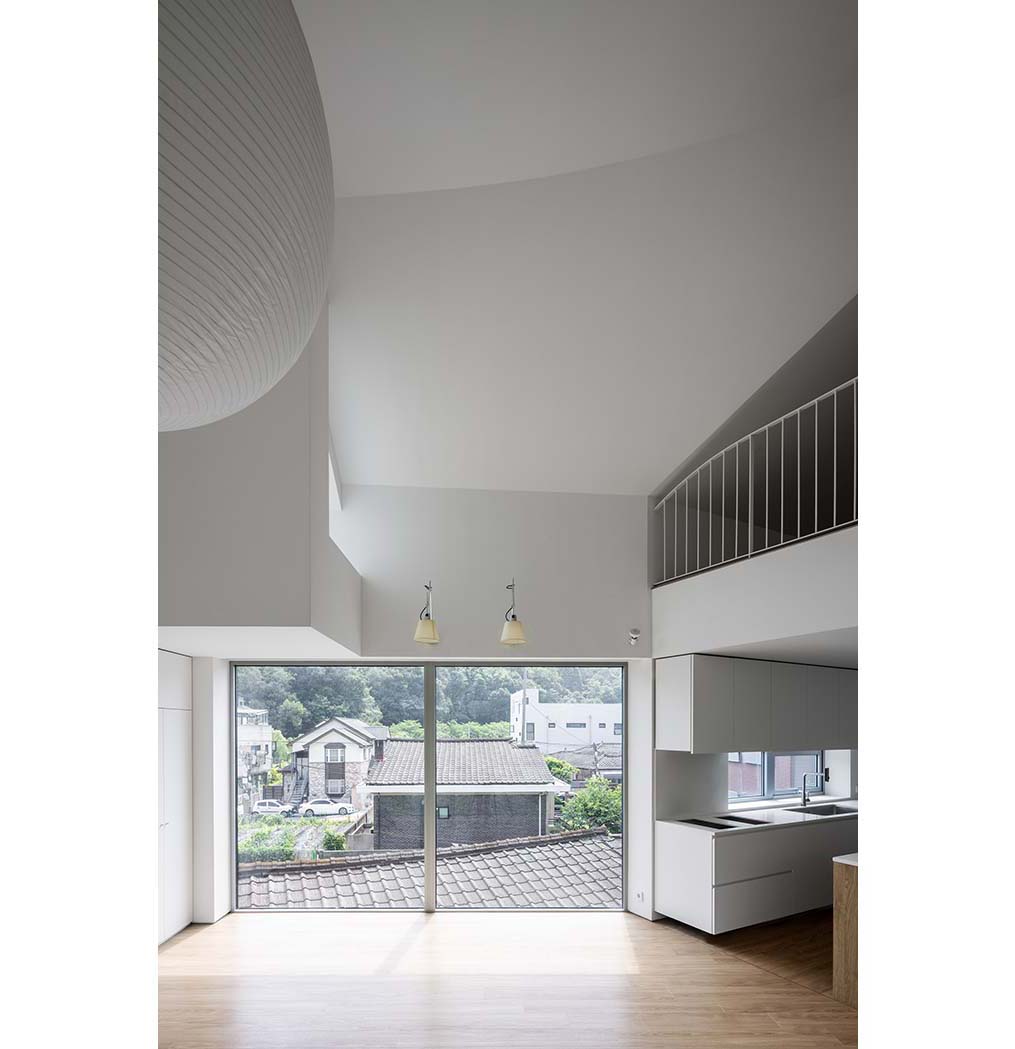
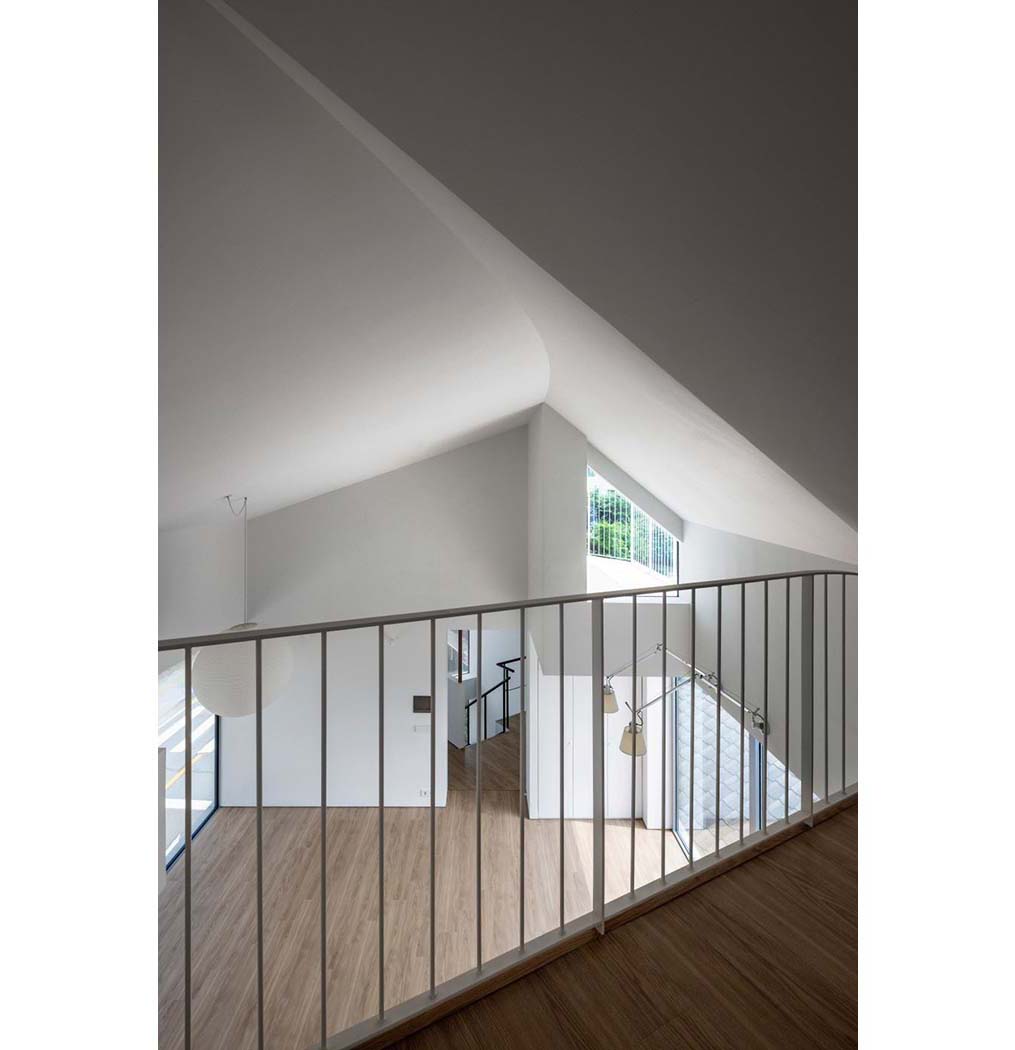
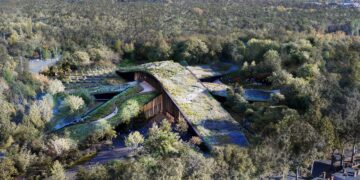
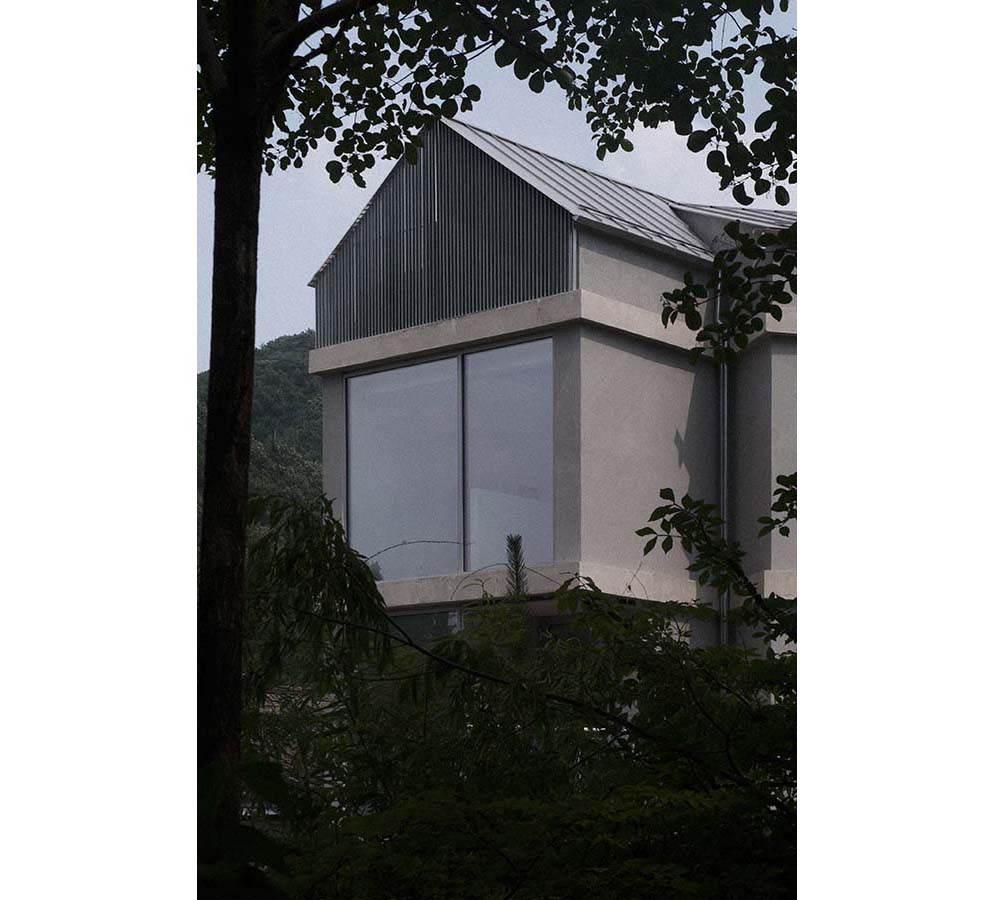
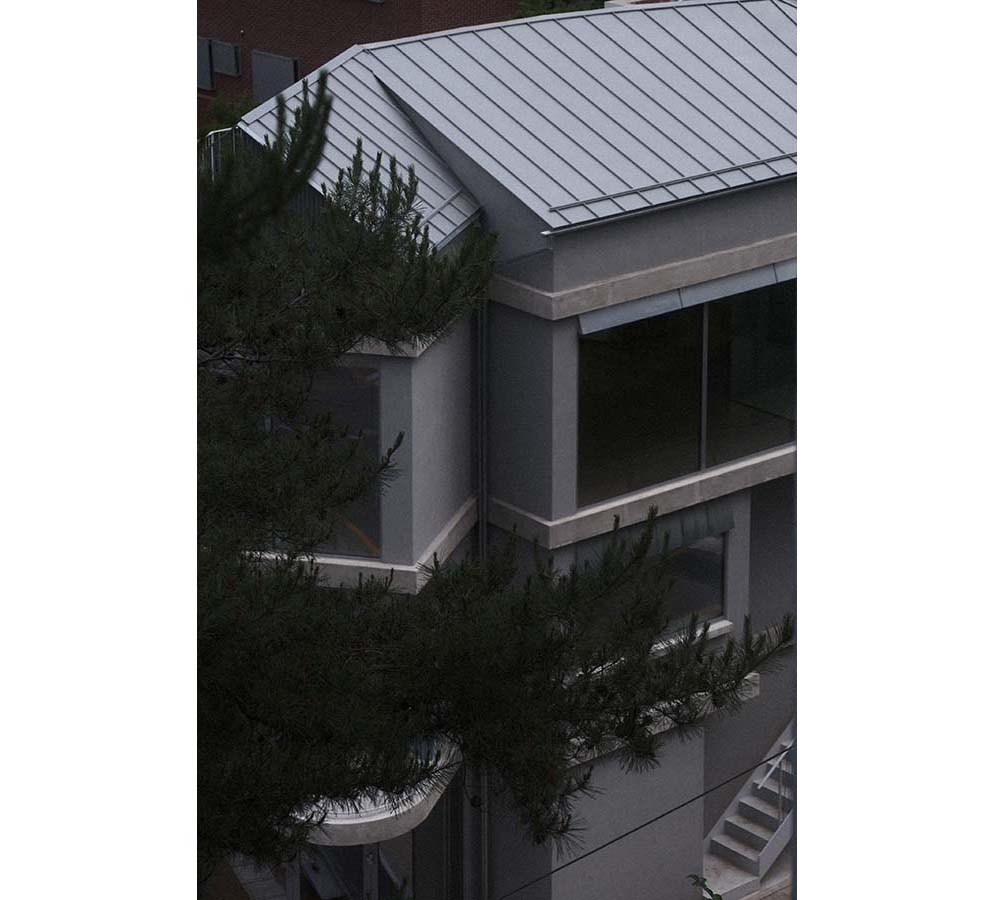
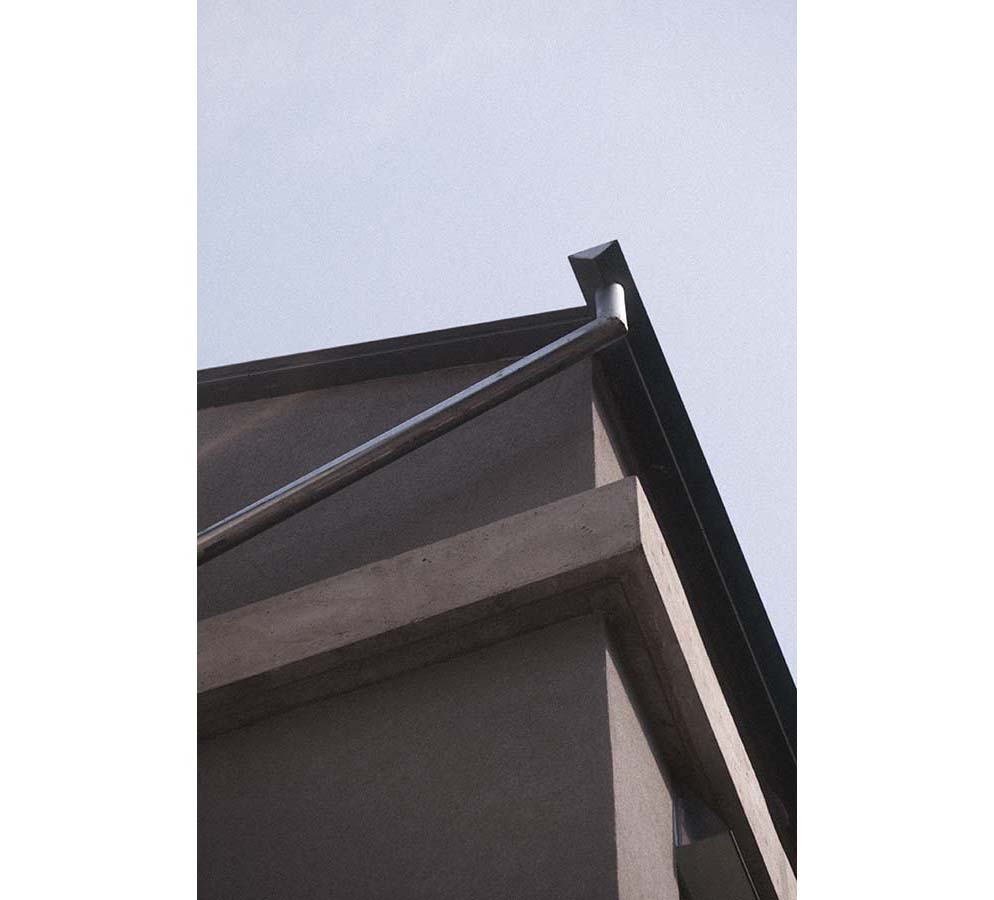
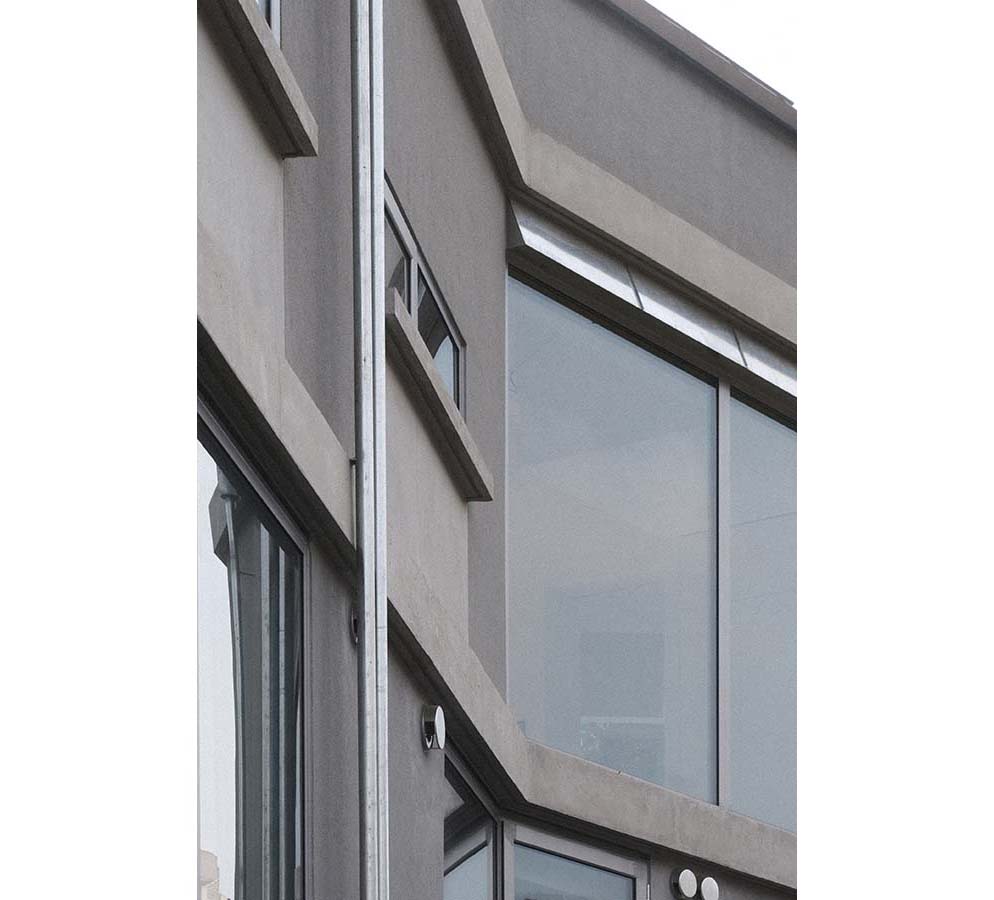
The Intuitive clarity of a form in which parts come together to make a whole—the image of multiple houses gathered—gives residents a spatially layered perception. It is not the feeling of dividing a single house, but a plural sense of individual houses connected to one another. Beneath the polygonal roof formed by overlapping and connected planes, the three houses appear less as a single, complete object than as a scene of neighboring houses standing side by side. This collective architecture—like a village, like a city—reimagines the public nature of the village that has disappeared from the modern city. Irregular, small orders, and individual lives gathered in loose clusters, once again sketch the beautiful everyday landscape of private houses opening outward into a village.
Project: Collective House S / Location: Seocho-gu, Seoul / Architect: o.heje architecture / Project team: Haedeun Lee, Jaepil Choi, Donggyeong Kim, Jiyoung Lee / Structural engineer: Eun structural engineering / Mechanical and electrical engineer: Daedo Engineering / Landscape architect: o.heje architecture / Contractor: Jayeon & Woori contractor / Use: Collective House / Site area: 177.7m² / Bldg. area: 106.1m² / Gross floor area: 199.7m² / Bldg. coverage ratio: 59.7% / Gross floor ratio: 112.3% / Bldg. scale: three stories above ground / Height: 11.27m / Parking: 3 cars / Structure: RC + SC / Exterior finishing: exposed concrete, staco, galvanized steel sheet / Interior finishing: EP, wooden flooring / Design and construction: 2023.9~2024.6 / Completion: 2025.6 / Photograph: ©Wooseop Hwang (courtesy of the architect); ©Heejun Park (courtesy of the architect)