

Parallel to Jeju Landscape with the Internal the Spaces Linked
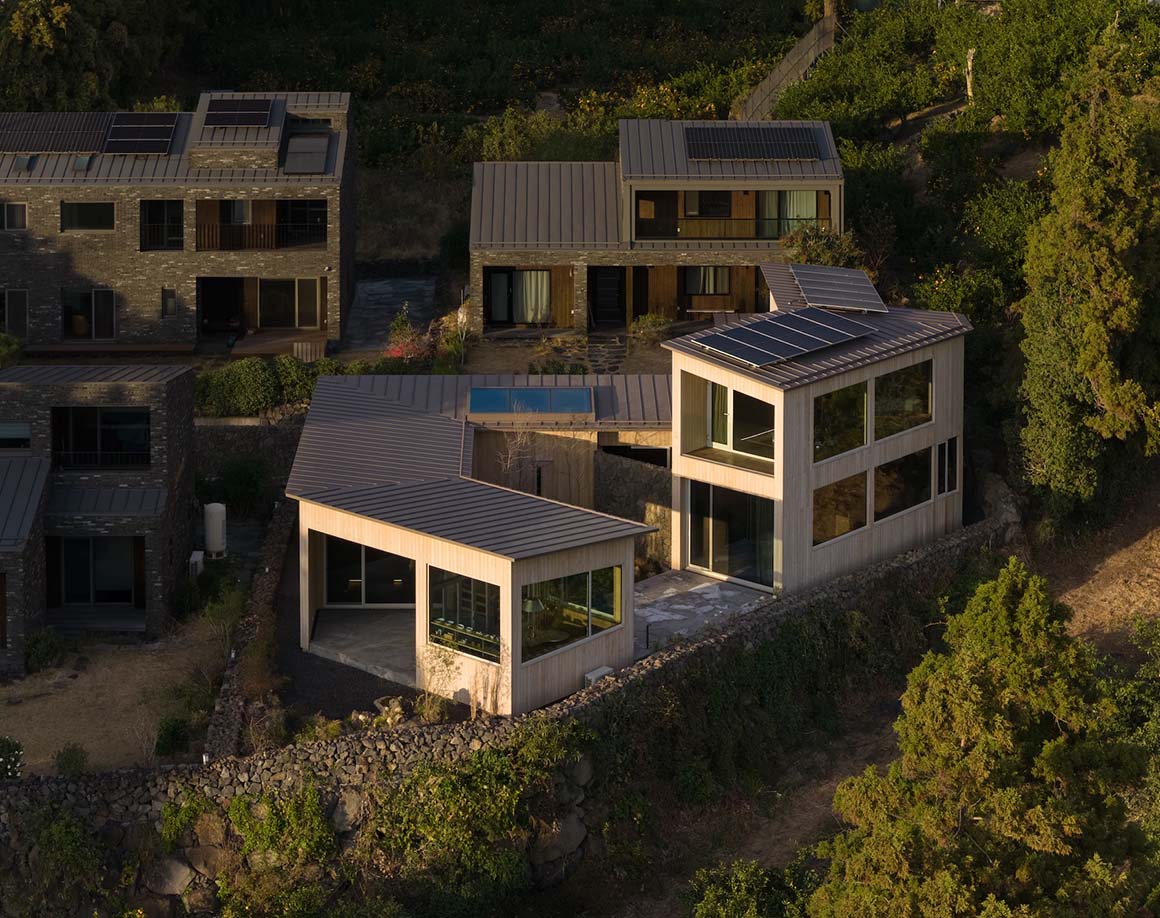
This architecture does not treat the horizon as mere scenery to be consumed; it draws the horizontal line into the very core of its design. Situated on a gently sloping tangerine orchard in Hwasun-ri, Jeju, the stay Ieoseo occupies a rare vantage point where Hyungje Island, Gapado, and Marado align along a single, non-overlapping horizon. Rather than treating this vista as a picturesque backdrop framed by windows, the architect has inscribed it into the project’s entire system—from site planning and sectional logic to material expression—through a meticulous reading of the site’s most advantageous positions.
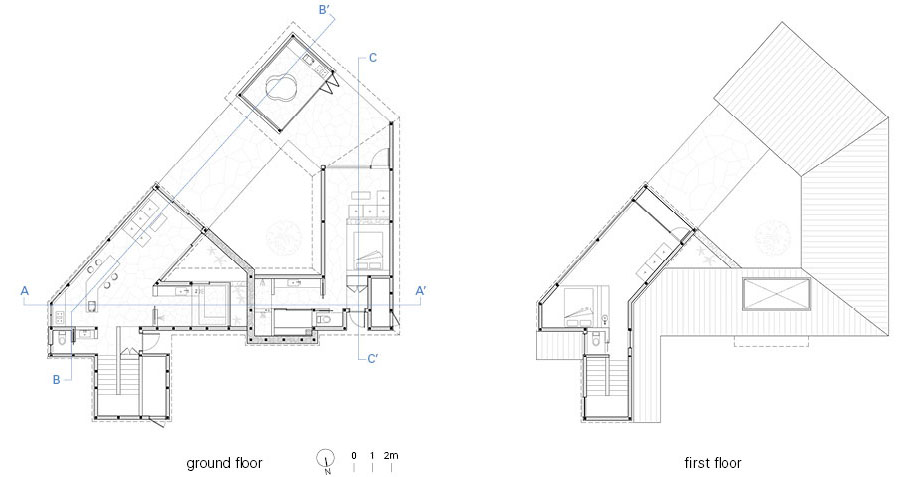
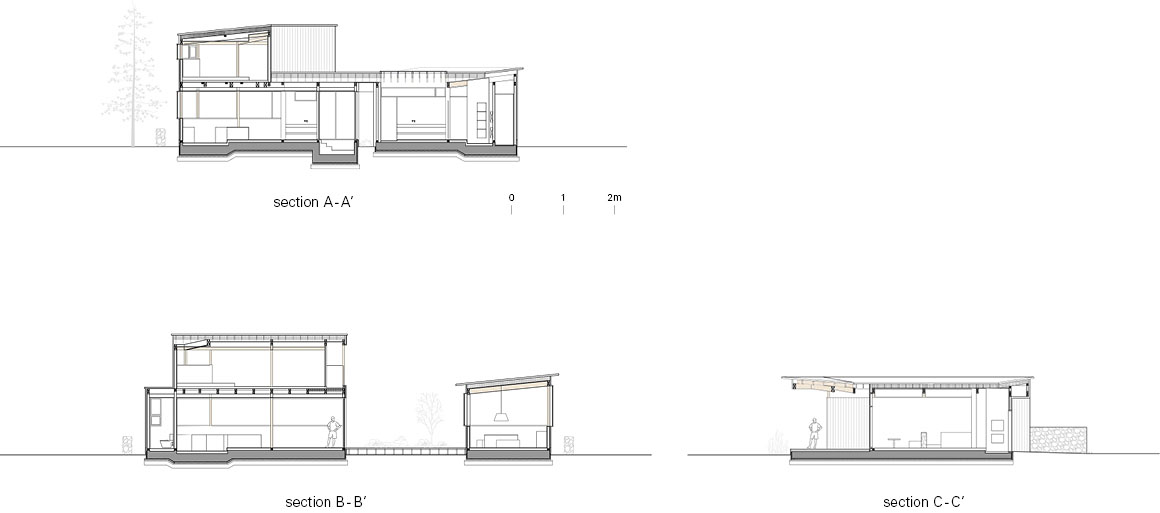
To avoid a single, monolithic volume, the scheme is divided into three distinct masses: Building A, Building B, and a central open kitchen. While a unified mass would have limited the facades’ engagement with the landscape, this tripartite separation allows each volume to secure its own specific angle and distance toward the sea. Continuous floor steps and rooflines bind these parts into a coherent organism, ensuring that division functions not as disassembly, but as a deliberate recalibration of relationships.
At the heart of the site lies the open kitchen. Occupying the point with the most commanding outlook, this mediating space reinterprets the communal role of traditional Korean pavilions (jeong-ja) and village halls. It preserves the privacy of the flanking buildings while acting as a shared node where guests naturally gather, oriented toward the expansive view.
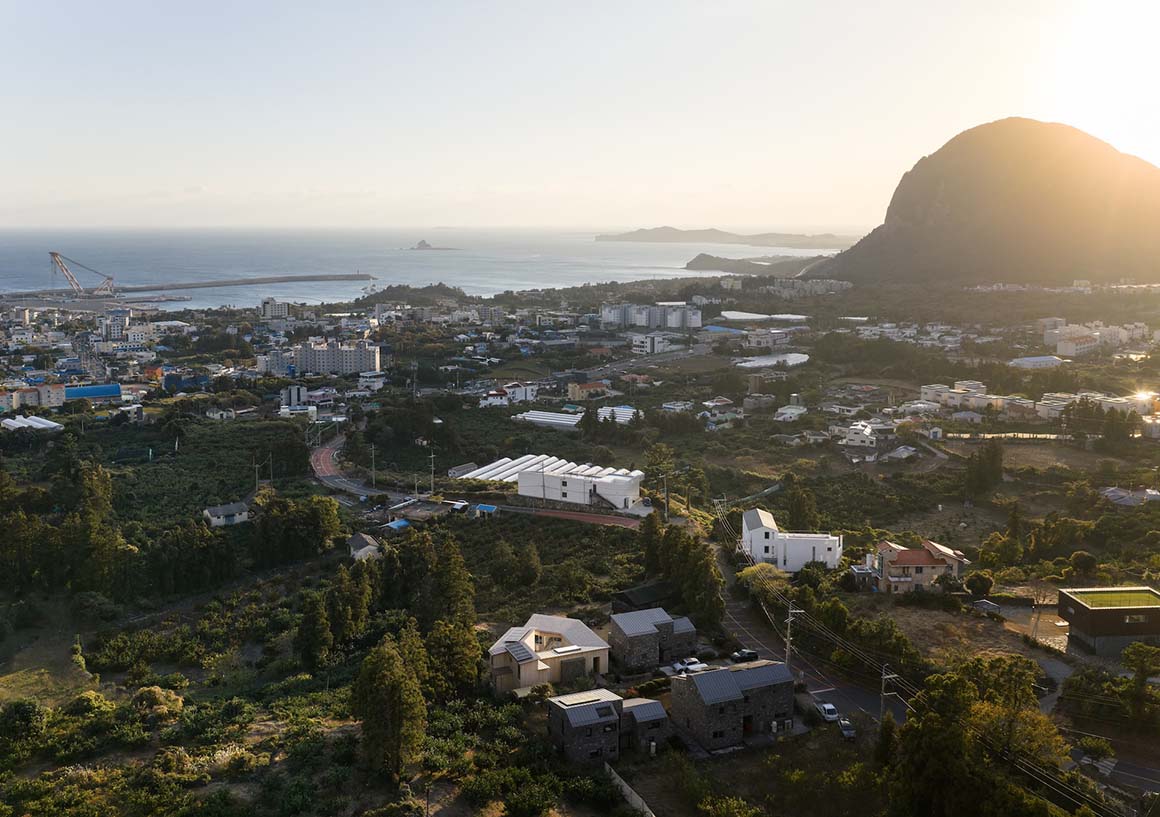
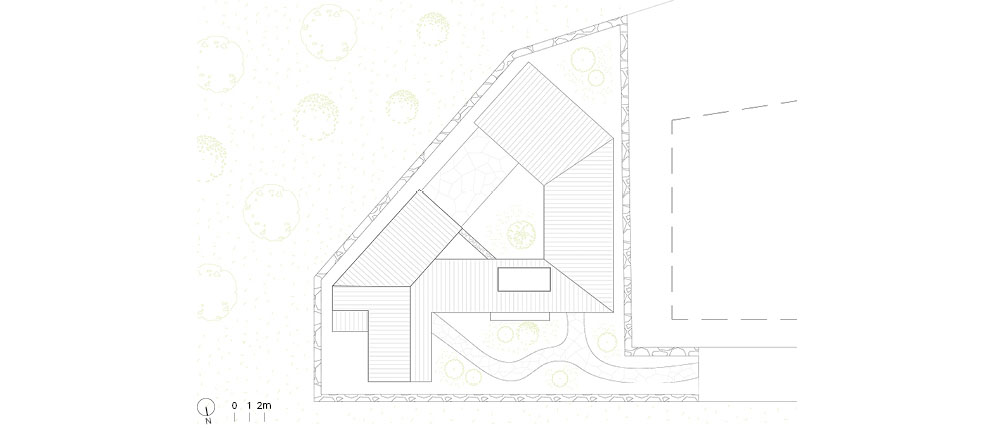
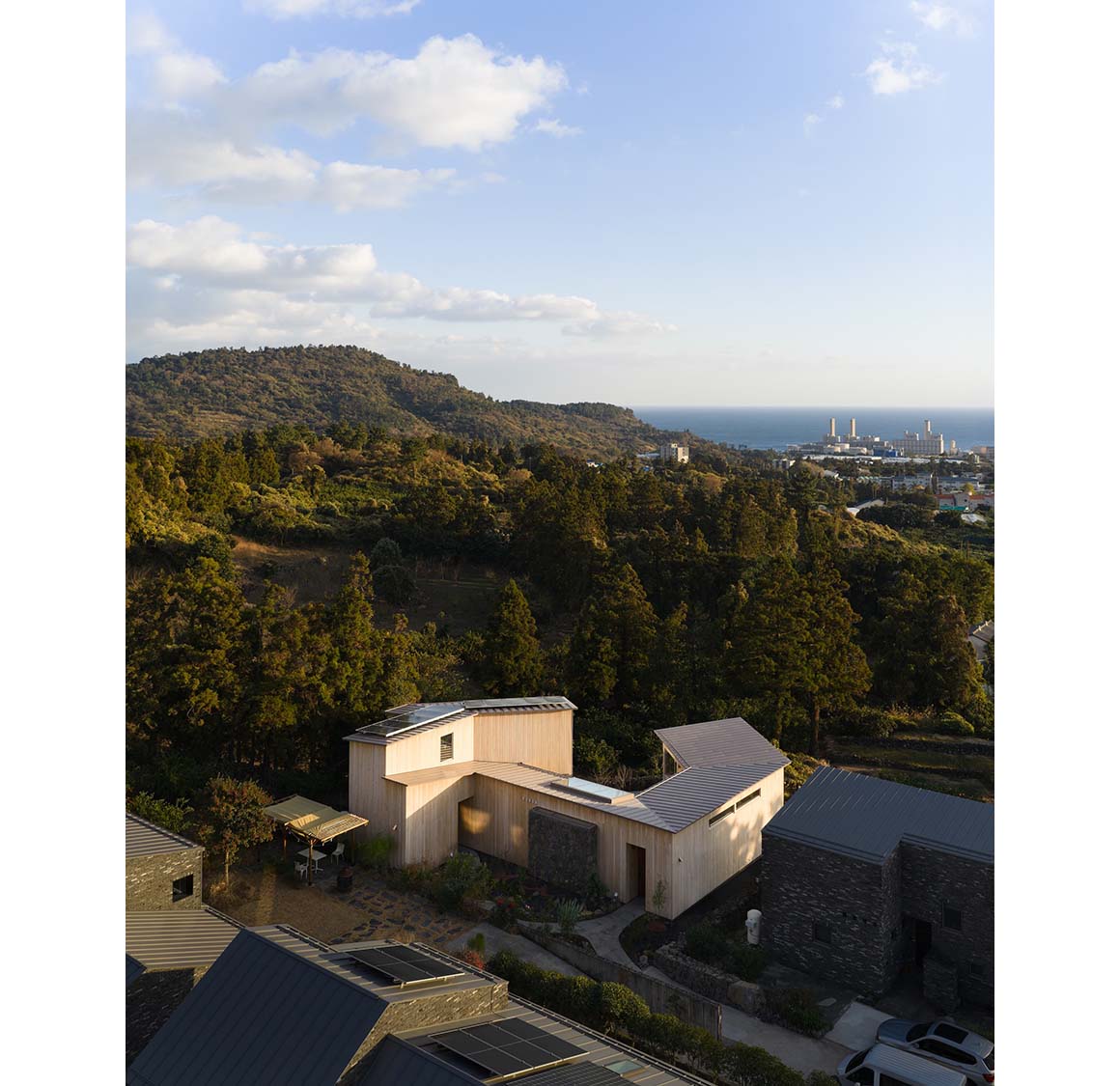

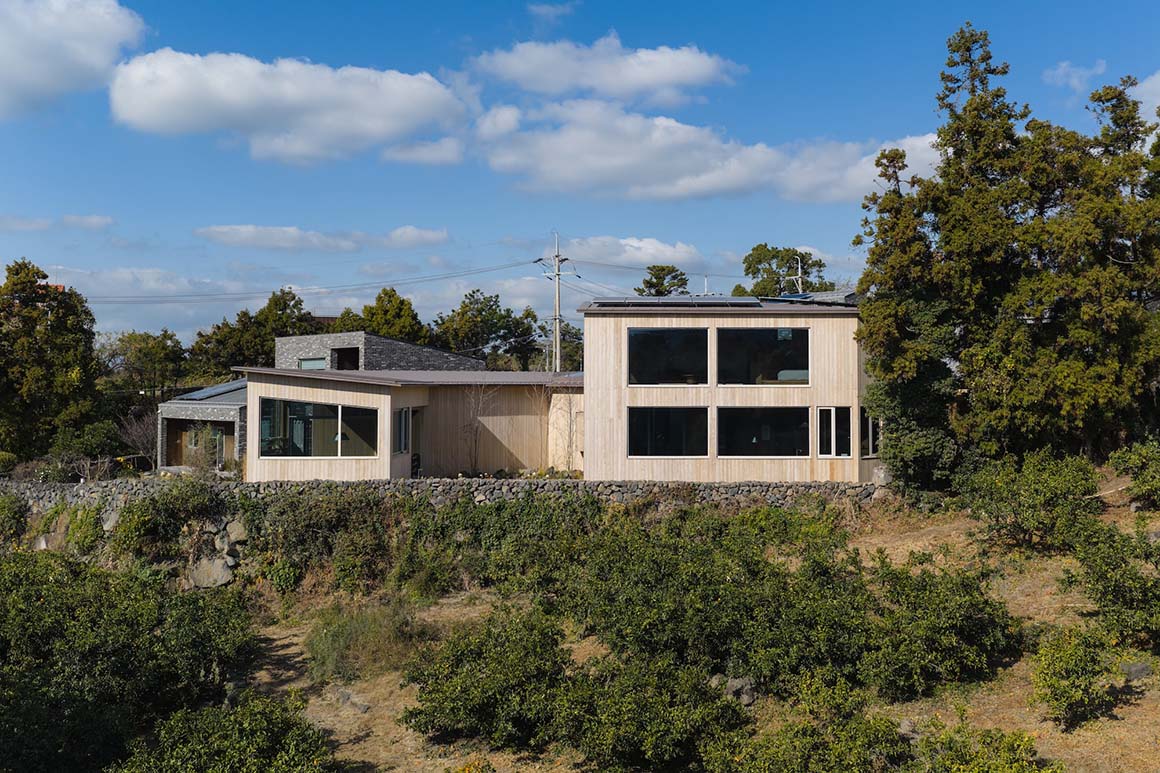
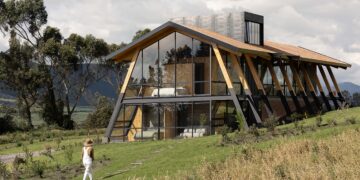
Buildings A and B, though sharing the same plot, cultivate contrasting spatial characters. Building A is extroverted, opening decisively toward the view. From the second-floor bedrooms, the horizon—punctuated by the three islands—unfolds in its entirety. On the first floor, the dining area and an indoor open-air bath are aligned along a single visual axis, allowing everyday rituals to merge seamlessly with the scenery. Openings follow a strict logic: sightlines toward neighboring plots are closed to ensure sanctuary, while elevations facing the horizon open boldly to amplify the site’s potential.
In contrast, the single-story Building B is a study in restraint. Described by the architect as a “cave,” this inward-looking space privileges bodily sensation over visual outlook. Designed primarily for sauna and bathing, the interior is sculpted by light rather than view. A long clerestory window and narrow gaps between beams admit daylight that shifts in intensity as one moves through the space, fostering a quiet, contemplative atmosphere. Instead of presenting the landscape directly, the building allows the exterior to register indirectly through the modulation of light and shadow.
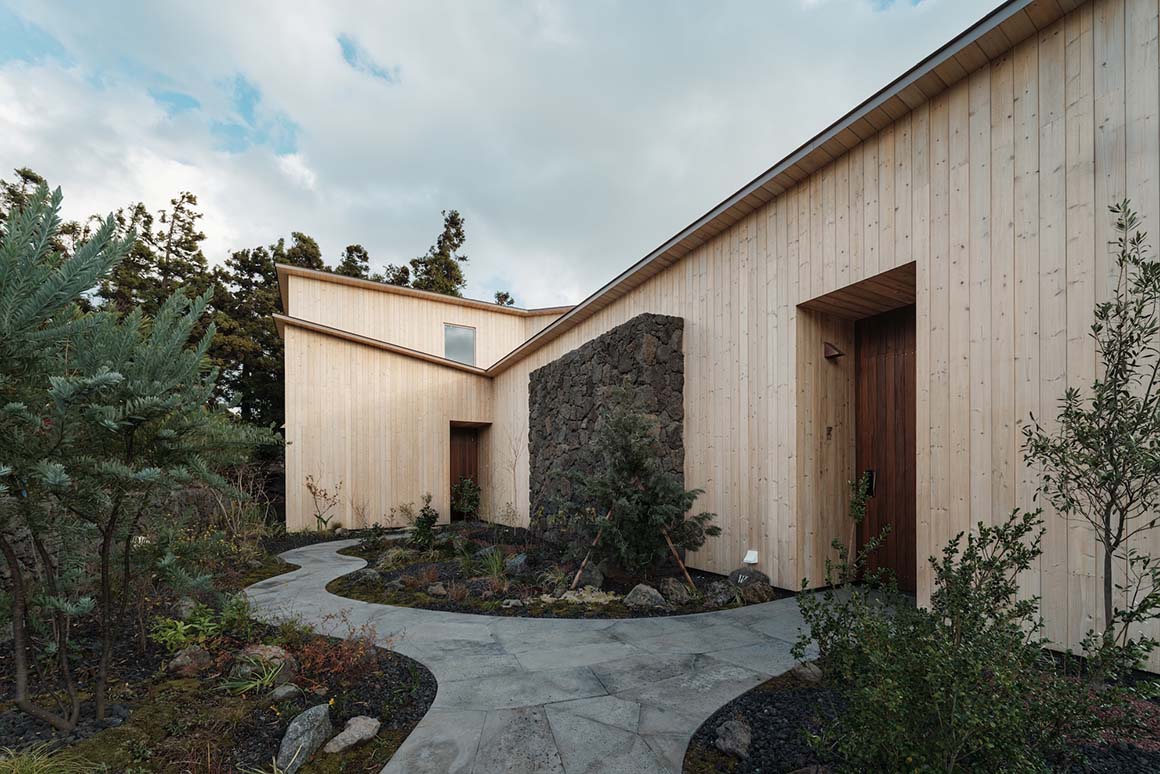
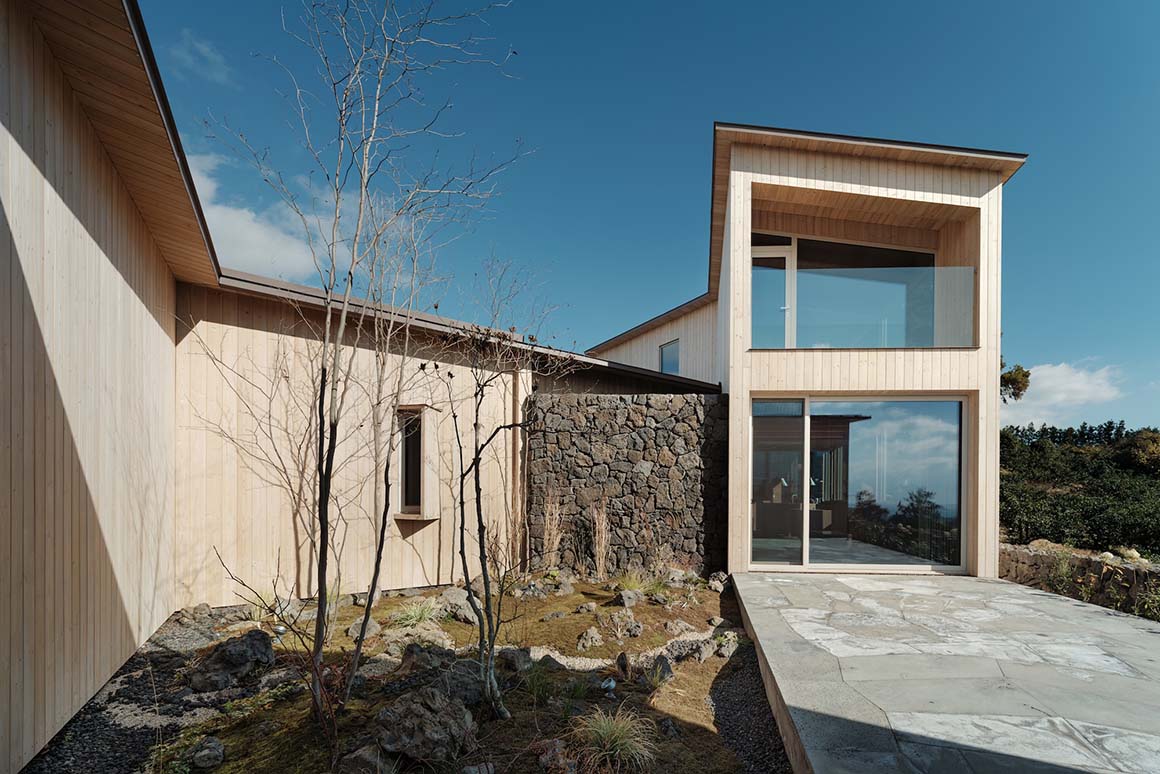
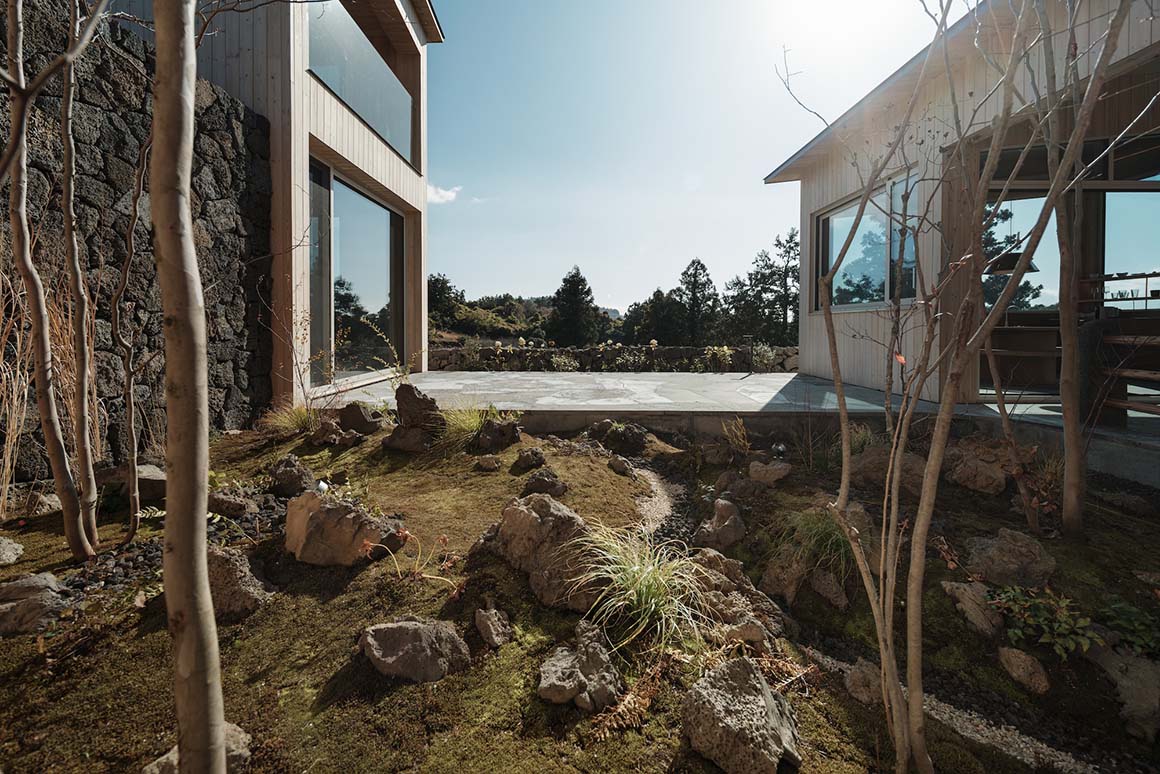
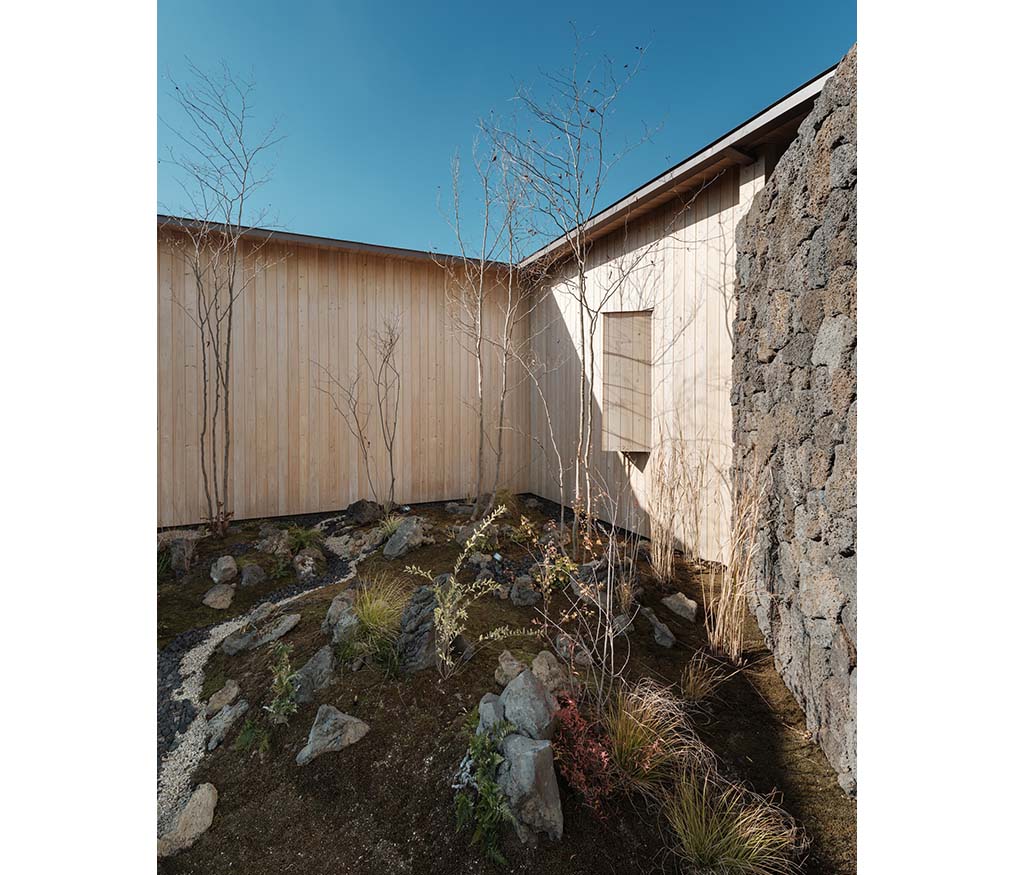
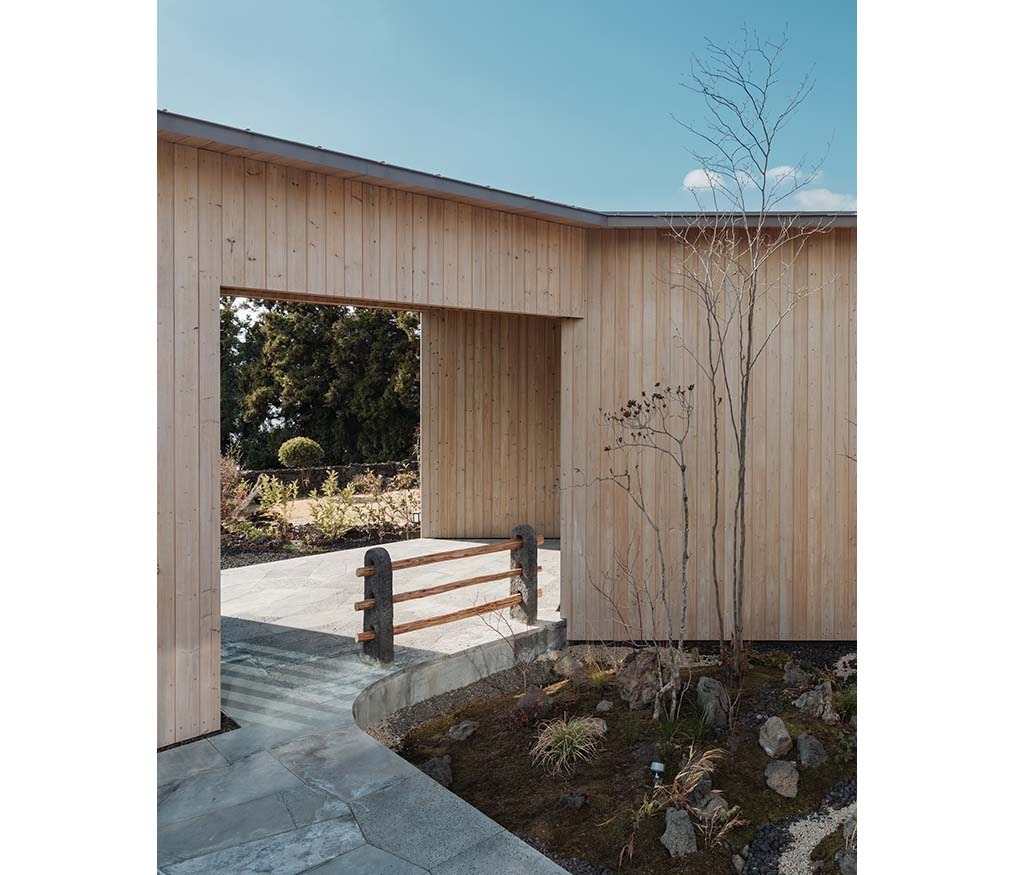
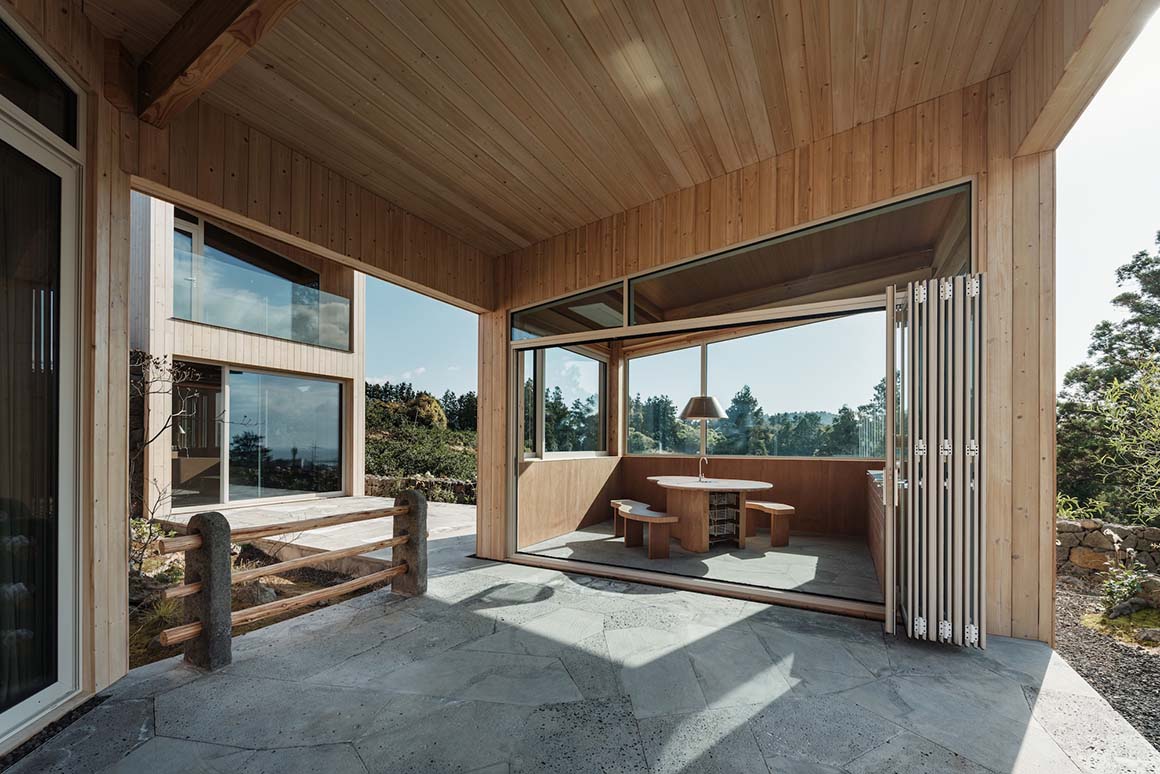
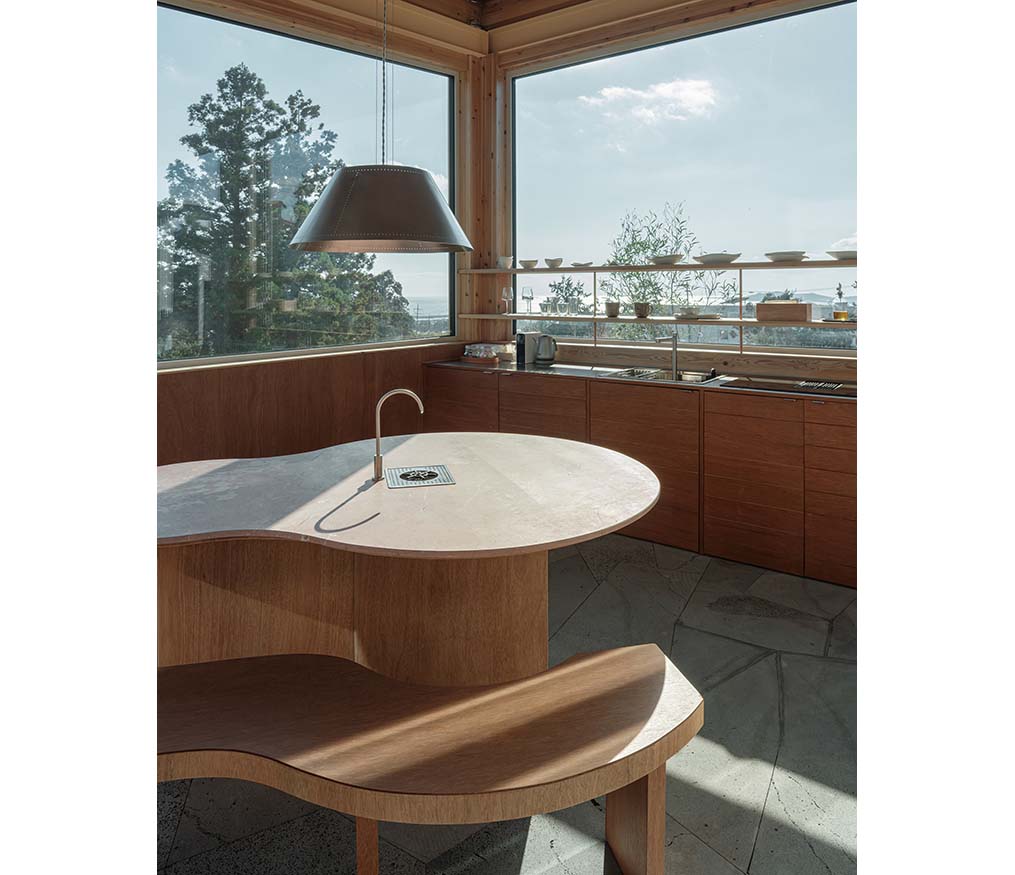
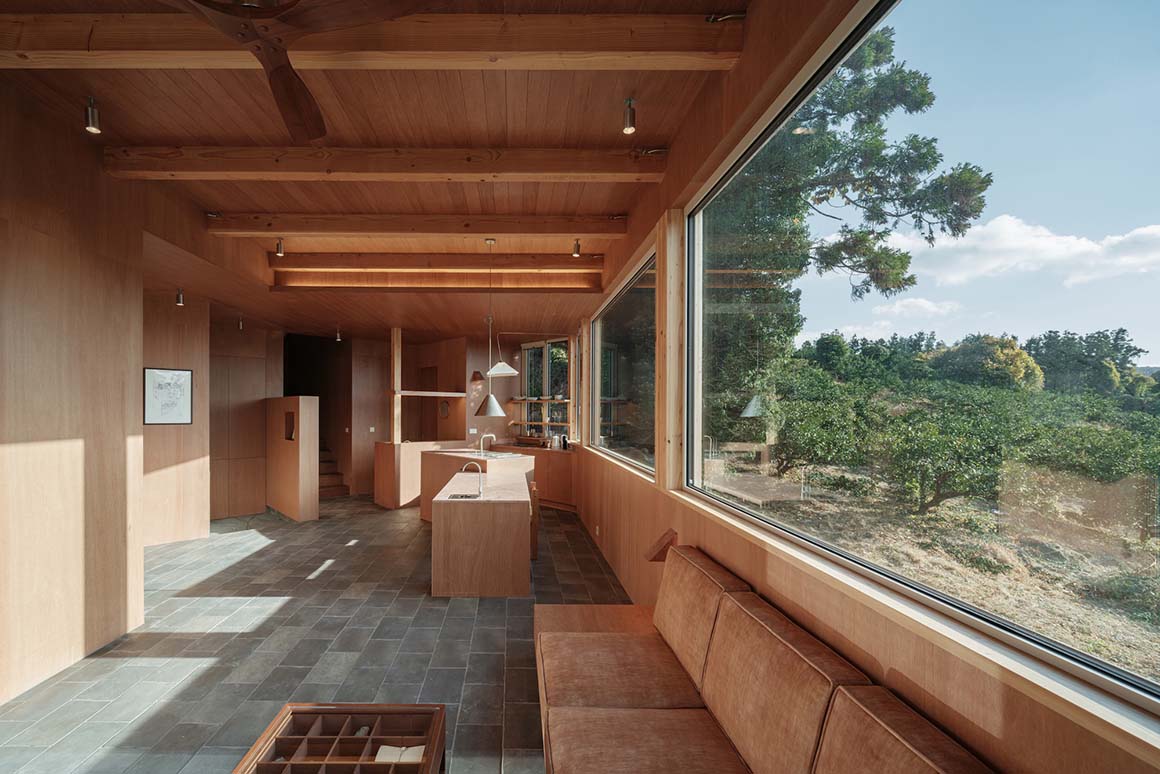
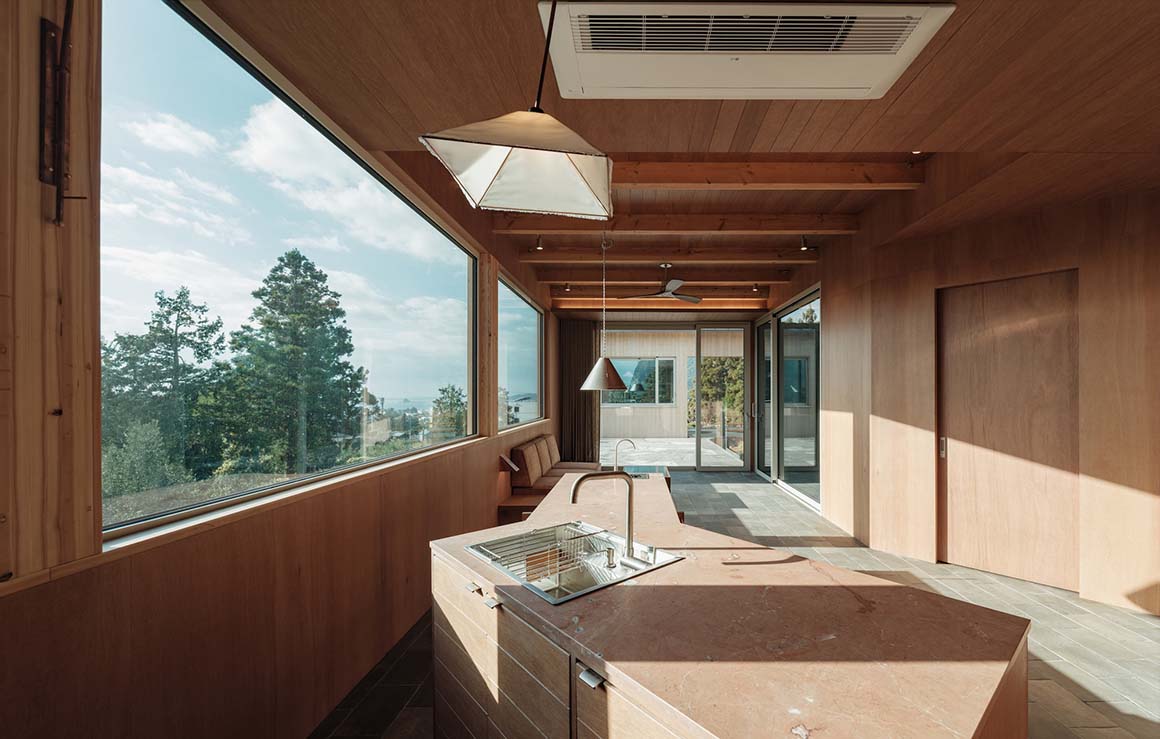
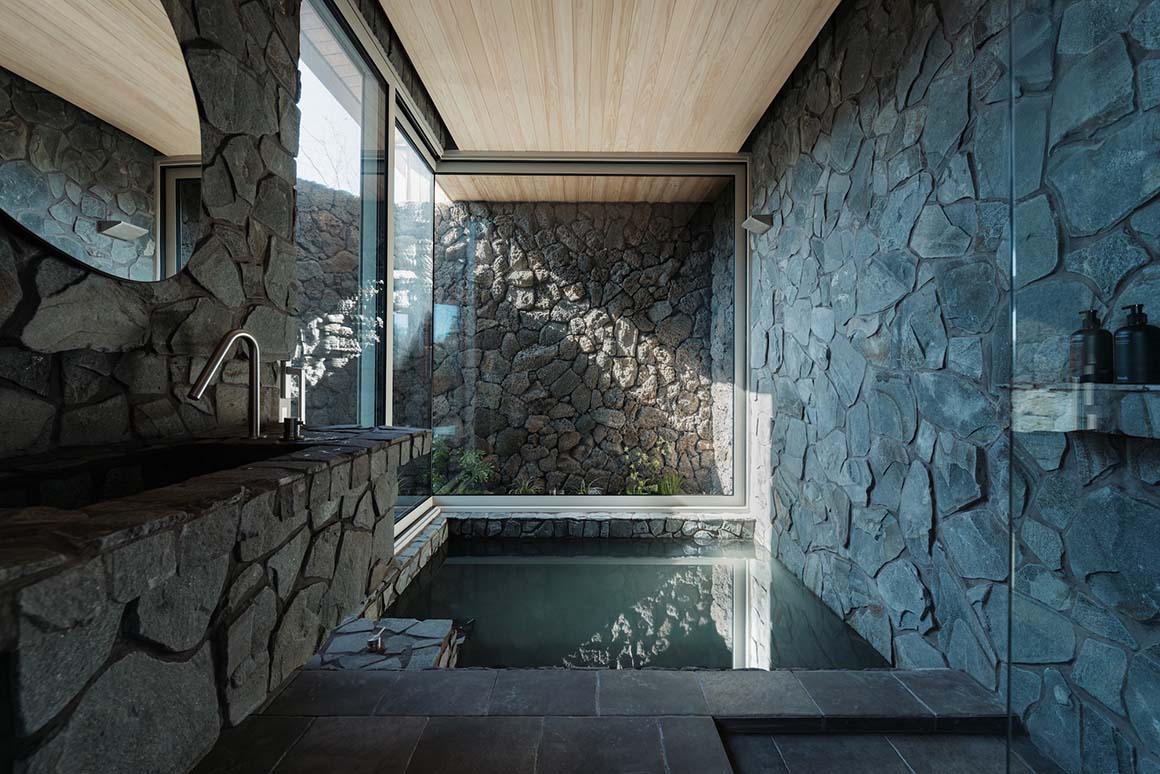
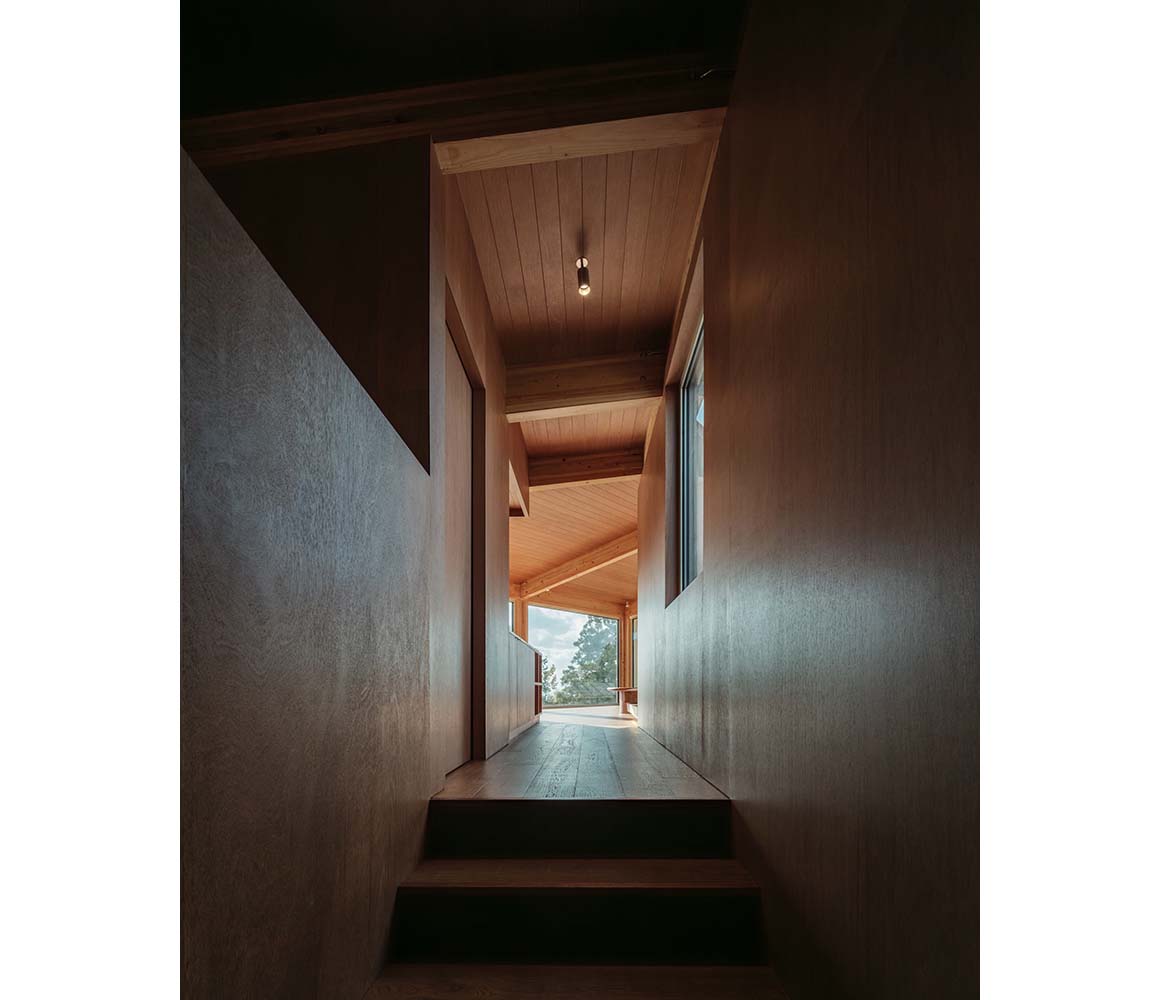
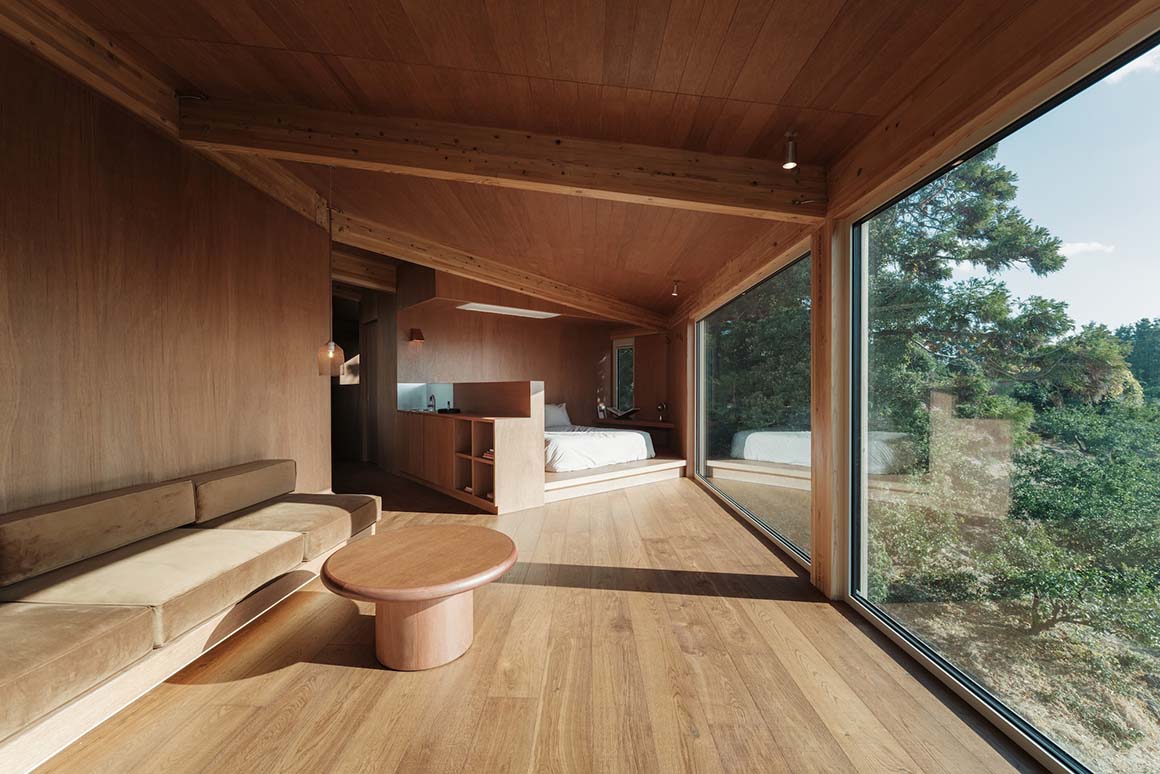
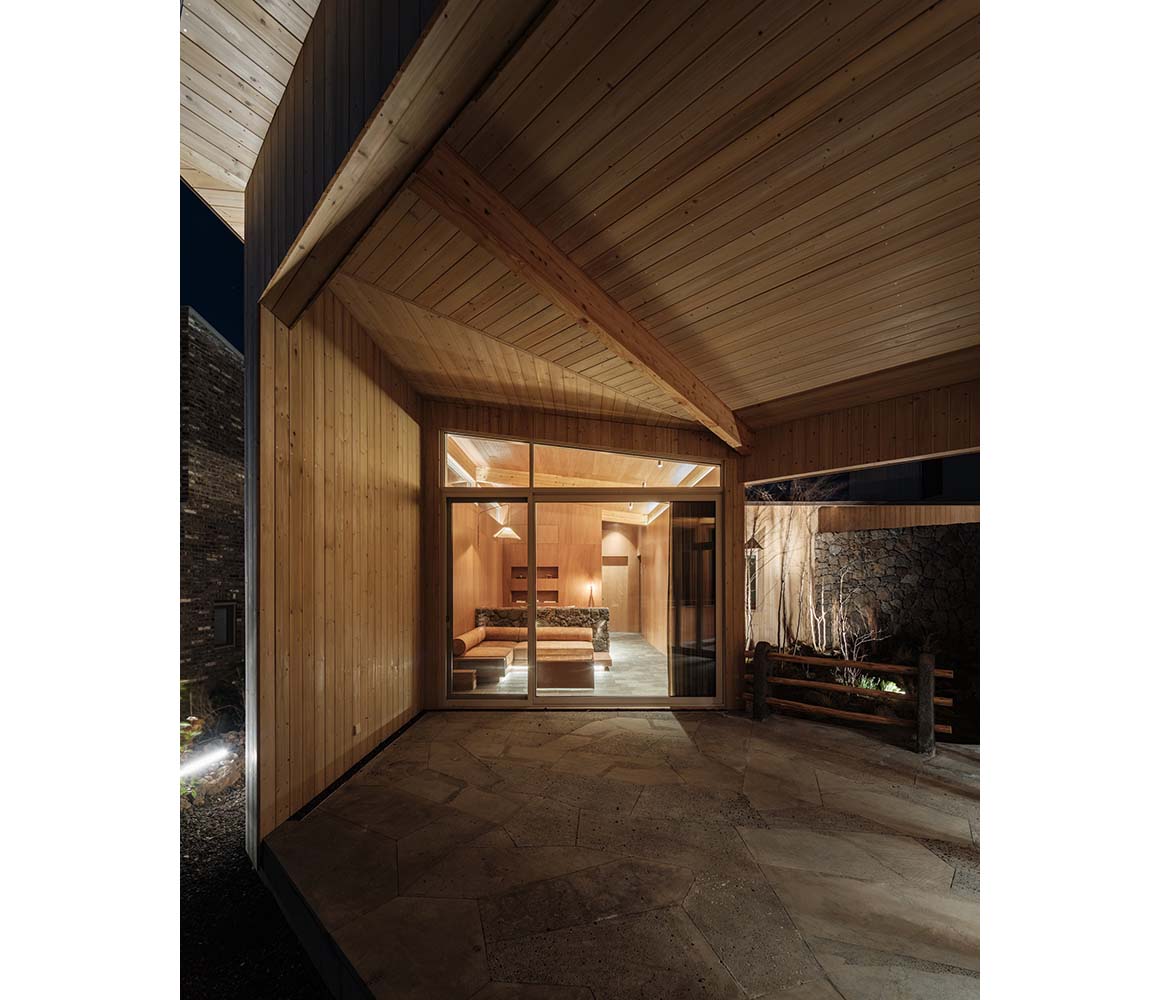
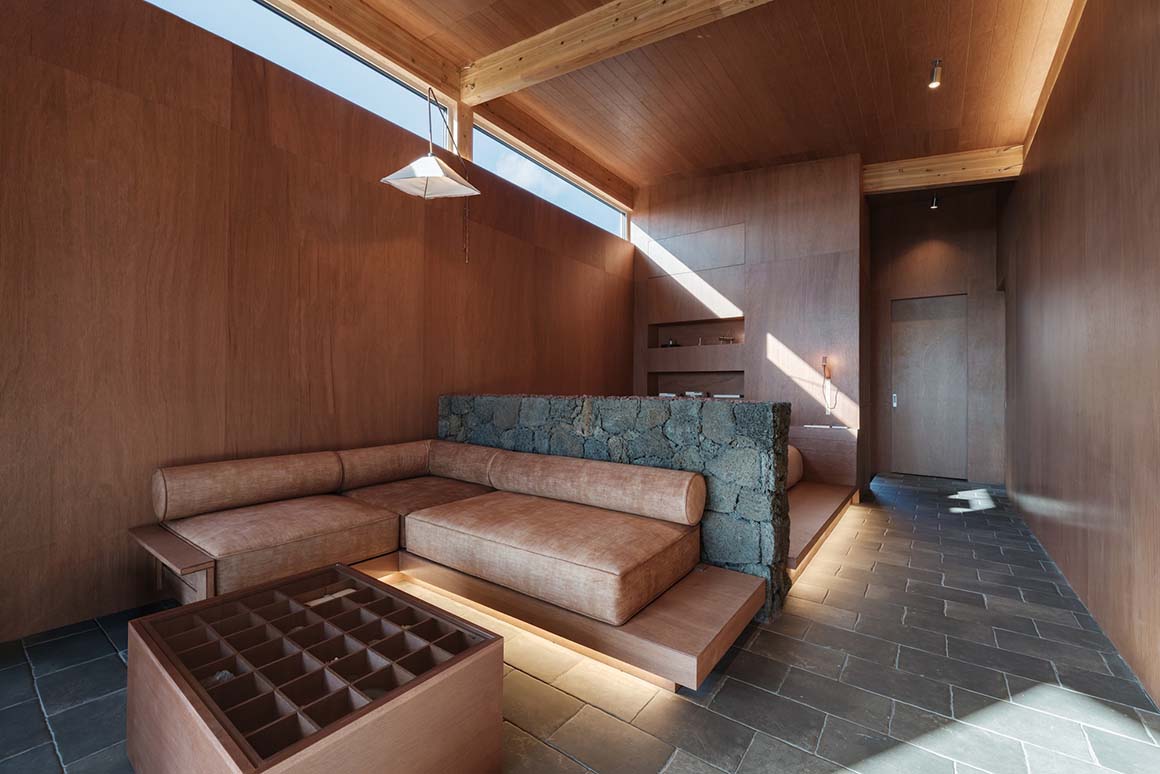
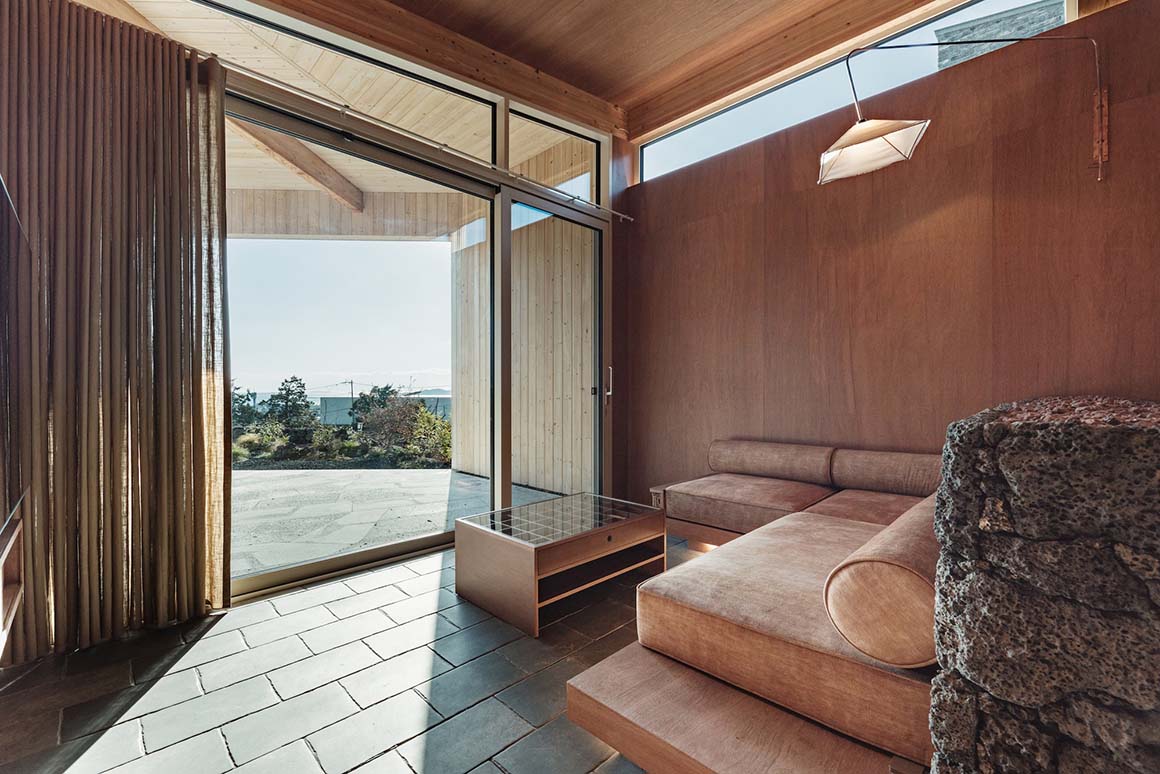
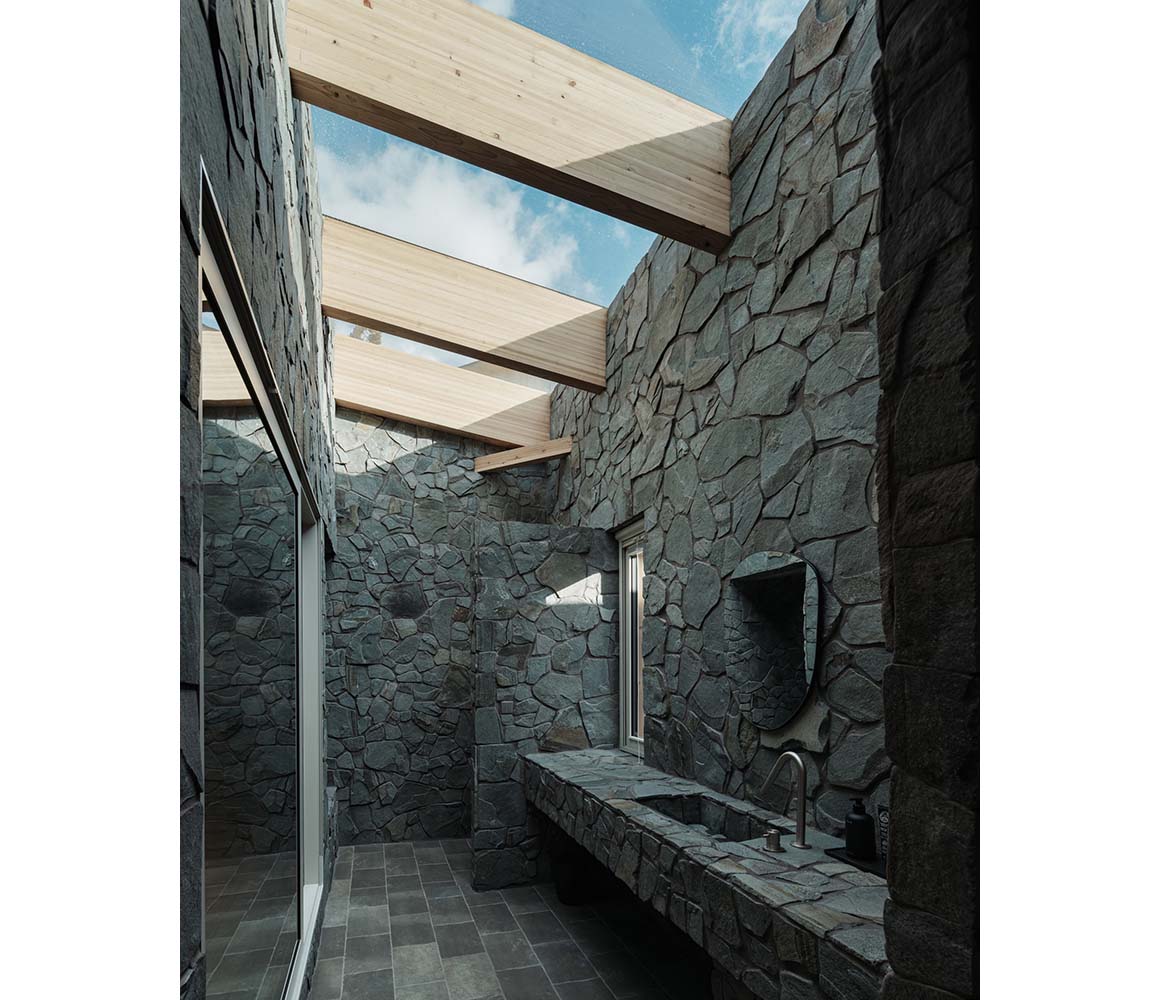
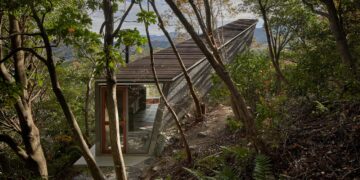
The structural choice of a heavy timber frame exposes the sculptural clarity of columns and beams. By stripping away superficial finishes and treating the structure as the primary architectural language, the building aligns with a raw, Jeju-specific sensibility. Cedar cladding on the exterior, and basalt and timber within, are materials familiar to the island, yet they are made newly perceptible through precise detailing. This familiarity becomes the ground for a “measured estrangement,” rendering the common extraordinary.
The roofline follows this same teleology. Angled toward the sea, it does more than frame a view; it transforms the entire building into a singular gesture—an architectural inclination toward the horizon.
While the name Ieoseo (meaning “to connect”) suggests a link between physical spaces, the project ultimately seeks to connect the inhabitant with the Jeju landscape. The orientation, the segmentation of masses, the selective opening and closing of apertures, the grading of light, and the honest exposure of structure—every decision is calibrated toward that single horizontal line. The result is not merely an architecture that shows a landscape, but one that designs a profound way of dwelling within it.
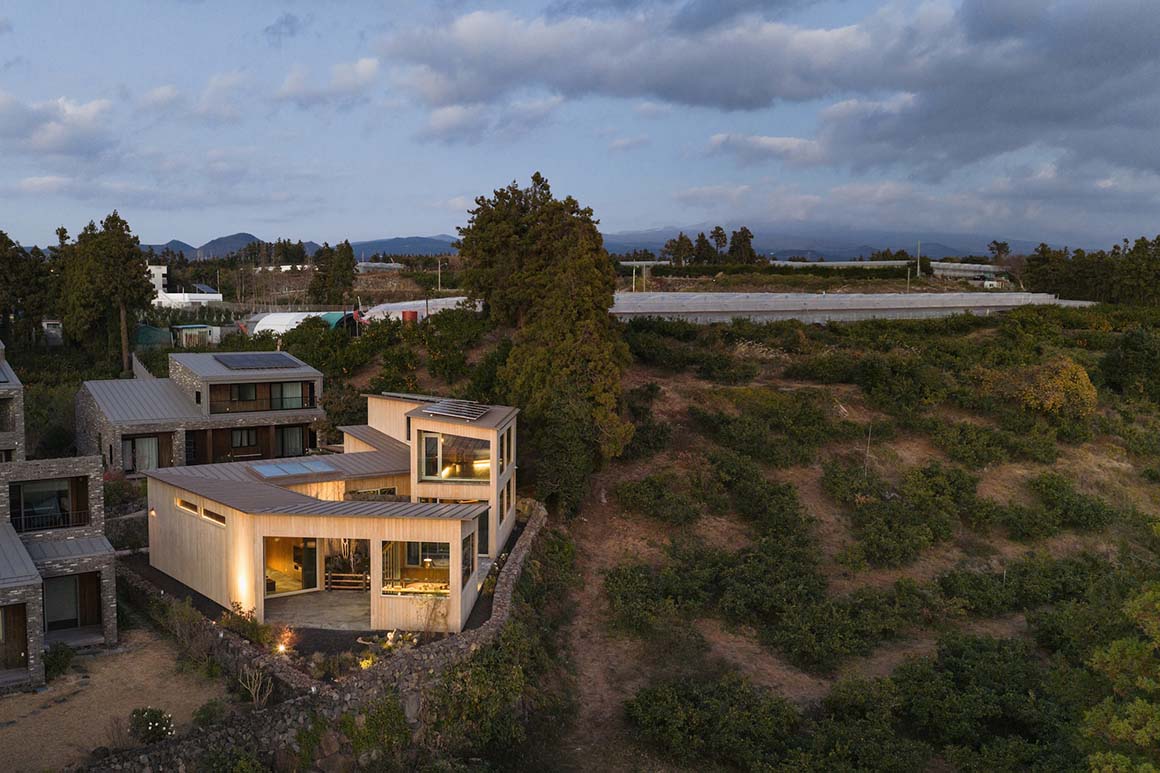
Project: Ieoseo / Location: Hwasun-ri, Andeok-myeon, Seogwipo-si, Jeju, South Korea / Architect: GOA Studio(Mikyung Nam, Gyeonghun Baek) / AOR: O Architects / Planting: Rok Design Co., Ltd. / Graphics: Sunjin Kim / Contractor: Syshome Construction Co., Ltd. / Client: Jin Lee, Gugsig Lee / Use: private house / Site area: 518m² / Bldg. area: 157.22m² / Gross floor area: 171.28m² / Completion: 2025 / Photograph: ©Haneol Kim (courtesy of the architect)