




An Incubator Facilitating the Local Community Through Mushroom Cultivation
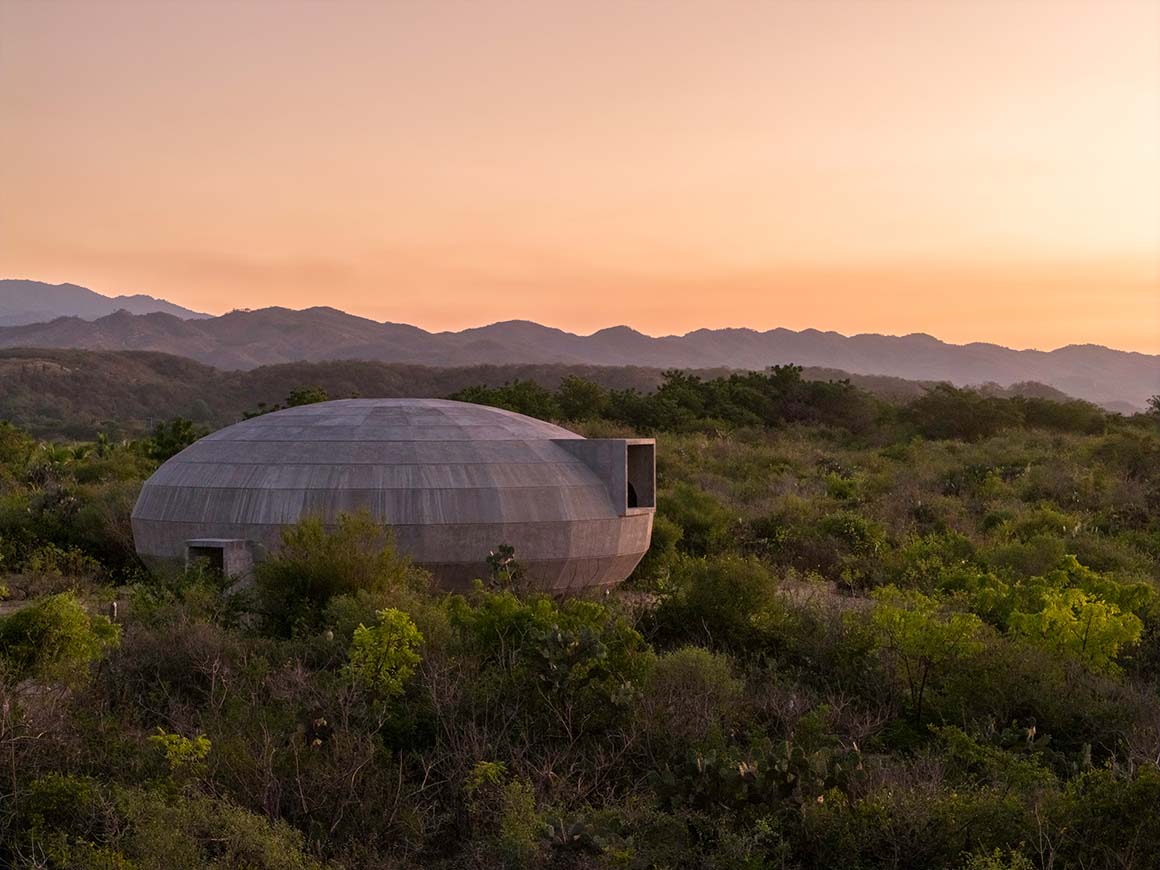
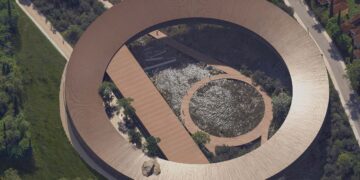
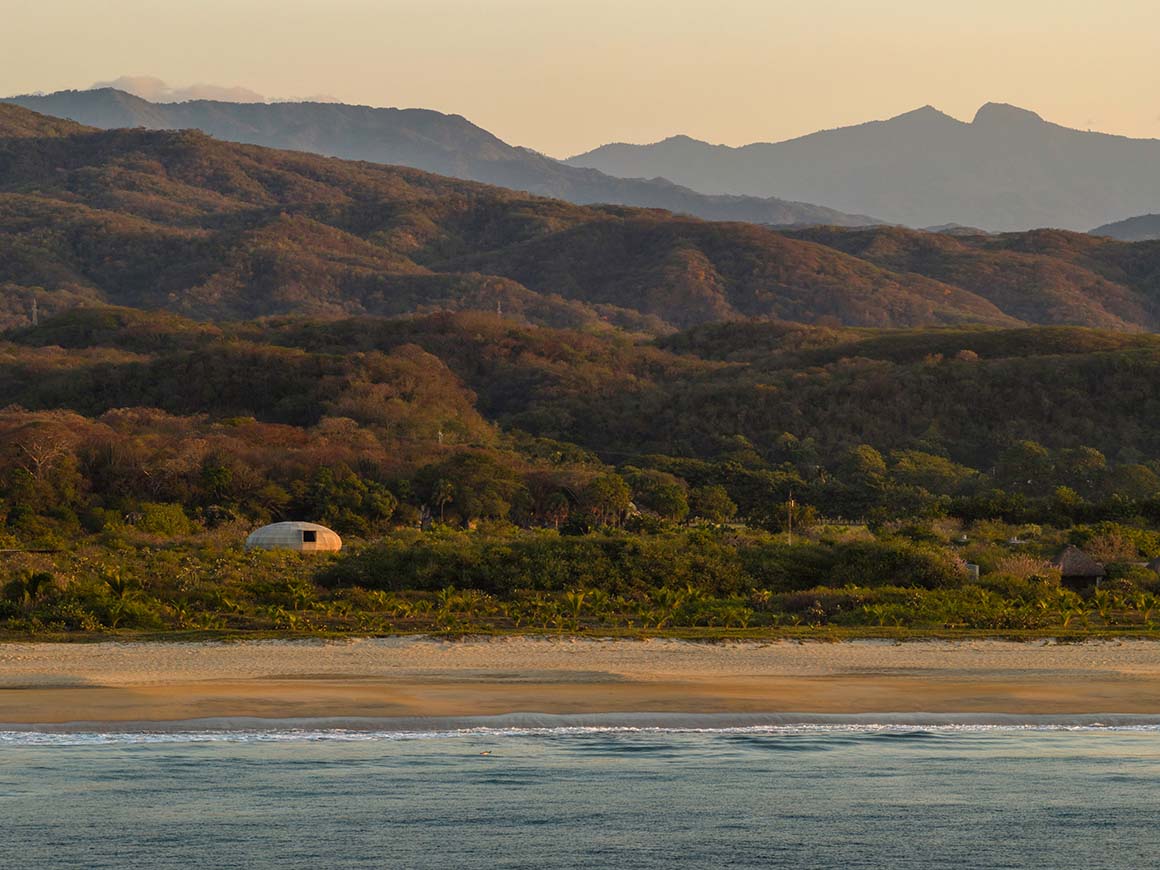
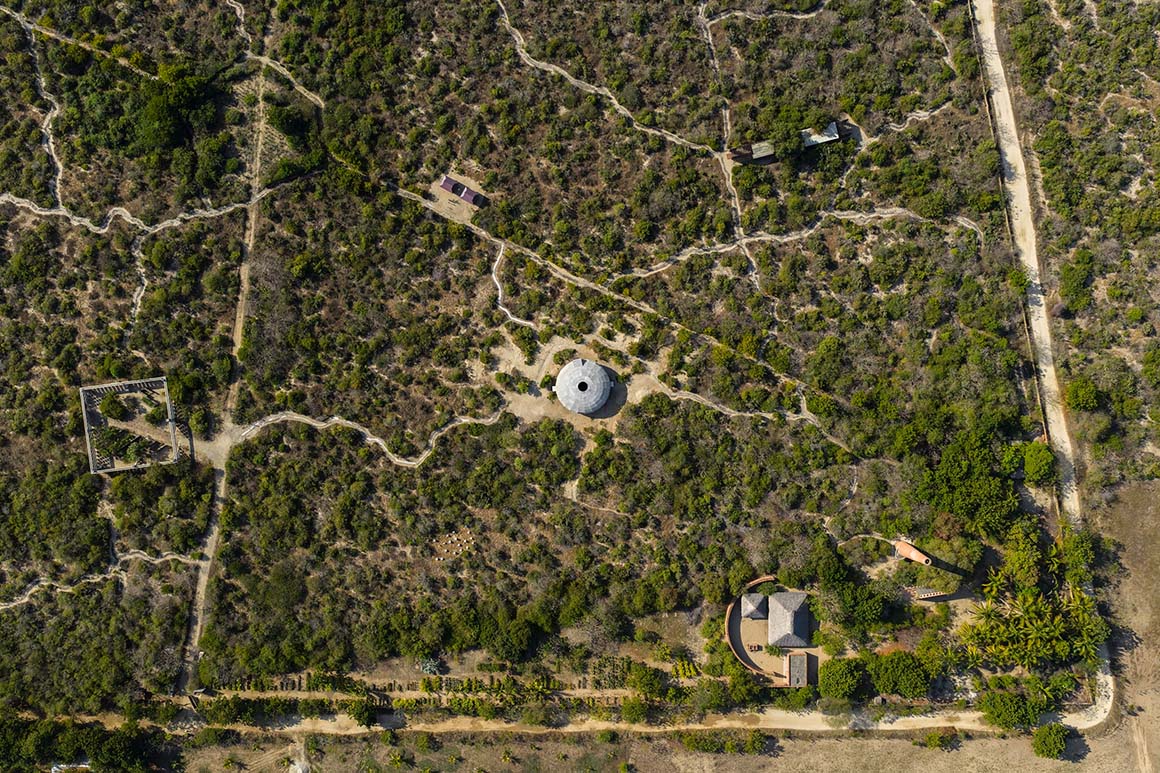
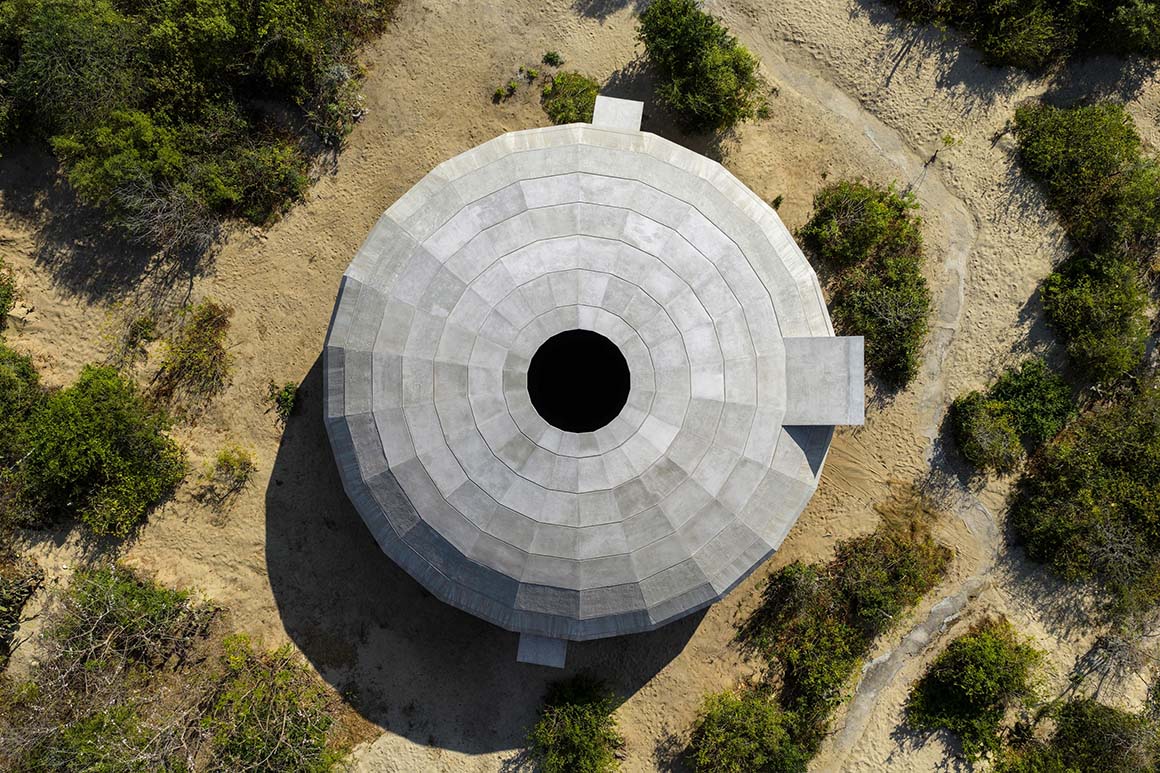
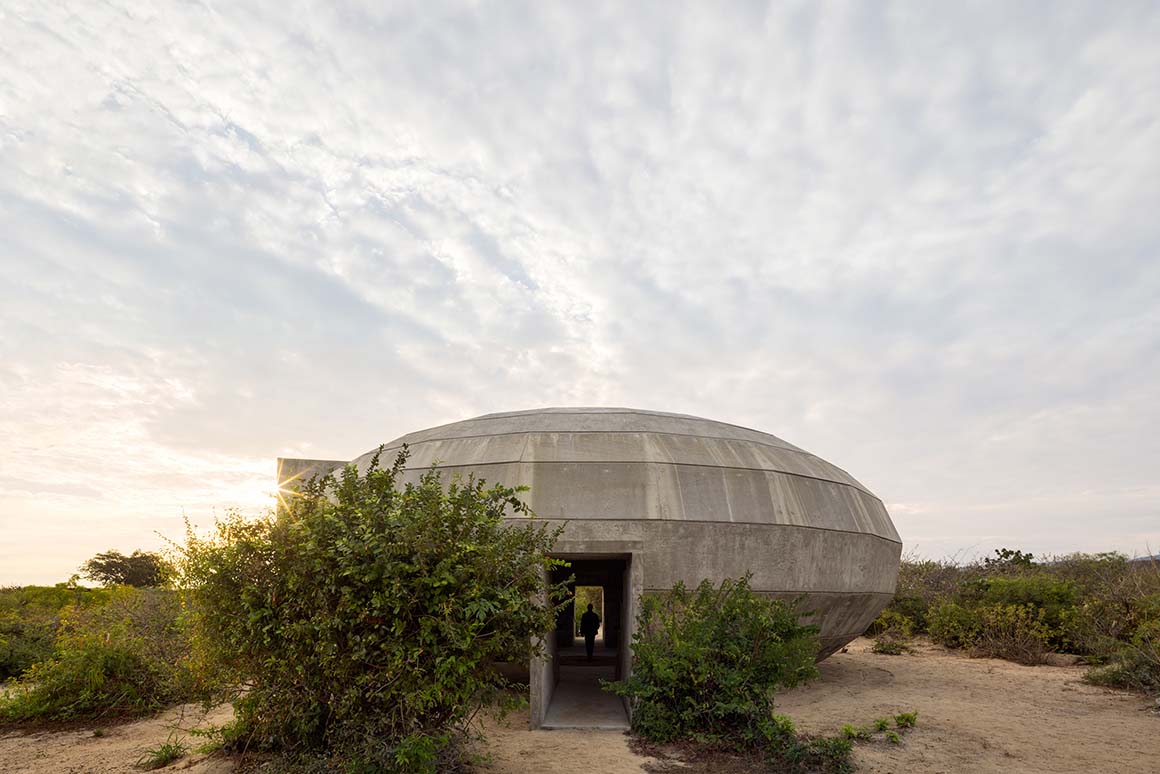
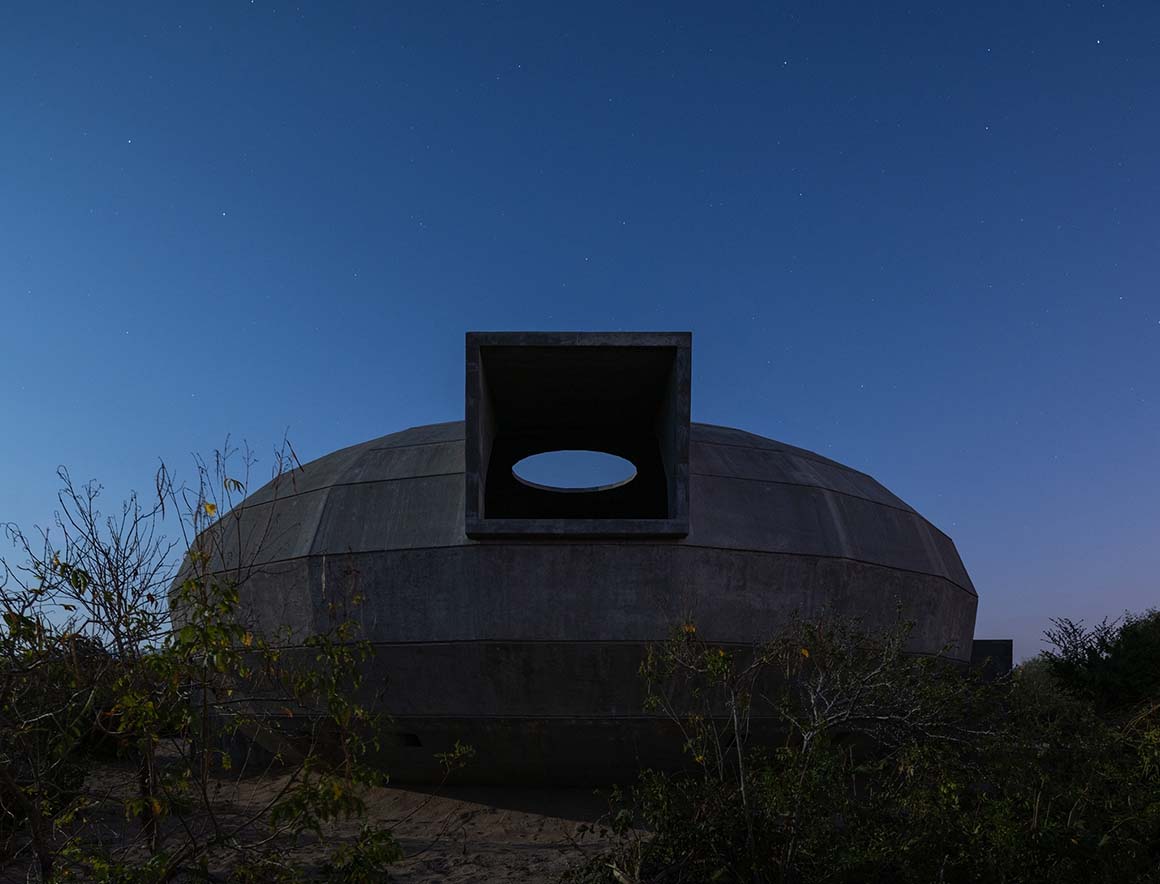
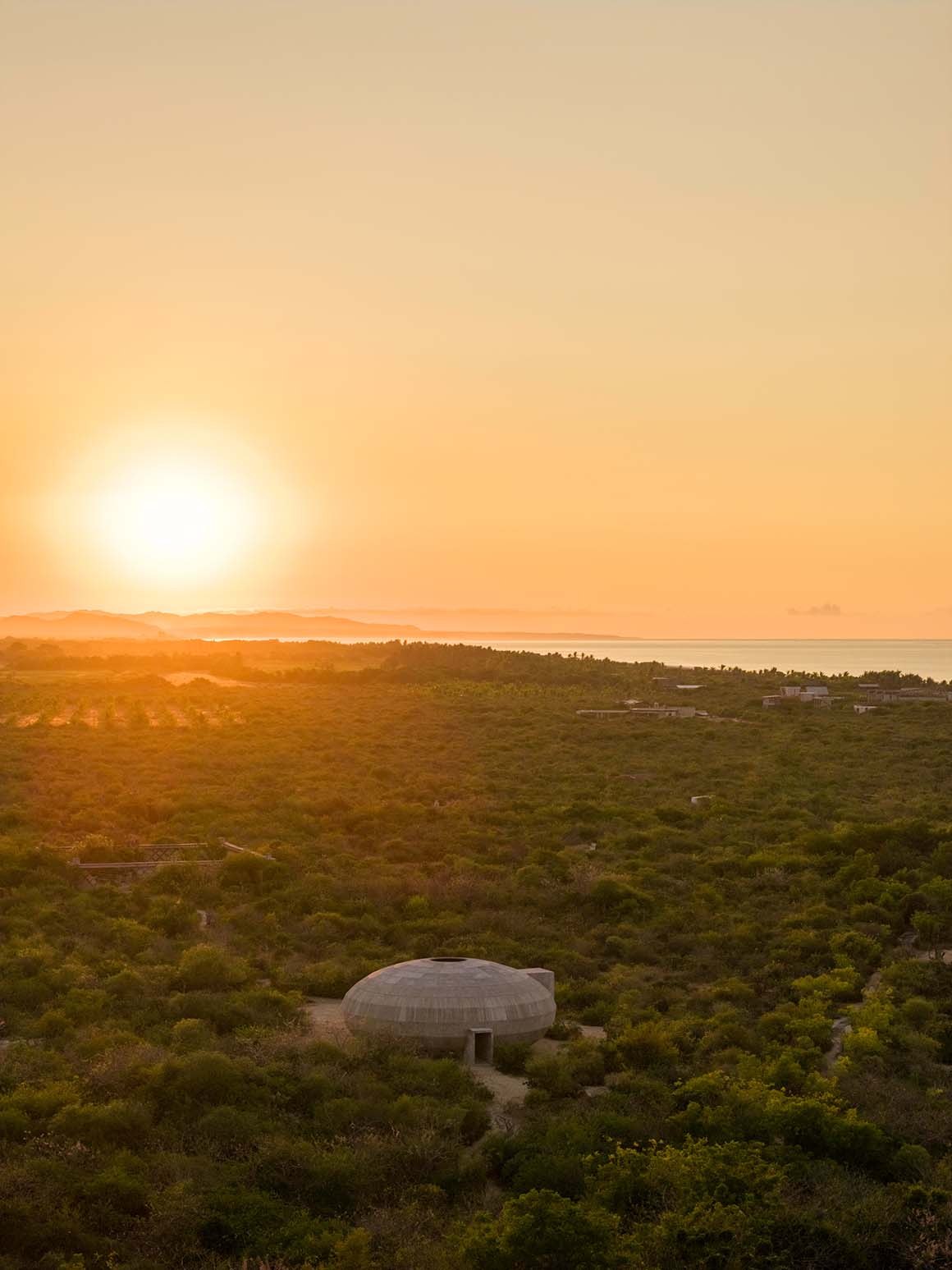
Near the southern coast of Oaxaca, Mexico, between mountains and the sea, the ‘Mushroom Pavilion’ is located within the Casa Wabi Foundation campus. Placed on approximately 263,000 m² of natural landscape, the building minimizes contact with the ground, preserving surrounding vegetation and topography while integrating into the scenery. The oval-shaped dome reads as a single mass among low shrubs and trees, while opening upward to extend the view toward the sky and the sea. Added to this arts and community space founded by contemporary artist Bosco Sodi, the pavilion is designed as an incubator that facilitates exchange among food, art, nature, and the local community through mushroom cultivation. A team led by OMA architect Shohei Shigematsu implemented a dome of about 200 m², providing spaces optimized for specific functions as well as shared areas for users.
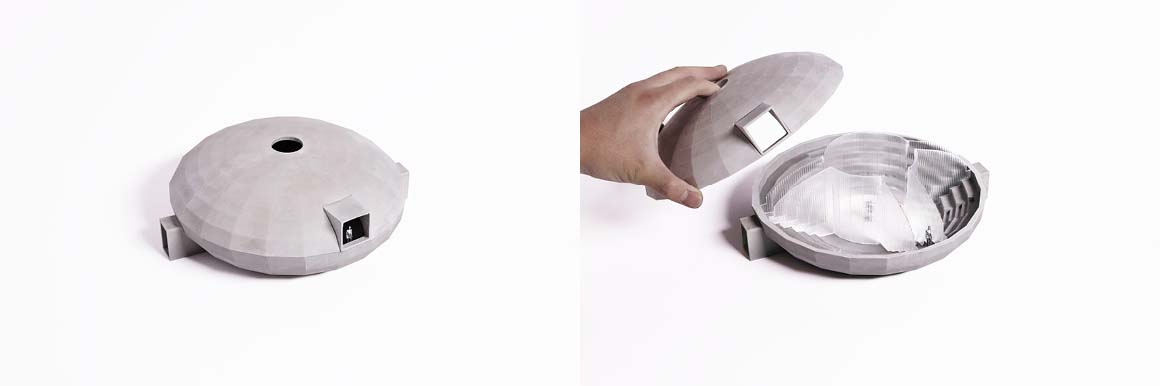
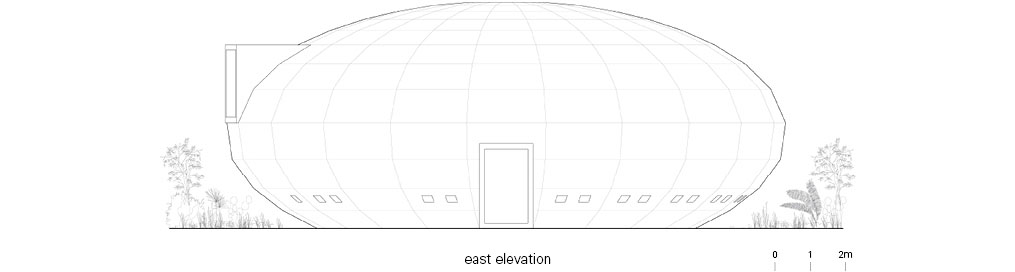
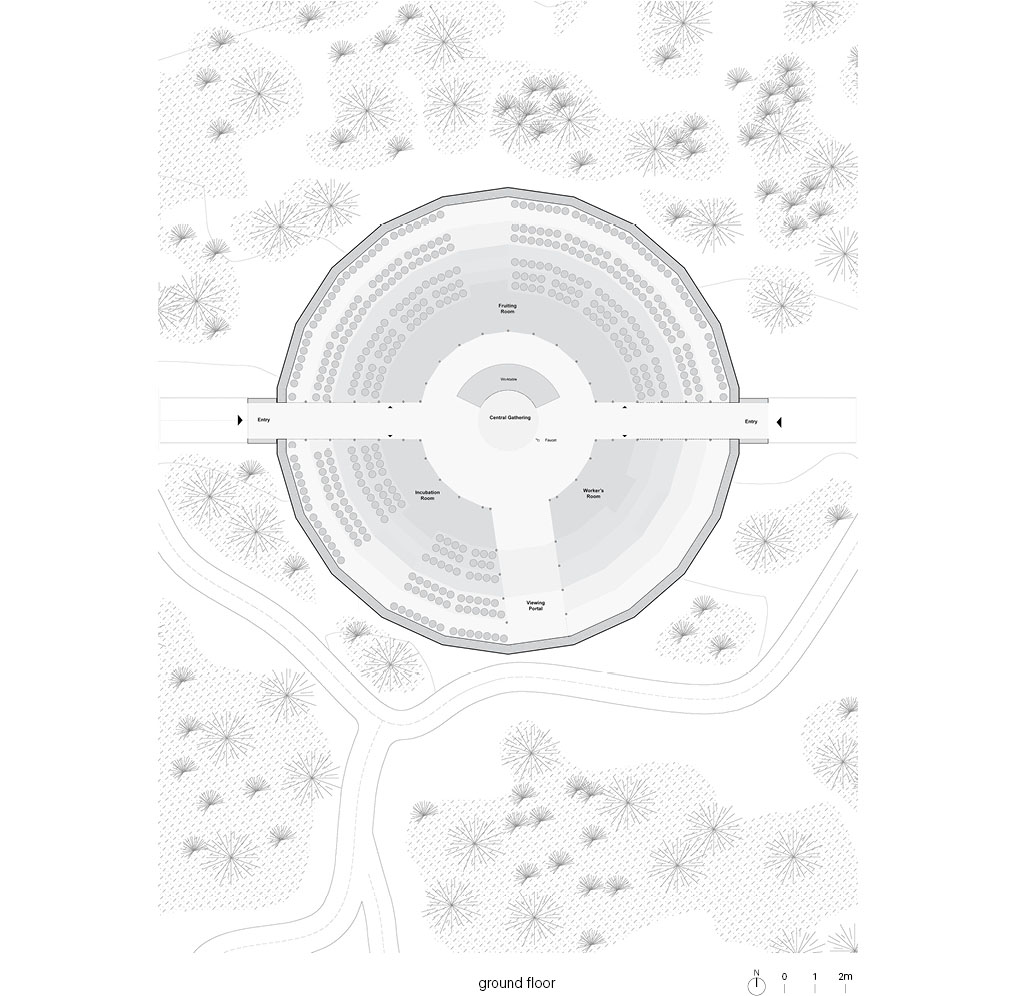
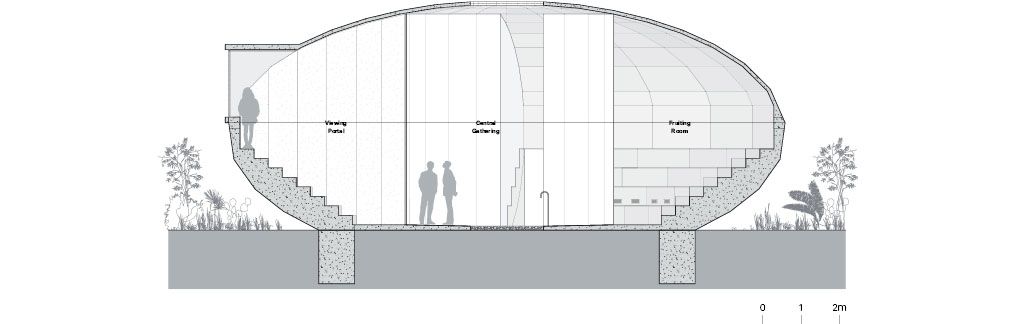
The pavilion was conceived in a form that is “simple yet conveys essential functions.” The oval dome, with radial concrete panels centered on an oculus, admits an appropriate amount of natural light for cultivation, education, and exchange. The interior is divided into cultivation, incubation, and storage areas, arranged around a central communal space. Spaces separated along the circulation path correspond to sequential stages of mushroom cultivation, allowing the entire process to be observed at a glance. The lower level forms stepped tiers reminiscent of an amphitheatre, serving both as shelving for terracotta mushroom containers and seating for visitors. Under a patchwork-like ceiling, the central oculus and peripheral openings bring natural light and ventilation, creating a cave-like interior environment. Internal stairs lead to an upper rectangular observation platform, offering views of the nearby coastal landscape.
The structure is cast in-situ concrete, with the exterior surface roughened by stamping with coir mats. Over time, water with a high iron content seeps into the surface, creating a distinct patina. The building‘s lower portion curves inward to reduce ground contact, minimizing environmental impact and supporting the growth of native plants.
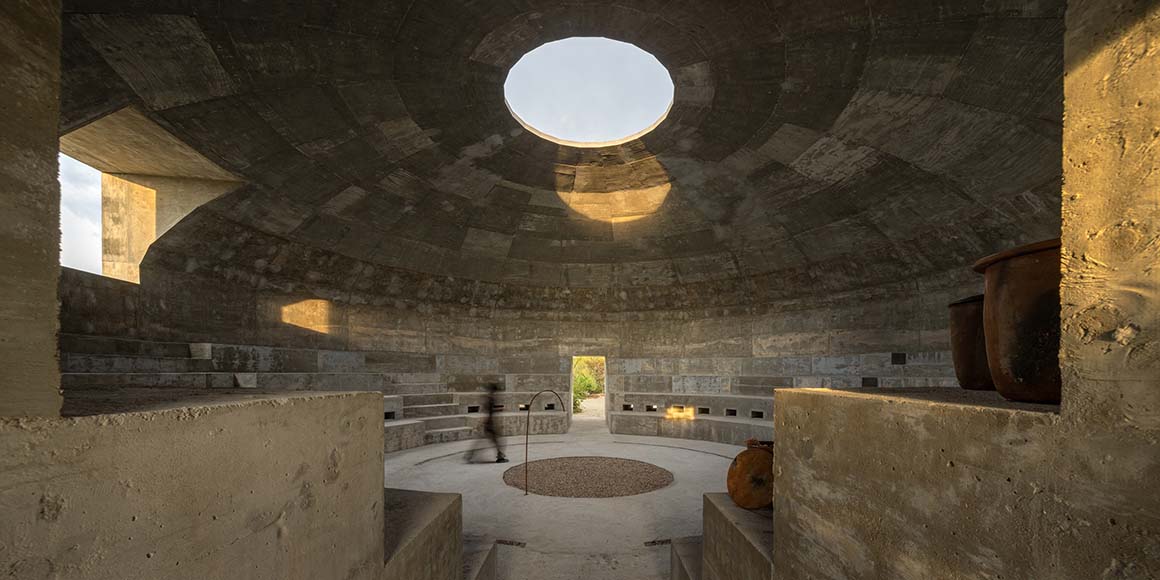
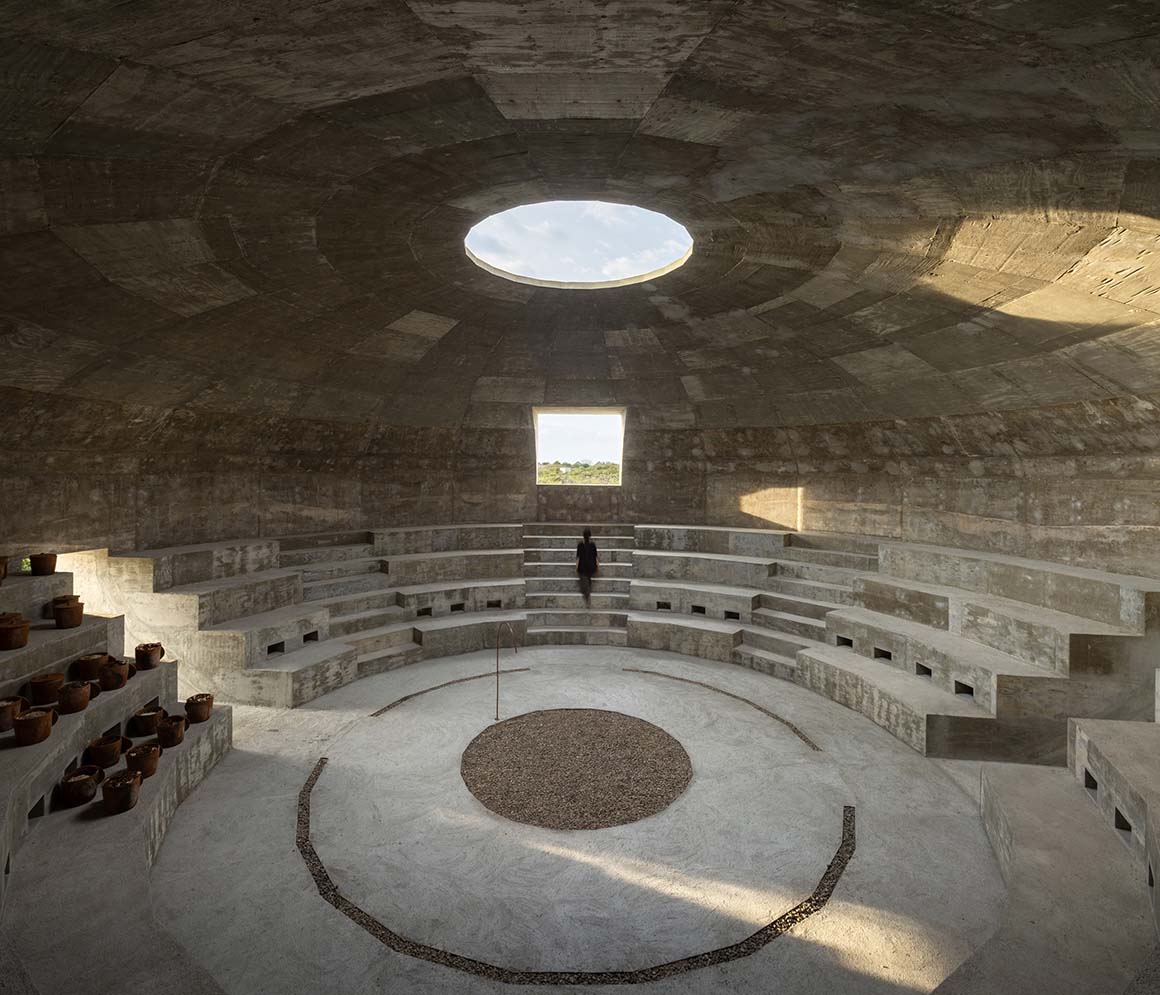
The Mushroom Pavilion is designed to perform the specific function of mushroom cultivation while also providing a space where people can gather and interact. It acts as an incubator that fosters both food and community, accommodating local residents, visitors, and various activities of the foundation. This aligns with the operational approach of the Casa Wabi campus, where experimental architecture and community values are integrated.
The campus, centered on major buildings designed by Japanese architect Tadao Ando, is composed of pavilions designed by various architects. In 2020, Kengo Kuma designed a chicken coop using charred timber, Mexican architect Alberto Calah created a pottery workshop emphasizing a chimney, and Carlos H. Matos contributed a rest area. The Casa Wabi Mushroom Pavilion stands as another attempt to combine architectural experimentation with functional and community-oriented purpose.
Project: Casa Wabi Mushroom Pavilion / Location: Puerto Escondido, Oaxaca, Mexico / Architect: OMA / Partner-in-Charge: Shohei Shigematsu / Project Architects: Shary Tawil, Caroline Corbett / Team: Dylan Wei, Francesco Rosati / Client: Fundación Casa Wabi / Use: pavilion / Site area: 250,000m² / Gross floor area: 200m² / Commission:2024 / Completion: 2026 / Photograph: ©Rafael Gamo (courtesy of the architect)