












A Tower Rising From a Circular Elevated Walkway
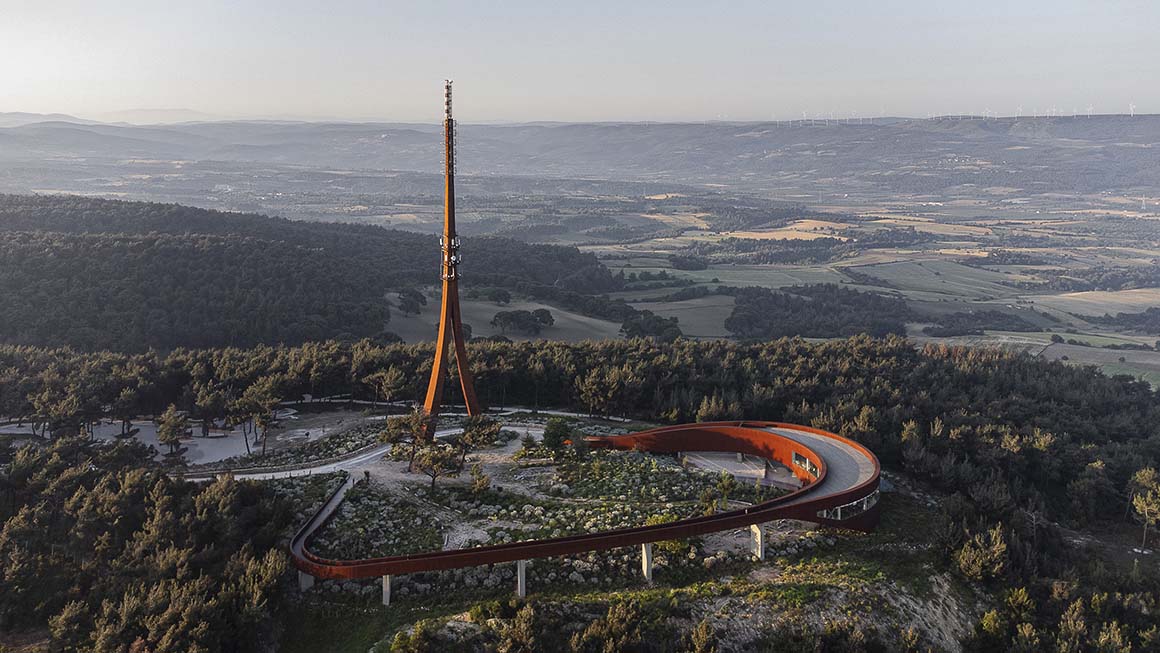
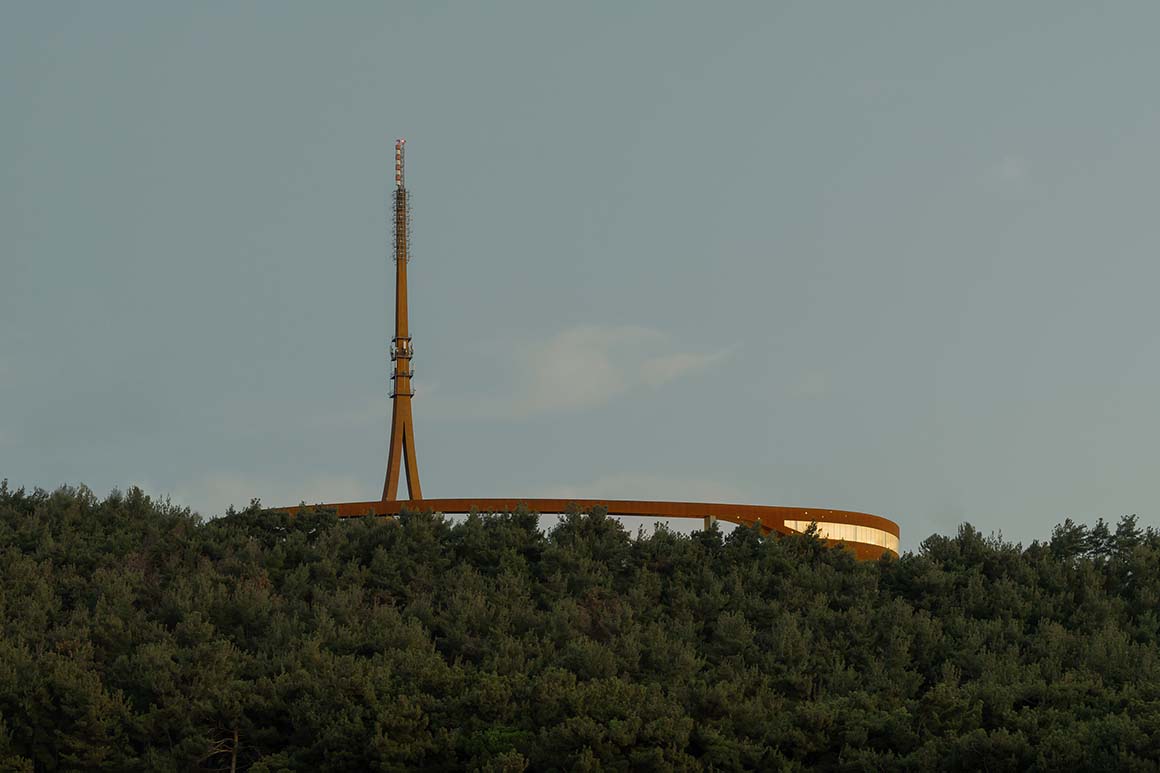
Built on the hilly terrain of Çanakkale, Turkey, the Çanakkale Antenna Tower reclaims telecommunications infrastructure as a public asset for the city. The 100-meter broadcasting tower, overlooking both the Dardanelles Strait and the urban landscape, incorporates an observation deck and cultural facilities. It presents a new functional paradigm in which urban infrastructure is transformed into a spatial and scenic experience.
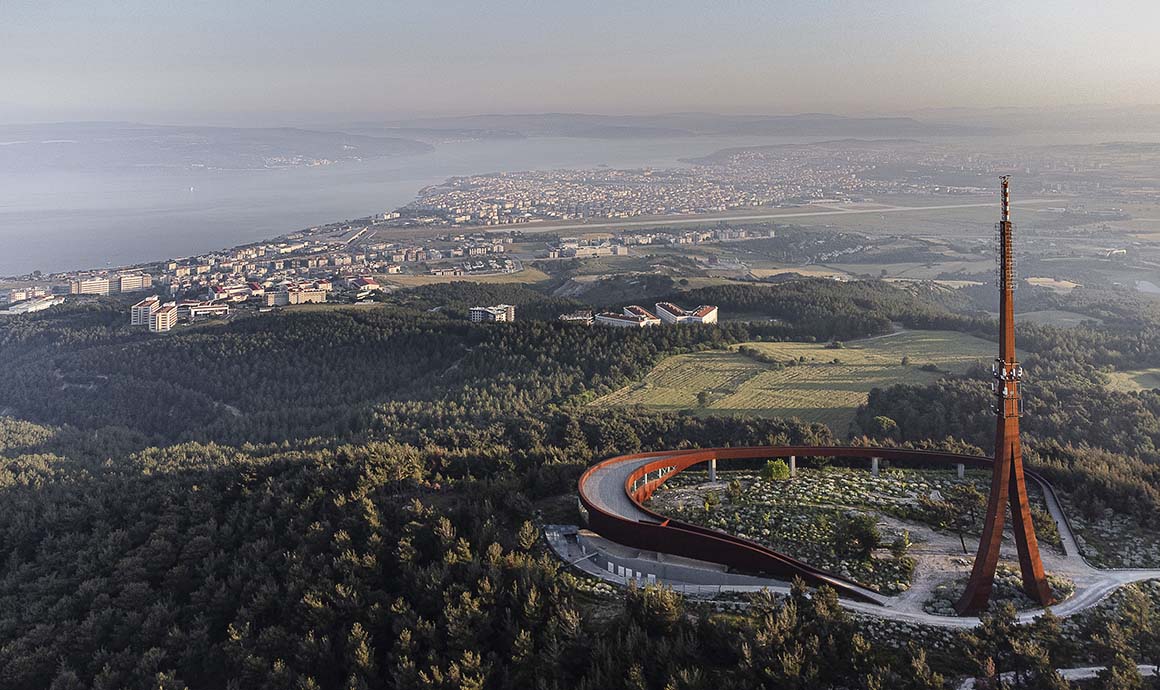
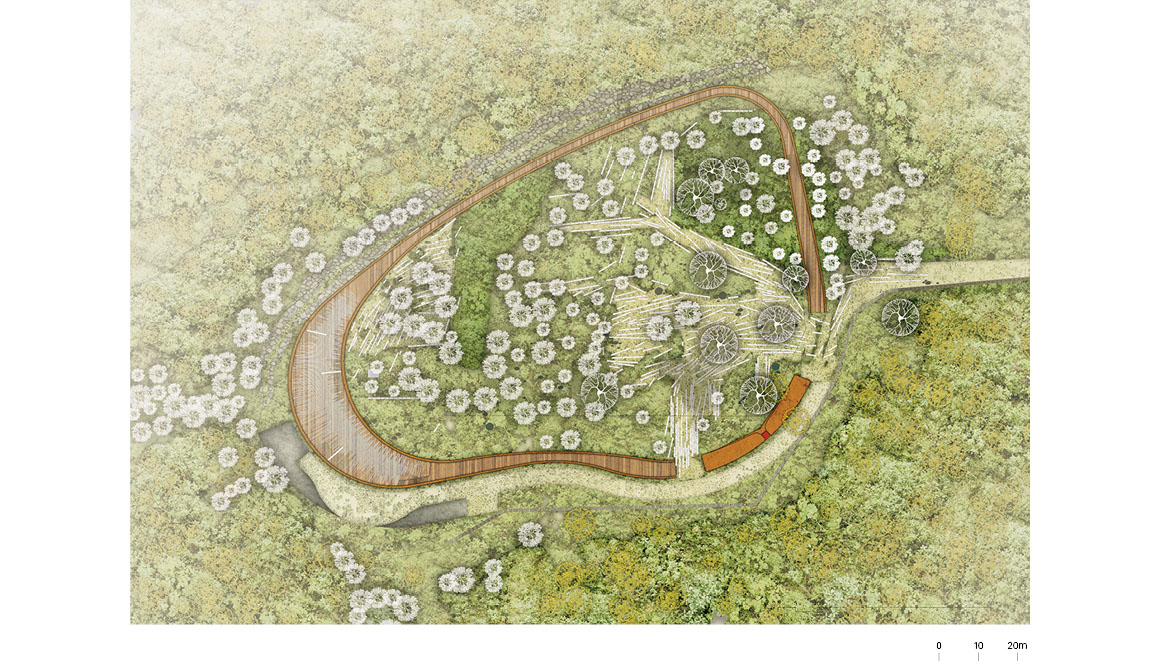
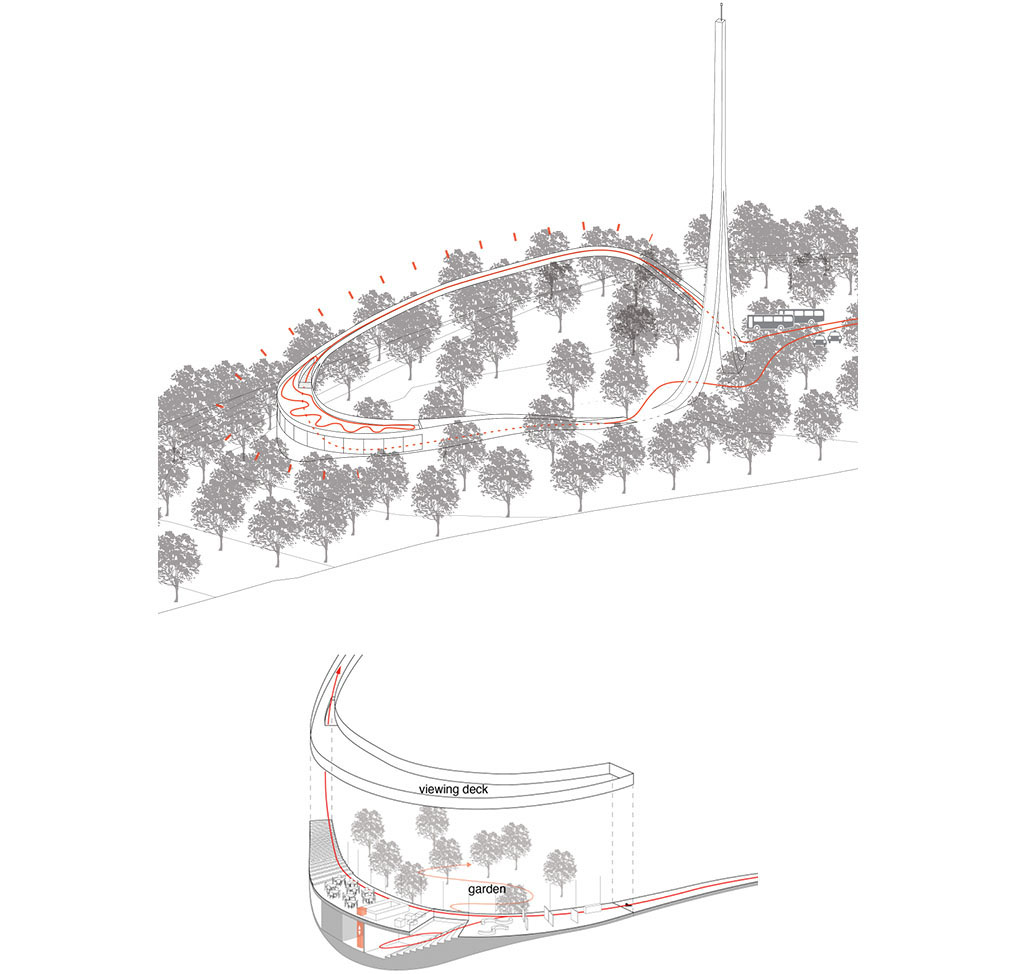
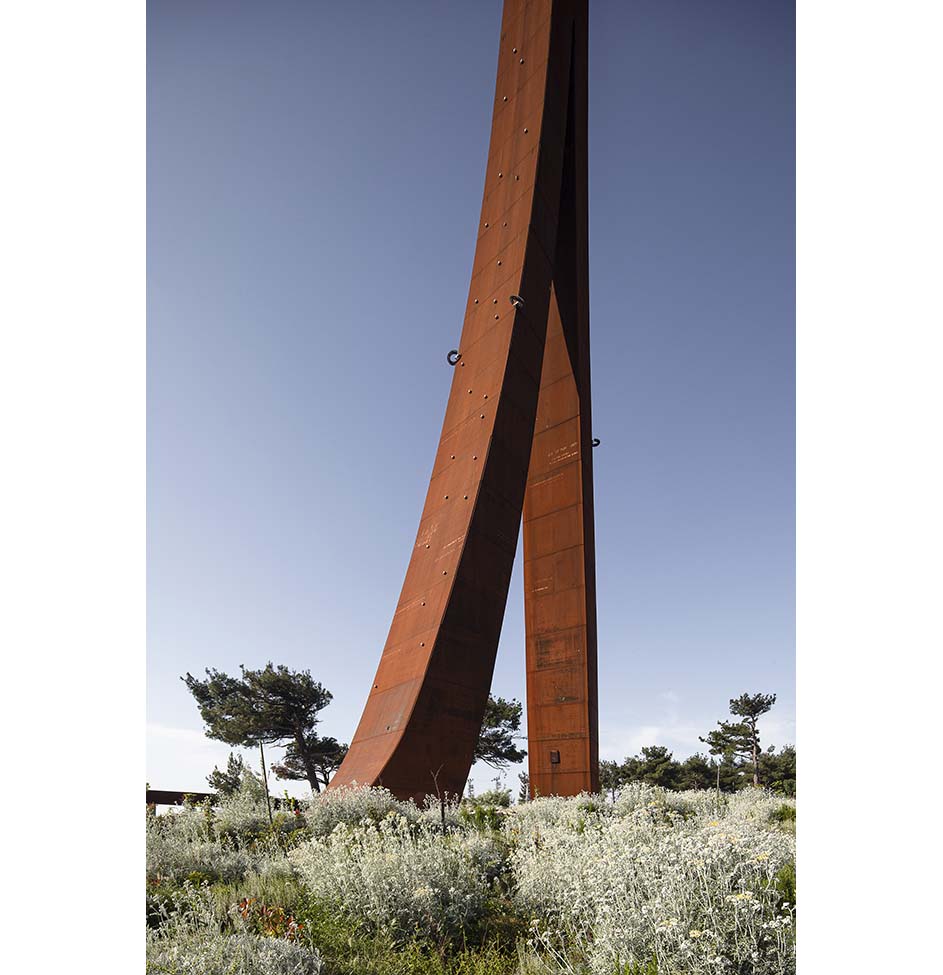
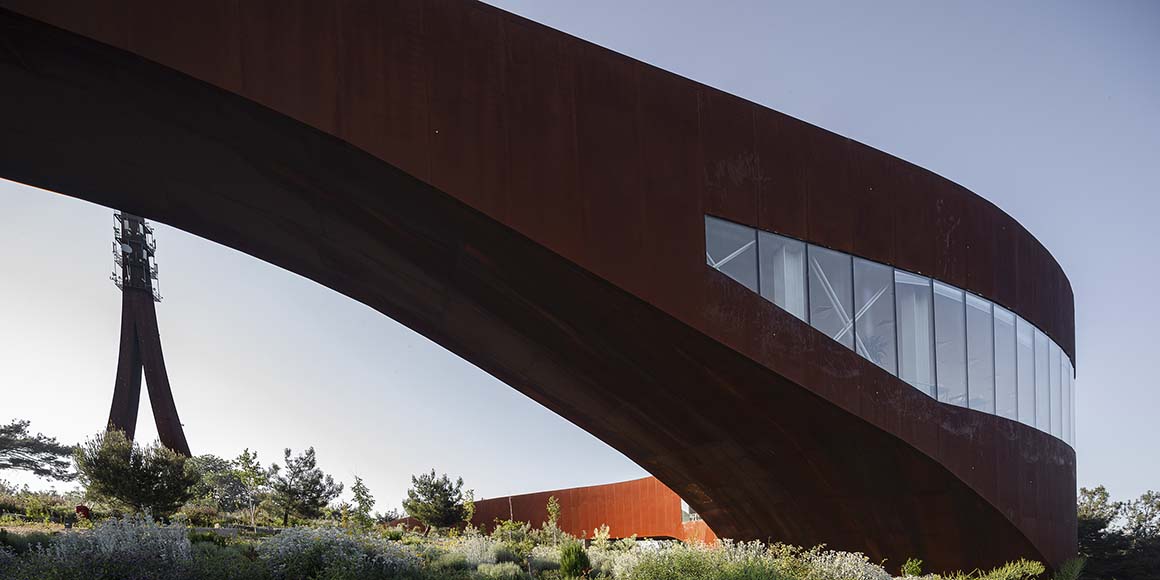
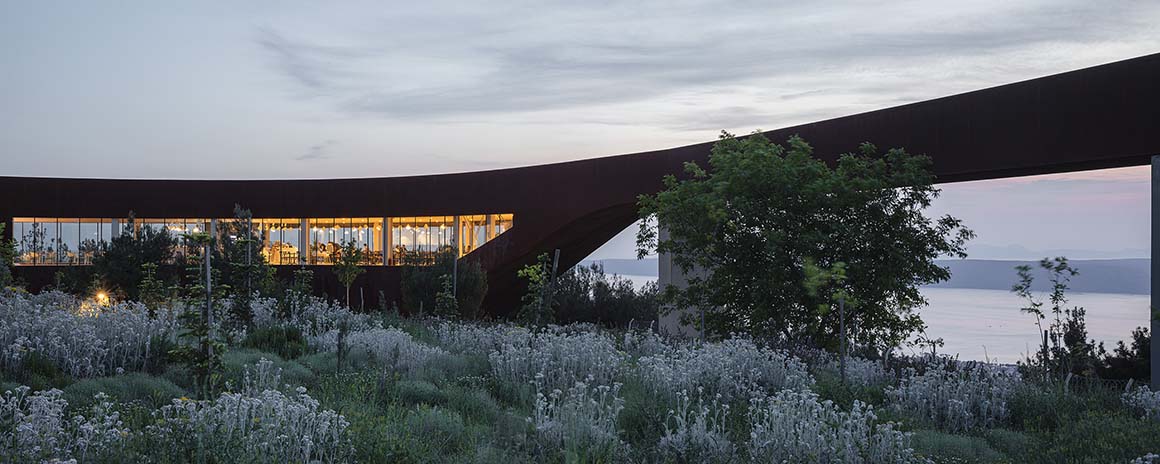
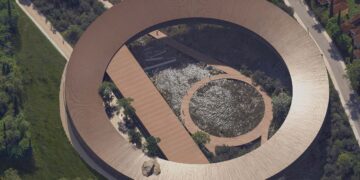
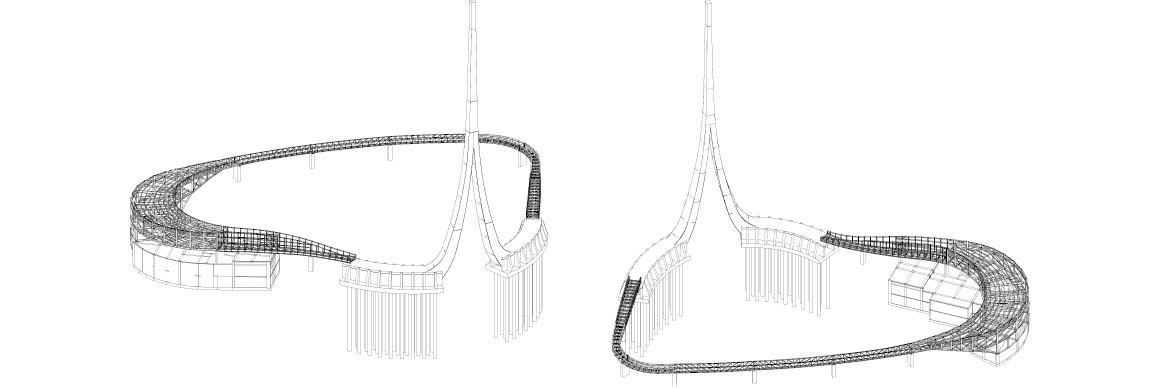
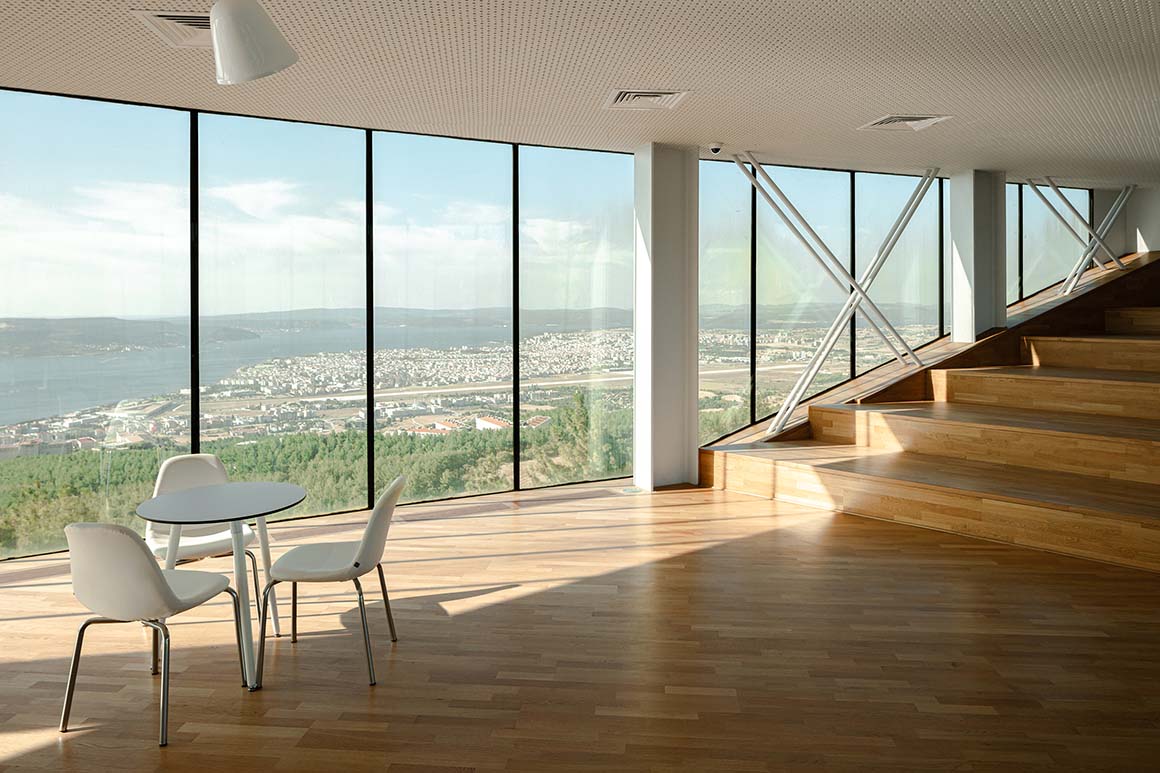
Transmission towers, once dispersed across multiple sites and regarded as structures that damaged the landscape, have now been consolidated into a single entity. Reassigned with diverse functions, the tower has been redefined as a new urban landmark, while the hillside it occupies has been returned to the public. Opening like a symbolic gateway, the tower extends into a circular circulation route that is not merely a walkway but a continuous gesture embracing the terrain. The loop deforms organically in plan and section, beginning at the entrance plaza and unfolding through observation terraces and elevated walkways before culminating at the tower, gradually revealing the landscape. Public programs—including a visitor center, exhibition spaces, and a restaurant—are positioned opposite the entrance, maximizing views toward the historically strategic Dardanelles Strait and the city beyond. Native species are planted within the inner garden, and eroded land has been restored to rehabilitate the soil ecology. Rather than forming a rigid boundary, architecture and forest overlap in a softened transition.
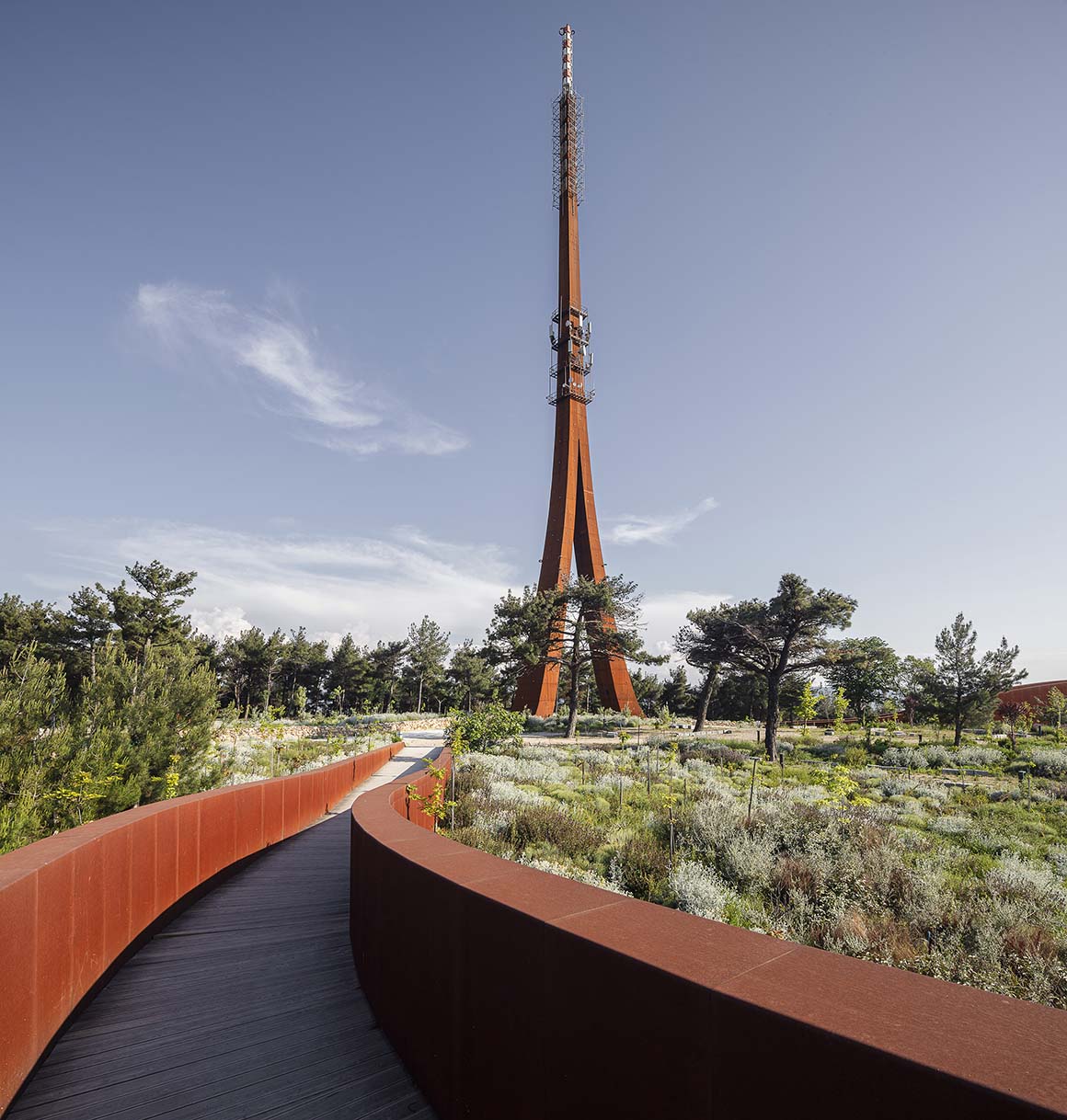
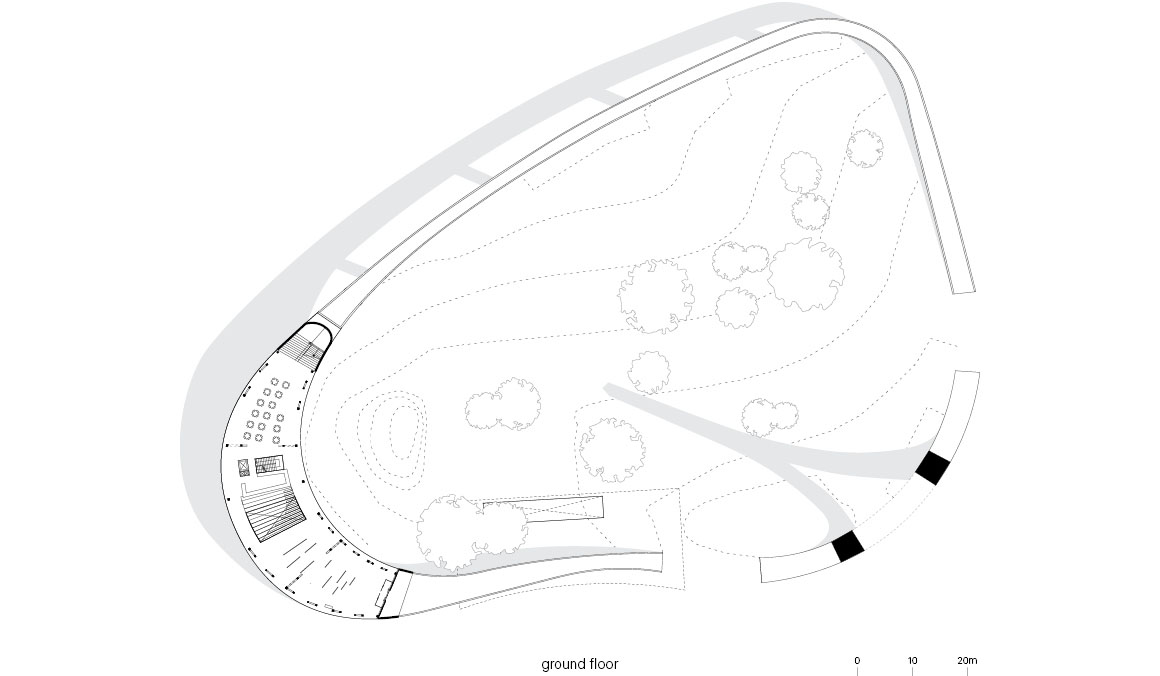
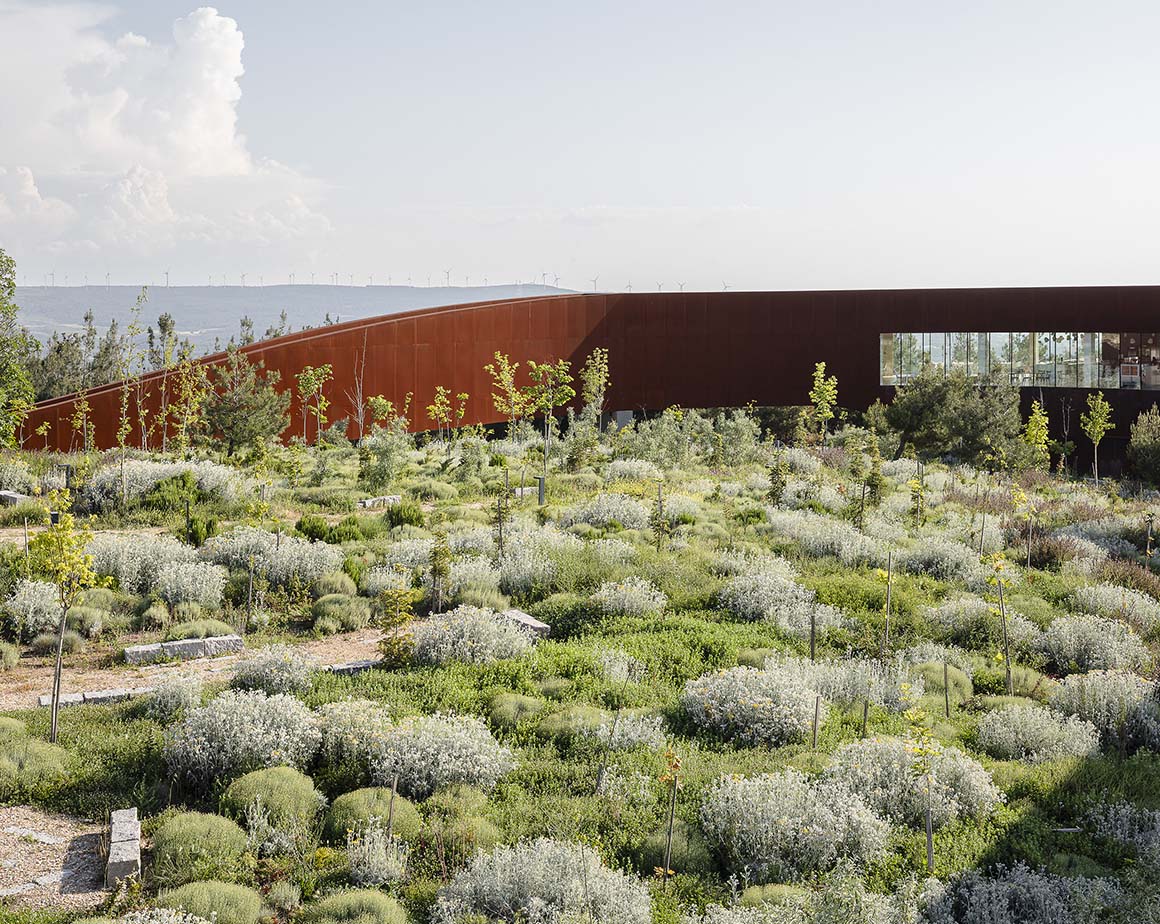
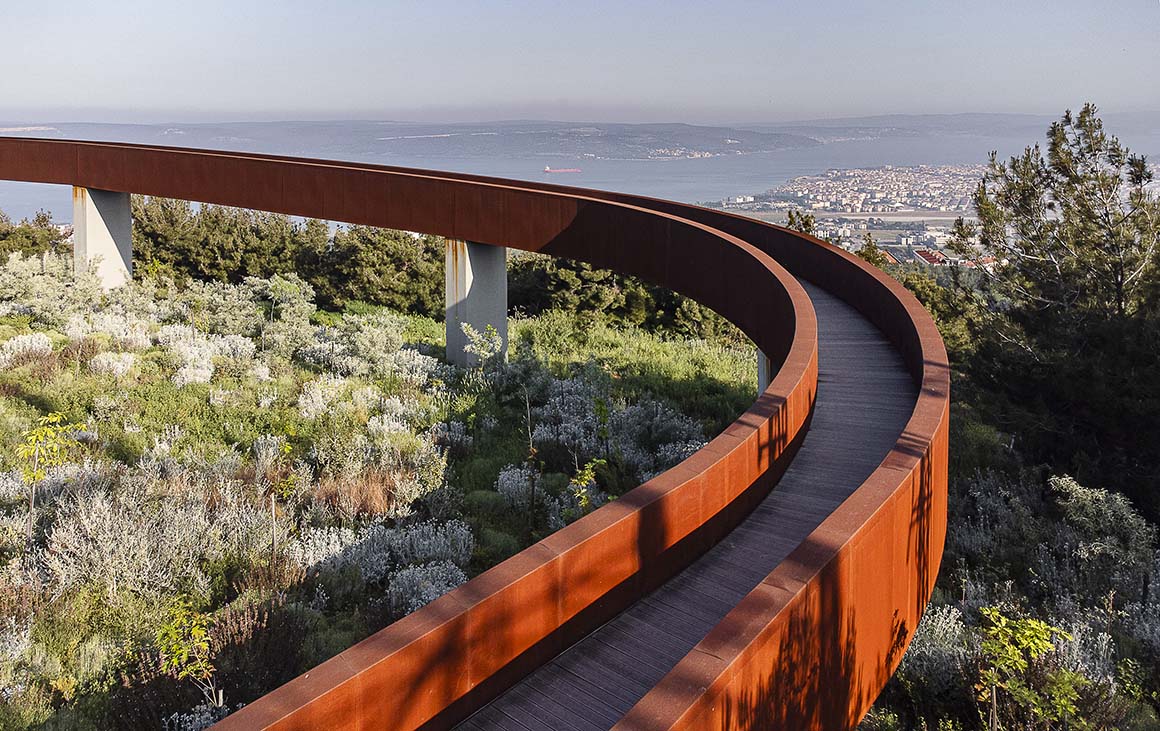
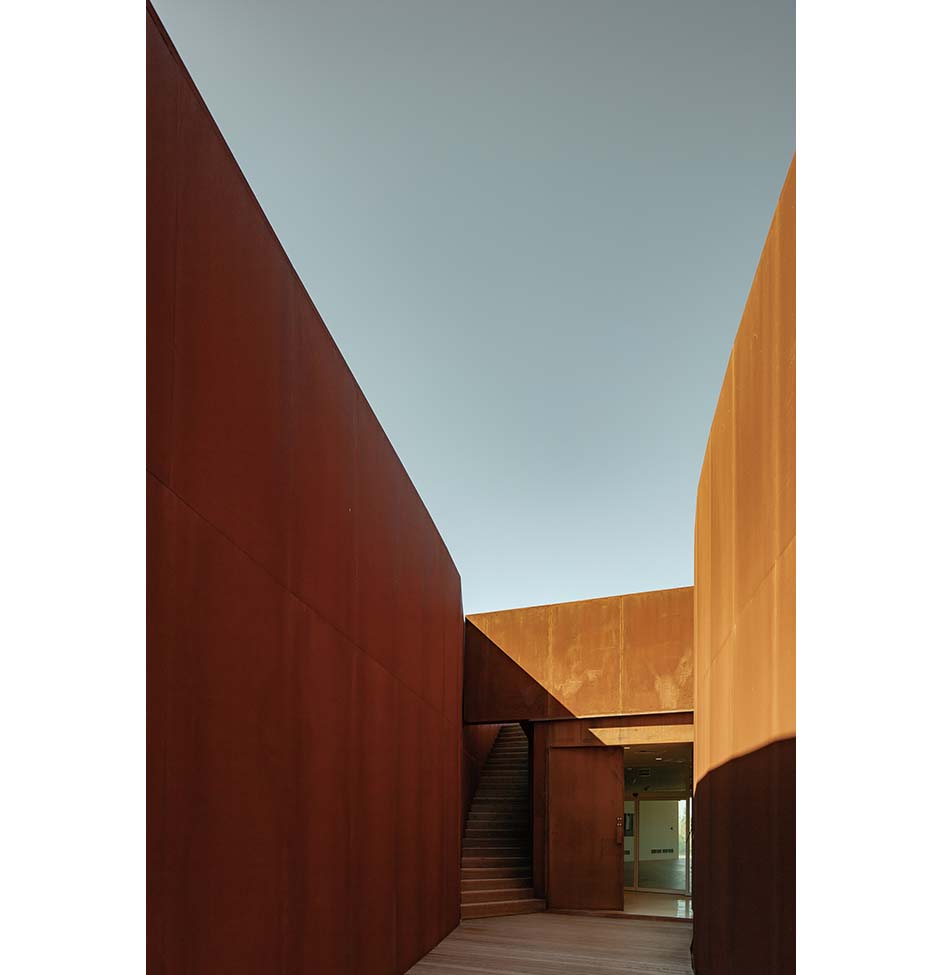
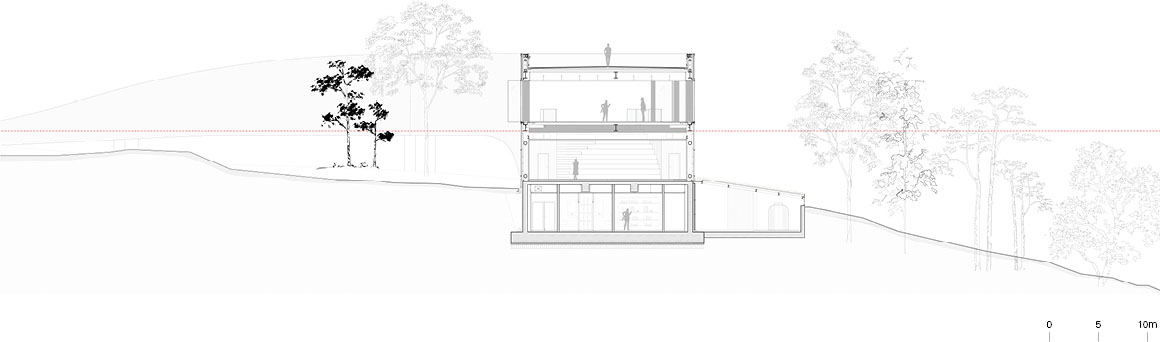
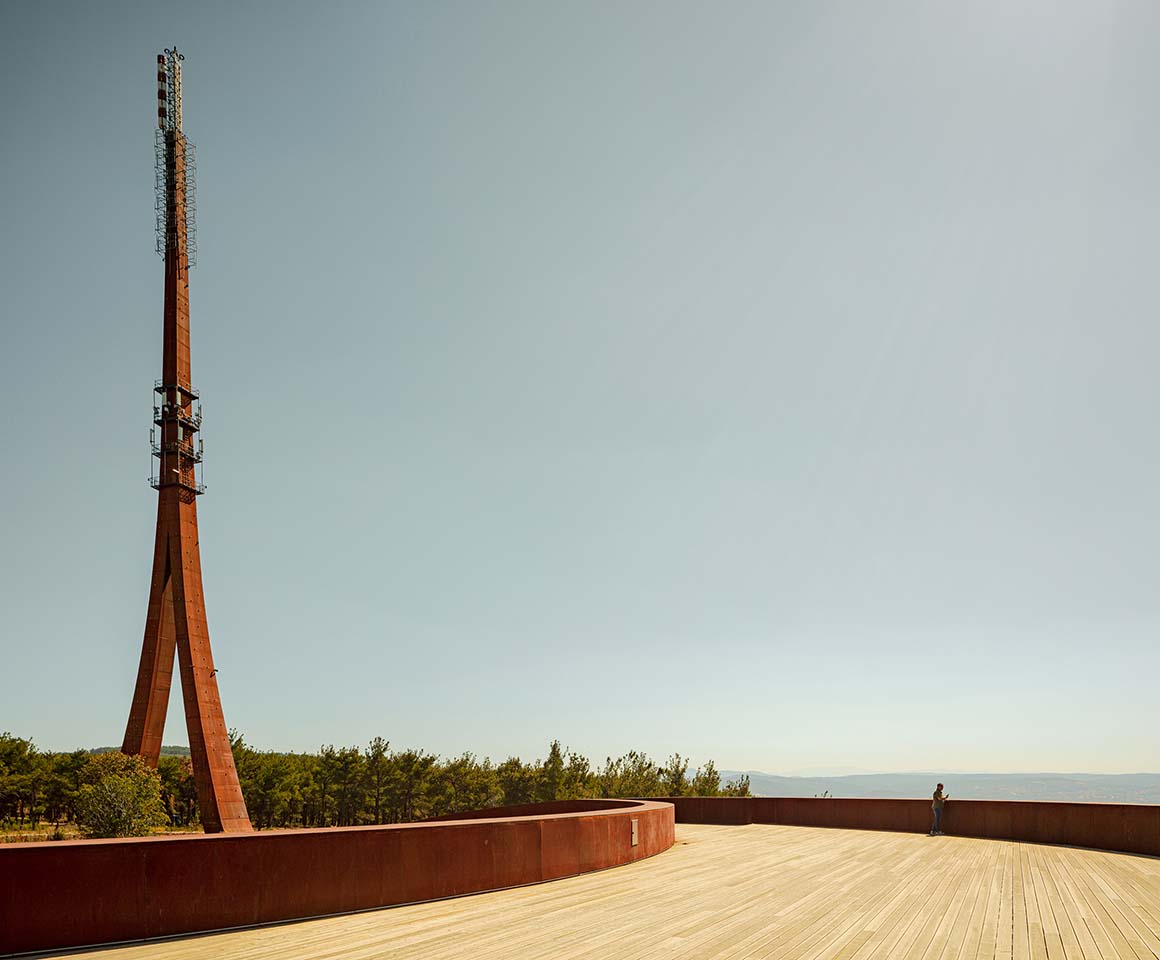
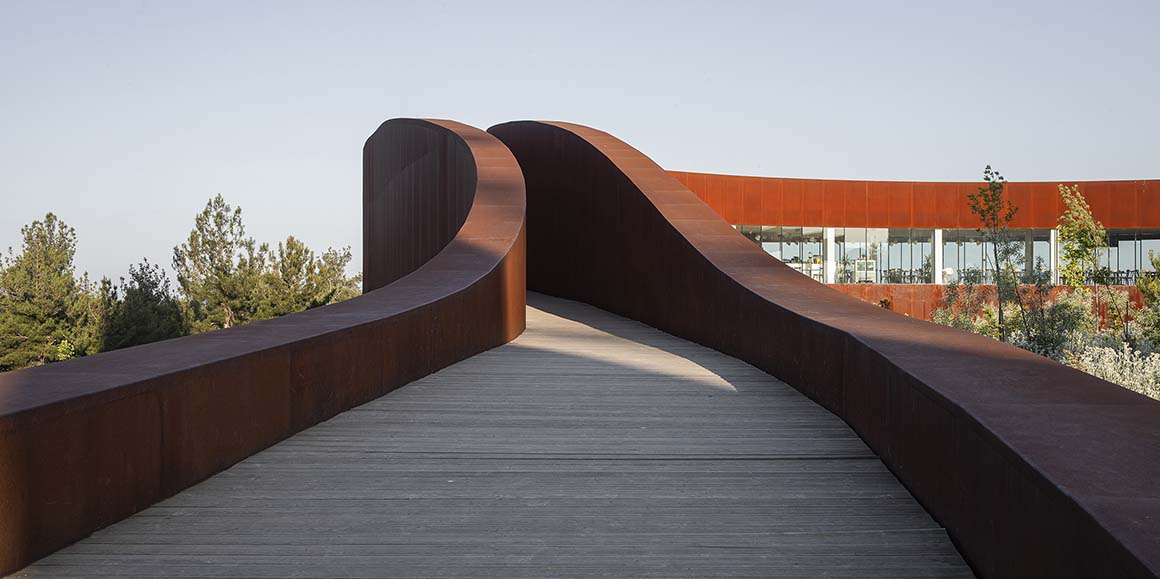
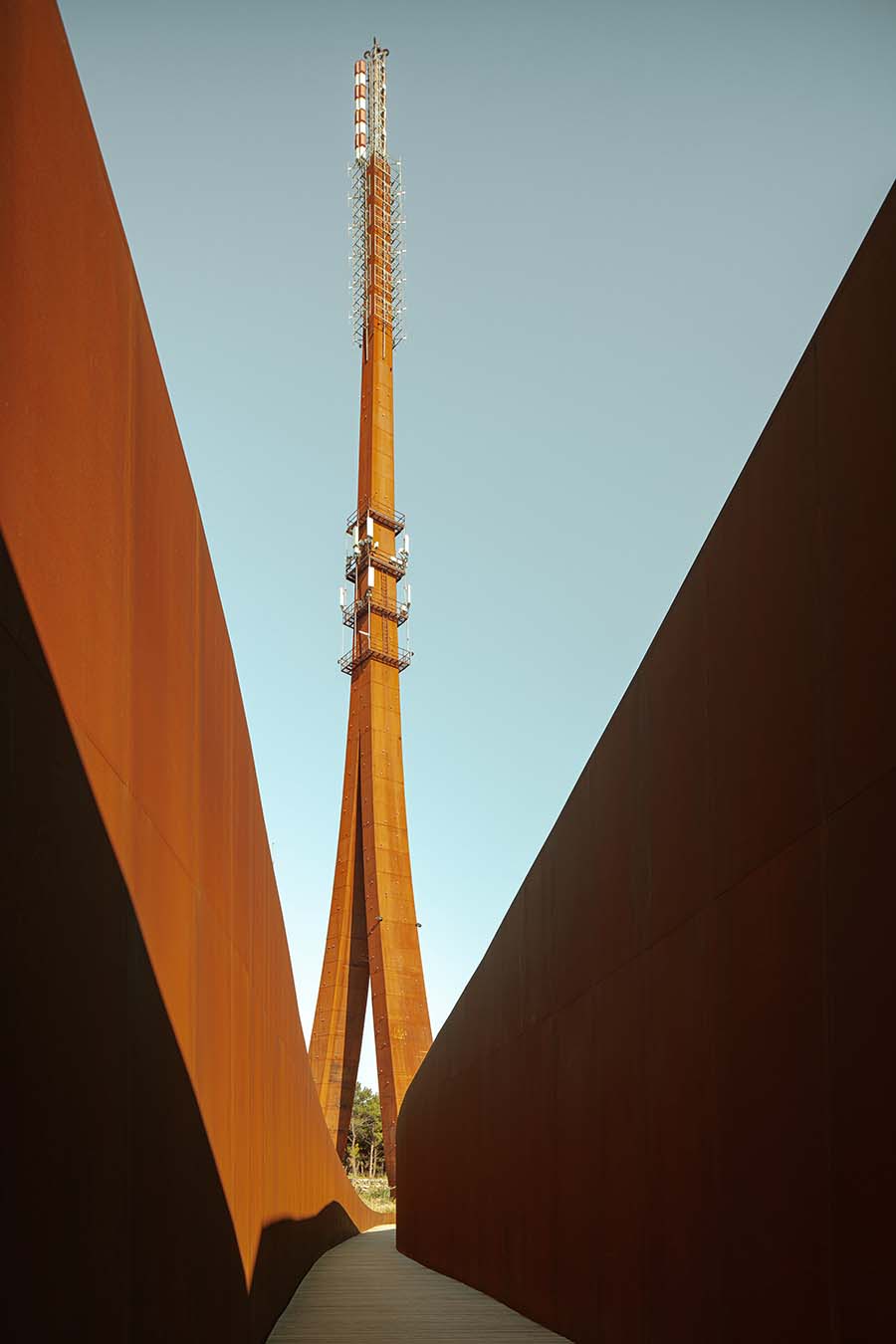
Structurally, the tower is engineered to withstand wind speeds of up to 160 km/h. It was assembled on site using a modular system composed of corten steel plates up to 40 mm thick, reinforced internally. Acting simultaneously as envelope and structure, the steel surface gradually changes in tone over time, blending with the surrounding soil and woodland. The separation between the technical core and the external looped circulation system secures both operational efficiency and spatial experience.
The Çanakkale Antenna Tower does not conceal infrastructure as background technology. Instead, it exposes and integrates it into the landscape and public movement. By consolidating dispersed transmission facilities, the project restores visual order to the cityscape and transforms the panoramic view of the strait into a shared civic experience. At the intersection of technology, architecture, ecology, and public space, it proposes a contemporary model for infrastructure architecture.
Project: Çanakkale Antenna / Location: Çanakkale, Turkey / Architects: Powerhouse Company + IND [Inter.National.Design] / Project team: Powerhouse Company_Nanne de Ru (Partner in charge), Albert Takashi Richters (Project lead), Stefan Prins, Stijn Kemper, Charles Bessard, Drik Jan Schaap, Donna van Milligen Bielke, Paul Rikken, Joanna Kulaczkowska, Jeronimo Mejia, Julius Kirchert, and Jeffrey Ouwens; IND [Inter.National.Design]_Arman Akdogan, Felix Madrazo, Bibiana Páez, Alejandro Gonzalez Perez, Onur Can Tepe, Mila Dimitrovska, Zuzanna Koltowska, Marina Öztürker, Seda Soylu, Behar Akkoclu, Paula Cabanillas Sevilla, Bruno Barbosa, and Hazal Ceylan / Structural engineer: ABT, INTAÇ / Electrical engineer: Küp Mühendislik LTD / Landscape architect: Hugo Sanchez Paisaje, Taller de Paisaje Entorno & Loop Design, Hugo Ignacio Sanchez Toledo, Tonatiuh Martinez, Silvia Lupini, Fernanda Garcia Alba, Luis Guísar / Infrastructure consultant: ERIMCO / Antenna consultant: Bulent Yağcı, Selçuk Paker, Akın Baygın, Hasan Yeşilova, Nizamettin Çetinyılmaz / Visualizations: Mir. / Geotechnical consultant: Inşaat Müh, Jeoloji Müh / Client: Ministry of Transport and Infrastructure, Çanakkale Special Province Administration / Use: public spaces, towers / Gross floor area: 3,000m² / Design and construction: 2013–2023 / Completion: 2023 / Photograph: ©Sebastian van Damme (courtesy of the architect); ©Fernando Alda (courtesy of the architect)