



Loosely composed, closely linked
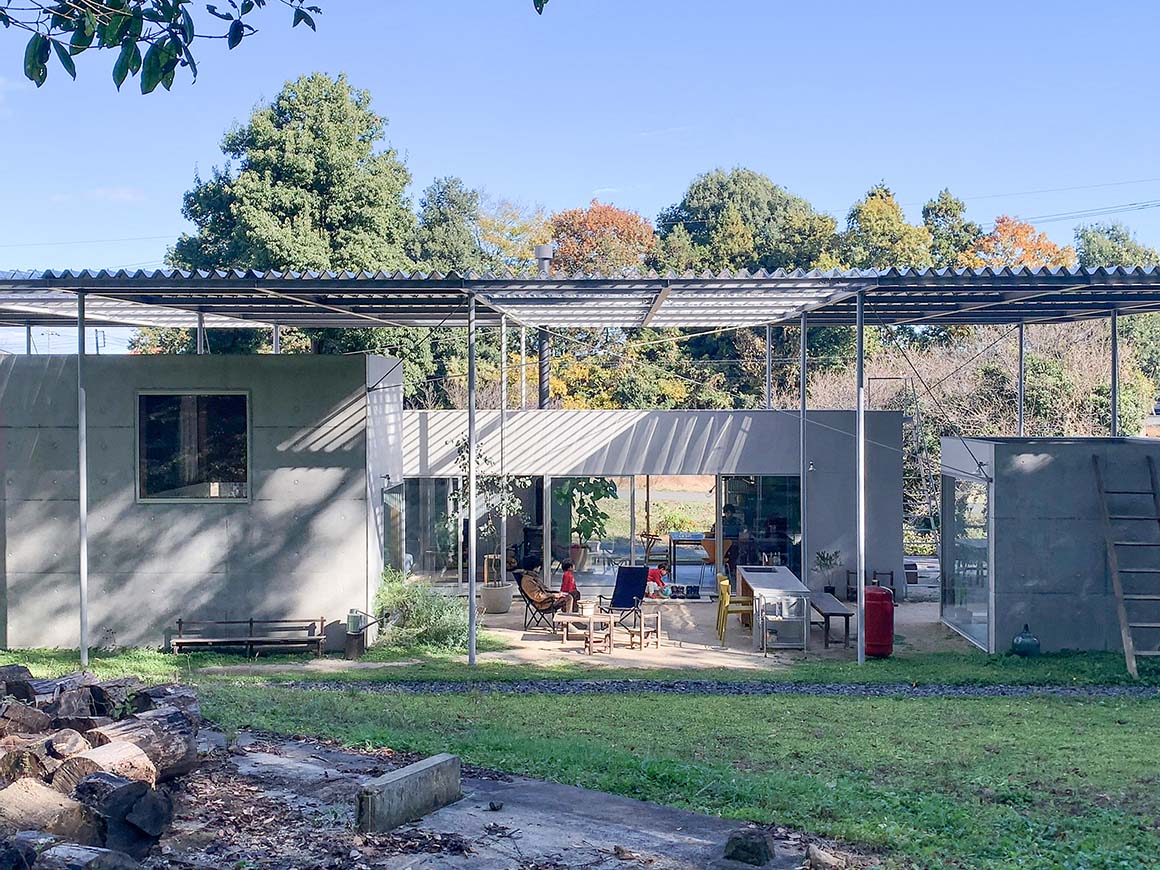
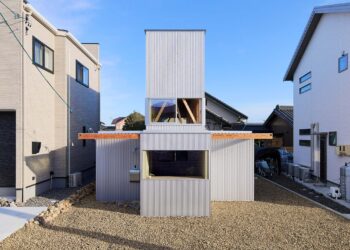
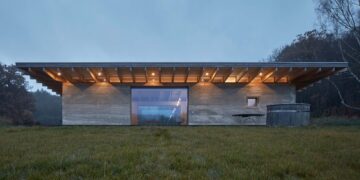
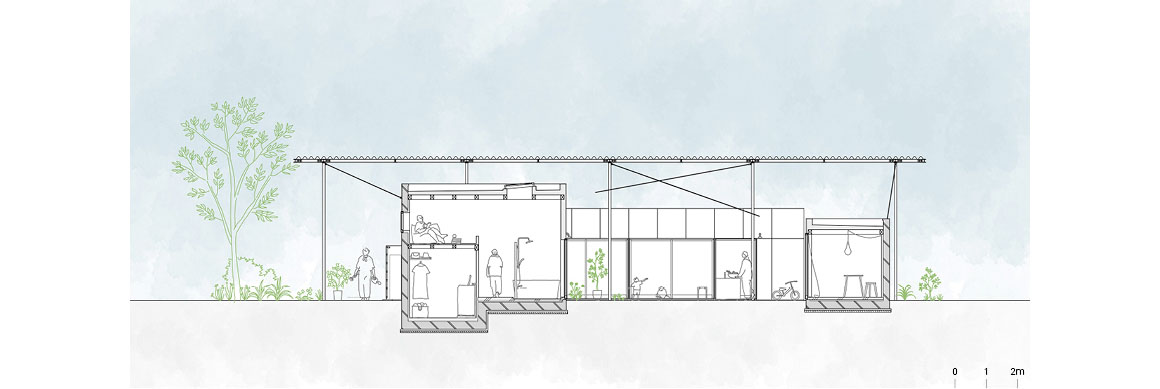
In the northern Kanto Plain of Japan, in a quiet suburban area where factories and farmland sit side by side, lies a home for three generations. Named “Roof House,” its defining feature is a single roof that gathers several dispersed volumes. The corrugated roof members, the gaps between volumes, and the open margins between the roof and the rooms create a deliberately loose composition. The site, including the forest behind it, measures about 2,000 square meters. The young client, who moved from the city, wished to use the lush greenery as part of daily life while operating a small shop and engaging with neighbors. The building also needed to remain adaptable if the family were to relocate in the future.
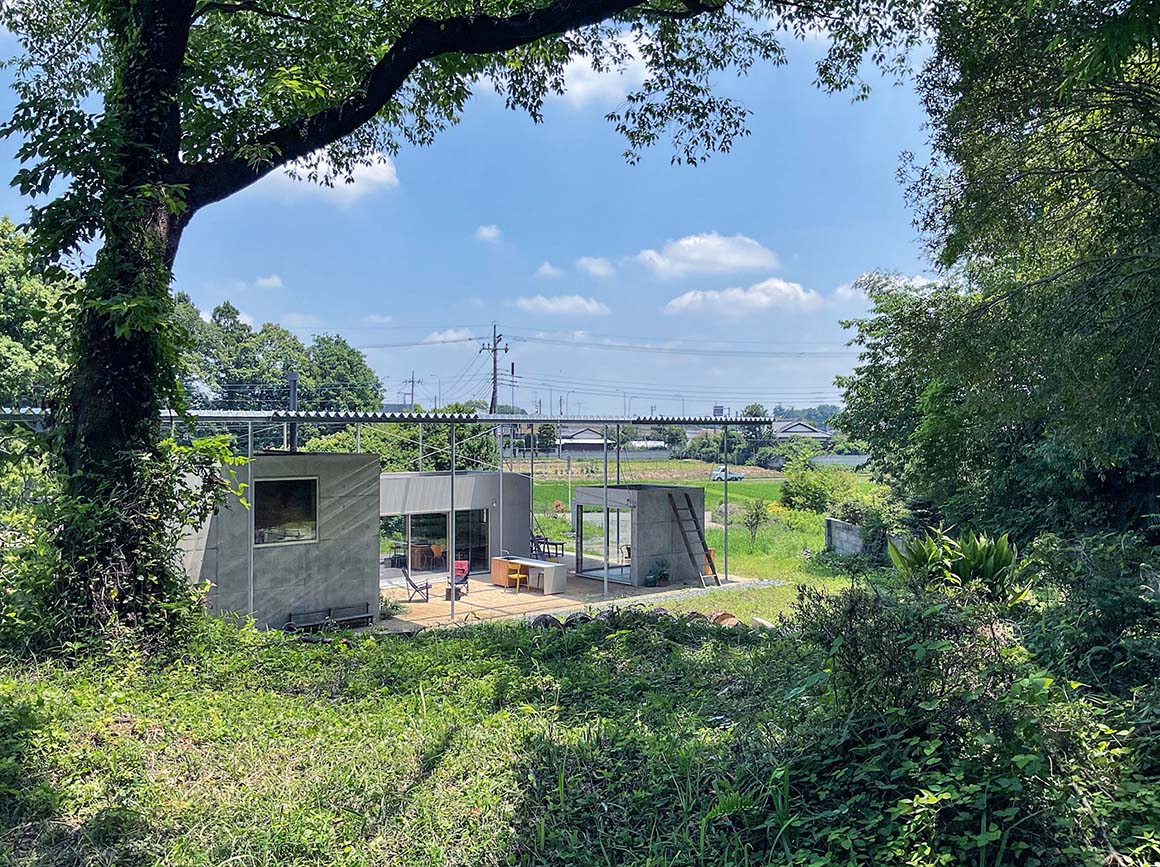
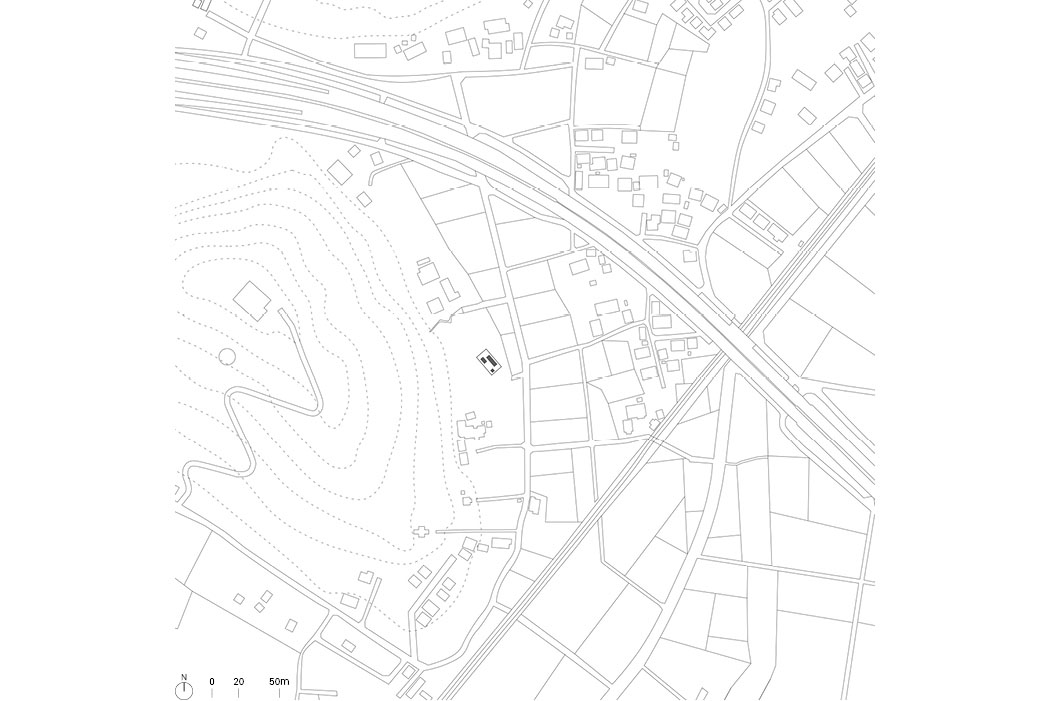
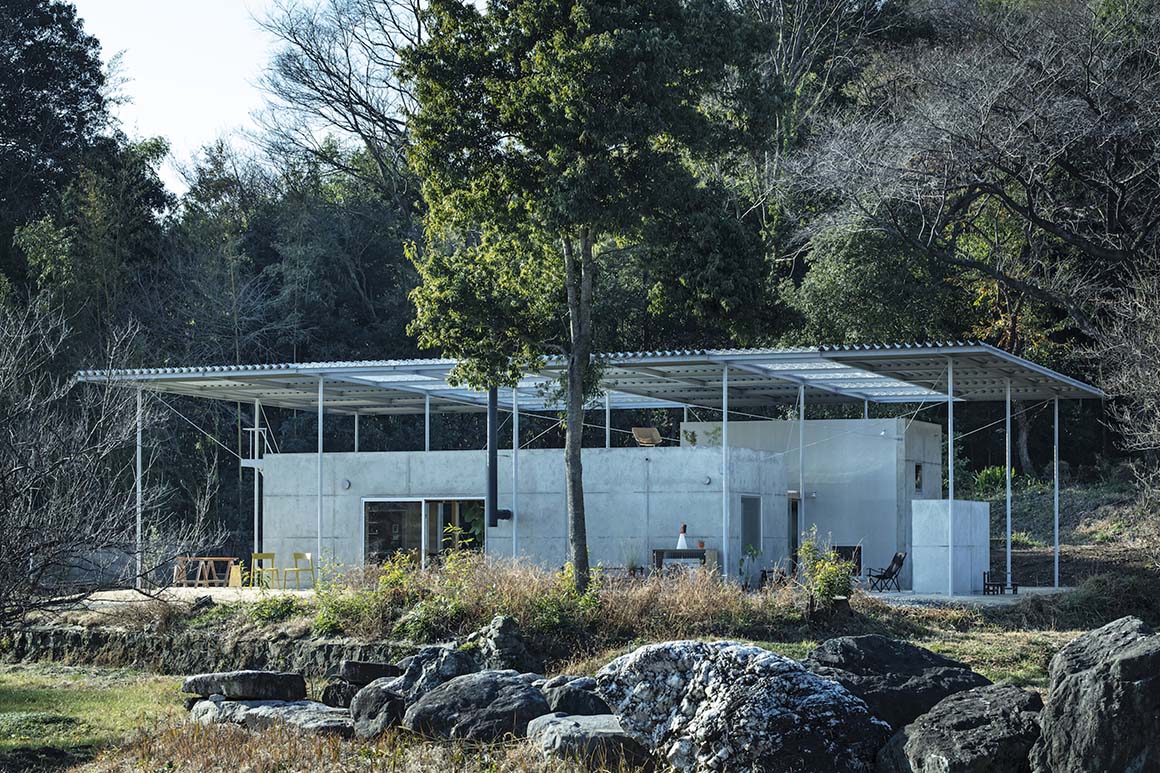
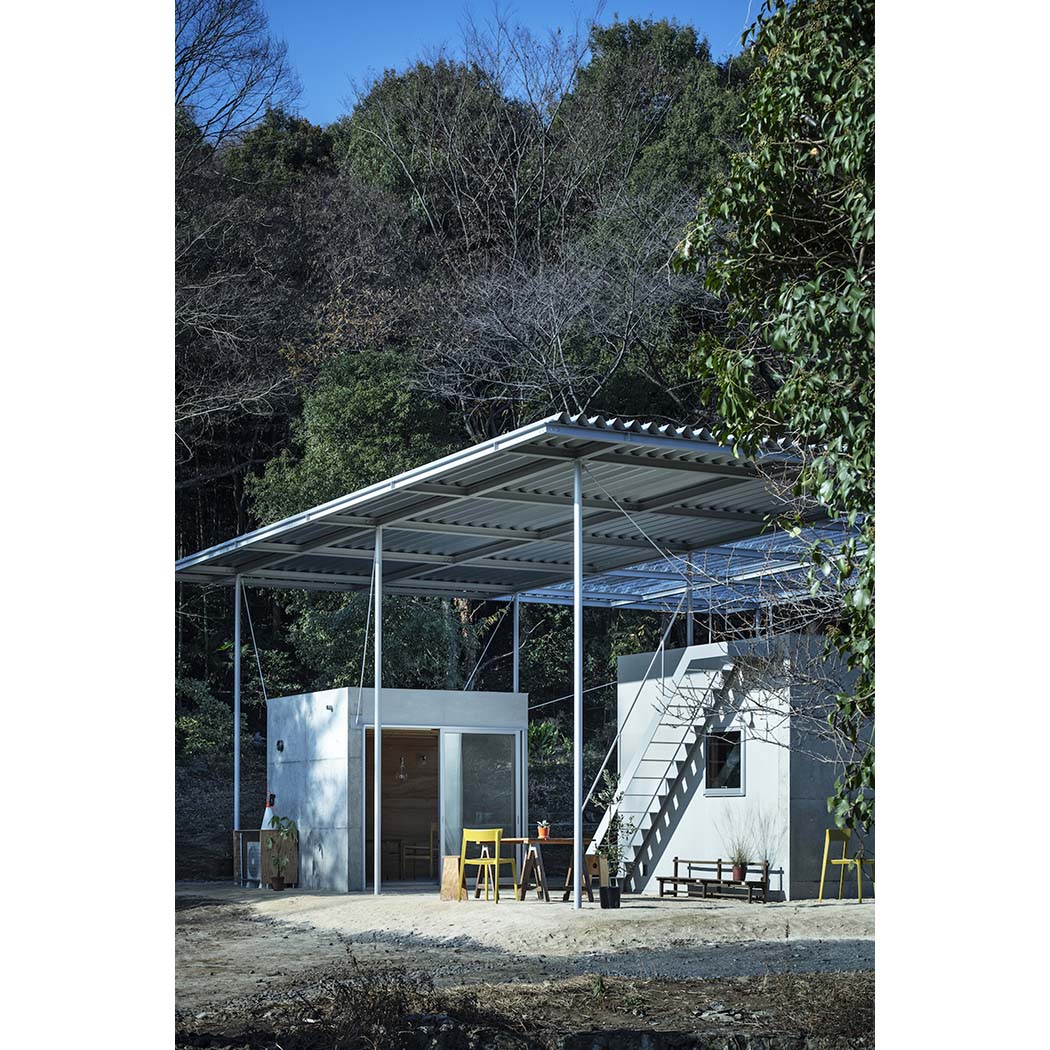
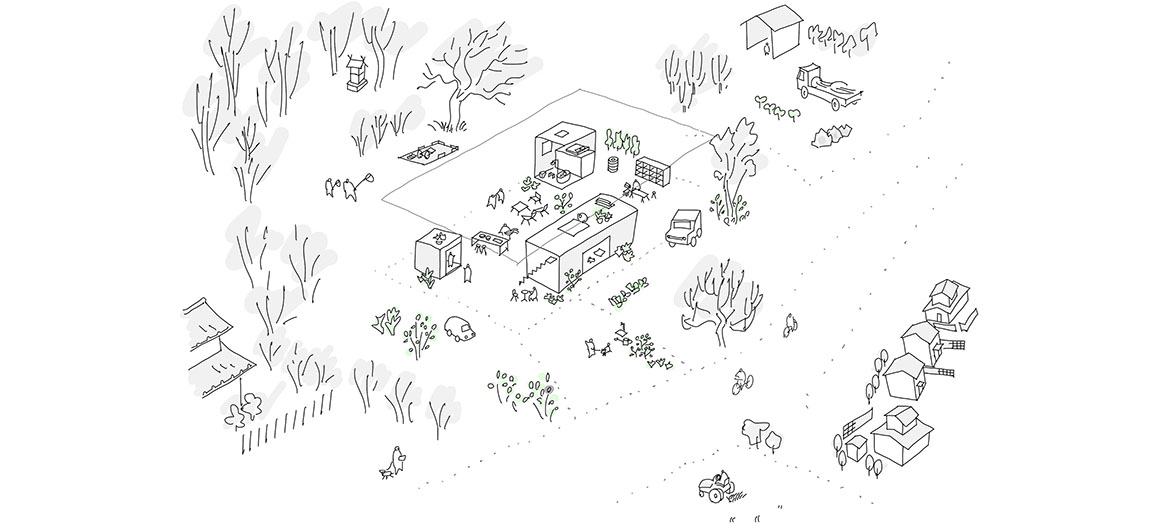
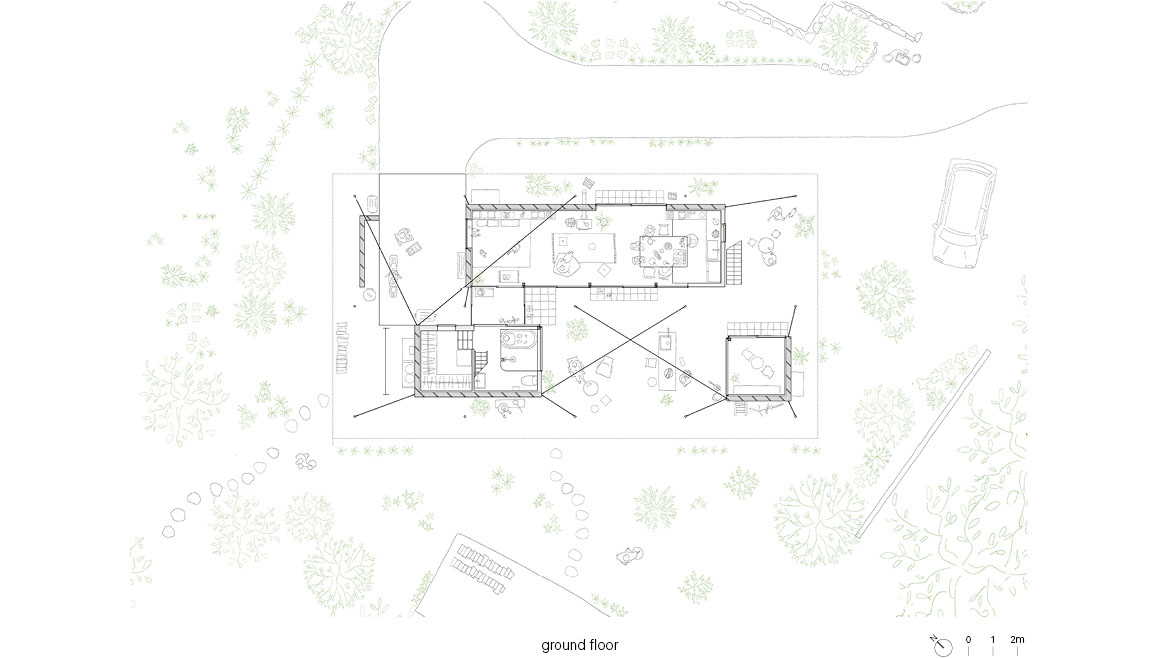
The design responds with a semi-open, courtyard-centered layout that embraces the surroundings and supports varied activities. Several volumes are placed in separate positions, with small courtyards formed between them and a thin roof spanning across all. Under the roof, narrow passages, lofts above ceilings, and overlapping rooms sharing large skylights create diverse spatial experiences. The arrangement resembles a small village formed by clustered houses.
The central courtyard faces the forest and functions as an outdoor kitchen or a play area for children. The south-facing entrance court serves as a sheltered approach for visitors. A courtyard enclosed by a north wall is used for everyday tasks such as woodworking or car maintenance. Because the spaces are clearly separated, the house can be used even when the client is not living there. The volume containing bedrooms and bathrooms can be converted into guest accommodation, while the others can operate as a shop or gallery.
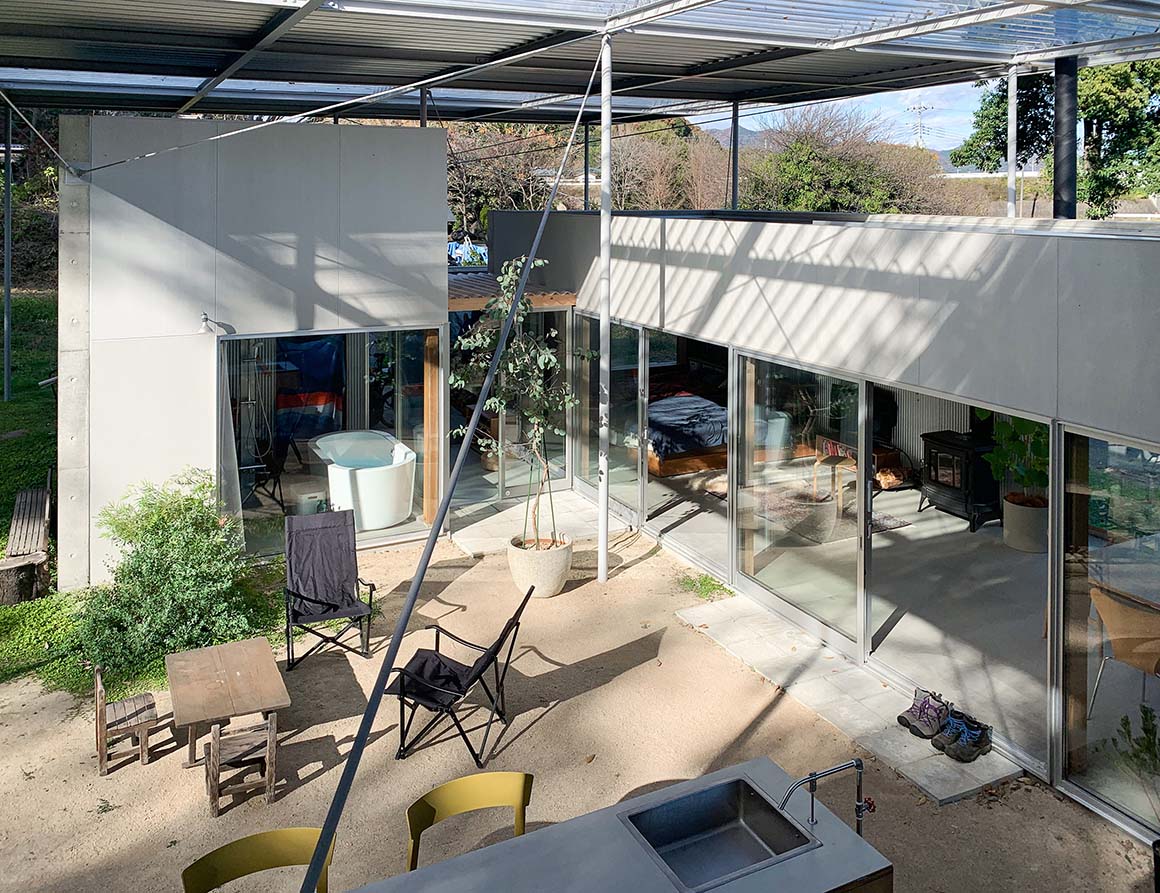
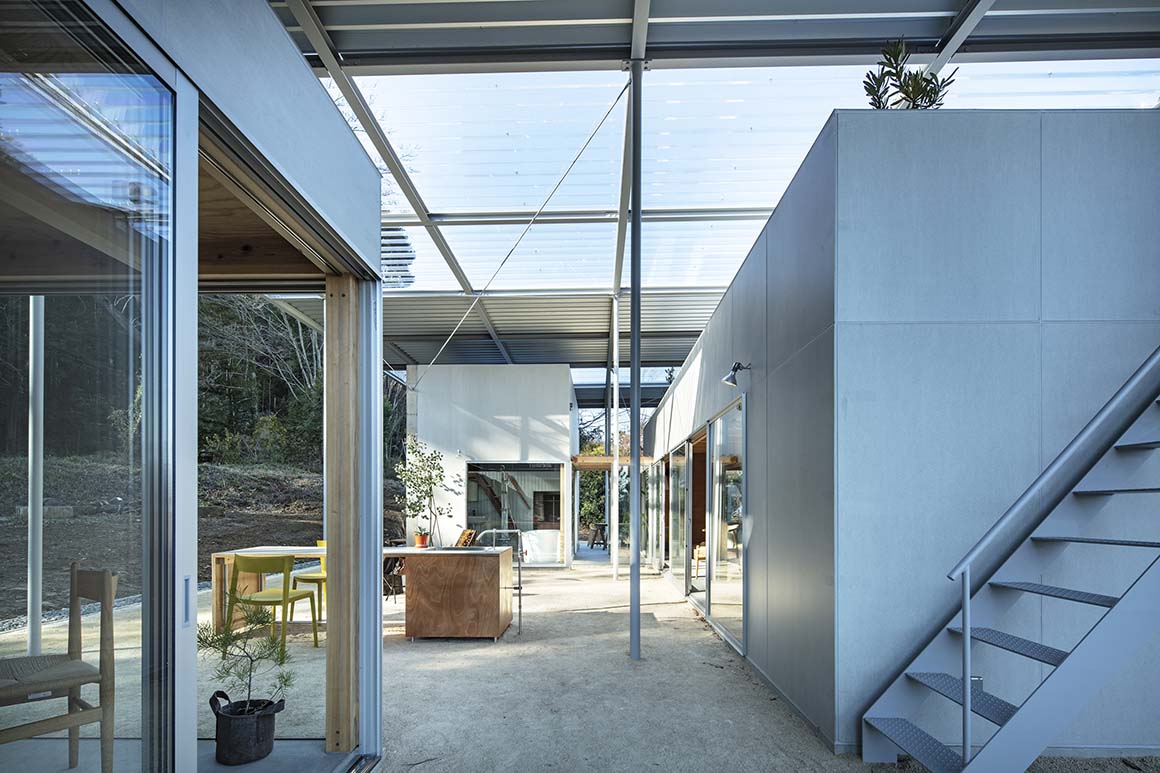
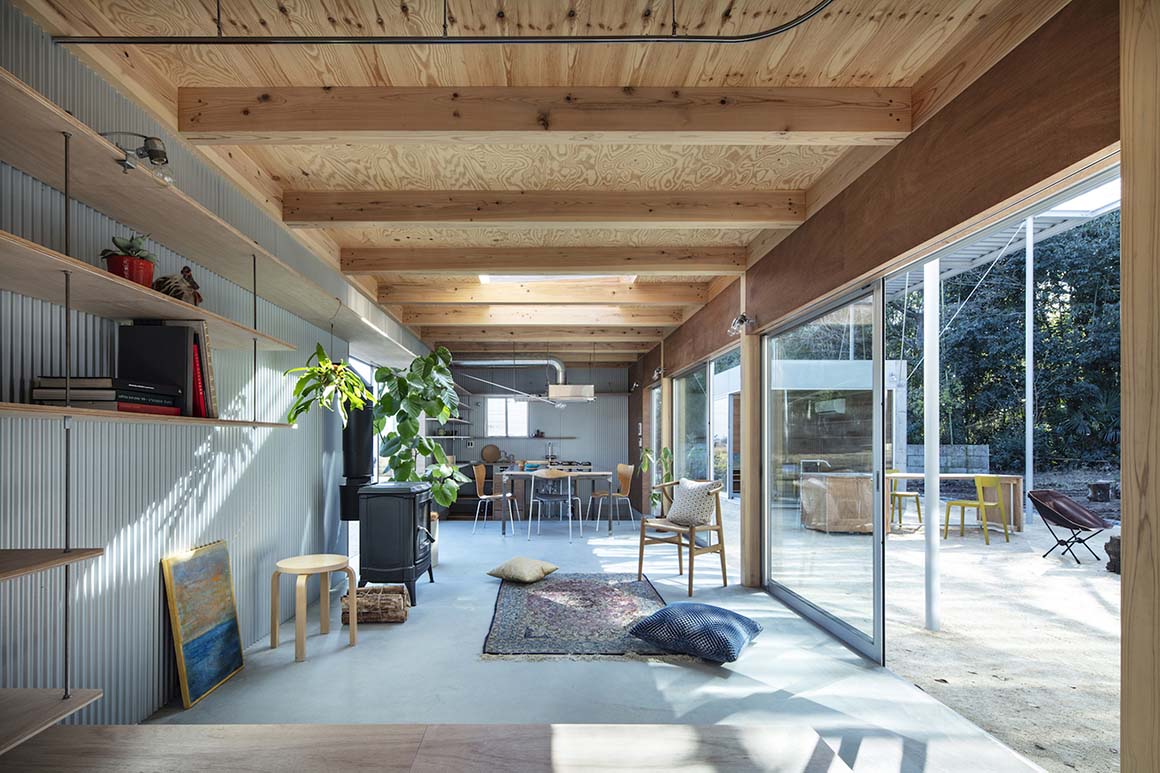
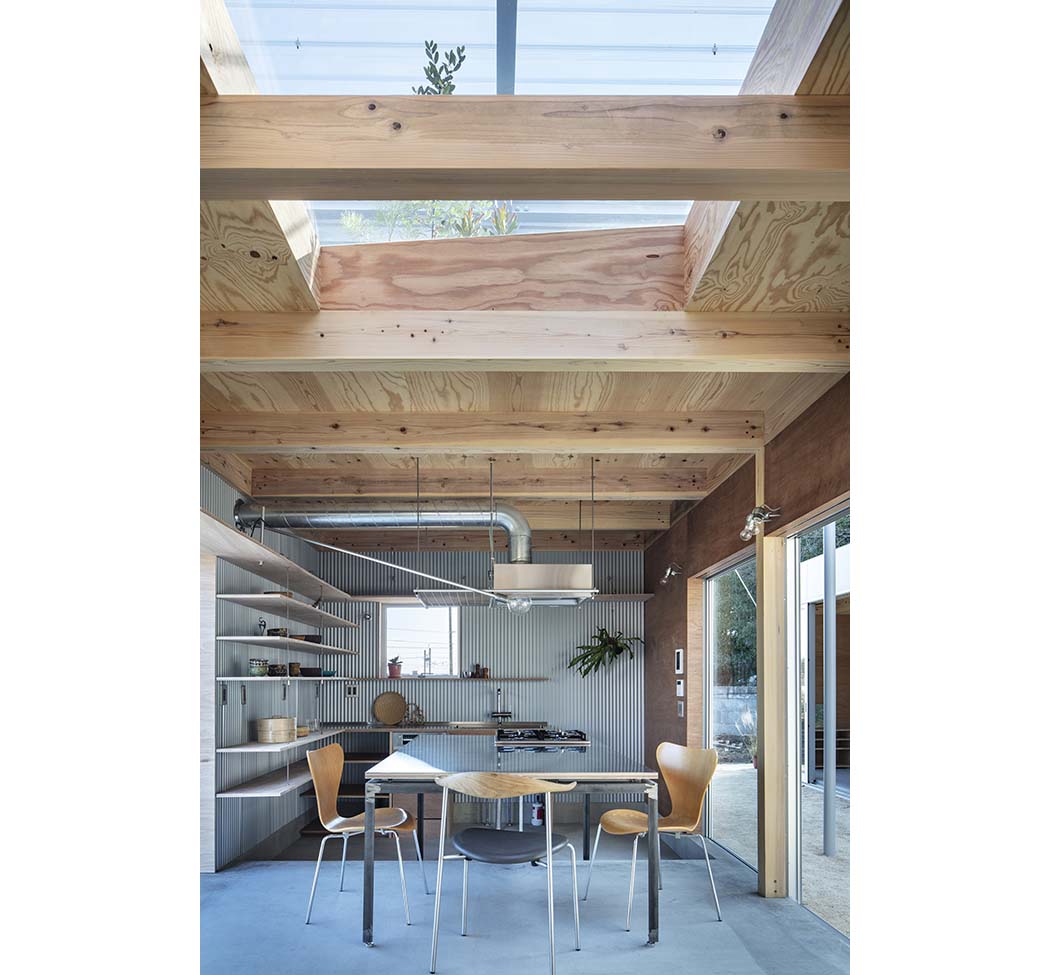
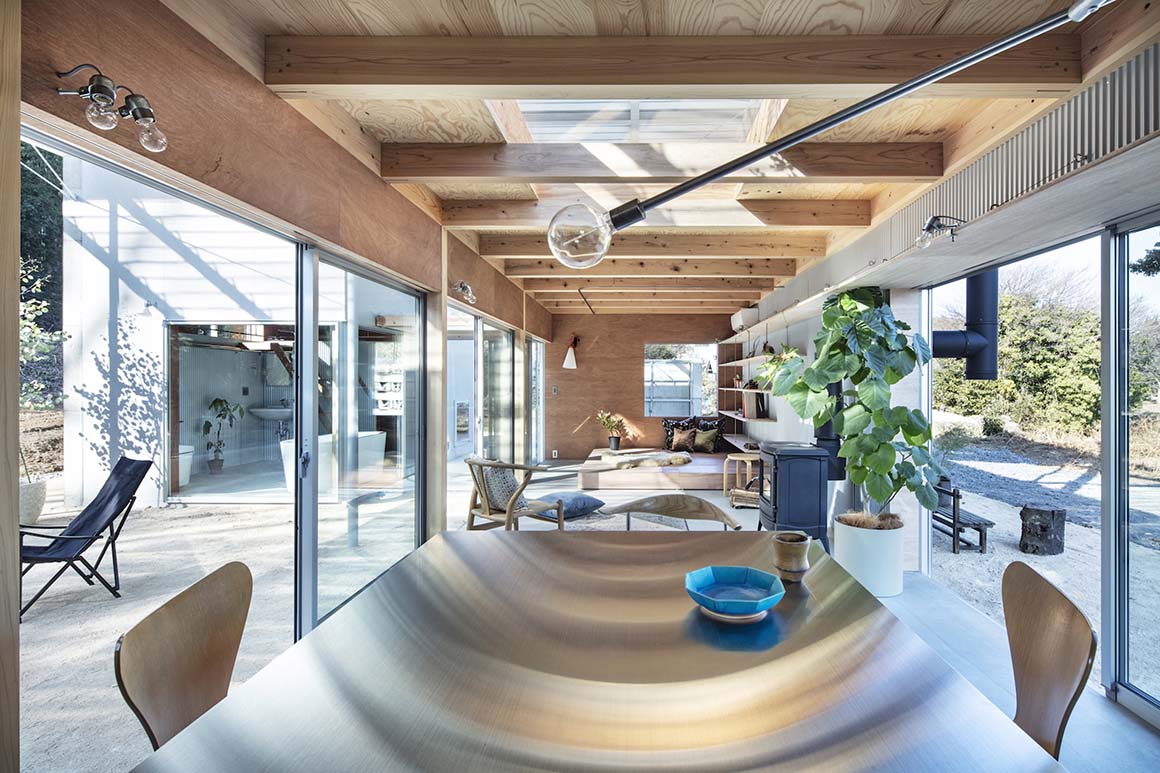
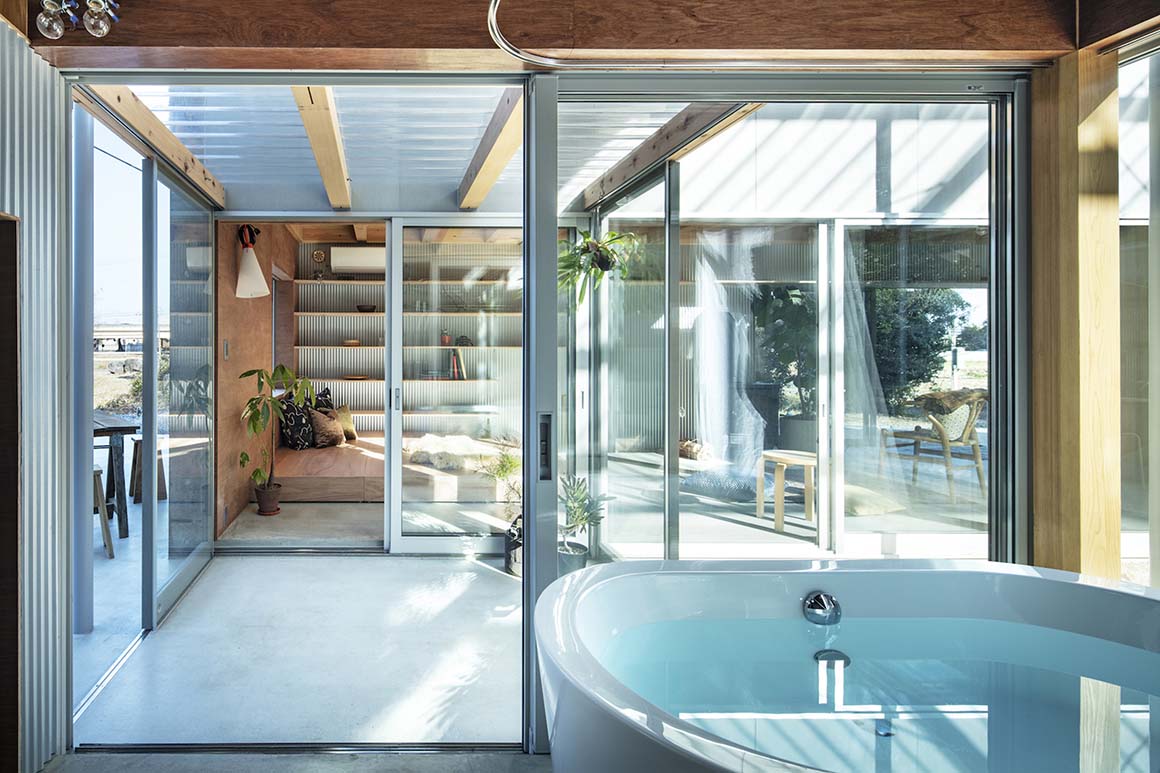
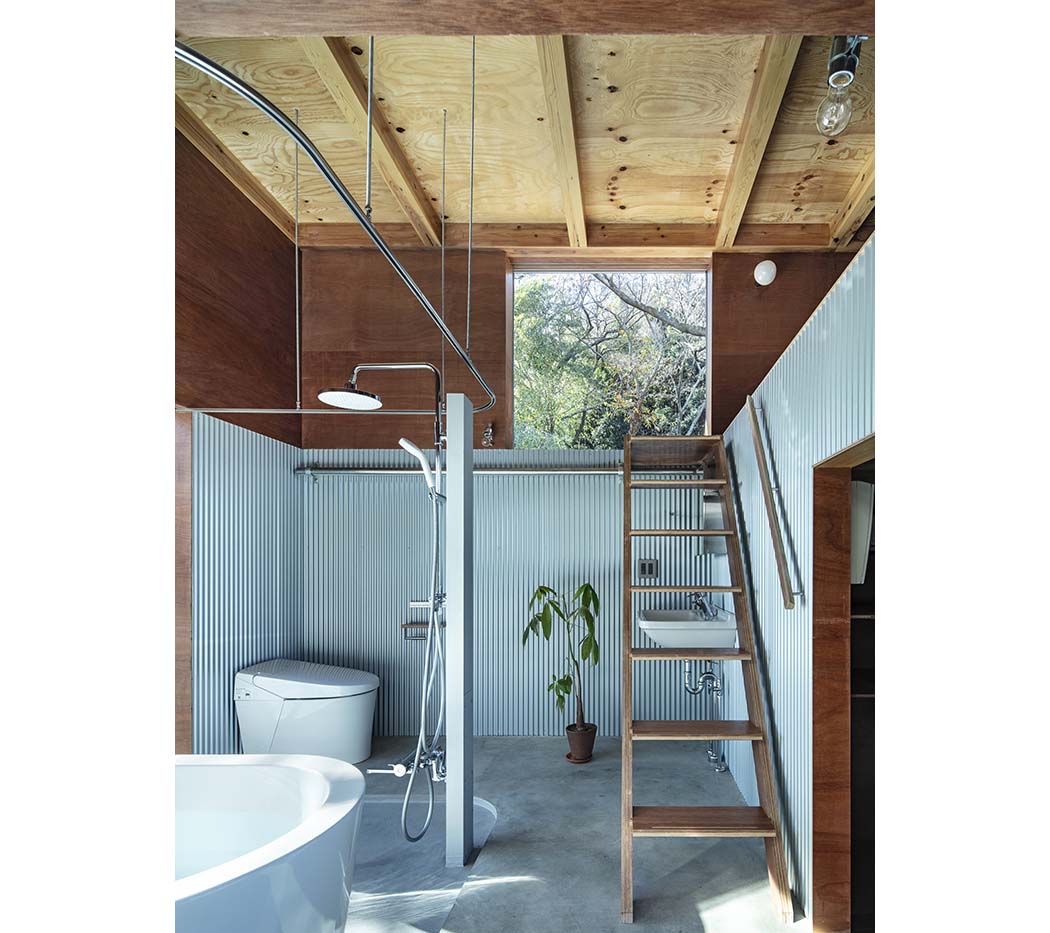
The courtyard becomes a new place for creation, shaped by the relaxed movements and encounters of people. Beneath the expansive roof, events both large and small create new stories that enrich everyday life. Daily life is no longer confined within walls, but extends through open gaps into the courtyard, the spaces around the house, and the surrounding landscape. In doing so, it comes into contact with the environment of the ground, cultivating a layered culture of everyday life.
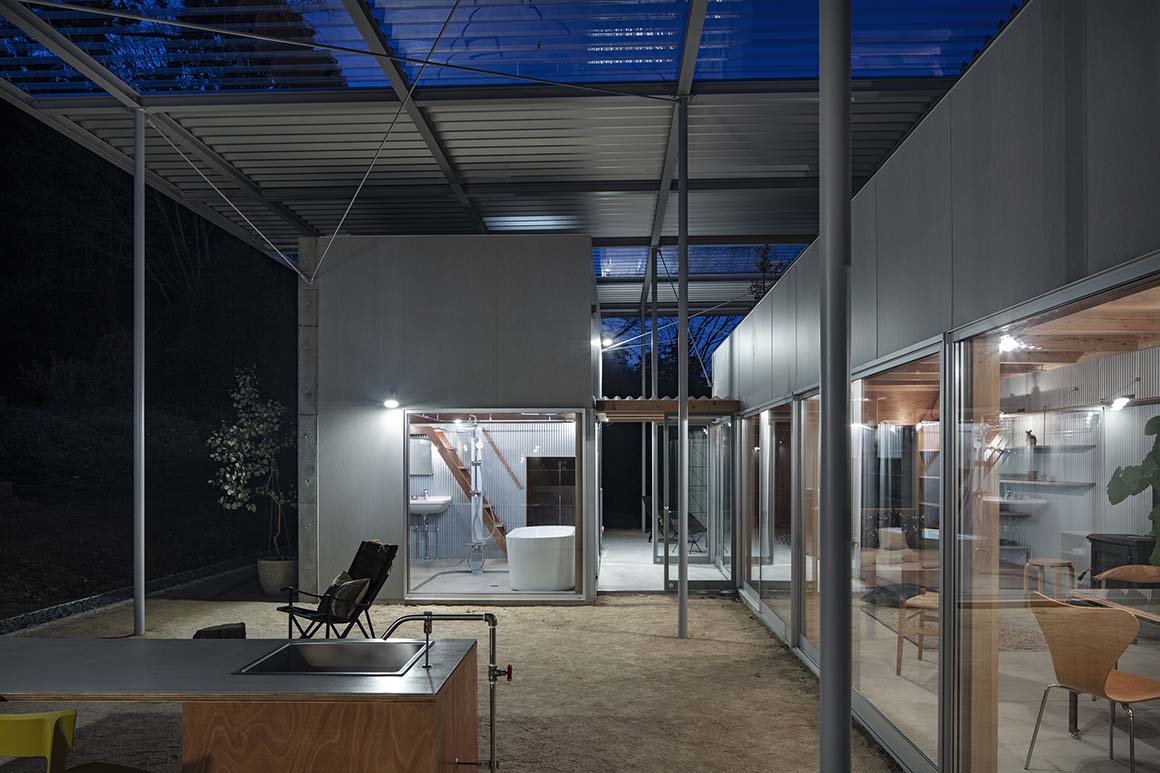
Project: ROOF HOUSE / Location: Tochigi, Japan / Architect: TAMADA & WAKIMOTO ARCHITECTS / Project team: Makoto Tamada, Natsuko Wakimoto / Structural engineer: Junichiro Ito / Use: house / Site area: 1,994.98m² / Bldg. area: 160.74m² / Gross floor area: 96.41m² / Completion: 2023.12 / Photograph: ©Kenta Hasegawa (courtesy of the architect), ©TAMADA & WAKIMOTO ARCHITECTS