
An architectural narrative interlacing layered histories
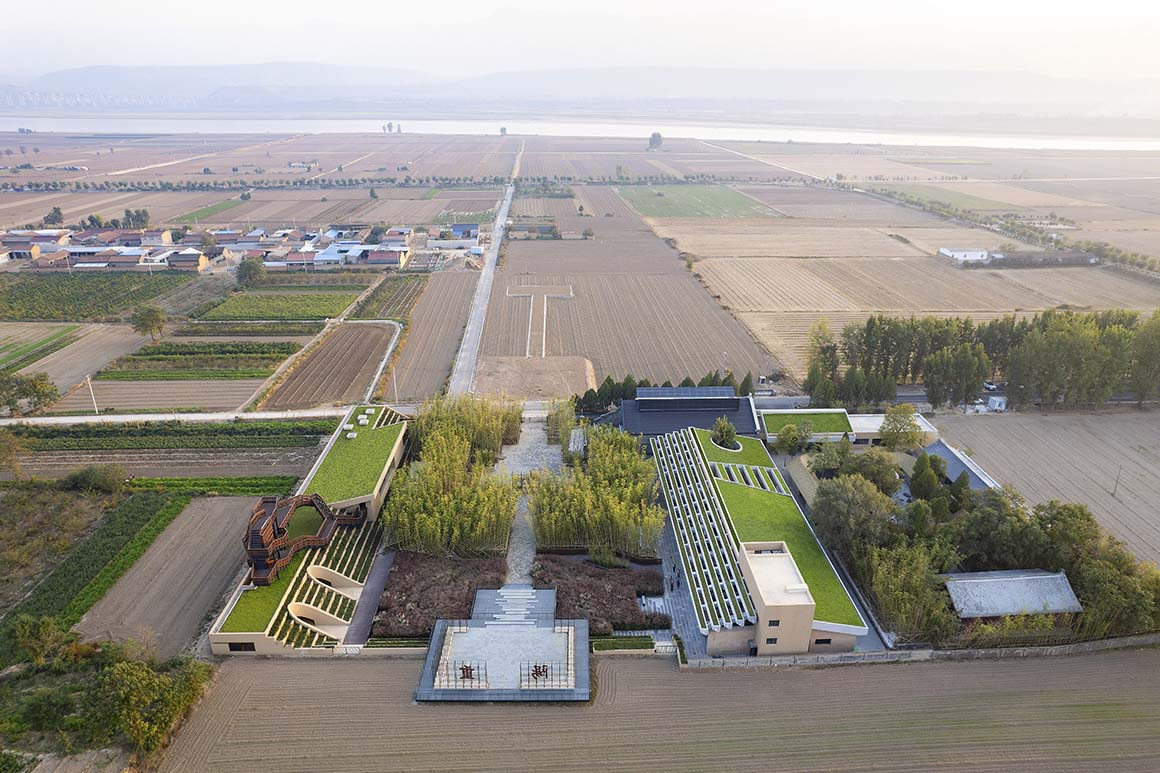
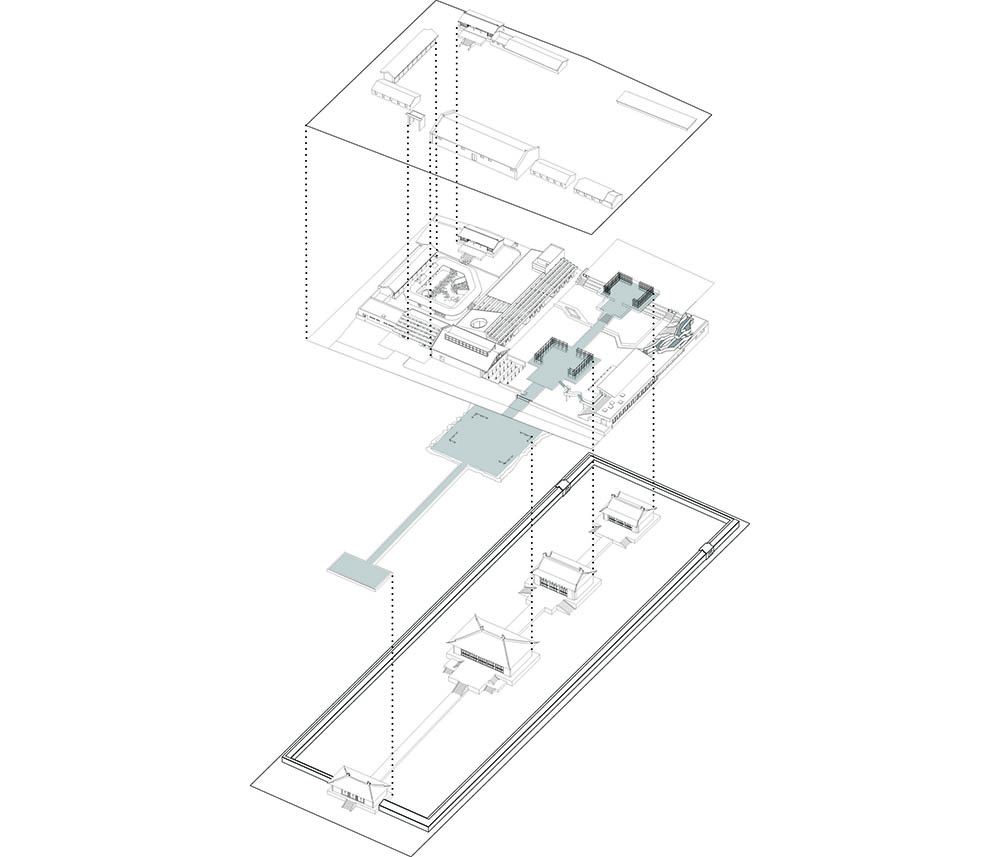
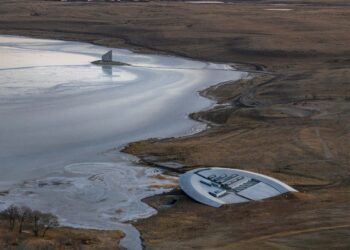
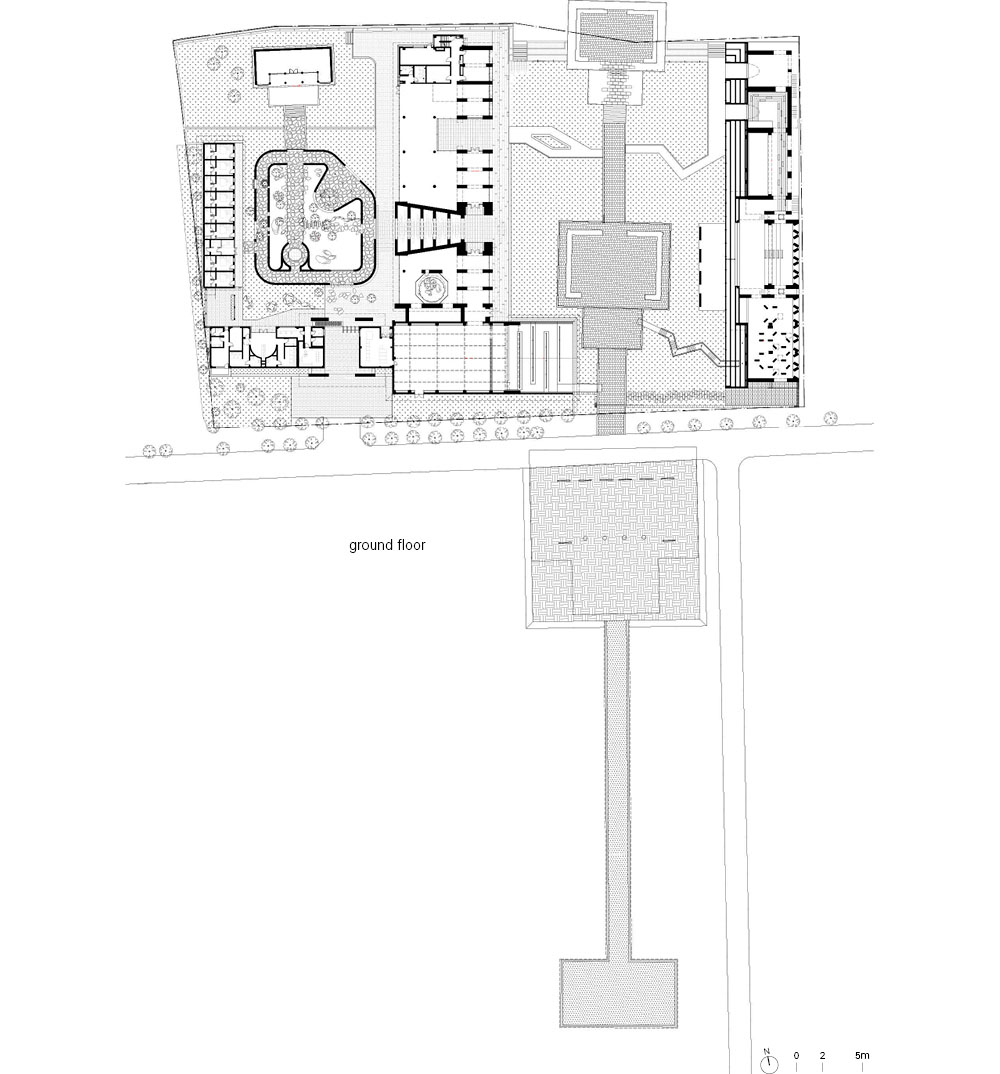
Located in Yuncheng, Shanxi Province, the original Yongle Palace was relocated in the 1960s due to the construction of the Sanmenxia Reservoir. Its former site gradually vanished under decades of agricultural use, and by the 1980s new structures—such as the locally built Lv Gong Shrine—had significantly altered the landscape. With the completion of the Yellow River Tourism Road Line 1 in 2022, the once-sacred Taoist ground began to reawaken. Through a process of “spatial translation” that balances preservation and renewal, the project reconstructs historical narratives and explores sustainable ways to regenerate cultural heritage. Guided by the principles of minimal intervention, reversibility, and legibility, the design weaves together fragmented elements inspired by Taoist philosophy. Contemporary materials highlight historical traces, while the murals of Yongle Palace are reinterpreted as immersive cultural experiences—collectively enabling the architectural “resurrection” of a forgotten Taoist sanctuary. The site is organized in a dual structure: the regeneration of the Lv Gong Shrine area to the west and the evocation of the vanished Yongle Palace to the east.
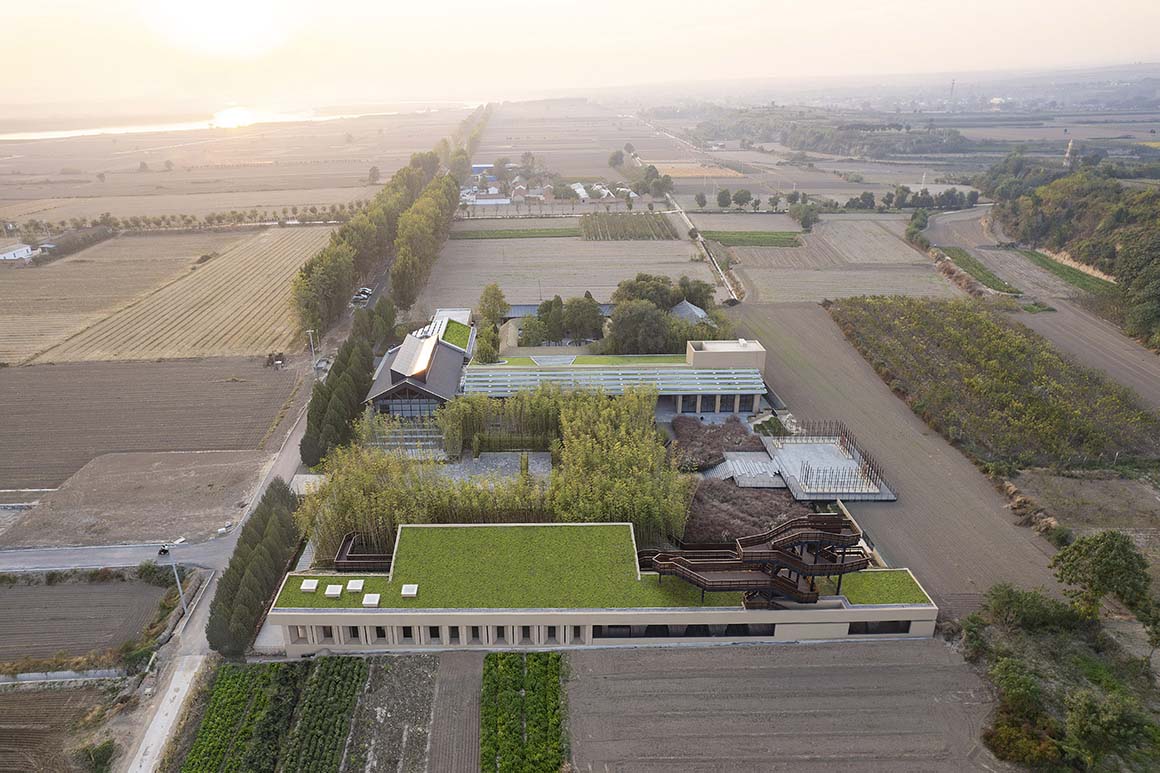
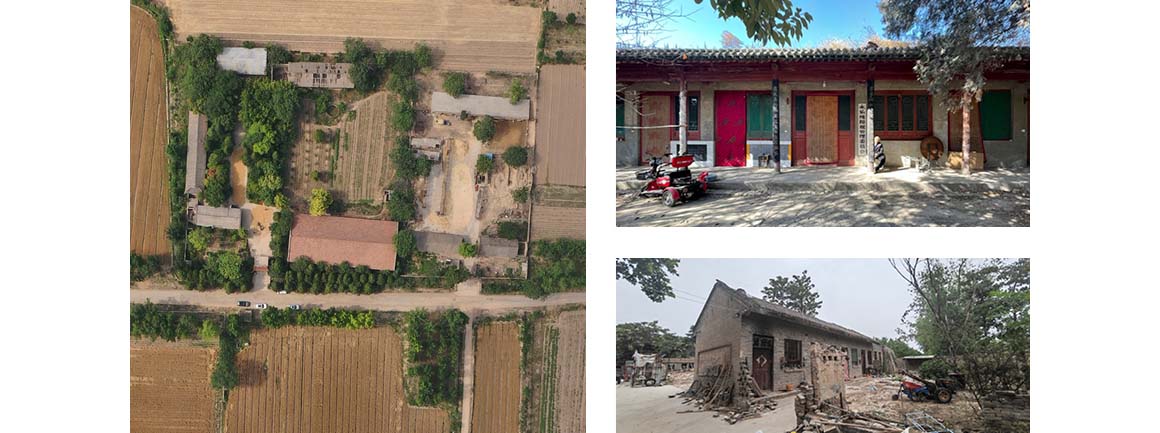
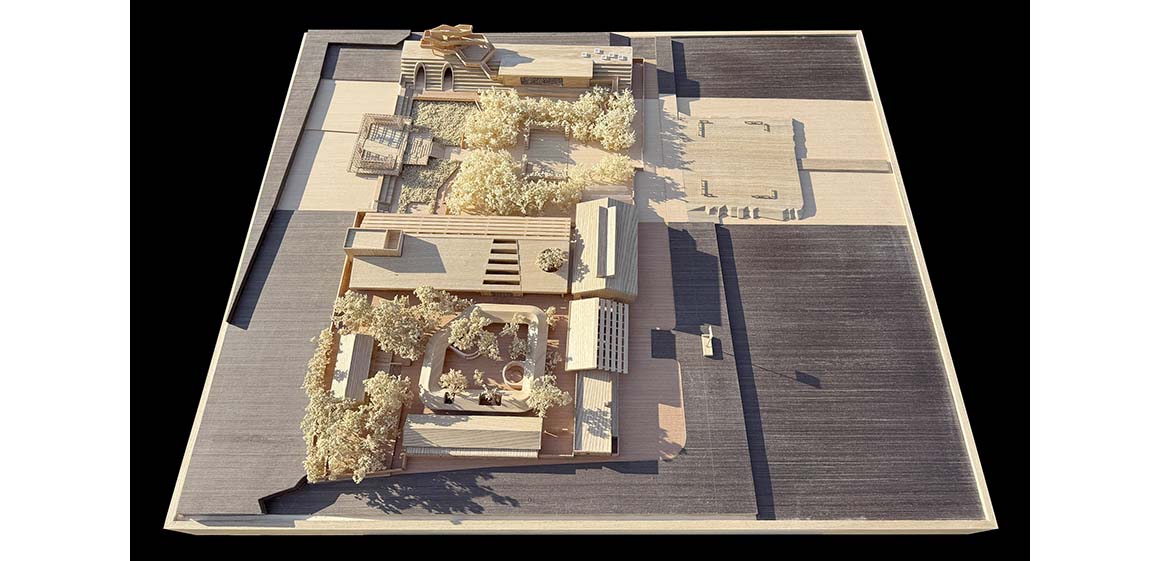
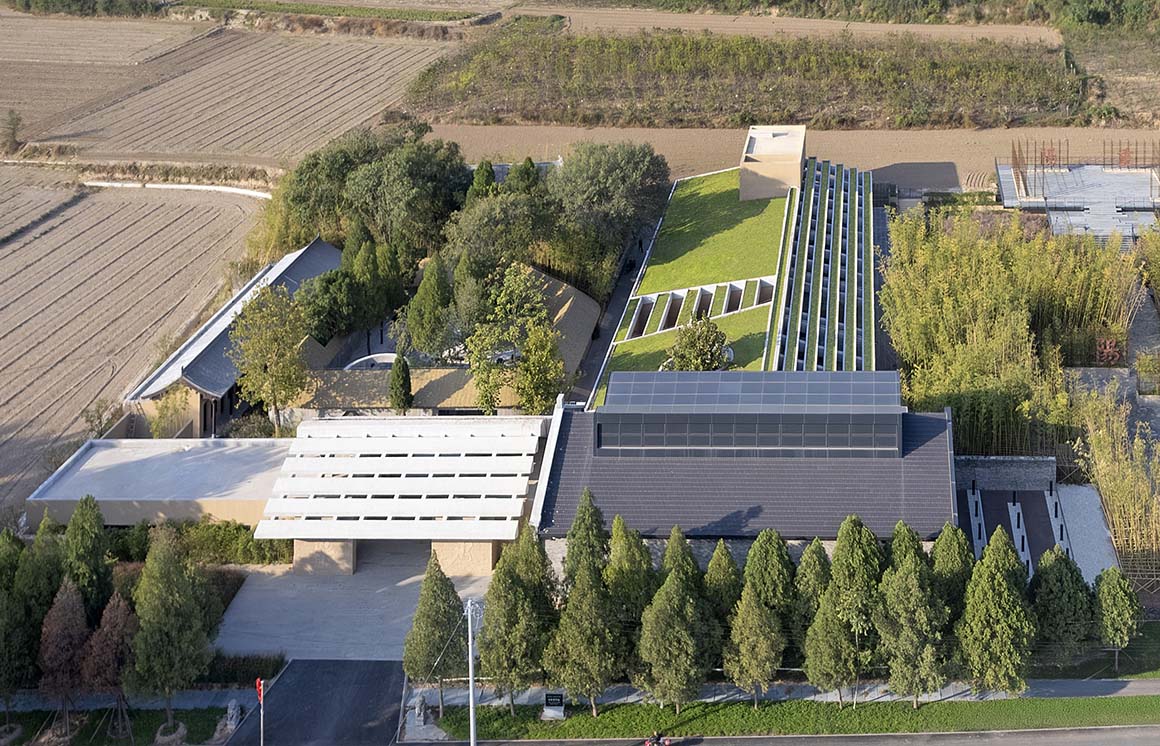
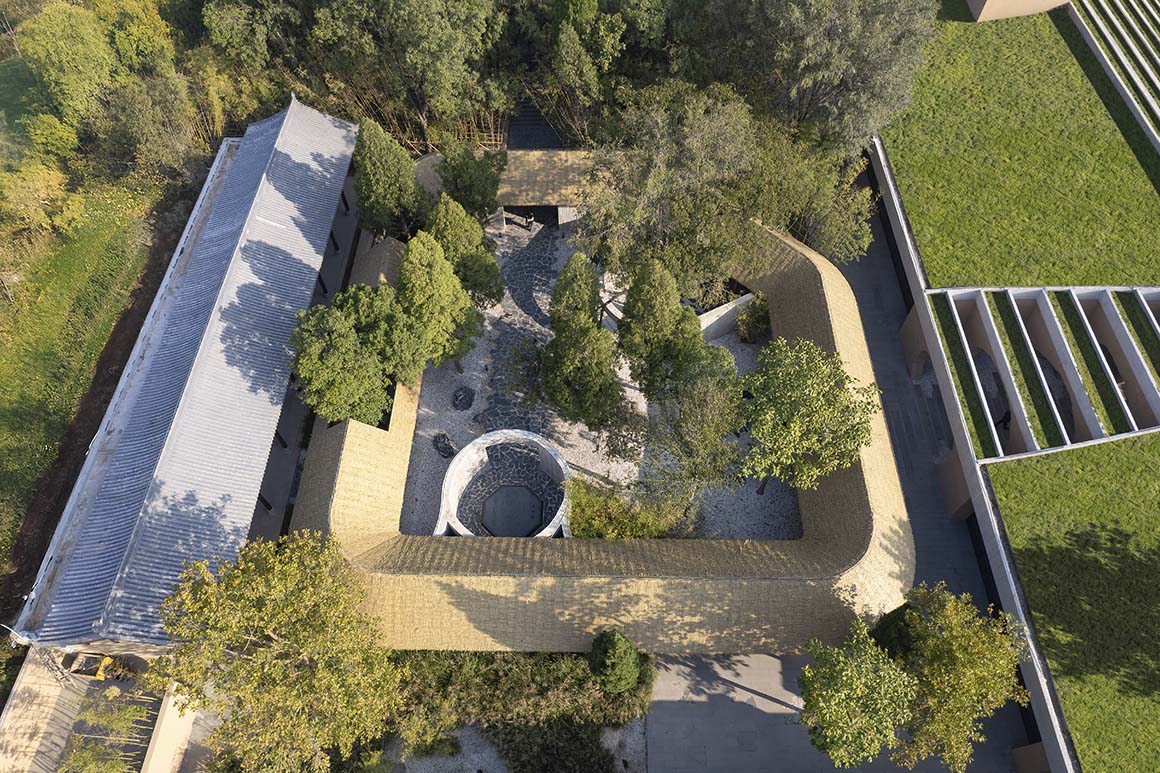
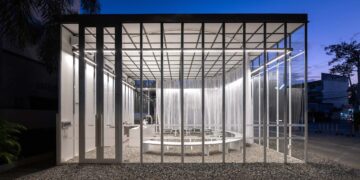
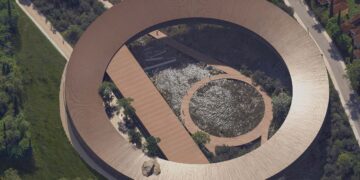
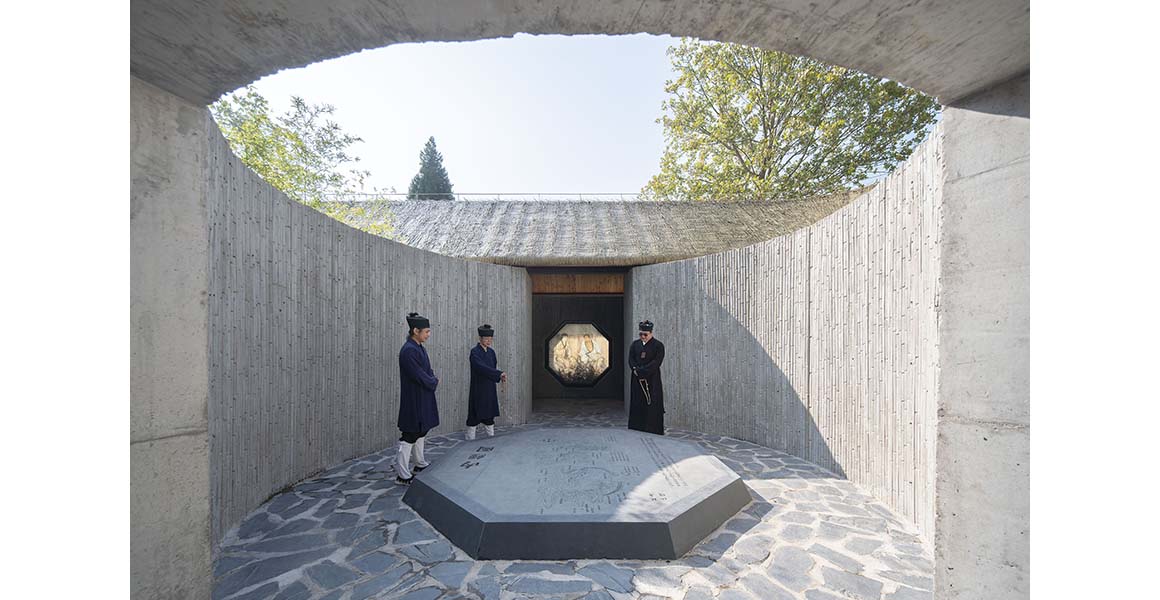
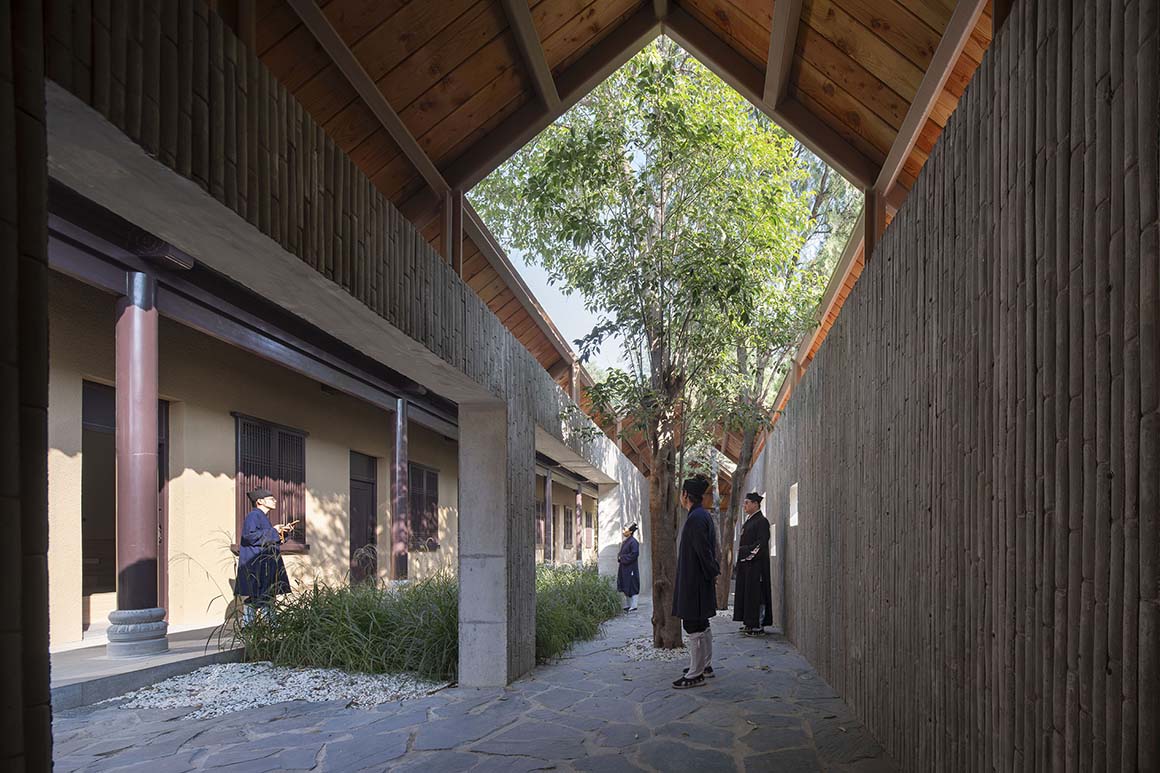
The western zone serves as a place of community and local worship, while the eastern zone functions as a sacred realm recalling the lost palace grounds. The visitor route progresses from west to east, forming a Taoist narrative axis that moves from everyday life toward ritual and transcendence. At the western core, a circular corridor embracing twelve indigenous trees unifies previously disconnected components—the Lv Gong Shrine, ancillary spaces such as west wing rooms, rear-facing rooms, and a former granary—into a single Taoist garden. This corridor acts both as a connective device and as a translator of temporal layers, while a central glass mural and octagonal stone tablet visualize Taoist cosmology.
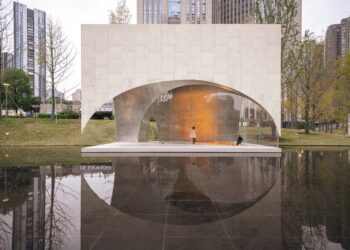
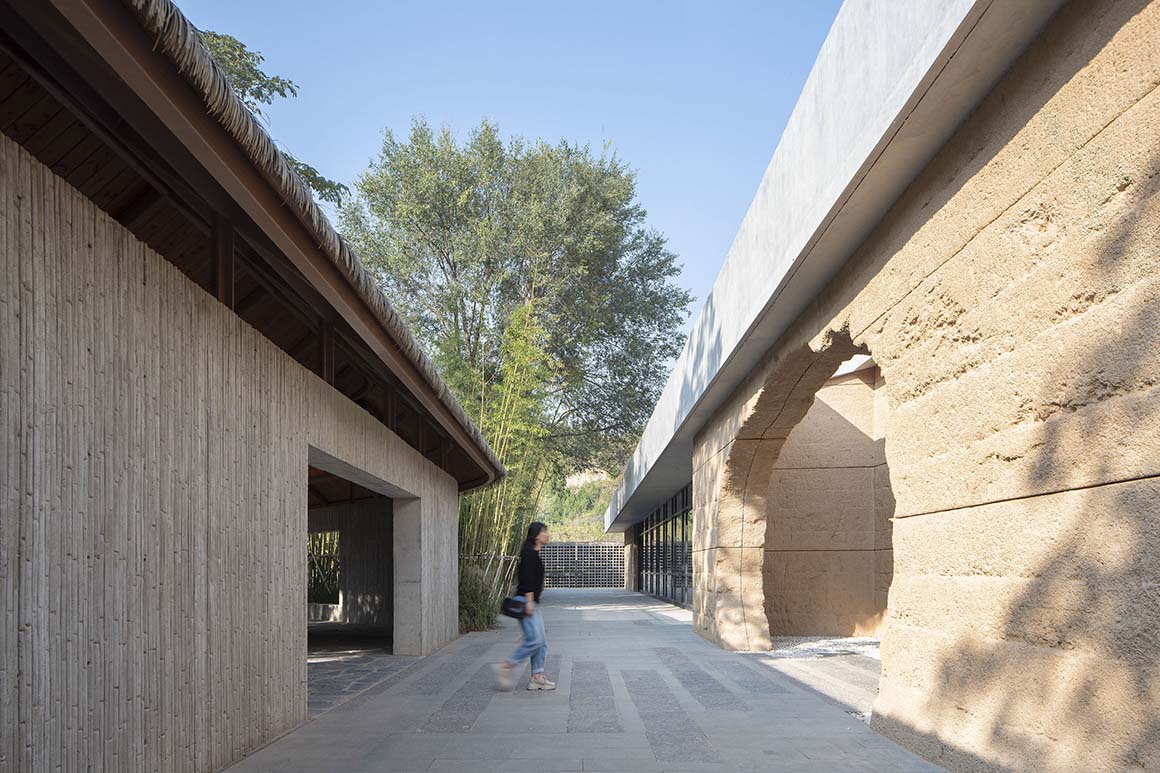
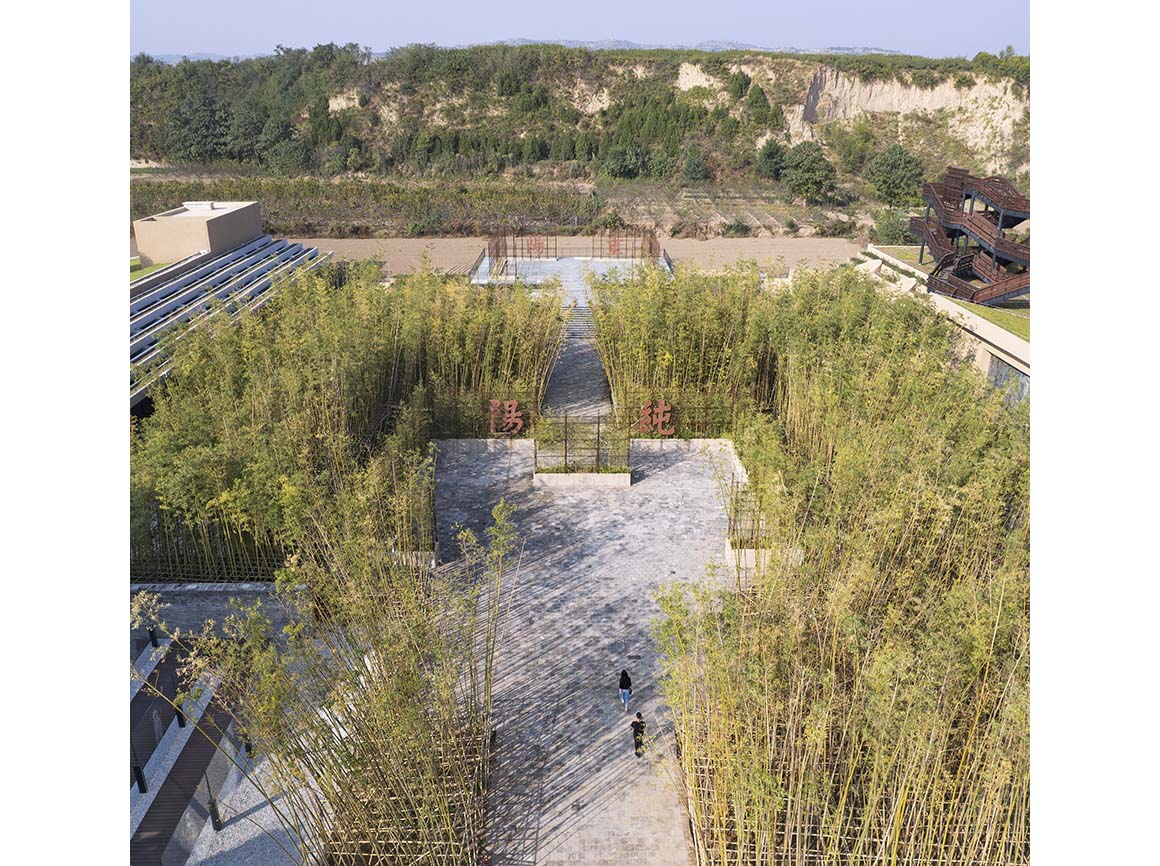
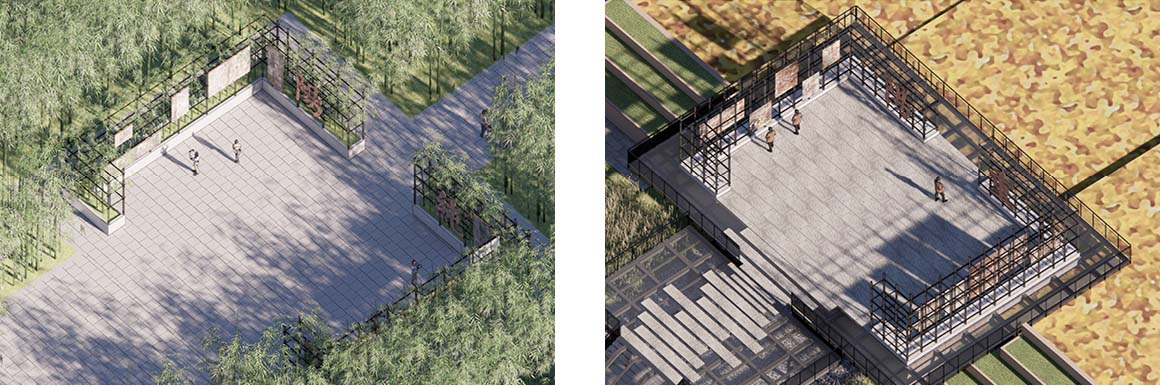
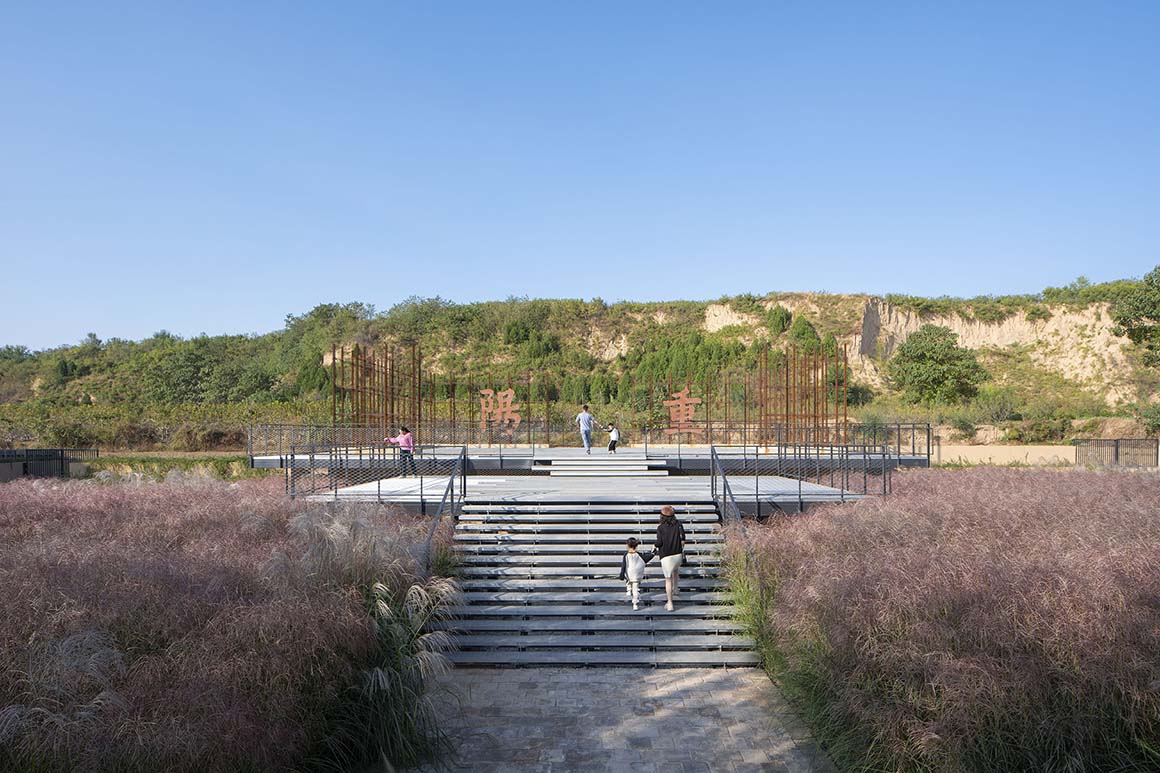
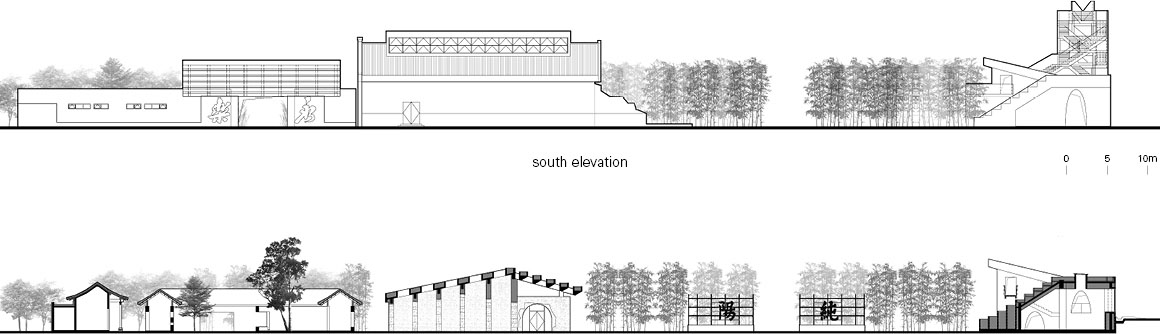
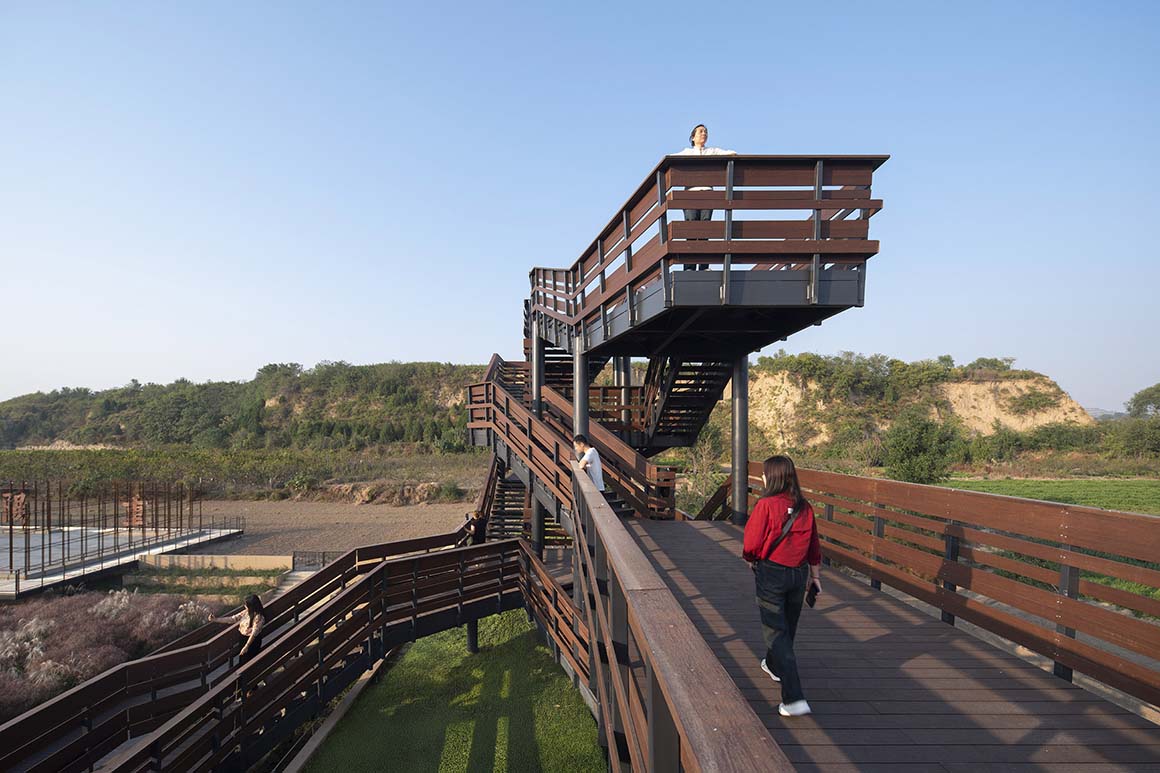
The eastern zone is conceived as a restrained “landscape of memory.” The traces of former halls, including Chunyang Hall and Chongyang Hall, are outlined with steel frames and planting beds, preserving their archaeological stratigraphy and accommodating potential future excavations. At the entrance—converted from the original granary—a glass wall etched with Taoist murals marks the threshold between the mundane and the sacred. A 100-meter mural gallery comprises three sections—Dancing with Immortals, Illuminated Mural, and Celestial Maze—using mirrors and light to draw visitors into a mythic world. From the rooftop observation deck, the relationship between the landscape and the former temple complex is restored, embodying the Taoist harmony of dragon and tiger.
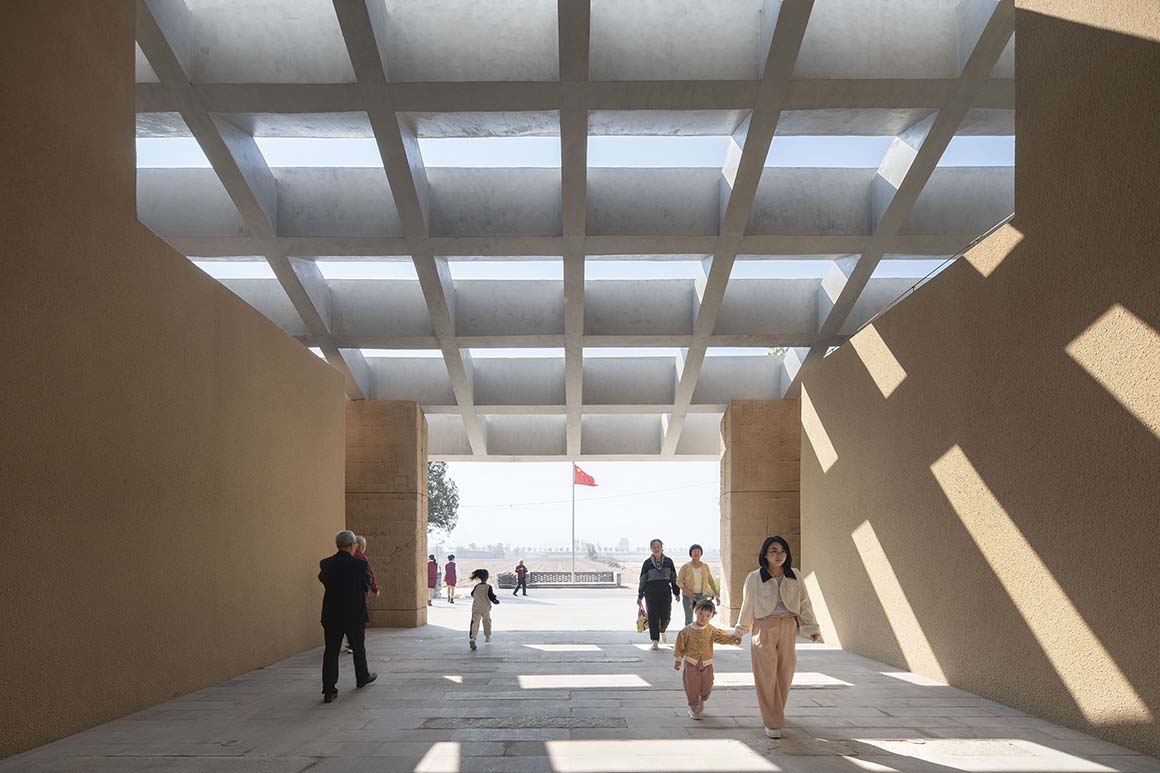
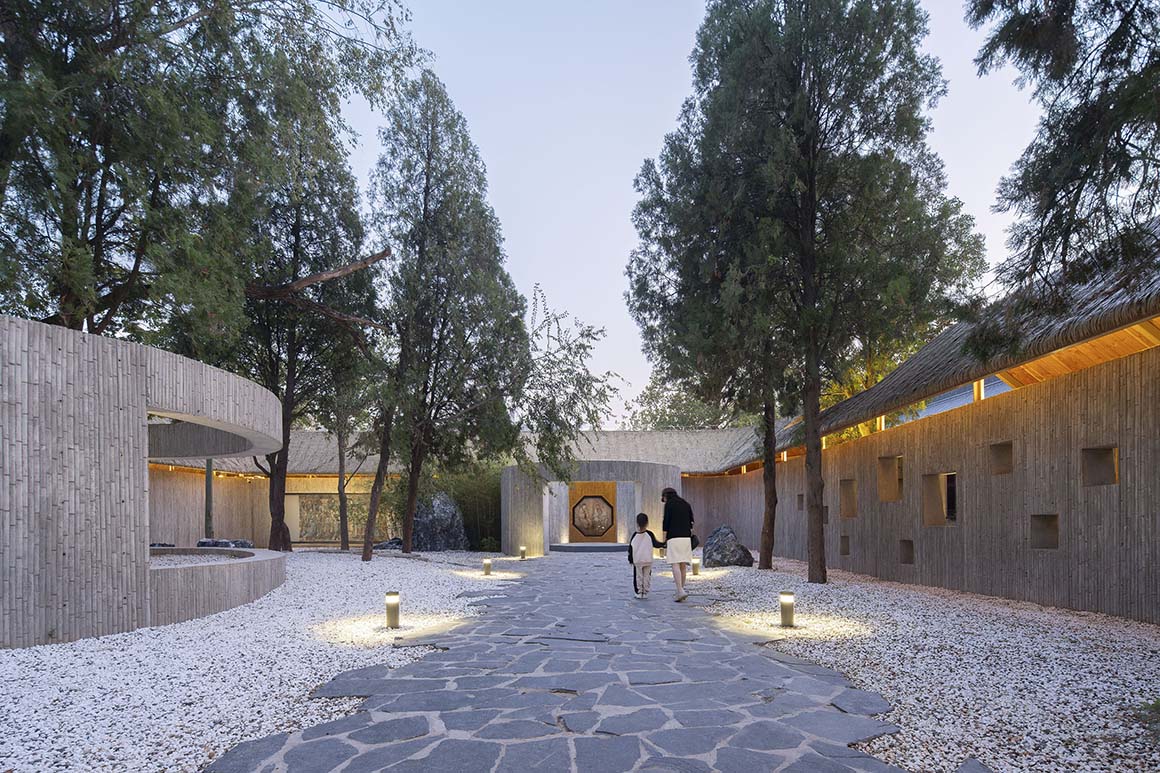
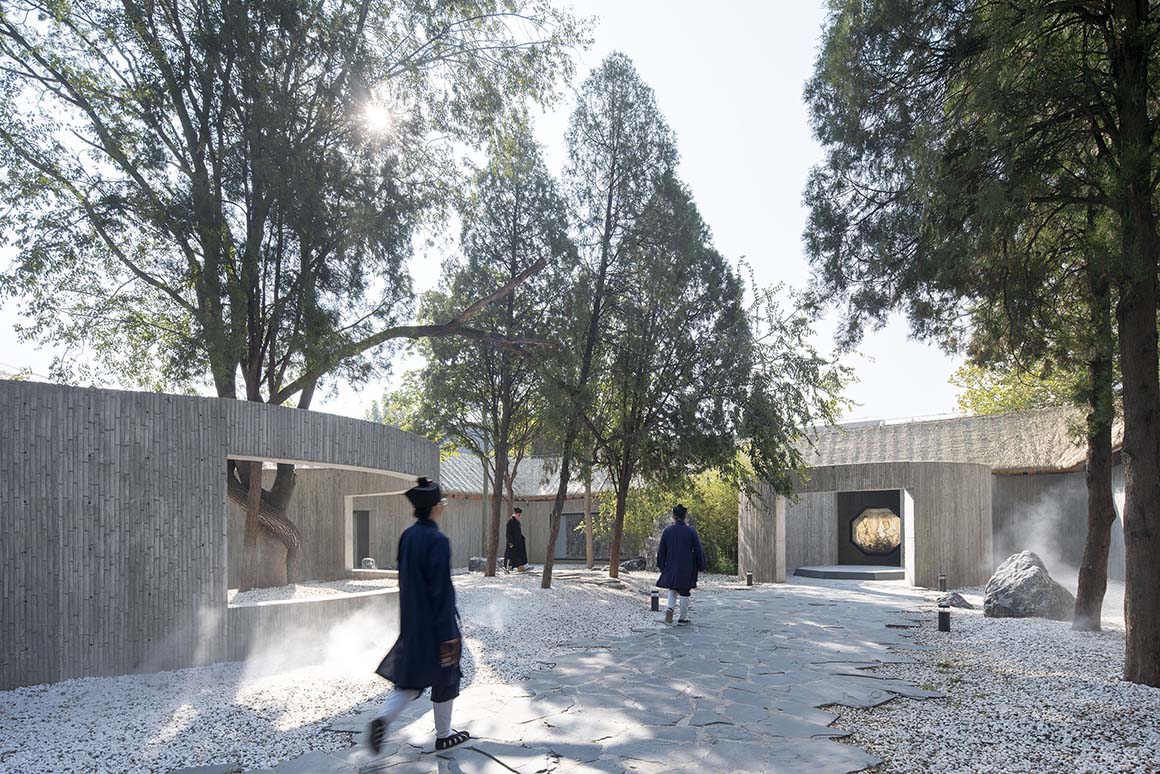

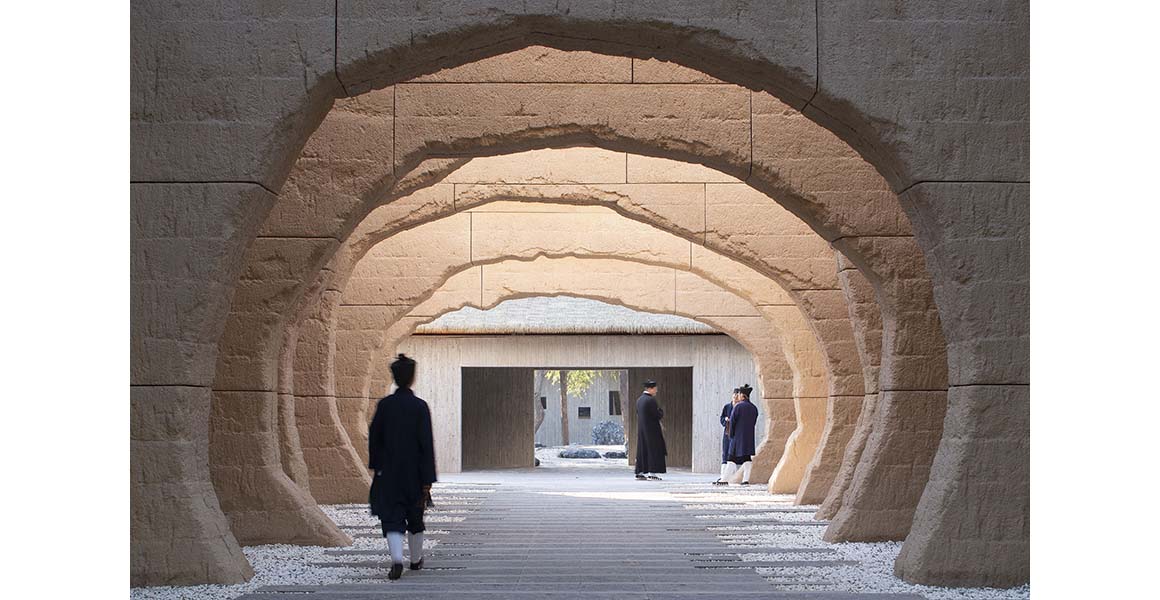
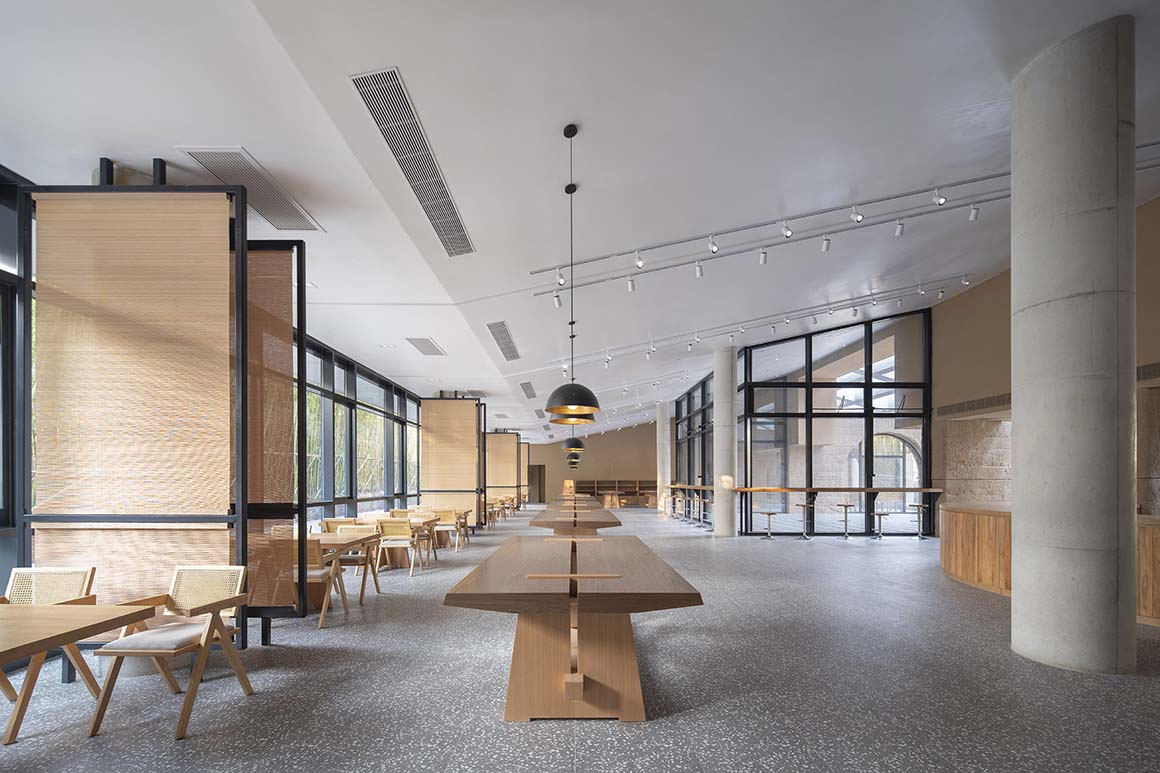
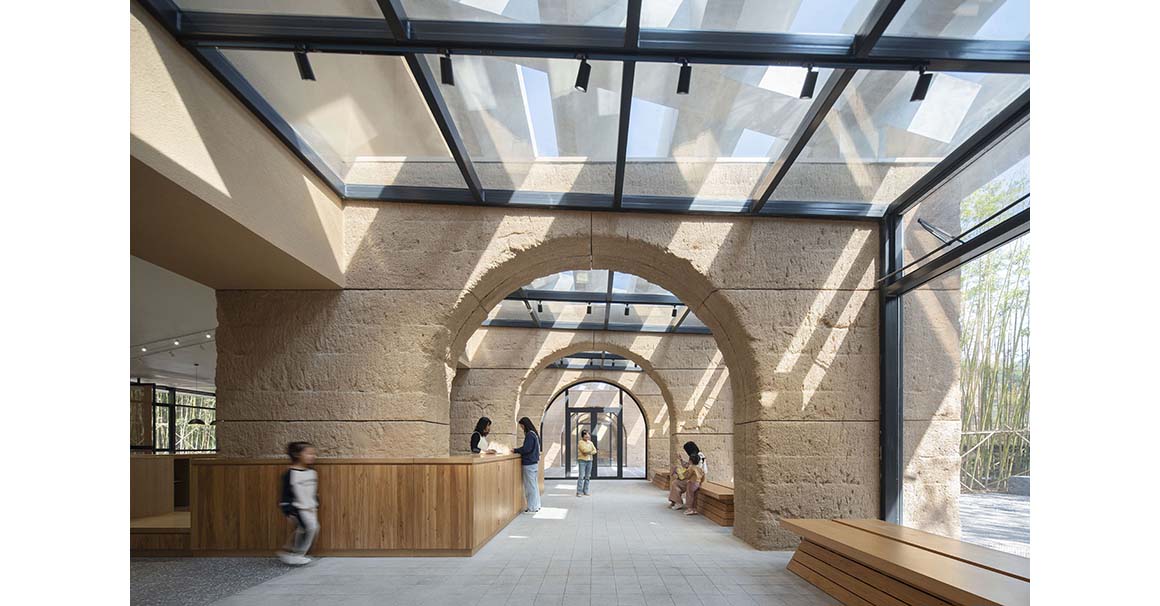
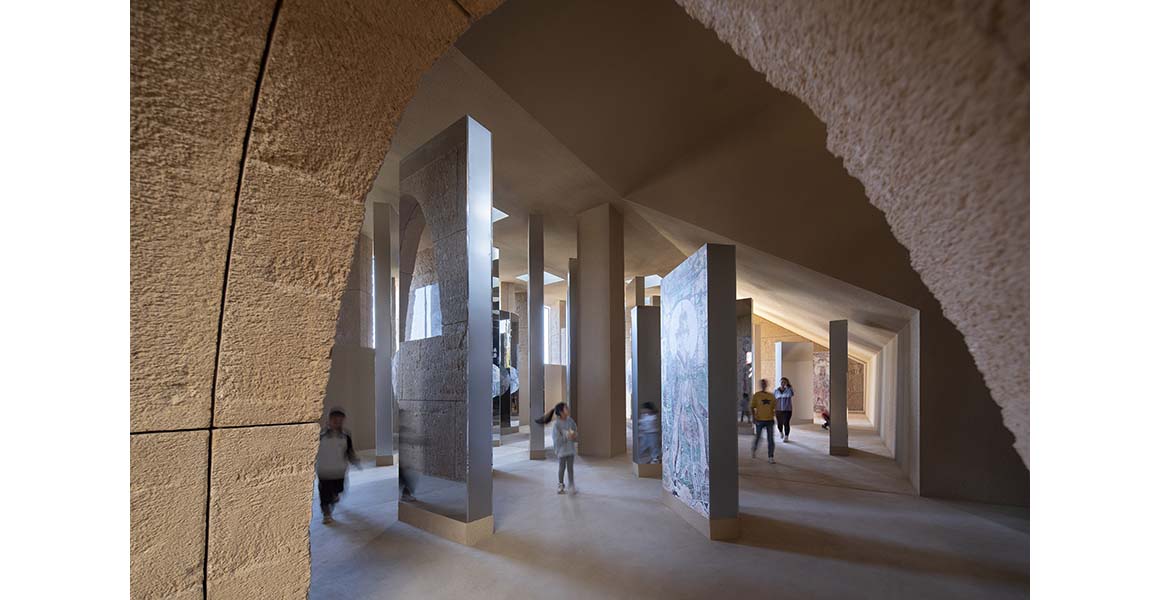

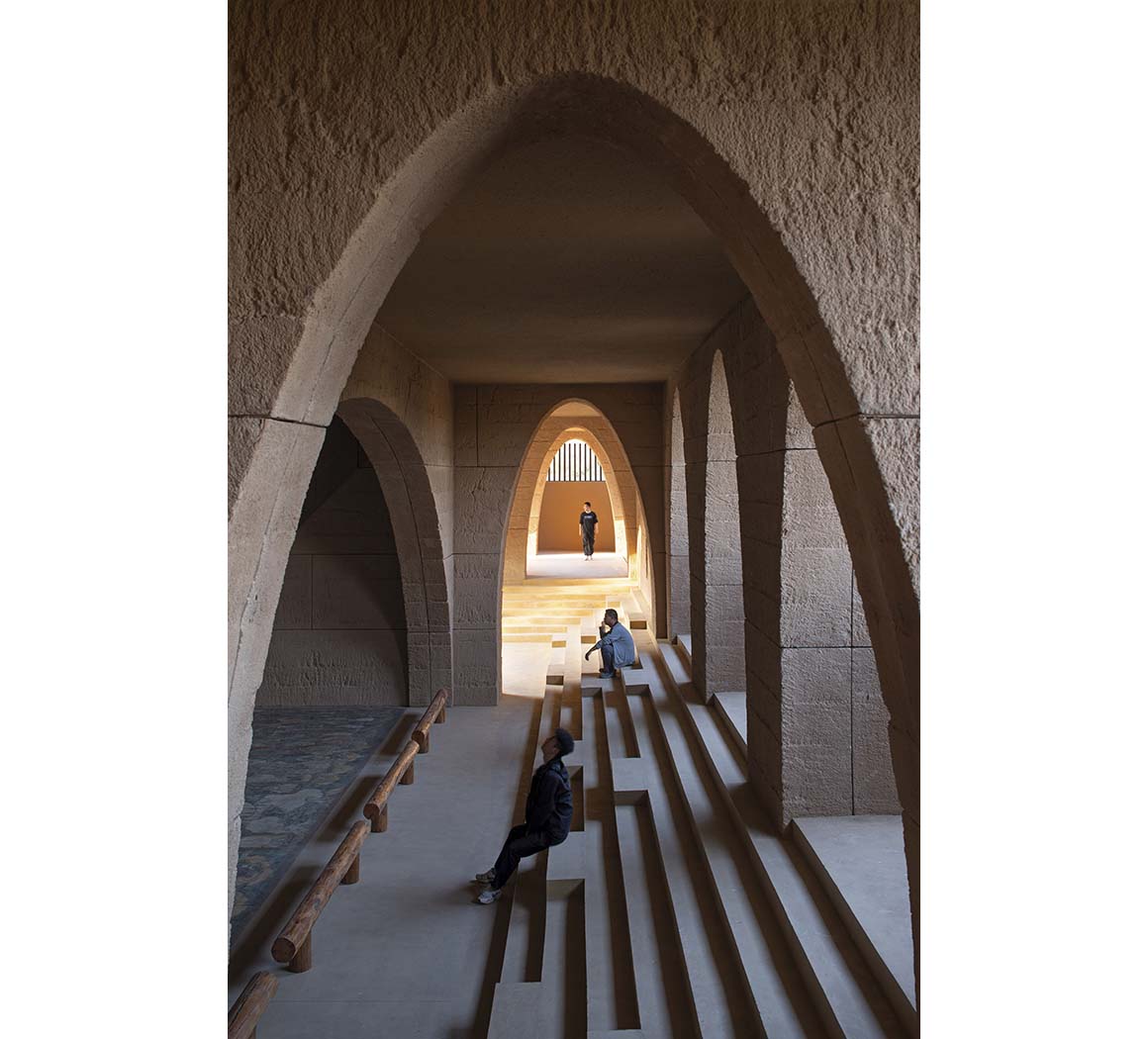
Through contemporary design, the long-dormant Yongle Palace site has been reborn as a modern cultural sanctuary. More than a reconstruction, it establishes a dialogue across time—offering an architectural narrative that interlaces layered histories and proposes a new paradigm for heritage preservation and revitalization.

Project: Revitalization of The Relic Site of Yongle Palace / Location: Ruicheng County, Shanxi Province, China / Architect: URBANUS Beijing / Principal Architect: Wang Hui / Technical Director: Yao Yongmei / Project team: Zhang Fujun, Zhao Ping, Lu Yong, Dou Yonghui, Zhang Shuyan, Chen Yu, Wang Jingfei, Zhou Yanbang, Li Xiaoye, Luo Weining, Sun Fanqi, Wang Jingyu, Wang Lei, He Jinghan, Chai Bingjiang, Hu Jiaming, Wen Yiyang, Zhang Ting, Yang Mingting / Construction drawing: Aochuang International Engineering Design (Shenzhen) Co., Ltd. / Steel structure consultation: H&J International / General contractor: Shanxi Suiyi Ecological Construction Co., Ltd. / Client: People’s Government of Yongle Town, Ruicheng County / Use: historical / Site area: 11,941m² / Gross floor area: 3,808m² / Design: 2022-2024 / Construction: 2023-2024 / Completion: 2024 / Photograph: ©TAL (courtesy of the architect)