







Cantilevered Arch Pavilion Built with Local Materials Forming a Symbiotic Structural Relationship
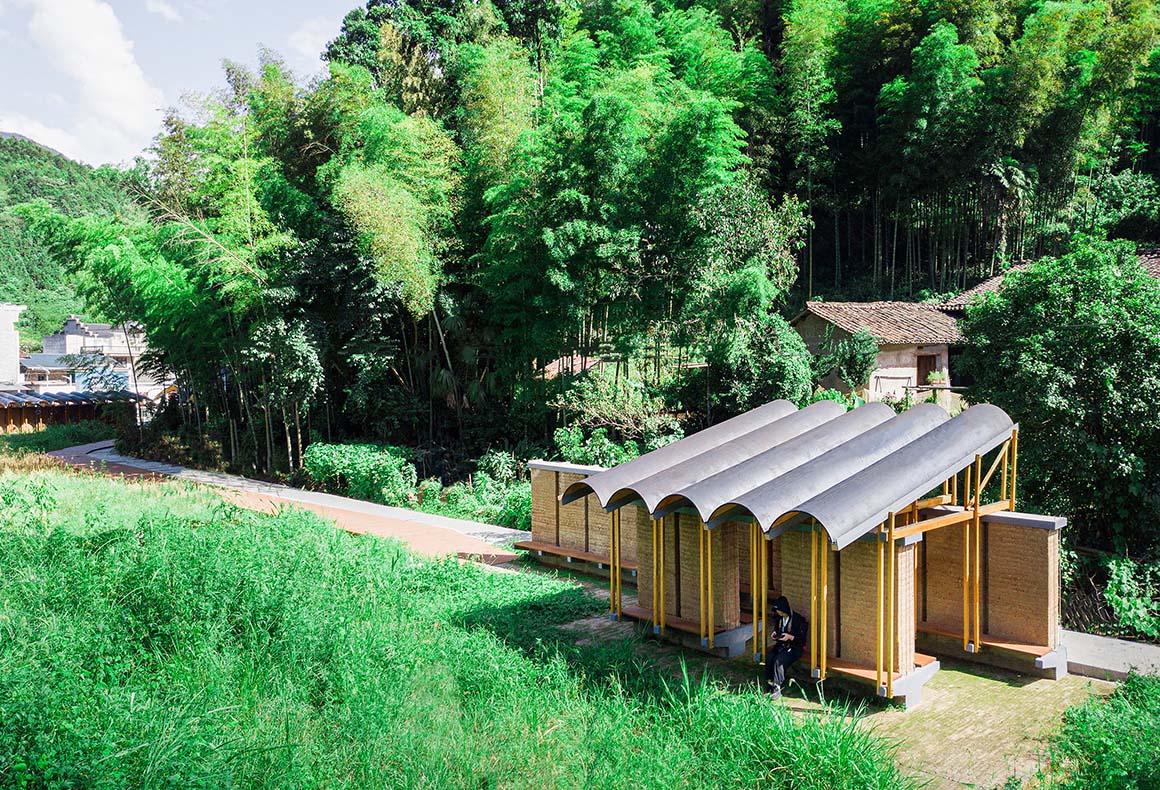

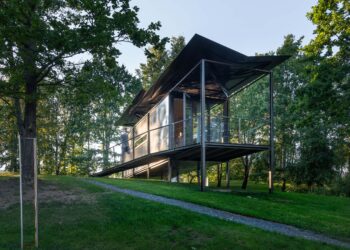
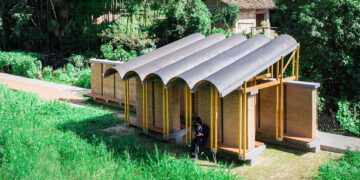
The small pavilion, which creates a resting space beneath a cantilevered roof, began as a wall prototype exploring the balance between structure and form. Set in a village with old rammed earth houses and local craftsmen, it draws on the area‘s abundant bamboo resources alongside common materials such as concrete and steel. Their differing material properties form a symbiotic structural relationship. Combining materials that are readily available locally, the project can be seen as a small experiment exploring the possibilities of structure and space.
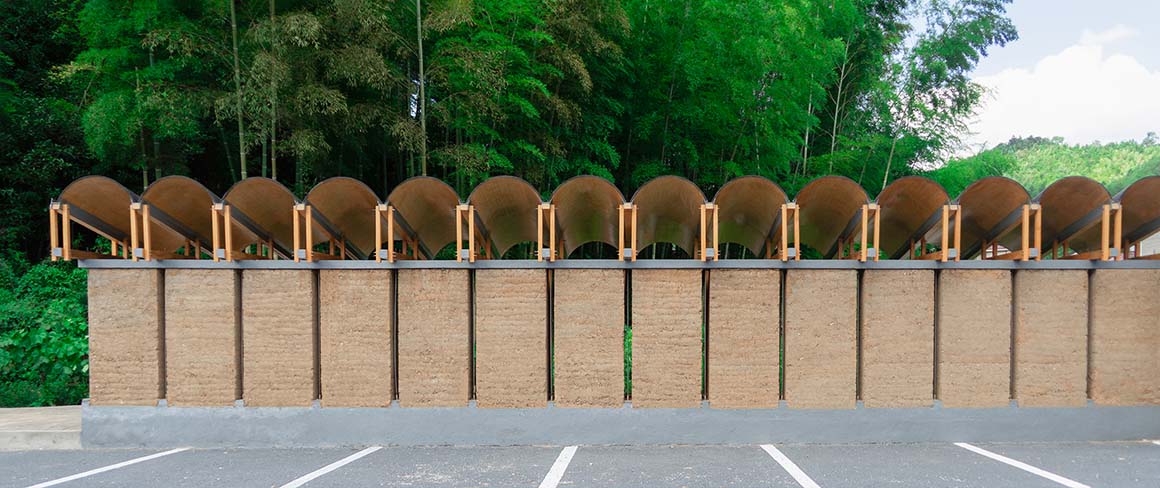

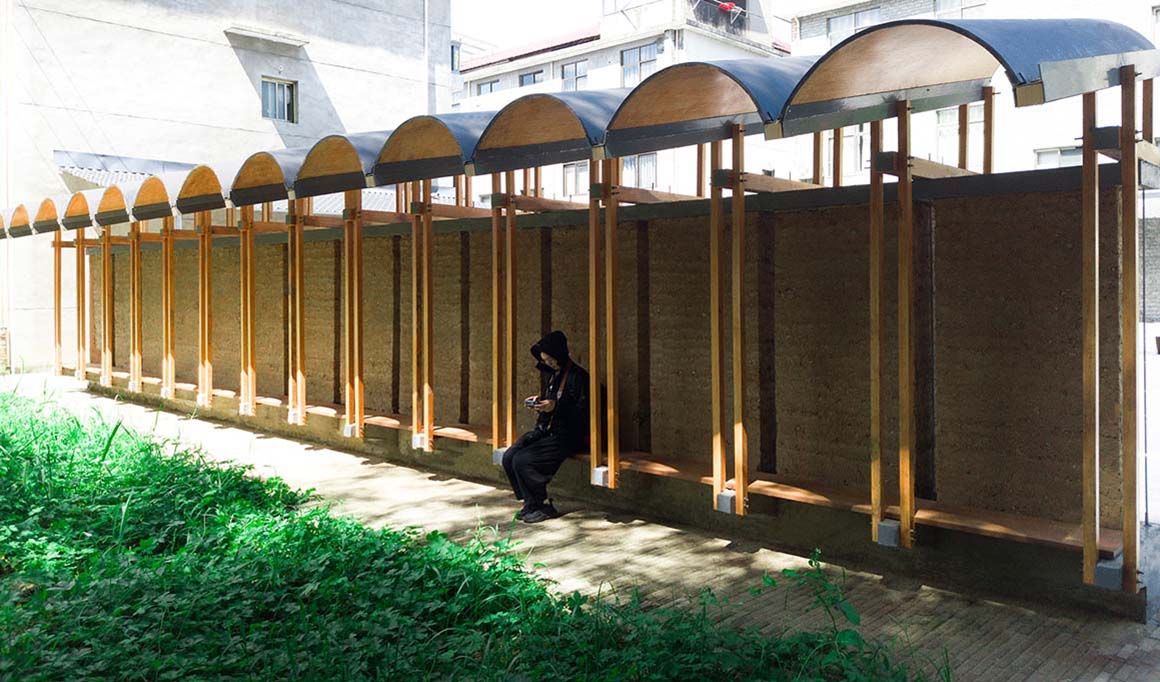
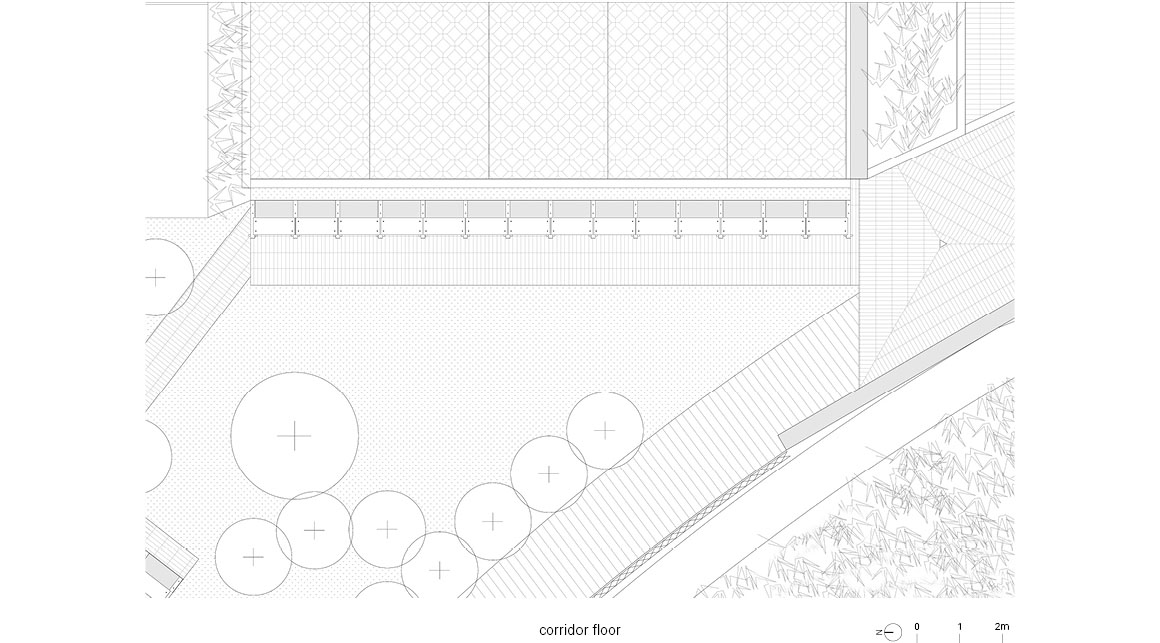
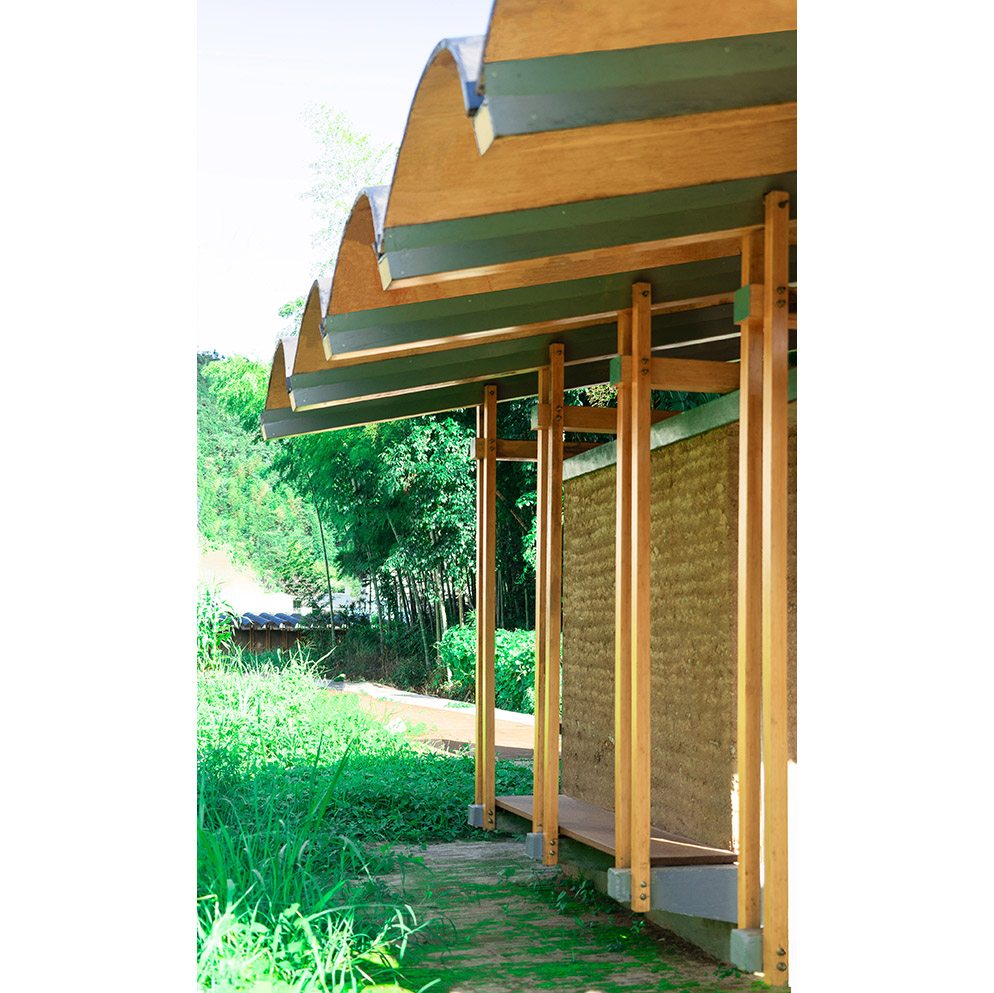
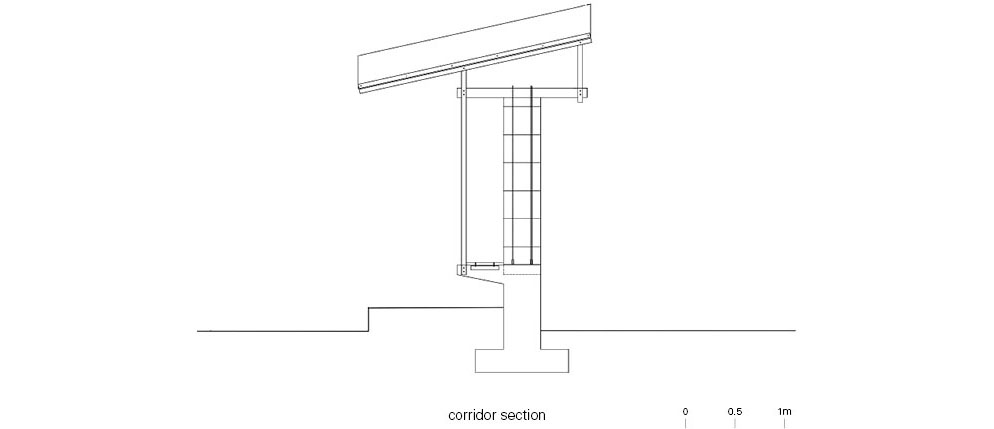
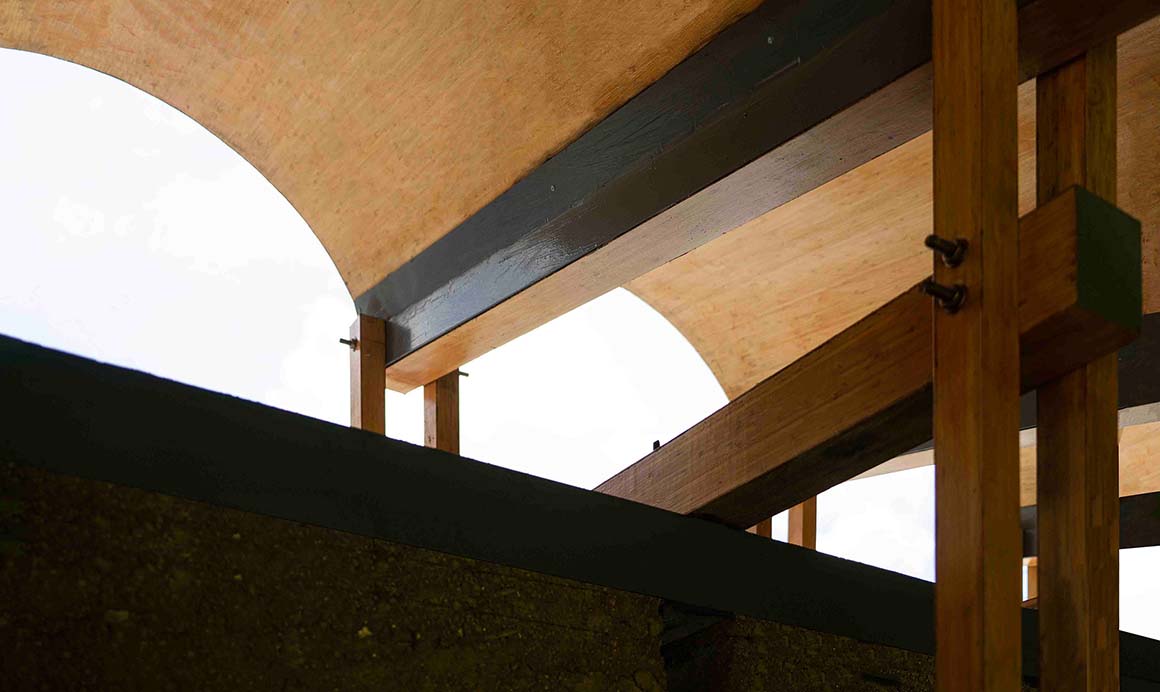
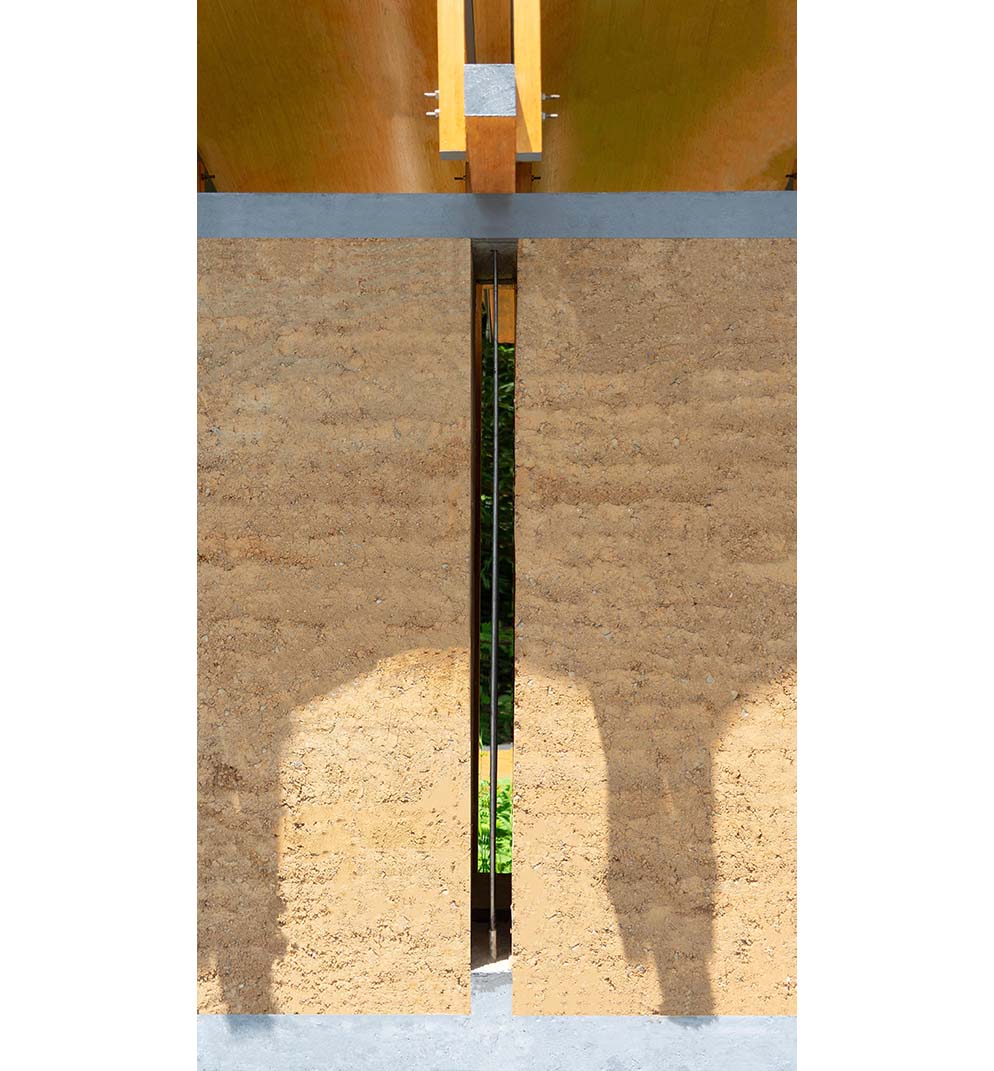
The structure places rammed earth walls on concrete piers, with bamboo beams and columns set above them. Bamboo, concrete beams, and steel columns support the earth walls, while steel beams and a wooden arched roof sit above. The cantilevered arched roof extends outward to establish structural balance, while the heaviness of concrete, the thickness of rammed earth, the lightness of bamboo, the fineness of steel, and the mass of wood create visual tension through contrast. Different materials transmit forces step by step to form a single structural system. The space is composed of repeating units. Arranged in a row, the units form a passageway that creates a boundary allowing movement between inside and outside. In a second phase, a vertical tower will be added to expand the spatial composition vertically.
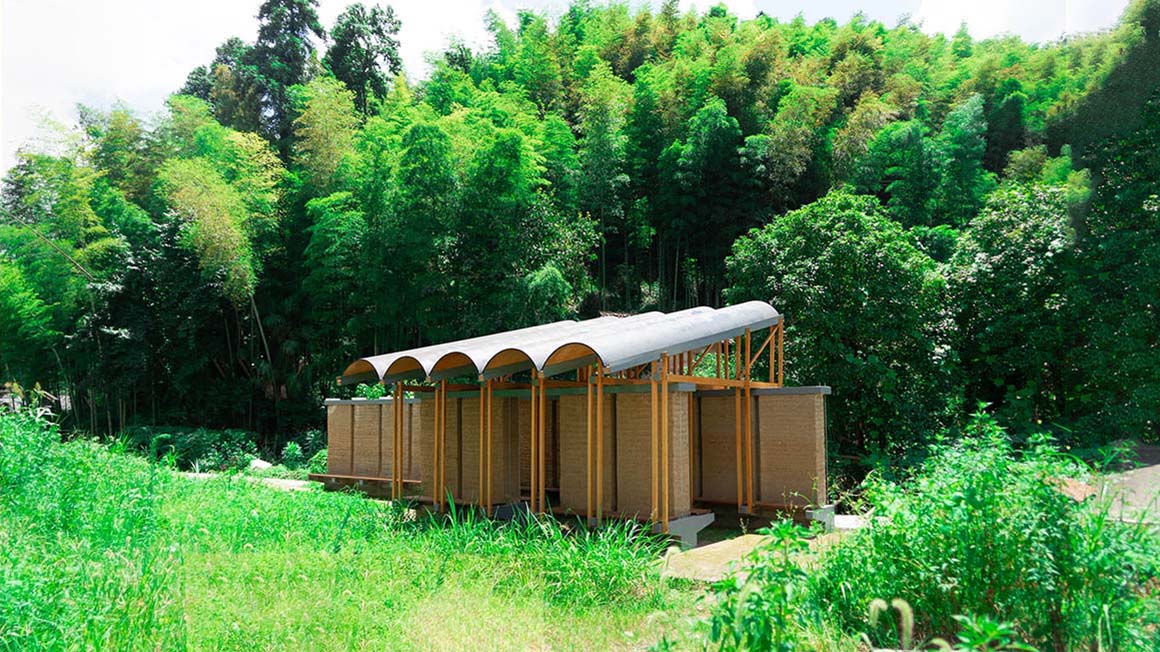

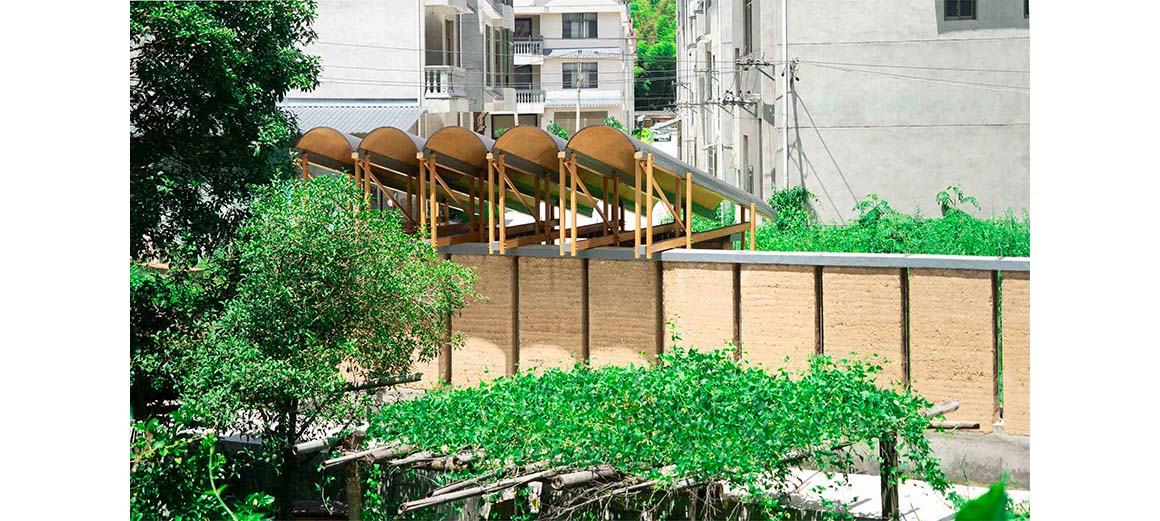
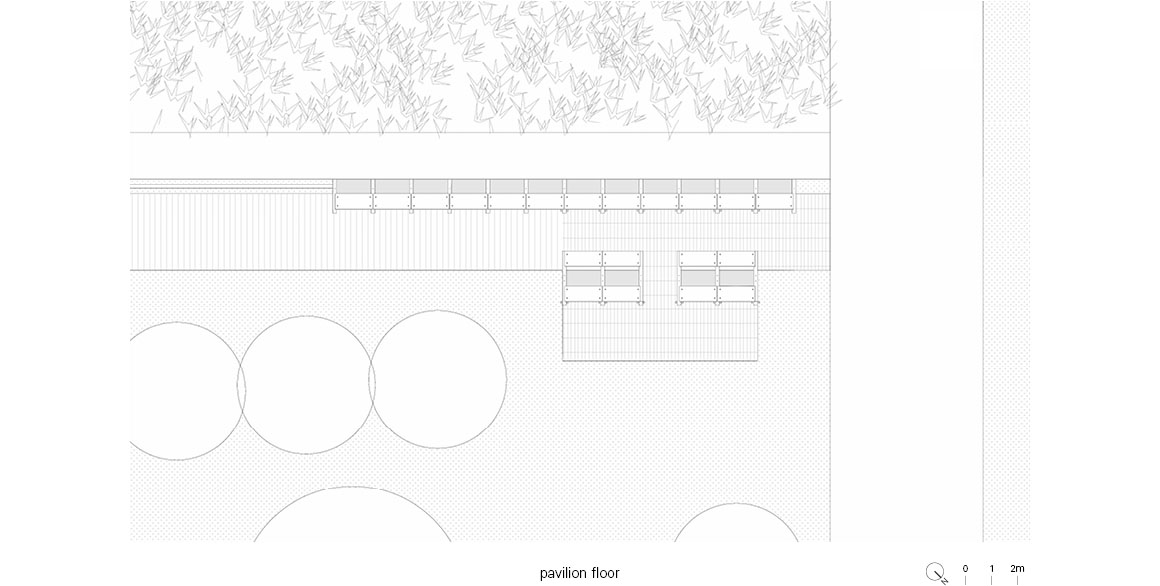
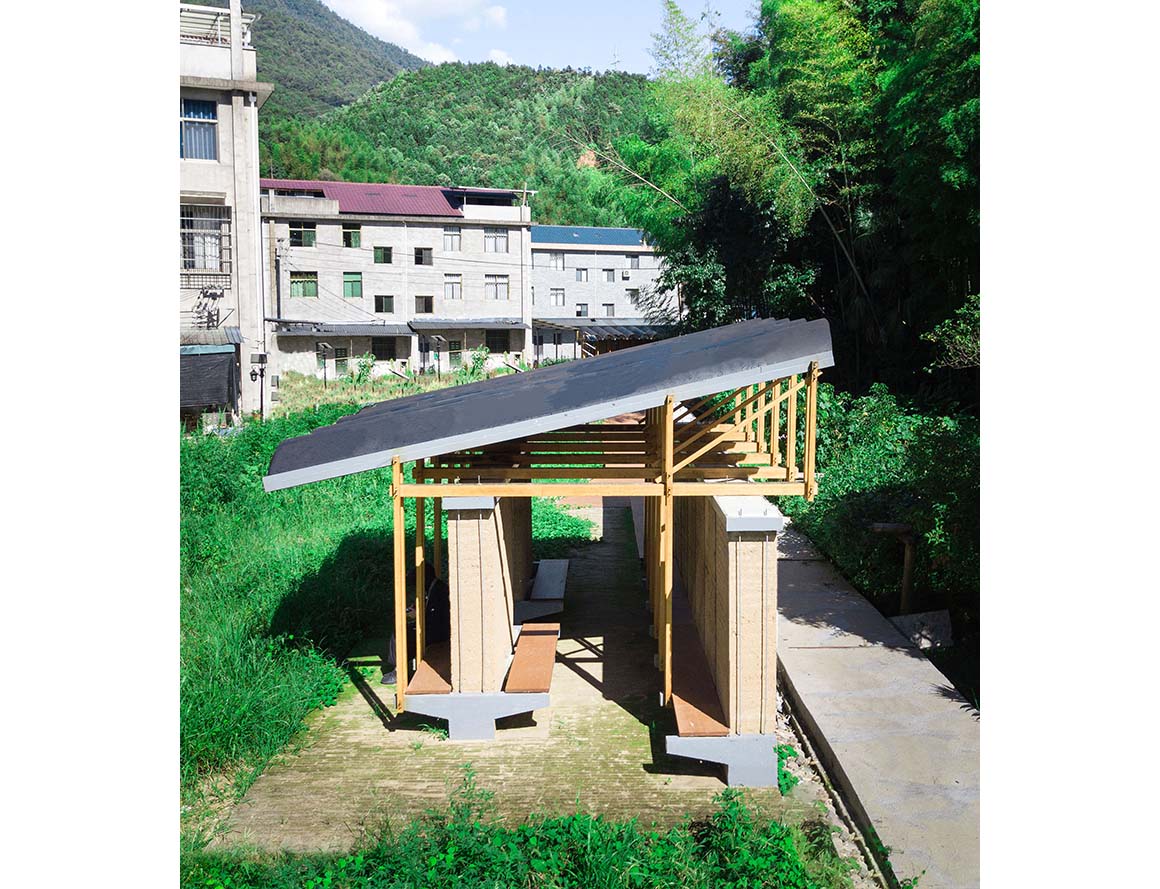
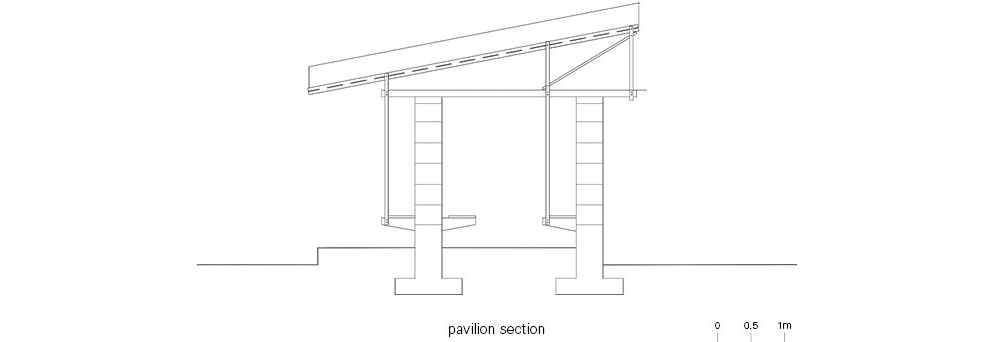
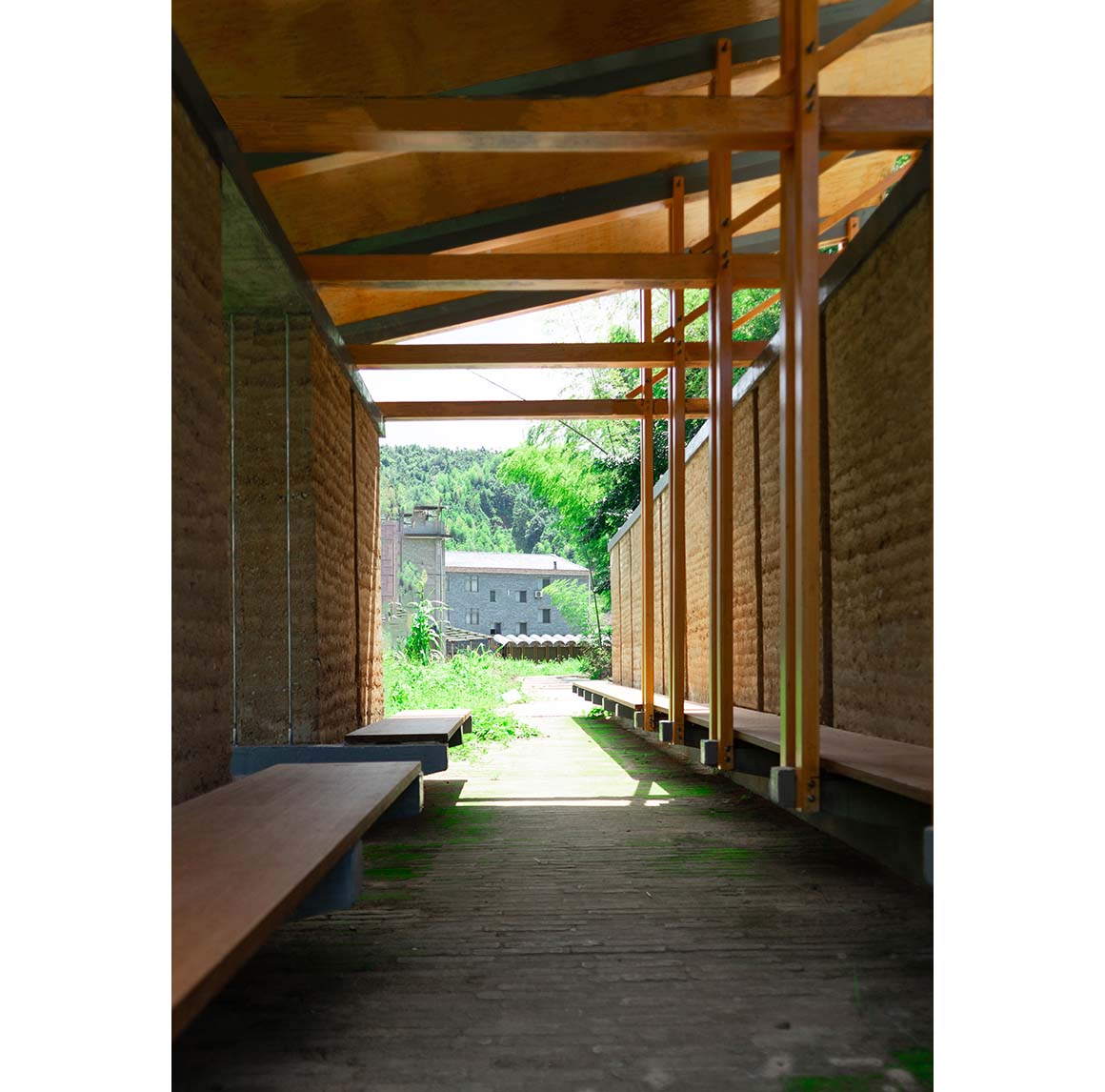
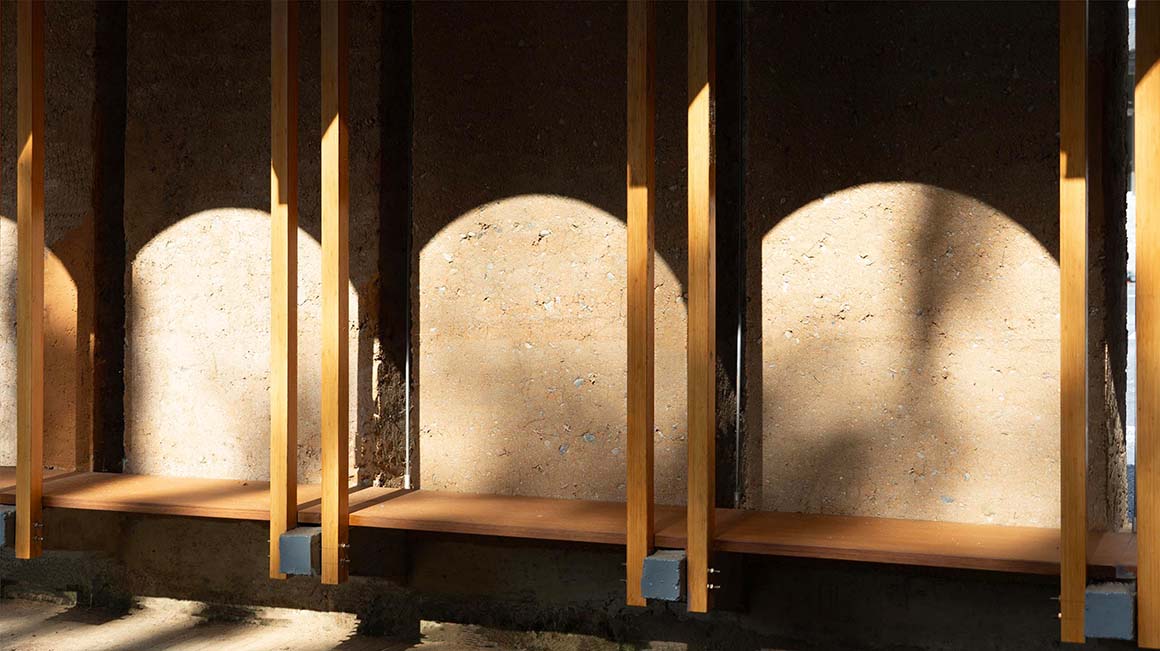
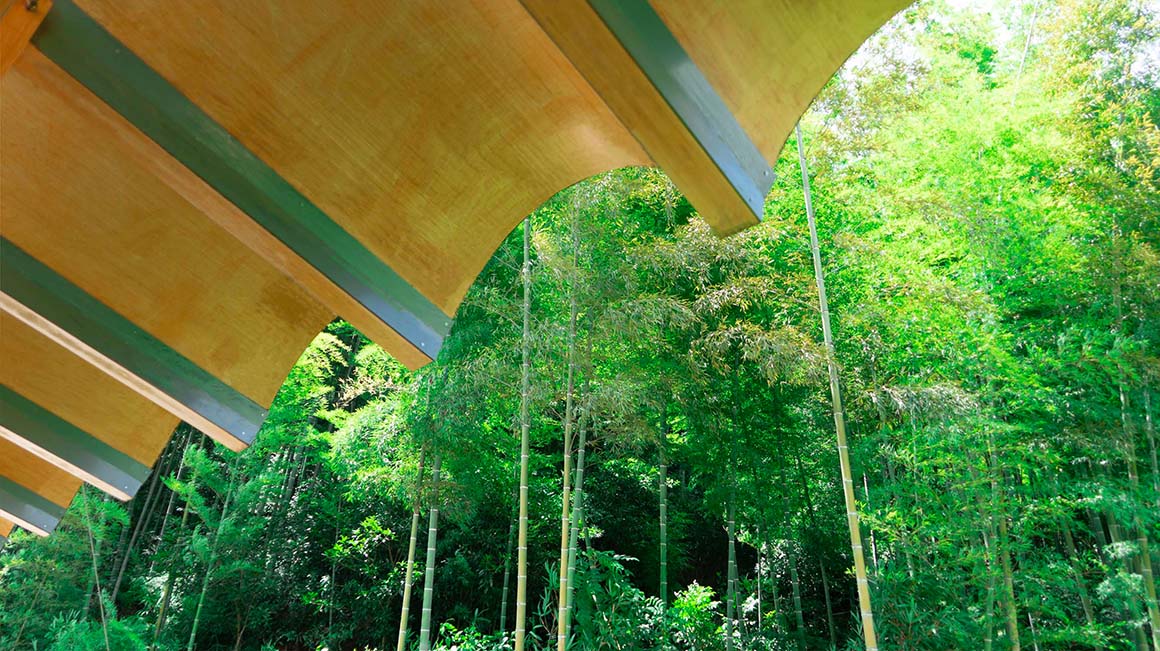
Beneath the asphalt-finished wooden arched roof lies a shaded resting place. Air flows through the gap between roof and wall, while the arch frames the view of the bamboo forest beyond. Light and shadow shift across the brick floor and rammed earth walls, adding vitality to the space. Around the pavilion’s soft boundary, lines of sight and movement intersect to create a subtle rhythm. Construction methods also reflect local conditions. Bamboo beams and columns, wooden arches, and steel components were prefabricated and assembled onsite together with the concrete piers, earth walls, and concrete beams. Sliding connections and spring devices were introduced to accommodate construction tolerances between different materials, and waterproofing and protective treatments were applied to the concrete, earth, bamboo, and steel.
Shade beneath the roof, a gentle breeze, and the interplay of light and landscape come together to create a place for a brief pause. The open pavilion invites the movement of people, becoming a small part of the pomegranate garden.

Project: Pomegranate Garden Micro Building / Location: Sanxia Village, Nanping, Fujian, China / Architects: Tumu+Meaningless Arch / Lead architect: Meaningless Arch_Jiaojiao Miao; TuMu_Hui Luo / Project team: Jiaojiao Miao, Hui Luo, Jieying Chen, Bingbing Wen / Structural consultant: AND Office_Zhun Zhang / Villagers: contractor_Shihao Dai; resident support_Fenzhen Chen, Zhengsheng Ye / Use: pavilion, gallery / Project area: planning_2,693m²; gallery_35m²; pavilion_39m² / Material: concrete, rammed earth, industrial bamboo, wood, steel / Design: 2024.7.~2024.9. / Construction: 2024.11.~2025.7. / Completion: 2025 / Photograph: Courtesy of the architect