



A Landscape of Rest Shaped by the Terrain
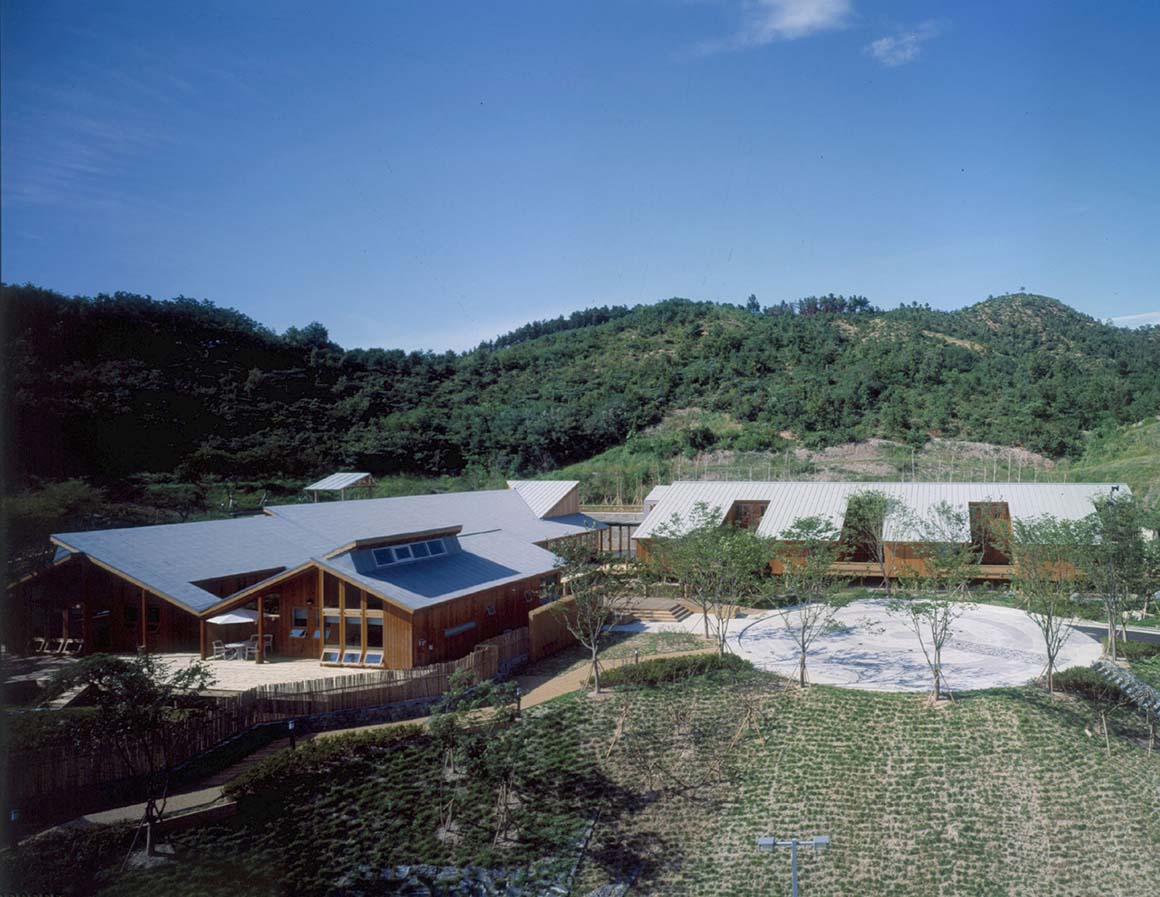
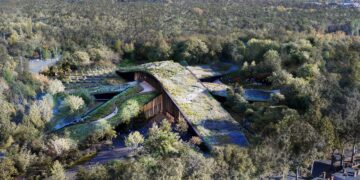
On the outskirts of Asan, where gentle foothills meet the long horizontals of rice fields, the Kyowon Group Dogo Training Center occupies the landscape. Behind it, at the far end of a narrow valley, a low timber building lies close to the ground: a guesthouse conceived as an auxiliary facility for the training complex. Used by employees and their families, it introduces a register of rest into an environment otherwise defined by education—a small retreat where the complex can meet the surrounding terrain more quietly.
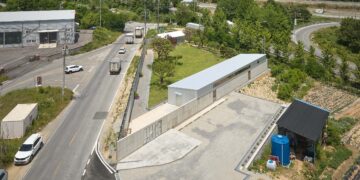
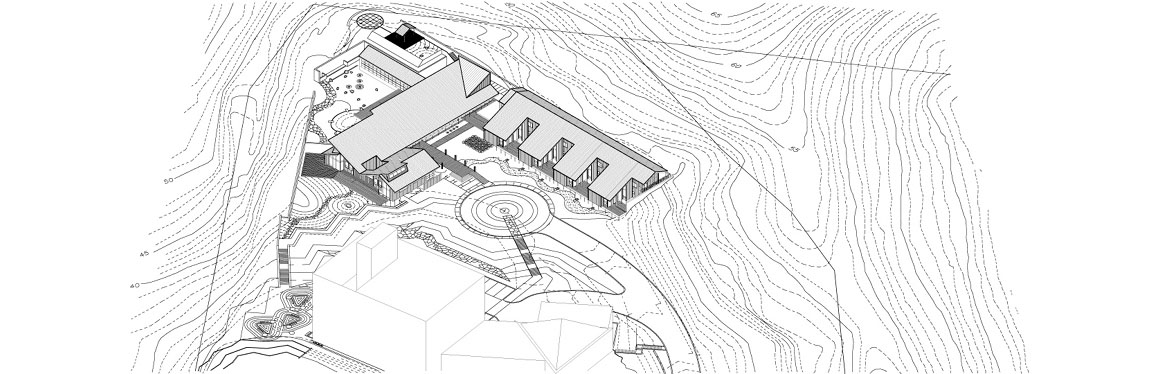
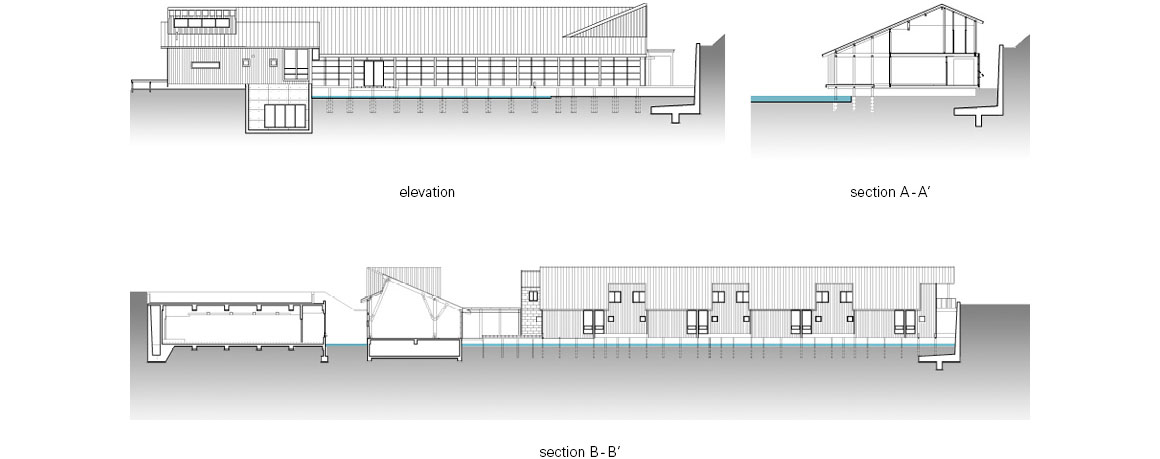
The site had originally been a slender valley left unused during the training center’s development. By cutting and filling the ground in an L-shaped operation that follows the valley’s flow, the project establishes a new, self-contained level approximately seven metres below the main training facilities. The resulting change in elevation becomes a topographic boundary in itself, separating the two domains without fences or walls and making room—literally and programmatically—for a different tempo of stay.
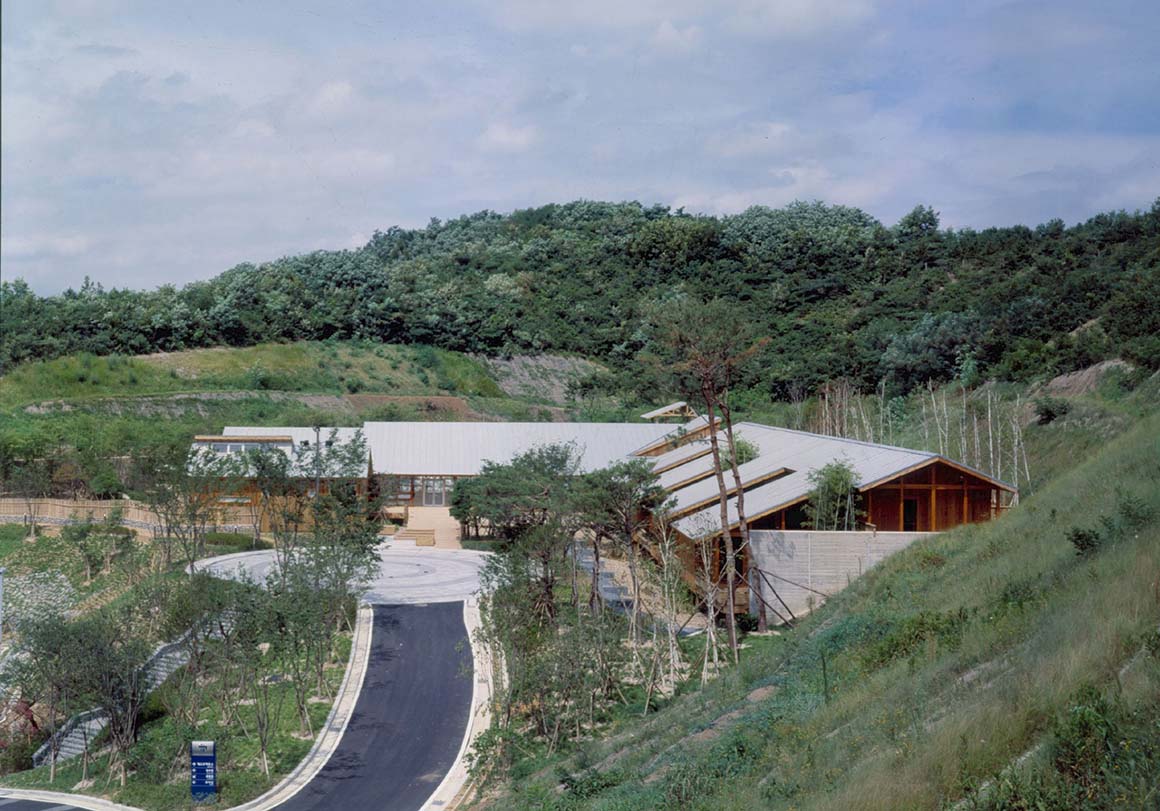
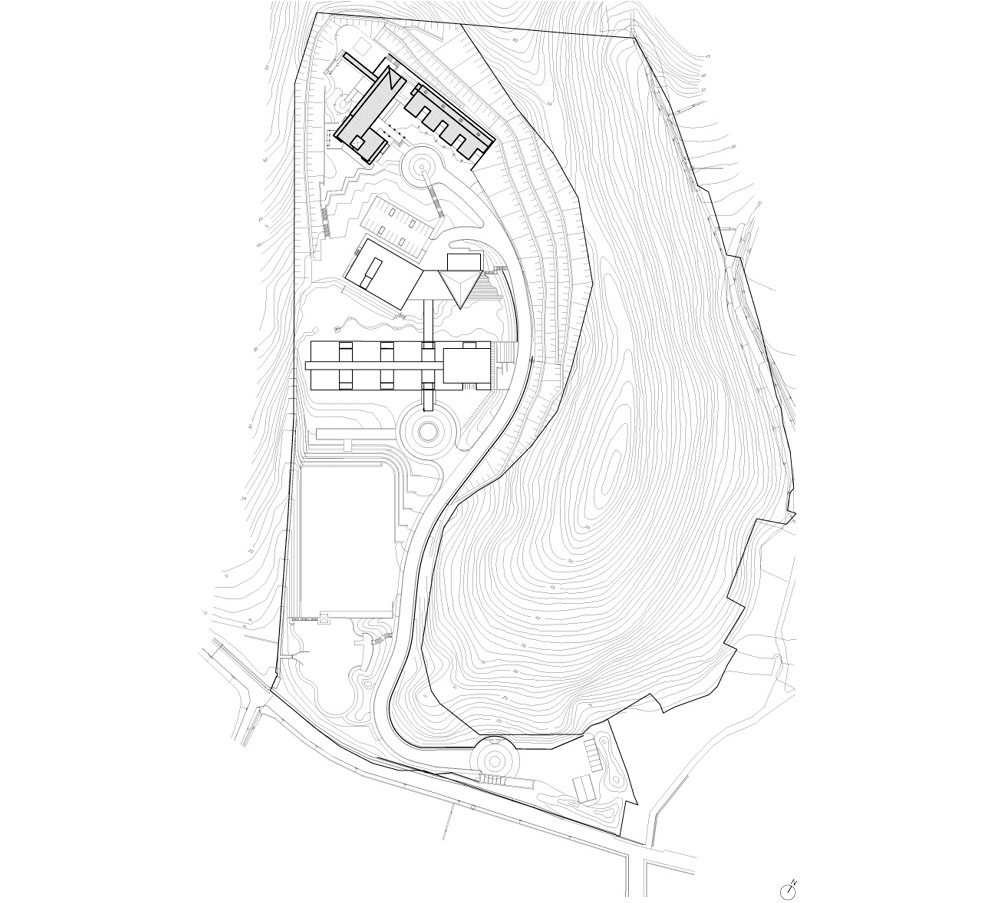
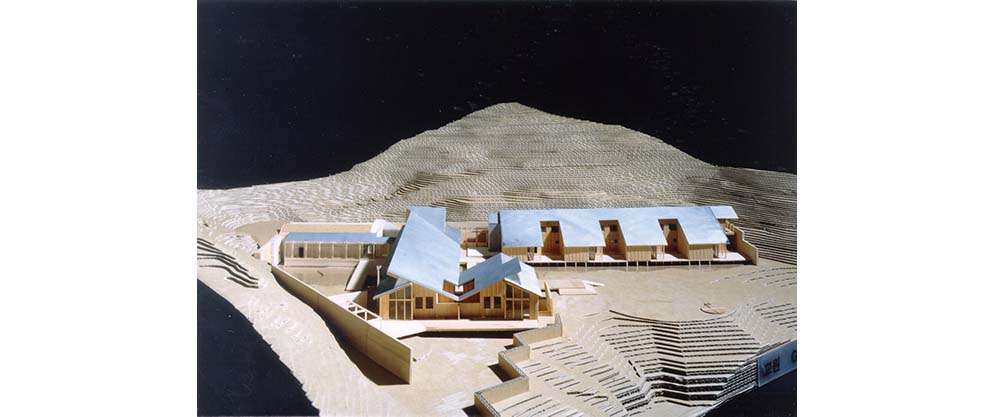
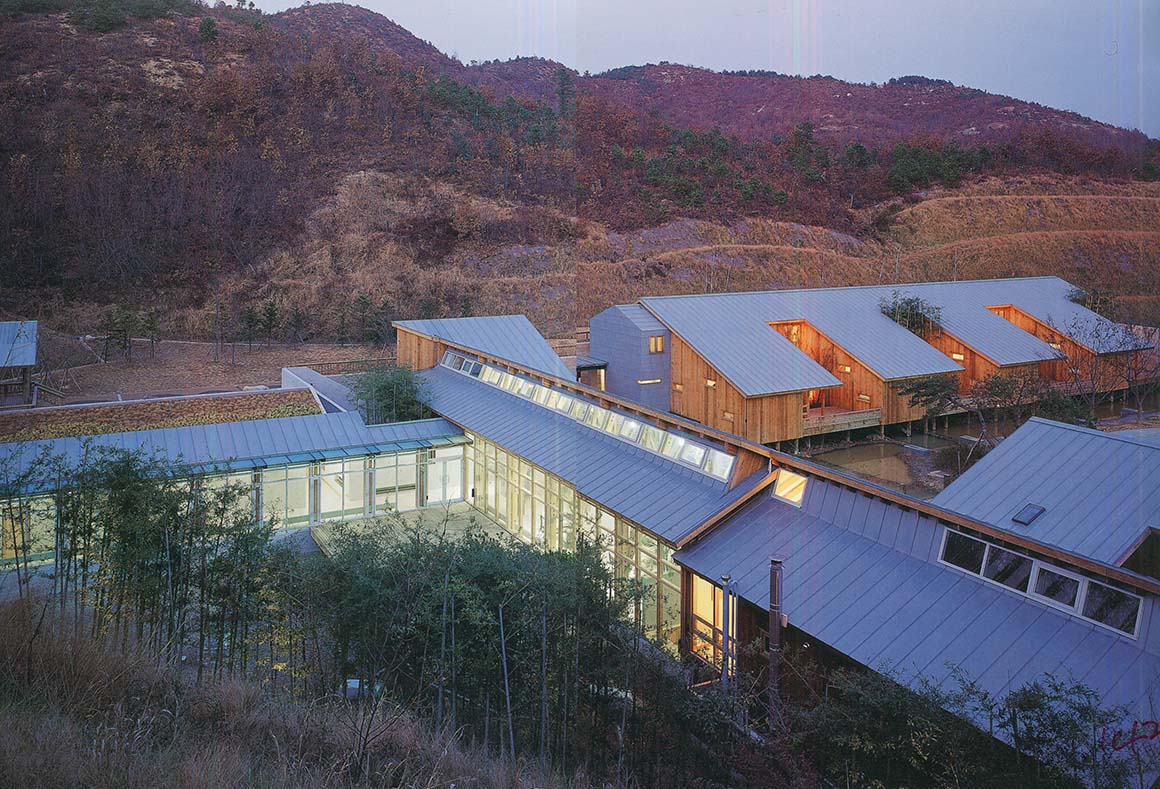
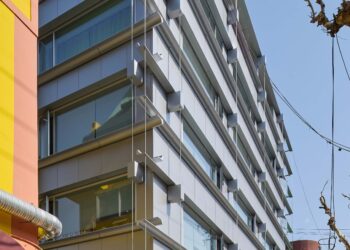
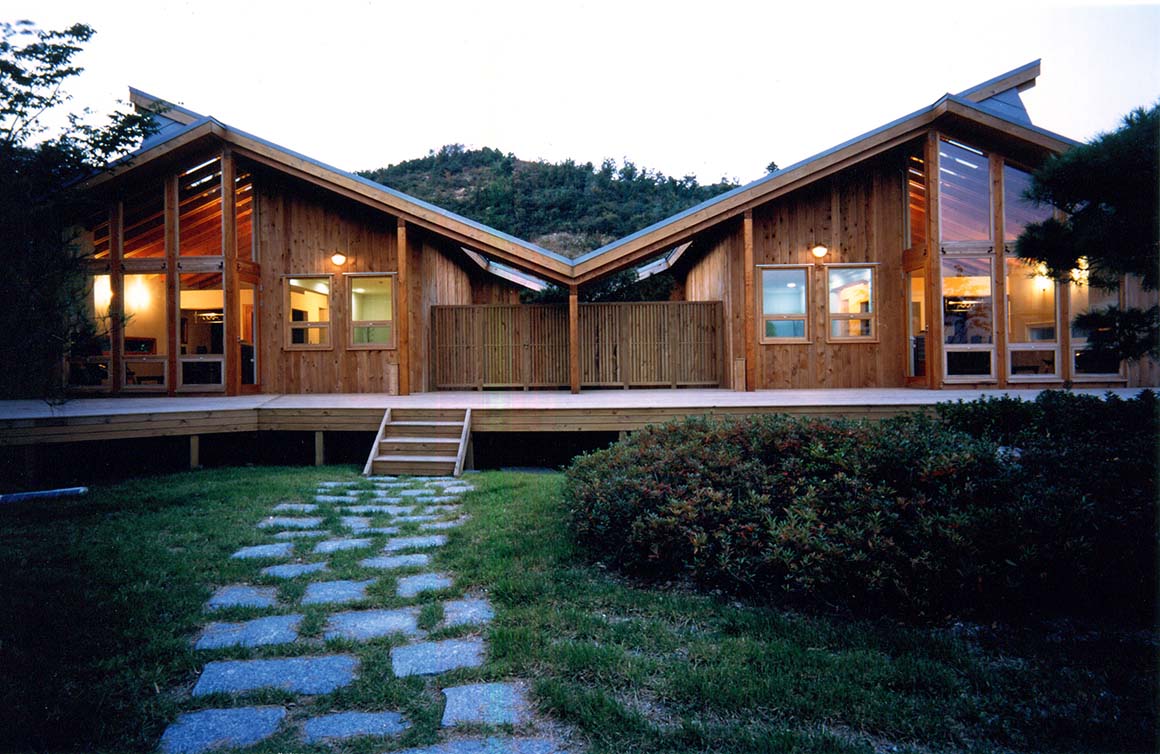
Because the training center functions as an institutional facility and the guesthouse as a place of retreat, their attitudes toward material and siting diverge. The training center declares the complex’s edge with a brick wall that crosses the approach road. The guesthouse, by contrast, lays its long axis along the contours, settling into the valley rather than confronting it. This elongated line draws visitors gradually inward while pulling the surrounding landscape closer to the building.
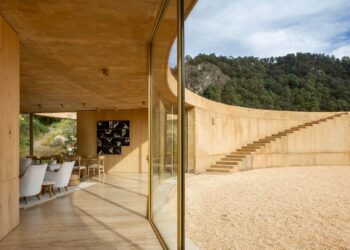
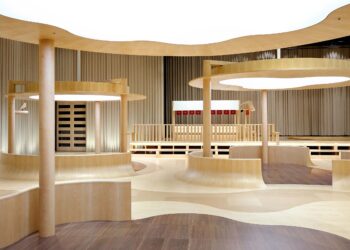
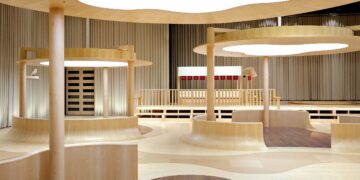
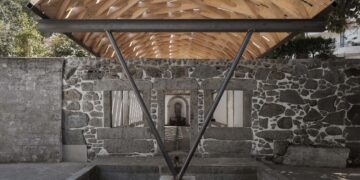
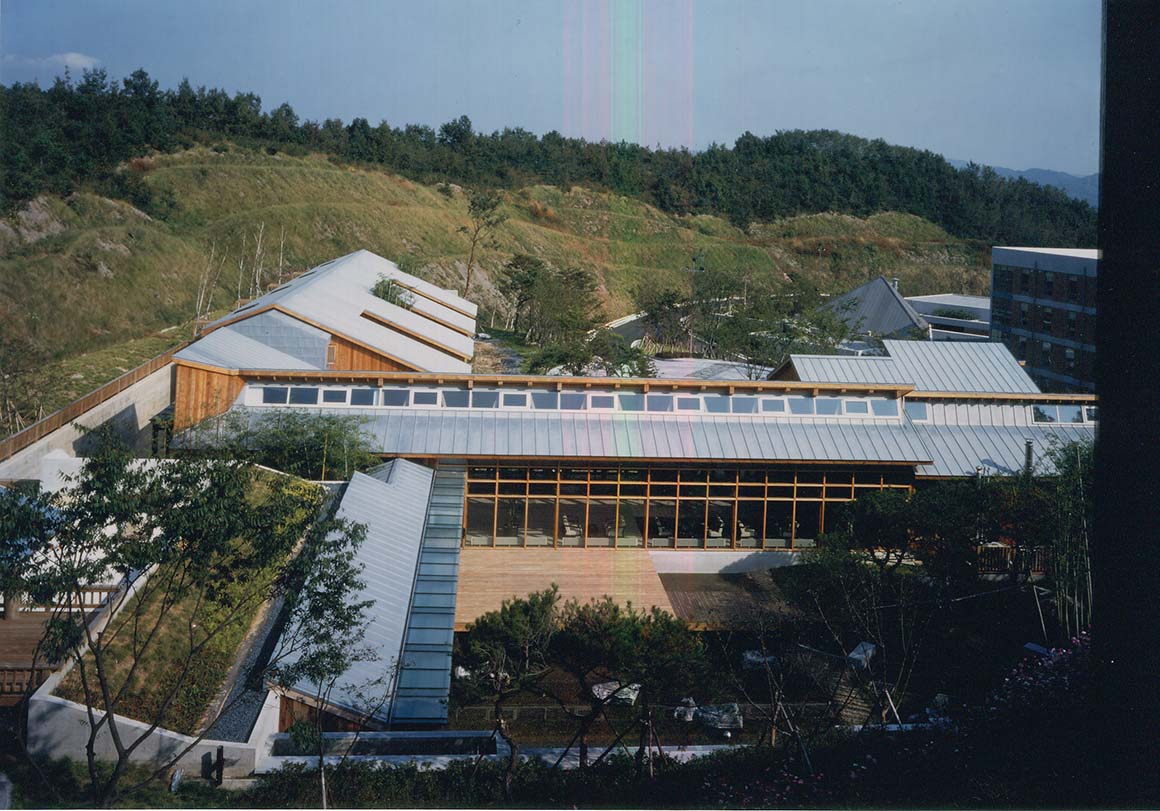
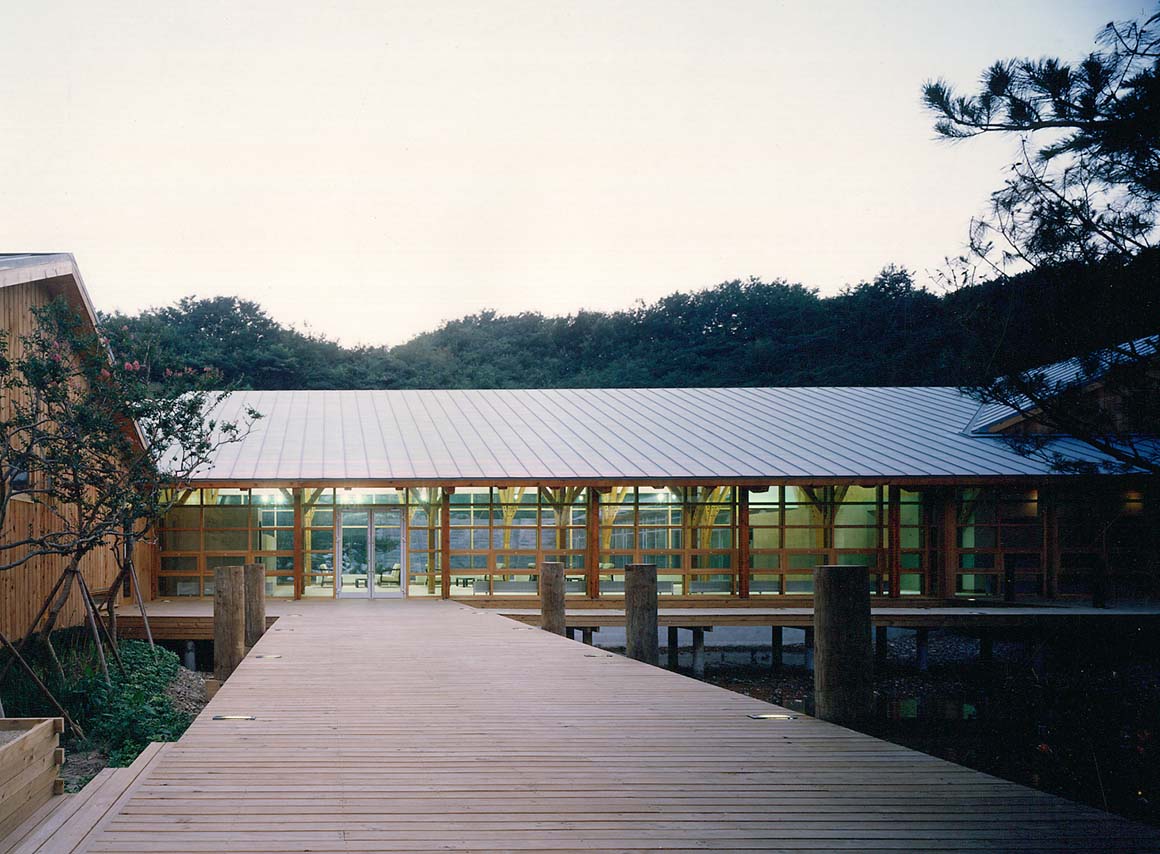
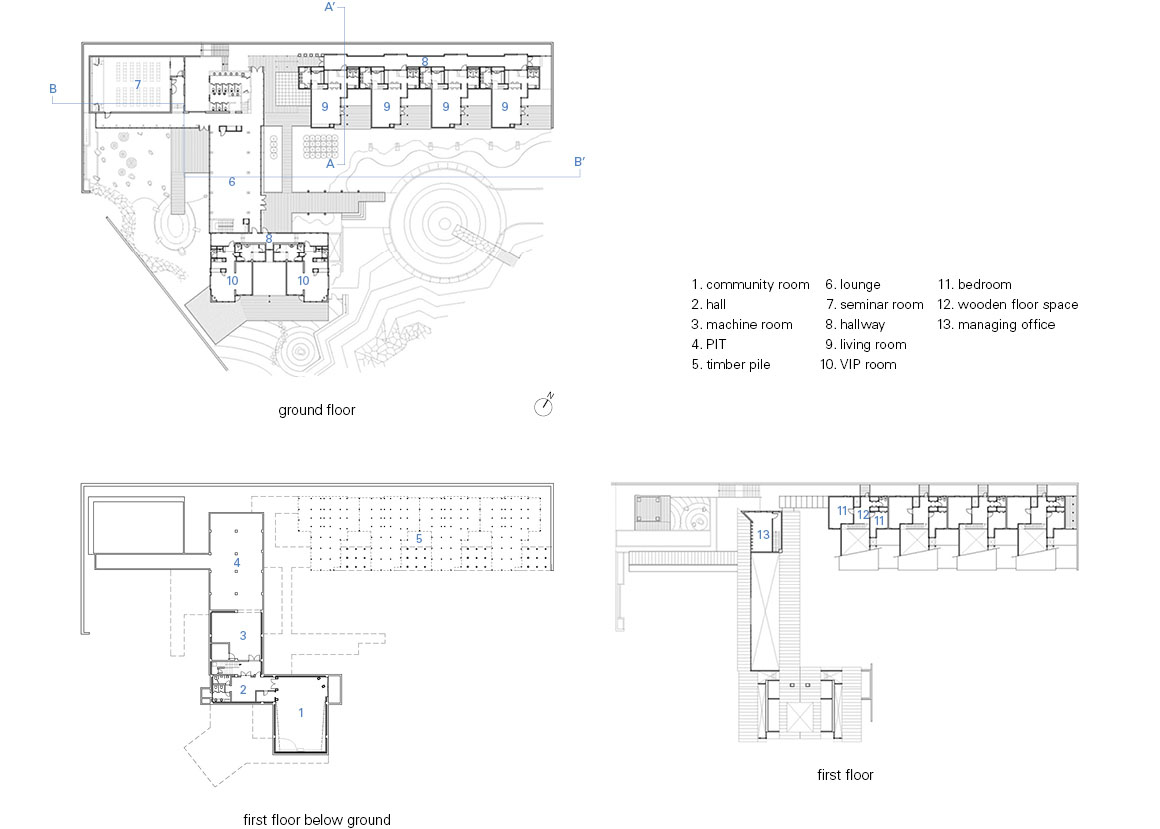
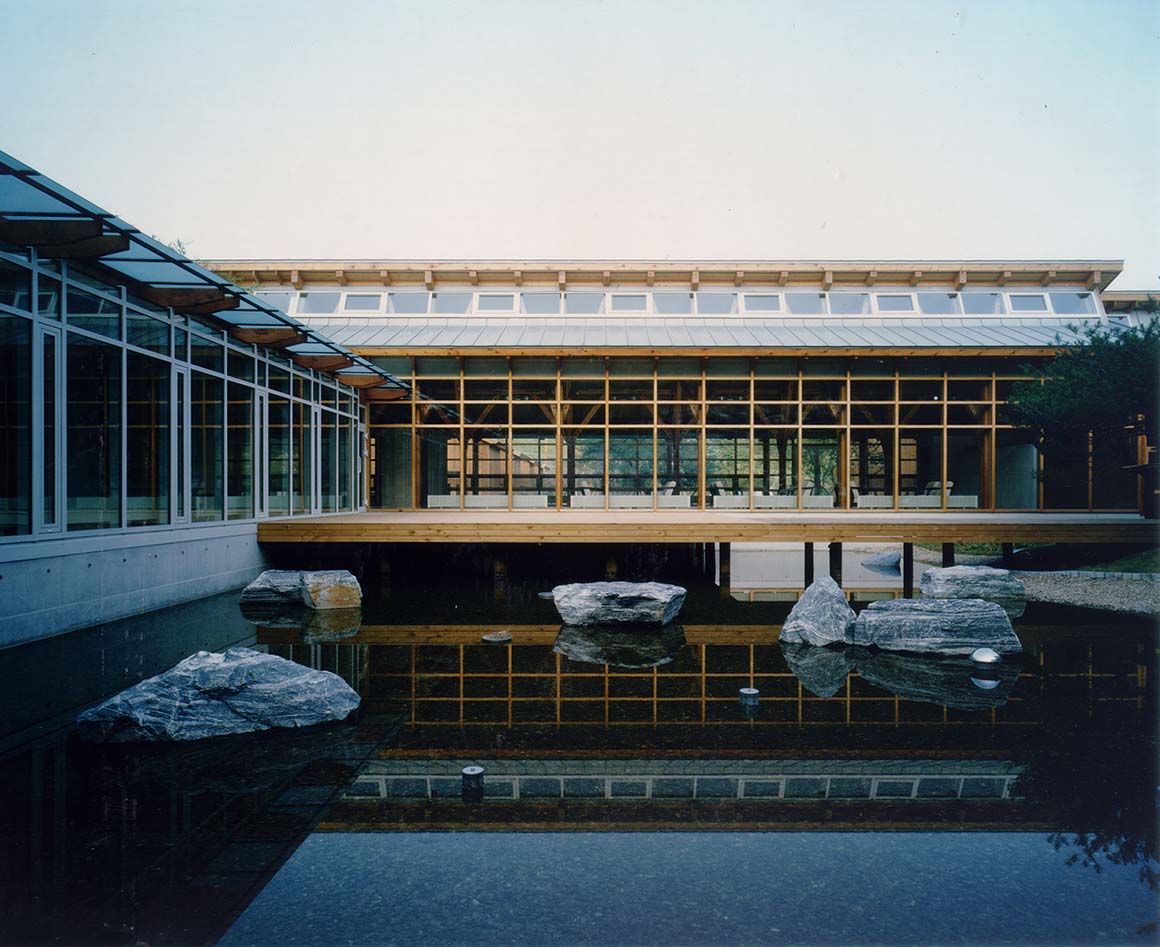
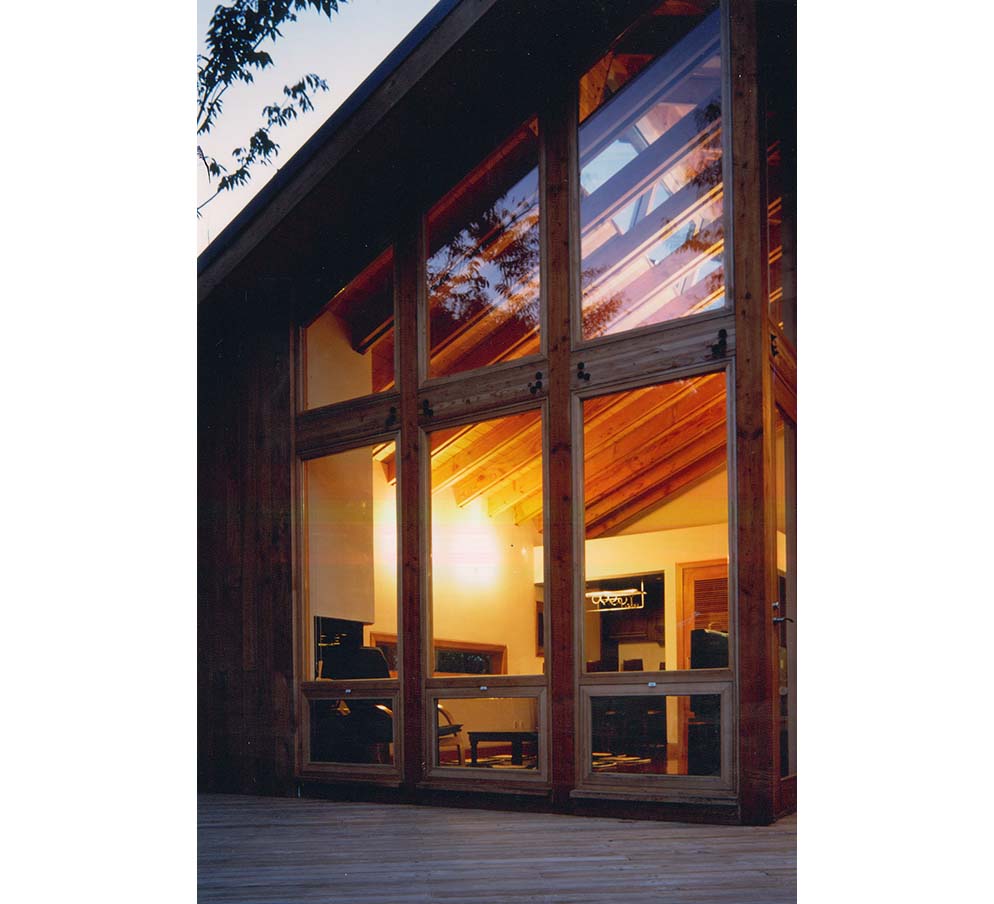
The plan is organized into three zones: a central lounge as the shared living space, a seminar wing to the left, and a guestroom wing extending to the right along the valley. The lounge operates as a hinge—linking different programs while opening them toward the landscape. Here, an early design idea described as a “wood garden” is translated into structure. Instead of planting trees, glulam columns are assembled with steel connectors into branching, tree-like forms. Gathered in clusters, they produce an abstract interior forest. Daylight filters through skylights above, and glass curtain walls to the front and rear soften the boundary between inside and outside, allowing the surrounding woods to read as a continuous field.
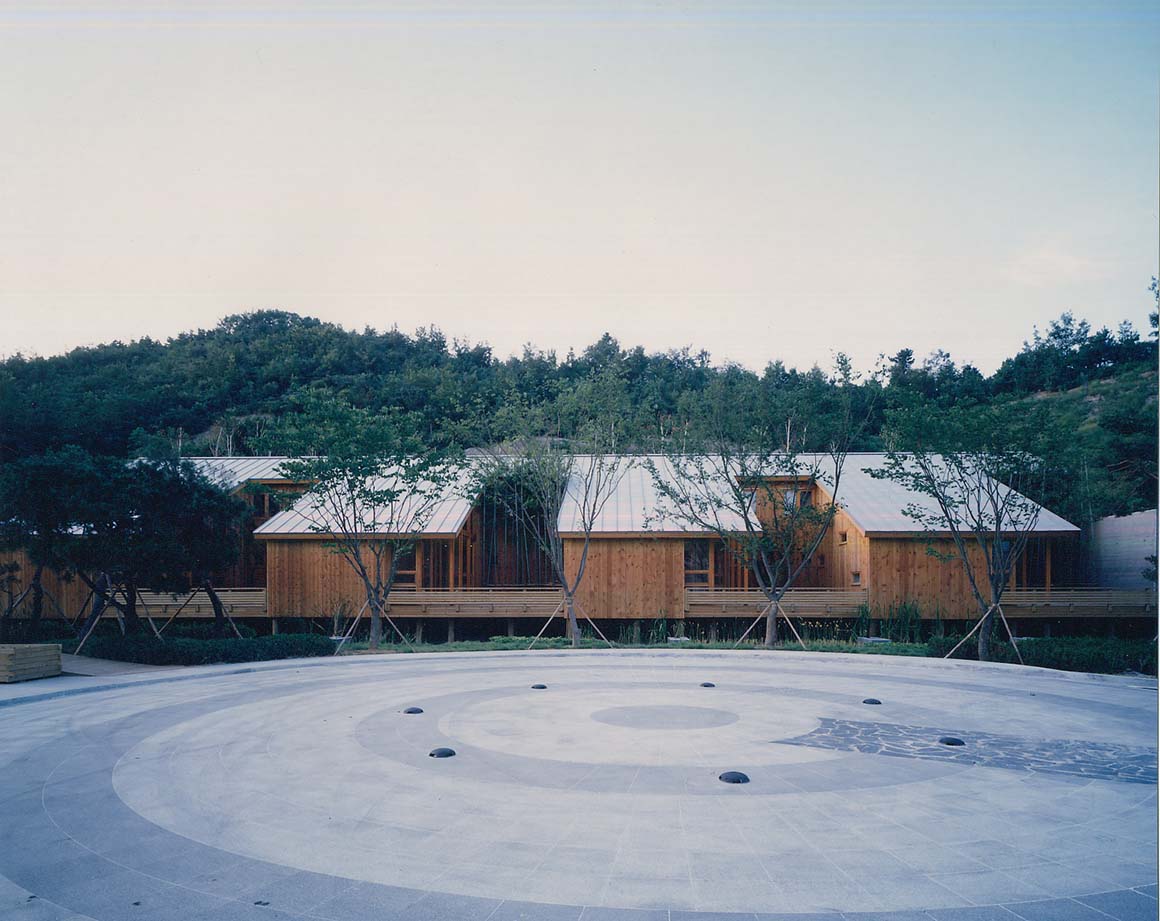
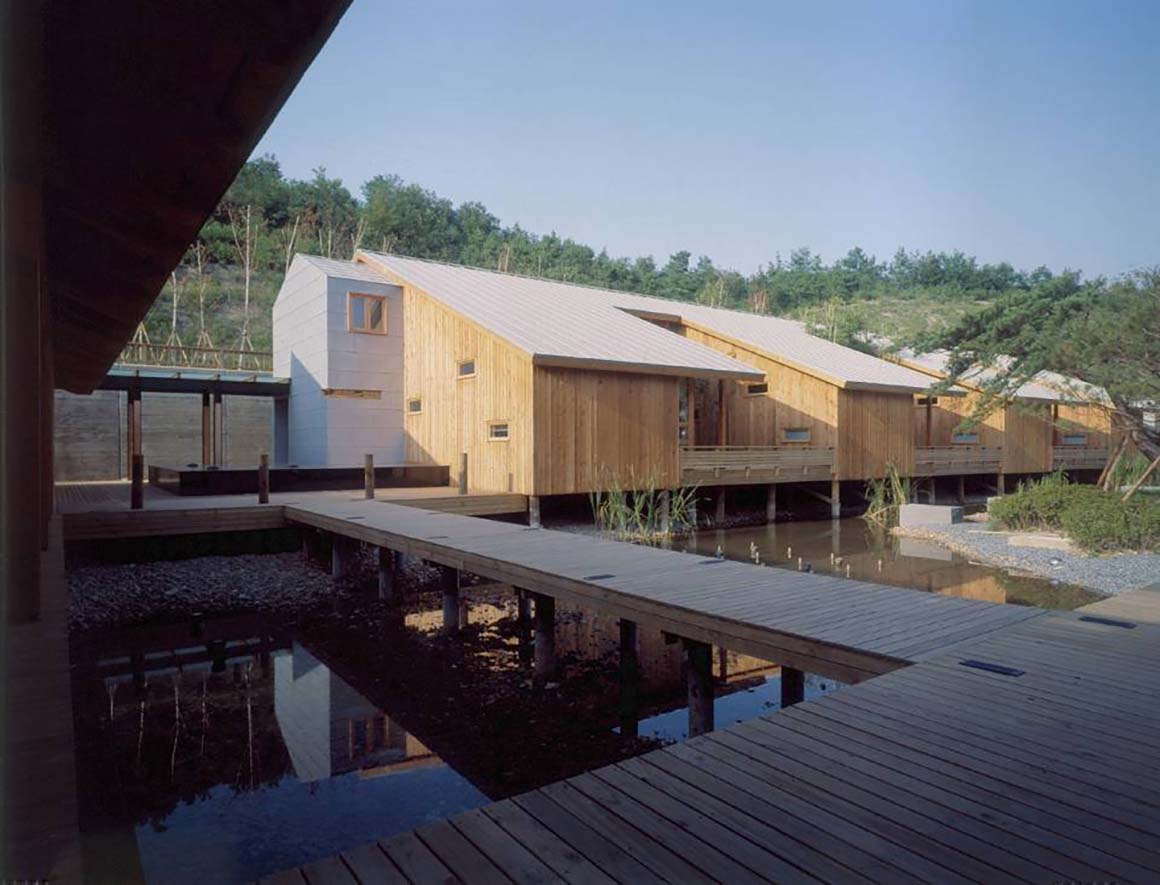
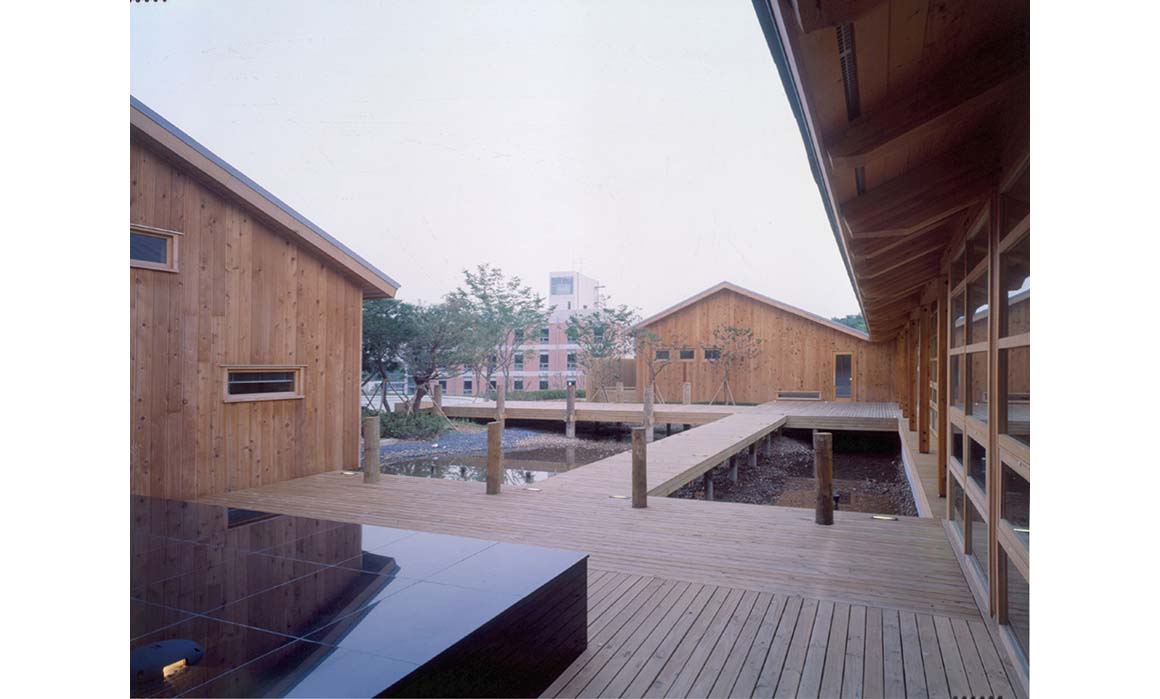
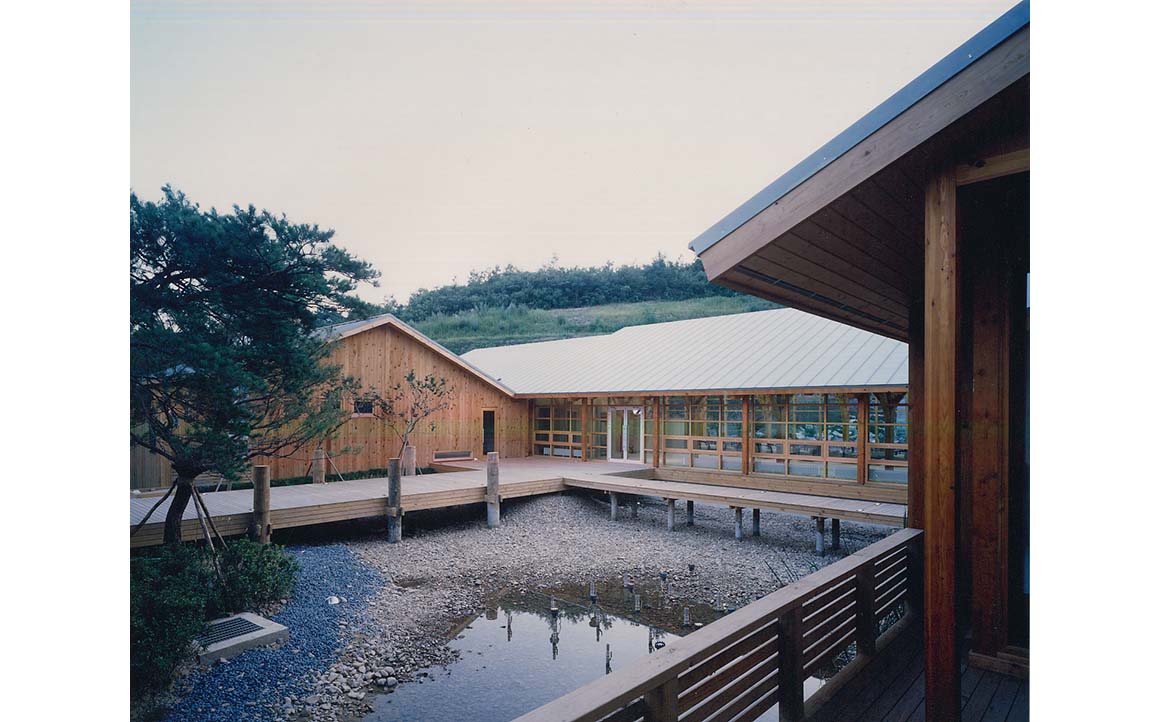
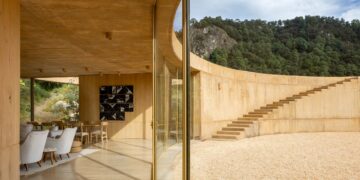
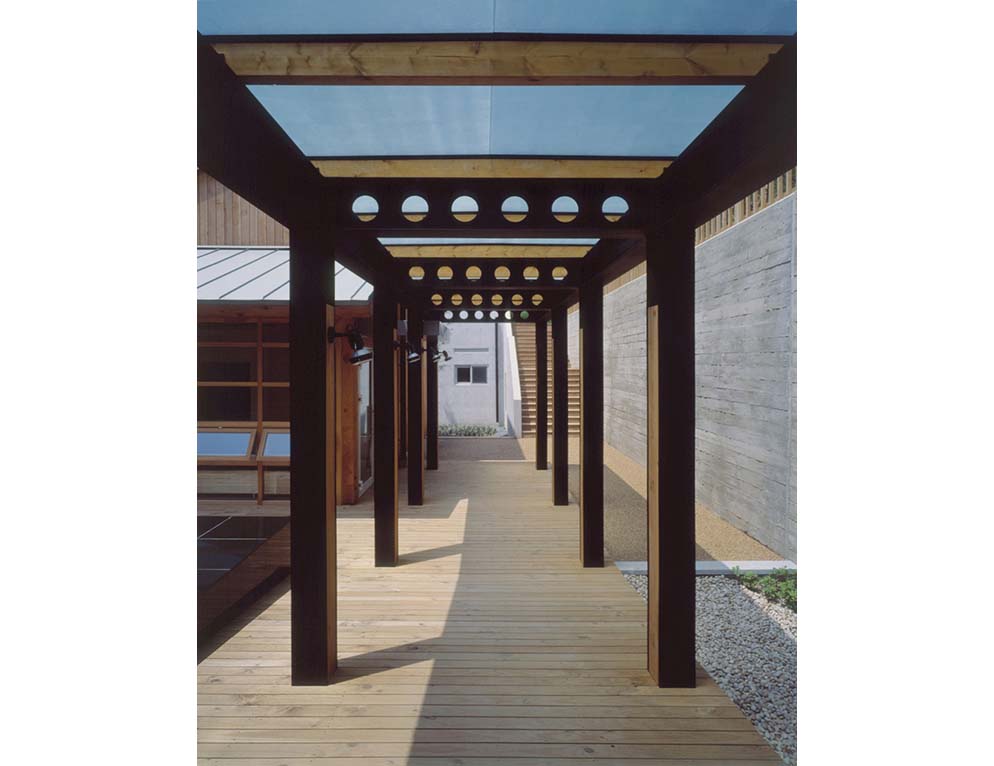
Material strategy further clarifies difference through contrast, while also establishing a subtle dialogue across the complex. Where the training center is defined by red brick, the guesthouse is articulated in red cedar with a grey zinc roof, giving it a lighter, warmer presence. At the same time, the two buildings are linked through a deliberate cross-reference: exposed concrete appears in the guesthouse’s seminar rooms, while the training center’s dining hall adopts timber construction and a zinc roof—an echo of the guesthouse’s vocabulary that signals a shared context.
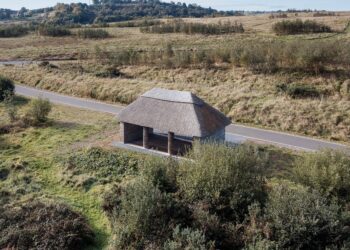
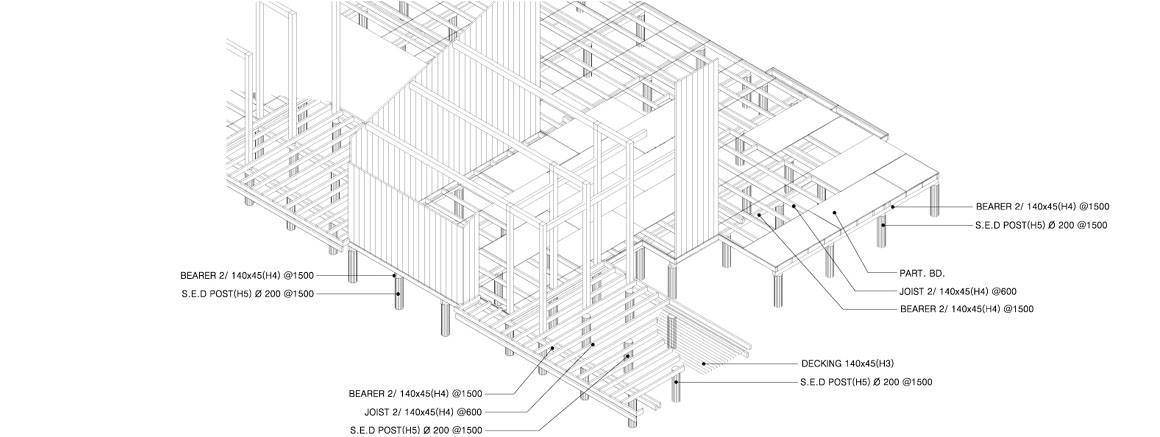
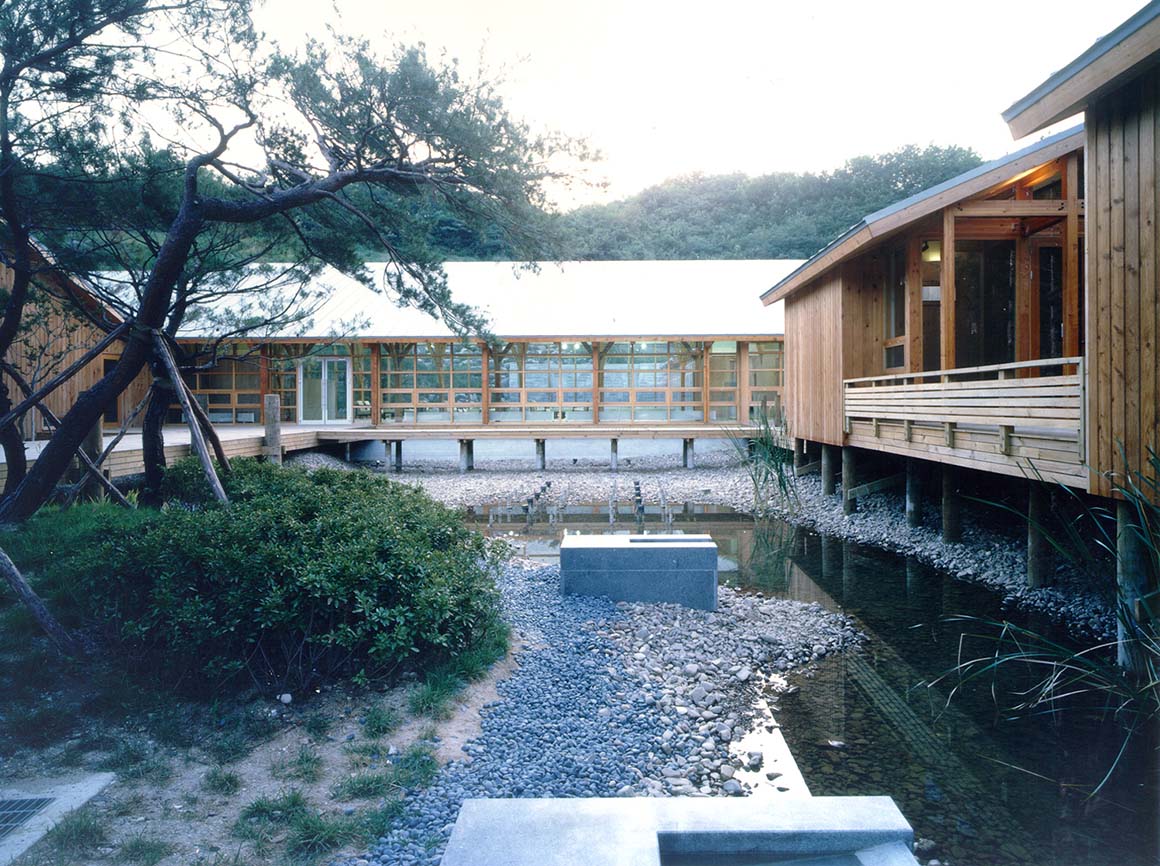
Along the guestroom wing, the project introduces a waterside dwelling. Like the traditional Korean ru (樓)—a pavilion that elevates everyday occupation through a simple timber frame—the guestrooms emphasize the temporary, retreat-like character of staying. Set on timber piles above water, the building is lifted from the ground, marking a transition from ordinary terrain to a quieter domain. Within the narrow valley, this strategy also secures a distinct zone for rest. Throughout, timber brings warmth to the constructed environment and forms a calm, tactile link between architecture and nature.
Project: Kyowon Guest House / Location: San 73-1, Sinseong-ri, Seonjang-myeon, Asan-si, Chungcheongnam-do, Republic of Korea / Architect: Soltozibin Architects / Use: educational research facilities / Site area: 76,849m² / Bldg. area: 1,233.0m² / Gross floor area: 1,838.1m² / Bldg. coverage ratio: 3.16% / Gross floor ratio: 3.96% / Bldg. scale: one story below ground, two stories above ground / Structure: Wood + RC / Exterior finishing: cedar board with stain finish, zinc, exposed concrete / Design: 1996.6~1999.10 / Construction: 1999.12~2000.7 / Completion: 2000 / Photograph: ©Ilmin Kang (courtesy of the architect); ©Kihwan Lee (courtesy of the architect)