

A Two-Story Landscape Corridor Integrating Architecture and Landscape
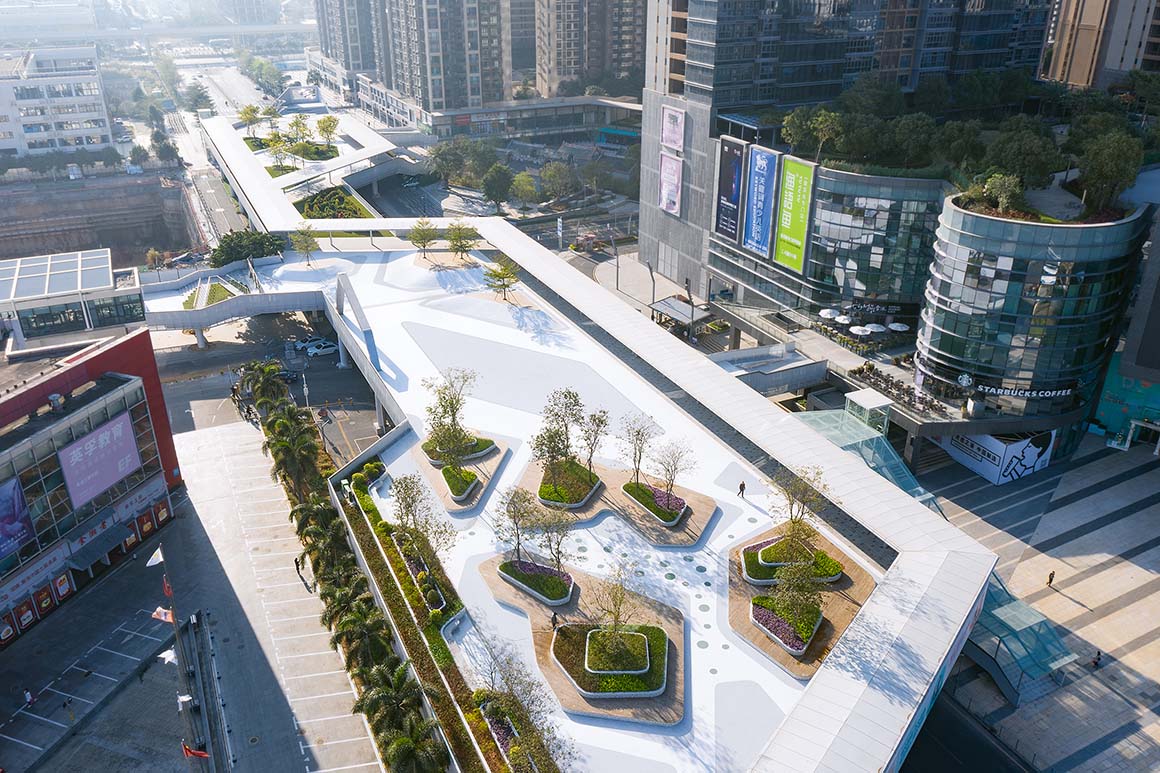
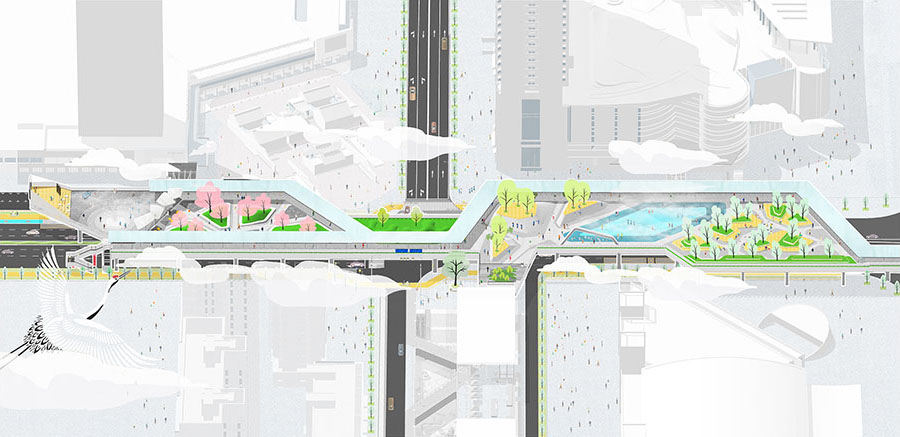
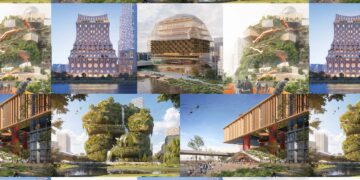
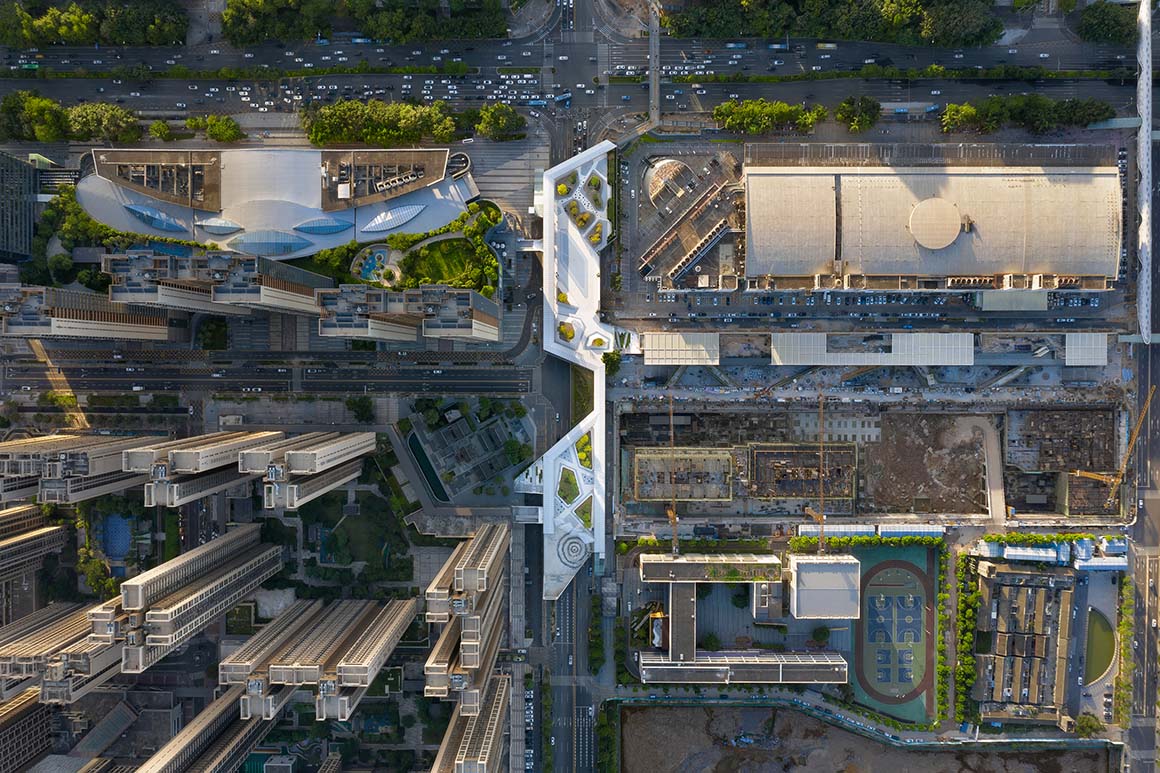
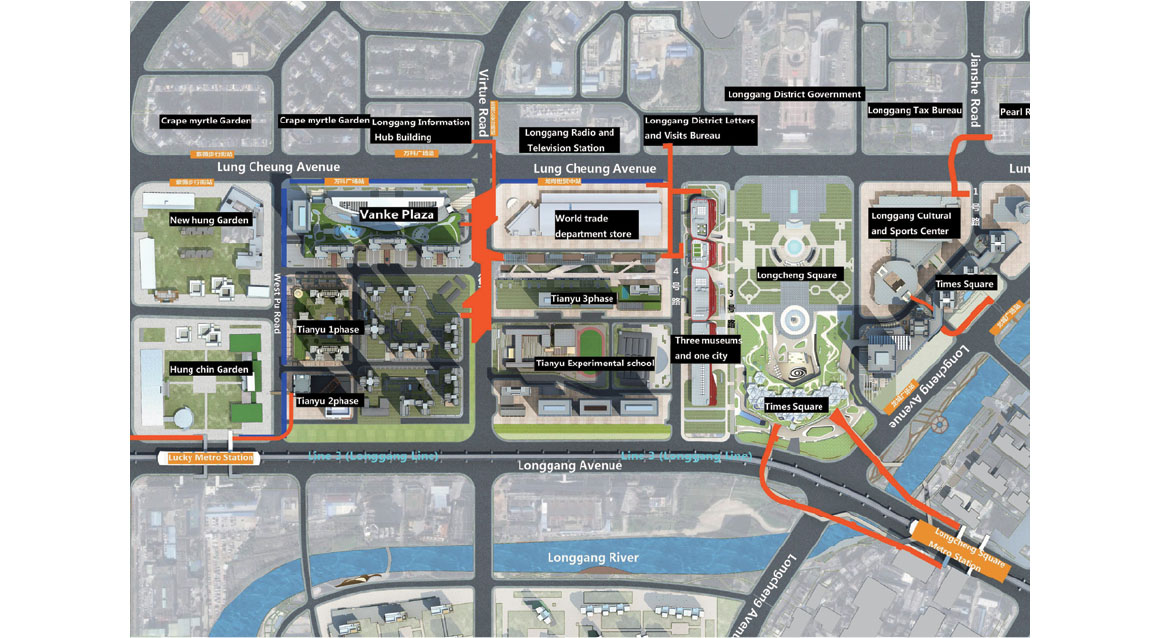
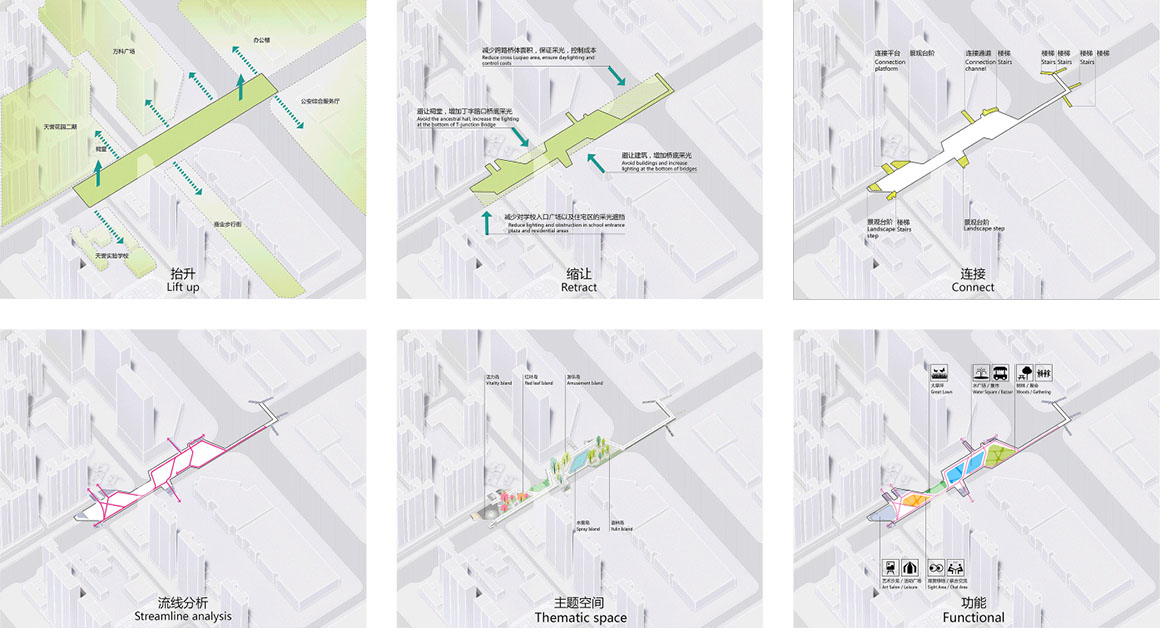
In Shenzhen’s Longgang District, bridges form part of the traffic system plan. The no.2 bridge integrates architecture and landscape with the concept of “floating Islands”. It connects the Vanke Plaza Commercial Complex, the World Trade Department Store, Tianyu Phase II residential area, and a commercial pedestrian street. Floating above Dezheng Road and across Longxiang Avenue, the bridge is a two-story landscape corridor connecting multiple platforms. The density of people flow in the base is large, the streamline is complex, and the current situation is mixed. There is a lack of civic activity space around the base, and most of the surrounding park space is dominated by natural landscape. The new elevated corridor space establishes an urban leisure facility and solves traffic problems.
The design strategy was to create a recreational green belt with a unique presence, and preserve nature in the artificial city.
Each of the floating islands is its own “island” in a noisy world. People can find their own space here but blend in with the crowd. The design of the no.2 bridge arose through analysis of people flow, lines of sight, scenery and functional requirements, etc. The concept of floating islands deepens the landscape, in which people flow like water. The bridge deck space separation is based on the shortest common path of the predicted pedestrian flow, so as to form island spaces with different sizes and shapes to accommodate different activities. The design transforms the traditional idea of a bridge into an interesting park.
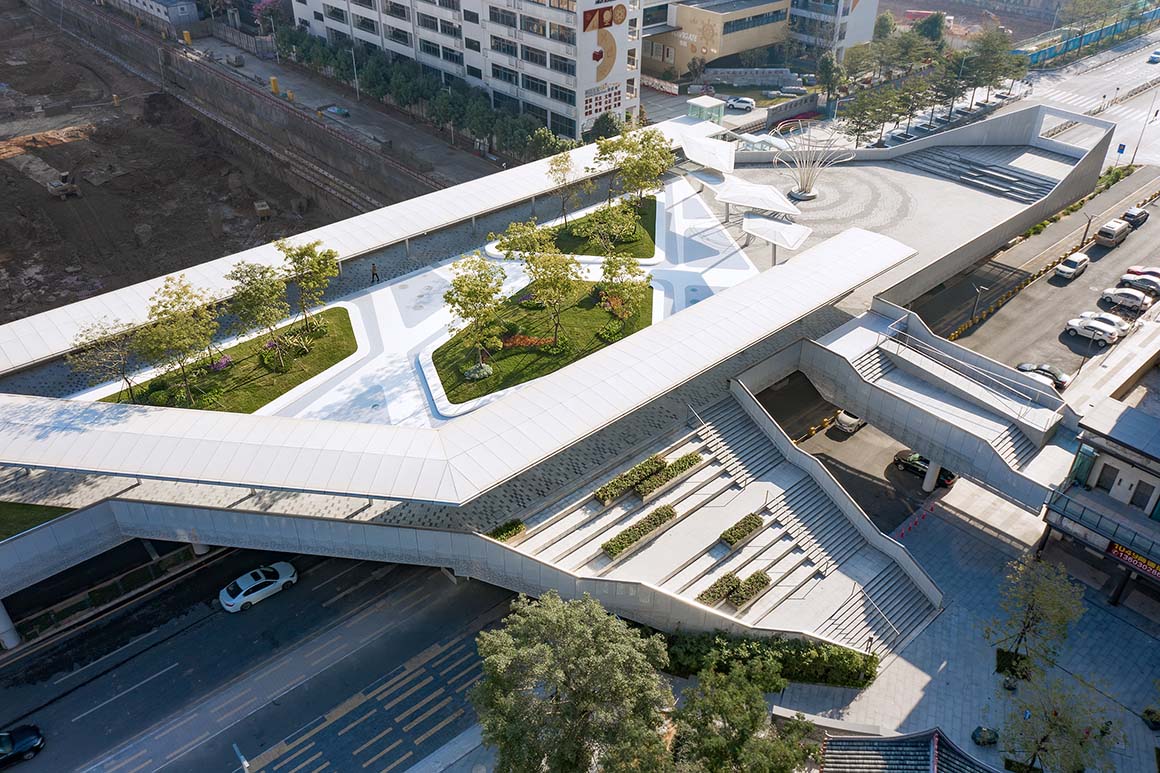
Yulin island combines greening with seats. Plastic wood, aluminum plate and terrazzo are used as materials, and the curved shape forms a space with strong sense of integration. Handroanthus chrysanthus trees are planted.
Spray island is the area where the crowd is most concentrated. The multi-functional public space is dominated by a water feature with spraying devices, in which people can play. The ground is slightly sunken, forming a shallow beach on rainy days.
Pleasure island combines trees with raised mounds to create a pure landscaped sculptural feeling. Terrazzo and plastic wood are used to create a place of slopes suitable for children and young people to run and play, and attract roller skating, skateboarding, cycling and other activities.
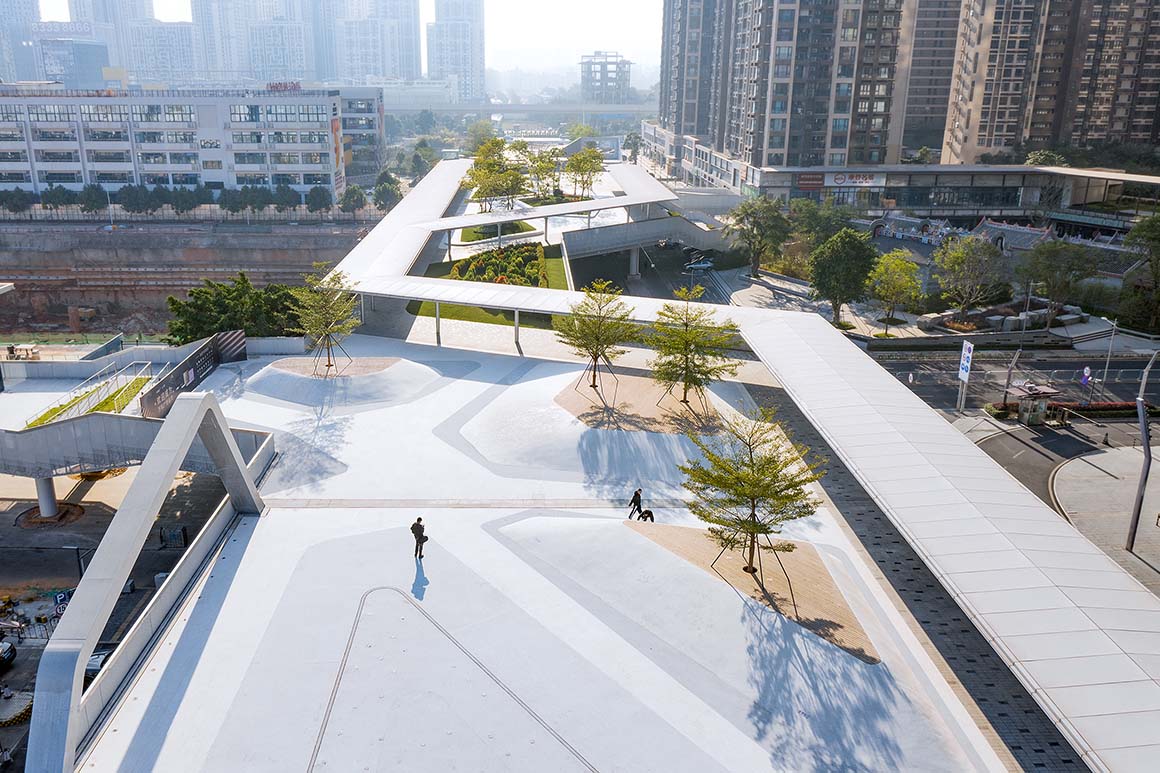
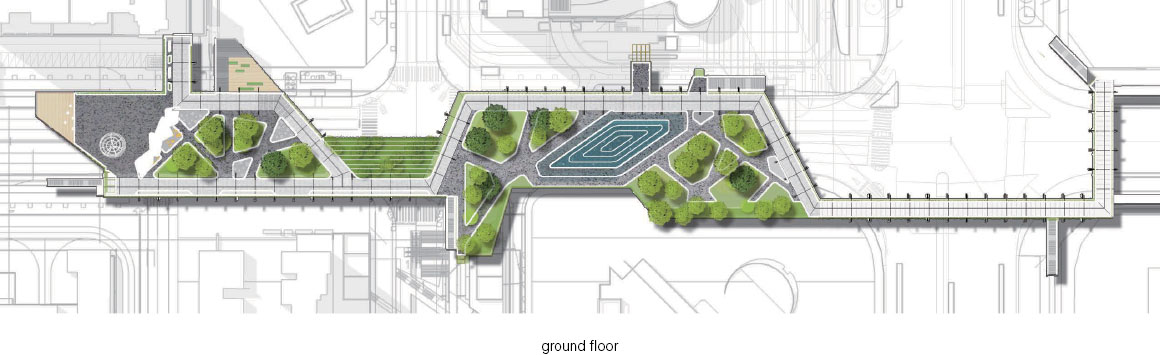
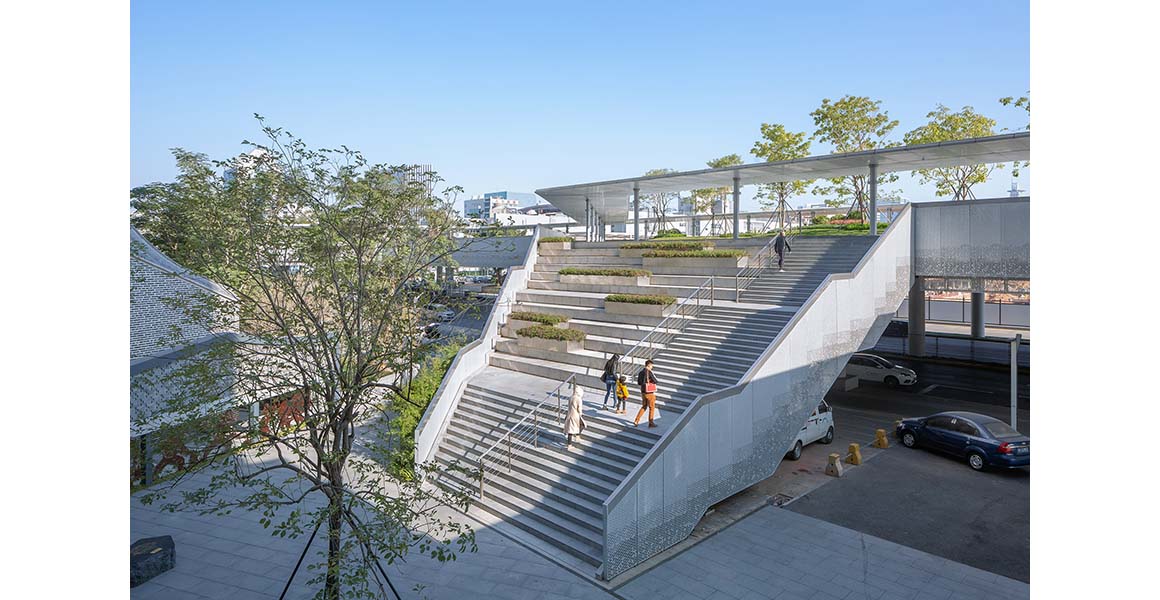
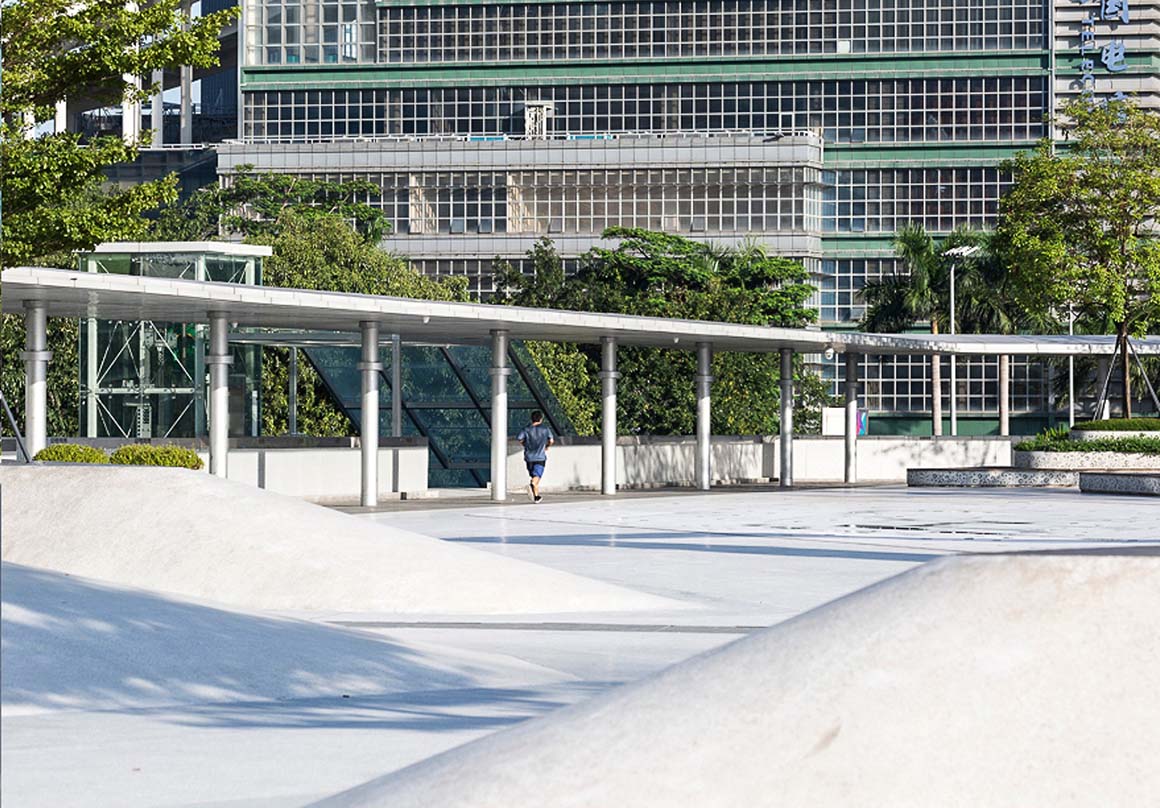
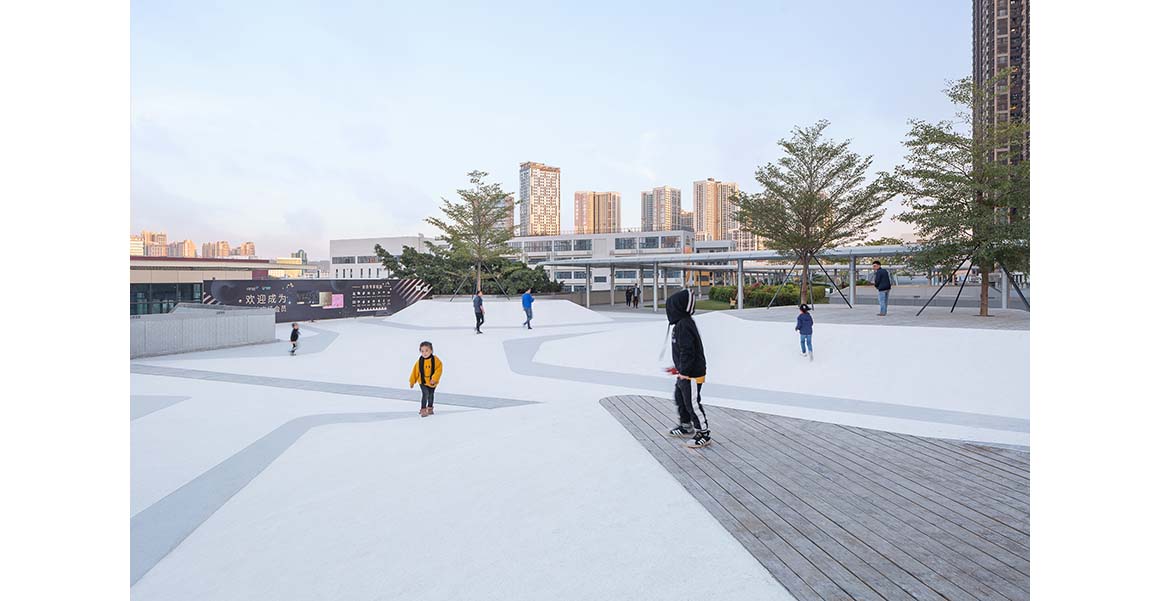
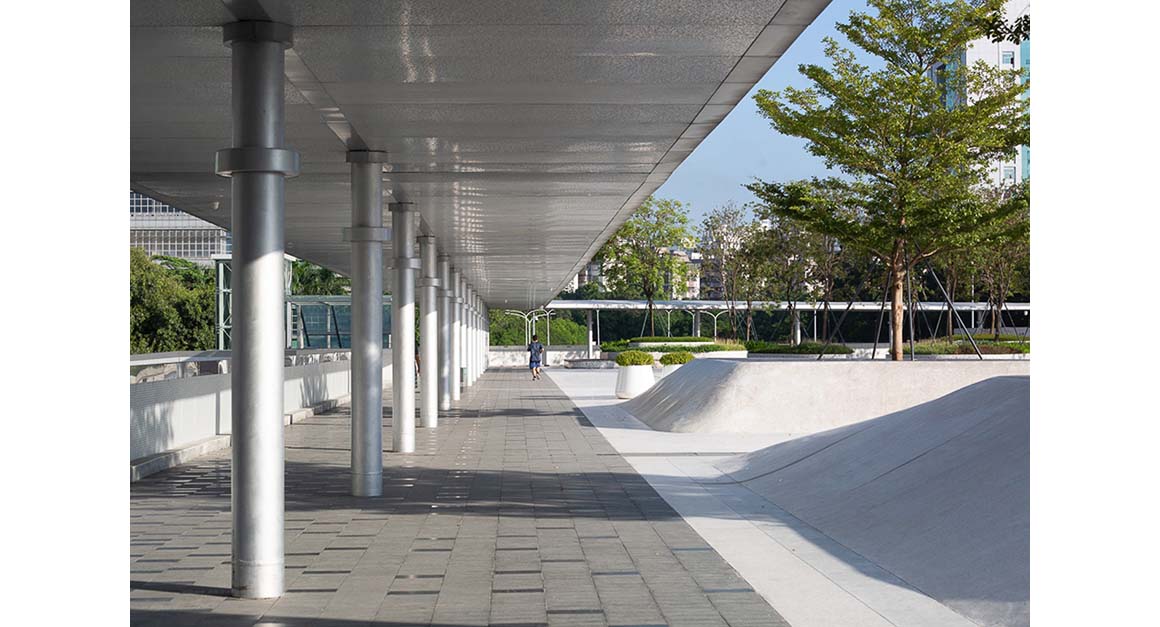
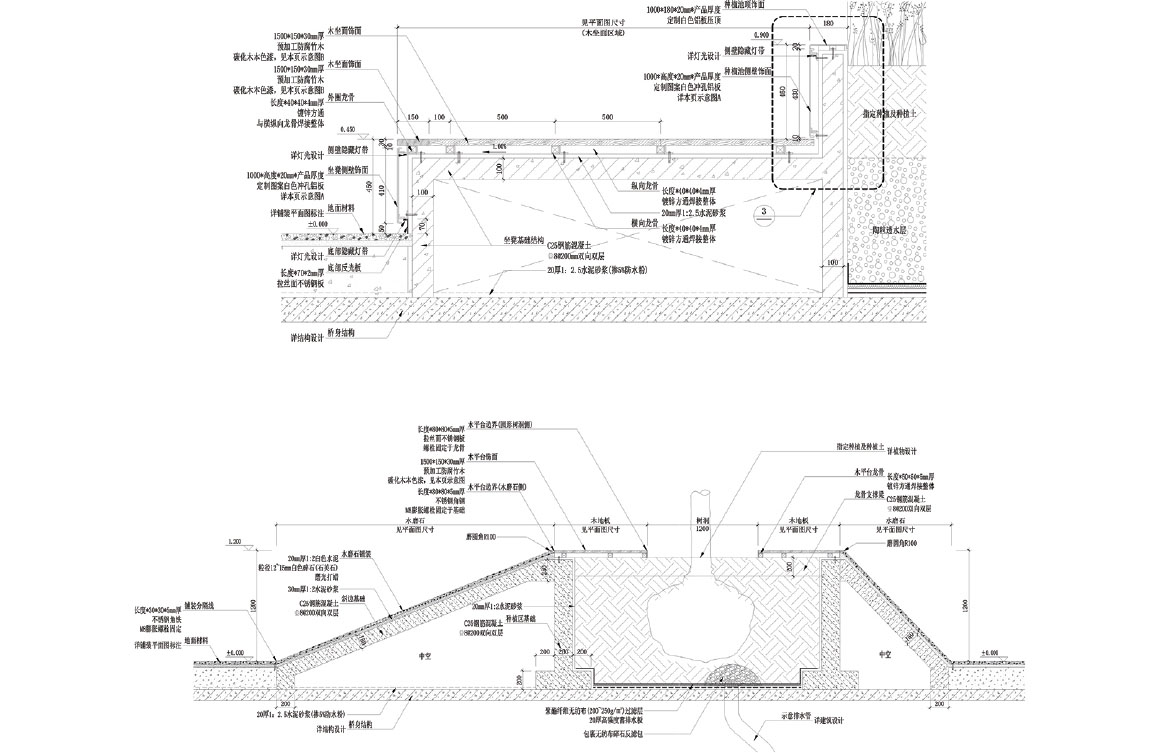
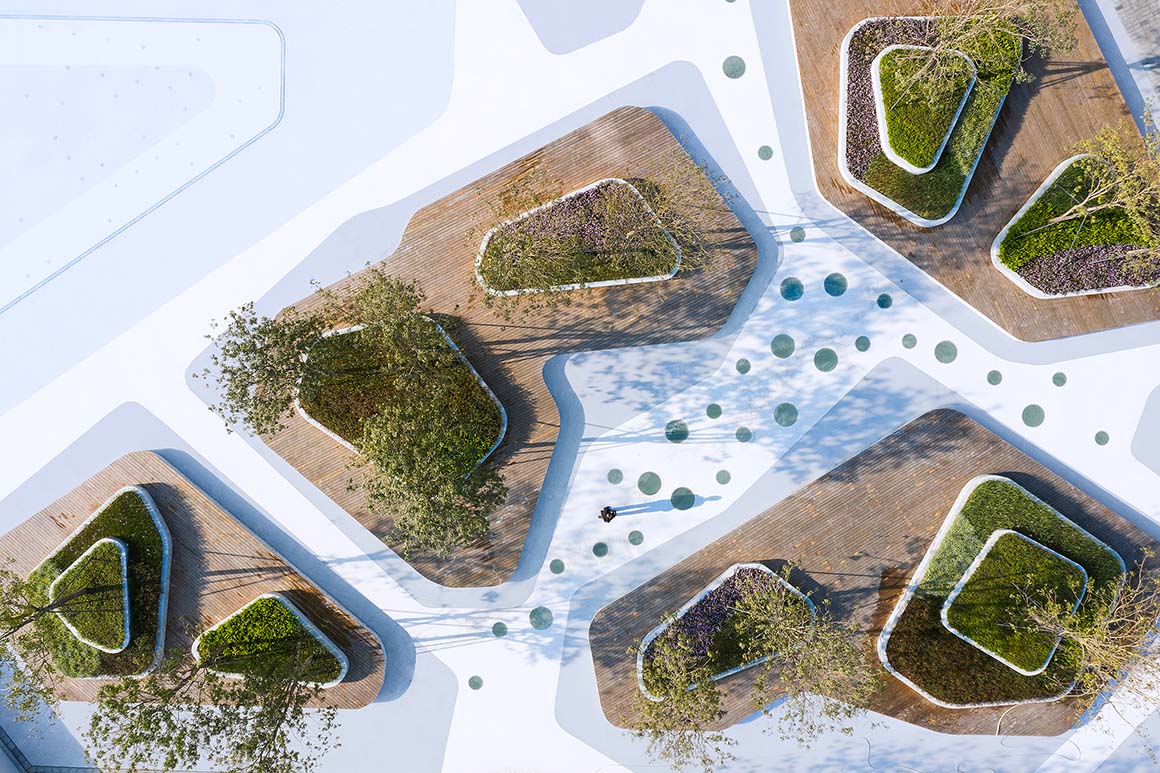
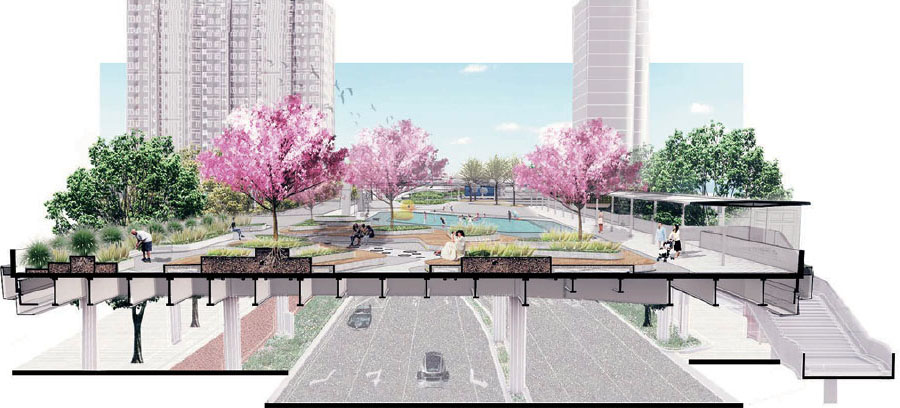
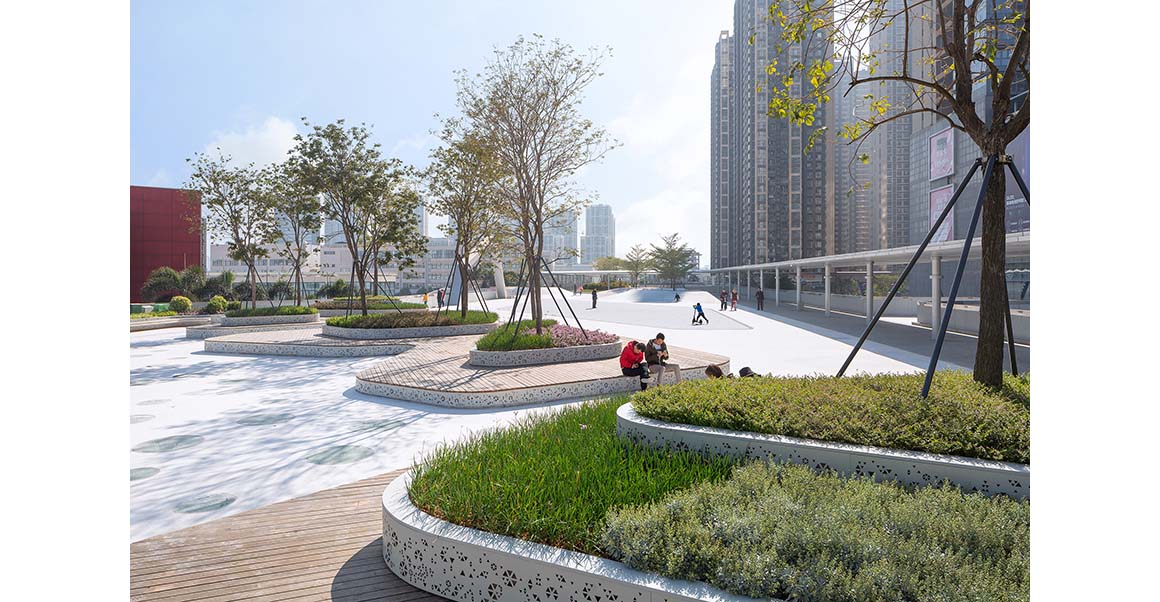
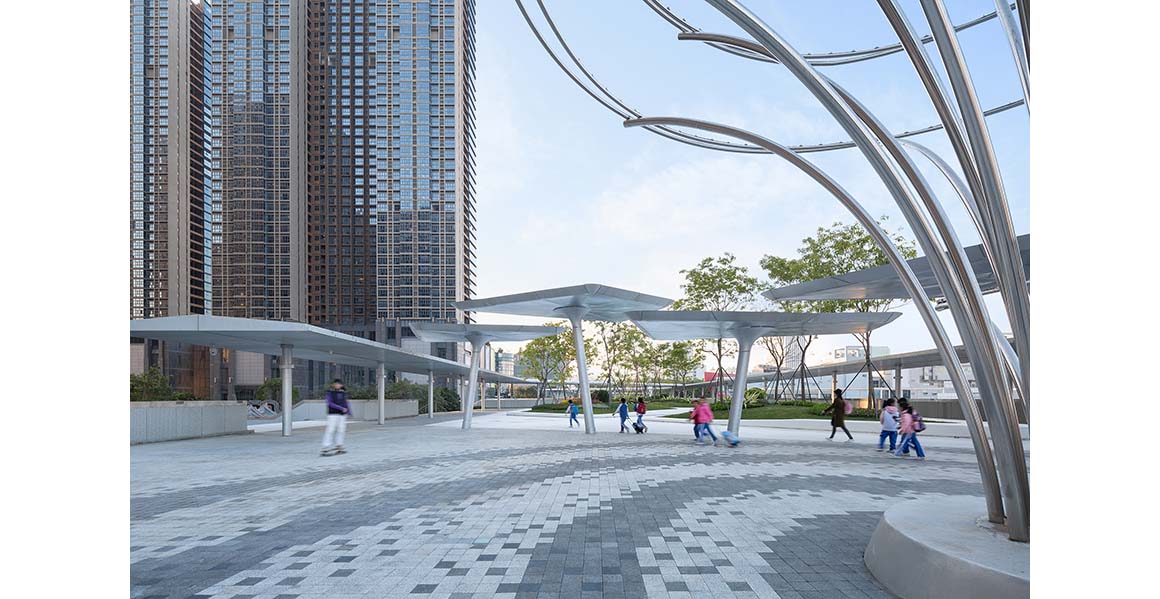
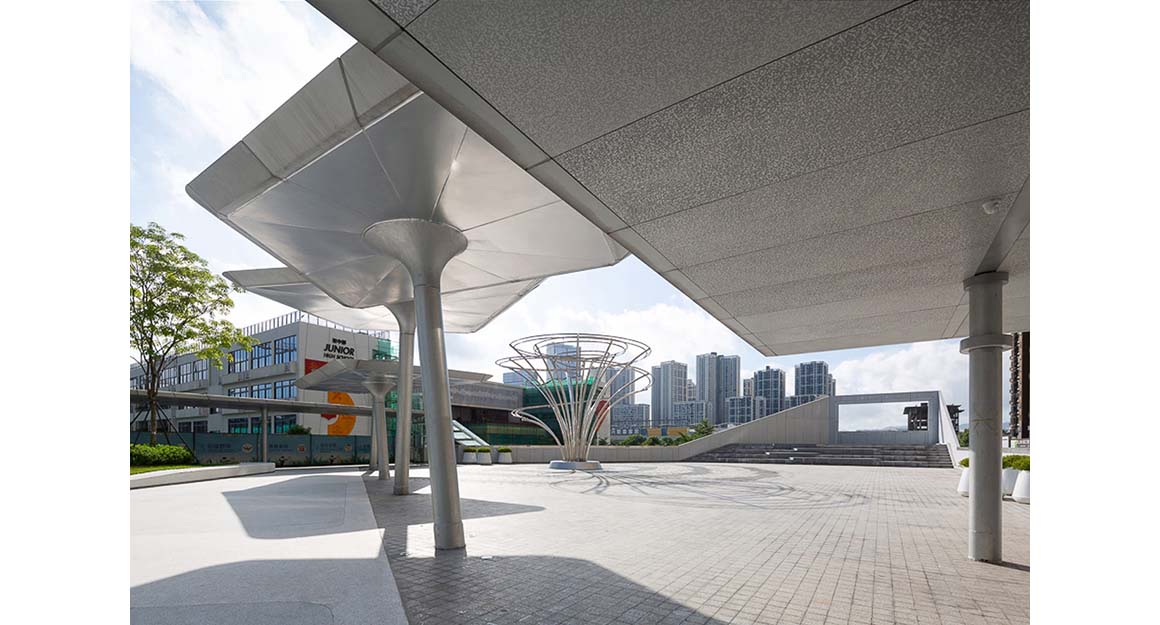
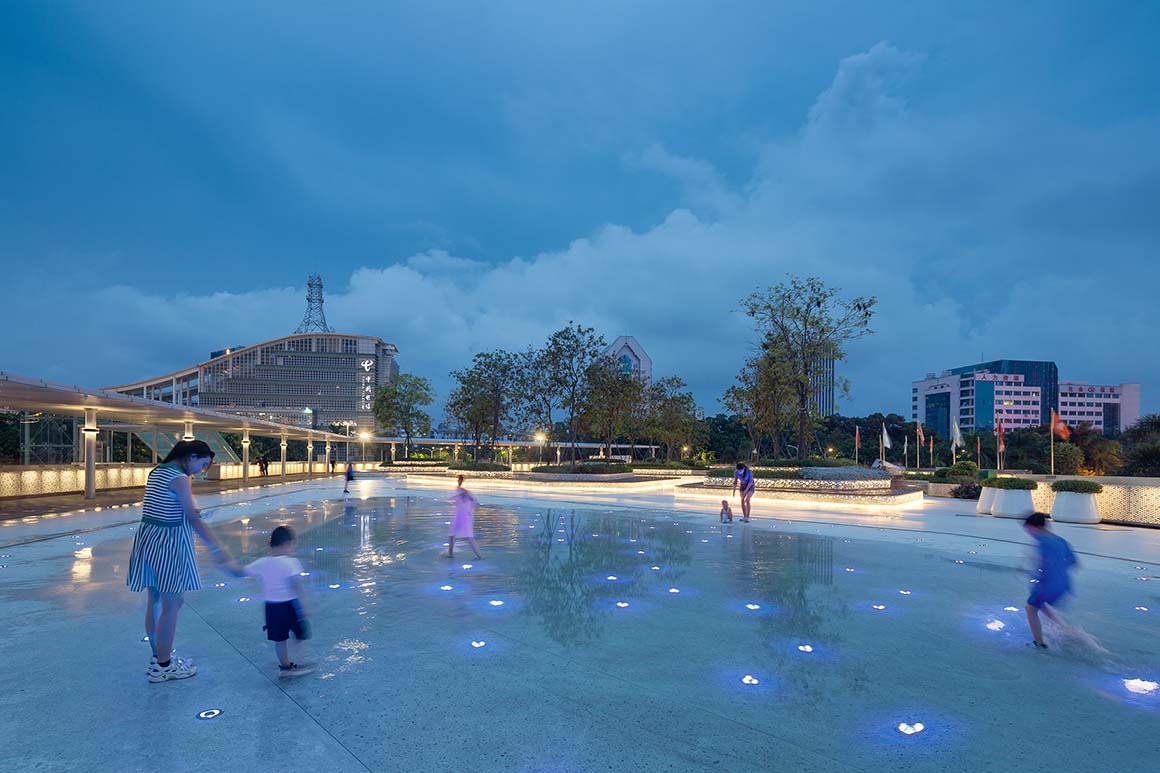
Vitality island provides seating amongst trees including Handroanthus impetiginosus (the “Pink Trumpet tree”). This area is close to the school, and so can provide more waiting areas for parents and after-school activities for students. Adjoining it is a hard-surfaced activity zone and step space.
There is a continuous canopy on the whole bridge deck, which connects the main lines of circulation in series and is accessed by stairs and elevator. The canopy provides shading and rain protection. The south end is marked by a metal sculpture tree with spray lighting effect that winds upwards.
The “Floating Islands” project is an attempt to integrate infrastructure into public space in a high-density city. In the future, our cities may have a large number of such spaces.
Project: Floating Archipelago — Pedestrian Bridge Design / Location: Longgang District, Shenzhen, China / Architect: FCHA / Architecture and Landscape design: FCHA / Partner in charge: Zetao Chen, Jinlefu Su, Zhiwei Lu / Project manager: Zhiwei Lu / Design team: Wenlong Jiang, Zhiyi Liang, Chenhua Yu, Lipeng Zou, Jun Zhou, Lijin Huang, Yuanwei Liu, Zhenhon Lei, Jiawei Feng, Hao Wu / Landscape construction drawing: Shenzhen Yuanye Environmental Design Co., Ltd / Lighting deepening design: Shenzhen lighting formula technology Co., Ltd / Steel structure coordination: China Academy of Building Research / Construction drawings: China Academy of Building Research / Curtain wall deepening design: Dadi Curtain Wall Technology Co., Ltd / Sculpture deepening design: Shenzhen Choushi culture Communication Co., Ltd / Client: Vanke(Shenzhen) & ICITY / Gross built area: 10,000m² / Design: 2017 / Completion: 2020 / Photograph: ©Tianpei Zeng (courtesy of the architect)