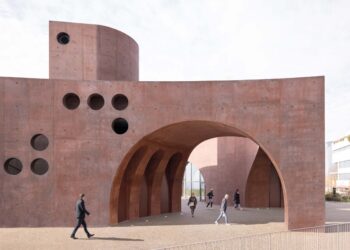


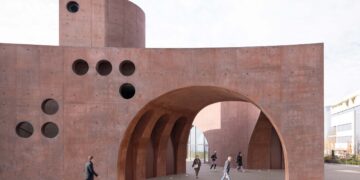











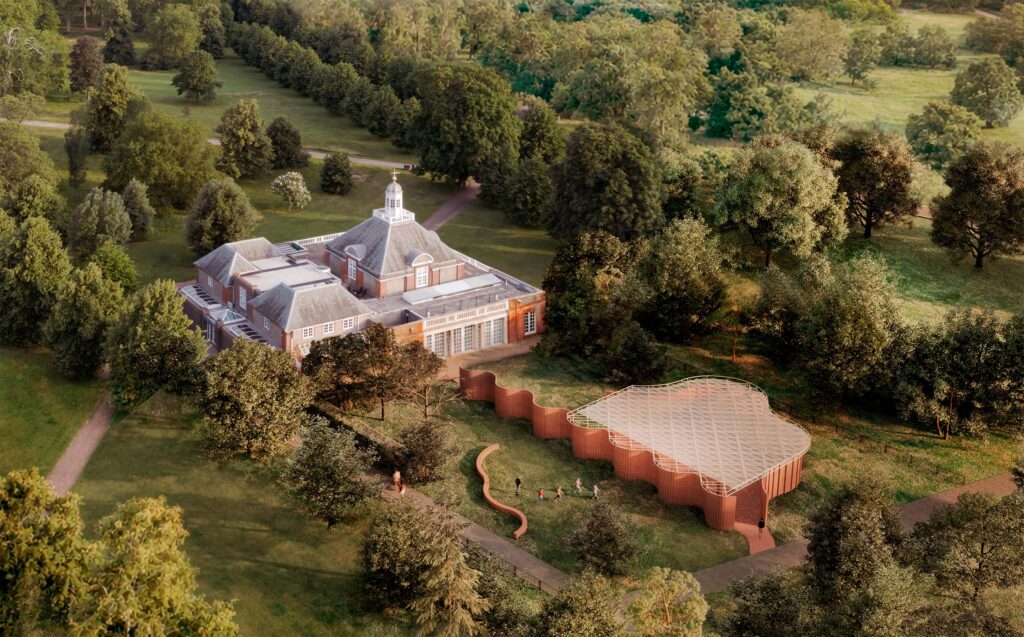
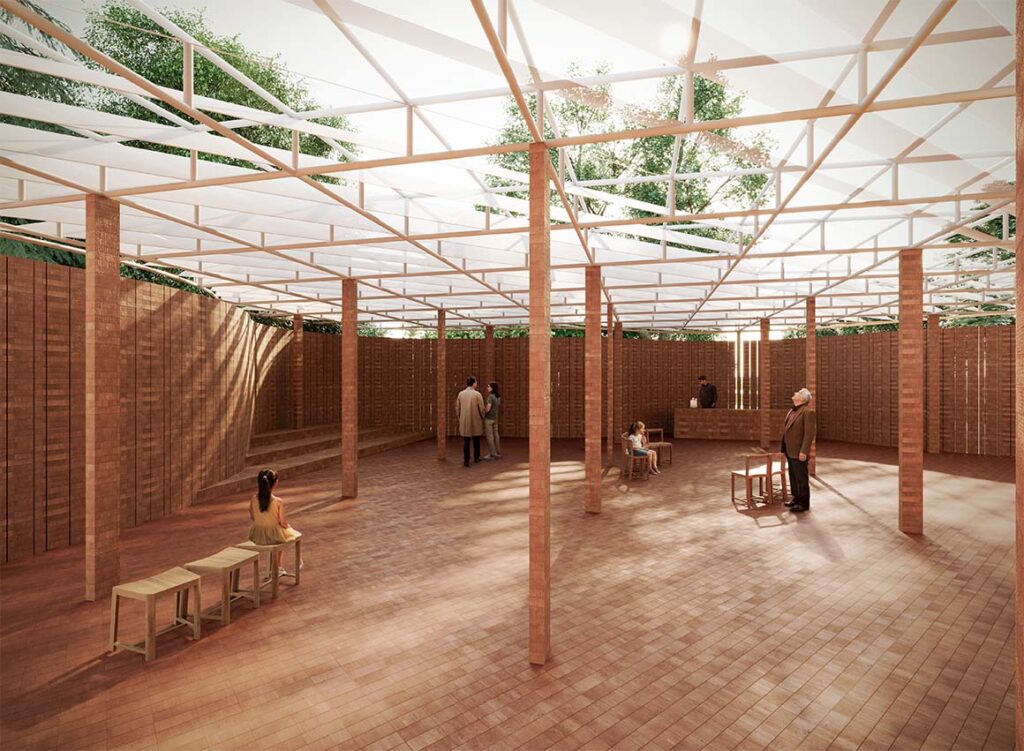
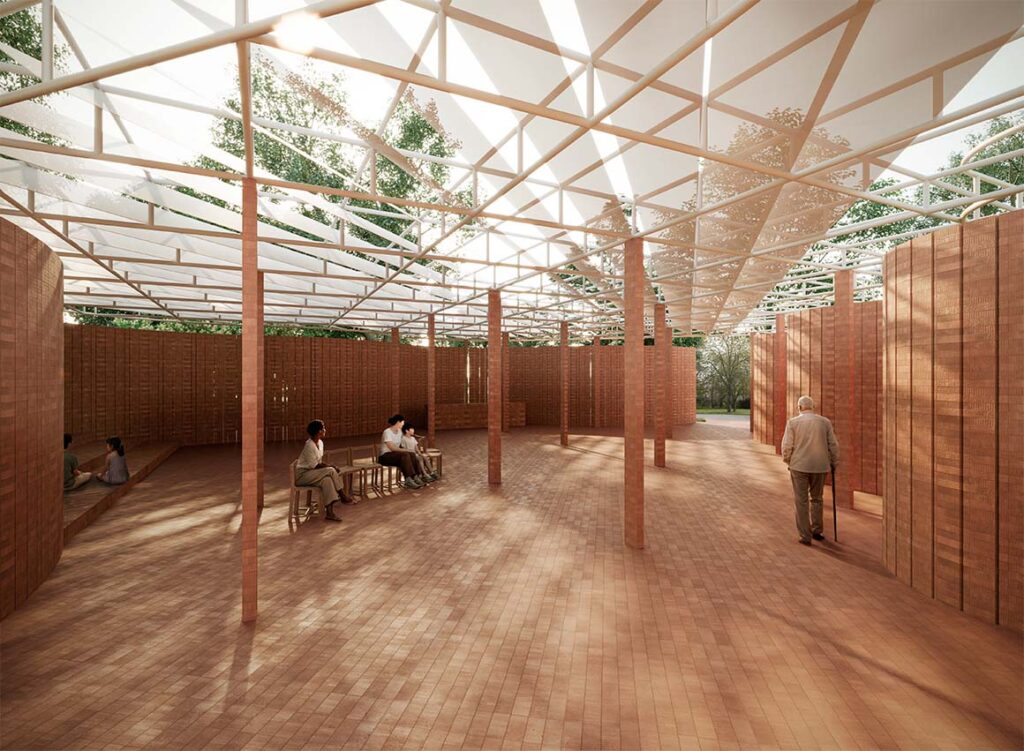
LANZA atelier, a Mexico City–based architecture studio, has been selected to design the 2026 Serpentine Pavilion, one of London’s most recognizable architectural markers of summer. Titled a serpentine, the proposal centers on a curved wall inspired by traditional British brick garden walls, presenting an architectural device that carefully calibrates concealment and revelation while shaping visitors’ movement and perception.
Twenty-five editions of architecture conceived to disappear
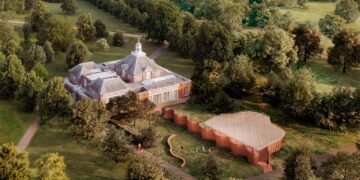
Each summer, the Serpentine Pavilion is installed on the lawn in front of the Serpentine South Gallery in Kensington Gardens. Since its inception in 2000 with Zaha Hadid, the Pavilion has been commissioned annually, with architects such as Rem Koolhaas, Herzog & de Meuron, Frank Gehry, and Bjarke Ingels contributing their own temporary structures. Over twenty-five editions, the series has consistently explored how architecture conceived with disappearance as its premise can nonetheless leave a lasting cultural and artistic imprint on the city and its public.
LANZA atelier, founded in 2015 by Isabel Abascal and Alessandro Arienzo, engages directly with this lineage of experimentation. The studio’s work focuses on balancing craft and technology to explore new spatial possibilities. Grounded in the belief that architectural value emerges through use and encounter, their projects often prioritize dialogue and shared experience. This approach carries into the 2026 Pavilion, conceived as a setting that encourages visitors to meet, linger, and move through space with ease.
An architectural shelter shaped by a sinuous brick wall
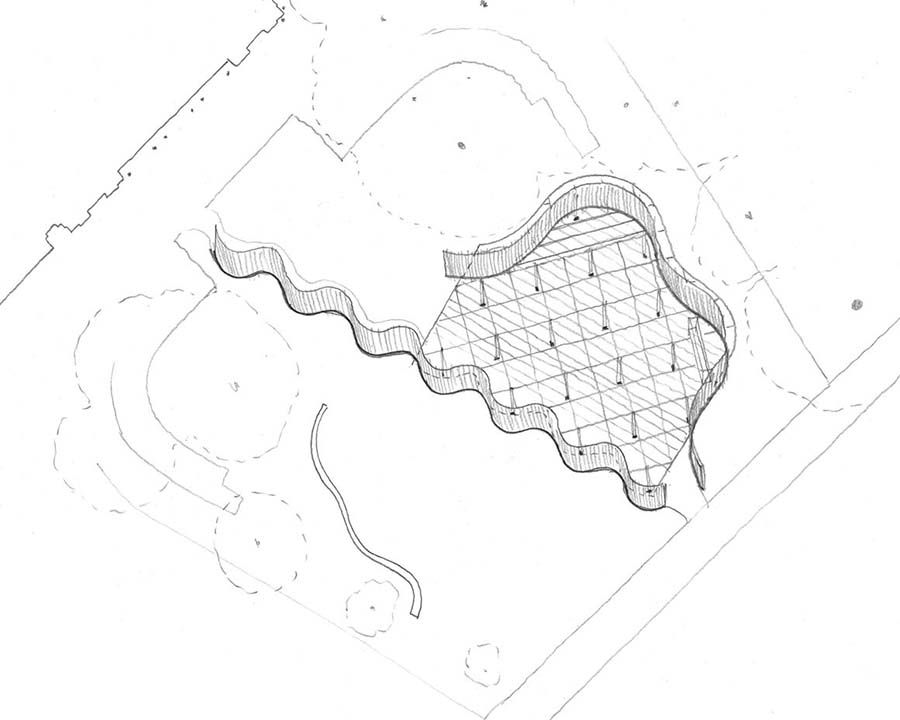
The central concept of the 2026 Pavilion is embedded in its title: a serpentine, referring to a form that twists and flows like a snake. The design takes its point of departure from the crinkle-crankle wall, a long-standing feature of British gardens. Characterized by its undulating geometry, this wall type is known for achieving structural stability with less material than a straight wall, reflecting a time-tested construction logic.
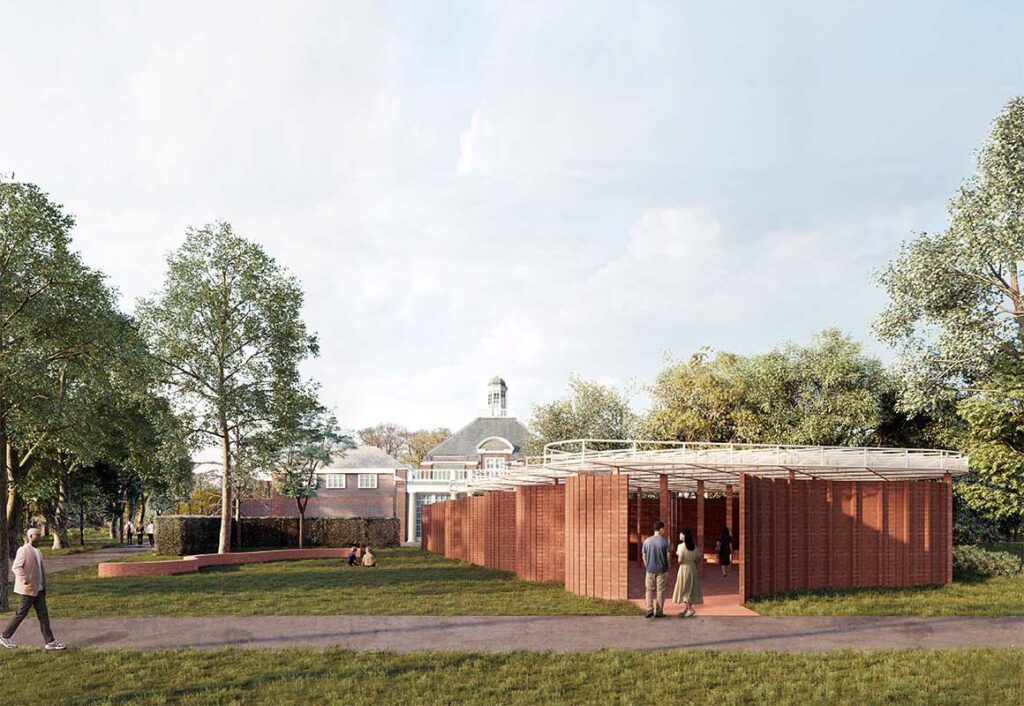
The Pavilion is organized around this sinuous wall, positioned prominently at the front of the structure and topped by a translucent roof. The roof draws natural light into the interior, reminiscent of sunlight filtering through trees, softening the boundary between inside and outside. Following the curvature of the wall, visitors’ movement and sightlines unfold in a continuous sequence. More than a simple divider between interior and exterior, the wall operates as a device that reveals and withholds, modulating spatial rhythm through its form.
As a porous surface through which sightlines and air pass, the wall functions as a threshold—shaping moments of proximity, orientation, and pause. In this way, the Pavilion moves beyond being a static object in the garden, instead becoming a spatial apparatus in which walking and dwelling are interwoven. As the architects note, “Just as traditional British garden walls once protected fruit trees and supported their growth, this Pavilion is intended to act as a geometric shelter—organising movement and connecting people.”
A partnership with the Zaha Hadid Foundation
The 2026 Pavilion marks the 25th edition of the Serpentine Pavilion series. To accompany this milestone, Serpentine has entered into a special partnership with the Zaha Hadid Foundation, presenting a program that revisits Hadid’s architectural legacy. Having designed the first Pavilion in 2000, Hadid established a formative direction for the series through her radical exploration of curves and structure. Her experimental thinking and work will be revisited through exhibitions and related programs at the Serpentine South Gallery.
Serpentine Artistic Director Hans Ulrich Obrist noted that, recalling Hadid’s conviction that “there should be no end to experimentation,” the program will look back at the work of architects who have participated in the Pavilion over the years, tracing how architectural experimentation has continued and evolved.
The Serpentine Pavilion 2026 will open to the public on 6 June 2026 and remain on view until 25 October 2026. Throughout the summer, it will serve as a platform for interdisciplinary exchange, hosting events across music, film, theatre, dance, literature, philosophy, fashion, and technology.