
Characterized by the Form and Wood Facade like much Traditional Alpine House
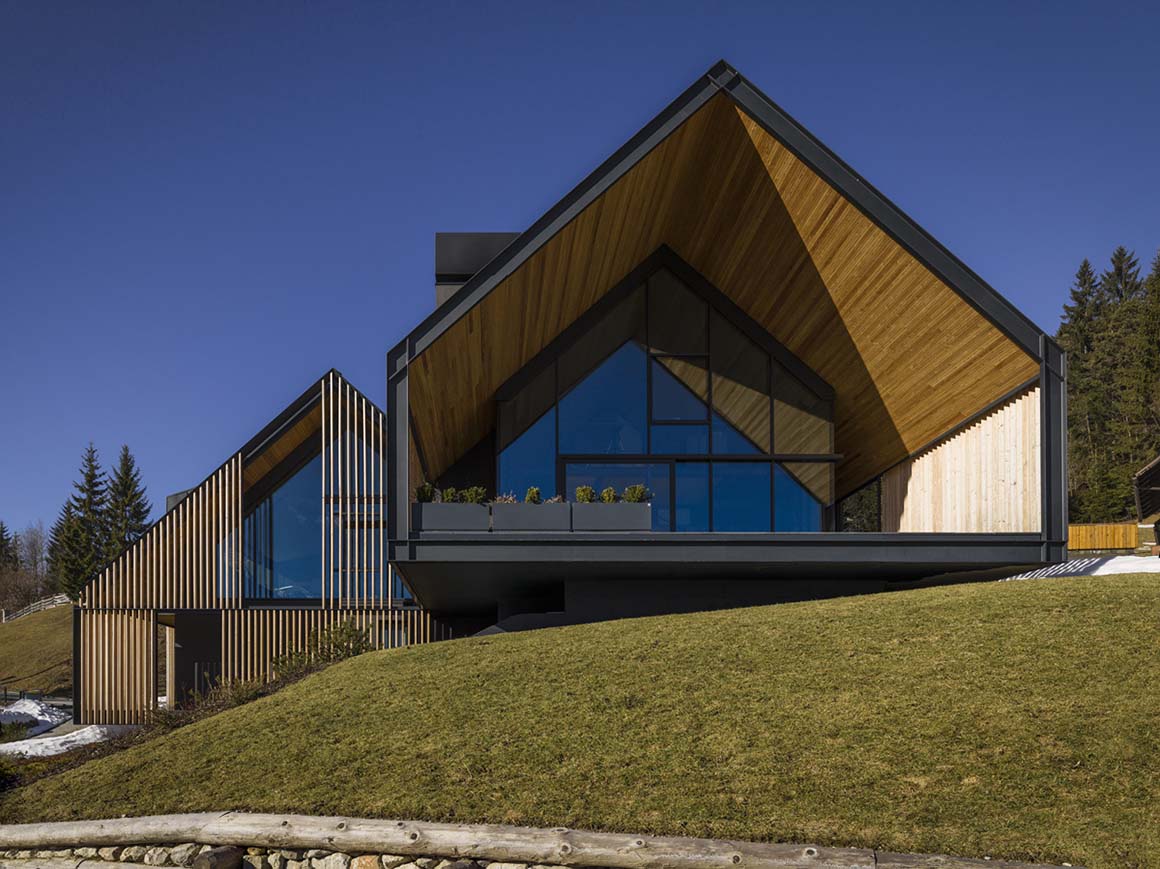
The site on which the house is placed is complex, with steep slopes, a few surrounding buildings and plenty of panoramic framings. The approach path is therefore one of the key points of the project: the road climbs steeply and the house shows itself from afar in the midst of other buildings, then hides and reappears in a scenic perspective from below where its size can be fully appreciated. To enter, however, it is necessary to turn along another path, along which the perception of the house gradually loses its built context and fits into the natural one. During this “passage”, the scale is reduced, and from a volume of three floors the visitor gets to a small and solitary monopiano volume, framed only by the landscape.
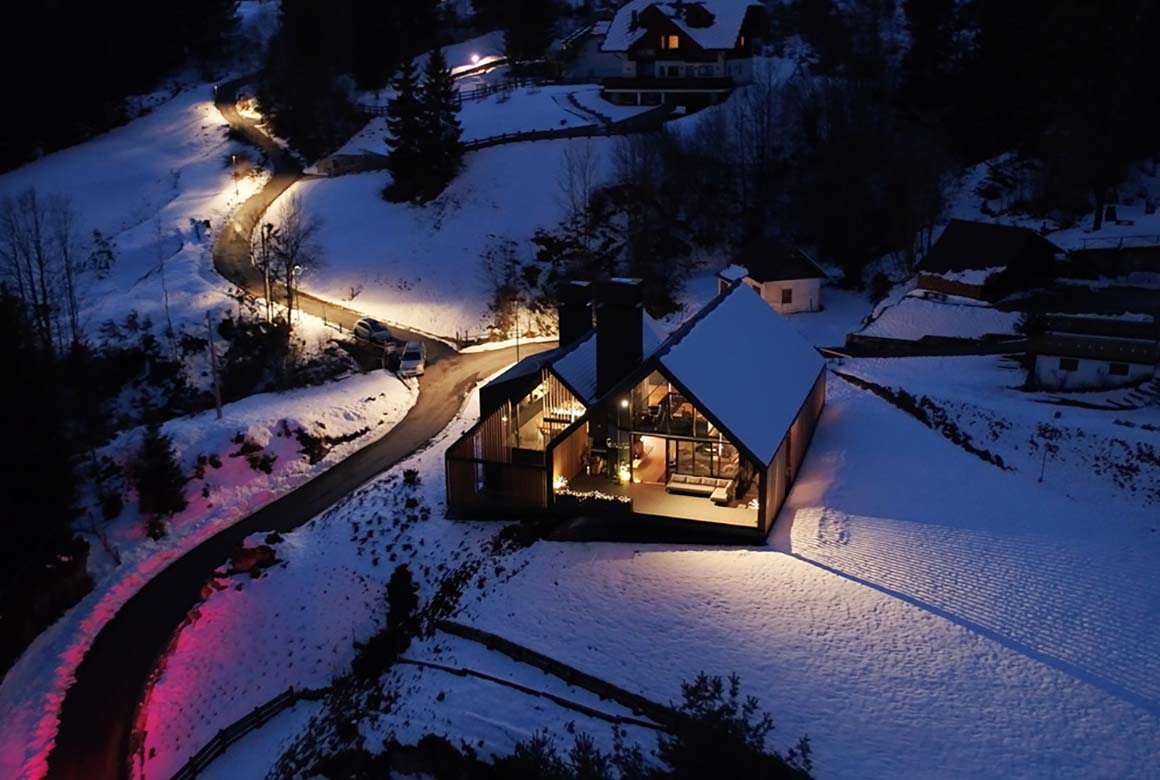
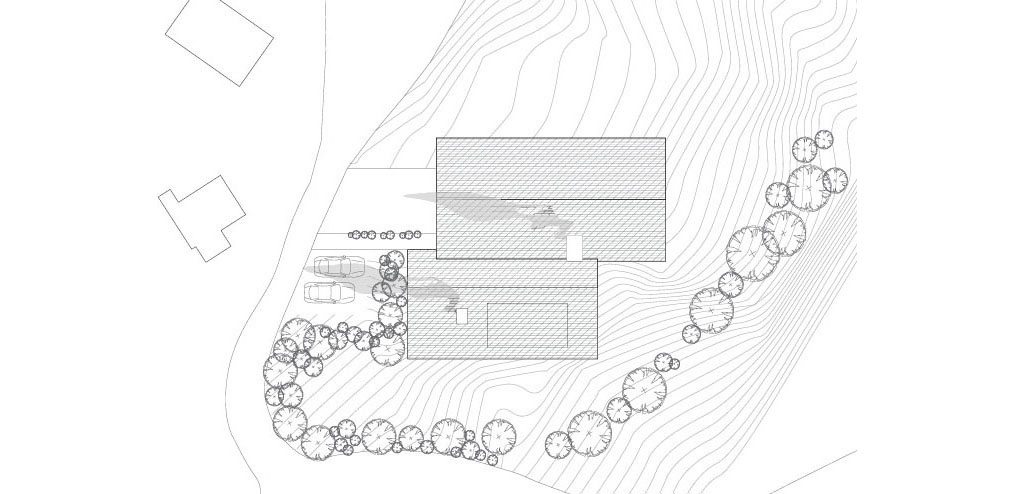
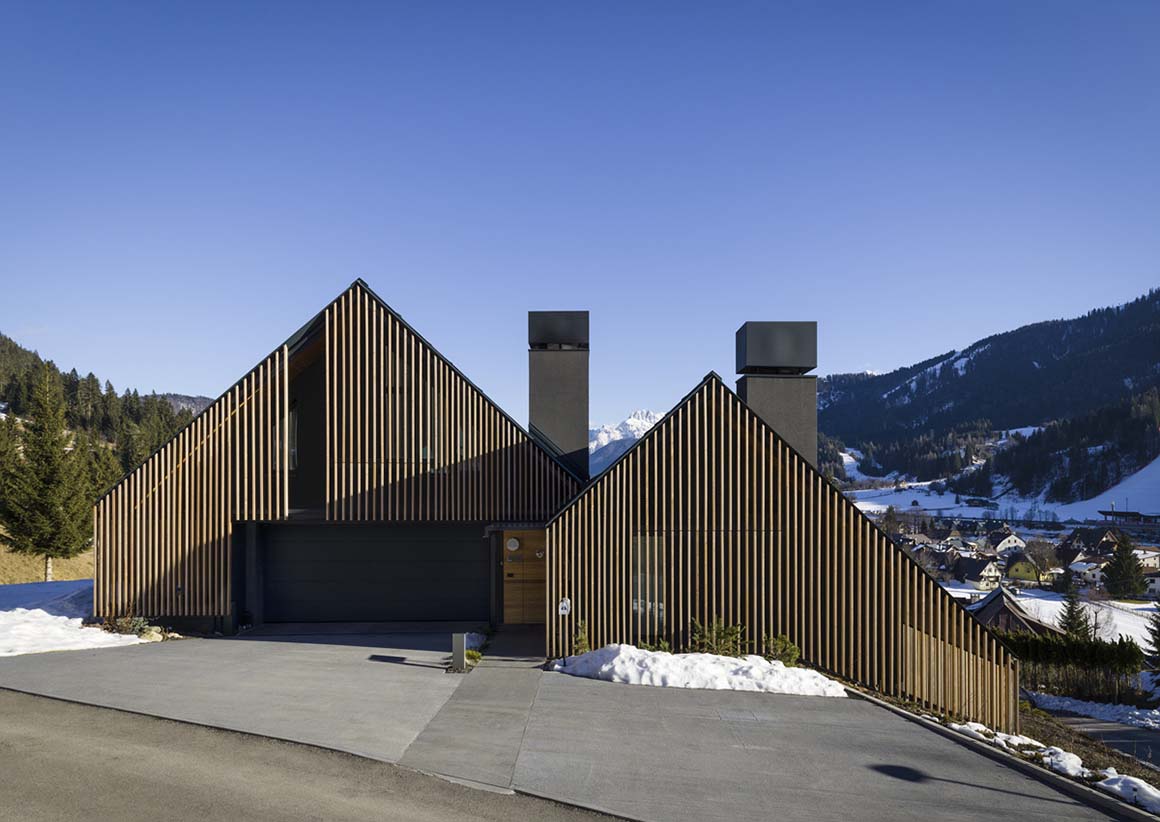
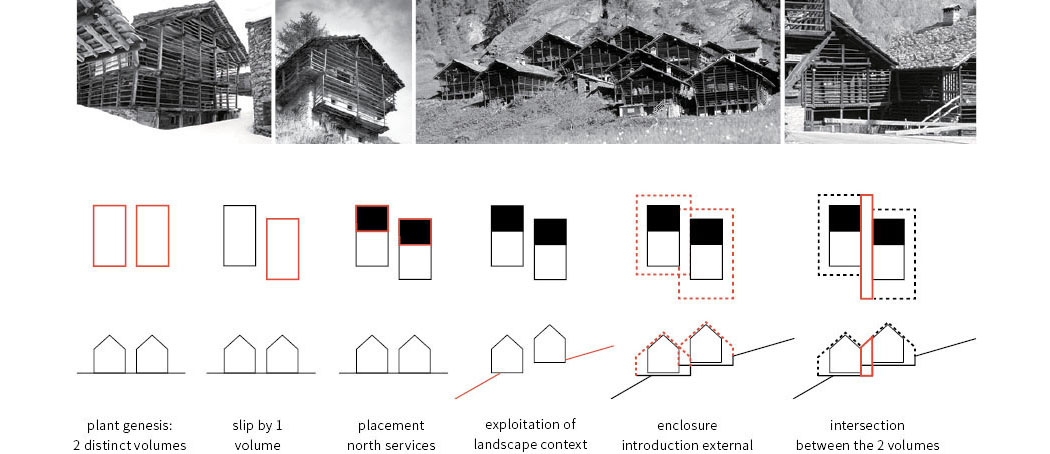
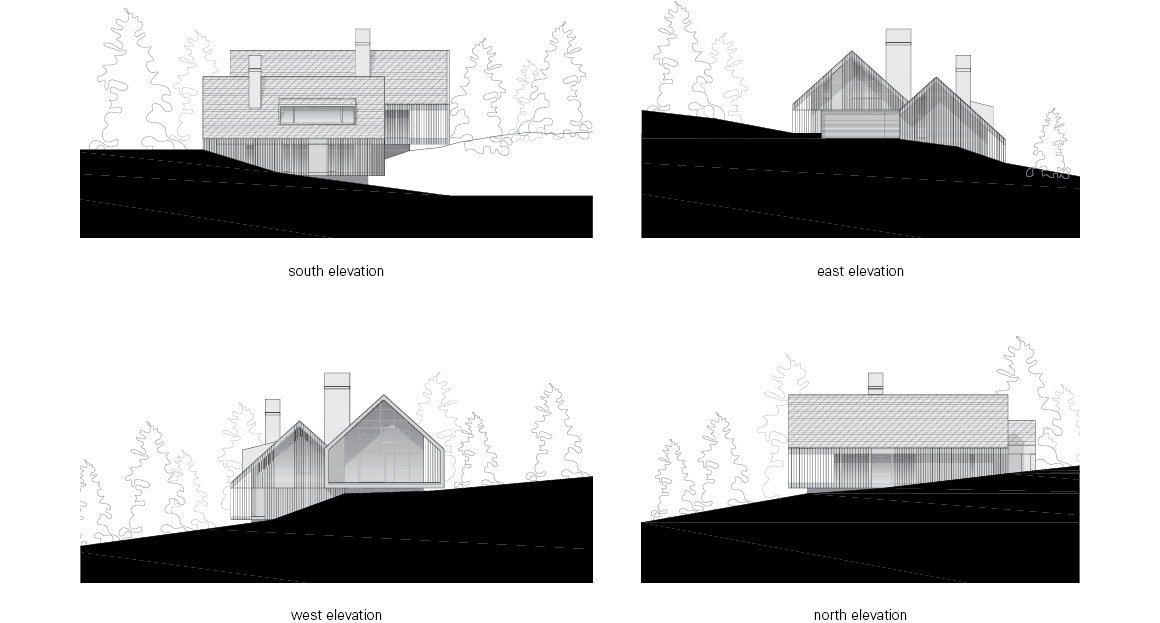
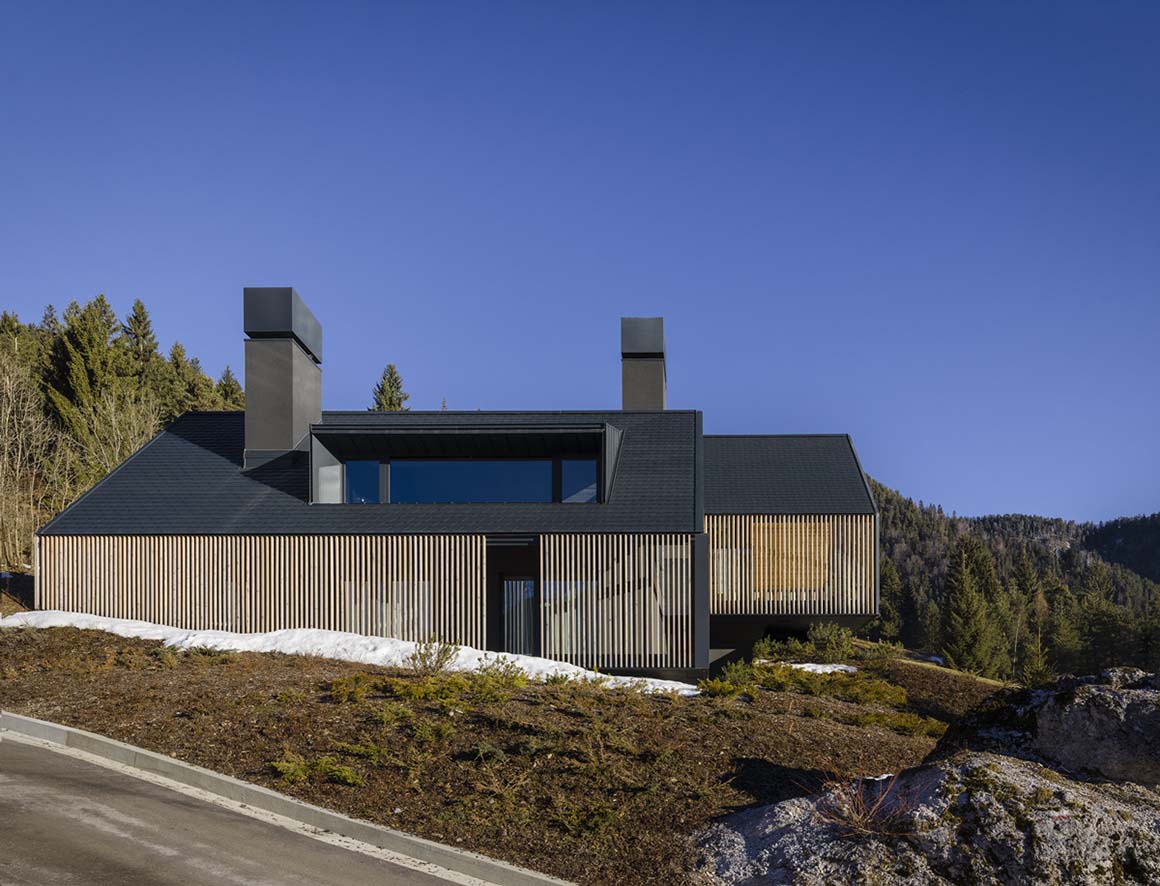
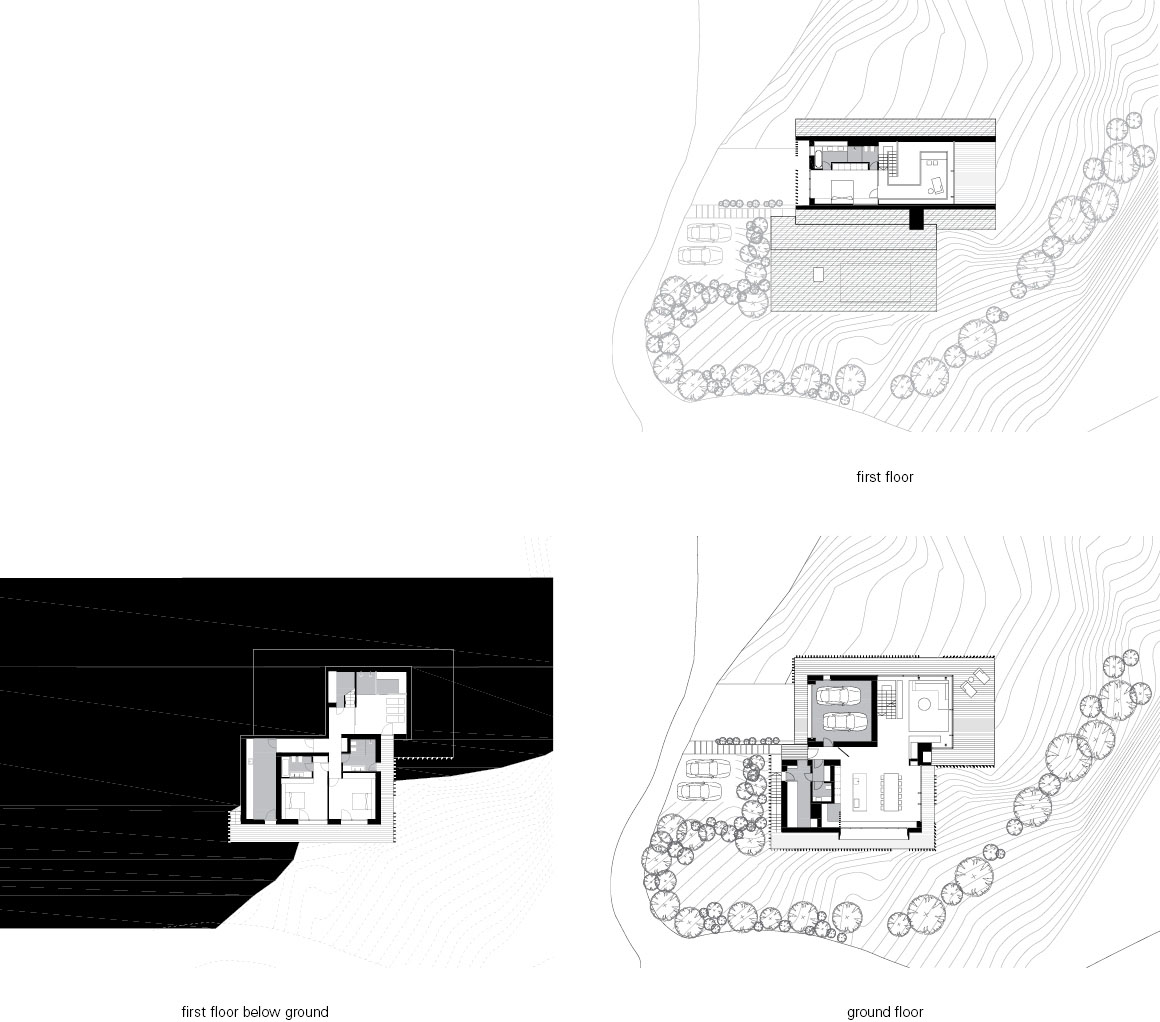
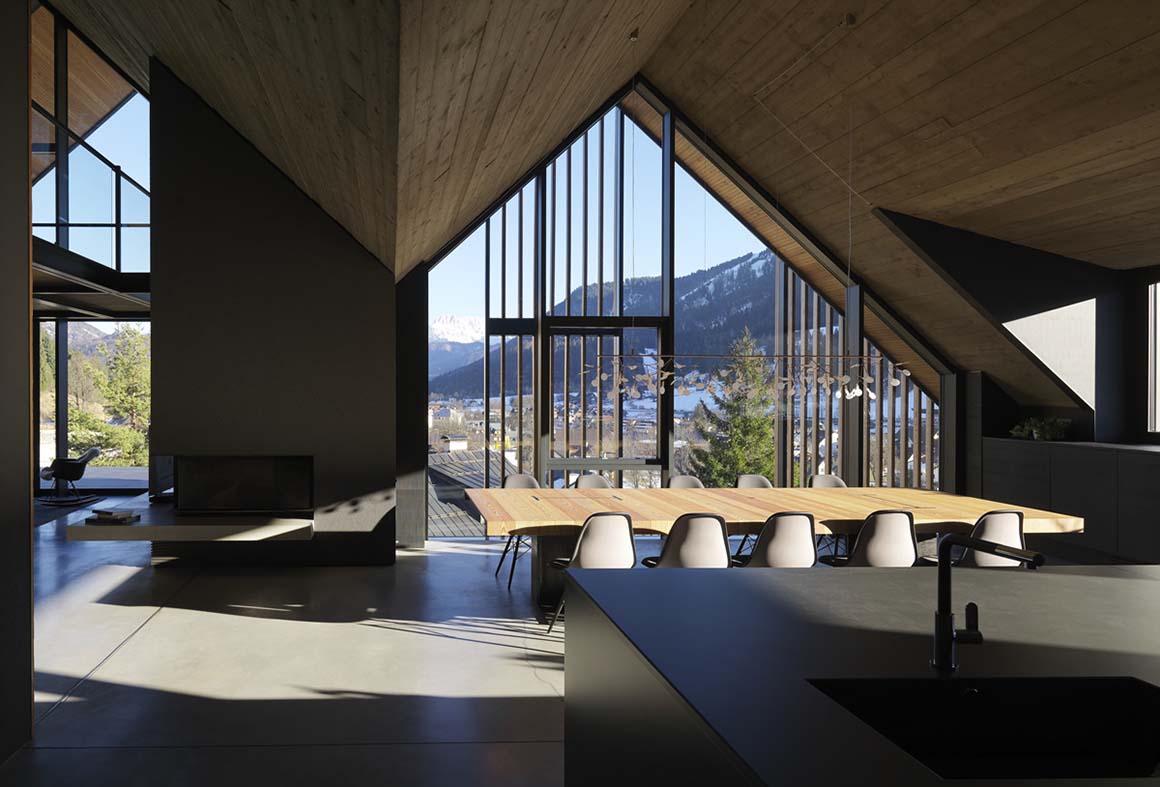
The orientation of the views determines the plan of the house: to the west is the access, with all the service volumes, to the east a large living area that looks over bright panoramas.
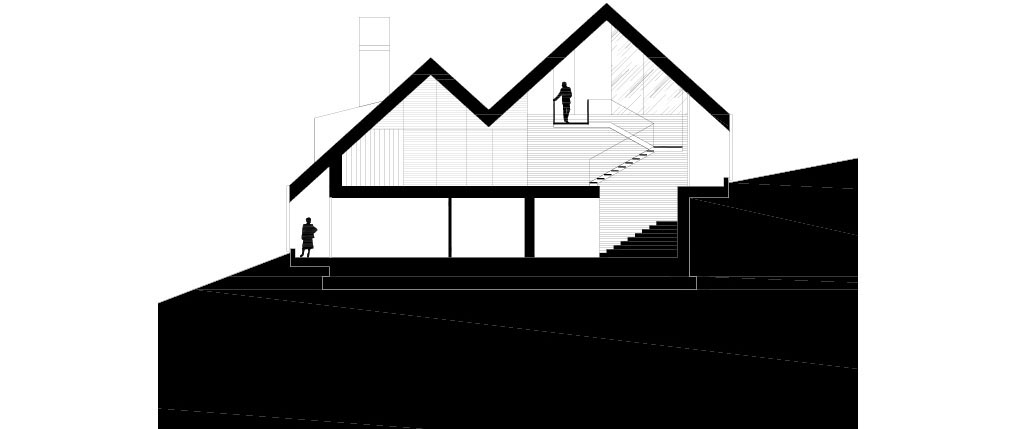
The functions requested by the owners are divided into a plant with two juxtaposed volumes that are divided into sections with different heights, which follow the contours of the land.
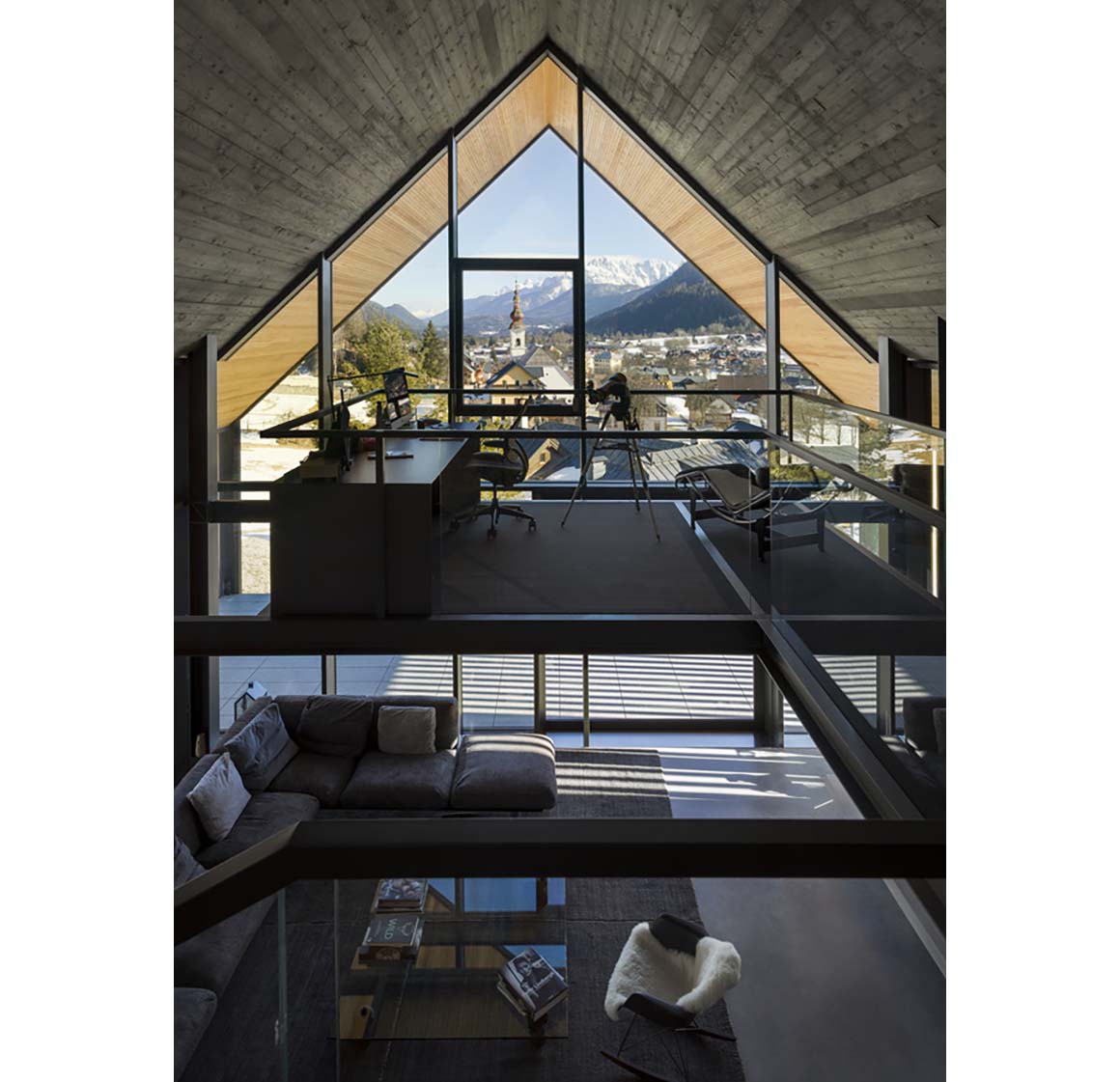
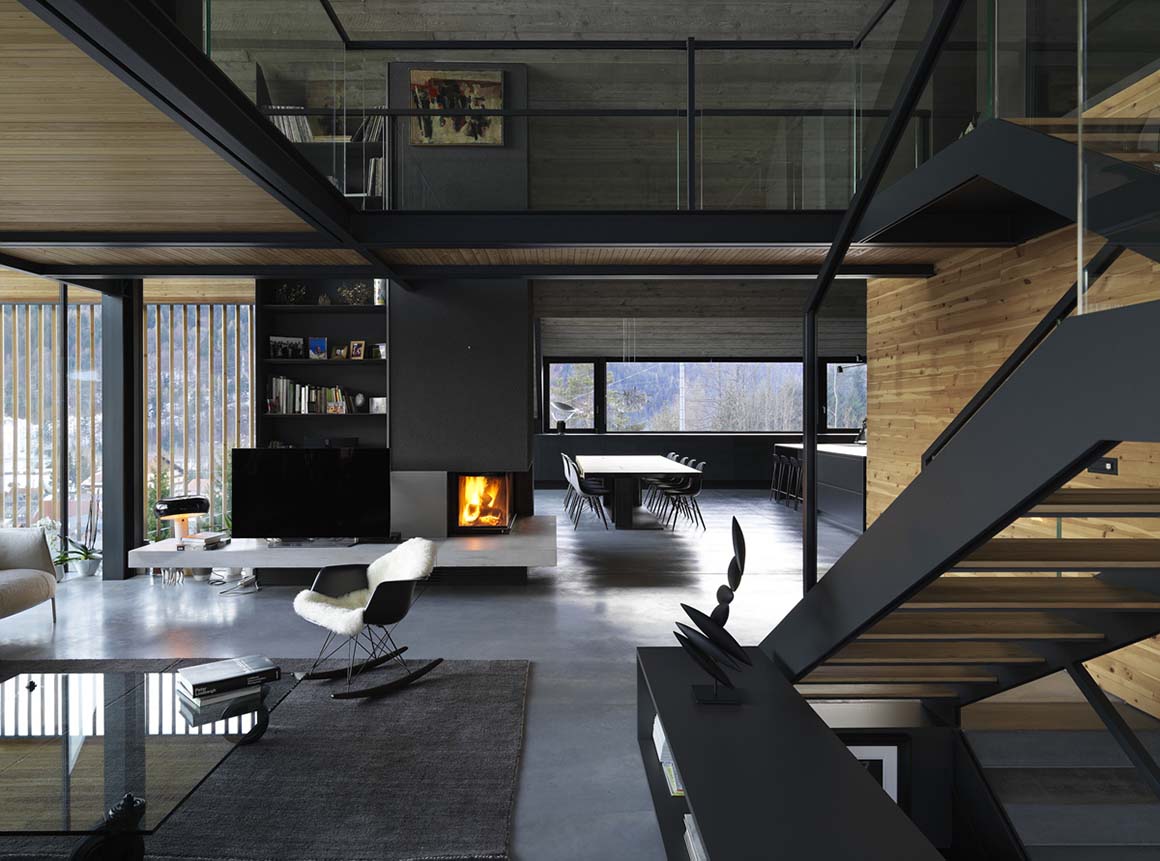
The large living area, located at the entrance level, combines these two volumes into a single fluid space, while the other functions are divided: the master bedroom is on the upper floor, overlooking the double height, while the other bedrooms, the sauna and wellness area, are located below.
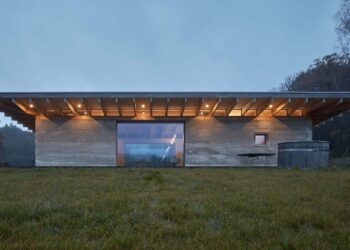
The concrete construction is visible only inside, where the exposed floors and ceilings, suspended on glass façades, accentuate the lightness of the roof.
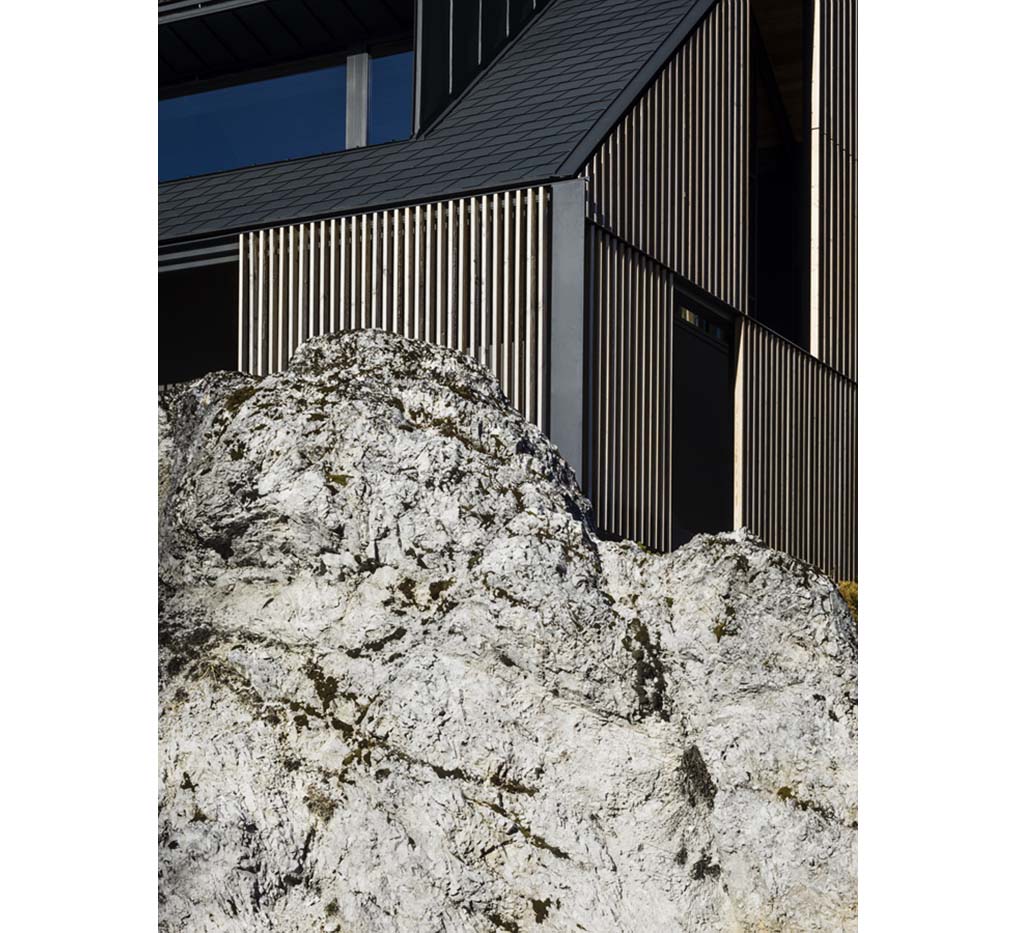
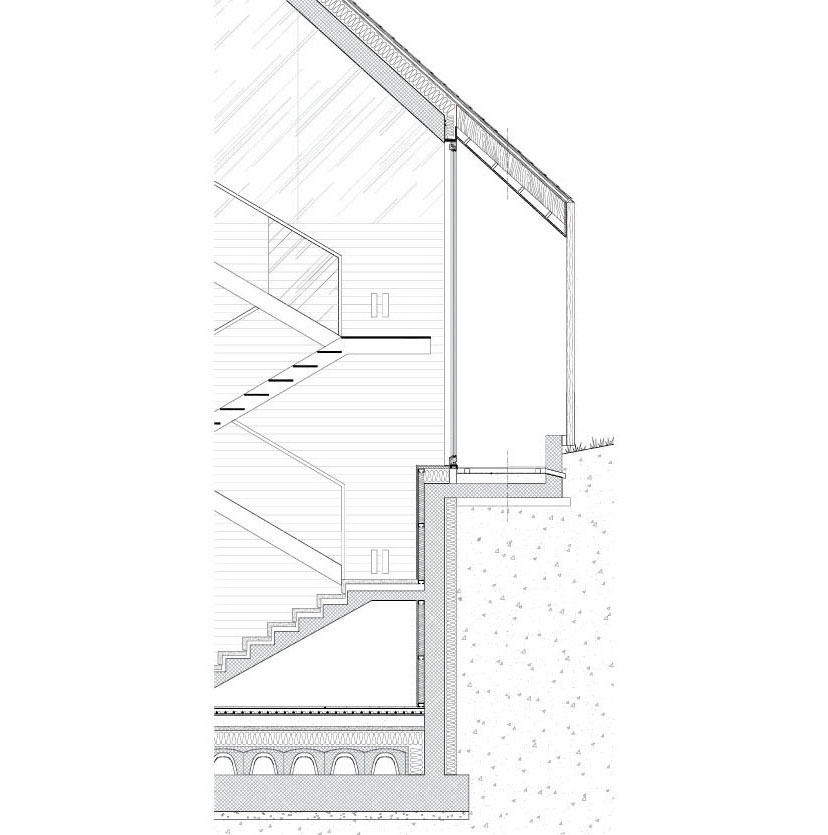
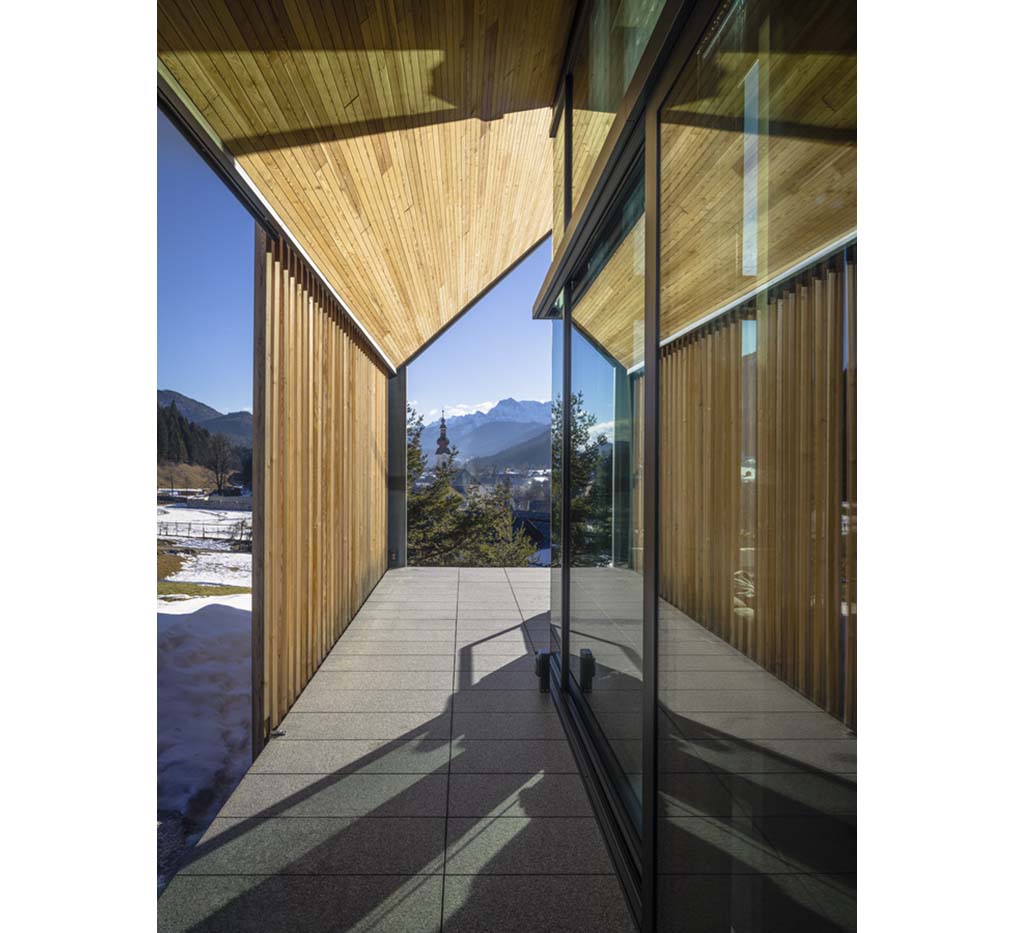
From the outside the house is characterized by an external “skin” made of wood, like much traditional alpine architecture. Today this façade loses the traditional functions related to agriculture, and becomes a sun-breaker, a necessary element of solar control and energy-savings.
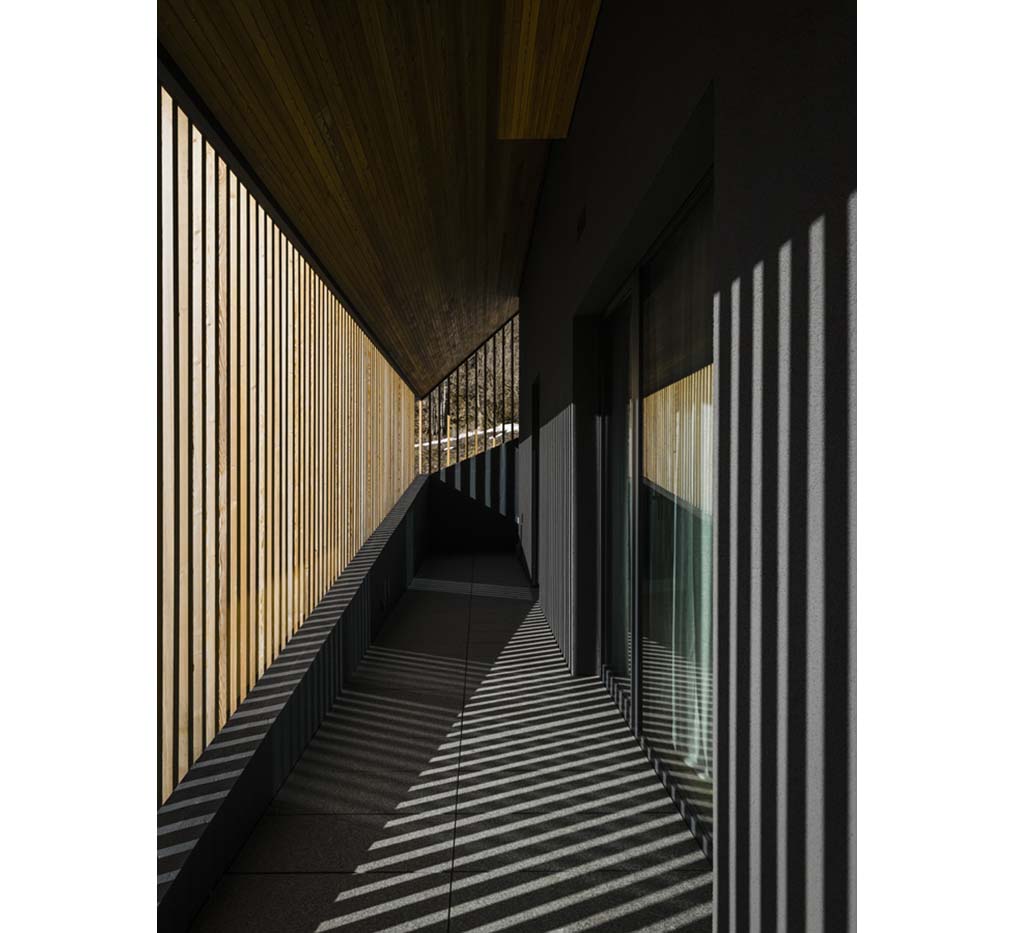
The theme of lightness guides the design of the external sunshade (of vertical larch blades) that surrounds the whole building, regulating the relationship with light and scenery, and invents a filter space between the internal (private) world and the outside (public) world.
These wooden blades have different orientations. They condition the internal relationship between inside and outside, allowing constant light changes on the outer skin to create subtle and iridescent vibrations with the bright light of the Alps.
Project: Z House / Location: Tarvisio, Udine, Italy / Architect: GEZA Gri e Zucchi Architettura srl – Stefano Gri, Piero Zucchi, Stefania Anzil, Tina Carletti, Marjana Dedaj, Elisa Mansutti / Structural design, Supervision of works: Alessandro D’Agostino (Adastudio) / Mechanical plants design: HT Engineering / Electrical plants design: Studio Battista / Contractor: Impresa Edile Pellegrini & C / Mechanical plants: Astel srl / Electrical plants: Elettrotecnica Manzanese / Carpentry works: Malisan Franco & C snc / Furnitures and boiseries: Floreani snc / Area of intervention: 933m² / Area: 195m² / Volume: 875m³ / Design: 2014 / Completion: 2016 / Photograph: Gianni Antoniali