

A Cultural Landscape in Eight Volumes
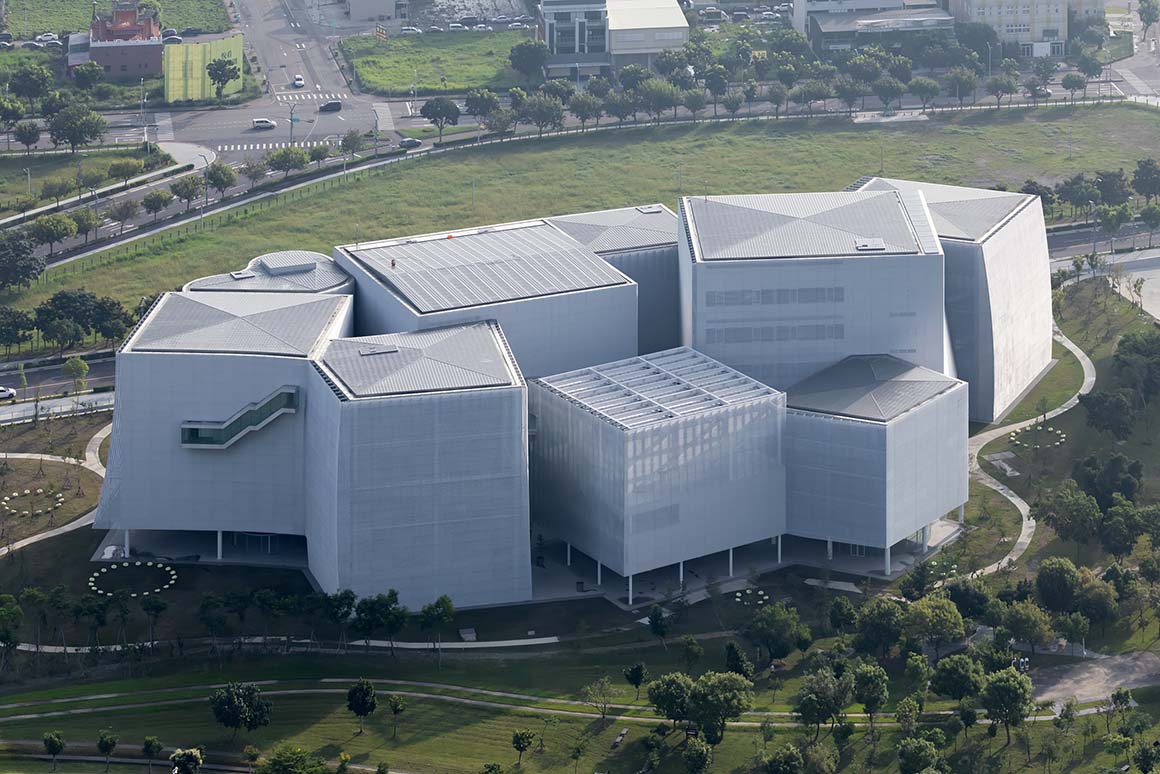
Considered one of Taiwan’s most significant cultural projects of 2025, Taichung Green Museumbrary officially opened to the public on 13 December. As its name suggests, Taichung Green Museumbrary combines the Taichung Art Museum and the Taichung Public Library, proposing a cultural model in which reading, exhibition, learning, and everyday activities coexist.
The Museumbrary is located at the northern edge of Taichung Central Park, a 670,000-square-metre green space at the heart of the city. Positioned between dense urban fabric and open landscape, the building operates as an interface between city and park. Rather than presenting a singular front, the architecture engages its surroundings from all sides, allowing the park to flow through and around the building.
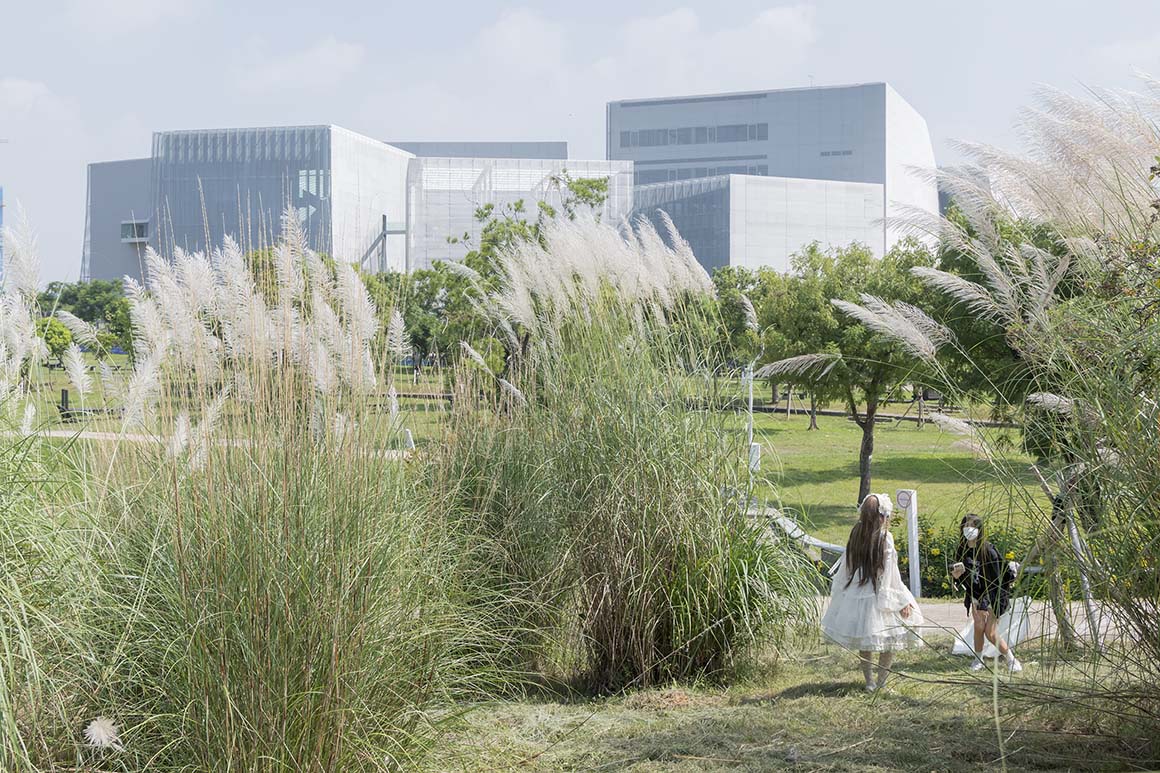
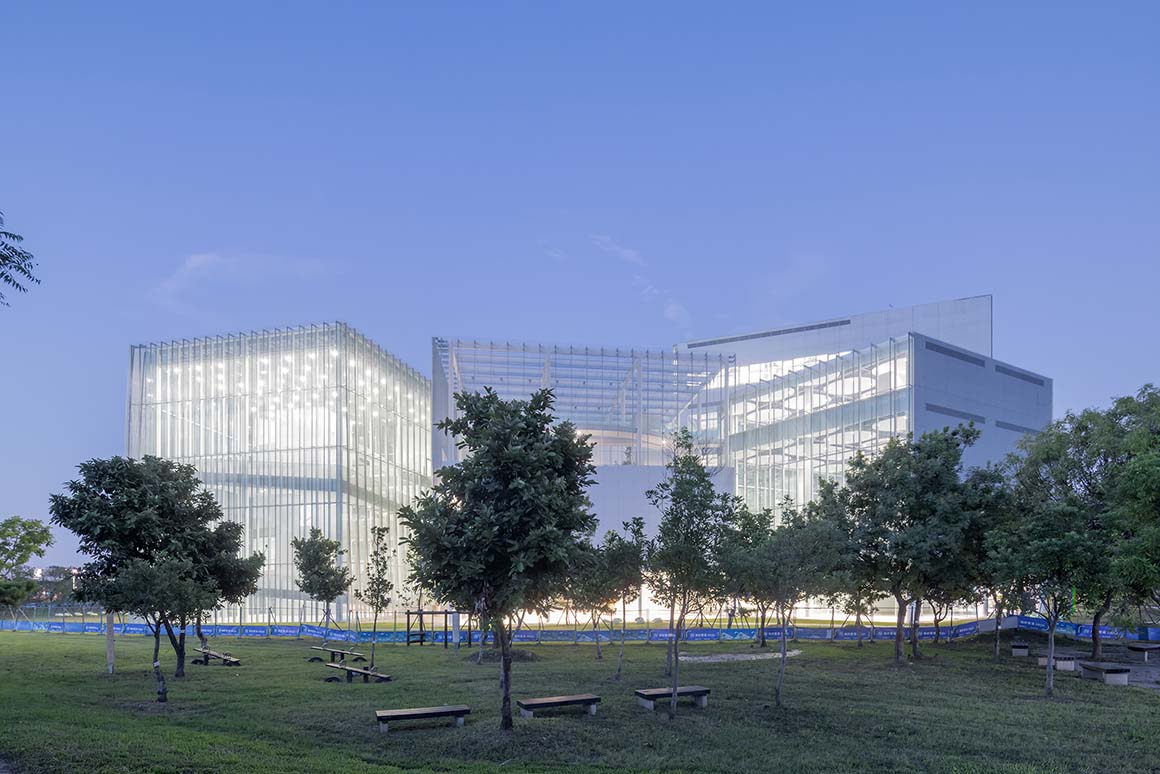
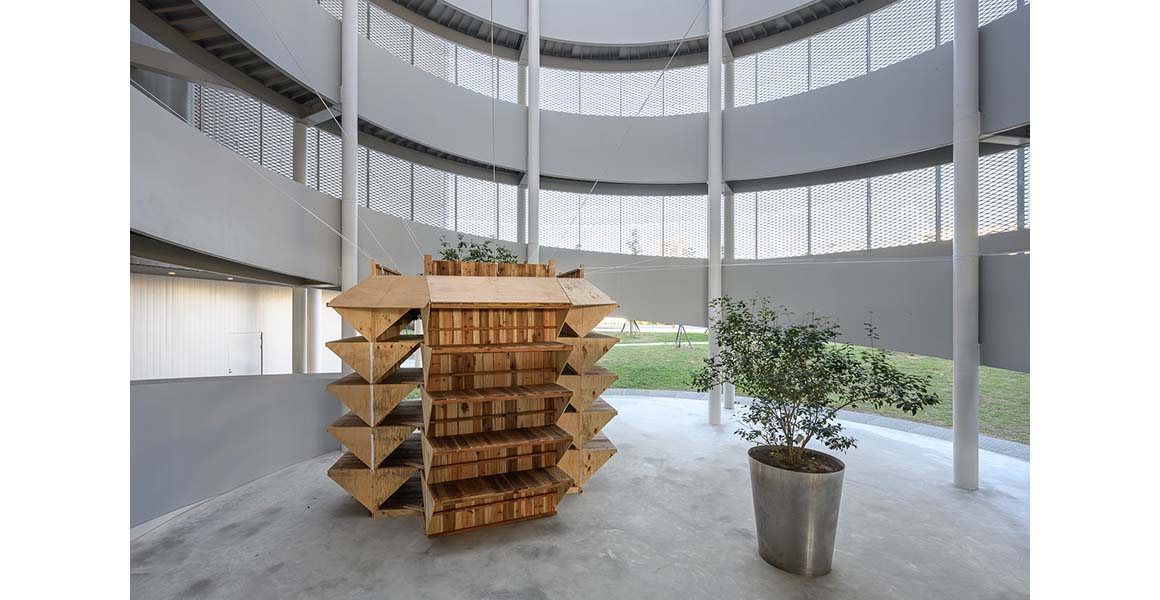
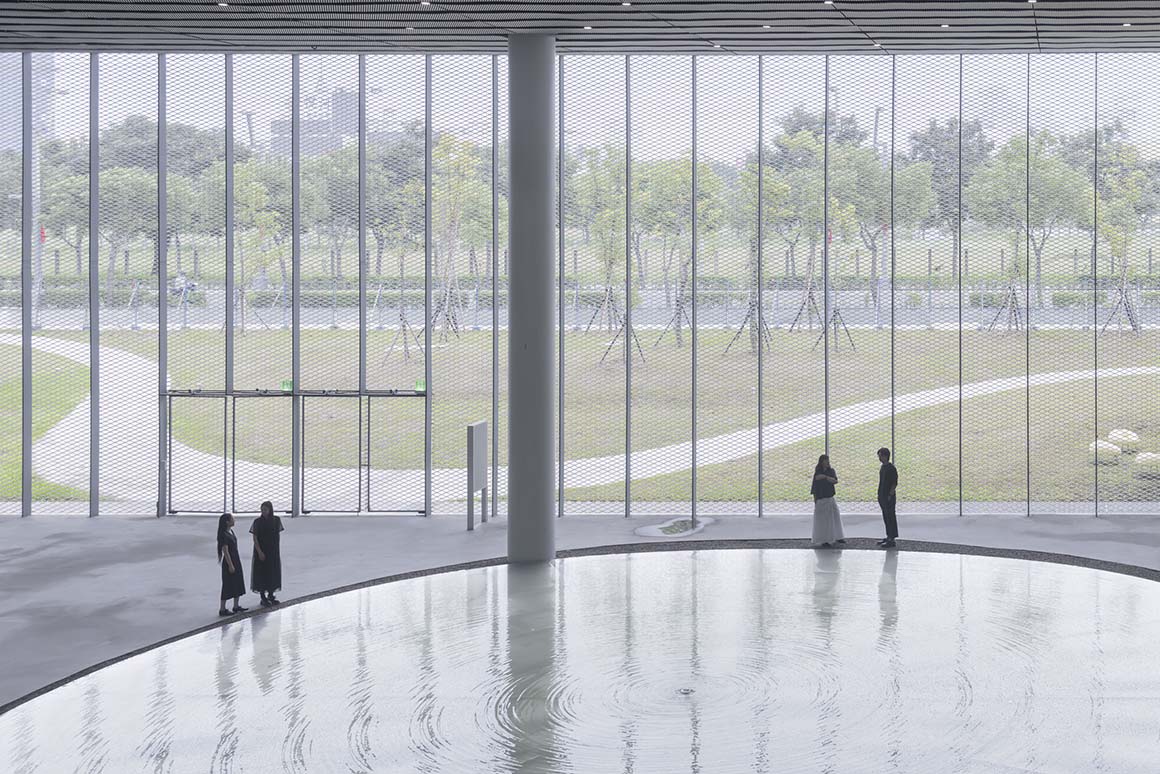
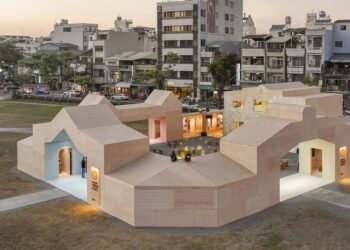
Instead of forming a single monolithic mass, the Museumbrary is composed of eight distinct volumes. These accommodate different programs—including exhibition galleries, reading rooms, and administrative spaces—and vary in size, height, plan, and section. Loosely arranged across the site, the volumes generate interstitial spaces that allow light, air, and views of the park to penetrate deep into the complex. Approaching from the park, visitors are naturally drawn into the building through these porous gaps, where the boundary between interior and exterior gradually dissolves.
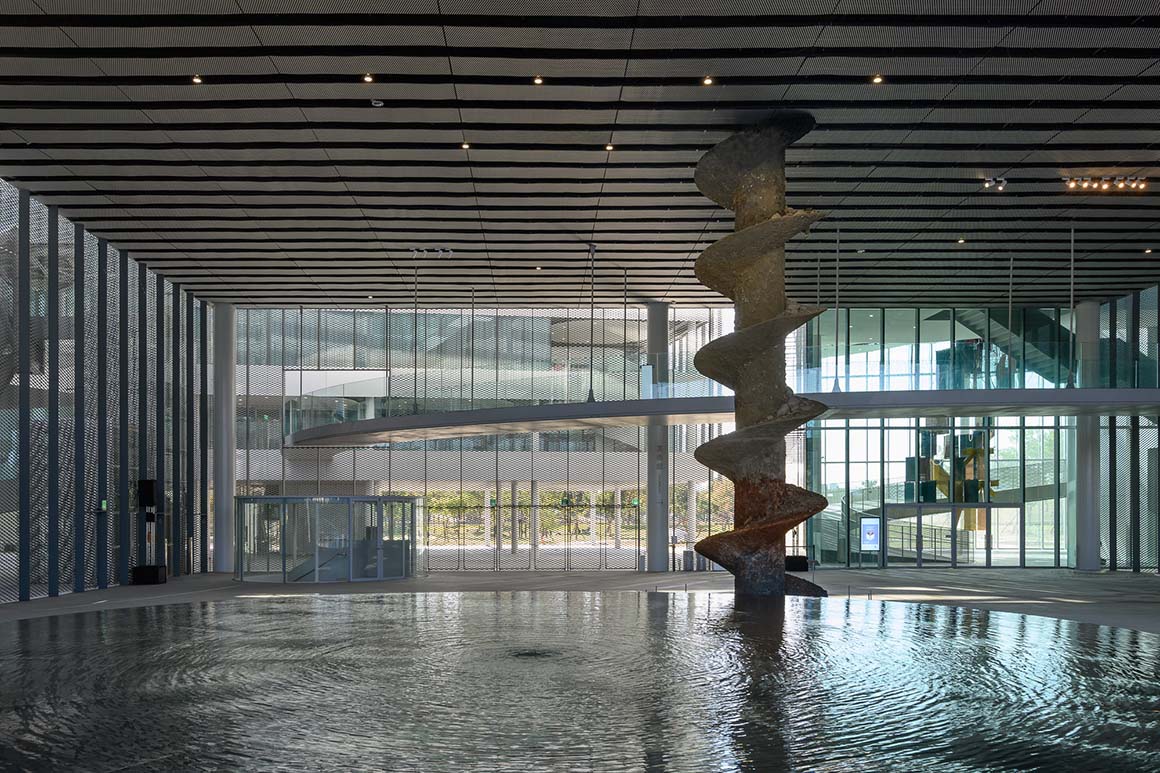
Several volumes are lifted above the ground, forming piloti spaces beneath. Designed in response to Taichung’s strong sunlight and frequent rainfall, these shaded areas function as open public spaces rather than simple circulation zones, supporting rest, gathering, and informal activity.
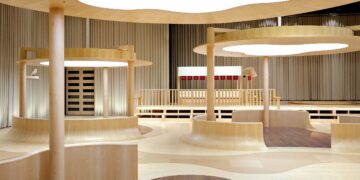
Within the building, the art museum and library are not clearly separated. Instead, the two programs intersect at multiple points, forming what the architects describe as “Fusion Spaces,” where exhibition, reading, learning, and relaxation occur side by side. Relationships between floors are similarly fluid: spaces on different levels are visually and physically connected, intertwining museum and library both vertically and horizontally. Rather than enforcing a fixed route, the building encourages visitors to explore according to their own pace and interests.
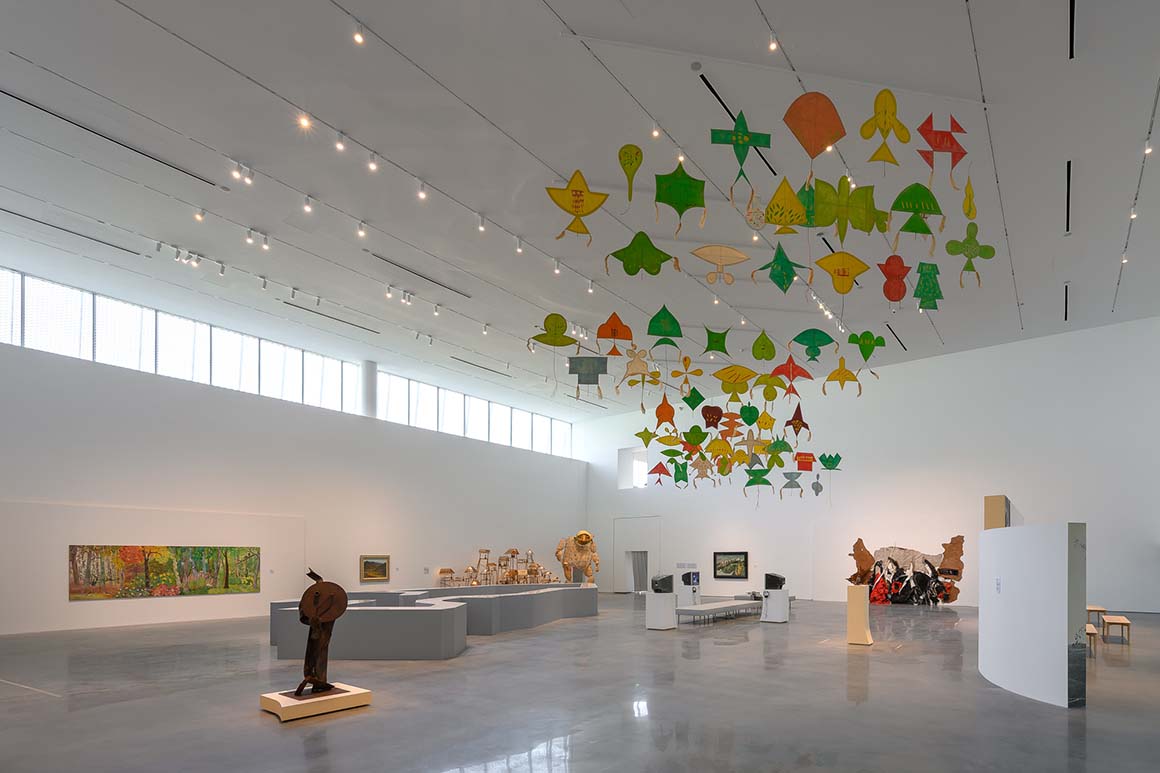
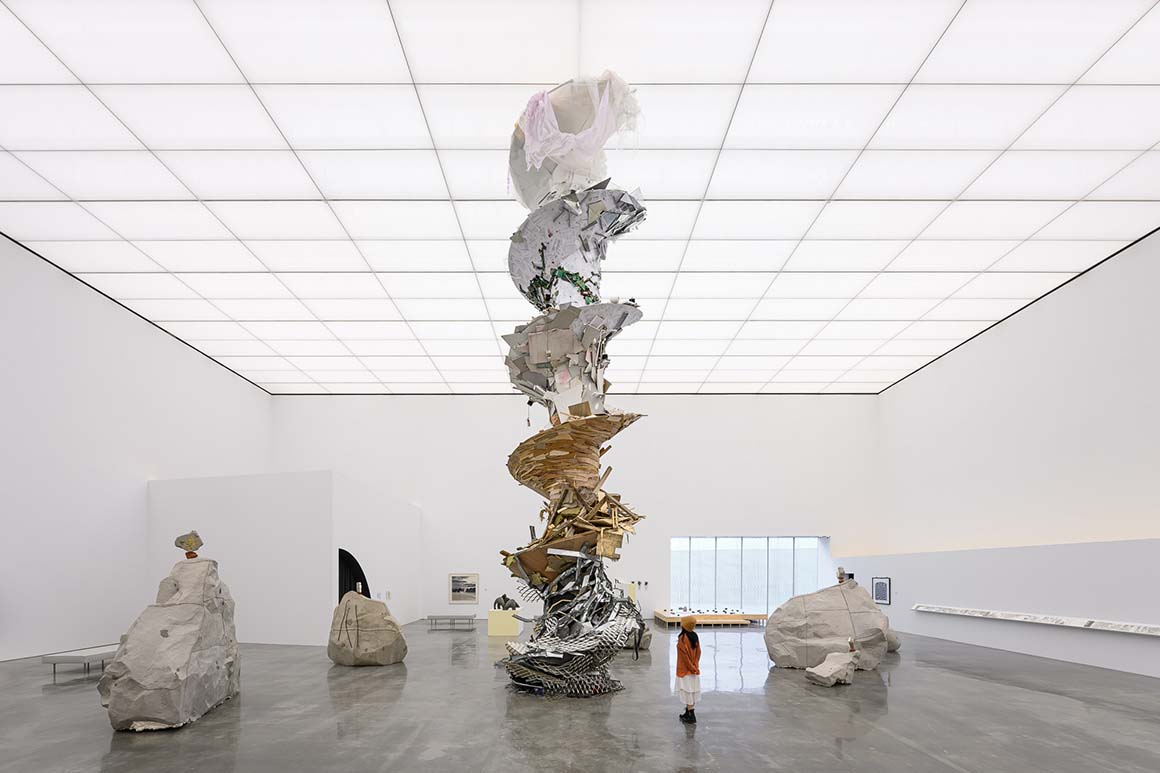
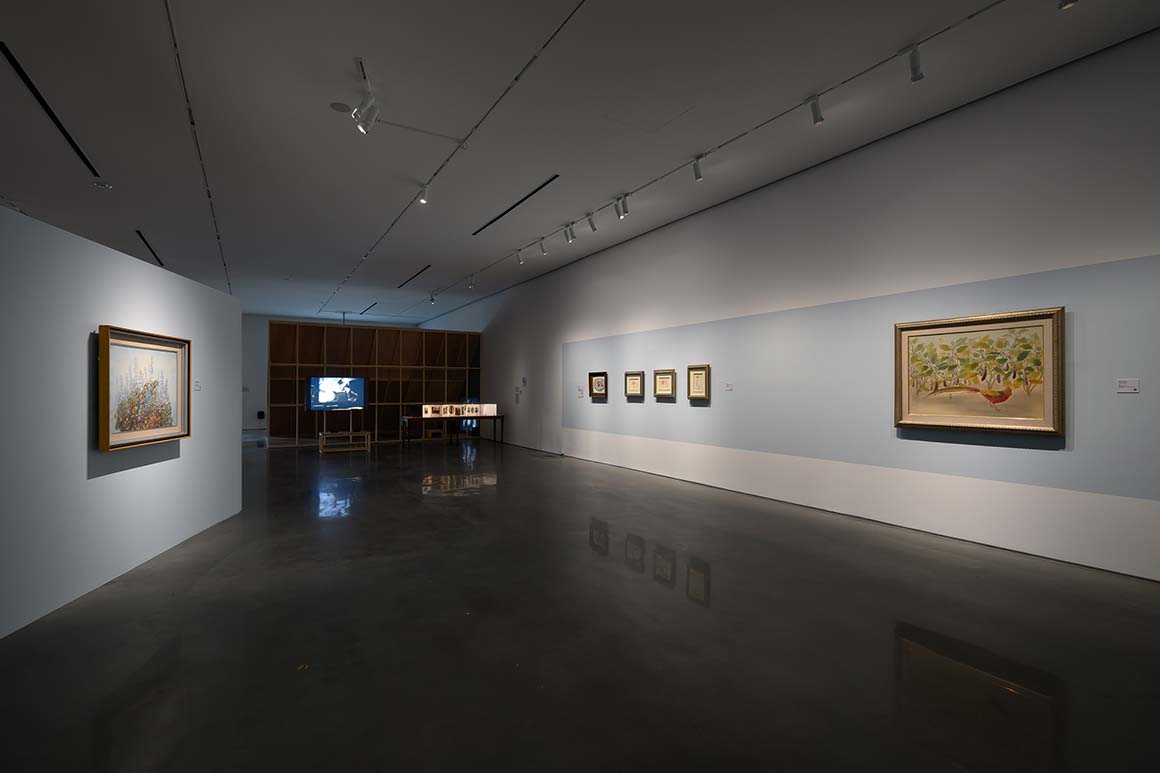
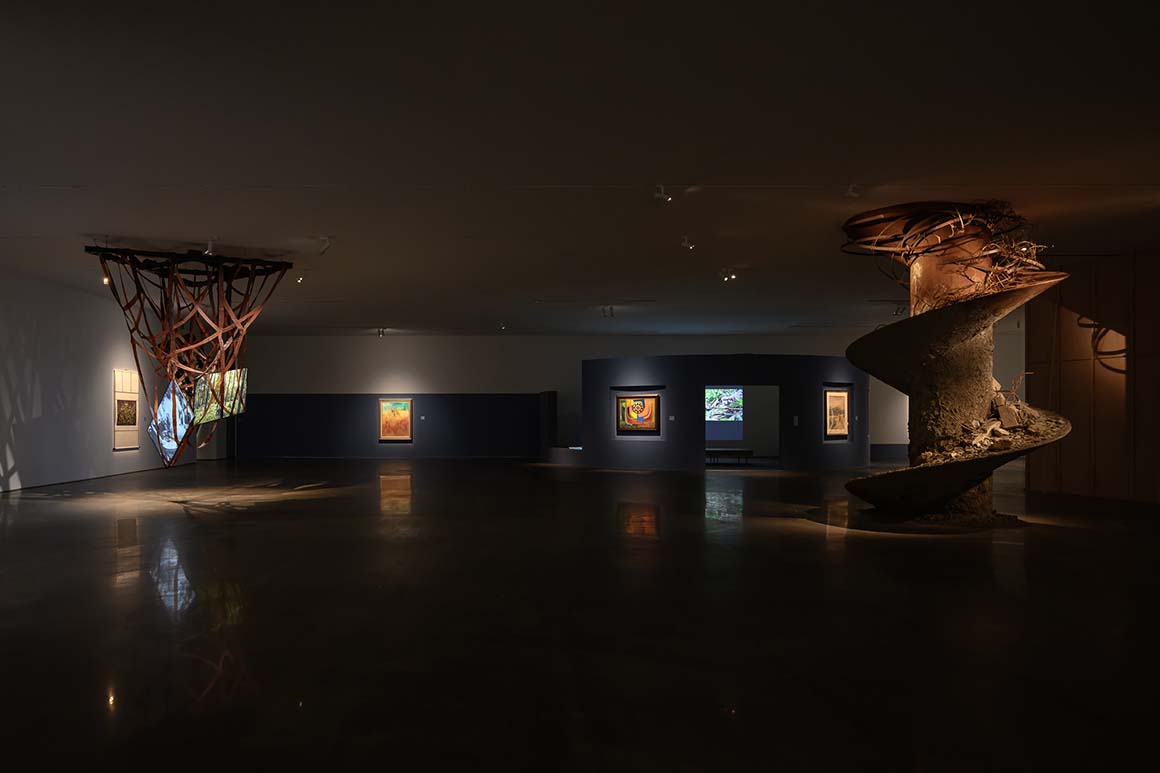
Exhibition spaces vary in character. Galleries with different ceiling heights, lighting conditions, and aperture designs are arranged around a central atrium and connected by a gently sloping ramp, enabling flexible movement without a prescribed sequence. The library likewise offers varied spatial atmospheres; differences in light, depth, and orientation across floors allow users to discover places to read and linger.
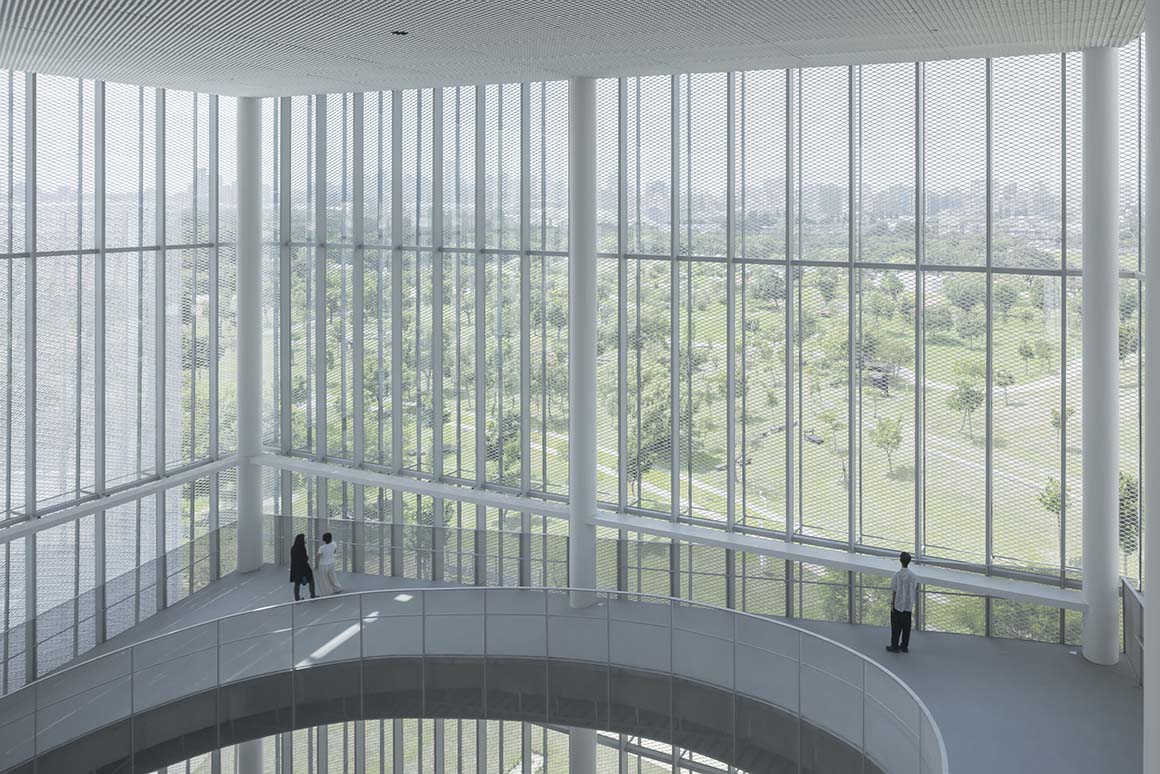
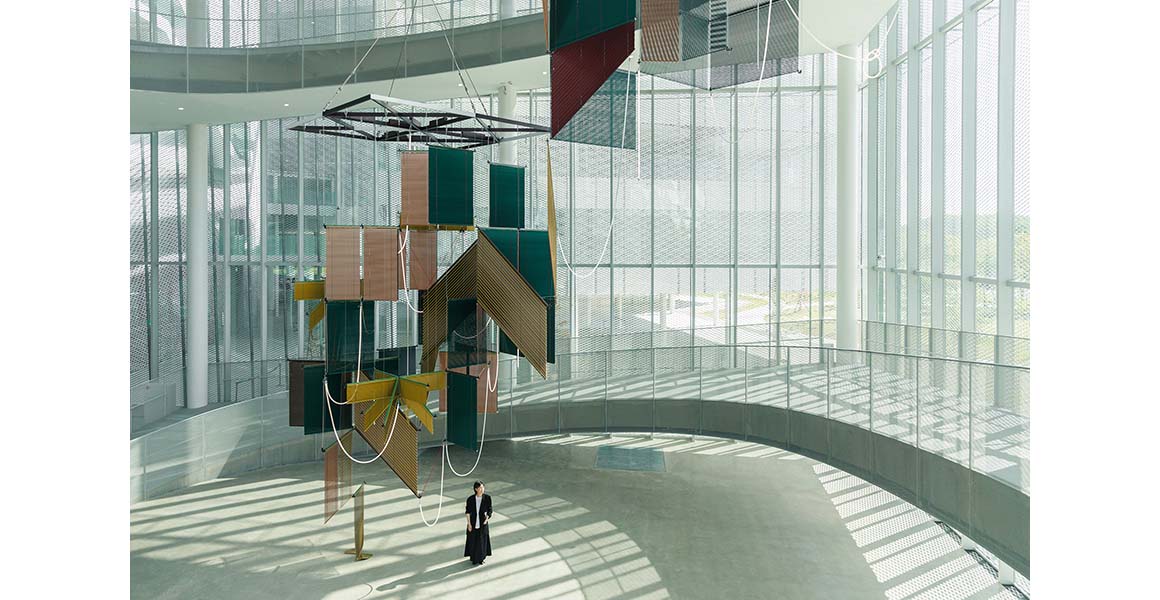
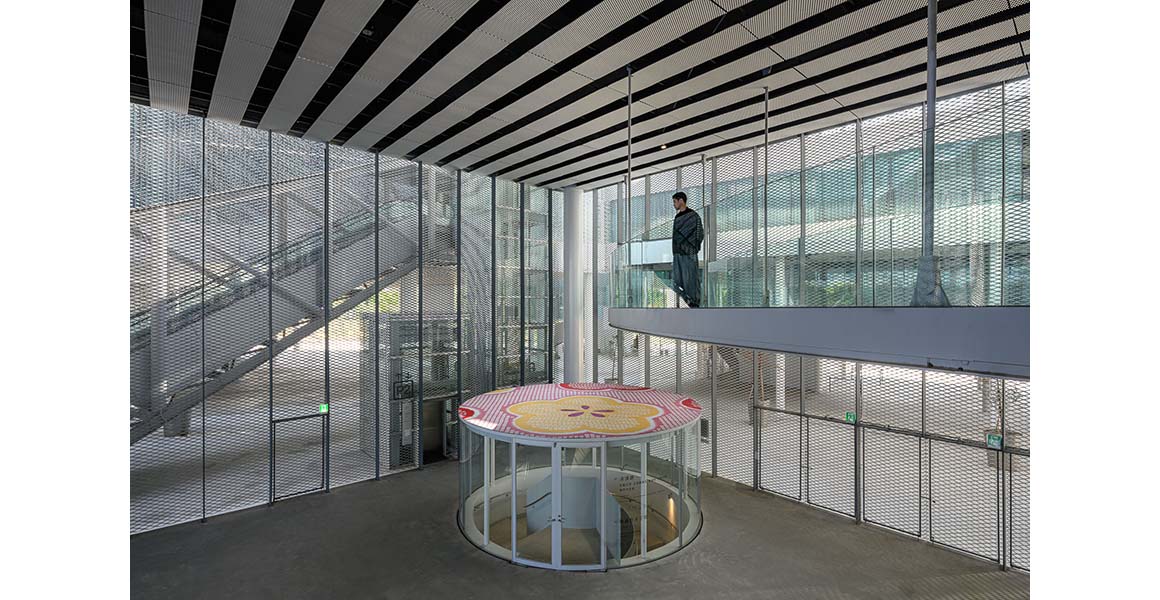
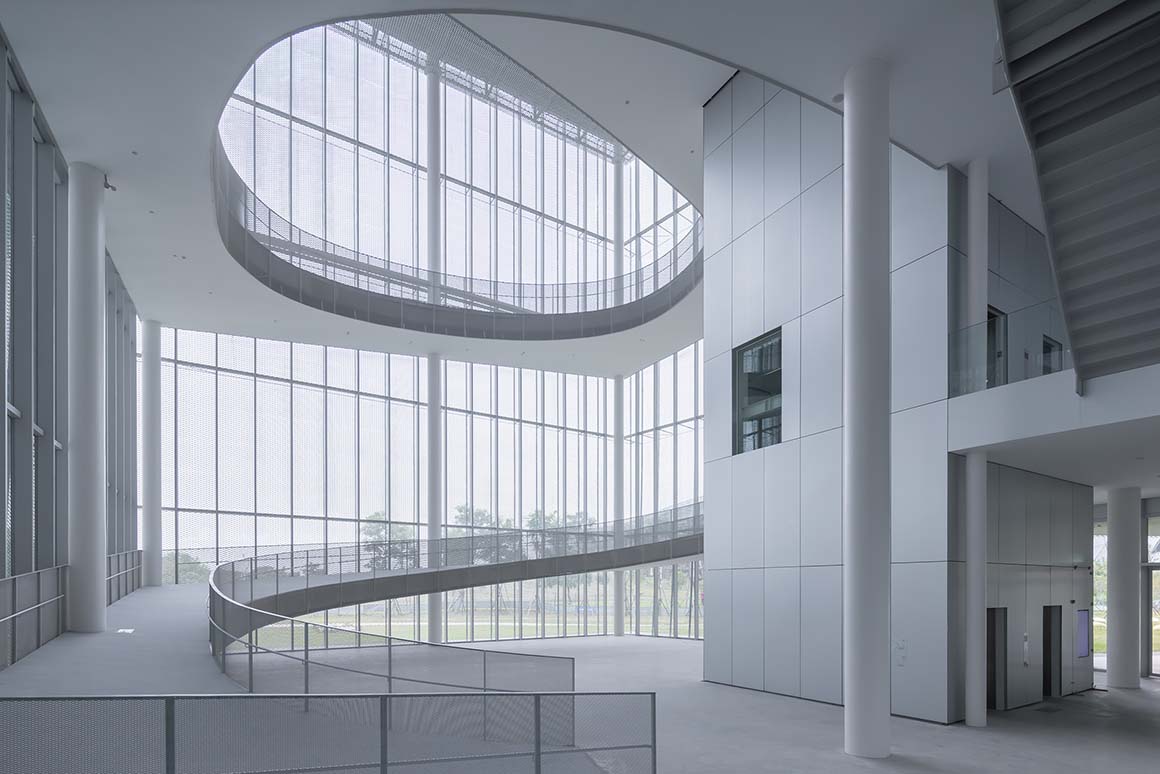
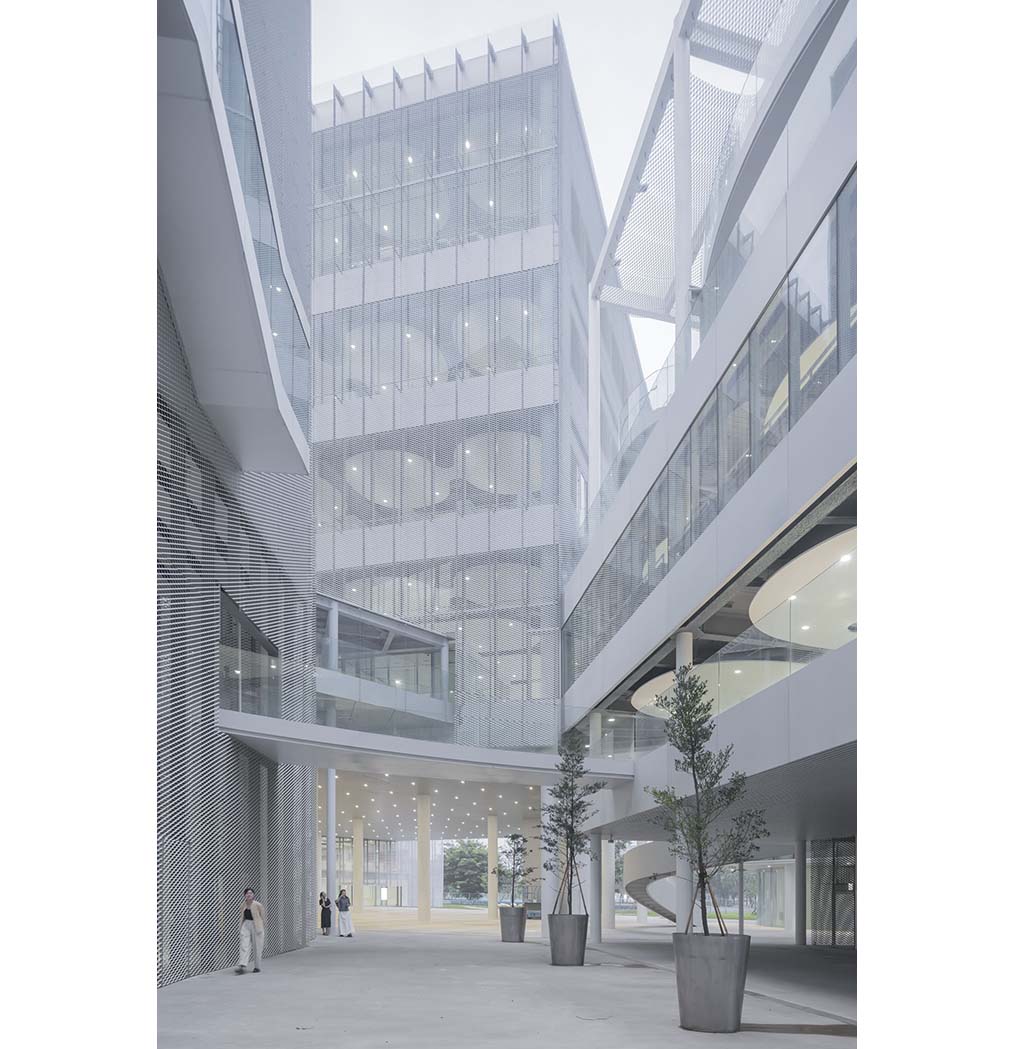
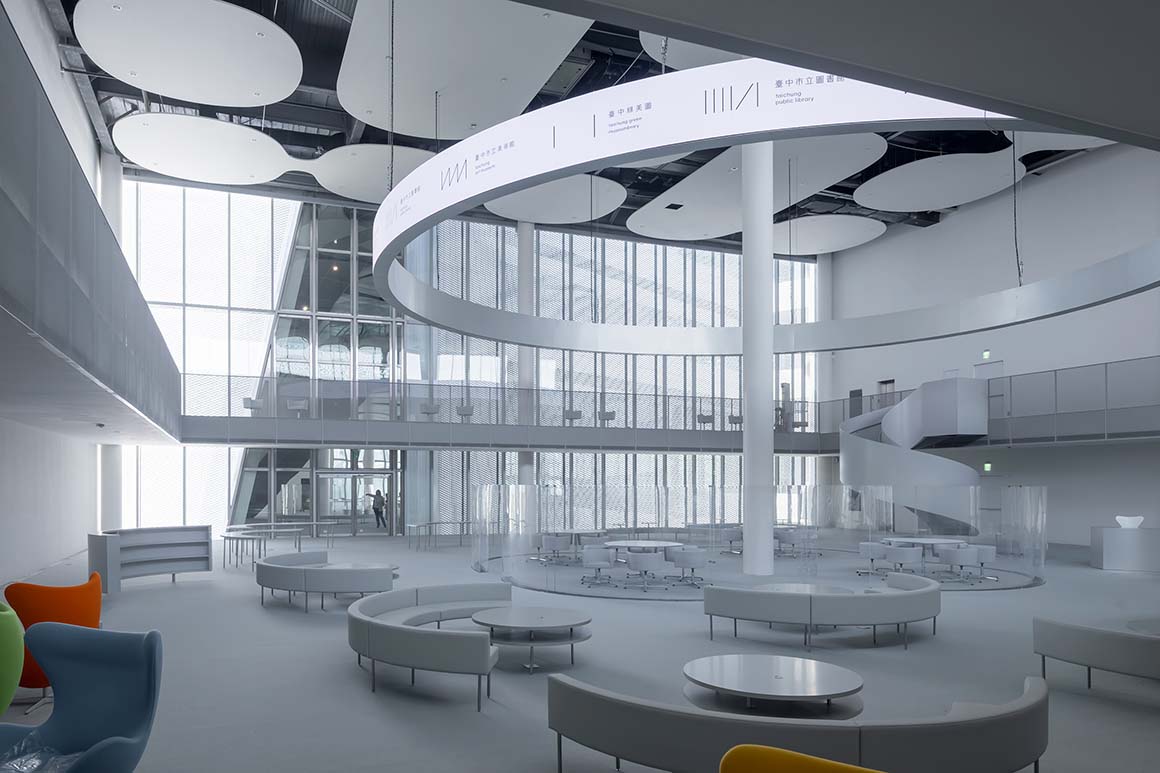
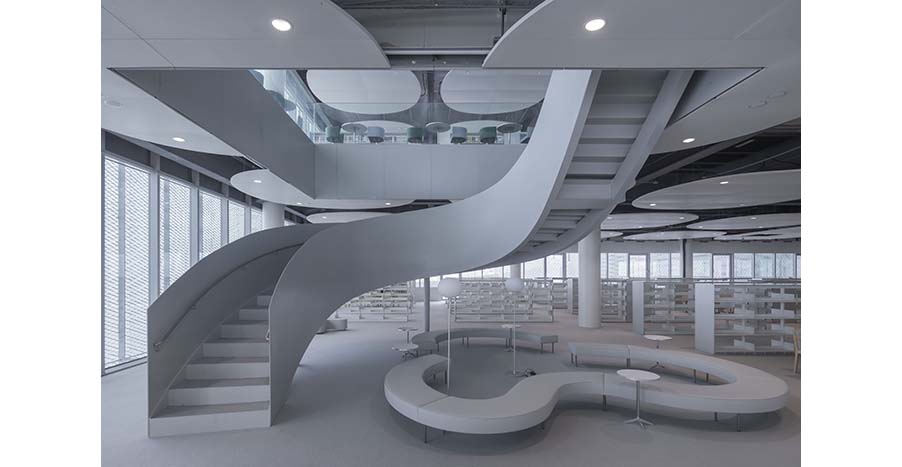
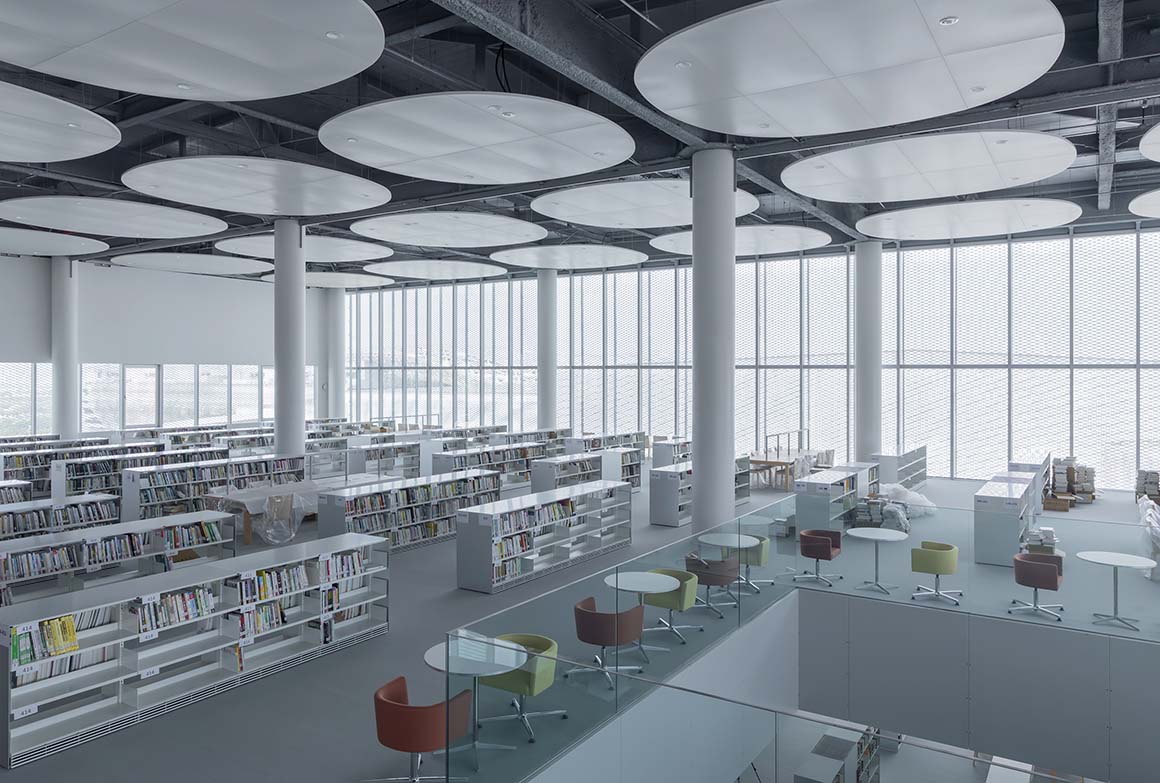
The building envelope consists of layered glass and white expanded metal mesh. The outer mesh softens the building’s outline while subtly revealing interior activity and filtering views of the park inward, contributing to a moderated indoor environment.
Above, a rooftop garden offers views of both park and city and functions as another public space. Together with the piloti areas, these exterior spaces are connected by two bridges that traverse multiple levels, linking the eight volumes into a continuous spatial experience. Through this network, Taichung Green Museumbrary moves beyond the idea of architecture as a singular object, instead establishing itself as a cultural landscape woven into the park.
Project: Taichung Green Museumbrary / Location: Taichung City, Taiwan / Architect: SANAA / Lead architects: Kazuyo Sejima, Ryue Nishizawa / Use: museum and library complex / Gross floor area: 57,996m² / Structure: basement_flat slab (beamless) concrete; above ground_ steel system combined with isolation and dampers + grid beam / Competition: 2013 / Architectural design: 2014~2018 / Interior design: 2020~2021 / Construction: 2019~2024 / Interior construction: 2023~2025 / Completion: 2025. 7 / Photograph: ©Iwan Baan (courtesy of the architect); ©ANPIS FOTO (courtesy of the architect); ©Chen Wan Ning (courtesy of the architect)