







Primal monolith, Minimal living space
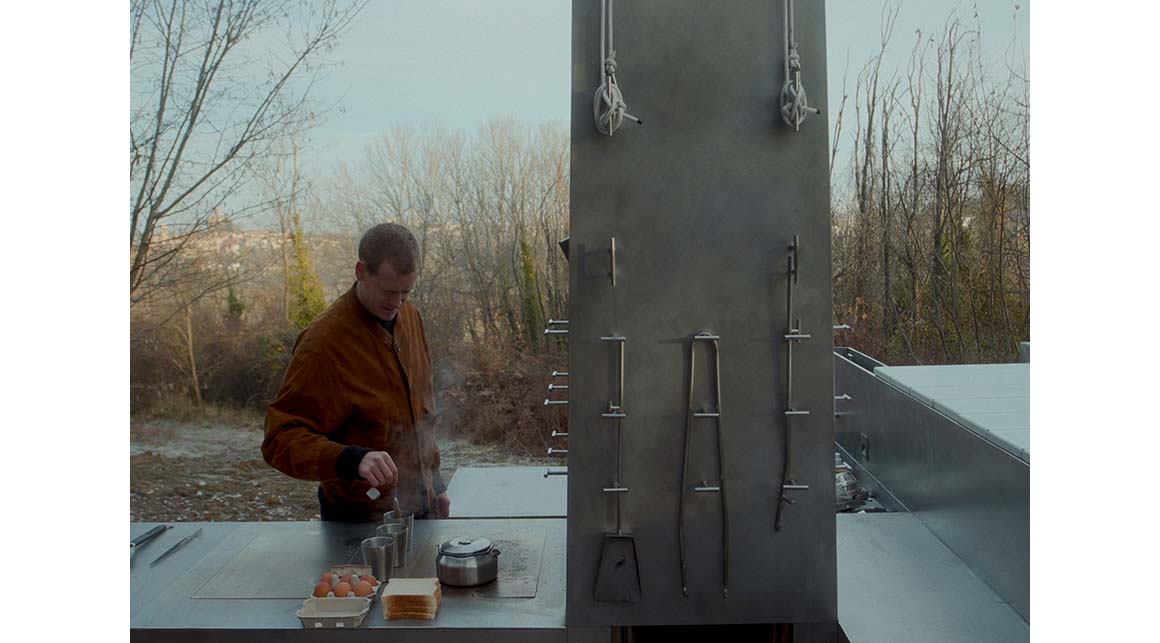
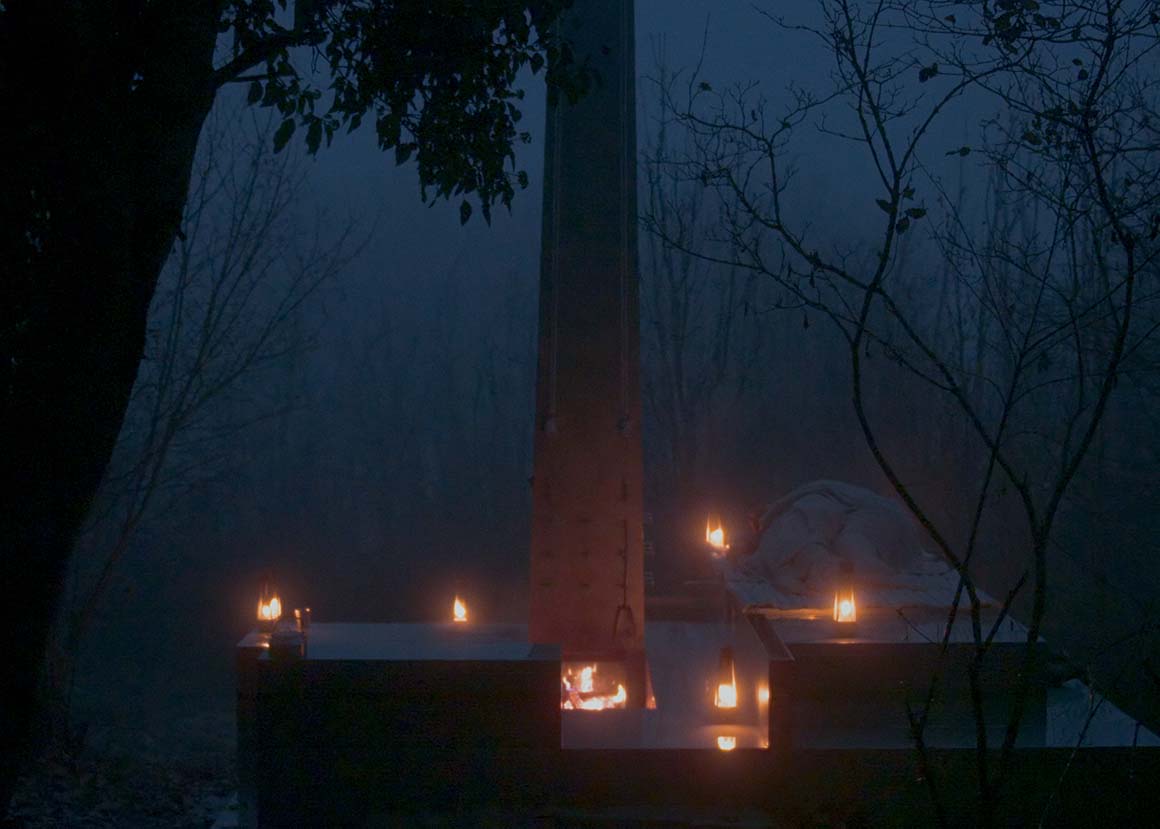
In a forest in northern Piedmont, Italy, a silver structure glimmers among the tall trees. Centered around a 7-meter-high chimney, the monolithic structure is an abstract space without walls or a ceiling, as its name suggests, The Missing Room. Activated by fire and water, it reinterprets primal human activities such as resting, eating, bathing, and conversing. While someone prepares a meal over a wood fire, another person bathes in heated water; nearby, a cow drinks from a trough. All of this unfolds beneath the tree canopy and the open sky. The space challenges traditional notions of domesticity, questioning the possible forms of “living.”
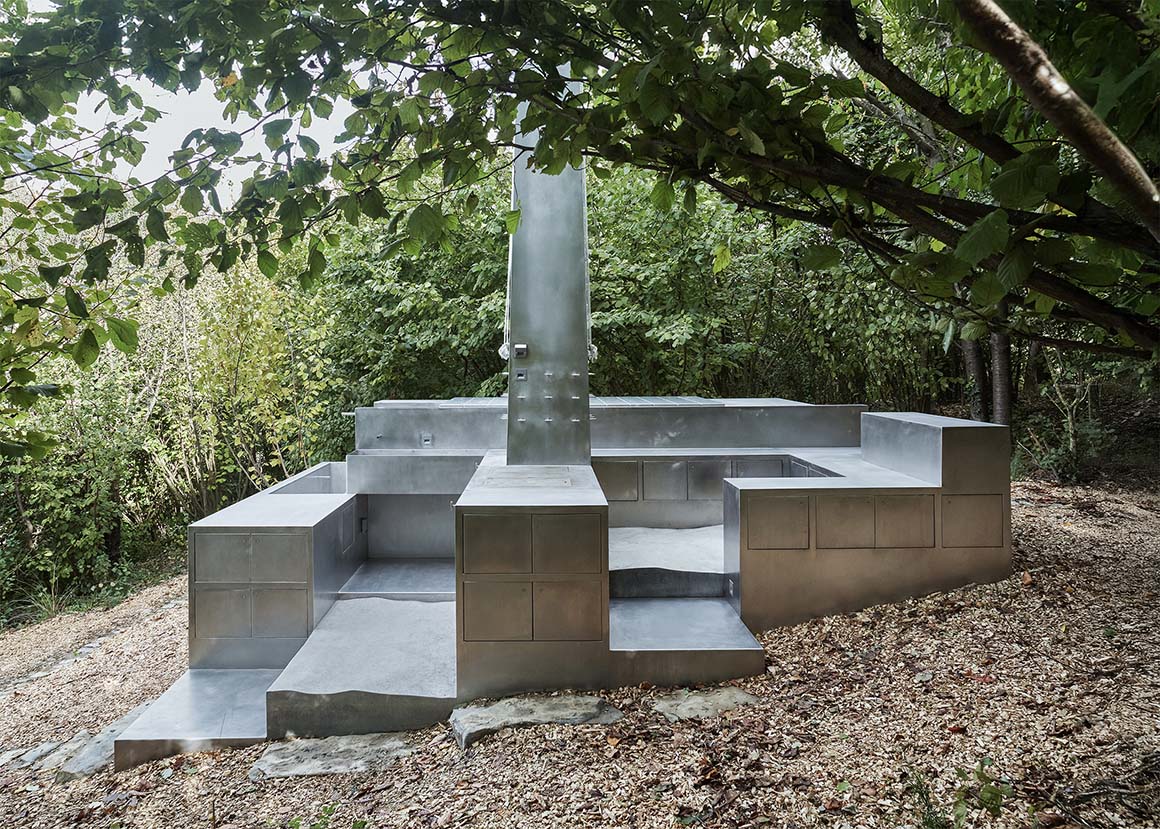
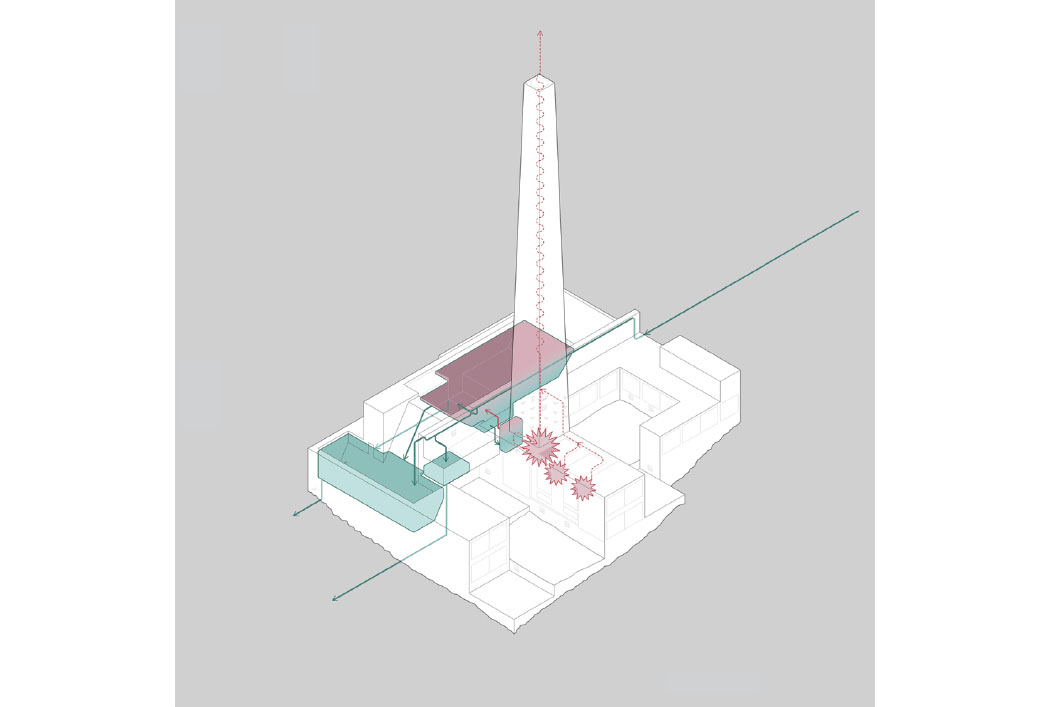
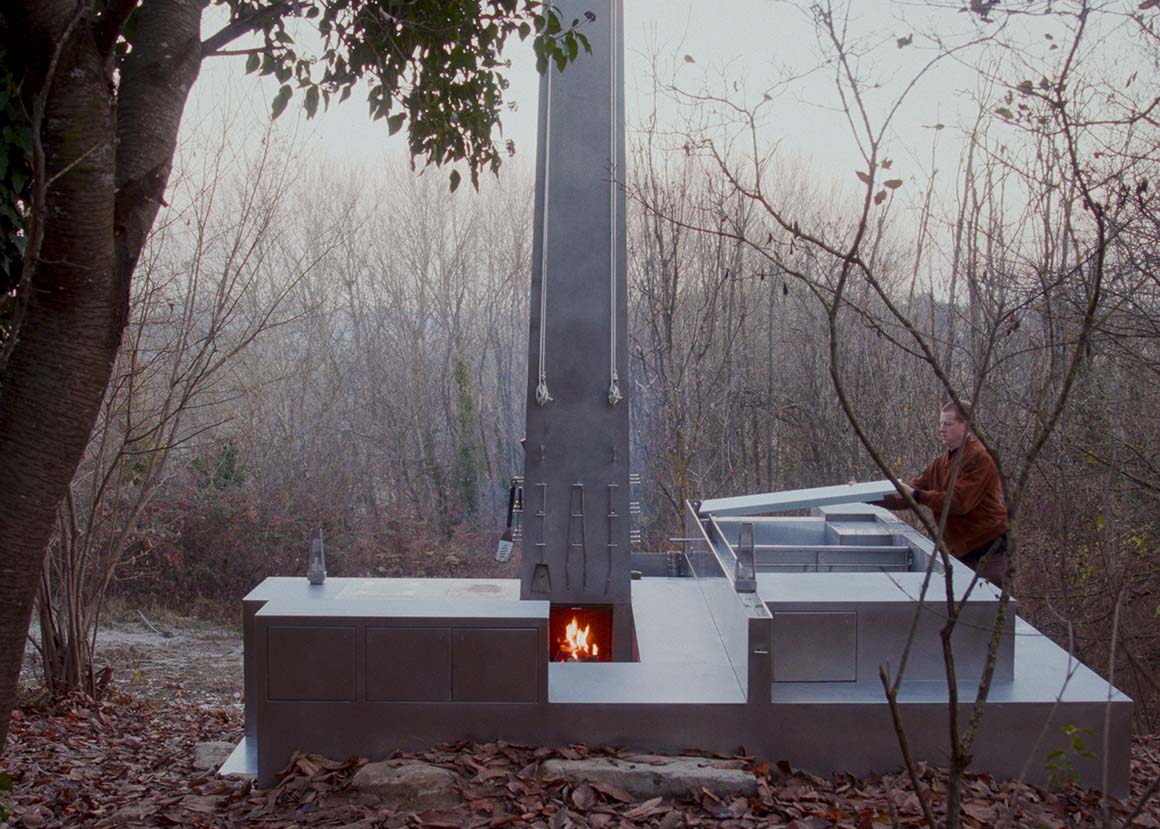
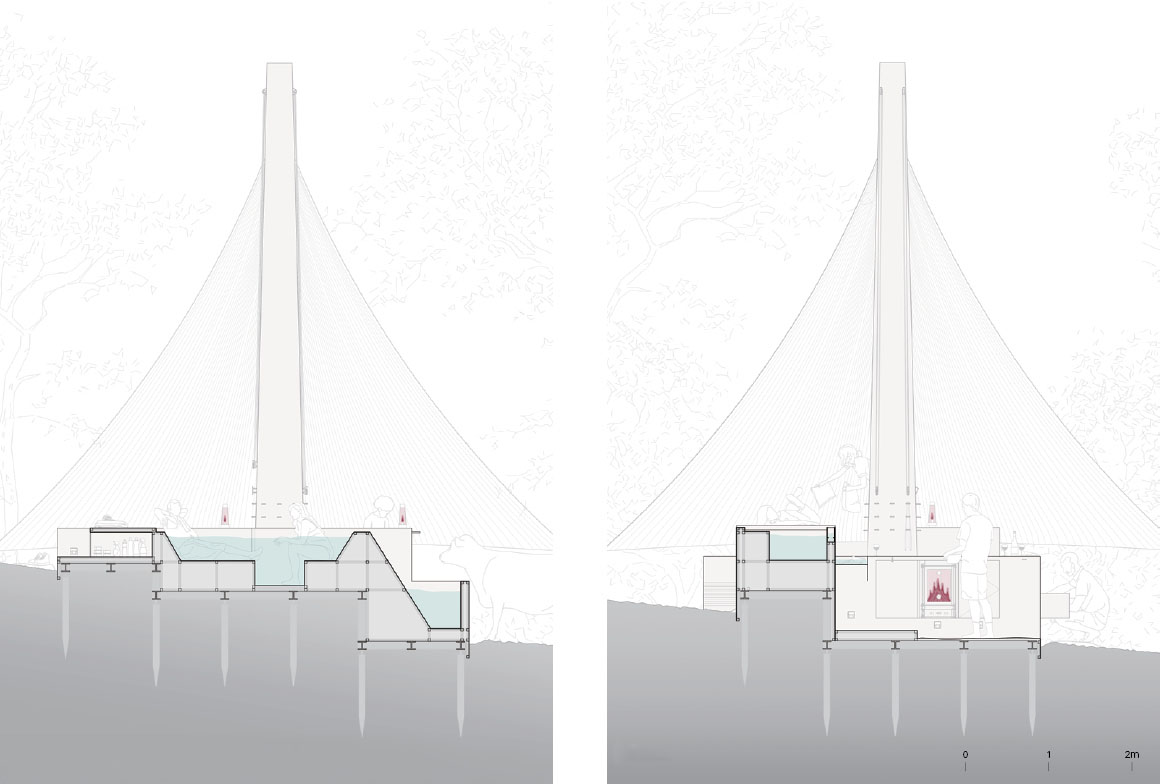
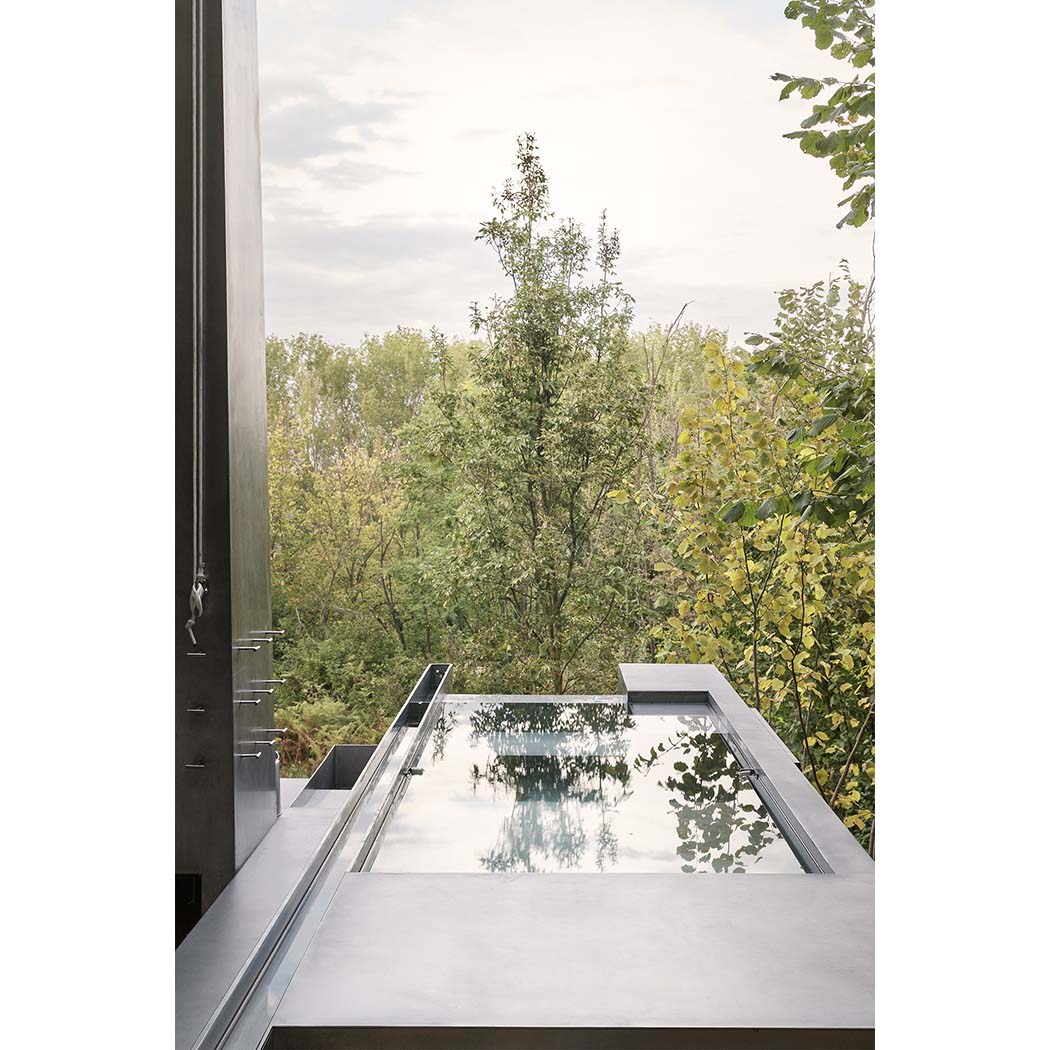
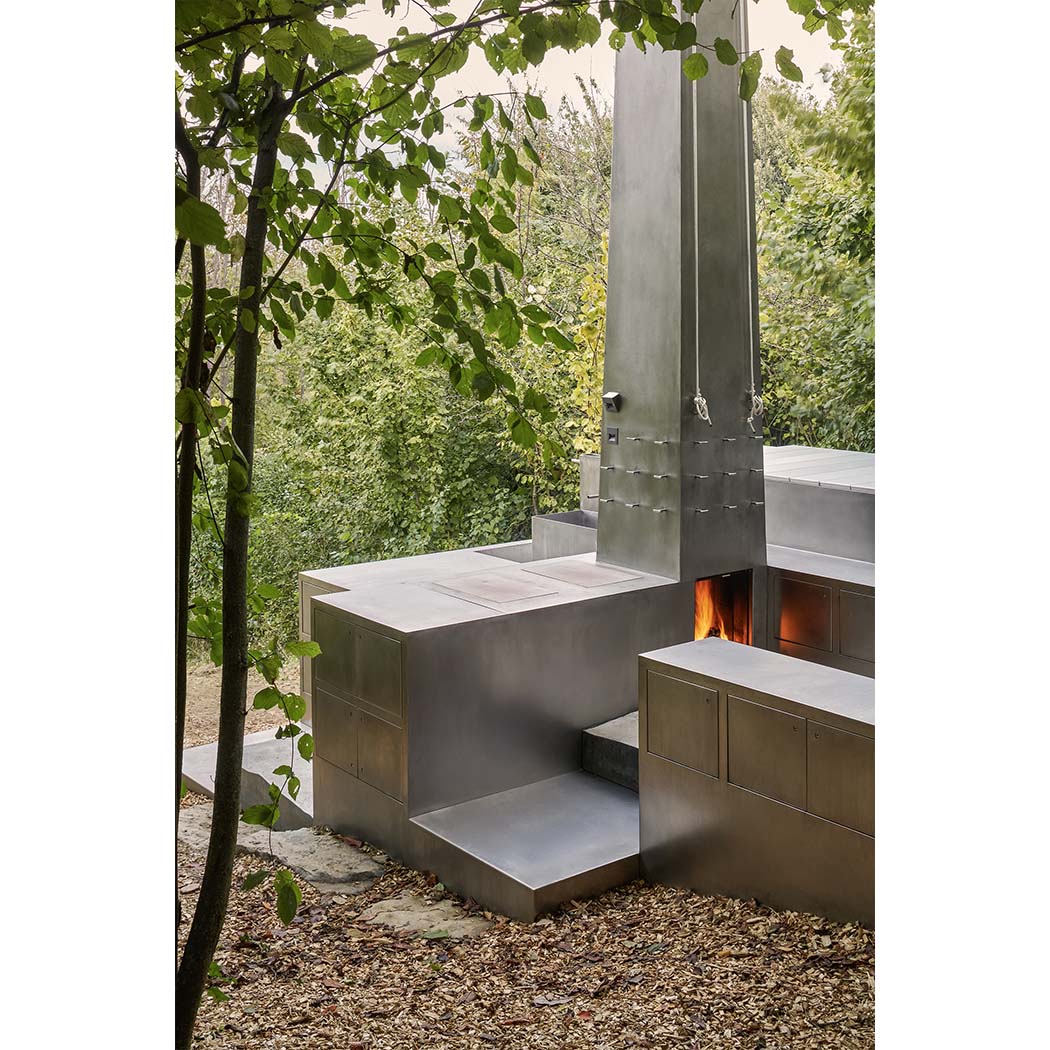
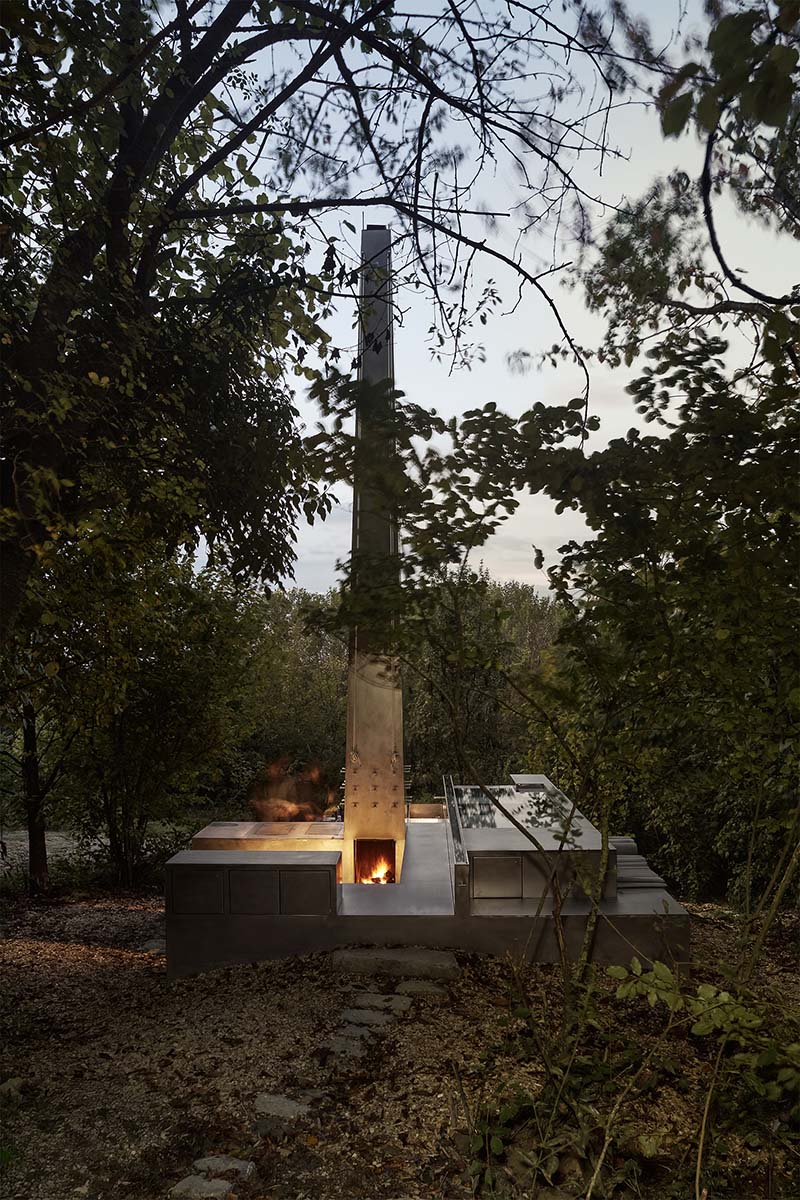
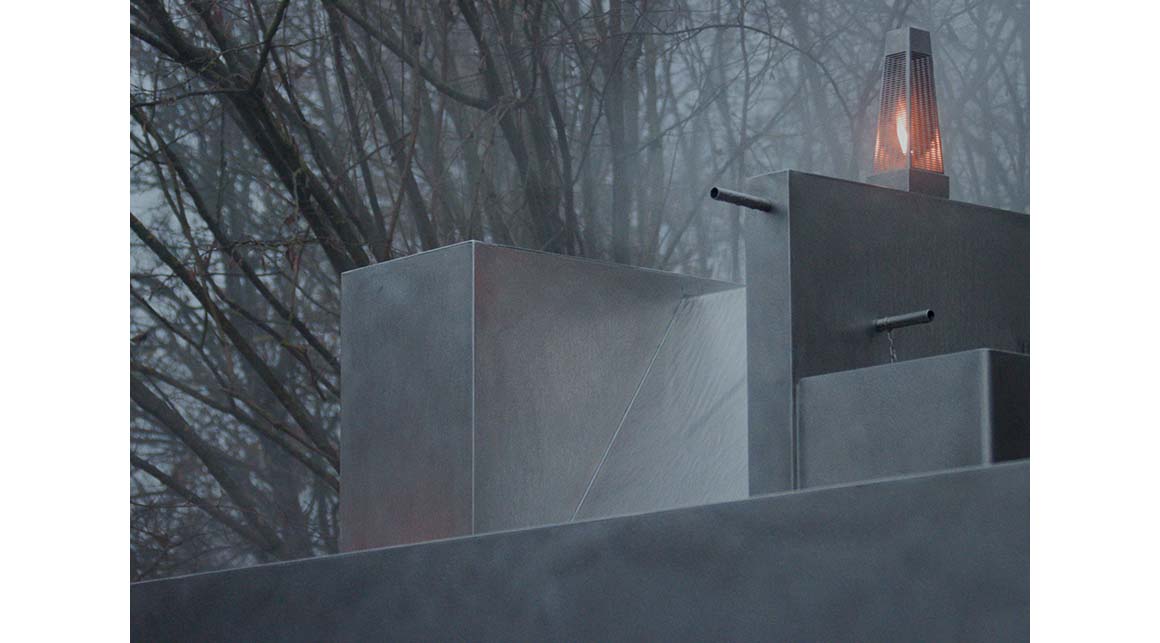
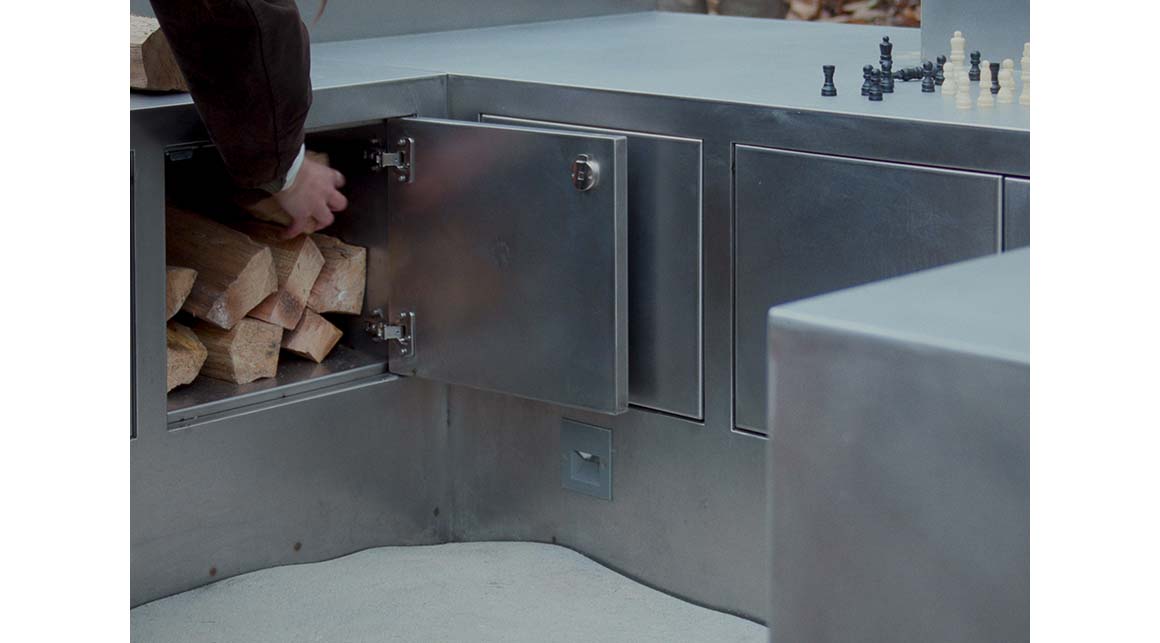
Rising as high as the surrounding trees, the chimney emits smoke from the fire, signaling the presence of the space. Hidden doors contain two cooking ovens integrated with the chimney‘s exhaust system, and the worktop can be used as a large cooking surface. Seating warmed by the fire is also provided. Water plays an equally important role. The water, flowing from the entrance, runs through a collection channel and is distributed to multiple basins. Users can insert or remove plugs to control the flow—filling the bath, using the sink, or supplying water to the cattle trough. The bath incorporates a natural convection system and can accommodate three to four people. For solo use, a partition reduces the volume, and the top can be covered to create a sleeping platform. Wastewater is treated and dispersed to support local biodiversity. A sail-shaped canopy provides shade from sun and rain. During the day, shadows fall through the leaves, and at night, reflected light transforms it into a softly glowing lantern.
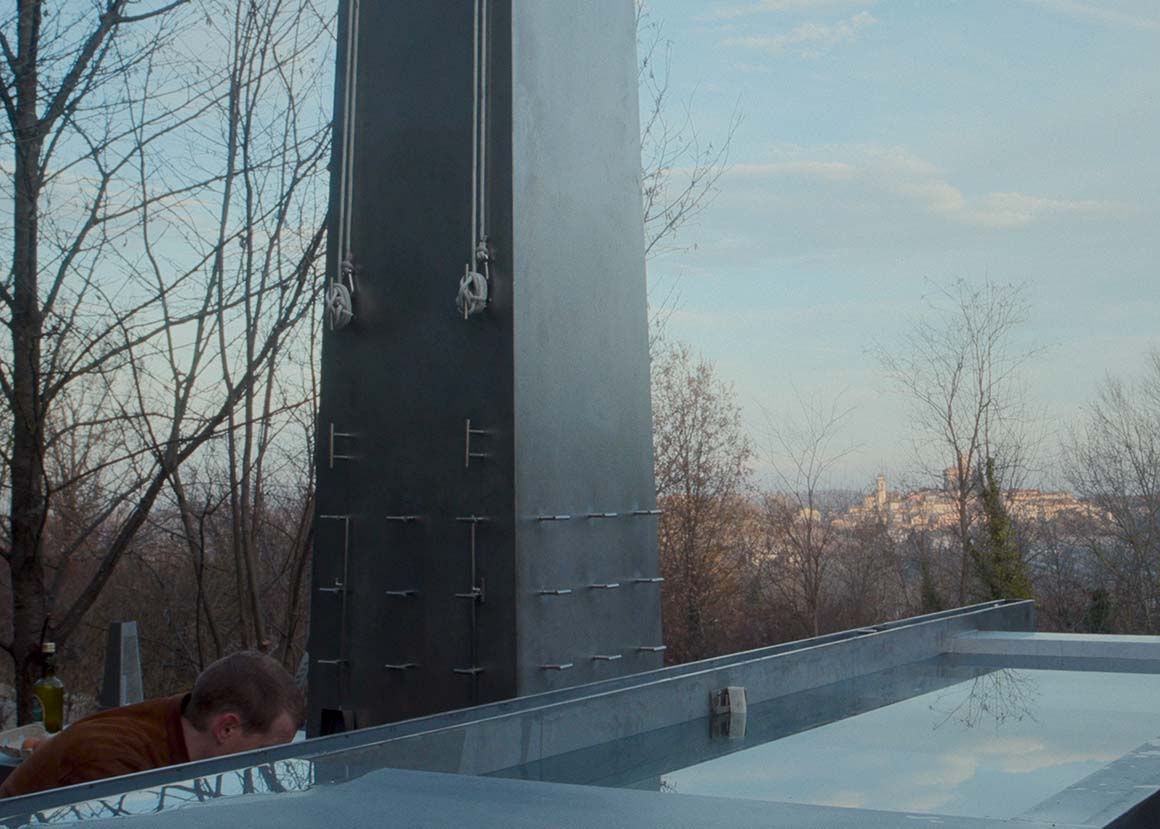
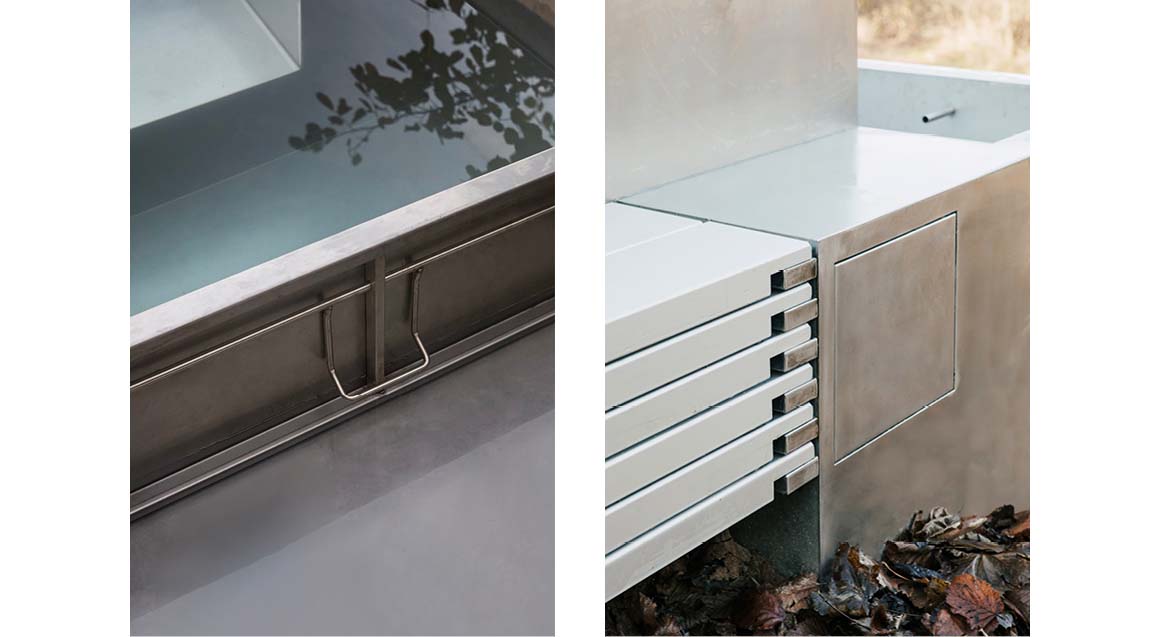
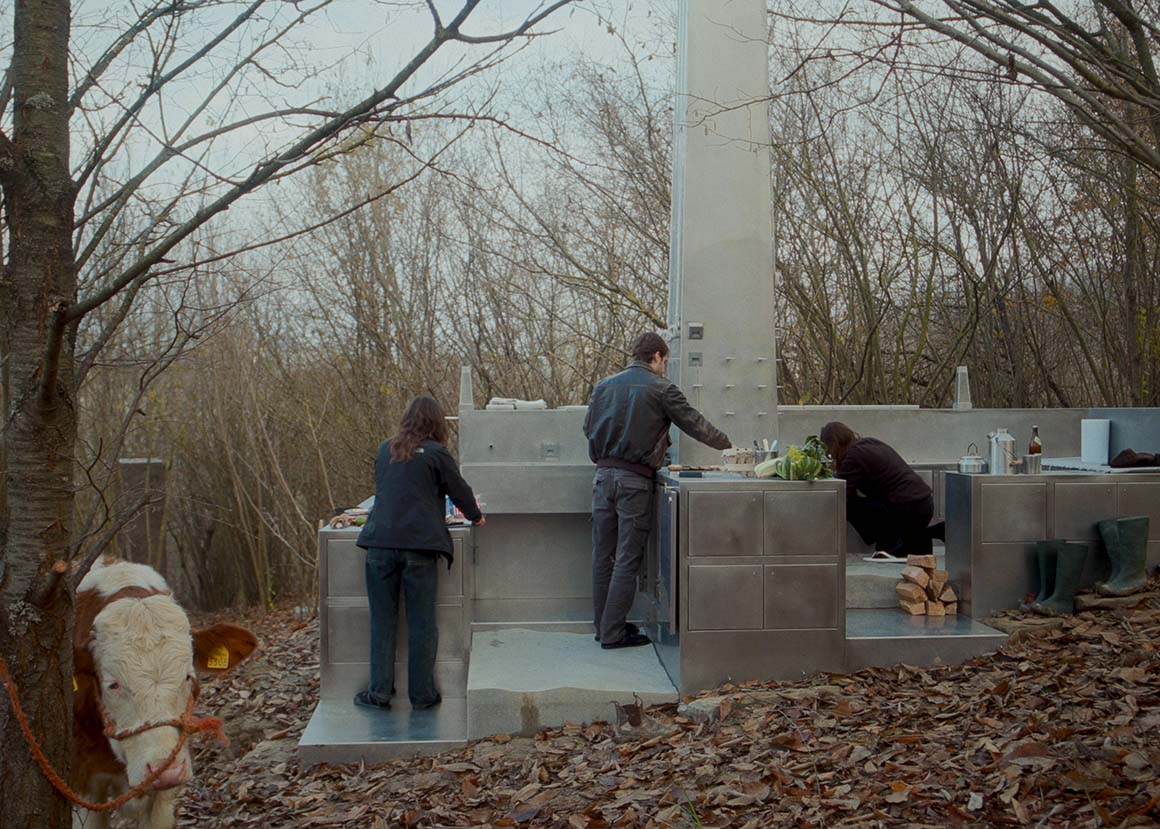
The site was once a vineyard and had remained unused for a long time. The land, artificially cultivated, gradually recovered naturally. The modular stainless steel structure stands on screw-pile foundations. Screw piles are steel piles with helical blades that are rotated into the ground in a non-excavation method, allowing installation and removal without concrete and minimizing environmental impact. This reflects the architects‘ intention to maintain a healthy ecosystem in coexistence with nature. The Missing Room allows visitors to move between a human-controlled environment and untamed nature, experiencing the space as guests of the natural world. It proposes a dwelling that leaves no trace, avoids traditional development methods, and exists solely as a temporary, non-invasive presence.
Project: The Missing Room / Location: Piedmont, Italy / Architect: Carroccera Collective / Project team: Angelica Rimoldi, Caspar Anne Schols, Dariia Nepop, Gianfrancesco Brivio Sforza, Nacha Palomeque Coll / Local architects: Officina 82 / Collaborators: FF srl, TNT srl, SEAcoop, Ingembp, FOND-ALL, Mina Inox, Cava Alice, Green Luxury, Krinner Italia, Veleria Vigano, Juan Benavides, Penna & Ghione, Susenna Habitat, Genevieve Lutkin, Evoluzione Forni, Alessandro Nanni, Xenia Construzioni, Technosystems SNC, Animal Spot Milano / Use: pavilion / Gross floor area: 20m² / Completion: 2024 / Photograph: ©Alessandro Nanni (courtesy of the architect); ©Genevieve Lutkin (courtesy of the architect); ©Juan Benavides (courtesy of the architect)