




Carrying time through the vernacular original
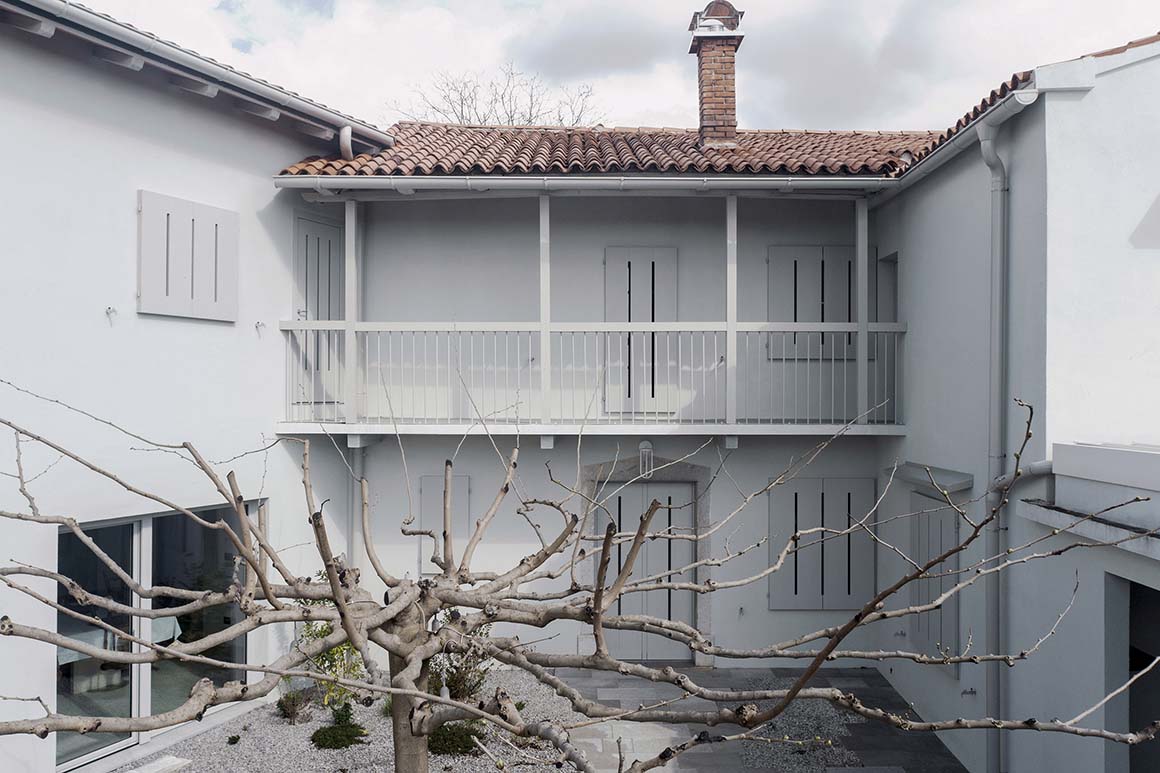
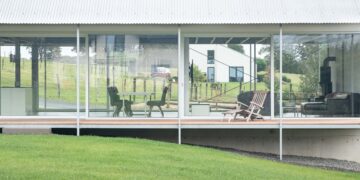
Perched on a hill overlooking Slovenia‘s Karst Plateau, the small village of Avber has been shaped by stone, wind, and time. Here, an old farmhouse once inhabited by the owner’s family was renovated in a contemporary manner at the client‘s request. While preserving its original form, the completed house presents a clear contrast between stone walls, glass surfaces, and white interior finishes.
The homeowner, an Australian with roots in Slovenia, regarded the project as more than a simple renovation. It became a process of reconnecting an individual to a place and re-encountering ancestral architecture. In a setting layered with memories of communal life, the reborn house resumes the passage of time that had once stood still.
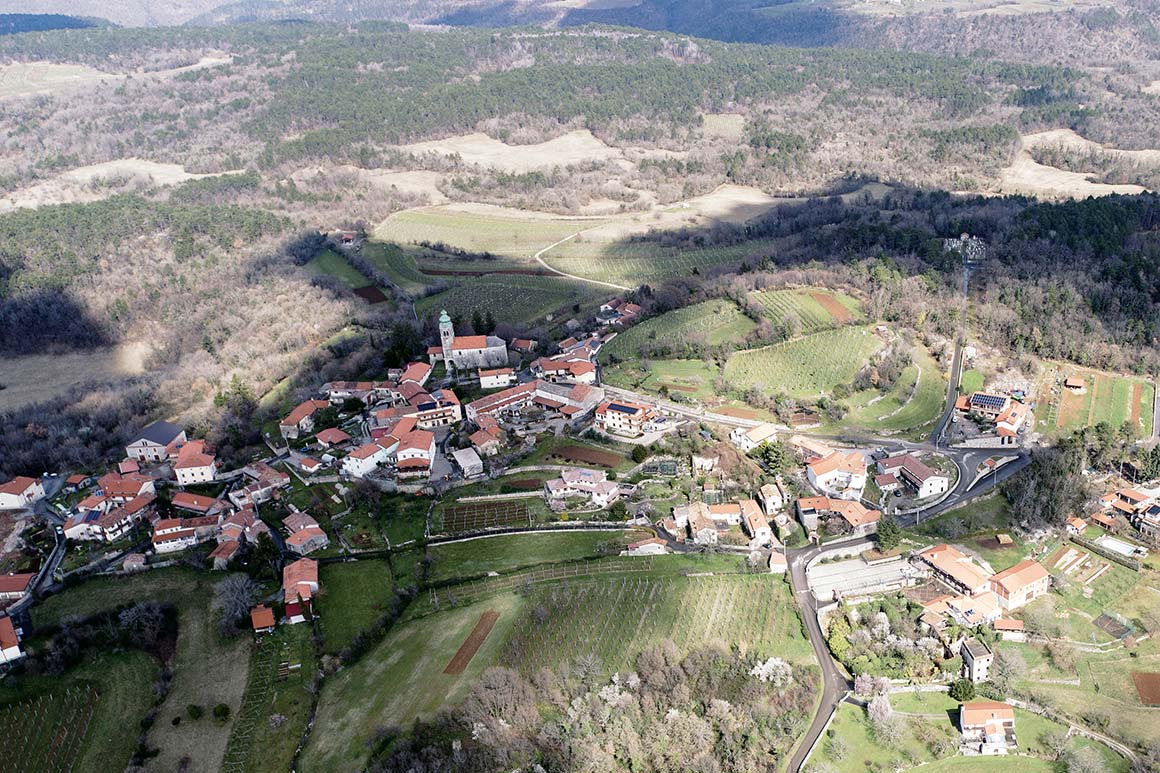
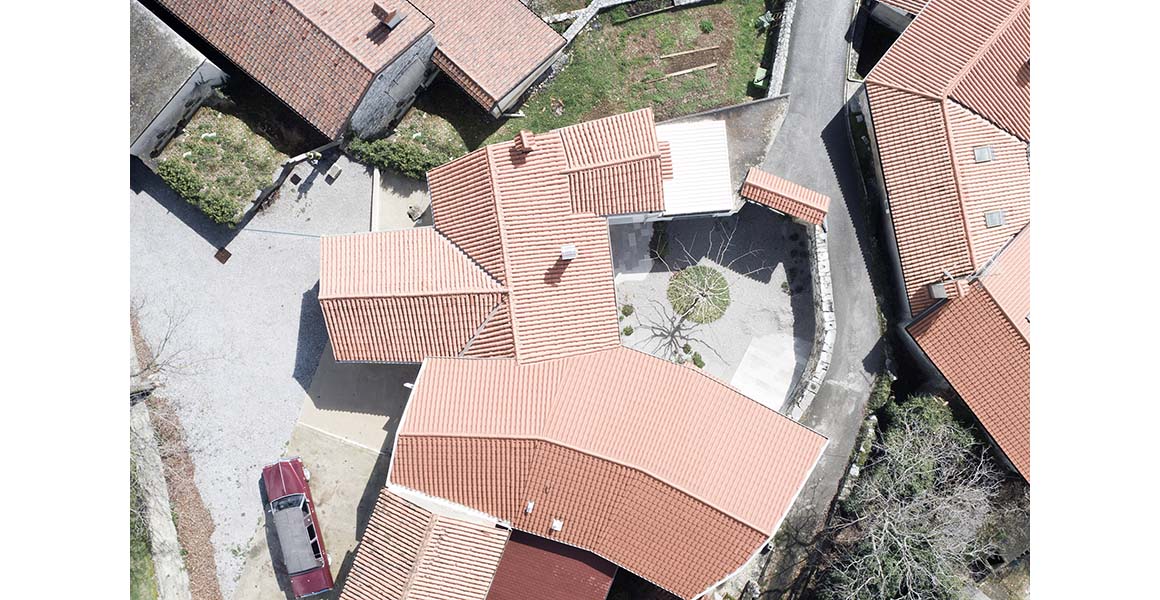
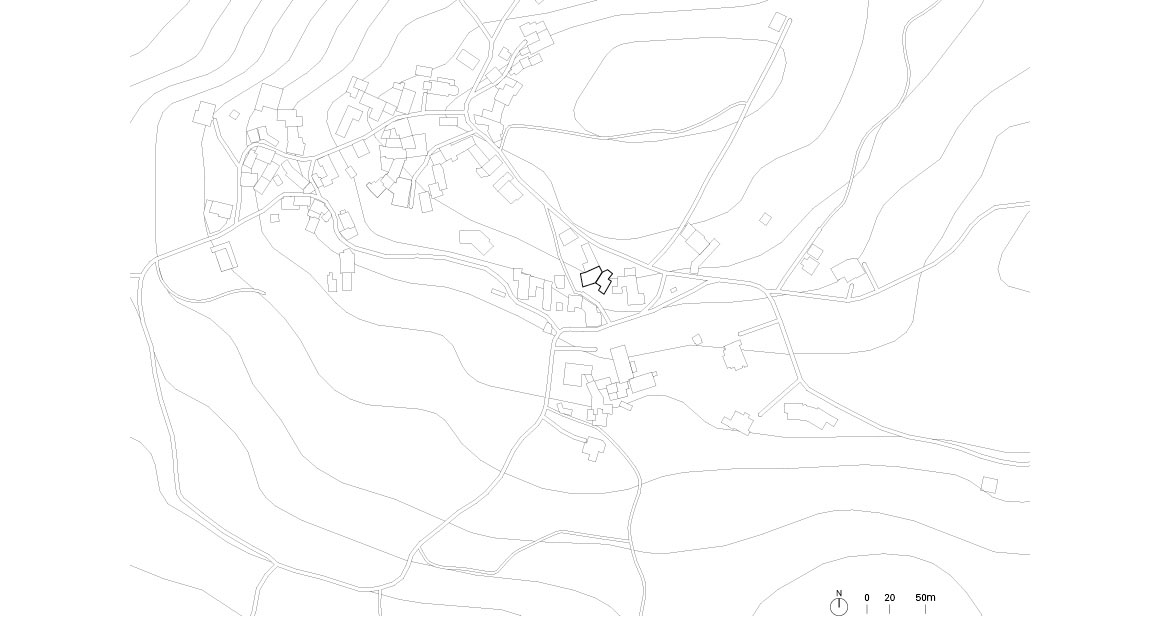
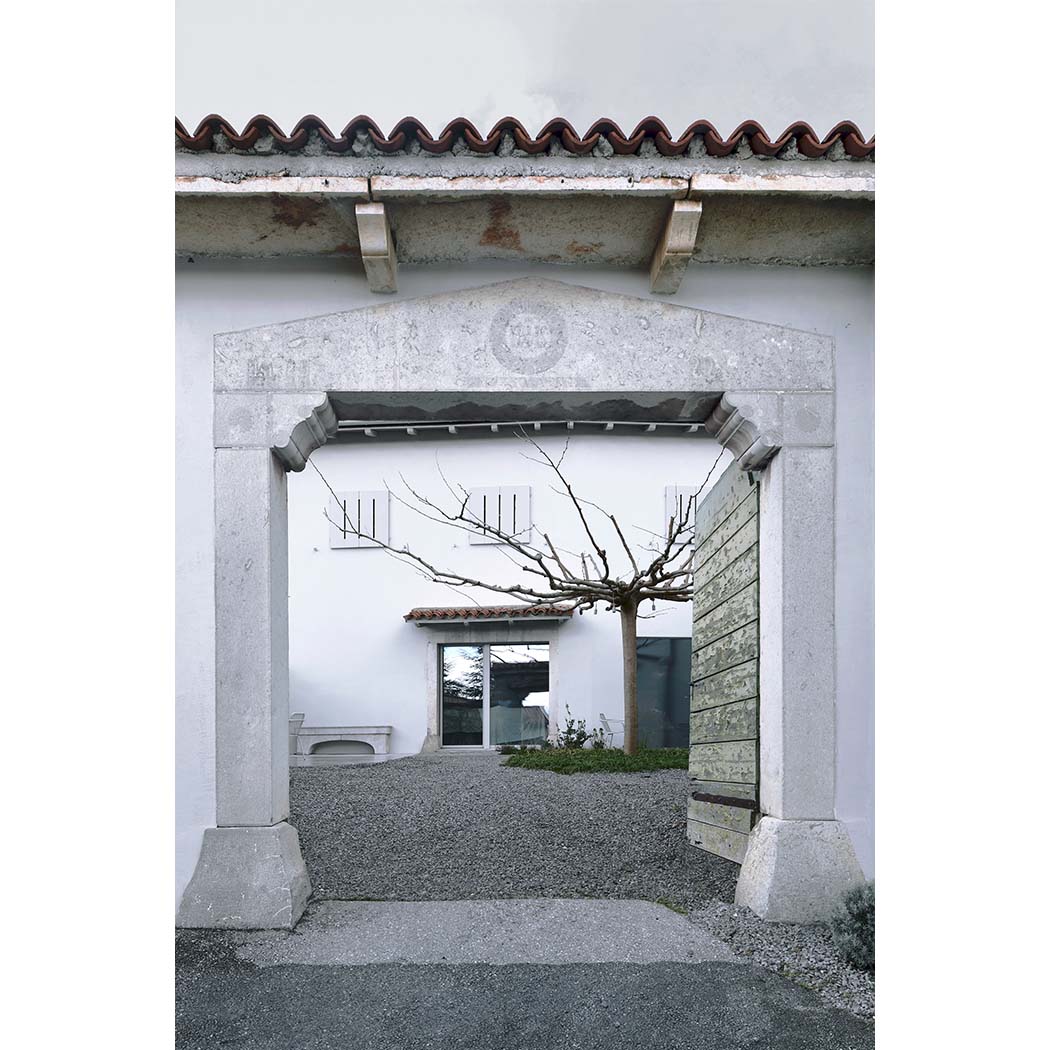
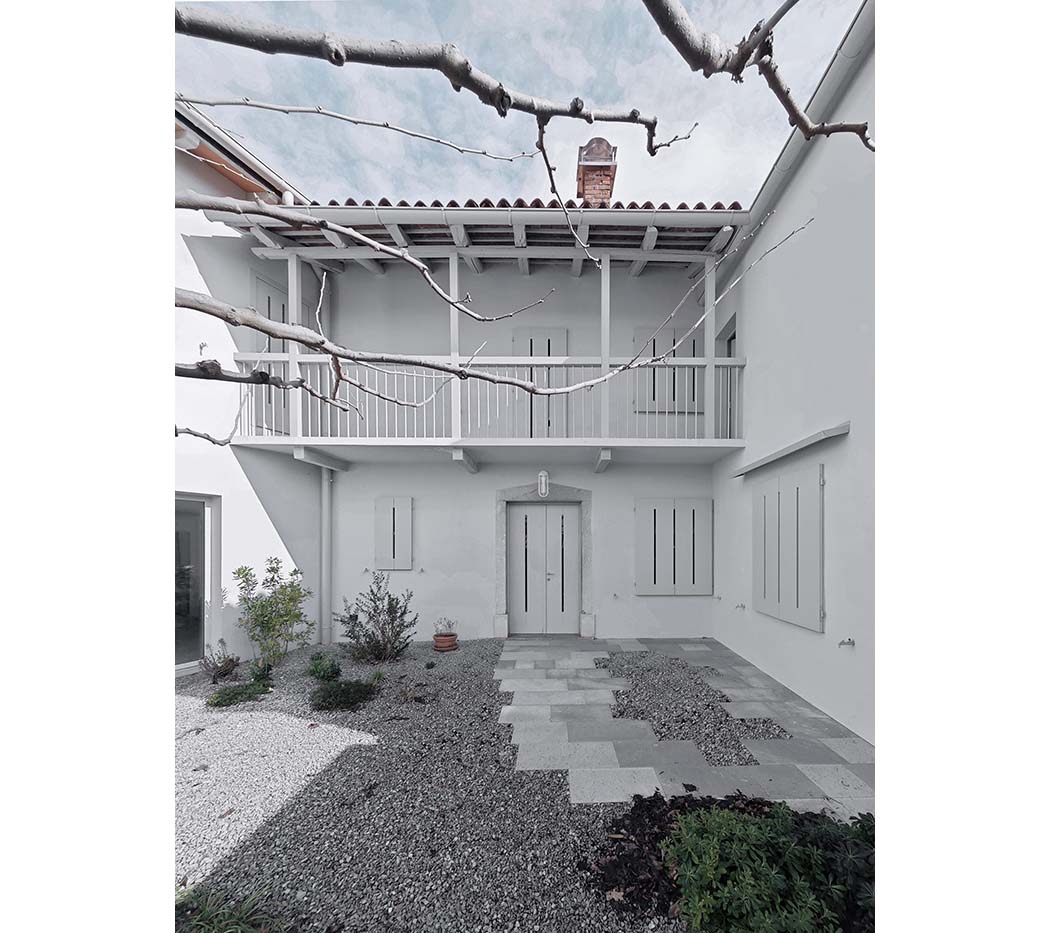
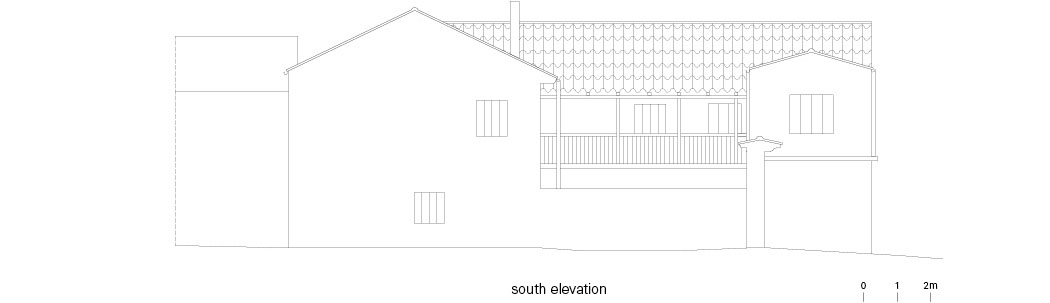
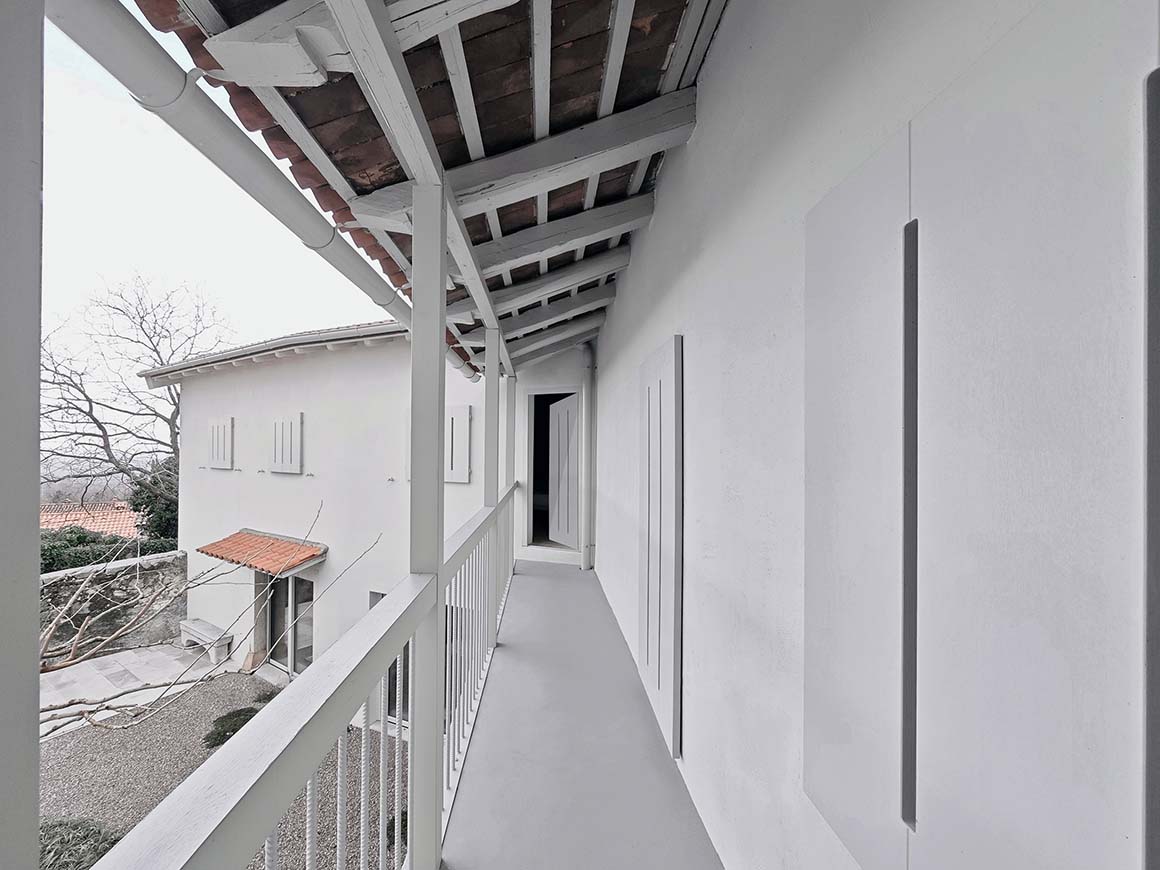
The new residence Is the result of a refined and restrained reinterpretation of architectural elements distinctive to the Karst region. At its center lies the borjač (courtyard), which historically sheltered livestock, grain, and living spaces from the wind while creating a daily microclimate. Three buildings surrounding the courtyard define everyday life: a two-storey house, a stable, and an auxiliary structure for livestock keeping and storage. This arrangement reflects the structure of traditional Karst villages, where strategies of protection and subsistence were embedded in spatial form.
The upper gank (balcony), thick stone walls, škure (wooden shutters), and korci clay tile roofs were also restored and reinterpreted. By maintaining form while adapting function to contemporary use, the project establishes continuity between past and present. The interior was refurbished with minimal intervention, reducing unnecessary waste while improving comfort and efficiency. Principles of reuse and restraint both lower environmental impact and preserve the farmhouse‘s authenticity.
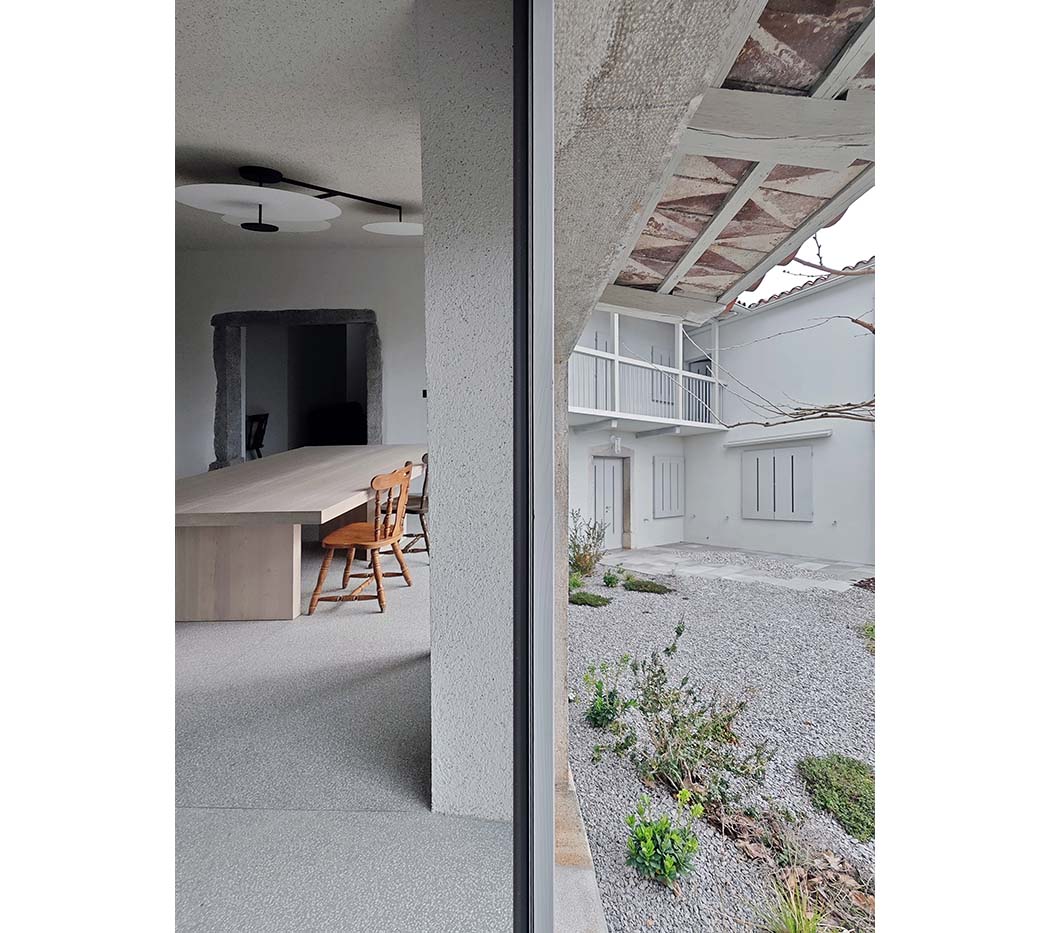
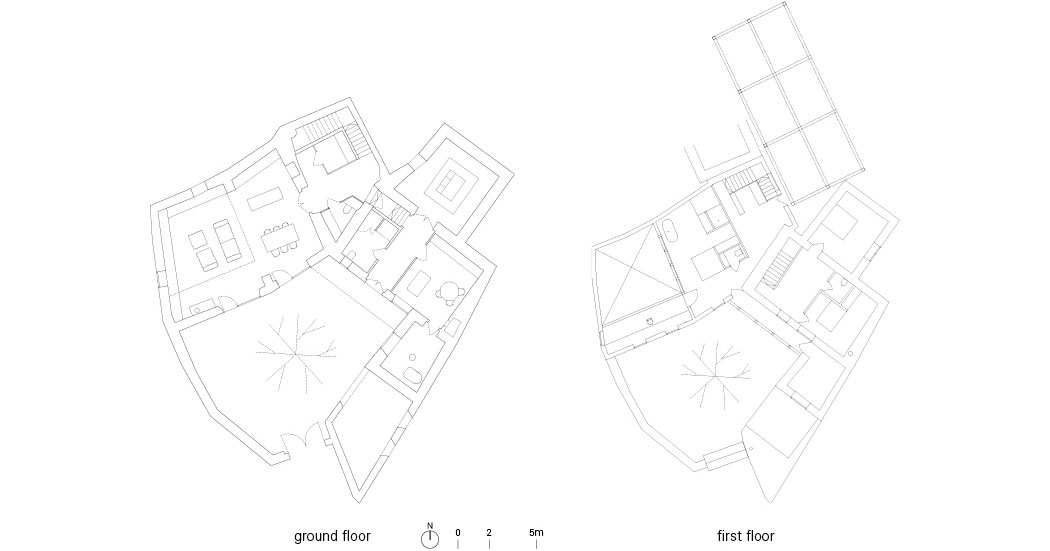
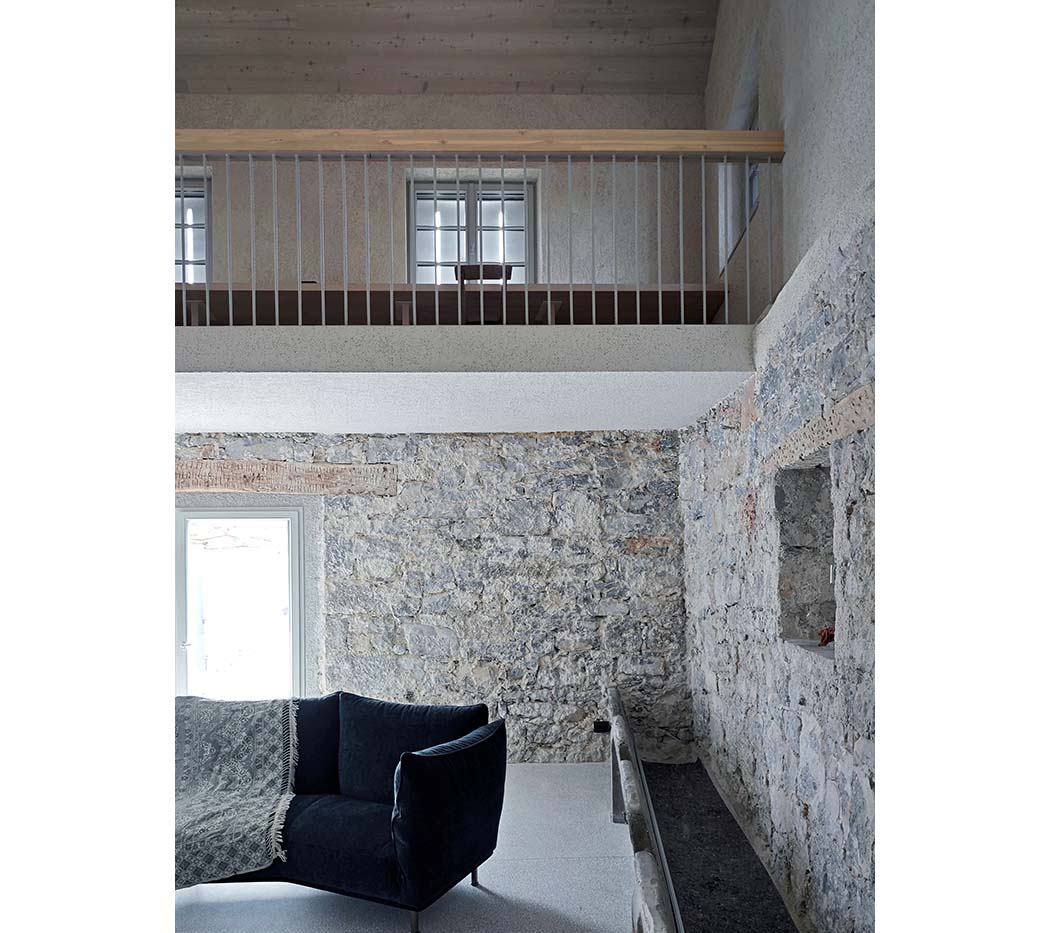
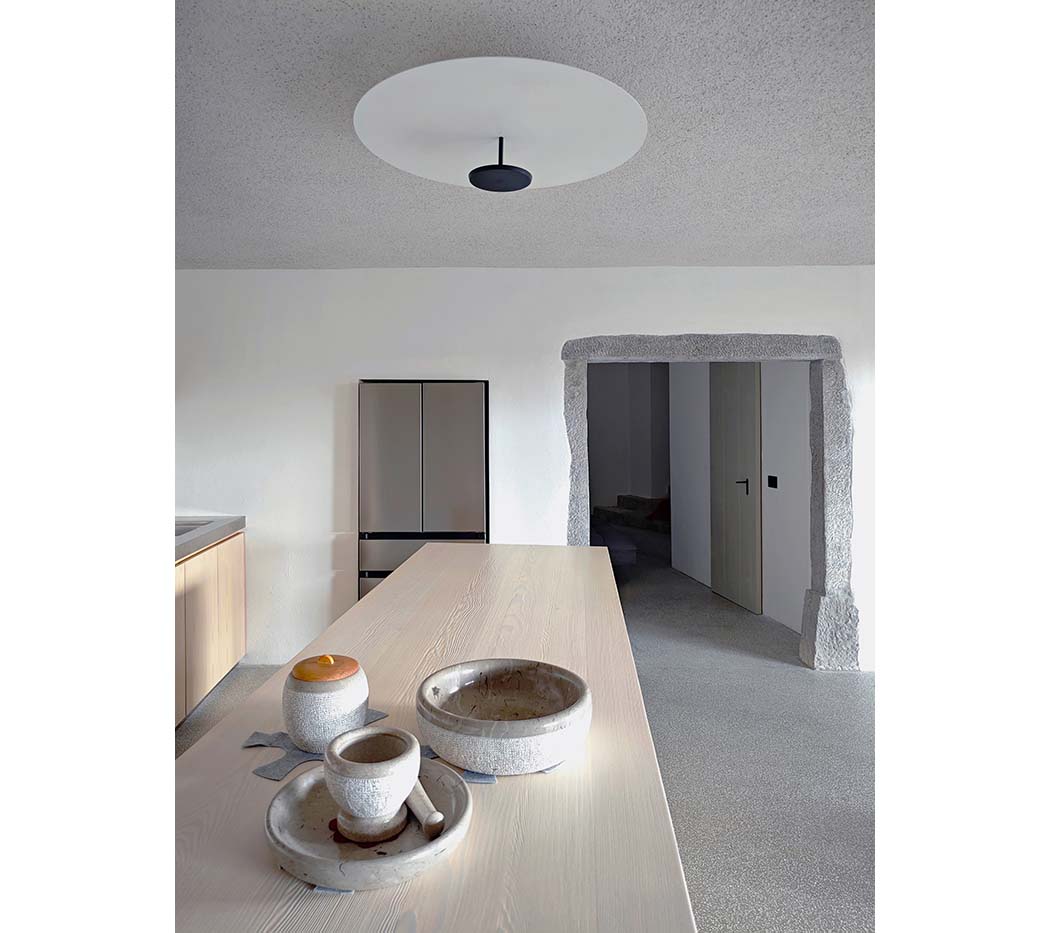
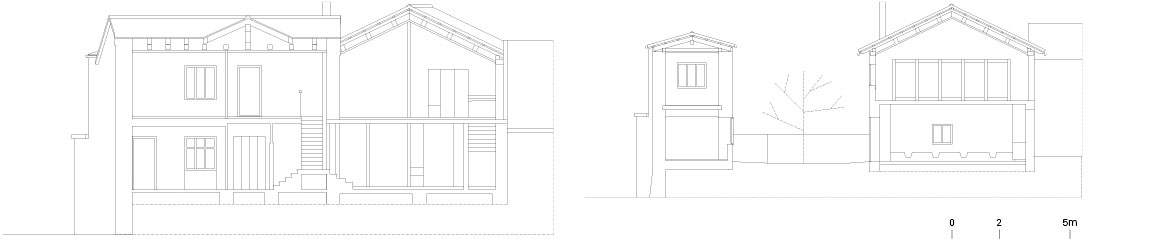
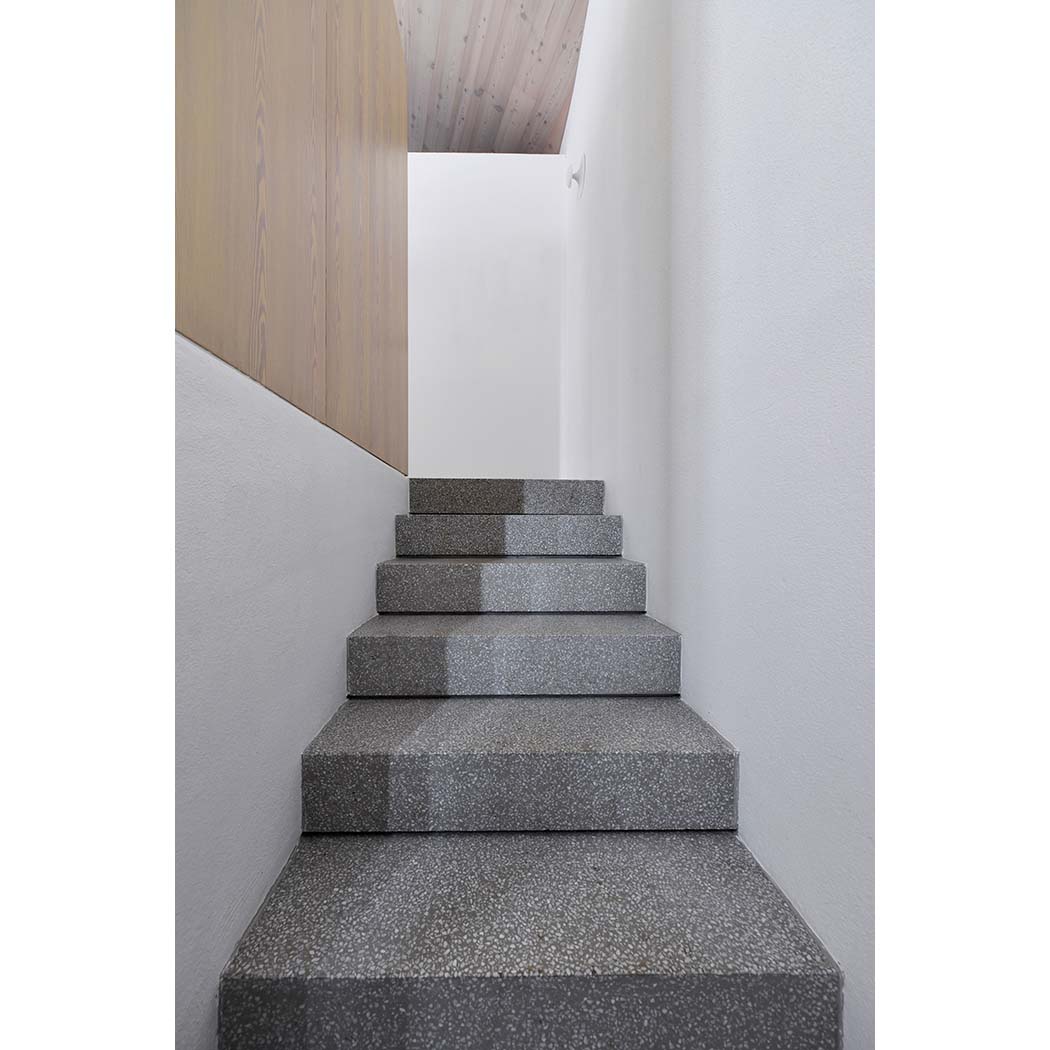
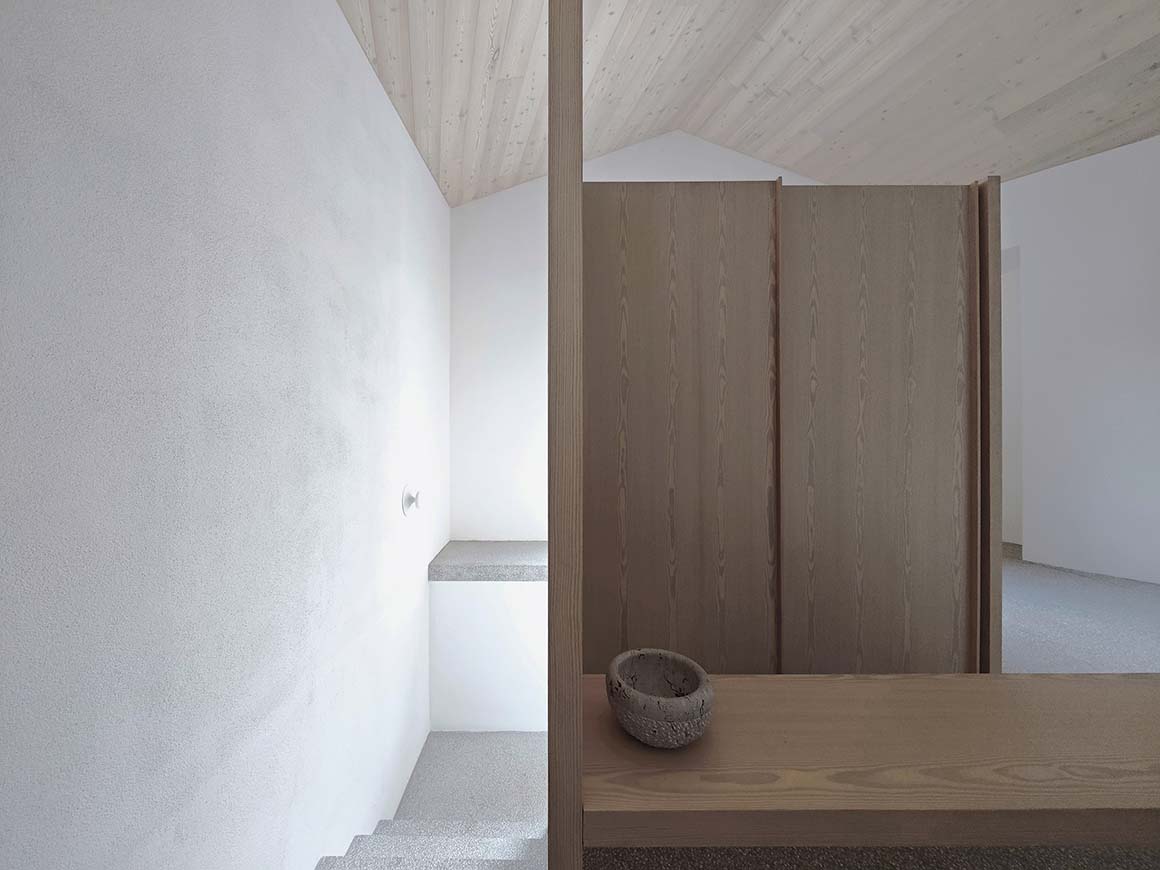
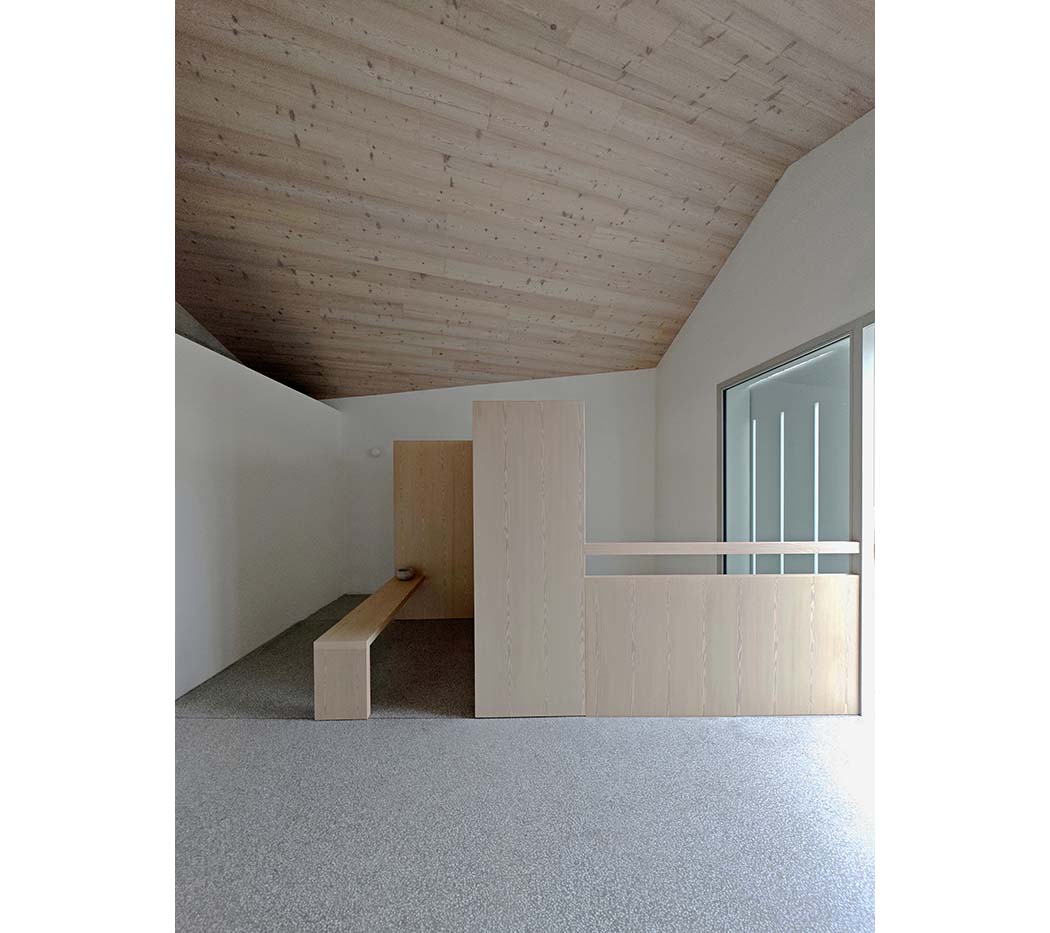
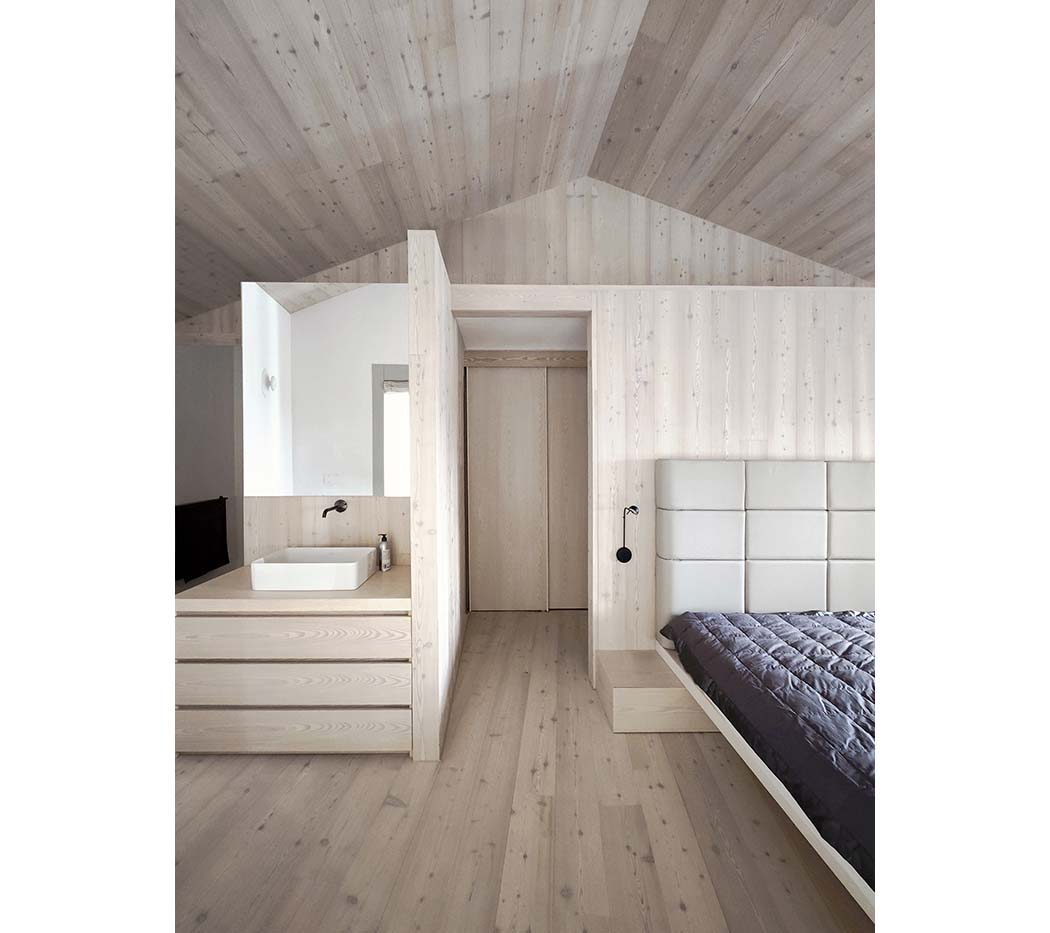
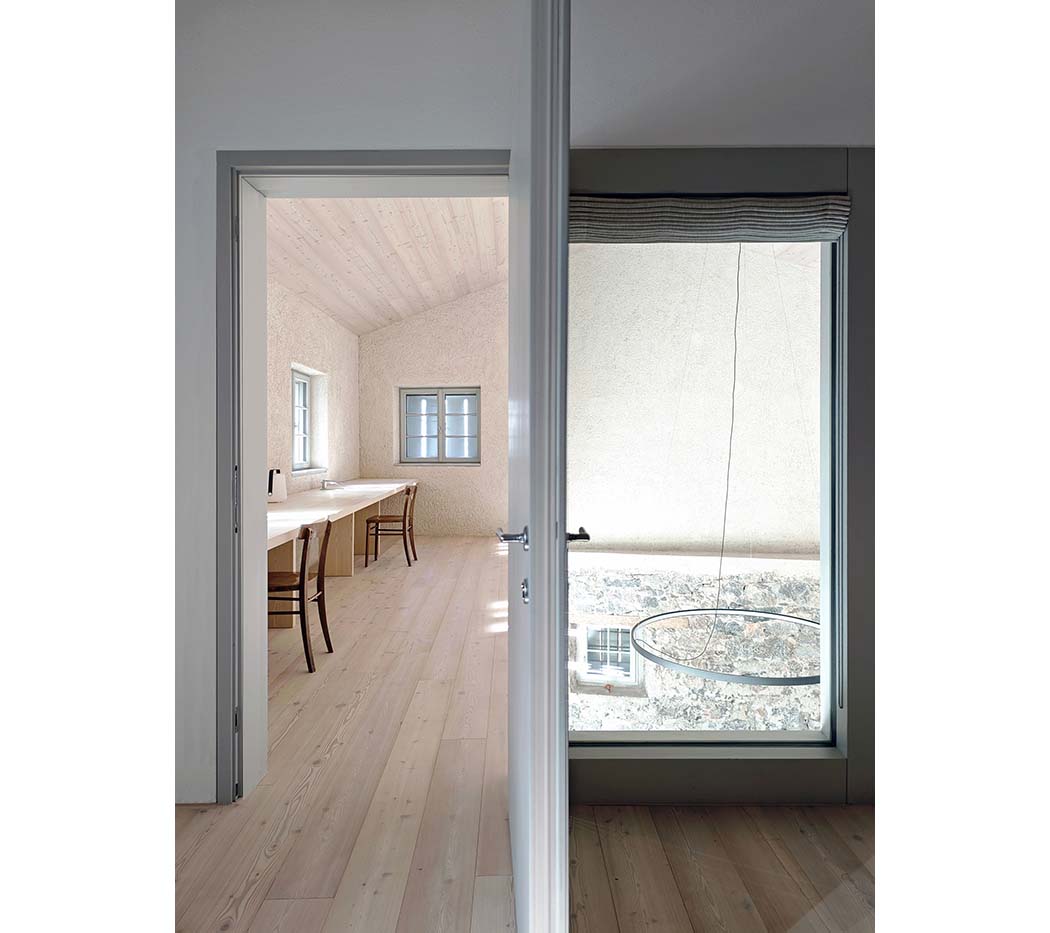
Bedrooms on the first floor look out onto the courtyard through the traditional covered wooden balcony, or gank. Windows fitted with restored wooden shutters and the balcony itself are painted white to blend with the exterior render. Existing architectural elements, including timber roof beams and clay roof tiles, were meticulously restored with the help of local craftspeople.
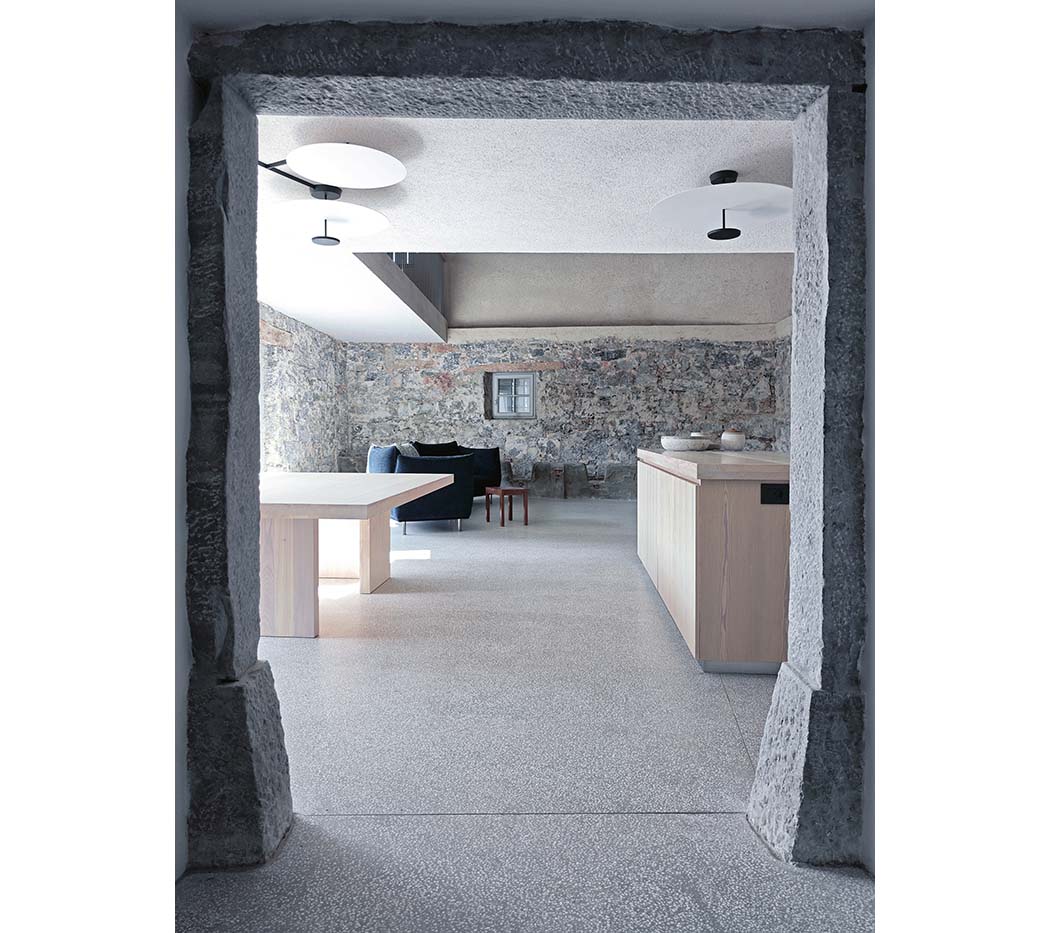
Shared spaces are finished with rougher surfaces than the existing stone walls and grey plaster, while the upper floor uses wood across broad surfaces, including the ceiling, to create a warmer atmosphere. The same timber is applied to the kitchen worktops, countertops, dining table, and the bench facing the courtyard, establishing a consistent material language throughout the house.
Project: The Avber House / Location: Avber, Slovenia / Architect: OFIS Architects / Project team: Rok Oman, Špela Videnik, Matej Krajnc, Janez Martini, Andrej Gregori, Rok Dolinšek, Klara Buzkova, Marieke Van Dorpe, Adrien Riviere / Structural engineer: PA project, Milan Sor / Mechanical engineer: MM-biro, DeanMavri / Electrical engineer: MM-biro, DeanMavri / Contractor: local, private / Use: residence / Site area: 650m² / Bldg. area: 185m² / Design: 2023 / Completion: 2025 / Photograph: ©Janez Martini (courtesy of the architect)