






Resilient public infrastructure for a changing waterfront
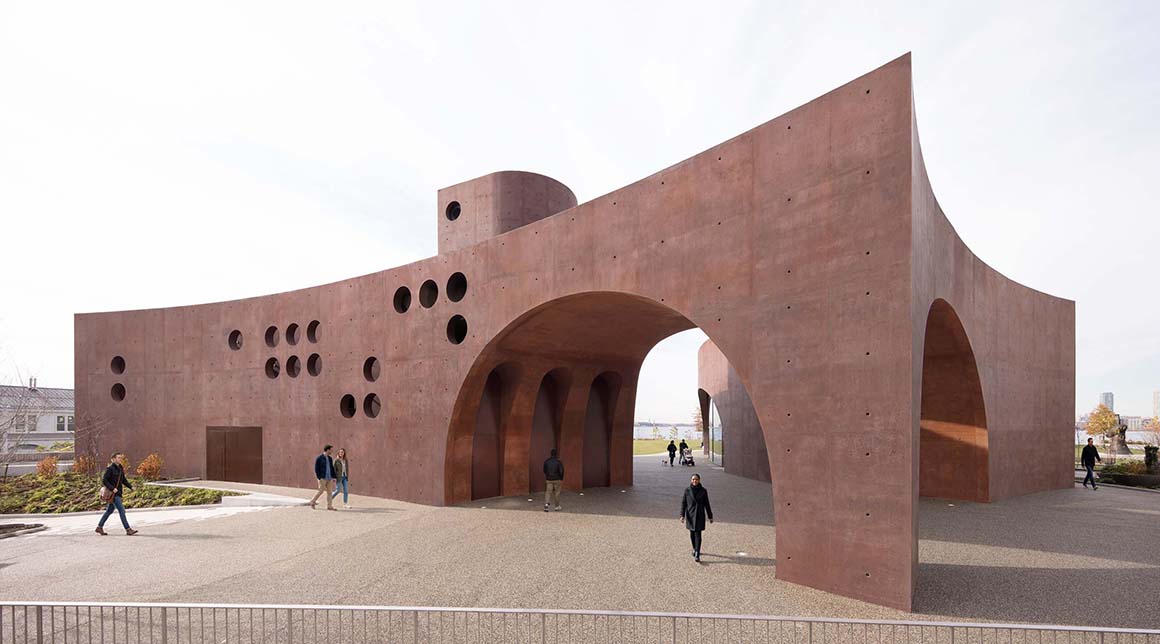
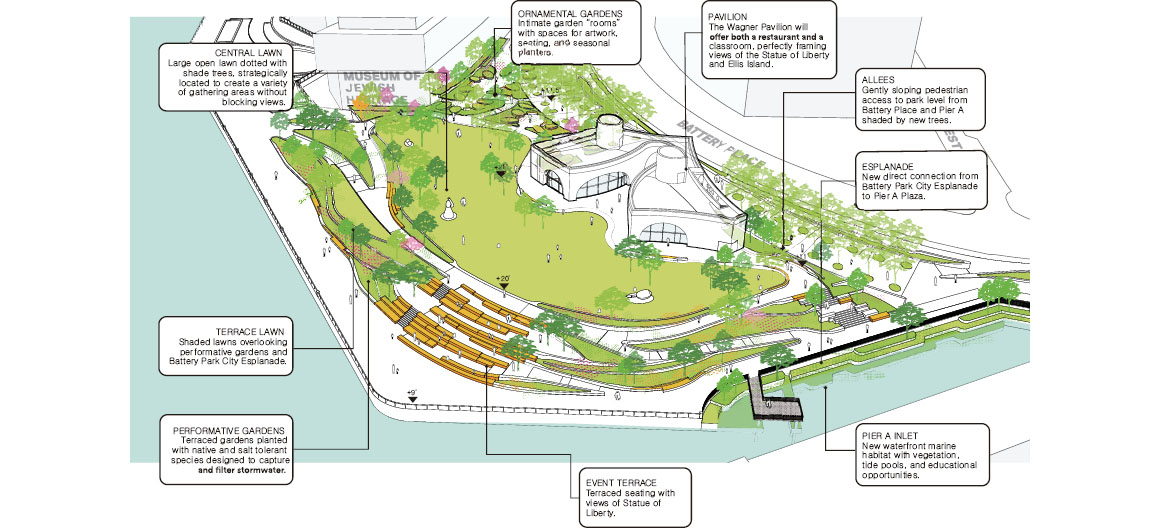
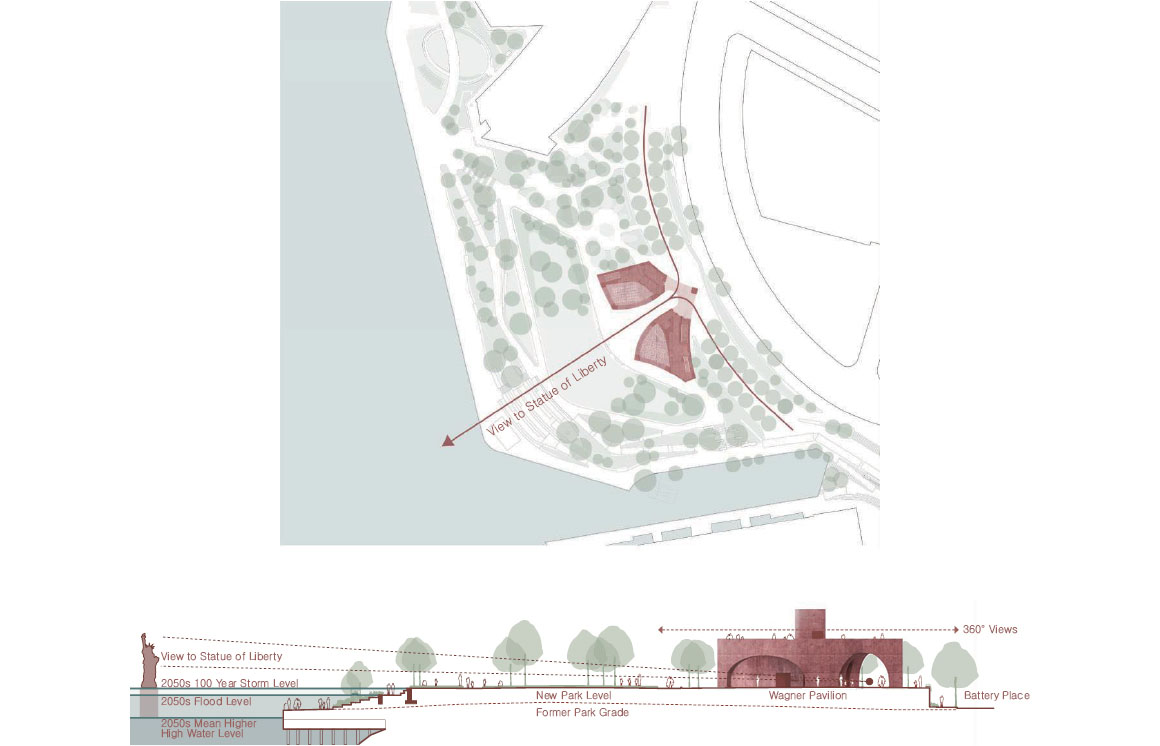
The South Battery Park City Resiliency Project is part of a broader coastal protection strategy for Lower Manhattan, conceived to address future storms and sea level rise. Centered on the densely developed neighborhood of Battery Park City, the project integrates flood risk reduction and interior drainage systems to safeguard both the site and its adjacent areas. Engineered to withstand a 100-year storm projected for 2050, it not only provides critical protection but also prioritizes the creation of durable, long-term public spaces.
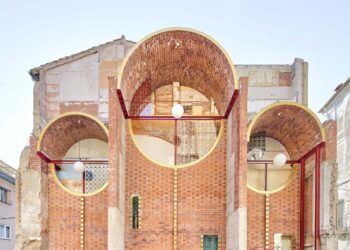
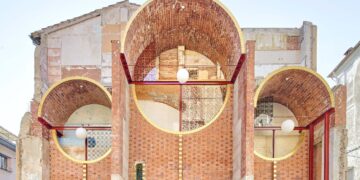
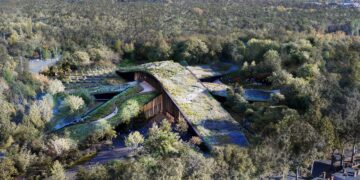
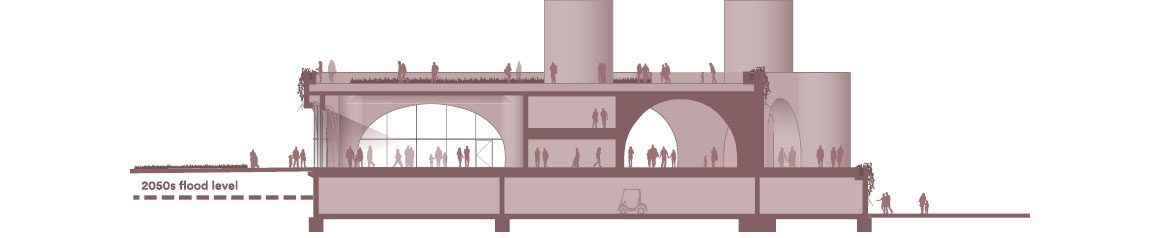
At the heart of the park, the Wagner Pavilion emerges gradually along sloped gardens, framing views toward the harbor and the Statue of Liberty. Its arched forms and warm-toned materials respond to the surrounding historic context, while interior programs such as a restaurant and educational spaces extend the park‘s use. The rooftop observation deck offers panoramic views of New York Harbor and Lower Manhattan, establishing a new public vantage point within the city.
Rather than functioning solely as protective infrastructure, the project redefines flood resilience as an integral component of public space and urban landscape. In doing so, it presents a forward-looking model for waterfront cities—one that seamlessly integrates safety, ecology, and everyday experience in the face of climate change.
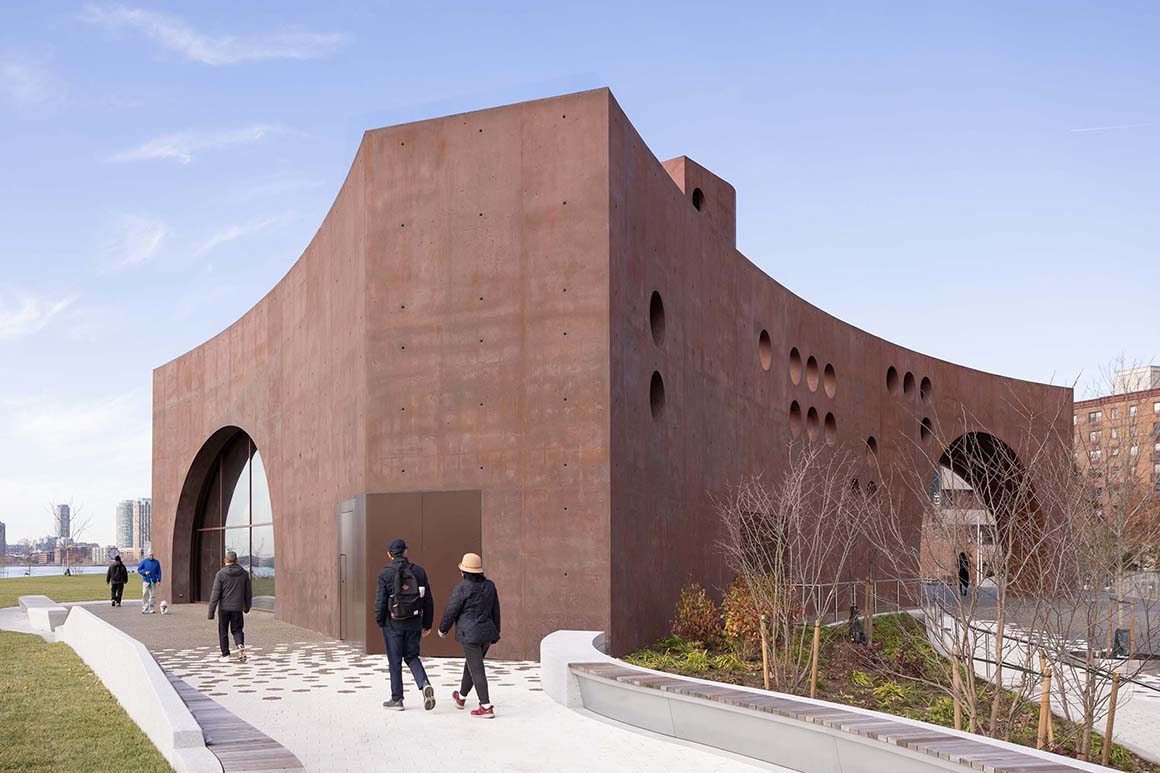
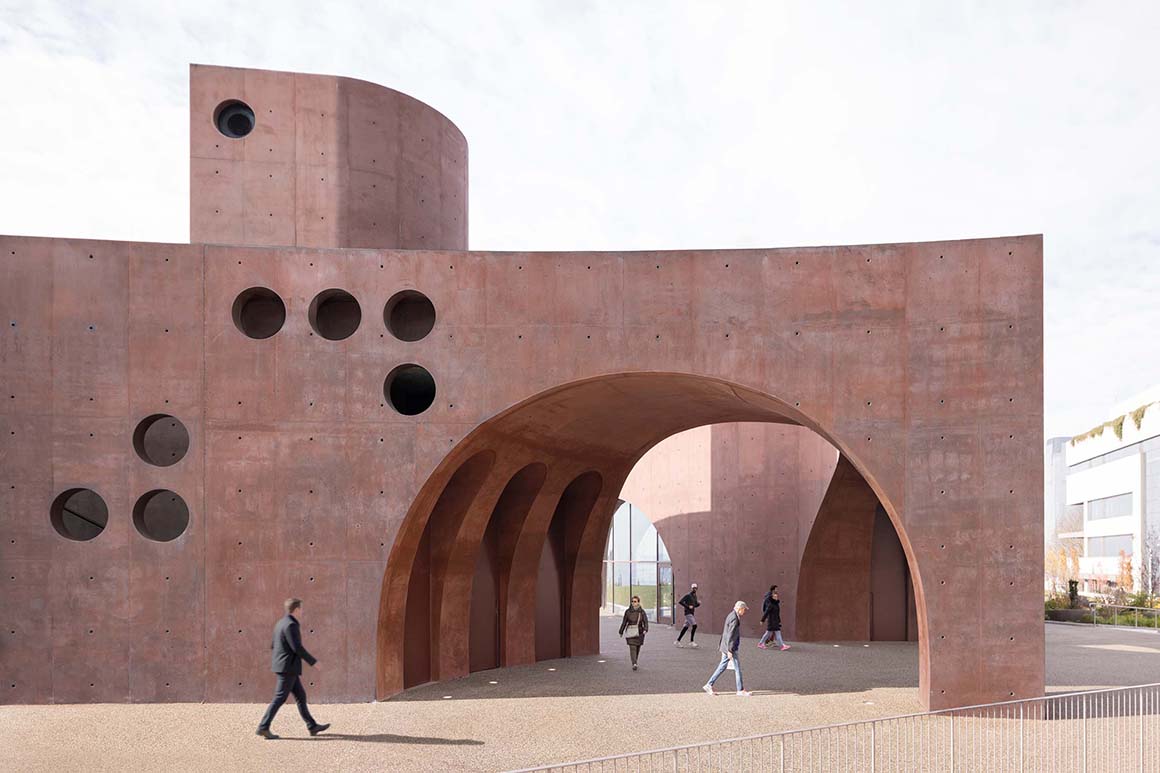
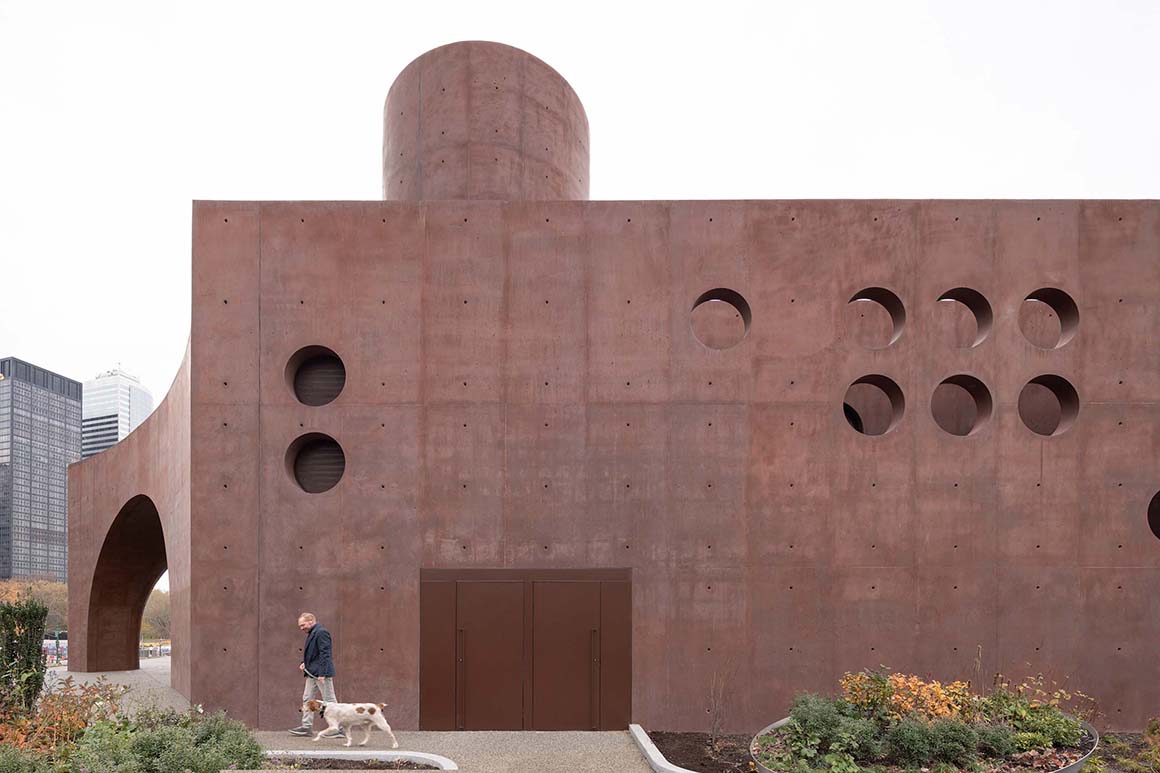
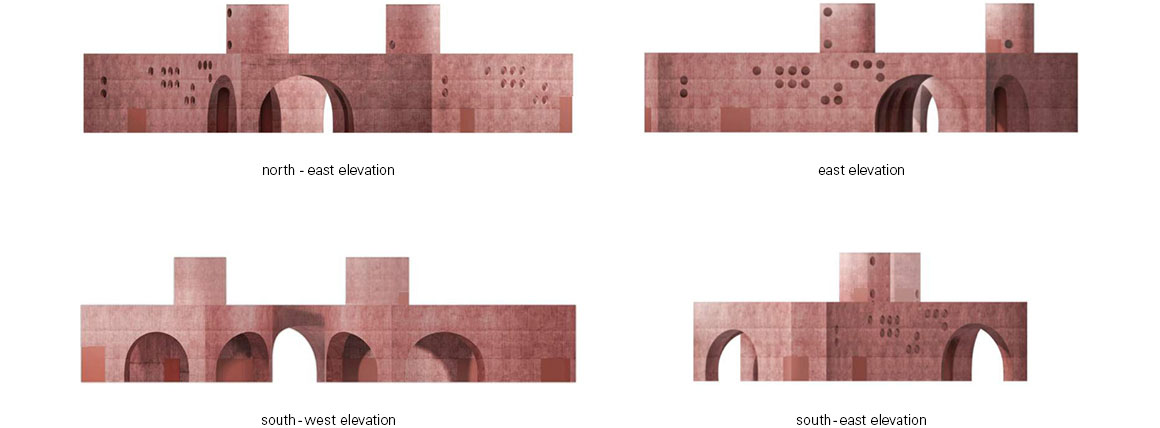
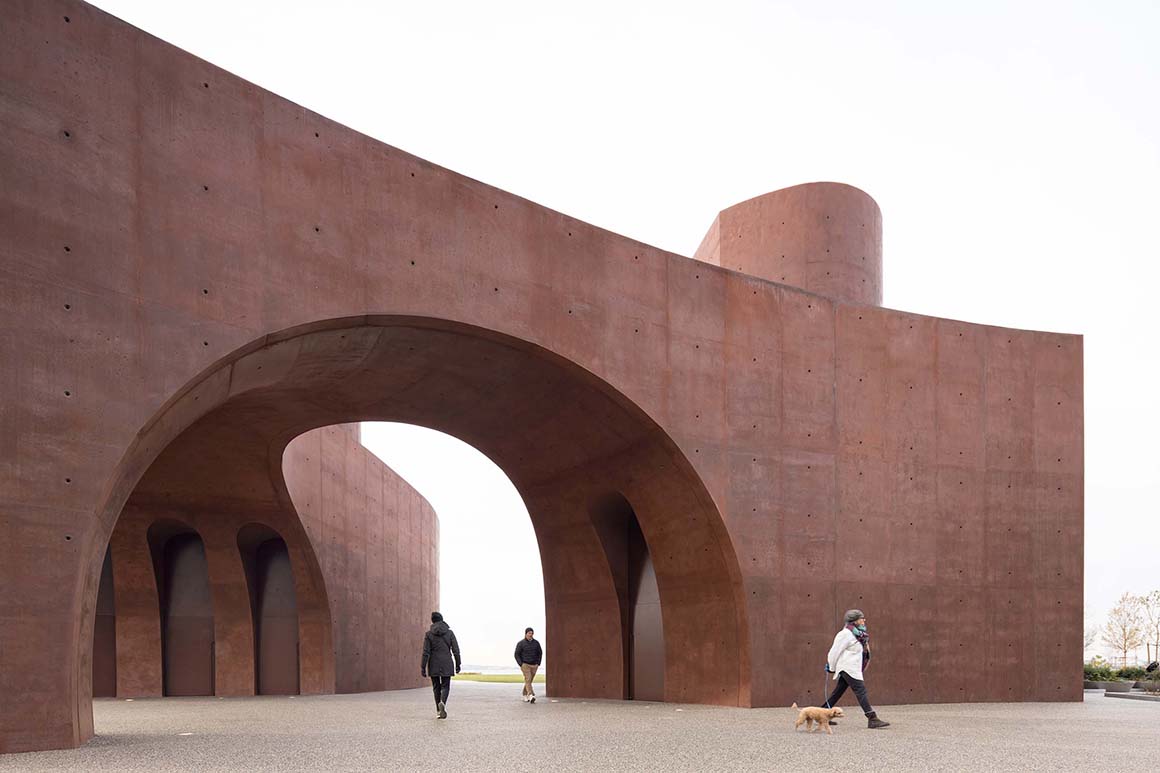
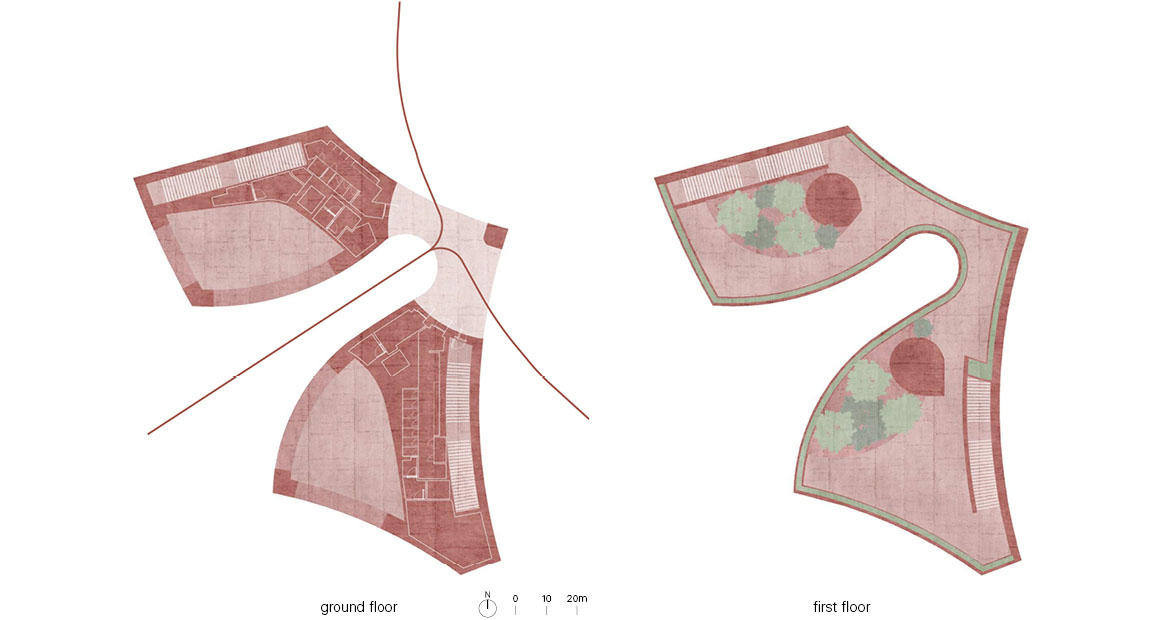
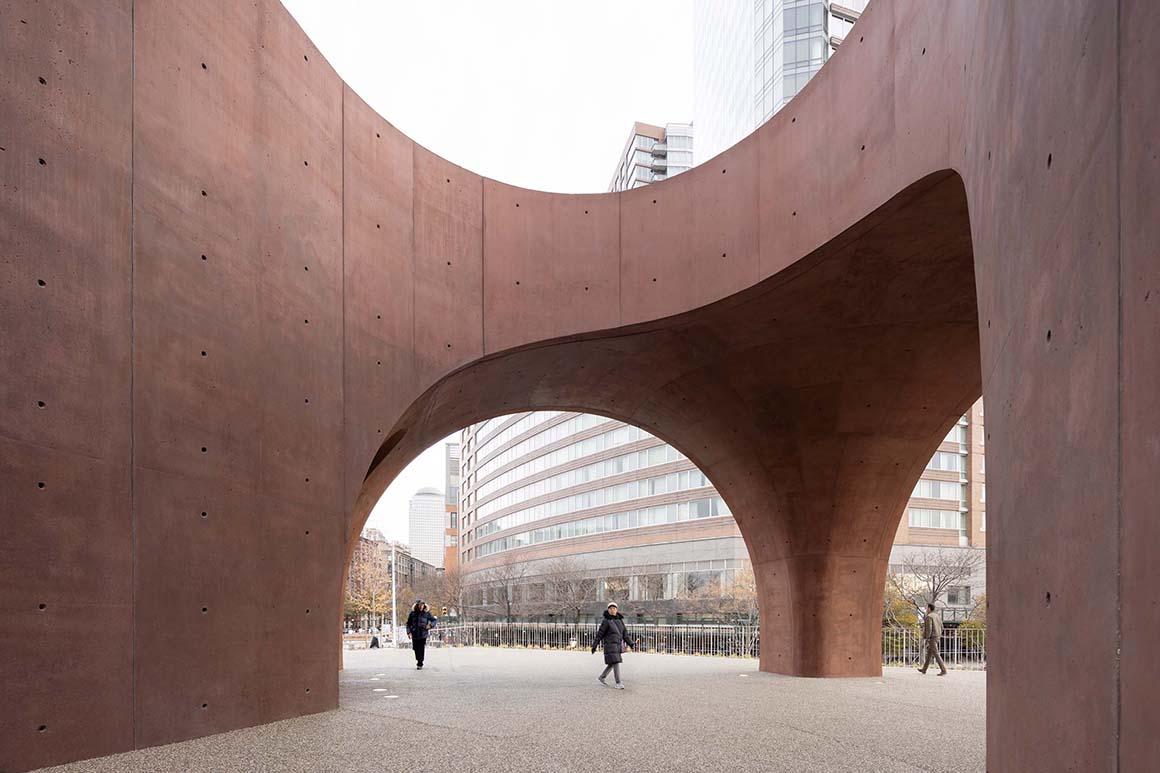
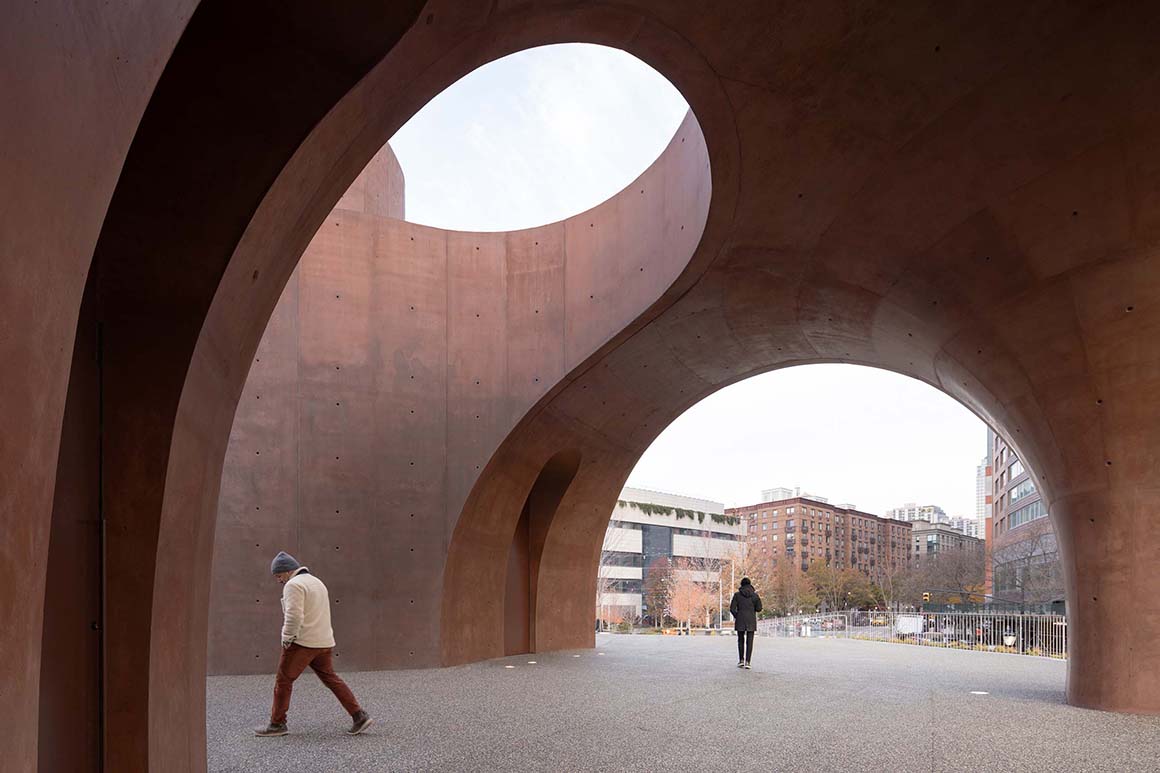
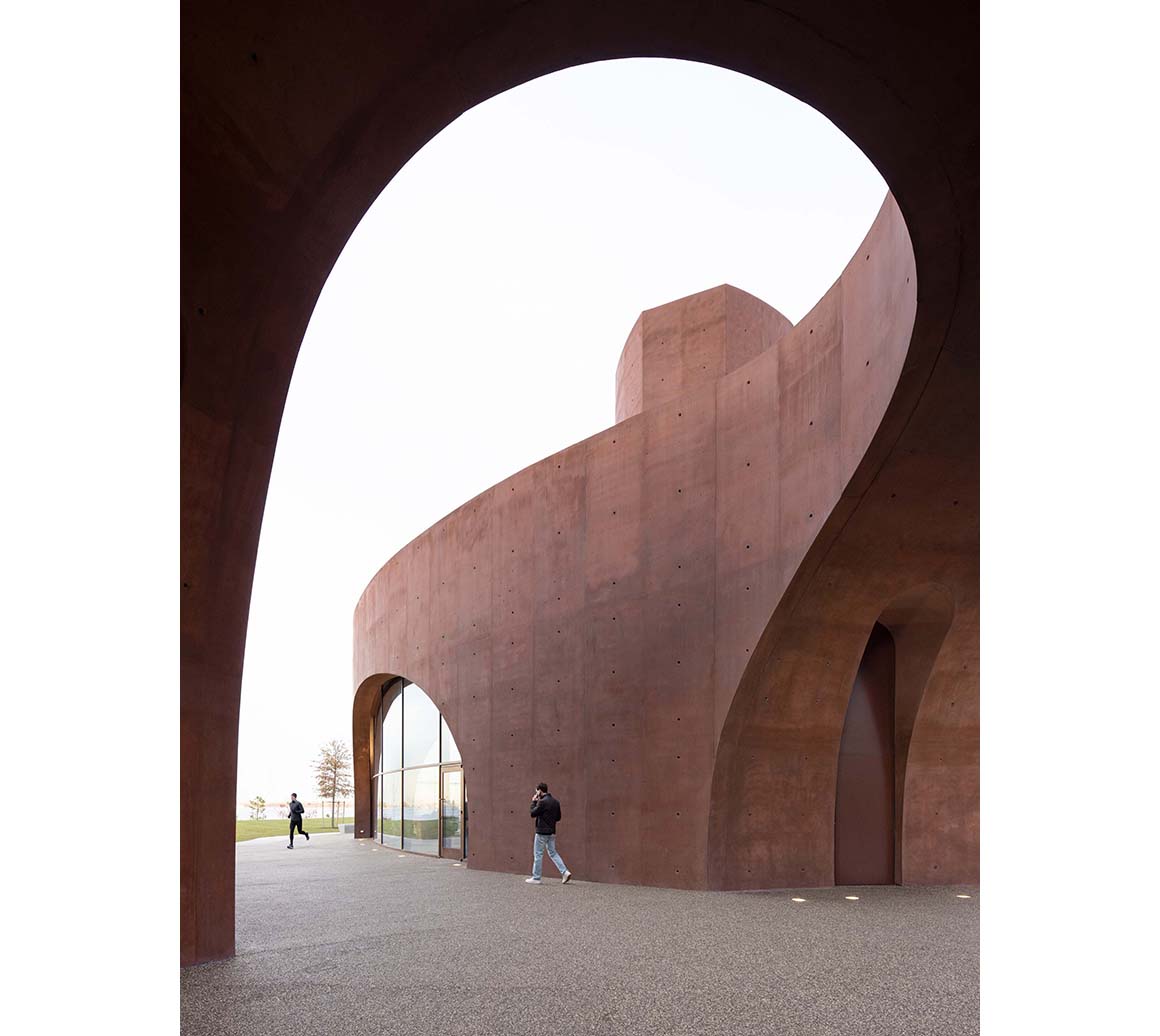
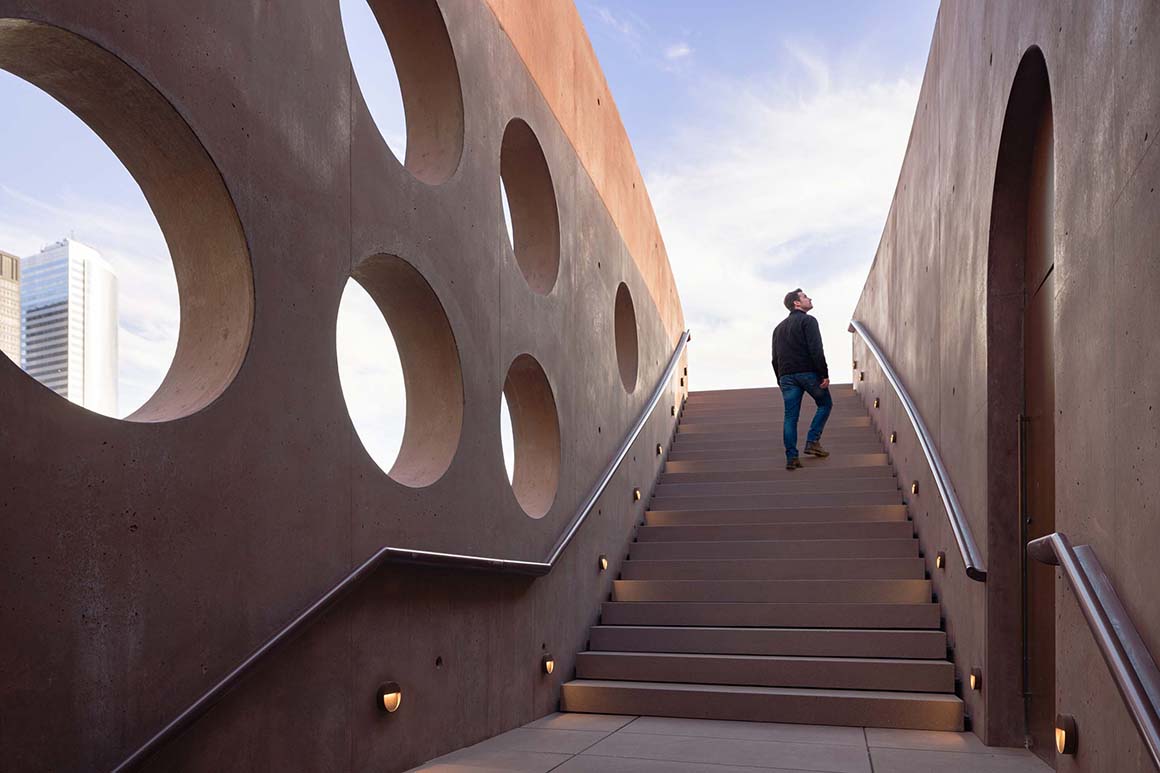
The project encompasses four distinct zones—the Museum of Jewish Heritage, Wagner Park, Pier A Plaza, and The Battery—each responding to specific site conditions while contributing to a unified flood protection system. Throughout the design process, multiple resiliency strategies were evaluated for their technical feasibility and impact on the public realm. Preserving the character and usability of existing spaces was a key consideration, while necessary topographic modifications were leveraged to create a cohesive system that enhances both performance and spatial quality.
The drainage strategy is organized into two systems: the “wet side” and the “dry side.” On the wet side, stormwater is directed through planted areas and filtration systems into underground infiltration structures, where it is gradually released. On the dry side, water is collected in reuse tanks, treated, and repurposed for irrigation and maintenance, with overflow connected to the municipal sewer network. This dual system maximizes environmental performance while ensuring compatibility with existing urban infrastructure. Sustainability measures include the reuse of on-site materials such as stone and wood, the use of high-albedo and permeable paving to mitigate heat island effects and support water cycles, subsurface irrigation systems to reduce water consumption, and solar-powered lighting designed according to dark-sky principles.
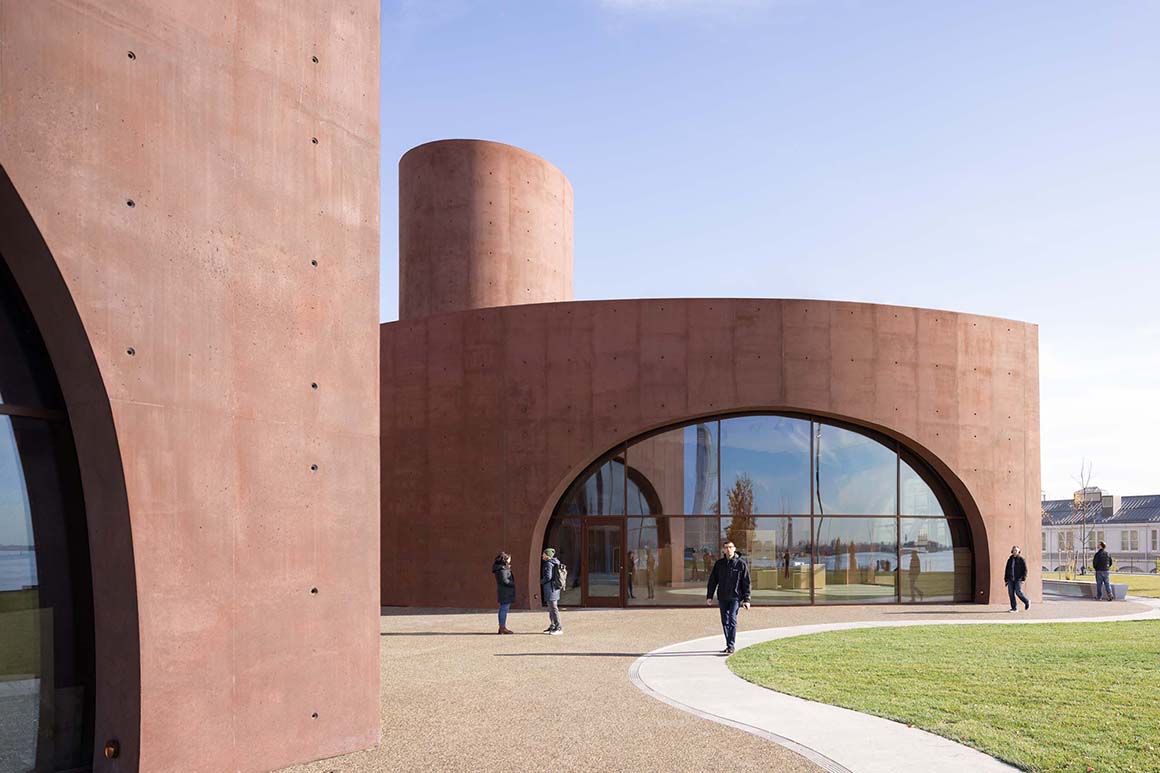
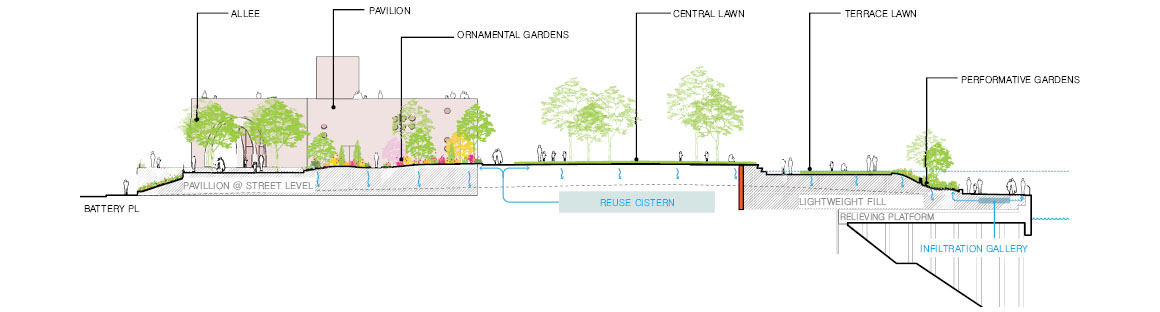
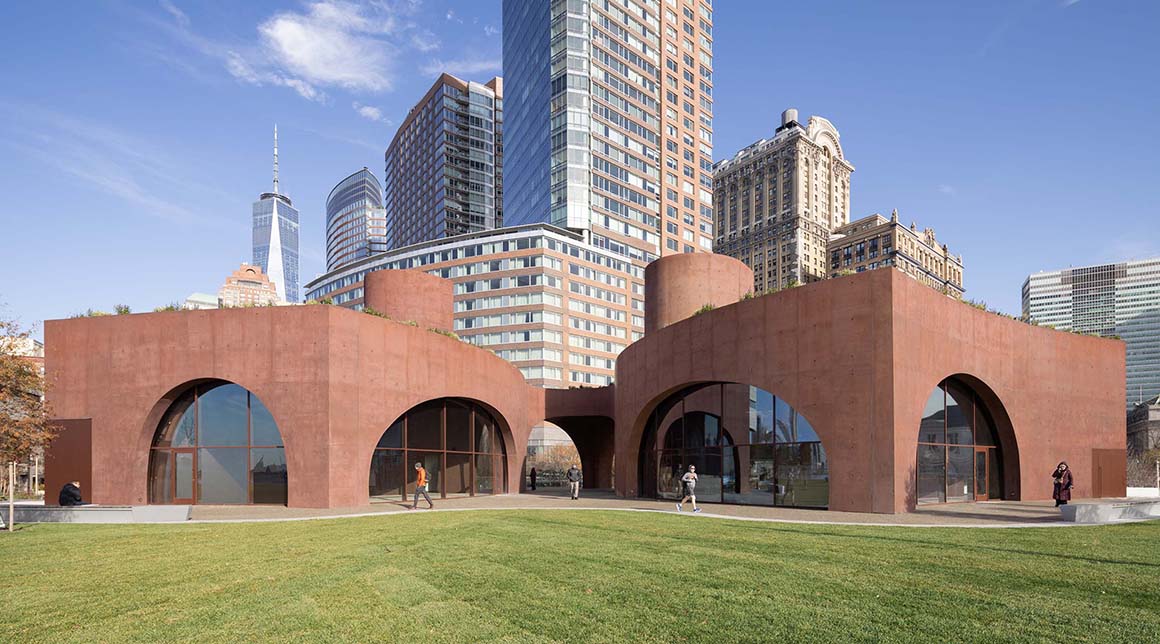
These integrated environmental and resiliency strategies are most fully realized at Wagner Park. Reimagined through a collaboration of landscape architecture, architecture, and engineering, the park enhances views, pedestrian connectivity, and accessibility. While the original park featured lawns, a pavilion, and seasonal gardens oriented toward the Statue of Liberty, the new design elevates the site by approximately three meters to address flood risk while maintaining its spatial organization and visual experience. Flood protection infrastructure is concealed beneath the landscape, allowing visitors to experience a continuous and uninterrupted waterfront.
Wagner Park has earned Gold certification under the Waterfront Alliance‘s Waterfront Edge Design Guidelines (WEDG), recognizing its integration of resilience, ecological performance, and accessibility. Expanding green space was a central objective: circulation paths were minimized, and tree plantings were introduced in paved areas to improve microclimate conditions. Along the waterfront, terraced topography and habitat features support salt-tolerant vegetation and marine ecosystems, while educational elements encourage public engagement with the shoreline. Planting design is based on regional ecological communities—tidal estuary, maritime meadow, maritime forest, and upland woodland—enhancing biodiversity while reducing maintenance demands.
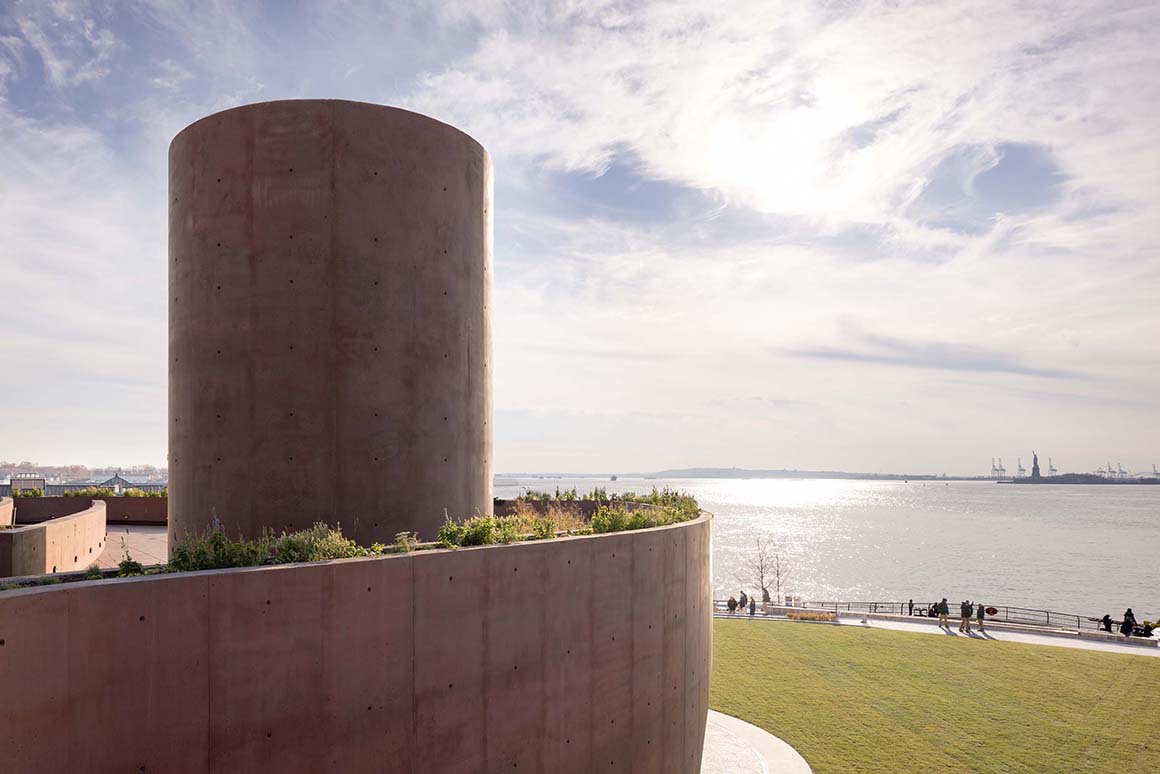
Project: Robert F. Wagner Jr. Park and Pavilion / Location: 20 Battery Place, New York, NY 10280 / Architect: Thomas Phifer and Partners (Thomas Phifer, Ryan Connolly) / Prime consultant: AECOM / Landscape architecture and urban design: AECOM LAUD (Gonzalo Cruz, Tristan Porto) / Landscape architect of record: SiteWorks / Project management: AECOM / Structural engineering, marine structural engineering, coastal modeling, interior drainage, permitting, FEMA compliance: AECOM Engineering / Civil engineering: Magnusson Klemencic Associates / Construction manager: LiRo-Hill / Park general contractor: Posillico Bove Joint Venture / Pavilion general contractor: EW Howell / MEP engineering: Milhouse / Lighting design: Tillotson Design Associates / Envelope: SGH / Sustainability certification: Atelier Ten / Surveyor: Naik Consulting Group / Geotechnical engineering: Oweis Engineering / Food service consulting: Cini-Little / Aquatic habitat consultant: Nautilus International Development Consulting / Expediter: Noel Building Consulting / Community engagement: Arch Street Communications / Signage: Tonic Group / AV/IT: Harvey Marshall Berling Associates / Client: Battery Park City Authority, BPCA / Use: park, pavilion / Gross floor area: 1,784.11m² / Materials: deep warm red architectural cast in place concrete, deep warm red painted steel / Completion: 2025 / Photograph: ©Scott Frances (courtesy of the architect)